
For local auto repair shops, car dealerships, property managers, resort operators, and commercial fleet operators, understanding towing costs is essential. The often-overlooked complexities of tow truck pricing can significantly impact operational decisions and customer satisfaction. This guide delves into the key components of towing rates, helping you make informed choices. From understanding base fees to recognizing how vehicle weight influences costs and the implications of time and location, we will equip you with the crucial knowledge to navigate your towing needs effectively. Each chapter serves to build a comprehensive picture of how much a tow truck costs per mile, ensuring you are prepared for any roadside situation.
Tow by the Mile: Decoding Base Fees, Mileage Rates, and the Real Cost of a Tow
Tow costs can feel like a mystery wrapped in a few numbers. The pricing structure after a tow begins with the base fee versus the mileage charge, and the balance between them shapes the final bill in ways that aren’t obvious until you see the invoice. There is no national standard governing tow pricing. Each company negotiates its own structure, and the factors that drive the price are practical as well as situational. At the core, most providers build charges around two elements: a base fee or hook up fee, and a per mile rate for the distance to the destination. The total price you pay follows a predictable pattern, but the numbers on a quote can vary with the circumstances, the vehicle type, and the geography. The result is a number that can be straightforward in one case and more layered in another, even when two tows seem similar on the surface.
To anchor the discussion, consider the lane you are in when you need a tow. If you are stranded on a rural road, you might get a modest quote at first, only to discover the distance to the shop is longer than expected. If you are in a dense city during rush hour, the same equation can shift. The base fee in urban settings is often higher because drivers bear greater labor costs, longer wait times, and the potential for delays that extend the job. A rural tow may involve longer miles to reach a shop or impound lot, but the hourly costs and the complexity of moving a heavier vehicle could push the total higher than the simple distance would predict. These everyday realities show why the per mile figure is only part of the story.
The per mile range you’re likely to encounter runs roughly from two to five dollars per mile after a base fee, though this band shifts with the specifics of the job. A short tow covering a handful of miles could still land in a premium tier if there is special equipment, a remote location, or an after hours arrival. A longer haul, such as a fifty mile tow to a distant repair facility, can climb past the three hundred dollar mark when you factor in the base fee, mileage, and any extras. What looks like a straightforward calculation can become a nuanced pricing story once you account for how miles are counted and what else the service adds on.
Some companies publish a simple hook up fee plus per mile charge for the duration of the trip. Others use brackets or tiers, with different per mile rates applying to ranges such as 0–10 miles or 10–25 miles. A few operate with a hook and roll approach, where a fixed amount is charged just to hook up the vehicle and then miles are billed separately. The result is that a single number on a quote does not always tell the whole story. The customer who asks for a full breakdown in advance stands a better chance of understanding what will be charged and why.
The question of how much you pay per mile is tied to vehicle type and weight. Heavier vehicles require larger tow trucks, specialized equipment, and more fuel. They also demand more careful handling to prevent damage and to maintain safety. A sedan or compact car may ride on a lighter rig, with lower operating costs, and the miles spent towing them might be less taxing on the equipment. This difference helps explain why two tows that cover the same distance can cost differently when the vehicles are not the same kind.
Location also influences the price. Urban environments add labor costs, fuel use, and the risk of delays. The extra time can be reflected in a higher base fee or in a higher per mile charge to compensate for the time spent heading to and from the vehicle. Rural settings may involve longer trips to reach service points, and the greater distance can translate into a larger total bill. Some rural routes require longer drives due to limited nearby services, which magnifies the total miles towed and the total charge.
Time of day nudges the numbers upward. Late night calls, weekends, and holidays can bring a premium for off hour service. The quote for the same distance and vehicle can differ simply because the service is needed at an inconvenient hour.
Another factor is how miles are tallied. Some quotes reflect the distance from pickup to destination. Others estimate miles from a service area to pickup or from a central depot, and then add the distance to the final destination. This nuance is why it is essential to ask for a detailed breakdown. The invoice should show the base fee, the per mile rate, the total miles, and any surcharges or extra fees.
In practice, a short tow of around five miles might be priced around seventy five dollars, a mix of base and modest miles. For longer tows, like fifty miles, the total can be substantial, especially when special equipment or a difficult route is involved. The understanding should be that price is distance plus the complexity of the job plus time and location.
If you step back, you’ll notice that some providers favor a clear, predictable model, while others adopt a more variable approach where price hinges on the exact circumstances. A robust way to protect yourself is to request a detailed estimate that itemizes every element of the charge before you approve the service. A good quote should list the base fee, the per mile rate, the number of miles, any minimum charge, and all potential extras such as a fuel surcharge or after hours premium. The more granular the estimate, the easier it is to compare quotes across providers.
From a consumer perspective, you can approach pricing by pairing the figures with your needs and risks. If your vehicle is light and you are near a shop, a lower per mile rate could still result in a higher total if the base fee is large. Conversely, if you are far from a shop, the per mile charges accumulate and a lower base fee may not yield the lowest total. A thoughtful comparison should include the total expected cost for the specific path your tow would take, not just the headline per mile rate. Some people compare quotes from several providers, but the most reliable comparisons come from quotes that include exact miles and the precise services to be performed. In some markets, you can gauge typical pricing by region through consumer guidance resources that track regional variations and provide a sense of what is reasonable for your vehicle type and distance. For readers seeking practical guidance on pricing, trusted consumer resources can be helpful guides.
The broader view is that tow pricing reflects the operator’s readiness to respond, the safety and feasibility of the tow, the equipment used to prevent damage, and the logistics of performing the job while minimizing risk. These costs appear in the quote, even if they aren’t always broken out in a single line item. The per mile rate is most meaningful when seen as part of a larger pricing ecosystem, where the base fee covers immediate labor and mobilization, and the per mile charge covers wear and tear on the equipment, fuel, overtime considerations, and the incremental work of guiding the tow along its route.
For readers who want to deepen their understanding, credible consumer resources provide a broader lens on pricing and industry norms. They help calibrate expectations against regional realities and the specialized needs that can accompany heavier vehicles or tricky locations. The goal is to secure a fair, transparent arrangement that respects both safety and service expertise. A careful reader who compares quotes, asks for a full breakdown, and considers vehicle type, distance, and timing can avoid unpleasant surprises. It can also help to book ahead or check with insurers or vehicle manufacturers on preferred tow services for more predictable pricing and reliable service.
If you want to explore pricing in more depth and see how regions and vehicle types influence the final tally, credible consumer guides can be useful companions. The Zebra towing cost guide offers a framework that tracks typical price bands, explains how to interpret various charges, and serves as a reference point for readers preparing for a real world tow scenario.
Tow by Mile: The Real Cost of a Haul—How Vehicle Type and Weight Shape Tow Rates
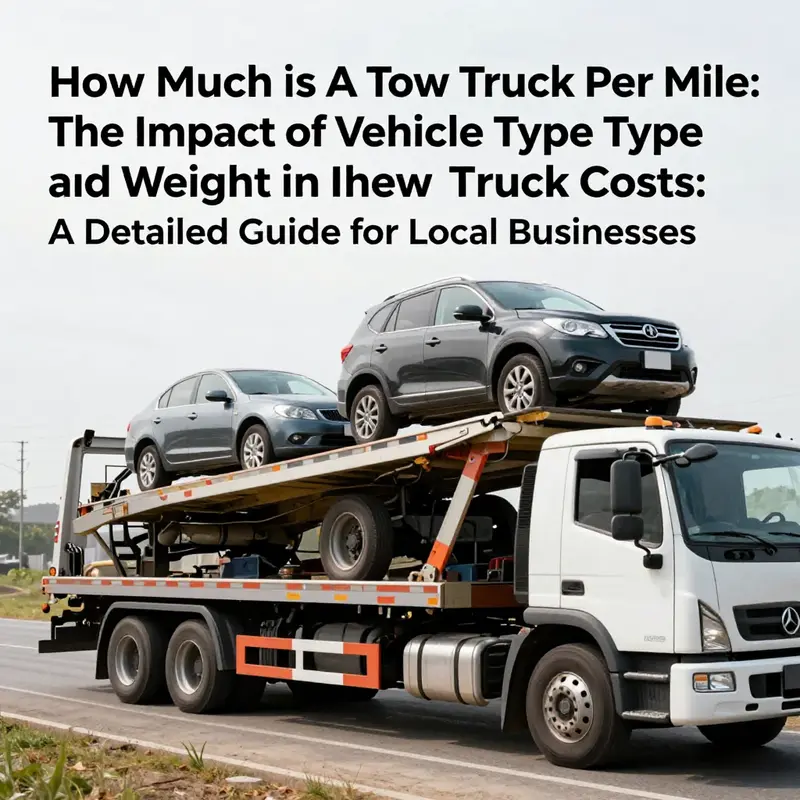
When people ask how much a tow truck costs per mile, they’re really asking about the unseen mechanics behind a simple mile marker. The numbers look straightforward on the surface—somewhere between a couple of dollars and a handful of dollars per mile after a base hookup fee—but the truth is more intricate. The per-mile figure is only part of the story. The weight of the vehicle, the type of tow equipment needed, the terrain, the time of day, and how far a tow operator has to travel all twist the math in different directions. As with many service industries, you don’t simply pay for distance; you pay for distance plus the labor, risk, and specialized gear required to move that distance safely. And in practice, the chalk lines between “per mile” and “base fee” blur as pricing structures shift from one company to another and from one situation to the next. The result is a landscape where a five-mile tow can feel like a bargain in one case and a costly detour in another, depending on what the job demands beyond the odometer reading.
The most immediate driver, of course, is vehicle type and weight. A standard sedan sits at the lighter end of the spectrum, and for these everyday cars the per-mile charge tends to fall within a broad range. In many markets, the typical per-mile cost for a lighter, standard vehicle runs approximately from $2.50 up to $7 per mile. That range might reflect differences in regional demand, ambient labor costs, and the specific policies of individual tow businesses. What matters most is not a single number but the context around it: the base fee, the minimum charge, and any modifiers that kick in after the initial hook or hookup. Heavier or more awkwardly shaped vehicles, such as SUVs, trucks, or commercial vans, trigger a different pricing calculus. They require heavier equipment, stronger winches, and more careful handling to avoid damage during the hookup and transport. These factors alone can push the per-mile metric upward and compress the window of what constitutes a “reasonable” tow for longer distances.
When the vehicle being towed demands a flatbed rather than a wheel-lift or dolly setup, the cost per mile often climbs further. Flatbed towing is inherently more resource-intensive, because it involves specialized trucks, more complex loading procedures, and greater risk management. Luxury, sports, or high-performance vehicles commonly fall into this category, and the added protection that a flatbed offers—especially over long distances—triggers a higher overall price tag. The result is that for long-distance tows, especially those extending into 100 miles or more, the total can rise into the several hundred-dollar range. In many cases, a long distance towed on a flatbed might land somewhere between $300 and $600, and occasionally beyond, depending on the specifics of the job. The sheer mileage matters, but the gear and expertise required to transport a delicate or valuable car safely over a long stretch matters just as much, and often more.
Beyond the weight and the equipment, the pricing structure itself can shape the perceived cost per mile. A great many towing companies employ a tiered model, where a fixed hookup fee is charged up front, followed by a set per-mile rate that changes depending on how far you need to go. Some operators call this a “0–10 miles” tier, another band for 10–25 miles, and so on. In practice, you might see a base fee that covers the pickup and basic labor, then a per-mile charge that becomes your main driver once you’re past the initial yards. In other places, the hook-and-roll approach is described in plain terms: a fixed hook-up price plus a per-mile fee afterward. Either way, the base fee acts as a kind of insurance against short hops that still require a driver’s time and a minimal amount of equipment setup. It’s a reminder that a tow job is not only about the distance traveled but about the preparation and the risk that are folded into that trip.
Time of day and location introduce yet more variation. Night calls and weekend service typically carry surcharges to account for after-hours labor, fatigue management, and the increased complexity of moving a vehicle in lower-visibility conditions. In urban centers, demand spikes can widen the spread between a “normal” mile rate and the peak period rate. The opposite scenario—towin a remote rural location—can tilt costs the other way, because travel time to the site and back becomes a larger piece of the total equation, even if the per-mile rate remains the same. In rural areas, the long miles to repair shops or impound lots can dramatically amplify the total, turning what seems like a modest per-mile figure into a substantive bill when all is tallied up.
A closer look at the numbers helps translate the abstractions into something more concrete. For standard sedans or compact cars, the mid-range per-mile figure might hover around $3 to $5 under typical daytime conditions. But when you factor in tiered pricing and the base pickup charge, the early miles can feel disproportionately expensive. For example, a short five-mile tow might be around $75, a blend of a base fee and the per-mile charge for a compact vehicle. It’s easy to fixate on the $75 number and assume that represents the whole story, but the base charge includes the cost of dispatch time, initial assessment, and the first mile or two of travel. In a longer job, the per-mile rate multiplies, and if the destination is far enough, the total can rise quickly. In a 50-mile tow, for instance, the total cost can exceed $300, particularly if the route requires a specialized rig or if the operator needs to navigate traffic, tolls, or other logistical challenges. Add in a long-distance leg with a heavier or more delicate vehicle, and the total can push closer to the $400–$600 range or more, especially if a flatbed is involved.
The broader context helps explain why these figures vary so much from one situation to the next. Vehicle weight and type are not the only influences. Frequency of service matters, too: some providers implement a tiered pricing model that rewards longer hauls with a relatively steadier per-mile rate after a fixed hook-up. The logic is, in effect, to balance the fixed costs of dispatching a crew and a truck with the incremental cost of adding more miles. Time of day and day of the week modulate labor costs and demand risk, and the location—urban, suburban, or rural—changes the calculus of access, traffic, and the likelihood of needing extra helpers or specialized equipment. All of these layers exist simultaneously, and the total price you walk away with is the product of their interactions rather than a single rigid formula.
To avoid unpleasant surprises, many drivers find it worthwhile to request a detailed breakdown of fees before agreeing to service. A trustworthy provider will present a written estimate that itemizes the base hookup or dispatch charge, the per-mile rate (or tiered mileage pricing), any after-hours surcharges, equipment surcharges (such as flatbed versus wheel-lift), and potential fees for additional services like storage, wait time, or after-hours arrival. A transparent quote helps a customer understand where the money is going and whether a longer tow might require a different pricing tier. It also reduces the chance that the bill will include surprise charges for things the customer did not anticipate, such as extra handling for a difficult loading process, a longer-than-expected drive, or the need to navigate obstacles like steep driveways or tight access points. For the consumer, the practical takeaway is simple: ask for the full picture before the tow begins, and compare quotes not just on the name of a company but on the quality and clarity of the estimate.
The practical ramifications extend beyond the immediate bill. When you’re stranded, you need to decide quickly whether to accept the first offer or to shop around. In many cases, a higher per-mile rate might make sense if it guarantees a faster arrival, a flatbed option, or a driver with a proven track record for careful handling of a high-value or specialty vehicle. On the other hand, a lower per-mile rate that comes with a longer wait time or a higher risk of damage can be a false bargain. The decision often hinges on the vehicle type, the distance, and the urgency of the situation. If you’re dealing with a luxury sports car, a long-distance tow may practically demand a flatbed, even if that means paying a higher per-mile rate. If you’re towing a compact daily driver to a nearby shop, a wheel-lift option may be perfectly adequate and more economical.
The way this translates into a real-world decision is rarely a matter of choosing one fixed number. Rather, it’s about understanding the ecosystem of charges that can accompany a tow and mapping those charges to the specific vehicle, route, and timing. For instance, a 150-mile tow of a heavier vehicle with a flatbed could easily exceed the simple multiplication of a base per-mile rate times miles. The higher base costs associated with heavy equipment, combined with the travel time to and from the site, can accumulate with surprising speed. Conversely, a short hop of a lighter vehicle in a dense urban area, where traffic can slow the journey and the access point is cramped, might still produce a modest headline figure but with a relatively high efficiency of labor and fewer miles to accrue.
What does all this mean for a driver who wants to minimize cost without compromising safety? The answer rests in planning and good communication. The first step is to understand your own vehicle class and weight category so you can anticipate the likely equipment needs. If you own a heavy vehicle or a specialty car, you should expect a higher baseline and the likelihood of a behind-the-scenes investment in equipment and personnel. The next step is to confirm the service model in advance. Are you dealing with a fixed hookup fee plus per-mile charges? Is there a tiered mileage structure that could change the rate after a certain distance? Are there surcharges for after-hours service or for urban travel where traffic and accessibility create additional labor costs? The more you know in advance, the better you can interpret the quote and assess whether a longer, slower route with a lower per-mile rate might actually save money compared to a quicker but more expensive option.
An important dimension—one that often surprises drivers when they compare multiple quotes—is how a company accounts for the first mile. Some operators consider the initial miles as a bundled portion of the hook-up, while others separate them out explicitly as part of the per-mile charge. If you’re tallying the total cost for planning purposes, make sure you’re comparing apples to apples: a five-mile tow with a $75 base can be quite different from a longer tow that uses the same base but adds miles at a high rate. A few dollars per mile more might be worth it if the alternate option guarantees a first-rate technician, meticulous loading, and protection for a valuable vehicle. The practical upshot is that your decision should factor in service quality and reliability, not just the raw mile rate.
Within this framework, it’s also helpful to acknowledge how local markets shape the numbers. In densely populated regions with high demand and elevated labor costs, the per-mile rate might skew higher as a reflection of the operating environment. In more rural settings with thinner demand, the same per-mile figure can appear more favorable, but the total distance traveled by the tow operator can drive up the final price, especially when longer drives are necessary to reach the vehicle, repair options, or impound lots. The bottom line is that per-mile pricing is not a stand-alone metric. It sits inside a larger pricing architecture that is, by design, responsive to weight, equipment, timing, location, and distance. The more you understand this architecture, the more equipped you are to anticipate costs and to navigate toward a fair, transparent agreement with your chosen service provider.
For readers who want to explore this topic further, consider looking at broader guidance on towing costs and consumer tips. The American Automobile Association (AAA) offers a comprehensive resource on towing costs, services, and consumer guidance that can help you compare options and understand what goes into a tow price. While individual quotes will always vary by region and vehicle, AAA’s information provides a solid framework to interpret the numbers you’re presented with and to identify what questions to ask a towing company when you’re in a pinch. In practical terms, this means verifying whether a quote includes all anticipated charges, understanding any potential add-ons for heavy or specialty work, and recognizing the difference between a simple short tow and a longer haul that calls for specialized equipment or logistical planning. A reliable quote should translate into a clearly itemized bill at the end of the job, so you’re not faced with unexpected costs after your vehicle has been safely delivered to its destination.
To connect with practical perspectives and community experiences, you can also explore industry discussions and tips shared by local operators who publish their insights online. For readers seeking a broader, community-based perspective, one resource to consult is the Island Tow Truck blog, which often discusses the realities of towing in local contexts and shares guidance on understanding pricing, preparing for a tow, and evaluating service options. You can visit their content at The Island Tow Truck blog. This kind of resource can help you see how the pricing dynamics play out in everyday scenarios, from entry-level vehicles to more complex jobs that require specialized gear and careful handling. By reading multiple viewpoints, you gain a more nuanced sense of how per-mile costs fit into the overall service value.
In any case, the core takeaway remains simple and practical: the per-mile cost of towing is just one piece of a broader pricing puzzle. Vehicle type and weight are central to the calculation, but the final price is an orchestration of hook-up fees, mileage, equipment needs, time of day, and the accessibility of the scene. Being informed, asking for a detailed estimate, and understanding the structure behind the numbers can save you money and reduce stress when you’re stranded on the side of the road. If you keep these ideas in mind, you’ll be better prepared to navigate the rough contours of tow pricing, whether you’re dealing with a standard sedan or a heavy vehicle that demands a more robust, carefully executed transport.
External resource: For an official, up-to-date guide on towing costs and services, see AAA’s Towing Information: https://www.aaa.com/automotive/towing/.
Tow by the Mile: Decoding How Time and Place Drive Tow-Rate Variations
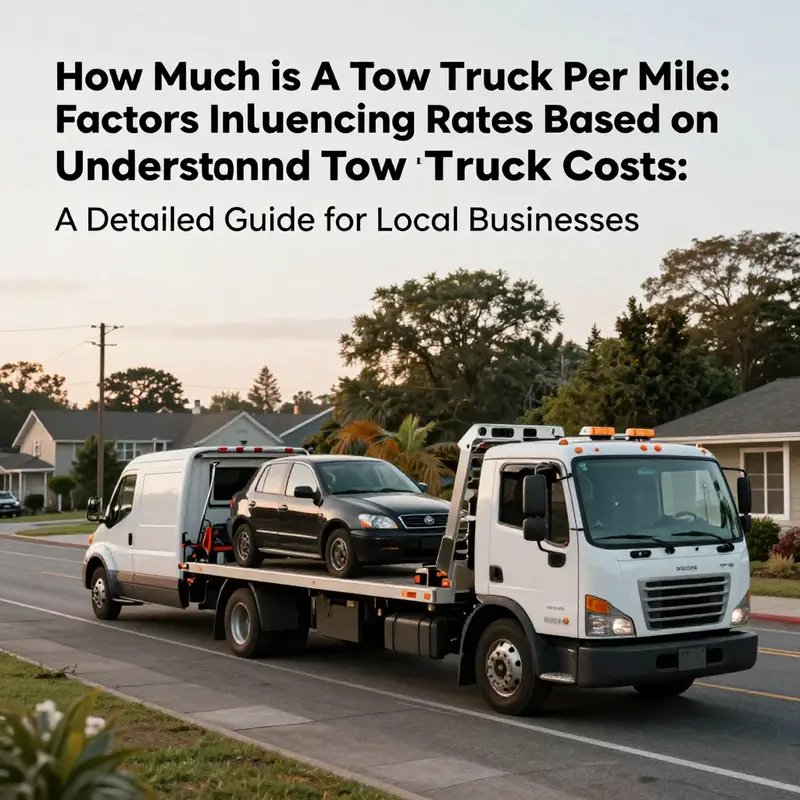
When people ask, “How much is a tow truck per mile?” they are really asking for a snapshot of a much larger picture. The highway of pricing is not a straight line from point A to point B; it bends with the clock, the terrain, and the vehicle being towed. The simple question is easier to answer in shorthand than in practice. In real life, the number you end up paying per mile reflects a bundle of decisions that a towing company makes in real time, from the moment a client calls to the moment a car meets a repair shop or a lot. And while the base idea is straightforward—an initial hookup fee, plus a per-mile charge—the actual dollars change with location, time, weight, and countless contingencies that can trip up even the most prepared driver. Understanding this helps customers anticipate costs, ask for clear line items, and avoid surprises when the bill arrives.
The most immediate framework most towing operators use is a base or hookup fee followed by a variable per-mile component. In many markets, the typical range after the initial hook-up is roughly two to five dollars per mile. That range is not a universal law but rather a reflection of the different pressures every operator faces: the cost of labor, fuel, maintenance, insurance, licenses, and, not least, the time of day. A five-mile tow costing around seventy-five dollars, for instance, often includes a modest base fee plus mileage charges that keep the wheels turning for the crew. A longer journey, say fifty miles, can push total costs past the three-hundred-dollar mark, and sometimes higher if the tow requires specialized equipment or travels to a remote location. The arithmetic is simple in theory—multiply distance by the per-mile rate and add the base fee—but the numbers you actually see in your pocket are shaped by the day, the place, and the vehicle involved.
One of the key factors that most strongly influences the per-mile rate is location. Urban environments, with their dense traffic and higher operating costs, may seem to invite competition that would push prices downward on short hops. Yet the opposite can also be true. In a city, a tow truck may need to contend with traffic delays, parking restrictions, and choke points that slow response times. Those factors can raise the effective cost per mile because the crew spends more time on the road to reach the vehicle and to complete the tow safely. And when demand spikes—late at night, on weekends, or during holidays—the market can behave much like other emergency services: prices go up as availability tightens. In practice, a tow in a major metropolis with a short distance but urgent need can arrive with a higher per-mile figure than the same distance in a quieter suburban setting.
In rural areas, the calculus often tilts differently. The distances between points of service can be far greater, and the nearest repair shops or impound lots may be miles away. The result is a higher effective per-mile charge, even if the basic rate per mile stays nominally the same. The towing company may be the one traveling longer distances to reach the vehicle, and in some cases the crew must bring more specialized equipment to handle tough terrain, uneven surfaces, or limited access roads. The scarcity of nearby facilities can translate into longer dispatch times, greater fuel use, and occasionally the need for a second truck to assist with the tow. Rural pricing reflects that broader travel footprint, not just the road miles the tow truck actually logs en route to a destination.
The weight and type of the vehicle being towed matter as well. Heavier vehicles—SUVs, pickup trucks, delivery vans, or light commercial trucks—demand larger tow rigs, more power, and sometimes multiple winches or dollies to secure the load. Those requirements translate into higher base charges and higher per-mile costs because the equipment and crew exert more labor and wear on the vehicle performing the tow. A luxury sports car, a vintage model, or a high-center-of-gravity vehicle may require specialized handling, adding to both the hook-up time and the mileage tally. A tow company may also factor in the risk premium associated with heavy or awkward loads, which can be enough to push a relatively modest per-mile charge upward, even over shorter distances.
Time of day is another decisive variable. The concept of “rush hour pricing” is not confined to highway tolls or ride-share services; it appears in towing because the hours during which the service is accessed influence both the crew’s availability and the opportunity cost of sending a truck out on the road. Regular daytime hours typically bring steadier demand, more predictable routes, and sometimes lower rates. In contrast, late-night hours, weekends, and holiday periods can trigger premium pricing. The same distance towed at two different times might bear a noticeably different total if one trip occurs in the calm of daylight and the other in the charged atmosphere of after-hours demand. The per-mile figure can rise sharply during these peak windows, while the base hookup fee may stay relatively stable, resulting in a higher overall charge without a wholesale change in the distance calculation.
All this feeds into how a consumer should interpret a tow quote. Pricing is rarely, if ever, a flat rate across the entire journey. Many companies adopt tiered pricing, structured as distance bands. A common approach is a rate set for 0–10 miles, then a higher rate for 10–25 miles, and yet another tier beyond 25 miles. This tiered system helps operators manage the mix between short, urgent tows and longer, more complex ones. It also gives customers a way to predict the bill more accurately if they understand which tier their tow falls into. A second model is the hook-and-roll, where a fixed hook-up fee is charged for dispatch, followed by a per-mile rate once the tow begins. In both cases the distance is a straightforward multiplier, but the fixed hook-up fee adds a non-movement cost that customers should anticipate as part of the total.
What often surprises people is how much regional variation there is, even for similar distances and vehicle types. A five-mile tow in one region might look similar on the meter to a five-mile tow in another, but the underlying costs that produced those identical numbers could be quite different. For agencies serving high-cost neighborhoods or remote corridors, the base fee can be higher, and the per-mile price can be higher still to compensate for travel time, fuel, and wear on the tow fleet. Conversely, in highly competitive markets with many nearby operators, the base fee and per-mile rate may be driven downward, especially for routine, non-emergency tows. The same mechanical calculation—distance times rate plus base fee—can mask an array of operational realities beneath the surface.
The average consumer experience benefits from transparency, and reputable towing outfits recognize this. Getting a detailed breakdown before committing to service helps prevent sticker shock. A straightforward quote should itemize the base hookup fee, the per-mile rate, the estimated distance, and any surcharges that could apply for time of day, location, or special handling. If a price quote omits a line item or leaves questions about whether additional charges might apply, that is a signal to press for clarity. The landscape of pricing includes legitimate, necessary costs, and it also includes occasional add-ons that reflect unusual circumstances—such as off-road access challenges, the need for additional personnel, or the use of specialized equipment to secure an awkward load.
For those who need to forecast costs in advance, or who manage fleets that require regular emergency responses, there is value in more than just a single quote. Planning requires paying attention to how your local market tends to price different scenarios. Urban versus rural, regular hours versus after-hours, light-duty versus heavy-duty tows—all influence the cost equation in meaningful ways. If you operate a vehicle fleet, you may find it useful to embed these considerations into your emergency response protocol. In fact, there are resources and strategies tailored to fleets that help with budgeting, scheduling, and cost control during urgent recovery operations. For fleets grappling with this planning, see Essential Fleet Emergency Response Strategies. The guide helps align your expectations with how professional responders price and allocate resources during critical incidents, reinforcing the idea that the per-mile figure is part of a broader system rather than a lone number. Essential Fleet Emergency Response Strategies
Another important dimension is access to facilities and the implications for pricing. When a vehicle is towed to an urban repair shop, impound lot, or dealership, the distance traveled to and from the site is included in the mileage. But the toll the tow takes on the clock can extend beyond simple miles. Downtowns with heavy traffic can slow a tow down, and back roads may add miles but reduce the time spent in traffic, producing a different blend of time and distance that still influences the rate. Even the route chosen by the driver can matter. Some routes may add a handful of miles but shave critical minutes off response and turnaround times, which is valuable for both the customer and the operator. In other cases, a shorter route with more traffic congestion could extend the duration of the tow and elevate the effective cost per mile because the crew is earning less per hour while burning more fuel and wearing more equipment.
These pricing dynamics are not just numbers; they shape decisions on both sides of the counter. For a customer, understanding that the per-mile price is a component of a broader service equation helps set expectations and informs the questions to ask when a tow is needed. A care for detail starts with the call: Is the distance to the vehicle clear, or will the tow require special gear? Is the location accessible, or does it demand extra equipment to reach a vehicle in a garage, a ditch, or a steep driveway? Will the tow be returning to a repair facility, an auction lot, or an offsite storage yard? Each of these realities contributes to the final tally, and a transparent operator will explain how each element contributes to the bottom line.
The broader consumer guidance echoes the sensible approach promoted by national organizations that monitor road services. In addition to the practical costs, there are resources that help map out typical cost ranges by region and vehicle type, offering benchmarks against which customers can compare quotes. In the same vein, the price signals you receive for a tow can reveal broader patterns about service quality, dispatch efficiency, and workforce stability. A company that is upfront about its pricing structure, including how much is fixed versus variable and what circumstances trigger premium surcharges, is often one that maintains higher levels of reliability, communication, and accountability during a stressful moment. The balance between fair pricing and fair service is a line that skilled operators walk with care, always mindful that a tow arrives when a driver needs it most and that a clear explanation can transform anxiety into trust.
In sum, while the basic framework of tow pricing is straightforward—base fee plus per-mile charges—the real-world application is shaped by location, time, and vehicle specifics. Urban environments, rural landscapes, the weight and handling needs of the towed vehicle, and the hour at which service is requested all intersect to determine the final number. The practical takeaway for consumers and fleets alike is to seek clarity before the tow begins: request a detailed breakdown, understand the tier or hook-and-roll structure, and know what surcharges might apply for time or distance. With transparent pricing, the mile becomes less a mystery and more a measured part of a broader service equation that aims to keep people safe, on the road, and able to repair or replace a vehicle with as little friction as possible. For readers planning ahead, the guidance from AAA offers a broader perspective on how those costs accumulate across scenarios and regions, providing a valuable external frame for comparison and decision-making. AAA guide to tow costs.
Tow by the Mile: Decoding Pricing Models, Fees, and the Real Cost of a Haul
When people first ask how much a tow costs per mile, the most natural instinct is to zoom in on the miles and multiply them by a tidy price. But a tow is rarely just miles. It is a bundle of service decisions, equipment needs, and operational realities that turn a simple distance into a mosaic of charges. In practice, the per-mile figure sits beside a base fee, and both numbers can shift depending on where you are, what you’re towing, and what time you call for help. The result is a pricing landscape that rewards careful reading of the quote, an awareness of the factors behind the numbers, and a clear sense of the total you’ll actually pay when the wrecker arrives on scene and the truck settles into the streetlit curb of your emergency. To understand the true cost of a tow, you must thread together the mile rate with the base hook-up fee, the vehicle’s weight class, the time of day, the distance to be covered, and the local pricing norms that local regulation and market competition create. It is not merely a calculation; it is a choreography of practical constraints and business models that, when understood, helps drivers and vehicle owners avoid unpleasant surprises when the bill lands in the mailbox or on the countertop at the repair shop.
Across the country, the basic geometry of tow pricing tends to fall into a familiar pattern. Most providers establish a base fee that covers dispatch, arrival, authorization, and initial setup. In turn, they apply a per-mile rate for the actual haul. The range for that per-mile charge varies, but a practical band begins around the mid-dollar figures and extends toward higher multiples for more demanding jobs. A short tow under ten miles might be accomplished with a modest base fee and a per-mile rate that combines into an amount in the low hundreds for small passenger cars. A longer haul, a heavier vehicle, or a tow that stretches across urban blocks to a distant repair facility can push the total well beyond that, even if the per-mile number itself appears moderate when viewed in isolation. The math matters, but context matters even more, because the same per-mile rate can deliver very different totals once you add the base fee, the vehicle’s weight, and any additional service needs.
To anchor the discussion in concrete terms, consider common pricing baselines that crews and consumers often encounter. The base hook-up fee — the charge that covers the time and labor to mobilize a tow truck to your location and to begin the process — commonly sits in the neighborhood of fifty to one hundred fifty dollars. This fee is not merely a fixed number; it often reflects a bundle of startup costs, including the driver’s travel time to you, the equipment readiness, and the initial setup required to attach the vehicle safely or to prepare the vehicle for a long or short haul. When you add the per-mile charge, the total can swing in either direction depending on the miles and the other cost layers embedded in the service agreement. In many markets, the per-mile rate for standard vehicle towing lands somewhere between roughly two dollars and a half and seven or eight dollars per mile. This is not a universal universal; it is a market reality shaped by local demand, labor costs, and the presence or absence of regulatory rules.
The vehicle type you’re towing is one of the most influential factors in how pricing unfolds. A small sedan or compact car is a relatively efficient load, and it typically requires a standard light-duty tow truck and a straightforward hook-up. The per-mile cost for such a job tends to be closer to the lower end of the spectrum, and the overall bill remains manageable with a short distance. When the vehicle is heavier — an SUV, a pickup, or a medium-duty commercial van — the tow truck must be heavier, the anchors more robust, and the rig more time-consuming to operate. The result is a higher per-mile rate and often a higher base fee as well, because the crew is deploying specialized equipment, longer attachments, and more careful handling procedures to preserve the integrity of the vehicle and to ensure safety on the road. If the tow involves ultra-heavy machinery or a multi-axle configuration, the costs can rise even further, reflecting the need for multi-axle transports, multiple operators, or even a stand-by plan in case of terrain challenges or the necessity of a rig with extra reach or specialized wheel-lift capabilities.
Time of day and location add a gravity that is often overlooked in simple per-mile math. Late-night calls, weekends, and holiday surges can push labor costs higher and can also affect the availability of nearby tow options. When demand is high and supply scarce, a company may implement a temporary premium to attract drivers, offset the extra travel time, and account for potential delays caused by heavy traffic or the need to navigate tricky urban layouts. Rural conditions can behave differently as well. Longer drives between town centers to repair shops, wrecking yards, or impound lots can generate higher total costs even if the listed per-mile rate remains modest. In such settings, the distance itself amplifies the base offense — the time on the road, the wear and tear on the tow rig, and the need to coordinate with distant facilities to complete the job. The lesson here is simple: the number per mile is not a stand-alone truth. It exists within a larger calculus that includes the time, the location, and the operational realities of the tow provider.
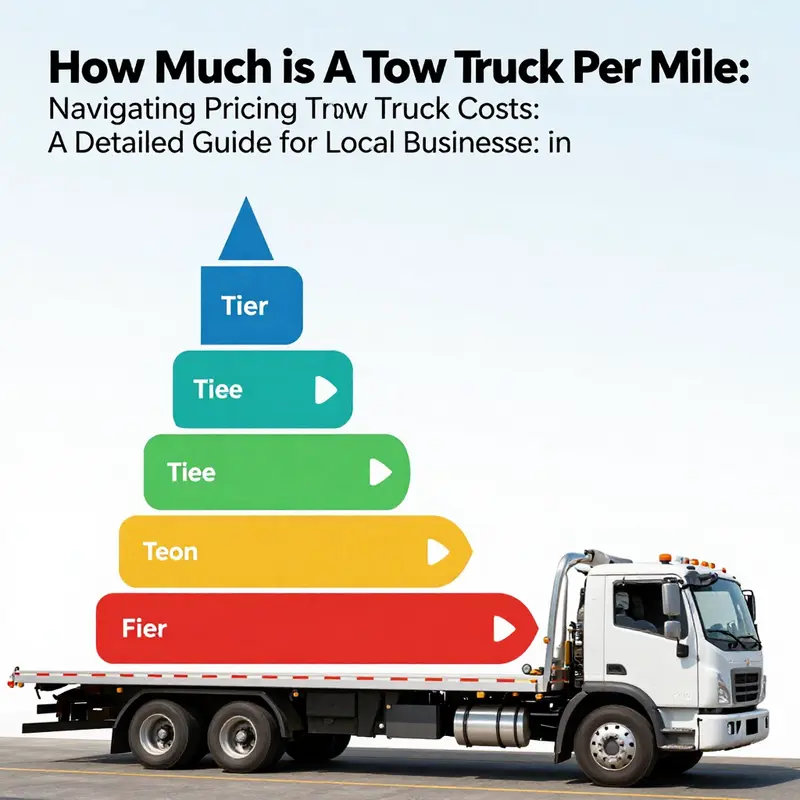
Another layer of pricing nuance comes from the provider’s chosen pricing model. Many companies use a tiered approach: a base within a bracket of miles, followed by a different per-mile rate for the next bracket, and perhaps a third tier for very long hauls. The logic is straightforward. The first few miles are the most labor-intensive and time-consuming to arrange, so the initial miles carry a higher fixed weight. As the distance increases, the incremental cost per mile can decrease, or it can stay elevated depending on whether the business is chasing long-haul work, which has its own economics. In some markets, a hook-and-roll model predominates, blending a fixed hook-up charge with a standardized per-mile fee. In others, a straight per-mile price with a modest base fee is the norm. Either way, the price tag that shows up on a quote will always be a composite of what the company has decided is the most efficient and predictable way to price the service while maintaining safety, compliance, and a margin for the business’s ongoing costs.
The regulatory layer adds an additional texture to the story. Local laws may cap how much a company can charge per mile or impose specific disclosures that require providers to display their rates publicly. These rules are intended to protect consumers from sudden markup spikes and to foster competition by making pricing more transparent. In practice, the exact effect of regulation will depend on the jurisdiction. Some regions enforce explicit caps and formalized fee schedules, while others rely on consumer protection oversight to require clear quotes and itemized bills. Regardless of the regulatory approach, the core principle remains the same: customers benefit most when they can see a breakdown of fees before committing to service, not after the truck is on the scene. This is why the most trusted towing outfits are explicit about base charges, mileage, potential surcharges for after-hours work, and any special fees for remote locations or unique equipment needs.
With those ideas in view, how should a consumer approach obtaining a tow? First, demand a detailed quote in advance. A reputable company will itemize the base fee, the per-mile charge, and any extras such as winching, fuel surcharges, after-hours access charges, or remote-location fees. If the quote lacks clarity, press for specifics before the driver arrives. It is reasonable to ask how the mileage is calculated. Some providers measure the roadway miles from their yard to your location and back, while others calculate distance along the most direct route to the repair shop or impound lot. The distinction matters when the miles pile up and can swing the total more than you might expect. You should also confirm whether the per-mile rate includes any initial lockout or setup costs. And you should verify whether there are any minimum charges for short hauls or flat-rate fees for long, cross-town trips. Consumers should read the fine print about what happens if the tow requires multiple vehicles or if the destination is not a standard repair shop but a remote facility, a depot, or an off-hour site.
To give a sense of typical numbers in today’s market, consider a spectrum anchored by a few frequent scenarios. A short tow of around five miles for a small car might be priced around seventy-five dollars when you include the base fee and the first handful of miles. This is the kind of haul you typically see in urban neighborhoods where nearby shops and quick-response fleets concentrate. A longer, more involved tow of fifty miles to a distant repair center or specialized facility often surpasses three hundred dollars, and that total can climb further in situations where the vehicle is heavy, the road is demanding, or the job requires extra equipment or an escort. The price trajectories rise in lockstep with the risk and the resources demanded by the job. Heavier vehicles, after-hours calls, and longer distances all contribute to higher costs and can push an otherwise modest per-mile rate into a higher total territory. The same mile, applied under different circumstances, yields very different totals because the business model behind that mile is pulling in multiple directions at once: the safe handling of the vehicle, the readiness of the tow rig, the driver’s time, and the need to maintain reliability for future customers.
The data landscape on towing costs has sharpened alongside consumer expectations. The American Automobile Association has long been a trusted benchmark in this space. In its 2024 snapshot, AAA notes that short-distance towing costs typically run in the range of ninety to one hundred fifty dollars, and the per-mile component generally sits between three and six dollars once the base fee is factored in. While regional variations do occur, this AAA frame provides a yardstick that helps shoppers compare quotes and avoid misperceptions about how much they should pay per mile for a given haul. It also underscores a broader truth: when you see a price that looks unusually low or unusually high for a short tow, you should look beyond the per-mile label and examine the base fee, the distance, and any added surcharges that may apply.
For readers who want to connect practical industry realities with the numbers, there is value in exploring how operations manage the day-to-day realities of towing. The tow business is as much about logistics as it is about the horizon of a long mile. Dispatch times, travel time, vehicle weight, maintenance of equipment, fuel costs, and the safety standards that govern how a vehicle is attached all shape the final bill in ways that are not always obvious from a single line item. When a driver arrives, safety protocols require time, careful setup, and sometimes the use of specialized gear. These elements are the quiet economies behind the price tag, and recognizing them helps prevent misinterpretation of a quote as a mere arithmetic exercise.
If you want to explore more about practical readiness and the realities that fleets and drivers face, you can follow industry insights that touch on emergency response and fleet preparedness. The Island Tow Truck Blog offers a candid look at how operators plan for incidents, respond to calls, and manage the realities of daily dispatch. The Island Tow Truck Blog helps connect the pricing questions with on-the-ground practice, illustrating why some jobs demand higher per-mile rates and others don’t, depending on the conditions, constraints, and the level of service demanded by the situation. The story is as much about the driver’s craft as it is about the numbers on the invoice, and that connection helps consumers develop a more informed sense of where their money goes when a tow is required.
As a final note, the most valuable approach to pricing remains proactive engagement with the provider. Ask for a written quote that clearly lists the base fee, the per-mile rate, and any potential surcharges. If the destination involves a nonstandard facility or if the time of service falls outside typical hours, confirm how those factors will be reflected in the bill. If a company cannot provide route-based mileage or a transparent itemization, seek another option. The goal is not to trap a provider into revealing a price but to empower you with a clear picture of the total you should expect so you can compare apples to apples across competing quotes. Pricing models that reveal their logic — the way they structure the hook-up fee, the mile charges, and potential extras — are the pricing models that give customers confidence rather than confusion. And in the larger arc of vehicle reliability and personal safety, it is always better to know the cost of the tow before you agree to the service rather than discovering it in the moment when you’re focused on getting safely back on the road.
External resource: https://www.aaa.com/autocare/towing-services
Final thoughts
Understanding the intricacies of tow truck costs allows local businesses to better manage expenses and customer expectations. With insights into base fees, vehicle types, timing, and pricing models, you can navigate towing rates effectively. This knowledge not only enhances operational efficiency but also fosters trust with your clients as you provide transparent and reliable service options. The next time you face a towing situation, you’ll be well-equipped to make informed choices that benefit your business.