
Understanding how much a tow truck driver can earn is essential for local auto repair shops, car dealerships, property managers, resort operators, and commercial fleet operators. These sectors often rely on towing services for smooth operations, and knowing the financial landscape can help in making informed decisions. This article breaks down the earnings overview, regional variations, and specialized job opportunities available for tow truck drivers, clarifying the factors at play and what employers can expect when budgeting for these vital services.
null
null
Pay on the Map: Navigating Regional Earnings for Tow Truck Drivers
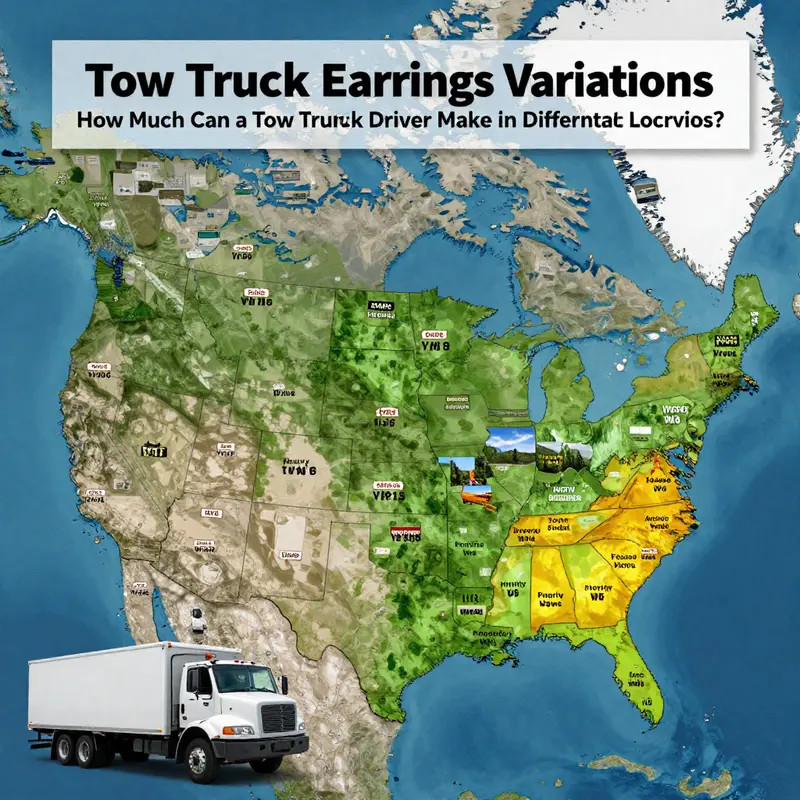
Regional earnings for tow truck drivers read like a map of cities, costs, and demand, with every dot on the chart signaling a different balance of pay, risk, and opportunity. A single wage figure rarely tells the full story. Instead, the income a driver can expect hinges on where they work, the type of towing they perform, and the tier of service their employer concentrates on. When you step back from the hourly rate and tally up annualized earnings, overtime, and benefits, the regional landscape becomes a nuanced landscape—one shaped by urban density, local competition, and geographic realities that push pay up in some places while depressing it in others. The data points gathered from North American markets illustrate a spectrum that begins in the low teens and ends near the upper forties on an hourly basis, with annual incomes following suit. Understanding why this happens requires tracing the forces that drive demand for towing services, and how those forces shift with location, season, and industry structure.
In Canada, the national average hourly wage for a tow truck driver sits around seventeen dollars and seventy-five cents, a baseline that travels up or down depending on the province and city. This average captures both busy metropolitan corridors and quieter rural routes, where volume can be thin and relief is not always steady. Provincial nuances matter a great deal. In British Columbia, the average sits just under the national mark at about seventeen dollars and eighty-five cents per hour, but a closer look reveals meaningful regional variation within the province. Richmond, a southern suburb of Vancouver with its own traffic rhythms and service demands, pays around twenty-four dollars and six cents per hour on average—roughly thirty-six percent above the national average. That premium is less about a single employer and more about the combination of high call volume, urban clustering, and the cost of living that supports higher wages in service trades. In Toronto’s broader orbit, Ottawa stands out with a pay rate around twenty-five dollars per hour, reflecting a capital region where both demand for rapid roadside response and access to a larger labor pool converge.
Meanwhile, Alberta’s overall picture runs a touch below the national Canadian average, at roughly sixteen dollars per hour, with Fort McMurray offering an exception due to its unique economic composition. Fort McMurray’s boom-and-bust cycle, tied to energy markets and remote operations, creates a demand profile that can push drivers into the forty-dollar-per-hour range or higher when overtime, hazard pay considerations, and remote-site travel are factored in. In Atlantic Canada, Nova Scotia’s Dartmouth shows lower wage pressure, averaging around fifteen dollars and seventy cents per hour, underscoring how remote or less-populated markets temper pay scales even within a country renowned for its regional diversity. These provincial snapshots illustrate a simple truth: location matters as much as skill, and often more than initial training or years of experience when it comes to the headline hourly rate.
The United States, by contrast, posts a similar overall picture but with its own national artifact: an average hourly wage hovering around twenty-one dollars and fourteen cents. That figure emerges from a large cross-section of postings and reflects the country’s vast geographic span, from dense urban centers to sprawling rural landscapes. Yet as with Canada, the real dynamism is found in the outliers—the urban hubs where traffic volume, incident response needs, and fleet scale create a wage premium. Los Angeles, New York City, and Chicago frequently appear in discussions of higher pay, driven by higher volumes of calls, complex recoveries, longer travel distances, and the variety of shifts that keep an on-call population busier for longer stretches. The clustering of high-demand markets in densely populated metro areas contrasts with more modest shorelines or inland communities where demand dips, outages occur seasonally, and the pace of work settles into steadier, less frenetic rhythms.
Numbers alone tell part of the story. On a more grounded level, the typical Canadian city can offer anything from about twenty-two dollars per hour in major urban districts to the mid-teens in smaller towns. The annualized implications are significant. In a market where a driver earns roughly forty thousand to fifty thousand dollars a year, the count factors in a mix of hours, on-call shifts, and overtime opportunities. But in places where the hourly rate hovers closer to the national average, annual earnings may sit in the mid-thirties or low forties when overtime and full-time schedules fill the calendar. In Fort McMurray and similar energy-adjacent hubs, the equation can tilt toward the higher end of the scale, but it comes with caveats—the cost of living, seasonal demand cycles, and remote location requirements that influence travel time and the total hours worked.
The picture in Canada is sharpened by concrete city-level data. Grande Prairie, Alberta, for example, aligns with a wage reality that translates into a substantial annual figure in the high forties when computed on a full-time basis. It embodies a regional dynamic where demand for roadside assistance, heavy-duty recovery, and industrial towing converges with a relatively manageable cost of living compared with Canada’s largest urban centers. In Ontario, Whitby stands out with a higher earning range that can push annual income toward the 50,000 to 80,000-dollar band, illustrating how commuter growth, municipal service needs, and a regional labor market interplay to lift the top end of pay scales. On the other coast, Dieppe, New Brunswick, sits in a lower hourly bracket, while Guelph, Ontario, maintains a competitive 36-dollar-per-hour rate, signaling how proximity to major markets and the density of service demand influence the compensation landscape. Vancouver, with its renowned cost of living, presents another paradox: some full-time postings push monthly earnings into the four-thousand-to-eight-thousand-dollar territory, reflecting not only hourly wage but the heavy weight of hours, benefits, and the value of rapid, reliable service for a dense urban economy.
In the United States, the overall average of about twenty-one dollars per hour translates to roughly forty-six thousand dollars a year, a figure that can be comfortably exceeded in cities where the demand for rapid roadside repair, hospital-to-service work, and accident recovery remains consistently high. The divide between high-wage urban centers and rural areas is a familiar pattern in the United States, as it is in Canada, where the difference between a metropolitan hub and a remote town can determine whether a worker earns a solid mid-career wage or sees a more modest, steady, but predictable paycheck. The structural drivers are clear: urban density intensifies the need for quick-response towing, specialized equipment, and consistent coverage, all of which justify higher pay for drivers who can manage the complexity of heavy-duty and multi-vehicle operations. Rural markets, while offering steadier hours in some cases, often rely on a smaller pool of clients, fewer competing firms, and longer travel distances, all of which can compress the hourly rate but sometimes offset the rate with extended on-call periods.
The regional differences extend beyond North America as well. A broader lens can reveal that some international markets, like parts of Australia, show similar patterns of variation with pockets of higher compensation in dense regions, though the data can be sparse or uneven across locales. These international comparisons reinforce a practical truth: a tow truck driver’s earnings are not universal; they are a function of local market dynamics, regulation, fleet structure, and the geography of demand. A driver planning a career today benefits from treating location as a first-order variable—akin to choosing a specialty within the trade or selecting a particular shift; all of these decisions can have a pronounced impact on the year-to-year paycheck.
With these regional patterns in view, what does it mean for someone entering the field or considering a move? First, the numbers should be read as part of a broader calculus that includes cost of living, hours, benefits, and the opportunity to develop specialized skills. In high-demand corridors—urban cores with heavy traffic and a large industrial footprint—a driver may land in the upper end of the wage range and enjoy a schedule that accommodates overtime and weekend shifts. In more rural or economically steadier regions, the hourly rate may be more modest, but the consistency of demand, predictable on-call cycles, and the possibility of steady, long-term employment can offset lower top-end earnings. The trade-off often boils down to how the driver values flexibility, travel, and the variety of work, against the backdrop of their personal priorities like family time, commute, and long-term career trajectory.
What about the practicalities that shape earnings in real terms? The data reveal several recurring themes. First, the level of specialization matters. A driver who can manage heavy-duty tow operations, recoveries from accident scenes, and long-distance tows has access to a broader range of assignments, which can push the hourly rate higher and create more stable revenue streams across seasons. Second, the geographic distribution of demand dictates the rhythm of work. Markets with constant on-call coverage, major highways, and industrial zones require more drivers, which can drive wages up as firms compete for skilled labor. Third, the cost of living acts as a mental model for both workers and employers. In places with high living costs, even modest premium compensation may feel necessary to maintain a reasonable standard of living, while in communities with lower costs, the same wage might deliver comparable purchasing power with fewer hours worked or more generous overtime opportunities.
From a career development perspective, regional variation suggests a strategic approach. If a driver aims for the highest possible annual earnings, moving to or prioritizing work in high-demand urban centers or energy-driven hubs can be a prudent path. Conversely, if stability and a more balanced lifestyle take precedence, smaller cities or regions with steady call volumes might offer the best fit, even if the top-end hourly rate is lower. The choice also interacts with the availability of training and certification that can unlock advanced work—like heavy-duty towing, recovery at accident scenes, or long-haul tows—which tends to cluster in regions with substantial fleet operations and robust roadside networks. In any case, the value of continuous learning and hands-on practice cannot be overstated. The more a driver can demonstrate competence with winching, crane-assisted recoveries, and safe highway operations, the more opportunities emerge to command premium rates within the same regional market.
For prospective and current drivers, a practical takeaway rests in actively surveying the local field. Job postings, local classifieds, and regional labor statistics can illuminate the range you can expect in your area and the conditions that accompany those wages. It also helps to track how wages evolve over time, as market shocks—such as spikes in fuel prices, changes in insurance costs, or shifts in traffic volume due to development projects—can reposition the balance of pay and hours. An ongoing commitment to understanding the local demand, paired with a willingness to adapt to new tasks and certifications, is often the most reliable lever for enhancing earnings. The ROI on training in specialized tow operations can be substantial, enabling drivers to charge premium rates in markets where heavy-duty and complex recoveries are common.
As you scan the map of potential earnings, links to community resources and industry perspectives can provide a broader understanding of what drives pay beyond the numbers. For instance, industry insights from established tow-truck communities emphasize the importance of responsiveness, reliability, and the ability to manage a diverse fleet of equipment under variable weather and road conditions. These qualitative factors often translate into quantitative outcomes when analyzed over a year or two in a given market. The blend of rapid service expectations, incident-driven demand, and the operational realities of on-call work paints a realistic portrait: earnings scale with the complexity of tasks accepted and the geographic breadth of service coverage. If you want to see how regional pay translates into real-world job postings and compensation ranges, checking current listings can be revealing. They illustrate how firms weight experience, specialized capabilities, and shift flexibility as they compete for a limited pool of skilled drivers.
For readers seeking a deeper, community-driven perspective on the regional nuances of tow work, the Island Tow Truck Blog offers ongoing discussions about pay, conditions, and the ebb and flow of demand across different regions. The blog aggregates on-the-ground insights that pair well with the raw data presented here, providing a practical lens through which to interpret a region’s wage signals. This contextual layer helps translate statistics into a narrative about daily life on the job and the lived experience of pay in different locales. For further reading and a closer look at region-specific considerations, consider exploring the Island Tow Truck Blog.
The big takeaway remains straightforward: regional earnings vary widely, and location is a principal driver of your potential take-home pay. A driver who plans to maximize income will weigh both the hourly rate and the calendar of hours, shifts, and overtime that a market supports. They will also invest in the capabilities that command premium rates, such as heavy-duty towing and complex recovery operations. And they will stay curious about the markets they serve, watching for shifts in demand driven by development projects, seasonal weather patterns, and evolving transportation needs.
As you map your career path, remember that salary data is a guide, not a guarantee. Real-world earnings depend on how you navigate the geography, the kinds of calls you handle, and the breadth of your skill set. In the end, the pay you earn is not just a function of where you stand, but where you are willing to go—and how you expand your toolkit to meet the unique demands of each location you serve. For those who want to anchor their expectations in a broader dataset, real-time job postings and market analyses offer the most current snapshot of what a tow truck driver can expect to earn in a given region. And as markets shift, so too can the map of earnings, inviting drivers to rechart their routes toward opportunities that align with both financial goals and professional growth.
External reference for broader context: For a comprehensive look at current wage data across regions, explore Indeed’s Canada tow truck driver job listings, which provide real-time reflections of how employers value experience and regional demand. https://www.indeed.com/jobs?q=tow+truck+driver&l=Canada
Beyond the Base Rate: Specialized Roles and Real Earnings for Tow Truck Drivers
Tow truck driving sits at the intersection of skill, timing, and opportunity. The numbers people quote about what a tow operator can earn are rarely a single figure. They are the product of where you work, the kinds of calls you answer, the shifts you cover, and how effectively you mobilize technology and reputation to maximize every hour behind the wheel. When you map the pay landscape across Canada and the United States, a broad baseline emerges: drivers tend to earn somewhere in the low to mid-teens per hour in some regions, climbing toward the higher forties per hour in others, with significant variation depending on location, employer, and the particular duties of the job. But the real story isn’t just the hourly wage; it’s the structure of the work, the kind of towing you specialize in, and how you leverage platforms and client relationships to lift earnings beyond the average. In this chapter, we explore how specialized roles, market demand, and modern work arrangements reshape what a tow truck driver can expect to take home, going beyond the simple math of a rate per hour toward a more dynamic, real-world picture of earnings potential.
Across North America, the baseline wage for tow truck drivers skews toward a modest start in many regions, with notable exceptions in high-demand pockets. In Canada, for example, the national average has hovered around CAD 17.75 per hour, based on recent salary reports compiled through late fall 2025. Those numbers hide a wide geographic dispersion. In more urbanized or industrial provinces, the starting point can be a touch higher, and in remote or resource-driven zones, the upside can be dramatic when demand coincides with peak hours, shift differentials, or heavy-duty workload. In the United States, the typical hourly wage sits higher on average, with a national figure around USD 21 per hour reported from broad job postings data in recent years. Those differences reflect not only cost of living and union dynamics but also the realities of on-demand roadside work, fleet maintenance cycles, and the tempo of traffic and weather across regions.
Yet the hourly base is only one piece of the payroll puzzle. A driver in a busy urban market or a resource-rich region can see pay drift well above the nominal average when the work shifts toward specialized towing, high-volume roadside rescue, or equipment-heavy operations. Consider the kinds of specialized calls that can reshape earnings. Heavy-duty towing, winching for commercial fleets, vehicle recovery from hazardous locations, or incident-response work at accident scenes often command higher rates or longer hours. In provinces with a robust service economy and substantial fleet activity, a driver who builds expertise in a few of these niches can see substantial upside. When the job combines precise rigging, careful vehicle handling, and the ability to move cars, trucks, and occasionally more specialized equipment safely and efficiently, the pay scales shift in meaningful ways.
Regional nuance matters as well. In some areas, a town or city can act as a hub for 24/7 roadside services. In others, the market is more seasonal or tied to industrial activity—think oil fields, mining regions, or large construction corridors where demand spikes during specific shifts or weather events. In Canada, for example, regions with high demand and shorter supply of drivers can push hourly wages upward. A driver willing to work nights, weekends, and holidays may encounter a stronger premium in these markets because the demand for reliable, fast response remains constant even when ordinary business slows. By contrast, less-populated regions or markets with a larger supply of drivers may offer more predictable but lower base rates. The takeaway is straightforward: where you drive can matter as much as how you drive.
The more nuanced picture of earnings emerges when we consider the actual job mix within a region. In a mid-size city or a rural area with a robust network of towing service providers, there are often two tracks that can intersect to lift take-home pay. The first is a higher concentration of specialized tasks—recoveries, vehicle removals from difficult access points, and complex winching operations that require skilled handling and the right equipment. The second is the presence of on-demand platforms or dispatch networks that streamline requests for service in real time. These platforms, not products or gimmicks, are a practical channel through which experienced drivers can secure more assignments and reduce idle time. They allow a driver to see nearby tasks as soon as they appear and accept calls that fit their rating and schedule. And when the driver builds a solid reputation—completing calls with care, protecting client property, and maintaining clean, well-serviced vehicles—the platform rewards that reliability with more work and better odds of higher earnings going forward.
The literature and data we’ve consulted show that within Canada, there are concrete casings where specialized routes and local demand can tilt the pay scale higher than the national average. In Grande Prairie, a rural-leaning Alberta market with a growing service footprint, one local company has been reported to start full-time positions around CAD 48,000 per year. That’s not the upper bound, but it signals a market where steady, reliable work in a high-demand corridor can push annual earnings beyond the simple hourly rate. In Whitby, Ontario, another market with strong seasonal and industrial activity, reported annual ranges extend into CAD 50,000 to CAD 80,000 for certain driving roles. Those numbers reflect more than base pay; they point to roles that include regular on-call shifts, overtime opportunities, and the chance to take on more technically demanding tasks within a single employer’s fleet.
Even in smaller markets where the base hourly wage sits closer to the national average, the narrative remains consistent: specialized work and scheduling flexibility create the potential to outperform the baseline. In Dieppe, New Brunswick, for instance, hourly wages in the 18 to 25 CAD range are documented, but those same markets can also host roles that blend routine towing with additional responsibilities—like fleet support, maintenance assistance at the yard, and on-call roving duties—where the hourly rate rises as part of a broader compensation mix. This illustrates an important dynamic for anyone evaluating the earnings ladder: the wage per hour is essential, yet the real value often shows up in the combination of hourly pay, on-call premiums, overtime, and the scope of duties that go beyond standard roadside assistance.
What does this mean for someone planning a tow truck career with an eye toward maximizing income? The path to above-average earnings usually combines several threads. First, specialized capabilities matter. A driver who becomes proficient in heavy-duty recoveries, crane-assisted vehicle extraction, or complex winching can access higher-rate calls and a wider geographic market. Second, readiness and reliability pay off. Being able to respond quickly during peak times, handling calls with discipline in hazardous conditions, and maintaining a professional demeanor with clients can build a strong reputation on a dispatch platform and within a local fleet. Third, strategic location selection matters. If you’re willing to work in markets with sustained demand—whether industrial corridors, resource hubs, or dense metropolitan areas—you’ll encounter more opportunities to accumulate high-value tasks and longer shifts. And finally, embracing flexible work arrangements can unlock earnings that aren’t visible in a single-hour wage. Dispatch platforms and on-demand call systems are not about replacing traditional hours; they’re about layering in extra value by aligning work with the times when you can be most productive.
In practice, this means a driver can start with a reasonable base wage, then add income through several channels. Overtime and after-hours calls, which tend to cluster on nights, weekends, and holidays, can push hourly earnings well above the standard rate. Special assignments in difficult locations—like a winch-out from a ditch, a recovery from unstable ground, or a dramatic roadside extraction under tight time pressure—typically come with a premium. The same applies to longer, multi-vehicle recoveries in industrial settings, or urgent fleet support during a critical maintenance window when a company cannot tolerate downtime. Each of these call types represents a potential upward nudge to income that can accumulate quickly for the driver who is well-prepared, well-equipped, and well-connected within the market.
Technology and modern dispatching systems also alter the earnings equation. Rather than waiting passively for calls, drivers can engage with real-time task streams that increase job throughput and reduce idle time. The most successful drivers leverage these tools to align their schedules with peak demand and to choose tasks that fit their expertise and equipment. A dispatcher’s trust grows when a driver consistently completes calls safely and efficiently, which in turn leads to more opportunities, better task routing, and, ultimately, higher earnings. The best observers of this system note that the blend of stable base pay with a high-performing on-demand component can translate to total compensation that climbs far above the region’s headline hourly rate. This is not a magical formula; it depends on practical factors: vehicle readiness, training in safe loading and securing techniques, familiarity with local regulations, and a customer-service approach that leaves clients satisfied enough to become repeat customers or to refer new tasks through word-of-mouth.
The broader context for aspiring drivers is that the earnings ceiling expands with experience, discipline, and adaptability. In some markets, the cap is exercised by specialization: the more you can do within a high-demand niche, the more you will be valued. In others, the cap is a function of platform savvy: knowing how to maximize tasks in off-peak windows, how to present yourself in the eyes of the client, and how to balance speed with safety to preserve long-term earning power. For a driver who values innovation and flexibility, technology becomes a partner rather than a constraint. A driver can, for example, cultivate a pattern of on-demand work that aligns with personal preferences—working a portion of the week in a high-demand area and supplementing with off-hour calls in a quieter locale when needed. This hybrid approach can smooth income variability and secure a steadier annual take-home, even as the hour-to-hour rate fluctuates with market conditions.
From a career-planning perspective, there is value in studying the real-world data and then translating it into a personal roadmap. If the goal is a salary that comfortably exceeds a national baseline, start by identifying markets where demand remains consistently high and where the mix of calls tends toward specialized services. Then, cultivate skills that make you indispensable to fleets and customers alike. This means investing in safe-driving certification, learning how to handle a range of vehicles—from motorcycles to heavy-duty trucks—and becoming proficient with the equipment used in safe towing, secure strapping, and controlled lifting. Building a reputation for reliability is a form of currency: it unlocks more tasks, reduces response times, and, over time, compounds into a higher average earnings rate.
The conversation about earnings also intersects with how a driver chooses to work. Some people prefer a steady, predictable schedule with a reliable base pay and modest overtime. Others chase opportunities in peak demand areas and operate on a flexible basis, taking on as many high-value calls as possible and using platforms or direct dispatch to maximize output. Either path can be financially rewarding, but the key is alignment with personal priorities—schedule preferences, risk tolerance, willingness to travel, and appetite for the responsibility that comes with handling larger loads and more complex recoveries. In the end, the chapter you write for your own career is shaped by where you live, what kinds of tasks you take on, how you leverage technology, and how much you invest in skill-building and customer relations.
For readers seeking practical guidance on how to begin expanding earnings in this field, a good place to start is understanding how the market talks about value in this line of work. Local wage reports, job postings, and employer case studies collectively illustrate a roadmap rather than a fixed ladder. If you want deeper insight into how sectors of the industry discuss best practices, a resource-oriented overview from industry-facing outlets can be illuminating. And for perspectives on fleet management and emergency response strategies that can affect the bottom line for a driver, you can find additional perspectives on fleet operations and emergency readiness in practical blogs that discuss real-world approaches to mobile support and crisis preparedness. For broader context on industry trends and career opportunities, consider visiting the Island Tow Truck blog, which offers a broader view of how tow operators fit into modern fleet operations and roadside service ecosystems. You can explore it here: the Island Tow Truck blog.
As you plan a path toward lucrative specialized roles, it’s worth noting another outcome of the evolving market: the potential to diversify income streams beyond core towing. Some drivers expand into ancillary services that align with their core skills—transporting vehicles for auctions, assisting with vehicle storage and staging for dealers, or providing on-site recovery support for fleets during critical maintenance windows. While these opportunities require additional time and training, they also compound earnings and create a more resilient financial profile in a profession that can be sensitive to seasonal swings and market disruptions. The narrative that emerges is not a single wage made in isolation but a portfolio of earnings channels that a seasoned driver can assemble over time.
In closing, the question “how much can a tow truck driver make?” deserves a layered answer. The base wage represents a starting point, but the true earning potential hinges on specialization, market demand, and the willingness to integrate flexible, platform-enabled work with dependable, high-skill tasks. In markets with sustained demand and a culture of professional towing, total compensation can climb beyond the headline hourly rate and beyond conventional full-time wages. For drivers who embrace ongoing training, cultivate a strong service ethic, and leverage real-time dispatch opportunities, the income trajectory moves from a simple hourly rate toward a robust, multi-channel earnings equation that reflects both the road’s realities and the driver’s ambitions. The road to higher earnings is not simply about driving faster; it’s about driving smarter, safer, and more strategically, every mile of the way.
External resource: Indeed Canada — https://www.indeed.ca/
Final thoughts
The earnings potential for tow truck drivers is influenced by various factors, including location, experience, and the type of towing services provided. Understanding these elements is crucial for businesses in automotive, property management, and fleet industries to effectively budget for and leverage these services. By recognizing the potential earnings for tow truck drivers, you can make informed decisions to enhance your operations and meet your needs more effectively.