In the sprawling and vibrant world of Los Santos, the need for a dependable tow truck emerges unexpectedly, whether you’re a local auto repair shop looking to assist customers or a fleet operator needing roadside assistance. Understanding where to find these essential vehicles not only enhances your gameplay experience but also supports the seamless functioning of your business ventures. Each chapter of this article will guide you through the various locations of tow trucks, from depots and garages to random road spawns, gameplay mechanics, and official resources. Pull up a seat and prepare to dive deep into the world of towing in GTA 5.
Tow-Truck Trails: A Comprehensive Guide to Finding GTA 5’s Heavy-Duty Helpers Across Los Santos and Blaine County
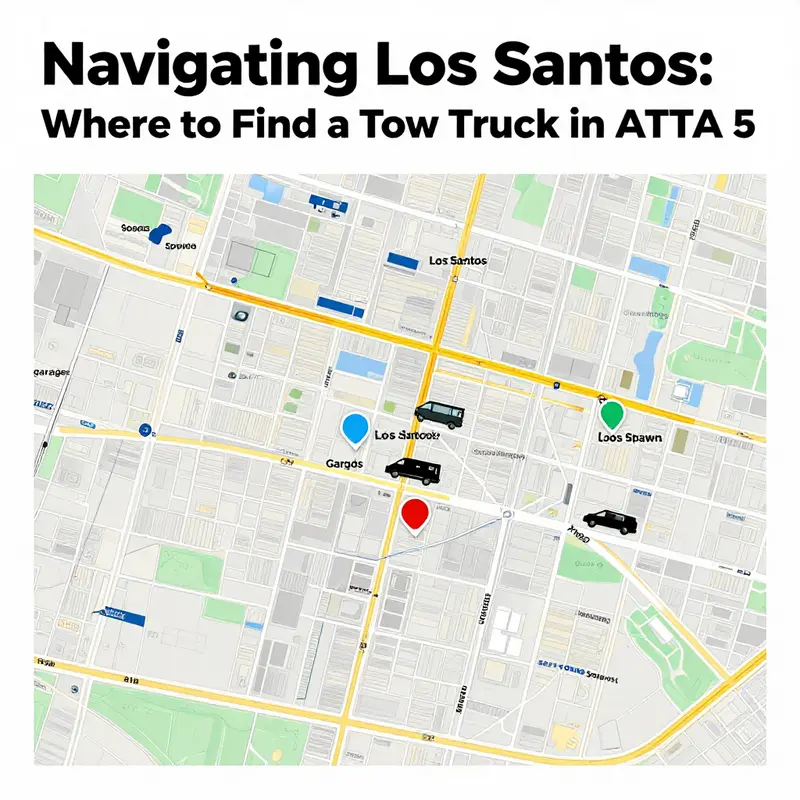
In GTA 5, the world is designed to feel lived-in, where not every service is front and center, yet several essential tools appear in predictable places, lending texture to the game’s car culture. Tow trucks, with their unmistakable crane arms and bright yellow or orange livery, serve not only a practical role but also a narrative one. They imply the city is full of breakdowns, salvage jobs, and emergency responses that keep the urban machine running, even if you rarely see them in the foreground. For players who want to observe the ecosystem of vehicle movement or who need a tow themselves after a collision, knowing where tow trucks tend to cluster is a useful advantage.
To begin with, Los Santos—the game’s bustling core—offers tow trucks in a few dependable patterns. Garages and repair shops are common staging grounds. In districts near Beverly Hills and Downtown Los Santos, you’ll notice tow operators stationed close to service bays where mechanics work on everything from sedans to supercars. The city’s arterial roads, too, are typical stages for tow truck appearances. Look for these yellow cranes along the major road network where disabled cars crowd the shoulder, often near I-5 freeway exits. The Epsilon Street corridor and Maze Bank Blvd, in particular, function as micro-hubs, where traffic incidents or abandoned vehicles may trigger a tow operator’s immediate response. These spots reflect the real logic of the game’s spawns: a tow truck is often nearby when a vehicle problem arises along busy routes or near commercial districts that attract road-use fatigue or crashes.
Beyond the core city, the map expands into suburbs and deserts that carry their own logic. The San Andreas region is not a static backdrop but a living space with pockets where tow trucks appear with a rhythm of their own. Sandy Shores, the desert outpost that handles a constant stream of stranded travelers along dusty backroads, is one such pocket. Here the tow truck’s role resembles that of a roadside mechanic, arriving to haul away a beached cruiser or to reposition an abandoned vehicle that would otherwise obstruct the highway. Paleto Bay, with its harbor bustle and fuel stations, is another focal point. The rust-colored equipment and the occasional crane-laden vehicle show up near the Rusty Hook Garage and around dirt-road junctions that line the coast. These areas are not merely scenic; they function as logistical nodes in the game’s economy of moving assets and maintaining access across the map’s far-flung edges.
In more rugged geographies, tow trucks appear in places where the terrain itself complicates transport. Great Chaparral, a mountainous enclave, can produce tow truck sightings after a vehicle crash or breakdown on rough terrain. The mechanics of the spawn are not random in the sense that you must be in the right place at the right time; rather, they reflect a blend of proximity to service venues and the likelihood that an incident will demand a rescue or re-placement of a vehicle. The occasional appearance near Fort Carson Military Base or Lancaster Airfield—restricted zones with their own specialized vehicles—adds texture to the belief that tow trucks play a role in more than casual driving. While these military-adjacent sightings are less common, they underscore the broader theme: the GTA 5 world rewards players who understand the geography of service and mobility.
Of course, the game’s systems are dynamic. Spawns shift with missions, updates, and even the day-night cycle, which means that the same route can yield different results across play sessions. Rockstar’s official guidance and the community-tested observations converge on a practical rule: if you’re chasing a tow truck, think in terms of zones rather than exact coordinates. The official GTA 5 Online Wiki remains a reliable reference for spawn patterns and their variations, while seasoned players often share real-time reports on social forums to capture ephemeral shifts in behavior. The dynamic spawning system is part of the game’s charm, inviting exploration and patient observation rather than a frantic search that depends on a single hot-spot.
For players who want to engage with tow trucks beyond random encounters, there are purposeful ways to interact with these vehicles in different modes of play. In GTA Online, you can participate in the “Tow Truck” job through the Pegorino service in the Chiliad area, a structured task that lets you legally earn money by towing vehicles. In single-player mode, hijacking a tow truck is possible when one is unattended or parked, but it carries risk: towing a car while driving can draw police attention and complicate your run. The vehicles themselves are easy to spot; look for the yellow or orange bodies with crane arms extended, often parked near accident scenes or service centers rather than waiting idle in quiet backstreets. When you crash in remote regions, you may notice a tow truck arrival to haul away the wreckage, a nod to the ecosystem’s realism even if the moment is brief and asynchronous with your immediate gameplay.
In practice, the map’s towing network is more about patterns of access than about any single, guaranteed spawn. If you’re chasing a tow truck to complete a mission or simply to study the city’s logistics, a cautious approach works best. Start where maintenance culture is strongest: repair shops, auto garages, and service lanes adjacent to heavy traffic. Expand your search toward the city’s industrial zones and airports, where The Works and surrounding facilities can attract tow activity, especially after heavy traffic or logistical incidents. You may also notice tow trucks at the margins of the city near the docks and industrial sprawl, where vehicles converge after long hauls or after a breakdown on the highway. These cues—color, crane presence, proximity to service infrastructure—help you separate genuine tow trucks from other utility trucks that share the same color palette.
For readers who want a concise synthesis of this knowledge in a single, practical frame, think of the tow truck as a mobile service unit drawn to the map’s high-traffic arteries and service hubs. The combination of garages, repair shops, and major roadways forms the backbone of tow-truck availability in Los Santos and Blaine County. If you prefer a narrative cue, imagine the tow truck as a patient observer of the city’s traffic rhythms, arriving where a vehicle has exhausted its last chance at roll-on repair and salvage. The same logic applies to the broader San Andreas landscape, where the desert, coastal towns, and mountainous passes create a diversified network that ensures you can encounter a tow truck in multiple contexts, not just one favored site.
For those who want to deepen their understanding beyond personal observation, a short guided exploration can become a practice in map literacy. While the spawn system remains a variable, you can rely on a handful of recurring anchors: Paleto Bay’s depot near the harbor, the Rusty Hook Garage area in Paleto, the Beverly Hills-adjacent repair shops in Los Santos, and the major highways that thread through downtown and the outskirts. The more you learn these anchors, the quicker you’ll locate a tow truck when you need one, whether to tow a vehicle for a mission, to practice a driving sequence in a controlled setting, or to study the mechanics of towing as a game mechanic. For additional community-driven insights, the Island Tow Truck blog offers practical notes drawn from real play—Island Tow Truck Blog. Their discussions illuminate common patterns and provide a human voice to the otherwise technical map data.
As a closing thread tying this chapter to the broader article, remember that the essence of finding a tow truck in GTA 5 lies in reading the city’s geography as a living system. Tow trucks inhabit the edges of service networks—the garages that fix cars, the highways that carry them, and the industrial sprawl that absorbs their labor. The presence of tow operators in Paleto Bay, Sandy Shores, and the city’s central districts is not merely coincidence; it is a designed texture of the world’s logistics. The knowledge you’ve gathered here should equip you to anticipate encounters, plan routes, and approach encounters with the right mix of patience and opportunism. And when you’re ready to verify the latest spawn behavior against official channels, consult the Rockstar Games Official Support Page for up-to-date guidance on game mechanics and spawn patterns, particularly as the game evolves with updates.
External resource: Rockstar Games Official Support Page.
End with a reminder that map dynamics mean exact spawns vary; stay tuned to community reports for the freshest patterns, and use the official pages as a baseline for understanding how the game’s internal clock and mission triggers interplay with tow-truck appearances.
Tow Trucks on the Move: Mapping Depots, Garages, and Roadside Spawns in GTA 5
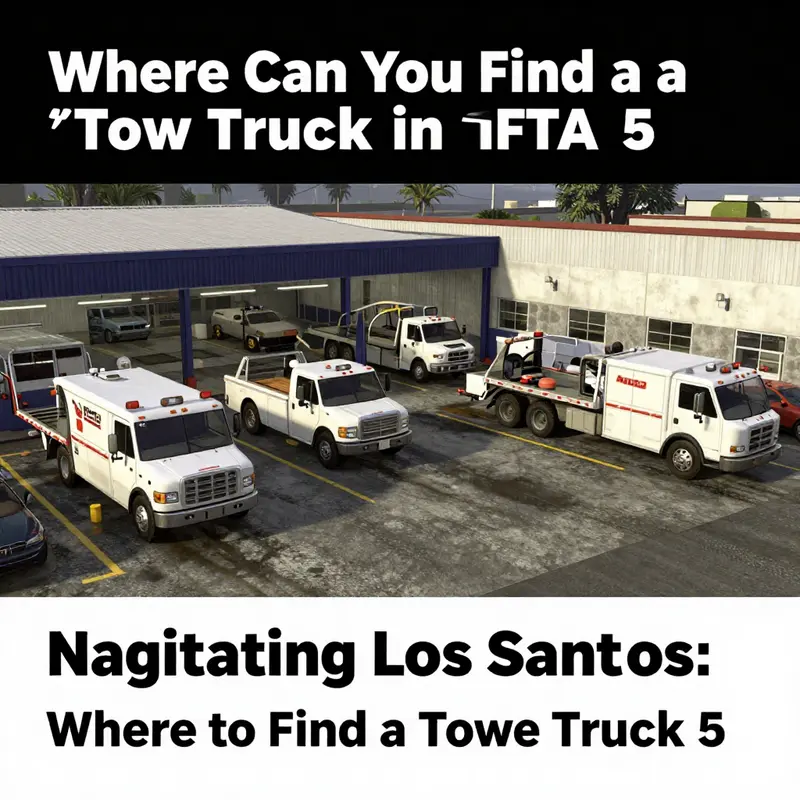
Tow trucks in GTA 5 are more than just a mechanic for recovering damaged vehicles; they are a lens into how the game world organizes its traffic, its shortcuts, and its sometimes surprising pockets of opportunity. If you want to run a steady towing operation in Los Santos and Blaine County, you need to understand where these rugged helpers tend to rest, where they appear in the wild, and how their availability shifts with the mission load. The map is generous in its variety, but the pattern is consistent enough to make the search feel purposeful rather than random. In practice, tow trucks cluster in three broad ecosystems: depots where they are stationed, garages and repair shops where they sometimes linger, and random roadside spawns that rise with certain missions or events. When you start to observe these ecosystems together, a practical map emerges, one that can turn a casual drive into a predictable opportunity rather than a random encounter.
Depots stand at the core of tow truck availability. These are the dedicated facilities or lots where tow trucks are stored, maintained, and sometimes reinforced for a shift in operations. One widely recognized depot is the Tow Truck Depot in Paleto Bay, a location that anchors the northern portion of the map and sits near a major artery that drivers use to cut through Blaine County. The depot is marked by a clear tow truck icon on the map, a small but telling signal that this is where these vehicles go to rest when not in use. The Paleto Bay depot is not just a place to begin a tow run; it is a waypoint that anchors a route, offering a reliable starting point for missions that require heavy hauling or the orchestration of multiple recovered vehicles. While Paleto Bay is a standout, other depots dot the landscape, and each one tends to mirror the same logic: a secure, accessible harbor for towing equipment that the player can access when the story or a given mission calls for it.
Beyond the main depots, the map reveals a network of garages and repair facilities that serve as informal hubs for tow trucks. These locations are often tucked into the more industrial or commercial corridors, or they appear near neighborhoods where illicit activity has long since blurred into the ordinary. In this sense, the garages near Chumash, Vice Point, and Elysian Fields can become practical spawn points for tow trucks, especially when a mission or a random event nudges the vehicle toward recovery or transport tasks. The proximity to repair shops is not a mere accident of game design; it mirrors a plausible ecology where trucks are kept close to maintenance hubs, ready to roll out when a call comes in, or when a client needs a vehicle retrieved and delivered. The result is a sense of continuity: a tow truck is never entirely out of reach, even if you do not cinema-score your way to a depot. It can be found tucked away in a parking lot or behind a service bay, waiting for the next run. The interaction feels organic because the vehicle is not isolated to one fixed point; it migrates with the city’s rhythm, a quiet reminder that GTA 5 is balanced on a dynamic, living map rather than a static stage.
Then there is the thrill of the road, the spontaneous catch that makes a tow truck feel earned rather than assigned. Tow trucks also appear as random spawns on major highways or city streets, especially during missions that involve vehicle recovery, car theft plots, or other story progressions where time is of the essence. These roadside spawns lend a sense of realism to the game world and provide a tangible incentive to keep an eye on the rush of traffic as you steer through the urban sprawl. The exact points can vary with missions, but the general pattern remains consistent: the vehicle shows up where it makes sense in the flow of the city, often near corridors that lead to a depot or toward an assigned recovery zone. Players who learn to anticipate these spawns will find themselves less dependent on luck and more capable of planning their routes to include towing tasks, salvage runs, and, eventually, a steady stream of mission-friendly hauls.
For those who leap into GTA Online, the universe expands in both scope and economic opportunity. The tow truck is not just a mission tool here; it becomes a business asset with its own trajectory. In the online world, tow trucks can be purchased through specific in-game menus, and they function as working vehicles within tow operations. The availability of a tow truck in GTA Online adds a layer of strategic choice to the roleplay and business simulations that players enjoy. You can buy a tow truck from a designated garage or through a business setup that aligns with the towing service theme. This expands the concept from a game mechanic into a micro-economy you can build, manage, and optimize over time, mirroring real-world service industries where assets are allocated to meet client demand and logistical constraints. The online ecosystem also makes it possible to collaborate with other players, coordinate recovery missions, and share the workload in ways that feel authentic and rewarding.
In the pursuit of a comprehensive understanding of where tow trucks live and how they move, it is helpful to cross-check a few canonical sources that document spawn locations, uses in both story and online modes, and the broader significance of the tow truck in the GTA universe. The official GTA Online Wiki run by Rockstar Games and the community keeps a detailed ledger of unique spawn points, mission-based usage, and the evolving role of the tow truck across both single-player and online modes. Keeping an eye on these resources can give players a sense of where to expect certain vehicle patterns, what missions tend to unlock particular towing capabilities, and how the vehicle can shape your approach to tasks that require vehicle recovery or transportation. For readers who want a deeper dive beyond the chapter’s scope, these references offer a reliable map of possibilities and a steady point of verification as the game updates.
If you want a practical, human way to stay connected to the lore and the real-world parallels that shaped the tow truck in GTA 5, consider following a specialist resource that curates hands-on insights and community-tested discoveries. You can read more at the island tow truck blog; it provides a broader perspective on fleet operations, emergency response routines, and the practical implications of deploying towing assets in large, complex environments. This kind of outside perspective helps translate the in-game mechanics into a coherent strategy that you can apply when mapping your routes, selecting your spawn points, and deciding when to shift your focus from depot runs to road challenges. The goal is not to memorize a single route but to cultivate a flexible sensibility about how tow trucks fit into the larger flow of GTA 5, how different locations interact with your objectives, and how to balance risk and reward when a mission demands a vehicle that can haul, lift, and transport with a steady hand.
In terms of real-time updates and staying current with changes that can affect tow truck spawns and operations, the Rockstar official vehicle list remains a crucial touchpoint. It is a reliable resource to consult when official adjustments alter spawn behavior, introduce new vehicle variants, or change mission parameters that rely on towing assets. The landscape can shift with patches and DLCs, so having a baseline understanding of where tow trucks are likely to appear, plus a plan for how to leverage depots and garages, ensures you remain effective even as the game evolves. The balance between the predictability of depots and the spontaneity of road spawns creates a dynamic that makes towing in GTA 5 both a structured pursuit and an exciting, unfolding challenge.
To summarize, the most dependable places to find a tow truck in GTA 5 are the depots—especially the Tow Truck Depot in Paleto Bay—the network of garages and repair shops scattered across Los Santos and Blaine County, and the occasional roadside spawns that punctuate missions and free-form explorations. In Online mode, you gain access to towing assets as part of a broader business framework, which broadens the practical uses of the vehicle beyond mission objectives. By combining knowledge of depots, garages, and spawn patterns with up-to-date references and community observations, you can build a reliable approach to securing a tow truck when you need one. The result is not just a vehicle you can use; it is a cohesive tool within a living game world that rewards planning, curiosity, and a willingness to explore the city from the lanes of the highway to the back alleys of the industrial zones. For players who want to share their experiences or verify a location, the mix of official documentation and community knowledge provides a solid foundation for navigating the towing landscape in GTA 5.
External resource: For a definitive, up-to-date list of GTA Online vehicles, see the official vehicle list at Rockstar Games. Official GTA Online Vehicle List
Tow Trucks on the Move: Navigating Depots, Road Spawns, and Random Encounters in GTA 5
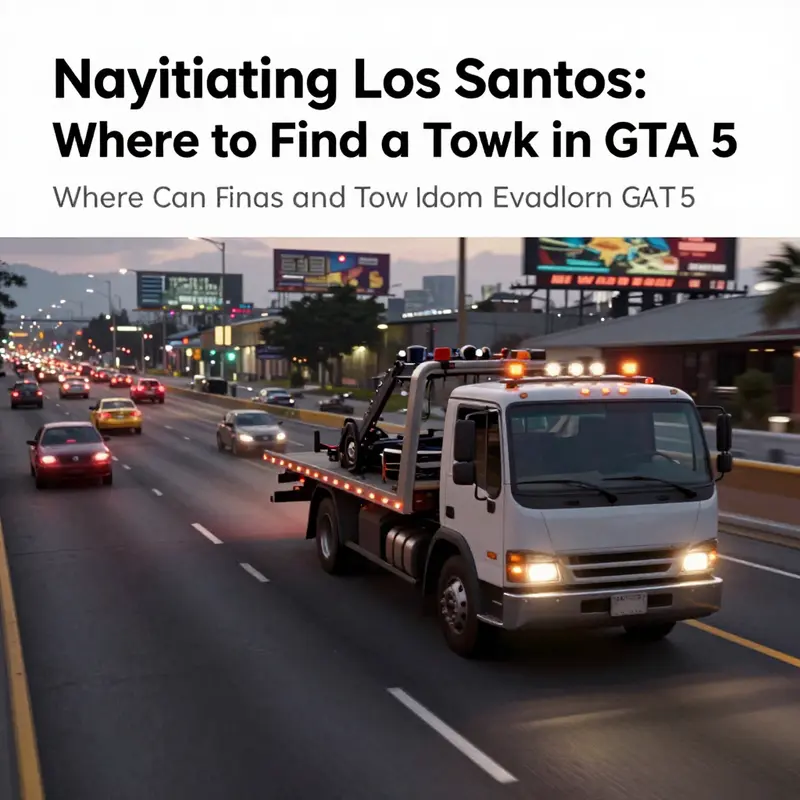
Tow trucks in Grand Theft Auto V are not just a mechanic’s tool tucked away in a garage; they’re a traveling presence that threads through the map, offering both utility and discovery. In a world built on motion, the tow truck becomes a companion for missions, a practical asset during long delivery runs, and a reminder that Los Santos and its surrounding counties are more dynamic than a simple parking lot. The way these vehicles appear—whether tucked in a depot, parked near a repair shop, or rolling up from the fog of a random event—speaks to the game’s design philosophy: a living landscape where transport, repair, and consequences collide in real time. To understand where you can reliably find a tow truck, you need to follow the map’s connective tissue—the depots that anchor the vehicle to a place, the clusters of garages and industrial zones where maintenance beckons, and the moment-to-moment chance encounters that can pivot a routine drive into a rescue mission or a chase sequence. In exploring these threads, you’ll also notice how spawn behavior differs between single-player freeroam, story missions, and the GTA Online arena, where the tow truck takes on new life under player-driven logistics and police-aligned deployments. The most dependable starting point remains the network of depots that mark the game’s care for structured recovery operations, but the real flavor comes from the spontaneous appearances that punctuate your travel across the map. The sources for this landscape of spawns emphasize a few reliable patterns rather than a single, fixed route. Think of the tow truck as a vehicle that travels between function and chance, between order and disruption, a motif that mirrors the larger GTA world itself. The official Rockstar community resources outline these spawn points and their uses, and players quickly learn that the tow truck’s value lies not only in its ability to tow a damaged ride but in how its presence can shape a scene, influence a pursuit, or unlock a quick route through congested streets. For those who want to dig deeper, a centralized GTA Online Wiki compiles the unique spawn locations and how the tow truck interacts with both story and online modes; however, the practical experience on the ground—so to speak—comes from tracking depots, repair hubs, and those road-centric moments that make a routine drive feel like a small adventure. As a player, you’re often drawn first to the depot, because that’s the anchor. Paleto Bay, a northern hub on the map near a main highway, houses a Tow Truck Depot that’s easy to recognize on the minimap. Its icon marks a place where tow trucks are stationed, ready to roll for missions or spawned for spontaneous tasks. It’s a location that invites a quiet curiosity: a place where the machine age and the open desert-like terrain meet, and where a tow truck sits at the ready, waiting to be dispatched into the fray when a vehicle needs realignment with the road economy. The depot’s presence also introduces a rhythm—players may pass by it multiple times before a mission storyline nudges them toward using its services, or before a random event places a tow truck on a highway where it can become both a witness and a participant in a larger drama. The Paleto Bay depot is not the only anchor in this network. Across the map, tow trucks are stationed near garages and repair shops in several districts, especially in the more industrial pockets of Los Santos. You will often find them in or around downtown Los Santos near auto repair facilities that line the busy business blocks. The downtown area, with its cluster of parking lots and service stations, becomes a magnet for these hulking, working vehicles, particularly around sites under construction or near abandoned vehicles left by the city’s unending cycle of traffic and incidents. The mechanic’s world they inhabit is a reminder that Los Santos is a living, breathing entity whose infrastructure is designed around maintenance, recovery, and the possibility of sudden disruption. The search for a tow truck then becomes less about a location to park a vehicle and more about following a thread through the city’s industrial heart and the surrounding neighborhoods. In the more upscale stretches, such as Rockford Hills and Vinewood Hills, tow trucks appear with less frequency, but they do appear—especially after events that damage vehicles or require police or private fleets to recover assets in the wake of chaos. These are not routine sightings; they are the echoes of a story being lived out in real time. When they do appear in these wealthier corridors, it’s often in the context of a mission, a high-speed chase, or a late-night repair stop that turns into a roadside recovery operation. Even in places far from the city core, San Fierro’s port area and freight zones offer a different flavor of tow truck spawns. The Port of San Fierro and its surrounding warehouses create a logistical theater where towing becomes part of the import-export choreography—dockside parking lots and industrial yards where damaged trucks and recovered vehicles are moved toward a different kind of horizon. The geography shifts the tone, presenting tow trucks as link points in a broader supply chain. In the more rural pockets—La Mesa, the Eastern Coast, Carmelita and Strawberry—the game leans into a different cadence. Tow trucks appear near abandoned cars or accident scenes, especially when environmental interactions or random events nudge traffic into new alignments. These spawns aren’t as predictable as the depots, but they reward curiosity. If you drive long enough through these landscapes or chase a mission that threads through the countryside, you’ll likely encounter a tow truck rolling along a back road or idling near a crumpled vehicle behind a bend where the terrain opens onto a new route. The interplay of location and event is crucial here. Random events and missions themselves frequently call upon the tow truck’s unique capabilities. In the campaign’s design, there are moments when a stolen car or a damaged vehicle requires recovery or redirection, and a tow truck makes a practical tool in the player’s hands. Even in the smaller, quieter missions—those that might seem like routine car recovery or police pursuits—the tow truck has a narrative function: it can become a temporary obstacle, a means to reroute a pursuit, or a pivotal ally in reconfiguring the flow of traffic during a tense sequence. This is what makes the tow truck feel more than a simple background asset. It acts as a dynamic instrument in the player’s toolkit, a vehicle that can alter outcomes and shape the story as you traverse the map. The online dimension adds another layer to this landscape. In GTA Online, players have access to tow trucks through dedicated outlets like the LSPD Vehicle Dealership or Lester’s Garage, expanding the ways these vehicles can be integrated into player-run fleets, heists, or coordinated rescue missions. The spawn logic in online play is tuned to multiplayer dynamics, with the tow truck capable of spawning in various service-oriented contexts or being summoned through custom scripts and mechanics in private sessions. For those who prefer offline exploration and want a sense of certainty, cheats exist in some modes, offering a way to summon a tow truck without waiting for a random encounter. The practical upshot of all this is clear: if you want to incorporate a tow truck into your GTA 5 plans, you don’t need to rely on luck alone. You can use depots as your base of operations, test your luck near repair shops and industrial zones, and keep an eye on the map as you drive between missions. The world’s density and variety ensure that tow trucks aren’t one-note tools but a recurring thread in the city’s ongoing drama. If you’re seeking additional reading on broader island fleets, emergency response strategies, and fleet preparedness—topics that resonate with the broader logistics and resilience themes of towing—you can explore resources like The Island Tow Truck blog for related insights. For the most current, official data on vehicle spawns and how they relate to both story and online modes, you can refer to the game’s official hub and community resources. And for a grounding reference, the GTA 5 ecosystem is described in detail on the official Rockstar Games pages, which provide the latest updates and patch context as of 2026. External reference: https://www.rockstargames.com/gta5
Tow Trucks on Duty: Locating, Using, and Reimagining Salvage in GTA V
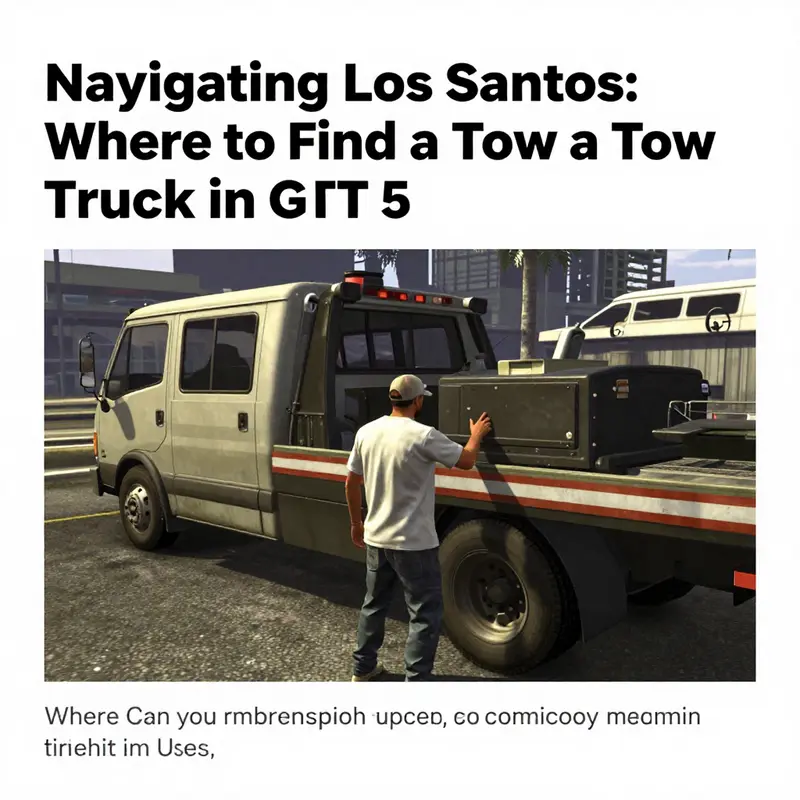
In the sprawling, sun-bleached expanse of Los Santos and Blaine County, a tow truck isn’t just a vehicle; it’s a thread woven into the city’s ragged, volatile life. GTA V renders the world as a living machine, where wrecks litter the roadside and the hum of machine belts and rescue operations punctuate the soundtrack of traffic and sirens. Tow trucks appear where chaos already lives—near accident scenes on the freeways, parked by repair shops waiting for the next call, or idling in depots that keep the city’s recovery fleet ready for action. They are not mere props in this virtual metropolis but components of its practical, sometimes merciless logic, where speed, leverage, and access to a damaged car can tilt outcomes in a high-stakes chase or a mission’s twist. For players curious about how to engage with these vehicles beyond passive observation, the landscape offers a layered picture: depots that anchor the fleet, random spawns that remind you the city can mobilize on a moment’s notice, and repair hubs that connect salvage with a broader economy of wheels and wreckage. The most recognizable among these is the Tow Truck Depot in Paleto Bay, a northern outpost marked by a distinct icon on the map and a reminder that the road network itself is a kind of rescue chorus. These depots aren’t just places to steal or steal back a vehicle; they signal the city’s commitment to recovery work, a realistic detail that makes the world feel earned rather than merely earned for its spectacle. The Rockstar Games Official GTA Online Wiki captures this through a careful catalog of spawn points and uses, confirming that tow trucks have a defined role in both story-driven moments and online life, while hinting at how dynamic the open world can be when missions or events nudge them into action. That official documentation, while not a script for every playthrough, helps players understand why a tow truck can appear on a highway just as you need it, or why a maintenance yard might become a magnet for wreckage after a chaotic convoy collapses into the gap between reality and gameplay. To explore these pathways in a way that blends curiosity with practical know-how, it helps to imagine the tow truck as part of the city’s infrastructure rather than a standalone tool. In practice, you’ll encounter them in three broad contexts: depots that keep the fleet moving, garages and repair shops where vehicles are serviced and sometimes staged for recovery work, and the unpredictable world of road spawns that seed the map with potential salvage objectives during missions or free roam. A quick tour through these zones opens up a sense of where to look and why the trucks appear where they do. The Paleto Bay depot is a reliable starting point for players who want to observe the rhythm of the recovery network up close. From this vantage, you’ll notice tow trucks parked in a way that suggests readiness rather than occupation—an implicit invitation to engage when a mission nudges them into service. Around the map, garages and repair facilities act as secondary hubs. In towns like Chumash, Vice Point, and Elysian Fields, you’ll often find tow trucks in the vicinity of garages, quietly awaiting the next call. The pattern resembles a city’s own scheduling system: a tow truck leaves its post when a prompt arrives, returns to the trough of maintenance and fuel, and emerges again where the next problem develops. And then there are the roads themselves—major highways and busy city streets where the game’s ambient logic sometimes spawns tow trucks as part of a scene or a mission sequence. These roadside appearances can be fleeting, but they reinforce the sense that towing is an active, necessary service, not merely background flavor. In this sense, the game’s design mirrors a real-world ecosystem: an urban salvage and recovery operation that can be triggered by narrative necessity or by a player who pursues a case file of wrecks and recoveries. If you want a deeper map of the landscape, consult the official wiki, which emphasizes the roles and locations that give tow trucks their practical legitimacy within the GTA universe. This backdrop is essential because it reframes the act of finding a tow truck from a simple task—just driving until you spot a blue truck—to a deliberate engagement with the city’s recovery infrastructure. It is also a reminder that the open world rewards patient exploration: a tow truck can appear where you least expect it, and when it does, the opportunity to leverage its distinctive capacity—lifting, towing, and reassigning a damaged vehicle—opens up new layers of gameplay. Beyond the vanilla experience, players who crave a different kind of salvage economy can turn to community-made modifications that reimagine what a tow truck can do. A prominent example is a fan-created mod that effectively turns the tow truck into the centerpiece of a salvage operation. This modification relocates the action to a dedicated salvage facility in a discreet part of the map—La Puerta, near the international airport—where you can drive a tow truck into a garage, attach a damaged vehicle using intuitive controls, and then choose how to repair, store, or even auction off recovered cars. In this setup, the tow truck ceases to be a mere tool and becomes the machine at the heart of a small, self-contained business. The garage activity offers a practical loop: you tow, you repair, you store and organize wrecked cars, and you decide when to release a recovered vehicle back into the market. The economics add a layer of strategy to the action, because reclaiming a vehicle might require a fee from the owner, and unclaimed vehicles can be auctioned off. This design injects an entrepreneurial dimension into the GTA V sandbox, transforming salvage from an incidental element into a core mechanic of play. While the concept is compelling, it’s important to note that such enhancements come from the broader modding community, not from the base game. They require a set of tools that allow players to sculpt new map content and integrate it with the game’s loading sequence. The practical upshot is that tow trucks can be repurposed as a business asset within the game world, validating the appeal of salvage work as both a narrative device and a gameplay loop. For players who want to explore the vanilla game’s towing dynamic without adding external content, there are still compelling moments. The “Truckin’” mission in Michael’s arc places you behind the wheel of a tow truck in a high-speed, time-constrained challenge, offering a crowd-pleasing blend of speed, control, and humor. In broader heist and chaos scenarios, tow trucks can interrogate the options for escape, covering a route, or creating obstacles for pursuing law enforcement. They also appear in various scripted or spontaneous events, providing opportunities to think creatively about how a recovered vehicle can change the trajectory of a given sequence. The entertainment value of tow trucks in GTA V is well documented by players who capture crashes, rescues, and collapses of mobility in online forums and video compilations. In sum, tow trucks are a functional and symbolic presence in the game: they operationalize the city’s need to recover and reassign vehicles, they invite players into a salvage-based play pattern, and they offer a pathway to experiments with new, player-driven economies—especially once the door opens to mods that broaden the scope of what salvage can look like in an open-world setting. To deepen your exploration of salvage-oriented gameplay in the broader gaming community, you can also consult supplementary sources that expand on the idea of a dedicated salvage operation and its real‑world analogs, including the concept of fleet management and emergency response planning as applied to island or urban environments. The idea is to think about salvage not just as a nuisance to be cleared from the road but as a structured activity that reflects logistics, resource allocation, and strategic timing. For readers curious about related community discussions and ongoing experiments with salvage mechanics, the blog attached here offers additional context and creative inspiration: The Island Tow Truck Blog. External resources also offer deeper dives into modding practices and how players build salvage workflows into their GTA V experiences. External resource: https://www.3dmgame.com/pc/167984.html
Tow Truck Tracing in GTA 5: From Official Lists to Community Spawns Across Los Santos and Blaine County
In the sprawling, sun-bleached world of GTA 5, tow trucks are not just utility vehicles; they are trustworthy workhorses that braid themselves into the rhythm of the city. A player who learns where to find them gains access to a flexible toolkit for mission variety, rescue scenarios, and dynamic loot runs that hinge on vehicle recovery or collection. The map is not littered with tow trucks at every corner, but it does hold a coherent pattern that blends official game design with the pulse of player-driven discovery. To understand where to encounter these recovery rigs, it helps to move through a sequence of locations that anchor spawns in places of high vehicle movement, heavy infrastructure, and the kinds of industrial corridors that routinely funnel wrecked or disabled cars toward repair or storage.
One of the most reliable anchors for locating a tow truck is Paleto Bay and its surrounding industrial spine. A Tow Truck Depot there functions as a logistics node, where these specialized trucks are stationed and readied for dispatch. The depot serves as a reliable starting point for players who want to observe a steady rhythm of spawns, especially when a mission requires a vehicle to be towed away or retrieved from a tight wreck scene. The Paleto Bay area, with its northern highway access and proximity to major roadways, creates natural opportunities for a tow truck to appear in the wake of a disrupted convoy or a mission that hinges on rapid recovery. The depot’s distinctive icon on the in-game map acts as a visual cue that concentrates the eye of the player who is hunting for a tow truck, turning the search into a purposeful reconnaissance rather than a random wander.
Beyond the depot halls and fenced yards, the game makes space for tow trucks along the arteries of Los Santos and Blaine County, where repair economy and roadside logistics intersect. Vehicles clustered near garages and repair shops offer another dependable avenue to find a tow truck. In the quieter hours of the night, these locales—whether tucked into the sun-burnished corners of Rockford Hills or along the waterfront roads near Broker—often host tow trucks parked outside service bays or near luxury car dealerships. The nighttime window is particularly conducive to spotting these rigs, as repair work and vehicle maintenance patterns tend to intensify during the darker hours, when crews are more actively moving between sites and the city’s road networks are both a stage and a test for a tow truck’s maneuverability and reach.
For players who enjoy the open-world spontaneity of GTA 5, tow trucks also materialize in less predictable ways: random spawn points along major highways and urban streets can place a tow truck into the player’s field of view during missions or in the course of a routine cruise that belies a looming need for vehicle recovery. These random spawns, while less predictable, are not capricious. They follow a framework that Rockstar Games has published through official vehicle lists and update notes. The most authoritative catalog of confirmed vehicle spawns is accessible through Rockstar’s GTA Online vehicle list, which outlines not only where tow trucks appear, but also how they integrate into both story-driven and online modes. For players who want to corroborate in-game observations with a formal reference, this official resource provides a map-drawn map of spawns and uses—the kind of guidance that lets a careful hunter plan matches between mission design and recovery logistics.
The Los Santos airport region adds another practical layer to the search. In and around LSIA—Los Santos International Airport—the cargo areas and maintenance zones are common staging grounds for tow trucks. These vehicles are accustomed to handling disabled or abandoned cars that arise in the hectic airport precincts, where the flow of transport logistics accelerates and the risk of vehicle immobilization increases. If a mission threads through the airport’s perimeter or passes near the cargo facilities, a tow truck can unexpectedly step into the scene as part of a recovery operation or as a support vehicle for airside tasks translated to the ground. This proximity to a high-traffic zone underscores a broader truth: tow trucks cluster where road traffic is dense and where logistical chains for moving damaged vehicles must be maintained, whether in the service of a mission or a routine maintenance cycle.
In the mosaic of Los Santos’ most recognizable districts, Rockford Hills and Broker emerge as another recurring locus. These affluent neighborhoods are not merely aesthetic backdrops; they host tow trucks parked outside garages and near luxury car dealers, especially when nighttime repairs and repositioning are more likely to happen. The visual cue of a tow truck near a dealership or a service entrance makes these zones ideal for players who prefer a more selective, observation-driven approach to locating recovery rigs. The nocturnal cadence of city life—when repair crews are actively deep in their rounds and the streets hum with the unglamorous poetry of maintenance—creates natural windows for spotting tow trucks in action.
The industrial spine around Paleto Bay—sometimes described through its construction yards—also contributes to the tow-truck ecosystem. This zone, with its heavy machinery, cranes, and vehicle transport activity, can frequently feature tow trucks on-site or passing through as part of transport operations for damaged or displaced equipment. The construction yards act as a reminder that the GTA 5 world models not just the glamorous pulls of the city, but the grittier, more practical logic of vehicle movement in a place where infrastructure grows by the day and accidents become the catalysts for a logistical response.
Extending the geographic reach beyond Blaine County, San Fierro’s industrial districts provide their own texture to the tow-truck landscape. Freight terminals and shipyards create corridors where tow trucks participate in the broader supply chain: they assist with loading, staging, and recovery tasks that are part of the region’s industrial tempo. In San Fierro, the industrial districts represent a counterpoint to Los Santos’ glamour, a reminder that the tow truck’s job is central to keeping the wheels turning across varied urban and rural contexts. The interplay of spawns here is influenced by the local economy’s demands—just as in the real world, where recovery fleets scale their presence to the needs of the moment.
For players who want to stay current with how spawns might shift in response to online cycles, community-driven platforms remain an important resource. Players share fresh data about spawn timings, map-specific concentrations, and mission-related cues that can illuminate patterns not yet codified in official materials. Such forums and Discord channels function as dynamic, crowd-sourced radar for tow-truck sightings, offering a living complement to the grounded, static entries in the official lists. At the same time, the most authoritative guide remains Rockstar’s own GTA Online vehicle list and the accompanying update notes. These official references serve as a baseline, helping players differentiate between location-based spawns and mission-driven appearances. They also ground the practice of trackable spawns in a shared framework that respects both story mode and online play.
All of this yields a practical workflow for the observant player. Start with the Tow Truck Depot in Paleto Bay to observe a seed of activity in a centralized locale. Then periodically sweep LSIA’s cargo and maintenance areas for a quick entry into the airport-side recovery workflows. Venture into Rockford Hills and Broker after dark to time your searches with the city’s nocturnal repair economy. Expand into Paleto Bay’s construction corridors for on-site recovery opportunities, and don’t overlook San Fierro’s industrial districts where the pace of logistics creates a complementary cadence for a tow-truck hunt. If the objective is to secure a tow truck for a mission or to study how these vehicles operate across different parts of the map, the key is to view spawns as a dance between official spawning logic and the live, evolving data shared by the community. The result is a more fluid, responsive approach to locating a tow truck, one that rewards patience, map literacy, and an eye for the city’s recurring patterns.
For readers who want to deepen their understanding of fleet readiness in the broader sense, there is value in examining the ways recovery assets are organized and deployed in emergency scenarios. A practical reference is available through industry-focused discussions that connect vehicle recovery operations to fleet management principles. These insights translate well into GTA 5’s open world, where the tempo of recovery work often mirrors real-world logistics challenges. As you map out your own search routes, consider how a tow truck’s role aligns with the broader workflow of keeping a vehicle network running—a mindset that enhances both mission efficiency and the experiential richness of exploring Los Santos and Blaine County.
External reference: For an authoritative, official resource on vehicle spawns and classifications, see Rockstar Games’ GTA Online Vehicle List (2026 Update). https://www.rockstargames.com/gta-online/vehicles
Internal reference: For readers curious about fleet readiness and emergency response strategies in real-world contexts, see the article on essential fleet emergency response strategies. Essential Fleet Emergency Response Strategies.
Final thoughts
Grasping the numerous avenues to locate a tow truck in GTA 5 is essential for players and businesses alike. From engaging with local auto repair shops and exploring tow truck depots to understanding road spawn mechanics and utilizing game resources, these insights equip you with the knowledge to succeed in both your gaming ventures and real-world applications. Remember, the more familiar you become with tow truck locations, the smoother your vehicle recovery situations will be—whether in the game or as a provider of vital services in your community.