In the bustling world of Los Santos and Blaine County within GTA 5, tow trucks serve as key assets for a range of activities, from vehicle recovery to storyline missions. Local auto repair shops, car dealerships, property managers, resort operators, and commercial fleet operators can greatly benefit from knowing where to find these vital vehicles. Throughout this guide, we will explore various locations where tow trucks frequently appear—each targeted chapter will provide deeper insights into specific zones, ensuring that businesses can tap into the potential of these vehicles efficiently. Whether you’re looking to expand your fleet or strategize for urgent towing needs, understanding the key spawn locations will empower your operations.
Tow Trucks and the Industrial Heartbeat: Navigating GTA V’s Core Districts
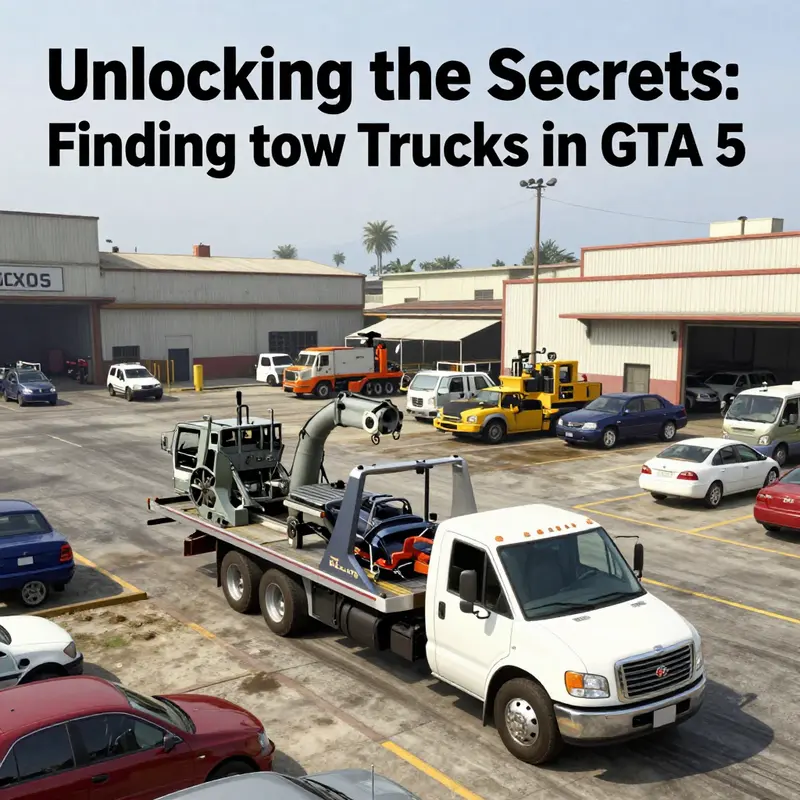
The city of Los Santos hums with a rhythm built on metal and diesel, but the places where tow trucks linger—the wreckers that drift from depot to depot, park by a loading dock, or roll along a rain-slicked boulevard—form a map all their own. For players chasing the practical edge of GTA V’s vehicle recovery ecosystem, the industrial zones act as a magnetic field. They pull the heaviest, most workmanlike machines toward them, where the air tastes of oil, rust, and possibility. The hunt for a tow truck thus becomes less about sheer luck and more about reading the lay of the land—the way industrial corridors braid together warehouses, docks, and repair shops, and how weather, time of day, and mission objectives tilt the odds in favor of a spawn that suits a particular plan.
In the central belt, Cypress Flats stands out as a reliable anchor. The layout of the district—warehouse rooftops punctuated by loading bays and freight yards—creates a corridor of activity that never truly sleeps. Tow trucks here aren’t just vehicles; they are tools in the ongoing operation of the city’s logistical backbone. They drift into view near freight depots and logistics hubs, slipping between idling trucks and the docks where cranes sway with patient motion. The spawn logic of GTA V, though opaque to most players, tends to favor these industrial pockets because they host a high density of service vehicles and mission-relevant assets. The result is a rhythm: a tow truck arrives, parks near a service bay, and waits for a moment to rejoin the traffic that never entirely clears. It’s a simple pattern, but it’s one that rewards attention and repetition, especially when you’re trying to obtain a tow truck for a mission or a personal transport task.
If you widen the lens, the major road arteries around Cypress Flats contribute additional avenues for a tow truck’s appearance. The Palomino Freeway and Senora Freeway are not mere lines on a map; they are arteries carrying the city’s mechanical heartbeat. Along these routes, service areas and rest stops serve as convenient staging grounds for spawns. The sightlines here are open, the traffic measurable, and the occasional tow truck’s presence almost ceremonial—hinting at a purpose that transcends mere randomness. In the daytime, the flow is steady but predictable enough to let you plan a traversing route that intersects with a tow truck’s typical patrol path. At night, the world acquires a different texture: fumes color the air orange at the edge of street lamps, and rain slicks the lanes, turning a routine drive into a test of grip and timing. In such moments, a tow truck can glide into your orbit with a quiet confidence, the vehicle’s weight and length making it immediately clear that this is a tool built for the hard jobs others would rather avoid.
Beyond the central industrial belt, the peripheries host pockets of opportunity that reward patient reconnaissance. Near repair shops and garages—those small yet crucial nodes where vehicles are serviced and stories begin—tow trucks appear with a reliability that rivals the most predictable spawn points. These locations act as a tether, pulling the tow truck into view just as you reach for it. The game’s dynamic traffic system uses these zones to deliver a sense of realism: a wrecker isn’t manufactured to appear only during scripted moments but to respond as if it belongs to the ongoing rhythm of the city’s industrial life. Even the urban streets—though less predictable—offer occasional spawns during nighttime or in wet weather, where the city’s mood shifts and the tow truck’s silhouette cuts through the rain with a determined persistence. The combination of these conditions means that, while Cypress Flats remains the most consistent core, there’s hardly a single moment when a dedicated player won’t encounter a tow truck somewhere in the industrial network if they know where to look and when to listen for the telltale hum of diesel that signals a vehicle’s arrival.
There is also a narrative thread worth following for players oriented toward mission-driven spawns. GTA V’s story arcs and side jobs weave tow trucks into the fabric of the city’s drama. The Wrecking Crew and Tow Truck Driver tasks, among others, can temporarily usher tow trucks into specific intersections or deliver them directly to you as part of a mission’s objective. In those moments, the tow truck becomes not just a tool but a plot device, tying your success to a careful choreography of timing and location. This connection between mission design and spawn behavior invites players to pursue a dual line of inquiry: how to anticipate a tow truck’s appearance based on the mission at hand, and how to exploit that knowledge to maximize efficiency. The open-ended nature of Los Santos supports this approach, encouraging experimentation. It’s a reminder that tow trucks, often seen as simple workhorses, are in fact a gateway to a broader understanding of how GTA V’s world is stitched together—from the macro rhythm of the industrial districts down to the micro-timing of a single spawn near a freight yard.
The open roads outside the core districts offer another set of advantages for those chasing a similar achievement or speed- and skill-based challenges. The achievement that tasks players with driving a tow truck at high speed for a sustained stretch benefits from the industrial outskirts’ long, straight tracks and relatively forgiving traffic. The industrial zones south of the city, with their freight rail yards and cargo terminals, provide the space and fewer obstacles needed to sustain a run that tests your vehicle’s handling and your reflexes in equal measure.
An essential piece of map literacy for GTA V players is recognizing how to leverage community knowledge while maintaining a degree of personal initiative. Real-time spawns and dynamic traffic patterns can be tracked through community tools and modded servers, which provide additional visibility into where tow trucks are likely to appear at any given moment. While such tools sit beyond the vanilla game’s design, they offer a practical complement to the player’s instincts. The core experience remains rooted in the city’s physical layout and the predictable but flexible routines that the industrial districts foster. As you search, you’ll find that a reliable approach is to establish a home base in Cypress Flats and then branch outward along the industrial corridors that guide traffic toward the docks and repair shops. This approach isn’t about camping a single spot; it’s about building a mental map of where tow trucks live within the city’s mechanical ecosystem. The more you move through the districts with a steady purpose, the more skilled you become at spotting the subtle cues that announce a tow truck’s approach: a certain wobble in the traffic flow, the rise of exhaust heat, the faint whine of a diesel engine at a distance, even a handful of lights that momentarily break pattern and indicate a vehicle’s exit from a yard.
For players who want a practical touchstone as they plan their runs, a quick reference points back to a trusted hub of knowledge. The Island Tow Truck Blog offers ongoing discussions about fleet management, emergency response planning, and practical tips for navigating the urban sprawl’s most challenging sections. It’s a place where the broader ethos of the tow truck’s role in a dense urban environment is explored with care, turning a simple scavenger hunt into an informed, thoughtful practice. The chapter ends not with a single definitive location, but with a horizon of possibilities—an invitation to map out your own route through Cypress Flats, the surrounding industrial districts, and the long, straight stretches that tempt you to push your limits and test your strategies. The Island Tow Truck Blog can be found at https://theislandtowtruck.com/blog/.
External resources can offer another layer of insight for those who want to push beyond what the base game presents. A well-regarded tutorial guide on completing the Truckin achievement provides concrete, tested techniques for maintaining high speed in tow trucks across different industrial settings. It anchors the practice in reproducible steps and shared experiences, helping players refine their timing and control as they work toward the achievement. For readers who want to explore this particular skill in depth, the guide at this external resource serves as a practical companion to the more narrative, map-based approach presented here. External resource: https://www.gta5-mods.com/tutorials/gta-5-truckin-achievement-guide.
In sum, the path to locating tow trucks in GTA V’s world is a study in coordinate attention and patient exploration. The industrial zones—with Cypress Flats at the core, but extending into docks and freight yards—offer a reliable baseline. The surrounding highways, service areas, administrative hubs, and occasional weather-affected spawns expand the map in meaningful ways. Mission-linked spawns add a dynamic layer, reminding players that the city rewards those who weave practical hunting with story-driven opportunity. And while real-time tools or community-guided spawns can enhance certainty, the heart of the practice remains the reader’s willingness to move through the city with intention, to listen for the diesel hum, and to align precise timing with the city’s natural tempo. The tow truck, in that sense, is not just a vehicle on a screen. It is a gateway into understanding how GTA V’s Los Santos is designed to unfold—a city where industry, traffic, and aspiration intersect at the same crossroads, night after night, waiting for someone to roll down the window and take the wheel.
Tow Routes and Rest-Stop Echoes: Reading GTA 5’s Highway Tow Traces
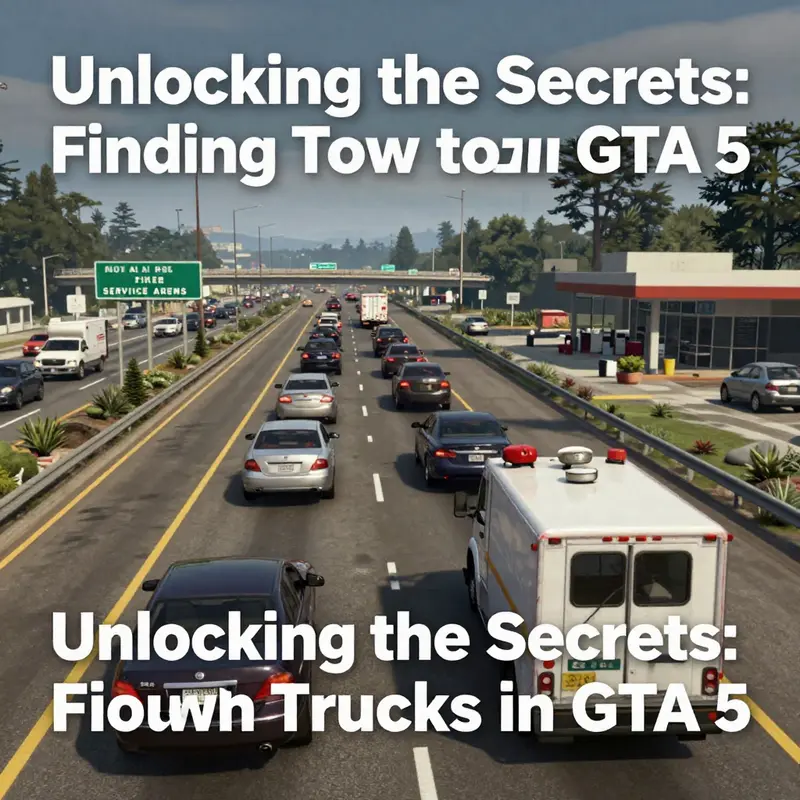
On the long ribbon of asphalt that stitches Los Santos to Blaine County, tow trucks appear as active players in the city’s traffic drama. Their presence is rarely random; it mirrors the game’s vehicle-management system and the way the world breathes with every mission or crash. In GTA 5, wreckers act as more than tools for reclaiming abandoned rides. They embody a practical function that aligns with the narrative of police, garages, and the logistics network that keeps a city this large moving. When you look for them you see the city’s rhythm: a pattern of routine and exception, where a heavy vehicle can show up at a rest stop or the shoulder of a highway just as a story moment unfolds. The search for these vehicles becomes a test of reading the city’s pulse and listening for cues that tell you where the next tow might roll onto the road.
The most reliable theaters for tow truck activity lie along the major arteries, where traffic density meets the game’s spawn logic. Highways function as the sinews of the map, and the Palomino Freeway alongside the Senora Freeway is a corridor where a tow truck might drift into a lane change or idle at a service area, its headlights creating long reflections on wet asphalt. Beyond the city’s core, the peripheral routes through outlying suburbs and desert reaches offer a different flavor of encounter. The junctions where Route 64 meets Route 102 near Sandy Shores give a sense of a tow truck as a transient commuter in a system built around disruption and repair. The stretch between the Paleto Bay route and Vinewood Boulevard highways also tends to host tow trucks as traffic moves toward or away from the city’s entertainment districts. It’s not just about presence; it’s about being in the moment, ready to hook a ride that has hit its limit or where a mission cue hinges on a recovery.
If you widen the lens a little, service areas and rest stops snap into focus as the most predictable nodes for tow truck presence. The Desert Highway Service Area, perched near the map’s eastern edge, acts like a hub where drivers pause, fuel up, or simply survey the highway’s long sightlines. The northern end of the Grand Senora Freeway’s rest stop represents another reliable station for tow activity, a place where routine maintenance meets random encounters and cinematic moments. The service area with long concrete ramps and the hum of vending machines becomes a stage on which tow trucks perform a quiet, essential role in the world’s transportation economy. They appear when a car is left abandoned after a crash or when a vehicle simply breaks down under the desert sun.
There is another theater for tow trucks: the districts near police stations and repair garages, where tow trucks arrive with a purposeful cadence, lending credence to stories about enforcement and recovery. In the wake of a pursuit or a mechanic’s routine rounds, a tow truck can drift into a street or alley, ready to hook a damaged vehicle and haul it toward a scene that might later become a mission or route through the city’s narrative maze. The presence near police facilities isn’t a cameo; it echoes the tension between authority and mobility, between restoring order and salvage. The wider map reinforces this idea: tow trucks appear in urban sprawl at different times of day and weather, and their behavior shifts as the city settles into night.
Time of day matters as much as location. Night patrols bring a different texture to tow truck traffic. Between 10 PM and 4 AM, the highways and service roads take on a calmer, almost ceremonial feel. The headlights of passing cars stretch into long lines, and tow trucks glide along the shoulder with deliberate movement. In rain, fog, or drizzle, the edge of the city softens, and tow trucks become harder to spot but more likely to appear at less obvious spots—near a deserted gas station on a back road or along maintenance corridors linking industrial zones with the city’s core. These nocturnal patterns are not hard rules but tendencies players have observed and corroborated by community reports. They remind us that GTA 5’s world rewards patience and attentive listening.
Beyond the highways and service areas, missions that involve vehicle handling tie tow trucks into the game’s narrative mechanics. The Wrecking Crew mission and Tow Truck Driver tasks spawn tow trucks that become more visible on screen, turning the world into a stage where a tool becomes central to the plot you’re playing out. These spawns remind us that tow trucks are integrated into the world’s traffic system as well as its stories. They are not just resources; they are mechanical actors that push the player through scenes, shaping how you move and where you end up on the map.
For players who want a real-time sense of where tow trucks are likely to appear, there is no official tracker. Community-mapped tools exist in the broader ecosystem, built on player reports and server data. They offer a window into the day-to-day rhythms of the game’s spawns, helping you time your travels to maximize the odds of spotting a wrecker. These tools are especially useful when chasing a specific objective—whether it’s a mission cue or simply curiosity about the city’s hidden patterns. The practical takeaway: adaptiveness beats prescription. Learn the corridors, watch the shifts, and stay ready to adjust as the city’s schedule changes with the season of the game.
In recounting the practicalities of locating tow trucks, it’s worth tying the experience back to the larger fabric of the city’s logistics. Tow trucks move stories along and keep the map’s roads in motion after a crash, a breakdown, or a moment of urban drama. They help maintain the sense that Los Santos and Blaine County are living systems with fleets that respond to demand. The towns and corridors where a tow truck appears map the geography of recovery: edges where accident scene management meets road use. When you map these episodes across a session, you begin to see patterns that feel less like luck and more like a city’s choreography. The tow truck is a participant in this choreography, a vehicle that does not simply serve another vehicle but participates in the game’s larger narrative of movement, repair, and consequence.
Tow Lines and Wreckers: Tracing GTA 5 Tow Truck Spawns Through Police Garages and City Yards
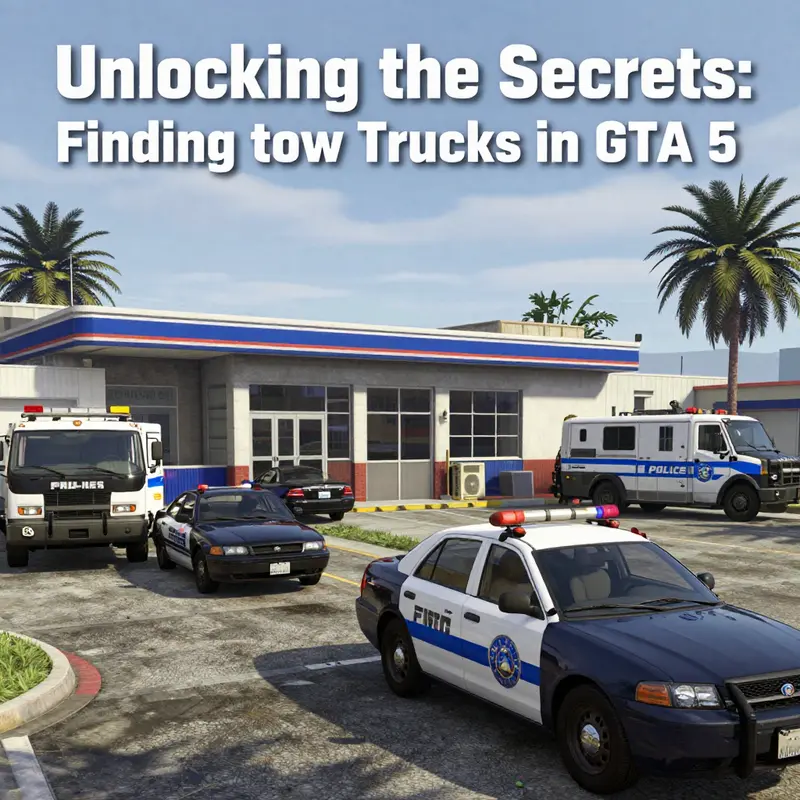
When you roam the neon shadows and sun-bleached streets of Los Santos in GTA 5, tow trucks are more than just roadside helpers. They are embedded in the city’s rhythm, an instrument of order that threads together accidents, impounds, and the occasional rush of a high-speed recovery. The clank of metal, the hydraulic hiss, the way a wrecker slides into place at the edge of a scene—these details aren’t merely cosmetic. They reflect how the game simulates a functioning metropolis: tow trucks as essential cogs in a network that moves vehicles from chaos to a controlled, legal trail. In this sense, the locations where you find tow trucks are less about random chance and more about the city’s printed architecture of responsibility and response. The most consistent and meaningful encounters arise where the city’s mechanics converge—the police precincts, the garages, and the industrial corridors that fringe the urban core. Within those spaces, tow trucks transition from background utility to pivotal actors in the gameplay loop, assisting you to recover, relocate, and sometimes even re-purpose vehicles for missions and challenges that unlock deeper layers of Los Santos’ world-building.
One of the clearest questions players keep returning to is where these tow trucks actually spawn with the regularity that makes a player’s exploration worthwhile. The research routes point toward several reliable theaters of activity. Industrial zones and warehouses act as magnet points for tow trucks, because these areas are dense with logistics activity and vehicle movement. Cypress Flats, with its labyrinth of loading docks and freight yards, stands out as a particularly fertile ground for wreckers. Elysian Fields, another industrial-adjacent district, complements Cypress Flats by adding a corridor of storage yards, repair lanes, and service routes that keep tow trucks in circulation even when other spawns become scarce. In practical terms, this means that if you are chasing a wrecker with intent, you should begin in these industrial pockets and then widen your search to adjacent streets and back alleys where vehicles might roll out to service routes after a depot shift ends.
Beyond the industrial spine, the highway arteries themselves play a crucial role. Major roads like the Palomino Freeway and the Senora Freeway are not just conduits for fast driving; they are staging lanes for a steady trickle of tow trucks. Rest stops and service areas along these routes can host wreckers either parked at the curb or moving with traffic as they complete quick assignments. The logic is practical: tow trucks are designed to reach accident scenes, impound lots, or the edges of a crime scene swiftly, and the most efficient places to stage those responses are along the same chokepoints that keep the city moving. So even if you happen to be cruising through a different neighborhood at night, you might catch a glimpse of a wrecker slipping along a shoulder, or parked in a service bay waiting for the next dispatch call.
Another dependable cluster lies close to law enforcement and repair infrastructure. Tow trucks are often found near police stations, garages, or repair shops, particularly in contexts tied to the game’s storyline missions involving vehicle recovery. This is not mere folklore; the city’s design embeds this logic into mission flow and the broader simulation of enforcement and maintenance. When a scene requires the police to call in a wrecker to clear an impounded vehicle or to relocate a recovered car from an accident site, the nearest tow truck becomes the practical, immediate extension of that systemic action. Consequently, a player who tracks tow truck spawns with a camera’s eye for nearby police facilities or service yards will usually find a predictable rhythm to the vehicles’ appearance, especially after the heat of a pursuit or during a routine maintenance run in the vicinity.
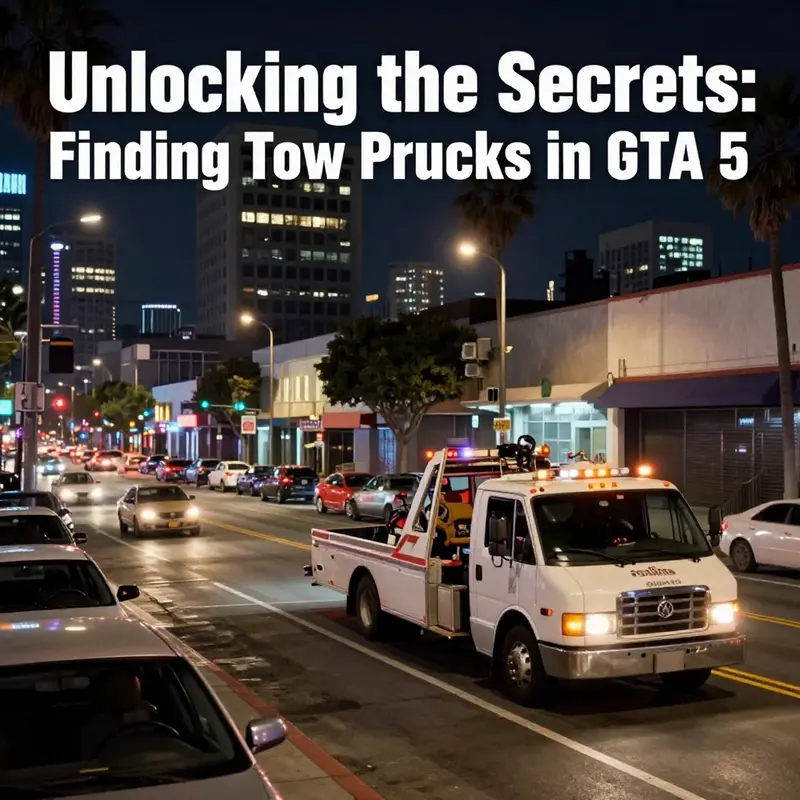
The world also retains a layer of spontaneity that keeps players on their toes. Random spawns in urban areas, though less frequent than the steady trickle from industrial zones, do surface under certain conditions. Nighttime, rain, or the amplified activity of a city at reduced visibility can coax a wrecker into appearing where it wouldn’t be expected during daylight. This variability is not a glitch but a deliberate feature that mirrors the real world: tow trucks operate in a dynamic ecosystem, responding to accidents, breakdowns, and impound demands as they arise. It’s not unusual for a city street to become a temporary crossroads for a wrecker during a thunderstorm, when visibility is compromised and drivers rely on road-side assistance more than usual.
Mission design further amplifies the tow truck’s presence. Some story missions and side jobs introduce tow trucks into your location or provide temporary access to one by advancing the plot or rewarding you with a specific scenario. For example, there are mission arcs where recovering a damaged vehicle from a scene becomes a narrative fulcrum, and the wreckers are dispatched as part of the mission’s choreography. Other tasks center on the practical side of towing—recovery, transport, and even salvage operations that echo real-world tow truck workflows. These mission-linked spawns extend the tow truck’s footprint beyond ordinary spawns, giving players a reason to seek out particular districts or to revisit garages and service yards after completing certain objectives.
In the base game, the sheer physical feel of the tow truck contributes to a sense of agency. Players who drive a wrecker can push its handling to a surprising edge for a brief window, turning a routine recovery into a high-adrenaline moment. The experience is designed to be cinematic as well as functional: you may be required to collide with a damaged vehicle at a controlled angle to shift it into a transport position, or to back up into a scene with enough precision to avoid further damage to the recovery target. The window for speed-based tasks—such as brief bursts toward a destination before a mission timer resets—also introduces a playful challenge that many players chase for achievements. The “Truckin’” style objectives, which reward players for pushing a tow truck or similar vehicle under time pressure, highlight how these heavy machines are woven into the more casual or goal-oriented strands of the game’s play.
The reliability of tow truck spawns is not absolute. The community’s collective experience and the existence of modded servers show that modern players often track dynamic vehicle spawns with dedicated tools or community maps. While the base game provides a strong backbone for tow truck appearance in Cypress Flats and along busy corridors, many players supplement this with external resources that curate real-time spawn data. This does not undermine the realism; it acknowledges the scale and complexity of Los Santos as a living, breathing ecosystem where vehicles appear in response to player density, traffic, and the timing of story beats. Even so, the core pattern remains clear: industrial zones, highway rest stops, police-adjacent facilities, and occasional weather-driven city spawns create a reliable lattice of tow truck presence. The consistent presence near Cypress Flats industrial assets especially cements the area as a central node for tow-truck activity, making it a natural starting point for players who want to practice towing operations or simply to learn how to move through scenes that require rapid vehicle recovery.
From a role-playing perspective, the tow truck’s proximity to garages and repair shops adds texture to the world’s economic aliasing. Garages aren’t just private spaces for vehicle customization and maintenance; they serve as social hubs within the game’s economy, where private or specialized services might exist in the background. Although GTA 5 doesn’t replicate every real-world business detail, it intentionally echoes the idea that certain services cluster together. Whether you’re orchestrating a salvage operation, attempting to re-rail a damaged convoy, or simply cruising to collect a vehicle that’s been left in an awkward impound state, the convergence of tow trucks with garages and service bays creates a believable ecosystem. It also gives players narrative hooks: a garage district can become a staging ground for a broader operation, with towels of different sizes and capacities lined up at the ready, each assigned to a specific type of vehicle or incident.
In practical terms, how should a player approach finding a tow truck when they’re determined to add one to their GTA 5 repertoire? The answer rests in a measured blend of knowledge and timing. Start with the industrial districts, especially those with dense logistics operations. Cypress Flats is not merely a waypoint; it’s a living map where the rate of tow truck appearances correlates with the traffic density and the flow of goods through the area. If a player visits during daytime or hours where commercial activity peaks, odds are higher that a wrecker will be parked by a depot or cruising along a service route. This is because the game’s spawn logic aligns with the rhythms of the world’s industrial heartbeat. Move then to the major highway corridors, scanning rest stops and bays for a wrecker that might be transitioning between assignments. The sight of a tow truck idling near a fuel area can offer a short window of opportunity to hop in and complete a light recovery, or to simply observe how the vehicle behaves when the driver handles a tight turn with a heavy load in tow.
But awareness should not stop at obvious spawns. The police stations and their adjacent garages often host wreckers in the immediate vicinity, ready to respond to an accident scene or to cover a recovery that involves an impounded vehicle. Even if you don’t intend to engage with law enforcement content directly, noticing where tow trucks tend to cluster around prime police locations can deepen your understanding of how the city distributes its mechanical resources. This comprehension is valuable if you’re chasing a sequence of events that requires a certain vehicle type in play during a mission, or if you’re simply curious about the city’s behind-the-scenes logic for vehicle recovery protocols.
The occasional night-time shower or rainstorm injects a different cadence into the search. When weather shifts, so does the traffic flow and the likelihood of a wrecker appearing in urban settings. A damp street can invite a wrecker to linger near a curb or to roll out of a garage in a slow, deliberate crawl as drivers anticipate slightly slicker roads and longer stopping distances. Those subtle weather-driven patterns offer a more nuanced approach to chasing tow trucks, letting you build a routine that alternates between the strong, predictable anchors (the Cypress Flats’ industrial blocks and the highway rest stops) and the more ephemeral, weather-fueled appearances that keep the game dynamic.
Finally, consider the social dimension of tow trucks in GTA 5. The game rewards exploration of its mechanics as much as it does mastering its missions. A player who seeks to understand how tow trucks function within the larger environment—how they interact with missions, how they contribute to the city’s sense of order, and how they permit players to simulate a real-world towing and salvage operation—will find value in observing the vehicle’s role across different districts and times of day. The very act of seeking a wrecker, of planning an expedition from one industrial block to another, becomes part of the game’s strategic texture. It’s a subtle reminder that the world of Los Santos rewards patience and curiosity as much as speed and risk.
From an encyclopedic standpoint, the tow truck’s place in GTA 5 is a microcosm of the city’s broader design philosophy. The vehicle is not a rare collectible; it is a tool that enables you to navigate a universe where order, chaos, and engineering converge. It embodies the principle that a game’s realism is often built from layers of small, believable details—the way a wrecker’s ramp catches the light as it slides into place, the sound of hydraulic gear changing pitch when it lifts a vehicle off the ground, the sense of weight and momentum when towing a damaged car that might otherwise be undriveable. In this light, tow trucks serve not just as functional props but as tangible expressions of Los Santos’ infrastructure, a city stage where the drama of accidents, recoveries, and impounds unfolds in real time.
If you want to deepen your understanding further, the official support resources from the game’s creators can offer more context on how these vehicle dynamics fit into the broader system, including how to interpret in-game prompts, how to manage mission-related spawns, and how to troubleshoot any issues you encounter while pursuing towing-related objectives. These resources can provide clarity on the mechanics that govern vehicle spawns and the expectations you should hold as you explore the city’s tow-truck ecosystem. For players who enjoy a deeper dive into the mechanics, these references can be a reliable guide as you plan routes, anticipate spawns, and time your visits to key districts so that you maximize your opportunities to engage with wreckers when you want to.
In short, tow trucks in GTA 5 are more than mere support vehicles. They are active participants in the city’s life, delivering a sense of order and technique that mirrors real-world towing and recovery operations, while also offering moments of high-speed excitement and puzzle-like problem-solving as you figure out where and when they appear. The intersection of police stations, garages, and industrial corridors forms the backbone of this behavior, with occasional weather-driven and mission-driven variants that keep the pattern fresh. If you map out a plan that starts in Cypress Flats, tracks along major highways, and then pivots to police-adjacent facilities, you will likely find yourself repeatedly crossing paths with wreckers in ways that feel both natural and rewarding. That sense of convergence—where the city’s logistics, law enforcement, and maintenance networks meet—gives tow trucks their enduring appeal in GTA 5. It invites players to become not just drivers but observers of an environment that mirrors the real world’s complexity, and it rewards those who learn to read the city’s cues as deftly as they read a mission brief. For those who want to widen their understanding beyond the baseline spawns, stepping into a modded or community-led map can reveal how flexible the system can be, though the core logic remains anchored in the city’s practical needs and its ongoing narrative work in maintaining Los Santos’ roads, routes, and recoveries.
For a broader sense of how these mechanics align with the game’s support ecosystem and to explore related topics on vehicle recovery and maintenance within the GTA 5 universe, you can consult the official Rockstar support resources. They offer further details about how players can engage with vehicles, how missions leverage towing operations, and how to interpret in-game prompts related to vehicle recovery and impounds. External reference: https://support.rockstargames.com/hc/en-us
null
null
Final thoughts
Grasping where tow trucks can be found throughout GTA 5 is crucial for businesses operating within Los Santos and Blaine County. By targeting industrial zones, highways, police stations, and even urban areas, local operators can streamline their vehicle recovery processes effectively. Each chapter outlined in this guide offers localized insights that are not only informative but also practical for daily operations. Understanding these strategic locations brings a competitive edge to auto repair shops, car dealerships, and commercial fleets alike. Now, with this knowledge on hand, the roads of Los Santos will be less daunting and maneuvering through the game for timely vehicle recovery will be much smoother.