Navigating Los Santos can be exciting but sometimes challenging, especially when you find yourself in need of a tow truck. For local auto repair shops, car dealerships, property managers, resort operators, and commercial fleet operators, knowing exactly where to find these vehicles can streamline operations and improve efficiency. This guide dives deep into the best locations for tow trucks in GTA 5, starting with the well-known spot in Paleto Bay, exploring alternative locales throughout Los Santos, understanding spawn points, and utilizing tow trucks effectively for gameplay. With the insights gathered from various locations and strategies, you’ll never be stranded without a tow truck again.
Tow Truck Treasure at Paleto Bay: Finding the Classic Tow Truck in GTA V
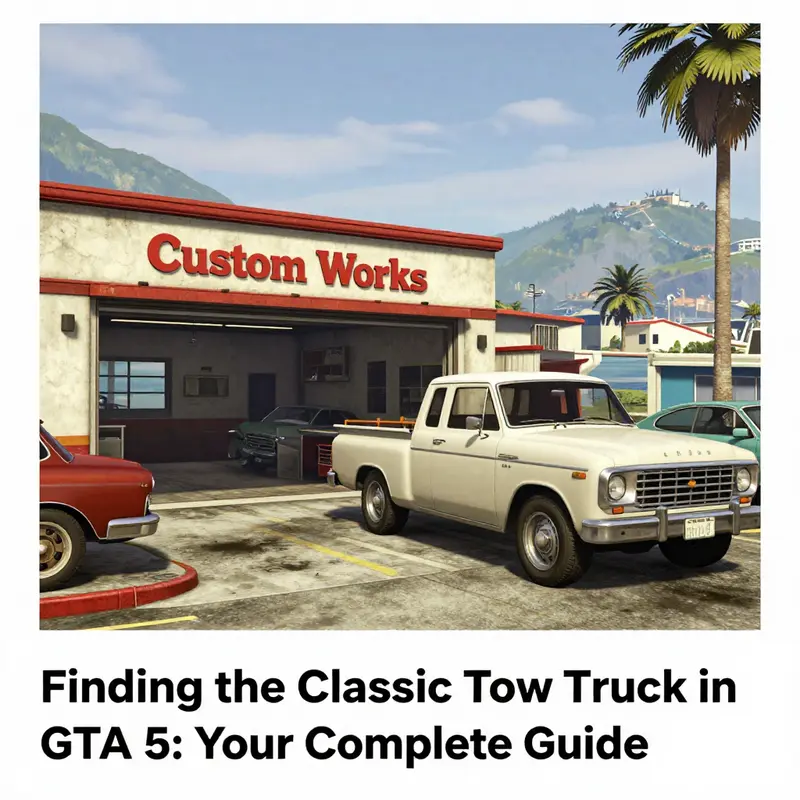
Finding a tow truck in Grand Theft Auto V can feel like chasing a rumor across the map. The search blends curiosity with practicality, because players often need a tow vehicle for a quick mission, a staged photo run, or simply to practice a routine that mirrors real-world fleet operations. Yet among the many places you might scout, one location stands out as consistently dependable: Paleto Bay, tucked away in the far northwestern corner of the game world. Within this remote stretch of Blaine County, near the western edge of the coast, the familiar silhouette of the Classic Tow Truck becomes a reliable companion for players who want a dependable tool for their garage of tasks. In the sprawling world of GTA V, reliability matters as much as rarity, and the Paleto Bay spot delivers both in a way that few other spawn points can claim. It is here, outside a modest Auto Shop sometimes referred to as Custom Works or simply the Garage, that a small, iconic vehicle sits waiting in plain sight, as if placed there for anyone who needs a tow and a clear path forward.
What makes Paleto Bay so special for the tow crowd is not merely the presence of a tow truck, but the predictability of its appearance. The Classic Tow Truck—the compact, unmistakable workhorse of the roadside—has a reputation in-game for being one of the more reliably located vehicles when you are hunting for a tow. This is not a city thing, nor a random spawns lottery; the Paleto Bay storefront position acts like a beacon for players who need to perform a towing task in a pinch or who want to reclaim a sense of real-world utility from the game’s sandbox. When you pull up to the entrance of the Auto Shop—sitting comfortably on the western edge of Paleto Bay—the tow truck often sits just outside, parked with a quiet confidence that makes it easy to spot even in low light or during the bustle of an online session. The sight line is simple: approach, hop in, and you are ready to embark on the next objective without loitering considerations or guessing games about whether the vehicle you want will spawn nearby.
The mechanics of the city’s world contribute to this encounter as well. In GTA Online and the single-player campaign alike, the presence of fixed or semi-fixed spawns tends to be the exception rather than the rule for most vehicles. The Classic Tow Truck at Custom Works is one of the notable exceptions—a vehicle you can reliably expect to see, given the right timing and proximity to the shop’s entrance. Its design is as iconic as its role in the game’s missions: a compact tow rig with a modest footprint and a straightforward control scheme, perfect for player-led tasks that require a little muscle and a lot of practicality. This particular setup aligns neatly with the game’s design ethos—give players a tangible, usable tool in easily identifiable spots that reward exploration without turning into a scavenger hunt every time you log in.
There is, of course, nuance to every location. While Paleto Bay stands as the most dependable fixed spawn, it would be disingenuous to pretend that the entire map lacks other tow trucks sprinkled about Los Santos and Blaine County. You might encounter a tow truck near construction zones, near garages, or in the course of a random event, but those instances tend to be irregular and transient. The opportunity to reliably locate a Classic Tow Truck near Custom Works gives players a dependable anchor point for their adventures. It is the kind of spawning pattern that supports both casual play and more structured in-game activities, whether you are lining up a photo sequence for a stunt montage or preparing a crew mission that calls for a reliable towing platform. In that sense, Paleto Bay’s tow truck outside Custom Works becomes more than a vehicle; it becomes a waypoint—a mental map marker that signals you have reached the crux of your towing needs and that a degree of control over your play has just been reclaimed.
As you approach the shop, the scene offers more than a practical vehicle. The Auto Shop’s façade and its vicinity are a microcosm of GTA V’s hybrid of sunshine coast and rugged inland. The water glints along the pier nearby, and if you time your approach with the city’s cadence—the late afternoon sun slicing through the bay, or the occasional cloud shadow skimming over the road—the tow truck’s chrome and paint catch a different shade of light. The vehicle’s silhouette remains constant, yet the moment you slide behind the wheel, you feel a certain alignment with the game’s design: tools in hand, mission focus ready, a path forward traced by a simple, unbroken line from the shop to your next objective. In those moments, the distance between Paleto Bay and your next objective narrows to a few crisp minutes of driving, a corridor of road that feels unusually straightforward for a city-sized sandbox.
For players who are new to this corner of the map, the map’s topography itself helps explain why Paleto Bay proves so effective as a tow-hunt location. The town sits at the map’s edge, separated from Los Santos by a longer drive and a different pace. That separation matters, because it reduces the daily, spontaneous traffic that might otherwise complicate a pursuit or a simple pickup. You are rarely wrestling with crowded intersections or aggressive NPC drivers when you aim for the Custom Works shop. Instead, you are treated to a more measured flow of traffic and the kind of environmental cues—the sea breeze, the distant hills, the sunlit storefront—that make the Paleto Bay mission a low-stakes, high-clarity moment. In practical terms, that means you can approach with focus, confirm the truck’s position, and engage your tow operation with the minimum number of moves possible. If you are using the tow truck to assist in a mission, you can lock in your route and execute your plan with fewer variables than if you were wandering through a dozen random spawn points trying to locate a suitable vehicle.
This reliability, however, does not erase the importance of timing. In GTA V, as with any sandbox built around a living world, the availability of a vehicle can depend on factors such as player activity, mission status, and session type. While the Paleto Bay spot tends to be stable, it is always wise to verify the current session’s dynamics. If you enter a popular online session late in the day when players are wrapping up or starting new ventures, you might encounter temporary changes in traffic or a slight delay in the presence of the tow truck at Custom Works. If a player has recently claimed the vehicle or if a nearby mission has triggered a temporary despawn, you may need to circle back or wait a moment for the truck to reappear. The good news is that these changes tend to be short-lived, and the truck’s return is usually just a few minutes away, enough time to survey the area, plan an alternate route, or simply pause to take in the salty air and the shop’s unassuming signage that marks this particular stop in your GTA V journey.
Beyond the practicalities of spawn points and driving routes, there is a broader sense in which Paleto Bay and the Custom Works location offer a micro-education in how GTA V structures its world to support players who approach the map with tasks in mind. Finding a tow truck is not merely about adding a vehicle to your collection. It is about understanding how the game uses place to cue behavior: a shopfront that signals a serviceable engine, a nearby coast that frames the drive, and a recognizable vehicle that signals capability. In that sense, Paleto Bay becomes a case study in how a single fixed point can anchor a broader pattern of play. It demonstrates that the game rewards those who learn the geography of the world and who use those fixed anchors to power a range of activities—from routine vehicle recovery to mission logistics and even user-created scenarios that require a sturdy, dependable towing platform.
For players who crave additional context or who want to explore community insights about towing in GTA V, there are resources available that compile player experiences and map observations. A valuable community hub, the blog dedicated to island-based tow operations, provides a repository of notes, tips, and occasional updates about vehicle spawns and best practices. It is not a substitute for the game’s own world, but it offers a complementary perspective—one that helps players anticipate what they might encounter when they return to Paleto Bay after a long break or after a new patch shifts spawn dynamics in surprising ways. If you wish to explore this further, you can visit the community hub here: The Island Tow Truck Blog. The blog’s entries often reflect players’ firsthand encounters with fixed spawns and the practical routines players develop to maximize their efficiency when working with tow assets.
The core takeaway from concentrating on Paleto Bay is simple: if you need a tow truck in GTA V, start with the Paleto Bay spot near Custom Works. It is a practical truth that has stood the test of time across multiple sessions and across the game’s evolving updates. The truck’s presence outside the shop is not just a convenience; it is a reliable instrument for shaping your play. It allows you to stage assignments, practice timing for responses, and approach tasks with a confidence that comes from knowing where your tool lives and how to access it without hunting through a maze of uncertain spawns.
As you move forward, keep in mind that the Paleto Bay approach does not preclude exploration. If you want to broaden your knowledge or cross-check details with official references, Rockstar’s official GTA Online vehicle guide remains a dependable source for a broader view of which vehicles appear where and how the game structures vehicle availability as part of its ongoing online ecosystem. For a direct look at vehicle listings, features, and spawn notes, you can consult the guide here: https://www.rockstargames.com/gta5/online/vehicles. This external resource complements the hands-on experience of Paleto Bay by placing your on-map discoveries within the larger framework of the game’s evolving vehicle roster.
In sum, if you are asking where to find a tow truck in GTA V, the answer is both practical and comforting: head to Paleto Bay, pull up to the Custom Works Auto Shop on the western edge, and you will likely find a Classic Tow Truck waiting just outside the entrance. The spot’s reliability makes it a fitting starting point for players who want to treat towing as a meaningful tool in their GTA V adventures rather than a sporadic encounter in the wild. From there, the road opens to a range of possibilities, whether you are coordinating a mission, practicing your recovery technique, or simply enjoying the quiet efficiency of a well-placed vehicle that does its job without fanfare. The Paleto Bay truck becomes more than a vehicle; it is a dependable partner in a world that rewards preparation, patience, and the willingness to learn where your tools live. And as you chart your own path through the game’s landscapes, that fixed point—the shop, the road, the tow truck—remains a reliable beacon, a small but powerful reminder that even in a sprawling digital playground, there are places where clarity and utility converge into a straightforward, repeatable routine.
External references can further deepen your understanding of GTA Online’s vehicle ecosystem. For broader context on vehicle availability and related guidance, many players turn to official sources that document each vehicle’s presence and role in the online world. The link below provides a gateway to those details and helps situate your Paleto Bay experience within the game’s larger vehicle ecosystem:
External resource: https://www.rockstargames.com/gta5/online/vehicles
Tow Truck Trails: Tracing Reliable Haulers Across Los Santos, Blaine County, and the Paleto Bay Edge
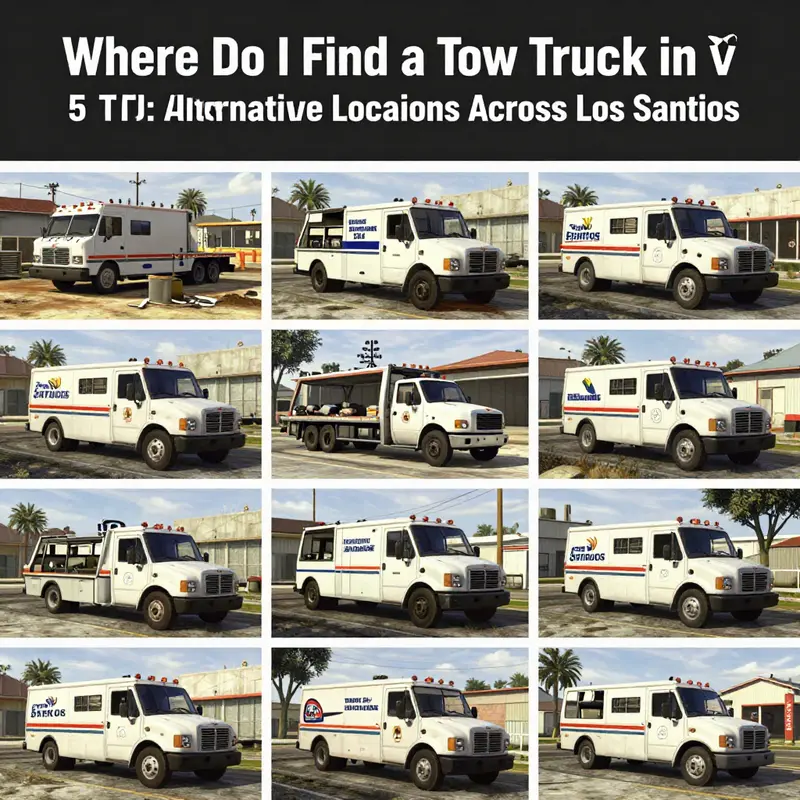
Tow trucks in GTA V aren’t the star attractions, but they form a quiet backbone for how players move, repair, and remake the city after inevitable fender-benders and spectacular wipeouts. In the sprawling map of Los Santos and Blaine County, the appeal of a tow truck lies less in speed and flash and more in utility and the small role-play moments it enables. A tow truck is a tool, yes, but it’s also a doorway to a particular rhythm of play: a world where wrecks get cleaned off the street, where a garage crew can negotiate a price to reclaim a damaged ride, and where cargo and vehicles can be ferried from one job site to the next. That sense of ongoing, practical work is what makes the search for a tow truck in GTA V feel less like chasing a rare car and more like mapping out a working urban ecosystem. And within this ecosystem, one location has earned a reputation for reliability and consistency, a place that feels almost like a landmark for players who want to keep a tow fleet ready at hand. In Paleto Bay, outside the well-known Custom Works garage on the western edge of town, a Classic Tow Truck often sits parked near the entrance, a small vehicle with a big job and a familiar silhouette. It’s not that the car plot exists in a vacuum here; it’s that this particular tow truck has become a dependable anchor for routine play. When you have a mission or a drift into a town where you need a vehicle hauled away, this is often your first stop. The lane outside Custom Works, tucked against the coastline and the hills on the edge of Blaine County, becomes a tiny anchor point for players who want to simulate a service operation. The value isn’t merely practical; it’s narrative. The tow truck becomes a character in your story of Los Santos, a tool that signals a shift from glamour to grit, from chasing spectacle to delivering reliability to a city that runs on quick repairs and quick returns. This makes Paleto Bay’s consistent spawn a small, essential part of the GTA V’s world-building for players who care about immersion as much as quotes and stunts. But the reality of the map is that fixed spawns can feel like a luxury, especially when you crave a tow truck in a moment of need or when you’re staging a longer-term fleet role-play. Beyond Paleto Bay, the city holds a few other default spawn points, each offering a proportional chance of appearing in the daily cycle of activity. The most common cluster sits near Los Santos International Airport, in the area near the main entrance and the parking zones. It’s a reminder that even the most glamorous travel hub relies on support vehicles, and the game’s world models the practical side of urban life with a similar care. The industrial zones, particularly the docks and freight terminals in the western sectors, hide their own quiet abundance. In these industrial pockets, tow trucks appear with a rhythm that matches late shifts and heavy loads, delivering a texture of realism that rewards patient players who listen to the map as it breathes. Tow trucks can also be seen stationed outside various vehicle repair shops scattered around the city—places where the tech and the toolkits overlap with everyday road life. The spawning of these vehicles, like many in GTA V, isn’t guaranteed, and it’s not always predictable. The dynamic nature of spawns adds a layer of excitement for players who enjoy the chase. You never know when a tow truck will roll up, but you have a reasonable sense of where to look if you need one in a pinch. For those who prefer a predictable routine, the Paleto Bay option remains a reliable baseline. The Classic Tow Truck parked near Custom Works becomes a familiar touchstone—an anchor that tells you you’re not far from the heart of a functioning auto-service network. This is the appeal: a modest, repeatable experience within a sprawling, unpredictable map. It’s a reminder that GTA V’s world rewards those who notice the small, ordinary moments of operation—the moment a tow truck slides into view as you roll past a repair shop, the moment you see a wrecker at the edge of the dock12, or the moment a truck is required to clear the way after a mission-sized wreck. The sense of utility translates into gameplay value, especially for players who want to weave a thread of realism into their adventures. Yet the city’s scale also invites exploration of alternative routes and hidden corners where tow trucks might appear, and where players can access them with a bit more consistency than the standard spawns provide. For those who want to push beyond the defaults into a more curated experience, there are a few avenues worth contemplating, each offering a different flavor of access and a slightly different sense of what a tow truck represents on the map. The first of these avenues is a class of player-created modifications that introduce new, fixed locations for tow trucks. In the realm of mods, a widely discussed approach places a fully functional tow truck garage in a district like La Puerta, close to the airport corridor that leads into Los Santos proper. The idea is straightforward: you drive a tow truck into a dedicated garage, store vehicles, and interact with a system that simulates the process of towing, repair, and release. With a mod like this, you aren’t just hoping for a vehicle to appear; you have a controlled, immersive space where the tow business can be run in a way that mirrors the real world more closely than the standard game economy allows. The open-world mechanics of GTA V intersect with a more detailed, sandboxed approach to property and resource management. In practical terms, a garage mod creates a centralized hub where you can park tow trucks, collect wrecked cars from the road, and even charge owners to reclaim their vehicles or auction them if owners neglect payment. Such a setup enlarges the scope of the experience from scattered spawns to a full-service operation, and it invites players to experiment with role-play scenarios that emphasize logistics, pricing strategies, and inventory control. The trade-off, of course, is that this path requires players to modify the game. It’s a different mode of play—one that doesn’t sit naturally in the unmodified, vanilla GTA V environment. For players who enjoy tinkering and who want a more organized workflow, the garage mod offers a compelling alternative that can transform how toward everything the tow truck stands for in this city: a workhorse, a facilitator of order amid chaos, and a tangible point of interaction between the player and the game world. A practical question for anyone considering this route is how to access it and what support is needed to make it work. In general terms, you’ll want a PC setup that allows for file modifications and map editing tools. You would download the mod, install it according to its instructions, and then adjust game files or map data to place the garage in the chosen La Puerta area. The result is a ready-made spawn location that remains stable, a stark contrast to the variability of standard spawns. This pathway also redefines what constitutes a “best place.” It isn’t simply the most likely point at which a tow truck will appear; it’s the most reliable and immersive option for someone who wants a continuous tow operation within Los Santos’ sprawling geography. For players that prefer to stay closer to the official, unmodded experience, there are still options to pursue. The real-time spawn mechanics in the base game can be leveraged with a patient, observational approach. In the west-side industrial zones near the Port of Los Santos, you may catch tow trucks during certain windows, particularly later in the day or during periods of heavy traffic. In Rockford Hills, tow trucks appear in the service corridors of luxury estates and high-end districts, a reminder that even the richer neighborhoods require support when deliveries, repairs, and after-crash recoveries happen to the wealthy and the everyday players alike. Catalina Island, while rarer, offers a few coastal and marina repair sites where a tow truck or two might roll in from time to time. It is, however, a place that tends to reward players who have the time to explore rather than those chasing a quick fix. There is also a convenience feature that is often overlooked by new players but appreciated by long-time fans: the option to summon a tow truck via a console command. In practice, this is a tool you can use to instantly bring a tow truck into your immediate vicinity, a boon when you’re engaged in a complex heist or a time-sensitive restoration of a damaged vehicle. Importantly, using a spawn command should be reserved for moments when you’re testing a plan or want to experiment with a scenario, as it can bypass the organic flow of the map and diminish the sense of discovery that comes from waiting for a vehicle to appear. The landscape of tow trucks in GTA V, then, sits at the intersection of three distinct experiences. There’s the reliable, city-spawned presence that players encounter in the Paleto Bay area near Custom Works, a humbler but steady reminder that the map is built with a nod to the everyday mechanics of the country’s transport ecosystem. There’s the mod-driven path that questions what a tow business would look like in Los Santos if players could operate out of a dedicated garage and manage hands-on, repeatable tasks with a more realistic workflow. And there’s the vanilla, no-mods path in which careful exploration of spawn zones—industrial docks, airport-adjacent zones, and select luxury districts—yields occasional, gratifying opportunities to reclaim a vehicle in distress. Each path reflects a different appetite for the GTA V universe: some players want reliable fixtures, others want a more narrative, business-like experience, and still others simply crave the practical reassurance a tow truck brings when a mission goes sideways. The core takeaway is not that one route is definitively the best. Rather, it’s that the map affords multiple routes to the same outcome: a tow truck at hand when you need one, a sense of control over a chaotic world, and a chance to shape your own little enterprise within the larger hustle of Los Santos. If you want to anchor your experience in a single, dependable location, Paleto Bay’s Custom Works remains a strong anchor for the vanilla experience. If you want a more immersive business simulation, consider exploring a garage-based mod that creates a dedicated towing hub in La Puerta. If you want the thrill of exploring, chasing, and waiting for towns to reveal their hidden spawns, simply chart the routes through the airport zones, the docks, and the wealthier districts. In all cases, the journey can be as rewarding as the destination, for the tow truck embodies a practical, almost tactile, element of this virtual world. The search itself becomes a way to understand Los Santos better—its traffic patterns, its micro-geographies, and the ways a single vehicle can connect disparate corners of a sprawling landscape. And if you’re sharing your path with fellow players, you’ll likely find that a tow truck becomes a bridge between stories: the wreck you recover, the client you service, the repairs you document, and the conversations you have with others who share the same interest. For players who keep a running log of locations and sightings, the experience accrues a social dimension as well, linking you to a broader, community-based map of tow truck activity across the city. Those who want to deepen this dimension can turn to the community resources that track vehicle spawns, test new locations, and discuss the practicalities of setting up a fixed tow hub in the city’s edge districts. It’s a reminder that even a relatively ordinary in-game vehicle can spawn a variety of experiences depending on how you approach the map, the tools you use, and the stories you want to tell within the virtual Los Santos that everyone loves to drive through. If you’re curious to dive deeper into related topics and to explore broader discussions about island-wide fleets and emergency-response planning—things that echo the real-world logistics behind a tow operation—you can follow practical discussions and insights at dedicated resources that focus on fleet management and emergency readiness. For now, when you’re on the hunt, start with Paleto Bay for reliability, keep an eye on the airport and docks for late-hour opportunities, and consider how a modded garage could transform your GTA V tow experience into a continuous, immersive business simulation. The map will reward patience and curiosity, and you’ll end up with more than just a tow truck—you’ll collect a small, recurring set of stories about Los Santos and the work that keeps its wheels turning. As you map your own route through the city’s back alleys and sunlit front yards, you may also discover new references and communities that share your enthusiasm. If you’re looking for a straightforward route to more tips and community discussions, you can visit the Island Tow Truck blog for related insights and discussions that complement this journey. theislandtowtruck.com/blog/. For those who want to cross-reference broader GTA Online vehicle availability and related mechanics, Rockstar’s official GTA Online vehicle guide remains a solid external resource to consult, especially as updates shift spawn behaviors and economy tweaks across the online landscape. You can explore detailed vehicle information and spawning notes at Rockstar’s GTA Online vehicles page. https://www.rockstargames.com/gta5/online/vehicles
Tow Trucks on the Edge of the Map: Mastering Spawn Points and Availability in GTA 5
Tow trucks in Grand Theft Auto V are not endless, wandering vessels that drift through traffic on a reliable schedule. They exist in a niche to support the world’s mechanics—pulling wrecks, relocating vehicles, and supporting missions that hinge on heavy-duty recovery. For players who want to secure a tow truck quickly, the appeal isn’t merely the vehicle itself. It’s the sense of reading the city’s rhythm, understanding where the service fleet tends to gather, and timing your moves to coincide with a predictable pattern or, when needed, a reliable online alternative. In this sense, the hunt for a tow truck becomes a small study in the game’s logistical pulse. While you can encounter service vehicles in a few places, the most dependable approach is to learn the fixed spawn points that the game subtly attunes to the world’s geography and activities. Across Los Santos and Blaine County, a handful of locations stand out not because they guarantee a tow truck at every moment, but because they offer a higher probability of spotting one parked, ready for use or retrieval. The world is alive with work crews, cargo movements, maintenance crews, and emergency responders; a tow truck is part of that ongoing choreography, not a random outlier you stumble upon by chance. For players who want to anchor their search, it helps to know where the vehicles are most likely to appear and how the online and single-player experiences differ in practice. In online play, that tow truck may still feel capricious at times, but the game’s design also provides structured avenues to obtain one through the in-game economy and options. The knowledge that a classic, sturdy tow truck can frequently be found outside a particular workshop in Paleto Bay has become almost a legend among players who chase this vehicle. That fixed-location familiarity has a comforting logic: a workshop on the western edge of Paleto Bay can serve as a fixed point in a city that otherwise thrives on randomness. Still, if you are chasing a reliable spawn point that doesn’t require traveling to the far reaches of the map, you can do better by aligning your search with the game’s more consistently populated service corridors. The game’s designers crafted several hubs where service vehicles, including tow trucks, are more likely to appear. These hubs are not random, but they do require perceptive travel and a little patience, because the spawns are tied to the broader ecosystem of maintenance, logistics, and transport. When you’re chasing a tow truck, your best bet is to read the city’s current activity and position yourself in or near those activity zones during moments when traffic and service fleets are active. This understanding turns a one-off encounter into an efficient routine, a small win in a world where, for many players, every extra minute counts. The most trusted spawn points aren’t only about a single, fixed location; they’re about a pattern that, once learned, makes the chase more a matter of timing and less a matter of luck. One of the most enduring anchors in this pattern is the notion that fixed service hubs can provide regular opportunities without requiring an expedition to the map’s far corners. In practical terms, that means keeping an eye on places where heavy service work is ongoing or where corporate fleets and maintenance crews tend to cluster, and recognizing that these loci shift with the in-game day-night cycle and mission-driven activity. In truth, the landscape of tow trucks is layered, and a player who wants to maximize their chances will benefit from a layered understanding: where the trucks are most likely to be when the world feels busiest, where they may appear during quieter windows, and how the online market makes those encounters more predictable through purchasable or rentable options. There is also a broader, real-world comparison that can help a player understand why the game’s tow-truck availability feels deliberate and plausible. In the map’s service zones, you’ll find the same core logic you’d expect from a well-organized fleet: work vehicles cluster where their labor is most needed, they align with infrastructure like airports, warehouses, and shipping docks, and they respond to parameters like time of day and the flow of mission-critical tasks. This isn’t a cinematic flourish; it’s a deliberate, mission-driven design choice that strengthens the game’s sense of realism and makes the search for a tow truck feel meaningful rather than arbitrary. For a player who is curious about how the world codifies this logic, it’s worth noting that the fixed spawn points that are most often cited in community guides include positions near major service corridors and logistics hubs. The Los Santos Customs workshop in the Sandy Shores industrial belt is one such anchor, where a tow truck can appear as part of a broader fleet ready to service the site’s heavy vehicle traffic. The local airport complex, with its cargo and maintenance zones, is another locus where tow trucks are commonly seen in action as part of airport operations. Construction sites, warehouses, and dockyards present a further layer of regularity, as these environments require vehicle recovery, equipment movement, and fleet management to keep the supply chain moving. The San Andreas Medical Center’s parking lot, though less common, has also been observed as a potential spawning ground in certain contexts, particularly during missions or events that reconfigure the world’s routine. Add Paleto Bay’s Custom Works area and its adjacent western edge to the mix, where the classic, visually distinctive tow truck has a long-standing association with the town’s small-scale industrial footprint. Taken together, these points form a map of recurring service lanes that, while not guaranteeing a tow truck at every moment, provide a reliable framework for anticipating where one is most likely to appear. In single-player GTA V, the probability of encountering a tow truck at any given moment is shaped by the same underlying principle: the world’s service vehicles aren’t meant to flood the roadways, but to mirror how a real city organizes its heavy-lift fleet. In practice, that means you can walk up to a designated area and observe a handful of service vehicles in the vicinity, with a tow truck occasionally stepping into the scene. The feel is pragmatic rather than magical: a vehicle that serves a purpose appears where it should, and if you miss it, a short wait—perhaps a mission window or a nearby activity cycle—will often bring the chance back. Online, the equation changes only by degree. The vehicle pool becomes more formalized through the game’s economy and vehicle-spawn logic, and players are given avenues to obtain a tow truck via the in-game store, or through mechanics that let you rent or purchase service fleets for specific tasks. The official vehicle guide from the game’s publisher is a reliable touchstone for players seeking clarity on availability and spawn dynamics, offering a structured overview of which vehicles are present in which contexts, including service and towing capabilities. If you want to verify specifics or cross-check the most recent updates, the publisher’s vehicle guide is a dependable resource that many in the community consult to confirm details and to stay current with seasonal or patch-driven changes. In addition to the game’s built-in logic, players sometimes use cheats or exploit patterns to spawn or acquire tow trucks in ways that deviate from the standard flow. It’s important to note that such methods vary by edition, platform, and whether you’re playing in single-player or online mode. Cheats can bypass typical spawn rules, but they come with their own caveats, including potential restrictions or the need to revert changes to maintain game integrity. In the broader conversation about where to find a tow truck in GTA 5, there is also room to acknowledge how players think about these vehicles beyond mere acquisition. A tow truck in this world is more than a tool; it’s a representation of infrastructure in motion—the way a city coordinates recovery, maintenance, and logistics, especially in a game that places you in the center of a sprawling, living map. The sense of reliability you develop about spawn points isn’t just a practical shortcut; it’s a way to engage with the city’s design philosophy. It invites you to observe how a virtual metropolis assigns and reassigns tasks to its service fleet, a microcosm of how real fleets operate under pressure. If you’re chasing that authentic feel, anchoring your search to the fixed hubs described earlier—sites where maintenance, cargo handling, and dispatch rhythms tend to converge—will enable you to approach the game with a sharper eye. The result isn’t a guaranteed sighting every time, but a cultivated habit of anticipating where movement is most likely to occur. And when you do actually find a tow truck, you’ll notice something satisfying: it’s not merely a vehicle you’ve spotted in the wild; it’s a tangible thread in the wider network of tasks that keep the city running, a small victory in the ongoing story of your GTA 5 explorations. For players who crave deeper context beyond the game’s map, there are real-world parallels worth exploring—how fleets are organized, how routine maintenance and roadside assistance respond to demand, and how a single vehicle can symbolize a broader system of repair and recovery. If you want to broaden that perspective, consider exploring the real-world discussions around fleet management and emergency-response coordination, which can offer a complementary lens to your in-game experiences. You can also find more practical insights on a dedicated resource that delves into fleet practices and emergency-response strategies, including the role of tow operations in island contexts. This broader exploration can add texture to your GTA 5 adventures, helping you understand why the game’s tow-truck spawns feel intentionally placed and how those choices mirror real-world fleet dynamics. As you navigate the city’s edges, you’ll learn to read the landscape—the signs of activity around an airport, the bustle near a freight hub, the steady cadence of a construction quarter—and you’ll discover that the tow truck’s presence is a small but meaningful indicator of a larger system at work. In the end, the pursuit of a tow truck in GTA 5 becomes less about chasing a single, fixed vehicle and more about embracing a pattern: a pattern of place, time, and purpose that, when understood, turns a potentially capricious encounter into a reliable, repeatable routine. If you want a compact pointer to broaden your practical knowledge while you play, consider following an entry point for general fleet operations and emergency planning, which can enrich your understanding of why these vehicles appear where they do and how they contribute to the world’s sense of function and plausibility. For readers seeking a broader real-world reference, you can find additional material on a dedicated site that discusses emergency-response strategies and fleet management, including resources that touch on island contexts and the coordination of heavy-vehicle assets. And for the most official, up-to-date details about vehicle availability, controls, and spawning in the game, the publisher’s support site remains the best point of reference. In the spirit of staying connected to the broader conversation, you can consult the official support hub for the most current guidance on vehicle behavior and availability, as it updates to reflect patches, platform-specific changes, and user feedback. The exploration of GTA 5’s tow-truck spawn logic is more than a curiosity; it’s an invitation to engage with the game’s world-building in a way that rewards attention and patience. If you’re ever unsure whether you’re seeing a genuine spawn pattern or a temporary fluctuation, remember that the game rewards careful observation and consistent practice. Move between the identified hubs, watch the cycles of day and night, and you’ll build a personal map of where service vehicles are most likely to appear. Over time, that map becomes a tool—a way to streamline your quests, improve your missions’ efficiency, and enjoy the game’s world as a carefully crafted, functioning organism rather than a string of disconnected moments. And when you combine this experiential know-how with a touch of practical research, you’ll find yourself more prepared to adapt to changes in game design. This approach keeps your gameplay grounded in observation, rather than reliance on luck alone. For those who want a broader perspective beyond the game, here is a call to further reading that connects real-world fleet practices with the game’s portrayal of a mobile, service-oriented fleet: the Island Tow Truck blog offers insights into fleet logistics and emergency-response strategies, which can enrich your understanding of how tow operations function in complex environments. You can explore that resource at the following link: the Island Tow Truck blog. As you move forward, you’ll also have a practical reminder: if you’re ever uncertain about a game patch or an update that might alter spawn behavior, check the official support site for GTA Online and GTA V to verify current details. This ensures you’re acting on the newest information and not on assumptions carried over from earlier experiences. The combination of well-chosen hubs, awareness of online versus single-player differences, and a willingness to consult official resources will empower you to approach the search for a tow truck with confidence. In the end, the quest becomes as much about understanding the city’s mechanics as it is about the vehicle itself. It’s an invitation to observe, plan, and execute with a calm, methodical approach—an approach that makes even a routine tow truck encounter feel purposeful and satisfying in the context of a sprawling virtual landscape. If you’re ready to take that approach further, keep an eye on the world’s activity and ride the tide of its logistics. In time, you’ll discover that the tow truck’s presence is less a matter of chance and more a matter of orchestrated proximity, a small but telling sign of a city that, for all its chaos and drama, runs on a surprisingly orderly, almost managerial cadence. And when you finally pull that tow truck into your crew’s operations, you’ll know you’ve learned not just where to find it, but how to read the map that makes the entire city feel like it’s working in concert with you. For more official, up-to-date details on vehicle availability, consult the publisher’s support resources, which are designed to reflect patches and platform-specific changes over time. This guidance complements the in-game exploration, helping you triangulate your search with both practical experience and authoritative reference. The result is a richer, more efficient, and ultimately more enjoyable GTA 5 experience, one that respects the game’s design while rewarding careful, deliberate play. External reference: For official vehicle details and updates directly from the game’s publisher, you can visit the support site at https://support.rockstargames.com.
Tow Tracing in GTA 5: Pinpointing Tow Trucks for Realistic Gameplay Across the Map
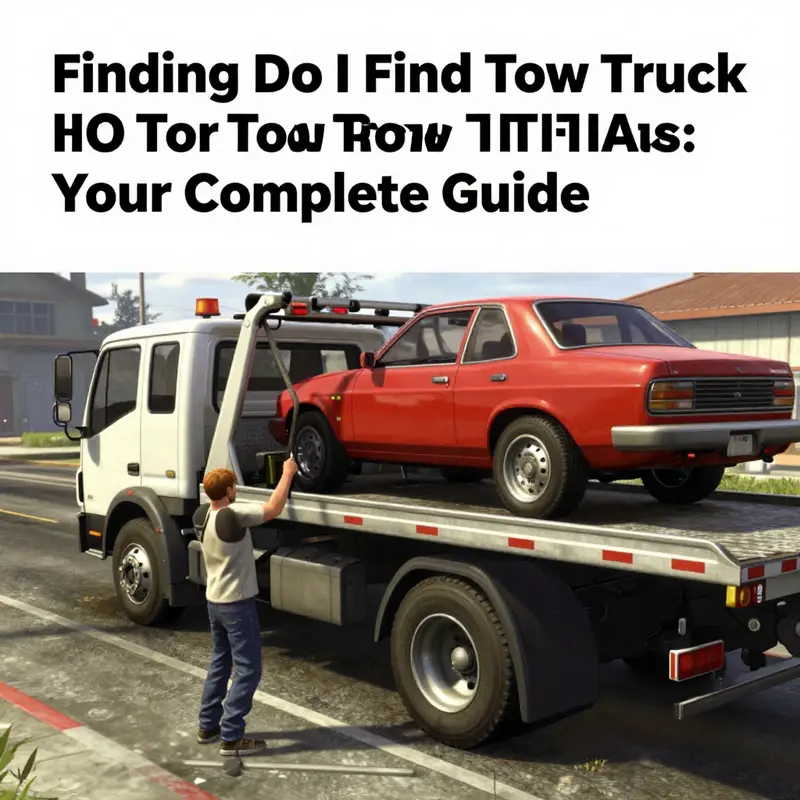
When players first step into the world of GTA 5, the tools of the trade often come with an implicit lesson in resourcefulness. A tow truck is more than a vehicle; it is a mechanic that expands how you move through the map, how you approach missions, and how you handle the unpredictable chaos that can crop up in Los Santos and Blaine County. The appeal of a tow truck lies not merely in its function, but in its reliability as a versatile workhorse. In the online playground, tow trucks can feel like a rare, coveted asset that unlocks a new rhythm for transport, extraction, and cleanup. In the sprawling, sprawl-filled single-player universe, a tow truck still matters, offering a controlled way to reposition decoys, clear blocked routes, or stage a heist with a touch more precision. The chapter that follows is a careful tour through the practical geography of tow trucks in GTA 5, focusing on where you can confidently find one, how to use it effectively, and why the vehicle’s spawns—and the spaces they occupy—matter for your strategy and pace.
There are two core realities to keep in mind when you set out to locate a tow truck. First, the game world rewards those who learn fixed spawn points and predictable locations. Second, there are other tow trucks around the map, but their appearances are less reliable and more context-driven. In online play, the Classic Tow Truck at a fixed, recognizable anchor offers a dependable option for players who want a ready-made rig without scavenging around the map. For many players, the Paleto Bay area near the Custom Works shop functions as a reliable lighthouse in a sea of uncertain spawns. The small, iconic tow truck that sits just outside the entrance of the Custom Works garage becomes a shorthand for preparedness: a vehicle you can count on when you need to tow, transport, or reposition vehicles during a job or a spontaneous dash across the map. It is this blend of familiarity and utility that makes the Paleto Bay tow truck a go-to choice for players who want a steady baseline vehicle that can be relied upon when the clock is ticking or when a mission requires a quick swap from fighting to towing without delay.
Yet the geography of tow trucks is not merely a matter of choosing one fixed point and camping there. In the northwest corner of the map, players find a second, equally practical center of gravity for tow truck operations. The Vehicle Storage Facility—an unmissable white, sprawling complex near the Amber-White Airport and Bishop’s Field—serves as a haven for vehicle storage in the broader GTA 5 ecosystem. This facility is designed to house a variety of vehicles, and among these, a tow truck makes its appearance as part of the inventory that players can access. This location is especially relevant for players in both the story-driven single-player mode and the expansive, always-on online world, because it represents a stable, predictable spawn that you can approach with confidence. The northwest Luft of Blaine County is where this facility anchors a pattern: you travel to the airport runway, you scan for the large white building, and within that area you locate the tow truck parked alongside other stored vehicles. If you have ever needed a mental map to minimize dead time, this northwest facility is a blueprint—the kind of map-point that makes sense of the game’s sprawling topography and translates it into practical, action-ready planning.
To locate the tow truck at the Vehicle Storage Facility, you begin by opening the game map. It is a small, almost ceremonial action—the press of the Esc key (or its console counterpart) to reveal the map and to switch from the immediate sensory world to the strategic overlay where spawn points and road networks sit in quiet order. On that map, you seek the red arrow symbol that marks the Facility. This marker acts as a beacon, a digital signpost telling you that somewhere within the shielded lines of the northwest corner sits a vehicle you can claim and deploy. The direction is not just about pointing a stick toward the building; it is about orienting your approach to the runway’s edge and the facility’s long façade, where light spills across tarmac and walls, and the sense of scale helps you anticipate where other vehicles will be parked, lined up behind the larger white structure that dominates the scene. When you arrive, the tow truck will appear in quiet company among a constellation of other stored options. It is not garish in its wayfinding. It exists in the same pragmatic language as the rest of the facility: a believable, almost mundane tool you can rely on when you need it most.
The practical steps to reach and claim the Vehicle Storage Facility tow truck are straightforward, but the subtle art lies in patience and observation. First, you confirm your position against the map’s landmarks—the airport runway, Bishop’s Field’s approach, and the large, unadorned white building that signals the facility’s core. Then you navigate toward the facility with a steady pace, avoiding unnecessary detours that could turn a simple pickup into a time sink. When you pull up to the site, the tow truck is the quiet, sturdy thing parked in disciplined arrangement, as if it were part of a larger fleet. The moment you decide to drive it away, you will notice how the vehicle sits in your control, how its chassis sits low to the ground, how the hook at the front line glints under the hangar’s sparse lighting, and how the tow line, when you engage it, extends toward the target vehicle with a surgical calm. The process of using the tow truck is as much about rhythm and feel as it is about the mechanical steps.
In GTA 5’s broader ecology, the mechanics of towing are both intuitive and nuanced. The act of entering the tow truck is simple: you approach the vehicle and press the designated button to enter the driver’s seat. In most control schemes, this action is mapped to a single key or button, but the real skill emerges once you have your hands on the wheel and the hook is ready to engage. The tow hook is the tool that makes everything else possible. When you move the tow truck behind the target vehicle, you align the hook with the bumper or frame and initiate attachment. The process is a careful blend of spatial awareness and gentle, deliberate maneuvering; you don’t yank the towed vehicle into position, you coax it into being a part of your controlled convoy. Once the vehicle is attached, you take off toward your destination with the careful steadiness of a professional who understands that the goal is not speed but secure, steady transport. The detachment, commanded by the H key, is a moment of relief and clarity. You release the towed car, and the vehicle settles into its new space, free from its prior constraints and ready to be moved again if needed.
The tow truck’s presence on the map also carries with it a wider range of gameplay implications. It allows players to transport vehicles across the map in ways that are not easily accomplished with ordinary drives. The utility becomes especially evident in mission contexts—where the ability to quickly reorganize vehicles, stage gear, or deliver a captured vehicle to a safe location can make the difference between success and failure. This practical utility is complemented by the tow truck’s value in exploration and improvisation. Perhaps a route is blocked by a car accident or a fallen crate, or perhaps you need to reposition a decoy for an ambush or a pursuit. In those moments, the tow truck’s capacity to manipulate the environment becomes a tool you can rely on. It’s not just about moving cars; it is about shaping the navigable space so you can proceed with confidence and precision. The tow truck becomes a quiet partner in your strategic planning, a vehicle you recruit precisely because it is predictable, controllable, and effective in the kinds of scenarios you encounter during a session of GTA 5 play.
There are, of course, limits and realities to keep in mind. The game’s spawn logic, particularly in online play, means that fixed points offer reliability, but they can still be influenced by patches, updates, or the ever-changing balance of players and events. The Paleto Bay location near Custom Works provides one such anchor point in online sessions, a proven site you can rely on when you need a tow truck quickly without traversing the entire map. The vehicle at this anchor is not merely a piece of static scenery; it is a functional alternative that players learn to treat as part of the environment’s expected behavior. It becomes a default option for moments when time is of the essence, and distance is a demanding constraint. At the same time, the northwest Vehicle Storage Facility offers a stable, nearly ritualistic place for tow truck pickup in both the single-player and online contexts. The two spaces serve different purposes and appeal to different play styles, but they share a common thread: predictable access to a piece of core equipment that expands what you can do in the game, rather than simply what you can drive.
The broader mechanics of vehicle manipulation in GTA 5 extend beyond the simple act of towing. The tow truck is a gateway to a wider repertoire of vehicle handling and mission strategy. It invites you to think about how you move through space, how you manage obstacles, and how you orchestrate the physical components of a scene to support your narrative or objective. This is not a purely logistical tool; it is a narrative device that lets you choreograph your movements with a practical, grounded realism. You learn to anticipate how different tow scenarios unfold: how the hook interacts with cars of various sizes and shapes, how weight distribution and truck angle affect stability, how gradual acceleration helps to maintain control when hauling a damaged or precariously placed vehicle, and how the truck’s own handling changes as you add weight behind you. The more you practice, the more you begin to internalize a sense of timing and spatial awareness that translates into smoother, more confident play.
As you become more fluent in tow-truck play, you may also notice the ecosystem around the vehicle itself—how the map’s design nudges you toward certain locations and how the community’s shared knowledge coalesces around fixed points and reliable spawns. You’ll hear players reference the Paleto Bay anchor as a practical, almost standard operating procedure for quick access to a tow truck in online sessions. You might also hear talk of the northwest facility’s garage-like bustle, with the knowledge that a tow truck is waiting among the other stored vehicles, a quiet, unassuming instrument ready to be deployed when duty calls. The dual reality of fixed anchors and flexible spawns teaches a broader truth about GTA 5: the map rewards both strategic stationing and adaptive improvisation. By knowing where to begin your search and how to maneuver once you find the right tool, you increase your chances of turning a potentially challenging situation into a controlled, solvable challenge.
In the end, the tow truck is more than a transport asset; it is a lens through which players can reframe a chaotic landscape into a structured, navigable space. The classic tow truck near Paleto Bay’s Custom Works and the northwest Vehicle Storage Facility’s discreet example both demonstrate a central principle: reliable access to essential equipment is a form of strategic advantage. Whether you use it to move a stubborn vehicle out of the way, to relocate gear for a plan, or to contribute to a heist’s logistics, the tow truck becomes a dependable partner in your GTA 5 adventures. And as updates shift, patches re-balance, and players discover new play patterns, these fixed points remain touchstones—the places you know you can go when you need to haul, to reposition, or to orchestrate a sequence that depends on careful, deliberate vehicle handling.
For readers who want to extend their understanding beyond the hands-on practice of driving and hooking, there are additional resources that explore the broader mechanics of vehicle handling in GTA 5. The official support page offers a comprehensive look at vehicle mechanics and tips, helping players refine their approach to everything from basic driving to more advanced vehicle operations. This external reference complements the practical steps outlined here, grounding the in-game experience in a broader framework of gameplay knowledge. If you are curious about how these mechanical nuances fit into the larger system of GTA 5 and its vehicle dynamics, the official guidance provides a helpful map to navigate those ideas. https://rockstargames.com/gta5/online/vehicles
As you move from learning to locate to employing the tow truck in earnest, consider how this simple tool reshapes your approach to maps, missions, and improvisation. The tow truck is not a flashy centerpiece; it’s a quiet facilitator of efficiency and momentum. It teaches you to value reliability and position over bravado and speed. It teaches you to plan, to measure distance, and to control a scene with a steady hand. And it invites you to think about how a single, well-placed hook can unlock a chain of events that would otherwise be much harder to manage. In that sense, the tow truck is a small but significant teacher within the larger education of mastering GTA 5’s open world. It shows that success in these games is often less about pure speed and more about measured, deliberate actions that align with your strategic goals and the realities of the map you inhabit.
If you wish to dig deeper into related topics, including broader fleet management and emergency response planning in a real-world context—areas that parallel the way players think about keeping their in-game operations efficient and responsive—you can explore additional perspectives through one of the industry-focused resources tied to the broader theme of fleet and emergency preparedness. The island context offers further thought on how to manage a fleet of specialized vehicles, a topic that resonates with the way players organize and deploy their GTA 5 tow trucks within mission timelines and map constraints. For further exploration in that direction, visit the Island Tow Truck blog at the following URL: theislandtowtruck.com/blog.
In sum, locating a tow truck in GTA 5 is not simply about finding a vehicle and driving away. It is about knowing the game’s geography well enough to anticipate where a dependable asset resides, and understanding how to use that asset to shape the flow of your play. The fixed points—the Paleto Bay tow truck in the online environment, and the Vehicle Storage Facility in the northwest—provide anchors you can rely on. They give you a sense of control amid the map’s vastness and the unpredictability of online sessions. As you gain confidence with the hook, the restraint of speed becomes a strength, and the tow truck becomes an ally you bring into each mission, each scavenging run, and each improvised plan. The map is large, the tasks are many, and the tow truck sits ready to help you navigate the complexities with practicality, poise, and a touch of quiet expertise.
Final thoughts
In summary, securing a tow truck in GTA 5 is not just about finding one; it’s about knowing the reliable hotspots and understanding how to utilize them effectively within your gameplay. Whether you’re a local auto repair shop, a resort operator, or a fleet manager, knowing where to find a tow truck can significantly improve your experience in Los Santos. With the right strategies and knowledge at your fingertips, you’ll always be prepared for what’s on the road ahead.