
Navigating the world of towing can be daunting, especially when it comes to understanding the costs involved. This article sheds light on the various charges associated with tow truck services, which are particularly relevant for local auto repair shops, car dealerships, property managers, resort operators, and commercial fleet operators. From basic short-distance tows to specialty vehicle transport, each chapter aims to equip you with the knowledge needed to make informed decisions. Delve into the specifics of each type of towing charge, ensuring you’re prepared for any situation that may arise on our beautiful islands.
Short-Distance Tow Costs Demystified: A Clear Look at Basic Tow Truck Charges
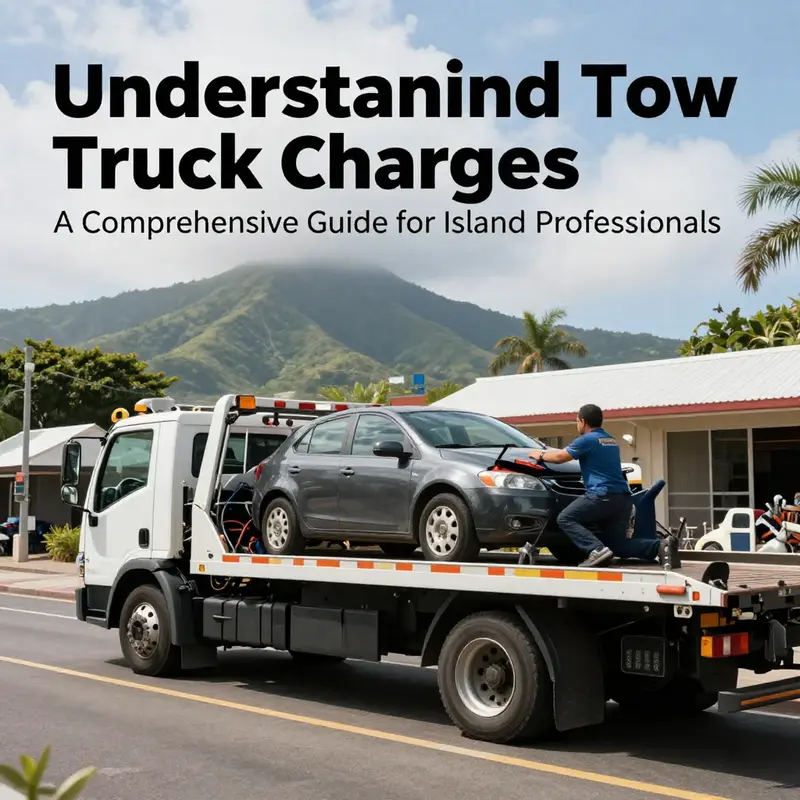
When a vehicle stalls or is involved in a minor collision, the arrival of a tow truck often brings relief plus a price tag that isn’t always easy to parse. For most drivers facing a short move—typically under 10 miles—the basic tow charge is built around three core components: dispatch, on-site hookup, and the actual transport. This trio forms a package that delivers a reliable service, but the exact price isn’t carved in stone. It shifts with location, time of day, and the specific towing method chosen. Understanding these elements helps keep a consumer from being blindsided when the bill lands. The national average for a short-distance tow sits in a familiar band, roughly between seventy-five and one hundred twenty-five dollars. This isn’t a single universal fee but a working range that most reputable local operators use as a baseline. It’s enough to cover the essential logistics: the tow truck making the call, the technician strapping the vehicle to the tow apparatus, and the trip from the roadside to a nearby repair shop or destination. Yet the exact number you’ll see on a receipt hinges on a handful of factors that spell out how “basic” your basic tow really is. The more you know about those factors, the more prepared you’ll be to receive a fair quote instead of a surprise tally at the end of the service.
A first distinction worth keeping straight is the nature of the tow itself. For most passengers’ cars, a traditional tow uses either a standard equipment setup or a flatbed. The standard tow—often a wheel-lift or dolly arrangement—keeps costs relatively lean while delivering solid safety for a typical vehicle. A flatbed tow, by contrast, is a larger, more specialized operation. It offers greater protection for vehicles with mechanical issues, bent undercarriages, or damaged frames. But because it requires more manpower, equipment, and time, flatbed tows tend to push the price higher. When you see a quote hovering near the middle of the general range, you’re usually looking at a conventional, short-distance tow. If the technician mentions a flatbed surcharge or a higher minimum because the vehicle has unusual dimensions or weight, that’s the point where the basic price starts to stretch.
Beyond the chosen towing method, the day and hour the service is needed can meaningfully affect the final figure. Many customers depend on a tow at 2 a.m. or during a weekend holiday when the operator’s availability is more constrained. In these moments, a local provider commonly adds a rush or after-hours fee to the base rate. A typical after-hours surcharge can range from approximately fifty to one hundred dollars or more, reflecting the added inconvenience and resource allocation required for emergency service. It’s important to note that this surcharge is not universally charged by every company, but it is a common practice in regions with strong demand for 24/7 emergency coverage. If you’re driving through a high-demand corridor or a rural area where after-hours response means a longer wait, that surcharge can bump the total noticeably. The key is to ask explicitly about any after-hours or emergency fees when you request a quote, so you aren’t surprised when the final invoice arrives.
Distance remains the principal driver when a tow extends beyond the basic short hop. While short-distance tows typically sit under ten miles, some scenarios creep up to eleven, twelve, or more before the clock and the odometer both start to tick in earnest. In those cases, some operators start to apply per-mile charges in addition to the base dispatch and hookup fees. The per-mile rate frequently falls in the range of two to four dollars, depending on the region, vehicle type, and the company’s pricing structure. It’s not unusual for a long-distance tow to begin with a robust base fee—perhaps one hundred dollars or more—then accumulate per-mile charges as the vehicle travels beyond the initial limit. These per-mile charges can multiply quickly on longer transports, and in those circumstances, the overall price can be substantially higher than the standard short-distance quote. The practical takeaway is simple: if your situation might require more than a handful of miles, ask for a complete breakdown that shows the baseline, the per-mile rate, and any minimum charge that might apply. A clear quote helps you compare options with confidence rather than stitching together a vague expectation from partial information.
Location adds another layer of variability that can reshape a basic tow into something less predictable. Urban centers with dense traffic, higher living costs, and a competitive landscape among service providers tend to feature slightly higher baseline rates. Suburban or rural settings may offer a tighter range, but even there, a few outliers can push the total up or down. The exact neighborhood matters because it influences: how far the tow truck has to travel to reach you, how quickly it can access your vehicle, the time the driver spends on-site, and the local demand that can trigger surge pricing. In practice, if you’re in a region where towing is a frequent service, you’ll likely see more stable prices. In areas with sporadic demand or limited providers, you may encounter more fluctuation. The lesson for the consumer is straightforward: proximity to repair shops and the density of tow operators in your locale both shape the practical cost you’ll face on the ground.
What, then, does a typical short-distance tow include beyond the price tag? The base charge is designed to cover the essential services: dispatch—the moment a call is received and the tow truck is dispatched; on-site hookup—the securing of your vehicle to the tow apparatus; and the actual transport—the drive from the roadside to a chosen destination. These elements, when bundled together, typically justify the $75 to $125 band for most cars in ordinary conditions. If a vehicle cannot be safely towed with standard equipment due to its weight, size, or mechanical condition, the operation might require specialized handling. This is where the pricing begins to diverge from the familiar middle ground. A larger vehicle, a damaged undercarriage, or a vehicle that demands a flatbed may incur a higher initial service call and setup cost, even before any mileage is added. The practical effect is that the broader the tow’s requirements, the more likely the price will sit at the upper end of the basic range—or beyond it—before considering distance.
From the customer’s perspective, a precise quote is best obtained by sharing the full picture: your location, the vehicle’s condition, whether you have access to a driveway or a tow-friendly route, and where the vehicle will go. The more details you provide up front, the more accurate the quote will be. One of the most reliable ways to navigate this space is to request a written estimate that itemizes the dispatch fee, the hookup charge, the base mileage rate (if applicable), and any after-hours or special equipment charges. A quote that clearly delineates each component helps you compare offers from multiple providers and protects you from hidden surcharges later in the process. In many communities, reputable tow operators welcome this level of transparency, recognizing that a straightforward pricing structure builds trust and reduces time spent resolving disputes after the tow is completed.
To illustrate how these factors come together, consider a practical scenario. Suppose you’re stranded in a city center with a compact sedan, in good mechanical condition but with a damaged wheel that prevents safe driving. The tow company quotes a base rate around one hundred dollars, which covers dispatch, hookup, and a short trip to a nearby repair facility. If the driver must take a less convenient route due to road closures, or if the service occurs after hours, the price could edge toward the upper portion of the basic range. If the same scenario involved a larger SUV with a damaged undercarriage, the operator might apply a flatbed option and a higher initial fee due to the equipment and labor involved. If the vehicle needed to be moved beyond ten miles to a distant shop, per-mile charges would be layered on top of the base price. Each layer—vehicle type, distance, timing, and method—molds the final number. In this context, the most practical approach for a consumer is to seek a clear, itemized quote before agreeing to service and to compare a couple of providers to ensure the chosen option reflects the least expensive path to safety and repair.
For readers who want a deeper dive into the broader landscape of towing costs, there is value in looking at a comprehensive overview that surveys the key factors, including vehicle type, service timing, and distance. A detailed resource that lays out these dynamics can broaden your understanding and help you interpret the figures you encounter on the road. You can explore further through The Island Tow Truck Blog, which offers practical perspectives on service expectations, pricing norms, and how to navigate the process when you need to call for help. The Island Tow Truck Blog provides additional context that complements the figures discussed here, helping align real-world experiences with typical cost ranges. And if you want a broader, data-driven snapshot of towing costs across scenarios, a widely referenced overview is available online. It highlights the base fees, per-mile rates, and additional surcharges that commonly appear in the market, including those for after-hours service. External researchers emphasize that locality and demand can shift what seems like an ordinary short tow into a more substantial expense, especially when emergency or heavy-duty equipment is involved.
The numbers discussed here—roughly $75 to $125 for a standard short-distance tow, with higher charges for flatbeds, emergency responses, or longer distances—represent average benchmarks rather than universal rules. They serve as a practical starting point for estimating what you might pay and for preparing questions to ask at the time of service. In some regions, you may encounter a slightly narrower band, perhaps due to competitive pricing or a different pricing philosophy among local firms. In others, the same service could land at the higher end of the spectrum because of distance, workload, or the prevalence of after-hours calls. The important point is not to memorize a fixed price but to understand how the price is built, what factors might push it higher, and how to obtain a transparent quote before you commit.
As you move through the decision-making process, consider how you’ll use the information you’ve gathered. If you’re choosing between two or more providers, ask for a written quote that itemizes each element: the dispatch fee, the hookup fee, the base mileage (if applicable), the per-mile rate (if applicable), and any surcharges for after-hours or heavy equipment. Also verify whether there is a minimum charge and whether the quote includes any additional services, such as winching or extra labor, which might be necessary depending on the vehicle’s condition. A well-structured quote reduces the probability of sticker shock and helps you weigh options with confidence. When your vehicle needs to be moved in the near term, these steps can expedite the process and keep you from paying more than necessary for a safe, reliable tow.
In sum, the basic short-distance tow is built on the same practical framework wherever you go: a dispatch charge, a hookup facilitation, and the transport itself, typically within a predictable price range. The exact total reflects the vehicle type, towing method, time of day, and distance traveled. While the core concept remains stable, the final amount can shift with regional pricing norms and the operator’s policies. Armed with this understanding, you’re better prepared to engage with tow operators as an informed consumer, to request precise quotes, and to decide on the option that strikes the best balance between safety, speed, and cost. External research reinforces that the cost landscape is not fixed but is largely shaped by location and service specifics, so when in doubt, ask for a breakdown and compare. For those who want to explore this topic further from an external perspective, you can consult a broad overview of towing costs that outlines the typical base fees, mileage rates, and potential surcharges that accompany short- and long-distance tows. In practice, the more transparent the quote, the more accurately you can map your options to your needs while keeping costs reasonable.
External resource: https://www.carinterior.com/towing-costs/
When Distance Drives the Bill: Decoding Long‑Distance Tow Truck Charges
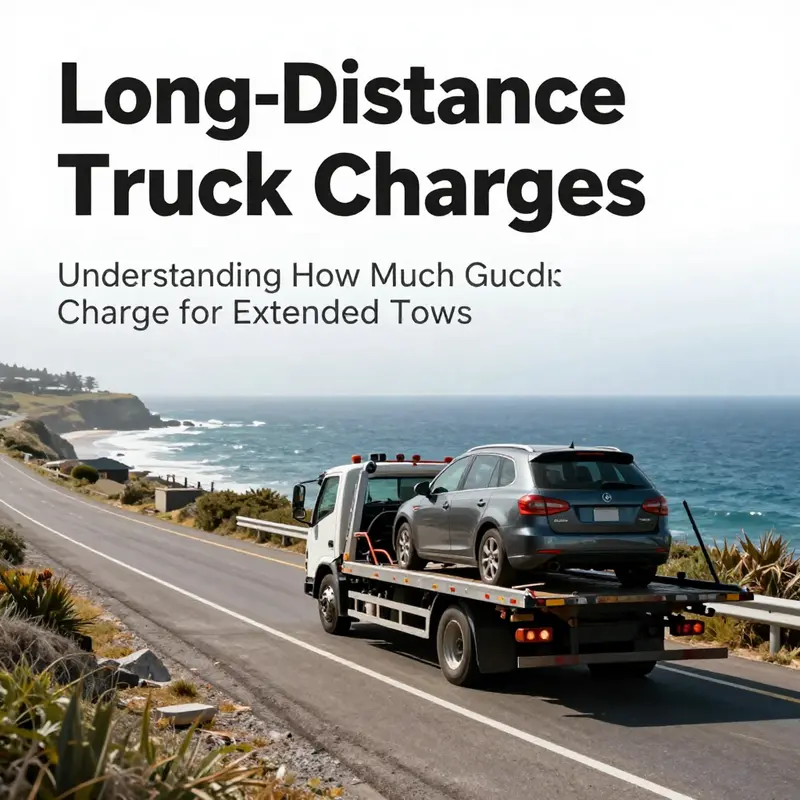
Understanding the components of a long-distance tow price
Long-distance towing is different from a short city haul. The distance alone does not set the final bill. Instead, a mix of vehicle type, tow method, time, location, and carrier practices shapes the cost. Knowing how each element contributes helps you predict expenses and avoid surprises when you need a tow across state lines or hundreds of miles away.
A typical long-distance job often starts with a base hookup fee. This covers dispatch, arrival, and the work to secure the vehicle. For long runs, companies usually add a per-mile rate that begins once the tow truck leaves with your vehicle. Per-mile charges tend to range widely. Expect lower rates on flat, straightforward routes and higher ones where detours, steep grades, or limited access increase time and fuel use. For tows exceeding roughly 200 miles, total costs commonly fall in the mid-hundreds to several hundreds of dollars, and can climb above a thousand depending on complexity.
Vehicle type is one of the largest cost multipliers. Standard sedans and compact SUVs generally mean straightforward wheel-lift or flatbed moves. Larger pickups, extended-length SUVs, luxury cars, and vehicles with nonstandard wheelbases will often require more care and special equipment. That can translate into a 10% to 30% surcharge, sometimes more when combined with additional manpower. Specialty vehicles such as RVs, commercial trucks, or heavy equipment require flatbeds or heavy-duty trucks. Those tows start at significantly higher base fees.
The method used to tow matters to price and to vehicle safety. Wheel-lift systems are efficient and commonly used for many long hauls. Flatbeds provide the safest transport for luxury or all-wheel-drive vehicles, but they cost more to deploy and operate. Hook-and-chain methods are rarely used for modern vehicles and can be restricted in urban areas. The tow method a carrier selects depends on the vehicle and route. Ask explicitly what method they plan to use, and why.
Time of day and urgency affect cost. Tows requested during nights, weekends, or holidays often carry an after-hours surcharge. Emergency requests, where a carrier must divert resources immediately, also attract premium rates. When possible, schedule non-urgent transfers during normal business hours to reduce that portion of the bill.
Location influences both base and per-mile charges. Urban tows can be costlier due to traffic delays, parking restrictions, and higher operating costs. Conversely, remote or rural areas might incur higher fees because carriers travel farther to reach you. Some carriers apply a minimum distance or flat minimum fee before the per-mile rate applies. That means a tow that seems short in miles can still hit a minimum charge.
Insurance and liability play a role in pricing too. Professional carriers carry insurance that protects your vehicle during transit. Policies and coverage limits vary, and some carriers will add fees or refuse certain moves without proof of adequate coverage. If your vehicle requires special handling because of prior damage, aftermarket modifications, or mechanical issues, a carrier may charge more to account for the increased risk of damage during transport.
Fuel, tolls, and permits often appear as separate line items. Over long distances, fuel is a measurable cost for a heavy truck. When crossing toll roads, bridges, or multiple states, carriers commonly pass those charges to the customer. For oversized or overweight moves, special permits are necessary and add administrative fees. Ask whether tolls and permits are included in the quoted price or invoiced afterwards.
How carriers price long-distance tows varies by business model. Some companies provide a flat rate for specific distance bands. Others charge a base hookup fee plus a per-mile rate. A third approach uses time-based billing when traffic or loading time is expected to be substantial. Always request a clear written quote that breaks down base fees, per-mile charges, and additional surcharges.
Comparing quotes helps, but do so carefully. The lowest bid may not include essential protections. Verify what the quote covers: hookup, mileage, fuel surcharge, tolls, storage at destination, and insurance. Also confirm the estimated timeline. A cheaper carrier that cannot guarantee pickup or delivery windows may cost you time and cause additional expenses.
Technology and platform marketplaces now allow you to solicit multiple quotes quickly. These tools let you post your move and receive competitive offers from vetted carriers. They can improve transparency through bid comparisons and tracking features. When using such services, verify carrier credentials, cancellation policies, and their claims handling process. Even with modern platforms, some manual checks remain critical. Confirm driver experience for long hauls and whether the carrier has experience transporting vehicles similar to yours.
Preparing your vehicle for a long-distance tow can also reduce costs. Remove loose items, disable alarms, and secure or remove loose external parts. If the vehicle is inoperable, make sure the carrier knows if it has locked steering or braking issues. Providing accurate information about vehicle condition upfront can prevent on-site surprises that raise the bill.
Documentation helps. Keep a record of the vehicle’s condition before pickup with photos and a written checklist. Request a bill of lading or a pickup receipt that notes the vehicle’s condition and any preexisting damage. This document is crucial if a damage claim becomes necessary. Ask the carrier for proof of insurance and the contact for their claims department.
Negotiation is possible, particularly when you can be flexible. If your timeline allows, getting multiple bids improves leverage. Combining services—such as arranging the tow and storage with the same carrier—might reduce total fees. For business fleets moving multiple vehicles, carriers often offer volume discounts or contract rates that lower per-tow costs. If you manage vehicles regularly, consider formal agreements with carriers to lock in lower rates and faster turnaround.
For commercial and island operations, long-distance towing ties into broader emergency planning. Fleet managers should build relationships with preferred carriers and include towing logistics in contingency plans. That ensures response times and rate transparency during peak demand. For readers managing island or remote fleets, see the guidance on emergency planning and fleet response for targeted strategies and local considerations. Emergency preparedness for island fleets
When cost estimates feel unclear, ask for a rate sheet. Reputable carriers can explain how they calculate mileage charges, hook fees, after-hours surcharges, and any other line items. Ask whether they charge a minimum for long-distance moves and whether they prorate time when a truck must wait. Ask what happens if your route changes mid-transit, or if the carrier needs to take a detour. Clear answers reduce the risk of dispute.
Safety and reputation deserve equal weight with cost. Choose carriers with solid reviews for long-distance transports. Long hauls demand route planning, securement expertise, and clear communication. A slight premium for a reputable carrier can protect you from damage, delays, or unclear billing later.
Finally, refer to authoritative industry sources for regional averages and best practices. National associations maintain data on typical towing costs and explain regulatory differences across states. These resources help you benchmark quotes and ensure fair pricing. For accurate, up-to-date information on towing rates and the factors that affect them, consult the American Automobile Association’s guidance on towing costs and variables.
https://www.aaa.com/automotive/towing-costs/
After-Hours Tow Charges: Decoding the True Cost of Emergency Towing When Time Matters
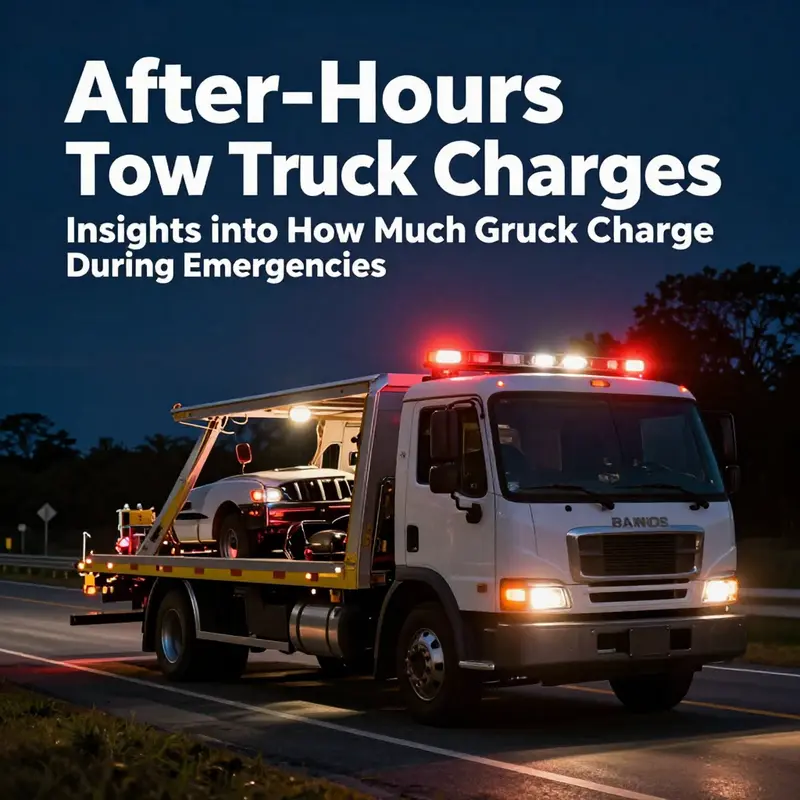
Breakdowns are rarely a clean, scheduled event. They arrive at the moment you least expect, in the worst possible location, and with the clock ticking toward rush-hour traffic or the middle of the night. In those moments, the price tag attached to a tow feels less like a mathematical figure and more like a reflection of how a service industry must balance availability, safety, and operational realities. Understanding how much a tow truck charge can feel less like guesswork and more like preparation, especially when you’re facing after-hours or emergency needs. The numbers aren’t arbitrary; they are the visible outline of a system designed to mobilize help quickly while covering the costs that come with doing so under challenging conditions. To grasp the practical reality, it helps to start with the typical price ranges that describe the landscape you’re navigating, then to peel back the layers of what makes after-hours fees so reliably higher than daytime rates.
For a standard tow within a city or nearby area—what many people would call a short-distance tow—you can expect a base price that covers the initial call-out and the tow itself to a local repair shop. The common range for these shorter tows sits around $75 to $125. It’s a broad band because all sorts of minor variables can nudge the price one way or the other: whether you’re on a crowded city street or a quiet side road, the exact mile marker that constitutes a “short distance,” and whether the tow involves only a basic hook-and-tuck maneuver or a more careful, insurance-compliant transfer of the vehicle onto a tow dolly. Still, those numbers provide a working baseline that most drivers encounter in the moment of need.
When the distance grows beyond the short city hop—think cross-town, across the county line, or a tow to a far-off shop—the pricing math shifts noticeably. Long-distance towing is often calculated per mile in addition to a base fee that tends to rise into the two-, three-, or even four-figure territory depending on the specifics. A typical long-distance tow might add roughly $2 to $4 per mile on top of a base that can range from $100 up to $200 or more. The exact combination of base and per-mile charge hinges on factors like regional competition, highway access, congestion that forces slower travel, and the tier of equipment required to move the vehicle without causing additional damage. The upshot is simple: longer distances magnify the total cost, not merely because of the miles but because the dispatch has to stay in motion longer, often with a more complex coordination of personnel and equipment.
Then there is the reality of time. If you’re stranded during regular business hours, the dispatch and the tow are usually conducted with the assumption of standard staffing and predictable demand. But when the clock rolls past the usual workday, especially on weekends or holidays, the same call can trigger a different calculus in the shop: overtime pay for drivers, higher fuel costs from extended response times, and sometimes a need for specialized equipment to handle unusual circumstances or larger vehicles. This is the heart of the after-hours premium. The industry generally recognizes that late-night or holiday service carries a readiness and risk premium, and that premium manifests as an after-hours or rush fee that can add substantially to the base rate. In practical terms, that means a routine 10-mile tow that might cost around $100 during the day can easily surpass $250 after dark or on a holiday. The exact increase varies by region and provider, but a common range is roughly 25% to 100% more than daytime rates when the clock is unfriendly.
Those numbers are not just abstractions. They reflect the underlying economics of emergency mobility. Dispatching a tow team in the middle of the night can be a logistical puzzle: drivers who keep awake, maintenance checks that must be performed after hours, and the higher cost of keeping specialized equipment ready at a moment’s notice. Fuel costs can rise when drivers have to chase down a location, especially if the vehicle is on a busy road or in an area with difficult curb access. The equipment itself can be a limiting factor; heavy or unusual vehicles require flatbeds or winches, devices that demand precision and care and, necessarily, more manpower. The combination of personnel overtime, fuel, and gear is the engine behind the after-hours surcharge that often appears as a separate line item on a bill or as an all-encompassing “emergency” fee.
From a consumer’s perspective, the most important practical takeaway is that an after-hours tow is not merely a scaled version of a daytime tow; it is a different service with its own cost structure. In urban areas, many tow companies apply these emergency fees automatically as part of their standard operating model. In other places, the base rate may be presented with optional add-ons that appear only after you’ve already engaged the service, which is not ideal for budgeting in advance. Either way, the prudent move is to ask for a detailed breakdown before any service proceeds. A transparent quote should itemize the base fee, the per-mile rate (if applicable), the after-hours or emergency surcharge, and any mileage-specific segments. If a breakdown is not provided up front, you risk discovering a surprise when the bill lands hours later in your inbox or on your windshield.
Of course, there are ways to navigate these costs with a little foresight. If you anticipate needing towing in a scenario where after-hours service is possible—such as weekend road trips, late-afternoon errands that might run long, or coastal or island travel where isolated services are more common—consider discussing pricing plans with a local provider before you actually need service. A helpful practice is to request a written estimate that includes a weighted range for daytime versus after-hours scenarios. Some providers offer a fixed rate for a given distance with clear add-ons for after-hours service, while others rely on a tiered, time-of-day pricing model that shifts as the clock ticks forward. Either approach can be easier to manage when you know what to expect, and it reduces the risk of sticker shock when you or your passengers are cold and tired, waiting on a shoulder of a busy highway.
Within this price framework, the type of vehicle being towed matters, too. A standard passenger car is the most straightforward case, but once you move into light trucks, SUVs with heavy racks, or specialty vehicles that require a flatbed rather than a simple dolly tow, the price climbs. Specialty moves demand more careful rigging, sometimes more crew members, and often larger or more precisely tuned equipment to ensure that the vehicle is transported without further incident. For those with recreational vehicles, boats, or industrial equipment in tow, the starting point can easily be well north of the base ranges quoted for ordinary passenger cars. The same logic applies to the terrain: urban cores with limited street access, narrow lanes, and the necessity of remote lifting points are all factors that can push an estimate higher, particularly after hours.
In the broader picture, there is also a question of value and reliability. The price you pay for after-hours service is not just a price tag—it’s a guarantee of immediate response, compliance with safety standards, and access to skilled personnel who can handle the situation with minimal risk to your vehicle and others on the road. The emergency nature of an after-hours tow means that the provider is committing to be there when you call, and that commitment has costs attached. That is not to say every after-hours charge is a good deal or that all daytime rates are a steal; rather, it is a reminder that you’re paying for a service that reduces potential damage, reduces the time you’re stranded, and increases your odds of getting back on the road safely as quickly as possible.
If you want to approach a tow with a clearer sense of the numbers, consider how this planning translates into a practical mindset for your daily life or your fleet operations. For fleets, planning around potential after-hours costs becomes part of the procurement and risk management process. A well-considered policy can help drivers know when to opt for a tow and when other options—like roadside assistance from an insurer, an auto club, or a trusted local shop with a pre-arranged agreement—might be more cost-effective in a given scenario. This is where a cohesive emergency response strategy becomes valuable. For fleets pursuing proactive preparedness, resources such as Essential Fleet Emergency Response Strategies offer a framework for aligning response capabilities with budget realities, ensuring that when a call goes out, the path to a solution is clear and financially rational. You can explore this planning approach here: Essential Fleet Emergency Response Strategies.
The interplay between distance, time, and vehicle type creates a spectrum of costs that can feel like a moving target at the moment you need help most. Yet the underlying pattern is recognizable: base fees for the act of responding and moving a vehicle, plus additional charges tied to distance, specialized equipment, and the hour of day. In practice, the most reliable way to avoid guesswork is to secure a written estimate that explicitly outlines all possible charges, including after-hours surcharges, and to ask for a clear breakdown of what constitutes any minimum service fees, winch fees, or equipment upcharges. If a provider is flexible enough to provide a capped or discounted rate for members of an auto-club or similar program, that can be a meaningful saving in an emergency. While not every provider offers such discounts, mentioning your membership or asking about any available programs can yield meaningful relief, especially during periods of high demand.
As you navigate the realities of after-hours towing, remember that your goal is not merely to minimize cost but to ensure safety and reliability in a moment of vulnerability. A tow is not just a vehicle-recovery operation; it is a coordinated response that involves dispatch logistics, driver readiness, and the careful handling of your asset. The peace of mind that comes from knowing you have reliable, transparent pricing and a plan for emergencies can mitigate the stress of a roadside crisis. In this sense, the chapter on costs is also a chapter about preparedness: understanding how much a tow charge can be, what factors drive that price, and how to obtain the clearest possible quote helps you turn a potential financial surprise into a manageable event.
For readers who manage fleets or who rely on consistent, predictable service, the long view matters. The experience of bargaining around a single tow is inseparable from the broader calculus of risk management, scheduling, and logistics. When a breakdown disrupts a scene, it disrupts more than the trip; it unsettles a carefully balanced plan. Anticipating costs, knowing where to seek quotes, and understanding which charges are standard versus optional can transform a stressful moment into a straightforward, workable decision. That is the practical payoff of this exploration into after-hours tow charges: a framework that equips you to respond efficiently, protect your assets, and maintain your pace on the road, even when the clock is not on your side.
In sum, after-hours towing costs reflect a deliberate calibration between speed, safety, and resource availability. They acknowledge the realities of dispatching teams at odd hours and the complexities of moving vehicles under less-than-ideal conditions. The numbers—base fees, per-mile charges, and the range of after-hours surcharges—are not random; they are a compact economic portrait of emergency mobility. By approaching these charges with a clear sense of what drives them and by insisting on upfront transparency, drivers and fleet operators alike can minimize surprises, make smarter decisions in the moment, and preserve both safety and financial footing when time is of the essence. For those seeking to extend their understanding into broader planning, the linked resources offer additional context on emergency response frameworks and cost-aware strategies that can support more resilient operations in the face of road incidents.
External resource: For a broader industry baseline on towing costs and member benefits during emergencies, see the industry resource at https://www.aaa.com/vehicles/towing-and-emergency-services.
Tow Toll for Giants: Calculating Heavy-Duty and RV Towing Costs with Clarity
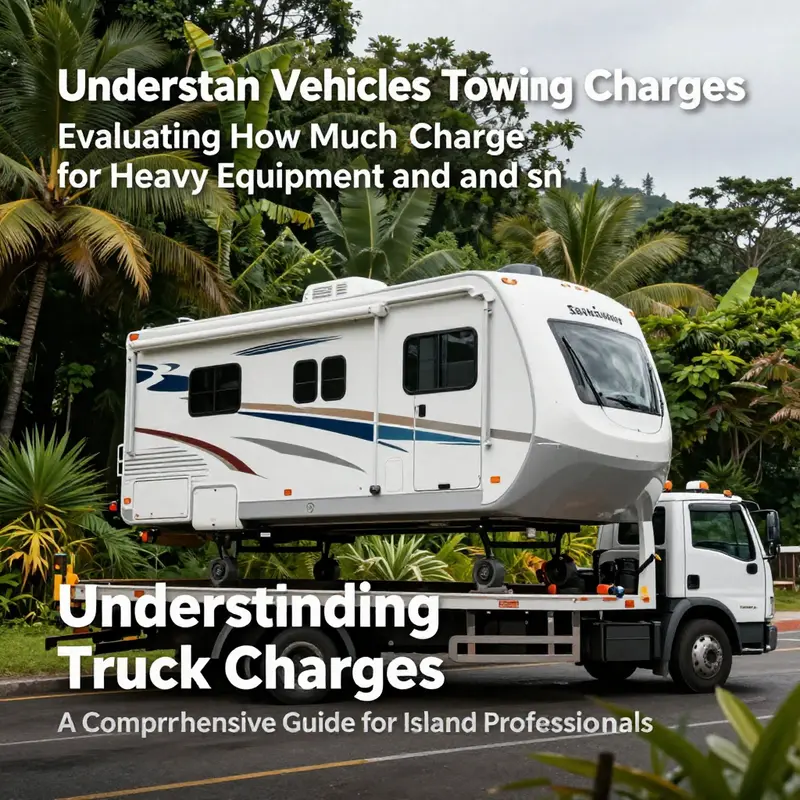
When a truck, a backhoe, a bus, or a sprawling RV sits immobilized, the question shifts from “how far” to “how much.” Heavy equipment and large recreational vehicles do not travel on the same road to cost as a standard car tow. Their weight, size, and the specialized techniques required to move them push the price into a different stratosphere, even before you count the urgency of the situation or the miles to be covered. The bottom line is that specialty towing is a process, not a single figure, and understanding the factors at play helps vehicle owners anticipate charges more accurately, avoid sticker shock, and work with reputable providers who can deliver both safety and transparency. At its core, the cost for heavy equipment and RV towing hinges on a set of interlocking variables: the vehicle’s type and weight, the equipment and crew required, the distance and terrain, access and location challenges, and the timing and storage needs that may follow a pickup. Each piece matters, and when combined, they explain why a callout for an 18-wheeler or a sprawling motor home rarely mirrors the price tag of a routine sedan tow, even within the same city limits.
To start, the very nature of the vehicle being towed shapes the service plan. Heavy equipment and oversized RVs typically exceed ten thousand pounds, placing them in a heavy‑duty category that demands specialized tow trucks. These are not the standard wheel-lift or basic flatbed units used for everyday passenger cars. Instead, operatives rely on equipment with reinforced winches, stronger frames, greater hydraulic capacity, and, often, multi-axle flatbeds or wheel-lift configurations designed to cradle unwieldy loads without compromising control or safety. The result is not just about the truck’s horsepower, but about the crew’s expertise and the rigging accuracy required to attach, cradle, and secure a vehicle that may have an irregular silhouette, sensitive equipment, or delicate finishes. From there, the type of tow apparatus—whether a heavy-duty flatbed, a specialized trailer, or a combination rig—drives a substantial portion of the cost, because each setup incurs higher fuel burn, maintenance, and wear on equipment that must be kept in peak condition for heavy tasks.
Distance amplifies the complexity as well. Short, local towings still call for a base fee and a per-mile charge, but for heavy-duty jobs, those per-mile rates commonly climb to a higher tier. A short distance might still exceed the base due to the need for multiple operators, additional safety measures, or a longer deployment time. Long-distance or cross‑state moves introduce further variables: secure routing, potential escorts for oversized loads, more precise scheduling, and extended on-site time that can push the quote beyond what a standard tow would anticipate. The per-mile component for heavy-duty work tends to reflect not only fuel and labor but also the incremental risk premium associated with longer hauls and the logistics of moving through jurisdictions with different permitting landscapes. When the calculation finally lands on the final number, it often looks like a base fee plus a robust per‑mile charge plus any ancillary costs tied to the journey’s milestones and constraints.
Location is another driver of price, sometimes in surprising ways. Towing in rural or remote areas can be more expensive due to limited access to qualified heavy‑duty crews, longer response times, and the added challenge of maneuvering large equipment through uneven terrain or restricted roads. Conversely, urban environments may introduce higher on-site labor costs and stricter safety protocols because the work is closer to busy traffic, requiring more traffic control measures and longer set-up times. In both cases, the calling card is risk management: operators must evaluate how to position the rig to avoid damage to the vehicle, surrounding property, or people, and that risk assessment translates into dollars on the estimate. The complexity of the operation also compounds when the vehicle has unusual dimensions, odd wheelbase configurations, or multiple axles that demand careful alignment and load distribution. This is another reason why a simple “price per mile” rarely captures the true cost for specialty towing; the process demands a layered approach to budgeting that accounts for every potential complication.
Beyond the vehicle and the distance, there are the logistical realities of the job. After-hours and emergency dispatches frequently carry a premium, and for specialty towing those premiums often appear as noticeable surcharges. A routine call during daytime business hours may trigger a different pricing envelope than a call placed at night, on weekends, or during holidays, when the demand for skilled heavy‑duty operators increases and the opportunity cost of mobilizing a crew at odd hours rises. The additional charges that accompany urgent or off-hours work reflect both the urgency and the practical challenges of coordinating a complex operation when fewer resources are readily available. The result is that a towed load moving after hours can easily see the base cost rise by a meaningful margin, even before factoring in distance or the type of equipment used.
Another layer comes from the vehicle itself—its physical condition and the protections required to safeguard it in transit. When the tow involves valuable, unusual, or sensitive equipment, operators may recommend or require higher levels of protection. Enclosed or CE-certified trailers, specialized tie-downs, and extra padding to preserve delicate finishes all contribute to the final price. These protections are not mere extras; they are critical safety features that minimize risk to the vehicle and to the tow crew. In markets where insurance or legal requirements push for higher standards, the cost of compliance becomes part of the service equation. The upshot is that the same heavy unit could command different quotes from different providers, not because one is trying to gouge, but because each company is layering in its own minimums for equipment reliability, crew expertise, and safety assurances.
A practical lens on pricing can help make sense of the numbers you’re likely to encounter. For a basic tow of a typical passenger car within a city, the industry provides rough ranges—an essential frame of reference for the uninitiated. A short haul in a familiar neighborhood often comes with a call-out fee and a straightforward towing charge to a nearby shop. For heavier loads, however, you should expect a different baseline: the base fee for heavy-duty or specialty towing is commonly higher, and the per‑mile rate is adjusted to reflect the added weight, complexity, and risk. When you compare this to long-distance tows—where a vehicle might traverse multiple jurisdictions—towing quotes typically include a substantial per-mile component and a sizable base charge that accounts for the deployment of specialized equipment and the need for extended crew time. And when the service call happens outside regular hours or during a weekend or holiday, the added urgency translates into a further surcharge—an important component to recognize when you’re planning a budget for contingencies.
With all these variables, the most reliable way to form an accurate expectation is to engage with reputable heavy-duty towing providers. The landscape of pricing is not a single fixed ladder but a constellation of factors that each provider weighs a bit differently based on their equipment, crew availability, and local regulations. When you contact a company, the best practice is to share a complete snapshot of the situation: the type and weight of the vehicle, its approximate dimensions, whether it is operable or stalled, the exact location and access constraints, and any known hazards or obstacles at the pickup site. A comprehensive inquiry enables the dispatcher to craft a more precise estimate that includes a transparent breakdown: the base fee, per-mile charges, equipment use fees, labor costs, after-hours surcharges if applicable, storage if needed, and any regulatory or permit fees that might apply. In some cases, even a short-distance move can require permits for oversized loads or travel through restricted corridors, and those permits come with their own fees that are sometimes billed to the customer as a separate line item.
From a consumer education standpoint, transparency is the anchor you should seek. The most reliable quotes will present a clear line-item breakdown rather than a single lump sum. The base fee should reflect the core cost of mobilizing a heavy-duty crew and equipment. Per-mile pricing should align with the anticipated distance and include justification for any variance from the standard car-tow rates you may have seen in other contexts. Any special equipment usage, such as additional harnessing devices, extra-long winch lines, or multi-axle securement systems, should be listed and explained. Surcharges for after-hours or emergency work should be defined, perhaps with a threshold like an after-hours window or a weekend/holiday premium as part of the final tally. If overnight storage is necessary, the daily storage rate should also appear, with a note on whether storage begins the moment the vehicle is secured at the site or at the shop. The more complete the breakdown, the easier it is to compare apples to apples across providers and to plan for potential emergencies without facing unpleasant surprises after the job is done.
Within this framework, several practical considerations can help you approach a heavy-duty or RV tow with greater confidence. First, because weight and dimension matter, you should be prepared to provide exact or approximate figures for the vehicle’s weight class and its dimensions, including length, width, and height. If the vehicle is out of service or on a difficult terrain, photos or a quick video can help a dispatcher gauge what kind of rig and rigging will be needed, which in turn tightens the estimate’s accuracy. Second, understand the site’s access realities. Is the pickup point on a narrow street with limited turning radius, or at a remote location with an uneven approach? Are there overhead obstructions, weight-restricted bridges, or tight loading angles? These factors influence the crew’s plan, the time required, and the equipment selected, all of which feed into price. Third, discuss potential contingencies up front. If there is any chance the vehicle may need to be moved again after initial pickup, or if it must be delivered to a location far from the original destination, request a contingency clause or a separate line item for additional miles or reloading. This practice helps curb the chances of “bill shock” when the job pivots mid‑task and additional resources are suddenly required.
The recommendations from industry observers and experienced operators converge on a practical ethos: seek out providers who specialize in heavy-duty towing and who can demonstrate a track record of safe, compliant, and well-documented operations. Heavy equipment and large RVs pose not just financial risk but genuine safety concerns for the crew, the vehicle being moved, and bystanders. A reputable operator will insist on appropriate licensing, insurance, and adherence to local regulations, including licensing for certain heavy loads and the use of properly certified trailers and tie-downs. If a company cannot articulate these safeguards or cannot produce documentation, that should be a red flag. The goal is not just to minimize cost but to ensure a secure, legally compliant, and properly executed move that reduces the probability of damage and liability.
For readers who wish to explore broader context about heavy-duty towing policies and practices, a deeper dive into the nuance of heavy towing services can be instructive. This external resource provides a detailed overview of how specialists approach the task, the considerations they weigh, and the safeguards that help keep costs predictable while preserving vehicle integrity. It serves as a useful companion piece to the pricing framework discussed here, offering additional angles on how to talk to a towing professional about your heavy-load scenario and what to expect in terms of a responsible, transparent quote. Madison Hill – Heavy Towing Service Explained.
In short, the price you pay for towing heavy equipment or a large RV is a function of many moving parts. It is shaped by the vehicle’s mass and complexity, the equipment and expertise required, the distance and terrain, and the timing of the service. It is also shaped by the level of protection you choose for the load and the regulatory framework within which operations must occur. While the numbers can be startling when compared to standard car tows, the reason becomes clear once you recognize that heavy-duty towing is a specialized service that demands precision, planning, and a safety-first approach. The most reliable way to ensure you are paying a fair price—and not overpaying for a service you do not need—is to request a detailed, itemized estimate from a reputable provider, ask for explanations of each line item, and compare multiple quotes that share the same scope of work. When you equip yourself with this level of understanding, you transform the experience from a potential shock into a transparent, informed transaction that respects both the stakes of the move and your budget.
For readers wanting a direct path to a reputable source of ongoing information, a visit to a professional industry blog can provide ongoing insight into heavy-duty towing considerations, maintenance of recovery equipment, and fleet readiness strategies. That resource can serve as a practical companion to the pricing knowledge outlined here, helping you navigate not just the cost but the logistics of heavier recoveries as part of an overall readiness plan for fleets and individual owners alike.
Internal link reference: the island tow truck blog
External link: Madison Hill – Heavy Towing Service Explained
Final thoughts
As we’ve explored, understanding the various charges associated with towing services is crucial for any professional operating in the automotive field on our islands. Whether you’re managing a repair shop, running a car dealership, or overseeing a fleet, knowing what to expect can help you budget effectively and ensure smooth operations during any unexpected vehicle issues. Be proactive and informed—your capacity to handle towing challenges will greatly enhance your operational efficiency and provide peace of mind.