
Navigating the costs associated with towing trucks can seem overwhelming, especially if you’re a local auto repair shop, a dealership, or a community-focused property manager operating in a unique island setting. The variability in prices of towing trucks is influenced by size, specifications, and unique island factors. Our exploration will provide an in-depth look into current market prices, examine what drives costs, and help you identify suitable models to meet your operational needs. Each chapter builds upon the last, ultimately creating a comprehensive understanding of towing truck investments in your local auto economy.
The Price of Power on the Road: Understanding What a Towing Truck Really Costs
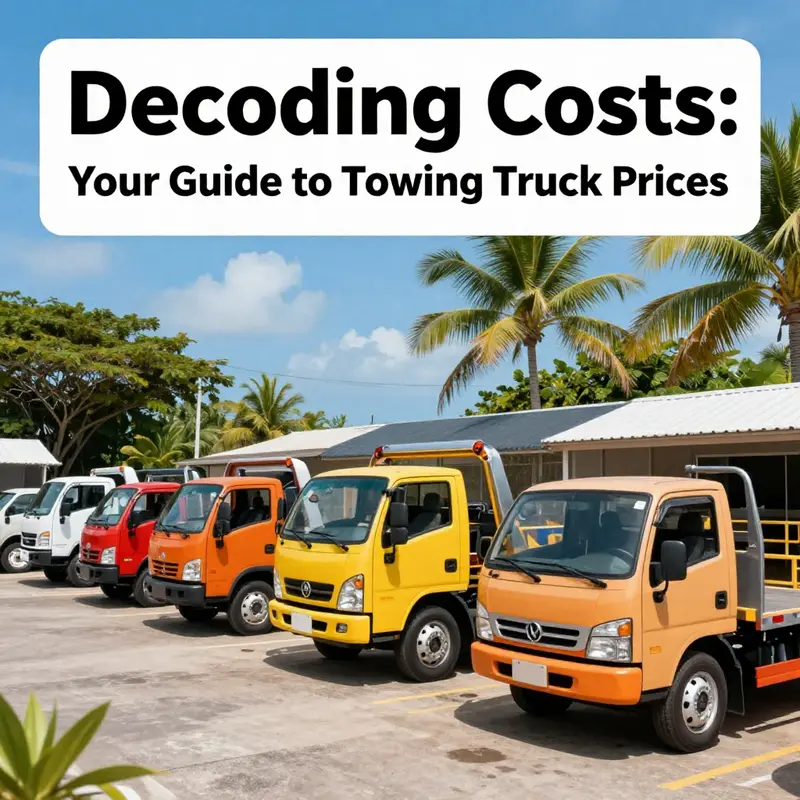
To understand how much a towing truck costs, it helps to start with the basics of what the vehicle is designed to do and how that purpose drives price. A towing truck is not a single product with a single price tag; it is a family of specialized machines whose value depends on size, capacity, and the features that enable them to recover, lift, and transport disabled or immobilized vehicles. Within the same general category, buyers face a spectrum of price bands that can look almost like different markets. At one end sits compact, four-ton road-ster tow trucks built for light to medium roadside assistance. At the other end lies the heavy, multi-axle, high-capacity machine engineered to recover commercial trucks, buses, and large wrecks after a major incident. The middle ground includes a variety of medium-duty configurations that are common in fleet operations for municipalities, service contractors, and private response providers. The sticker price, therefore, is only the beginning of the financial picture. Even within a single purchase, buyers encounter a range of options that can dramatically shift total cost of ownership over the vehicle’s life, from initial outlay to maintenance, downtime, and resale value. In markets around the world, a 4-ton road-flatbed or light wrecker can be found with factory pricing in the mid-teens to around twenty thousand dollars, while heavy-duty machines capable of handling tens of tons escalate well beyond the six-figure mark when equipped with the right combination of winches, cranes, and reinforced frames. This spread is not simply a quirk of marketing; it reflects the practical differences in capability, durability, and the scope of work the equipment must perform on a daily basis. When a fleet owner sits down to budget, the first question is usually this: what job will the vehicle primarily handle, and what reliability level is required to keep operations moving? The second question follows naturally: how much functionality is truly necessary, and how much can be left to future upgrades? The answers to these questions pull price in opposite directions. A basic, standard-config towing chassis with a simple hydraulic winch and a modest bed might come in at a fraction of the cost of a fully outfitted recovery platform with a heavy-duty crane, more powerful hydraulics, a long recovery bed, and integrated stabilizers. Yet the latter configuration may pay for itself many times over through higher productivity, faster response times, and a greater ability to service a wide range of call types without needing a second, different rig. In other words, cost is not just about the price tag on the lot; it is about the unit’s ability to perform the tasks your operation faces day after day, week after week, and year after year.
From the start, the price landscape for towing trucks reveals a clear gradient. Light- to mid-range trucks with 4-ton capacity are commonly priced in the lower five figures, with factory or direct-from-manufacturer pricing often cited in the region of roughly $16,000 to the low $20,000s. These machines are designed for light roadside assistance, rapid deployment, and straightforward recovery jobs. They typically feature a wheel-lift or basic flatbed, a moderate winch, and standard crew compartments. While affordable, their capabilities are matched to a narrower set of tasks, and their extension into heavier duty or longer-term uses may require incremental upgrades or additional units. On the other end of the spectrum, heavy-duty tow trucks—those built to handle loads approaching or exceeding fifty tons—are priced in a much higher range. In many markets, these units can run from around $95,000 to as much as $155,000 per unit, depending on the exact configuration, the strength of the chassis, the reach and capacity of the winch and crane, and the sophistication of the safety and control systems. This is not mere bragging rights: for a recovery operation that routinely lifts, restrains, and hauls large commercial vehicles, reliability and performance are non-negotiable. The higher price tag buys power, durability, and lower downtime, translated into better fleet uptime and the ability to service high-value contracts with a single, dependable asset.
The obvious question then becomes why a manufacturer would offer a 50-ton-plus machine at a price five or six times that of a lightweight 4-ton model. The answer lies in the engineering choices that underwrite performance. Heavier trucks require reinforced frames and axles, larger engines or transmissions to sustain long days of heavy use, and more robust hydraulic systems that can operate under tough conditions without overheating or failing. They carry more sophisticated winch systems, cranes, and jibs that can reach and lift in ways a smaller machine simply cannot. They also demand higher-grade safety features such as enhanced stabilizers, more extensive operator controls, and advanced diagnostics to monitor the health of critical components. All of these features push up the cost—but they also expand the utility of the vehicle. A heavy-duty recovery unit is not a luxury purchase; it is a strategic asset that can affect a fleet’s capability to win contracts, recover incidents quickly, and maintain service levels in demanding environments.
Another factor shaping price is the scale and terms of procurement. When a fleet operator orders a single unit, the price reflects customization, shipping, and after-sales considerations borne by a smaller batch. If a buyer purchases multiple units—say, fifty or more—the per-unit price can drop substantially because manufacturers offer volume discounts, consolidated logistics, and shared testing. It is common in large fleets or municipal programs for a price negotiation to hinge on both volume and the broader service package, including warranties, training, spare parts, and guaranteed access to service networks. In such scenarios, a procurement officer might weigh the cash outlay against the long-term reliability and maintenance costs, calculating a lower total cost of ownership over the vehicle’s lifecycle. The arithmetic of these decisions matters, because a lower upfront price can be offset by higher maintenance costs, more frequent downtime, or limited access to parts and service in remote areas. Conversely, paying more up front for a model with superior parts availability, longer warranties, and a more extensive service network can yield substantial savings down the line.
The economic picture for tow trucks is also influenced by broader market dynamics. Industry analyses point to a global heavy-duty tow-truck market that expanded in the early 2020s and was valued at several billions of dollars with expectations of continued growth driven by infrastructure development, urban expansion, and the rising importance of rapid incident response in dense traffic corridors. These macro forces shape both the price and the pace of innovation in the sector. Buyers should consider not only the sticker price but the long-term value proposition: faster recovery times, reduced downtime, better fuel efficiency through newer engine platforms, and advanced safety features that may limit liability and insurance costs. Since infrastructure upgrades and emergency response capabilities are high-priority investments in many regions, equipment dealers and manufacturers compete by offering broader warranties, more comprehensive training packages, and service networks that minimize the risk of extended outages when a unit is needed most.
With this landscape in mind, prospective buyers should approach pricing with a practical, multi-dimensional framework. First, define the core mission. Will the truck primarily perform light roadside assistance, or will it be the backbone of a heavy-rescue operation that must recover damaged vehicles from elevated locations or unstable terrain? Second, map the expected workload. A high-call volume fleet that operates around the clock benefits more from reliability and uptime guarantees than from a marginal saving on price. Third, examine the upfit and configuration options. A basic recovery bed, a standard winch, and a simple stabilizing system may suffice for some tasks, but other operations will demand multi-stage hydraulic cranes, heavy-duty winches with extended reach, and fully integrated control dashboards that simplify complex recoveries. Each enhancement carries a price tag, but each also unlocks capabilities that can translate into faster, safer, and more cost-efficient recoveries.
A practical method to navigate this complexity is to request formal quotations that break down costs by component and service package. Buyers should ask not only for the base price but for a complete quote—including delivery, optional upfits, warranties, service plans, and expected maintenance requirements. It is prudent to compare apples to apples by verifying whether quotes include training for operators and mechanics, the availability of spare parts for the expected life of the vehicle, and the geographic reach of the service network. A robust after-sales proposition can be as important as the vehicle’s initial price, because a dependable service ecosystem reduces downtime and extends the life of the asset. Across markets, price transparency often correlates with the strength of the sales channel and the clarity of the contract terms. Some suppliers may offer factory pricing and payment guarantees that reduce the financial friction of procurement, while others might bundle inclusive maintenance or extended warranties as part of the deal.
Beyond the price tag and service commitments, there is a broader economic reality for fleets that is worth highlighting. Heavy-duty equipment is an investment tied closely to the volume and nature of the work performed. For urban and regional operators who need rapid response for traffic incidents or for disaster-response readiness, the economics favor higher-capacity machines that can tackle the toughest recoveries with confidence. For smaller operators or rental fleets that prioritize flexibility and lower upfront risk, lighter machines with simpler configurations can provide the essential capabilities with a more modest capital expenditure. In every case, the total cost of ownership—fuel consumption, tires, hydraulic fluids, engine wear, insurance, licensing, depreciation, and the inevitable replacement or upgrade cycle—will determine the true cost of owning and operating a towing truck over its useful life. A thoughtful lifecycle approach helps align initial spending with expected returns, ensuring the asset contributes to revenue stability rather than becoming a recurring bottleneck.
To illustrate how these dynamics play out in concrete terms, consider a hypothetical spectrum of prices alongside typical use cases. A compact four-ton carrier with a basic flatbed or wheel-lift might be priced in the low to mid twenty-thousands in an all-in quote, depending on whether features are factory-installed or added through a dealer network. This class is well suited for light-duty recoveries, tire changes, and the occasional small-vehicle tow. A mid-range, mid-weight recovery unit with a longer bed, a more capable winch, and optional underlift can push toward the high twenty-thousands to the low forty-thousands, reflecting the added capability and reliability required for more frequent or adverse weather operations. The highest tier—an industrial-grade, multi-axle unit with a robust crane, extended reach, reinforced frame, and a full-suite of operator aids and safety systems—tends to inhabit the six-figure territory, with some specifications and configurations nearing or surpassing the upper end of the range when delivered with premium service agreements and training packages.
Buying guidance in this space benefits from a disciplined, bench-tested approach. Prospective buyers should audit their current and anticipated call types, the geographic spread of operation, and the expected service life of the vehicle. They should benchmark against peers in similar markets and seek references about uptime, spare parts availability, and real-world maintenance costs. In some markets, buyers can leverage group purchasing or legacy fleet discounts, leveraging scale to reduce unit costs while maintaining or even improving service continuity. While the price difference between a standard and an upgraded configuration can be substantial, the incremental cost should be justified by measurable gains in efficiency, safety, and the ability to take on a broader suite of assignments. For heavy-duty operations, the decision to invest in capacity should be anchored in the acceptance that recovery work can be episodic in the short term but becomes mission-critical when an incident occurs. In those moments, the value of dependable, rapidly deployable equipment is often measured in minutes, not months, and in lives as much as dollars.
For readers who are navigating this market while balancing fleet readiness with capital discipline, a reminder is in order: price is not the only determinant of value. The total package—engineered resilience, parts availability, service response times, training, and warranties—often steadies the upward curve of investment and yields better operational outcomes over time. When in doubt, engineers and procurement specialists should collaborate with a trusted supplier that can translate technical requirements into a precise, inclusive quote. This collaboration helps avoid overpaying for features that never get used or underinvesting in capabilities that would unlock new revenue streams or emergency-response capabilities. Buyers should also keep in mind that global market signals—volatility in commodity prices, currency shifts, and geopolitical dynamics—can influence both the price and the availability of certain configurations. In volatile periods, a solid procurement plan that includes long lead times, backup suppliers, and clear risk management strategies becomes as valuable as the machines themselves.
For readers seeking a practical reference point while exploring options, consider how pricing plays out in a typical real-world scenario. A common starting point is a 4-ton platform intended for light-duty work, offered with a basic bed and wheel-lift or simple winch. This setup addresses routine calls, small- to mid-sized vehicle recovery, and some roadside assistance tasks. If a fleet’s workload grows to include heavier recoveries, towing on challenging terrain, or longer-distance recoveries, it is natural to explore mid-range configurations with longer beds, higher towing capacities, and more stable lifting systems. When an operation demands maximum recoveries with frequent heavy loads, a high-capacity unit becomes the strategic asset. In such cases, the incremental investment yields broader service capabilities, enabling the fleet to handle high-value contracts and maintain service continuity during peak demand periods.
As buyers analyze the market, it is essential to recognize that price quotes from manufacturers and distributors may reflect different assumptions. Some quotes may present factory pricing with limited inclusions, while others may bundle financing, warranties, parts, and training as a comprehensive package. The diversity of terms means buyers should scrutinize each quote for the same core elements: base price, delivery charges, optional upfits, warranty duration and scope, maintenance plans, spare parts availability, and the length of any service-network coverage. In practice, a fully transparent proposal that aligns with a fleet’s budgetary processes will often be preferred over a lower sticker price that hides ancillary costs until well after the purchase. Financially prudent buyers may negotiate payment terms that ease cash flow, such as staged payments tied to milestones, while ensuring that warranties and service plans remain in force throughout the critical early years of operation.
Ultimately, the question “how much does a towing truck cost?” has no single answer. The price is a function of the work the vehicle is asked to perform and the level of reliability the operator requires. It is shaped by the scale of the procurement, the configuration choices that optimize for uptime and safety, and the strength of the after-sales ecosystem that keeps the fleet productive. For a fleet that prioritizes rapid, reliable responses in a demanding environment, the cost of ownership tends to align with the value of reducing downtime and expanding the range of services offered to customers. For operators with tighter budgets or more limited operational needs, a leaner investment is often the sensible path, paired with prudent maintenance and a plan to upgrade as demand grows.
If you are exploring this topic further and want to ground your decisions in broader fleet strategy and emergency-readiness considerations, you can refer to resources that discuss how to prepare for emergencies and maintain fleet resilience. For instance, the article on essential fleet emergency response strategies offers practical guidance on aligning equipment investments with readiness needs, ensuring your towing assets contribute to a robust response framework. essential fleet emergency response strategies.
External resource for further price context and market data: https://www.alibaba.com/product-detail/Factory-Price-Foton-Auling-4ton-Road-Flatbed_1600871013547.html
Sizing Up Tow Truck Costs: Size, Capacity, and Customization
Tow truck pricing hinges on more than the sticker price. The three main levers are size, capacity, and customization, but their effect is shaped by other cost factors such as warranties, service networks, fuel use, and import duties. Operators negotiate with manufacturers who tailor a unit to fit a fleet and workload, and small changes can shift the total cost of ownership. Larger size usually means a heavier frame, longer bed, stronger hydraulics, better braking, and more robust cooling. These are not cosmetic upgrades; they add upfront cost and can be worth it for heavy and high demand service. Capacity affects how much a unit can recover while keeping safety and reliability high. Heavier duty configurations include reinforced winches, longer outriggers, and tighter control systems, which raise price but expand capability and uptime. Customization drives the most price variation but can create savings over time through faster jobs and reduced downtime. Examples include better lighting, ergonomic cabs, modular toolsets, and integrated load calculation tools. For fleets, the balance is between base capability and the ability to upgrade as workload grows. Volume orders can yield discounts and integrated services that lower total cost per unit. In practice, buyers should map expected workloads to a target price band, start with a well defined base model, and layer on upgrades only as needed. The result is a purchase that matches mission, uptime, and long term value rather than a single sticker price.
Tow Truck Costs Decoded: How Size, Capacity, and Build Shape the Price Across Models
Prices for towing trucks are not a single line on a price tag but a spectrum shaped by size, capacity, drivetrain, and the specific features a fleet needs. When a fleet owner asks, “How much does a towing truck cost?” the answer is rarely a single number; it is a window into how a vehicle is built to perform, how long it is expected to last, and how deeply a buyer plans to tailor it for particular tasks. In practice, the market presents a few broad, realistic bands that reflect the engineering challenges behind each task. At the low end, compact, light-duty tow trucks designed for everyday roadside assistance and small-vehicle recovery can begin in the low tens of thousands, especially when purchased in groups. These units typically feature lighter frames, smaller wheelbases, and drivetrain configurations optimized for city streets and rapid response. The mid-range tier encompasses more capable models built to handle heavier loads, more demanding recoveries, and longer shifts between service intervals. These trucks commonly offer greater horsepower, sturdier suspensions, larger winches, and more robust hydraulic systems, and their price often sits between the mid-$20,000s and the upper $30,000s per unit, depending on whether a buyer is purchasing one-off or in modest quantities. At the upper end, heavy-duty wreckers that can lift and tow very large vehicles, or service heavy commercial fleets, command prices that stretch into the $40,000s, $50,000s, and beyond. These machines typically feature extended chassis frames, multiple axles or specialized drivetrains, sophisticated recovery gear, and advanced safety and control systems. They are built for reliability in demanding environments, from long-haul highways to busy industrial yards, and the cost of ownership for these units reflects the expectation of high uptime and long service life.
Across these bands, the market also discriminates by the size and type of the tow truck in practical, measurable ways. A 5-ton 4×2 platform tow truck, for example, commonly shows up in price studies as a sweet spot for owner-operators and small-to-mid-size fleets. One widely cited example shows such a unit priced around US$28,990 for a purchase of one to four units, while the same model drops to roughly US$18,990 when the order climbs to five or more units. This price behavior—bulk purchase discounts—mirrors a broader truth in fleet procurement: the more you buy at once, the more you can leverage the cost per unit. It is not merely the sticker price that matters here, but the purchase economics that emerge with scale. The price band for this category is broad, reflecting variations in configuration, engine type, cab design, and whether the vehicle is new or used. For a fleet budget, this means that the decision is not only about the sticker price but about how many trucks are needed in the near term and how quickly they can be deployed to keep operations running smoothly.
Another common tier covers light-to-medium heavy-duty models that run on similar platforms but differ in payload, drivetrain choices, and the specific tow and recovery gear included. A typical 4×2 5-ton wrecker could fluctuate between roughly US$18,000 and US$39,800 per unit, with the exact price driven by factors like the presence of a hydraulically powered lift, the size and strength of the winches, the length of the wheelbase, and the sophistication of the control electronics. In this segment, the decision often hinges on how a fleet balances the need for speed and maneuverability against brute lifting capability. A compact, urban-friendly unit may be cheaper to purchase and cheaper to operate in terms of fuel and maintenance, while a more feature-rich version promises faster recoveries and fewer repeat call-outs, which can translate into a lower cost of downtime over the vehicle’s life.
For those fleets that routinely handle long-haul operations or vehicles that weigh in at the upper end of the scale, heavy-duty configurations step into a distinct price territory. A large, multi-axle heavy-duty wrecker billed as a high-capacity solution can occupy the $40,000 to $70,000 range per unit, depending on the precise capacity, build quality, and the presence of advanced safety systems and winching arrangements. These machines are designed to perform with minimal human intervention in high-stress environments, such as road salvage on interstates or yard work at large fleet facilities. The premium at this end of the spectrum is not only about raw lifting power but about resilience—stronger frames, robust suspensions, and more sophisticated winching and stabilization gear that reduce the risk of further damage during recovery.
A separate, often overlooked category comprises flatbed or rollback tow trucks, which deliver a different value proposition. A compact 4-ton or so flatbed unit may be priced around a factory figure of roughly US$15,990 for a single or small handful of units. Flatbeds emphasize secure transport and damage-free towing, turning the movement of vehicles on and off the bed into the primary recovery action. The appeal here is efficiency in loading, securing, and transporting vehicles, which can be a decisive advantage in certain markets or for operators who prioritize minimizing secondary damage or the need for additional recovery equipment.
It is crucial to recognize that the prices cited above are manufacturer or supplier quotes and can shift with several moving parts. Shipping costs, import duties, currency fluctuations, and the addition of optional features or aftermarket equipment can all influence the final price. A fleet buyer negotiating with a supplier may see a couple of different price paths emerge: a straightforward, no-frills configuration close to the base price, or a fully loaded package with enhanced safety options, greater hydraulic capabilities, or specialized winch arrangements. In practice, a buyer can often push the price toward the lower end by opting for standard configurations and fast-track delivery, while the higher end of the spectrum becomes accessible when the fleet needs a targeted spec that reduces downtime and supports high-intensity use.
From an ownership perspective, the initial purchase price is only part of the total cost of ownership. Ongoing expenses—the maintenance and repair bills, the fuel efficiency of a given drivetrain, insurance premiums, depreciation, and the costs associated with any customizations—shape the long-term financial picture. A high-uptime truck with a strong parts network and predictable service intervals may cost more upfront but can yield a lower total cost per tow over a five- to seven-year horizon. Conversely, a lower upfront price may carry higher maintenance needs or shorter service intervals that translate into more frequent downtime and higher annual operating costs. These dynamics are often more pronounced in fleets that operate near the edges of their capacity, where each unit works at or near maximum load for extended periods.
The decision calculus for procurement extends beyond what a single truck can do. It includes considering how many units are needed, the typical workload, the environment in which the fleet operates, and the logistical realities of service and parts access. In markets where a fleet must perform away from major urban centers, for example, the value of a robust, easily maintainable unit with a broad parts-and-service footprint can outweigh marginal gains from a marginally lower purchase price. The availability of after-sales service, the ease of finding qualified technicians, and the efficiency of parts supply all contribute to a lower effective cost per tow and a smoother operating schedule. In more connected markets, a buyer may place a premium on features that improve the speed and safety of every recovery rather than on raw lifting capacity alone.
When making a decision, it helps to imagine the typical day on the road. A 4×2 platform unit used for routine roadside assistance will spend more days in the city or along regional corridors, where fuel efficiency, maneuverability, and quick-on-scene cycles matter. A heavy-duty wrecker designed for long-haul recoveries or for challenging industrial sites will need to combine extreme lifting capability with precise control and stable operation under tough weather and road conditions. The pricing conversation then becomes a conversation about what a fleet can reliably do with the trucks in its inventory, and how those capabilities translate into fewer call-outs, faster recoveries, and minimized risk of further vehicle damage during the operation.
For buyers seeking practical guidance, the path to an accurate price involves direct engagement with suppliers and a careful comparison of specifications. It is not sufficient to rely on a single price tag; buyers should request detailed specifications and quotes that spell out the engine type, drivetrain, wheelbase, payload capacity, winch rating, hydraulic system flow rate, bed length, bed type (flatbed vs. rollback vs. platform), and the presence of safety features such as stabilizers, cameras, and load sensors. The best deals often align with a clear understanding of how the vehicle will be used, how quickly it can be delivered, and how the after-sales support is structured. This means that conversations with suppliers should include questions about warranty terms, maintenance packages, and the availability of trained technicians in the fleet’s region.
The landscape of price and value also includes non-monetary considerations that influence the total cost of ownership. For instance, a model with a longer wheelbase and a more rigid frame may deliver steadier handling during winching and loading, reducing the risk of on-scene accidents or damage to towed vehicles. A more advanced control system may allow a single operator to perform complex recoveries without additional personnel, lowering labor costs over time. In contrast, a simplified, lower-cost option may demand more hands-on effort, slower recoveries, and more frequent returns to base for maintenance. In markets where vehicle downtime translates to lost revenue, a higher upfront price that secures faster service and lower downtime can be a prudent investment.
The pricing narrative, therefore, is not just about a sticker price. It is about aligning a fleet’s strategic priorities with the capabilities and durability of the equipment. Fleet managers often weigh the cost per tow or the cost per hour of operation as more meaningful KPIs than the nominal price of the machine. This approach helps to reveal whether investing in premium features—such as a more capable hydraulic system, higher-grade winching equipment, or a more robust rolling chassis—will pay for itself through reduced maintenance, faster response times, and fewer service interruptions. Conversely, for fleets with tight budgets or a lower throughput, balancing cost with expected usage can justify choosing a simpler configuration, provided the reliability and service network are satisfactory.
In practice, a procurement strategy for towing trucks begins with clarity about intended use. If the goal is to expand a fleet to cover a broader service area, one might begin by adding a mix of mid-range, 5-ton 4×2 platforms and a couple of light, highly maneuverable units to handle quick turnarounds and urban recoveries. If the aim is to strengthen capacity in a high-demand corridor or industrial yard, investing in heavier, more rugged wreckers with higher load ratings and more sophisticated recovery gear can be prudent. The exact mix will depend on expected demand, the geographic footprint of operations, and the availability of service and parts in the region. A practical approach is to model the expected number of tows per week, the typical weight range of vehicles to be recovered, and the average duration of each recovery. From there, one can estimate the annualized wear and tear, fuel consumption, and maintenance intervals, which in turn inform the optimal blend of vehicle types and the appropriate level of upfront investment.
While price is an important signal, it should not be the sole driver of a purchasing decision. A comprehensive evaluation requires a careful balance between affordability and reliability, speed and precision, and the capacity to sustain operations over the life of the fleet. To that end, it is valuable to engage with suppliers early in the process to obtain detailed configurations and binding quotes that reflect the life cycle costs of ownership. In many cases, the best outcomes arise from a staged procurement plan—start with a core capability, validate the operating performance in real-world conditions, and then scale up with additional units that mirror the proven configuration. This iterative approach minimizes risk and improves the likelihood of achieving both immediate efficiency gains and long-term cost savings.
For readers seeking broader context on fleet planning and emergency readiness, ongoing dialogue on industry best practices can be illuminating. The Island Tow Truck blog offers a repository of practical perspectives on fleet management, emergency response strategies, and the challenges of island logistics that frequently intersect with towing operations. Exploring these discussions can help readers situate pricing decisions within a broader strategy that emphasizes reliability, preparedness, and resilience. The Island Tow Truck blog is a useful touchpoint for reflecting on how price interacts with operational demands and contingency planning.
As this chapter has shown, the answer to the question “how much does a towing truck cost?” depends on a constellation of factors tied to size, capability, and intended use. Buyers should expect a spectrum rather than a single figure, with the price moving up or down based on the presence or absence of advanced equipment, the number of units purchased, and the logistics surrounding delivery and after-sales support. The numbers discussed here—ranging from roughly US$15,990 for a compact flatbed unit to as much as US$70,000 for a high-capacity heavy-duty wrecker—represent common reference points in a competitive market. They do not capture every possible configuration, but they do illuminate the core dynamics that shape every quotation and every decision in fleet procurement. And they underscore a practical takeaway: when a fleet intends to maintain operation continuity, the total cost of ownership—maintenance, uptime, and service coverage—may ultimately dwarf the initial price tag.
External resources can provide a real-world sense of how listings align with the general ranges described above. For a practical example of current market listings and how price translates into equipment configuration, refer to this external resource: https://www.alibaba.com/product-detail/Hot-Sale-Isu-Zu-4X2-Platform-Towing-Truck-5-Ton_1600483335813.html .
Final thoughts
Understanding the costs of towing trucks is crucial for making informed purchasing decisions that align with the specific needs of your business. By analyzing market prices, identifying influencing factors, and comparing different models, local operators can better navigate their financial commitments. The right towing truck isn’t just an investment in equipment—it’s a commitment to community service and support. Embrace the insights from this guide to ensure you select the best option for your automotive needs.