
Understanding the towing capacity of a truck is not just a technical requirement-it is essential for ensuring safety and optimizing performance, particularly for those in our vibrant island community. For local auto repair shops, commercial operators, and resort managers, knowing how much weight a vehicle can safely tow can make the difference between seamless operations and potential hazards. Mistakes in gauging towing capacity can lead not only to vehicle damage but also to costly accidents that jeopardize lives and property. Therefore, it’s vital for these stakeholders to grasp the intricacies of this vital measurement. Additionally, as the island’s fleet and towing service experts, our knowledge can help enhance your services and ensure compliance with safety standards. By familiarizing yourselves with the steps to calculate towing capacity, operators can better serve their customers, ensuring safe errands across our beautiful roads. Whether for towing recreational vehicles for guests or transporting equipment for local businesses, emphasis on proper towing techniques can significantly impact satisfaction and efficiency. To dive deeper into preventative strategies and stories, check out our blog and explore emergency preparedness for island fleets.
Outline for the Article: How to Calculate Towing Capacity of a Truck
1. Introduction
- Brief overview of towing capacity
- Importance for local businesses
2. Why Towing Capacity Matters
- Safety considerations
- Legal implications for towing loads
- Impact on vehicle performance
- Learn more about maintaining towing safety
3. How Towing Capacity is Calculated
- Definition of towing capacity
- Key factors in the calculation:
- Gross Vehicle Weight Rating (GVWR)
- Payload capacity
- Trailer weight
- Step-by-step guide to calculating towing capacity
4. Common Misconceptions
- Misunderstandings about vehicle specifications
- The difference between maximum and safe towing capacity
- Explore essential fleet emergency response strategies
5. Conclusion
- Recap of key points
- Call to action for readers to evaluate their towing needs
- Importance of professional advice for accurate calculations
Why Towing Capacity Matters
Towing capacity is more than just a figure on a specification sheet; it is a fundamental aspect that influences the safety and performance of vehicles, especially for local auto repair shops and various businesses. Understanding and adhering to these limits is crucial for automotive professionals, property managers, and fleet operators alike.
Safety Above All
Towing capacity ensures that the vehicle maintains optimal handling, braking efficiency, and stability when hauling heavy loads. Consumer Reports highlights that exceeding a vehicle’s towing capacity can lead to devastating outcomes, including brake failure and loss of vehicle control, particularly in emergency situations or steep grades. The National Highway Traffic Safety Administration (NHTSA) corroborates this by stating that improper towing practices are among the leading causes of preventable crashes. For businesses and families alike, knowing the capabilities of their towing vehicle can mean the difference between safety and tragedy.
Performance and Efficiency
In an island-centric environment, where local offerings directly impact performance, businesses heavily rely on vehicles equipped with appropriate towing capacities for transporting equipment and materials. According to a 2025 study by Toyota, businesses using trucks with a towing capacity above 8,000 lbs experienced a stunning 34% increase in job completion rates. By ensuring the right towing capacity, businesses can streamline their operations and reduce costs associated with inefficient vehicles.
Practical Implications for Local Businesses
For repair shops, recommending vehicles with proper towing capacities not only boosts customer safety but also helps avoid costly repairs down the line. Moreover, companies involved in construction, landscaping, or tourism benefit significantly from using vehicles that can handle hefty loads without compromising safety, enhancing both performance and reliability. If you’re interested in boosting your fleet’s capabilities, consider emergency preparedness strategies that prioritize towing capacity.
In conclusion, realizing the significance of towing capacity goes hand in hand with ensuring safety and operational efficiency for both businesses and customers alike. Investing in vehicles that meet these essential criteria is an investment in safety, performance, and ultimately success.
Understanding Towing Capacity: Methods and Standards
Calculating the towing capacity of a truck is essential for safety and efficiency, particularly for professionals such as auto repair shops, car dealerships, property managers, resort operators, and commercial fleet operators in our local community. Misunderstanding this key metric can lead to mishaps that not only jeopardize the vehicle but also endanger lives. Let’s delve into the primary methods used to calculate towing capacity, grounded in standard industry practices.
Gross Vehicle Weight Rating (GVWR)
The Gross Vehicle Weight Rating (GVWR) is a crucial standard in determining towing capacity. This rating represents the maximum weight a vehicle is designed to safely carry when fully loaded, which includes the weight of the vehicle itself plus any passengers, cargo, and the trailer it is towing. To calculate the towing capacity, you use the formula:
Towing Capacity = GVWR – Curb Weight
Here, Curb Weight refers to the weight of the truck when it is equipped with all standard features, but without any cargo or passengers.
For instance, if a truck has a GVWR of 10,000 pounds and a curb weight of 6,000 pounds, its towing capacity would be:
10,000 lbs (GVWR) – 6,000 lbs (Curb Weight) = 4,000 lbs (Towing Capacity)
This straightforward calculation underscores the importance of adhering to the GVWR to avoid safety hazards and mechanical failures.
Additional Industry Standards
In addition to GVWR, it is essential to consider other ratings that may affect towing capacity, such as:
- Gross Axle Weight Rating (GAWR): This rating determines the maximum weight a specific axle can support. It’s crucial to ensure neither axle is overloaded when estimating towing capacity.
- Maximum Trailer Load: Many vehicles come with specific maximum trailer load ratings provided by the manufacturer. This figure often takes into account various configurations of the vehicle, including its engine type and transmission.
Manufacturer Specifications
Automakers typically provide towing capacity figures in the owner’s manual and on the vehicle’s data plate. It is vital for users to consult these specifications for an accurate understanding of their truck’s capabilities. Exceeding these limits, regardless of the calculated figures, can result in compromised vehicle performance. For example, when towing beyond the specified capacity, one may face issues like:
- Brake failure
- Suspension damage
- Loss of vehicle control
Importance of Adherence to Towing Standards
The U.S. Department of Transportation emphasizes the need for adherence to these methods for safety and compliance. As professionals in the field, it is essential to educate clients about the dangers of ignoring towing limits. Regular inspections and consultations about vehicle capabilities can prevent liabilities and ensure safer operations. For more insights on vehicle capacities and emergency preparedness, visit our blog or explore essential fleet emergency response strategies.
By understanding and implementing these standards for calculating towing capacity, you can help not only your business but also promote a safer environment for the local community.
Conclusion
Calculating towing capacity might seem straightforward, yet it requires a detailed understanding of various vehicle weights and regulations. Make informed decisions to ensure safe towing experiences-after all, safety should always come first on our islands!
| Method | Pros | Cons |
|---|---|---|
| Manufacturer Ratings (e.g., GCWR – Curb Weight) | – Standardized and reliable data. – Ensures safety based on engineering limits. |
– Modifications (e.g., aftermarket hitches) can void warranties. – Real-world conditions affect performance. |
| Practical Calculation (e.g., formula) | – Transparency and ease of calculation. – Accurate baseline from factory data. |
– Assumes optimal conditions; real-world factors like load can reduce performance. |
| Regulatory Standards | – Consistent legal framework. – Provides legal protection for compliance. |
– Potential underestimation in extreme environments. – Risk of misuse due to overconfidence. |
Common Misconceptions about Towing Capacity
Understanding towing capacity is crucial for anyone who operates vehicles designed to haul loads, especially in island settings where conditions can be unique. Unfortunately, several misconceptions about towing capacity may lead to unsafe towing practices. Here are some of the most prevalent misunderstandings that need clarifying:
1. Any Vehicle Can Tow Anything
A common belief is that any vehicle can tow any load. This notion is dangerously incorrect. Each vehicle has a designated towing capacity set by the manufacturer, which considers factors such as engine power, chassis strength, and braking ability. Exceeding this limit can lead to serious mechanical failure, including brake system failures and loss of control (Gen Y Hitch).
2. Higher Horsepower Equals Higher Towing Capacity
Another frequent misconception is that having a more powerful engine directly translates to a higher towing capacity. While engine power plays a role, towing capacity is a product of various factors, including the vehicle’s suspension and braking systems, as detailed by industry experts (Car and Driver). Therefore, properly evaluating a vehicle’s specifications is essential before assuming it can handle a heavy load.
3. Towing Capacity Includes the Weight of the Trailer
Many believe that adding a trailer’s capacity to their vehicle’s towing capacity allows them to safely tow that total weight. This dangerous misunderstanding can lead to significant overloading. It’s crucial to understand that the towing capacity includes the combined weight of the trailer and its load, not just the load itself. According to Consumer Reports, many owners exceed this limit, resulting in increased braking distances and potential failure of vehicle systems (Consumer Reports).
4. All Methods of Towing Are Created Equal
Some people may think that towing methods are interchangeable, but this is far from the truth. Different vehicles and towing setups (e.g., hitches and weight distributions) can vastly impact performance and safety. A proper setup is paramount, especially in island conditions where roads might be more unpredictable.
Safety Statistics
Data suggests a troubling trend: over 60% of drivers have towed excessive loads beyond their vehicle’s rated capacity, increasing the risk of accidents (NHTSA). Understanding these misconceptions and adhering to safe towing practices are vital for the safety of all road users.
In conclusion, educating oneself about the realities of towing capacity can help prevent accidents and promote safer driving habits, especially in the diverse environments found on islands.
“Ignoring your vehicle’s towing capacity is one of the most dangerous mistakes a driver can make-overloading not only compromises braking and handling but can lead to catastrophic failure.”
- Jake Fisher, Senior Editor at Consumer Reports
Understanding your vehicle’s towing capacity is crucial for ensuring safe towing practices. As this quote highlights, respecting the manufacturer’s limits is vital for both personal safety and the safety of others on the road. If you’re involved in towing, whether as part of a local auto repair shop or as a commercial fleet operator, please prioritize learning about and adhering to towing specifications. For more insights on vehicle handling and safety measures, you can read more or explore emergency preparedness strategies.
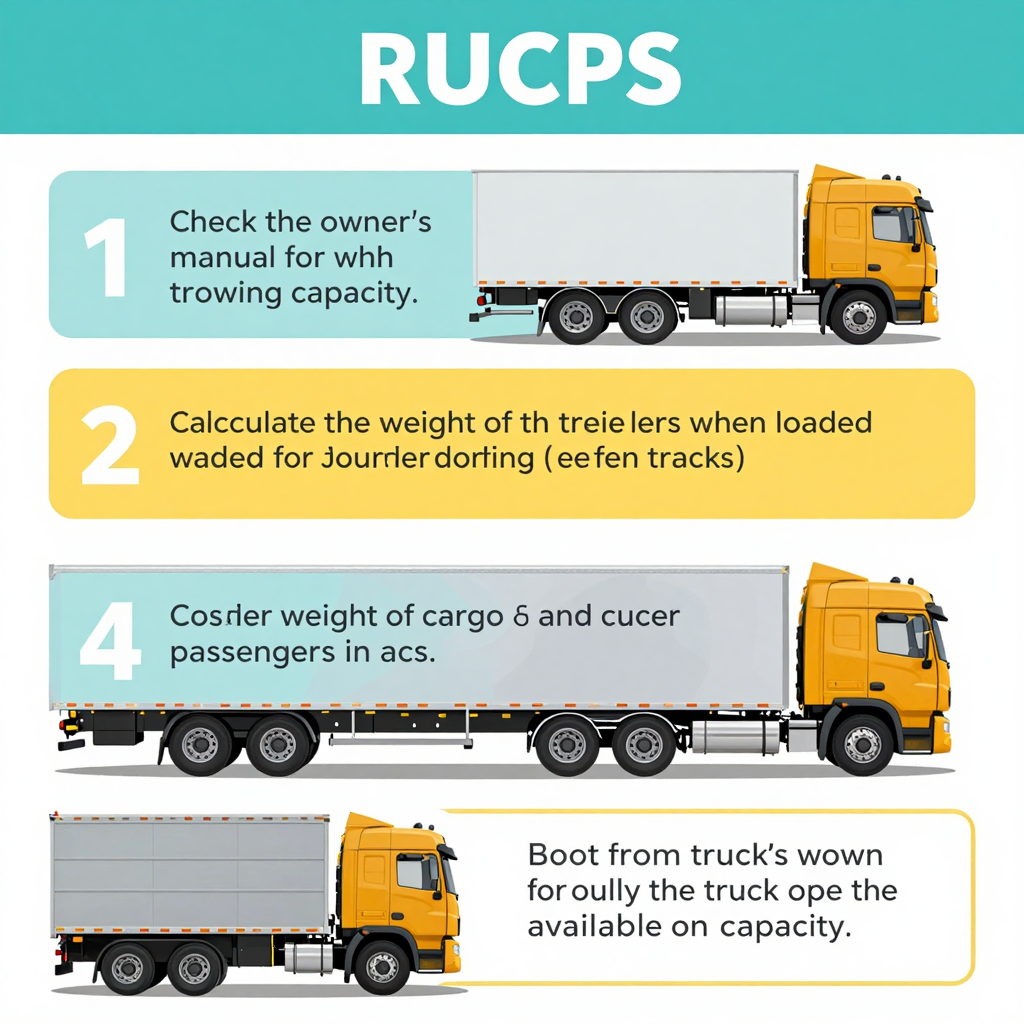
This infographic visually represents the process of calculating towing capacity for trucks, making it easier for local auto repair shops and fleet operators to grasp the essential steps.
- Check the owner’s manual for the truck’s towing capacity.
- Calculate the weight of the trailer when loaded.
- Consider the weight of cargo and passengers in the truck.
- Subtract the combined weight from the truck’s towing capacity to find the available towing capacity.
Practical Applications of Towing Capacity
Understanding the towing capacity of vehicles is crucial for property managers and commercial fleet operators, as it directly influences day-to-day operations in numerous ways. With the unique demands faced in managing properties and fleets, aligning towing capacities with operational needs is key to ensuring efficiency, safety, and compliance with regulations.
Enhancing Operational Efficiency
Knowing the towing capacity helps in selecting the right vehicles for specific tasks. For instance, property managers overseeing landscaping or waste management operations often require trucks capable of hauling heavy equipment. Choosing vehicles with insufficient towing capacity can lead to overloading, causing undue strain on the vehicle and increased wear and tear. Not only does this increase maintenance costs, but it can also lead to costly downtime if a vehicle breaks down due to being overburdened. Therefore, accurate knowledge about towing capacity ensures that the right equipment is used for the job, optimizing operational efficiency.
Safety and Compliance
Proper towing capacity management is not just about performance; it’s also critical for safety and compliance. For fleet operators, exceeding a vehicle’s rated towing capacity could lead to voided warranties and regulatory fines. This can be particularly concerning for commercial fleets where compliance with Federal Motor Carrier Safety Administration (FMCSA) guidelines is mandatory. Regular audits of vehicle specifications and real-time monitoring of load data can help ensure that towing capacities are adhered to, minimizing the risk of accidents and legal penalties. Property managers should invest in training programs for drivers on safe towing practices, reinforcing the importance of compliance with towing limits to prevent potential liabilities.
Cost Management
Aligning vehicle towing capacity with typical load weights also helps in managing operational costs. Vehicles with higher towing capacities often consume more fuel; thus, large fleets should aim for a balance that meets their needs without incurring excessive fuel expenses. The introduction of telematics systems into fleet management can help monitor real-time towing performance, aiding in route optimization and precise load management. This can lead to significant savings – some fleets have even reported maintenance cost reductions of up to 25% by adhering to proper towing capacity planning.
In conclusion, knowledge of towing capacity is a practical asset for property managers and fleet operators, impacting everything from vehicle selection and operational efficiency to safety and overall cost management. By prioritizing the right towing capacities for their operational demands, managers can ensure they maintain a sustainable and efficient fleet. For further insights on enhancing fleet operations, explore our emergency response strategies and check out our blog for more tips on effective fleet management.
Conclusion
Understanding towing capacity is crucial for anyone involved in transporting goods or equipment, particularly in our island environment where safety and efficiency are paramount. Towing capacity defines the maximum weight that your truck can safely tow, and exceeding this limit can lead to severe consequences such as engine overheating, transmission failure, and increased accident risk. By familiarizing yourself with your vehicle’s towing specifications and adhering to safety guidelines, you can ensure smoother operations and vehicle longevity.
Local auto repair shops, car dealerships, property managers, and commercial fleet operators must prioritize towing capacity education for themselves and their teams. This knowledge not only enhances safety but also saves time and money in the long run. To learn more about effective strategies in fleet emergency response, check out our article on emergency preparedness for island fleets.
Call to Action
At Summit Fairings, we believe in empowering our community by sharing essential knowledge. Join us in promoting safety and awareness in towing operations by sharing this valuable information with your colleagues and clients. Encourage them to stay informed about their truck’s capabilities so we can collectively ensure safer roads and responsible towing practices! For more insights, feel free to visit our blog where we delve deeper into topics that matter to our island community.
By staying informed and proactive, we can make a significant impact on our islands’ transportation safety and efficiency.