
Understanding the costs associated with tow trucks is crucial for local businesses like auto repair shops, car dealerships, and commercial fleet operators, especially in unique island settings. The investment in tow trucks can significantly impact operational efficiency and customer service. As we delve into this guide, we will break down the price ranges and factors associated with light, medium, heavy, and specialized tow trucks. Each chapter will provide specific insights tailored to your needs, ensuring you can make well-informed decisions that align with your business objectives.
Small-Tow, Big Return: The Real Cost of Light-Duty Tow Trucks for Startups and Small Fleets
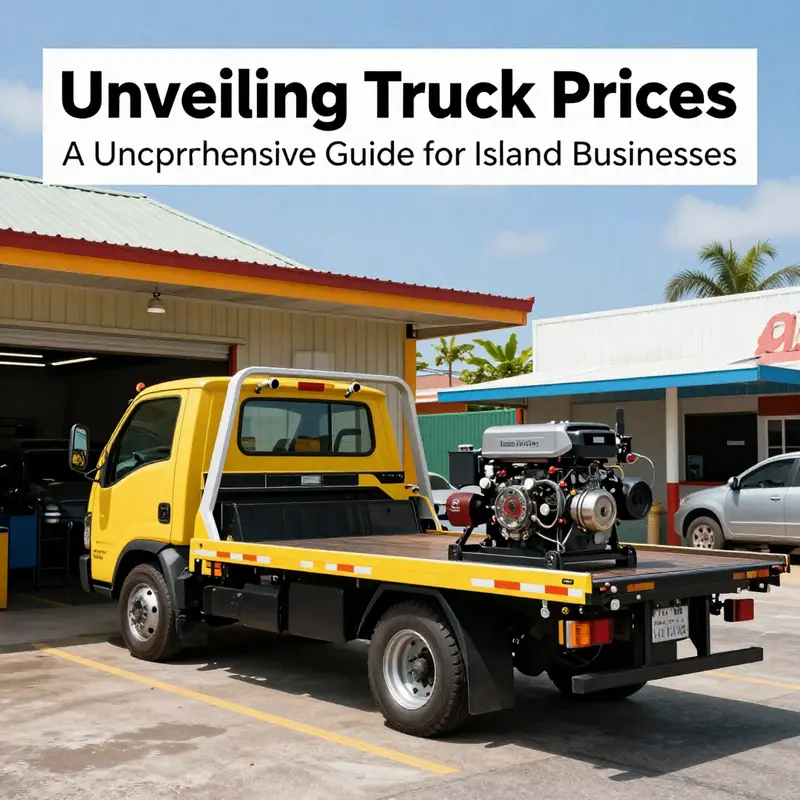
A single light-duty tow truck can be the difference between a fledgling roadside service rising to meet demand or a steady stream of missed opportunities. For an operator entering the market or a small fleet expanding its on-call reach, the decision to purchase light-duty equipment hinges as much on price as on capability. These trucks, typically chosen for passenger vehicles and small commercial tasks, sit at the practical crossroad where affordability meets reliability. They are the entry point into a business that hinges on quick response times, predictable maintenance, and the ability to safely recover stranded vehicles without escalating costs or risk. In this space, price is not simply a sticker on a catalog page; it is a proxy for capability, serviceability, and long-term profitability. A thoughtful buyer weighs not only the upfront payment but also the ongoing costs of operation, maintenance, and compliance against the revenue that a single unit can reliably generate on an average week of call volume and city geography.
Pricing for light-duty tow trucks reflects a spectrum shaped by several core variables. On the most basic end, a model with a 5-ton load-handling capacity can begin around the mid four-figure range. In concrete terms, you can find models advertised at approximately $3,999 for these lean setups. These entry-level configurations are typically designed for routine towing and straight-line recovery work, such as straight pulls from minor incidents or standard roadside assists. They prioritize simplicity, ease of use, and lower capital outlay. The allure here is obvious: lower risk to the initial budget, fast deployment, and a quick path to offering a basic but essential service to motorists and small businesses alike. Yet, as with most essential toolkits, the trade-off for the low upfront cost is a tighter margin for error, fewer advanced features, and a tighter ceiling on the complexity of recovery tasks.
Stepping up from the baseline, the market presents a range of mid-tier configurations priced from roughly $9,900 to $19,880 per unit. These are the workhorses for many urban and suburban fleets, designed to handle more demanding scenarios and to perform reliably across a wider service envelope. They typically come with enhanced versatility for complex recoveries—think multi-angle lifting, a more capable winch system, and a rotating boom. Such features expand the operator’s capability to navigate ditches, embankments, and more challenging incidents without resorting to expensive, time-consuming manual setups. The range reflects differences in engine power, axle configuration, and the sophistication of lifting equipment. It is here that a buyer begins to see the value of incremental investments: a sturdier frame, more robust hydraulics, and a smarter control system that translates to faster wins and reduced labor risk. For operators juggling a tight schedule and a growing call volume, those extra thousand dollars can translate into a meaningful uptick in revenue per shift by allowing higher efficiency and a broader scope of recoveries.
To understand what drives price more precisely, it helps to look at the levers that shape a light-duty tow truck’s cost profile. Capacity is the obvious one: a 5-ton platform is a common baseline, but some models tilt toward the upper end of that band with better stability and greater margin for error in less-than-ideal road conditions. Engine power, often in the range of roughly 266 to 370 horsepower in the market, influences not only top speed or acceleration but also the ability to manage heavy loads safely on grade and through dynamic recovery operations. Axle configuration—whether two, three, or four axles—affects stability, load distribution, and the type of duties the truck can be asked to perform. Each additional axle adds weight, complexity, and maintenance needs, but it can pay off in safer operations when responding to larger incidents or heavier vehicles on a city expressway, a busy arterial, or a rural lane with limited space for maneuvering.
Beyond structural capacity, the mechanism by which the load is actually lifted matters. Basic light-duty configurations often rely on under-lift arrangements designed for straightforward towing. As recoveries become more intricate, buyers may opt for integrated booms with rotating capability, a more powerful winch, and multi-angle lifting functionality. These features impact not only the labeling of the unit but also the daily labor involved in a typical tow. An advanced setup can turn a challenging rollover or a vehicle stuck in a ditch into a controlled, repeatable operation. The trade-off is clear: the more capable the equipment, the higher the acquisition cost, the more space it requires in the shop or yard, and the greater the investment in operator training and ongoing maintenance. In other words, the price is a direct reflection of the versatility the unit can offer on a typical shift.
Another factor that quietly influences price is the equipment’s emissions profile and compliance with regional standards. Light-duty models can be built to meet varying regulatory requirements, and higher levels of compliance—notably in more stringent markets—tend to raise the price slightly. For buyers planning to operate in multiple jurisdictions or in areas with specific environmental rules, this is not a marginal concern. Standards compliance does not merely affect paperwork; it can shape the long-term cost of ownership by influencing fuel efficiency, maintenance intervals, and even resale value. In a market where the lifecycle cost of a vehicle includes fuel consumption and potential penalties for noncompliance, buyers often weigh the premium for optional emissions configurations against the certainty they bring to daily operations.
The economic math for a small operator buying light-duty equipment thus blends a straightforward price ladder with a more nuanced calculus of uptime, serviceability, and the volume of calls expected. The acquisition is only the first chapter; the real cost story unfolds in maintenance, insurance, fuel, tires, and the inevitable wear on hydraulic systems and winches. Routine maintenance is essential to preserve safety and performance, and it becomes a fixed cost that must be absorbed into ongoing service pricing. Maintenance schedules vary by model and use, but operators often plan for regular inspections every few thousand miles or every few months, with more frequent checks if the unit faces a high call rate or rough recovery environments. Tires, alignment, hydraulic fluid, and wiring are recurring line items. In the most active markets, a small fleet can expect to set aside a modest reserve for replacements and contingencies, because a single malfunction can cost a driver hours of time and a customer a longer-than-expected wait.
Another practical consideration is financing structure. Leasing presents a compelling option for startups and fleets testing new markets or expanding service lines. Leasing reduces upfront capital needs and can provide predictable monthly expenses, which helps with cash flow planning as the business scales. It also tends to include routine maintenance packages and predictable service terms, smoothing the path to dependable operation. The decision between owning and leasing often hinges on the expected call volume, the anticipated growth of the local market, and the company’s appetite for asset ownership versus flexibility. A young fleet with ambitious growth plans might favor leasing initially to minimize capital tied to equipment, then transition to ownership as revenue stabilizes. Conversely, a mature operator with a clear expansion trajectory might choose to own several units outright, accepting higher upfront costs for long-term cost control and asset equity.
The pricing landscape for light-duty tow trucks is also shaped by broader market dynamics. Different manufacturers and distributors price similarly equipped units in a band, but regional factors—such as taxes, import duties, and freight—can tilt a deal in favor of one supplier over another. The most cost-effective path is to engage directly with suppliers to obtain real-time quotes and customization options. In practice, buyers often discover that modest feature enhancements—such as a more robust winch, additional recovery accessories, or a second control panel—can be bundled into a package that dramatically improves field performance without a dramatic jump in price. This is where understanding true operational needs matters: a unit that hits the sweet spot between capability and cost becomes the backbone of service delivery, enabling the business to handle a broader set of scenarios without chasing aftermarket add-ons at every turn.
For readers who want a more tangible sense of the landscape, consider the financial impact of two parallel decisions in a small startup context. If a shop buys a baseline 5-ton light-duty unit at around $4,000 and uses it to handle a steady mix of routine towing and roadside assists, the operator can begin generating revenue almost immediately, provided call volume remains consistent and the service area supports reliable demand. The same operator, choosing the mid-tier configuration at around $15,000, gains enhanced recovery capabilities that open opportunities to handle semi-structured incidents like small rollovers or tricky ditch recoveries. Those added capabilities can shorten job times and increase the number of paid calls per shift, but they also require more skill, greater risk management, and higher maintenance costs. In both cases, the decision should be anchored in a solid forecast of revenue per shift, the expected number of shifts per week, and the length of the average call. A conservative forecast might assume five to six calls per shift with modest wrap-up and travel times in a mid-sized city, while a more aggressive plan could push toward higher call volumes and expanded service areas. The resulting calculations will form the backbone of the business case for or against a given unit and guide the buyer toward the most sustainable price tier.
Operational considerations extend beyond the unit itself. Higher-end light-duty models, with their more complex recovery capabilities, typically require more training. Operators must understand the nuances of a rotating boom, the correct use of a powerful winch, and safe weight distribution during towing operations. Such training is an investment in safety and efficiency, reducing the risk of injury and equipment damage—costs that can far exceed the price difference between baseline and advanced configurations if neglected. In practice, many buyers find that pairing a higher-spec unit with a structured training program yields dividends in uptime and customer satisfaction. The result is a vehicle that not only pulls vehicles but also earns trust through reliable performance on every call.
Leasing, as noted, offers another path to manage upfront expense and risk. For a startup, the ability to deploy a service quickly while keeping the balance sheet lean can be a decisive advantage. Leasing packages frequently bundle maintenance and telematics, which helps control operating costs and provides visibility into utilization patterns. This can be particularly valuable for a new entrant who is still calibrating demand in a given market. In the end, the most important choices revolve around alignment: choosing a model that meets the typical service profile, selecting a price point that preserves cash flow, and committing to a maintenance and training program that keeps the operation safe and productive over the long term.
The pricing spectrum for light-duty tow trucks also intersects with the broader market context in which fleets operate. While the numbers cited above sketch a price ladder, actual quotes depend on a mix of supplier incentives, regional demand, and the specific configuration a buyer requires. For those evaluating options, it is prudent to initiate direct inquiries and request detailed specifications, including engine power, axle configuration, lifting capabilities, winch ratings, and any aftermarket add-ons. The goal is to assemble a comprehensive view of what each unit can deliver in terms of performance per hour and how that translates into revenue per week. When combined with a careful assessment of maintenance costs, insurance premiums, fuel consumption, and depreciation, the true cost of ownership becomes clearer. The result is a decision that does not merely reflect the lowest upfront price but instead the most reliable, scalable, and profitable path for the business’s first line of response fleet.
For readers seeking broader context about fleet management and emergency response planning, a useful resource aimed at operators exploring strategies for service readiness is available through industry content hubs. The Island Tow Truck blog provides insights into essential fleet emergency response strategies and preparedness considerations that are relevant to any operator weighing the option to add light-duty tow trucks to their lineup. You can explore practical guidance on fleet readiness and incident response at this resource: The Island Tow Truck blog.
External reference: external pricing dynamics and model availability can also be explored through supplier listings that reflect real-time quotations and customization options. For a representative view of light-duty configurations and pricing options as they appear in market catalogs, see the Alibaba listing covering 5-ton load-handling capacity light-duty tow trucks and related configurations: https://www.alibaba.com/product-detail/JMC-Light-Duty-3-7ton-Road-Truck_1601432115717.html
null
null
Pricing the Heavy-Duty Tow Fleet: How Specs, Usage, and Market Forces Shape the Final Bill
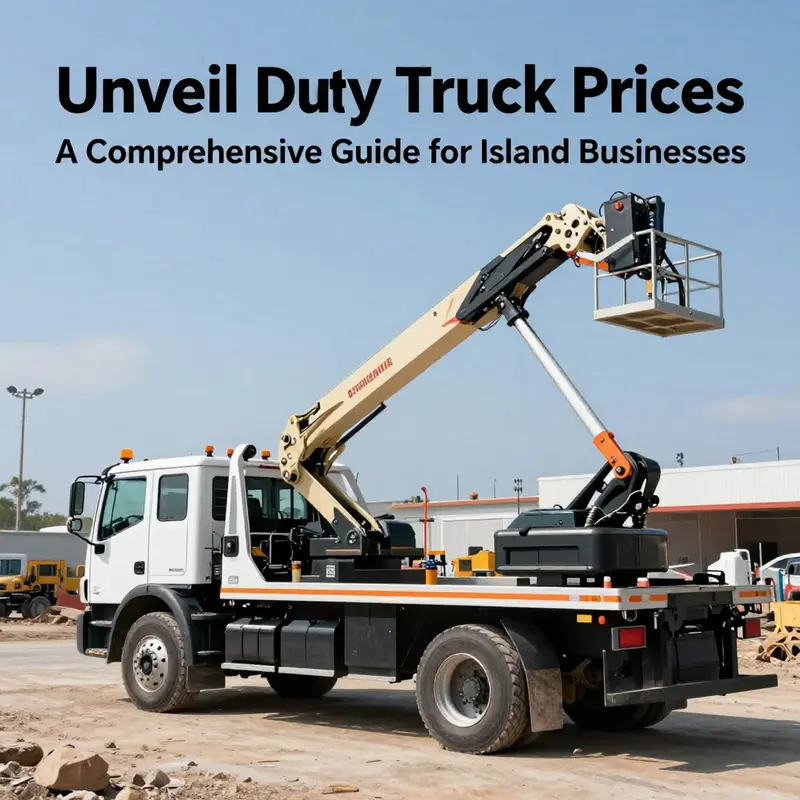
When fleets, emergency response teams, and vehicle recovery services plan their heavy-duty operations, the sticker shock often comes from the price tag on a tow truck that can lift, flip, and haul some of the industry’s largest vehicles. The price is rarely a simple number tied to weight capacity; it is the product of a careful negotiation among form, function, and the market’s evolving demands. Heavy-duty tow trucks exist to solve problems that range from routine vehicle recovery to complex incident management on busy highways. Understanding what drives their cost helps a buyer separate genuine value from overinvestment and identify the configuration that best fits a given fleet’s operating profile. The distinction between a few key types—conventional wreckers, rotators, and flatbeds—sets the baseline for cost, but the real price levers emerge from the truck’s specifications, the reputation of the maker, and the level of customization a fleet requires. In this world, price is a proxy for capability, reliability, and the ability to protect assets and lives in demanding conditions. Tow trucks are not simply machines; they are mobile repair and recovery platforms that must work when every minute counts, and that sense of duty is reflected in their price structure as surely as in their engineering.
To appreciate the numbers, start with the core categories. A conventional wrecker is the workhorse of many fleets. It blends lifting power with the versatility to handle a broad range of recovery scenarios. The configurations vary widely, but a typical new unit sits in a broad range that can be roughly described as a two-step spectrum: a substantial chunk of the cost is tied to the load capacity and the sophistication of the hydraulic system that powers the lift and the winch. In practical terms, conventional wreckers are commonly priced in the vicinity of seventy-five thousand to one hundred fifty thousand dollars, depending on whether the setup emphasizes a larger wheel-lift, a longer boom, or an enhanced hydraulic reach. The choice between a robust underlift, a more muscular boom, or a combination of both translates directly into the pricetag you’ll encounter when you obtain a formal quote. To a buyer who operates a mixed-traffic, city-to-suburban recovery operation, this bracket often represents the most cost-effective path to a dependable asset with a proven track record for versatile performance.
Rotator tow trucks, by contrast, live in a rarified tier of capability and complexity. They feature a 360-degree rotating boom that can reach overturned or otherwise hard-to-access vehicles. The engineering challenges—stability, quick action, and precise control under dynamic, hazardous conditions—drive the premium. The price point for rotators generally starts well above conventional wreckers and tends to climb into the upper hundreds of thousands, frequently approaching and sometimes exceeding three hundred thousand dollars for top-tier, fully equipped configurations. This reflects not only the mechanical sophistication but also the heavy-duty hydraulic systems, advanced control logic, and additional safety and redundancy that such vehicles require. For fleets whose primary mission is rapid response to highway incidents, multi-vehicle recoveries, or complex scenes with significant risk, rotators can deliver a level of operational efficiency and safety that justifies the expenditure. The higher price also comes with higher expectations for uptime, spare parts availability, and service coverage, since a rotator is a mission-critical asset in the most demanding environments.
Flatbed tow trucks form another essential pillar in the heavy-duty segment. They rely on a hydraulically tilting bed to load vehicles onto a flat, damage-minimizing platform. While they may not always match rotators for single-vehicle incident speed, flatbeds offer unrivaled protection for sensitive or low-clearance vehicles and are particularly favored in fleet operations where a wide variety of vehicle types must be handled with care. Flatbeds typically land in a price range similar to conventional wreckers, roughly seventy-five thousand to about one hundred twenty thousand dollars, though premium flatbed configurations with longer beds, heavier booms, or specialized wheel-lift tools can push the price higher. The decision to favor a flatbed often comes down to the kinds of vehicles most frequently encountered by a fleet, the importance of minimizing vehicle damage, and the desired balance between recovery speed and load security.
Beyond the rough price bands, the final number on a quote is anchored to several key specifications. Load capacity is a primary determinant. Trucks designed to handle heavy, front-loaded or all-wheel-drive vehicles, or fleets that regularly encounter trucks or equipment in the 31–40 ton range, command higher prices due to reinforced chassis structures, stronger axles, and more powerful engines. The engine and powertrain matter just as much. Diesel engines in the heavy-duty class typically run in the 351–450 horsepower range with a displacement in the 6–8 liter region. Those figures feed the torque, responsiveness, and long-term durability needed for sustained recovery operations. The drive configuration also matters: 6×4 configurations deliver superior traction and stability on uneven surfaces, which is why they often accompany higher price points. Emission standards—whether Euro 3/4/5/6, GCC, or others—do more than govern environmental impact; they drive engineering complexity and certification costs. Each standard has its own test regimes and equipment requirements, translating into added development time and production costs for the manufacturers. Buyers should not overlook these compliance costs, especially when operations span multiple regions with differing regulatory expectations. In the end, the spec set is a direct line to the price because it captures the operational capabilities and compliance burdens that come with a vehicle designed to perform in demanding contexts.
The brand and the manufacturer compound these factors. A company with a long track record of reliability, widespread service networks, and certifications that reassure insurers and fleets can command premiums. The price delta between a well-known maker with a global service footprint and a lesser-known supplier is often about not just the present function but the confidence in ongoing maintenance, parts availability, and warranty coverage. That confidence has tangible financial value. An established provider may offer not only a unit but also a service ecosystem that reduces downtime and extends the life of the asset—an indispensable consideration for emergency-response operations and logistics fleets that rely on consistent availability. The decision to purchase from a reputable producer, therefore, ties into a broader calculation about reliability, risk management, and the assurances that come with robust after-sales support, rather than simply the sticker price on a new machine.
Customizations drive costs in important ways as well. Most buyers will request options that tailor a truck to their specific tasks—extra winch capacity, specialized tool configurations, custom paint schemes for quick site identification, or extended warranties that cover parts and labor for an extended period. Each of these adds a line item to the quote. The same is true for delivery logistics: some suppliers can ship a unit within a set lead time, and others require longer—though some providers boast that a unit can be shipped in roughly thirty days after payment, a promise that is attractive to fleets working on tight procurement timelines. The cost of shipping, import duties, and local certifications can add a meaningful amount to the all-in price, especially for buyers purchasing across borders.
A careful buyer also weighs life-cycle costs, not just the purchase price. Maintenance intervals, parts availability, fuel efficiency, and the cost of insurance and financing all factor into the total cost of ownership. A higher upfront price can be offset by lower maintenance needs, longer service intervals, and better resale value. In some cases, a more expensive model will deliver lower operating costs over its service life due to greater reliability or better fuel economy in routine use. The market data from recent years underscores this point: there are sharp price differentials across the spectrum, but both initial investment and ongoing costs must be factored to determine true value. Market pricing snapshots from 2026 illustrate the breadth of options. Entry-level heavy-duty tow trucks—often older configurations or basic 6×4 setups—start around thirty-five thousand dollars. Mid-range models, with improved performance and improved drivability, often fall in the thirty-five to forty-five thousand-dollar range for new units with standard diesel powertrains and manual transmissions. At the opposite end, high-end and advanced configurations—particularly those with rotator capabilities and high-end control systems—can exceed three hundred thousand dollars when fully equipped. These numbers reflect a market in which buyers balance immediacy and resilience against upfront cost, often prioritizing a longer-term guarantee of availability and performance.
The real learning, for a fleet operator, is that price is a map of capability. A lower upfront price can be tempting, but it can also imply compromises in load capacity, control precision, or service reach. Conversely, paying a premium can yield a unit with enhanced uptime, a broader range of recoveries, and a stronger support network. When a fleet is measured by response times and asset availability, the premium category becomes a strategic investment, not just a line in the capital budget. For many operators, the prudent approach is to tie the purchase to a specific set of operational needs: a precise load capacity target, a defined response profile, and a clear understanding of maintenance and parts access in the regions where the truck will operate. In practice, that means building a requirements document that translates operational realities—like the typical range of vehicle weights, road and terrain types, and the expected frequency of use—into a set of technical specifications. Once those are in place, the subsequent quotes become a more meaningful comparison rather than a guesswork exercise.
To ground these considerations in real-world decision making, it helps to keep an eye on market dynamics. The spectrum of options—entry-level used or basic units, mid-range configurations with stronger powertrains, and specialist rotators and flatbeds—reflects a market that has to reconcile demand from emergency services, tow and recovery operators, and large-scale logistics fleets. The price signals in this space are not arbitrary; they reflect the actual costs of engineering, certification, and service support in multiple regulatory environments. A fleet that buys with its eyes open—recognizing the trade-offs between immediate affordability and long-term performance—can chart a path that minimizes risk while maximizing readiness.
For readers who want a practical sense of the procurement landscape, a look at industry resources and supplier catalogs can be instructive, though it is essential to approach with a clear set of criteria. When evaluating quotes, focus on the fundamentals: payload and lifting capacity, boom reach and rotation capability, powertrain specifications, and drive configuration. Check the reliability record of the manufacturer, the extent of the service network, and the clarity of the warranty terms. Assess the after-sales package, including training for operators and the availability of spare parts. These elements are often more consequential to return on investment than a headline price. The goal is a disciplined procurement that aligns with budget constraints while maintaining an operational buffer for unplanned incidents and routine wear and tear.
For readers seeking additional context on related fleet and emergency-response strategies, the Island Tow Truck blog offers insights into how fleets organize their emergency readiness and maintenance schedules, which can inform tie-ins to major heavy-duty purchases. the Island Tow Truck blog. This reference can help situate a capital purchase within a broader maintenance and resilience plan, ensuring that the investment not only solves today’s recovery needs but contributes to steadier uptime in the coming years.
As you close the loop on price and value, consider a concrete pathway to sourcing. A practical, price-informed approach starts with a clear specification brief, then a triage of bids that include both the base unit and the most relevant options for customization. You can compare apples to apples by isolating the essential features first—load capacity, power figures, and safety standards—before evaluating the added cost of options and service. This method helps ensure that the final choice aligns with your operational realities, rather than the salesman’s most compelling but unnecessary features.
External resources can provide a broader picture of how different markets price heavy-duty tow trucks and what a buyer can expect in terms of lead times, financing, or incentives in different regions. For a deeper dive into procurement specifics and catalog references, you can explore industry listings and catalogs through suppliers that operate at scale in the heavy-duty segment. To illustrate a concrete example of what a buyer might encounter in a real procurement, see this external catalog: https://www.alibaba.com/product-detail/FAW-Trucks-JK6-Heavy-Duty-Tow-Truck-Hot_1600947247442.html?spm=a2700.1.w5000123.1.3b3a3d41jNkL6c. While the exact model name is beyond the scope here, the page demonstrates how suppliers present configuration options, warranties, and bulk-order terms that are typical in this part of the market.
The broader takeaway is that heavy-duty tow truck pricing is a function of purpose and performance, not a single numeric line. If a fleet’s needs point toward a versatile conventional wrecker with strong lifting capacity for a mixed-use recovery program, you can expect to fall in the mid-to-upper range of the conventional-wrecker bracket. If your operation requires rapid response to overturned vehicles or access to challenging terrain, rotators deliver the tools you need at a higher upfront price, with the expectation of lower downtime and greater on-scene capability over the vehicle’s life. If the priority is protecting expensive or sensitive vehicles during transport, a flatbed with a premium bed and robust hardware may strike the right balance between cost and care.
In practice, operators should evaluate not just the sticker price but the long tail of ownership, including maintenance, spare parts, and the efficiency of the service network. The interplay between upfront cost and ongoing cost is the heart of the decision. As the data shows, entry-level units can begin around thirty-five thousand dollars, but the capabilities they offer are correspondingly limited. Mid-range offerings with more robust features tend to run into the forty-thousand-dollar range, still leaving room for customization and after-sales support. High-end configurations that deliver exceptional recovery power and precision, especially those with rotating booms and heavy-duty hydraulics, exceed three hundred thousand dollars, reflecting the lifetime value of the asset in a fleet that cannot afford downtime.
This perspective helps demystify the market and makes it possible to align an asset purchase with a fleet’s real-world needs. A careful buyer maps operational requirements to a configuration matrix, then negotiates with suppliers who can demonstrate a track record for reliability and service. The result is a purchase that balances initial affordability with predictable performance, robust support, and a favorable total cost of ownership over the vehicle’s service life. It is this balance—the blend of capability, reliability, and support—that ultimately determines the return on investment for heavy-duty tow trucks and the resilience of a fleet that depends on them in moments of crisis and routine practice alike.
Raising the Bar: How Premium Features in Specialized Tow Trucks Shape Price and Performance
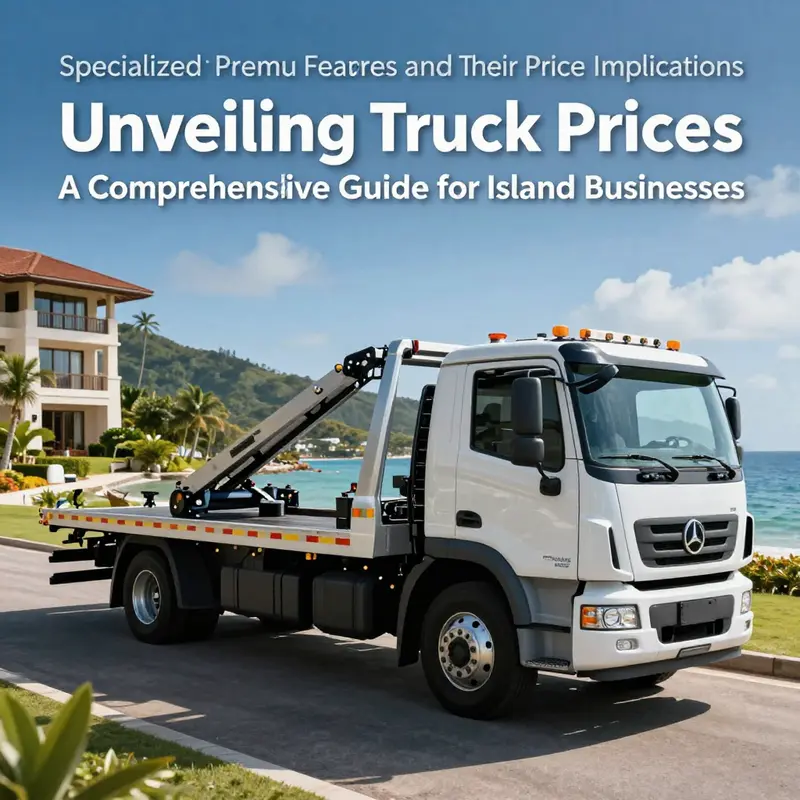
Specialized tow trucks stand at the intersection of engineering nuance and mission-critical reliability. They are not simply bigger versions of standard wreckers; they are purpose-built tools designed to tackle the most demanding recovery tasks, often under time pressure and in challenging conditions. The premium features that distinguish these machines—from rotating booms to integrated towing systems and high-capacity, long-reach hydraulics—bring with them a tangible, and sometimes substantial, impact on price. For operators weighing the cost of power, the connection between capability and cost becomes a careful balance of performance, durability, and total ownership considerations. In the broader landscape of tow trucks, specialized models sit at the upper end of the price curve, but their value is measured not only in pounds or dollars spent upfront, but in the speed, safety, and efficiency they unlock on the road and at the scene of an incident.
Consider the rotator tow truck, a machine whose defining feature is a hydraulic crane that can lift, tilt, and rotate a vehicle to access positions that would be impossible with conventional rigs. The ability to rotate the vehicle in 360 degrees opens access to overturned or otherwise awkwardly positioned cars, trucks, and heavy equipment. This capability is not merely a luxury; it translates directly into faster recoveries and reduced risk of secondary damage to the vehicle or surrounding property. The rotator family is built to perform in the most demanding environments—high-speed highway incidents, uneven terrain, and tight spaces where other recovery methods simply cannot reach. But such versatility comes at a price. Rotator systems are complex, requiring highly trained operators who can coordinate lift, angle, and rotation while under the stress of a real-time recovery. Maintenance costs escalate as hydraulic systems, gear trains, and rotation bearings endure repetitive, load-bearing cycles. Availability of spare parts, specialist service, and extended warranty options all factor into the total cost of ownership. In new units, rotor-equipped trucks typically command a price range that begins well into the six figures and can climb toward the mid to upper hundreds of thousands depending on load rating, rotation speed, reach, and the sophistication of onboard control systems. The premium is a reflection of the capability, resilience, and safety margins the device provides to teams working in high-stakes recovery operations.
The integrated tow truck, also known as a wrecker, represents a different design philosophy. This class locks the towing mechanism—boom, winch, wheel-lift—directly into the chassis, delivering a compact footprint that excels in urban environments where space is at a premium and maneuvering in tight streets is routine. Integrated systems are valued for their stability, rapid deployment, and the streamlined geometry that minimizes ground contact during loading. For operators who must navigate dense city blocks, airports, or industrial parks, the integrated design reduces the risk of collateral damage and simplifies the logistics of a scene. The price for new integrated tow trucks generally sits in a mid-range bracket compared with other specialized configurations, but it can rise with higher lifting capacities, more robust winches, faster deployment cycles, or extra attachments that broaden the unit’s versatility. This blend of compactness and capability makes integrated wreckers an attractive option for fleets seeking balance: strong performance with a more manageable maintenance profile and a footprint that fits urban duty rosters.
Then there is the flatbed tow truck, the workhorse chosen when the priority is to transport delicate or high-value vehicles without ground contact. A hydraulically operated, tilting bed eliminates the need for ground contact during loading, which reduces the chance of scuffing or misalignment for low-clearance sports cars, all-wheel-drive models, and other sensitive vehicles. Flatbeds are prized for their safety profile, predictable loading, and low maintenance relative to some other heavy-duty configurations. They also support a broad range of recovery scenarios—from vehicle transport after a collision to careful placement on storage lots. Pricewise, new flatbed models sit in a comfortable middle ground compared with rotators or fully loaded heavy-duty wreckers. The bed size, hydraulic system quality, suspension tuning, and optional enhancements—such as advanced winches or remote-control capabilities—can tilt the cost up or down within a defined band. In practice, the flatbed’s balance of safety, reliability, and maintainability makes it a popular choice for fleets that handle a mix of commercial and passenger vehicles across varied geographies.
What ties these distinct specialized categories together is how premium features elevate not just a truck’s capability, but the entire lifecycle cost that accompanies ownership. The most obvious price driver is the core mechanism itself: a rotator’s rotating boom, a wrecker’s integrated boom and wheel-lift, or a flatbed’s precise, hydraulically controlled platform. Each scenario adds layers of complexity—more powerful hydraulics, smarter control systems, stronger winches, safer cab configurations, and enhanced operator interfaces—all of which contribute to higher acquisition prices and greater ongoing service needs. Yet, price is not just a function of raw capability. It reflects the engineering required to deliver reliability in harsh environments, the engineering quality that reduces downtime, and the safety architecture that protects operators, bystanders, and the vehicles on the line. A premium feature is thus not simply a bolt-on upgrade but a system-level commitment to performance stability under duress.
Beyond the core features, the price range for specialized tow trucks is heavily influenced by brand lineage, engine power, cab specification, and the specific array of optional add-ons chosen by the buyer. It is common for premium configurations to offer extended warranties, enhanced corrosion resistance, and compliance with stringent emissions standards. These elements can shift the total cost by a sizable margin, particularly for fleets operating under regulatory regimes that demand low emissions or high reliability across long service lives. The trend toward higher standards—whether for efficiency, environmental compliance, or safety technology—means operators must evaluate not only the immediate sticker price but the expected maintenance cadence, parts availability, and the potential for resale value when selecting a configuration. In effect, specialized tow trucks are an investment in both capability and resilience, and their pricing embodies the anticipated return on that investment over the vehicle’s working life.
From an operational perspective, fleets rarely adopt a single specialized model in isolation. A robust recovery program often combines rotators, integrated wreckers, and flatbeds to address the full spectrum of incidents—from highway mass-casualty events to urban auto recoveries and staged interventions in confined site environments. The pricing landscape for such a mixed fleet reflects not only the separate costs of each unit but also the synergies that arise from standardized training, uniform maintenance practices, and shared spare parts inventories. Operators who standardize on a common platform or family of systems may achieve lower per-unit maintenance burdens, simplified technician training, and faster deployment at the scene. Those efficiency gains—though sometimes incremental—accumulate to strengthen overall fleet readiness, reduce incident response times, and improve safety outcomes for crews and the public alike.
The decision-making process around purchasing specialized tow trucks also intersects with a fleet’s emergency preparedness and response strategy. For responders and operators who must act quickly when accidents happen, the ability to deploy a suitable vehicle without delay is as important as the vehicle’s raw lifting capacity. In this context, a resource like a structured guide on essential fleet emergency response strategies can be a valuable companion to the procurement process. It can illuminate how specialized capabilities map to different incident profiles, what training prerequisites are necessary, and how to sequence investment when funding cycles tighten. For those looking to explore this dimension further, a practical resource exists that consolidates lessons learned and strategic approaches to emergency readiness. Essential Fleet Emergency Response Strategies provides a framework for aligning equipment choices with real-world response needs while staying mindful of total lifecycle costs. Keeping such guidance in view helps fleets balance the desire for cutting-edge features with the realities of maintenance, downtime, and fleet-wide availability during peak demand periods.
As with any capital-intensive fleet asset, the pricing story for specialized tow trucks is not purely about the price tag. It is about the ecosystem that supports the asset—training, maintenance, warranties, service networks, spare parts supply, and the ability to keep crews safe and productive on the job. Operator decisions are often shaped by a mix of expected utilization, typical call types, geographic operating conditions, and the regulatory environment. A rotator might be indispensable for certain high-speed highway recoveries, where time savings and scene safety deliver measurable value. In other contexts, a flatbed that minimizes risk of further vehicle damage might be the prudent choice for a metropolitan fleet that services luxury cars and high-value inventories. Integrated wreckers, with their urban efficiency and space-conscious design, can deliver a compelling blend of performance and practicality for operators who live in dense urban corridors. Each path involves trade-offs in upfront cost, recurring maintenance, and the potential for rapid incident resolution, making the final decision a careful synthesis of needs, resources, and strategic priorities.
The spectrum of pricing for specialized tow trucks, when viewed through this lens, illustrates why the category commands premium attention. A sophisticated rotator can push well into the six-figure range, with the upper extremes approaching six figures or more when high-torque hydraulics, advanced stabilization systems, and top-tier control interfaces are specified. Integrated wreckers offer compelling value at a lower entry point, yet still carry a significant price tag when you add higher lifting capacities or enhanced durability features. Flatbeds, while often more approachable on the initial sticker, still reflect the premium attached to safe, high-value vehicle handling and reliable hydraulic performance. In all cases, the premium configurations are more than hardware upgrades; they are a commitment to safer, faster, and more precise recoveries that reduce the chance of secondary damage during a rescue operation. For fleets contemplating this path, the prudent approach is to quantify both the direct costs and the longer-term operational benefits—from reduced downtime to better on-scene safety metrics—and to weigh those against the broader requirements of their service territories and incident profiles.
In sum, specialized tow trucks embody a philosophy of preparedness. Their premium features are designed to meet the rigors of real-world recoveries, reflecting decades of experience in vehicle handling, safety, and efficiency. The price implications mirror that philosophy: higher upfront investment, but with the potential for meaningful savings in downtime, injury risk, and vehicle damage across a vehicle’s service life. Whether a fleet needs the dramatic reach and rotation of a rotator, the urban efficiency of an integrated wrecker, or the delicate handling and transport safety of a flatbed, each path carries a distinct price narrative rooted in capability, durability, and the promise of safer, faster recoveries. For practitioners mapping procurement into a broader fleet strategy, understanding these dynamics is essential—knowing that the value of premium features often lies not in their novelty but in the tangible improvements they deliver at the scene and in the workshop.
External resources can provide concrete pricing ranges and configuration options that help anchor budgeting discussions. For a detailed breakdown of current market pricing and specifications for new tow trucks, you can explore a leading catalog of heavy-duty configurations and the accompanying engineering options at this industry resource: https://www.commercialtruckcenter.com/new-tow-trucks. This reference point can help fleets gauge where a given specialization sits within the market spectrum and what trade-offs to expect as they refine their specifications and negotiate with suppliers. In practice, the practical takeaway is that specialized tow trucks are a high-stakes investment where the right combination of features aligns with the operator’s incident mix, geographic realities, and long-term maintenance strategy. When paired with thoughtful training, robust maintenance planning, and a clear view of total cost of ownership, these machines become not only tools for recovery but strategic assets that enhance fleet readiness and service quality across demanding landscapes.
Final thoughts
The costs of acquiring tow trucks vary based on the category and specifications tailored to your business needs. From light-duty trucks that cater to everyday passenger car needs to heavy-duty models that handle large-scale recoveries, it’s essential to understand your operational requirements. Specialized models equipped with advanced features provide unique opportunities for enhanced service. The investment in the right tow truck can lead to improved service delivery, operational efficiency, and customer satisfaction. It’s advisable to consider not just the upfront costs but the long-term benefits that a well-chosen tow truck can bring to your business on the islands.