Tow trucks are more than just heavy-duty vehicles in Grand Theft Auto 5; they are integral to various missions, scenarios, and even player-owned businesses within the game. For auto repair shops, car dealerships, property managers, resort operators, and commercial fleet operators, understanding where these vehicles can be found and how they can be employed is essential. This guide provides an in-depth look at the locations and availability of tow trucks throughout Los Santos, methods for acquiring them, engaging events and scenarios involving these powerful machines, and the exciting potential to expand their features through mods. Each chapter will guide readers toward leveraging tow trucks effectively in their gameplay.
Tow Trucks in GTA 5: The Quiet Mechanics of Los Santos
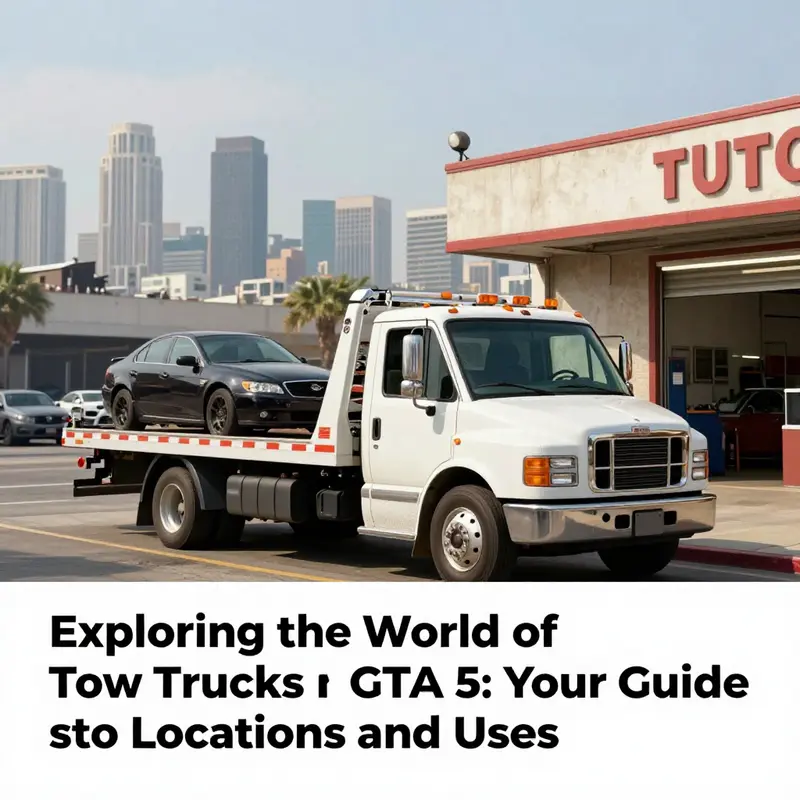
GTA 5’s Los Santos hums with scenes of spectacle, but the tow truck is a quiet thread that keeps the city’s machinery visible. They appear not as flashy moments but as practical tools that support the city’s everyday drama: clearing lanes after crashes, delivering heavy assets in mission sequences, and populating the world with a believable logistics ecosystem. In this chapter we trace where tow trucks appear, why they show up in certain contexts, and how their presence reinforces the game’s sense of a living city. Across story missions, the open world, and community-driven maps, tow trucks surface in ways that feel earned rather than scripted, reminding players that mobility and order are consequences of careful planning, not mere spectacle.
First, in mission contexts. The Big Score and other capers stage tow trucks as workhorses, not as props. Their hydraulic arms and flatbeds serve the plan by enabling the movement of heavy equipment and vehicles, turning a potential obstacle into an asset. Their appearances are choreographed to convey efficiency, not drama, underscoring a world where even the most dramatic theft rests on reliable infrastructure.
Second, in the open world. Away from missions, the industrial heartlands—ports, warehouses, repair yards—are natural habitats for tow trucks. You’ll see them parked near loading bays or idling near service shops, their white and blue liveries catching the glow of streetlights. The city’s geography creates a soft network of likely sightings, not a single fixed location.
Third, in the city’s operations. The law and order system interacts with towing as a routine process: responding to incidents, seizing damaged vehicles, and keeping traffic moving after crashes. Tow trucks anchor those responses, appearing at accident sites or near police compounds as part of the larger machinery that makes Los Santos feel alive and functional.
Finally, community knowledge. Players and fans record sightings, share routes, and build maps to predict tow truck appearances, blending first-hand exploration with crowdsourced data. This collaborative curiosity reflects GTA 5’s open-world ethos: a city that invites you to discover not just a story, but a pattern of everyday mechanics.
In sum, tow trucks in GTA 5 are not mere background textures. They are deliberate elements of the city’s logistics—present when and where infrastructure requires them, reinforcing a believable urban organism. If you walk the streets with an eye for service vehicles, you’ll notice their paths threading through the map, a quiet but persistent reminder that order travels on wheels.
Tow Trucks in GTA V: Locating, Acquiring, and Mastering the City’s Heavy-Duty Haulers
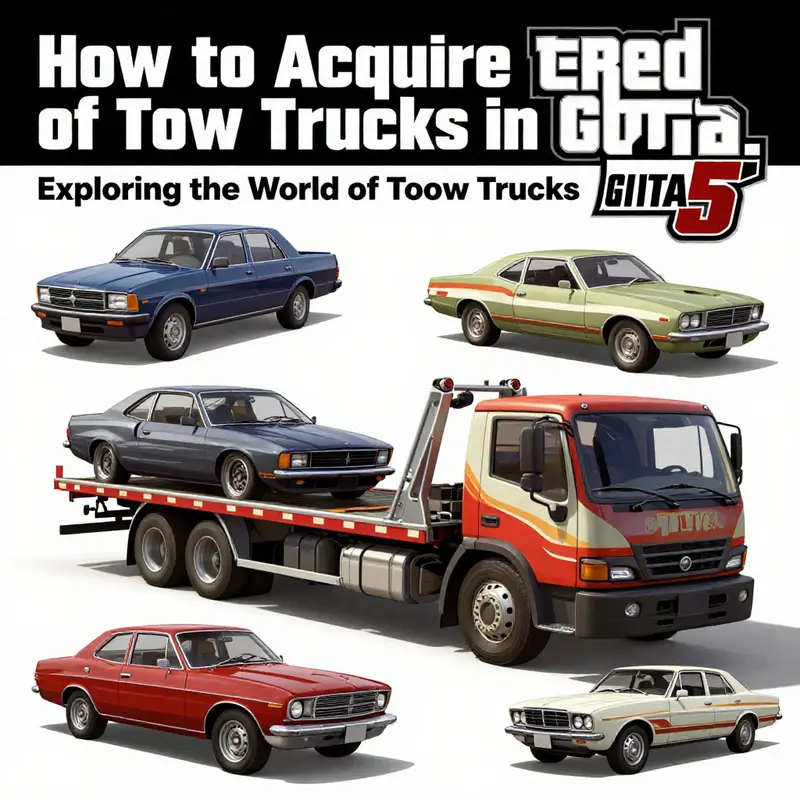
Los Santos is a city built on spectacle, speed, and improvisation, but it also rewards those who learn to lean on the heavy machines that keep its engines running. Tow trucks in GTA V are more than utility vehicles; they are vehicles with purpose, capable of redefining how you move around the map, how you approach missions, and how you shape the chaos of a sprawling open world into something you can control. If you chart their paths through the city, you begin to see how the tow truck’s long hydraulic arm becomes a tool of strategy, distraction, and, occasionally, mischief. The routes to ownership are varied, and each path reveals a different facet of the game’s design—one where a single vehicle can unlock new options for approach, speed, and even storytelling within the sandbox of Los Santos and Blaine County. The journey to a tow truck begins with a basic recognition: these are not merely found waiting in a lot; they appear in moments of need, in mission sequences, in auctions of the city’s wrecked spoils, and in the sprawl of the online world where players curate their fleets for a variety of objectives. Understanding where to find, how to obtain, and how to wield these machines requires following a thread that runs through the game’s heist preps, its shopfronts, its random spawns, and its community-driven experiments.
The most visible route is the mission-based gateway that introduces players to the towing mechanic in a focused, teachable way. In the pre-heist sequence surrounding the infamous big score, you will encounter a scenario that uses a tow truck to move a vehicle as part of a covert operation. This is the game’s clearest, most narrative-driven entry point to the tool, a moment where you gain immediate access to the arm and hook that will later become second nature. The mission is designed to teach core controls: extend the hydraulic arm, latch onto a vehicle, and transport it with care. The handling is deliberate, almost surgical, because mis-timing a tow can mean a scrapped plan or a failed objective. The mechanics are simple on the surface, yet they offer a surprising depth of nuance. The hook must grab the bumper with precision; the tension of the tow line has a physics to it, demanding a steadier hand as speed climbs and traffic becomes a hazard. The moment you complete the task and step away from the vehicle, the tow truck stops feeling like a prop and begins to feel like a phase-shifting tool—a way to move the city’s assets with intention rather than brute force. This mission orientates you toward the broader potential of the vehicle in the rest of the game, and it anchors your understanding of how the tow truck can be used in more elaborate plans or in the simple drama of a late-night run.
Beyond this introduction, ownership in story mode comes via one of several practical routes. The first is straightforward: you can acquire a tow truck through the in-game economy as a defined vehicle you can own, deploy, and customize. In the online world, this process is expanded into a more formal purchase flow. Players access a vehicle dealership that is accessible through the game’s menu systems, and the tow truck is listed among the fleet options that you can buy with in-game currency. The process repeats the familiar rhythms of GTA Online shopping: browse the catalog, compare performance attributes, pay the price, and wait for the vehicle to be delivered or to appear in your personal garage. The model that most commonly appears in this category is the heavy-duty, flatbed-style variant, a vehicle designed to handle weight and distance with a robust chassis and a hydraulic system capable of lifting and carrying compromised or target vehicles. The value of this option is not simply in owning a tow truck; it is in the freedom it grants. With a tow truck in your garages, the city becomes less a maze of obstructed lanes and more a field of opportunities where a single vehicle can reposition a vehicle, clear a scene, or create a tactical advantage during a high-stakes operation.
Purchasing is only one avenue, however. Los Santos is a city of improvisation, and the world does not exist in neat boxes. You can encounter tow trucks in the wild, parked near maintenance facilities, scrapyards, or along the edges of industrial districts and construction zones. Random spawns are less reliable than mission-driven acquisitions, but they carry a singular utility: they allow you to encounter the vehicle in the same environment where you will eventually use it. The city’s roads at night or during periods of heavy traffic can temporarily style the tow truck as a moving obstacle or a practical helper in a moment of emergent need. This is where the city’s design philosophy becomes clear: every vehicle in GTA V has a second life as a tool. The tow truck is built not merely to fulfill a task but to insinuate itself into the player’s wider plan. When you see a tow truck amid a highway accident or near a repair yard, it is a reminder that the city’s infrastructure is a playground, and it is up to you to decide how to play with it.
There is also a community-driven thread to the tow truck’s life in the game. Some players seek out or discuss specialized routes, including the possibility that community forums or modded environments introduce an auction-like ecosystem where damaged or seized vehicles appear for bidding, sometimes organized by characters with a peculiar presence in the game’s lore. Trevor Philips, a figure synonymous with oddities and offbeat ventures, is noted in certain modded or fan-created contexts as hosting or influencing an auction site for in-game salvage. While these details sit on the edge of the canonical game, they are indicative of how players frame the tow truck as more than a vehicle—it’s a node in a broader social and fictional map of Los Santos. For those who enjoy delving into the community’s shared knowledge, the curiosity about these informal systems is a reminder that the game’s world is porous, its objects adaptable, and its stories often grow through players sharing setups and experiments.
As a piece of its toolkit, the tow truck’s most distinctive mechanical feature is the hydraulic arm and its hook. Mastery of this mechanism is not just about hooking a vehicle; it is about how you control weight, balance, and momentum. In practice, you approach the target car, extend the arm, and use the hook to clasp the bumper. The release or deployment is bound to a key—often labeled in the UI as the action button—to either secure the vehicle or disengage. Once the tow is engaged, the driver’s job shifts toward preserving stability, especially when you’re towing a vehicle at speed or through a crowded street. You must calibrate your path, choosing routes that minimize swerves and jarring bumps, because a loose or misaligned tow can result in damage to your own vehicle or the target car, complicating your plans. While towing, you are also aware of your surroundings: the highway’s traffic, the urban canyons, and the city’s unpredictable pedestrians. The tow truck becomes a moving stage in which you choreograph a sequence of careful moves, a little ballet of balance and restraint that reflects the game’s deeper design philosophy: every tool has a purpose and every room in the city can become an arena of consequence if you lean into its possibilities.
In the online mode, the tow truck’s utility expands beyond mission-specific tasks to a broader suite of customization and utility features. After you procure a tow truck, you can visit the customization interface to upgrade performance, adjust handling, and apply cosmetic touches that reflect your personal taste and your strategic needs. Players who lean into the role of vehicle movers find a practical advantage in a well-tuned tow truck: faster response times on rescue and recovery missions, better efficiency when repositioning vehicles during heists, and an opportunity to orchestrate elaborate scenes for streams or shared gameplay moments. The customization options are not merely cosmetic; they affect handling dynamics, acceleration, braking, and load-bearing capacity, giving players a tangible sense of agency as they convert a simple flatbed into a reliable workhorse. This is where the tow truck’s identity deepens beyond its function. It becomes a dependable instrument for players who wish to plan, execute, and adapt, turning the city’s chaos into a stage where skill and foresight determine the outcome.
Of course, the city keeps offering its surprises. The possibility of acquiring and using a tow truck is not limited to one straight path. Players can also encounter tow trucks during particular heist preparations or missions that require moving a vehicle as part of a larger operation. The “Burning Desire” heist, for instance, has moments where a tow truck is instrumental for transporting a stolen vehicle, illustrating how the vehicle’s utility extends into the heist logic that governs the game’s most coordinated criminal endeavors. In addition to these canonical routes, players who enjoy exploring the map will sometimes find tow trucks near industrial zones, near airport cargo areas, or in the outskirts where maintenance yards tuck away their fleet. The city’s design thus ensures that the tow truck is never truly far away; it simply requires an eye for the right moment and a readiness to seize the opportunity when it presents itself.
When you step back and think about why the tow truck matters in GTA V, a few core ideas emerge. It is not just about moving a car from one curb to another; it is about how you manipulate space and time within a dynamic urban playground. It is about reconfiguring scenes to your advantage, whether you’re preparing for a heist, saving a vehicle from a collision, or staging a moment for a dramatic reveal in multiplayer. It is also a reminder that the city’s objects are not isolated assets but parts of a living system—one that rewards experimentation, patience, and a willingness to learn the steps of a new tool. The tow truck’s presence in Los Santos is thus a microcosm of the broader GTA V experience: a blend of narrative possibility, mechanical novelty, and social engagement that invites players to discover, adapt, and share their own solutions to the city’s ever-shifting puzzles.
For players who want to dive deeper into the community’s evolving conversations about tow trucks and their use in GTA V, there are rich discussions and case studies that illuminate how others approach this tool in both story mode and online play. A representative resource in this vein is The Island Tow Truck Blog, which curates a variety of posts about towing operations, fleet management, and practical tips for handling tow vehicles in a large urban environment. There you can find ideas, setups, and anecdotes from fellow players who treat the tow truck as a core element of their GTA V workflow. If you’re curious to see how different players think about the vehicle and how they integrate it into larger play patterns, a quick visit to The Island Tow Truck Blog can provide a helpful window into the community’s experimental spirit. The Island Tow Truck Blog is also a reminder of how game worlds accumulate meaning through shared practice, and how a single tool can become the anchor around which strategies and stories cohere. For readers who want to explore those practical, community-driven perspectives, the blog offers a useful lens for approaching the tow truck as not just a vehicle but a dynamic part of the city’s living fabric.
To summarize the practical pathways you can take to encounter and utilize a tow truck in GTA V: you can complete the Tow Truck-focused pre-heist mission to gain a direct introduction to its mechanics; you can purchase a tow truck through GTA Online’s vehicle dealership, with the familiar steps of browsing, selecting, and buying via the game’s menus; you can encounter and potentially steal tow trucks from natural spawns in industrial or damaged zones, or leverage tow trucks during heist planning and execution when the narrative calls for vehicle repositioning; and you can enhance your in-game toolkit by installing mods or exploring user-created content that expands your garage’s capabilities, including specialized tow-truck garages where you can stage, repair, or auction off vehicles in a sandbox-inspired loop. The key is to remain flexible and curious. The city rewards players who learn to recognize the tow truck’s potential in a scene, and who understand that every tow is a small opportunity to reshape a moment, a route, or a plan. For the player who wants the most direct path, the easiest route remains the canonical one: engage with the mission-based introduction, explore the dealership options for long-term ownership, and then practice the core technique—extending the arm, hooking the bumper, and delivering or repositioning a target with careful attention to balance and speed. For those who crave a broader, more experimental experience, the city’s sprawl and the community’s creative experimentation offer a welcoming invitation to push the tow truck into new roles and new stories, turning it into a character of its own within the sprawling saga of Los Santos.
As you move forward in your GTA V journey, the tow truck will reveal itself not as a passive asset but as an active partner in your ongoing exploration of the city’s possibilities. The vehicle’s simple, sturdy silhouette—its long arm, its heavy chassis—hints at the many uses that await a prepared driver: a way to clear the path for a daring escape, a method to retrieve a stolen or damaged vehicle for a smarter plan, or a tool to stage a dramatic, cinematic moment that showcases your mastery of a city that hums with the energy of countless players writing their own rules. The tow truck’s life in GTA V is a microcosm of the game’s broader design: a world where practical utility and creative liberty intersect, inviting you to see the city not as a fixed map but as a mutable stage where you decide how the action unfolds. In that sense, locating and mastering the tow truck is not just about possession; it is about learning to read the map’s subtle cues, understanding when to act, and recognizing that every hook on the bumper carries with it a choice about how you will shape the next moment in Los Santos.
Internal reference for further community-driven insights and setups can be found through The Island Tow Truck Blog, which offers a space for players to share practical experiences and fleet-focused discussions that can inform how you approach tow operations in GTA V. The blog’s archive and ongoing discussions provide a useful complement to the more formal guides and mission walkthroughs, helping you to translate mechanical know-how into real-world play strategies that feel intuitive in the moment. As you explore, keep in mind that your approach to the tow truck should evolve with your play style and with the kinds of scenarios you enjoy staging or solving in the game. The city is generous with its spawns and setups, and a little patience often yields the opportunity you’ve been seeking—a tow truck in the right place at the right time, ready to transform a routine drive into a deft, methodical operation that resonates with precision and flair.
External resource for further reference: The official GTA V tow truck mission details and broader vehicle guides can be found at IGN’s comprehensive walkthrough, which offers a structured overview of mission requirements and mechanics. This resource is useful for players seeking definitive guidance on mission-specific towing tasks and gold-medal strategies. https://www.ign.com/wikis/grand-theft-auto-v/Tow_Truck
Tow Trucks in GTA V: From The Big Score’s Pre-Heist to Free-Roam Utility and Hidden Surprises
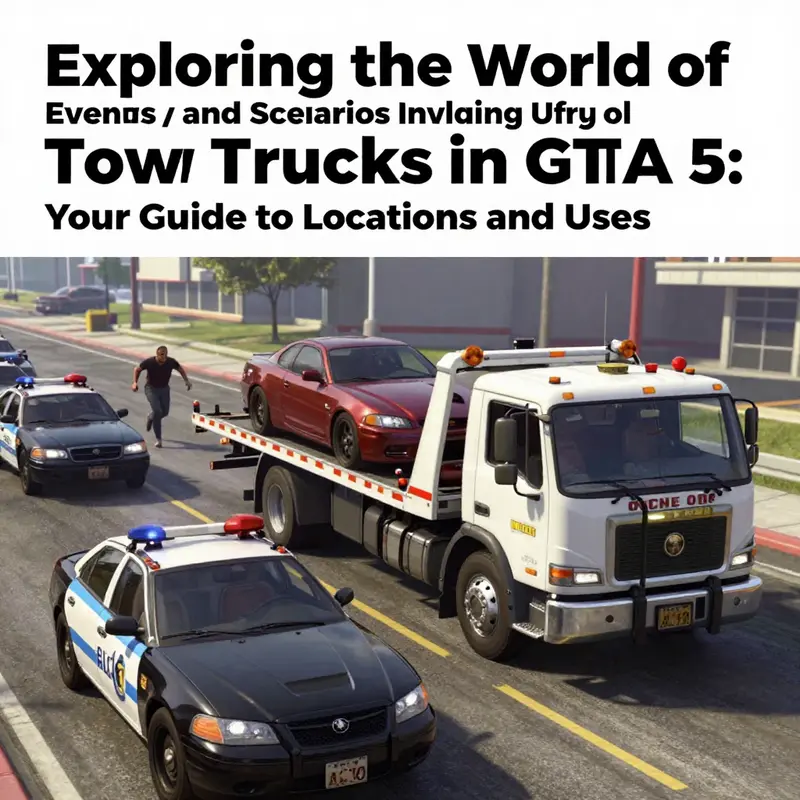
Tow trucks in Grand Theft Auto V are not mere props that fill the curbside of Los Santos with a sense of busy, lived-in realism. They are functional tools that shape how players approach missions, explore the city, and even experiment with the physics of chaos. The mere presence of a Mule or a Pounder isn’t a flourish; it is a deliberate design choice that invites players to see a complex urban landscape through the lens of towing, recovery, and creative improvisation. In the narrative arc of GTA V, tow trucks appear at decisive moments, but they also linger in the background, ready to be called upon when you want to reroute the traffic of the city, clear a stubborn obstacle, or stage a stunt that requires the pull of a powerful winch. Across the spectrum of events—from the tightly scripted pre-heist sequences to the open-ended freedom of the nighttime streets—tow trucks weave a thread through the game’s mechanics, offering both utility and a few surprises that remind players there is more to Los Santos than high-speed chases and flashy crimes. To understand where tow trucks reside in GTA V and how they function in different modes of play is to gain a clearer sense of how the city is engineered to respond to a player who wants to move not just cars, but the very space around them, in ways that feel both practical and imaginative.
The most conspicuous use of a tow truck in the main storyline occurs during the pre-heist phase of The Big Score. This mission is a critical hinge point before the larger heist unfolds, a moment that tests precision driving, stealth, and the careful choreography of vehicle movement through a city that seems designed to punish careless speed. Players are required to employ a tow truck—specifically the Mule or the Pounder—to transport a vehicle from one location to another. The task is more than a simple transport job; it is a test of how you balance risk and reward as you navigate the arteries of Los Santos with a high-value target in tow. The winch is the star of the show here. Its capacity to cradle, hoist, and maneuver a disabled or target vehicle gives the player a tangible sense of leverage, as if the city itself is pliable under your steady grip. The route you choose matters, too. Police presence is a persistent shadow, and escape routes must be planned with the same care you would apply to a high-stakes getaway. The mission rewards accuracy and restraint—minimize damage to the towed vehicle and avoid unnecessary police interaction, and the payoff comes not only in in-game currency but in unlocking subsequent stages of heist preparation and the momentum that pushes the narrative toward its larger objectives.
To capture the tension and texture of this scenario, guides from veteran players emphasize a quiet, methodical approach. The idea of a Gold Medal run, in particular, pushes you to refine your technique: keep disturbances to a minimum, time your movements to slip past patrols, and select a towing configuration that minimizes sway and drag. The Mule, with its renowned winch and capacity to carry multiple vehicles, embodies the ideal balance of strength and finesse for this sequence. The Pounder, though sometimes less celebrated for its grace in tight city corridors, provides a different rhythm—the heavier pull, the slower but steadier progress through congested streets. The key takeaway is not merely which model you choose, but how you wield the tow mechanism—the winch’s reach, the cable’s tension, and your awareness of nearby traffic and police signals. Completing this mission does more than advance the plot; it ingrains a procedural mindset. You begin to think of the city as a stage where every turn and every parking maneuver can become part of a larger orchestration that leads you toward the next objective and, if you choose, toward a broader mastery of the tow-truck toolkit.
Beyond the scripted bread crumbs of The Big Score, tow trucks reveal themselves in the free roam landscape as reliable, persistent tools that broaden your horizons for exploration and mischief alike. In this more expansive mode, you can acquire tow trucks through the game’s phone interface, under a category sometimes labeled Vehicle Rental, a small nod to how players in the real world might arrange for specialized support on a road’s edge. The option to spawn a tow truck in the city’s varied zones—garages that hide behind fences, construction yards that hum with the late shift, or industrial patches where trucks come and go—turns Los Santos into a playground of mobile recovery. Here, the Mule rises again as the preferred workhorse, not merely because of its power but because it excels at reclaiming vehicles that have broken down, or at repositioning a car so you can string together a sequence of stunts that would be impossible otherwise. The winch’s reach allows you to connect to a veered sedan and extract it from a cul-de-sac with surgical precision, or to cradle a stubborn zombie-car that stubbornly refuses to roll forward, dragging it toward a more advantageous vantage point for a photo-op, a race, or a narrative payoff.
In practice, the towing mechanic adds a layer of realism that broadens the range of activities players can pursue. You can tow your own vehicle to a safer location after a rollover, or you can assist a civilian car that has run out of luck on a dim, rain-slicked street. The effect—especially in the night hours when traffic hums with a neon sheen—feels cinematic, as if you’re playing a part in a larger urban play where the tow truck is a supporting actor who helps you keep the plot moving rather than simply driving the story forward on your own speed. The ability to reposition vehicles for stunts, to clear deadlocked lanes during a chaotic pursuit, or to stage a perfectly timed moment for a dramatic cinematic shot adds a practical but also aesthetic layer to the game. It invites players to consider not just what to tow, but where to tow it, and why—how a single vehicle caught in a ditch or blocked by debris can alter an entire night’s course, how another car’s mishap creates opportunities for a fresh plan, and how a tow truck, anchored by a steady winch, can become a tool for shaping outcomes rather than merely reacting to them.
But there is more to the tow-truck experience than the tactile pleasure of hooking a car and lifting it clear of the street. The game hides small, often serendipitous moments that remind players of the fragility and unpredictability of an open-world environment. Some players report Easter eggs and subtle interactions when towing certain high-value vehicles. While these moments can vary depending on patches, mods, or platform, they contribute to the sense that Los Santos is a living, breathing space where even the mechanics of moving another car can yield quirky results. One example is the occasional odd behavior where the tow truck seems to lose a degree of control when engaging a particularly valuable target, or where the towed vehicle briefly becomes invincible in a way that looks more like a glitch than a feature. These anecdotes—though not guaranteed—add a sense of whimsy and mystery to the towing experience, inviting experimentation and repeated play as you test the edges of the game’s physics and scripting.
For players who crave a more expansive, mod-supported towing universe—where you can create dedicated garages for tow-truck storage and spawn rates, or script automatic returns of damaged vehicles to a repair bay—mods can extend the vanilla experience far beyond what the stock game offers. A community-driven direction often cited involves mods that simulate a Tow Truck Garage, turning towing into a more formal profession within the game’s fictional economy. In such setups, the player’s towing activities resemble a business operation: you manage inventory, schedule repairs, and even run auctions for salvaged vehicles. These customized environments illustrate how the core towing mechanic can be repurposed from a mission waypoint into a sustained activity that bleeds into the role-playing, immersion, and creative experimentation that players frequently seek. Of course, the practical experience of modding is platform-dependent and requires careful adherence to safety and compatibility practices. Still, the core idea endures: the tow truck in GTA V is not just a gadget but a flexible instrument that reshapes how you navigate, interpret, and interact with the city’s lanes, alleys, and crossroads.
Beyond the hands-on gameplay, the towing ecosystem in GTA V intersects with storytelling and world-building in subtle but meaningful ways. The presence of tow trucks near maintenance yards and salvage outfits in Los Santos is a reminder that the city’s mechanics rely on a network of support services—roadside assistance, salvage operators, and industrial fleets—that mirror the complexity of a modern metropolis. The city becomes a canvas, and the tow truck is one of the brushstrokes that adds depth to the portrait: a loud, capable line that can pull, lift, and reposition any car that wants to be part of a larger scene. This interplay between utility and narrative actuality is what makes towing feel not like a simple game feature, but a window into how players can shape encounters and outcomes through deliberate, purposeful actions.
For those who want a more structured, guided approach to towing tasks in GTA V—whether to optimize a Gold Medal performance in the pre-heist sequence or to maximize the creative potential of free roam towing—there are detailed discussions and walkthroughs that lay out the steps with practical tips. Guides like CarInterior’s complete breakdown of tow-truck tasks provide phase-by-phase instructions, vehicle choice considerations, and real-time gameplay insights that help players refine their technique and understand the subtleties of vehicle handling, winch operation, and mission routing. In addition, the community discussion around tow operations often turns on a few core questions: Which tow truck model offers the best balance of power and control for urban towing? How can you execute a vehicle transport without tipping into oncoming traffic or drawing attention from law enforcement? What timing and route optimizations yield the cleanest results during high-stakes missions? These inquiries reflect a broader curiosity about how a single in-game tool can unlock a spectrum of possibilities that extend far beyond the initial objective.
If you want to explore a broader context about towing operations and the logistical principles that inform them—something that can supplement your understanding of GTA V’s tow mechanics—you can visit one of the community resources that keeps a long view on the subject: The Island Tow Truck blog. This reference point offers a concise perspective on tow operations from a real-world standpoint, providing a useful bridge between virtual road maneuvers and practical, on-the-ground logistics. While the in-game world is intentionally stylized and stylized far beyond reality, this kind of cross-reference helps illuminate why towing matters as more than a trivial overlay on the city’s map. It underscores the sense that a tow truck, in any environment, is a critical actor on the stage where vehicles move, risk, and recover in a continuous cycle of use and reuse. For players who enjoy comparing the game’s systems with real-world practices, such a link provides a thoughtful reminder that the appeal of towing in GTA V is not only its utility but its potential to spark curiosity about how transportation and recovery operate in the real world.
In the end, locating and utilizing tow trucks in GTA V is less about memorizing a fixed set of spawn points than about embracing a versatile tool that adapts to your aims. Whether you’re planning a methodical challenge in a high-stakes pre-heist sequence, or you’re roaming the city in search of a quiet moment to pull a stranded car to a better vantage point for a stunt, tow trucks offer a practical, cinematic, and occasionally cheeky way to engage with the city’s rhythm. They ground your actions in a tangible mechanic—the winch, the tow hook, the controlled lift—while also inviting you to experiment with how those mechanics intersect with the city’s layout, the behavior of other drivers, and the arc of your own playstyle. The result is not simply a set of locations but a flexible, dynamic workflow for moving through Los Santos with intention, creativity, and a little bit of luck when the city’s unpredictable physics decide to throw a curveball your way.
External resource for further exploration: https://www.carinterior.net/gta-5-tow-truck-guide/
Tow Trucks Reimagined: Expanding GTA 5’s Street-Service Toolkit Through Mods
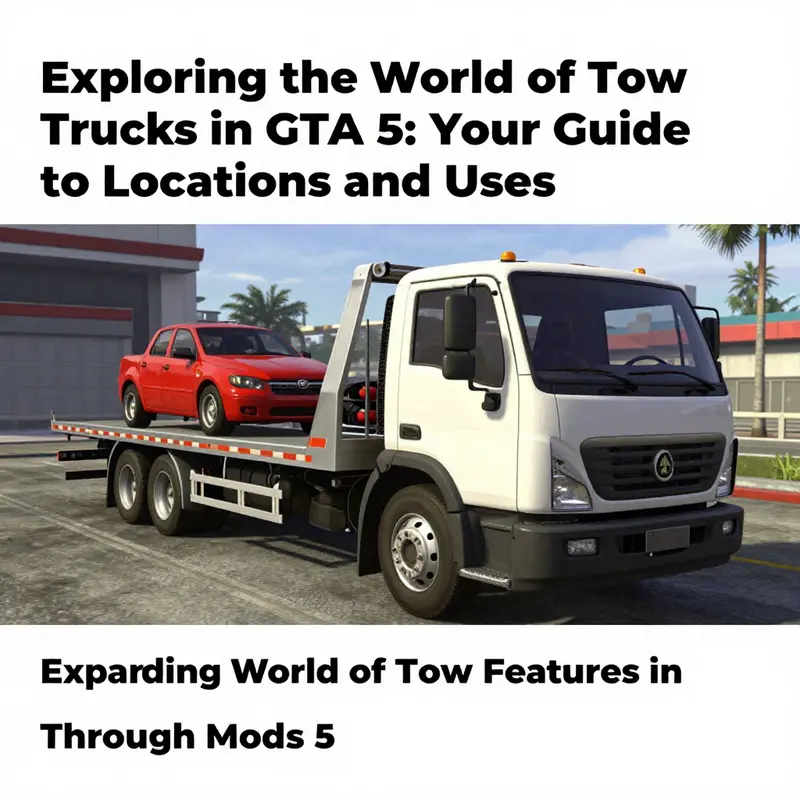
In the sprawling urban tapestry of Los Santos, tow trucks appear not merely as utility vehicles but as quiet witnesses to the chaos and care that thread through the citys nights and days.
For players hunting for the best places to find tow trucks, the base game provides a few practical clues — moments in the story where a tow vehicle becomes central, a handful of garages where a flatbed might be parked, and the occasional salvage yard that hints at the citys backroom life. Yet the real expansion of what a tow truck means in GTA 5 comes when the player crosses the line from spectator to operator. Mods open a doorway into a version of Los Santos where the tow truck is not just a vehicle you encounter on the street but a service you can build, manage, and extend across the map. This evolution — from a situational tool to a modeled business — transforms the familiar question of where to find a tow truck into a broader inquiry about what such a vehicle can do when integrated into a living, responsive game world.
At its core, the vanilla GTA 5 experience aligns tow trucks with mission-design rather than ongoing street-service. In the main storyline, a tow truck makes a conspicuous entrance during major heists, and players encounter a few on the roads or in the vicinity of garages and salvage lots. The presence of a tow truck in a given scene signals utility, a job to be done, or a logistical hiccup within a larger caper. The broader immersion question — how often do you see tow trucks and where — becomes a layered inquiry about the citys infrastructure and the way the game models it. A tow truck in Los Santos is more than a model on wheels; it reflects the citys fictional economy, its labor rhythm, and the narrative texture of its streets. The result is a version of the city where a tow operator might be a lone driver with a local route or a participant in a wider economy of salvage, auctions, and vehicle recovery that sits just beyond the radar of the players immediate tasks.
Enter mods, which reframe the tow truck from a single-task prop into a living, operating service with its own rules. A longstanding thread in GTA 5 modding communities is the desire to bring mundane, everyday services to the scale of a game world. Tow trucks, with their precise purpose and real-world resonance, offer a particularly fertile ground for this transformation. A commonly cited approach is to introduce a fully functional tow-truck service within the city limits, one that can be launched from a garage, managed as a small business, and integrated with city traffic, accidents, and the players own activities. In this expanded frame, the player can drive a tow vehicle to accident sites or breakdown zones, attach disabled cars, and transport them to a dedicated facility where they are either reclaimed by their owners for a fee or auctioned off if they are left unclaimed. The mechanic is simple in outline but rich in implication: it mirrors a recognizable urban service and creates a continuous loop of action that ties together street-level drama with a small-business ecosystem.
The practical effect of such a mod is to turn a city you already know into a more complex stage. You begin to notice how accidents cluster in certain districts, how weather changes the dynamics of recovery work, and how the timing of pickups can affect the citys rhythm. A night with heavy traffic becomes a laboratory for testing efficiency and strategy as you weave through congested arterials, coordinate with on-site responders, and decide which jobs to take based on time, profitability, and risk. In this sense, the tow-truck mod does not simply add a new vehicle to drive; it expands the players role within the city, inviting you to inhabit a small business persona that interacts with the same world you spend hours exploring for combat, racing, or story-driven heists.
One of the more compelling features of a garage-based tow operation is the explicit business simulation that often accompanies the mods design. Vehicle owners pay a reclaim fee to recover their cars, creating a revenue stream that parallels the real-world tension between lien, storage, and salvage. If owners fail to claim their rides within a defined window, the cars extend the life of the garage as potential auction props. This mechanic introduces an economic layer that reframes decision-making: you weigh the value of recovering a car against the likelihood of paying storage costs or the risk of a themed auction capturing the citys interest. The social texture deepens too. A recovered or auctioned vehicle carries a story, a trace of the owner, and a chance for the player to influence the citys micro-economy the same way a small business owner does in the real world. In other words, the mod fosters not just action but narrative texture, turning each recovered car into a potential chapter in the players ongoing Los Santos ledger.
The wonder of this expanded toolkit is not merely the novelty of a garage-based operation, but the way it reshapes how players perceive space within the city. A tow truck base becomes a hub, a locus where planning meets improvisation. You can imagine setting up a route that focuses on high-accident zones around busy corridors such as the approach to the airport or the densest sections of downtown, where the citys pulse reveals itself in the pace of emergency responses. The mechanic of towing a salvage through a night’s work requires a different sort of precision than a chase or an ambush. It asks you to anticipate the next call, to deploy resources efficiently, and to manage a small fleet, even if that fleet is limited to a single vehicle in the early stages. The citys ordinary traffic becomes your ordinary workflow, not a backdrop for a single mission but a canvas for ongoing enterprise and repeated interaction with a living, reactive environment.
The technical scaffolding that makes this possible is a reminder of how deeply games can mimic the real world when players and creators invest in the ecosystem. In the broader modding discourse, map editors and script tools are the invisible hands that position the garage, define the flow of up-to-date calls, and ensure that the tow-truck service remains responsive to in-game events. Building a garage and placing a working tow service requires careful planning: where the service is housed matters for visibility and accessibility; where the vehicles are stored matters for weight distribution and loading efficiency; and where the client recovery or auction area sits matters for the citys traffic loops. In practice, these are not just aesthetic choices but functional decisions that affect how many jobs you can complete in a given session and how stable the simulation feels across different weather conditions and times of day. The technical requirements of these mods, though often understated, are an essential part of the experience. They call for a combination of map-editing know-how, careful file configuration to ensure compatibility with the games existing assets, and a willingness to troubleshoot when the citys ai routines clash with new scripts or when texture packs fail to load correctly in certain lighting conditions. It is a reminder that even the most immersive, narrative-driven experiences in gaming depend on a quiet infrastructure of tools and settings that sit behind the scenes.
What makes the modded tow-truck experience particularly resonant is its capacity to bridge the gap between fantasy and plausibility. GTA 5 already behaves like a living city, with its own rules, economies, and rhythms. The addition of a tow-truck service translates the city into a more believable, nudging us toward a sense of civic infrastructure. You pass by an intersection and see a tow truck in action, and in that moment you understand the real-world logic of vehicle recovery–how a city clears the road, how storage costs stack up, and how a salvage economy can function even within a virtual world that moves at the pace of a heist. The noise of a recovering vehicle is not just a sound cue; its a signal that the city is alive in more than the dramatic climaxes of missions. The mod makes this life tangible and repeatable, turning episodic encounters with tow trucks into ongoing, repeatable experiences that can be crafted, managed, and enjoyed.
From a gameplay design perspective, the integration of tow-truck mechanics invites a new rhythm to the GTA 5 experience. The players ambitions may shift from finish the heist to build the service, from collect this car to maximize reclaim revenue, from complete a mission to optimize a daywork schedule. The overlap between route planning, time management, and on-the-ground problem-solving mirrors the complexities of real-world logistics, albeit within a sandbox that rewards experimentation and improvisation. It also inspires new kinds of storytelling. If you run a garage in La Puerta and service a steady stream of clients from around the city, your sessions become a chronicle of who needed help, how services were delivered, and what the citys owners did with the recovered property. Some days may end with a bustling auction floor, a rare car finding a new life, and you, as the operator, negotiating with the citys players and AI, shaping the narrativess texture through every recovered vehicle you steward.
Crucially, these narrative and gameplay enhancements are not limited to a single city block. A well-designed tow-truck mod scales across Los Santos, weaving in with the games wider ecosystem of roads, neighborhoods, and hidden spaces. You can stage your operations near repair shops for quick pickups, on the outskirts of industrial zones for transport efficiency, or in the citys window-dressed districts where the nightlife and commerce create the perfect stage for auctions and client interactions. The sense that the town becomes your business canvas is what elevates the modded experience from fun novelty to meaningful play. It encourages exploration and experimentation: you test routes, you evaluate which neighborhoods yield the best return on time, and you discover how changing the fleets structure affects workload, risk, and reward. In short, mods such as this can transform GTA 5 into a dynamic, emergent simulation where vehicle recovery is as integral to the citys operation as the heists and races that players pursue with equal fervor.
All of this sits within a larger historical and community context. The GTA 5 modding scene has long treated the open world as a platform for procedural storytelling and elaborate social simulations. The tow-truck mod is one of several examples of how dedicated fans use the game’s engine to recreate authentic workflows—dispatch systems, client interactions, and the back-and-forth of supply and demand. What begins as a curiosity about where are tow trucks in GTA 5 becomes a doorway into a broader inquiry about how players can reimagine an in-game city as a living economy with its own rules, rhythms, and opportunities for collaboration. In this sense, the citys repair shops, salvage yards, and informal auction sites are not just backdrops; they are the scaffolding for a wider, more immersive storytelling framework that invites players to become not only spectators of the citys drama but active participants in its ongoing, behind-the-scenes operations.
The arc of this exploration from a straightforward search for tow trucks to a robust, mod-driven ecosystem speaks to the larger potential of game worlds to grow with their communities. It is a testament to how a single vehicle type can catalyze an expanded sense of place and agency. It also serves as a reminder that the most memorable experiences in open-world games often arise when players are allowed to redefine the function of everyday tools within the worlds fabric. A tow truck, a simple road-going machine, becomes a conduit for narrative possibility, economic strategy, and social interaction. As you drive through Los Santos, you may notice the quiet prompts of a city that is not only shaped by your heists and pursuits but also by the everyday logistics that keep it moving forward. In this sense, mods do more than embellish the game. They reframe the citys economy, its roads, and its stories, inviting players to consider how a tow truck might function within a sprawling urban landscape that is always a little more alive when you give it a purpose beyond the immediate objective.
External resource for further exploration: https://www.gta5-mods.com/scripts/tow-truck-garage-mod-1-0
Final thoughts
Tow trucks play a significant role in the vibrant world of GTA 5, serving multiple purposes from gameplay missions to player-owned business ventures. Understanding their locations, methods of acquisition, involvement in various game scenarios, and the ability to enhance their features through mods can empower players to maximize their experience in Los Santos. Whether you are running an auto repair shop or managing a fleet, using tow trucks effectively opens up new avenues for strategy and fun. With this guide in hand, you’re well-equipped to explore the many facets of tow trucks in GTA 5.