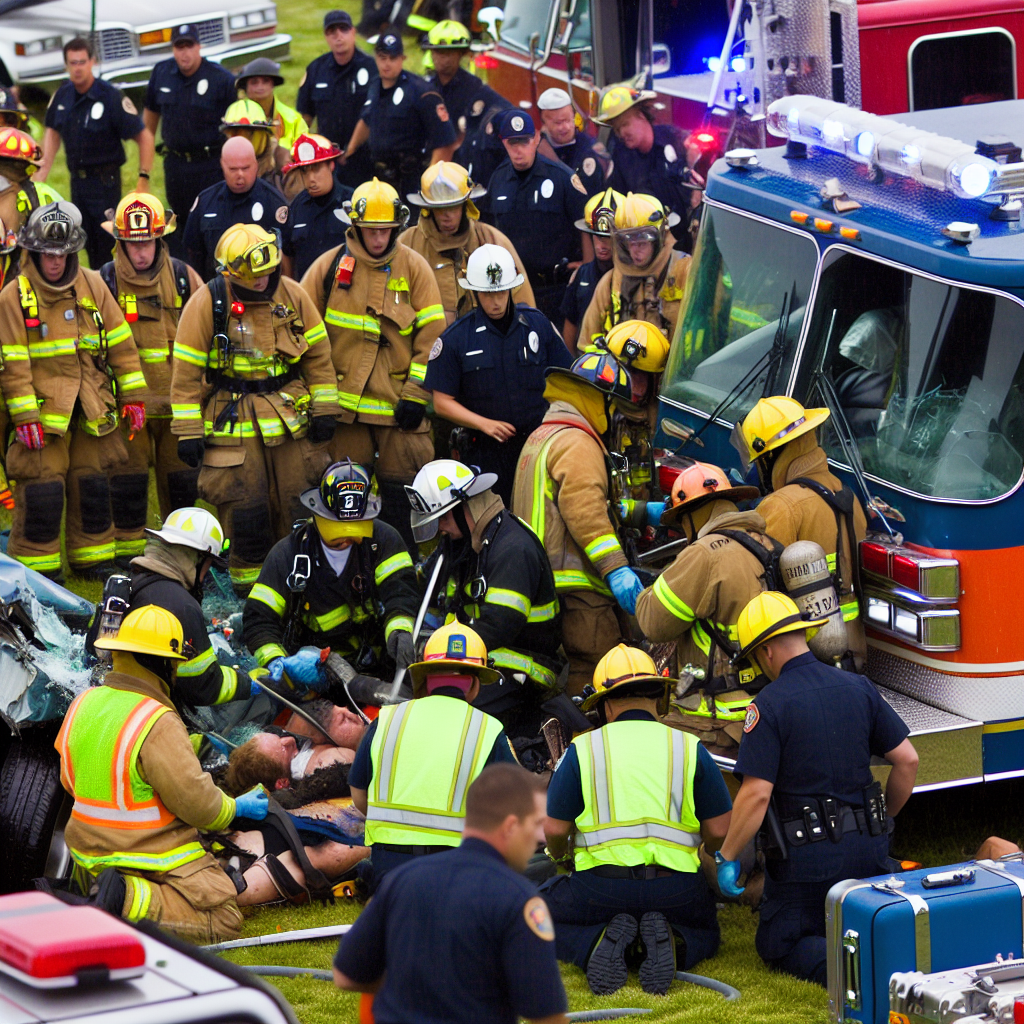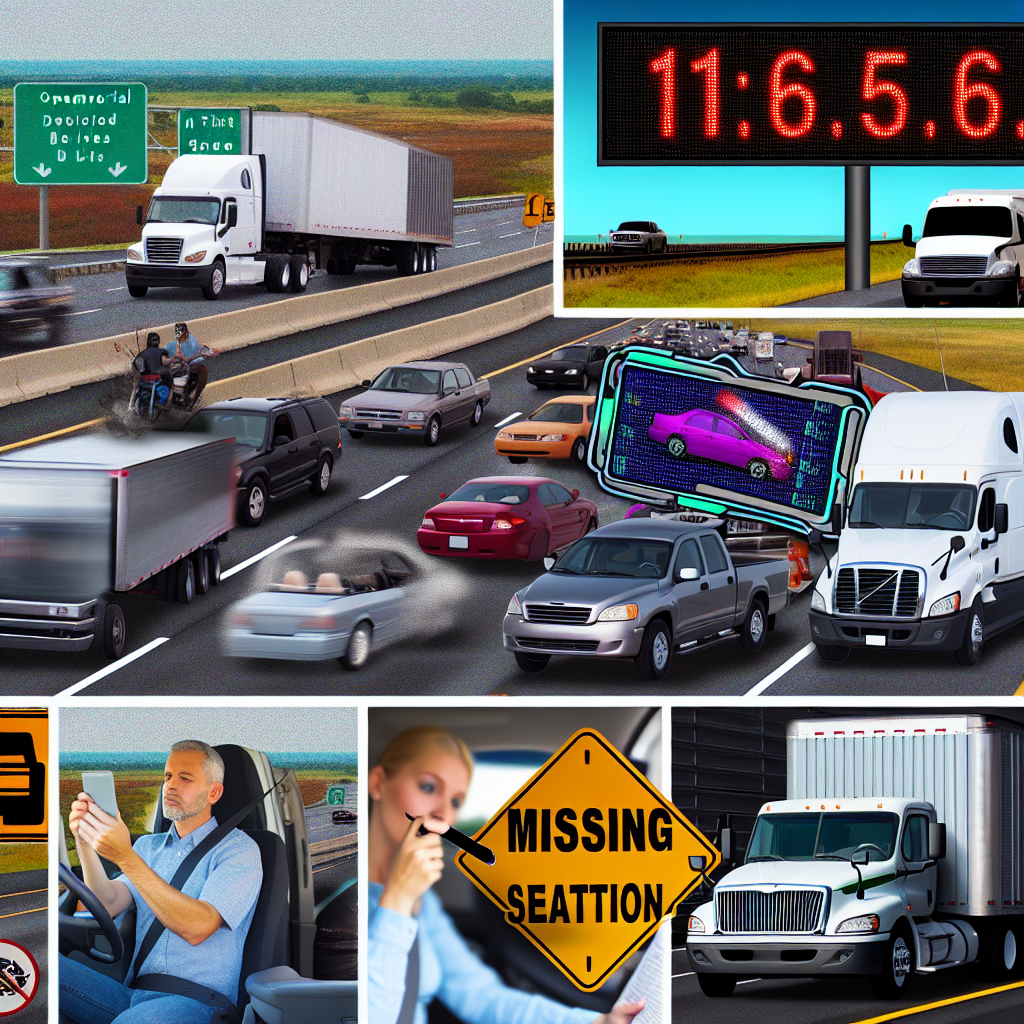
Tow trucks play a pivotal role in maintaining road safety and ensuring efficient transportation management. Recognized universally for their capacity to assist disabled vehicles, tow trucks serve a greater purpose as emergency vehicles on our roads. This article navigates the multifaceted dimensions of tow trucks, revealing how they operate in emergency response scenarios and examining the legislative frameworks that recognize their essential services. Local auto repair shops, car dealerships, property managers, resort operators, and commercial fleet operators will find valuable insights into the operations of tow trucks and their irreplaceable role in maintaining public safety. We will delve into the mechanics and effectiveness of these vehicles, understand their legislative recognition, and underscore their importance in emergency management. Each facet contributes to a comprehensive view of tow trucks as indispensable assets on the road.
Tow Trucks on the Frontlines: An In-Depth Exploration of Their Duty as Emergency Vehicles
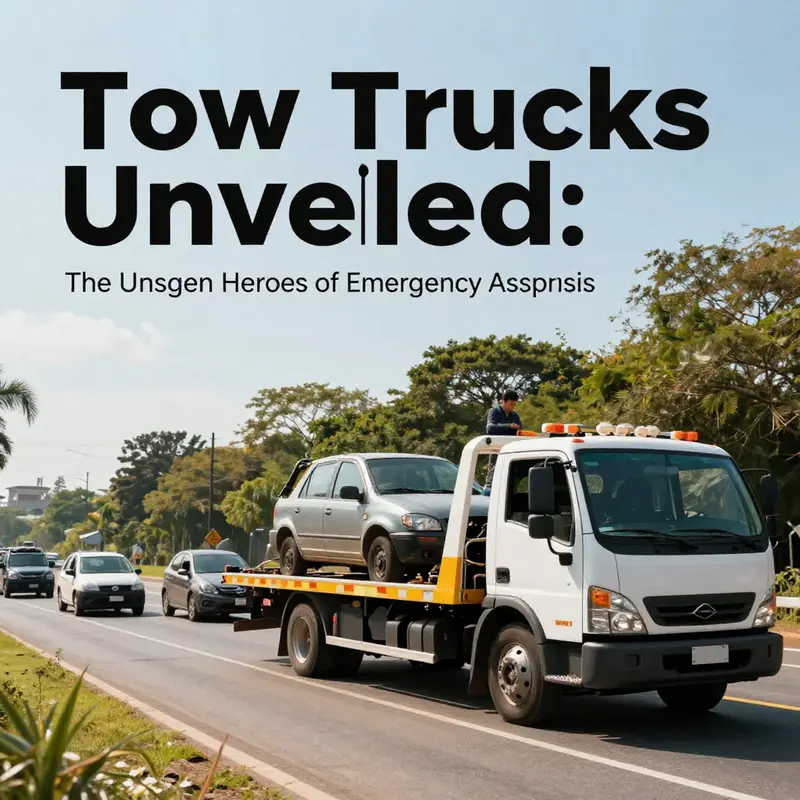
Tow trucks occupy a paradoxical space on the road: ordinary machines that become critical instruments in moments of crisis. They do not merely haul; they restore order, reopen lanes, and reduce the ripple effects of a breakdown or collision. In the broader landscape of emergency response, tow trucks function as a specialized support system that complements police, fire, and medical services. They are not summoned to offer a simple tow; they are dispatched to manage hazards, protect lives, and reestablish a usable transportation corridor as quickly as possible. This chapter examines their role with care, tracing how a vehicle designed to recover and relocate another vehicle became a central element of public safety and traffic management. It also connects the evolution of tow trucks to the demands of contemporary road networks, where speed, safety, and reliability matter as much as mechanical capability.
The essence of the tow truck’s emergency function begins with its intended purpose: to recover, stabilize, and transport a disabled vehicle from a scene where it cannot safely remain. The spectrum of scenarios is broad. A car that has stalled on a busy artery, a vehicle involved in a low-speed collision, or a truck that has fishtailed into a roadside ditch all demand rapid removal to clear lanes and reduce the risk of secondary incidents. In this sense, tow trucks do more than move property; they manage risk, containing it within a controlled area of operation. The capacity to perform at speed matters, but so does control. A successful recovery involves a sequence: locating the vehicle, assessing the scene, selecting the appropriate recovery method, stabilizing the vehicle and the recovery rig, and finally transporting the vehicle to a repair facility or other designated location without compounding damage or creating new hazards. Each step requires training, situational awareness, and an intimate understanding of road user behavior. The operator becomes a moving point of coordination on the highway, bridging the gap between the emergency scene and a safe outcome.
Historical memory helps illuminate why tow trucks occupy this essential space. The trajectory from early manual rope-and-pulley recoveries to the mechanically powered, purpose-built wreckers we see today reflects a steady rise in safety standards, efficiency, and reliability. The first practical wreckers emerged in the early 20th century, driven by the need to move disabled vehicles more effectively than could be achieved with improvised methods. These pioneers introduced lifting booms, winches, and chassis adaptations that set the template for modern recovery work. Since then, the field has evolved through incremental improvements in hydraulics, stabilization systems, and vehicle compatibility. The historical arc is more than anecdote; it explains why today’s emergency response systems rely on tow trucks as a predictable, repeatable capability rather than a sporadic service. When a dispatcher calls for a wrecker, they are leveraging a long-standing, codified competence that aligns with traffic management goals and public safety protocols.
Among the most compelling developments in tow truck design are the variations that match different recovery needs. Wheel-lift trucks, with their yokes or forks that slide beneath a vehicle’s wheels, are adept for straightforward recoveries and routine towing. Heavy-duty wreckers, built to handle large vehicles such as buses, commercial trucks, and heavy trailers, expand the reach of recovery operations into scenes where the scale of damage or vehicle mass would overwhelm lighter units. Flatbeds, with their flat, level surfaces, provide a stable ride for damaged cars where chassis integrity is a concern. Each type has a specific role, and in a well-coordinated emergency response, a fleet will deploy a combination of these tools to triage and mitigate scenes quickly. The capability to switch from a wheel-lift approach to a flatbed transport, or to deploy a crane-like stabilizer during winching, is what enables operators to adapt to unfolding realities at the roadside.
The last few decades have seen a notable intensification in the interoperability between tow trucks and other emergency responders. Scene management capabilities have expanded beyond simple removal to include on-scene assessment, hazard mitigation, and data collection that informs downstream decisions. Modern wreckers are often equipped with safety interlocks, load sensors, and digital communication interfaces that keep the operator and the incident commander aligned on the status of the recovery. GPS tracking and real-time telemetry can support dispatch decisions, ensuring that the right tool is deployed for the right job. This integration matters for public safety because it reduces the time between a vehicle’s immobilization and the restoration of a clear roadway, a metric that translates into fewer secondary incidents and lower overall exposure to risk for road users and responders alike.
The on-scene realities of tow truck work reveal a choreography shaped by traffic patterns, weather, road geometry, and human behavior. On busy interchanges, lanes shift and merge in ways that require careful timing and precise control of anchor points, winch torque, and stabilization gear. In rural areas, the same technology must contend with softer shoulders, uneven terrain, and limited space for maneuver. Operators cultivate an instinct for estimating pull forces, anticipating wheel rotation, and judging whether a vehicle will roll or slide during load transfer. They learn to read tire deformation, bracing angles, and the stability of the surface beneath both the disabled vehicle and the recovery rig. These judgments are not casual; they are the product of experience, training, and adherence to established safety protocols that reduce risk to bystanders, motorists, and the responders themselves.
As the role of tow trucks in emergency response has matured, so too has the expectation that fleets operate with a coordinated, system-wide approach. The efficiency gains come not only from faster performative capability, but from the ways in which wreckers interface with traffic management systems, incident command, and public safety messaging. When an accident scene is cleared, responders do not leave a vacuum; they leave behind a measured, controlled space that minimizes confusion for other drivers. Operators must be able to communicate clearly with law enforcement and first aid crews, signaling when it is safe to reintroduce traffic and when additional lanes should be closed. This requires disciplined radio procedures, standardized hand signals, and mutual understanding of scene risks. The modern wrecker is thus a node in a larger network, a mobile element of the urban safety architecture that converts disruption into manageable risk and, ultimately, shorter response cycles.
Technological evolution continues to shape what is possible in the field. Advances in hydraulics, winching, and stabilization systems have improved the safe handling of vehicles that arrive at the scene in compromised conditions. Digital load sensors help prevent overloading, while GPS-enabled dispatching reduces idle time and improves routing. Telemetry provides maintenance teams with data about wear and tear on critical components, enabling predictive service that keeps fleets ready for the next call. These features do not exist in isolation; they are designed to serve a single purpose: to ensure every recovery is conducted with maximum safety, minimum disruption, and predictable outcomes for the people relying on the road network.
In the broader context of public safety and infrastructure resilience, tow trucks contribute to a more robust emergency response ecosystem. They enable faster clearance of blocked lanes, which in turn supports quicker hospital access in incidents with injuries or medical distress. They also limit the exposure of roadside workers to traffic by allowing the scene to be stabilized and cleared with controlled, efficient motions rather than ad hoc, improvised methods. The result is a road system that can absorb disturbances—breakdowns, crashes, and weather events—without cascading failures in traffic flow. This resilience has practical implications for urban planning and for agencies tasked with maintaining safe, functional transportation corridors.
The cost of maintaining such capabilities is not purely financial. While fleet investments in heavy-duty wreckers and advanced attachments can be significant, the longer-term savings come in the form of reduced incident duration, fewer secondary crashes, and safer working conditions for responders. The economics of emergency towing must consider the increased safety and reliability these platforms provide to communities and traveling publics. As with any specialized service, the value lies in reliability and readiness, not merely in the speed of a single recovery. In this sense, the tow truck is a cog that, when well-oiled and properly integrated, helps keep the entire system moving with fewer interruptions and less risk.
The future of tow trucks as emergency vehicles will be shaped by ongoing demands for efficiency, resilience, and adaptability. The push toward standardization of training across jurisdictions connects to improved safety outcomes on the road. Fleets will likely emphasize modularity in equipment so that a single vehicle can pivot between different recovery modes as needed. Training programs may increasingly incorporate incident command principles, so operators understand how to coordinate with police and fire personnel when securing a scene, managing bystander safety, and ensuring that bystander communications do not create additional hazards. As climate variability intensifies, the ability to perform in extreme conditions—wind, rain, ice—will become a differentiator between good and great emergency recovery services. In this sense, tow trucks are not a static fixture; they are dynamic assets that must adapt to evolving road-use patterns, changing vehicle technologies, and new expectations about safety and efficiency.
The reader who studies the trajectory of tow trucks will notice a recurring theme: the centrality of recovery as a public safety function. The vehicle that carries a winch and a set of stabilizing tools is, in a broader sense, a reducing agent for risk on the road. When a disabled vehicle is removed promptly, the likelihood of rear-end collisions and chain-reaction crashes diminishes. When a damaged vehicle is returned to a repair facility via a controlled lift, the risk of fuel leaks, fire hazards, and debris intrusion decreases. When impounded or illegally parked vehicles are relocated to appropriate locations, traffic discipline improves and order is reinforced. These outcomes reflect more than mechanical prowess; they reveal a capability that has been refined through generations of operation, policy development, and practical field learning. The modern tow truck is a product of that convergence—a vehicle whose primary value is not simply to drag, but to restore motion with order, safety, and clarity.
To ground this discussion in accessible, actionable terms, consider how a well-coordinated tow-truck response unfolds from the moment a call is received. A dispatcher identifies the scene location, the vehicle type, and any special hazards noted by first responders or bystanders. The operator assesses whether a wheel-lift approach will suffice or if a flatbed is required to preserve structural integrity. The crew then positions the vehicle, attaches the rig, and, using winching as needed, carefully extricates the disabled vehicle from where it rests—whether on a shoulder, in a ditch, or within a traffic lane. Throughout, situational awareness remains key: observers are instructed to stay clear of the immediate work zone, while other drivers are guided through the proper detours. The sequence culminates with the vehicle safely loaded and secured, the lane reopened, and a concise report documenting the incident for maintenance, insurance, and city records. This routine embodies a professional ethos that values efficiency, safety, and accountability—principles that underlie every successful emergency towing operation.
If one looks beyond the mechanics to the social context, tow trucks also function as ambassadors of public safety. Their presence at an incident is a visible signal that help has arrived, that someone is coordinating the effort to restore normalcy, and that the roadway is being managed with care. In this sense, tow trucks contribute to the public’s trust in the road system. The operator’s skill contributes to a broader perception of reliability in emergency response services, a factor that can influence driver behavior, particularly in high-stress situations. Education and outreach efforts that explain what tow trucks do, how they operate, and why certain safety measures are in place can enhance this trust. When people understand the purpose of a recovery operation, they are more likely to comply with safety instructions and to recognize the importance of lane restrictions and detours during an incident.
The way forward will likely involve deeper integration with island and coastal fleet strategies, given the unique demands that road networks in maritime and island contexts present. Emergency response plans that account for limited ingress routes, variable weather, and the need for rapid, repeated deployments can make tow-truck operations even more vital. In these settings, the ability to stage multiple units, coordinate with harbor authorities, and maintain readiness for back-to-back incidents becomes essential. Training programs that emphasize cross-agency communication, weather-adapted procedures, and safe handling of vehicles in vulnerable environments will yield tangible dividends in reduced response times and improved scene safety. The lesson embedded in these considerations is clear: the emergency tow operation is a collaborative enterprise, built from technical capability, disciplined process, and a shared commitment to safeguarding lives and livelihoods on the road.
For readers seeking practical connections to the broader fleet and safety ecosystem, a concise set of guidelines is available that specifically addresses the critical interfaces between towing and emergency response. The guiding materials emphasize coordinated dispatch, scene safety, and the efficient allocation of resources to minimize road disruption while maximizing safety outcomes. These principles are not theoretical; they translate directly into better service delivery, more predictable operations, and clearer expectations for drivers and authorities alike. By applying these guidelines, fleets can improve not only performance metrics but also public perceptions of road safety in the face of breakdowns and collisions. The integration of such practices helps ensure that tow trucks remain not only mechanical workers but also reliable partners in the pursuit of safer, more dependable roadways.
In sum, the role of tow trucks as emergency vehicles is grounded in a history of practical innovation, a portfolio of specialized tools, and an evolving alliance with broader public-safety infrastructure. They are not mere spectators in the event of disruption but active managers of risk, traffic, and human welfare. Their ability to recover, stabilize, and transport—across a spectrum of vehicles and scenarios—positions them as indispensable agents in the orchestration of safer roads. The arc from early mechanical recoveries to today’s integrated emergency-response fleets reveals a profession that blends technical mastery with a calm, procedural discipline. It is a field that demands vigilance, continuous learning, and a steadfast commitment to safeguarding the moving world around us.
For readers looking to explore related practical insights and a broader contextual framework, see the consolidated resource hub that discusses these topics within a broader regional fleet safety context. This material offers a practical lens on how essential fleet emergency response strategies shape everyday operations and long-term preparedness. essential fleet emergency response strategies
Those who wish to trace the historical roots and examine the evolution of the towing profession can consult established archival resources that document the development of wreckers, the growth of industry associations, and the milestones that define best practices in safety and recovery. A comprehensive historical overview is available through dedicated archival institutions that preserve the tools, techniques, and stories of the early and ongoing pioneers of vehicle recovery. For a broader historical context, the International Towing and Recovery Hall of Fame and Museum provides a window into the lineage and evolution of the field: https://www.towinghalloffame.org.
When Tow Trucks Act as First Responders: How They Sustain Emergency Operations
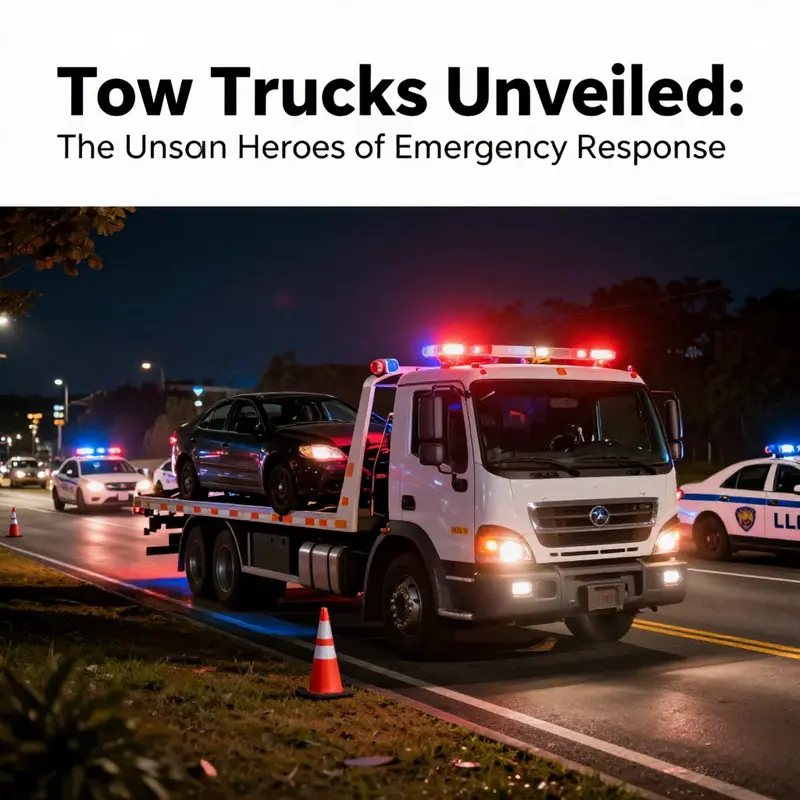
Tow trucks are more than machines that move disabled cars. In many emergency operations they function as critical response units. They clear hazards, recover vehicles, and enable rescue teams to work safely. Their presence often prevents further collisions and restores traffic flow. This chapter examines how tow trucks operate within emergency systems, why they qualify as emergency vehicles, and what makes them effective under pressure.
A tow truck’s role starts at the scene. After an accident or breakdown, the first priority is safety. Emergency crews secure people, triage injuries, and assess hazards. Tow operators then manage vehicles that threaten safety or obstruct traffic. That work requires speed and precision. Removing wreckage quickly reduces the chance of a secondary crash. It also shortens congestion and helps medical and fire teams access the site. The tow truck’s task is therefore integral to the entire emergency response timeline.
Modern tow trucks are engineered for recovery, not just transport. Heavy-duty wreckers come with rotating booms, adjustable arms, and dual winch systems. These elements allow operators to extract vehicles from ditches, embankments, and other precarious positions. Flatbeds and self-loaders provide gentle, secure transport for badly damaged cars. Winches and stabilizers let crews lift and recover without worsening damage. Specialized lighting and scene-management tools support operations at night or in poor weather. Together, these features make tow trucks mobile rescue platforms as well as transport units.
The classification of tow trucks as emergency vehicles has practical implications. In many jurisdictions, they are permitted to use warning lights, park in restricted areas during response, and receive priority access within traffic. These privileges enable faster arrival and safer work zones. Tow operators often coordinate closely with police and fire services. That coordination ensures scene control and helps prioritize tasks, like freeing a lane so ambulances can pass. Because tow vehicles act in support of life-saving services, their designation aligns with operational realities.
Effectiveness depends on the right truck for the job. Light-duty units handle broken-down sedans and minor recoveries. Medium and heavy-duty wreckers tackle commercial vehicles and severe collisions. A 20-ton wrecker, for instance, can manage large vans and light trucks. Rotating booms and adjustable arms on such machines provide leverage and angle control. Dual winching adds redundancy and power, letting crews pull vehicles from steep slopes or tangled positions. Appropriate matching of equipment to incident type is a driver of response efficiency.
Beyond hardware, the human element is crucial. Skilled operators know vehicle dynamics, rigging techniques, and scene safety protocols. They read the scene quickly, assess structural risks, and choose lifting points that avoid further harm. Regular training is essential. Simulated recoveries, winch training, and stabilization drills keep skills sharp. Maintenance staff also play a role. Complex hydraulic and electrical systems demand routine checks. Without them, a breakdown at the scene can compound an emergency.
Tow operators often perform tasks that extend past towing. They support traffic incident management by setting up cones, directing traffic, and communicating with dispatch. They may secure fluids to prevent environmental contamination. In multi-vehicle collisions they separate vehicles to allow investigators room to work. When tow trucks clear a lane, they shorten the time that emergency services must shield a site. That reduction directly lowers the risk to responders and motorists.
Urban environments create unique demands. Cities have dense traffic, constrained access, and complicated geometry. Urban tow crews must navigate tight streets and avoid damaging nearby infrastructure. Conversely, rural recoveries present terrain challenges. Rural scenes often involve steep embankments, soft shoulders, or long response distances. Tow trucks designed for off-road recovery use reinforced booms and extended winch lines. Their winching and stabilization capabilities are critical when standard techniques fail.
Disaster response highlights the versatility of tow assets. After storms, floods, or earthquakes, vehicles can block evacuation routes. Heavy wreckers and flatbeds work alongside public works to clear debris and reopen roads. In such events, tow operators often coordinate with broader emergency management, supporting logistical movements and asset recovery. Their equipment becomes part of the recovery fleet, shifting from single incidents to mass-response tasks. This dual role demonstrates both flexibility and scalability.
Operational challenges are real. Tow trucks are mechanically complex and require specialized maintenance. A large wrecker’s hydraulic system, winches, and boom assemblies need steady attention. Training for operators is time-consuming and costly. There is also risk. Working close to moving traffic exposes crews to dangers. Proper personal protective equipment and scene control policies are nonnegotiable. Investment in safety pays off by reducing injuries and preventing secondary incidents.
Budgetary concerns influence readiness. High-capacity wreckers and rollbacks cost significantly more than light-duty units. Agencies and private operators must weigh purchase price against incident needs. Yet, the cost of not having proper recovery capability can be higher. Extended road closures incur economic losses and increase the probability of secondary crashes. Strategic fleet planning ensures the right mix of vehicles is available when needed. That planning considers incident types, traffic volumes, terrain, and response time objectives.
Integration with emergency communications improves outcomes. Tow operators receive incident data from dispatch before arrival. That information shapes equipment staging and personnel allocation. Telematics and GPS systems also enhance deployment. Real-time location tracking speeds selection of the nearest suitable unit. Advanced systems can relay scene photos or hazard descriptions. Better information enables a faster, safer recovery.
Legal and policy frameworks affect how tow trucks operate. Some regions require certification for heavy recovery operators. Other places set standards for scene management and vehicle release. Enabling legislation often grants tow vehicles certain privileges during response. Clear policies ensure consistent practice and protect both operators and the public. Where protocols are lacking, municipalities and operators should work together to craft procedures that balance rapid clearance with due process for vehicle owners.
Measuring effectiveness uses several metrics. Response time is critical. Faster arrival reduces hazard exposure. Clearance time — how long it takes to remove obstructions — affects traffic delay. Reduction in secondary collisions after deployment shows safety impact. Cost-efficiency metrics compare the expense of maintaining recovery fleets against societal benefits. When tow operations reduce travel time, prevent injuries, and expedite emergency services, the return on investment is tangible.
Tow truck technology continues to evolve. Improvements in hydraulics increase lifting capacity while reducing setup time. Remote-controlled winching systems let operators perform tasks from safer positions. Fleet electrification and cleaner engines reduce emissions during long idling periods at scenes. Telematics and incident management platforms enable better resource allocation. Each innovation strengthens the tow truck’s role within emergency systems while addressing modern constraints.
Training, equipment, and policy must align. Emergency managers should view tow providers as partners. Pre-planned agreements and mutual aid pacts streamline response. Joint exercises with police and fire departments improve coordination. When agencies plan together, they reduce confusion at live incidents. Standardized protocols for scene control, vehicle stabilization, and priority lane clearance help everyone work safely.
Tow trucks provide benefits beyond immediate clearance. Rapid removal shortens traffic queues, alleviating congestion that can cascade through a transportation network. Removing damaged vehicles preserves evidence and assists crash reconstruction. Recoveries that avoid further vehicle damage reduce insurance claims and litigation. In short, effective towing delivers safety, mobility, environmental protection, and economic value.
For specialized fleets, readiness requires focused strategies. Island and isolated fleets must manage unique constraints like limited spare parts and constrained transport routes. Pre-identifying repair and recovery staging areas helps optimize response. Fleet managers should also develop contingency plans for large-scale incidents. For practical guidance on organizing and preparing fleets for emergencies, review essential fleet emergency response strategies and planning considerations here: essential fleet emergency response strategies.
Decisions about investing in heavy wreckers are situational. Urban centers with high traffic density and frequent collisions often find such investments justified. Regions with long rural stretches also benefit from heavy recovery assets. Cost-sharing agreements between municipalities, private operators, and state agencies can spread financial burden. Ultimately, the value of tow trucks in protecting life and restoring mobility makes them indispensable in comprehensive emergency planning.
Tow trucks are, in practice, emergency vehicles. Their design, deployment, and functions align with core emergency objectives. They reduce risk, restore traffic flow, and facilitate rescue operations. Effective integration into incident command structures enhances their impact. Investments in training, maintenance, and modern equipment yield measurable safety and mobility benefits. Tow operators who train with response partners and maintain high technical standards are essential contributors to resilient transportation systems.
The ship of emergency response requires coordinated, well-equipped support vessels. Tow trucks fill that support role by turning hazards into cleared roadway. Their tools, techniques, and crews form a bridge between immediate rescue work and restored normalcy. As recovery technologies improve and systems become more integrated, the tow truck’s place at the heart of emergency operations will remain secure.
For a deeper look at technical specifications and applications of modern tow trucks, see this technical overview: https://www.towtrucks.com/technical-guide-best-tow-trucks-specifications-applications/.
Tow Trucks at the Regulatory Edge: Reconsidering Emergency Vehicle Status on Modern Roadways
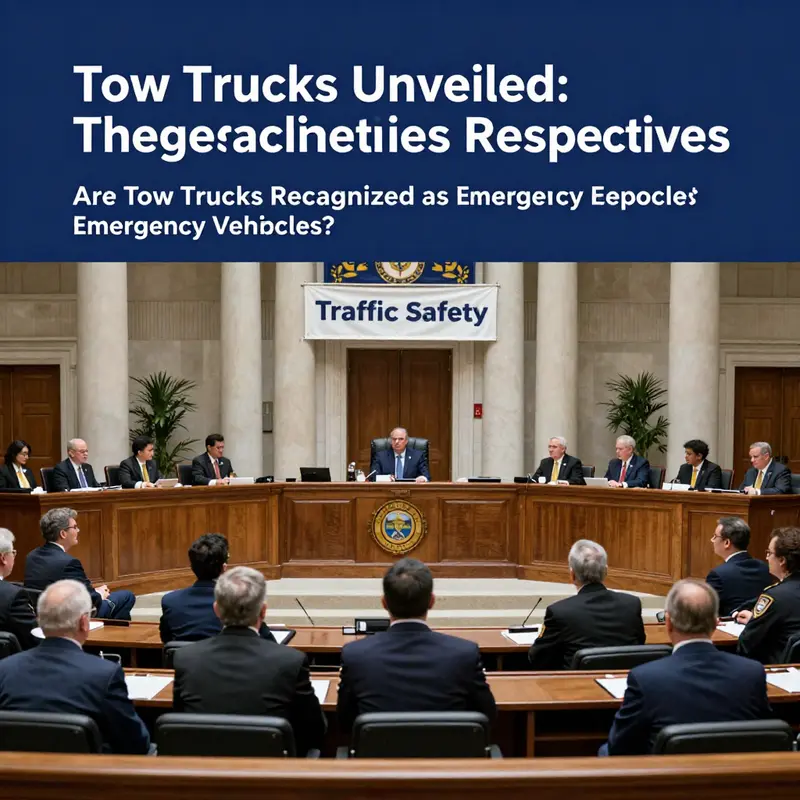
Tow trucks occupy a paradoxical space in modern road safety and policy. They are the responders who clear lanes, recover disabled vehicles, and prevent secondary crashes, yet in law and regulation they often sit outside the official roster of emergency vehicles. This tension shapes not only how they operate but how they are funded, supervised, and integrated into multiagency responses. The question of emergency vehicle status is not a mere label; it carries concrete consequences. It determines who yields to whom on the road, who can legally breach traffic protections to reach a scene, who is authorized to use warning devices, and who bears liability when a recovery operation introduces new risks. The chapter that follows considers how tow operations fit within a broader safety ecosystem, what the current legal landscape looks like in practice across jurisdictions, and why the gap between operational necessity and legislative status persists even as the public expects a seamless and speedy clearance of hazards.
From the earliest roadside assistance efforts to today’s sophisticated recovery fleets, tow services have evolved into critical nodes in the chain of roadway safety. They are often the first responders after a collision or mechanical failure that creates a blocking hazard. Their work mitigates traffic disruption and reduces exposure for stranded motorists. Yet the same activities that underscore their essential function—rapid dispatch, scene assessment, stabilizing a vehicle, and moving it to a secure location—do not automatically translate into the legal privileges assigned to police, fire, or ambulance services. The differences are deliberate, rooted in historical distinctions between public safety agencies and private or contractor-based service providers, and they reflect concerns about system-wide safety, accountability, and resource allocation. Still, several threads pull public policy toward a reconsideration of tow trucks’ role in emergencies. If the objective is to restore normal traffic flow quickly and safely, and if a well-coordinated recovery operation reduces the likelihood of additional collisions, then policy debates inevitably touch on formal recognition, training standards, and a framework for authorized signalization and routing.
A useful lens is to distinguish the core functions of emergency vehicles from the core functions of tow operations. Emergency vehicles are designed and funded to perform rapid life-safety interventions, hazard mitigation, and direct, immediate intervention to protect people. They operate under privileges that allow them to navigate complex traffic environments with fewer constraints when lives are at stake. Tow trucks, by contrast, are primarily service-oriented: their mission is to recover a vehicle, remove an obstruction, and transport the vehicle to a safe location or repair facility. Yet the line between these roles blurs at the scene. A recovery operation can be a life-safety operation in disguise—the faster a disabled vehicle is removed from a travel lane, the lower the risk of secondary crashes and pedestrian or rider exposure. In densely trafficked environments or on high-speed corridors, a timely tow can prevent a cascading sequence of incidents. This recognition has driven a growing dialogue about recognizing tow operators as part of the emergency response ecosystem, even if not formally labeled as emergency personnel.
Regulatory frameworks respond to this complexity with a mix of privileges, exemptions, and strict conditions. The most widely cited essentials of emergency vehicle status include the right of way, the use of audible or visual warning devices (sirens and lights), and the ability to access routes and travel lanes that would otherwise be restricted to standard traffic. In many jurisdictions, tow trucks do not automatically enjoy these privileges. They are typically treated as ordinary vehicles when not engaged in a sanctioned emergency response, with normal traffic rules applying. However, when a tow operation is underway in response to an incident or hazard, many states and localities grant limited exemptions. These exemptions are often contingent on several safeguards: the operator must be properly certified or licensed for emergency response, the vehicle must be equipped with specified warning devices, there must be a formal incident command or dispatch protocol, and operations must align with scene safety practices and law enforcement or fire department coordination.
The variation among states is striking. In some regions, tow operators equipped with flashing lights and prescribed training can participate in traffic incident management with the same respect given to first responders. In other places, they must remain fully subject to standard traffic control rules unless operating under a formally recognized incident response plan or standing agreements with emergency services. This patchwork results from decades of incremental policy, evolving road safety research, and the practical realities of funding and staffing. Jurisdictions with higher traffic densities and more complex road networks tend to formalize some exemptions, recognizing that rapid lane clearance is often the most effective form of hazard reduction. Other areas emphasize simplicity in enforcement and risk aversion, keeping tow operations under standard traffic law to avoid confusion at scale.
The practical implications of these regulatory choices are evident in how tow fleets are staffed and equipped. Where exemptions exist, operators commonly undergo targeted training in incident scene safety, wheel-lift and stabilizing techniques, optional beacon use, and temporary traffic control methods. Certifications may come through state licensing boards, professional associations, or authority delegations from law enforcement agencies. The requirements are not merely about compliance; they are about consistency and predictability at the scene. A certified operator with a predictable set of lights and signals can integrate into the traffic management plan, communicate clearly with police or EMS, and minimize the risk of secondary incidents caused by errant vehicle movements or ambiguous warnings. In places without formal exemptions, operators still pursue best-practice standards. They adopt robust safety practices, maintain high-visibility equipment, and build collaborative relationships with police or fire departments to ensure that their actions at an incident scene align with broader safety objectives.
These regulatory dynamics also influence the economics of tow operations and the design of their fleets. When a jurisdiction offers exemptions, operators can execute faster recoveries with fewer delays attributed to procedural bottlenecks. That can translate into tighter response windows and the ability to serve more incidents per shift. Conversely, without privileges, tow operators face a more rigid operational environment, where time savings must be achieved through efficiency in dispatch, coordination, and on-scene execution within conventional traffic laws. This reality shapes the way fleets plan staffing levels, procure equipment, and train personnel. It also affects how cities and counties finance public-safety partnerships. In some cases, municipalities view tow operators as essential partners in emergency response and allocate a portion of funds or in-kind support to ensure reliable readiness. In others, the relationship remains transactional, focused on cost-per-tullaway rather than broader public-safety outcomes.
A further layer of complexity arises from the interaction between private sector operators and public agencies during incidents. Coordination protocols, incident command systems, and mutual-aid agreements create a network of responsibilities that extends beyond the tow truck alone. When a scene involves suspected injuries, hazardous materials, or complex vehicle damage, the role of the tow operator is to support the primary responders by safely clearing the roadway and stabilizing vehicles so that paramedics and firefighters can do their work. In such contexts, even when a tow operator is not formally granted emergency vehicle privileges, their behavior at the scene mirrors the disciplined, safety-first ethos that governs official responders. They communicate clearly, position their trucks to shield the work zone, and adjust operations in response to the evolving risk profile at the scene. This willingness to integrate with established incident management frameworks strengthens the argument for a more formal recognition of tow operations as essential components of roadway safety, even if the legal label remains contested.
Policy conversations often pivot on concerns about misuse and public perception. Opponents worry that expanding privileges for tow operations could blur lines between law enforcement and private recovery work, potentially creating opportunities for improper signaling, lane access, or traffic rule exemptions that undermine general safety. Proponents counter that the status quo already creates disparities in how quickly and safely different kinds of responders can reach and clear a scene. They point to data showing that longer clearance times correlate with higher rates of secondary crashes, and they argue that when trained, certified operators adhere to strict protocols, the incremental risk of providing limited exemptions is outweighed by the public safety benefits of faster, less disruptive recoveries. The middle path in many jurisdictions is a tightly regulated regime that grants specific privileges only within defined incident parameters, under the supervision of public agencies, and with rigorous training and certification requirements. It aims to preserve the clarity of responsibility while acknowledging the critical, time-sensitive nature of roadside recovery.
The literature on tow trucks’ role in emergency response emphasizes a nuanced balance between speed, safety, and accountability. A technical overview of the field notes the importance of specialized vehicle configurations, such as flatbeds designed for safe loading of damaged or obstructed vehicles, and the value of on-board tools for accident scene management. These capabilities are not merely conveniences; they are safety features that reduce exposure to moving traffic and minimize the chances of secondary harm. In the regulatory domain, the same emphasis on safety translates into requirements for operator training, vehicle equipment, and adherence to standardized operating procedures. The regulatory conversation, then, becomes a conversation about how to codify best practices in law so that the system can reliably support rapid responses without inviting new hazards or legal ambiguities. The goal is not to elevate tow operators above other responders, but to create a coherent, predictable framework in which different parts of the emergency response ecosystem can work together with minimal friction.
For those following this topic in practical terms, several themes recur across jurisdictions. First, there is a strong push toward formal recognition of tow operators as legitimate partners in traffic incident management. Second, there is a need for consistent training standards and qualification pathways that ensure uniform competencies across different regions. Third, there is an emphasis on clear, well-communicated scene safety protocols, which include traffic control responsibilities and the proper use of warning devices. Fourth, there is recognition of the delicate balance between enabling rapid access to a scene and preserving the integrity of traffic laws that protect all road users. These themes are not merely theoretical; they translate into real-world differences in how quickly a lane can be reopened, how long a driver remains in danger near the roadway, and how much risk the public must bear while a recovery operation unfolds.
There is also a broader strategic angle to consider. In communities with limited emergency services funding or high volumes of traffic on congested corridors, formalizing tow operations as recognized emergency responders can be a pragmatic investment in traffic safety. When a jurisdiction channels resources toward training, equipment, and coordinated dispatch for tow teams, the return on that investment appears in more reliable response times and fewer secondary crashes. In this sense, the question “Are tow trucks emergency vehicles?” moves from a semantic inquiry to a policy question about how to optimize a safety system. If we measure success by the speed and safety of traffic management at incidents, then granting targeted exemptions to tow operators may be a rational instrument, provided it is coupled with accountability, oversight, and interoperability with other responders. The underlying principle is clear: the road network benefits when every responder—whether police, firefighter, EMS, or a certified recovery operator—can perform its role with minimal delay and maximal safety.
A practical path forward, then, is to frame legal provisions not as rigid classifications but as flexible, safety-driven protocols that align tow operations with the rest of the emergency infrastructure. This involves adopting standardized training curricula, consistent equipment requirements, and well-defined incident command relationships. It also means embracing a culture of continuous improvement—recognizing that the landscape of road safety evolves with new vehicle technologies, changing traffic patterns, and lessons learned from real-world operations. For instance, as roadside signaling technologies become more sophisticated and as fleets adopt more advanced loading and stabilization techniques, regulations can adapt to reflect those capabilities without compromising public safety. In this sense, the debate over emergency vehicle status is not an either/or proposition. It is an invitation to design a governance framework that captures the essential contributions of tow operations to road safety while preserving the clarity of roles and responsibilities that undergird effective emergency response systems.
As these considerations unfold in policy rooms, courts, and municipal councils, the on-the-ground implications for island fleets—where space, geography, and climate shape every operation—are particularly instructive. Islands often contend with unique transport challenges: narrow roadways, limited alternate routes, and high concentrations of vehicles navigating limited corridors. In such contexts, a formal recognition framework could significantly improve incident management, reduce travel delays, and therefore lower overall risk for residents and visitors alike. Yet this potential must be balanced with robust safeguards to prevent ambiguity in scene control and to maintain public confidence that all responders are operating under clear, consistent rules. The chapter’s exploration thus returns to the central question: how can policy preserve the public safety benefits of rapid recovery while maintaining the widely understood norms that govern all other emergency responders? The answer lies in precise, transparent standards—standards that specify when exemptions apply, what equipment is required, what training is mandatory, and how accountability is maintained when outcomes hinge on split-second decisions in volatile traffic environments.
For readers who want to see how these ideas translate into practice, the discussion in this chapter echoes broader discussions about fleet readiness and emergency response strategy. The field emphasizes not only the technical competence of operators but also the organizational maturity of response networks. A well-integrated system treats tow operators as extensions of the public safety mission, not as separate contractors who appear only after a hazard has been cleared. This integration requires policy instruments that create predictable interfaces: clear dispatch protocols, joint training opportunities, and shared incident reporting mechanisms that allow insights from every incident to inform future guidelines. When these elements are in place, the difference between a standard tow call and an emergency-recovery operation becomes less a question of classification and more a question of execution: how quickly and safely can the scene be rendered safe, and how effectively can all responders work together to minimize risk to the traveling public?
In the end, the question of whether tow trucks are emergency vehicles is not just about who gets to push the button to activate a siren. It is about how communities organize themselves to handle disruptions with minimal danger and maximum efficiency. It is about building a safety system that remains coherent under pressure, and that recognizes the essential, time-sensitive nature of recovery work without eroding the principles that safeguard all road users. As jurisdictions experiment with broader recognition, they should do so with humility—acknowledging the value of proven standards while remaining open to improvements that reflect new data, evolving technologies, and the lived experiences of operators who routinely place themselves in the line of moving traffic to restore order after a disruption. Tow trucks, by their function and their growing role in multiagency response, illuminate a path toward a more integrated and responsive emergency care for roadways. They remind policy-makers and practitioners alike that safety on the road is not a single act but a continuous orchestration of readiness, coordination, and disciplined execution.
This chapter, grounded in the realities of how laws shape practice and how practice tests the limits of law, invites readers to consider not only the letter of the regulation but also the spirit of public safety. It invites a conversation about how to design a framework that can accommodate the essential operations of towing within the emergency response ecosystem, ensuring that when a hazard appears on a highway, the people, the vehicles, and the systems dedicated to reducing harm can act with speed, precision, and accountability. For those seeking practical guidance in aligning fleet operations with contemporary best practices, peer-reviewed discussions and professional resources emphasize the central role of standardized training, coordinated dispatch, and transparent scene management. As the field evolves, one principle remains constant: the ultimate measure of regulatory progress is not the elegance of a single designation but the reliability of a system that protects the traveling public without creating new risks at the scene. The collation of legal provisions, operator capabilities, and interagency coordination forms a living framework that can adapt as roadways and technologies continue to change. In this sense, recognizing tow operators as integral to emergency response is less a claim about labels and more a commitment to a safer, more efficient way of handling incidents that affect millions of drivers every day.
For readers who want to explore more about how these ideas translate into practice and policy at the fleet level, a practical deep-dive into emergency-response strategies for island fleets provides further context and actionable guidance. See fleet emergency-response strategies for a detailed guide on training, coordination, and operational standards that help align tow operations with official emergency response practices. As jurisdictions consider refining their regulations, it is useful to reflect on how these conventions can be adopted and adapted to meet local needs while maintaining a consistent safety baseline across regions. The dialogue about emergency vehicle status for tow operations is less about redefining an identity and more about harmonizing expectations, capabilities, and accountability so that every component of the roadway safety system can perform at its best when it matters most.
In closing, the regulatory story around tow trucks is a story of incremental alignment. It is a story about bridging practice and policy in ways that protect the public while recognizing the real, time-critical value of rapid recovery at the roadside. The path forward lies in clear rules that specify when exemptions apply, what capabilities are required, and how interagency collaboration is implemented. It lies in a culture of safety that permeates training, equipment, and dispatch processes. And it lies in a shared understanding that the road’s safety net is strongest when tow operators are engaged as trusted partners—integrated into the emergency response framework with clearly defined roles, backed by robust training, monitored for safety, and supported by a regulatory environment that can evolve with new evidence and new needs. As roadways continue to demand swift, safe, and coordinated responses to incidents, the regulatory conversation will keep refining the balance between operational necessity, public safety, and the practical realities of funding and governance. The result, if pursued with rigor, is a system in which tow operations are recognized not merely as a service but as a vital element of the safety architecture that keeps traffic moving and communities protected.
External reference for further reading on the technical foundations of tow truck applications and their role in emergency recovery can be found here: https://www.example.com/tow-truck-technical-overview
Final thoughts
Tow trucks uniquely bridge the gap between standard roadside assistance and emergency response services. Recognizing them as emergency vehicles is crucial for their effective operation. This classification not only empowers them to respond quickly but also elevates their importance in ensuring public safety and maintaining traffic flow. For local auto repair shops, car dealerships, property managers, resort operators, and commercial fleet operators, understanding this classification opens avenues for better collaboration and more efficient handling of vehicle emergencies. In the intricate network of transportation, tow trucks remain steadfast as the custodians of our roadways.