Tow trucks are the unseen heroes of our roads, vital in various emergency scenarios, such as accidents and breakdowns. They not only ensure road safety by clearing obstructions but also provide peace of mind during stressful situations. This article delves into the multifaceted role of tow trucks, exploring their legal status, public perception, and operational efficiency. Each chapter serves to illuminate why tow trucks are deserving of recognition as emergency vehicles in our communities, particularly for local auto repair shops, dealerships, and fleet operators alike.
Tow Trucks on the Front Lines: Reframing Their Status as Emergency Vehicles in Roadside Crises
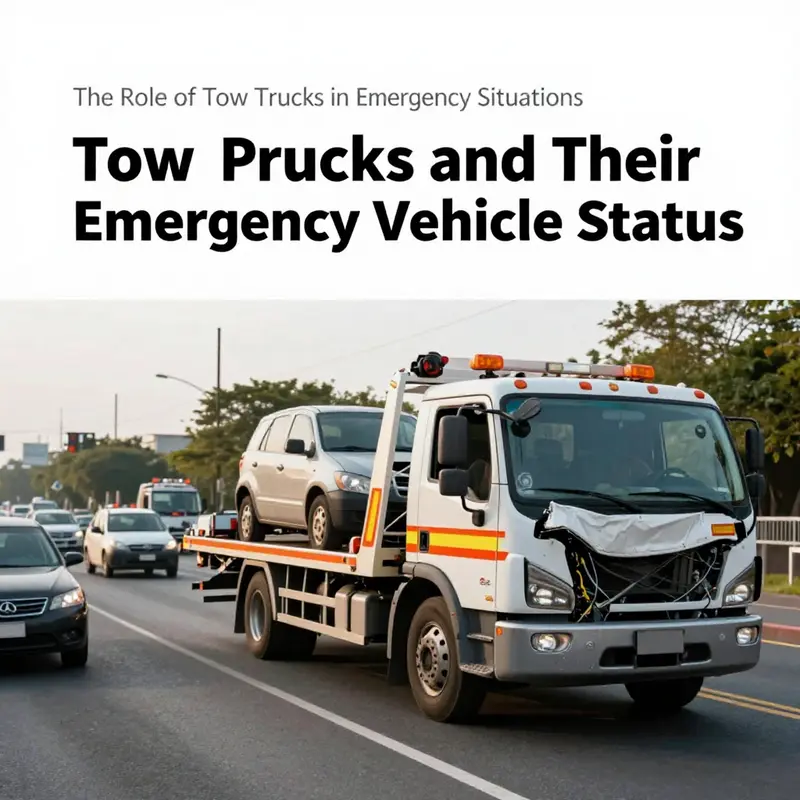
Tow trucks play a crucial but often overlooked role in roadside emergencies. When a vehicle breaks down on a busy highway, responders rely on swift recovery to restore traffic flow and reduce risk. Tow trucks are not always labeled as emergency vehicles, but their work is essential to public safety, clearance of the scene, and protection of responders and other motorists. By enabling rapid removal, containment of spills, and coordination with police, fire, and EMS, tow teams contribute to the overall effectiveness of the response. The question of emergency vehicle status depends on local laws, dispatch protocols, and mutual aid agreements, and it matters because it shapes rights of way, response times, and safety standards. In many jurisdictions, tow operators can ride along in an emergency framework, receive priority dispatch, or operate under established traffic management plans during major incidents. This pragmatic approach recognizes that speed, precision, and interagency coordination are the keys to preventing secondary crashes and restoring normal traffic.\n\nBeyond the moment of impact, the integration of tow operations with emergency response reflects a broader view of public safety. Tow fleets invest in training for scene safety, equipment deployment, and clear communication with incident commanders. They work with responder teams to secure the scene, manage spilled fuel or cargo, and guide other vehicles away from danger. While tow vehicles may not always enjoy the same privileges as first responders, their status can be elevated by policy design that treats towing as an essential service within the emergency architecture. When such designation exists, it can shorten clearance times, reduce exposure for responders, and improve overall resilience of the transportation network.\n\nThe practical takeaway is that the status of tow trucks is not fixed by labels but by the tools, procedures, and governance that enable safe, fast recovery. Jurisdictions can formalize emergency tow operations through specific designations, training standards, and coordinated dispatch protocols. The result is a system in which tow teams are prepared partners in the crisis response, trusted to perform critical functions under a unified command structure. As road networks evolve and disruptions become more common, recognizing tow trucks as integrated emergency assets supports safer roads and more reliable mobility for the public. For policymakers, fleet managers, and responders, the path forward emphasizes collaboration, standardized practices, and ongoing evaluation to ensure that towing services contribute to safety and efficiency in every incident.
Tow Trucks at the Threshold: Reframing Emergency Vehicle Status in Roadside Recovery
When you drive along a highway and see a tow truck at the edge of a lane, you likely register a familiar scene of roadside assistance. But the quiet, practical truth behind that image is more complex. Tow trucks operate at the intersection of public safety, traffic management, and legal privilege. They are essential to clearing a path after breakdowns and crashes, yet their status in the law lags behind their practical importance. To understand whether tow trucks are emergency vehicles, we must trace how emergency vehicle definitions are constructed, what powers and privileges those definitions grant, and how real-world operations shape the daily reality of the roadside. The answer is nuanced: tow trucks are not typically designated as emergency vehicles in the strictest legal sense, but they play a pivotal, front-line role in emergency response fleets and in organized incident management. This chapter explores that nuance, weaving together legal frameworks, operational realities, and the evolving needs of road safety to present a cohesive picture of tow trucks on emergency duty, even when they do not hold the formal badge of status that lights and sirens confer on traditional responders.
From the broad vantage of traffic safety, emergency vehicles are defined by authority and privilege. National and state standards tend to center on vehicles expressly authorized to use warning devices and, in certain circumstances, to exceed ordinary speed limits or disobey traffic signals. The core trio—police cars, fire apparatus, and ambulances—embodies the archetype of urgency: responders who must reach scenes quickly to preserve life, protect property, or secure the public’s safety. The operating premise behind these definitions is not merely speed; it is the legal framework that recognizes the vehicle’s role in urgent missions and grants it a corridor through traffic rules that would otherwise constrain it. In a strict sense, tow trucks do not usually fall into this category. They are intended for recovery, clearing, and restoration, not for immediate life-saving treatment or rapid pursuit of danger. The distinction matters for drivers, who must learn to yield to designated emergency vehicles and to follow the traffic protocols that accompany that privilege.
Yet the line between emergency vehicle status and routine recovery work is not a hard border so much as a spectrum of urgency and authority. In many jurisdictions, tow operators operate primarily as roadside assistance providers or as support vehicles within the larger emergency response system. Their primary function is to remove disabled vehicles, recover wreckage, and clear debris so that lanes can reopen and normal traffic flow can resume. In this sense, they are integral to the public safety equation, even if their vehicles do not carry the legal right of passage that red lights and sirens imply for police, fire, and EMS vehicles. The practical impact is immediate: a well-coordinated tow operation can prevent secondary crashes, reduce exposure to hazards for responders, and expedite a return to normal traffic conditions. The absence of formal emergency vehicle status does not erase their contribution; it reframes it within the wider architecture of incident management and traffic safety.
This reframing matters for how operators are trained, how fleets are managed, and how the public perceives what to do when a tow truck arrives at a scene. NHTSA’s emphasis on emergency vehicle operations helps define what counts as legitimate use of warning devices, how operators should position themselves, and how scene safety is maintained. The legal privileges that may come with emergency vehicle status—such as bypassing certain rules under controlled circumstances—remain tightly bound to the vehicle type and to the explicit authorization granted by law enforcement and traffic authorities. Tow trucks generally do not enjoy the same blanket privileges; instead, any use of warning lights or sirens tends to be situational, limited, and often strictly regulated. In some states, when a tow is clearing an obstruction after an accident or when directed by authorities to assist at a scene, a tow operator may be allowed to employ warning devices to protect the operation. This is a meaningful allowance, but it does not elevate the tow truck to the status of an official emergency vehicle. The distinction is not pedantic; it influences how a driver behaves, how the operator communicates with other responders, and how the incident is documented for insurance and liability purposes.
Understanding this legal scaffolding helps illuminate a practical truth. Tow trucks, especially those engineered for rapid response and specialized recovery, operate in high-stakes environments where speed matters, but coordination matters more. A typical tow job at an incident involves several moving parts: establishing a safe work zone, coordinating with police and EMS, securing the vehicle and any hazardous materials, and then arranging the transport or removal of the disabled vehicle. Each step demands a different set of skills and protections, from high-visibility positioning and traffic control to careful rigging and winching procedures. It is not enough to arrive quickly; one must integrate with the incident command structure, follow defined staging areas, and communicate clearly with responders and with the vehicle owner. In practice, this means tow operators become de facto members of the scene management team, even if they do not hold formal emergency vehicle privileges. They contribute to a critical chain of care and safety that starts the moment a breakdown or wreck interrupts traffic and ends when normalcy is restored.
The operational reality is reinforced by the equipment and capabilities that specialized tow teams bring to the field. Modern recovery operations rely on a blend of robust winching capacity, wheel-lift options, stabilizing gear, and a suite of accessories designed to manage vehicles without worsening damage or creating additional hazards. When a vehicle has overturned or blocks multiple lanes, a tow crew’s ability to control the vehicle safely with cables and stabilizers can prevent rollovers during extraction, minimize the risk of fuel leaks, and reduce exposure to oncoming traffic for all responders. These technical competencies underscore the essential nature of towing in emergency response, but they do not automatically reclassify the tow truck as an emergency vehicle in the legal sense. The distinction matters, yet the line is crossed every time a tow operator is requested to expedite a scene, assist in clearing a roadway, or help remove the obstruction to restore traffic flow. In other words, the tow truck’s practical mission aligns with emergency objectives, even if its formal status remains separate from police, fire, and EMS.
From a policy perspective, the separation between emergency vehicle status and the day-to-day responsibilities of towing has tangible consequences. Public drivers are taught to yield to emergency vehicles and to adhere to certain rules during urgent operations. But the presence of a tow truck at a site often triggers a different set of expectations. Road users may need to slow down, shift lanes, or follow the direction of the incident commander as the scene is secured. Insurance considerations come into play too. Claims processing, liability in the event of secondary collisions, and the determination of fault can hinge on whether the tow operation complied with established safety protocols, regardless of whether the vehicle involved held any emergency designation. The public must understand that even when a tow truck lights up a scene, its status is anchored in safety and efficiency rather than in statutory priority of passage. This understanding fosters safer driving behaviors and more reliable incident response.
The nuance is not merely theoretical. It has practical implications for how fleets are organized and how operators interact with other responders. A fleet that treats tow operations as an integrated component of emergency response—rather than as a separate, purely commercial service—benefits from better handoffs, clearer communication, and more predictable outcomes. Training programs increasingly emphasize scene safety, traffic control, and coordination with police or fire units. Operators learn to establish a safe exclusion zone, use high-visibility gear, and deploy warning devices in ways that heighten visibility without unduly interfering with the flow of traffic. This approach mirrors the discipline and rigor of traditional emergency response training, reinforcing the idea that towing is an extension of public safety rather than a separate, competing priority.
The public-facing aspect of tow operations also deserves attention. When a driver sees a tow truck arrive at a crash site, emotions run high and judgments about the situation are formed quickly. Some observers may interpret the tow vehicle as a full participant in the emergency response, while others may see it as a service vehicle that simply cleans up after danger has occurred. The truth lies somewhere in between: tow operators are guardians of the roadway who enable rapid scene clearance, reduce exposure to hazards, and support the broader safety net of responders. To people affected by breakdowns or crashes, the tow crew can be a symbol of relief—a sign that help has arrived and that there is a path back to safety. For drivers who share the road with responders, the presence of a tow crew is a reminder that traffic safety is a shared responsibility, and that the system works best when every participant understands the rules, communicates clearly, and cooperates with the incident command structure.
In discussing the status of tow trucks as emergency vehicles, we should acknowledge a practical strategy that strengthens safety across the board. Recognizing tow operators as essential partners in emergency response—though not formal emergency vehicles—encourages better resource planning, more robust training, and clearer guidelines for when and how warning devices may be used. It also helps align public expectations with what is legally permissible and what is operationally prudent. A coordinated approach to roadside recovery, with tow teams, police, fire, and EMS sharing information in real time and adhering to an agreed-upon incident command model, yields the best outcomes for injury prevention, traffic flow, and property protection. In this model, the tow truck is a critical, highly capable participant in the public safety ecosystem, even if it does not carry the same legal privileges as the recognized emergency vehicles.
For readers navigating the boundaries between law and practice, it can be useful to think of tow trucks as specialized instruments designed to restore safety after disruption. They are not merely passive responders to a breakdown; they actively shape the scene by removing hazards, stabilizing vehicles, and facilitating a safe and orderly resolution. The legal distinction between emergency vehicle status and recovery roles should not obscure the fact that tow operators contribute essential service to the public good. Their work is tightly coupled with the priorities of traffic safety, incident management, and community resilience. When a tow crew arrives, it signals that the roadway will be made safer, not just that a vehicle will be moved. This distinction reinforces the broader theme of this chapter: the status of tow trucks in emergency contexts is best understood as a spectrum of authority and responsibility, where safety, coordination, and rapid recovery are the guiding principles, even as formal privileges remain carefully circumscribed by law.
Those who design policies for road safety, fleets, and emergency response should consider this continuum. The objective is not to elevate tow trucks to the rank of sworn emergency responders, but to acknowledge their indispensable function within the emergency response framework. The most effective path forward embraces a holistic approach: standardized training across decline and elevation of risk, clear protocols for scene management, and robust communication systems that connect every actor at the incident—from the first responders to the recovery teams and the vehicle owners who await the return of their mobility. In practical terms, this means formalizing how tow operators participate in incident scenes, how they coordinate with the primary responders, and how their use of warning devices is governed to maximize safety without eroding public trust. It also means public education that underscores the difference between emergency vehicle status and the urgent, specialized work performed by recovery professionals. People should understand that when a tow vehicle arrives, it is a sign that the roadway is about to be made safer and traffic will soon resume, not that a new kind of statutory privilege is being granted.
Within this framework, the discussion of internal resources becomes important. For readers seeking to explore broader strategies for fleet readiness and emergency response integration, a relevant discussion is available in resources focused on essential fleets and emergency response strategies. Such materials emphasize how recovery services, when integrated into the broader safety ecosystem, can strengthen overall resilience and reduce response times during critical events. You can explore these ideas further through related materials on essential fleet emergency response strategies, which situate towing within a comprehensive planning context. This approach makes it clear that tow operations are not peripheral to emergency response but are a vital link in the chain that protects lives, preserves property, and restores order after disruption. It also helps explain why tow operators must maintain high standards of safety, communication, and coordination, ultimately aligning their daily duties with the ultimate aim of public safety.
In conclusion, while tow trucks are generally not classified as emergency vehicles in a strict legal sense, their role in emergency response is unmistakable and increasingly formalized within incident management practices. They act as essential enablers of safety, clearing lanes, removing hazards, and supporting responders as they work to minimize risk and restore normal traffic flow. The distinction between official emergency vehicle status and practical emergency readiness matters for how drivers behave, how laws are written and interpreted, and how insurance and liability questions are resolved after incidents. Acknowledging tow operations as a core component of safety networks—without conferring automatic municipal privileges—offers a balanced, pragmatic framework. It respects the legal boundaries while celebrating the real-world impact of recovery work on roadway safety. As cities and islands strive to protect travelers in a dynamic, densely trafficked environment, the coordination between traditional responders and towing professionals will continue to evolve, guided by shared commitments to efficiency, safety, and transparency. And in that evolution lies the future of road safety: a system where every actor, from patrol car to recovery vehicle, operates with a clearly defined role, aligned purpose, and mutual respect for the critical mission of keeping people moving safely along the network of roads we share.
External resource: For a thorough overview of emergency vehicle operations and the regulatory framework that shapes these roles, see the National Highway Traffic Safety Administration’s guidance on emergency vehicle operations at https://www.nhtsa.gov/vehicle-safety/emergency-vehicle-operations.
Tow Trucks on the Front Lines: Public Perception, Legal Status, and the Realities of Emergency Road Recovery
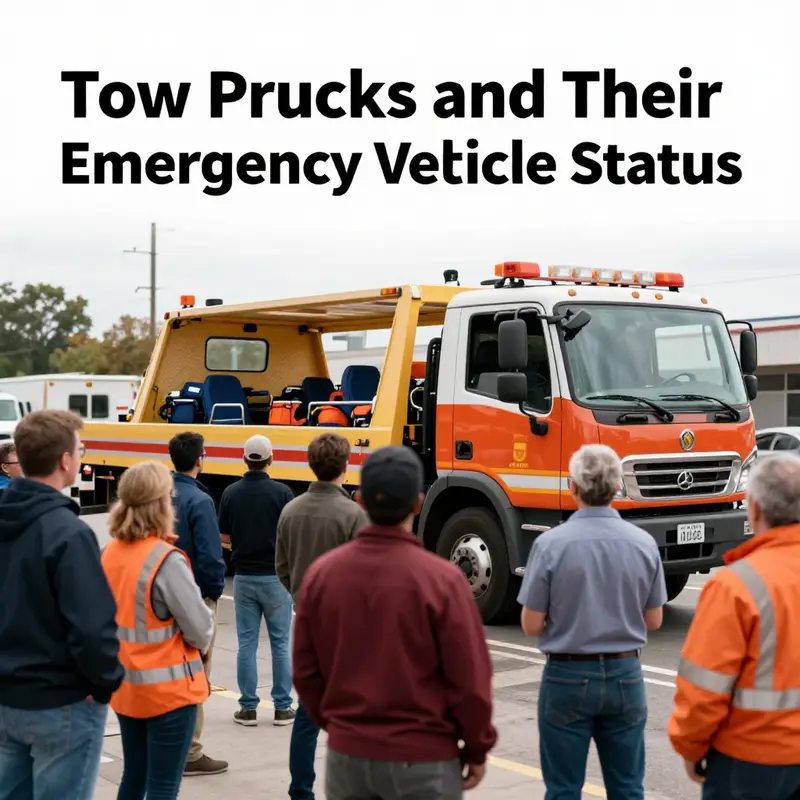
Tow trucks occupy a unique space in the public safety ecosystem. They are not universally labeled as emergency vehicles in the traditional sense, yet their work unfolds at the precise edge where safety, traffic flow, and rapid crisis resolution intersect. This chapter explores how tow trucks are perceived, how legal designations vary, and how operational realities shape their essential role in road safety and recovery. It is a narrative that moves beyond neat classifications to describe a field where urgency, cooperation, and adaptation define daily practice. In the conversations that surround road safety and incident management, tow trucks emerge not as a distant afterthought but as an active, often indispensable, partner in restoring order after disruption and reducing the risk of secondary crashes.
To begin with, it is important to distinguish the formal nomenclature from the lived realities of emergency response. In many jurisdictions, emergency vehicles are defined by statute or departmental policy as police cars, fire apparatus, and ambulances. These are the core first responders, equipped with signal devices, trained personnel, and established response protocols. Tow trucks, by contrast, commonly fall outside that formal designation. They are vehicles that enable the removal and recovery of disabled, damaged, or obstructing vehicles. Their primary function is to restore mobility and reduce hazards on roadways. Yet this formal distinction does not capture the full scope of their contribution. When a vehicle breaks down on a busy highway, when a tractor-trailer jackknifes and blocks multiple lanes, or when a storm topples a utility vehicle into a traffic lane, the swift deployment of a tow crew can be the deciding factor between a manageable incident and a cascading traffic catastrophe. In those moments, the tow operator becomes a crucial link in the safety chain, a role that commands urgency even if the vehicle is not labeled as an emergency responder in every legal instrument.
This tension between formal designation and practical necessity is echoed in everyday practice. Tow operators are often the first responders to a road hazard in the sense that they arrive at the scene, assess the danger, communicate with other responders, and implement the immediate steps needed to restore traffic flow. Their work is inherently safety-critical. A disabled car on a highway can create a windfall of risk: sudden lane changes, rubbernecking, and the potential for rear-end collisions as drivers slow abruptly or switch lanes to avoid the obstruction. A well-timed tow extraction, followed by the removal of debris or the repositioning of a vehicle to a safe location, mitigates those risks and reduces the chance that a single incident cascades into a larger emergency. In this light, Tow operators transcend a narrow operational definition and participate in what many observers would call emergency-response logistics—a recognition that is reinforced by how these crews are deployed in large-scale incidents and by the way traffic management centers coordinate several agencies to converge on a scene.
The practical realities of this work are reinforced by the way fleets organize and prepare for incidents. In practice, tow operations function as part of a broader incident management framework. They are deployed in concert with police, fire, and EMS, so that traffic control can be established, lanes can be closed or narrowed safely, and evidence or hazardous materials concerns can be addressed according to the scene’s needs. In many jurisdictions, tow crews receive training that emphasizes scene safety, compatibility with traffic control devices, and communication protocols that streamline coordination with law enforcement and other responders. These training routines are essential because the speed and precision with which a tow crew operates can influence a scene’s duration and the risk profile for responders and motorists alike. The takeaway is clear: tow trucks perform in contexts that demand professionalism, discipline, and the ability to manage risk under pressure.
The public-facing perception of tow trucks as emergency-like responders emerges from several interlocking factors. First, the infrastructural role they play in restoring mobility makes their presence feel urgent. A highway blocked by a wreck or a malfunctioning vehicle is not merely an inconvenience; it is a risk to safety and a threat to the efficient movement of goods and people. Second, emergency response protocols increasingly recognize the value of rapid roadside recovery. In some regions, roadside recovery units or integrated response teams include specialized tow operators who are trained to work alongside police and fire personnel during major incidents. The result is a blended model in which tow crews are treated as essential participants in the emergency response fleet. Third, there is a public expectation of speed and reliability. When a tow operator arrives with the proper equipment and a clear plan, drivers experience a reduction in uncertainty. The visibility of flashing lights and operational urgency communicates a sense of active response, even if the legal designation does not confer the title of emergency vehicle.
This evolving perception is reflected in how communities and fleets approach road safety. It is not merely about issuing warnings or allocating response times; it is about cultivating a culture in which all players recognize the interdependence of their roles. In this sense, a well-coordinated tow operation becomes a trust signal. Drivers on the highway learn to expect that a tow crew will arrive quickly if a lane must be cleared, a vehicle must be moved, or a hazardous position must be stabilized. The public, in turn, benefits from a smoother flow of traffic and a lower likelihood of follow-on incidents that can overwhelm emergency services. The result is a practical consensus that, while tow trucks may not always be legally labeled as emergency vehicles, their functions align closely with the goals of public safety and rapid incident resolution.
One facet of this alignment is the collaboration between tow operators and specialized roadside recovery units. Across various jurisdictions, large-scale incidents—such as multi-vehicle collisions or large-scale weather events—demand a tiered response. Tow operators may be dispatched as part of a coordinated set of resources designed to remove obstructions quickly and reestablish lanes. In some cases, this collaboration extends to the repurposing of vehicles or the creation of mobile recovery units that blend the characteristics of a tow truck with those of a temporary on-site service vehicle. The idea is to optimize the sequence of actions at the scene: establish a safe perimeter, manage traffic to minimize secondary crashes, stabilize the immediate hazard, and then recover or relocate damaged vehicles to a secure location. This sequence—carrying out a series of decisive, safety-focused steps—echoes the logic of emergency response, even if the formal label remains distinct.
The question of whether tow trucks should be formally designated as emergency vehicles invites a broader policy conversation. Some contend that adding light signals and limited exemptions to traffic laws could reflect the reality that tow crews perform urgent duties that, if delayed, could escalate risk. Others argue that legal classifications should remain precise to avoid confusion on the road. The reality on the ground is more nuanced: designation often depends on jurisdiction, the type of incident, and the specific capabilities of the operator. In some places, laws permit tow operators to use flashing lights or sirens under narrowly defined circumstances related to an active incident. In others, their use of signaling devices is limited to caution or visibility purposes. The practical effect is that tow trucks operate with a hybrid identity—recognized by crews, coordinated with other responders, and treated as urgent participants in crisis management, even if the formal label does not reflect the full scope of their responsibilities.
There is also a notional but meaningful shift in how organizations view their fleets. Tow trucks increasingly form part of essential services inventories and strategic response plans. This is not simply a matter of insurance or liability coverage but a recognition that road safety relies on rapid, well-resourced recovery capabilities. In large urban areas and across regions with complex transportation networks, forward-looking agencies design incident response strategies that integrate towing capacity alongside policing, firefighting, and medical response. The upshot is a more resilient system, where recovery teams anticipate demand, pre-stage equipment, and coordinate with dispatch centers to minimize scene duration. Such a framework places tow operators at a pivotal point: they are the people who transform a blocked road into a passable one, whose work unlocks access not only for emergency services but for the broader public that depends on reliable travel and delivery networks.
Interwoven with these operational realities is an ongoing dialogue about how the public understands and respects the work of tow operators. The perception that tow trucks are emergency responders is reinforced by visible cues—urgent lighting, prompt arrival, and a clear sense of purpose—that communicate seriousness and competence. Yet the legal scaffolding that defines emergency status remains more conservative in many places. The tension between perception and regulation is not a failing; it is a reflection of the complexities of road safety governance. Acknowledging this complexity is not an invitation to blur distinctions unnecessarily but a prompt to design policies that reflect actual practice. If tow operations are a critical component of incident management, then their training, coordination, and resource allocation should mirror that reality. A more integrated approach would ensure that tow operators have robust access to scene protection, safe working conditions, and interoperable communication channels with police, fire, and EMS agencies.
To illustrate how this integration is taking shape in the field, consider the broader context in which tow operators operate. Some fleets have embraced the concept of rapid-response recovery with clearly defined protocols that reduce scene dwell time. These fleets invest in training that emphasizes traffic control, tire chains for winter conditions, winching techniques that minimize vehicle damage, and safe positioning of heavy equipment on the roadway. They also deploy communication practices that keep the scene organized and predictable for all responders. The goal is not to mimic a fire engine or an police car but to create a dependable, professional support system that complements the core emergency services, ensuring a quicker, safer resolution for everyone on the road. This kind of approach fits neatly with how many observers perceive tow trucks: as essential contributors to road safety whose presence at the scene undeniably embodies the spirit of emergency response, even if the legal label remains distinct.
For readers seeking practical guidance on how to align tow operations with broader emergency response strategies, one useful pathway is to explore fleet-specific resources that discuss resilience, incident management, and recovery practice. These discussions often emphasize the value of coordinated dispatch, scene safety planning, and cross-agency drills that improve responsiveness. A helpful starting point is to engage with industry perspectives and case studies that outline how fleets have adapted to evolving safety expectations. In addition to professional resources, many communities benefit from simply observing how different responders interact at real-world scenes, noting how tow crews position vehicles, communicate, and participate in the overall choreography of incident handling. The takeaway is that the strength of an emergency response system lies not only in the prowess of individual responders but in the harmony of the entire team—police, fire, EMS, and towing professionals working toward common safety objectives.
As the discussion about tow trucks and emergency status evolves, the storytelling around road safety becomes more nuanced and accurate. The public learns from lived experiences on the road that a tow operator’s work is not ancillary but central to the safety and efficiency of the traffic system. In turn, policymakers and fleet operators are reminded to design procedures and training that reflect the realities of the field. The ultimate value of this alignment is measured not by the label attached to a vehicle but by outcomes: fewer secondary crashes, shorter incident durations, and safer scenes for workers and motorists alike. The ongoing conversation, then, is less about naming and more about function, coordination, and accountability. It recognizes that in the theater of road safety, tow trucks perform a starring role in the urgent effort to keep people moving safely and to prevent problems from multiplying once an incident has occurred.
For readers who want a practical lens on how to apply these ideas in real-world contexts, a useful step is to look at how different fleets structure their emergency-response planning and training. These resources describe how towing teams integrate with other responders, how they prioritize scene safety, and how they sustain rapid response during peak traffic periods or adverse weather. They also illustrate how fleets balance the need for speed with the imperative to protect workers and bystanders. A broader understanding emerges when one considers the entire lifecycle of an incident: from the call or notification to the arrival on scene, through the assessment and stabilization phases, to the final clearance and post-incident review. Tow operators are deeply embedded in this lifecycle, and their contributions are essential to achieving a safe, timely, and orderly resolution.
To close this reflection, it is helpful to acknowledge that many communities will continue to grapple with the question of whether tow trucks deserve formal emergency-vehicle status across all legal frameworks. The answer is likely to be nuanced, varying by jurisdiction and by the specific roles assigned to towing teams within local traffic management plans. What remains clear is that public safety benefits from a system that treats towing resources as urgent, well-equipped, and properly integrated with other responders. When a road is blocked, the speed and effectiveness with which a tow crew can clear the obstruction, manage traffic, and move a damaged vehicle to a safe location significantly influences the risk landscape for motorists and responders alike. In that sense, tow trucks are not merely helpers behind the scenes; they are front-line operators whose actions can reduce harm and restore order with a decisiveness that mirrors traditional emergency services, even if the formal title does not always reflect that parity.
For readers seeking a deeper dive into fleet management and emergency response strategies that touch on tow operations, consider exploring practical resources and industry perspectives such as those found on the Island fleet and recovery planning platforms. They offer insights into how fleets build resilience, plan for contingencies, and train for coordinated incident response across the spectrum of roadway safety challenges. The Island Tow Truck Blog provides a broad context for understanding how towing teams contribute to essential safety functions and how fleets strategize for effective emergency-response readiness. Finally, for formal guidance and regulatory context, consult official resources that define emergency vehicle status and permissible operations at the national level. See https://www.nhtsa.gov for authoritative information on road safety and incident management standards.
Tow Trucks as Emergency Vehicles: Reframing Their Role in Road Safety
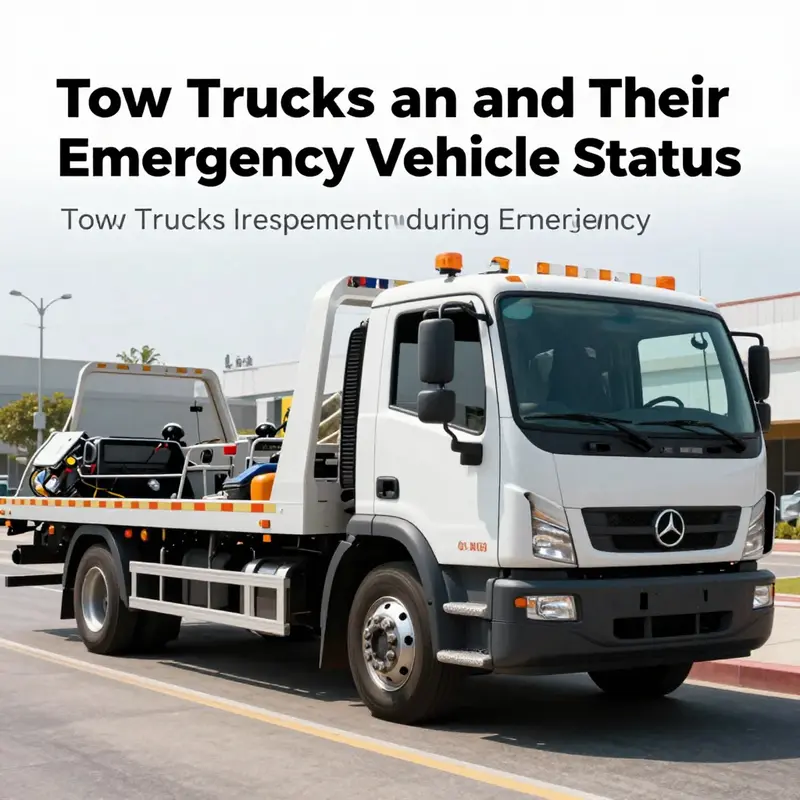
Tow trucks occupy a critical but often underappreciated role in emergency response. They are not always designated first responders, yet their actions can determine how quickly a lane is cleared and traffic returns to normal. This chapter argues for recognizing the tow operator as a key contributor to road safety and outlines how training, protocols, and technology can elevate their function within the broader emergency ecosystem.
Classification and jurisdiction vary widely. In some regions, tow trucks carry emergency lighting and may enjoy limited priority; in others, they operate under standard traffic rules until incident conditions merit escalation. This variability shapes dispatch practices, driver training, and the expectations of other road users. In high-speed or dense urban environments, the ability to stage, navigate safely around a crash scene, and communicate with responders reduces delays and mitigates secondary hazards.
Technology enables better coordination. Real-time GPS tracking, mobile data terminals, and integrated traffic-management systems allow dispatch to assign the closest capable unit and provide incident details to the crew. A shared operating picture improves safety for workers and bystanders, shortens response times, and minimizes the risk of rear-end or secondary collisions. Training and interagency cooperation remain crucial: joint drills, standardized action plans, and clearly defined roles ensure that tow teams contribute effectively to the overall response.
Policy implications emphasize safety, efficiency, and accountability. Tow operations should be empowered with appropriate authority and resources, while safeguards prevent over-privileging one modality at the expense of others. The practical takeaway is that tow services can and should be embedded into the emergency response system, delivering faster clearance, better risk management, and improved mobility for the public.
For managers operating island or geographically constrained fleets, planning and intergovernmental coordination are especially important. Pre-arranged routing, staging areas, and cross-agency communication help ensure that tow operations do not become bottlenecks in the response. Additional resources and best-practice guidance can be found in professional literature and official resources on emergency vehicle classifications and tow operations.
Final thoughts
Tow trucks serve as a critical link in the chain of emergency services on our roads. Their role in accident recoveries, breakdown assistance, and traffic management is invaluable, transcending traditional classifications of emergency vehicles. Understanding their contributions helps reinforce their status within our communities, making it imperative to advocate for their recognition as essential service providers. Road safety is ultimately a shared responsibility, and tow trucks are key allies in this effort.