Imagine yourself driving along picturesque island roads, surrounded by lush landscapes and vibrant communities. The tranquil breeze can be marred by unexpected vehicle breakdowns. In the realm of roadside assistance, one highly unusual scenario stands out: a tow truck towing another tow truck. This exceptional event, while rare, serves critical needs for auto repair shops, car dealerships, property managers, resort operators, and commercial fleet operators. We delve into the unique circumstances that lead to this fascinating occurrence, from accident recovery to operational logistics and insurance liabilities. Each chapter unwinds the intricate relationships between these vehicles and the essential roles they play in supporting island life, ensuring every stranded vehicle gets the help it needs.
The Unlikely Tug: Accident Recovery Involving a Tow Truck Towing a Tow Truck
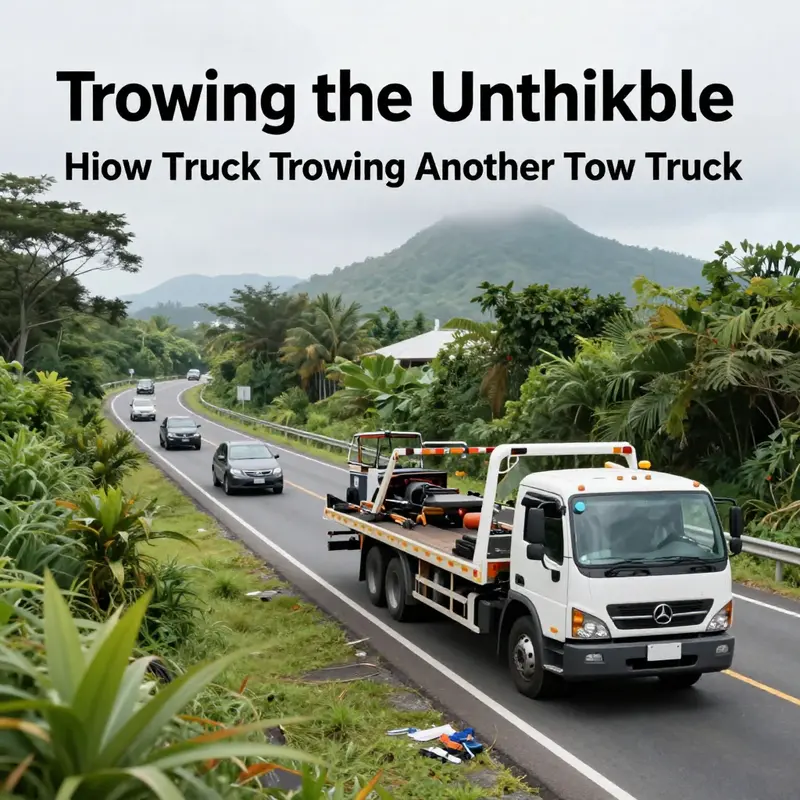
On a highway shoulder slick with drizzle, the sight of a tow truck guiding a second, identical vehicle like a stubborn, metal marionette can look almost like a surreal parable. A towing unit is designed to move other vehicles with care and precision, yet the act of a tow truck pulling another tow truck is far from routine. It is a rare alignment of need, capability, and circumstance that demonstrates, in a very tangible way, how specialized machinery can become a makeshift conveyance when the normal flow of traffic and repair logistics demands it. The image invites questions about process, safety, and the practical margins that govern a field where the only certainty is uncertainty itself. In the most straightforward terms, one tow truck is used to move another when the latter cannot drive away under its own power and a more conventional recovery path would be impractical or unsafe. This is not a common event, nor is it a spectacle to be anticipated, but it is a legitimate maneuver in the broader ecosystem of roadside assistance. The justification rests on a precise assessment of risk versus reward, the readiness of equipment, and the coordination between operators who must anticipate the weight, balance, and dynamics of two heavy machines working in close proximity to traffic, pedestrians, and the unpredictable environment of the roadway. A single misstep could escalate from a controlled tow into a hazardous incident, so the stakes are high and the emphasis on procedure is unwavering. The rarity of the scenario should not obscure the core truth: tow trucks are, at their core, portable repair shops. They are designed to transport equipment, recover disabled vehicles, and stabilize situations long enough for a technician to diagnose and repair problems. When one of these machines requires assistance, the same toolkit that gets a car safely onto a bed or a winched vehicle upright is repurposed to bring another heavy rig to a place of safety or a workshop. The logic is straightforward, but the practice is anything but, because weight distribution, friction, and the integrity of the towing system itself become the chief variables in every move. The driver on the scene must read the situation as it unfolds—the surface conditions, the location relative to traffic, sightlines, and the operability of both machines’ towing mechanisms. The task is a careful orchestration that blends physical strength with mechanical restraint, and it remains an outlier precisely because it demands such a careful, methodical approach. In many ways, the chapter topic is a lens on the broader philosophy of recovery work: even when the vehicle at the center of the operation is itself a provider of rescue, it can slip into a position of need that only another of its kind can safely resolve. The impetus for this maneuver is pragmatic rather than philosophical. If the disabled tow truck cannot be moved by its own hydraulic systems, or if attempts to drive away would risk further damage to axles, fuel systems, or steering, the recovery sequence becomes a matter of shipping the unit to a place where repairs can begin without compromising safety. The first consideration is always safety—both for the operators and for other road users. The available space, the slope or grade of the shoulder, the presence of traffic, and the weather all conspire to shape the plan. A second tow truck, typically equipped with a strong winch, a robust bed, or a crane option, becomes the moving chassis for the operation. The operational team must decide which configuration minimizes motion and maximizes control. Sometimes this means a simple winch pull that draws the disabled unit onto a secure platform; other times it means using a kneeling bed or a crane attachment to cradle the weight as it travels. Either way, the objective is to maintain a calm, measured tempo, never rushing to avoid a mishap that could cascade into misalignment, chain failure, or control loss. Proper anchoring is non-negotiable. Chains, straps, hooks, and anchor points on both vehicles must be inspected, tested, and tuned to the exact weight and balance of the pair. The goal is to prevent any shift that could cause the towed unit to swing, buckle a mounting, or tense a line to the point of failure. The choice of connection—whether a straight tow, a cradle, or a specialty adaptor—depends on the specific models and their mounted equipment. The driver must also confirm the towing capacity of both trucks, the condition of the winch lines, and the degree to which hydraulic systems are involved in the transfer of control. The echo of a familiar routine—moving a vehicle from where it is to where it should be—lingers in the background, but the dynamics of towing a tow truck elevate the stakes and sharpen the focus. In practical terms, the recovery operation is a choreography of prechecks and controlled motion. The operator conducts a thorough walkaround to identify potential hazards: protruding exhausts, fuel lines, or hydraulic hoses that might snag or overheat. He verifies that the disabled unit is immobilized with wheel chocks and that the surrounding lanes are secured, with clear signaling and minimal exposure to passing traffic. Once the plan is set, communication becomes the invisible thread holding the maneuver together. The lead driver communicates with the helper, dispatch, and, when necessary, law enforcement, to ensure that timing, route, and road occupancy are synchronized. This is where the recovery team leans on established procedures and, in some cases, a sense of improvisation born of experience. The act of towing a tow truck, while technically analogous to towing any other heavy vehicle, introduces its own set of mechanical sensitivities. The towed vehicle often carries its own load of equipment, fuels, and possibly hydraulic elements that behave differently when suspended in a tow. Protective pads and strategic dampening may be employed to shield vulnerable components from impact or vibration. The chain of custody, documentation, and accountability remain as critical as the physical task itself. In addition to the mechanical and procedural layers, there is a strategic dimension that touches on operational philosophy. The recovery must be weighed against the costs of downtime, potential damage, and the risk of injury. This is precisely where the link to broader fleet practices becomes relevant. For fleet managers and operators, understanding how to prepare for a rarely exercised scenario—such as a tow truck towing a tow truck—can inform training, maintenance planning, and contingency budgeting. It is here that the field’s collective wisdom is codified in practical, actionable forms, and the value of ongoing preparation becomes clear. The topic also intersects with the larger body of knowledge about towing and recovery rules, safety standards, and insurance implications. In cases of a breakdown or accident, liability typically follows the same logic as any roadside incident: fault and coverage determine who bears the towing and repair costs. If the disabled tow truck was involved in another incident, the at-fault party’s insurance generally covers the costs; if the breakdown resulted from mechanical failure unrelated to an accident, the owner may bear the cost unless a roadside plan or policy provides relief. The legal frame remains consistent, even if the specific scenario feels unusual. Practically speaking, the recovery team must prepare for any outcome, including the possibility that the disabled unit cannot make it to the destination in a single move. In such cases, staging at a secure location, a second leg of towing, or a mechanical repair on site could be considered, all while maintaining the same discipline about safety and compliance. The approach to such a task reflects a broader ethos present in professional towing and recovery work: adapt, verify, and execute with a high level of competence. It is a discipline built on the understanding that even when the subject of the operation is another vehicle designed to save the day, it can still require rescue. For operators and managers who want to see this idea translated into practical guidance, the principle is simple: invest in robust training, maintain equipment with the same rigor you apply to customer vehicles, and develop a clear, repeatable playbook for rare but possible contingencies. That keeps the work safe and predictable, even when the unexpected becomes the most likely scenario. In the spirit of ongoing learning, professionals often review such recoveries to extract lessons about maneuvering, load management, and communication under pressure. These reflections feed back into a culture of preparedness that benefits all facets of fleet operation, from daily runs to emergency assignments. In the end, the image of a tow truck towing a tow truck becomes more than a curiosity; it becomes a microcosm of a larger practice—the art of handling the extraordinary with the same calm proficiency that governs ordinary recoveries. For those who manage fleets, it is a reminder that preparedness extends beyond spare parts and routine maintenance. It calls for a readiness to adapt and to trust the training that has been proven under stress, with the safety of operators and the public as the guiding priority. The final note is both practical and aspirational: when the moment arrives, the team does not improvise from necessity alone but executes from a well-practiced knowledge base, ensuring that even the most unlikely tug remains controlled, competent, and safe. For practitioners seeking to deepen their approach, a broader discussion of fleet emergency strategies can offer valuable perspectives in framing these rare but instructive moments. Essential fleet emergency response strategies. For deeper legal context on towing and liability, additional guidance can be found at the DMV resource. DMV resource.
Tow Within a Tow: The Intricate Logistics of Recovering a Disabled Tow Truck
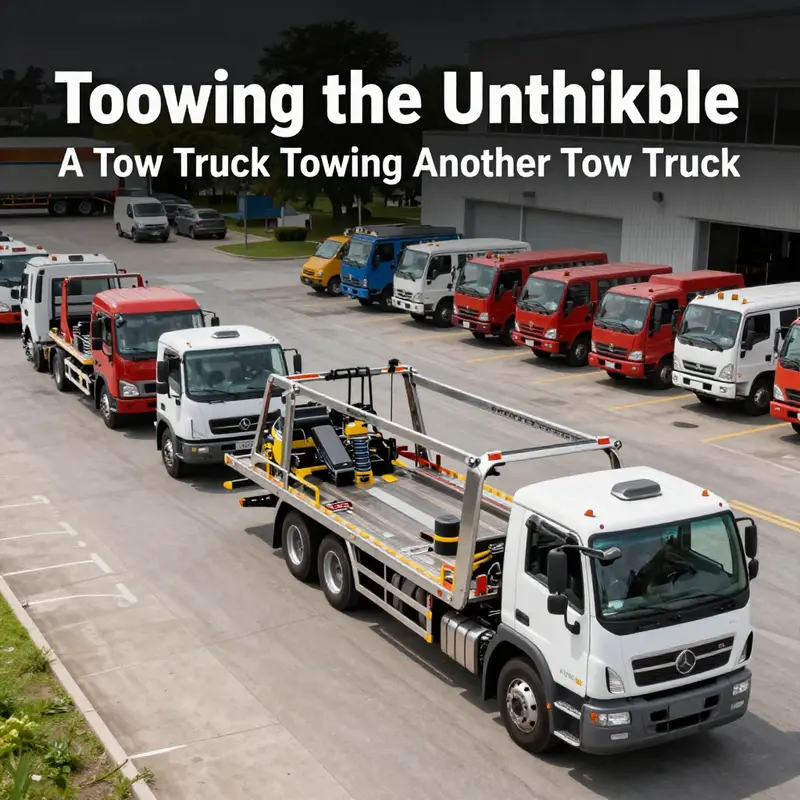
On the surface, the image of a tow truck towing another tow truck seems almost paradoxical, a mechanical mirror in motion. Yet in heavy recovery, such a scenario demands careful planning, precise execution, and disciplined safety practice. The circumstances that generate this operation are rarely routine: a disabled vehicle on a highway shoulder, a breakdown far enough from a repair bay that it no longer offers secure ground to work from, or a damaged unit that must be moved to a shop for evaluation, all framed by traffic, weather, and the clock. In those moments, a second, more capable wrecker is not merely a vehicle of necessity; it becomes a moving test of balance, communication, and judgment. The weight of the task is not just physical heft but the responsibility to protect roadside workers, other drivers, and the two machines involved. The craft here rests on a blend of engineering capability and procedural discipline that is as much about anticipation as it is about force.\n\nTo understand how this operation unfolds, it helps to start with a clear-eyed assessment of what is being recovered. The disabled tow truck is not simply a heavy object to be pulled; it is a complex system with its own centers of gravity, lift mechanisms, and hydraulic circuits that may have sustained damage during the incident. The primary questions are pragmatic: is the wrecked unit stable on its own? Are lanyards, hooks, and anchor points intact and rated for the combined load? Is there fuel in the tank, and could a sudden jolt cause a spill that complicates the scene? Such questions guide the choice of recovery method and the tempo at which the operation proceeds. A heavily damaged frame, for instance, might require a controlled lift and placement onto a flatbed, to minimize additional strain on a compromised suspension or drivetrain. In other cases, a straightforward winch pull might be enough to reposition the vehicle onto a transport platform, provided the anchor points and the path ahead are suitably prepared.\n\nThis is where specialized equipment becomes indispensable. Standard tow trucks are powerful for moving other vehicles, but they typically do not possess the sheer pull capacity or the chassis rigidity required to haul another heavy unit safely over long distances. The operation often calls for a heavy-duty wrecker, sometimes described as an integrated tow truck or a boom-equipped machine with high-capacity winching systems. The winch is not a generic tool but a calibrated device designed to deliver controlled pulling force while maintaining a steady cadence. The recovery rigging—chains, heavy-duty straps, and hooks—must be matched to the weight and geometry of the disabled unit. When a flatbed rollback enters the equation, it opens another avenue: the disabled vehicle can be winched onto the bed if conditions allow. The full spectrum of options means the operator can adapt to a shifting scene, choosing between a rolling recovery on wheels or a secure cradle on a bed that preserves drivetrain and suspension integrity.\n\nThe choreography of the operation is defined by secure towing methods and the plain physics of mass and momentum. Winch pulling represents the most common approach, because it allows the recovery unit to approach slowly with a constant, measurable load. The cable is connected to a designated, rated anchor point on the disabled truck, and the operator on the recovery vehicle communicates with the tow crew on the ground, coordinating tension, speed, and steering. Movement is deliberate; sudden accelerations or jerky decelerations can provoke unexpected shifts in the disabled unit’s mass distribution, leading to a hazardous shift or even a loss of control. The talking point here is not bravado or speed, but predictability. Recovery operators rely on well-understood signals, standardized communication protocols, and the discipline to call a stop when new information about the scene—such as a damaged wheel or a misaligned boom—requires a reassessment of the plan.\n\nA flatbed option adds a different layer of consideration. If the disabled tow truck is stable enough for transport, technicians can winch it onto the bed, stabilizing the drivetrain and suspending the mass within a rigid platform. This method reduces the risk of further damage during transport and often simplifies long-distance recovery to a shop or yard. Yet it also imposes constraints: the bed must be wide and long enough to cradle the disabled vehicle, and the winching must be coordinated with the truck’s bed deployment so as not to exceed rated angles or edge clearances. In tight spaces or high-traffic corridors, placing the disabled unit on a bed can be an optimal solution, but the maneuver demands careful space management, a clear escape route for the operator, and a plan for securing the load across all potential travel angles.\n\nSafety considerations loom large in every aspect of the operation. Stability is the watchword. The draw of the winch, the tension in the lines, and the alignment of the recovery vehicle must all be continuously monitored. Ground personnel are not mere accessories; they are critical safety nodes who must be kept out of harm’s way while providing vital cues about anchor points, ground integrity, and approaching vehicles. A common hazard is jackknifing, particularly if the recovery vehicle must negotiate curves or sudden stops with a fully loaded line. This is prevented by slow, controlled maneuvers, reinforced by clear, constant communication between the driver of the recovery truck and the operator guiding the disabled unit. Weight ratings are not abstractions but practical limits that govern every decision. The combined weight of two tow trucks—especially in motion on two axles with dynamic weight distribution—demands that every chain, strap, and hook is sized to endure the load with a comfortable margin. On the regulatory front, operators must be mindful of local traffic rules, weight limits, permit requirements for long-distance tows, and the necessity of appropriate escorts when the operation encroaches on public roadways. The moral core of the procedure is straightforward: safety first, every mile of the way, with contingency plans embedded for weather shifts, traffic surges, and mechanical surprises.\n\nIn practice, the decision about which method to deploy hinges on a mosaic of scene-specific cues. The condition of the disabled vehicle, the environment around it, and the availability of compatible equipment all converge to determine whether winch pulling remains practical or whether flatbed transport offers a cleaner solution. Even the route from the accident site to the destination plays a role; a long haul on a busy highway demands more rigid securing measures and, frequently, permits that acknowledge the weight and length of the load. Behind the scenes, the logistics extend beyond the immediate recover. Operators weigh response times against the risk profile, calculate fuel use and equipment wear, and integrate this incident into a broader framework of fleet readiness and safety culture. That culture—fostering disciplined training, pre-job checks, and after-action reviews—translates into tangible benefits: fewer secondary incidents, smoother traffic management, and a clearer record of compliance when audits occur.\n\nFor practitioners seeking deeper technical standards and cross-border insights into advanced recovery vehicles and their industrial applications, the field offers a robust reservoir of guidance. An external resource that expands on standards and properties within heavy recovery is available here: https://www.towtruckMalaysia.com/standards-properties-industrial-applications/. In the end, the operational logistics of a tow truck towing a tow truck illuminate a practical philosophy: when tools mirror each other in weight and purpose, the care with which one is moved by the other reflects the care embedded in the craft as a whole.
Carrying the Carrier: The Engineering Realities of a Tow Truck Towing a Tow Truck
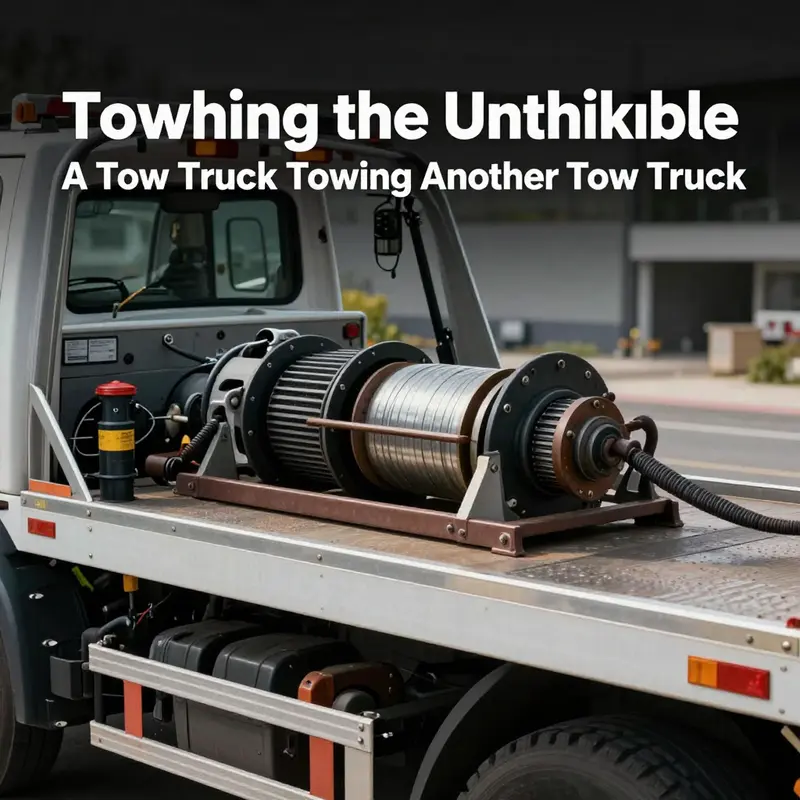
The image is almost surreal: a tow truck, built to rescue and relocate other vehicles, now attempting to move another tow truck. It is an exercise in engineering and restraint as much as it is in logistics. The rare scenario invites a careful look at what is physically possible, what is prudent, and what must be avoided in the name of safety. In practice, a tow truck might be asked to move a disabled companion to a shop, relocate a fleet asset between yards, or assist when one of the recovery units itself becomes mired or inoperable. Each situation carries its own mix of weight, leverage, and control factors that can quickly overwhelm a casual approach. The central question is not merely whether a tow truck can lift another truck, but whether it can do so without compromising the integrity of either machine, the crew, or nearby motorists. The answer hinges on a blend of equipment capability, proper load management, and disciplined operation. When we step back from the spectacle, a few foundational truths emerge. The towing system must be designed around the heaviest possible load, the most demanding road conditions, and the strictest adherence to safety standards. In the hands of a skilled operator, a flatbed configuration can be used to transport a non-operational tow truck with minimal drivetrain stress. A flatbed offers a direct path for the towed vehicle’s weight to rest on a rigid platform, reducing the wear on drive lines and enabling smoother handling over long distances. The hydraulic platform, the winch, and the securement points must work in concert. Without this coordination, the risk of shifting weight, sudden stops, or insecure tie-downs multiplies quickly. The other critical element is the weight profile. Tow trucks vary widely in their own mass, complexity, and the systems they carry. A typical heavy-duty vehicle might approach several tons, and when that weight is combined with a second vehicle’s mass, the total can exceed what a single unit should be asked to manage on public roads. It is here that the concept of capacity becomes not just a number, but a duty of care. The towing unit must have a demonstrated capacity that exceeds the combined weight of the towed unit and any cargo or accessories it carries. The temptation to stretch a machine beyond its published limits is strong in the heat of the moment, but the consequences—brake fade, suspension deflection, or even loss of steering—can be catastrophic. In practical terms, when the second tow truck is operable but not road-ready, it is often secured on the bed of a flatbed with its wheels off the ground. Hydraulic beds provide a stable, elevated platform that minimizes wheel spin, tire wear, and drivetrain strain by eliminating contact between the road and the towed vehicle’s drive wheels. In other words, the flatbed becomes a mobile carrier first, a towing mechanism second. If, however, the second unit is immobilized due to engine trouble or transmission failure, the operator may treat the first unit as a carrier rather than a puller. In that case, the second truck is loaded onto the flatbed in a controlled sequence, with the winch taking the brunt of the load management and the securing hardware locking the vehicle in place. This approach reduces dynamic forces that would otherwise be transmitted through axles, differentials, and tires, thereby preserving the integrity of both machines. The practical feasibility of towing one tow truck with another hinges on three core areas: weight management, secure load transfer, and stability of the overall rig. Weight management begins with a candid assessment of both vehicles’ masses and how those masses align with the towing configuration. The towed unit must be restrained so that its center of gravity remains within the support geometry of the carrier. Any misalignment can create a dangerous yaw moment, making the combination harder to steer and slow to respond to steering inputs. Securement is the second pillar. Proper straps, heavy-duty chains, and safety cables are not optional accessories but essential lifelines. They must be used to lock the towed unit to the bed, to the wheel pins, and to any supplemental anchorage points. The securing system must accommodate vibrations, road irregularities, and temperature changes without loosening. The third pillar is stability—the most elusive and often the most overlooked. A longer, heavier rig reacts differently to acceleration, braking, and steering than two individual vehicles operating separately. The stopping distance increases, the turning radius expands, and the risk of jackknife grows if the load shifts unexpectedly. Operators must anticipate these effects and drive with conservative margins, especially in dense urban areas or on high-speed corridors. The questions of drivetrain health and drive mechanism compatibility also demand attention. Many tow trucks incorporate AWD or 4WD systems designed to handle off-road recovery, wheel lifts, and heavy rolling loads. The challenge is that not all drivetrains tolerate towing conditions well, particularly when the towed vehicle’s wheel configuration is not effectively locked or when the towed unit’s powertrain remains connected during a flatbed transport. When the towed unit remains on the bed, the risk of drivetrain damage diminishes, but the operator must still verify that the towed vehicle’s wheels are properly secured and that no residual energy can shift the balance during road movement. The operator’s skill and training are decisive. Only seasoned professionals with a clear understanding of weight transfer, braking dynamics, and securement procedures should attempt a tow of this nature. The best practices emerge from years of field experience and a disciplined adherence to standard operating protocols. For such operations, a flatbed is the preferred platform, not because it is flashy, but because it minimizes drivetrain stress and reduces the likelihood of tire or axle damage. Before any movement begins, a thorough pre-tow inspection is essential. This includes checking the brakes, tires, lights, signal systems, and the coupling devices. The transport plan should account for the path of travel, potential bottlenecks, and the need for an escort if the combined vehicle length or weight exceeds typical limits on a given route. In the rare event that the towed unit is inoperable and must be moved, the securing process should be revisited after any partial movement to confirm that no straps have loosened and that the alignment remains within safe parameters. The scenario also invites a broader reflection on how fleets prepare for such unusual recoveries. Even when the odds are low, a well-prepared team can reduce risk by maintaining clear procedures, conducting regular training, and ensuring that all equipment is in top condition. This is not a question of whimsy or showmanship; it is a matter of protecting personnel, assets, and the traveling public. For fleets that want to invest in preparedness, there are practical resources that address emergency response strategies and fleet readiness. A good starting point is to review essential fleet emergency response strategies, which provide a framework for prioritizing safety, communication, and contingency planning in complex recovery operations. essential fleet emergency response strategies. The chapter also connects to broader readiness discussions, such as emergency preparedness for island fleets, which explores how remote operations handle unusual recovery tasks and maintain continuity when conventional support options are constrained. These resources remind us that even a highly specialized vehicle and crew must operate within a larger system designed to minimize risk and maximize reliability. As the discussion returns to the mechanics at hand, it is important to acknowledge the limits of what is feasible. A tow truck towing another tow truck remains a specialized, context-driven solution best reserved for emergency or unavoidable relocation scenarios. It is not a standard practice, and it should never become a default workflow. The driving principles remain simple: prioritize controlled loads, protect mechanical systems, and maintain generous margins for safety. In sum, the maneuver is technically feasible under carefully controlled conditions, but only when the operation respects weight limits, securement standards, and the demanding realities of road dynamics. The careful operator, the well-tled flatbed, and the disciplined pre-load checks form a triad that enables a tow truck to carry its own kind without inadvertently turning a routine recovery into a roadside risk. For readers seeking to translate these ideas into practice, the overarching message is a call for deliberate planning, trained crews, and resilient equipment that can handle the atypical without compromising on safety. External resources from national safety authorities reinforce the value of standardized procedures and ongoing training as the backbone of responsible towing operations. To learn more about formal guidance on towing procedures and vehicle safety standards, consult authoritative sources such as the National Highway Traffic Safety Administration guidelines on commercial vehicle towing and operational safety: https://www.nhtsa.gov/.
Insurance and Liability Considerations for a Tow Truck Towing a Tow Truck
The image of a tow truck pulling another tow truck is not common, but it is a scenario that demands clarity about liability, coverage, and the practical steps that keep recoveries lawful and financially manageable. Because the act blends the mechanics of towing with the stakes of insurance, the details matter more than novelty. At the core, liability hinges on fault, the way the equipment is used, and the specific language of the policies involved. Even when the operation is routine in theory, the risk profile shifts when the towed vehicle is not a typical car or light truck but a vehicle that itself is designed to recover or transport others. In such moments, the questions become practical: who caused the incident, what coverage applies, and how is a claim processed when two specialized vehicles are connected in operation and potential harm.
Determining liability starts with fault. If the towed tow truck was involved in an accident while being moved—perhaps it broke down and was struck by a third vehicle—the at-fault party’s third-party liability policy would usually be responsible for damages to the towed vehicle. The situation grows more complex if the tow truck that performed the recovery contributed to the incident. Improper towing practices, mechanical failure in the towing equipment, or driver error can shift the burden onto the towing tow truck’s own commercial auto policy. In that case, the insurer covering the towing vehicle would be the primary line of defense for damages arising from its operation. If the breakdown of the towed vehicle itself was due to a pre-existing fault for which the owner bears responsibility, that fault can complicate the claim and influence whether their own policy contributes or whether the loss should be pursued through the at-fault party’s coverage. These nuances aren’t mere legal curiosities; they dictate how quickly a claim is opened, how damages are assigned, and how settlements are negotiated on the ground where the incident happened.
Insurance coverage in this scenario must be understood in layered terms. The towing tow truck will most likely carry a Commercial Auto Insurance policy that includes liability coverage. This liability coverage protects against bodily injuries and property damage caused by the towing operation, including the moment when another vehicle or object is damaged as a consequence of the tow. It is the safety net that ensures the towing operation remains viable as a business practice rather than a one-off risk. In many fleets, this liability coverage sits alongside Physical Damage Coverage—often labeled as comprehensive and collision—that protects the tow truck itself from damage due to collisions, theft, or other covered events. It is important to note, however, that this physical-damage coverage typically does not cover damage to the vehicle being towed. The towed tow truck, if damaged during the tow, generally relies on its own policy to handle those losses, particularly for damage sustained while in transit. If a third party is involved—another vehicle or a property—the third-party liability policy may respond depending on fault allocation. The interplay between these policies must be understood in advance, because the assignment of fault often shapes which insurer pays, how deductibles apply, and whether subrogation rights come into play.
The towed tow truck also requires coverage appropriate to its status. Even when it is being moved, the vehicle being towed retains the potential to suffer damage from the movement itself, such as rear-end impacts, scrapes against infrastructure, or road hazards. A complete insurance picture therefore includes the towed vehicle’s own policy, which might cover damage while it is being towed, as well as loss of use if the vehicle is out of service for a period. This aspect matters most when the towed vehicle is essential to operations or when a rental or alternative transportation is needed to keep business functioning. In some cases, the towed vehicle’s policy or a separate loss-of-use provision must bridge the gap until the recovered vehicle can resume work. The cross-policy dynamics matter a great deal because a single incident can escalate quickly into a multi-policy claim with competing liabilities and overlapping or conflicting payments.
A critical layer in any recovery involving two specialized vehicles is policy limits. Both the towing and towed vehicles should have liability limits that reflect the risk of a heavy duty operation. If the limits are too low, a single incident can exhaust coverage and expose a fleet to out-of-pocket losses, increased deductibles, or a protracted negotiation with insurers. This is especially true when a tow involves heavy equipment, multiple winches, or chains that must bear significant loads. Fleets should not assume that because the operation is routine, standard limits are sufficient. Instead, they should review their liability limits in the context of potential recovery scenarios, consider endorsements that address unusual towing activities, and ensure that all drivers are trained to recognize when a tow might push policy boundaries. Endorsements can, in some cases, add coverage for towing performed under nonstandard conditions, such as off-road recovery or towing in adverse weather, which could further shape the claim’s trajectory.
Exclusions and endorsements require careful scrutiny. Policies frequently exclude coverage for damage resulting from improper use of towing equipment or from towing vehicles with known defects. The presence of such exclusions means the difference between a straightforward claim and a dispute about coverage. Fleet managers should perform a proactive policy review, cross-checking maintenance records, driver logs, and any prior incidents that could raise questions about equipment condition or towing procedures. Documentation becomes the backbone of an efficient claim process. Police reports, scene photographs, dashcam footage, and witness statements all contribute evidence that clarifies responsibility and supports the allocation of damages across policies. When a tow involves two specialized vehicles, the evidentiary trail becomes even more critical, because the determination of whether the equipment malfunctioned, the operator erred, or the other party was at fault will drive the claim’s direction and pace.
In practical terms, the claims process in this unusual scenario often hinges on strong internal coordination. The towing operator must notify their insurer and provide full scene documentation as soon as it is safe to do so. The towed vehicle’s owner should likewise inform their insurer and share relevant data about how the tow occurred and how the damage unfolded. Ensuring that both vehicles’ policies are aware of the incident reduces the likelihood of gaps in coverage and helps to align the payment of damages with the true source of fault. Proof of responsibility—police reports, event logs, and time-stamped images—becomes a shared resource that insurers can use to reconstruct the chain of events. This collaborative approach is essential because, in many jurisdictions, the determination of fault influences not only who pays but also how premiums may be impacted for both the towing and towed policies.
From a risk-management perspective, incidents where a tow truck moves another tow truck reveal the value of disciplined training and well-documented procedures. Operators should be trained in proper towing methods, including correct hitching, load distribution, and signaling to prevent unintended movement or misalignment. Maintenance cycles for winches, hitches, and braking systems should align with the demands of heavy recovery work. Such practices reduce the likelihood of mechanical failure, which in turn reduces the probability that an insurer will view the incident as due to equipment defect. Clear workflows for incident reporting, immediate scene safety, and post-incident reviews help maintain a culture of accountability. For fleets seeking practical steps that bridge policy discussions and field operations, see essential fleet emergency response strategies. This resource emphasizes how a prepared team coordinates safety, communications, and rapid response in the event of a roadside recovery.
Interwoven with the policy considerations is the reality that tow operations are inherently risky yet necessary. The rare case of a tow truck towing a tow truck underscores the need for robust risk transfer and responsible governance. Fleet managers should not rely on standard assumptions about coverage when two specialized vehicles are involved. Instead, they should map the fault lines to the actual responsibilities—who was in control of the equipment, who performed the towing, and whether any mechanical shortfalls contributed to the incident. In this mapping, the role of police reporting, accident reconstruction if needed, and insured loss adjustments become central. The objective is not merely to assign blame but to ensure that the financial exposure is managed in a way that preserves the fleet’s ability to operate and recover without crippling costs. When done well, the process yields clear ownership of losses, prompt access to funds for repair or replacement, and a mechanism to adjust policies so that similar events, though unlikely, are covered in the future without ambiguity.
As fleets reflect on this complex intersection of towing practice and insurance, the guidance is practical rather than theoretical. Maintain comprehensive records, review policy language regularly, and train operators to minimize risks during every recovery. Acknowledging the scenario’s rarity does not excuse complacency; it motivates a disciplined approach to insurance, liability, and operational integrity. For readers seeking a concrete starting point on how to translate this understanding into a resilient policy and a safer on-road practice, the following resource offers a structured, fleet-focused framework that aligns with the realities of island fleets and regional operations. External resources, such as industry-wide insurance guidance, provide a broader context for how these claims are handled and how premiums are calibrated in light of such specialized recoveries.
External resource: https://www.naic.org
Tow Within Tow: The Quiet, Strange Reality of Tow Trucks Towing Tow Trucks
On the side of a road that hums with the ordinary cadence of traffic, a scene unfolds that almost feels like a parable about reliability. A tow truck, built to rescue, sits immobile, its wheels stubbornly refusing to roll. Across the shoulder, another tow truck arrives, a partner in a recovery that can only happen in a highly specific set of circumstances. To the casual observer, it looks almost ceremonial—a vehicle of rescue becoming the rescued, a rare twist where the tool meant to save is itself in need of saving. This is not a common sight, and yet it is a real one, tucked into the margins of everyday road life. The phrase itself—“a tow truck towing a tow truck”—reads like a linguistic paradox, a reminder that even specialized equipment can encounter the very failures it is designed to prevent. The phenomenon, while rare, is documented through the years in driver communities, industry forums, and professional recovery stories. It sits at the intersection of mechanical failure, logistics, and the stubborn pragmatism of roadside responders, who must improvise within strict safety boundaries when the usual flow of operation breaks down.
The rarity of the situation is not a sign of fragility but of the high competence and targeted design behind tow fleets. Yet the lists of scenarios that can lead to one tow truck needing another are not as improbable as one might first assume. First, there is the accident or breakdown scenario. A tow unit may suffer a sudden fault on a high-speed corridor, or its primary systems—winch, hydraulics, or electrical controls—may falter under load. In that moment, another tow truck with the right capability becomes the logical, even necessary, option. A second tow truck is not merely a backup; it is a calibrated tool of rescue, equipped with the right winches, anchor points, and stabilization gear to secure a disabled unit without compounding the danger.
Second, there is transportation between locations. The operational reality of a fleet includes moving a nonfunctional vehicle from one shop to another, or from a storage yard to a site where repairs can begin. In these cases, the vehicle being moved cannot perform its own functions, so the onus falls on another tow truck to act as the carrier. Third, and perhaps most counterintuitively, is the scenario of the recovery of a stuck vehicle. When a tow truck itself becomes mired in mud, snow, or a similar obstacle, the same logics that guide other recoveries apply—the strongest available, properly equipped machine is deployed to recover the disabled vehicle. It’s a reminder that even the most durable, purpose-built machines have to contend with the whims of weather and terrain. In all these instances, the second tow truck must work within a tightly choreographed safety framework, balancing the demands of the disabled equipment with the overarching priority of protecting crews and bystanders.
Behind the scenes, the mechanics of pairing a tow truck with another tow truck hinge on precise discipline. The operation is not a casual hook-and-go maneuver. It involves careful assessment of weight distribution, anchor points, and load paths. The towing vehicle must manage the weight of a nonoperational unit, ensuring that winch lines or straps do not experience unexpected slip or failure. Operators will typically secure the disabled unit to a stable frame or hitch, and then use the recovery vehicle’s winch or bed to transfer the load, all while maintaining a controlled angle that prevents pendulum movements as the two machines move. Even with the right gear, complexity multiplies when the vehicles share a similar silhouette and the same design lineage. The choreography must avoid collision, avoid sudden shifts that would destabilize the recovery, and ensure that the routing of cables or straps does not create a snare for passengers or bystanders.
Within this specialized practice lies a broader truth about roadside work: the job hinges on preparedness as much as capability. When a tow truck needs rescuing, dispatch centers, on-site coordinators, and the operators themselves must call on every tool in the repertoire. This includes the strategic placement of warning devices, the use of wheel chocks and rocker blocks to prevent rolling, and clear communication with other motorists to create a safe corridor for the recovery. It also means recognizing when a tow truck’s own systems cannot bear the strain and deciding, in time, to deploy a second unit rather than risk a failed tow that could endanger lives. The discipline required here mirrors the careful planning that underpins any successful fleet operation, where the same patience that guides a routine tow also informs the decision to use a second vehicle in a moment of genuine need.
The anecdotal traces of such recoveries are telling. Anecdotes accumulate in forums and professional circles, forming a mosaic of rare but real moments when the expected order of things shifts. One notable example involves a tow truck that suffered a mechanical breakdown on a busy highway, leaving it stranded. In this case, another tow truck was dispatched to assist, successfully securing the disabled unit and transporting it to a repair facility. The story reads as a practical demonstration of the mutual aid embedded in the culture of roadside assistance. It underscores a core point: even a vehicle designed to prevent immobilization can fall prey to failure, and the response to that vulnerability is not a solitary act but a coordinated, double-handed effort that preserves safety and continuity of service. These reports resonate with professional drivers who constantly balance speed, safety, and reliability, reminding them that resilience in a fleet often means planning for the unlikely.
The implications for fleet managers are both practical and philosophical. When one part of a system—the tow truck—can no longer perform its function, the system must adapt without losing its core purpose: to move, secure, and return vehicles to service as quickly as possible. This adaptation rests on two pillars. The first is a robust emergency-response framework that anticipates degraded equipment and prescribes precise steps for leveraging a second unit. The second pillar is a culture of cross-functional competence among operators. Tow drivers must be ready to move from helper to handler, to navigate a scenario where their own vehicle is in the shop and their colleagues’ units become the primary operation. The ethical commitment to safety rises in importance when the stakes include not just the vehicle and its passengers, but the safety of a busy roadside environment. In such moments, training and experience converge, guiding crews to make decisions with calm, clarity, and confidence.
For fleets that want to translate these insights into everyday practice, the path is gradual but clear. Linking the practical realities of rare tow-tow recoveries with formal guidance can strengthen a fleet’s readiness. This is where the notion of comprehensive emergency planning enters the conversation in a meaningful way. The guidance found in resources like essential-fleet-emergency-response-strategies offers a framework for preparing for unusual contingencies without surrendering efficiency or safety. It reminds operators that the value of a well-equipped and well-trained team is not merely in what they can do on a typical call, but in how well they respond when the script changes and the unexpected becomes the main scene. Readers can explore this approach in greater depth through the linked resource, which translates the lived experiences of critical recoveries into actionable procedures for dispatch, on-site coordination, and post-recovery review. The aim is not to predict every possible failure but to cultivate a disciplined, repeatable response that minimizes risk while preserving the ability to serve.
The domain of tow-truck recoveries, particularly the subcategory of towing another tow truck, invites a broader reflection on the culture of the roadside. It is a reminder that the road teaches humility as hard as it teaches efficiency. Forums and stories hint at a larger community of professionals who share tips, admit mistakes, and learn from one another to improve every future response. This communal learning matters because the stakes extend beyond the two vehicles at the center of the scene. It touches the safety of drivers, the reliability of service, and the trust that the public places in a fleet to restore normalcy after disruption. And while such incidents remain uncommon, their impact on how operators approach routines is lasting. The knowledge that even the most specialized equipment can require help from a peer reinforces the value of collaboration, proper planning, and continuous training.
As the road continues to unfold its variable surface—wind, rain, glare, tire wear—the possibility that a tow truck might be towed by another remains a reminder that no single solution holds forever. The real strength lies in how a fleet designs for the possibility, not merely the probability. And in that design, the human element remains decisive: the vigilance of dispatch, the calm skill of the operator handling the lift, and the willingness of colleagues to step in when called upon. The anecdotal threads that carry these stories forward matter because they translate into practical wisdom: prepare for the unlikely, train for the difficult, and approach every recovery with a steady, safety-first mindset. When the work is done, and the disabled unit is on its way to repair, what remains is a quiet affirmation of resilience—the capacity of a fleet to adapt so that, even in a rare moment when a tow truck must be towed, the mission of getting vehicles back on the road is not compromised.
For those seeking a concrete, real-world example of how theories meet practice in this unusual niche, the broader literature and driver accounts offer a useful cross-check. And for readers looking to connect this topic with broader fleet planning, the practical insights about emergency readiness and cross-unit cooperation can serve as a bridge to related resources and communities online. If you want to explore a structured approach to handling extraordinary recoveries, you may find value in the guidance highlighted above. For an external perspective that captures the challenges and ingenuity of recovery work in action, see a firsthand account of tow-truck breakdowns and recoveries in industry reporting: https://www.towtrucknews.com/tow-truck-breakdown-recovery-stories/.
Final thoughts
The sight of a tow truck towing another tow truck may be rare, but it reflects the interconnectedness of vehicle recovery services on our islands. Whether due to breakdowns, logistics, or mechanical mishaps, the need for effective and efficient towing solutions is paramount for communities and businesses alike. From accident recovery operations to insurance considerations, understanding this topic enhances our appreciation for the vital role these specialized vehicles play in everyday life. Their story is one of reliability, professionalism, and the commitment to ensuring safety on our roads. As we navigate the beautiful, yet unpredictable, environments of island living, this acknowledgment becomes integral to our collective experience.