In the vibrant world of Grand Theft Auto V, tow trucks are more than just vehicles; they are essential tools for navigating the unpredictable landscape. For local auto repair shops, car dealerships, property managers, resort operators, and commercial fleet operators, knowing where to find tow trucks can significantly enhance operational efficiency. This guide illuminates the primary locations where tow trucks can be found throughout Los Santos, San Fierro, and Las Venturas, enabling you to access these resources with ease. Each chapter uncovers specific hotspots, ensuring you understand the game’s intricate map and can secure the services you need. Let’s dive into the bustling cities of GTA V and explore the best locations for tow truck retrieval.
Tow Traces: Mapping GTA V’s Hidden Tow Truck Hubs and How to Call Them
In the sprawling, living cityscape of Los Santos the tow truck is more than a vehicle with a hook. It is a tool, a working partner that threads through the city’s crowded arteries, snaking along industrial belts, service districts, and the quiet backways where work never stops. The game world rewards patience and observation, letting you discover the tow trucks not as fixed props but as part of a dynamic ecosystem. If you want to bring a vehicle back to its resting place, recover a damaged ride for a mission, or simply test your nerve by towing something heavy through tight turns, you begin by finding the right place, tuned to the time of day, traffic density, and the mission you have in mind. The quest to locate a tow truck in GTA V is less about chasing a single spawn point and more about learning the rhythms of the map, the way the city breathes around its docks, yards, and garages, and the small cues that signal a tow truck might be nearby.
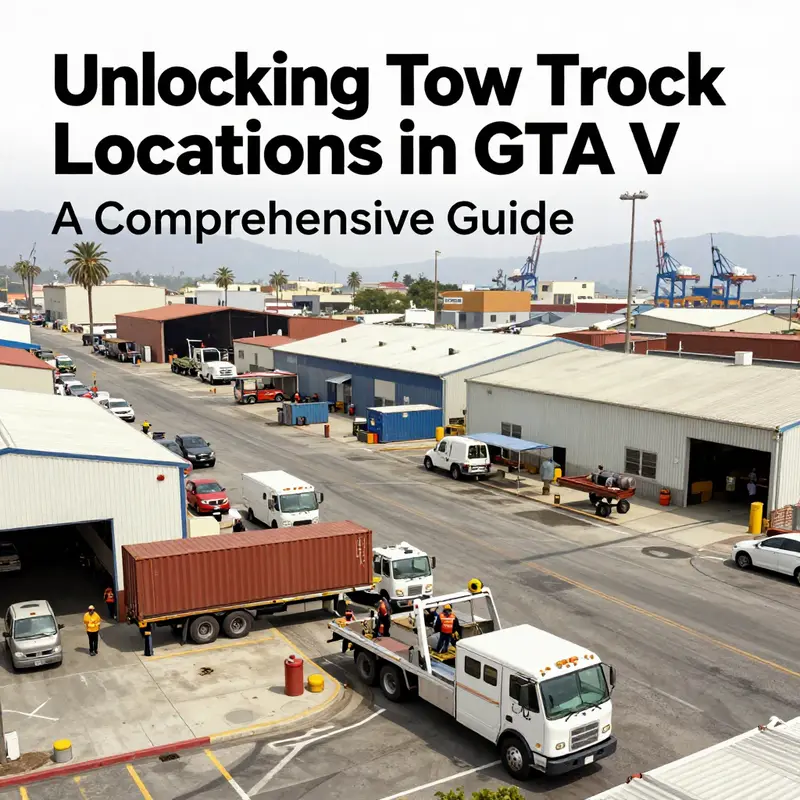
The most dependable starting point for tow truck chasing is the port and cargo districts that gird the metropolis. Los Santos is a city built on movement and logistics, and those engines hum most loudly where cargo is flowing in and out. In the Port of Los Santos area, the docks, freight yards, and large warehouse complexes provide natural habitats for tow trucks. These are not casual sightings, but recurring presences. Tow trucks linger on the edges of loading bays, near the back alleys behind the warehouses, and along the routes that shuttle containers from ship to truck and on toward the inland distribution centers. The patterns vary with the hour. At dawn, the docks glow with a pale light; the tow trucks may be parked in tight, shadowed lots, waiting for the shift change that will send more heavy goods haulers into motion. By night, the area often grows more active in a different way, with security checkpoints and maintenance crews moving along the perimeters. If you’re hunting for a tow truck to use in a rescue sequence or a vehicle recovery task, this is your first, most reliable neighborhood.
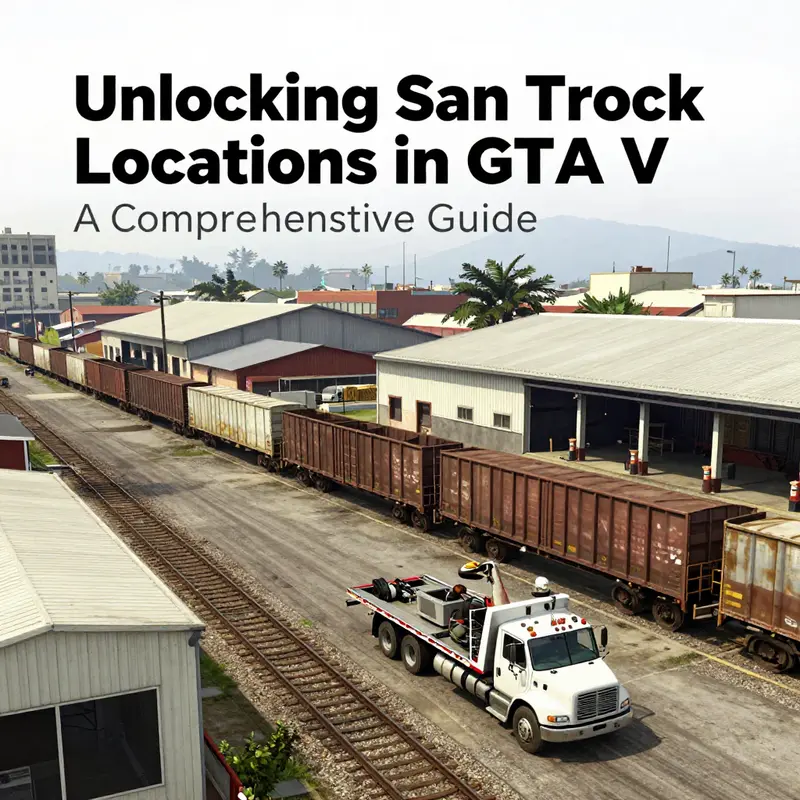
San Fierro represents another axis of the GTA V tow truck map. The city’s industrial belt and its transport infrastructure create steady opportunities for a tow truck to appear. In San Fierro you’ll want to keep your eye on the industrial zones, particularly around the train yards and loading docks that keep the city’s supply chains humming. The sight lines here are distinct: long rows of warehouses with bay doors, metal fences that reflect the sun, and service roads that thread between idle forklifts and rusted chassis. Tow trucks here often position themselves along the margins of the yards, ready to respond when a vehicle needs extraction or relocation. The proximity to rail lines adds a subtle cadence to the city’s rhythm, a reminder that the same network that brings goods into the region also creates opportunities for vehicle recovery work. It is not unusual to spot a tow truck idling near a loading dock or rolling slowly along a service lane as trains pass behind a chain-link barrier. When you’re planning a mission that requires moving multiple vehicles, or when you simply want a tow truck for a routine pickup, San Fierro’s industrial zone is a dependable second stop after Los Santos’s port district.
Las Venturas offers a different flavor of tow truck life. While the city is better known for its casinos and street traffic, the downtown and strip areas hold pockets of activity where tow trucks surface with a practical, almost streetwise reliability. The Las Venturas Airport vicinity is a known magnet for service vehicles, and though the area is not as dense as the two West Coast cities, a careful observer can find tow trucks parked near service districts or making patrol rounds along the tarmac edge. The airport environment creates an atmosphere in which heavy vehicles must navigate open space, airside boundaries, and a chain of support services that keeps the whole operation moving. If your objective is to stage a fast retrieval in a high-velocity environment, the LV airport vicinity offers a clean, open stage where a tow truck can appear with little obstruction and then be maneuvered into your scene with relative ease.
Beyond these primary hubs, you will often encounter tow trucks in garages or repair shops that dot the city’s major intersections and business corridors. The open world design of GTA V rewards exploration, and the garages are not just places to customize or repair vehicles. They function as social nodes where service vehicles, including tow trucks, may be observed at varying times, depending on the city’s needs, maintenance schedules, and the rhythmic push and pull of player-driven activity. In these microcosms, a tow truck’s presence isn’t tied to a single spawn location. It emerges from the ebb and flow of the city’s daily life, reflecting the same logic that governs the dispatch of other service vehicles.
It is worth noting that spawn points and availability can shift with patches and collective player reports. For real-time confirmation of current spawns, players lean on trusted community resources and official updates that track changes to vehicle behavior in the game. The landscape of spawns is not a fixed map but a living system that responds to patches, balance updates, and the way the player community interprets changes after new content drops. The conversation around where tow trucks appear is part of a larger dialogue about how the game’s open world breathes and adapts, and it’s one of the reasons the maps feel so alive. When you combine the port districts with the industrial belts and the service hubs, you begin to sense the city’s two great engines: trade and maintenance. Each tow truck you locate becomes a story thread that weaves through docks, yards, garages, and streets, a reminder that the city is always moving, always repairing, and always ready to lend a heavy hook to a mission or a moment that needs to be carried forward.
If you are looking for a practical workflow to secure a tow truck for a particular objective, there is a robust in-game option that many players overlook. As a business owner in GTA Online or a supervisor in a role that mirrors executive control, you can bring a vehicle to your side with the interaction menu. This is not a one-off cheat or trick; it is a design feature that mirrors real world fleet logistics. Through the interaction menu you can access the vehicle submenus and select the service vehicle option to call a tow truck in close proximity. The tow truck will appear near you, ready to be loaded, strapped, and moved to the destination you have in mind. This approach is especially useful when you have tasks that require precise timing, or when you need to deploy a vehicle for a planned operation that will unfold across several locations. The immediate generation of a tow truck near your current position reduces downtime and lets you focus on the sequence of actions you need to perform, whether you are orchestrating a complex heist, transporting a recoverable vehicle, or simply testing the physics of towing a vehicle through a tight corridor of roadways.
In addition to locating tow trucks through spawns and direct summons, a subtle but important layer of GTA V tow truck practice lies in the awareness of when certain missions or side quests trigger a tow truck call. Some mainline or side tasks will request you to move or recover a vehicle, and at that moment the system will prompt you to call for a tow truck. In these moments you may find yourself improvising, as the tow truck arrives not just as a tool but as a character in the mission, with its own path and timing. A good player learns to treat these moments almost like a choreography: the tow truck arrives, you coordinate the load, you ensure that the vehicle is secure, and you move with measured tempo through your route. This approach makes the entire experience feel cohesive, as if you are conducting a small, mechanical symphony with the city itself.
The beauty of this system is that it scales with your goals. If your aim is speed and efficiency for a rapid crew objective, you can summon a tow truck to your immediate location and push forward with a minimal setup. If you are pursuing a more immersive, logistics-driven playstyle, you can map out a route through the port, the industrial zones, and the garages, designing a sequence that resembles a real-world supply chain. Either way, the tow truck acts as a lever you pull to keep the flow moving, to rescue a vehicle that has veered off the path, or to reposition a ride that has become a liability on a crowded street. The city rewards those who understand the social geometry of its spaces—the way the docks open onto the freight lanes, how the rail yards link to the industrial districts, and how the garages connect these movements to a larger cycle of repair and return.
As you move through the city searching for tow trucks, you encounter a canvas of textures that tells a larger story about the vehicle, its purpose, and its function in the world of GTA V. The tow truck in the game is not only a machine; it is a narrative device, a tool that underscores the city’s reality of constant repair and renewal. It speaks to the players who imagine themselves in the role of a mobile mechanic, fleet supervisor, or task-driven operator who must coordinate heavy assets in a congested urban arena. The operator learns to read the map and the clock—the light on the warehouses, the cadence of trains, the shifting tempo of traffic—as if each element is another line in a script that only unfolds when a tow truck is part of the scene. And as with any good narrative device, the tow truck invites experimentation. Try calling for it from a rooftop, then drive the loaded vehicle through a narrow alley and see how the weight affects your control dynamics. Or approach a damaged car in a busy lane and watch how the added length and weight of the tow cable alters the approach. These micro-tests reveal the physics of towing in the game and deepen your understanding of how to plan a recovery or extraction with care.
To round out a practical, immersive experience, consider the broader ecosystem in which these tow trucks exist. The city is a living organism with a complex supply chain. The port moves containers; the industrial zones host repair and salvage operations; the service districts are the nerve centers of maintenance. The tow truck is a node within that network, a tool that helps you shape outcomes by moving vehicles where they are needed. In this sense, your pursuit of tow trucks becomes a study in urban logistics, a way to learn the city’s hidden pathways and the moments when a single vehicle can alter the course of a mission, a plan, or a random encounter that becomes memorable in hindsight. The more you engage with those patterns, the more the map reveals its subtle logic—the way a tow truck’s appearance signals a moment of logistical opportunity, a chance to restore order in a city where disorder can erupt in an instant.
For readers who want a broader perspective beyond the in-game map, a note on real world parallels can be instructive without stepping outside the bounds of the game’s design. Real-world fleets operate on principles of redundancy, dispatch efficiency, and rapid response that echo in GTA V’s mechanics. Realistic tow trucks, in the broad sense, are designed to maximize uptime and minimize downtime, to be ready where the demand is, and to be able to secure a vehicle quickly and safely. The in-game system mirrors this logic through its quick-summon feature and through the distribution of tow trucks across key urban nodes. While you should not expect the same exact operational constraints as in the real world, observing how GTA V creates a sense of competence and reliability around its tow trucks provides a useful lens for understanding the city’s design priorities. The game invites you to inhabit a role where weight, balance, and timing matter as much as speed, and where a tow truck is less a cheat or a gimmick and more a critical tool that anchors a sequence of actions in a believable, navigable world.
If you want to deepen your understanding of how real-world logistics considerations can inform game design, you can explore broader resources on fleet management, emergency response planning, and rapid deployment. For an external perspective that captures the ethos of heavy equipment and mobile recovery, you may consult general materials on rollback and heavy-duty towing technologies. This kind of real-world context offers a companion frame for appreciating how GTA V models the feel of towing, even as the game remains a fictional, stylized experience. In the end, locating a tow truck in GTA V is about reading the city as a dynamic map of opportunities, a place where the right vehicle at the right moment can turn a simple pickup into a well-executed operation. The more you move through the world, the more you learn where to look, when to move, and how to use the town’s infrastructure to your advantage. And as you begin to anticipate the patterns—docks busy with containers, yards alive with service trucks, garages quiet but promising—you develop a sense of flow that turns a routine task into an extended exploration of GTA V’s layered urban storytelling.
For players who want a concise reminder of how to approach tow truck tasks with speed, a few practical takeaways help translate observation into action. Keep an eye on the major hubs first: the Port of Los Santos area offers the most consistent spawn presence, followed by San Fierro’s industrial belt, and then Las Venturas’s service districts near the airport. When you need a tow truck quickly, use the in-game interaction menu to summon a service vehicle, which can place a tow truck at your location with minimal delay. When planning longer operations, chart a route that takes you from docks to industrial zones to garages, letting the city’s geography guide your decisions. If you’re pursuing a more immersive workflow, study the way tow trucks appear during certain missions, as some tasks naturally synchronize with a vehicle’s arrival. Above all, stay flexible. The city’s spawns shift with patches, times of day, and the ebb and flow of other players in GTA Online. In that volatility lies the thrill of discovery and the satisfaction of learning to navigate a living world with a heavy, reliable tool at your side.
As a final bridge to broader perspectives, consider how the practice of towing in GTA V mirrors real world fleet dynamics without stepping outside the game’s fantasy framework. The principle remains the same: the tow truck is a resource that must be secured, positioned, and deployed with deliberation. The city rewards those who learn to anticipate needs, who understand how to exploit the map’s logistics, and who stay patient when a key vehicle does not appear immediately. The experience sharpens not only your in-game technical competence but also your sense of urban spatial reasoning, your respect for the distances involved in moving heavy assets, and your awareness of how a single vehicle can influence the outcome of a sequence of events in a bustling, interconnected city. The result is a richer, more satisfying encounter with GTA V, one in which the tow truck is not just a tool but a thread that connects your actions to a broader, more cohesive narrative about moving, repairing, and restoring order within Los Santos, San Fierro, and Las Venturas.
To close the loop with a nod to broader resources and continued learning, those who want to explore real world towing perspectives can reference broader industry discussions about heavy-duty fleets and rollbacks. These perspectives offer a conceptual backdrop for understanding the design philosophy behind the tow truck mechanic in GTA V, even as the game remains a stylized, fictional environment. For readers who crave a touchstone beyond the game, the following external resource can provide a sense of how real-world equipment informs the logic behind in-game tools, without implying direct product guidance within the game itself. Real-world rollback tow trucks embody principles of durability and hydraulic efficiency that echo the design ethos players experience when towing a vehicle in GTA V. External real-world context on rollback tow trucks.
Meanwhile, for formal exploration and ongoing reading about how to integrate towing into broader fleet strategies on a hypothetical island-scale operation, you can begin with dedicated industry resources that focus on essential fleet emergency response strategies, essential for anyone who wants to manage mobile recovery in a realistic setting. The path into real-world practice helps illuminate the choices a player makes when using a tow truck as a decisive instrument in a sequence of operations, grounding the gameplay in familiar decision-making frameworks while preserving the unique pleasures of GTA V’s fictional world. For readers who want to draw a direct line from game exploration to real-world interest, a helpful starting point to consider is the The Island Tow Truck Blog, which offers a sense of how the tools and workflows of towing are described and discussed in a practical, real-world context. The island blog can be accessed here: The Island Tow Truck Blog.
In short, the journey to find a tow truck in GTA V is a journey through a city that is always in motion. It is a practice in reading space, time, and function. It is a chance to see how a single vehicle can unlock a sequence of tasks, how a careful route can optimize your operations, and how a well-timed summon can save you from getting stuck in a kill zone of traffic or a maze of bad alignment. It is also an invitation to join the wider conversation about how to maneuver heavy equipment, whether in a digital city world or in the real world of the fleet and recovery industry. The tow truck is not just a tool of necessity; it is a lens on the city itself, a reminder that even in a world built on speed and spectacle, the simplest acts of moving a heavy vehicle from one place to another can reveal the deeper logic that makes the city work, day after day, night after night.
For readers who want to dive deeper into the practicalities of fleet operations and incident response, the journey does not end here. The map begins to reveal its subtler lines only when you combine on-screen exploration with real-world curiosity. The city’s textures, textures of steel and rubber, reflectors on night roads, and the quiet hum of maintenance crews all contribute to a sense of place that makes towing feel meaningful rather than arbitrary. Each tow truck you locate enlarges your understanding of how the city organizes its labor, how it prioritizes road safety, and how it choreographs the movement of heavy vehicles through a crowded urban landscape. In that sense, the act of finding a tow truck becomes a small meditation on the intersection of infrastructure and play, where skill, timing, and map knowledge converge to produce a satisfying, practical outcome in the world of GTA V.
Tow Trucks in the Industrial Corridors of Los Santos and Blaine County: A Player’s Guide to GTA V Spawn Points
The search for a tow truck in GTA V is less about a single golden spawn and more about reading the rhythm of Los Santos and Blaine County. This chapter keeps pace with that rhythm, threading together the practical places a tow truck is most likely to appear, the environmental cues that signal their arrival, and the subtle, ever changing patterns that come with time of day, player activity, and patch adjustments. While the notion of a San Fierro never quite fits GTA V’s map, the spirit of industrial density and cargo yards remains a constant thread that players exploit to locate heavy vehicles like tow trucks. In the open world of GTA V, tow trucks aren’t locked behind missions or random chance alone; they respond to a landscape built around industry, repair, and the service economy that threads through both urban cores and the wider county. The most reliable vantage points sit where heavy machinery, freight, and vehicle service intersect, and those places are plentiful once you know where to look and how to listen for the telltale signs of a returning workhorse in the night or the early morning hush.
To begin with, the Port of Los Santos stands as a central hub for heavy vehicles. This area, nestled near the airport and freight yards, is designed around cargo flows and industrial logistics. It’s a space where large metal silhouettes are moved and rearranged as ships unload and trains shuttle containers to and from warehouses. Tow trucks ambulate here with a function that is almost industrial choreography: they appear by the docks, around loading docks, and near the edge of the big warehouse complexes that line the waterfront. The first impression players encounter is a sense of scale—these are not casual street vehicles but tools of a broader supply chain. The Port of Los Santos is not only a display of rolling stock but a practical staging ground where a tow truck is as likely to be found as anywhere else in the city’s machine ecosystem. The density of activity invites players to slow their pace and observe, because in those pauses the mechanical hum of a heavy flatbed swinging into place can be heard near a loading dock or at the far end of a warehouse alley. The Port’s layout—long lanes, closed-off corridors, and service routes—creates natural pockets where tow trucks will accumulate, especially around the larger workshop complexes or near repair facilities that service commercial fleets.
As the city expands outward, the industrial heart of Los Santos continues to offer predictable anchors for tow truck spawns. Downtown Los Santos, with its cluster of construction sites and vehicle service centers, becomes a second reliable seam in the map’s fabric. Construction zones produce a certain cadence of heavy vehicles and service rigs that roll in and out with the traffic of a city reconstructing itself. Tow trucks, in this context, often appear near active construction yards where heavy equipment is staged and maintained. The presence of vehicle dealerships and repair shops in this district adds another layer of plausibility: it makes sense to see a tow truck near places where vehicles are bought, sold, and repaired, because those trades naturally intersect with the need to move disabled or repossessed vehicles, or to recover cars from accident sites that dot the city spine. Even if a tow truck’s exact spawn point shifts with a patch or a random queue, this downtown region remains a fertile ground for observers who pay attention to the ordinary routine that underpins extraordinary tasks.
Beyond the core urban center, the industrial zones in Blaine County extend the map’s industrial continuum outward. Here, the game’s logic mirrors real world patterns: heavy loads, rail yards, and freight corridors dot the county’s landscape, offering the same kinds of cues players chase in the city. The industrial districts in Blaine County—often found along the edges of the county’s roads and near the county’s rail infrastructure—present multiple opportunities for spotting tow trucks. In these zones, you’ll find tow trucks parked near shipping yards and the perimeters of large industrial complexes, where the pace slows enough for a player to observe the vehicles that drift between tasks. The density of these zones isn’t the same as the Port of Los Santos, but the reliability of a tow truck’s appearance grows as you learn the rhythms of the county’s industrial belt. The presence of a train yard nearby, a hallmark of those zones, signals a likely convergence of heavy vehicle traffic and service rigs. In practical terms this means that if you are chasing a tow truck, a steady approach toward the county’s rail-adjacent industrial sections or the long, straight arterials that feed into larger yards increases your odds.
Of course, the world of GTA V rewards patient reconnaissance. Tow trucks are not simply parked static icons; they are vehicles that emerge within the ecosystem of the map. Their spawn points tend to converge around garages and repair shops that dot the city’s larger intersections and business zones. These locations function as nodes of service and maintenance, and tow trucks are a natural extension of that network. The garages, repair yards, and vehicle service centers are drawn as anchors in the landscape, places where a tow truck would logically come into view as a tool for removing damaged or illegally parked vehicles, for recovering those involved in collisions, or for supporting the wider logistics of the game’s vehicle economy. When you move through Los Santos and Blaine County with this expectation in mind, the search for a tow truck becomes less about static points and more about reading the map’s logic: watch the edges of industrial blocks, listen for engine noises that echo through warehouse corridors, and notice the long, wide driveways that connect the most active workshop doors to the world beyond.
For those who want to embrace a more practical approach, a strategy emerges: learn the geography, then test the edge cases. Start near the Port of Los Santos and progress toward the heart of downtown, letting your path follow the flow of industrial activity. If you are in a session that features dynamic traffic and spawned events, an hour or two of careful observation can yield repeated sightings of tow trucks in predictable corridors—around the docks, along the warehouse rows, and near repair storefronts that line the more heavily trafficked avenues. Blaine County’s outskirts can be scouted with the same method, but with a broader, more open field of view. The county’s industrial belt—its freight yards, intermodal facilities, and service lots—offers a slower tempo. Vehicles here tend to sit longer or move along longer, straight stretches of road, allowing a player to spot a tow truck from a distance and time a move that aligns with their own in-game objectives.
In all of these observations, the underlying truth remains clear: GTA V’s tow trucks prefer to appear where their function makes the most sense. They belong to a network of moving parts that includes the port, the industrial districts, the garages, and the service yards. The result is a map that rewards steady, patient exploration as much as it rewards aggressive skirmishes with passing traffic. The emotional reward of spotting a tow truck is often tied to both the mechanics of the vehicle and the satisfaction of a task completed—pulling a stricken car from a bad position, delivering a vehicle to a garage, or simply adding a heavy, cinematic vehicle to your collection as you roam the city’s waterfronts and elevated highways. And while the single player experience remains the backbone of the game’s tow truck lore, the online universe expands the potential, letting players coordinate or compete around these vehicles in ways that echo real-world dispatch and fleet management.
To ensure a grounded sense of how these spirits of industrial mobility manifest, it’s worth acknowledging the value of real-time information. For players who crave up-to-date spawn data, community resources and player reports provide valuable confirmation of where tow trucks are most likely to appear at any given moment. This is not simply a map cheat; it is a read of a living world where players contribute a constantly evolving stream of observations. The Port of Los Santos remains a consistently reliable anchor, and the downtown districts continue to offer observable pockets of activity where a tow truck can surface during day or night cycles. Blaine County’s outlying industrial zones carry a similar gravity, though with a different tempo. The key is to approach the search not as a single destination but as a journey through a landscape designed around industrial life and the service economy that supports it.
In the spirit of practical play, consider a few guiding principles that can make the search more efficient without turning it into a map-spotting exercise forever. First, prioritize spawn-rich zones that align with the vehicles’ functional role, such as docks, freight yards, and repair shops. Second, pay attention to the day-night cycle; at certain hours the world feels more shipyard and warehouse oriented, which can increase sightings near the Port and industrial districts. Third, keep an eye on garages and repair shops that often serve as staging points for fleet vehicles; these locations can be less flashy but are likely to yield results over time. Finally, as with any live-world game, remain mindful of patches and balance changes that can alter spawn behavior. Official channels from Rockstar Games and player-guided wikis provide a steady stream of patch notes and user observations that help keep your expectations aligned with current gameplay realities.
For readers who want to connect the in-game search with a broader understanding of fleet management and emergency response principles, there is a natural bridge to real-world fleet knowledge. The concept of staging, dispatch, and maintenance resonates across both domains. A useful point of reference in that regard is the broader literature on fleet operations, which emphasizes how a well-coordinated fleet relies on predictable hubs, reliable maintenance facilities, and a network of support vehicles that can be deployed quickly in response to incidents. In a sense, GTA V’s tow trucks rehearse that same logic, giving players a fun, interactive way to glimpse the priorities of an industrial fleet through the lens of street-level gameplay. If you want to explore this angle further, there is a resource—an internal discussion about how fleets handle emergency response strategies—that can provide a conceptual framework for this in-game observation. It offers ideas about how to think about asset coordination in a way that translates from the airport apron to the port crane and the service bay near a busy intersection. The idea is not to confuse the game with real-world logistics but to illuminate how the game models the same challenges in a compact, playable form.
Beyond the microcosm of spawn points and the macro patterns of the open world, GTA V also offers a practical note for players who enjoy interoperability with other game modes. In GTA Online, the towing mechanic expands into a service ecosystem. Players can utilize towing services and may acquire tow trucks as part of their business or role-play. This online layer adds a social dimension to the search: when you blend your knowledge of spawn hubs with the online community’s shared experiences, you gain a fuller sense of how tow trucks function as movable assets within a larger, dynamic system. The online environment can mimic fleet operations and supply chains, linking the dock-side realities of the Port of Los Santos with the capital and maintenance concerns that thread through player-owned garages and business ventures. In practice, this means the lessons learned from scanning the Port’s docks and the downtown warehouses translate into a broader understanding of how to source and manage a tow truck in a living city that is always in motion.
If there is a practical takeaway to carry from this exploration, it is that the industrial corridors of GTA V are not just backdrops but active spaces where tow trucks do their legit, workaday jobs within the game’s world. By treating the Port of Los Santos as a primary anchor, and by viewing Blaine County’s industrial belts as complementary corridors, you can organize a route that yields results with a minimal amount of wandering. The process becomes a form of urban scouting: you map out the zones, observe the patterns, and finally align your in-game actions with the flow of traffic and the cadence of service life. And because the game’s mechanics leave room for patch adjustments and player-driven observation, staying connected to the community through up-to-date guides and discussion threads will keep your method relevant even as spawn logic evolves. For readers who want to connect this knowledge with broader fleet-management ideas, consider the notion that a tow truck belongs to a network of assets that includes repair bays, fuel depots, and support crews. In GTA V, this network exists in a compact, electrifying map where a single tow truck is a conduit between routine maintenance and the disruption of a vehicle in need.
In closing, the search for tow trucks in GTA V is a dance with the city’s industrial lungs. The Port of Los Santos offers a dependable beat, the downtown districts provide rapid access to repair and service networks, and Blaine County’s industrial outskirts supply a slower, more expansive rhythm that can yield sightings over longer periods. The city rewards patience and curiosity, inviting players to explore a landscape where a heavy vehicle is not simply a tool but a sign of the economy at work. As you move through the map, let your attention rest on the cues that indicate the vehicle’s purpose: a stall near a cargo facility, a maintenance door that opens and closes in measured intervals, or a tow truck idling near a repair shop that seems to be preparing for a shift. The thrill of the find comes not only from the vehicle itself but from the sense that you are moving through a living city that mirrors a real world of logistics and service. And when you want to ground your exploration in a broader sense of fleet efficiency and emergency response planning, you can turn to resources that discuss how fleets coordinate, dispatch, and maintain readiness under pressure, which helps you map out a practical, game-based approach to finding tow trucks in GTA V. For more context on the kinds of industrial areas and tow trucks covered in reputable guides, a useful external reference is the IGN Grand Theft Auto V Wiki entry on Industrial Areas and Tow Trucks, which provides a concise overview of the game’s industrial settings and the roles these vehicles play within them: https://www.ign.com/wikis/grand-theft-auto-v/IndustrialAreasandTowTrucks
Internal Reference: For readers who want a perspective on fleet readiness and emergency response strategy in a broader sense, an internal resource that aligns with the themes of dispatch and contingency planning can be found at Essential Fleet Emergency Response Strategies. This guide explores how fleets coordinate resources and respond to incidents in real-time, offering a framework that subtly mirrors the way tow trucks operate within GTA V’s industrial corridors. You can explore it here: Essential Fleet Emergency Response Strategies.
External resource: IGN Grand Theft Auto V Wiki on Industrial Areas and Tow Trucks provides a concise overview that complements the in-game experiences described here: https://www.ign.com/wikis/grand-theft-auto-v/IndustrialAreasandTowTrucks
Tow Lines Across San Andreas: Tracing GTA V Tow Truck Spawn Points from Los Santos to Las Venturas
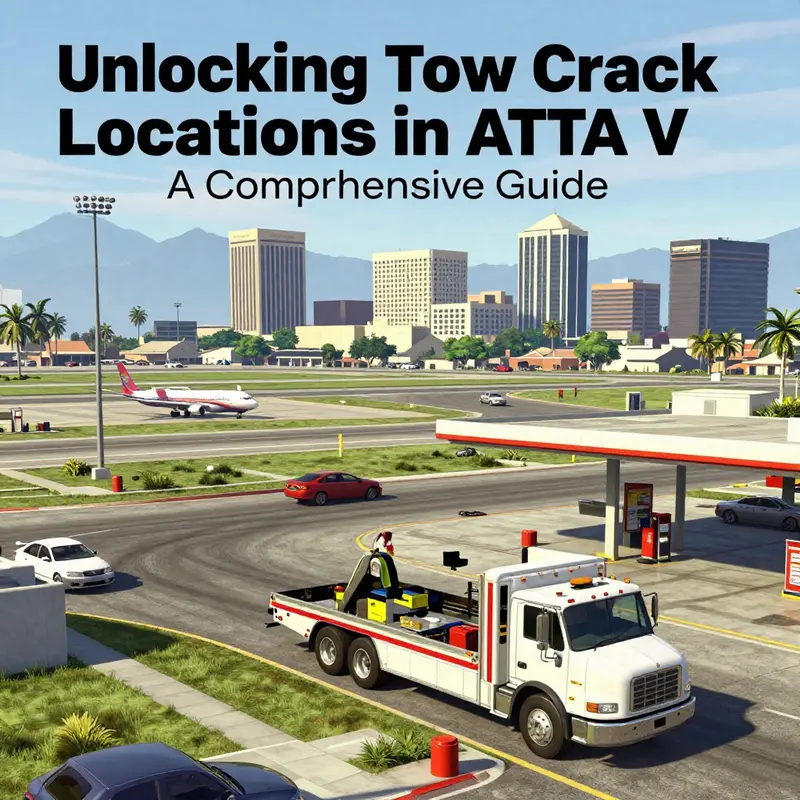
The tow truck in GTA V is more than a practical toolbox on wheels. It is a moving thread through the city’s fabric, tying together industrial zones, service districts, and the everyday traffic that threads a living, breathing map. When you set out to locate a tow truck, you are not just chasing a vehicle; you are following a trail of industrial footprints that trace the city’s real-world counterpart in a digital mirror. This trail runs along major freight arteries, skirts the edge of shipyards, and dips into repair-shop backlots where maintenance crews and dispatch crews move in a clockwork rhythm. If you want to understand where to find a tow truck, you start by thinking about function first and geography second. In other words, where a tow truck would logically be found is where trucks, heavy equipment, and service crews congregate. The result is a map that doesn’t feel arbitrary but rather deliberate—as if the game’s world was built with the idea of towing and recovery operations baked into its infrastructure from the start.
Begin with the core industrial corridors that anchor the map. In Los Santos, the Cargo District around the Port of Los Santos offers some of the most dependable spots to encounter a tow truck in GTA V. You will notice tow trucks near docks, freight yards, and the expansive warehouse complexes that define this area. They’re not always parked in the same place, but they tend to cluster where heavy machinery, shipping containers, and hauling crews are routinely based. This is a logical consequence of the city’s design: the port, with its cranes and forklifts and idle fleet vehicles, is a magnet for service trucks whose job mirrors the real-world rhythms of a modern port. In many ways, the presence of a tow truck in this zone isn’t just about playing fetch with a specific vehicle; it is about watching the city’s logistics in motion and knowing that a tow truck is an essential tool in keeping commerce moving.
Crossing over to San Fierro, the industrial zones carry the same logic, albeit with a different texture. In GTA V’s analog, you would look toward the industrial districts populated by loading docks and rail infrastructure. The train yards, the warehousing sprawl, and the service lanes that run between factories become natural hot spots. Tow trucks, when they spawn here, appear as a practical solution to accidents, breakdowns, or the need to reposition a tailed vehicle that has become part of a larger incident scene. The scene is not about spectacle; it is about efficiency and reliability—the sense that the world is functioning, with tow trucks quietly playing a background but indispensable role in keeping the gears turning.
Las Venturas, with its boulevard sprawl and casino-tinged skyline, can be a more elusive destination for tow-truck spawns in GTA V. The initial research trajectory toward Las Venturas often relied on GTA: San Andreas patterns, where the city’s tow trucks were more commonly spotted in certain service districts and along key trucking corridors. For GTA V, the data is less concrete. What remains consistent across both games is the principle that tow trucks cluster where they are most needed—near service centers, repair shops, and major thoroughfares that see heavy-duty traffic. In Las Venturas, as in the other cities, you will encounter tow trucks near the edge of the strip and around logistics hubs that serve the gaming map’s broader economy. However, it is important to acknowledge that, for GTA V specifically, the exact Las Venturas spawn data is not as plainly documented as in earlier titles, and it benefits from cross-checking with current player reports and official guidance.
Crucially, the open-world design of GTA V means tow trucks appear not as fixed, scripted appearances but as parts of a living ecosystem. They spawn in ways that reflect the same operational logic you would see in a real city: they congregate where they are most likely to be needed, they drift along transport arteries, and they settle into garages and service bays that have long been the backbone of fleet maintenance. This is why you will often find tow trucks near garages or repair shops that dot major intersections or business zones. These locations act as reliable anchors in the city’s geography. A tow truck may be there because it belongs to a local fleet whose dispatchers routinely position vehicles for quick deployment, or because a tow is needed to clear a stalled truck or a damaged vehicle from a critical route.
The reliability of any given spawn point is tempered by the game’s broader system of randomness and time. In GTA V, you will notice that a particular tow truck may show up at different times of day or in slightly different spots across multiple play sessions. This variability keeps the chase interesting and reinforces the sense that you are moving through a dynamic, real-world environment rather than a static stage. While the most dependable locations exist—docks in the port area of Los Santos, industrial yards near the SF precincts, and service districts near Las Venturas’ core—the exact moment a tow truck appears can be influenced by encounter density, your proximity to industrial zones, and the game’s internal scheduling routines. The result is a practical rule of thumb: to maximize your chances, head toward the industrial spine of the map and linger around service hubs where fleet vehicles are known to be stored or repaired.
For players more concerned with online modes or patch-specific behavior, the landscape can shift with updates. The developers and publishers continually refine spawn patterns to balance gameplay variety and the sense of a living city. Common sense guidance remains valid: if you are chasing a tow truck for a mission, plan your route toward cargo and service districts, monitor garage clusters, and stay flexible. In the absence of a single, definitive spawn chart—particularly for Las Venturas in GTA V—the best practice is to combine observational play with trusted community resources that aggregate player-reported data and patch notes. In other words, the map you navigate in single-player is a result of both deliberate design choices and the game’s evolving live environment.
As you travel between these zones, you may notice the broader ecology around tow trucks—the way they interact with other vehicles, how they position themselves in traffic, and how dispatch-like behavior appears in the city’s rhythm. Tow trucks do not simply appear; they respond to the city’s needs, and that response is shaped by the surrounding landscape. In Los Santos, the Cargo District’s scale and proximity to the port mean you may witness fleets of heavy machinery sharing lots with tow trucks, sometimes even parked in adjacent lots as if in a weekend drill. In San Fierro’s industrial heart, the presence of loading docks and rail yards creates a natural overlap with tow operations, and you might spot a tow truck moving ploddingly along a service street after a crane malfunction or a truck breakdown in a busy yard. In Las Venturas, the city’s service corridors and airport-related maintenance sections can provide opportunities to encounter tow trucks in the mode of repair or repositioning, or waiting for a call to clear a runway choke or cargo route.
The practical goal, of course, is to identify consistent cues that hint at a tow truck’s presence. Look for a vehicle with distinctive equipment on its rear, a flatbed, or a hook on the back that hints at towing capabilities. In the game’s weather and lighting, these cues can be subtle, but they are there: a light reflecting off a tow hitch, a line of service vehicles parked near a shop, or a fleet truck idling in a closed warehouse lot. The city’s texture—the dust and grit of industrial zones, the clang of repair bays, the roar of port traffic—paints a credible theater for the tow truck’s daily routine. The more you study these cues, the more your searches become less about luck and more about reading the map’s living logic.
If you want to anchor your exploration in one practical resource, consider a broader primer on how fleet vehicles are discussed in similar open-world contexts. The Island Tow Truck blog offers perspective on fleet deployment and emergency response strategies in island environments, providing a useful comparative lens for understanding how tow fleets can be conceptualized in a dense, geographically diverse map like GTA V’s San Andreas. You can read more here: Island Tow Truck blog.
As you navigate the map, remember that the town’s sprawl encourages you to approach tow truck hunting as a process rather than a single moment. It may take several passes through the Cargo District, the SF industrial belt, and the arcs that connect Las Venturas to its surrounding service hubs before a tow truck presents itself in a way that feels timely and useful for your current objective. This is not a quest with a fixed return; it is a practice in understanding the city’s tempo and how heavy vehicles contribute to the urban fabric in practical, sometimes subtle, ways. In the end, your patience is part of the game’s design—an invitation to observe the city’s routines and discover how a single vehicle can become a reliable partner in navigating the sprawling map.
In terms of official guidance and up-to-date spawn data, it is prudent to consult the publisher’s official channels. While community-driven observations are invaluable for triangulating spots and times, the authoritative sources provide the framework within which those observations sit. The official site and accompanying patch notes can offer broader context on vehicle behavior, spawn logic, and any systemic changes that alter where to expect a tow truck on a given update. This approach helps ensure that your scavenger hunt remains productive across different play sessions and different game modes. The publisher’s official resources are a reliable compass when the map itself feels like a moving target, shifting with each patch and each new season of play.
As you continue your exploration, aim to develop a mental map that blends the concrete with the probabilistic. The cargo districts, the industrial shipyards, the service corridors near major intersections, and the garages that anchor the map are not just locations but stages in the city’s ongoing routine. A tow truck is never random in the sense of appearing out of nowhere; it arises where its services are needed and where its fleet partners operate. The more you internalize this logic, the more you’ll find tow trucks not as elusive spawns but as expected players in a world that rewards strategic observation and a sense of place. And when you do spot one, you’ll likely find that the experience is less about the vehicle itself and more about what it represents—the city’s ability to recover, to move cargo, to support a network of moving parts that keep Los Santos, San Fierro, and Las Venturas alive in the gaming landscape.
Final thoughts
Securing access to tow trucks in GTA V is crucial for players managing vehicles across the game. As outlined in this guide, the locations within Los Santos, San Fierro, and Las Venturas provide ample opportunities for local auto repair shops, car dealerships, and commercial fleet operators to find tow trucks easily. By familiarizing yourself with these key areas, you’ll streamline your operations and ensure that vehicle recovery processes are efficient and timely. Remember, understanding the game’s map is vital for maximizing your gameplay experience advantage. Happy driving!