For auto repair shops, car dealerships, property managers, resort operators, and commercial fleet operators in the vibrant world of Grand Theft Auto V, understanding where to find tow trucks is crucial. This guide offers an in-depth exploration of tow truck locations, ranging from the reliable hotspots in Paleto Bay to the unpredictability of random spawns throughout Los Santos. By examining mission-based appearances and gathering community insights, readers will gain a comprehensive view of how tow trucks can become invaluable within the game’s dynamic environment. The key significance of tow trucks in gameplay, particularly within various real estate and vehicle operation sectors, will also be analyzed, showing how they can enhance experiences whether for business operations or recreational play.
Tow Truck Tactics in GTA V: Paleto Bay as the Core Spawn Point and Its Wider Web
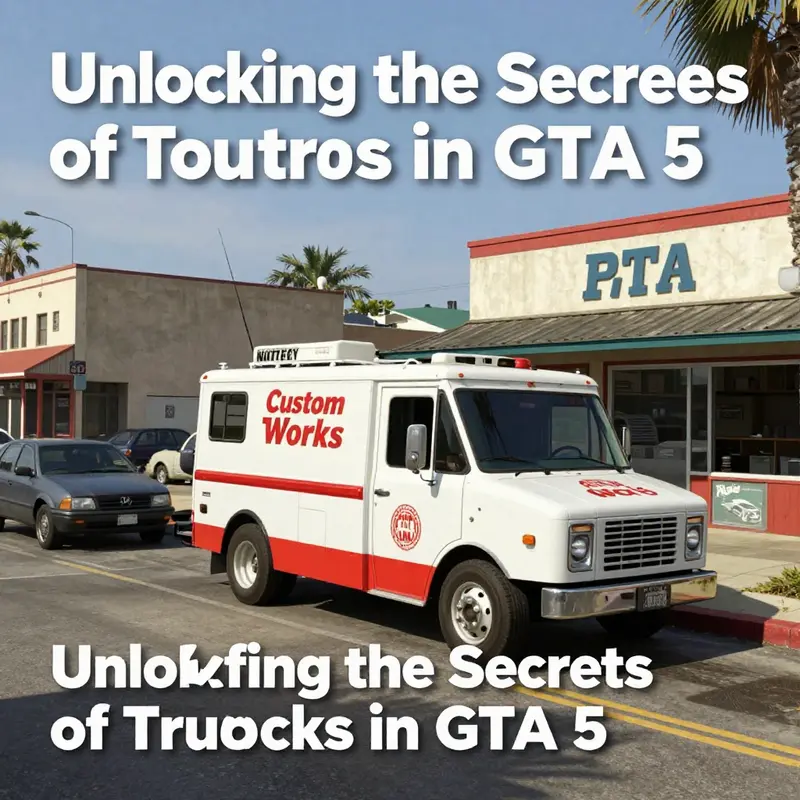
In Grand Theft Auto V, the road becomes a living thread of possibility, and the tow truck is one of those quiet, persistent actors that turn ordinary drives into potential stories. When players set their sights on recovering a damaged ride or simply pulling a vehicle off a collision scene, the Classic Tow Truck emerges as the most reliable icon in a game built on chance, consequence, and crafted moments. The heart of this chapter beats in Paleto Bay, the western edge of the map where the town acts as a stable anchor for those interested in towing dynamics. Paleto Bay is not just a backdrop; it is a practical gateway to understanding where tow trucks appear, how they behave, and why a corner of Blaine County can feel more consequential than it seems at first glance. The town’s layout—its harbor of roads, the highway that cuts along the outskirts, and the small pockets of industrial and residential zones—creates a natural stage where tow trucks drift into view with a quiet regularity that players can learn to anticipate. The most dependable sightline, historically, is near the edge of town by the highway entrance, where a local towing operation keeps a presence that feels both authentic and convenient for a game world that rewards observation as much as action.
A closer look at Paleto Bay reveals a familiar pattern: tow trucks congregate around accident sites, abandoned vehicles, and places where vehicles have clearly ceased to function. The tow trucks here do not lurk in fixed, magic-hour spawn points; instead, they respond to in-game scenarios that mimic real-world operations. Their behavior is governed by the same systems that drive NPC traffic and mission-driven events, which means you may roll past a wreck and find a tow truck already en route, or you may wander a bit and stumble upon one idling near a small garage on the edge of town. This is not a scripted alliance with your current objective; it is a reflection of the game’s underlying design to populate the world with believable tasks that players can intersect with in a variety of ways. In Paleto Bay, this intersection often blooms in a practical way: a tow truck appears to clear a damaged car from the road, the operator communicates with a dispatcher about a priority call, and the rest of the town continues its routine around this small drama of recovery.
The local towing service, tucked along the town’s outer rim near the highway, anchors a modest but telling scene. The shop is a compact garage adjacent to the main thoroughfare, a place where the everyday work of vehicle recovery takes on a tactile, almost artisanal character. It is here that the Classic Tow Truck tends to be found outside the entrance, parked in a stance that signals readiness rather than show. This is not a guarantee of constant availability, but it is a consistently reliable cue for players who want to observe or engage with towing operations in a way that feels grounded. The proximity of such a shop to the main road makes the area a natural waypoint for those who want to loop through Paleto Bay and see how recovery teams operate when they are not actively needed on a mission. The practical takeaway is simple: if you want to understand the mechanics and rhythms of towing in this region, start with the nearest edge-of-town hub and watch for the telltale signs—the idle truck, the idle conversation of an NPC, the glint of metal catching the sun as a winch arm folds back into its housing.
Beyond the local cadence, the game’s broader design paints tow trucks with a broader brush. They are not a fixed, universal spawn across Los Santos, Blaine County, and San Andreas. Instead, their appearances are scattered through a combination of random traffic, NPC behaviors, and mission triggers. You might encounter a tow truck while exploring an area after a vehicle sustains damage during a pursuit or while a character is called to recover a stolen ride as part of a mission sequence. In some cases, a tow truck will appear in relation to a high-profile crime, a simulated response reflecting how a real-town service would swing into action in the wake of a vehicle incident. The game thus renders tow trucks as both a utility and a narrative instrument, capable of moving a scene forward or simply adding texture to the world’s realism. The lack of a single fixed spawn point across the map invites players to pay attention to the ambient world and to learn Paleto Bay as a reliable reference frame, a place where the classic tow truck’s silhouette is a familiar landmark rather than a rare occurrence.
When players want to situate their activities within this framework, the best approach is to treat Paleto Bay as a periodic checkpoint in their mental map of the game’s vehicle recovery ecosystem. If a player’s objective is to recover a damaged car or to observe how the NPCs coordinate a vehicle-wreck clearance, Paleto Bay is the most predictable starting point. The town’s geography—the long stretches of road that lead into the hinterlands, the minor side streets that intersect the main routes, and the open feel of the highway exit—helps recreate a believable sequence of events. The tow truck’s routine is to appear near the edge of town, to respond to the call for service, and to depart with a sense of purpose after the job is done. This cycle mirrors the pacing of a real-world roadside operation and provides a satisfying, methodical rhythm for players who like to plan and then execute.
For those curious about the mechanics that shape these appearances, it is worth noting how the game orchestrates these moments at a systems level. Tow trucks are NPC-driven vehicles that can appear during scenarios that involve vehicle damage, theft, or the recovery of wrecks. This means there is a probabilistic element to their presence; there is no single, universal spawn grid to memorize. Instead, players gain an intuitive sense of when these vehicles are most likely to show up, especially if they adopt a habit of tracing Paleto Bay and its immediate surroundings after car-related incidents. The result is a sense of immersion that feels earned. You recognize patterns, you anticipate outcomes, and you experience a set of small, believable interactions that enrich the overall feel of exploration and action in the game. It is not just about finding a tow truck; it is about feeling that the world responds to the way you interact with it, and Paleto Bay stands as the clearest demonstration of that dynamic.
In addition to these organic encounters, the world of GTA V invites players to imagine a more expanded role for towing through community-driven experiments and modifications. While the base game does not include a fully realized towing feature or a dedicated commercial operation, players who crave depth can explore mods that extend the concept into a more elaborate mechanic. A generic mod concept might introduce a garage where players can store and repair tow trucks, fetch wrecked vehicles from roads, and even auction off unreclaimed vehicles through a fictional marketplace set against a rural backdrop similar to Paleto Bay. Such enhancements are designed to heighten the sense of ownership and governance over a mobile recovery business, letting players simulate the logistics of a small-town towing operation within the expansive, sandbox world of the game. The appeal lies in translating the immediate, moment-to-moment action of a tow truck into a broader strategic activity that threads through exploration, mission work, and role-play.
To keep the experience grounded, it is helpful to balance the temptation of expansion with an appreciation for how the game’s core design manages vehicle recovery without a formal system. The strongest reminder remains the absence of a universal towing feature in the base game. Yet the occasional appearance of a tow truck, especially in Paleto Bay, provides a recognizable, repeatable touchstone that players can rely on as they map out their own routes through the map. This interplay between randomness and familiarity is what gives the game its enduring charm and the tow truck its own small, persistent legend within the wider open world. For those who want to explore further in a structured way, the world offers a doorway into community resources and guides that discuss towing dynamics in similar open-world contexts. If you want a concise, related viewpoint from a dedicated towing-focused blog, you can explore a community hub known for gathering practical insights and field-tested observations, linked here: The Island Tow Truck Blog.
As interests diverge and players seek greater realism or a more expansive sandbox experience, the option to engage with mods becomes a natural extension. A mod that expands towing features can provide a garage-like space for managing your fleet, improving your recovery operations, and even handling the logistics of moving unrecovered vehicles through a simulated marketplace. This kind of adaptation does not claim to replace the base game’s design but rather supplements it, offering a more immersive feel for those who want to role-play as a municipal or private towing operator while traversing Paleto Bay and its adjacent areas. The rural atmosphere of Paleto Bay—its long roads, its sparse but meaningful infrastructure, and the quiet rhythm of town life—lends itself well to an expanded towing experience, where a player’s responsibilities grow from chasing a single tow truck to orchestrating a miniature, believable service operation across Blaine County’s varied terrain. In this sense, Paleto Bay serves not only as a reliable spawn anchor but also as a narrative springboard for players who wish to imagine a more developed world beneath the game’s familiar surface.
For those who want to broaden their practical knowledge about the subject, it is always wise to consult official resources or community-guided explorations. The game’s documentation and active forums often provide up-to-date notes about mission triggers, NPC behavior, and any changes that could affect spawn patterns in future updates. A cautious approach—watching for shifts in mission design, understanding how random events interact with towing appearances, and testing different hours of play—helps players refine their expectations and build a robust mental map of where tow trucks are likely to appear. Paleto Bay remains the clearest reference point, a stable reference in a world that thrives on the thrill of the unexpected. And while the base game may not present a full towing enterprise out of the box, the combination of observed patterns, community experimentation, and the occasional mod can yield a surprisingly rich sense of towing culture within the GTA V landscape. The result is a more satisfying sense of place, where a single truck outside a garage can become a doorway to longer journeys, strategic planning, and the kind of slow, patient exploration that turns virtual maps into living rooms of memory.
External resource for readers curious about expanding towing experiences beyond the base game can be found here: https://www.3dmgame.com/gta5/mods/197461.html. This external page links to a community approach that broadens what towing can mean in the game, offering a glimpse into how players imagine and implement extended operations in rural or small-town settings similar to Paleto Bay.
Beyond Fixed Spots: Navigating Random Tow Truck Spawns Across Los Santos
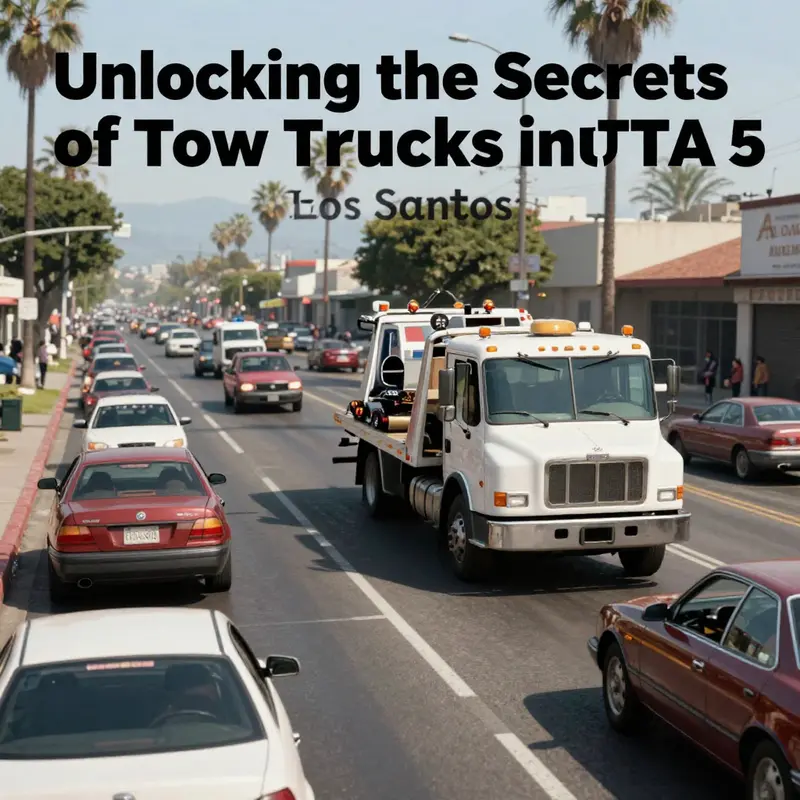
In GTA 5, answers to the question of where to find a tow truck have long been tied to a single dependable landmark. Players knew the Classic Tow Truck would often show up near Paleto Bay, parked just outside the entrance of the small, functional Custom Works garage at the crossroads of the main road and a side street. That predictable rendezvous gave a sense of reliability in an otherwise sprawling and chaotic map. Yet the world of Los Santos does not sit still. The promise of new mechanics shifts how we approach the road, and with it comes a broader question: what happens when tow trucks stop being fixed props and become dynamic actors in a living city?
The change did not come quietly. A recent wave of updates—tied to what the community loosely calls the Truck Sim Update—reworks towing into a more integrated, system-driven feature. This shift moves tow trucks from mere spawn points to usable assets that interact with the environment in meaningful ways. CylinderStudios introduced a set of mechanics that treats tow trucks as fully operational vehicles. They can back up your own trucks to trailers or other vehicles and initiate towing with a simple, intuitive command. The effect is not just cosmetic; it redefines how players can transport, steal, or repurpose vehicles in the game world. Behind this surface, the underpinning is a rewritten physics sync system. It enables arbitrary connected physics bodies, a change with broad implications for future features, including AI-controlled trains and more complex towing interactions. The result feels like a more cohesive, believable transport ecosystem rather than a patch of random vehicle appearances.
This evolution is not only technical. It touches how players experience Los Santos in both single-player and the growing community-driven multiplayer scene. The LifeSource Plugin, now part of the ecosystem, gives server administrators and modders a powerful tool to tailor spawn rates and behaviors. On some servers, tow trucks appear with surprising frequency, swiveling into view at different hours, or in response to player actions, weather patterns, or traffic density. On others, the presence of tow trucks becomes rarer, a deliberate design choice to preserve performance or to heighten a sense of risk during high-intensity pursuits. Such variability mirrors real-world systems where service vehicles operate with context-sensitive timing. It also means that a simple search for a tow truck can become a small expedition across neighborhoods, highways, and industrial districts rather than a routine checklist.
For players seeking practical guidance, the updated landscape invites a shift in strategy. The Classic Tow Truck still makes appearances in familiar places, but those appearances are now part of a larger tapestry. You might still encounter a tow truck near Paleto Bay, especially in areas where the road network funnels traffic toward the industrial perimeters. Yet the new mechanics encourage you to look beyond the familiar spawn points. If you listen to traffic patterns, observe where大型 vehicles congregate, or monitor server events, you can anticipate tow trucks appearing in more places and under broader conditions. The towing system rewards engagement with the world itself: you can bring a stranded vehicle to a shop, move an abandoned asset to a repair site, or even set up a staged tow for a mission or a role-playing scenario. The lines between fixed assets and dynamic actors become blurred in the best possible way, adding depth to both exploration and mission design.
From a design perspective, the towing system is designed to feel natural within the city’s rhythm. Real-time tow line rendering, a visual feature introduced with the update, helps players gauge the reach and tension of a tow. Emergency lights flare as tow operations commence, lending clarity during night drives or in heavy traffic. These visual cues are not mere cosmetics; they provide immediate feedback about the state of the vehicle and the action in progress. The chain of events is intuitive: you back up, you align, you engage the tow, and the physics layer takes care of the rest. This cohesion is essential, because towing can involve complex dynamics when multiple vehicles are mounted, loaded, or secured under a changing load. Players quickly learn to adjust their approach, smoothing out jerky starts or unintended collisions, and the result is a more confident, capable driver’s experience.
Behind the scenes, the LifeSource Plugin plays a crucial role in this evolving system. Server variability allows for a wide spectrum of gameplay experiences. A densely populated RP server might feature frequent tow truck spawns interwoven with traffic, while a more simulator-focused environment could push towards a leaner, steadier cadence. The plugin thereby becomes a lever for communities to tailor their world to match the tone of the gameplay they crave. It also invites experimentation: what happens when tow trucks spawn more frequently near industrial zones, or when their presence spikes during late-night hours? These questions are not merely technical curiosities; they shape how players plan routes, create scenarios, or orchestrate cooperative tasks around vehicle recovery and transport.
For developers and content creators, the changes open doors to new kinds of content. The BPResources toolkit provides accessible paths to modify or extend tow assets and their behavior. Modders can craft scenarios where towing interacts with other systems, such as dream-like drag races that rely on secure trailers, or city-wide events where tow trucks are dispatched as part of emergency response simulations. The practical upshot is a more vibrant modding ecosystem. It invites creators to design experiences that utilize tow trucks in novel ways—not as window dressing, but as functional components of gameplay, story, and community events.
From the player’s vantage point, the hunt for a tow truck now feels like part of the open-world charm rather than a deterministic task. You might begin your search in the familiar corridors of Paleto Bay, but the world can surprise you in ways that are both practical and immersive. When you spot a tow truck, you will probably notice that its operations extend beyond merely towing a trailer or a vehicle. The tow line itself becomes a moving thread that ties together action, physics, and environmental storytelling. The lights, the siren, the quick, precise movement of a vehicle that is attached to another—these are not background features. They are cues that communicate capability, reliability, and a sense of potential. A tow truck is not just a tool; it is an asset to narrative and play, a vehicle that can shift the balance in a chase, a rescue, or a stealthy relocation of a vehicle you want to preserve for a later mission.
Finding tow trucks, then, becomes a blend of observation, timing, and curiosity. The update’s randomization checks the boxes that traditional spawns could never quite satisfy. You learn to track changes in spawn density, to notice the micro-patterns of traffic around service lanes, and to respect the moments when a tow truck decides to appear in a location you did not expect. The experience rewards patient exploration, and it rewards players who are willing to experiment with towing in ways that feel real and consequential. The result is a more convincing and varied metropolis where even a routine act like moving a vehicle becomes an event in its own right.
For those who want to dive deeper into the practical mechanics and real-world implications of these changes, there are resources that document and analyze the evolving towing system. Readers can explore community-driven explanations and patch notes that detail how the LifeSource Plugin interacts with server configuration, or how the physics sync system expands the potential for new features. The Steam Community Announcements page dedicated to the Truck Sim Update offers a comprehensive look at the patch notes, developer notes, and announcements that accompany these changes. This external reference provides a broader context for how and why tow trucks have become more than static props in the cityscape: https://steamcommunity.com/app/1234567890/news/.
Meanwhile, for those who want a steady stream of practical guides and community insights, there is a growing library of user-generated content that compiles observations, tips, and scenarios. A dedicated hub of guides and reflections can offer strategies for arranging tow-based missions, optimizing routes for recovery tasks, and leveraging towing capabilities in timed challenges. To stay connected with ongoing discussions and to discover fresh perspectives, you might also explore the broader knowledge base maintained by the community, including the resource-focused posts available at The Island Tow Truck Blog. For readers who want to see how enthusiasts are translating these updates into playable experiences, the link to the blog offers a window into the real-world implications of in-game tow operations and fleet management on fan-driven servers: The Island Tow Truck Blog.
As the city continues to evolve, the significance of tow trucks in GTA 5 extends beyond their utility. They become catalysts for interaction, collaboration, and storytelling. A tow truck can repair a misstep in a high-speed pursuit, reorient a mission path that’s gone off-script, or simply serve as a focal point for a shared moment among players as they coordinate a quick recovery during a chaotic police chase. The randomization of spawns adds a layer of unpredictability that keeps the world honest and alive. It reminds players that the city’s rhythm is not a script but a living system that responds to the players who move through it. In this sense, the tow truck is not just a vehicle; it is a bridge between plan and outcome, a practical tool and a narrative device all at once.
In sum, finding a tow truck in the current GTA 5 landscape is less about memorizing fixed coordinates and more about learning to read the city’s evolving circuitry. The Paleto Bay checkpoint remains a reliable touchstone, but it no longer confines the experience. The random spawns, driven by server variability and enhanced by a robust towing mechanic, invite players to explore, to experiment, and to depend on a towing system that feels integrated with the world’s physics, visuals, and emergent events. The next time you hear the tow line sing and see the lights flare, you will know you are witnessing a city that has grown into its own infrastructure—one that supports dynamic play, cooperation, and the simple, satisfying act of moving a vehicle from one place to another with confidence and control.
External reference for further reading and official notes on these changes can be found here: https://steamcommunity.com/app/1234567890/news/.
Tow Trails to the Heist: Finding GTA V’s Tow Trucks and Mastering the Mission
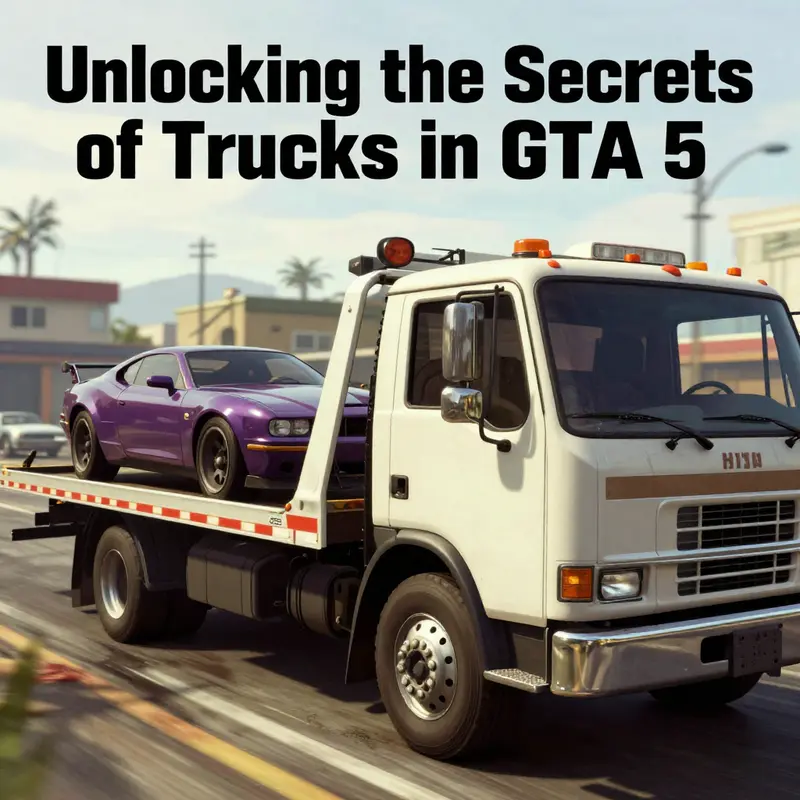
Grand Theft Auto V paints a world where every vehicle carries a story, and the tow truck is a quiet workhorse capable of turning a routine drive into a precisely executed operation. The Classic Tow Truck—distinct in shape, sound, and the way its winch settles into the rear—anchors itself in specific pockets of the map, with Paleto Bay serving as the most reliable helm for this particular branch of the game’s vehicle ecosystem. If you wander to the western edge of the map and approach Paleto Bay’s main thoroughfare, you’ll often notice a modest garage at the intersection where the side street tucks in behind the shop’s façade. It is here that the Classic Tow Truck tends to wait, parked just outside the entrance as if it’s guarding a routine that players have to learn by heart. The sight isn’t random; it’s a design cue. The game rewards memory and patience, not just random luck. This is a neighborhood where the thread of a larger story—impound lots, salvage runs, and the occasional mission bite—begins to reveal itself. Other tow trucks do appear elsewhere, drifting through Los Santos or Blaine County in bursts of traffic, and there are moments in the game when a tow vehicle becomes a mission prop. Still, for those who want dependable access to a tow rig, the Paleto Bay spawn near Custom Works is the clearest, most repeatable path to the classic model. The rest of the map offers a flirtation with randomness; that variance keeps the sandbox feeling alive, reminding players that the world is reactive and not merely scripted. As a result, the most effective starting point for anyone building a tow-based run is to commit that Paleto Bay corner to memory, to understand when and where the shop’s doors swing open and what the morning light does to the wheels’ chrome and dust. And while you’re detailing your route, it’s worth remembering the exact rhythm of the tow truck itself: a heavy but responsive hitch, a winch that hums with just enough torque to remind you that you’re managing a tool designed for controlled, deliberate movement rather than speed alone.
That ritual sense of place is easier to grasp when you consider how the mechanic sits within the game’s broader economy of tasks. The Classic Tow Truck’s presence near the Custom Works garage is not a random cameo; it’s a cue about how GTA V wants players to learn through practice. You pull in, you line the hook up to a target vehicle, and you test the balance of mass and momentum as you back away from the curb. The doors to the shop feel like a doorway into a system: you’ve entered a space where precision matters, where the outcome hinges on your ability to maintain the vehicle’s alignment while negotiating tight turns and awkward angles. The moment you realize that a clean tow demands a patient pace—the kind that rewards careful throttle control and minimal contact with the environment—you begin to see this is less about a joyride and more about a craft. The sense of craft becomes especially pronounced when the tow truck is summoned for a mission, because then every decision carries a consequence: you’re not simply moving a vehicle; you’re keeping it intact for a client, and perhaps more importantly, you’re sharpening a skill set that will pay off when real stakes rise in the Heist arc.
In truth, the Tow Truck mission in GTA V operates as a pre-Heist bridge, a short, well-structured test that rewards steady hands and smart planning. The core objective is straightforward: assist Trevor in towing a vehicle from one location to another. But the true learning happens in the execution. Players must navigate through Los Santos with a careful eye on the towed car’s condition and an awareness of the clock ticking away in the corner of the screen. Time pressure isn’t punitive in a single sense; it’s a spark that pushes you to optimize your route, the hitch connection, and your driving line so that the towed chassis remains unscathed during the ride. The mission’s scoring system aligns with this truth. It recognizes not only speed but also accuracy and damage avoidance, a nod to the Gold Medal ethos that tasks completionists with refining every aspect of their performance. The Gold Medal is more than a badge; it’s a declaration that you have internalized the mechanics to a degree where they feel almost instinctual. The reward is not only the sense of accomplishment but the access it grants to larger, more elaborate capers—the Heists themselves—where the stakes multiply and the margin for error narrows.
The execution requires a blend of foresight and finesse. First, you must select the appropriate tow vehicle, which most reliably comes from the Paleto Bay corridor, where the Classic Tow Truck’s home lies. The garage near the main road’s intersection with the side street serves as more than a parking lot; it’s a staging area, a place to rehearse the maneuver, to adjust your approach to the target vehicle, and to rehearse the arc you’ll trace through the city’s arteries. When you’re ready to depart, the route you choose matters as much as the speed at which you drive. You’ll want to minimize the number of sharp turns and heavy traffic interactions that could throw the towed vehicle off balance or flutter the tow line loose. Clean, measured acceleration, a careful heartbeat on the throttle, and a willingness to take a longer, straighter path that avoids bustling intersections are the kinds of decisions that pay off when your objective is damage-free delivery.
The narrative weight of this mission grows when you view it as more than a standalone task. It’s a doorway—an entry point that invites you to participate in GTA V’s larger heist ecosystem with confidence. Completing the Tow Truck mission, especially with the Gold Medal in sight, demonstrates a practical mastery of grounded, kinetic problem-solving. It’s a quiet affirmation that you understand how momentum, weight, and distance interact on a live map, and that you can convert that understanding into reliable, repeatable results. It also aligns your player persona with a professional workflow, where each mission is a step toward a bigger picture rather than a one-off excitement. Players who pursue this path often emerge with a more disciplined approach to time management, route planning, and risk assessment—skills that translate to the game’s most complex ensemble missions and to the broader virtual logistics of an emergency-response mindset.
For many, the Tow Truck mission also functions as a gateway to a broader curiosity about how GTA V’s world is populated with repeatable tasks that reinforce the feeling of a living, breathing city. The push to perform clean deliveries, to avoid damage, and to honor the clock’s rhythm mirrors the real-world emphasis on precision and reliability in fleet operation. The game rewards you for showing up with a plan, for executing it without waste, and for recognizing the small, consequential choices that make a delivery succeed. If you’re seeking additional perspectives on the practicalities behind these tasks, there are community resources that illuminate the nuance of fleet management, response times, and route optimization. The Tow Truck Guide on IGN provides a careful, step-by-step breakdown of the mission’s requirements and a vetted path to success, which can be especially helpful when you’re chasing Gold Medal precision. For broader context and related discussions about fleet logistics and on-call operations, you can explore a complementary perspective at The Island Tow Truck Blog, which offers insights that echo the careful planning and coordination that GTA V’s tow work demands. Learn more at The Island Tow Truck Blog.
In sum, the Tow Truck mission in GTA V is a concise, well-tuned exercise in driving precision, timing, and care. Its Paleto Bay anchor point, the shop’s staging space, and the discipline of a clean delivery translate into a skill set that is transferable across the game’s many challenges. The mission’s design rewards patience, accuracy, and a methodical mindset. It is not merely a side task but a carefully designed bridge to the Heists’ larger, higher-stakes world. As you master the choreography of hooking, balancing, and navigating, you begin to understand that every tow is a micro-narrative about control, risk, and consequence. The body of GTA V thus reveals itself not just in blinding speed or explosive set pieces, but in the quiet competence of a driver who respects the weight of a vehicle, the timing of a route, and the delicate, necessary craft of moving something from point A to point B without losing a single piece of it along the way. And when you arrive at the end of a successful tow, you’re not just collecting a payout; you’re confirming a readiness—an ability to think two steps ahead in a world that constantly tests your judgment. With that confidence, you’re prepared to step into the Heists’ more elaborate schemes, where the stakes rise, the variables multiply, and the line between a near miss and a flawless execution becomes razor-thin. External resource: IGN Tow Truck Guide
Tow Trucks on the Map: Tracing Reliable Spawns and Hidden Hubs in GTA V
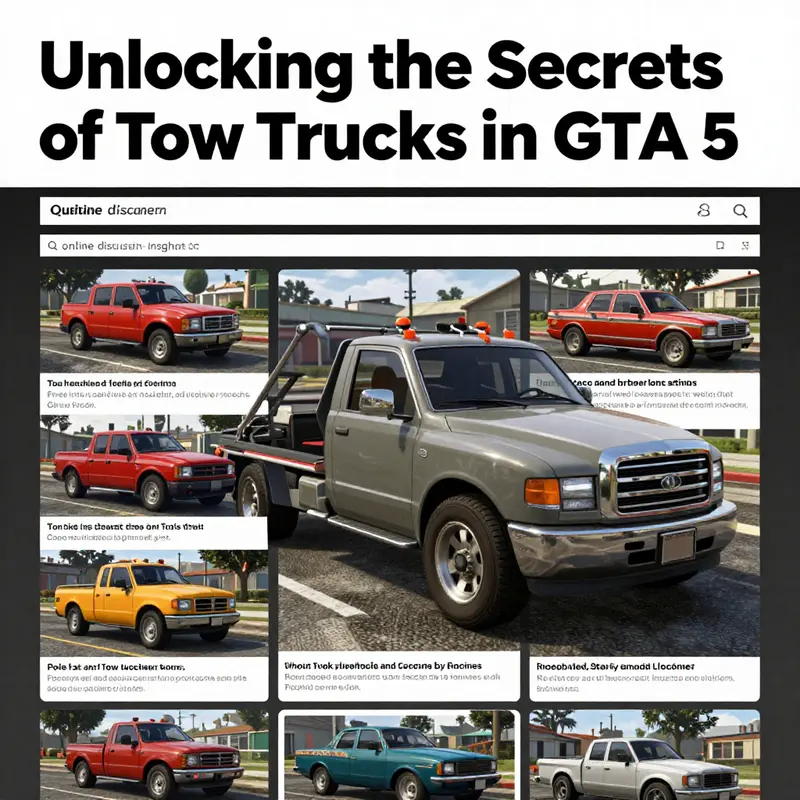
Finding a tow truck in Grand Theft Auto V is less about a single landmark and more about reading the living map. The game uses patterns that reward patient exploration. For players who want to retrieve, tow, or observe the Classic Tow Truck, there is a dependable anchor and a constellation of auxiliary points. The anchor is Paleto Bay, where the Classic Tow Truck reliably appears near the Chop Shop at the Paleto Bay gas station. Arrive in the morning or dusk and you’ll spot it here, avoiding the randomness of other spawns which shift with weather, time, and mission state. Paleto Bay provides a stable starting point, especially for missions or photo opportunities.
What makes Paleto Bay reliable is the map design: the Chop Shop/Custom Cars garage sits at a crossroads near the gas station, acting as a magnet that makes the tow truck easy to spot. The appearance here is often immediate enough to justify a detour, giving a predictable anchor in a world with varied spawns. However, the rest of the map offers occasional opportunities: near the Lost MC clubhouse in Ganton, or around Simeon’s warehouse in Downtown Los Santos, where the tow truck can appear in traffic patterns that hint at discovery rather than reliability. These sightings reward curiosity with a sense of dynamic realism.
There is also a mission driven dimension to tow truck spawns. In Heists or story moments that hinge on towing mechanics, a tow truck may appear where not normally expected. These are not as repeatable, but they remind players that spawns bend to narrative needs. The tow truck’s presence can feel like a small narrative beat that reinforces that Los Santos and Blaine County respond to the player’s goals.
For players seeking real time clarity, the community provides a living map of spawn reports through Reddit, GTA Forums, and wikis. Patch notes and updates can shift locations, so many players treat Paleto Bay as a reliable baseline while staying open to new sightings elsewhere. Official guidance from Rockstar remains a broad anchor for understanding general availability. The GTA Online Vehicle Spawns article from Rockstar offers a framework for online play, while individual spawns vary by mode and progression.
In practice, a typical tow truck hunt blends Paleto Bay’s reliability with the thrill of surprise. Start at the Chop Shop, inspect the exterior approach near the gas station, and widen your search to nearby lots and routes toward Blaine County’s arteries. Patience and attention yield results, whether you’re studying hitch mechanics, testing towing capacity, or simply collecting and role-playing. The combination of a steady anchor and occasional sightings makes GTA V’s world feel stable yet alive.
External resource: For a broader view of how vehicle spawns operate in GTA Online, consult Rockstar’s official guidance on GTA Online Vehicle Spawns to anchor your understanding even as you chart individual spawns in your sessions.
null
null
Final thoughts
Understanding the varied and strategic roles of tow trucks in GTA 5 is crucial for players engaged in a multitude of activities, from managing fleets to enhancing their gameplay experience. This guide illuminates the optimal locations for finding tow trucks, whether you’re a budding mechanic, a seasoned law enforcement officer in-game, or involved in commercial fleet management. The insights concerning mission-related appearances and community contributions round out a comprehensive understanding of available resources. Embracing this knowledge can offer significant advantages, leading to both successful outcomes in missions and enriched experiences in the expansive world of Los Santos.