Understanding the cost of tow truck insurance is vital for local auto repair shops, car dealerships, property managers, resort operators, and commercial fleet operators. This comprehensive guide breaks down the various factors that affect pricing, provides comparative analysis by truck type, and explores how location and driving history play significant roles in insurance premiums. Whether you’re an established business or starting with a new fleet, knowing these details can empower you to make informed insurance decisions tailored to your operational needs.
The Real Cost of Keeping Wheels Rolling: A Deep Dive into Tow Truck Insurance
Every tow truck operator knows the job comes with a reliable cost of doing business, and insurance sits near the top of that list. Tow trucks do more than move vehicles; they operate in dynamic environments where speed, exposure, and liability collide in ways that can shape a business’s fate in a single incident. The question of how much tow truck insurance costs is not a single price tag but a moving target built from multiple, interlocking factors. On average, a single tow truck in the United States might carry a price tag in the range of roughly $1,500 to $4,000 per year, a band that reflects the broad spectrum of operations in the industry. For larger fleets, or for outfits with specialized equipment and high-risk duties, premiums can climb past $5,000 annually per unit. Those numbers aren’t arbitrary; they reflect the reality that different trucks, different operations, and different risk profiles carry markedly different degrees of risk to insurers and, in turn, to the people who pay the premiums. The challenge for any operator is not just understanding the total but understanding how to influence the parts that make up that total, so the cost is fair and the coverage is solid.
To appreciate why insurance costs vary so much, it helps to picture a spectrum of what a tow business can look like. A small operator might rely on a single light- or medium-duty flatbed, servicing local calls with steady but modest hours. A mid-sized company could maintain a mixed fleet that includes flatbeds for light to mid-weight jobs and a heavy-duty wrecker for larger commercial tows or accident scenarios. A large operator, meanwhile, might run a fleet that includes multi-axle wreckers, heavy-duty equipment, and on-site towing services at busy urban ports or highways. Each point on that spectrum carries its own risk profile and its own set of coverage needs. The math behind the premium grows from that risk profile: the more potential exposure, the higher the price and the broader the likely policy structure.
One of the most fundamental determinants of cost is the type and value of the tow trucks themselves. Heavy-duty wreckers, which routinely haul or recover very large vehicles and may perform complex recoveries, pose greater liability and physical-damage exposure than smaller flatbeds. They resemble moving liability-increasing machines: more weight, more moving parts, and more points of potential failure. Newer, higher-valued trucks also push the price up because replacement costs count against the insurer. If a fleet has state-of-the-art equipment with advanced safety systems, the premium may still be high, but the insured value is also accurate, reducing the chance of underinsurance in a claim. In practice, the combination of heavier equipment and higher replacement cost translates into higher coverage limits, broader physical-damage protection, and sometimes more protective endorsements, all of which push premium up at the outset but can deliver greater peace of mind if a loss occurs.
Beyond the physical assets, the policy types and the limits chosen significantly shape the overall cost. Basic liability coverage remains the bedrock of most tow operations, as it should for any business that operates on public roads. However, liability is only one piece of the puzzle. Physical-damage coverage protects the fleet itself in the event of collision, rollover, or other damage to the tow trucks while in service or in storage. Cargo protection covers the vehicles and items being towed, an essential consideration for operators who move high-value or specialty vehicles. Endorsements such as hired auto liability—for non-employees who may operate a vehicle during a tow job—add another layer of protection but also a price tag. Then there are garage-keepers’ liability protections, if the business stores towed or customer vehicles at its premises. Each coverage type serves a distinct purpose and carries its own cost, and the more layers added, the higher the premium tends to rise. Endorsements act like a safety net for gaps in coverage but come with their own premium implications. The interplay between coverage level and price is where many operators encounter the most confusion, because the value of added protection often feels intangible until a claim arises.
Location matters as well, and it matters a lot. Urban environments, with dense traffic, higher accident rates, and elevated theft exposure, tend to push premiums upward. A tow fleet operating in a bustling city or along a congested corridor faces more frequent exposure to property damage, bodily injury, and even road hazards than a similar operation in a rural setting. Conversely, more rural or suburban locales may offer cost advantages due to lower traffic density and fewer high-risk scenarios. But location isn’t the sole geographic factor; insurers also consider the claims history of the operator in that locale. A home base with a history of frequent property damage or bodily injury claims signals higher risk to underwriters, which can lead to higher ongoing premiums. A calm claims record, paired with robust risk-management practices, can translate into meaningful savings over time.
Driver quality and training sit alongside equipment and location as critical cost levers. An operator that invests in driver safety programs, defensive driving courses, ongoing certifications, and rigorous onboarding often enjoys lower premiums. The rationale is straightforward: well-trained drivers are less likely to be involved in costly accidents or cause damage to customer property. The premium, in essence, reflects the insurer’s assessment of the likelihood of a costly claim. The effects of training programs can extend beyond a lower base rate; some insurers offer discretionary credits or rating tiers for fleets implementing comprehensive fleet safety programs, telematics, and continuous education. In practice, the cost impact depends not only on the presence of training but on the quality and consistency of its implementation. A fleet that demonstrates measurable improvements in safety metrics is more likely to see a favorable premium trajectory over time.
A fleet’s size also alters the economics of insurance in nuanced ways. Smaller operators may pay higher per-truck premiums because the fixed costs of underwriting and policy administration are spread over fewer units. Larger fleets, while facing higher total premiums, frequently unlock volume discounts that reduce the per-truck cost. The math can be counterintuitive: adding more trucks increases total risk and total premium, but it can also unlock favorable rate tiers that lower the average cost per vehicle. However, the profile of the fleet matters as much as its size. A well-maintained, safety-focused fleet with a strong claims history can attract discounts or more favorable terms, even as the number of units grows. In contrast, a fleet facing ongoing incidents or maintenance issues can see price erosion as risk accumulates. For operators contemplating expansion, a deliberate approach to risk management and a clear plan to maintain or improve safety can pay dividends in the form of better insurance economics over time.
The practical effect of these factors becomes clear when operators seek quotes. An insurer will weigh the cost implications of every truck in the fleet, your typical job mix, the geographic footprint, and your safety culture. They will examine the utilization patterns—how often each truck is in service, what kinds of towing jobs are most common, whether you perform emergency roadside service, and whether you store vehicles on-site for extended periods. The interplay between usage patterns and coverage needs can be delicate. For example, frequent emergency-response work may justify higher liability limits or special endorsements designed to handle the unique risks of time-critical operations. If your business includes storage of customer vehicles, garage-keepers liability becomes a more relevant factor, potentially raising the premium but protecting against potentially expensive liability for damaged vehicles left in your care.
In practice, the path to an accurate quote starts with a candid assessment of your fleet’s composition and usage. Gather details about each truck: make and model, year, weight class, typical loads, and any specialized equipment. Document the typical driving patterns: average miles per week, areas served, and peak hours. Compile your driver roster and certifications, including any defensive driving or safety programs your team has completed. Prepare your claims history, if available, and be ready to discuss maintenance practices, incident response procedures, and any telematics or monitoring systems you use. Insurers will value a well-organized presentation that demonstrates proactive risk management and a clear understanding of the fleet’s risk profile. The more transparent and data-driven you are, the easier it is for an insurer to tailor coverage to your actual needs rather than rely on broad assumptions.
For operators seeking practical guidance on building a resilient fleet, there is value in looking beyond the basics. A closer look at fleet safety practices, maintenance scheduling, and emergency-response planning can uncover opportunities to reduce risk and, by extension, costs. For instance, integrating a formal maintenance schedule that covers braking systems, lighting, wheel alignment, and hydraulic components can reduce the likelihood of breakdowns and on-road incidents. Training modules that emphasize lane discipline, hazard anticipation, and proper load securement can minimize the chance of damage to towed vehicles and to your own equipment. Regular drills for roadside assistance scenarios—such as securing a scene, protecting passengers, and coordinating with incident management authorities—can further lower risk exposure. These are not abstract concepts; they are operational steps that tangibly influence the insurer’s perception of risk and, ultimately, the premium you pay.
The broader landscape of insurance for tow operations benefits from a strategic mindset. Rather than viewing insurance solely as a cost, many operators treat it as a risk-management tool that, when properly configured, supports smoother operations and greater resilience in the face of inevitable incidents. The right policy structure does not merely respond to a loss; it can shape your business practices. For example, a policy that includes robust coverage for on-site garage operations, combined with a clear, enforceable driver safety program and strict maintenance standards, sends a signal to underwriters that the operator is actively managing risk. It is this alignment of policy design with actual operational discipline that often yields the most meaningful long-term savings, even if the initial premium appears steep compared with a leaner baseline. The ultimate goal is not to chase the lowest possible price but to achieve a level of coverage that gives you confidence to operate, protect customer property, and maintain service reliability under pressure.
Within this framework, a few practical steps emerge for operators who want to approach insurance with intent and leverage. First, build a precise inventory of your fleet’s characteristics. List each vehicle’s class, capacity, and value. Second, articulate your typical job mix and operating hours. If you perform significant urban towing or high-risk tasks, plan for higher liability and specialized endorsements. Third, invest in training and safety—document the programs you use, the frequency of training, and the measurable outcomes you track. Fourth, implement a maintenance discipline that keeps vehicles in peak condition and minimizes the risk of breakdowns. Fifth, explore risk-transfer mechanisms that align with your business model, including appropriate endorsements that cover hired drivers and garage operations. Finally, when you are ready to shop for quotes, approach multiple insurers with a consistent set of data so you can compare apples to apples. This disciplined approach helps you differentiate the effect of each factor on cost and coverage, rather than simply accepting the first premium that comes along.
The journey toward pricing clarity is also supported by practical resources and community knowledge. For operators who want to tap into collective experience and case studies, a look at industry-focused content—such as the resources found on the Island Tow Truck blog—can be helpful. These pages often discuss the duties and realities of fleet maintenance, emergency response preparedness, and risk management in real-world terms. You can explore practical discussions and reflections at the Island Tow Truck blog. Engaging with this material can reinforce the principles of safety and preparedness that ultimately contribute to more favorable insurance outcomes. The goal is not to copy others’ formulas but to adapt proven practices to your own operation, thereby building a track record that supports cost-efficient coverage over time.
As you consider these factors, it’s useful to anchor your expectations in the broader data and guidance available in the industry. While every policy is tailored to the individual business, the overarching pattern remains consistent: risk-adjusted pricing reflects a balance between what you own, how you operate, and how effectively you manage the hazards inherent to towing work. Understanding that balance helps you negotiate with clarity rather than surrender to price alone. And it helps you frame the cost as part of a strategic investment—one that pays dividends in fewer incidents, quicker risk mitigation, and a more reliable service for customers who rely on your fleet in moments of need. For those who want to keep digging into the numbers and the trends, reputable external resources offer current pricing data and analytical perspectives that can illuminate the likely ranges for your specific circumstances. A well-chosen external reference can complement the internal insights you gain from your quotes and risk assessments. See a detailed analysis of pricing trends and coverage considerations at Insurance.com’s overview of tow-truck insurance to ground your planning in broader market realities: https://www.insurance.com/insurance-for-tow-trucks/ .
In sum, tow truck insurance costs are not a fixed number but a negotiated outcome shaped by the vehicle mix, the chosen coverage, the operator’s location and claims history, and the strength of the driver-training and maintenance programs. A lighter fleet with modest usage and a spotless safety record will naturally incur a lower premium, while a larger, more complex operation with high exposure can justify substantial coverage and, correspondingly, higher costs. The most effective path to a fair price—and to coverage that truly protects the business—begins with a precise profile of risk, a disciplined approach to safety and maintenance, and a proactive, data-driven dialogue with providers. When operators bring clear data, demonstrable safety outcomes, and a readiness to invest in risk mitigation to the table, insurance becomes less of a guessing game and more of a strategic partner in keeping the fleet on the road and the business financially stable through the inevitable bumps along the way.
How Truck Type Shapes Tow Truck Insurance Costs: A Comparative Breakdown
How Truck Type Shapes Tow Truck Insurance Costs: A Comparative Breakdown
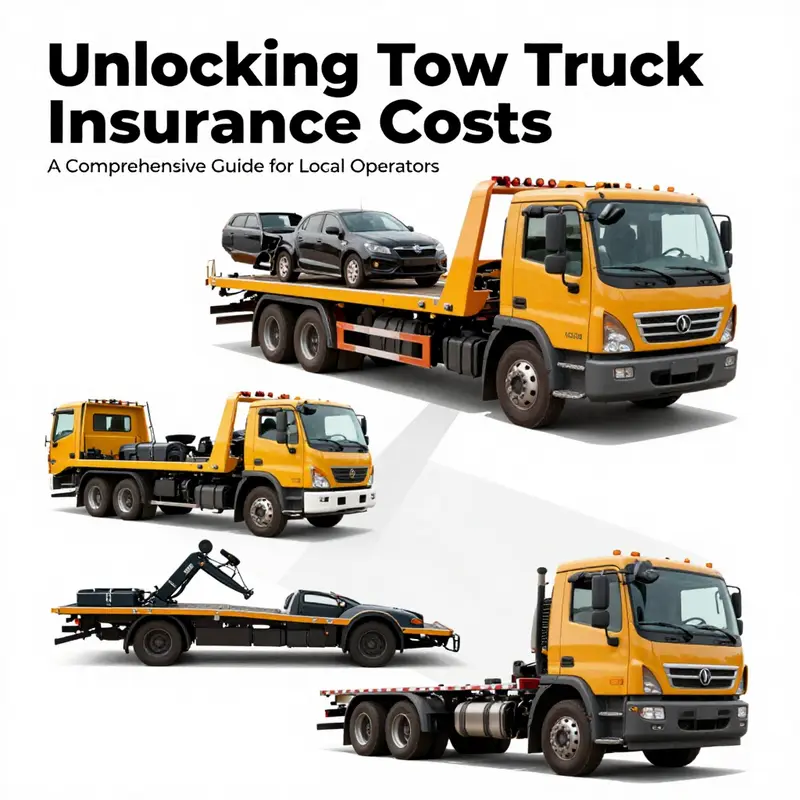
Understanding how the type of tow truck you operate shapes insurance costs is essential for owners and fleet managers. Insurance underwriters price risk based on vehicle capabilities, typical job tasks, repair complexity, and the environments where the truck is used. That means two companies with similar revenue and claims histories can pay very different premiums if one uses flatbeds while the other deploys rotators. This chapter walks through those differences in a single, connected narrative so you can see why premiums follow the patterns they do and how to make choices that control cost without sacrificing coverage.
Insurers evaluate tow trucks first as tools. A flatbed, a boom, and a rotator are not only mechanically distinct; they represent distinct operational profiles. A flatbed carries vehicles securely on a platform, usually with minimal on-scene lifting or winching. A boom or wheel-lift performs sideways or vertical lifts, often in tighter spaces or during accident recovery. A rotator has a multi-ton, rotating boom and is deployed for large, complex recoveries, such as overturned tractor-trailers or heavy equipment. Those differences drive frequency of claims, severity of potential loss, and cost of repairs—all core inputs to premium calculations.
Consider the flatbed first. Its design reduces contact between the towed vehicle and the road. That lowers the likelihood of damage while in transit. Repairs after collisions are typically limited to the truck’s bed, winch systems, and suspension. Because those components are less exotic than specialized hydraulic booms or rotating gearboxes, repair costs are comparatively modest. In practice, insurers view flatbeds as lower risk. The resulting premiums reflect that: many operators pay in the lower end of the commercial tow spectrum. For a single, well-maintained flatbed driven by an experienced operator with a clean record, annual premiums often fall into a relatively affordable band.
Moving up the complexity ladder, boom tow trucks—those equipped with hydraulic booms, winches, and optional wheel-lifts—present more varied exposures. They frequently work at accident scenes, in tight urban environments, and on the sides of highways. That operational diversity increases the chance of claims for both physical damage and liability. Booms rely on hydraulic systems, intricate controls, and load-rated hardware. When those systems fail, repairs are costlier than flatbed work and may require specialized technicians. Moreover, boom operators often work where traffic, weather, and time pressure add to risk. Because insurers price both the likelihood and potential cost of loss, boom-equipped trucks attract higher premiums than flatbeds. The difference is not marginal: expect insurance to move into a middle tier for these trucks, reflecting increased complexity and exposure.
At the top of the cost scale sit rotators. These machines are engineered for the heaviest recoveries. A rotator’s rotating boom, heavy-duty winches, and complex hydraulics enable it to lift and roll large vehicles safely, which is invaluable in severe incidents. That capability, however, comes with elevated risk. Rotator operations often occur on busy interstates, at industrial sites, or during multi-vehicle incidents—scenarios where casualty and property damage potential are high. When an incident involves a rotator, repair bills for the tow truck itself can be extremely large, and third-party damages can escalate quickly. Additionally, the specialized nature of rotator components and the scarcity of trained technicians means longer repair times and higher labor costs. Underwriters account for these factors by placing rotators in a high-premium band. Insurance for these trucks often commands a substantial annual outlay, reflecting both the severity of losses they may be involved in and the specialized coverage they require.
This progression—flatbed, boom, rotator—maps to premium trends because each step increases the insurer’s expected cost per claim. Flatbeds tend to generate more frequent but lower-severity claims. Booms see fewer everyday claims than flatbeds but expose carriers to more severe incidents during recoveries. Rotators, while not involved in the daily tows of ordinary passenger cars, face the rare but catastrophic losses that insurers price into annual premiums.
Driver factors and operational context modify the picture. A well-trained driver with a long, clean history reduces risk regardless of truck type. Many insurers provide discounts for documented training programs, safety protocols, and telematics that monitor behavior. Conversely, drivers with recent accidents or violations increase premiums. Location matters too. Urban fleets operating in dense traffic face more minor-collision exposure and higher theft or vandalism risk. Rural operations may see lower frequency but greater exposure to severe incidents and environmental hazards. Climatic factors—ice, flooding, or coastal salt air—affect corrosion and claims frequency. Insurers integrate all this context when producing a quote, so the same rotator in two different regions can carry very different price tags.
Fleet size also changes economics. Small operators insuring a single unit have limited bargaining leverage and fewer data points to demonstrate risk control, so their per-truck cost tends to be higher. Mid-size and large fleets can spread risk, implement standardized safety programs, and negotiate fleet discounts. However, growth without controls can increase aggregate exposure and claims, which can negate volume discounts. Insurers look closely at fleet management—driver hiring practices, maintenance records, and incident response plans—when setting rates. Investment in preventive measures often yields lower premiums over time, especially for higher-risk truck types.
Coverage selections directly affect cost and must align with operational realities. A basic liability-only policy protects against third-party bodily injury and property damage. Adding comprehensive and collision covers physical damage to the tow truck itself, which is especially important for booms and rotators. Cargo coverage protects the vehicles being towed; this can be a major factor for flatbeds that carry customer cars and for rotators that sometimes transport heavy machinery. Hired and non-owned auto liability matters if contractors or rented units are used. Specialized endorsements—covering things like pollution cleanup after fluid spills, specialty equipment failure, or roadside assistance tools—add premium but close exposure gaps that become costly after an incident. Choosing limits and deductibles is a balancing act: higher limits reduce the chance of catastrophic out-of-pocket costs but increase premium, while higher deductibles lower premium but raise retained loss.
Insurers also weigh equipment value and replacement cost. A rotator with a multi-ton boom and recent electronic controls represents a higher replacement cost than an older flatbed with basic hydraulics. Newer equipment may be more reliable and safer, but replacement costs are higher. Some owners opt to self-insure minor losses or set up captive arrangements when they can accurately predict loss patterns. That strategy often serves larger fleets with robust risk management but is rarely practical for small operators.
Claims history is a blunt but decisive instrument. Frequent soft claims—minor dents, fender-benders—signal operational laxness and push premiums up. A string of severe claims, even if infrequent, can trigger rate hikes or underwriting changes. Insurers reward documented safety investments: routine maintenance logs, operator certification, and a formal incident investigation process reduce loss frequency and severity over time. For higher-risk truck types, demonstrating rigorous controls can materially narrow the premium gap when compared to operators with weaker programs.
Practical tactics to control cost vary by truck type but follow shared principles. For flatbed owners, focus on load securement, regular bed and winch inspections, and driver training for loading and unloading. For boom operators, invest in hydraulic system maintenance and scenario-based training for recoveries in confined spaces. Rotator fleets should prioritize certified operator training, redundant safety checks, and relationships with specialty repair shops to manage downtime and cost. Across all types, installing telematics and cameras can both deter risky behavior and provide evidence that can reduce liability after incidents. Many insurers will lower rates when presented with telematics data showing safe driving patterns.
Negotiation strategies with insurers differ too. Use precise exposure data: hours of operation, average tow value, and the proportion of high-risk jobs. For specialized fleets, consider brokering with firms that understand heavy recovery operations; they can package coverage and negotiate terms that reflect real exposure rather than a generic rating model. For smaller operators, bundling commercial auto with garage liability, physical damage, and cargo on a single policy can produce efficiencies.
The overall takeaway is straightforward: tow truck insurance cost tracks the combination of capability and exposure. Flatbeds cost the least to insure because they minimize on-scene handling and use simpler mechanics. Booms increase exposure with more frequent on-scene lifts and more intricate hydraulics, pushing premiums into a middle tier. Rotators, designed for the heaviest recoveries and the riskiest situations, sit at the high end of the spectrum because of potential severity and specialized repair needs.
Understanding these dynamics lets owners make informed decisions. If your business model centers on light recovery and short, urban tows, a flatbed minimizes both operational risk and insurance spend. If your work demands more lifting versatility, a boom can expand service but plan for higher insurance and maintenance costs. If you aim to serve the highest-risk recoveries, budget accordingly for insurance that reflects that responsibility.
Finally, reach out to carriers or brokers who specialize in commercial auto and towing operations. Specialists can tailor coverage to truck type and operational mix and often provide guidance on risk controls that reduce premiums. For more on industry benchmarking and policy comparison, consult the National Association of Mutual Insurance Companies (NAMIC): https://www.namic.org. For operational best practices that also affect insurance pricing, see guidance on essential fleet emergency response strategies in the internal resource on essential fleet emergency response strategies.
Pricing the Risk: How Location and Driving History Shape Tow Truck Insurance Costs
Beyond the glare of flashing amber lights and the steady tread of tires on wet pavement, the cost of tow truck insurance is a careful arithmetic of risk. The price tag isn’t driven by a single factor, but by how much exposure an operator creates in a given place and under specific driving conditions. For anyone running a tow operation, understanding how location and driving history feed into premiums is not just academic. It’s a practical compass that helps fleets and solos alike plan, quote, and ultimately operate more responsibly while guarding the bottom line. What makes this chapter essential is the simple, unvarnished truth: insurance costs rise where risk is higher, and they fall where risk is mitigated. Location and driving history are two of the most influential levers in that equation, shaping whether a policy sits comfortably in a budget or lands with a thudding weight on monthly statements.
Location matters because risk isn’t distributed evenly. Towing services operate at the intersection of stranded motorists, crowded roadways, and, often, unforgiving urban or suburban environments. In cities with dense traffic, mishaps can cascade quickly, and response windows become shorter as more cars weave through lanes and fender-benders multiply at intersections. The result is more frequent claim activity and, consequently, higher premiums. In contrast, rural routes may present fewer incidents per mile but can introduce other exposures, such as longer response times, higher repair costs due to remote locations, or the need for specialized equipment to handle accidents on limited-access highways. Insurers model these exposures by looking at accident rates, theft trends, and overall activity in a truck’s operating area. They’re not just counting incidents in a vacuum; they’re assessing how likely a given tow operation is to file a claim based on where it runs and the kinds of roads its drivers navigate.
The chapter’s focus on location goes deeper than urban versus rural. The regulatory and legal landscape of a state or region can subtly shift premium calculations as well. Some jurisdictions impose stricter liability limits or require higher levels of coverage for certain kinds of towing work, such as handling hazardous materials or operating in high-traffic lanes. Where regulations tilt liability and compliance costs upward, insurers respond with corresponding adjustments to premium thresholds. An operator who runs in a region known for rigorous lawsuits or higher medical costs can see a premium that reflects those financial sensitivities. The effect isn’t about fear or exaggeration; it’s about aligning insurance coverage with real, location-based risk exposure. The more accurate a provider can be about the environment in which a tow truck operates, the more precise the pricing can be. And for fleets or single operators alike, refining location data can be a practical way to secure fair quotes and avoid paying for risk that isn’t present on a day-to-day basis.
But location isn’t the only dimension shaping insurance costs. Driving history is the other half of the equation and, in many cases, the more decisive half. A clean driving history signals to underwriters that the operator has not only navigated crowded roads but has demonstrated consistent, safe conduct behind the wheel. This track record translates into meaningful discounts in many commercial policies, especially when paired with solid vehicle maintenance and proactive risk management. Conversely, even a single at-fault accident, a string of speeding tickets, or a DUI can tilt the risk assessment toward higher premiums. The underwriting process often requires a detailed review of the driver’s history, with particular attention paid to the frequency and severity of infractions, the recency of those incidents, and the length of time since the last claim. Some insurers may apply surcharges or impose caps on coverage for drivers who have multiple violations in a short period or a recent history of serious crashes. The impact can be immediate, affecting quotes not just for a single year but potentially for several renewal cycles as the risk profile lags behind the present in the insurer’s books.
From a practical standpoint, locations with high traffic density, complex road networks, and frequent tow opportunities tend to produce more claims—think urban corridors where delays, blocked lanes, and roadside hazards meet the inevitability of human error. In such environments, premiums naturally trend higher as the insurer’s exposure rises. This is compounded when the tow operator’s work involves late hours, nocturnal dispatches, or operations near nightclubs, sports venues, or industrial zones where vehicles and pedestrians mingle in unpredictable ways. In those settings, the likelihood of incidents—whether a collision during a heavy tow operation or damage to a towed vehicle during loading and unloading—can be higher. The insurer’s job then is to price that risk in a way that sustains the policy’s protection for both the business and the insured driver while remaining sustainable for the payer. In rural settings, the calculus shifts, but not in a way that guarantees lower costs automatically. Fewer incidents per mile may exist, but distances can be longer and response times more variable. The value of the policy might hinge on other factors, such as the fleet’s maintenance standards, the driver’s experience in handling heavy-duty equipment, and the operator’s risk management practices. In the end, both location and driving history shape a precise mosaic of risk that a thoughtful insurer uses to determine premiums.
As drivers and owners contemplate these dynamics, it becomes important to translate the abstract risk into actionable steps. How can a tow operation manage location-based risk and the consequences of a driver’s history? The answer lies in a blend of strategic planning, robust safety programs, and transparent communication with insurers. Start by mapping the operational geography with a critical eye. Are the trucks routinely in high-traffic urban cores, or are they primarily serving a regional network that includes highways, industrial parks, and suburban streets? The more granular the mapping, the better the risk picture becomes. Operators can then align routes, schedules, and dispatch practices to balance service needs with risk controls. For instance, dispatch patterns that reduce peak-hour exposure in the most congested corridors, paired with well-timed maintenance checks and driver briefings, can contribute to fewer incidents and, over time, to lower premiums.
Beyond geography, the habits and training of the drivers themselves play a central role. A driver who has completed advanced safety and vehicle-handling courses, demonstrated a history of careful lane positioning, and consistently complied with company and regulatory standards sends a powerful signal to underwriters. Documentation of ongoing training, regular performance reviews, and a culture of accountability can help convert location and history into more favorable pricing. In practical terms, insurers often look for verifiable indicators of low risk: timely maintenance logs, evidence of driver coaching, incident-free periods, and well-documented safety protocols. The combination of a well-managed local environment and a disciplined driver team can significantly modulate the cost of coverage, sometimes even offsetting what might otherwise be a higher price due to fleet size or the presence of specialized equipment.
The way premiums respond to driving history is not purely binary. It’s a gradient, reflecting how recently an infraction occurred, the severity of past incidents, and the consistency of a driver’s record over time. A clean record over a multi-year span, with no accidents or violations, tends to yield meaningful credits. These credits can compound with other risk management measures, such as adopting telematics to monitor braking, acceleration, and speed, or implementing yard-management practices that reduce the chance of theft or damage to stored vehicles when not in use. Conversely, even a single DUI conviction in a driver’s past can trigger higher premiums, especially if it sits alongside other adverse history. Insurers may apply a surcharge rather than a complete denial of coverage, but the effect on the premium can be substantial. It’s important to remember that underwriting is not just about punitive measures; it’s about forecasting likelihood of future claims. A driver with a better-than-average record signals a lower probability of future costs, which in turn lowers the expected loss the insurer must reserve for that risk.
The practical path to navigating location- and history-driven pricing begins with quotes. A smart approach is to solicit multiple quotes from insurers who specialize in commercial vehicle coverage and who understand the towing and recovery space. When you provide details about where the trucks operate, the typical routes, and the drivers’ histories, you enable the underwriters to model risk more accurately. A clear, well-documented risk profile can yield a more favorable estimate, or at least a more precise one, than a generic blanket quote. The numbers in the space are telling: across the industry, the baseline range for a single tow truck’s annual premium sits roughly between one thousand five hundred and four thousand dollars, but there are outliers. In fleets with many heavy-duty units, specialty equipment, or operations in more exposed markets, the total cost can climb beyond five thousand dollars per year per vehicle. It’s not merely about the vehicle’s horsepower and weight. It’s about what those machines do, where they do it, and who is behind the wheel. When an operation pairs a cautious approach to location with a rigorous driver standard, it creates a narrative that insurers can quantify as lower risk and, in many cases, more stable premiums over time.
To capture the nuances of location-based risk and the subtleties of driving history, the quoting process benefits from a candid, data-driven dialogue with insurers. Share not just the basics of the fleet but the story behind the numbers. For example, explain how your team plans to limit exposure to the day’s most congested hours, detail the maintenance cadence that keeps fleets in peak condition, and provide evidence of ongoing driver training. The more precise the data, the more accurate the pricing will be. Meanwhile, a robust risk-management strategy—such as securing local storage yards, implementing checklists for loading and unloading procedures, and adopting best practices for vehicle recovery operations—will be viewed favorably by insurers, particularly when those measures are consistently applied across the fleet. These steps translate into tangible benefits: they can reduce the probability and severity of claims, improve the cost of risk calculations, and, ultimately, help keep insurance costs in a sustainable range.
An effective way to stay current with location-specific factors is to engage with industry knowledge sources and peers who share field insights. For operators who manage fleets on islands or in tight coastal corridors, for instance, regional considerations may include unique weather patterns, shoreline hazards, and specific regulatory environments. Providing context about these local realities can help insurers tailor their assessments more accurately, leading to prices that reflect the actual risk rather than an abstract profile. In this sense, the chapter’s topic becomes not just a pricing exercise but a risk-management strategy. When operators understand how location and driving history interact, they can align operations with safety goals and ensure that insurance coverage remains an enabler of service rather than a burdensome line item.
The broader takeaway is clear. Location and driving history are not mere inputs in a calculator; they are dynamic signals of risk that shape the price of protection. For tow operators, the path to more favorable pricing lies in a deliberate approach to geography, a disciplined and transparent record of driver performance, and a commitment to risk reduction across the board. The connection between where you work and how you work is real, and the costs attached to that connection reflect that reality. In practice, this means that a thoughtful operator will continuously monitor and improve the factors under their control: choose routes that minimize exposure during peak traffic, invest in driver training and performance metrics, maintain equipment to prevent breakdowns and costly recoveries, and document everything in a way that underwriters can readily verify. When these practices cohere, location-based risk becomes a manageable variable, and the corresponding insurance cost becomes a predictable, controllable expense rather than a constant surprise.
For readers who want to explore the topic further, a practical way to stay updated and gain actionable insights is to consult industry-focused resources such as that blog, which collects perspectives and experiences from practitioners in the tow sector. The conversations there can illuminate how peers in the field interpret location- and history-driven pricing in real-world terms. In the end, the goal isn’t simply to pay less for insurance; it’s to align coverage with actual risk in a way that supports reliable, efficient service. A well-structured safety program, transparent record-keeping, and a savvy approach to selecting operating locations all contribute to a healthier insurance outcome over time. And as markets continue to evolve, keeping a finger on the pulse of locale-specific dynamics—along with a commitment to continuous improvement—will remain essential for any tow operation aiming to balance risk with affordable protection.
To dive deeper into how these factors influence insurance decisions for tow operations, consider exploring industry commentary and case studies shared through relevant channels such as The Island Tow Truck Blog. These discussions offer practical examples from operators who navigate the everyday realities of location-based risk and driver safety, and they illustrate how the concepts discussed here play out in real-world scenarios. Readers can use these narratives to benchmark their own practices and to frame conversations with insurers around specific, evidence-based risk controls. While every operator’s landscape is unique, the core principle holds: understanding and actively managing the elements of location and driving history can translate into more accurate pricing and more sustainable coverage over the long term.
In sum, location and driving history together form the backbone of premium calculations in tow truck insurance. The urban corridor with its hustle and hazard demands careful risk modeling, while the quiet rural lane calls for a different, equally attentive approach. The driving record serves as the personal barometer of risk for the operator behind the wheel. When location-driven exposure is acknowledged and managed, and when a driver’s record reflects consistent, safety-forward behavior, insurance costs can reflect that disciplined reality rather than a blanket assumption about danger. This is not merely about reducing costs; it’s about aligning incentives so that safer driving, proactive maintenance, and smarter operational design become the norm. In doing so, tow operators can secure coverage that fits their needs and budgets, while insurers can offer products that reflect a well-understood risk profile. The end result is a working landscape where coverage remains available, premiums stay reasonable, and safety remains a priority that benefits everyone on the road.
As you move from theory to practice, remember that the steps you take now toward location-aware planning and driver safety can pay dividends when renewal time arrives. The process of obtaining quotes will always benefit from honesty, data, and a willingness to implement measurable improvements. And for readers who want to keep learning and connecting with peers, the interlinked knowledge ecosystem—ranging from industry blogs to specialist guidance—exists to support a more informed, cost-conscious approach to tow truck insurance. External resources can provide broader perspectives, while internal discussions and shared experiences help embed best practices within your operation. The overarching objective remains clear: to balance the need for robust protection with the realities of operating a tow business in a world where every mile and every driver matters. For operators who want to explore further, a practical next step is to review contemporary guidance and case examples available through relevant channels that focus on the towing community and its evolving risk landscape. External resource provide a broader lens on how to approach insurance decisions in this field, and they can help you contextualize your own numbers within a larger industry pattern. See a concise external reference here: https://www.insureandgo.com/insurance-for-tow-trucks.
Final thoughts
Understanding the various factors influencing tow truck insurance costs can significantly benefit local businesses in making informed insurance decisions. From vehicle types to location-based premiums, this knowledge allows operators to navigate the insurance market effectively. As your business evolves, regularly reassessing your insurance needs will ensure you maintain optimal coverage while managing costs, ultimately supporting the sustainability and growth of your operations.