Navigating the streets of Los Santos can be thrilling, but what if you could turn that thrill into profit? For local auto repair shops, car dealerships, property managers, resort operators, and commercial fleet operators, mastering the art of towing in GTA 5 can open doors to new revenue streams and richer gameplay. Each chapter in this guide will delve into the fundamental mechanics of using a tow truck, from locating and operating one to completing jobs and maximizing earnings. Prepare to shift gears and embark on a unique adventure that not only enhances your gaming skills but also enriches your understanding of virtual towing dynamics.
Tow Lines and Haul Paths: Finding, Entering, and Mastering the Tow Truck in GTA V
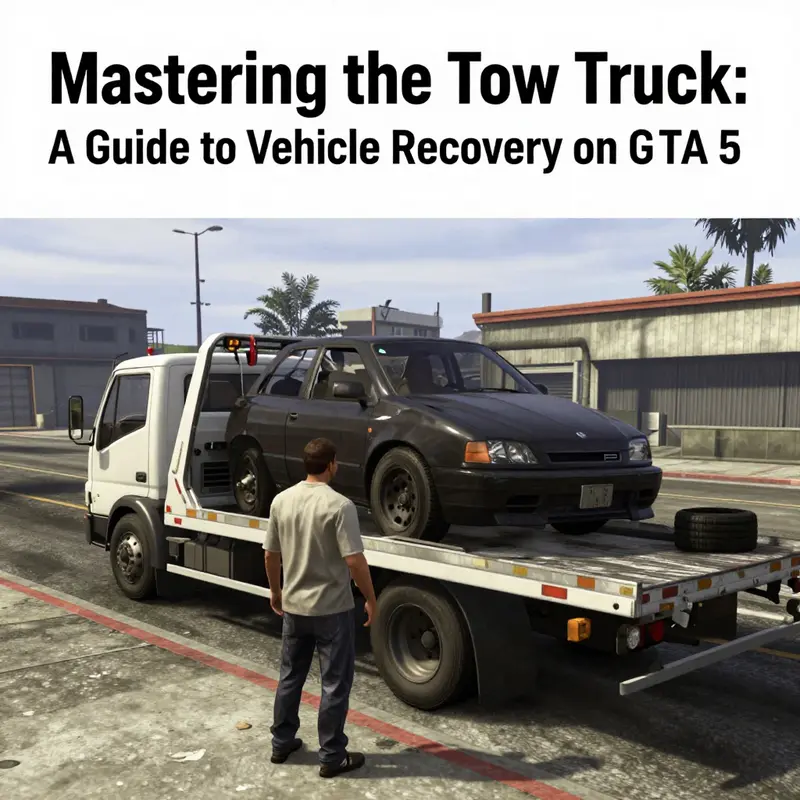
In Grand Theft Auto V, the tow truck is more than a service vehicle; it is a compact workshop that turns a routine pickup into a technical minigame. The charm lies in the search, the precision of approach, and the patience required to connect a stubborn vehicle without losing your rig or the cargo. The journey begins with a simple truth about GTA V’s open world: tow trucks do not always sit parked in a single lot. They pop up in the city’s nooks and crannies, waiting to be discovered by a curious driver who knows where to look. The most reliable starting points are the Scrapyard in the southeast, where salvage and scrap attract a steady stream of utility traffic; the Vehicle Management area near the Liberty City corridor, which offers occasional spawns for those who chase mission realism; and the airport district near Rodeo, where the tempo of traffic and the proximity to garages provide just enough operational cover to slip a tow truck into service. There are also moments when the game nudges you toward a tow task as part of a storyline, such as during Franklin’s Freak mission, where a tow is part of the objective and rewards you with a vehicle and momentum. These spawn dynamics reward patient exploration as much as quick reflexes, because the right moment to strike often arrives when you’re least expectant, and the right vehicle is the one that appears when the map finally lines up with your intent. This randomness mirrors real life in spirit, where the best tow days come not from a fixed timetable but from reading the city’s rhythm and choosing your lane accordingly. When you do locate a tow truck, the moment you approach and press the entry key—F on PC—the world shifts from a standard drive to a focused operation. You’ll slide into the cabin, take a breath, and begin to translate the city’s chaos into a controlled sequence. The dash lights glow with a practical purpose, and the control scheme reveals itself as a blend of familiar driving and specialized tools. The winch hook is not a cosmetic add‑on; it is the instrument that makes or breaks the mission. To prepare the hook for action, you’ll alternate between raising and lowering the equipment, using Shift to lift the hook or bed and Ctrl to lower it, guided by on screen prompts that show the hook’s alignment toward the target vehicle. This is where the game becomes a puzzle of distance and timing. You close the distance until the hook aligns with the target’s front or rear anchor, and you hold to allow the grappling mechanism to engage. A successful grapple sends a subtle jolt through the tow line and, if the connection holds, the towed vehicle becomes an extension of your own platform, ready for transport. The lesson here is simple yet essential: keep the vehicle steady and the speed modest. The moment you try to treat the tow like a drag race, you risk loosening the hook, slipping the load, or tearing the car from its grip. The mechanics are forgiving enough to let you recover, but the best crews internalize a steady pace as part of their core routine, a discipline that translates into fewer failed hooks and shorter mission times. Once the hook is set, you’ll drive with a heavy beast attached to your rear. The handling changes in noticeable ways: the truck becomes sluggish through corners, the braking distance grows, and the risk of detaching the load increases if you push beyond a safe tolerance. These are not inconvenient quirks; they are the game’s way of forcing you to adjust your approach and to respect the physics engine. Your route to the destination—whether a parking lot, a repair shop, or a recovery yard—becomes a careful choreography. You steer with deliberate inputs, using gradual acceleration, measured turns, and a crawl through tight spaces that would challenge a standard sedan but are perfectly manageable with a practiced hand. Reaching the drop point, you detach with a deliberate press of the detachment command, often mapped to H on PC, or as prompted on screen. The released vehicle settles onto the ground with a weightless finality that signals mission completion and the credit that appears in your wallet, a modest payoff that fits the task’s scale. In free roam you can repeat this ritual as many times as you like, which makes tow work one of the more reliable earners among the city’s activities. The payoff is modest—roughly 50 to 100 dollars per task—yet the cumulative effect of repeated runs can feel substantial, especially when you factor in the variety of scenarios you encounter: clean loads on well‑maintained cars, awkward loads on damaged vehicles, and the occasional curveball when traffic refuses to cooperate. A crucial detail that separates seasoned tow operators from casual players is the choice of platform. The flatbed option allows a vehicle to drive onto the trailer with relative ease, ideal for moving intact cars quickly and with minimal risk. The hook and bed approach, on the other hand, demands more precise positioning, but it is invaluable for vehicles that cannot simply roll onto a platform. In both cases, your success hinges on your ability to read the environment and to exploit the city’s geometry to your advantage. This is not a matter of brute force; it is a quiet, practiced craft that rewards a measured approach over reckless speed. To enhance your effectiveness, keep a few practical tips in mind. First, prefer non accident vehicles when possible; they are easier to secure and less likely to shift mid transport, which reduces time spent stabilizing the load. Second, anticipate obstacles and traffic snarls, timing your pickup so that you can depart with the least resistance. Third, when you need to reposition a hook, use the on screen cues and test the hold before attempting a full move. Finally, experiment with both the flatbed and the traditional hook setup to discover which configuration suits your style and the mission at hand. This adaptability is what ultimately makes the tow truck a flexible instrument in the GTA V toolkit, capable of supporting a wide range of tasks and offering a steady, if modest, stream of income. If you crave a broader perspective on how to integrate tow operations into larger fleet tasks, the The Island Tow Truck Blog provides expanded tips and real world parallels that complement the game’s mechanical core. It presents a measured view of time management, resource allocation, and route planning that resonates with the city’s bustle while staying firmly grounded in practical strategy. For readers who want to bridge in depth with practical notes about towing workflows, this external resource can be a helpful companion as you expand from local pickups to more complex operations. Link: The Island Tow Truck Blog. As you explore the city’s lanes and alleys, you will discover that the tow truck is not merely a tool for moving vehicles; it is a doorway to a rhythm of play that rewards patience, precision, and a calm approach to problem solving. Each successful hookup expands your confidence, and each completed run reinforces the idea that mastery in GTA V comes from refining a process rather than forcing a result. The city rewards those who learn to navigate with care, and the tow truck, with its compact crane and sturdy flatbed, stands as one of the most faithful instructors in this vast, living world. For a deeper dive into the vehicle itself and to compare its variants, you can consult broader gaming resources that summarize the tow truck’s role in the wider GTA universe. External resource: GTA Tow Truck – GTA Wiki.
null
null
在洛圣都完成拖车连接:GTA 5中的实战操作与安全要点
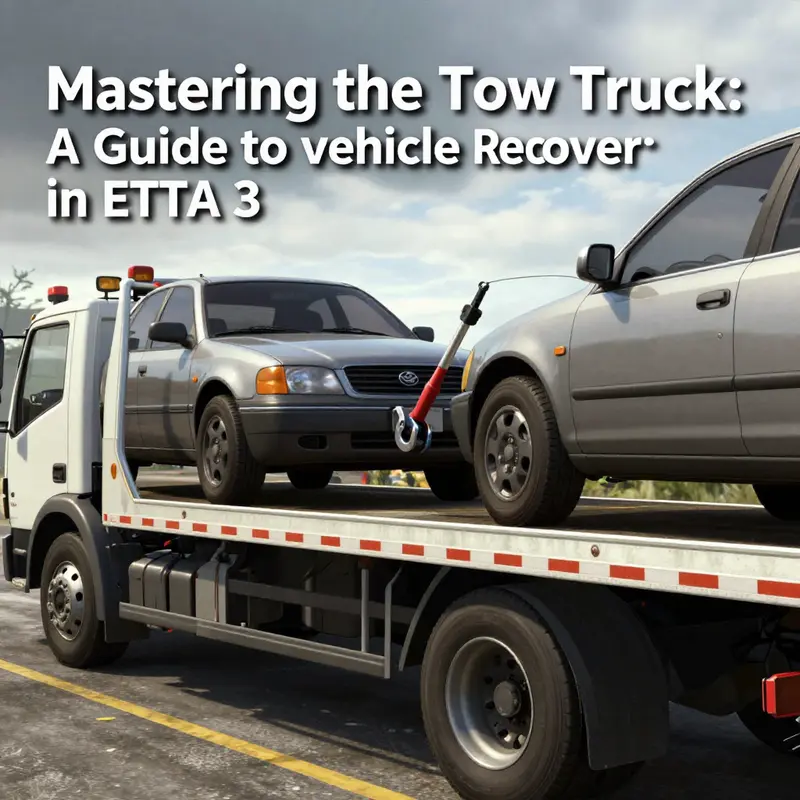
在GTA 5的世界里,拖车工作并不像现实世界那样繁琐,但它要求玩家在瞬间做出判断,快速执行动作。无论是应对任务中的突发事故,还是完成指定运输,成功的关键是流程的顺畅、操作的精准,以及对周围环境的敏感。玩家需要把注意力放在三个方面:设备、目标和路径。通过对这三者的协调,拖车任务能够变得高效且可预测。首先,找到并驾驶拖车。打开地图清单,搜索Tow Truck或Tow Truck (Flatbed)的位置。在洛圣都的工业区、港口周边,或者特定任务地点,通常能遇到这类车辆。玩家将拖车驶到目标车辆附近,准备进行连接。接下来是连接。靠近需要拖拽的车辆时,按下默认按键E,启用绞盘系统。绞盘的钩子会自动对准目标车的前部。确保目标车辆处于静止,距离适宜,否则就无法成功连接。连接成功后,继续操作。按住E或F键(取决于设置)启动拖拽,拖车臂会平稳伸出,开始向指定地点移动。控制好速度,避免急转弯或突然制动,以免造成二次事故或断钩。若遇到坡道或拐弯,放慢车速,保持方向盘的稳健。将车辆拖到指定地点时,地点通常是任务要求的停车场、维修厂或回收站。在HUD上会显示目标地点的标记,选择合适的路径,避免障碍物和其他车辆。 Flatbed拖车模式下,车辆也可自行驶上平台,这在移动完好车辆时尤为有用。这意味着你可以让被拖车辆更平稳地安置在拖车板上,减少在运输过程中的晃动。完成任务后的处理。系统会给予虚拟奖励,具体数额随任务难度而定。中等难度的任务通常带来更多收入。即便是在自由模式,你也可以重复执行这一流程,积累财富与经验。在现实世界的指引与游戏机制之间,仍有差距,但这并不妨碍我们汲取一些有用的原则。安全始终是第一要务。游戏中的你也应考虑避免对他人造成风险。若你要进行更复杂的拖运,建议在实际场景中学习并遵循当地法规。为了让这项工作在大规模任务中更有章法,可以把应急响应的框架引入游戏。对于将拖车工作整合到更广阔的任务网络,这里提供一个行业层面的视角,参考如下资源: essential-fleet-emergency-response-strategies。此外,当你需要依据现实世界的规范来安排拖运路径时,值得留意官方信息的更新。比如在部分地区的救援模式中,车主可以通过官方平台自主选择目的地,甚至在救援完成后由系统提醒并提供选择余地。这样的概念在GTA的任务设计中也有折射:玩家有时需要在多个地点之间进行快速选择,确保在规定时间内完成运输。在现实世界的规范方面,外部参考资源也提供了有益的指引。省级交通主管部门发布的高速公路救援一体化服务指南,强调了安全距离、应急信号和合法合规的送修选项等要点。请参考以下外部链接以获取更具体的要求和流程: https://www.zjtraffic.gov.cn/zhengce/2026/02/09/123456.html
完成后的回收与奖励:在洛圣都拖车任务中实现工作闭环与持续收益
在结尾的实践层面,不要忽视对社区资源的利用。你可以向同伴学习,了解他们如何在不同任务情境下管理时间、分配资源、处理风险。将这些经验汇聚成可执行的操作清单,逐步融入你的日常任务模式。并且,不要忘记把你所学的经验通过可分享的方式记录下来,或在 The Island Tow Truck Blog 这样的资源中进行转述和对比,既能增强自己的理解,也能帮助其他玩家提升效率。通过持续的学习与分享,你在洛圣都的拖车任务不仅仅是一次次的运输动作,更是一次次技能的积累与职业习惯的养成。
驾驭拖车,建立稳定收入:GTA 5 在线模式的拖车策略与财富之路
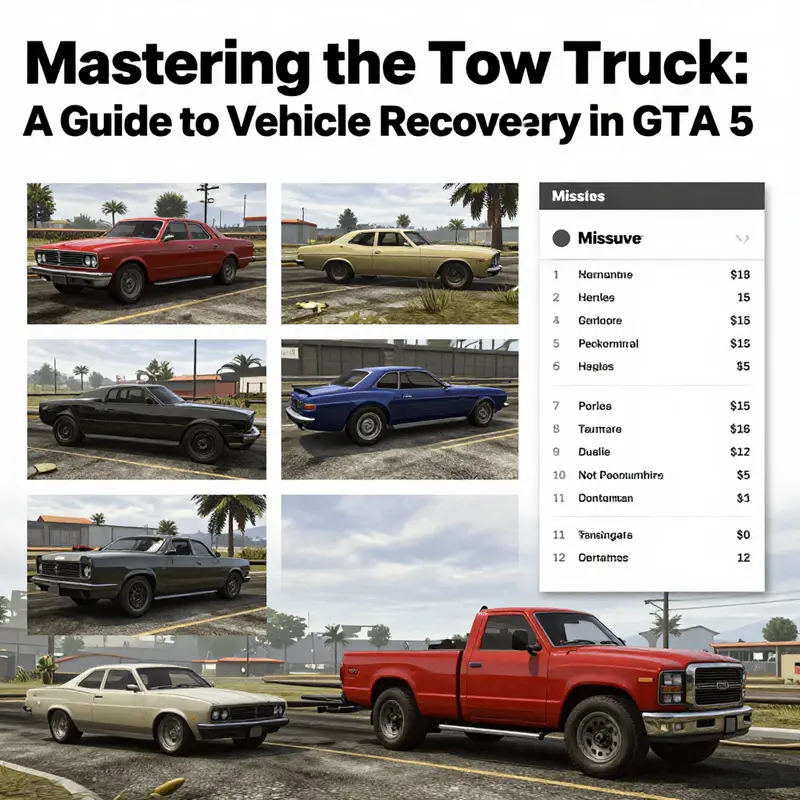
在洛圣都的霓虹与警笛声中,拖车工作在 GTA 5 的在线世界里远不只是单纯的搬运任务。它被设计成一条持续、可观的收入线,尤其适合那些希望通过长期努力来积累财富的玩家。你可以把拖车当成一个起点,逐步把资产组合扩展成一个完整的小型产业。要想真正实现这一点,必须先理解系统的运作方式、选择合适的投入点,并在日常操作中保持耐心与策略性。整条收入链围绕一个核心资产展开——拖吊车的服务体系,以及回收站这座资产的核心设施。你需要购买一辆拖吊车,并将其停放在自己的回收站内,这个回收站在玩家的资产自定义中归属你自己。回收站不仅是一个停放空间,它还具备一个“空闲汽车举升机”的功能,用来处理从街头拖运来的违章车辆。系统一旦开启拖吊车服务,就会自动从街头把被警察标记为违章或非法停放的车辆拖到你的回收站。随后,举升机的机械臂会对接并拆解这些车辆,玩家因此获得稳定的被动收入。这样的机制设计使得拖车工作从某种意义上成为一个持续的被动收益来源,而不是一个一次性的任务奖励。
Final thoughts
Having a solid grasp of how to operate a tow truck in GTA 5 can transform your gameplay experience and offer lucrative opportunities for earning in-game currency. Through pinpointing where to find these trucks, mastering the art of vehicle recovery, and strategically completing missions, you can maximize profits while enhancing your skills. As you explore this fascinating aspect of the game, remember that every successful tow not only benefits your virtual finances but also enriches your adventure in Los Santos. Embrace the world of tow trucking and let it elevate your gaming journey.