
Tow truck drivers play a crucial role in the automotive service ecosystem. Salaries are influenced by location, experience, fleet demand, and the type of work performed. This guide examines earnings for tow truck drivers in Canada, the United States, and Australia, providing a global snapshot with practical insights for auto repair shops, car dealerships, property managers, resort operators, and commercial fleet operators.
Tow Truck Driver Salaries in Canada: An In-Depth Look at What a Year of Driving, Towing, and On‑Call Hours Actually Pays
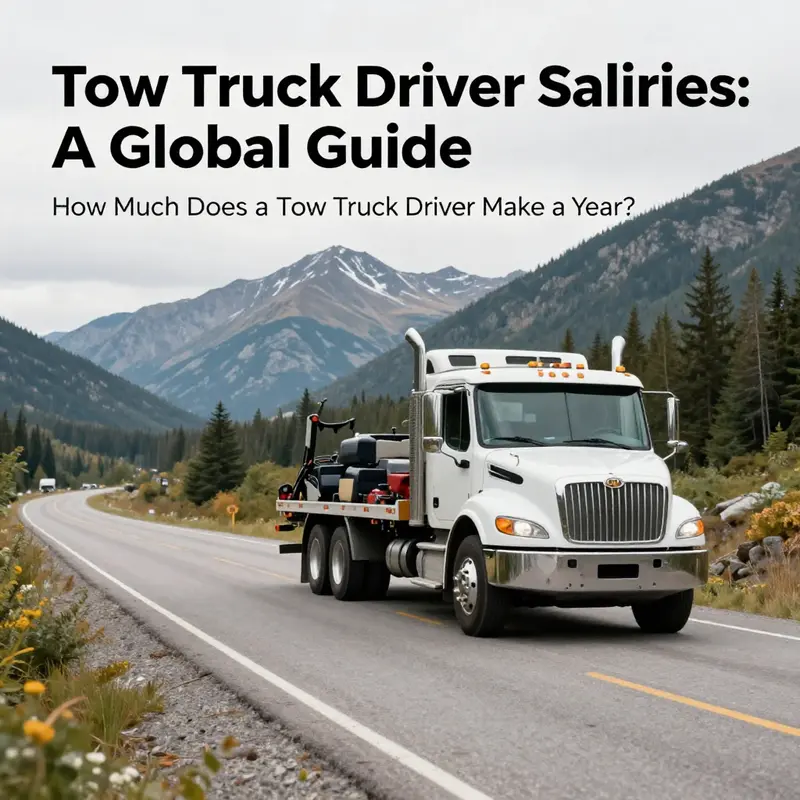
When people ask how much a tow truck driver makes in a year, the question sounds straightforward. Yet the answer is rarely a single number. In Canada, the paycheck of a tow truck operator is shaped by a mosaic of factors: where you work, how much experience you bring, the kind of towing you do, and whether overtime or on‑call hours tilt the annual total upward. Readers familiar with the broad strokes of wages know that urban centers tend to pay more, that specialized roles pay a premium, and that the same job title can hide a wide range of day‑to‑day realities. This chapter pulls those strands together, offering a coherent view of the Canadian landscape for tow truck drivers, while also placing the numbers in a broader international context to illustrate just how varied the market can be.
In Canada, the national snapshot for tow truck drivers starts from a relatively modest footing. The most widely cited figure for the national hourly wage sits around $17.75. Multiply that by a typical full‑time schedule—often approximated at 2,000 hours per year, which corresponds to 40 hours per week for 50 weeks—and you arrive at about $35,500 as a rough annual baseline. This baseline reflects the average of many reports collected up to late 2025 and presented for early 2026. It is not meant to be the ceiling, nor is it a guarantee for every driver on every pay period. Instead, it functions as a practical yardstick, a starting point for understanding what is possible, and what tends to determine the variance around it.
What makes the Canadian wage landscape so interesting is how province, employer, and job type pull the numbers in different directions. Take British Columbia, for example. In BC the average hourly wage for tow truck drivers sits a touch higher than the national average at about $17.85 per hour. That pushes the annual figure, under the same 2,000‑hour assumption, to roughly $35,700, more or less in line with the national baseline but reflective of a market where urban demand and cost of living exert steady pressure on wages. The difference may seem small, but when you map it across 365 days in a year and across dozens of employers, the cumulative effect is meaningful for someone weighing career options, negotiating pay, or deciding whether to relocate for a better job mix.
Opposite to British Columbia’s slight premium, Alberta’s average sits a bit lower, around $16.01 per hour. On the surface, that translates to about $32,000 a year under the same standard 2,000 hours. The Alberta figure echoes a broader pattern in some resource‑rich western provinces where wage levels in certain non‑urban roles are tempered by a higher regional labor supply and different market dynamics. Yet even within Alberta, there are pockets of strong pay for experienced drivers who handle heavy recovery or specialized equipment. And this is a crucial point: the provincial average is not the entire story. Individual postings, company scale, and whether a role involves long‑haul, flatbed work, or night shifts can push the annual compensation well beyond the provincial mean for the right combination of skills and hours.
Hiking into the urban core reveals more explicit pay differentials. In and around the Vancouver area, for instance, the numbers tend to tilt upward. Richmond, a city in the metro area known for its continuous demand for roadside services and recovery work, features an hourly average that has climbed to around $24.06. That higher rate translates to roughly $49,900 per year if one clocks 2,000 hours, nearly $15,000 more than the national baseline. These numbers underscore something important: urban centers, with denser traffic, higher incident rates, and greater demand for rapid response, create a premium for drivers who are able to deliver timely service, handle heavier equipment, and maintain on‑call readiness.
Across the border and around the world, the Canada story sits within a broader global context that makes the trade‑off between hours, risk, and pay more visible. In the United States, the typical hourly wage sits around $21.23, equating to about $44,100 per year on the same 2,000‑hour framework. That higher U.S. average reflects several factors, including different regulatory structures, union influences in some markets, and a labor market that continually values 24/7 roadside assistance highly in transportation corridors. These figures aren’t a standard to be directly compared without nuance, but they help illuminate how Canada’s wage picture is part of a larger spectrum of earnings for tow‑truck professionals in North America.
On the other side of the world, the Australian market also offers a telling contrast. In New South Wales, tow truck drivers earn about $1,264 per week, which works out to roughly $65,728 per year. The Australian data emphasize not only currency differences but also price levels and the structure of wages that support a robust roadside service sector in that country. The take‑away here is that a tow truck driver’s annual earnings don’t exist in a vacuum. They are part of a global pattern where geography, demand density, and the cost of living influence the financial rewards of this line of work.
Within Canada, the most revealing picture emerges when we account for the variability in employers and the kinds of towing work drivers perform. Some of the larger logistics and service outfits in the country are known to offer higher ceilings for compensation, especially for drivers who carry heavy loads, work long or irregular hours, or operate specialized equipment such as heavy‑duty tow rigs or flatbeds. For example, there are mentions in the data of substantial pay ranges for experienced drivers or for those taking on more demanding roles. A range such as $75,000 to $110,000 per year is not unheard of for drivers with significant seniority or who perform heavy‑haul or complex recovery work in large fleets. These figures, when reported, tend to reflect top‑tier positions rather than entry‑level driving jobs. They illustrate how wage growth can outpace the baseline when skill specialization, hazardous duty, or extended on‑call commitments come into play.
There is also a cautionary note that must be included when reading salary data from any industry. Different sources may present higher–end numbers that capture only a subset of roles or regions. For instance, a claim such as an hourly average of $23.00 and an annual figure of roughly $289,870 may reflect a particular job level or title within a given organization, perhaps involving a senior premium, a supervisory function, or a highly specialized service line. While such figures help paint a complete picture of what can be earned in rare circumstances, they can be misleading if taken as the norm for all tow truck drivers. The practical reality is that many drivers earn well within the baseline range, with occasional spikes for overtime, bonuses, or specialized assignments. The broader lesson is to view salary data through the lens of role, experience, and local market conditions, rather than as a single universal number.
What do these patterns mean for someone choosing a path in tow work? First, it means that a driver’s yearly earnings are highly sensitive to where they work. Urban and coastal centers, particularly in provinces where demand for rapid roadside assistance is persistently high, will typically offer higher hourly rates and more frequent overtime opportunities. Rural and remote communities, by contrast, may present less competition but also fewer hours in some seasons, which can balance out to a similar or even lower annual income unless compensated by premium pay, longer on‑call periods, or seasonal surge work.
Second, the message from the data is that experience matters, and the kind of work matters. An operator who can handle heavy recovery situations, operate a flatbed during peak demand periods, or manage complex multi‑vehicle incidents will naturally command a higher wage than someone performing lighter, standard towing tasks. The market rewards the technician who can minimize downtime, increase speed without compromising safety, and adapt to shifting job requirements—whether that means overnight work, weekend standby, or the ability to respond to high‑risk calls in hazardous conditions. The incremental earning potential from these capabilities is not just a matter of higher hourly rates; it also arises from more efficient routing, less vehicle downtime, and stronger reliability ratings with clients and dispatch teams.
Third, compensation in this field cannot be judged by salary alone. Benefits, job security, retirement contributions, health coverage, and the value of a steady schedule can substantially alter the effective value of a job. A position with a modest hourly rate but strong benefits or predictable overtime can outpace a higher‑hourly role that offers little in the way of extras. In an industry that often operates on unpredictable, on‑call demand and variable hours, the total compensation package becomes a critical dimension of career satisfaction and financial stability. In this sense, the economics of tow work mirror many other skilled trades where the true value is a blend of direct pay, voluntary overtime, and the often overlooked but meaningful components of job security and benefits.
For readers who want to connect these regional patterns to practical career decisions, a few lines of advice tend to hold true across the board. First, if your goal is to maximize your annual income in a Canadian setting, positioning yourself in urban hubs with active fleets and a variety of heavy‑duty assignments can be a prudent strategy. Second, investing in specialized training—such as flatbed operation, heavy recovery techniques, or winching advanced systems—can unlock higher wage brackets that compensate for the additional skill and risk involved. Third, staying flexible about schedules—being available for nights, weekends, and on‑call shifts—often translates into more overtime and, over time, a higher annual total. Finally, seeking out opportunities with employers that offer robust overtime policies, strong safety programs, and clear pathways for advancement can help convert a modest base wage into a robust yearly income as your experience grows.
To give readers a practical sense of the real‑world numbers in the Canadian market, consider how a driver’s annual total might evolve with experience and role. A newcomer who works a steady 40 hours per week in a smaller city might hover near the national baseline, with annual earnings in the mid‑$30,000s. As experience accrues and the driver takes on more demanding tasks or supervisory responsibilities, the hourly rate or the overtime premium can add a few dollars per hour, and the annual total may climb into the upper $40,000s or even beyond $50,000 in certain urban settings where demand is persistently high. For the most seasoned professionals who specialize in heavy recovery or who work for larger fleets with regular on‑call duties, the annual total can approach six figures—but it is essential to recognize that those figures represent a smaller subset of the overall driver population.
In closing the practical portrait, the Canadian tow truck driver’s income embodies the balance between steady labor and the volatility of emergency work. The base wage provides a reliable foundation, and the real leverage comes from the combination of location, specialization, hours, and the willingness to take on roles that require ready availability, careful risk management, and a practical understanding of vehicle recovery in often challenging environments. For people considering this line of work, the takeaway is clear: if you want to influence your yearly earnings, you shape the job around your skills and your willingness to engage with the more demanding aspects of the trade. If you prefer a cautious, predictable schedule, your earnings will reflect that through portioned hours and less overtime. If you chase variety, risk, and complexity, the numbers can rise—but so will the demands on your time, your safety training, and your ability to navigate the unpredictable nature of roadside service.
For readers seeking a broader context on salary data and for cross‑verification of figures, reputable sources that aggregate salaries from job postings and employee reports can provide current snapshots. You can explore real‑time salary data from Indeed Canada, which aggregates reported wages that reflect the lived realities of drivers across provinces and employers. This external data can be a useful companion to the province‑by‑province picture outlined here, offering a dynamic sense of how pay is evolving in the Canadian market.
If you would like to explore related topics or find more nuanced guidance on fleet management and the operational side of emergency response for island fleets, you may also visit The Island Tow Truck Blog, which offers reflective pieces on the broader ecosystem in which tow truck drivers operate and how fleet management considerations intersect with field compensation. The Island Tow Truck Blog.
For those who want a quick, external benchmark on current Canadian tow truck salary data, the following resource provides up‑to‑date figures and posting details: Indeed Canada’s Tow Truck Driver Salaries in Canada.
External resource: https://ca.indeed.com/salaries/tow-truck-driver-salary
Tow Truck Driver Salaries in the United States: A Deep Dive into Yearly Earnings, Overtime, and Regional Variation
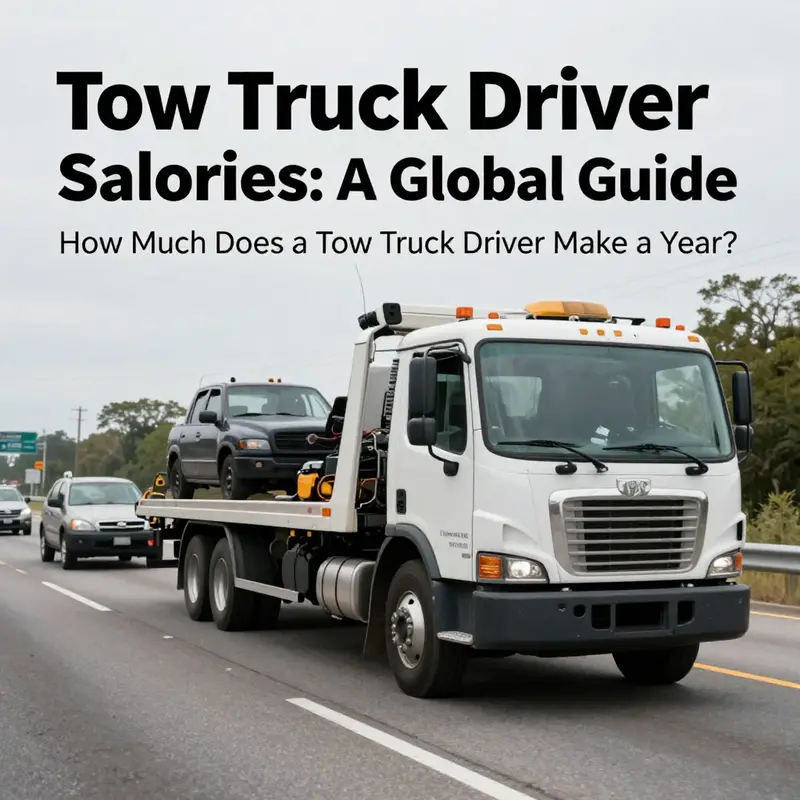
When people picture the workday of a tow truck driver, they often imagine a single dramatic rescue or a roadside hero moment. In truth, the income that supports that image sits on a more complex ledger. The earnings of tow truck operators in the United States reflect a tapestry of hourly wages, overtime opportunities, shift differentials, and the sometimes dramatic, sometimes quiet, realities of location. It is a career where the paycheck can look sturdy on paper yet hide a calendar of long hours, irregular shifts, and the financial endurance demanded by a job that thrives on crises. Understanding how much a tow truck driver makes over the course of a year requires separating base pay from the other components that can lift or suppress annual income, and then placing those components against the backdrop of geography, employer type, and personal career choices. In the current market, multiple reputable sources place the average hourly wage for tow truck drivers in the United States in the low twenties, with annual earnings that generally hover in the mid- forties to mid-fifties thousands of dollars, depending on a host of variables. Recent data from Indeed illustrate the core framework: the average hourly wage is around $21.46, which translates to roughly $44,630 per year when calculated against a standard full-time schedule of 2,080 hours. This figure is framed as about 8 percent above the national average salary in some reports, underscoring that the role often commands a premium relative to many other service sectors. A second Indeed analysis puts the hourly rate at $21.23, corresponding to about $44,100 per year under the same conventional full-time assumption. Taken together, these figures establish a persuasive baseline: most full-time tow truck drivers in the United States can expect to see salaries in the mid-$40,000s, with room to climb beyond that benchmark depending on the specifics of their work arrangement. For those who track outlier cases, the spectrum can widen further. Some sources point to annual earnings as high as $55,952, signaling the impact of extraordinary conditions—geographic concentration, specialized skill sets, or employer structures that make the most of overtime, on-call schedules, or bonus incentives. The narrative behind those numbers is not simply arithmetic; it is a story about how time, place, and opportunity intersect inside a workforce that markets itself on speed, readiness, and the ability to operate in stressful, time-sensitive environments. To translate these numbers into a practical picture, it helps to consider the way a tow truck driver’s hours accumulate. The conventional model presumes a full-time commitment of 2,080 hours per year, reflecting 40 hours per week across 52 weeks. In reality, many drivers juggle different arrangements. Some work standard shifts with predictable rosters; others are on call, ready to respond at odd hours, nights, weekends, or holidays when incidents and emergencies spike. Overtime can be a decisive factor. In the United States, labor rules recognize overtime opportunities, but the actual application varies by employer, region, and whether a driver is classified as an employee or an independent contractor. In practice, those who can reliably ride the wave of busy periods—think traffic escalations after storms or during holiday travel peaks—will see their annual income rise above the baseline. Conversely, a slower month, a lighter call volume, or a contractor model with different compensation mechanics can compress earnings. This dynamic is part of what makes the annual figure both reassuring and unpredictable; it provides a scaffold, not a fixed ceiling. When measuring year-to-year potential, it is useful to examine the role of location. The United States is a country of notable wage geography, and the field of tow services is no exception. In higher-demand urban corridors and in areas with dense traffic, the opportunity for rapid response translates into more calls, more miles, and more billable time. That translates into higher earning potential, particularly for drivers who operate in more lucrative market segments or who perform specialized tasks within the broader field of recovery. For example, in large metropolitan clusters, drivers who work with heavy equipment, flatbeds, or specialized recovery services can command higher rates per call or per hour, sometimes pushing total annual earnings toward or beyond the mid-$50,000s. In rural or lower-cost regions, the demand curve may be less steep, and wages may align more closely with the baseline figures reported by national aggregators. Yet even in those calmer markets, the value of experience remains a powerful multiplier. An operator who has spent years in the field often earns more not solely because of incremental hourly pay but because consistent performance translates into more reliable overtime, better client relationships, and access to higher-value gigs that are available only to seasoned professionals. The base pay is crucial, but the full portrait of annual income also reflects the employer’s structure and the nature of the job. Some tow truck services hire drivers as employees with a salary or hourly wage and provide benefits, paid time off, and a structured schedule. Others rely on independent contractors or owner-operators who bill clients directly for services rendered, covering their own costs for fuel, insurance, maintenance, and overhead. The latter model can yield higher gross wages in some months but introduces economic risk and variability from month to month. Within the employer spectrum, the type of work further shapes earnings. Wheel-lift operators, flatbed specialists, and heavy recovery professionals typically command higher rates or premium pay because their tasks require more skill, heavier equipment, and additional certifications or training. Meanwhile, drivers who primarily handle minor roadside assistance, jumpstarts, fuel deliveries, or basic towing may see steadier but somewhat lower earnings, especially if their system emphasizes volume over high-value calls. The story of compensation is also influenced by benefits that may accompany a given position. Paid time off, health insurance, retirement contributions, and performance bonuses can meaningfully affect take-home pay and the overall value proposition of a job. When benefits are rich, a driver may accept a slightly lower hourly rate or a conservative overtime expectation because the employment package provides security that a standalone hourly wage cannot. Conversely, if a position offers only minimal benefits, the emphasis on hourly pay and the volume of calls can be higher to compensate, with drivers chasing longer hours or more intense call patterns to maintain a targeted annual income. It is worth noting that specialization within the field can alter the income equation. Some drivers pursue flatbed operation, heavy recovery, or accident scene response as a core competency. These niches demand additional training, equipment handling capability, and sometimes a broader geographic reach. The payoff for specialization tends to manifest in higher residual demand for the driver’s services and, therefore, greater opportunities to capture premium calls. These patterns are not merely theoretical. The data behind them aligns with the broader economic principle that income for service-sector roles that hinge on rapid response and specialized technical skill tends to scale with both the complexity of the job and the intensity of the work schedule. For a driver who makes a living by keeping the wheels turning in moments of breakdown or crisis, the ability to convert time into value—by arriving promptly, executing a safe tow, and handling the customer with professionalism—translates directly into financial outcomes. This is where the practical realities of the job intersect with the numbers from salary databases. A driver starting out in the industry might anticipate annual earnings around the lower end of the spectrum, roughly in the low to mid-$40,000s, depending on location and the particular employer’s compensation model. As experience accrues and the driver becomes proficient at handling challenging recoveries, the range can tilt upward toward the mid-$50,000s. Those at the upper edge of the market—who tackle heavy-duty recovery, post-crash scene management, or operate within high-demand metropolitan regions—may see year-end totals that approach the upper $50,000s or beyond, particularly when overtime is a staple of their schedule. Even within a given year, earnings can reveal a surprising distribution. A single unusually busy week can push annual income higher, while a lean stretch could keep it closer to the baseline. In practice, this means that the yearly paycheck for a tow truck driver is not a fixed number but a range with a predictable core and a tail formed by the volume of work, the willingness of employers to authorize overtime, and the strategic choices a driver makes about where to work and how to allocate time. It also means that for those considering the field, there is value in understanding the broader picture beyond the headline figure. The real value often lies in what the job affords outside the pure wage calculation: the opportunity to contribute to public safety and mobility, the chance to master a specialized set of mechanical and problem-solving skills, and the possibility of carving a stable career path in an industry that keeps roads moving, even when conditions are challenging. The landscape of compensation also invites a candid reflection on what the numbers mean for personal finances. A wage in the mid-$40,000s, while respectable, sits in a region-crucial context: mortgage or rent, utilities, insurance, vehicle maintenance, and transportation-related costs. The life of a tow truck driver can entail substantial fuel consumption, vehicle wear, and the risk of on-call commitments that disrupt regular routines. For individuals weighing these realities, the annual income carries with it considerations about scheduling flexibility, the stability of the employer, and the potential for geographic-based pay differentials. The conversation about pay, then, becomes not merely a question of what is earned on a given hour but how the work schedule aligns with life goals, family responsibilities, and long-term career planning. Some drivers see the industry as a stepping-stone toward a broader technical career in transportation services, logistics, or fleet management. Others choose to build their own small business around towing services, where income potential can scale with business acumen and market access. In that entrepreneurial path, annual earnings may rise beyond what a standard employment arrangement would yield. Yet with independence comes risk: revenue cycles, client acquisition, insurance costs, vehicle maintenance, and the pressure to secure a steady stream of service calls all require sustained, disciplined management. The numbers, then, are a starting point for a richer dialogue about what it means to work as a tow truck driver in today’s economy. They offer a snapshot of a profession that blends hands-on technical skill with the urgency of road assistance, the economics of labor markets, and the personal choices that shape how much money ends up in the bank each year. For readers who want a deeper sense of how these figures play out in real-world scenarios, there is value in turning to industry narratives and cross-referencing data from different sources. A practical approach is to consider the interplay between base pay, overtime, and benefits and to map that against individual goals. If a driver prioritizes predictability and benefits, they might pursue a traditional employer arrangement with a steady schedule and healthcare coverage. If, however, there is a willingness to work longer hours and assume more risk, an independent contractor route or a role with a high-demand specialty could produce higher annual totals, albeit with greater income variability and more personal responsibility for expenses such as fuel, maintenance, and liability insurance. As with many skilled trades, experience isn’t just a credential; it’s a multiplier. The more time a driver spends testing limits in complex recovery situations, navigating high-traffic environments, and refining customer service in stressful moments, the more valuable that driver becomes to employers and clients alike. That increased value translates into more opportunities for premium calls, expedited responses, and referrals, all of which can influence year-end earnings. The big takeaway for someone weighing whether to enter the tow truck field is that the numbers can be reassuring but are not guaranteed in a vacuum. They reflect a larger ecosystem: the regional market, the place within the company hierarchy, the nature of the assignments, and the ability to convert hours into meaningful, billable work. It is a career where the reward for reliability and professionalism can compound over time, and where the annual figure—so often cited in salary roundups—captures only a portion of the truth about what it costs to live as a tow truck professional in a country as diverse as the United States. For readers who want to explore more about how fleets manage these pressures and how compensation plays into broader emergency-response planning, the internal resources on this topic can be instructive. A visit to the island tow truck blog offers practical perspectives from the field, including discussions of fleet operations, emergency response strategies, and the daily realities of keeping services ready for action when demand spikes. You can explore these insights at the island tow truck blog. the island tow truck blog. This kind of context helps translate the raw salary numbers into a more complete portrait of what it means to work as a tow truck driver and how earnings sit within the larger framework of transportation services, safety, and community reliance. For those seeking a broader set of authoritative salary figures and job postings, industry data from reputable aggregation sites remains a valuable compass. This broader lens can help calibrate expectations for entry-level positions, mid-career progression, and the potential for growth within specialized segments of the field. In particular, official salary aggregators track shifts over time and across regions, allowing prospective entrants to gauge where opportunities align with personal preferences for location, schedule, and the level of professional challenge they want to pursue. External reference for a comprehensive salary overview: https://www.indeed.com/career/tow-truck-driver/salaries
Tow Truck Salaries in Australia: How Much Does a Tow Truck Driver Make a Year?
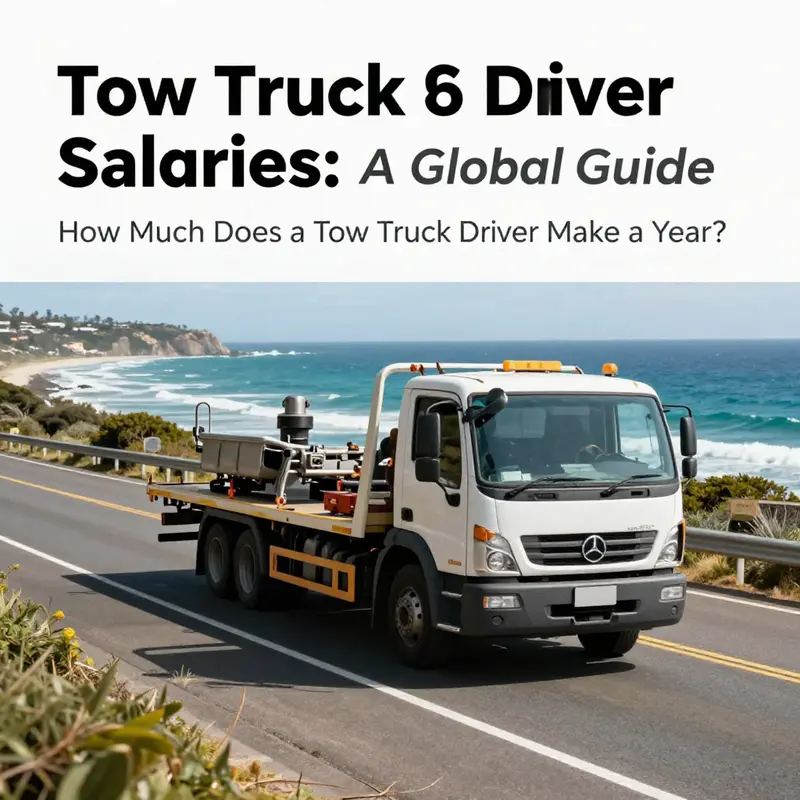
Earning potential in the Australian tow truck sector sits at a crossroads of regional demand, fleet type, and individual skill. Across the nation, the most recent data point places the average annual salary for a Tow Truck Driver at AU$75,969. That figure provides a solid baseline for workers considering a path in roadside assistance, heavy recovery, or fleet operations, but it is by no means a universal ceiling. Location matters as surely as experience does; shifts that require overnight calls, weekends, or the ability to manage complex recoveries can push earnings above the mean, while quieter regional markets may hover closer to the lower end of the spectrum. The pay picture, then, is a mosaic shaped by where the job is located, what kind of towing the role entails, and how a driver’s skill set translates into value for an employer. It is a story not only of numbers but of hours spent in challenging conditions, mastering equipment, and delivering rapid, effective service under pressure.
Australia’s tow truck work spans a broad range of operations. Some drivers focus on standard roadside assistance, where the job involves jump-starts, lockouts, fuel delivery, or minor tire changes. Others specialize in heavy recovery, where flatbeds and heavy-duty winching equipment come into play and the jobs themselves can be unpredictable, urgent, and technically demanding. A driver might begin with a general roadside assist role and, through experience and training, migrate into more specialized fields such as heavy vehicle recovery or crane-assisted recoveries in industrial or freight settings. Each of these pathways carries its own pay trajectory, as well as distinct requirements for licensing, certifications, and on-the-job risk management. The difference between a routine shift and a high-stakes recovery can be reflected not just in the immediate hours worked but in the long-term earning potential through overtime, on-call fees, and performance-based bonuses.
To understand the Australian pay landscape, it helps to recognize the structure of the industry. Tow services in Australia operate through a mix of large nationwide fleets, regional operators, and independent operators who own and run their own trucks. Large networks often provide predictable schedules, standardized pay bands, and access to comprehensive benefits, including paid on-call time, insurance, and formal training. Independent operators may enjoy greater flexibility and potential upside in earnings when demand is high, but they also shoulder more of the business risk, including maintenance costs, fuel spikes, and the seasonal ebb and flow of local activity. In many cases, the most stable income arises from a blend of steady shifts with a reputable employer and the ability to take on additional call-outs during peak demand periods such as public holidays or major traffic disruptions. These dynamics help explain why the “average” value can mask a wide spread in actual take-home pay from city to city and from year to year.
The numbers themselves are revealing, but they do not tell the full story of what a typical workweek looks like for a tow truck driver in Australia. The AU$75,969 annual figure reflects not only base pay but also the influence of overtime, on-call duties, and the occasional premium paid for high-demand tasks. Overtime can be a significant component of earnings in this field, especially for drivers who are part of on-call rosters that require responding to incidents at any hour. The nature of the job—often physically demanding, performed in dynamic and sometimes hazardous conditions, and requiring rapid decision-making under pressure—means that employers value not just the hours logged but the ability to perform complex recoveries efficiently and safely. Add to that the potential for bonuses tied to performance metrics, customer satisfaction ratings, or the successful completion of a sequence of high-priority tasks, and you begin to see why real-world pay can exceed the baseline in productive, well-managed operations.
The geographic spread within Australia amplifies the complexity of the pay story. Major metropolitan centers such as Sydney, Melbourne, and Brisbane typically offer higher nominal rates due to greater demand, higher living costs, and the frequency of heavy roadside incidents. In contrast, regional towns and more remote areas can present steadier if slower work, with the prospect of longer solo shifts and fewer scheduled breaks. This regional variation is not merely a matter of larger cities paying more; it also reflects the operational realities of towing service coverage, including the density of fleets, the speed at which a driver can be dispatched to incidents, and the logistical costs associated with servicing a wider geographic area. In places where fleets operate around the clock to support busy corridors or critical freight routes, a driver’s willingness to take on on-call duties for extended hours often translates into higher annual earnings. Conversely, in markets with slower incident flow, a driver might sustain a lower rate of call-outs but maintain steady work through regular maintenance and non-urgent recovery tasks.
Licensing, training, and certification are essential levers that shape earning potential. Australia’s towing sector commonly requires drivers to hold a minimum class of heavy vehicle license, such as a heavy rigid (HR) or multi-combination (MC) license, depending on the truck type and the size of the tow equipment used. Specialized training in crane operations, winching techniques, load securement, and hazards management not only improves safety but also increases a driver’s capacity to handle a broader spectrum of recoveries. Employers value these qualifications because they reduce the risk to both personnel and cargo and because they broaden the service offering a fleet can provide. Beyond technical skills, drivers who invest in customer service training and incident reporting processes often become more valuable to employers. The ability to communicate clearly with dispatch, police, accident victims, and site managers can shorten job cycles and elevate customer satisfaction, both of which can influence promotion prospects and the likelihood of being assigned higher-value tasks that carry better pay.
Another dimension of the pay story is the economics of owning versus working for someone else. A driver who operates an independent tow truck or runs a small fleet faces a distinct set of financial dynamics. Earnings in that scenario may appear higher on paper because revenue is not capped by a salary; however, this comes with higher exposure to operating costs, insurance, maintenance, fuel, and administrative duties. Seasonality, fleet age, and the competitive landscape also play significant roles. For many drivers, a practical middle path exists: work for a stable employer during the week to secure a reliable base income and accept select weekend or peak-demand call-outs to augment earnings. This approach distributes risk while still enabling a driver to capitalize on periods of elevated demand, which, in turn, can increase annual compensation beyond the standard base.
As with other countries, the Australia pay picture benefits from a cautious comparison with other markets. The national average of AU$75,969, while informative, is best understood as a benchmark rather than a fixed target. It translates into a weekly income that, when coupled with overtime, on-call fees, and occasional performance bonuses, can exceed AU$1,400 to AU$2,000 in busy periods. Drivers in high-demand metro areas often report experiencing more frequent on-call shifts, higher incident volumes, and shorter response times, all of which contribute to a greater accumulation of earnings over the year. In contrast, regional drivers, while potentially facing longer drives and more isolated work sites, may enjoy a calmer pace and lower living costs, which can simplify budgeting and maximize take-home pay in the aggregate. The key takeaway is that the salary number is a composite of hours, types of tasks, and the value a driver brings to reliability, safety, and speed of service in crisis moments.
For readers seeking a clearer sense of current, country-wide data, Indeed’s Australia salary data provides a useful reference point. The source collects real-world postings and self-reported earnings, offering a practical snapshot of what drivers actually earn in everyday roles across the country. While the precise pay can fluctuate with each employer’s pay bands, regional demand, and shift structure, the AU$75,969 figure remains a robust baseline that employers and prospective entrants can use to anchor negotiations and plan career steps. It also underscores the importance of targeting roles that align with one’s strengths—whether that means specializing in heavy recovery, pursuing higher certification, or taking on on-call duties that carry premium pay.
The life of a tow truck driver in Australia is also about resilience and adaptability. The job requires readiness to respond to incidents at any hour, often in challenging conditions such as wet weather, night-time hours, or high-traffic environments. Safety protocols and physical stamina are foundational, and the ability to manage paperwork, document recoveries, and communicate with multiple stakeholders in real time is a critical differentiator for professional advancement. Technological improvements and evolving fleet practices continue to shape the daily work, with telematics, dispatch optimization, and standardized safety procedures helping to streamline operations and, in many cases, to stabilize earnings over time. In these contexts, a driver who combines mechanical proficiency with strong communication and a proactive safety mindset is more likely to convert a routine shift into a valuable, income-boosting assignment.
To connect this discussion to practical resources, readers can explore targeted industry insights and career data that illuminate the pathways toward higher earnings. Engagement with professional communities and industry content can provide real-world context for how wages are negotiated and how career paths develop. For those seeking a deeper dive into how fleet operations manage emergency responses and continuous service, there are accessible resources online that illuminate best practices and common challenges. For a broad overview of the kinds of content that can help a driver grow in this field, you can visit the industry blog hub that compiles stories, technical tips, and case studies from practitioners who are actively on the road every day. See, for example, The Island Tow Truck blog, which offers a wide range of articles related to fleet operations and emergency response strategies: The Island Tow Truck blog.
In sum, the Australian wage landscape for tow truck drivers reflects a mature market with a clear value for skilled, safety-conscious professionals. The baseline AU$75,969 per year provides a solid anchor, while earnings can be significantly higher with the right combination of location, fleet type, licensing, and willingness to take on demanding on-call duties. For those considering a career in this field, the path often starts with obtaining the necessary heavy-vehicle licenses, investing in additional certifications, and seeking opportunities with fleets that prize reliability and rapid response. It is a career with meaningful demand—people need help when vehicles fail on the road, in remote areas, and along major freight corridors—and it rewards those who bring technical competence, a calm demeanor under pressure, and a track record of safe, effective service. When these elements align, a Tow Truck Driver in Australia can approach the upper end of the earnings spectrum, while also building a professional reputation that supports long-term career growth.
For readers who want to gauge their own potential more precisely, keeping an eye on employer pay bands, the volume of on-call shifts, and the opportunities for upskilling is essential. The pay story is not a singular number but a trajectory shaped by experience, adaptation, and the ability to deliver dependable, high-quality service when every minute counts. If you are evaluating a transition into tow truck work or planning the next step in your career, use AU$75,969 as a reference point, but base your expectations on the specific market you intend to join, the type of towing you aim to do, and the licensing path you pursue. The combination of solid base pay, overtime potential, and opportunities to expand into specialized recoveries creates a realistic pathway to a rewarding annual income in Australia’s tow truck sector.
External resource: https://www.indeed.com.au/career/tow-truck-driver/salaries
Final thoughts
In summary, tow truck driver earnings reveal regional demand and economic conditions. For local auto repair shops, car dealerships, property managers, resort operators, and fleet operators, aligning expectations with regional pay scales can improve staffing, service readiness, and partnerships.