
Tow truck drivers play a vital role in ensuring road safety and assisting those in need after vehicle break downs or accidents. With the growing demands of this profession, it’s essential to understand how much they earn across different contexts. Given the importance of this information for local auto repair shops, car dealerships, and commercial fleet operators, we delve into the specifics. In this article, we will explore the regional variations in earnings, conduct a comparative analysis of salaries based on job types, and examine the various factors influencing these earnings, rounding out our understanding of tow truck driver compensation in Canada.
Geography Shapes the Paycheck: A Deep Dive into How Much Tow Truck Drivers Earn Across Canada
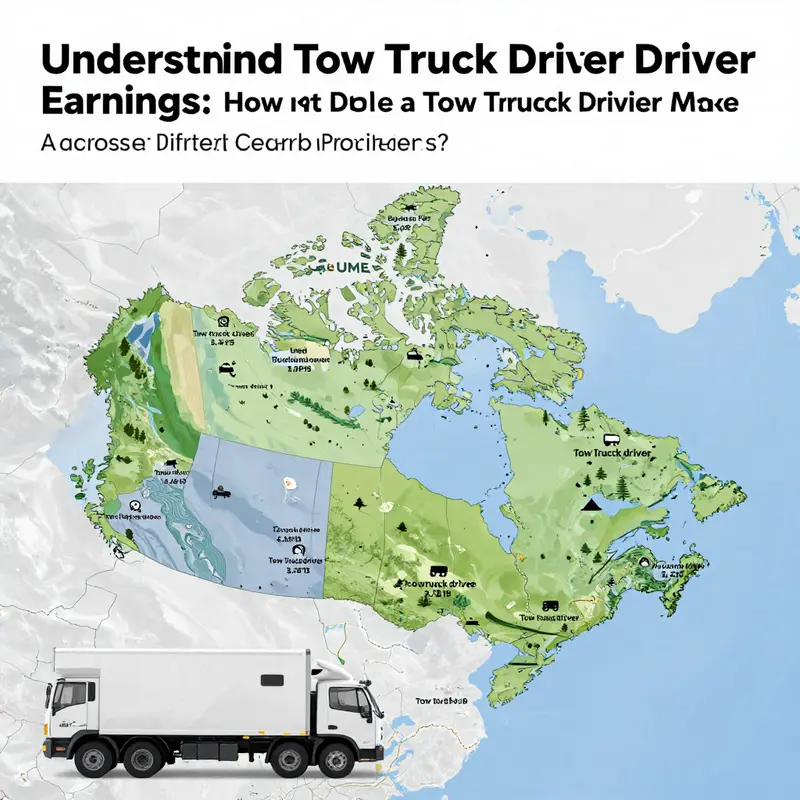
The question of how much a tow truck driver makes is rarely answered by a single number. Wages are not static; they bend to the road you’re driving on—literally and economically. This chapter continues the exploration of earnings by turning a careful eye to regional variation across Canada, where pay scales shift in response to the cost of living, local demand for roadside assistance, and the distinct pressures that come with operating in different provincial landscapes. It’s not enough to present a national average and call it a day. A driver’s income is a mosaic shaped by licensing requirements, the type of work performed, the size of the fleet, the on-call burden, the hours worked, and the mercurial cost of doing business in a given community. As you read, you’ll see how provincial differences create a spectrum of earnings—from the high-demand urban corridors to the more dispersed rural regions, from owner-operators who shoulder more risk and reward to company drivers with steadier, but sometimes lower, base rates and benefits. This is the longer arc behind a simple salary figure, the landscape that gives meaning to a paycheck.
Across Canada, the data establish a few truth-tellers, even when the numbers disagree from one source to the next. On average, a tow truck driver’s hourly wage is higher in some provinces than in others, and both the cover of cost of living and the density of service demand push those numbers up. In December 2025, the national snapshot hovered around the mid-to-upper teens per hour, but the range below and above that average told stories of markets that reward urgency, readiness, and a willingness to work off-peak hours. When this kind of work involves being called out at night, in weather, or on long drives between incidents, the value of a driver’s time changes. A driver is not only compensated for time on the clock but for the inconvenience and risk that comes with the job, as well as the specialized skills required to work safely under pressure.
The provincial lens shows that Alberta, British Columbia, Quebec, and parts of Atlantic Canada illustrate how regional economics translate into real pay differences. Alberta often sits near the top of the list, and in some job postings the hourly rate climbs to levels that reflect both the higher cost of living and the provincial demand for rapid, reliable service in cities and remote work sites alike. The province’s overall average may mask pockets of dramatic variation, where a veteran driver employed by a large fleet in a busy urban centre can command a much higher wage than a newer driver working in a smaller town or a slower market. Conversely, in rural Alberta or small towns, the numbers can drift downward as the client base and the rate of emergency calls change. These intra-provincial swings remind us that a driver’s wage is never a fixed ceiling or floor; it is a moving target, anchored in experience, local competition, and the particular employer’s compensation philosophy.
Quebec presents a slightly different picture. The province’s average sits in the lower end of the high range, reflecting a mix of urban and rural realities and a market that often pays more in Montreal and other large urban centres than in outlying communities. In Montréal, wages trend higher than the provincial average, driven by dense demand for rapid service, the complexity of city operations, and the premium drivers can command when the job requires navigating heavy traffic, long shifts, and the safety considerations that come with urban towing. The spread within Quebec illustrates a broader truth: even within a single province, geography and population density create a wage gradient. In big cities, the density of service requests can support higher hourly rates and more lucrative overtime opportunities; in smaller towns, the same work might be steadier but less financially rewarding on an hour-by-hour basis.
In British Columbia, the story is similarly nuanced. Regional disparities reflect both the high cost of living in metropolitan areas like Vancouver and the comparatively lower rates that can appear in more dispersed parts of the province. In Richmond, for example, the local market’s pay can exceed national averages by a sizable margin, reflecting the competitive landscape and the demand for rapid response in one of Canada’s busiest service hubs. Yet even within a single city, the range can be wide—driven by whether a driver is salaried with benefits, paid as an independent contractor, or working for a fleet that stacks overtime and on-call hours on busy weekend shifts. That combination of factors can push hourly earnings well beyond the typical base rate in some postings, such as specialized or high-demand assignments that carry additional risk or equipment requirements.
Ontario, while not singled out with a precise figure in the data shared here, typically follows a trajectory similar to British Columbia: urban markets pay more, rural markets pay less, and there is a clear premium on duties that require complex vehicle handling, heavy recovery work, or long-distance transport between incidents. In many urban markets, the density of calls and the willingness of fleets to offer flexible scheduling can propel earnings upward, especially when overtime, shift differentials, and on-call pay are part of the compensation mix. The overall message from Ontario to the Maritimes is not a uniform bill of fare but a buffet of local conditions. Depending on the city, the employer, and the driver’s level of experience, a tow truck technician can skate along a comfortable margin or push toward the upper end of the pay spectrum when the market tightens and the demand for skilled roading assistance surges.
The Atlantic provinces tell a more subdued tale in some years, with wages that reflect smaller metropolitan economies and a less intense clustering of roadside incidents. In places like Dartmouth, Nova Scotia, the hourly wage can sit below the national average, a reminder that the geography of demand matters. However, pockets of stronger pay exist too. Some employers in Atlantic Canada offer competitive rates to attract qualified drivers to year-round work, particularly those who can handle a mix of light towing, heavy-duty recovery, and long-haul towing across provincial lines. The regional mosaic—high in Alberta, moderate in Quebec, varied in British Columbia and Ontario, and nuanced in the Maritimes—underlines a central theme: the “how much” question cannot be fully answered without naming the place where the wrench meets the road and the fleet meets the budget.
Beyond the geography, the type of job and the employer’s structure heavily influence earnings. The data in this chapter include both company drivers and owner-operators, each with its own economics. Company drivers often enjoy more predictable pay, sometimes accompanied by benefits and paid time off, but with a relatively fixed hourly base that may be supplemented by overtime or call-out pay. Owner-operators, by contrast, assume more risk but can capture higher earnings when demand spikes and when efficient routing, vehicle uptime, and careful billing practices align. In markets where fleets are large, standardized, and time-efficient, drivers may enjoy a stable income, with overtime opportunities that boost annual take-home pay. In smaller markets or for independent operators, a driver’s revenue may swing with the number of calls and the pricing negotiated with customers, insurance, fuel costs, and maintenance expenses all trimming the final margins.
An important driver of these different pay realities is license and credentialing. In many jurisdictions, obtaining a Class 3 license or equivalent is a prerequisite for a broader range of towing duties, especially those that involve commercial towing, heavier loads, or more complex roadside scenarios. Where the licensing requirements are more stringent, the pool of qualified drivers expands or contracts in response to labor market conditions, and wages adjust accordingly. In places with rigorous licensing and higher corporate standards for safety and vehicle maintenance, wages trend upward as employers compete for a relatively smaller, highly skilled workforce. In turn, where licensing is more accessible and competition among fleets is intense, the base pay may be tempered. This dynamic helps explain why some postings in Alberta and in other high-demand markets signal premium hourly rates, while other sources still show lower averages in the same province. The truth lies in the specifics of the job, not merely the province label.
Alongside licensing and location, the structure of the work arrangement matters. A driver working for a larger fleet with guaranteed shifts, on-call rotation, and standardized overtime can accumulate a reliable annual income that rivals or exceeds the earnings for smaller outfits, especially when benefits are included. Conversely, a contractor running a one- or two-vehicle operation can pursue a higher hourly rate but must cover own insurance, maintenance, fuel, and downtime, all of which subtract from the gross. The practical effect is that two drivers in the same city, both classified as tow truck operators, can have markedly different annual incomes depending on whether they are employees or independent operators, the efficiency of their vehicles, how effectively they bid on jobs, and how aggressively they pursue maintenance and repeat business.
What does all this mean for someone weighing the career path? It means looking past raw numbers to a more holistic picture of the market you plan to enter. If you’re drawn to Alberta’s energy-centric markets or British Columbia’s coastal hubs, you might reasonably expect higher pay per hour, particularly if you can work in higher-demand windows or accept long, multi-stop shifts. If you’re contemplating a move to Quebec’s urban centers, you might find strong earning potential there as well, with the caveat that urban roads demand sophisticated navigation, risk management, and customer service skills that can command premium pay. For those who prefer a steadier, more predictable schedule, the company-driver route in either the East or the West can deliver reliable income, especially when paired with benefits that protect a year-round livelihood, even if the hourly rate appears modest at first glance.
The data are also a reminder to prospective drivers to consult real-time listings when making decisions. Job boards and recruitment sites capture the current market pulse, including posted hourly rates, overtime opportunities, and the geographic spread of demand. For anyone who wants a live snapshot of what’s possible in Canada today, a targeted search in your desired province or city can reveal the immediate opportunities and the premium that certain locations command. That approach aligns with the broader lesson: earnings in tow trucking are not a single number but a function of place, time, and the persuasive value of your skills as a driver who can show up, move quickly, and stay safe while doing so.
As you weigh where to work and how to structure your career, a practical strategy emerges. Build a local picture by talking to drivers in the area, reviewing current postings, and considering the cost of living, which will influence how far those hourly rates go in your day-to-day life. In markets with higher living costs, a higher hourly rate helps offset rent, fuel, groceries, and-insurance premiums. In markets where the price of fuel or vehicle maintenance is lower, a marginally lower rate can still yield a comfortable annual income if the demand is steady and the hours add up. It is also wise to examine what additional compensation exists beyond the hourly wage—on-call pay, overtime, bonuses tied to performance, or incentives for non-peak coverage can significantly affect total earnings.
For readers who want a tangible sense of what to look for, consider how a fleet’s scheduling and dispatch philosophy affects your time value. A fleet that ensures predictable routes and minimizes downtime can push earnings higher through consistent hours and fewer days lost to breakdowns or long stretches without calls. A fleet that stacks urgent calls during the workday may deliver more opportunities for premium pay, but it can also lead to fatigue and higher risk, which some employers offset with safety pay or shift differentials. The balance between volume of calls and time for rest is a nuanced factor that can tilt the earner’s annual profit in a direction that isn’t captured by an hourly figure alone.
The overarching picture remains clear: region and job type matter as much as the clock itself. If you’re evaluating whether tow trucking is a viable long-term career, look at the provincial averages as a framework rather than a verdict. Use them to calibrate expectations in your chosen market, then drill down into job postings, talk to current drivers, and assess what a particular employer offers beyond the base rate. The numbers you’ll see across Canada reflect a living economy where demand for fast, reliable towing intersects with licensing, insurance, maintenance costs, and the ever-present reality that roads are unpredictable. A driver who plans ahead—who keeps a well-maintained vehicle, completes the necessary licensing, and networks within a local fleet—can maximize earnings within the regional framework while also building a sustainable career in a field that remains essential in every season and every city.
If you’d like to explore current listings and salary data to ground these observations in real-time opportunities, you can search Canada-wide job postings and salary information. For a broader reader resource, see the Island Tow Truck Blog, which compiles practical guidance and industry perspectives that can help you translate regional pay into a personal plan. The Island Tow Truck Blog provides insights from practitioners who have navigated the shifts in demand, licensing, and compensation over the years and can serve as a helpful companion to the numbers discussed here.
In sum, the answer to how much tow truck drivers make in Canada is not a single number but a spectrum shaped by region, job type, and the broader economic context. Alberta may offer some of the top hourly wages, while Québec’s urban centers edge higher than rural areas in the same province. British Columbia’s coastal markets demonstrate how cost of living and market density influence pay, and the Atlantic provinces remind us that regional demand shapes compensation as surely as any other factor. For anyone contemplating a career behind the wheel of a tow truck, the map is rich with opportunity—but it rewards preparation as much as it rewards speed. To translate a wage figure into a solid career plan, pair the data with local market research, licensing readiness, and a clear understanding of the form of employment you prefer. The result is not simply a salary line on a sheet but a realistic forecast of what your work, skills, and choices will earn you within the province you call home.
External resource: For current listings and salary data, see Indeed Canada’s tow truck driver salary pages. Indeed Canada salary data for tow truck drivers.
Tow Truck Pay Across Borders: What Drives Earnings, Roles, and Regional Realities
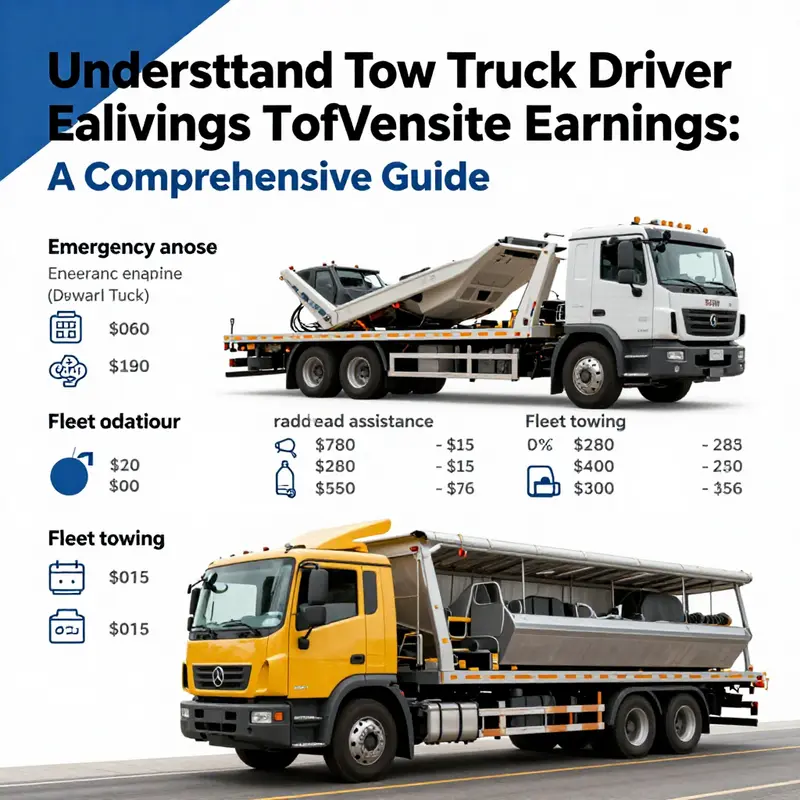
When you ask how much a tow truck driver makes, you’re not getting a single number. You’re getting a picture built from geography, licensing, the type of dispatch that keeps you on the road, and the rhythm of emergency calls that define a driver’s week. The income landscape is a mosaic rather than a straight line. Wages shift with the weather, with the cost of living in a region, with the structure of the company you work for, and with the hours you’re willing to spend on call. Seen through this lens, the question becomes less about a universal hourly rate and more about how those rates accumulate into real annual earnings, how the work-life balance locks into compensation, and how a driver can steer toward higher earnings without sacrificing safety or job satisfaction.
Across Canada, the numbers anchor the discussion in a way that makes the regional variations hard to ignore. The national average hovers around the mid-teens, a figure that looks modest until you place it in context. In Canada, the average hourly wage for a tow truck driver is about $17.75, with data updated in December 2025. That baseline is a starting point, not a ceiling, and the variation from province to province turns a single job into a spectrum of possibilities. Consider Richmond, British Columbia, where the average jumps to about $24.06 per hour — roughly 36 percent above the national average. That gulf points to a market with high demand, a dense urban footprint, and likely a mix of private, municipal, and emergency roadside work that keeps crews busy around the clock.
Move west and the numbers shift again. Alberta sits a touch closer to the national average, with an average around $16.01 per hour. It’s a reminder that resource-driven economies, weather, and competition among service providers shape the hourly baseline as much as the actual skills a driver brings to the job. In Atlantic Canada, the picture can look tougher yet. In Dartmouth, Nova Scotia, the average is about $15.70 per hour, some 12 percent below the national average. The same province can tell a different story, though, if you land a shift that includes peak storm hours or a contract with a sizable fleet. These regional deltas aren’t just numbers; they reflect the realities of traffic patterns, population density, road conditions, and the presence or absence of unions and collective bargaining power that can influence contract terms and overtime structures.
Beyond the general wage indicators, the market for tow drivers reveals a more nuanced map. Some job postings reveal premium pay for those willing to take on certain responsibilities or longer shifts. For example, a full-time position with a Surrey, British Columbia fleet might offer $39.50 per hour, a rate that dwarfs the provincial and national averages. In Calgary, Alberta, a similar premium is posted at $39 per hour. And in Fort McMurray, True North Automotive offers $40–$45 per hour for Class 3 drivers, a level that reflects both the demand in a resource-driven center and the premium employers place on higher licenses and the ability to handle more complex or hazardous calls. When the work involves longer hours, overtime pay, or on-call stipends, those hourly numbers multiply into meaningful annual income. In practice, earnings can range from roughly $48,000 to $80,000 per year, depending on the region and the specific duties, such as after-hours emergency response, heavy vehicle recovery, or fleet maintenance responsibilities that sit alongside the core towing tasks.
The United States presents a different but equally instructive frame for comparison. The most recent data point suggests an average hourly wage of about $21.13 for tow truck drivers, with the usual caveats: experience, certifications, and whether the driver is employed by a private company, a municipal agency, or an insurance provider. Private firms often lean on overtime pay, bonuses, and larger call volumes to push earnings higher, while government and municipal roles can offer steadier hours and benefits that change the appeal of the job even when the base rate is modest. This dynamic mirrors broader labor-market patterns where private employers chase efficiency and after-hours demand, and public agencies prioritize predictable coverage and safety protocols. Each arrangement has its own value proposition, and the best fit depends on an individual driver’s priorities—income potential, schedule flexibility, job security, and the kinds of incidents one hopes to respond to.
In Australia, the comparison travels into a different currency of hours and weekly structures. In New South Wales, for instance, a Tow Truck Driver employed by a major public service or contracted operator reports weekly earnings that can range from $692 to $2,100, with an average around $1,264 per week, based on a small sample of salaries. When you translate those weekly numbers into an hourly frame, the result is a different kind of premium, aided by a full-time schedule that spreads pay across the week and a taxation and benefits framework that shapes take-home pay. The NSW data illustrate how a robust public or quasi-public pay framework can deliver high weekly earnings even when the nominal hourly rate does not scream “big money.” It also highlights how cost of living, the strength of unions, and regulatory structures can tilt the balance toward more stable, predictable income—and how those factors differ across the Pacific and Atlantic edges of the Commonwealth world. Taken together, the United States, Canada, and Australia show how geography, labor-market institutions, and local demand shape the payback for tow-driver labor in meaningful and sometimes surprising ways.
Across all these markets, the salary story is anchored by three practical forces that remain constant even as the numbers float. First, location and demand. A driver who covers a busy urban corridor, a high-volume commercial fleet, or a region with frequent severe weather will naturally see more callouts, more opportunities to work overtime, and, when negotiated, higher premium rates for off-hours or hazardous conditions. Second, licensing and certification. Higher credentials—such as a Class 3 license in certain regions, or specialized certifications for heavy recovery or hazardous materials—open doors to higher-paying assignments. This is not just about holding a title; it’s about the versatility a driver can offer to a fleet when storms roll in or when a city needs a rapid, complex response to a multi-vehicle incident. Third, the structure of the employer. Private towing firms might lean on overtime and performance bonuses, municipal agencies can offer steady hours and benefits, and insurance-provider arrangements can tilt toward steady callouts and predictable schedules, sometimes muting the base wage in favor of a broader compensation package. Each combination amplifies some drivers’ earnings while constraining others, but each also shapes the daily realities of work life, including how many nights you spend away from home, how often you’re on call, and how much risk you take on in challenging roadside conditions.
The cross-border data also invite a crucial caveat: the numbers alone do not capture the total value of the job. For many drivers, the wage is just one piece of a broader compensation picture that includes benefits such as health coverage, pension or retirement plans, paid time off, and safety training opportunities that can translate into long-term earning power. A driver who gains overtime exposure, completes advanced rescue or recovery certifications, and builds a reputation for reliability can attract premium assignments that lift annual earnings beyond the ground-floor hourly rate. Conversely, a driver who faces long wait times between calls, inconsistent scheduling, or a high-risk environment with limited overtime opportunities may find the base pay less reflective of the real value they bring to a fleet, especially when long hours are necessary to meet demand during severe weather or major incidents.
The chapter of data also invites a practical question about how a driver can approach the market to maximize earnings without sacrificing safety or work-life balance. There is a discipline to earnings growth that goes beyond chasing the highest hourly rate. It starts with understanding the economics of the fleet you join. A well-managed fleet seeks to balance coverage across all hours, ensuring there are enough drivers on call to meet demand while avoiding overstaffing that dilutes overtime opportunities. For an individual driver, this means evaluating how often you are required to be on call, how many weekend or holiday shifts you’re asked to take, and whether the job offers guaranteed minimum hours, shift differentials, or on-call stipends. When overtime is reliably available, the incremental pay can accumulate quickly, especially in markets with high incident volume or in regions prone to winter storms and heavy traffic incidents that require rapid response.
Of course, the pursuit of higher earnings often travels with a cost—some financial, some personal. In many markets, the most lucrative opportunities come with a price tag in terms of physical and mental stamina. The calls can be loud, the nights long, and the roads hazardous. A driver who consistently pushes through fatigue or who accepts every call during severe weather may see their numbers rise, but so does the risk to personal health and the likelihood of accidents on the road. A balanced strategy looks for a mix of high-demand callouts and sustainable schedules. It appreciates the value of training that reduces risk on the job and expands the kinds of incidents a driver can handle with confidence. It also recognizes the importance of building a professional network: reliable dispatch teams, fleet managers who present fair pay for overtime, and peers who share best practices for safe, efficient recoveries. In practice, the highest earners are often those who learn to navigate the demand curve—picking up the right amount of overtime when it’s plentiful, and stepping back when long drives and heavy loads threaten fatigue thresholds.
As a reader pursuing this line of work, you may notice how the data invite comparison and reflection. The numbers are not simply about the money in the paycheck; they are about the work that leads to that paycheck. They reflect how a region’s weather patterns, road infrastructure, and emergency-response policies shape the viability of tow-truck labor as a career. They reveal how licensing, training, and the capacity to manage high-stress scenarios add tangible value that is recognized by employers in the form of higher pay or more engaging assignments. They demonstrate how a driver who optimizes scheduling, expands skill sets, and prioritizes safety can not only increase earnings but also ensure that the job remains sustainable over the long term, turning a challenging role into a durable career.
While the data points across borders are instructive, they also point to a practical path for anyone entering the field. If you want to understand how to maximize your earnings in tow-truck work, the starting point is to map the market in your region: what are the typical base rates, what shifts are most heavily staffed, what additional certifications are valued by employers, and where do you find the best opportunities for overtime or premium rates? Networking with experienced drivers and fleet managers, keeping an eye on reputable industry resources, and reviewing reliable salary data can help you set realistic expectations and craft a plan that aligns with your life goals. For readers seeking a broader perspective on industry dynamics and practical insights, consider exploring the Island Tow Truck blog, which offers community-driven reflections and field-tested guidance that can complement official wage data and job postings. the Island Tow Truck blog.
In sum, pay for tow truck drivers is a function of place, role, licensing, and employer structure. The same job title can be worth significantly more or less depending on where you work, what kind of work you take on, and how you structure your career. The numbers from Canada, the United States, and Australia all illustrate that there is value in specialization, in reliability, and in the willingness to work during the times and in the places where demand is highest. For anyone weighing a path into this field, the lesson is clear: earnings grow not simply from more hours, but from smarter hours—hours spent in environments where your skills, your licenses, and your demonstrated readiness to confront the unexpected are rewarded with higher pay, steady work, and the professional payoff that comes with experience. The job is demanding, but with targeted training, a strategic approach to scheduling, and a careful eye on regional demand, tow truck work can offer a compelling balance of income, skill-building, and practical impact on the communities it serves. In the end, the question isn’t only how much a tow truck driver makes, but what kind of work and life that pay enables—and how you choose to chart your course within a market that rewards readiness, resilience, and the right set of tools.
External resource: https://www.indeed.com/career/tow-truck-driver/salaries
Tow Truck Earnings Across Borders: How Experience, Region, and Employer Shape What Drivers Take Home
Wages for tow truck drivers do not sit on a single, uniform line. They shift with the weather, the time of day, the region, and the kind of work a driver takes on. Think of a tow truck job as a small economy in itself, where demand for help, road risk, and the skill required to maneuver large vehicles all push the number in different directions. When you ask how much a tow truck driver makes, you are really asking how much one’s market, schedule, and skill set are worth at a given moment. Across North America, the answer is as much about where you work as who you work for, and how much you’re willing to develop your capabilities over time. Scrutinizing the available data reveals a landscape that is nuanced rather than flat, and that nuance is essential if a person is considering entering the field or evaluating a career path within it.
In Canada, the most recent data point set, updated in December 2025, places the national average hourly wage for a tow truck driver at roughly $17.75. That figure, while useful as a baseline, masks a wide spread in actual earnings from one city to the next and from one job posting to the next. For someone weighing a move into this line of work or negotiating a new position, the regional disparities are the most striking part of the picture. In Richmond, British Columbia, for instance, the average rises to about $24.06 per hour, signifying a premium of roughly 36 percent above the national average. That is not a marginal difference; it can translate into meaningful annual income over the course of a career, especially when combined with a steady on-call rotation, overtime, and supplemental pay for special assignments.
Meanwhile, in Alberta the baseline shifts lower, with the average hovering around $16.01 per hour. Alberta’s picture is a reminder that even within one country, the economic dynamics of tow work are shaped by demand pockets, traffic volumes, and the density of local insurers and fleets that rely on rapid response during emergencies and peak travel periods. In contrast, Dartmouth, Nova Scotia, sits at about $15.70 per hour, which is around 12 percent below the national average and reflects a different mix of urban density, fleet size, and seasonal demand. These figures matter because they frame what a driver can expect when choosing a base of operations. They also underscore the reality that the same job title—tow truck driver—spans a continuum of possibilities rather than a single, fixed wage.
What often matters just as much as the regional average are the numbers that appear in actual job postings. In Canada, several postings illustrate a more ambitious pay scale for specialized roles. A full-time position with a Surrey-based firm lists a rate of $39.50 per hour, a rate that would place an employee well above the national baseline and in the top tier for many markets. In Calgary, Alberta, a listing shows $39 per hour, and in Fort McMurray, True North Automotive is advertising $40–$45 per hour for Class 3 drivers. These postings demonstrate a clear ladder: ordinary day-to-day roadside calls form the base, but specialized work—whether it is heavy towing, recovery of large commercial vehicles, or work that requires additional licensing and training—can command substantially higher pay. The practical implication is straightforward: if you can couple consistent on-call availability with a specialization that matches local demand, you can significantly raise your earnings relative to the regional average.
Annual income, too, reveals a similar range. Across various regions and job profiles, roles can span from roughly the mid-forties to the high sixties or even beyond, depending on duties and the amount of overtime available. In some markets, where the combination of high call volume, long-distance recoveries, and hazardous weather is common, $80,000 or more per year is not out of reach for drivers who stay in the field, maintain safety records, and take on the most demanding responsibilities. This upper end is not the norm for every driver, but it shows the ceiling that can be approached when the market rewards hard-to-replace skills and the ability to manage complex recovery operations.
To picture what these Canadian numbers translate to in practical terms, consider the day-to-day life of a tow operator. A driver who works in a busy urban center with a steady stream of accidents, breakdowns, and vehicle immobilizations can accumulate a large number of calls. When those calls are short and the work is routine, the base hourly rate matters most. But when a call requires heavy equipment, complex recovery, or lengthy on-site operations, the pay can reflect the added time and risk. Overtime and on-call premiums can pile on top of the base wage, sometimes turning a standard 40-hour week into something closer to a 50 or 60-hour rhythm for a few stretches. The economics of a tow operation often hinge on the balance between steady, predictable revenue streams and the occasional, high-stakes job that demands a higher skill level.
Across the border in the United States, the picture sometimes feels more expansive. As of January 2026, the average hourly wage for a tow truck driver in the U.S. sits around $21.13. This average comes from a large pool of more than 4,000 salary reports collected over the prior three years, which helps smooth out regional quirks and seasonal spikes. Yet, again, the real story lies in the tails of the distribution. Entry-level drivers typically start at about $15 to $18 per hour, depending on local demand, the size of the firm, and how quickly a company expects its new hires to scale up to more challenging tasks. The lower end often coexists with a high-stress environment where long hours and physically demanding work test endurance from the outset.
On the other end of the spectrum, experienced drivers—with specialization in heavy-duty or semi-truck recoveries—can command wages that push toward the upper end of the scale. In this space, some drivers can approach or exceed $80,000 per year, driven by the combination of heavy skills, an ability to recover large and costly vehicles, and the willingness to take on trips that require long commutes or overnight commitments. The premium here is not only the heavier equipment and the greater complexity but also the elevated risk that accompanies large-vehicle recovery on busy roads or in tough weather conditions. The factors at play—skill, physical demands, and risk—are the same in the U.S. as they are in Canada, but the market dynamics often tilt the scale in favor of higher absolute earnings in some regions where demand for rapid, reliable service is constant and where private sector fleets place a premium on specialization and efficiency.
The role of the employer in shaping pay cannot be overstated. In both countries, the structure of the workforce—private towing companies, municipal or government roles, and large national or regional corporate fleets—creates a spectrum of compensation possibilities. Private towing firms, especially those contracted by insurance companies or managed fleets, frequently offer more aggressive pay scales and a broader array of incentive structures. They seek to attract drivers who can deliver rapid response times, maintain low call-back rates, and handle the intricacies of accident or breakdown recovery with minimal risk to the vehicle and crew.
Municipal or government employment tends to offer a steadier, more predictable pay structure. The base salary in these roles is often lower than that seen in the private sector, but drivers can benefit from job security, consistent scheduling, and robust benefits. For some workers, the financial calculus favors the security and predictable income that government roles provide, especially in markets where budget cycles and union agreements stabilize compensation and overtime rights. Large national or regional corporations occupy a middle ground. These employers can offer competitive base pay and robust incentive packages, along with structured overtime pay and the potential for higher earnings tied to performance metrics, service level agreements, or contract renewals. The general takeaway is that employer type creates a baseline from which a driver can climb higher through specialized skills, leadership roles, and a steady track record of performance.
A driver’s progress through this landscape is rarely linear. The progression is often stair-step, with concrete milestones tied to training, licensing, and demonstrated reliability. Education and licensing play a decisive role. In many jurisdictions, a Class 3 license, a heavy-duty endorsement, and related certifications can unlock higher-paying assignments. These credentials expand the range of vehicles a driver can handle, from standard cars and light trucks to larger commercial vehicles and emergency recovery scenarios. The added competence reduces the time spent on each job and increases safety for both the driver and the vehicle being towed. With greater capability comes greater responsibility, and that responsibility is frequently reflected in compensation through higher hourly rates, per-job premiums, or more favorable overtime terms.
The incentives for specializing are reinforced by the physical and operational realities of the job. Tow work is physically demanding. It requires strength, endurance, and the ability to perform under stress while managing the risk of injury to oneself and to others. Weather adds another layer of complexity. Ice and snow can slow response times and increase the difficulty of maneuvers, while darkness heightens risk on busy highways. In these environments, drivers who have refined their craft—who know how to secure a vehicle safely, set up scenes efficiently, and coordinate with dispatchers and other responders—become more valuable to their employers. This value translates into higher wages or more stable overtime opportunities, especially in markets where winter storms or high volumes of incidents are common.
For job seekers weighing the financial appeal of tow truck work, the takeaway is not simply the base wage but the entire compensation ecosystem. Base rates set the floor, but overtime, on-call premiums, hazard pay, and incentive programs can reshape the actual take-home pay. A driver who can lock in recurring on-call shifts in a high-demand region may find that the sum of these components approaches the higher end of the anticipated range, even if the base rate sits near the regional average. Conversely, a driver who works in a market with lower demand and fewer incentives may see earnings that track the lower end of the spectrum, even with steady hours. The picture is further influenced by the days and hours a driver is willing to work. Night shifts, weekend coverage, and holiday availability often come with higher pay rates, as the industry seeks to guarantee round-the-clock availability and rapid response.
Yet even with all the numbers and policies in place, the personal element matters. A driver’s reputation—built through careful handling of vehicles, reliable communication, and a safe driving record—counts for a great deal when fleets compare candidates. Employers seek drivers who can minimize the risk of additional damage, who can navigate the scene with professionalism, and who can coordinate with law enforcement, insurance companies, and fleet managers to bring incidents to a timely close. A strong track record can translate into more frequent hours, priority assignment to more lucrative jobs, and a smoother negotiation path as a driver progresses toward specialized roles. In this sense, the wage is not only a reflection of the market but also a gauge of skill, reliability, and the willingness to invest in professional growth.
The data tell a story that is both hopeful and practical. For those who enter tow truck driving with eyes open to the market realities, there is clear potential to grow beyond the initial hourly rate. In markets with high call volumes, strong private-sector demand for rapid response, and opportunities to perform heavy-duty recoveries, earnings can climb through a combination of base pay, overtime, and job-specific premiums. The same is true in the United States, where a mature market with varied employer structures supports a broad spectrum of compensation, from modest entry wages to six-figure earnings for those who develop substantial expertise. The path to higher pay, then, appears as a blend of geographic choice, employer alignment, skill development, and strategic career moves.
For readers who want to map their own potential against the numbers above, there are practical steps that translate these insights into action. First, consider the region where you plan to work. If you are drawn to cities with dense fleets, insurance-driven contracts, and high call volumes, you may be positioned to command higher base rates and more frequent overtime opportunities. Second, invest in training that expands your practical capabilities. A Class 3 license, heavy-duty endorsements, and targeted recovery training can open doors to the most lucrative job types and reduce the time-per-job on complex scenes. Third, evaluate the employer environment you are entering. A private firm tied to large insurance or fleet networks can offer higher pay, but it also comes with performance expectations and potential busy seasons. A municipal role offers stability and benefits, while a large corporate employer may balance both with structured overtime and performance incentives.
To underscore how these elements interlock, consider a hypothetical driver who begins in a mid-sized city with a strong private towing ecosystem. Initially, they might earn near the regional average, perhaps in the low to mid-$20s per hour if they secure a generalist role. Over time, if they pursue heavy-duty training and take on more demanding recoveries, their hourly rate can rise, and overtime opportunities may increase in number and value. If this driver then transitions to an area with higher demand and a more dynamic private fleet, they could see a tangible lift in earnings as the company incentivizes quick response and efficient job completion. The move might also open doors to on-call rotations that align with peak demand periods, where the premium pay is more robust. Alternatively, a driver who chooses a municipal path might enjoy consistent hours and robust benefits, but with less volatility in base pay. Those who eventually gain seniority or supervisory responsibilities within a larger corporate fleet can continue to grow earnings through leadership roles, payroll structures that reward performance, and a broader scope of duties.
The broader implication for readers who are evaluating a career in tow truck driving is that the question is less about a fixed paycheck and more about a dynamic, location-driven career trajectory. If you want a stable, predictable income, a municipal or government role in a smaller market with solid benefits can be appealing, with a wage that tracks toward the low to mid-range of the regional scale. If you want the potential for higher earnings and are willing to navigate a more competitive private sector with longer hours and more variability, a role in a high-demand urban area or in a company that emphasizes specialized recoveries can unlock the upper portions of the wage spectrum.
The data from both nations reinforce a common truth: the economics of tow truck work reward experience, skill variety, and strategic employer choices. For anyone seeking to understand not just what a tow truck driver makes but why those numbers exist, the key is to look past the hourly rate to the ecosystem that supports it. The market rewards drivers who can deliver safety, reliability, and speed—whether they are rescuing a stranded driver on a rural highway, recovering a truck stuck in a ditch after a blizzard, or performing a complex highway roadside recovery in a congested city. Each of these scenarios contributes to a composite value—the sum of base pay, overtime, incentives, and the intangible return of a reputation built on competence and calm under pressure.
If you are curious about how these market forces play out in real-world resources, you can explore current job openings and salary data on Indeed Canada, which provides a broader sense of the U.S. and Canadian landscape and helps align expectations with current demand. For those who want to deepen their understanding of fleet readiness and emergency response in the context of island or coastal operations, a deeper dive into Fleet emergency planning and related topics can be found at The Island Tow Truck Blog. The Island Tow Truck Blog offers practical perspectives on how fleets plan for high-stakes incidents, how responders coordinate during crises, and how professional development aligns with operational needs. You can read more at The Island Tow Truck Blog.
In the end, the question of how much a tow truck driver makes is best answered by a holistic view: the region you work in, the type of employer you join, the specialization you pursue, and your willingness to grow into more complex and demanding roles. The numbers provide a map, but it is the choices you make within that map—the markets you enter, the credentials you pursue, and the reputation you build—that determine how far your earnings will travel over the course of your career.
External resource: Indeed – Tow Truck Driver Salary in the United States. https://www.indeed.com/salaries/tow-truck-driver-salary
Final thoughts
The journey into understanding tow truck driver earnings reveals notable disparities influenced by region, job type, and individual experience. Knowledge about these factors not only aids in planning for prospective drivers but also empowers local auto repair shops, dealerships, and fleet operators to make informed decisions regarding hiring and compensation. Ultimately, realizing the integral role of these drivers and compensating them fairly is essential for the broader automotive community.