In the vibrant and often unpredictable landscape of island life, vehicle troubles can arise unexpectedly. When they do, the prompt arrival of a tow truck driver can be a saving grace for stranded motorists. As members of Local Auto Repair Shops, Car Dealerships, Property Managers, Resort Operators, and Commercial Fleet Operators, the question of whether to tip these essential service providers requires thoughtful consideration. This article delves into the nuanced etiquette surrounding tipping tow truck drivers, exploring its significance and how it reflects our island community’s values. Each chapter will illuminate different facets of this practice, including the factors influencing tipping decisions, the financial implications for drivers, and how service variations among towing companies may affect one’s decision to tip.
Tow Light, Big Thanks: Etiquette, Expectations, and the Practical Art of Tipping Tow Truck Drivers
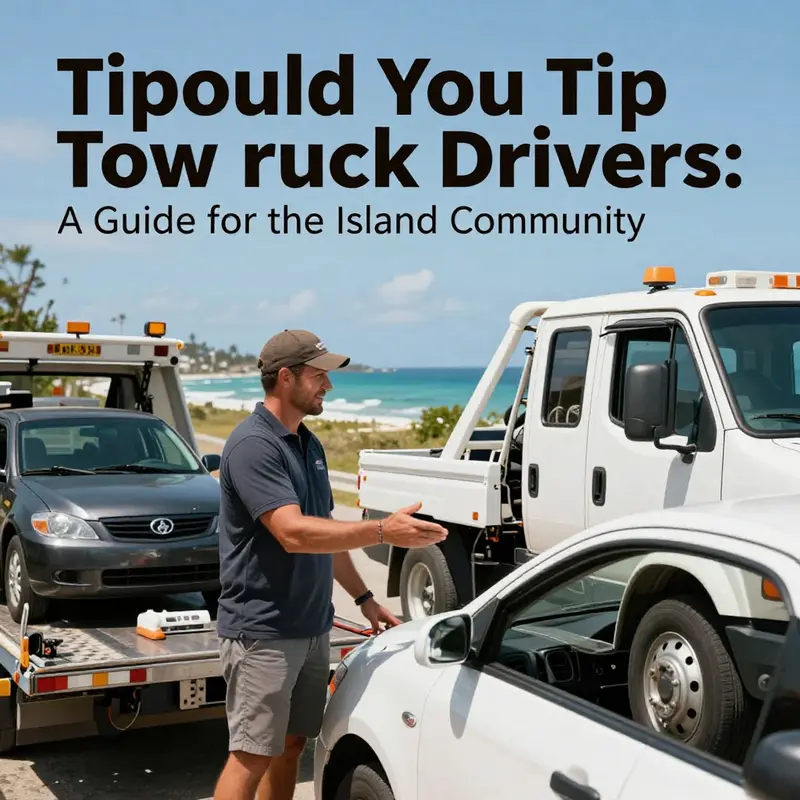
A roadside breakdown happens in a moment when calm seems scarce. The engine coughs, the gauges blink, and you pull to the shoulder with a flutter of worry. In those minutes, a tow truck arrives not just to transport a vehicle, but to restore a sense of control you thought you’d lost on the side of the road. The driver steps out with a practiced efficiency, checking your location, assessing the safest route, and communicating what will happen next with a quiet confidence that helps steady you. In that moment, tipping can feel like a separate task added to an already tense set of decisions. Yet, it can be a meaningful way to acknowledge the effort, skill, and sometimes the artistry of maneuvering a heavy vehicle through traffic, bad weather, or uneven terrain. Etiquette here is less about a rigid rulebook and more about reading the situation with courtesy and generosity toward a person whose work often goes unseen until a moment when every decision matters.
Tipping tow truck drivers is widely considered courteous and appreciated, even when it isn’t legally required. The practice is rooted in the daily realities of the industry. Many tow operators are independent contractors who depend on tips to supplement income that is already earned in unpredictable ways—by the mile, by the hour, and at the mercy of unpredictable demand. The same driver who might come to your aid in a downpour, after a tire blows out at dusk, or on a holiday weekend is the same person who may be juggling other calls, coordinating safety with secured loads, and ensuring that the vehicle arrives at its destination without further damage. In such moments, what seems like a small gesture—a thank-you given with a tip—can feel like a tangible expression of recognition for the work done under pressure. The service is both physical and technical: handling heavy equipment, maintaining traction and balance, navigating tight spaces, and communicating clearly with you and potentially with others who are involved in the scene.
If you pause to think about it, tipping is less about the amount and more about the signal you send. The signal is not that you owe the driver for their labor but that you value the skill, the time, and the care that went into resolving a stressful situation. It is also a subtle form of support that recognizes the realities of the driver’s work life. Many drivers rely on tips when the job involves long hours or back-to-back calls across a shift, when the weather turns adverse and physical labor becomes more taxing, or when the job requires extra attention to secure a vehicle without causing further harm. The acknowledgement is not just financial; it is a moment of trust and respect. You are communicating that you see the complexity of what they do and that you appreciate the way they handle it—safely, professionally, and with clear communication about what comes next.
General guidelines provide a framework without turning tipping into a rigid obligation. A common starting point is to consider tipping as a percentage of the tow fee. In many conversations and industry resources, the range typically falls between about 15% and 20% of the total tow charge. This percentage aligns with the broader customs surrounding service gratuities and offers a flexible approach that can adapt to the specifics of your situation. The percentage becomes especially meaningful when the job involves special considerations, such as long-distance hauling, complex recoveries, or a tow that requires the driver to operate under difficult conditions. In those cases, the percentage can be complemented by a fixed amount to reflect the extra effort. For example, when a driver arrives promptly in an emergency, secures your vehicle with careful attention to safety, or offers additional help with loading or securing belongings, adding to the base tip in recognition of those extras makes sense.
There are practical adjustments to consider as well. For routine tows, when the clock is not pressing and the work is straightforward, tipping a smaller amount—roughly in the range of $10 to $20—continues to be appreciated. For more urgent or complicated circumstances, a tip of $20 to $50 or more can be appropriate, depending on how the driver handled the situation. Think of the tip as an acknowledgement of efficiency and care delivered when the clock is ticking. If the towing involves a longer-than-expected haul, a heavy vehicle, or recovery under challenging conditions (such as ice, mud, or heavy rain), you may decide to err toward the higher end of the range or even exceed it if the driver contributed extra value, like aiding in a weather-appropriate solution, helping you coordinate with a destination, or offering insights that reduce your overall risk during the ordeal.
You should also weigh the policies of the towing company. Some companies establish explicit guidelines that discourage tipping or that include fees in the billed amount. In those cases, you might still choose to tip the driver directly if you’re satisfied with the service, because the gratuity benefits the person performing the labor rather than the company’s accounting. If you’re uncertain, it’s reasonable to ask the dispatcher or the driver about the policy before you offer a tip. The ultimate aim is to show appreciation in a way that respects both the driver’s professionalism and the company’s rules. If tipping is not possible, you can still express your gratitude through a clear, positive review, a friendly thanks, and perhaps a recommendation to others who might need similar assistance. The social return on such gestures—reinforcing trust in the service provider—can be significant in a field where personal interactions shape future decisions as much as the technical outcome of the job.
How to tip is a practical consideration that matters as much as the gesture itself. Cash has long been the most straightforward method because it ensures the driver receives the gratuity directly and immediately. If you have the means to offer cash, you can hand it to the driver with a simple, sincere expression of thanks. For those who frequently use digital payments or credit cards, some drivers may be able to accept a tip via a card reader, but that isn’t always reliable in the field. If you must rely on non-cash methods, a tip left with a note or included in the overall payment can still convey your appreciation, provided the driver confirms the amount and you’ve kept a clear record for yourself. In some cases, depending on the situation and the equipment involved, you may opt to provide a tip after the job has concluded and the vehicle is safely delivered, ensuring that all steps have been completed to your satisfaction and that you’re not imposing on the driver before they can secure their own safety and schedule.
Beyond the immediate gratuity, there are subtler ways to honor good service that align with the broader principles of respectful exchange. A warm, direct expression of gratitude can go a long way. A quick line like, “I appreciate how quickly you arrived and how carefully you handled my vehicle,” communicates the precise nature of the good service you received. If the driver took extra time to answer questions, explain the process, or offer practical tips to help you in the future, acknowledging those contributions can reinforce a positive rapport. The social economy of tipping—where small gestures accumulate into a reliable stream of appreciation—works best when it is proportionate to the service delivered. It’s not a bribe to ensure a favorable outcome; it’s a straightforward acknowledgment of skill, effort, and the realities of a tough job.
In the flow of a typical incident, you might find yourself weighing gratitude against practical constraints. If you’re in a location or situation where cash isn’t readily accessible, keep a small reserve for emergencies, including a discreet tip jar if you’re in a setting where it’s appropriate. If you’re traveling with others, consider sharing the tip if several people benefited from the same service. And when the service is exceptional—when the driver’s communication is crystal clear, when they help secure the load with a level of care that minimizes risk, or when they coordinate a smooth handoff to a destination—the tipping amount may warrant a larger gesture. The essence of the practice is to reflect the quality of the service, the difficulty of the task, and the driver’s professionalism, rather than to impose a requirement that could feel arbitrary or misplaced in the moment.
If you’re unsure about tipping, there is a simple rule of thumb you can rely on. When the tow is straightforward and the driver’s role remains primarily mechanical, lean toward the lower end of the suggested range. When the job demands problem-solving, physical effort, and calm under pressure, lean toward the higher end. If there are special circumstances—such as a rescue scenario after a storm, the recovery of a damaged vehicle, or a long-haul operation—the tip can be substantial and proportionate to the risk and effort involved. The key is to assess the service against the context: the driver’s timeliness, safety, communication, and willingness to go the extra mile in challenging conditions. The more you can articulate why you’re grateful, the more meaningful the gesture becomes.
As you navigate these practices, you might seek resources for guidance or further context. For an expanded discussion of towing etiquette and practical tips, you can consult the Island Tow Truck blog, which offers insights that align with the everyday realities of roadside assistance. The value of this resource lies not in prescribing a single standard but in illustrating how thoughtful, respectful behavior translates into smoother, safer experiences for everyone on the road. For more context, see the Island Tow Truck blog: the Island Tow Truck blog. This reference can enrich your understanding of how professionals frame their work, respond to customers, and approach the moments when etiquette and practical care intersect on the highway or by the curb.
Ultimately, tipping the tow driver is part of a larger culture of courtesy that governs encounters with service providers in moments of need. It is not a transactional obligation but an earned acknowledgment of expertise, effort, and integrity under pressure. You may encounter company policies that complicate the simple act of tipping, but the spirit remains intact: a respectful, timely, and thoughtful gratuity can reinforce a positive experience, support a person who often works under demanding conditions, and sustain a service that countless travelers rely on when everything else feels uncertain. Your tip, when offered and received with genuine appreciation, becomes a quiet conversation about value, trust, and the shared responsibility of keeping one another safe on difficult roads.
In the end, this chapter of your decision-making about tipping toward tow truck drivers is less about a fixed rule and more about a mindful practice. It’s about recognizing that behind every tow is a person who has chosen a demanding career path and who continues to show up, often at odd hours and in less-than-ideal weather, to restore forward motion to someone else’s day. It is about understanding the reality that income in this field often relies on tips as a meaningful supplement to base pay. It is about acknowledging that the best service often comes with a human touch—the driver who communicates clearly, treats you with respect, and handles your vehicle with the same care you would show your own. And it is about extending a gesture that reinforces a culture of courtesy on the road, a small but powerful way to say, in a tangible form, that you value the work being done to get you back on your way.
To learn more about supporting prepared and responsive roadside assistance, you can explore resources that discuss emergency readiness, fleet response strategies, and the human side of the work involved in keeping island and non-island communities moving. You may also find it helpful to reflect on the broader context of towing as a service that intersects with safety, logistics, and everyday life. As you plan your own tipping decisions, consider the driver’s punctuality, methodical approach to securing the vehicle, and willingness to address questions with clarity. Those moments of professional conduct often justify the tip that accompanies them, turning a challenging moment into a manageable, even recoverable, experience. And when you’re certain about the service you received, a tip is a straightforward, human expression of appreciation that can mean a great deal to someone who has just helped you through a tense, time-critical situation.
External resource: For a broader, industry-standard perspective on towing tips and etiquette, see the external reference here: https://www.aaa.com/automotive/towing-tips-etiquette/.
Tow Truck Tipping Unpacked: How Service, Region, and Policy Shape the Right Gratuity
A roadside breakdown rarely comes with a pause button, yet the moment a tow truck pulls up is exactly when a decision about tipping lands in your lap. The driver arrives under pressure, carrying gear that can feel heavy not just in pounds but in expectation. A clear, respectful tip can acknowledge the effort, the sense of safety the operator provides, and the professionalism that often goes unseen by the weary stranded motorist. This chapter doesn’t pretend there is one universal rule for tipping tow truck drivers. Instead, it invites you to read the situation, understand regional norms, weigh the quality of service, and consider company policy. Done thoughtfully, tipping becomes a simple act of reciprocity that recognizes a job well done in a setting where a small gesture truly matters.
One of the first realities to keep in mind is the regional flavor of tipping. In the United States, tipping for tow services is generally not deemed mandatory. Fees for the service are designed to cover the driver’s labor and the operation of the vehicle, so some regions adhere to a model where gratuity is optional and situational. But in other places, tipping culture still thrives in roadside contexts, where the public expects a bar of courtesy to accompany the hard work behind the wheel. The key is to sense the local climate. If you’ve lived in a region where tipping is rare, a modest gratuity may still be appreciated if the service exceeds expectations. If you’re in an area with a tradition of tipping for any assistance on the road, you’ll likely be guided by that norm, yet you should still calibrate it to the service delivered and the complexity of the job.
Beyond geography, the level of service is the compass that points toward tipping. A tow truck driver who handles a crisis with poise, communicates clearly about what’s happening, and offers practical help beyond the basics often earns a more generous gesture. Consider a scenario in which the driver not only tows your car but also stops to check for other hazards on the roadway, helps clear a path through traffic, or offers to retrieve personal belongings that you might have forgotten inside the vehicle. These acts—clear explanations, steady leadership during a stressful moment, and a willingness to go the extra mile—are the touchpoints that elevate a routine tow into a service you feel inclined to reward.
A common guideline many drivers and industry voices reference is a tip in the range of 10 to 15 percent of the total tow fee. That range recognizes that the driver’s compensation is often a blend of base wage and piecework that hinges on the sale of the service rather than a guaranteed salary. When the job is straightforward and the interaction is smooth, tipping toward the lower end of that range can still convey appreciation. When the job is longer, more complex, or performed under difficult conditions—such as in bad weather, at night, or on rough terrain—a higher tip is reasonable. In instances of long-distance towing or jobs involving heavy equipment, tipping 25 dollars or more becomes a plausible way to acknowledge the extra effort and the skills involved. The key is to align the gratuity with the value you perceived in the service, not to default to a fixed amount regardless of circumstances.
Company policies also shape how you should think about tipping. Some tow companies discourage tipping or even prohibit it in certain circumstances, while others encourage it as a sign of recognizing outstanding service. If you’re unsure about a company’s stance, the simplest approach is to ask the driver directly or check the company’s published policies, if available. A quick, courteous question at the moment can prevent awkwardness and help you tip in a way that feels appropriate for both parties. Even when a policy discourages tips, a sincere expression of thanks or a brief acknowledgment of the driver’s help can accompany any gratuity you choose to offer in a discreet and considerate manner. Remember, tipping remains a discretionary act. A thoughtful tip is not a reward for minor help, but a gesture of gratitude for professional conduct in a high-stress situation.
The practical side of tipping warrants attention too. If you decide to tip, you might present the gratuity at the end of the service—after you’ve confirmed your car is secured and you’ve received a clear explanation of what happened. Cash has long been the standard medium for road service gratuities, but in today’s landscape, many drivers also accept tips via mobile payment if the driver offers a portable reader. Regardless of method, a short line of thanks can go a long way. A respectful nod, a clear expression of appreciation, and a comment about the specific help you valued can reinforce the sentiment behind the tip. For drivers who have spent extra time solving a problem, a line such as this can be meaningful: I really appreciate how you stayed calm and handled everything with care. It’s that kind of feedback that underscores the value of good roadside service.
When we widen the lens to the broader field of roadside assistance, tipping becomes part of a larger ecosystem that blends service labor with entrepreneurial livelihoods. A high proportion of tow drivers operate as independent contractors, which means gratuities can be a meaningful portion of their income. The sense that a tip directly supports the person who responded to your emergency, rather than the corporate bottom line, can reinforce the moral logic many people use when they choose to tip. This connection also helps frame tipping as more than a financial transaction; it is a moment of human exchange that affirms the driver’s expertise and courage under pressure.
The decision to tip is also influenced by the overall quality of the interaction. If the driver communicates clearly about what is happening, explains the potential timelines, and offers practical advice for staying safe while waiting for service to complete, these elements tend to correlate with a greater willingness to tip. If the driver also provides additional help—such as a battery jump, help in retrieving a personal item, or guidance on the next steps for vehicle recovery—that discretionary contribution often reflects a sense of appreciation for the additional effort. In such cases, tipping more generously is not just rewarding the specific act but acknowledging the willingness to go beyond the baseline expectations of a tow.
On the other hand, if the service falls short—if there is miscommunication, delays without a clear explanation, or a lack of courtesy—the decision to tip becomes more nuanced. A small tip might still be offered to recognize the driver’s time and effort, but a larger gratuity typically is not warranted. In some cases, it may be more constructive to provide feedback to the company after the service, so the driver’s performance can be addressed and improved for future customers. The bottom line is that tipping should reflect the experience you received, balanced against the norms of your region and the policies of the company involved.
A note on practicality: if you’re in a vehicle that’s blocking traffic or creating a hazard, prioritizing safety may rightly take precedence over tipping. In such moments, the immediate goal is to restore safety and get to a secure location. If you’re able to tip after the fact, you can do so once the situation is stabilized. If you’re unable to tip in cash at the moment, some drivers are understanding about receiving gratuity later, especially when the alternative is delaying your own safety or the flow of traffic. The essential point remains that gratuity should be offered in good faith and without any sense of obligation beyond the driver’s performance and the context of the service.
To place tipping within a broader professional framework, consider the idea of gratitude as a form of recognition for skilled labor that often goes unsung. Tow work is physically demanding, requires technical knowledge, and frequently occurs in unpredictable conditions. A tip, in this sense, is not simply a reward for a single moment of assistance but a small instrument that acknowledges a combination of expertise, communication, and reliability. As you navigate the gray areas of regional norms and company policies, you can lean on a practical heuristic: if the driver keeps you informed, takes care with your vehicle, and resolves the problem effectively, a gratuity is a reasonable and reasonable-to-describe gesture of appreciation. If you feel the service was extraordinary, you may choose to show that with a larger tip; if it was routine, a modest tip or none at all may be appropriate.
For readers who want to explore how this practice fits within the larger discipline of emergency response and roadside readiness, the broader conversation about preparedness and service quality is worth threading into your own decision framework. In the context of island fleets and other specialized operations, for instance, the emphasis on timely, professional, and resourceful responses is critical. If you want to see how organizations balance service quality with financial considerations in high-stress environments, you can explore the concept of emergency response strategies at essential fleet emergency response strategies. This practical perspective helps frame tipping as part of a larger culture of reliability and accountability, rather than a standalone ritual.
What does most of the etiquette look like on the road, then? It often comes down to a brief, respectful exchange. A straightforward offer of a tip at the ticket or invoice moment can reduce awkwardness. For example, you might say, thank you for getting me to a safe place today; here is something for your help. If the driver accepts, you can hand over the gratuity with a simple, clear gesture and a closing note of appreciation. If you are dealing with a company that discourages tipping, a polite acknowledgment and a thank you can still affirm the driver’s hard work, and you may choose to direct any extra appreciation toward the company in a constructive manner through feedback channels rather than a tip at the scene.
As with any personal exchange, the way you present the gratuity matters. Maintaining a calm tone, avoiding comparisons to others, and focusing on the specific things you valued in the service prevents the tip from becoming a source of discomfort for anyone involved. It can also be helpful to avoid tipping anything that could be read as coercive or that might imply a performance expectation beyond professional standards. In other words, tipping should emerge naturally from the sense that a service was executed well, not as a way to secure preferential treatment in the future. The goal is to preserve dignity and to honor the work that professional drivers perform every day in the line of duty.
As you contemplate tipping, you may also reflect on the economic realities behind the practice. Independent contractors often rely on tips as a meaningful share of their income. They may not have access to benefits or predictable hours, which makes the gratuity a practical acknowledgment of the value of their craft. When a driver goes through weather challenges, heavy traffic, or complex recoveries, a larger tip can be seen as a direct recognition of risk, skill, and endurance. This perspective does not require you to over tip in every case, but it does encourage a nuanced approach that respects the realities of the roadside service landscape.
To ground these reflections in a practical decision framework, you can borrow a simple mental checklist: regional norms, service quality, job complexity, and company policy. If two of these dimensions point toward a generous gratuity, you have a strong case for tipping. If none apply, a polite expression of thanks is appropriate and sufficient. If you are unsure, err on the side of courtesy and ask a brief question to clarify policy or norms. In all cases, the gesture should feel earned and proportional to the service received, not compelled by fear of offending the driver or the company. The goal is to create a humane, reciprocal moment that fits the context of roadside assistance and reflects well on both the customer and the professional who joins them in a difficult moment.
For readers seeking further guidance and authoritative perspectives on tipping practices related to roadside assistance, consider the broader coverage in reputable consumer guidance sources. The linked external resource offers detailed context for tipping across a range of situations and helps situate tipping within a framework of service quality, policy considerations, and customer expectations. You can find more at the Consumer Reports tipping guide, which provides careful, experience-based guidance on how much to tip and when. Consumer Reports tipping guide
null
null
null
null
Final thoughts
Tipping tow truck drivers in our island community is not just about monetary exchange; it represents our appreciation for their vital contributions. By understanding the nuances of this practice— from the etiquette of tipping to the various factors influencing our decisions—we can foster a culture of respect and gratitude within our driving community. Ultimately, tipping serves as a way to support those who help us during some of our most challenging moments on the road.