Understanding what license to drive a tow truck is crucial for businesses like auto repair shops, car dealerships, property managers, resort operators, and commercial fleet operators. With specific regulations varying by state, obtaining the right licenses isn’t just a legal formality; it’s a safeguard for your operations and your clients. This comprehensive guide will break down the nuances of licensing, starting with the necessity of the Commercial Driver’s License (CDL), followed by an exploration of special endorsements required in various regions, and finally, insights into the vehicle licensing and inspection processes that ensure safety and compliance. Whether you’re just starting or are already deep in the towing industry, this guide aims to arm you with essential knowledge that serves both your business and your local community.
Tow Truck Licensing Demystified: Navigating CDL Classes, Endorsements, and State Requirements
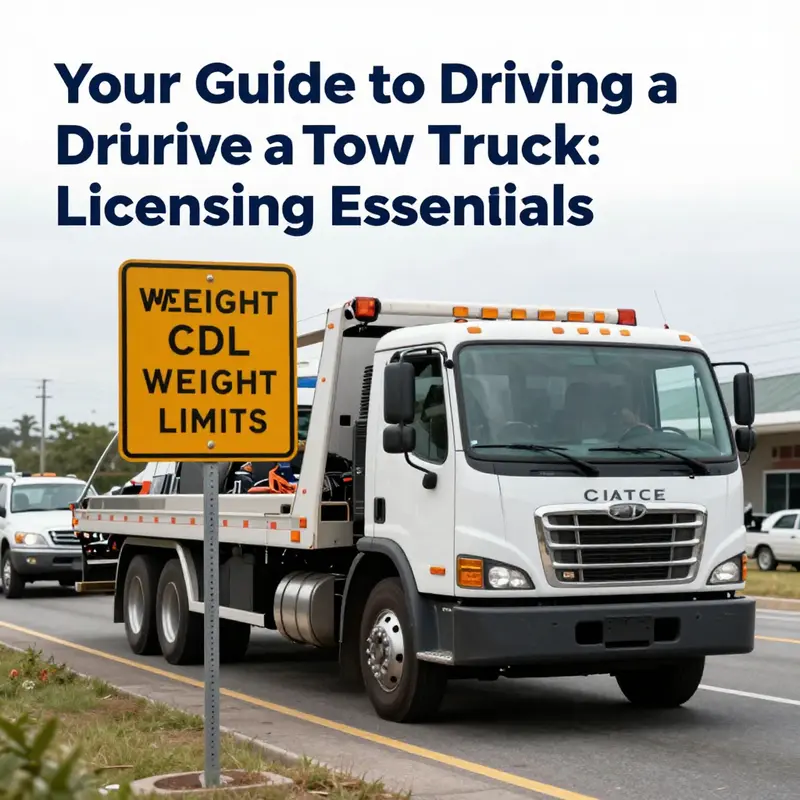
Licensing a tow truck is more than a minimum credential. It is a formal acknowledgment that the operator will handle a heavy vehicle in the field, manage roadside hazards, and remain compliant with a web of state, federal, and industry rules designed to protect the driver, the public, and the equipment. The practical path toward legality begins with the most familiar credential, the standard driver license, but it quickly expands into a framework of commercial licenses, endorsements, vehicle inspections, and job specific certifications. The way this path unfolds depends on where the work takes you, what you will tow, and how much weight you will pull or transport. Yet there is a unifying thread: most tow truck operations are treated as commercial activity that falls under a regulated system aimed at preventing accidents, reducing risk during towing operations, and ensuring that anyone who drives a tow truck for hire has proven competence behind the wheel and in the tow chain.
At the core of this system is the Gross Vehicle Weight Rating, or GVWR. This rating, determined by the factory specifications of the vehicle, indicates how much weight the truck is designed to carry safely, including passengers, cargo, and fuel. When the GVWR surpasses 26,000 pounds, many jurisdictions require a Commercial Driver’s License, or CDL, to operate the vehicle in a commercial context. The threshold is not arbitrary; it reflects the heavier stopping distances, longer maneuvering demands, and greater risk profile associated with larger, commercial-duty tow trucks. In practice, this means that for most standard tow trucks used by recovery services, wrecker yards, and emergency roadside teams, a Class B CDL is not just common but often essential. The practical implication is clear: the moment a tow truck is used for hire and exceeds 26,000 pounds GVWR, the door to a CDL is usually, though not universally, opened.
The CDL framework itself is not a single license. It is a family of licenses that categorizes vehicles based on weight, configuration, and operation. A Class B CDL generally covers single-unit vehicles with GVWR over 26,001 pounds, a category in which many tow trucks clearly reside. A Class A CDL would apply to combination vehicles, such as a heavy tow truck pulling a trailer, a configuration some specialized tows or multi-axle operators might encounter. There is also a Class C license, which covers smaller vehicles that transport passengers or materials in situations that do not fit neatly into Classes A or B. When a tow operator’s work involves carrying hazardous materials, additional endorsements come into play, most notably the Hazmat endorsement. This endorsement imposes its own set of testing, background checks, and security procedures because it touches the safe handling of dangerous substances along with the responsibility for their secure transport.
All this sounds straightforward on a whiteboard, but the real world adds layers. Some states align with the federal CDL framework but add state-specific requirements that tailor the licensing process to regional road realities and enforcement priorities. California, for example, uses the same general CDL class logic but enforces state specificities through its own DMV processes, training requirements, and road safety standards. In many California operations, the combination of GVWR thresholds and the demand for professional conduct on the job makes for a strong case for pursuing a Class B CDL as the norm for tow trucks. New York introduces another dimension with the W endorsement, a Tow Truck Operator endorsement that many drivers must hold to operate a tow truck for hire legally. The W endorsement is not merely a stamp of permission; it signifies an additional step in the licensure process, reflecting the unique duties of tow truck operation, from securing tows safely to navigating the special rules that apply to roadside recovery work in dense urban environments. It typically involves background checks, drug screening, and a knowledge and skills assessment, all designed to verify that the operator is prepared for the complex and dynamic tasks that tow work entails.
The W endorsement underscores a practical truth: licensure for tow work rarely rests on a single exam or a single certificate. It rests on a constellation of requirements that collectively create a safer tow community. Some jurisdictions also require vehicle-specific licensing and periodic roadworthiness inspections. Western Australia presents a useful contrast. There, licensing extends beyond the driver. The tow truck itself must pass a roadworthiness inspection at an approved testing center. A Certificate of Inspection is issued only after the vehicle meets defined safety and mechanical standards. The operator then applies for a vehicle license using official forms, identity proofs, and a chain of documentation that confirms both the vehicle and the driver meet the jurisdiction’s expectations for safe operation. This broader approach highlights how licensing to tow a vehicle can be an integrated process, binding driver qualification to vehicle readiness and ongoing compliance.
Across the United States and other regions, a wide spectrum of rules shapes what is required to drive a tow truck. The consistent theme is the balancing act between allowing skilled professionals to perform essential roadside work and ensuring that those professionals are sufficiently trained and vetted. The standard minimums are clear: a valid driver’s license, a clean driving record, and the capacity to pass background checks and drug screening. From there, the path diverges. Some operators may start with a standard license, then migrate to a CDL once the vehicle category and the expected weight are established. Others may require endorsements or special tests from the outset, particularly if the job sits in the heavy heavy end of the weight spectrum or involves hazardous materials. In every case, practical training matters. Employers frequently require a tow truck driving certification or a formal training credential that demonstrates hands-on proficiency in towing techniques, safety procedures, load securing, winching, rigging, and the management of tow operations under real world conditions.
The training dimension is not merely about operating a tow truck; it is about performing complex tasks with a high degree of judgment and care. Towing a disabled vehicle or clearing a wrecked car from a highway presents immediate safety challenges. The operator must understand how to secure a vehicle on a wrecker, manage the potentially shifting load during transit, and protect pedestrians and other motorists from injury or hazard. It is about the precise handling of winches, variable rigging, chain and hook selection, and the careful planning of a tow to minimize damage to both the towed vehicle and the tow vehicle. It also means a disciplined approach to roadside safety, such as placing warning devices at appropriate distances, using appropriate lighting, and communicating effectively with dispatch and other responders on the scene.
If a reader is mapping out the path to becoming a tow truck operator, the federal backbone is the regulatory guidance derived from the Federal Motor Carrier Safety Administration, or FMCSA. The FMCSA administers CDL standards at a national level and provides the framework within which states issue licenses and endorsements. The federal perspective helps explain why weight thresholds are tied to CDL and why certain endorsements, such as Hazmat, require security and safety checks that extend beyond a simple driving test. It is also a reminder that even as state agencies tailor requirements to local conditions, the CDL system remains a unifying mechanism that ensures a baseline of competence across the country. For those who want to read the federal perspective directly, the FMCSA’s website offers the authoritative account of CDL classes, endorsements, and the regulatory underpinnings that govern commercial driving and the operation of heavier tows.
In practice, many operators move through the licensing maze in a progressive, practical sequence. A person may start with the standard driver license and gain experience behind the wheel under the supervision of a licensed professional. As the scope of work expands to include heavier vehicles or situations that require towing for hire, the next step is to pursue a CDL, typically Class B, which opens the door to operating heavier tow trucks without the need for a trailer. If the work involves coupling a tow vehicle with a trailer or other multiunit configurations, the operator might consider the Class A path, which covers combination vehicles. At the same time, if the job involves specific special duties, the Hazmat endorsement becomes a consideration, triggered by the need to transport hazardous materials. In many northeast and coastal urban markets, the W Tow Truck Operator endorsement becomes essential for legal operation in the field, particularly when the tow service is a business that provides immediate roadside response to callers who require professional recovery work.
Education and hands on training also play a central role. Tow truck driving certification programs, often offered by vocational schools or industry training facilities, provide structured curricula that cover not just the mechanical operation of the tow truck but also the safety protocols that govern every stage of a tow operation. These programs typically address hook up and rigging procedures, proper load distribution, stabilization techniques, and the safe use of winches. Safety culture is reinforced through simulated scenarios that mirror real roadside conditions, from wet and slick surfaces to unpredictable traffic patterns. Employers value these credentials because they translate directly into reduced damage to vehicles, fewer on site injuries, and more efficient service delivery in high-pressure environments. Even with a CDL in place, the road to excellence as a tow operator often requires ongoing training that updates drivers on evolving safety standards, new equipment, and best practices learned from field experience.
An important practical step is to recognize how licensing requirements translate to job opportunities and the daily realities of tow work. In many jurisdictions, the employer will outline a precise set of prerequisites before a new driver is allowed to hit the road. They may require verification of a clean driving record for a specified period, a successful completion of a background check and drug screening, and proof of attendance at a sanctioned training program. Some employers will require compliance with state or local vehicle inspection rules, periodic medical examinations, and continuing education in towing safety. The result is a comprehensive system in which the driver is vetted, trained, certified, and continually evaluated to maintain high standards of performance and safety on the job.
The licensing journey for tow truck operators also intersects with the broader needs of the workforce and the evolving demands of emergency response and roadside assistance. Tow services are integral to incident response, road safety, and vehicle recovery, and the drivers who fill these roles must be prepared for unpredictable conditions. The on the ground realities include being ready to manage traffic hazards, to work with law enforcement and fire rescue teams, and to adapt to the specifics of each scene. The variability of duties—from simple jump starts and tire changes to complex recoveries involving multiple vehicles, heavy loads, and difficult winching—means that a well rounded license and training package matters as much as the ability to pass a single test.
To keep pace with this complexity, many providers of tow truck service place emphasis on continuous professional development. The combination of licensing, endorsements, and ongoing training becomes a platform for career progression as well as operational reliability. It is not unusual for a tow operator to add specialty expertise along the way, such as securement techniques for different vehicle types or specialized recovery methods for heavy-duty rigs. Such growth often coincides with expanding responsibilities within a company or pursuing opportunities within larger fleets that prioritize compliance and safety as core metrics of performance. In this sense, licensing is not just a gate to the road; it is a foundation for a durable, responsible, and professional practice in a field that carries real consequences for accidents, damages, and human safety.
The practical guidance for someone beginning this journey is straightforward. Start by confirming your state or region the exact thresholds that trigger CDL requirements for tow trucks. If your GVWR exceeds the standard threshold or if you anticipate work that involves heavy single units or combination configurations, prepare to pursue a CDL and select the appropriate class, typically Class B for many tow trucks. If you expect to work in a dense urban market where you may be required to operate for hire, verify whether a W endorsement or similar state specific designation is necessary. Then, complement licensing with targeted training that emphasizes towing techniques, load securing, safety procedures, and incident response readiness. This training should align with the specific vehicle you intend to operate, including any required inspections, maintenance checks, and adherence to state inspection rules. Remember to factor in the possibility of Hazmat or other endorsements if your planned duties include transporting hazardous materials or operating in contexts that demand additional regulatory layers. Always verify the latest requirements with the local licensing authority, whether that is the state DMV, the equivalent transportation department, or a dedicated licensing agency. Regulations shift over time in response to safety audits, enforcement priorities, and evolving towing practices, so a current, location specific check is essential for legal operation.
For operators who want a concise resource to frame how readiness translates into practical outcomes, there is a pathway that links licensing to preparedness in the broader fleet environment. Teams that plan for robust emergency response and rapid, safe roadside service will find value in aligning licensing with operational readiness. A practical way to ground this alignment is to reference a resource that focuses on essential fleet readiness and emergency response strategies. See Essential Fleet Emergency Response Strategies for deeper context on how licensing integrates with a service model that prioritizes safety, speed, and coordinated action on the highway. This alignment matters because a licensed tow operator who has completed the right training and earned the proper endorsements is better prepared to act decisively and safely in high pressure moments, when every decision can affect lives, property, and the flow of traffic.
In addition to these considerations, there is value in maintaining a direct connection to federal standards through official channels. The FMCSA site remains the authoritative source for CDL definitions, endorsements, and the regulatory baseline that governs commercial driving across the nation. Reading the federal framework helps explain why weight classifications and endorsements exist and how they ripple through state licensing practices. It also clarifies the responsibilities that come with holding a CDL, such as compliance with hours of service rules, vehicle maintenance expectations, and the ongoing need for knowledge updates. For a direct reference to the federal perspective, consult the Federal Motor Carrier Safety Administration’s resources and official guidance on CDL classes and endorsements.
What this all means for a future tow truck operator is clear and actionable. Begin with a clear assessment of the vehicle you intend to operate and the typical duties you expect to perform. Is the tow truck a single unit with a GVWR above 26,000 pounds, or do you anticipate a combination vehicle that would push you into Class A territory? Will your work involve the transport of hazardous materials, triggering Hazmat prerequisites? Do you operate in a state that requires a W endorsement for tow work or one that uses a different state-specific designation? Answering these questions will illuminate the appropriate license class, endorsements, and any vehicle or operator certifications you should pursue. Then, pair licensing with practical, hands on training that covers the essential skills of hooking, rigging, securing loads, and performing recoveries under varied conditions. This is a field where experience matters as much as documents, so seek opportunities to practice under supervision, participate in certified programs, and stay engaged with ongoing safety training as regulations and equipment evolve.
The licensing landscape is not static, and it benefits anyone who aims to work as a tow truck operator to remain curious, diligent, and organized. A good starting plan is to contact the local licensing authority in your state or region, request the exact CDL class requirements for the tow trucks you intend to operate, ask about any endorsements or special licenses unique to your jurisdiction, and confirm whether vehicle inspections or additional certifications are part of the licensing package. This proactive approach reduces the risk of discovering a missing credential after a delay or during a roadside assignment. It also signals to potential employers that you are serious about compliance and safety, traits that matter on a fast paced service floor where every shift can present a new scenario requiring trained judgment and careful execution.
As you map this journey, remember that licensing a tow truck is a community responsibility. The operator who holds the right license, the right endorsements, and the right training contributes to safer roads, less property damage, and more reliable access to emergency and recovery services for the public. The entire system functions best when drivers stay informed about rule changes, keep their credentials current, and pursue ongoing professional development. That is how a license becomes more than a piece of paperwork—it becomes a credential that earns public trust and a professional identity that supports a career in a field that keeps people moving even when vehicles fail or accidents happen.
External resource: https://www.fmcsa.dot.gov
From License to Hook: The Endorsements and Credentials You Need to Drive a Tow Truck
Understanding what license lets you legally operate a tow truck requires more than a simple answer. The rules vary by jurisdiction, and they depend on the vehicle, the job, and the goods carried. At the core, three things determine the license you need: the vehicle’s weight and configuration, the work you will perform, and the local or state rules that apply. This chapter explains how those pieces fit together. It lays out when a Commercial Driver’s License (CDL) becomes necessary. It summarizes common endorsements, state variations, vehicle inspection and registration steps, and the practical steps to get qualified. Read this section to know which credentials matter, why they exist, and how to secure them efficiently.
Start with the basic dividing line: gross vehicle weight rating, or GVWR. In the United States, federal and state rules typically require a CDL to operate a vehicle with a GVWR over 26,000 pounds. Tow trucks often cross that threshold. If your truck, a loaded trailer, or combined rig weighs more than 26,000 pounds, plan to get a CDL. For many operators, that means seeking a Class B CDL. Class B covers single vehicles with GVWR above 26,000 pounds. It also covers vehicles towing a lighter trailer. A Class C CDL applies when you carry hazardous materials or transport a small number of passengers for hire, and is less common for heavy tow operations.
Beyond the CDL class, endorsements add the specialty permissions you need. Endorsements exist because towing creates unique risks and tasks. Properly hooking a disabled vehicle, securing loads, and knowing the limitations of your rig require specific knowledge. Many states therefore require a towing endorsement. The label differs by jurisdiction. Some states use a T endorsement. Others use a W endorsement, or a licensing program distinct from the CDL system. These endorsements usually require a knowledge test and a skills check. They may also demand background screening, age minimums, and drug testing.
Consider New York as a clear example. There, the state requires a tow truck operator endorsement, commonly called the W endorsement. To obtain it, you must hold a valid New York driver’s license, pass a written and skills test, and clear a background check. Drug screening and age minimums apply. The endorsement is not optional if you plan to tow for hire within the city. That model reflects a broader trend. Municipalities and states that face high towing demand add endorsements to ensure operator competence and public safety.
Not every jurisdiction follows the same pattern. In many states, the CDL and its common endorsements will suffice. In others, regulators focus on the vehicle itself. For instance, in some parts of Australia, licensing includes a mandatory roadworthiness inspection before a tow truck gets its operating license. The vehicle must pass inspection at an approved center. If it meets technical standards, authorities issue a Certificate of Inspection. Then the vehicle license application will proceed, with identity documentation required as part of the process. That model places emphasis on the machine as well as the driver.
Beyond the primary endorsement, other endorsements may be necessary depending on the rig and the cargo. If your tow truck carries fuel or other liquids, a tanker endorsement may apply. If you tow multiple trailers, endorsements for doubles or triples could come into play. These requirements are less common, but they matter for specialized operators. Always review the endorsement list from your licensing agency to avoid surprises.
Age and record requirements are straightforward but important. Most states set a minimum age of 18 for basic tow work. If you need a CDL for interstate operations, or if the job involves larger classes, the minimum age often climbs to 21. Employers typically expect a clean driving record. Many jurisdictions will deny endorsements if recent serious violations exist. Background checks and drug tests are standard parts of the endorsement application in many places. These measures protect operators, the public, and the reputation of towing services.
Training and testing ensure safety. Entitlement to an endorsement rarely happens without passing a knowledge exam and a driving skills test. The knowledge portion covers key topics such as weight limits, vehicle dynamics, load securement, and safe towing practices. The skills test evaluates maneuvers like backing, hooking, and stabilizing a load. Some states also mandate classroom or on-the-job training before you attempt the skills test. Operators who prepare with hands-on practice and formal instruction fare better on examination day.
Understanding vehicle classification helps you choose the correct license class. Class B CDLs typically cover the single-unit tow trucks most operators use. If you operate a combination vehicle with a trailer exceeding specified weights, you may need a Class A CDL. The line between Class A and Class B depends on the combined GVWR. Employers sometimes buy trucks or configure rigs to avoid triggering the higher class requirement. However, doing so limits capacity and future flexibility. If you plan career growth, consider obtaining the higher class proactively.
The application process has predictable steps in many areas. First, determine the class and endorsements you need. Visit your local licensing agency website for official guidance. Collect required documents: proof of identity, residency, Social Security number, and any medical certifications. Complete the written knowledge test. If the test includes specialized towing material, study the relevant manuals or take an approved course. Schedule the skills test when you feel ready. If a background check or drug test is required, arrange for those too. Expect fees for testing, endorsements, and licensing.
Vehicle inspection and registration are equally important. You cannot operate a licensed tow service without properly registered trucks. Many regions require a roadworthiness inspection to confirm brakes, lights, axles, and towing equipment meet standards. An inspection report or certificate often accompanies the license application. Proper registration also involves correct class and weight designations. Some areas require special plates for commercial tow trucks. Others enforce insurance minimums and bonding requirements for tow operators who perform relocation or impoundment work.
Insurance and bonding requirements vary widely. Because towing presents high liability exposure, regulators often require higher insurance limits for tow operators. Some municipalities require bonds to protect consumers against improper towing or storage fees. Employers typically require you to be part of a company policy with vehicle and general liability coverage. If you operate independently, you must secure appropriate commercial insurance before accepting jobs.
Compliance is ongoing. Having a license and endorsement is the start, not the finish. Keep track of renewal dates, recertification requirements, and any continuing education rules. Some endorsements expire and require retesting. In many states, moving violations or at-fault incidents can affect your status. Employers may require random drug testing or post-incident screening. Maintain a clean record to avoid losing privileges and to stay employable.
Safety practices tie directly to licensing and endorsements. Training on securement, lifting, and stabilization reduces incidents. Knowledge of weight distribution prevents load-induced instability. Attention to weather, traffic, and roadside hazards protects both the operator and the public. Vendors and training providers often offer courses in defensive driving, load securement, and vehicle recovery. While not always mandated, these courses improve skills and job prospects.
For those new to the field, a practical pathway makes sense. Start by determining whether your target rig requires a CDL. If not, secure a valid state driver’s license and meet local business registration rules. If a CDL is required, obtain a commercial learner permit. Use that to gain experience behind the wheel with supervision. Study the endorsement manuals for the knowledge exam. Practice the maneuvers you will face in the skills test. Work with an instructor who understands towing. When ready, pass the written and driving tests, complete any background and drug screenings, and apply for licensing.
If you plan to work in areas with municipal towing rules, research local requirements before investing in equipment. Some cities require operators to register with a city towing program. These programs often impose additional standards, such as rates, response times, and inventory control practices. Operators who understand local rules gain a competitive edge and avoid costly noncompliance penalties.
Employers and operators both benefit from documentation and record keeping. Keep copies of your license, endorsements, certifications, and inspection reports readily available. Maintain a log of training, medical certificates, and testing results. Good records simplify renewals, strengthen bids for contracts, and prove compliance during audits.
Technology plays a role in compliance. Electronic logs, GPS tracking, and telematics help manage routes, hours, and vehicle health. Such tools support safer operation and demonstrate regulatory compliance. They also help in defending against claims if questions arise about response times or service locations.
When you encounter a gray area, rely on official sources. Local DMV or equivalent websites provide official checklists, forms, and contact information. They clarify whether a particular configuration triggers a higher license class. They explain which endorsements are mandatory for specific towing tasks. If you still need clarity, contact agency customer service or visit a licensing office in person. A short call can prevent costly missteps.
Whether your operation is local recovery or long-haul towing, plan for growth. Consider the endorsements and classes you might need as your fleet expands. Investing early in broader qualifications can reduce downtime later. It makes you more attractive to employers and customers. It also ensures your career can adapt to larger rigs or specialized towing tasks.
Finally, remember that requirements shift over time. Regulatory agencies adjust rules to address safety trends, new vehicle technologies, and changing industry practices. Make a habit of checking official guidance periodically. Add renewal reminders to your calendar. Attend industry workshops and read reputable trade sources to stay current.
For a practical next step, consult authoritative guidance on obtaining a CDL and endorsements in your area. Detailed, step-by-step resources clarify testing, fees, and preparation strategies. For U.S. operators wanting a complete overview of becoming a tow truck driver, the Indeed guide provides clear, practical steps. Visit A Complete Guide To Becoming a Tow Truck Driver on Indeed for more detailed, state-specific advice: https://www.indeed.com/career-advice/finding-a-job/become-tow-truck-driver
If you would like ongoing tips and local industry insights, consider following The Island Tow Truck blog for updates and operational advice. It offers helpful articles on fleet readiness and emergency response tailored to island and coastal operations: The Island Tow Truck blog.
Licenses in Tow: Navigating Driver Credentials and Vehicle Inspections for Tow-Truck Operators
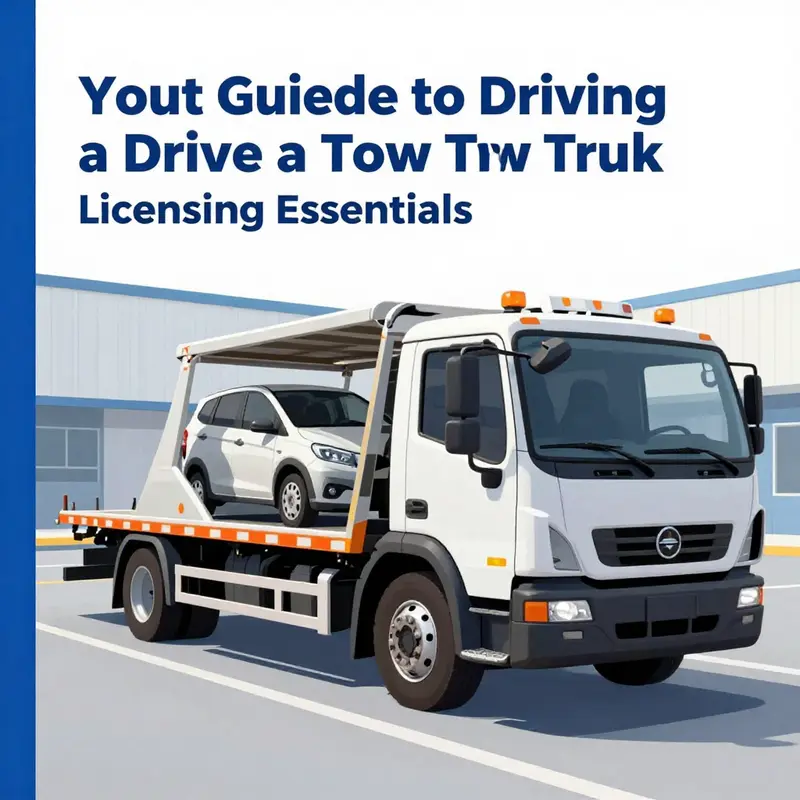
Tow trucks are specialized machines designed to secure, lift, and transport disabled or damaged vehicles, often under pressure and in hazardous traffic. Because they operate on public roads and sometimes carry heavy, unstable loads, the licensing framework that governs who may drive them and how the vehicle is used is both precise and varied across jurisdictions. At the heart of the licensing decision is the GVWR, the gross vehicle weight rating of the tow truck. This number, listed in the vehicle’s documentation, acts as the initial threshold for credentialing. In the United States, the rule of thumb is straightforward: if the tow truck’s GVWR exceeds 26,000 pounds, most states require the driver to hold a Commercial Driver’s License, or CDL, when operating the vehicle in a commercial context. If the GVWR is 26,000 pounds or less, a standard driver’s license may suffice, but the exact rules are state-specific and often accompanied by additional requirements, such as endorsements or safety training. The practical consequence is simple: the heavier the machine you intend to drive for hire, the more formalized your licensing path tends to become. This is especially true for operators who plan to work with large recovery rigs, urban roadside rescues, or interjurisdictional dispatches that cross county or state lines.
The CDL path is not a mere formality. It reflects the responsibility that comes with commanding a vehicle capable of handling heavy loads, operating complex hydraulic systems, and performing delicate recoveries in busy road environments. A CDL certification typically requires passing both written and skills tests, undergoing a medical examination, and maintaining periodic renewals and medical certifications to confirm ongoing fitness for safe operation. The classes and endorsements most commonly encountered map to vehicle configurations: Class B for many heavy straight trucks, including many heavy tow trucks that resemble large service or delivery vehicles. Some configurations, especially combination units or specialized heavy recovery rigs, may require additional endorsements or different CDL classifications. Because state definitions vary, a prospective operator should start by mapping the tow truck’s GVWR and configuration to the relevant CDL category. The consequence of misalignment can mean a license that does not authorize a given operation, with penalties ranging from fines to liability gaps in insurance coverage. For anyone considering a serious tow-truck career, this alignment step is not just administrative paperwork; it is the first concrete test of whether your planned operations are legally and practically feasible.
Yet not every tow truck falls into the CDL category. Even where the GVWR remains under the CDL threshold, states may require a separate permit or endorsement for towing. In a number of states, a tow-truck endorsement is the official token that confirms you are authorized to operate a tow truck for hire on public roads. In some places this takes the form of a tow-truck endorsement or, in certain jurisdictions, a specific W endorsement. The W designation signals that your license includes the authority to perform towing operations. Where such endorsements exist, the path to qualification usually includes a set of common steps: you must be at least 18, hold a valid state driver’s license, undergo a background check and drug screening, and pass both a knowledge test and a practical driving assessment focused on towing procedures, load securement, safety protocols, and on-road performance. Refreshers or ongoing training obligations are not unusual, reflecting the sector’s evolving safety expectations. In practice, this means that even if a driver does not hold a CDL, a noncommercial license with a proper endorsement can still enable operation of a tow truck for hire in certain jurisdictions. This layered approach—CDL for heavier equipment, endorsements or separate licenses for towing—aims to balance mobility with safety, ensuring that the operator has both the technical competence and the regulatory authorization to manage the risks inherent in towing operations.
The licensing landscape also places a strong emphasis on the vehicle itself. Tow trucks are often treated as regulated commercial vehicles, which means registration and periodic safety inspections are not optional but mandatory. The exact process varies by state, but the core idea is consistent: the vehicle must be registered, its equipment inspected, and it must be found roadworthy before it may operate on public roads. The specifics can resemble a three-part sequence: first, the vehicle must meet certain mechanical and safety standards, second, an inspection report or certificate is issued, and third, you file for or renew a vehicle license or registration. The practical effect is clear: a tow operation is only as safe as the vehicle that performs it. Inspectors review a range of critical systems, including the winch mechanism, hydraulic controls, safety chains or straps, lighting, braking, and load-securement equipment. Failures in any of these areas can lead to penalties or work stoppages, underscoring that vehicle readiness and driver readiness are inseparable. In many jurisdictions, the annual or biennial inspection becomes part of the condition for insurance coverage and for the ability to operate legally, which means a fleet that ignores inspections courts higher risk, higher maintenance costs, and potential downtime.
In the United States, the rules surrounding licensing and inspections sit on a foundation of general requirements that span most states. The typical bare minimum includes a driver’s age that aligns with driving rules (often 18, but sometimes higher for certain CDL classes or commercial vehicle configurations), a valid driver’s license, and a clean driving record. The driver is usually subject to a background check and drug testing, given the safety implications of the work. Training is a recurring theme, whether it is formal education through the licensing process, employer-provided safety programs, or professional certifications that cover load securement, proper use of towing equipment, traffic control, and emergency procedures. These requirements create a comprehensive framework intended to reduce on-road risk and to ensure that tow operators can respond safely to unusual and challenging situations, such as break downs in high-traffic corridors or recoveries in adverse weather. The more you look, the more you see that licensing is part of a holistic safety and competency ecosystem rather than a single checkbox.
The practical path for someone seeking to drive a tow truck begins with a careful inventory of the vehicle and an understanding of the regulatory map that governs their location. Start by confirming the tow truck’s GVWR and its configuration. Then consult the licensing authority to learn whether the vehicle triggers a CDL class or a state-endorsed tow license. Gather the necessary documents: proof of identity, proof of state residency, your current driver’s license, and, if pursuing CDL status, information about your medical certification. If required, you may need to provide evidence of professional training or completion certificates for load securement, safety protocols, and emergency response. You will likely need to complete state-specific knowledge and skills tests, and you may be required to demonstrate proficiency with specific equipment, such as winches, straps, hooks, and recovery gear, under controlled conditions. The process can be time-consuming, often spanning weeks or months from initial inquiry to credential receipt, depending on the jurisdiction and the volume of applicants at the DMV or licensing office. The path, however, is designed to be transparent and systematic, providing a clear ladder from novice to qualified tow-truck operator. This structure is not merely bureaucratic; it is a guardrail designed to protect the operator, other road users, and the loads being moved.
A complementary reality is the relationship between licensing and the operational environment. Companies that employ tow-truck drivers typically require their personnel to hold CDL status or specific endorsements, even if the vehicle would technically fall under a non-CDL category in a different jurisdiction. Employers often add their own safety training requirements and insist on ongoing refreshers to align with evolving equipment and procedures. Insurance considerations follow suit: carriers may require proof of certain credentials before they extend coverage or before they offer favorable terms. This interdependence—driver credentialing, vehicle readiness, employer standards, and insurance requirements—means that becoming licensed is just the beginning. If you aspire to build a career in towing, you should view licensing as the entry point to a continuously refreshed practice of safety, compliance, and professional development.
If you are standing at the starting line and asking yourself where to begin, the most reliable guide is the licensing authority in your state. A direct path starts with the state department of motor vehicles or its equivalent. The agency publishes the exact requirements, forms, and testing timelines for tow truck licensing, endorsements, and commercial vehicle regulation. Set up an information-gathering plan: identify what documents you need, confirm the exact GVWR of your tow truck, and note any prerequisites such as medical certification for CDL alternates, background checks, or drug screening. Then prepare for the tests, and, if required, make room for the practical assessments in a controlled environment. Engage in pre-training to cover critical competencies such as hooking, winching, load restraint, and traffic safety. This preparation not only improves your odds of passing the tests but also helps you perform more safely and efficiently on the job. Good preparation reduces the risk of delays and increases your confidence when you finally carry the license in your wallet or display the endorsement on your driving record. The exam process can be rigorous, but the payoff is clear: legal authority to operate the equipment and the confidence that you can manage complex situations without compromising safety.
To connect these considerations to a broader ecosystem of practical resources, you can look to industry discussions and guides that focus on licensing, training, and safety in the towing sector. A useful starting point for understanding how licensing concepts translate into day-to-day fleet management is the Island Tow Truck blog. This resource provides context for how operators manage licensing, maintenance, and training within the larger framework of a well-run towing operation. You can access this resource at the following link: https://theislandtowtruck.com/blog/ . The information there can illuminate how agents coordinate licensing, safety checks, and ongoing education as part of an integrated fleet strategy.
At the end of the journey, the licensing hurdle is not the finish line but a doorway into a professional practice built on safety, reliability, and accountability. A driver with the right credentials can operate with legitimate authority, but success also depends on consistent adherence to safety standards, timely vehicle inspections, careful load handling, and a willingness to participate in ongoing training. The regulatory framework rewards thorough preparation and compliance with a track record of safe recoveries and timely tow services. It is this combination of credentialing, equipment readiness, and disciplined practice that forms the basis for a tow-truck operator to earn the trust of clients, law enforcement, and the motoring public alike.
For readers seeking a more structured overview of how to embark on this path in their state, a resource-minded approach suggests visiting a reputable employment or training guide for the trucking sector. You may also consider consulting Indeed for a detailed outline of CDL and tow-truck training requirements, including steps to become licensed in a given state. A practical reference is available here: https://www.indeed.com/career-advice/finding-a-job/becoming-a-tow-truck-driver.
Final thoughts
Navigating the licensing requirements to drive a tow truck may seem overwhelming, but understanding the necessary steps can simplify the process significantly. From obtaining a Commercial Driver’s License based on your vehicle’s weight to securing special endorsements and ensuring your vehicle meets inspection standards, each aspect is crucial for operating legally and safely. This knowledge not only protects your business but also enhances the trust your clients place in you. As the towing industry continues to evolve, staying informed about licensing will allow you to adapt and thrive.