In the unique landscapes of island communities, where distances can be short yet complications arise quickly, understanding how to tow a truck safely and efficiently is essential. Whether you are a property manager ensuring seamless access for guests, a commercial fleet operator maintaining operational readiness, or an auto repair shop managing roadside emergencies, mastering towing techniques is crucial. This guide will walk you through essential pre-towing inspections, proper equipment selection, secure connection procedures, and effective driving protocols—all tailored for your specific needs. Let’s dive into each chapter to equip you with the knowledge and skills necessary to tow a truck with confidence and competence.
Pre-Tow Precision: A Thorough Inspection That Keeps Two Trucks in Sync
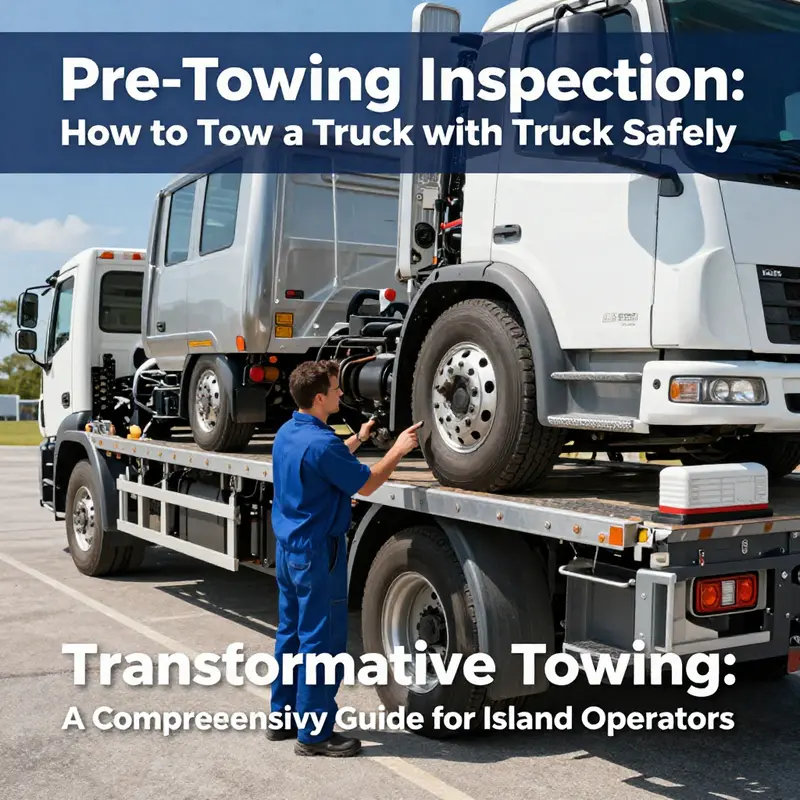
The moment before any tow begins is the moment that decides the fate of both vehicles and everyone else on the road. When two trucks are bound by a tow bar or a tow rope, the plan must hinge on precision, not assumption. The pre-tow inspection is where you turn potential risk into a controlled procedure, where you translate the mechanics of two machines into a shared confidence. A well-executed inspection is not a dry ritual; it is a safeguard that aligns torque, traction, and timing with the pace of the road ahead. It is the quiet bridge between preparation and movement, a bridge that demands attention to detail and a steady approach to decision making. In this chapter we traverse the core elements of that preparation, integrating the realities of tow capacity, vehicle condition, and the subtle mechanics that keep a pair of work trucks moving together rather than fighting each other under load. For those who want practical, scenario based insights drawn from real world recovery operations, the Island Tow Truck blog offers a practical counterpoint to theory, presenting hands on perspective. the Island Tow Truck blog.
First comes the condition check of the tow vehicle. The engine should be in reliable form, not just able to start but able to sustain a controlled idle, handle the sudden demands of braking, and support the extra weight of a towed load in all expected terrains. Brakes are non negotiable; their function must be verified through pedal travel and brake pad condition, and a quick visual inspection of rotors or drums for glazing, wear, or overheating signs. Tires carry the same weight of scrutiny: adequate inflation pressure, sufficient tread depth, and no obvious sidewall damage. Lights play a critical role in signaling intentions to other road users, so headlights, brake lights, turn signals, and side marker lamps must be tested. The suspension is not merely a comfort feature but a stability anchor; signs of sagging, leaking shocks, or loose components can predict a bouncy tow that invites sway and misalignment. If any warning lights or abnormal sounds arise during a preliminary run, the wiring harness, fender mounts, and exhaust hangers deserve a careful inspection before any pulling begins.
Beyond these visible checks lies the question of capacity. The towing capacity of the tow vehicle determines how much weight can be hauled without compromising control. Two numbers matter here: the maximum gross trailer weight GTW and the gross combined weight rating GCWR. The GTW says how much the towed unit alone can weigh, while the GCWR states the total weight the tow vehicle can sustain when the towed vehicle is connected. It is not enough to rely on a numerical label on the dash or owner’s manual; you verify that the actual towed weight remains within those limits. Overloading a vehicle is a fast track to brake fade, reduced steering response, and, in worst cases, a loss of control. The point is not to raise the bar but to respect the bar that exists, because respect for limits protects the whole operation.
The hitch system is the physical link between the two trucks and, as such, must be robust and properly configured. A ball mount, hitch receiver, or connector plate should be securely installed and rated for the load, with all fasteners torqued to the specification in the manual. Any visible wear, corrosion, or looseness around the hitch points is a red flag. If the operation uses a mechanical connection like a hitch pin, confirm that a locking device or safety cable is in place and that there is no play that could permit the connection to loosen during movement. After the initial setup, a brief test by applying a firm but controlled pull to check for any slack or shifting of the hitch is a prudent precaution. This is not a test for force; it is a test for stability and predictability.
As the tow vehicle is prepared, the towed truck requires its own careful assessment. If the disabled or trailing vehicle has power, you still perform a restraint check that includes brakes, steering, and lights, but you also assess the overall drivability of the machine when it is placed in neutral. For automatics, gear selector in Neutral is essential, and for manuals, an empty gear state reduces the risk of inadvertent engagement. If the towed vehicle has no power at all, you must consider mechanical means to release the parking brake and ensure it does not drag or restrain the movement of the tow unit. A towed vehicle that drags or binds under even light tension will quickly translate into increased wear on the tow vehicle and can dramatically alter handling in curves and on slopes. The steering should feel natural and predictable; if the towed unit has a stiff, unresponsive, or wandering steering feel, it is a sign that the towing arrangement may require additional stabilization or a different approach, such as a dolly or a flatbed recovery plan to avoid transferring damage from the towed unit to the tow vehicle.
Fluids across the towed truck also deserve a close look. Engine oil, coolant, transmission fluid, brake fluid, and power steering fluid should be at expected levels and free of contamination. The braking system on the towed truck merits particular attention. If the towed vehicle preserves functioning brakes, that is a relief, but if brakes are faulty or cease to respond properly, the decision to tow must be reassessed. In some scenarios a dolly or trailer becomes the safer alternative, because towing with immobile or compromised brakes places excessive strain on the tow vehicle, risking overheating and brake fade on long or steep segments of the route. The transmission must also be examined for compatibility with a ground towing configuration. In some manuals and operating guidelines, particular transmission types are either recommended or prohibited for long tows; the aim here is to preserve the life of the drivetrain while ensuring the operation remains within the law and manufacturer guidelines. The reader will encounter a spectrum of configurations, from rear wheel drive to four wheel drive and electric or hybrid powertrains, and each scenario requires a precise, vehicle specific plan.
For those who need to broaden their practical understanding, a growing number of recovery operations emphasize transmission friendly practices. A key point is to seek alignment between the tow vehicle and the towed unit so that neither unit is forced to compensate for a misalignment in the other. This means validating that the towed unit can be controlled without creating dangerous pull across the connection. The emphasis is on a smooth, predictable transfer of force rather than a sudden surge of tension the moment movement begins. If a towed unit has traction control or stability enhancements, those features should be considered in the planning and explained to all operators involved so that the entire crew remains aligned on expectations for steering, braking, and acceleration. In short, the pre tow inspection is about turning uncertainty into a well understood, managed condition before any chain or rope takes on tension.
A practical resource in this area can be found through dedicated towing resources that translate these checks into actionable steps. In addition, engagement with experienced operators through professional networks can yield scenario based insight that complements the general guidelines. Practical, hands on guidance found in the Island Tow Truck blog is one such source; it provides real world perspectives on maintenance of rigging, secure connections, and the nuances of field procedures. the Island Tow Truck blog.
Towing hardware inspection is the next layer of safety. The chains, straps, and safety cables must be clean, free from corrosion, and rated for at least the weight of the towed vehicle. The hardware is the last line of defense before the connection fails under tension. A visual inspection for frayed strands, stretched links, or broken hooks is essential. The securing mechanisms must be engaged with sufficient tension that they do not become loose when turning or going over small obstacles at low speed. A locking pin or a secondary safety strap might be employed to ensure that the main connection cannot work free. The goal here is not to render the setup perfect in a single move but to ensure that every element remains secure throughout the pull, with redundancy built into the system so that a single point of failure cannot lead to a chain reaction of disconnections.
The final setup check ties all the threads together. You must confirm that the towed vehicle is securely connected and that all lighting is functional. A low speed stability test in a safe area is an excellent final step before hitting public roads. This test serves as a rehearsal for the actual tow, revealing any unexpected wobble, misalignment, or binding in the steering. If anything feels off, stop and reassess rather than pressing forward. The goal is not to prove a point but to prove the path forward is safe for both drivers and the equipment. Environmental considerations accompany this final check. Nighttime towing demands the use of hazard lights to alert following traffic and ensure visibility. Inclement weather increases risk for all participants, so postponing the operation may be the wisest course if rain, snow, fog, or ice makes control uncertain. Long downhill segments pose additional risk, and in such cases a flatbed might be the more prudent option to control heat buildup and maintain a stable braking profile.
The inspection process also requires a sense of responsibility toward the different vehicle types involved. Automatic transmission trucks demand particular attention to towing distance limits and cooling cycles. If reality demands a longer tow, periodic rests and engine off cooling periods may become necessary to preserve the health of the transmission. The rule of safe practice often cited in professional guidance is to stop and let the system cool at regular intervals, especially when towing heavy loads or traversing challenging terrain. For four wheel drive trucks, the guidance is clear on most manufacturer manuals: avoid rope towing or bar towing unless explicitly approved. A flatbed is typically the safer route when drivetrain integrity and four wheel alignment are at stake. Electric and hybrid trucks require the temporary disabling of the high voltage system and a visible warning that this is a towing operation with limited speed. The underlying principle remains the same across types: respect the vehicle design, and tailor your approach to protect the health of every component while preserving the safety of the crew.
All told, the pre tow inspection is a nuanced, whole vehicle assessment that requires calm focus and deliberate action. It blends mechanical evaluation with a strategic plan for how the tow will unfold. It reminds the operator that the act of towing is a managed exercise in balance: weight, momentum, traction, and control must be harmonized rather than forced. The practical takeaway is straightforward. Before any rope is attached, or any bar is connected, you should know the conditions you face, confirm that the equipment is rated for the job, and understand the limits each vehicle imposes. When these conditions hold, the act of towing becomes less a gamble and more a coordinated operation. That coordination rests on the quiet discipline of the inspector who refuses to rush, who checks every detail, and who preserves the integrity of both machines and the people who guide them. The chapter that follows builds on this foundation by turning the explicit checks and balances of the pre tow phase into a secured path for moving from readiness to action, always with safety as the compass and the road as the final judge of the plan.
For authoritative standards and expanded guidelines, see the National Highway Traffic Safety Administration guidance on towing and trailer loads, which lays out capacities, equipment requirements, and safety protocols that inform safe practice on the open road. https://www.nhtsa.gov/vehicle-safety/towing-safety
Choosing the Right Towing Gear: A Practical Guide to Towing a Truck with Another Truck
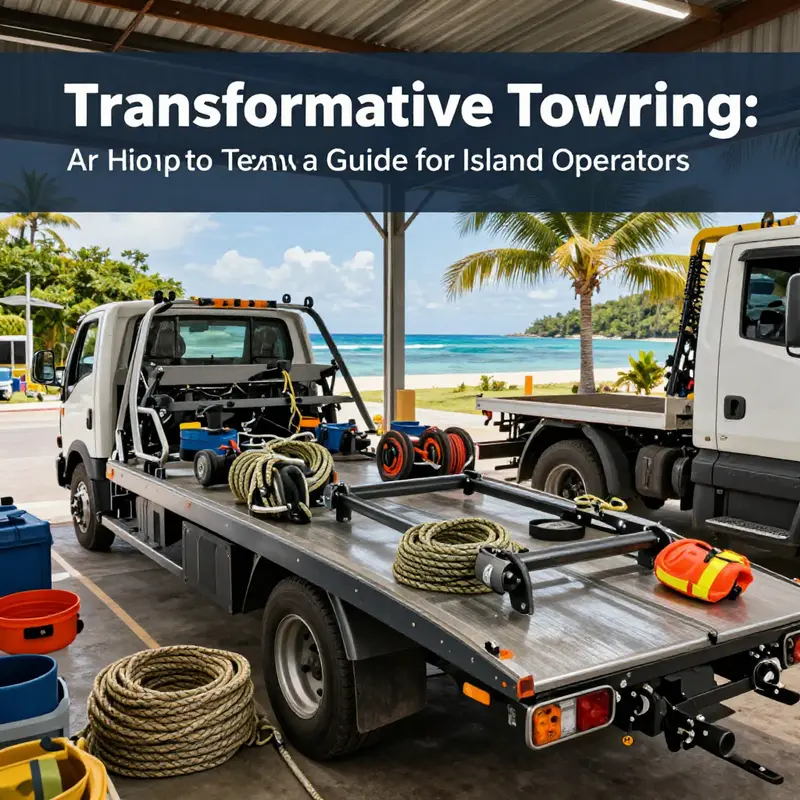
When two trucks must work as a pair, the line between safety and hazard lies in the gear you choose and how well you match it to the task. Towing a heavy vehicle with another heavy vehicle is less a simple pull and more a controlled transfer of momentum, load, and energy. The equipment you decide on—whether a flexible tow rope or a rigid tow bar—sets the ceiling for how smoothly the operation will unfold, how responsive you’ll be to changing conditions, and how effectively you can communicate with the other driver. In the end, the choice comes down to three intertwined questions: how heavy is the vehicle being towed, what are the road and weather conditions, and what is the level of control needed for the distance you expect to cover. The broader aim is not just to move a vehicle from point A to point B, but to do so with mechanical integrity, predictable handling, and unwavering safety for everyone on the road. That is the heart of selecting the right towing gear, and it anchors every practical decision that follows after you read the weight on the towed vehicle’s plate and consider the route ahead.
If you picture towing gear as a bridge between two machines, then weight and physics determine the bridge’s load capacity and its stiffness. A light, nimble system may work well for pulling a compact or under 2-ton load, but it will strain to handle the mass of a full-size truck. Conversely, a rigid tow bar can withstand harsher pulls and provide greater directional stability, yet its installation becomes a stricter, more involved procedure. The decision matters because it shapes how you connect, how you drive, and how you plan for contingencies. The weight of the towed truck is the first compass. You need to compare it not only to the towing vehicle’s capability but also to the environment you anticipate—city streets with tight turns, rolling rural roads, or steep downhill grades. The difference between a 2-ton payload and a 4- to 5-ton payload is not academic; it translates to how quickly a rope might stretch or a bar might push against a hitch, how much leverage the towed mass will have when you brake, and how the system will react to a sudden gust of wind or a sudden demand from a driver who misreads a turn. In short, the gear choice is a safety decision as much as a mechanical one.
Two core options dominate the field: a flexible tow rope and a rigid tow bar. Each serves different realities and invites different discipline from the operator. A tow rope, especially when certified and rated for heavier loads, offers portability, ease of stowage, and quick deployment. It is most effective when the towed vehicle is relatively light, the distance is short, and the objective is a steady, low-intensity pull. The material matters: synthetic fibers such as nylon stand up well to wear, resist slippage, and can be more forgiving under load than some traditional fibers. Features to look for include hooks that fit the tow points securely, reinforced stitching, and reflective elements that improve visibility in dim conditions. In practice, a 5-ton-capacity rope is often cited as a comfortable upper bound for common family vehicles, but the critical measure is the rope’s rating relative to the actual weight and the dynamic forces generated during towing. Misjudging these limits invites jerky starts, snap loads, and unpredictable oscillations that threaten both vehicles and the people nearby.
A hard-tow bar, by contrast, provides a rigid, close-coupled connection that minimizes the slack and reduces the chance of unintended contact between the towed and towing vehicles during sudden stops or rapid acceleration. This stability is why many operators choose a tow bar when towing heavier units, or when the drive involves longer distances or uneven terrain. The trade-off is that the bar’s installation is more involved. You must verify hitch compatibility and secure torque settings according to the manual, and you may need to remove trim or modify mounting points to achieve a solid, play-free connection. After installation, a quick test for lateral and longitudinal play is essential; any noticeable wobble before you begin to move signals a red flag. The payoff comes in smoother line tension, better steering feel, and a predictable response when you maneuver, brake, or adjust your speed. While a rope can be deployed with less setup, a bar offers a protective advantage under stress and is often the safer default for heavier towed loads or challenging road conditions.
The weight and type of the towed vehicle should drive your equipment decision, but you must balance that with the operating conditions you expect to encounter. In clear weather on a dry road, a rope can perform adequately if the load stays within its rated capacity and the distance remains modest. In contrast, slick surfaces, icy patches, or long downhill runs tilt the decision toward the reliability of a rigid connection, which helps prevent the towed vehicle from oscillating in response to small steering inputs or braking forces. Consider the route and the potential for altitude changes, traffic density, and the likelihood of sudden lane changes by other drivers. A highway segment with straight runs and few curves might be more forgiving for a rope pull, while a winding grade or a series of stop-and-go intersections will test the rope’s response and the crew’s coordination more than a bar’s steady pull would. The environment matters because equipment that shines in a controlled driveway might prove insufficient when the road offers multiple degrees of freedom, and every extra meter of distance compounds the small errors that could become large problems.
Beyond the hardware itself, a robust towing operation rests on a prepared plan that integrates equipment choice with the other elements of safe practice. It is a mistake to treat gear in isolation as a mere convenience. The decision must reflect the vehicle compatibility, the anticipated driving conditions, and a clear plan for how to execute the tow without compromising either vehicle’s systems or the safety of nearby road users. That is why it is prudent to acknowledge, even briefly, how safety management threads into gear selection. For example, a well-choreographed approach might include the use of hazard lights on both vehicles, explicit signaling protocols, and a mutual agreement about pace and stopping points. It also means recognizing when a chosen method may not be suitable—such as when the towed truck has limited braking capability or when the towing route includes long, steep descent tendencies that would demand frequent intervention and careful speed control. In these cases, rethinking the equipment choice or transitioning to an alternative method, such as a flatbed tow or professional recovery service, is the wise course. The goal is to maintain control of the entire system, not merely to complete a tow and call it done.
The decision on equipment is not a casual one. It requires a measured appraisal of weights, dynamics, and the environment, coupled with disciplined driving and clear communication. The best practice blends a careful selection process with rigorous checks and a readiness to adapt if conditions change. In this sense, the gear you choose is a keystone of a larger safety framework, one that keeps you, your crew, and the road users out of harm’s way while you restore mobility as efficiently as possible. When the choice is made with this mindset, the operation becomes less about improvisation and more about disciplined engineering—an approach that honors the vehicle, the road, and the people who share it.
For those who want to see how equipment choices sit within a broader safety framework, several resources illustrate how fleets integrate towing with emergency readiness and operational discipline. In particular, an accompanying safety framework can be reinforced by consulting broader guidance on fleet safety and incident response. Consider exploring guidance aligned with a fleet’s emergency preparedness and response strategies to ensure that on days with heavy tow demand, the crews remain aligned with established protocols and risk controls. You can find a comprehensive outline of such considerations in resources focused on essential fleet emergency response strategies. essential fleet emergency response strategies
No single piece of gear guarantees success in every scenario, but a disciplined approach to equipment selection—paired with a thorough inspection, proper connection procedures, and awareness of vehicle-specific limitations—substantially raises the odds of a safe, efficient tow. The weight of the towed vehicle, the road conditions, and the performance characteristics of the towing setup converge to determine the most appropriate choice. If the weight estimate sits near the upper limit of a rope’s capacity, or if the surface presents even modest risk of slippage or loss of traction, a rigid tow bar becomes the safer and more controllable option. If the towed vehicle has a reduced braking capacity or light steering input, the instantaneous feedback you get from a rigid connection can be invaluable for maintaining control. On the other hand, for shorter pulls involving lighter towed units and calm environments, a certified tow rope might offer a practical, space-efficient solution that gets you out of a tight spot without a full equipment overhaul.
Ultimately, the decision comes down to judgment guided by the numbers and the conditions. The tow rope should be selected and rated to exceed the heaviest possible load with a comfortable safety margin and a commitment to using certified equipment designed for towing. The tow bar should be chosen with a careful attention to the hitch class, the torque specifications, and the engagement points, with the understanding that accuracy here translates into reduced play, minimized sway, and better control. As you decide, remember that preparation does not end with choosing between rope or bar. It includes confirming compatibility with both vehicles, inspecting all gear for wear or damage, and testing the lights, signals, and braking systems on the towed unit to ensure they communicate your intentions clearly to other drivers. The path to a successful tow lies in that combination of correct gear, meticulous prep, and disciplined, communicative operation.
External reference and further reading can help anchor these decisions in established safety practice. For authoritative guidelines on towing safety, see the National Highway Traffic Safety Administration’s towing safety guidelines. https://www.nhtsa.gov/vehicle-safety/towing-safety
The Secure Hookup: Mastering the Connection When Towing a Truck with Another Truck
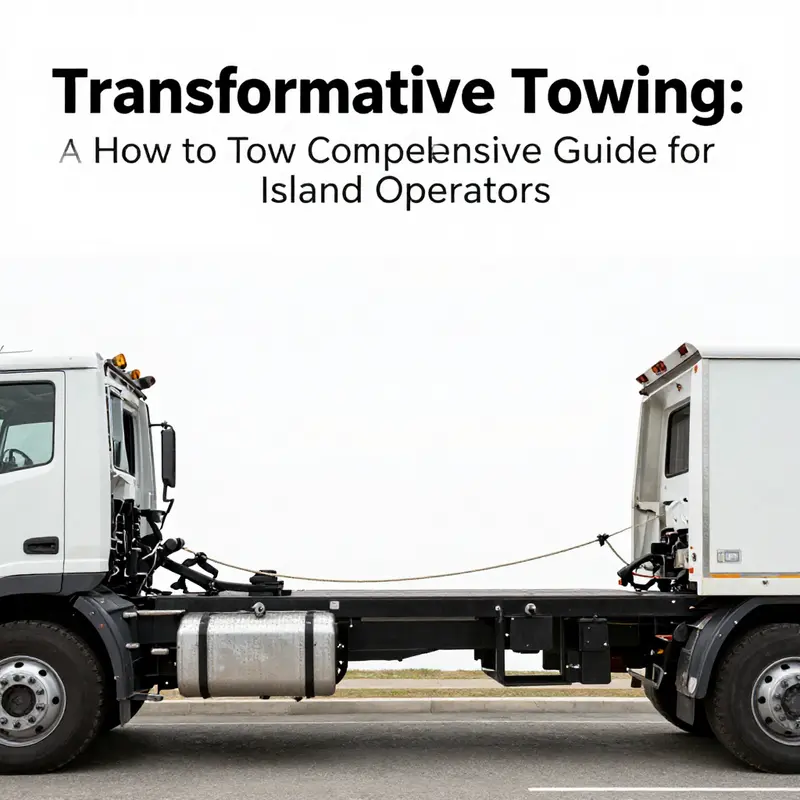
The moment the two trucks align for a tow begins with a single, decisive action: the connection. It is not merely a mechanical link but the hinge on which the entire operation turns. A proper connection procedure is the quiet prerequisite for safety, control, and predictability—everything that follows depends on it. In the context of towing one truck with another, the connection is the connective tissue between planning and execution, between potential disaster and a smooth, safe maneuver. When you treat the hook-up as a process, not a punt-of-hope, you give yourself the best chance to preserve both vehicles and everyone nearby as the convoy choreographs its movement down the road. The steps that follow are not showy; they are the disciplined habits that underwrite every successful tow. They demand calm, deliberate action, and a clear understanding of the limits of the equipment and the machines themselves. This is the heartbeat of the operation, the moment where preparation meets hardware, and where precision safeguards both operators and bystanders alike.
First comes the sober check of the hardware—the tow bar or dolly, the hitch, and the safety chains. The tow vehicle’s hitch must be rated for the weight of the vehicle being towed, a fact that sounds obvious but is all too often overlooked in the rush of an roadside call or a salvage scenario. A damaged or incorrectly rated hitch can fail in the middle of a turn or a downhill roll, producing consequences that are not merely inconvenient but dangerous. The same diligence applies to the safety chains. They are a fail-safe, an insurance policy that keeps the towed vehicle from trailing if the primary connection slips. The chains should crisscross beneath the connection so that, in the event of a hitch failure, the towed vehicle encounters a cushion rather than a sudden detachment that could lead to a collision or a runaway trailer. While inspecting, look for any elongation, bends, or missing safety pins, and confirm that all locking mechanisms engage smoothly without play. A loose or sloppy connection is a red flag that should trigger a halt and a re-check before any movement is attempted.
The next layer of due diligence concerns capacity. Each vehicle’s owner’s manual holds the blueprint for what the towing setup can safely bear. It is not enough to assume the hitch supports a certain weight in theory; you verify by torque, by the rating stamped into the hitch, and by the manufacturer’s guidance. Overloading a hitch or pairing mismatched components invites a cascade of failures that can begin as subtle, almost imperceptible looseness and end in a catastrophic loss of control. This is especially true when the towed vehicle carries a nearly full load of fuel, equipment, or passengers, or when the distance to be traveled pushes the limits of the set-up. The conversation with capacity is not a lecture but a practical dialogue with the machines—an acknowledgment that the weight on the road is a shared burden between the two vehicles and the devices that link them.
Having confirmed the hardware and capacity, the choice of towing method emerges as a natural extension of the prior checks. For trucks, flat-towing with all four wheels on the ground is rarely advised unless explicitly approved by the manufacturer. The risks of drivetrain misalignment, steering damage, or unintended transmission engagement demand respect for the engineering boundaries. In most situations, a more controlled approach—using a dolly for two-wheel towing or a trailer for full four-wheel towing—offers a safer, more predictable experience. If a dolly is selected, the front axle of the towed truck must be properly secured to prevent steering inputs from the stuck or disabled vehicle from propagating into the tow. When a trailer is used, attention shifts to wheel alignment, tire pressures, and the secure binding of the towed vehicle to the trailer’s restraints. The theme here is not maneuver but consent: the equipment must consent to the load, and the operator must align the tool to the task with precision and patience.
With the method chosen, the actual securement of the towed vehicle becomes the critical act. The parking brake on the towed truck must be released if necessary and the transmission placed in neutral, except where manual transmission rules require a different approach. Neutral is essential for automatic transmissions that otherwise risk engaging clutches under load. In many cases, disconnecting the battery is considered, especially when electronic systems could be damaged by residual power or movement. Wheel chocks at both ends of the towed vehicle are a small but vital detail—these blocks prevent unintended movement during the initial alignment and final checks. The process of securing the towed vehicle is a study in restraint: you want to immobilize, not immobilize to the point of strain, to maintain the delicate balance between freedom of movement and controlled safety. Each restraint, each tie-down, is a line of defense against unexpected roll or shift as the connection comes under load.
Attaching the tow bar or dolly to the towing vehicle marks the moment when alignments are tested under real tension. The tow bar must mesh with the towing vehicle’s hitch with the proper fit, and the connection should be locked in place using the designated locking mechanism and, where applicable, the safety pin. The other end then secures to the towed vehicle at designated tow points. The guiding principle is straightforward: there should be no play, no slack, and no loose components. A simple tug on the assembled linkage should reveal any hidden looseness—if you can move the bar or dolly by hand, you still need to tighten and re-check. For dolly setups, the front axle must be firmly positioned on the dolly platform, with secure straps or tie-downs that prevent wheel rotation or axle movement. The moment you detect any movement, the process pauses for re-tightening. Once the connections appear solid, you test them by gently moving the entire setup a few inches to confirm that everything behaves like a single unit rather than a collection of parts shifting independently.
Safety chains deserve special emphasis in this sequence. They are often overlooked in the rush to get rolling, yet they are the safety net that protects against hitches that fail under load. The classic cross pattern is more than a tradition; it provides a controlled path for the towed vehicle if the primary connection breaks, reducing the risk of the towed vehicle dragging or spinning out of control. The chains must offer enough slack to allow safe turning without becoming taut and restricting movement, yet they must be short enough to prevent dragging. The careful balance of chain length and slack is a practical art, refined through experience and the occasional headache of an earlier tow gone wrong. In addition to chains, the electrical connection must be tested. The towed truck’s brake lights, turn signals, and running lights should correspond to the towing vehicle’s controls. A functional lighting system is not an aesthetic improvement but a crucial element of road safety; it communicates intent to motorists behind and helps prevent rear-end mishaps during lane changes, merges, or sudden stops.
Testing begins before any road movement. The towing operator should start at a low, controlled pace in a safe area, listening for unusual noises, feeling for excessive vibrations, and watching for any unexpected sway. The towed vehicle should respond in a predictable manner to the towing vehicle’s steering and braking inputs. If you detect any drift, binding, or unexpected resistance, you stop, re-check the connections, and adjust as needed. The human factor remains central: continue to communicate clearly with your partner in the cab of the second truck. Hand signals or a pre-arranged code via radio or phone ensures that every action—speed adjustments, lane changes, or braking—occurs in a synchronized cadence. The nonverbal cues become the quiet conductor of the operation, guiding a sequence that could otherwise become chaotic in the moment of tension.
As you progress, you monitor the dynamics of the tow with a patient eye. While the speed limit is modest—no more than about thirty kilometers per hour in most common scenarios—the psychology of speed matters as much as physics. Smooth acceleration, gradual deceleration, and wide, deliberate turns reduce the risk of wheel lift, axle misalignment, or abrupt shifts that could unsettle the towed vehicle or the tow setup. It is a reminder that this is not a race but a controlled voyage. The turning radius should be larger than usual to accommodate the added length and weight, allowing the towing vehicle to negotiate corners in a manner that keeps both vehicles within a safe envelope. The same principle applies to braking: brake early, brake gently, and anticipate the towed vehicle’s reaction as it engages its own braking sequence through the connected system. These practices reflect a disciplined approach that minimizes mechanical stress, preserves steering integrity, and maintains a stable trailer-tow relationship even on uneven pavement or gentle slopes.
The assembly is not complete until several post-connection checks have been performed. Confirm that all lights illuminate correctly, run through a quick test of the signaling system, and ensure that the brake lights of both vehicles respond to the his or her actions in step with expectations. With the connection established and tested, the two trucks can begin their coordinated movement under a choreography that respects the physics of weight, momentum, and friction. If conditions change—wind gusts, a slope, or an obstacle—the response should be measured, with a readiness to pause and reassess. In the rare event of an unexpected byproduct of the tow—such as a hitch or strap loosening—the prudent action is to stop, detach if necessary, and restore the system to a state of known, safe conditions before continuing. The chain of safety does not end with a single successful connection; it persists through the entire task, guiding the operator from initial hookup to final arrival with the same calm, methodical poise.
For readers seeking more practical, scenario-driven insights, the accompanying guidance offers a richer, more tactile sense of the procedures and the common pitfalls encountered on the road. For instance, a seasoned approach to the topic is to review the way-to-connecting-the-tow-bar-to-the-hitch and the careful alignment that ensures the arms lock with the correct torque, with attention paid to whether bumper trim removal is required in some setups. As you read, you may find value in the broader context offered by ongoing practical discourse on towing safety and best practices by practitioners who have tested these sequences under diverse conditions. If you want to explore related hands-on perspectives, you can visit The Island Tow Truck blog for ongoing, field-tested insights that complement the technical details described here.
The matter does not end with the act of tying the two machines together; it extends into the responsibility of maintaining a disciplined, patient approach to the entire operation. After the tow is complete, the process of cooldown and inspection resumes, ensuring that nothing has shifted or loosened during transit. The connections should be re-checked, and any wear or fatigue observed during the drive should be documented for future reference. The goal is not merely to complete a tow but to complete it with a demonstrable standard of safety and competence that future operators can rely on. In this sense, the connection procedure becomes a living protocol, one that evolves with experience and reflects a culture of care toward people, vehicles, and the road itself.
For readers who want to cross-check standards and develop a deeper sense of what constitutes a compliant, safe tow, official guidance remains a reliable anchor. Official resources emphasize that towing safety is grounded in proper equipment, correct technique, and an awareness of vehicle-specific limitations. They remind us that every connection, every strap, and every signal is part of a larger system designed to minimize risk and to protect the public. As you integrate these practices into your routine, the connection steps described here serve not only as a practical manual but as a reminder that towing is as much about judgment as it is about gear. The reliable, repeatable process of a secure hookup—followed by deliberate, cautious operation—turns a potentially precarious task into a controlled, predictable maneuver that can be repeated safely across a wide range of scenarios.
In sum, the secure hookup is the bridge between preparation and execution. It is where the integrity of the tow is established and where the outcome of the entire operation owes its safety to the precision with which you connect and secure the vehicles. The discipline of measuring capacity, selecting the right method, securing the towed unit, testing connections, and then driving with restrained confidence creates a method that is as dependable as it is essential. When you approach the connection with the calm attention described above, you create the conditions for a tow that respects the road, the equipment, and the people who share the journey. For ongoing, practical insights and field-tested tips, readers can explore related discussions on industry-aligned resources and community-driven guidance that reflect the realities of towing work in the real world. For broader authoritative context, see the official towing safety guidelines provided by national transportation authorities, which offer comprehensive, standards-based reminders about the responsibilities that come with moving a disabled or immobilized vehicle on public roadways.
Slow Hands on the Wheel: Driving Protocols for Towing a Truck with Another Truck
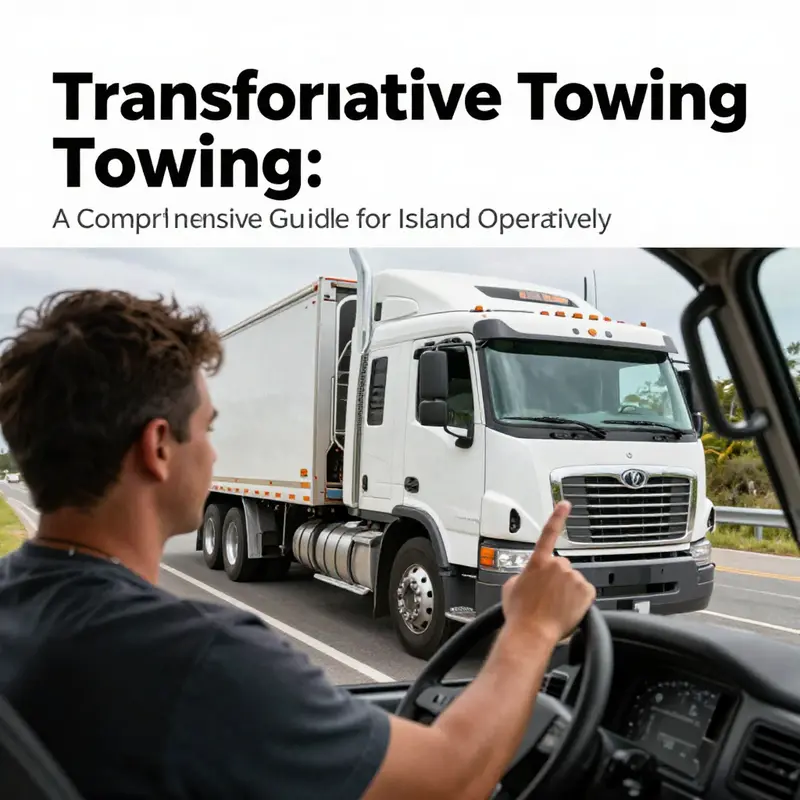
The act of towing a truck with a second truck is more than a simple hook-and-go maneuver. It is a careful balance of momentum, restraint, and communication, where the road becomes a controlled extension of a working relationship between two vehicles. When the goal is to move a disabled or stranded truck, the driver’s role stretches beyond steering and braking. It becomes a discipline of rhythm and restraint, a test of how well a crew can keep a heavy, living system moving without shocking its components or the surrounding traffic. In this chapter, the focus is on driving protocol during towing, the heart of a safe and effective operation that every operator must embody. The road demands calm, precise inputs, and a constant awareness of the dynamic forces at work as two trucks share the same strip of pavement. The principle guiding every decision is simplicity and safety: keep the motion smooth, the speed deliberate, and the communication constant.
To begin with, the core rule is speed—and not speed as a general guideline, but a deliberately low pace that preserves control and minimizes the risk of jerks that can strain the tow rope, chain, or bar. In practical terms, aiming for a pace well below ordinary highway speed is essential. A target of roughly 15 miles per hour (about 24 kilometers per hour) is widely recommended by experienced operators because it keeps tension on the towing connection gentle and predictable. This reduced speed translates into gentler acceleration, smoother deceleration, and a broader margin for error when the lead vehicle needs to slow or the towed vehicle requires a moment to react. The difference between a cautious 15 mph tow and a rushed, higher-speed pull may be the difference between a controlled recovery and a dangerous disconnection or fender-bender. It is a reminder that the towing operation is not a test of power but a test of perception and timing. Even when traffic conditions permit, the urge to hurry should be resisted; momentum is more forgiving when kept with intention.
Pulling away from a stance requires more than simply lifting off a brake pedal and easing into motion. It demands a deliberate, gradual introduction of load on the towing connection. The moment the tow line, bar, or dolly becomes taut, the driver must monitor the reaction of both vehicles. A gentle, progressive application of torque or throttle helps prevent sudden jerks that could shock the drivetrain of the towed truck or the hitching hardware. In many cases, this means using very small throttle inputs, especially in manual transmission setups where abrupt clutch engagement can translate into a jolt rather than a glide. The same patience applies when releasing the parking brake, particularly if the towed vehicle has any residual power or stiff mechanical locks. If the towed truck has no power, the crew should be prepared to release the parking brake mechanically on the towed unit to avoid dragging damage. A trained eye will notice the moment when the rear of the towing vehicle begins to pull smoothly and the towed unit follows in a measured, predictable arc.
Smooth operation hinges on a clear, pre-arranged system of communication. The most basic signals—horns, lights, or handheld gestures—become critical lifelines when the road forces both vehicles to act in concert. A simple, pre-agreed cue sequence ensures that both drivers know when to begin rolling, when to accelerate, and when to brake. In practice, a horn signal followed by a confirming light or verbal confirmation typically suffices. For longer or more complex maneuvers, walkie-talkies or pre-arranged hand signals create an audible and visual loop that keeps both operators synchronized. The importance of communication cannot be overstated: without it, even small miscommunications can cascade into missteps that propagate through the entire operation.
The physical arrangement of the towing equipment plays a crucial role in how driving feels behind the wheel. A swivel frame equipped with a rotating ball joint, for instance, is highly recommended when maneuvering through tight spaces or negotiating sharp corners. The swivel design accommodates multidirectional movement, allowing the towed vehicle to steer and brake in a controlled way while the towing vehicle maintains a steady course. This arrangement reduces lateral stress on the towing system and improves the ability to navigate confined corridors, such as parking lots, docks, or narrow alleyways where space is scarce and precision matters. When such a frame is employed, it is essential to follow installation guidelines: ensure the connector arm is securely seated into the hitch, locked, and pinned, and verify that there is no remaining slack in the joint. A test pull should clearly demonstrate that the system reacts to steering input with immediate, predictable movement rather than lagging behind the operator’s intentions.
In many practical scenarios, the choice between a tow bar and a rope or cable comes down to the distance, load, and level of control required. A rigid tow bar offers greater stability and control over longer distances, particularly when the towed vehicle must maintain steering capability. However, installation can be more involved, and it requires adherence to the hitch specifications, proper torque settings, and sometimes the removal of bumper trim to secure and align the bar correctly. A tow rope, in contrast, is lighter and easier to store; it is well suited to short recoveries or situations where space is tight and the speed is kept deliberately low. The important rule with any connection is to test for slack after installation and before movement. If there is any excess play, the operator must address it until there is no slack—the towed vehicle should respond to the lead vehicle’s inputs as an extension of the same system rather than as a separate entity.
Driving protocol also includes thoughtful considerations around turns and braking. Turning requires a more generous radius than usual to compensate for the additional mass and the possible angle of pull exerted by the towing connection. Slowing down well in advance of turns—at least 50 meters before a corner, and ideally with a slightly longer radius than would be used in a non-towing situation—helps prevent the towed vehicle from chasing the towing vehicle and creating dangerous lateral forces. The turning decision should be made with the understanding that the tow connection imposes a defined path and that any abrupt steering input could translate into a dangerous snatch through the hook or bar. On the braking side, the towing vehicle should begin signaling early with horn or lights, and both drivers should verify that the towed vehicle is ready to brake in response to the towing vehicle’s actions. Braking should be progressive and smooth, with the lead vehicle applying braking forces steadily so the towed vehicle follows without lock-up or loss of control. The goal is to create a pipeline of coordinated actions where any braking incident is mirrored and gradual rather than abrupt.
A reliable flow of information extends to the space around the tow. The operator should keep a safe distance from other vehicles and maintain constant vigilance for pedestrians, cyclists, or curious bystanders who may disrupt the operation or introduce unexpected loads on the towing system. The use of a dedicated communications channel—whether walkie-talkie, pre-arranged hand signals, or a clear radio check—ensures that any issue encountered along the route can be reacted to promptly. This approach is particularly valuable in environments with changing traffic patterns or irregular road surfaces that can affect traction and stability. In addition to human communication, the proper use of lighting is essential: both vehicles should maintain hazardous, visible signaling because towing often occurs outside the normal line of sight for other road users. The lights make it easier for following drivers to perceive the slow, deliberate movement, reducing the risk of rear-end collisions or misjudgments in spacing.
Certain vehicle types introduce specific constraints that heighten the complexity of driving protocol. Automatic transmission trucks, for example, generally require that towing not exceed a limited total distance, and it is often advised to pause regularly to allow the transmission to cool if the operation is extended. Placing the gear selector in Neutral is a standard requirement for many automatic modes when towing, and some models include a dedicated “tow mode” that should be engaged if available. Four-wheel drive (4WD) trucks, with their intricate drivetrain systems, present a different challenge. The official guidance in many manuals is conservative: rope or bar towing of 4WD systems is usually prohibited unless explicitly approved by the manufacturer. The safer route in these cases is to opt for a flatbed tow, which keeps all four wheels on the ground and avoids drivetrain misalignment altogether. Electric or hybrid trucks add another layer of caution, since the high-voltage systems require special handling. The battery pack often needs to be isolated or disconnected as a precaution, limiting speed and ensuring downstream safety. In all these cases, manufacturers’ guidelines take precedence, and operators should monitor for any signs of abnormal drivetrain behavior during the recovery.
Beyond the mechanical and procedural concerns, the environment itself dictates the rhythm and timing of towing operations. Nighttime towing demands the activation of hazard lights on both vehicles to maintain visibility. In adverse weather—rain, snow, fog, or icy roads—the operation should be postponed unless a safe alternative is available. Long downhill stretches are particularly risky for rope or bar towing because the combination of gravity and traction demands careful management of braking and speed. In those cases, the recommended approach is to avoid rope towing altogether and switch to a safer method, such as a flatbed tow where the towed engine’s wheels are secured and not subjected to uncontrolled forces. In difficult terrain, such as mud or sand, the towing scenario can be unpredictable; here, a different tool becomes valuable. An elastic recovery tow strap, designed to store kinetic energy, can deliver a controlled pulling force to help extract a vehicle from soft ground without imposing harsh, sudden loads on the hitching system. While useful in recovery contexts, it should not be relied upon for long-distance towing where stability and continuous control are required.
The driving protocol that underpins all these configurations and scenarios reflects a broader dedication to safety and preparedness. It requires a measured mindset, disciplined technique, and a readiness to adjust strategies based on vehicle type, road conditions, and environmental factors. This is not about pushing a truck into motion; it is about guiding two machines and their human operators through a shared, careful process. It is a practice that benefits from ongoing training, clear procedures, and a culture of patient decision-making. In the larger frame of towing safety, this approach aligns with broader guidelines and best practices that stress planning, inspection, and adherence to established rules for vehicle-to-vehicle operation. For readers seeking more formal guidance and official recommendations on towing procedures and vehicle-specific rules, consult the external resource linked at the end of this chapter. Additionally, as part of comprehensive safety planning—especially for fleet operations that may involve island environments or remote locations—consider exploring the repositories on emergency preparedness for island fleets. This resource helps frame towing within a broader safety framework and emphasizes the importance of readiness and coordinated response. You can learn more here: Emergency preparedness for island fleets.
In sum, the driving protocol during towing hinges on disciplined practice, controlled inputs, and a strong line of communication. The target speed of around 15 mph, the use of a swivel frame for tighter maneuvers, and the careful choice between tow bar and rope or dolly all contribute to a safer, more predictable operation. Special cases—automatic transmissions, 4WD drivetrains, and electric or hybrid powertrains—demand additional caution and respect for manufacturer guidelines to prevent damage. Environmental considerations, from nighttime visibility to adverse weather and downhill gradients, further shape the plan and execution. The overarching goal is not merely to move the towed truck from point A to point B but to do so in a way that preserves the integrity of both vehicles, protects bystanders, and maintains a steady, manageable flow of motion that stays within the capabilities of the equipment and the operators. For practitioners, this means embracing a mindset of restraint, precision, and readiness to adapt as conditions unfold. It also means keeping the dialogue open between crew members, establishing trust that each action is deliberate and purposeful rather than reactive. The road will respond to that approach with steadier performance and a higher likelihood of a safe, successful recovery.
External reference: Which? – Vehicle Towing Rules. https://www.which.co.uk/cars/advice/vehicle-towing-rules
Final thoughts
Successful towing of a truck requires meticulous attention to detail, tools, and tactics that ensure safety and efficiency. By following the comprehensive guidelines outlined in this guide—from pre-towing inspections to specific connection procedures and driving protocols—you can confidently manage towing operations in your island community. This knowledge empowers you to navigate challenges effectively, ensuring that both your vehicles and the people relying on your services remain safe. Embrace these practices in your operations and contribute positively to the cooperative spirit of island transportation.