
Towing is an essential aspect of many operations, whether you’re managing a fleet or assisting vacationers on our beautiful islands. However, understanding ‘how much will my truck tow’ is critical for safety and efficiency. Multiple factors influence towing capacity, from your truck’s specifications to the latest technological tools available for precise calculations. In this guide, we will break down the essential aspects of towing capacity, highlight the technological advancements that simplify towing calculations, and discuss the critical safety and compliance considerations every truck owner must be aware of. By the end of this article, you will have a clearer understanding of towing capacity that can help you make informed decisions.
Tow Safely: Decoding Your Truck’s Capacity and What It Means for Real-World Hauling
Towing a trailer or a load behind a pickup isn’t just a matter of selecting a big engine and hoping for the best. It’s about understanding the numbers your vehicle was designed to carry and respecting the limits that keep you safe, legal, and able to stop and steer when you need to. The common impulse is to focus on horsepower or torque alone. Yet the real story behind how much your truck will tow begins with a set of ratings—some published on a sticker at the door, some tucked away in the owner’s manual, and others embedded in your vehicle’s engineering. Those numbers form a framework that translates into real-world performance, handling, and safety. When you know how to read them, you can plan responsible tows, avoid surprises on the highway, and prevent wear or damage that can affect warranties and resale value. The conversation is not about chasing a single maximum. It’s about balancing the truck you own with the trailer you intend to pull, and with the road your crew will travel on. To do that well, you need to start with the two critical ratings that set the ceiling for any towing plan: the gross combined weight rating and the gross vehicle weight rating. These are the anchors that keep everything else in line. The Gross Combined Weight Rating, or GCWR, is the first point of reference to consider. It marks the maximum allowable combined weight of the vehicle and the trailer it pulls. This figure accounts for the weight of the truck itself—curb weight plus fuel, passengers, and cargo—as well as the weight of the trailer. Think of GCWR as a ceiling that no part of your towing setup should cross. If you try to push beyond it, you compromise steering, braking, and overall stability. The process of confirming GCWR is straightforward but requires careful attention. You’ll usually find the value in two places: the owner’s manual and a label on the driver’s side door jamb. The door sticker is convenient because it updates across model years and trims, but you should verify the same GCWR value in the manual for your specific configuration, especially if you’ve added aftermarket equipment or changed the axle ratio, tires, or suspension. It’s easy to miss a small detail here, but the consequences of ignoring it can be serious. Once GCWR is understood, you turn to another critical rating that governs everyday hauling: the GVWR, or gross vehicle weight rating. GVWR is the maximum weight the truck can carry, including its own weight and all payload—the people aboard, the cargo in the bed or cab, and the equipment the vehicle carries as standard. In practical terms, GVWR sets your payload ceiling. When you’re towing, a significant portion of that payload capacity will be consumed by the hitch and the trailer’s tongue weight. Tongue weight—the portion of the trailer’s weight that sits on the hitch or tongue of the tow vehicle—typically runs in the neighborhood of 10 to 15 percent of the trailer’s total weight. If the tongue weight exceeds what your truck can safely support, you’ll notice more squat in the rear, diminished steering responsiveness, and increased stress on the rear axle. In short, you don’t want to “overload the tongue,” even if the trailer itself seems modest. The relationship between GVWR, tongue weight, and GCWR is the core logic of safe towing. The math is not mysterious, but it does require careful input. Begin with the GVWR to determine the realistic payload capacity you have available. Subtract the curb weight of the truck—its base mass without passengers or cargo—from the GVWR to see how much packing or people can still ride along. Then, when you add passengers and cargo, you’ll see how much payload remains. That remaining payload matters because it will be shared with the hitch and tongue weight when you tow. You can see why a fully loaded cab and bed can quickly eat into the margin that was meant for your trailer. Next, compare the GCWR with the sum of the truck’s expected weight on the road and the trailer’s weight. The simplest way to imagine this is to add the truck’s gross weight (which includes fuel, passengers, and cargo) to the anticipated trailer weight. If that sum approaches or exceeds GCWR, you have a red flag. This is where the practical limits come into play. It’s not just about whether the trailer’s dry weight is within a number you can lift; it’s about whether the combination will remain within the safe, controllable envelope under real driving conditions. And that is where the trailer’s loading characteristics become as important as the numbers on the sticker. Trailers are not just a mass you haul behind you; they have an interaction with your vehicle’s dynamics. The distribution of weight across the axle(s) of the trailer matters because it influences the tongue weight you’ll feel and the tail-end behavior you may observe. A heavier rear end on the trailer translates into more tongue load, which pushes down on the hitch and the rear of the truck. This can improve stability for level, evenly distributed loads but can also reduce rear suspension travel and affect braking if the tongue weight climbs too high relative to payload capacity. Conversely, a trailer with too little tongue weight can cause tramlining, swaying, and a tendency to push the tail of the tow vehicle around in crosswinds or during sudden maneuvers. Getting the tongue weight into the sweet spot—typically around 10 to 15 percent of the trailer weight—helps maintain steering feel and braking control. However, the exact percentage is not a universal law. It depends on the vehicle’s suspension design, the hitch arrangement, and how the trailer is loaded. A higher GVWR or a heavier-duty drivetrain in the truck does not automatically grant a larger safe tongue weight; instead, it expands the overall envelope in which you can operate, provided you keep within GVWR, GCWR, and the trailer’s share of the load within reasonable limits. This is why many experienced tow drivers talk about “reading the balance.” It’s not enough to know the numbers in isolation. You must see how they interact under your specific driving scenario. The role of the engine, transmission, and braking system cannot be overstated. The powertrain you have will influence your ability to accelerate, merge, and climb grades while towing. Trucks equipped with robust engines and heavy-duty transmissions can handle higher GCWR and more challenging towing tasks, but power alone will not compensate for poor weight management or insufficient braking. A trailer’s weight emphasizes why the braking system is essential for payload handling. If you tow heavy, you should ensure your truck has a proper trailer brake controller and the ability to activate trailer brakes in sync with your own braking system. Good braking becomes a partnership between the truck and trailer, not a one-sided dependency on your vehicle’s brakes alone. In practical terms, that means upgrading or selecting a braking setup that is compatible with heavier tows, as well as ensuring the trailer itself has adequately sized brakes and electrical connections that communicate with the tow vehicle. The road economy of the towing plan also matters. Heavier tows drain fuel and can impact efficiency, but that is not simply a matter of pushing more horsepower. Weight management, aerodynamics, and even how the trailer is loaded determine fuel consumption and stability. For instance, a trailer that’s packed so that it sits too high behind the cab can create a more pronounced wind profile, which translates into more drag and a greater tendency to push on the rear of the truck. A trailer loaded too far forward or backward can shift tongue weight in a way that destabilizes steering or reduces braking effectiveness. None of these considerations exist in a vacuum. They become meaningful only when aligned with the truck’s ratings. The VIN is a valuable tool in confirming that alignment. If you’re uncertain about your exact configuration, the manufacturer’s online VIN decoder can reveal details about the engine, transmission, axle ratio, towing package, and other equipment. This is particularly important if your vehicle has an optional towing package, which may include heavy-duty cooling, hitch receivers, or upgraded suspension that can expand your towing envelope. Still, for a quick, practical estimate that reflects the real-world cautions a tow driver should observe, many people turn to a specialized towing-capacity calculator application. The value of such a tool lies in how it translates the official ratings into input you can apply to your own rig and trailer. It guides you through input fields that account for the truck’s curb weight, payload, and the trailer’s weight and tongue weight. It also prompts you to consider factors like passengers, cargo, fuel load, and the amount of tongue load you expect to carry. The benefit is that you get a safety-informed number in a matter of moments, reducing the chance of exceeding GCWR or payload limits. Because it is grounded in manufacturer guidelines and weight-safety warnings, using a calculator is a more reliable approach than guessing or relying on outdated information. It’s worth noting that the best practice is always to verify the numbers with the official sources for your specific truck as well. The exact values can shift with a model year, trim, or changes in a towing package. When you treat towing as a careful calculation rather than an act of faith, you build in a margin of safety that translates into more predictable handling, reduced risk of sway, and better overall performance on longer journeys or steeper grades. If you want a practical, step-by-step approach to calculating your capacity, start with GCWR and GVWR as the baseline for your truck. Record the curb weight from the door label or the manual, and then add the weight of typical occupants, gear, and fuel you’ll carry on tow trips. Compare that with the trailer’s weight, including its own payload if you carry gear inside it. Remember the tongue weight, which you’ll apply to the hitch. Subtract all payload and tongue-weight commitments from GVWR to determine how much payload remains for other uses, and ensure that combined with your trailer weight, you stay well within GCWR. It’s a balancing act, but the mathematics are straightforward if you stay organized. If you want a more hands-on method, you can measure real-world weights with a combination of scales and careful estimation. Vehicle scales at truck stops or weigh stations can help you determine the actual curb weight with fuel and any installed equipment and then the gross weight when loaded with passengers and cargo. Similarly, you can measure the trailer’s weight at a scale and estimate its tongue load by weighing the trailer with and without the hitch connected to the tow vehicle. With those numbers in hand, the calculation reads like a simple equation: ensure that the sum of the truck’s weight and the trailer’s weight does not exceed GCWR, verify that the truck’s payload plus tongue weight does not exceed GVWR, and then confirm that the tongue weight is in a reasonable range compared to the available payload. It is this careful, numbers-forward approach that makes towing a far less hazardous affair and a far more predictable one. For readers who want to explore further, practical guidance is often available in the theory and practice sections of trusted tow-focused resources. Those resources can provide case studies and examples that illustrate how different trucks and trailers behave under common conditions, such as highway cruising, climbing grades, and downhill braking with a heavy load. It’s also useful to read about best practices for hitch setup, weight distribution, and trailer brake connections. The take-home message is clear: your towing capacity is not a single number you memorize and forget. It is a structured, dynamic envelope that depends on the truck’s base ratings, the trailer’s weight distribution, the hitch configuration, and your actual load. Reading the numbers correctly helps you understand when a plan is within safe limits and when it is time to reframe the plan—perhaps by choosing a lighter trailer, spreading weight more evenly, or selecting routes that minimize long grades and abrupt maneuvers. If you’re seeking targeted, accessible guidance, you can find more practical content on the Island Tow Truck blog, which offers insights and scenarios related to towing and vehicle weight management. The Island Tow Truck blog.
In the end, the core purpose of understanding towing capacity is not about bureaucracy or fear. It is about empowering you to make confident decisions about what to pull, how to load it, and how to drive with it. It’s about recognizing that the limits exist for a reason and that respecting them is the simplest, most reliable way to keep your truck, your trailer, and your fellow road users safe. The numbers aren’t there to complicate your life; they are there to keep it simple and safe. When you apply them routinely, you’ll notice that towing becomes less about guessing and more about planning. You’ll understand why certain loads require a lighter payload, why tongue weight matters more than you might expect, and why an accurate towing calculation is a crucial pre-trip ritual rather than a last-minute afterthought. The practical result is less stress, more control, and a smoother journey for everyone involved. That’s the essence of towing with confidence: knowing what your truck can handle, respecting that limit, and choosing a plan that aligns with the realities of the road you intend to travel. External resources can offer additional perspectives and tools, but the core discipline remains the same: accurate numbers, careful loading, and deliberate execution. If you want to explore an external calculator that bases its guidance on established weight-safety warnings, you can access a widely used capacity calculator at the following external resource: https://www.rvtowcheck.com. This resource is designed to guide you through inputting real-world vehicle and trailer data so you can verify that your setup stays within safe limits before you start your journey.
Tow Power in the Digital Age: Using Technology to Calculate How Much Your Truck Can Safely Tow
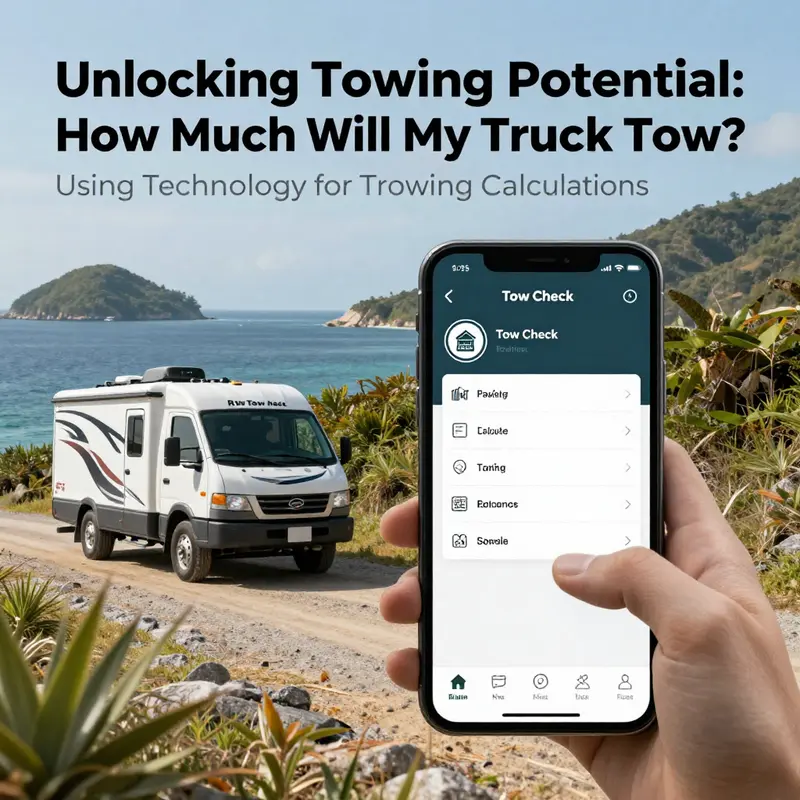
When someone asks how much their truck can tow, the answer rarely rests on a single number printed on a label or a sticker on the hitch. The truth is more nuanced and more controllable than a quick guess, because towing capacity is the sum of several interlocking constraints. The core idea remains constant: a truck can tow only up to the point where its own weight, the weight of the load it carries in the cab and bed, and the weight of the towed trailer all stay within the vehicle’s safe operating envelope. Modern technology has made it easier to translate those abstract limits into actionable numbers, but it also introduces new responsibilities. The most reliable path starts with the vehicle’s official specifications—engine type, axle ratios, drivetrain configuration, and the hardware that comes with a factory towing package. These elements determine the vehicle’s gross combined weight rating, or GCWR, which is the ceiling for everything the truck can safely handle in one pull. In practical terms, GCWR sets the upper bound on the sum of the truck’s weight, any passengers and cargo inside the cab, the weight of the hitch, the weight of a trailer tongue, and the loaded weight of the trailer itself. Beyond GCWR, other limits matter just as much. The payload rating, which covers everything the truck carries inside and on it, acts as a separate barrier. If the payload is exceeded, the stability and braking characteristics of the vehicle can change in ways that are dangerous and, in many cases, warranty-voiding. The trailer’s own weight adds another layer of complexity: even a light trailer can push the combined weight toward the GCWR if the tow vehicle is already carrying a full crew and a heavy cargo bed. These relationships aren’t abstract; they manifest in how the truck’s suspension behaves, how the brakes respond, and how steering feel changes when a trailer is pushing back against the vehicle. Technology offers a window into this complexity, turning a pile of numbers into a single, comprehensible estimate that can be checked against the manufacturer’s guidance. A trusted, purpose-built calculator—designed to reflect real-world constraints and aligned with weight-safety and warranty warnings—provides a structured way to input the data and receive a result that’s consistent with the vehicle’s design. In practice, a capable calculator will weigh three primary inputs: the vehicle’s own weight and payload capacity, the trailer’s gross weight (and distribution, if applicable), and the hitch configuration that couples them. The tool then cross-references these inputs with the GCWR and the hitch’s rating to present a clear ceiling for towing. This is not a substitute for reading the owner’s manual or checking the VIN through the manufacturer’s official resources; rather, it is a supplemental check that helps you see, in real time, how changes in payload or trailer weight will push you toward or away from safe limits. It’s also a reminder that the process has a safety margin beyond the numbers. Human factors—like wheel alignment, tire condition, braking efficiency, and even driver experience—play a role in how much you can tow safely. The right approach blends official specifications with a calibrated, technology-assisted estimate that you can verify against the manufacturer’s warnings. When used properly, digital tools remove much of the guesswork and give you a defensible, data-driven baseline for planning a trip, selecting a trailer, or deciding whether you need a different truck or a different trailer altogether. Moreover, a well-designed calculator can adapt to the constraints of different setups. If your vehicle has a 4×4 drivetrain, the weight distribution changes compared to a 2WD configuration, and the extra mechanical friction shifts the effective tow capacity in subtle but meaningful ways. If you’ve added aftermarket components or upgraded parts of the towing system, the baseline numbers from the factory may no longer apply. The tool, in this case, helps you see the delta between stock specs and your current configuration, guiding you toward a revised and safe range. It is also worth acknowledging a practical truth about towing: not every user who encounters a trailer will be towing the maximum the truck can handle. For many, the towing task is a mix of occasional trips and routine moves, with varying trailer types and loads. In these scenarios, the calculator becomes a daily companion, allowing you to adjust inputs to reflect what you’re carrying today, what you plan to tow, and how you intend to distribute weight through the hitch. The value lies not only in the final number—an exact towing limit—but in the disciplined process the tool promotes: verify the trailer’s weight, confirm the hitch rating, account for payload, and check the GCWR against the combined total of vehicle, passengers, cargo, and trailer. The ecosystem of data around towing is robust and far from mysterious. The owner’s manual remains the primary reference for the vehicle’s authorized limits, while the VIN, when entered into an official decoder or manufacturer portal, reveals model-specific data that might reflect a particular towing package, axle ratio, or trim-level alteration. Modern vehicles are not static; a factory option that adds a towing package may alter the maximum trailer weight, the handling of weight distribution hitches, or the braking assist features that engage when the trailer is connected. These are not mere details; they are active constraints that will inform the numbers displayed by the calculator and, more importantly, the decisions you make about loading, hitching, and driving. In this context, the role of the digital tool is threefold. First, it provides a clear, validated upper boundary so you don’t overestimate your vehicle’s capability. Second, it gives a quick, repeatable method to recalculate in the field when you change trailers or modify payload. Third, it offers a structured, warranty-conscious framework that helps you avoid the common and dangerous trap of assuming you can exceed manufacturer warnings for the sake of convenience or speed. The tool’s design recognizes the difference between a theoretical maximum and a safe operating range. It presents a reality check in the moment when you’re choosing a trailer or planning a move that involves significant weight transfer. By aligning with manufacturer guidelines, it helps you prevent scenarios that could compromise braking performance, suspension integrity, or steering control. It also reduces the risk of damaging preventive systems, such as traction aids, load-sensing brakes, and stability controls that rely on accurate weight data to function correctly. When you’re planning a towing job, you begin by collecting the essentials: the truck’s exact configuration (engine, transmission, drivetrain, and any factory towing upgrade), the payload you expect to carry inside the cab and bed, and the trailer’s weight with ballast, if applicable. You then identify the hitch type—the difference between a simple ball hitch, a weight-distributing setup, or a more complex combination with integrated braking control. Each configuration has its own rating, and the calculator uses these values to compute a safe window for towing. The process becomes a disciplined ritual: confirm the GCWR, verify payload, confirm hitch and trailer ratings, and input the numbers into the calculator. The result is more than a number; it is a decision-aid that translates muffled, conflicting instincts into a confident plan. With this clarity, you can proceed to weigh the trailer, adjust loading, or select a different trailer if the numbers don’t align. You can also decide whether a road trip through mountains, across long bridges, or through heavy wind requires you to scale back payloads or choose lighter gear. It’s a practical discipline that makes the act of towing safer, more predictable, and less stressful, particularly when you’re balancing work commitments, family responsibilities, and the unpredictable realities of road travel. The digital calculator complements the old-school habit of double-checking every responsibility before you hitch up. It does not replace the human judgment that comes from experience or the essential checks you perform on your vehicle and trailer before departure. Instead, it provides a proven, repeatable framework that helps you calibrate expectation with capability. As you gain familiarity with the tool, you’ll notice how small changes—like the addition of a few passengers, a new hitch, or a slightly heavier trailer—can noticeably shift the safe towing window. The more you rely on a systematic approach, the more confident you’ll become in determining whether an upcoming trip is within safe limits or signals the need for adjustments. The guiding principle remains simple: never exceed the manufacturer’s stated limits, always consider the full weight picture, and use technology not as a crutch but as a robust check against miscalculation. For readers who want to anchor this practice in broader planning, imagine the ongoing responsibilities of fleet readiness and emergency preparedness for island fleets. This perspective shifts the conversation from a one-off calculation to a durable habit that supports safe operations under demanding conditions. In fact, when you’re managing a fleet—whether it’s a small crew servicing rural routes or a coastal operation dependent on predictable logistics—the same disciplined approach to towing translates into safer transport of equipment, supplies, and support vehicles. The focus on weight limits and safe operation is the same, but the scale is larger, and the consequences more consequential. In these situations, the value of a dependable calculator grows even more: it serves as a common language between drivers, shop crews, safety officers, and managers, ensuring everyone speaks in terms of capacity, margins, and safety thresholds. If you are building a routine around towing, consider how you describe capacity to others on your team. You can frame it as a balance between the truck’s own weight, the payload it carries, and the trailer’s weight, all constrained by the GCWR and by the hitch’s rating. This language helps prevent ambiguity, such as confusing gross vehicle weight rating with gross trailer weight, or conflating tongue weight with overall trailer mass. It also clarifies the difference between total towed weight and the load that remains on the vehicle for safe braking and steering. The vocabulary matters because it shapes how you plan, load, and drive, and it creates a practical guardrail that protects both people and equipment. In the end, the most reliable towing practice rests on three pillars: authoritative, vehicle-specific data from official sources; a well-designed, manufacturer-aligned calculator that translates those data into actionable limits; and careful attention to dynamic, real-world factors such as road grade, weather, and loading. The technology is not a substitute for due diligence; it is a bridge between the shop floor measurements and the roadway. It helps you understand how your choices—payload, hitch type, and trailer weight—sum to a safe operation range. It also invites you to approach each trip with intention and discipline rather than reliance on hope or memory. If you are planning a response that factors in emergency readiness, you will find that this same disciplined approach scales, turning a single towing decision into a reliable capability that your crew can count on in challenging conditions. For those with a broader interest in fleet planning and resilience, consider exploring resources that connect towing capacity to the broader theme of emergency preparedness for island fleets. emergency preparedness for island fleets. This perspective helps align your individual vehicle decisions with the larger objective of operating safely and efficiently in environments where readiness and reliability are paramount. As you navigate the practical realities of towing, keep in mind that the purpose of the calculator—the calculator you use, the inputs you supply, and the checks you perform—exists to protect lives and machinery. It is a tool for vigilance, not a shortcut around caution. Before you pull any trailer, verify the maximums with official sources, and remember that the numbers you see on a screen are only as trustworthy as the data that feed them. If you want to deepen your understanding beyond the basics, you can explore external resources that illuminate how these calculations work in practice. For a deeper dive into how such calculations work and to access the broader guidance that manufacturers provide, see https://www.rvtowcheck.com.
Tow Boundaries: Reading Your Truck’s Limits for Safe, Legal Hauling
Determining how much your truck can tow is not a guessing game or a casual back-room calculation. It is a responsibility that sits at the intersection of engineering, physics, road safety, and local law. The number you see on a sticker or in a manual is not a ceiling to push against, but a carefully engineered boundary that reflects how the vehicle was designed to perform under specific conditions. When you approach that boundary with respect for the data behind it, you gain a reliable framework for planning, protecting your vehicle, and ensuring the safety of everyone on the road. When you cross that line, you invite not just the risk of mechanical failure, but also the possibility of loss of control, extended stopping distances, and the kind of uneven wear that shortens the life of your engine, transmission, and brakes. Tow capacity is therefore not a mere label; it is a responsibility that begins with a clear understanding of what the manufacturer examined, tested, and ultimately deemed safe for your particular truck and the loads you intend to carry. The goal is not to maximize the number on a rating plate but to align every element of the towing system with a measured, verifiable, and enforceable standard that protects you and others on the road.
The everyday act of towing demands a practical literacy about several core specifications. The Gross Vehicle Weight Rating (GVWR) tells you the maximum weight your truck itself should carry, including passengers, cargo, and fluids. The Gross Combined Vehicle Weight Rating (GCVWR) is the cap on the total weight of the truck plus the trailer and its load. Then there is the Gross Trailer Weight (GTW), which is the actual weight of the trailer plus its cargo that the combination sustains while in motion. Finally, tongue weight—the portion of the trailer’s weight that rests on the hitch—must be carried within the hitch and weight distribution system’s designed range. Understanding how these numbers interlock is what separates safe, lawful towing from risky, potentially catastrophic miscalculations. The importance of accuracy here can’t be overstated, because the towing situation you might encounter on a routine trip to a job site or a family outing could amplify any misjudgment many times over when you’re moving heavier cargo or traveling at highway speeds. The consequences of exceeding a manufacturer’s limits are not abstract possibilities; they are tangible risks with real-world outcomes, from swaying and trailer instability to brake fade and steering instability, all of which can multiply under adverse weather conditions or abrupt lane changes.
To begin, the maximum towing capacity you see listed for your truck is the manufacturer’s best estimate of the safe limit under tested conditions. It is not a target to be chased but a boundary to respect. The numbers are based on engineering analyses that consider the truck’s engine torque, cooling, transmission strength, drivetrain, suspension, frame rigidity, and the capacity of the braking system. But the actual safe tow weight in any given moment depends on how the trailer interacts with the vehicle at load, speed, and road grade. For example, a trailer that weighs near the GTW limit can impose a heavy tongue load that alters weight distribution, which in turn affects steering response, tire contact with the road, and braking effectiveness. This is why the manufacturer’s guidance stresses not only the numerical limit but also the proper distribution of weight, proper hitch equipment, and the need for compatible braking systems on the trailer when required by law or by the size of the load. In practice, this means evaluating the full system—the truck, the hitch, the trailer, and the load—before you start moving.
When you begin the process of pinning down your truck’s towing capability, you should consult the official sources that carry the weight of authority behind these figures. Your owner’s manual offers the most direct, model-specific guidance, with tables that break down curb weight, payload capacity, GVWR, and GCVWR. If you’re looking for a quick confirmation, your vehicle’s VIN can unlock the manufacturer’s online resources, where you can view the exact specifications for your exact truck. These steps are essential because even two trucks that look alike on the surface can have different towing envelopes based on options such as engine tuning, transmission cooling, exhaust modifications, and the particular towing package installed at the factory. The careful reader will also recognize that the numbers on a showroom window sticker may differ from the real-world configuration of a used vehicle, making it all the more important to verify the precise data for your specific truck. Beyond the manufacturer, many regions publish towing safety guidelines that describe minimum equipment and compliance requirements, ensuring a consistent standard across vehicles and trailers. This regulatory layer is not merely bureaucratic; it is a public safety system designed to reduce risk on the roads by ensuring adequate braking, lighting, hitch strength, and load distribution.
For those who want a practical, step-by-step path to a safe estimate, there are reputable tools designed to guide input of vehicle and trailer data while remaining faithful to safety and warranty considerations. Rather than relying on a rough gut check, these tools prompt you to enter the exact weight of the trailer, the tongue weight, the payload you’re carrying in the truck, and the anticipated fuel load, then they compare the totals against the GCVWR and GVWR. The appeal of such tools lies in their ability to translate the abstract numbers into a clear safety signal: will this specific combination stay within the prescribed limits under typical conditions? And if not, where is the margin so you can adjust by reducing trailer weight, redistributing payload, or choosing a different hitch configuration? The nuanced outcomes these tools provide can help you plan ahead for trips that include hills, long highway sections, or urban corridors where weight and momentum interact in ways that can surprise even seasoned drivers. A prudent approach is to use these calculators as part of your pre-trip planning, then double-check against the owner’s manual and the VIN-based specifications to confirm you’re aligned with the official guidance before you roll out.
The practical application of all this starts with an honest assessment of what you actually carry on a daily basis. A truck’s payload capacity—part of the GVWR equation—determines how much weight you can add in passengers, tools, and cargo without exceeding the limit. In towing scenarios, that payload must be kept in view because it directly affects the gross weight you can safely pull. If you routinely travel with multiple passengers or with heavy equipment in the bed, you ought to re-evaluate the trailer’s weight and the distribution of the load. Even where a vehicle’s stated platform can handle a certain tow limit, a heavy payload in the cab reduces the gear you have available to counterbalance the trailer’s weight or to manage dynamic driving conditions. This nuance matters on grades or in gusty crosswinds, where the combination’s stability depends as much on how the weight is distributed as on the capacity numbers themselves. You might discover that you need to reassess not just how much you tow, but what you carry along inside the truck when you tow.
The concept of tongue weight deserves particular attention because it is often misunderstood or overlooked in everyday planning. Tongue weight—the downward force exerted on the hitch by the trailer—affects steering feel and braking performance. If the tongue weight is too light, the trailer can become unstable and prone to fishtailing at speed. If it’s too heavy, it can overload the hitch, axles, and the vehicle’s rear suspension, diminishing control. A common operating guideline is that tongue weight should be around 10 to 15 percent of the trailer’s GTW, but the exact target depends on the hitch type, the vehicle’s suspension geometry, and the design of the weight distribution system. Achieving the right balance often requires using a weight-distribution hitch with integrated sway control, especially when towing heavier trailers. Installing and using the correct hitch aligns the trailer’s dynamics with the truck’s handling characteristics, providing a more stable and predictable towing experience. It also reduces the likelihood that you’ll be fighting an adverse combination of high tongue weight and insufficient braking power in urgent maneuvers.
In practical terms, the day-to-day work of towing safely begins with preparation. It starts with a careful pre-trip check that goes beyond a cursory glance. You inspect the hitch, safety chains, and wiring to ensure lights and braking signals are all functioning, because lighting is not optional in most jurisdictions. You confirm that your trailer brakes are connected and operational if required by law or by the weight of the trailer. You examine tires on both truck and trailer for proper inflation, tread integrity, and signs of uneven wear that might signal alignment or suspension issues. You verify the exhaust and cooling systems, because towing imposes additional engine heat, particularly on long grades or in hot climates. You check the brake system, including the effectiveness of the truck’s own brakes and the capacity of the trailer’s braking setup when present. If you notice any overheating or reduced braking response, you must pause and address the problem before continuing. This level of diligence is not an inconvenience; it is the difference between a controlled stop and a dangerous loss of control in a moment of highway stress.
Beyond mechanical readiness, there is the regulatory dimension that governs how you tow and where you can tow. Local laws may require that trailers over a certain weight have their own braking system, and they may specify standards for lighting, braking, and hitch strength. These rules are not just bureaucratic hurdles—they are baselines designed to reduce accidents caused by heavy tows. In many places, once a trailer crosses a threshold weight, it must meet specific braking and lighting requirements to ensure other road users can anticipate its behavior and respond accordingly. Compliance also intersects with insurance and warranties. If you exceed the manufacturer’s limits, even inadvertently, you can face coverage gaps or warranty terms that limit liability for damage arising from towing beyond the rated capacity. In some cases, internal components such as the transmission cooler, radiator, or cooling system may not be able to sustain the additional heat generated by towed loads that exceed the limits, especially during extended climbs or hot weather. The practical consequence is that keeping within the specified envelope preserves the vehicle’s long-term reliability and your financial protection in the event of a claim following an incident.
To tie these threads together in everyday practice, you begin with the manufacturer’s specifications and then layer your planning with objective checks and legal awareness. Start by reading the GVWR and the GCVWR carefully in the owner’s manual, then locate the GTW for the trailer you plan to tow and confirm the expected tongue weight under load. If you own or operate a fleet, you’ll want to mandate a pre-tow checklist that covers all the above points and documents the results for each trip. A practical approach is to keep a simple, portable scale or a canister scale to measure tongue weight and to use that data to fine-tune your load distribution. If you are unsure about how to interpret the numbers, seek help from a qualified technician or a towing professional who can provide a calibrated assessment of your equipment—particularly when you add new trailers or alter the load you routinely carry. The aim is not to transform a tricky task into guesswork but to convert it into a repeatable process that yields consistent safety margins under real-world conditions.
For readers who manage fleets or who face special operating contexts—such as towing in coastal or island environments where space, fuel quality, and road surfaces can vary dramatically—the structural discipline remains the same, but the execution and planning require additional layers of consideration. The same careful balancing act applies, with the added need to account for frequent starts and stops, atypical road grades, and the possibility of emergencies that require dependable towing capabilities on short notice. In these contexts, the emphasis on emergency readiness is not merely about having a spare tire or a first-aid kit; it is about having a well-calibrated towing plan that aligns with local safety standards, vehicle capabilities, and the realities of the terrain. For those who want to delve into the broader perspective of how towing safety integrates with fleet preparedness, you can explore resources focused on emergency readiness for island fleets. emergency preparedness for island fleets.
The broader message is straightforward: always tether your load to the vehicle’s documented limits and to the jurisdictional requirements that govern your route. The precise numbers are less important than the discipline behind them—the habit of verifying weight distribution, testing braking responsiveness, and maintaining the hitch and trailer in a state of readiness. These practices, pursued consistently, help ensure that your towing tasks remain predictable rather than precarious. When you couple a respect for the manufacturer’s specifications with proactive inspection and compliance, you reduce the likelihood of failures that create hazards not just for you but for every other user on the road. This is the essence of responsible towing: it is a continual, methodical process that foregrounds safety, legality, and a respect for the physics that govern every mile you travel with a trailer in tow. It is also a reminder that the question isn’t simply how much you can tow, but how safely you can tow with full awareness of the limits, the conditions, and the responsibilities that come with moving heavy loads through busy and diverse road networks.
As you translate these principles into practice, remember that the path to safe towing is iterative. You begin with the knowledge embedded in the manufacturer’s specifications and then validate that knowledge through careful, real-world checks. You respect the role of weight distribution and tongue weight, you ensure braking systems are appropriate for the load, and you uphold the regulatory and insurance standards that govern your area. And you stay curious about the tools that help translate theory into practice, using them to verify that your plan remains within the safe envelope for your truck. The end result is a towing plan that reflects sound engineering, rigorous safety practices, and a commitment to lawful operation, all of which protect you, your passengers, and everyone else on the road. In a landscape where traffic, weather, and road conditions continually shift, the most reliable safeguard is the habit of confirming, before every trip, that your combination remains within the approved limits and that every component—from hitch to tires to brakes—functions as intended. The road demands vigilance, and the right approach to towing makes vigilance productive, predictable, and safe for all.
For official safety guidance and regulatory standards, refer to the authoritative resource on towing safety provided by the relevant national authority: https://www.nhtsa.gov/vehicle-safety/towing-safety.
Final thoughts
In navigating the complexities of towing capacity, it’s essential to recognize the intricacies that contribute to your specific truck’s capabilities. By understanding the factors influencing towing capacity, leveraging technology, and remaining vigilant about safety and compliance, you can maximize your towing experience while adhering to essential guidelines. Knowledge around towing is not just an advantage—it’s a necessity whether for fleet operations, resort management, or personal use. Equip yourself with this understanding, and you’ll confidently manage your towing needs on our unique islands.