
Understanding the nuances of tipping AAA tow truck drivers is essential for navigating roadside assistance with empathy and respect. While tipping isn’t mandatory due to the membership-based nature of AAA’s services, knowing when and how much to tip can enhance your experience significantly. Each chapter will delve into distinct aspects of this topic, exploring expectations and norms, factors that influence the tipping amount, situations that may warrant tipping, considerations between members and non-members, and guidelines for recognizing exceptional service.
Gratuity in Tow: How Much to Tip an AAA Tow Truck Driver
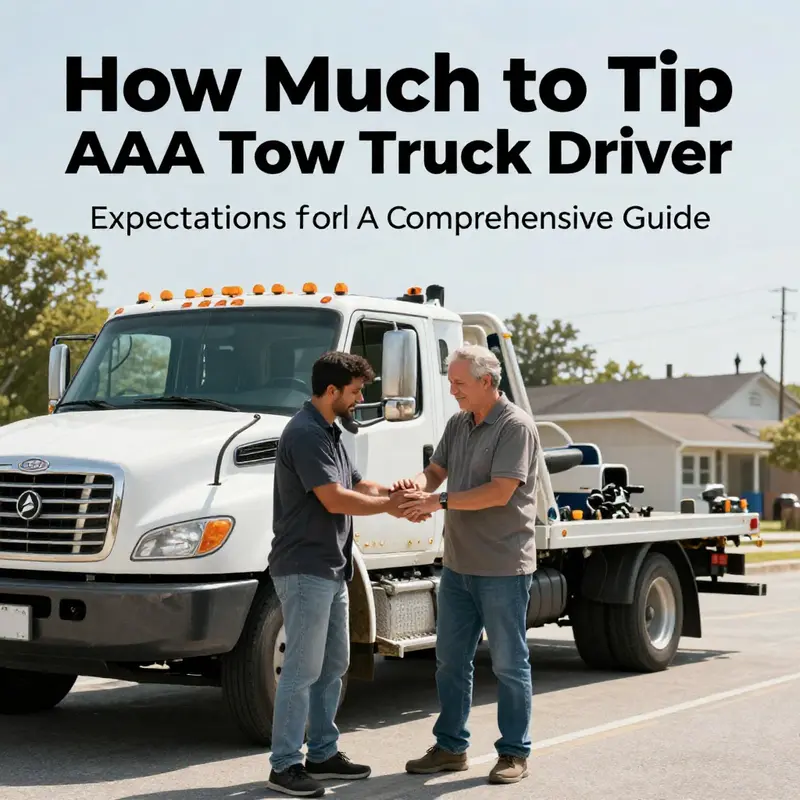
A roadside breakdown can be stressful, and the arrival of a skilled tow truck operator often marks the difference between chaos and safety. When the service is covered by AAA, tipping is not a mandatory part of the transaction. AAA memberships typically cover a portion of the tow, depending on the plan and any included benefits. Tipping becomes a discretionary gesture of appreciation for service that goes beyond the basics, and the decision should reflect the quality of the encounter, the complexity of the task, and the circumstances.
Practical guidance commonly cited by drivers and customers suggests tipping roughly 15 to 20 percent of the tow cost. If the tow ends up around $100, a tip of $15 to $20 is often considered fair. For longer tows, weather challenges, or instances where the driver performs extra tasks, a larger tip can be appropriate. If the service is routine and minimal, a smaller tip or none at all can be reasonable. The key is to assess whether the driver was punctual, professional, and helpful beyond the basic expectations, and whether they offered guidance to prevent future trouble.
Beyond monetary tips, non-monetary expressions like a kind word or a quick note to the service center can also carry weight. Cash on-site is still the most common method in roadside settings, but digital tipping is increasingly available in some contexts. If you rely on a particular driver across multiple incidents, establishing a routine that fits your budget and values can be a natural choice. Finally, it’s wise to check for any company or local policies that might constrain tipping; in most cases, tipping remains voluntary and a personal way to acknowledge skill, courtesy, and calm under pressure.
When Courtesy Meets Policy: Navigating How Much to Tip an AAA Tow Truck Driver
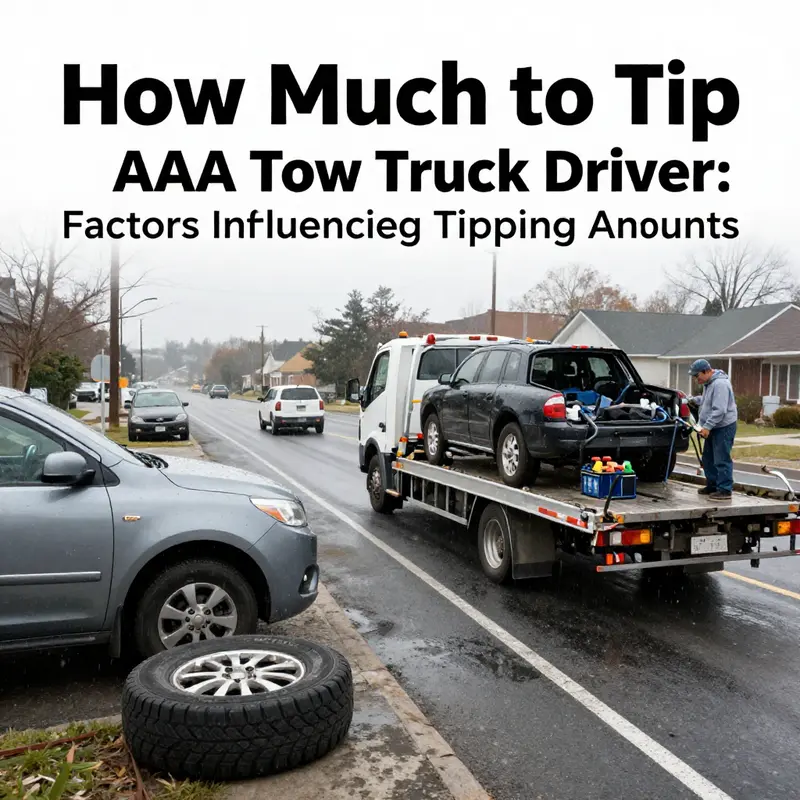
Stranded on the shoulder, you watch the exit signs blur past the windshield. Your car has failed in a way that makes you anxious and the hours ahead uncertain. When the AAA tow truck rolls up, the driver clips a reflective vest into place, surveys the scene with practiced calm, and begins the process of stabilizing the situation. In that moment, a question tugs at the edge of your mind: should I tip? The hitch in your plan is simple to articulate but easy to misunderstand. Tipping for AAA roadside assistance is not a requirement, and the association’s cost structure already covers the towing service through your membership. Yet the impulse to show gratitude—if the service feels especially helpful or empathetic—persists. The act of tipping becomes a personal choice, one that sits at the intersection of fairness, finances, and respect for skilled labor.
AAA’s model hinges on membership and a network of trained professionals who perform the service as part of their job. Tipping is not expected, and the absence of a tip does not reflect badly on the driver’s performance. In nearly every case, the tow is paid for by the membership plan or the provider assigned through official channels. This is a practical distinction worth remembering because it shapes how you approach the moment. If you do decide to tip, let the decision flow from the quality of service and your capacity to respond. Most drivers maintain professional boundaries; they will accept thanks and appreciation without pressure. If the situation allows and you feel moved to acknowledge the extra effort—for instance, when a driver stays beyond the call of duty to secure the vehicle in a tricky location, offers prudent safety advice, or assists with a task outside the standard tow—a gratuity can feel like a genuine gesture of thanks.
Guidelines vary, and there is no universal rule. A common, low-friction range is $5 to $20 for a straightforward tow or a routine service call, delivered promptly and with courtesy. The amount should be proportionate to your satisfaction and your financial comfort. If the service is ordinary and the driver completes the job efficiently without any extra effort, a tip toward the lower end of that range is reasonable. When the driver goes beyond the basics—digging into a snowstorm to secure your car, performing a jump-start, providing emergency supplies, or offering clear, practical advice about what to do next—you can consider increasing the gratuity. The gesture remains a personal choice, tied to how the assistance was delivered rather than the tow’s price tag.
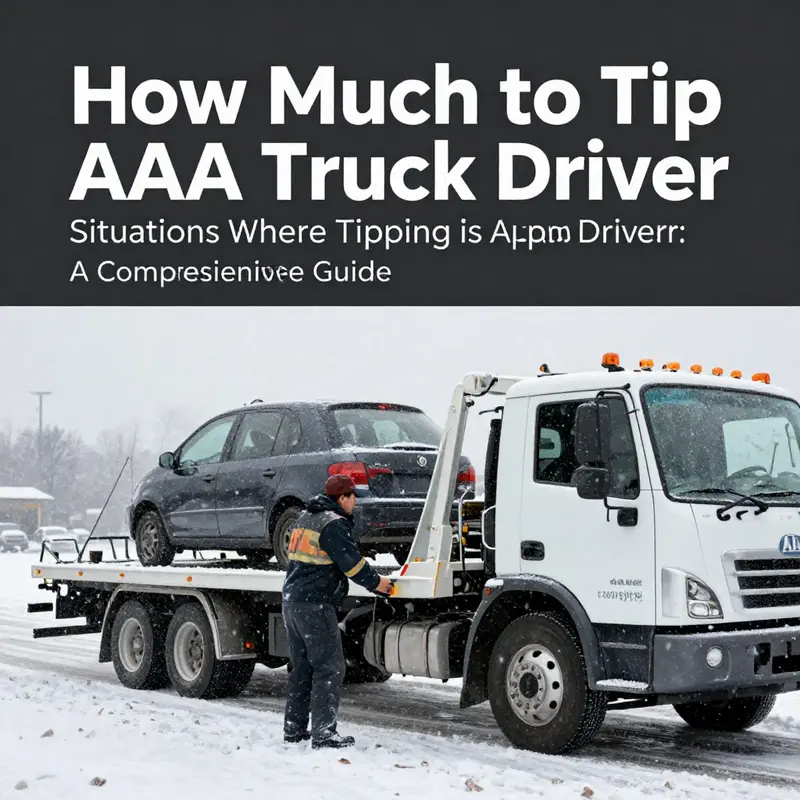
Consider a scenario in which the tow occurs in extreme weather, on a remote stretch of highway, or after hours when the driver had to improvise solutions or coordinate additional help. In such moments, a tip in the higher tier—often $20 to $50—acknowledges not just the time spent but the risk and professionalism involved. The amount should still reflect the service’s value and your personal means, rather than the total tow cost. It is also acceptable to offer a smaller tip and to pair it with a sincere word of thanks if money is tight; the gesture sustains the principle of goodwill without pressuring anyone.
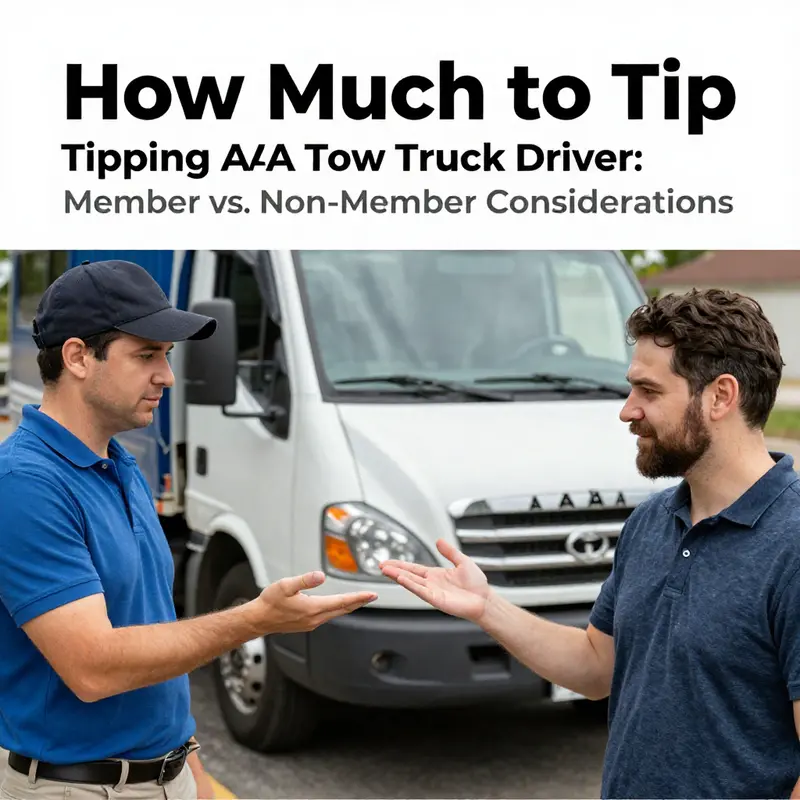
Your tipping expectations might differ if you use non-AAA providers. Some private towing companies may expect tips as part of their business model, whereas AAA’s policy emphasizes the gratuity as optional and discretionary for official AAA services. If the provider is not directly tied to AAA or if you are unsure about tipping norms, ask a polite question or check your membership agreement. Being upfront helps prevent confusion and lets the driver focus on the emergency at hand. In practice, this means recognizing the distinction between an ordinary service call and an extraordinary display of professionalism. If a driver stays late, handles a tricky lockout, or offers extra safety guidance while you wait for a second vehicle or a ride, those are the moments that can justify a more generous tip.
Many people prefer cash because it is immediate and private. A tip can be handed directly to the driver at the end of the service, or left in a discreet envelope if you want to preserve privacy. If you’re uncomfortable with cash, you can offer a verbal thank you and a light, respectful note about the situation—some drivers appreciate that as part of the human connection of roadside work. In some regions, drivers may accept tips via card; in others, cash may be the only option. If you’re unsure, you can simply ask, “Would you prefer cash or a card tip?” and follow their preference. The choice to tip should feel like a personal decision made in the moment, not a social obligation pressed upon you by anyone in the cab or a dispatch queue.
Tips should not overshadow the broader purpose of roadside assistance, which is to get you safely back on the road. The tip is a reflection of gratitude for effective service, not a payment for performance. A calm demeanor, clear communication, and respect for the driver’s expertise often matter as much as the tip itself. If the driver provides guidance on next steps—what to monitor, when to seek a diagnostic, or how to tie down a load properly—those actions can be as valuable as any tip. The tipping decision becomes a personal confirmation that you felt supported and protected, not a transactional obligation. In this sense, the moment of service becomes part of your broader plan for handling unexpected vehicle trouble with dignity and composure.
To explore broader perspectives on roadside readiness and how teams plan for emergencies in varied environments, you can read more at theislandtowtruck.com/blog/.
For authoritative information from the service, visit the AAA site: https://www.aaa.com
null
null
null
null
Courtesy on the Road: How Much to Tip an AAA Tow Truck Driver for Exceptional Service
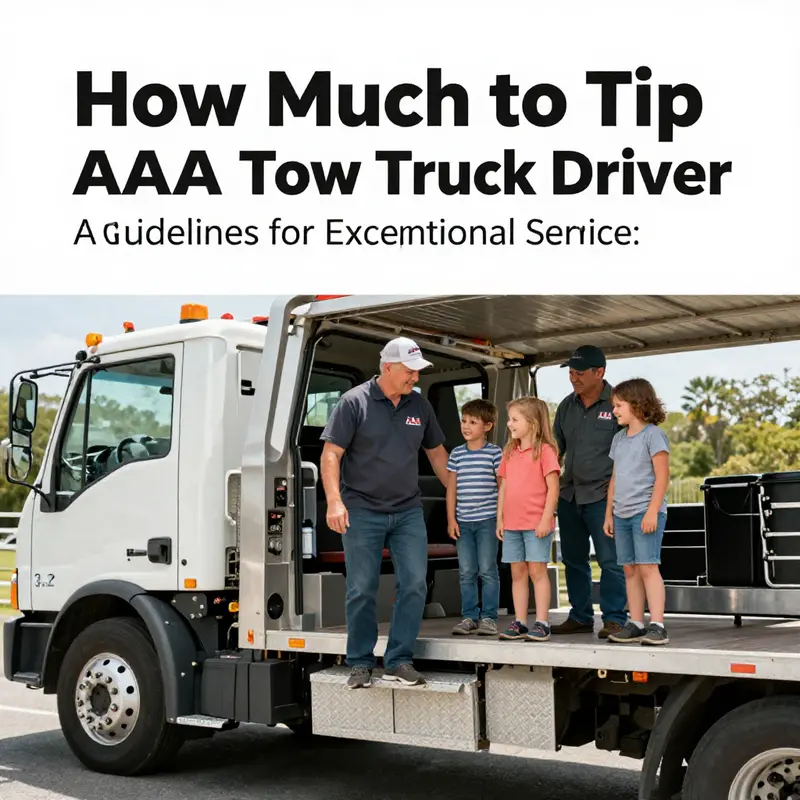
A roadside pause on a busy highway often becomes a moment when small acts of consideration can turn a tense situation into something more manageable. When a tow truck arrives under the glow of emergency lights, your focus is usually safety, how quickly you can resume your day, and how to navigate the practicalities of the moment. In many cases, the towing service is part of a broader membership package that covers the core cost of the tow, so tipping is not a requirement and is not built into the bill. Yet the gesture of a tip remains a meaningful way to acknowledge a driver who has gone beyond the ordinary, offering reassurance, expertise, and careful handling in conditions that can be stressful and physically demanding. The decision to tip, and how much, sits at the intersection of personal finances, local custom, and the quality of service delivered. What follows is a grounded, practical framework for thinking about tipping that respects the service dynamics of a national roadside-assistance program and the human effort behind every tow, jump-start, or recovery operation. It is a guide meant to support clear choices in the moment, not to dictate a fixed ritual, and it invites readers to view gratuities as a reflection of appreciation rather than an obligation.
In the most straightforward scenarios, where the driver has completed a routine tow with efficiency and courtesy, a modest gesture can convey thanks without introducing cost concerns. The commonly cited range for standard towing tasks is modest: a tip of about $5 to $10 is often considered appropriate by many customers who want to acknowledge solid, reliable service. If the service includes a bit more complexity—such as maneuvering around a tight space, aligning the vehicle on uneven ground, or navigating heavy traffic with careful attention to safety—the illustration of value shifts upward. In those moments, a tip of $10 to $15 may feel fitting, and for particularly demanding work, extending toward $15 to $20 can reflect a higher level of effort and skill. The key is to calibrate the tip to the situation: the time involved, the risk assumed by the driver, and the tangible benefits you receive beyond simply having the car moved to a safe location.
It helps to consider the specific forms of assistance that elevate a tow from routine to exceptional. A driver who takes extra steps—jump-starting a dead battery, delivering a spare tire, securing a temporary fix, or providing practical, calm guidance under pressure—clearly adds value beyond the bare minimum. In such cases, tipping toward the upper end of the typical range or even above it can be a meaningful sign of appreciation. The same logic applies when the tow requires special handling: a long-distance haul, a tow through challenging weather, or a recovery operation that demands precise navigation and coordination with traffic control or lot management. It is not rare for customers to reserve a higher tip for these more demanding tasks, recognizing the additional time, physical labor, and attention to safety that the driver must invest.
An important distinction to maintain is that tipping is not mandatory. The policy stance of most membership-based roadside providers is that gratuities are discretionary and based on the customer’s satisfaction with the service. This distinction matters because it keeps the interaction fair and preserves the integrity of the service experience. If you feel that the driver has provided a high level of care—perhaps they explained the process, reassured you during a stressful moment, or handled a tricky situation with patience and competence—a tip can be a natural and appreciated expression of thanks. Conversely, if the service is merely adequate, there is no obligation to tip, and declining a gratuity should be completely acceptable and understood in the context of your personal circumstances.
Beyond the amount, there are practical considerations about how to present a tip that can make the gesture feel thoughtful rather than transactional. Some people prefer to give cash directly to the driver at the end of the service, which allows for immediate acknowledgment of their effort. Others opt for a card tip when cash isn’t readily available, especially in cases where the driver requests a receipt or where the payment process is already being handled through the provider’s platform. In either case, a brief, sincere expression of gratitude can accompany the tip. A simple line like, “Thank you for staying calm and getting me to safety,” or “Your guidance was invaluable in such a stressful moment,” can meaningfully accompany the gratuity. The act itself becomes a moment of human connection in an encounter that is otherwise defined by machinery, urgency, and a structured service workflow.
There are also realities of location, timing, and local culture that shape tipping norms, and those factors deserve thoughtful attention. In some regions, tipping practices align with broader service-industry customs, while in other locales, drivers may be more accustomed to receiving gratuities as a standard part of roadside assistance culture. When you are in an unfamiliar area, observing how others respond in similar situations can offer a useful reference point. The overarching message remains consistent: tip in a way that reflects the service you received, not the mere fact of having been helped. If weather is extreme, if the tow took longer than expected, or if the driver provided additional resources—like driving the vehicle to a preferred repair shop or arranging onward transport—the justification for a larger tip strengthens. If not, a smaller tip or no tip at all remains within the boundaries of discretionary giving.
For readers seeking a broader take on roadside service expectations and the nuances of tipping in a complex, high-stakes environment, a deeper dive into related perspectives can be illuminating. The Island Tow Truck Blog offers practical reflections on preparedness, response time, and the human elements of tow operations in different contexts. This resource can help readers think through scenarios, weigh the costs and benefits, and better understand how to balance responsible spending with appreciative gestures. The discussion is not about a universal rule but about developing a personal threshold that aligns with your values, your local norms, and the level of service you receive. You can explore these conversations at The Island Tow Truck Blog, which provides further context for the kinds of situations that arise on the roadside and how customers historically respond with gratuities in varied circumstances.
As you move through the decision of whether to tip and how much, a few practical reminders help ensure that the choice remains sensible and respectful. First, remember that tipping is not a substitute for safe, courteous, and professional service. The driver’s core responsibility is to ensure your safety and to handle the vehicle with care. The tip, when offered, should be a separate gesture of appreciation that acknowledges the extra effort rather than a payment for essential safety work. Second, carry a small amount of cash in emergencies when possible. Cash gifts are often the most straightforward way to tip without creating friction or miscommunication, though a card-based tip is perfectly acceptable if necessary. Third, if the service is provided under a policy that prohibits tipping, or if you are in a jurisdiction where tipping is frowned upon in certain contexts, abide by the local rules and norms. A courteous thank-you and a brief acknowledgment of the driver’s expertise can still convey genuine appreciation without crossing policy lines.
To close the circle, it is worth noting that the tipping conversation is a reflection of broader values that govern our interactions with service workers in moments of vulnerability. A tow driver who steadies a chaotic scene, explains steps clearly, and preserves safety for everyone involved deserves recognition that goes beyond the monetary. The ranges suggested—roughly five to ten dollars for standard service, increasing to fifteen or twenty dollars for more demanding or time-consuming tasks—offer a practical starting point for those who want a tangible expression of gratitude without feeling pressured by social expectations or corporate policy. The emphasis is on fairness, discretion, and sincerity. In the end, tipping is a personal choice shaped by service quality, circumstances, and your ability to express appreciation in a way that feels authentic to you. It contributes to a culture of respect for the people who keep us moving when we would otherwise be stalled on the side of a road, and it reinforces the idea that good roadside assistance is as much about people as it is about trucks and tow ropes.
External reference: https://www.aaa.com/roadside-assistance/towing-and-emergency-services/#tipping-guidelines
Final thoughts
Navigating the essential nuances of tipping AAA tow truck drivers not only enhances your roadside assistance experience but also fosters goodwill in challenging situations. By understanding the expectations, considering various factors, and recognizing when exceptional service occurs, you set a standard of appreciation and professionalism within a community that thrives on mutual respect. As you drive with the security of AAA support, keep these guidelines in mind, creating a cycle of recognition and gratitude that benefits both motorists and service providers alike.