
For local auto repair shops, car dealerships, property managers, resort operators, and commercial fleet operators, understanding the costs of tow trucks is crucial. Accurate pricing can determine your operational efficiency and service capability, ensuring you stay competitive in the market. This article provides a comprehensive breakdown of tow truck costs, from new price ranges to hidden expenses that can arise. We will explore factors influencing pricing, summarize average costs, and analyze market conditions—equipping you with the insights needed to make well-informed decisions about this vital investment.
Tow Truck Price Maps for 2026: Reading the Market One Vehicle at a Time
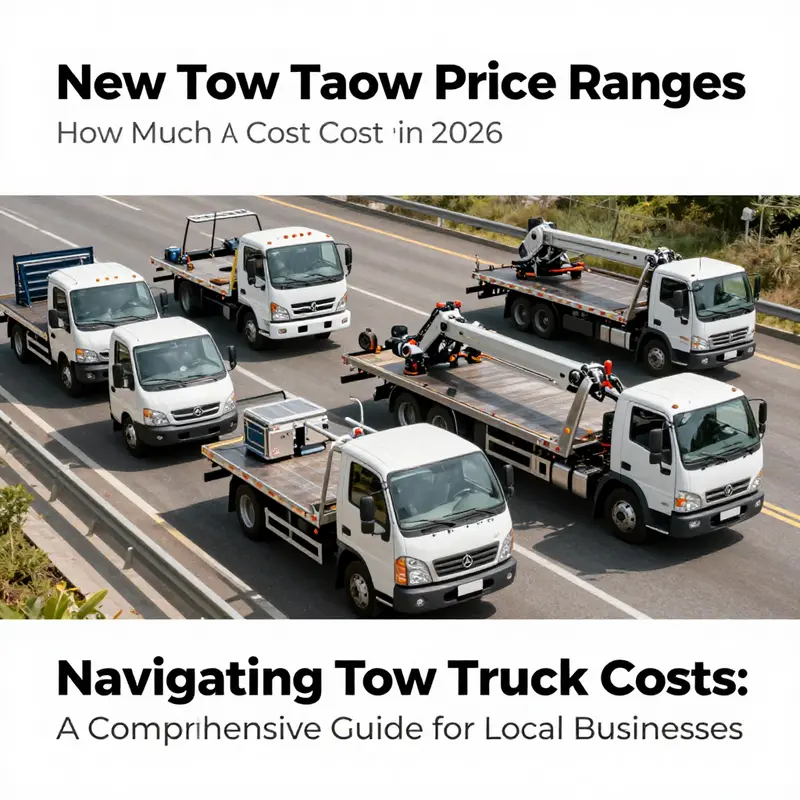
Prices for tow trucks in 2026 unfold like a map with many destinations, and the routes between them are defined more by purpose than by a single sticker price. The market has grown into a broad spectrum where a compact, light-duty flatbed used to recover a city car sits at one corner, while specialized rotators capable of complex, high-stakes recoveries pull the chart toward another. The reality is that the sticker price tells only part of the story. A buyer needs to weigh the intended use, the operating environment, and the total cost of ownership to understand the real value of a unit. In 2026, new tow truck pricing reflects this complexity with clear distinctions across categories, but the gaps between those categories remain wide enough to demand careful budgeting, especially for fleet operators who must balance daily throughput with long-term maintenance and safety requirements. Across markets, entry-level models can be surprisingly accessible, yet more capable configurations—those that can lift, pivot, or maneuver in challenging terrain—move quickly into higher price brackets, where the initial expense often translates into faster response times, safer operations, and lower risk during complicated recoveries. For a buyer standing at the crossroads of price, capability, and risk, the year’s pricing landscape invites a disciplined approach: quantify the job, compare life-cycle costs, and demand transparent cost breakdowns from suppliers to avoid hidden charges that creep in through freight, customization, or set-up fees.
The most visible divider in 2026 pricing sits between light-duty and heavy-duty configurations. On the light end, basic flatbeds and small recovery units can begin in the low to mid twenty-thousands in FOB terms, with some markets reporting entry-level figures as low as roughly $12,800. Those figures represent vehicles suited for light-duty towing and everyday recoveries, where payloads are modest and the focus rests on reliability and compact maneuverability. Yet, in practice, most buyers aiming for fleet reliability opt for slightly upgraded light-duty units that push into the $21,000 to $22,000 range, or higher if they add tilting beds, enhanced winch power, improved stability, or better weatherproofing. The price delta might seem modest at first glance, but the performance gap can be decisive when a fleet must handle a wide variety of incidents, from flat tires on a busy boulevard to backing a car hop-and-crawl across a ramp during a rainstorm. The range expands further when dealers bundle safety features, GPS tracking, and basic remote diagnostics into the package, turning an affordable starter truck into a dependable workhorse that can log long hours with minimal downtime.
Moving up the spectrum, the mid-range category reflects a shift in capability rather than a single jump in price. These are the heavy hitters that most commercial operators rely on for routine highway incidents, city wrecks, and the kind of recoveries that require stronger frames, more robust hydraulic systems, and commonly, a crane or a light-duty rotator option. In 2026, these models typically sit in the low-to-mid thirty-thousand-dollar range, with common quotes landing between roughly $32,000 and $35,000 depending on configuration and region. The decision points here are real: buyers weigh towing capacities that can handle heavier SUVs or vans, longer reach from a stable crane system, and the reliability of a larger winch under load. The mid-range choice is rarely about a single feature; it’s about an integrated package that improves the speed and safety of operations. For buyers who want to blend efficiency with resilience, this tier often becomes the sweet spot where plausible upfront cost aligns with predictable maintenance and a longer service life. It’s also the category where electric variants begin to appear more frequently, offering lower fuel costs and reduced emissions, though sometimes at a price premium or with different charging and spare-parts considerations that buyers must factor into total cost expectations.
Then there is the high end: rotator tow trucks and other specialized units designed for the most demanding recoveries. Rotators—vehicles equipped with 360-degree rotating booms and multi-axis control—represent a different category altogether. Their price tag reflects the engineering complexity, the additional training required to operate them safely, and the market niche they serve, which includes overturns, complex crane lifts, and operations in difficult terrain. In 2026, rotators and similarly specialized units can range from roughly $150,000 to well over $300,000, a spectrum that places them in the domain of serious fleet investments, emergency responders, and contractors who value rapid, intricate recoveries where a standard flatbed cannot suffice. The decision to invest at this level isn’t only about capability; it’s about whether the job mix, utilization rates, and risk profile justify the capital outlay and the ongoing costs of maintenance, operator training, and potential downtime.
A parallel thread in the pricing conversation is the growing presence of electric and other alternative-drive models. For buyers who are optimizing for lower operating costs or who operate fleets in environmentally sensitive zones, electric tow trucks and hybrid configurations offer compelling payoffs, even if their up-front price can sit above some traditional diesel equivalents in the same category. In 2026, electric variants have appeared in the mid-to-upper price ranges of heavy-duty configurations, with some quotes hovering in the high thirties to the low forties of thousands of dollars. The advantages include smoother torque delivery, reduced fuel costs, and quieter operation—benefits that matter in urban settings or shift-heavy operations where fuel price volatility and noise restrictions influence day-to-day performance. Still, the total cost of ownership must account for battery costs, charging infrastructure, and parts availability, all of which can vary by region and supplier.
The numbers above are anchored in the publicly discussed ranges that informed buyers in 2026. A compact, light-duty model may begin around $12,800 in some markets, but most legitimate fleet buyers confront figures near $21,000 to $22,000 for a baseline, reliable unit. In the mid-range, you’ll find a practical compromise around the low to mid $30,000s, while the more capable electric or hybrid variants push into the upper $30,000s, and high-end rotators command six-figure budgets. These figures are, of course, contingent on specifications, the scope of equipment included, and the terms of sale—whether the price is a factory-direct quote, a dealer-installed package, or a bundled offer that includes after-sales service, training, and extended warranties. The market also encourages buyers to request a detailed cost breakdown up front, to scrutinize freight charges, installation fees, and any potential charges for long-distance delivery to remote or international destinations. In some cases, international purchases add another layer of cost—shipping fees and import duties becoming a real consideration for a fleet that operates across borders. To navigate this landscape with confidence, readers may wish to consult industry resources that lay out the lifecycle economics of tow truck ownership, including maintenance schedules, downtime costs, and the value returned through increased uptime and faster incident response.
For readers seeking practical insight into how these price ranges translate into fleet decisions, the Island Tow Truck blog provides a wealth of background on emergency readiness and the economics of keeping a tow fleet prepared for island conditions and other challenging environments. the Island Tow Truck blog offers case studies and context that help translate the raw numbers into strategic moves for fleet managers who must balance cost with resilience and response capacity. As you read through the pricing scenarios, it’s helpful to pair the numbers with real-world requirements: daily dispatch needs, typical incident types, regional traffic patterns, and the regulatory framework that governs heavy-vehicle operations. A thoughtful buyer will not rely on sticker price alone but will model the total cost of ownership across a five- to seven-year horizon, account for depreciation, and budget for ongoing training, spare parts, and tire and hydraulic system wear.
The broader market narrative in 2026 also emphasizes the importance of robust procurement planning. Shipping and freight costs can distort unit pricing when purchases cross borders, and many suppliers require separate quotes for delivery, assembly, or on-site commissioning. Maintenance and operating costs—fuel, tire wear, hydraulic fluid, wear parts, and routine safety gear—are ongoing commitments that add up over time and can swing the total cost of ownership enough to influence whether a buyer purchases a cheaper unit upfront or a more capable one with lower long-term maintenance needs. Training and certification costs are another often overlooked factor. Advanced models, particularly rotators and electrically powered units, demand specialized operator training to ensure safety during high-stakes recoveries. Factoring in these training costs at purchase time provides a more accurate forecast of the total investment and can help avert expensive mistakes or operational downtime later on.
As the chapter closes, the practical takeaway is clear: the price tag is only the opening line in a longer buying dialogue. Prospective buyers should align price with use, reliability, and lifecycle costs, then demand a transparent, itemized quote that includes hardware, installation, freight, and any optional safety, telematics, or training packages. This approach turns a potentially overwhelming market into a structured decision-making process, where the right combination of capability and cost yields a fleet that can respond quickly, operate safely, and stay productive under pressure. For further background that complements these considerations, industry readers can explore related material on the Island Tow Truck blog, which focuses on emergency readiness and fleet management in challenging environments. External research and price benchmarks for ownership costs in 2026 are also available from reputable industry sources that discuss lifetime ownership costs, maintenance planning, and the financial implications of choosing between conventional and electric or hybrid models. External resource: https://www.google.com/search?q=Tow+truck+ownership+costs+2026.
Beyond the Sticker Price: The Real Factors That Drive Tow Truck Costs
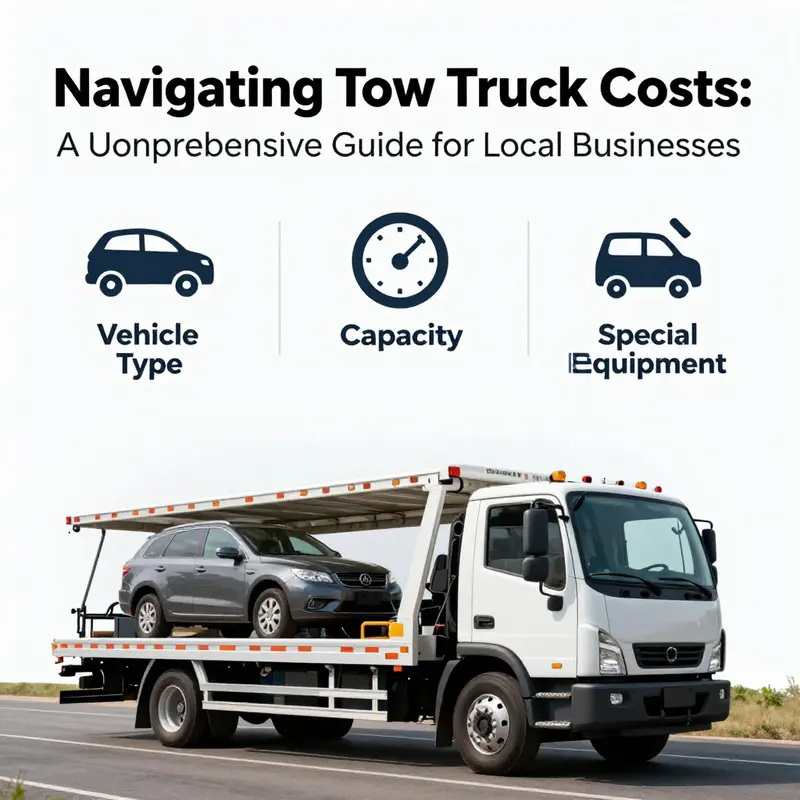
Understanding how much a tow truck costs starts with one simple truth: the sticker price is only the starting point. Even when you’re shopping for a brand-new unit, the price you see on a spec sheet rarely captures the full story of what it takes to own and operate a heavy recovery asset. The numbers you’ve already seen—a basic flatbed ranging roughly from $12,800 to $35,200, mid-range heavy-duty models in a similar $32,000 to $35,200 band, and advanced rotators stretching from about $150,000 up to more than $300,000—are signposts to very different roles and commitments. They sketch a spectrum from light-duty, city-focused work to the world of high-stakes emergency response. The real budgeting question, though, lies in peeling back the layers that sit beneath those figures, so you can plan with clarity and avoid surprises when the next breakdown demands attention.
Distance and location are the most basic, yet often the most consequential, determinants of tow charges. Towing is rarely a one-size-fits-all service; it is a mobility product priced around the distance traveled. In practical terms, you’ll typically see a base service charge plus a per-mile fee, and the total climbs with every mile between pickup and destination. Urban environments magnify this effect. City locations pull in higher operating costs—insurance premiums rise in congested markets, labor wages are driven up by the intensity of the work, and the need to navigate heavy traffic adds risk and time. All of this culminates in higher final invoices for the same job performed on a quiet rural road. It’s not just the miles; it’s the context in which those miles are logged. For fleet operators, this means building a pricing model that can adapt to city corridors, rush hour windows, and the realities of dense traffic where every minute on the clock has a dollar attached to it.
The vehicle type and size you intend to tow are another critical lever in the price equation. A light passenger car can usually be handled with a basic flatbed and a standard wheel-lift, a configuration that keeps upfront costs relatively modest. When the towed vehicle is heavier—think large SUVs, pickups with heavy equipment, or commercial vans—the underlying technology must be more robust. Heavier frames, more powerful winches, enhanced hydraulic systems, and better attachment points all contribute to higher initial costs, not to mention the extra labor and time required for careful loading and securement. In addition, if the job involves a nonstandard geometry or a vehicle that can’t be safely loaded onto a flatbed, operators may need specialized attachments, extra security measures, and perhaps a different rigging approach. In short, the weight and shape of the vehicle to be moved are not cosmetic details; they define the core equipment and the crew needed to complete the job safely and efficiently, which in turn influences the quote you receive.
Time of service is the third big influencer. The term often used in the industry is after-hours or emergency service, and it carries a straightforward premium. When a tow is needed outside the regular business day, a company must often respond with less than ideal staffing, or on call in a way that elevates the cost. Late nights, weekends, and holiday hours introduce overhead that translates directly into higher charges. For someone relying on a tow during a tight deadline or a disruption outside of normal hours, the premium is a predictable part of the total cost. This is also a strong argument for planning ahead where possible. If you know you might need service after hours, establishing a preferred provider relationship and a predictable response window can help moderate the spikes that otherwise appear on the invoice.
The type of service and the equipment required for the job can swing prices meaningfully. A straightforward flat-bed tow that simply moves a vehicle from point A to point B typically costs less than a scenario that demands a more complex setup. If a vehicle can be safely loaded onto a flatbed, the process is slower by necessity but often cheaper than scenarios requiring a wheel-lift, a crane system, or a rotating boom. When you add rotating capability or crane functions to reach a damaged vehicle in a tricky position, the operation becomes more specialized. Rotator units, designed for difficult recoveries, a rollover scenario, or an overturned vehicle, demand more expertise, longer operation time, and higher risk mitigation measures. The additional gear, such as hydraulic tilting beds, multiple anchor points, and enhanced stabilizers, all factor into the final bid. The bottom line is that the more complex the extraction and stabilization tasks, the higher the quoted price, not simply because of equipment cost, but because skilled labor and careful execution carry intrinsic value.
There is also a regional and provider dimension to price. Pricing models vary from one operator to another, and even within the same city you can see meaningful differences across independent outfits versus larger fleets. Market dynamics—competition, demand, and the local cost of living—shape the typical price range you’ll encounter. Regulations can also subtly steer pricing, as different jurisdictions require varying levels of operator certification, vehicle maintenance, and insurance coverage. Recognizing these disparities helps you avoid paying a premium simply because you happened to call a company in a market with higher operating costs. It’s wise to request a detailed break-down that separates labor, mileage, equipment use, and any after-hours charges, so you can compare apples to apples across providers and locations.
Insurance coverage is a sometimes overlooked part of the cost structure. If your auto policy includes towing coverage as part of roadside assistance, that coverage can offset all or part of the bill. The way the policy is written—what it covers, the deductible, and any caps—will determine whether you are paying out of pocket or getting reimbursed later. For fleet managers, this means aligning the service contract and the insurer with the expected usage pattern of the vehicle. Clear communication about what constitutes a covered event and how distance and time affect eligibility helps prevent disputes. Even when coverage is in place, understanding the terms gives you the leverage to negotiate the most favorable outcome, ensuring you are not paying twice for the same service.
Beyond the immediate tow charge, there are several ancillary costs that accumulate over time. Shipping and freight become relevant if you purchase equipment from distant suppliers or ship units to remote locations. Hidden costs hide in the fine print on international deals, where duties, freight handling, and customs fees can unexpectedly swell the total outlay. On an ongoing basis, maintenance and operating costs command attention. Larger trucks burn more fuel, demand more frequent service, and require safety equipment for every job. Tires, hydraulics, and spare parts also factor into the annual budget. Finally, training and certification are nontrivial investments when you upgrade to sophisticated systems like a rotating crane. The time and money spent on proper instruction translate into safer operations, faster response times, and a measurable reduction in the risk of damage to both the vehicle being towed and the equipment used to recover it.
When you assemble all these components, the final cost picture emerges as a spectrum rather than a single number. The initial price ranges you saw are markers of capability and intent: a basic flatbed offers local, light-duty utility; a heavy-duty wrecker broadens the range of recoveries you can handle; a rotator delivers the highest level of capability for the most challenging incidents. The practical takeaway is to approach a tow purchase or a fleet upgrade with a careful eye for detail. Request a detailed cost breakdown, question every line item, and demand a transparent freight or delivery quote if the unit will travel from a distant supplier. In international deals, insist on clear terms for duties and handling to avoid surprises down the line. Build a budget that allocates funds not only for the hardware but for ongoing maintenance, tires, hydraulics, and spare parts so that a breakdown in the field does not escalate into a financial crisis for the operation. For those navigating the specifics of fleet management and emergency readiness, the Island Tow Truck blog offers practical perspectives on strategies for emergency response and fleet preparation. The Island Tow Truck blog provides practical perspectives on strategies for emergency response and fleet preparation. For readers seeking a benchmark for region-specific costs and more structured guidance, official resources provide a grounded reference. The American Automobile Association maintains roadside assistance guidance that outlines typical rates by service type and region, helping align expectations with real-world pricing. You can explore this authoritative resource to understand how distance, timing, and service complexity translate into dollars in your area. For official guidance and region-specific averages, see the AAA towing costs resource. https://www.aa.com/roadside-assistance/towing-costs
Beyond the Sticker Price: Unpacking Hidden Costs When Budgeting Tow Trucks for Rentals
When you start budgeting for a tow truck, the base daily rate is only the opening line of a much longer invoice. The sticker price you see in a quote often disguises a handful of variable costs that can push your total to a surprising degree, especially if you’re planning for peak season, long hours on site, or recovery work in challenging conditions. For fleets and independent operators alike, understanding these hidden or ancillary charges is essential to prevent budget creep and to ensure you’re comparing apples to apples when choosing a rental partner. Think of the rental agreement as a map rather than a single price point. The path from sunrise to midnight often includes fuel, protection, mileage, and specialized tasks, each with its own price tag that can add up quickly if not anticipated. In practice, a sound budgeting approach starts with the baseline daily rate, then layers in the predictable extras and leaves room for the less predictable moments that come with road calls and heavy recoveries. For those guiding a fleet through emergency response or island operations, a careful read of the terms yields insight into what is truly billable and what is bundled as a courtesy or a potential later negotiation. A practical mindset is to treat the rental quote as a package with a menu of add-ons rather than a single number carved in stone. To frame this idea, it helps to look at the five common areas that tend to drive up total costs: fuel, insurance, mileage, specialized equipment usage, and additional service charges. Each of these can be managed with proactive planning, but only if they are understood up front and monitored during the rental period.
First, fuel costs. Heavy-duty diesel tow trucks—especially those with substantial lifting capacity and extended reach—consume more fuel than lighter units. The actual cost hinges on engine size, load frequency, engine operating time, and how efficiently the vehicle is driven under demanding conditions. If a rental agreement is priced with a flat daily rate and a generous fuel cushion, operators might assume fuel is a sunk cost. In reality, fuel usage chips away at margins, particularly on longer deployments or when the truck is idling in city traffic or during winching operations. It’s wise to estimate fuel burn by considering miles expected per day and the truck’s typical fuel economy in similar work. A simple rule of thumb is to compare a high-use scenario against a conservative one and then add a small buffer for price volatility at the pump. This is where transparent quotes matter; a few fleets will include a fuel surcharge or a guaranteed fuel level at pickup, while others leave fuel as a variable that is charged or credited at return.
Second, insurance premiums and liability protection. The rental company’s policy on damage waivers, liability coverage, and deductible amounts can dramatically affect the daily rate. Opting for full coverage or enhanced protection can elevate the cost per day, but it also shields you from the heavier repair bills should an incident occur while you operate the unit. If your fleet already carries comprehensive insurance, check whether you can leverage existing coverage or whether the rental company requires a separate policy for the equipment. In practice, the cheapest option may not always be the wisest choice when your operations involve high-risk scenarios—overturns, winching in uneven terrain, or recovery work in crowded urban environments often carry a greater chance of damage. A written comparison of coverage options, including deductibles and what is waived, is worth the time before you sign.
Third, mileage fees. Many rental agreements impose mileage limits or tiered mileage pricing, even for heavy-duty equipment. If a truck is deployed across multiple cities or regions in a single shift, those per-mile charges can accumulate quickly. The trick is to forecast the daily distances with a margin for detours and emergency calls. If the contract includes a per-mile surcharge after a limit, calculating the likely total mileage for the rental period becomes a crucial step in budgeting. Even modest overages can compound into a non-negligible add-on, particularly for operators whose work spans large geographic areas or whose dispatch patterns demand long reaches from a central base.
Fourth, equipment usage charges. Tow trucks are not just platforms on wheels; many jobs require specialized capabilities such as hydraulic tilting flatbeds, rotators, or crane systems. Even when the base rate covers standard towing, recovery, or winching may incur additional fees. Some vendors price these services per operation, while others bundle a set number of high-load or complex tasks into the base rate and bill extra for anything beyond that. If your job includes multiple recoveries, vehicle uprighting, or offshore or remote-site work, ask specifically how specialized usage is charged and whether a cap exists. A wise approach is to define in advance the expected scope of work and negotiate a predictable price for the most common procedures, then clearly document when a service outpaces that scope.
Fifth, additional service charges and delivery logistics. After-hours service, weekend calls, or delivery and pickup of the unit on your site can carry premium fees. Some rental agreements also add charges for rapid response times or on-site support to assist with setup, safety checks, or maintenance during a job. Clarifying these terms upfront helps prevent surprises at the end of a long shift. For operators juggling multiple crews or island logistics, understanding how delivery windows, fuel surcharges for on-site use, or re-fueling requirements affect the total can be a decisive factor in choosing a provider who aligns with your operating rhythms. In practice, the best quotes specify all such fees in writing and present them as distinct line items, so you can model different usage scenarios without guessing which charges will apply.
Taken together, these five areas form a framework for a more honest, transparent budgeting conversation with rental suppliers. The goal is not to eliminate costs but to predict them accurately and to avoid the shock of a final invoice that deviates from the original plan. A straightforward way to approach this is to build a simple projection: start with the base daily rate, multiply by the planned rental days, then add fuel, insurance, mileage, and any anticipated usage charges. From there, layer in any known service fees such as after-hours labor or delivery and pickup. If you expect a high likelihood of heavy-duty recoveries or extended use, add a contingency for unplanned events. A clear, documented quote makes it easier to compare vendors on the same terms and to negotiate adjustments before committing.
For operators looking to integrate the realities of emergency response and fleet readiness into cost decisions, there is a broader context beyond the numbers. A structured approach to fleet planning considers not only the price tag but how quickly a unit can be deployed, how reliably it will perform under strain, and how closely the rental terms align with operational needs. In this light, the decision becomes part financial, part risk management, and part logistics discipline. A resource that speaks to aligning fleet capabilities with emergency response strategies is the concept of essential fleet emergency response strategies, which offers perspectives on how teams balance readiness with cost controls in demanding situations. You can explore that guidance here: essential fleet emergency response strategies.
Finally, while the numbers and line items guide your selection, you should always demand a detailed, written breakdown from any prospective supplier. A good quote will itemize the daily rate, fuel plan, insurance options, mileage limits or overage rates, equipment usage charges, and any delivery or after-hours fees. It should also spell out what is included in the basic service and what would trigger additional charges. If you’re budgeting for an island fleet or a multi-vehicle operation, you may want to revisit the quote after factoring in potential shipping or transport considerations for any units that need to be moved between locations—though for rentals this is less common than it is for purchased equipment, it remains a relevant planning note for some vendors. When uncertainty remains, request scenario-based estimates for typical shifts, peak days, and speed-to-deploy missions. A well-structured quote will help you compare across vendors and will inform a more resilient financial plan that can withstand the unpredictable demands of tow operations.
For readers seeking a broader context on fleet budgeting and supplier partnerships, consider reviewing related resources and case studies that discuss how organizations balance cost with reliability and response times. And as you finalize your decision, keep the emphasis on transparency and precision: the best rental partners will present all potential charges in a way that is easy to follow, with clear what-if scenarios and no hidden surprises. External reference for standard rental terms and insurance options can be found at https://www.enterprise.com.
Tow Truck Price Tags: Navigating the Spectrum of New Tow Truck Costs for Your Fleet
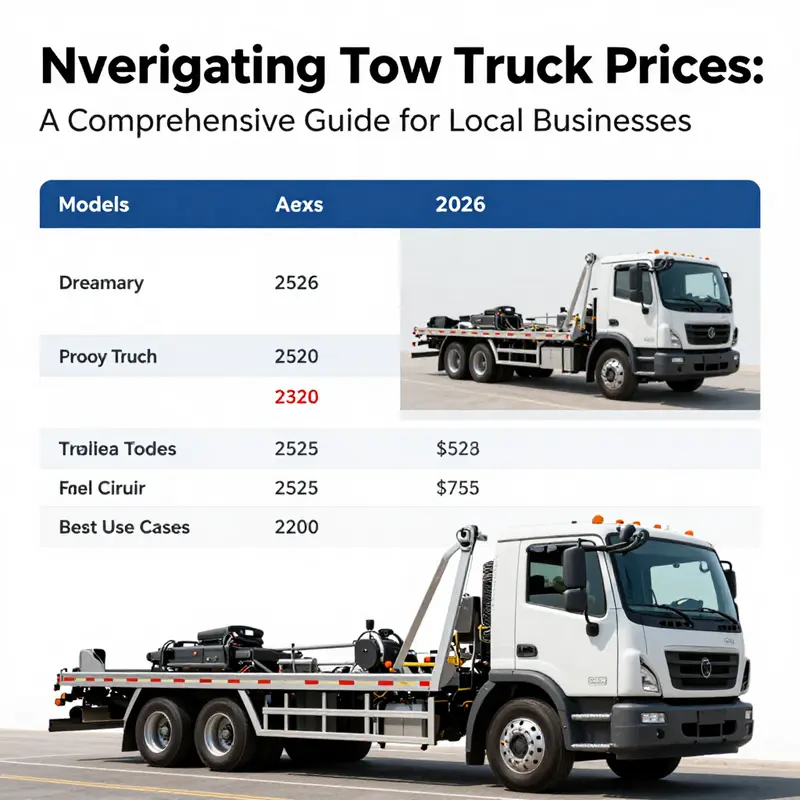
Tow trucks arrive in a wide price spectrum that mirrors their diverse duties. Understanding what drives those price tags helps fleet managers plan for upfront cost as well as long-term ownership. Size and type, lifting and recovery capabilities, and safety and telemetry features all influence the sticker price. In 2026, options range from compact flatbeds for urban work to heavy-duty wreckers and rotators designed for demanding recoveries. The key is to think in terms of total ownership, not just the upfront price, because fuel, maintenance, insurance, and training shape the cost over the vehicle’s life.
For light-duty needs, basic flatbeds can be affordable, but even entry units observed in the market are often priced higher once options like longer beds, higher payload ratings, better winches, and safety packages are added. The spectrum can stretch from around fifty thousand dollars to the mid seven-figure range depending on configuration, capacity, and included features. A bare-bones chassis vs. a fully equipped flatbed with integrated lighting and telematics can mark the difference between reliable performance and a tool that underdelivers.
The middle tier—heavy-duty wreckers with cranes and enhanced winching—varies by configuration. A basic medium-duty wrecker can sit above light-duty pricing, while a feature-rich unit with greater reach and tougher hydraulics can push toward six figures and beyond. The ultimate rotator category commands premium pricing due to its specialized hydraulics, 360-degree booms, and complexity, often ranging from six figures to well over a hundred thousand dollars depending on reach, capacity, and on-board safety systems.
To make sense of the numbers, buyers should consider total cost of ownership and seek detailed cost breakdowns that separate chassis, recovery equipment, and safety/telematics packages. Value often comes from better fuel efficiency, longer service intervals, and a strong parts network that lowers operating costs over five to seven years. Additionally, understand how the unit will be used most often and select a configuration that aligns with the typical call profile. Some fleets benefit from a nimble flatbed, while others justify a higher investment in a heavy-duty wrecker or rotator for more demanding environments.
As a final note, while upfront price matters, the market is best read through the lens of total value: uptime, safety, and incident response capabilities. For reference on current market guidance, many buyers consult industry pricing resources and manufacturer guides to compare apples to apples across bids.
External market insights can help position your purchase within the evolving landscape of heavy‑duty vehicles and recovery equipment, ensuring your decision remains grounded in current realities.
Pricing on the Move: How Tow Truck Costs Evolve with Type, Terrain, and Towing Needs
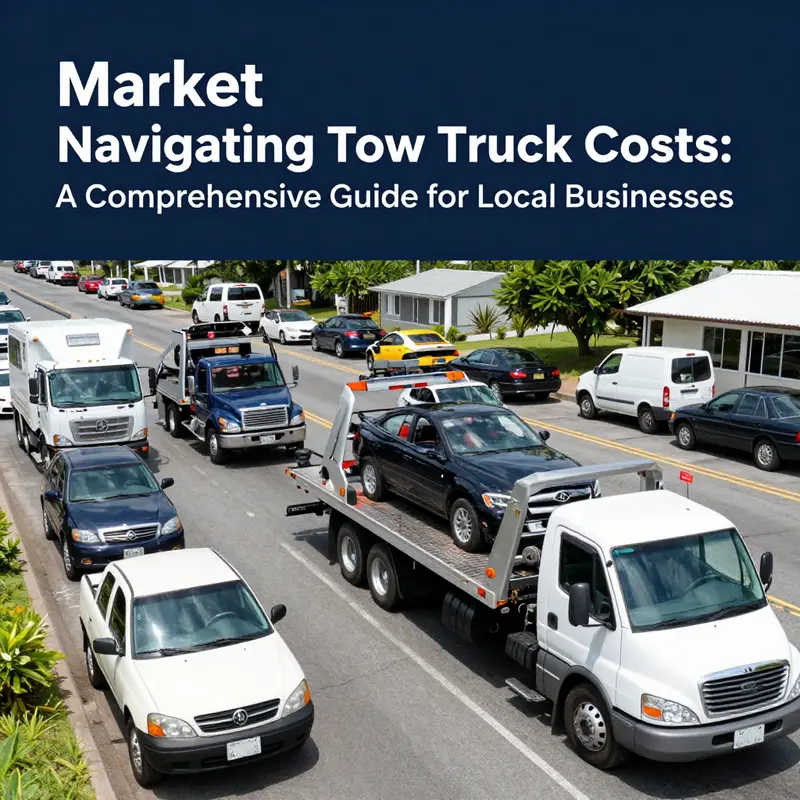
The price tag attached to a tow truck never sits in one place. It shifts with the job at hand, the environment in which the vehicle operates, and the level of resilience a fleet expects from its response equipment. When people ask how much a tow truck costs, they often want a single number. The reality is more nuanced. A small, light-duty flatbed designed for local vehicle recovery can be purchased for a modest sum, but as soon as the job scales up—requiring greater payload, tougher off-road capability, or rapid on-site manipulation of a heavy and awkward vehicle—the price climbs in a way that mirrors the mounting complexity of the task. To understand the full spectrum, it helps to think in terms of three broad categories: basic flatbeds, heavy-duty wreckers, and rotator units. Each category serves a unique purpose, and each carries its own price trajectory that reflects the nature of the work it is expected to perform over years of operation.
Begin with the most common entry point: the basic flatbed. These units, sometimes called rollback or tilt-bed trucks, prioritize a gentle touch on the towed vehicle by allowing the car to be driven or winched onto a hydraulically tilting platform. The cost ceiling for light-duty flatbeds is approachable, often starting around the low tens of thousands of dollars for smaller models with modest towing capability. In many markets, a practical threshold sits just under fifty thousand, depending on the engine size, bed length, and the sophistication of the hydraulic system. For operators handling a steady flow of everyday passenger-car calls, this class offers a reliable balance of cost and capability. Yet even within this category, there are important differentiators: a longer bed can accommodate longer vehicles or stair-step loading in tight lots; a more robust hydraulic package can improve cycle times; and integrated safety features such as lights, alarms, and on-board cameras can add to the upfront price but yield downstream savings by reducing handling risk and insurance cost.
The next tier expands into the realm of heavy-duty wreckers. These are the workhorses for commercial recovery, road incidents, and fleet maintenance tasks that require greater pulling power and a tougher chassis. In a well-tuned market, you can expect to pay in the range where robust frames, stronger winches, and more capable hydraulic systems are standard equipment. The price difference from basic flatbeds is meaningful but predictable: more pull, more control, and more resilience against demanding calls translate into a higher upfront investment. Buyers often justify this through reductions in turnaround time and the ability to handle a wider variety of incidents with fewer specialized trailers or separate winch setups. The exact cost depends on the payload rating, the winch capacity, and the overall engineering chosen to support higher-duty cycles, but the trajectory remains steady: heavier capability equals higher price.
Then there is the rotator—the most powerful class in the tow-truck family. Rotators feature rotating booms and a sophisticated control system that allow responders to reconfigure loads on the move, flip overturned vehicles, and perform complex recoveries in constrained spaces. These machines are not simply larger versions of basic or heavy-duty trucks; they represent a fundamentally different approach to vehicle recovery. As such, they carry a price that can be markedly higher, often well into six figures. The cost reflects specialized hydraulics, advanced electronics, and the training required to operate them safely under difficult conditions. The initial outlay is substantial, but many fleets find that rotators unlock efficiencies that are indispensable during major incidents or in terrain where conventional rigs struggle. The price range here can eclipse the mid-range heavy-duty category by a wide margin, driven by the need for precise control, reliability under stress, and the ability to negotiate complex recoveries without resorting to multiple, separate units.
Beyond the sticker price, several interdependent factors shape the final cost of ownership. Vehicle type and weight are obvious drivers. Heavier vehicles demand sturdier frames, thicker axles, and more robust suspensions, all of which push up the base price and the ongoing costs of maintenance and fuel. Towing capacity is another critical lever. A 25-ton class unit, for example, will command higher pricing for its reinforced structure, hydraulic footage, and the engineering necessary to sustain peak performance for long shifts in recovery work. Specialized equipment—such as hydraulic tilting beds, rotating booms, crane systems, and heavy-duty winches—adds further layers to the bill. Each feature improves function in tough situations but also multiplies the complexity of maintenance, parts sourcing, and technician training. In practice, every added capability should be evaluated against the expected workload to ensure it contributes to a lower total cost of ownership rather than simply increasing the upfront price.
There is a practical continuum to consider when budgeting. The market often segments prices by the core configuration—flatbed, heavy-duty wrecker, rotator—and then modulates those prices with optional equipment and service packages. A basic flatbed can be enhanced with features that protect sensitive drivetrain components during loading, while a heavy-duty unit might be paired with extra winch capacity, climate-controlled operator areas, and advanced communication systems. The rotator, in turn, benefits from modular controls, redundant hydraulic lines, and remote diagnostics. Each enhancement improves the unit’s ability to respond to specific scenarios—standing by for island or rural deployments, navigating tight urban cores, or executing high-risk recoveries at night—yet each increment also adds to both the purchase price and the long-term operating costs.
The discussion of cost cannot neglect the broader economic and logistical realities that shape prices. Regional demand plays a substantial role. In markets with rugged terrain, aging road networks, or frequent heavy weather events, there is a premium on versatile machines that can perform across a range of conditions. The Philippines, cited in some regional analyses, demonstrates how terrain diversity and infrastructure challenges push operators toward adaptable configurations. In such settings, the choice between a standard flatbed and a more capable 6×4 or 6×6 setup is framed not only by the immediate job but by the recurring needs of crews working across variable surfaces. A 6×6 drive system, for instance, offers superior traction in mud, snow, and rocky terrain, yet it also increases fuel consumption and maintenance demands. These trade-offs are central to cost discussions because they affect daily operating costs and the long horizon of ownership.
Operational costs extend far beyond the initial purchase. Fuel efficiency, a factor that grows more prominent with larger frame sizes and heavier engines, can account for a meaningful portion of annual expenses. Maintenance is another ongoing concern: larger, more complex hydraulic systems require more specialized parts and technicians. Safety gear, cones, vests, and flares remain essential but add to recurring expenses. Shipping and freight costs can complicate international purchases, often requiring separate quotes and incurring duties. Then there are training and certification requirements, especially for rotators and other advanced configurations. The specialized nature of these machines means that operator and technician training is not optional; it is a necessary investment to maintain performance standards and reduce risk on the road and at recovery sites.
With all these factors in play, buyers should approach the decision with a holistic mindset. Instead of chasing the lowest upfront price, the focus should be on a detailed cost breakdown that reveals the true economics of ownership. A transparent quote should itemize the chassis, bed or boom, winch specifications, safety equipment, electrical and hydraulic systems, and any modular components. It should also estimate maintenance cycles, spare-parts availability, fuel consumption expectations, and the anticipated depreciation curve. For fleets operating across remote regions or varied terrain, the calculus is even more nuanced: a model that delivers higher uptime, easier field maintenance, and quicker recovery times can yield lower total costs over the life of the asset, even if its initial price is higher.
For readers seeking practical guidance on fleet readiness and maintenance strategy, resources such as the Island Tow Truck blog offer actionable insights into how operators plan, equip, and sustain their response capabilities. You can explore relevant material here: the Island Tow Truck blog.
As the landscape of tow-truck pricing continues to evolve with technology, regulations, and global supply chains, buyers should balance their immediate budget with a longer horizon that accounts for uptime, reliability, and the ability to handle a widening array of incidents. The chapter that follows will translate these considerations into a framework for budgeting and decision making, linking the initial sticker price to the resilience and effectiveness a fleet needs in real-world operation. In other words, cost awareness must be paired with performance expectations to ensure that the chosen configuration will serve the organization well across days of routine calls and moments of high-stakes recovery.
For a broader market view and current pricing trends across regions, readers may consult industry analyses such as the Tow Truck Market Analysis and Pricing Trends (2026). https://www.towtruckindustry.com/market-analysis-2026
Final thoughts
In conclusion, determining how much a tow truck costs isn’t merely about the upfront price—it’s about understanding the long-term implications of this investment for your local business. From light-duty models ideal for small vehicle towing to advanced rotators designed for complex recoveries, every choice comes with its unique set of costs and considerations. By being well-informed about pricing ranges and the factors that influence costs, you can confidently select equipment that meets your specific needs while ensuring profitability. It’s essential to approach this decision strategically, considering both immediate and future expenses. Your investment in a tow truck can significantly enhance your service offerings and competitive edge.