
Navigating the unpredictable roads of car ownership can be fraught with challenges, especially when your vehicle suddenly requires towing. Understanding how long a tow truck takes is crucial for local auto repair shops, car dealerships, property managers, resort operators, and commercial fleet operators. This article breaks down key aspects influencing response and service times, helping you make informed decisions in emergencies. Each chapter will illuminate different facets of towing, from response times to the specific requirements of accident recovery, so you can be prepared for the next roadside challenge.
Tow Time Unveiled: Decoding Response Time and What Actually Delays a Tow
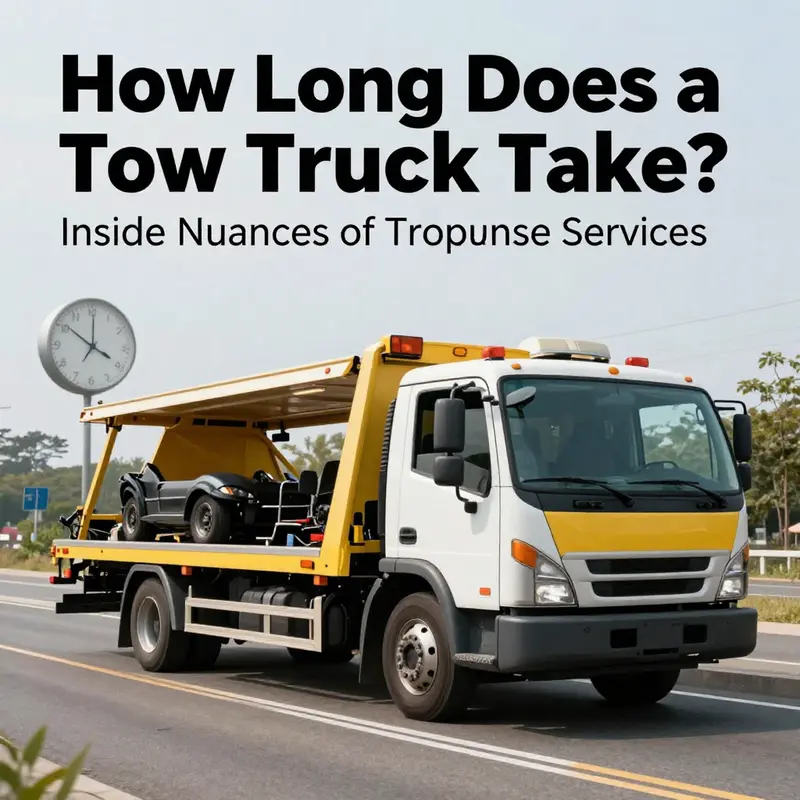
When you find yourself stranded and call for roadside help, the question of how long the tow truck will take becomes almost as important as the problem you’re trying to fix. Yet time is not a single number that sits on a clock. It is a spectrum shaped by a mix of conditions, dispatch decisions, and the kind of service your situation requires. The chapter you’re about to read dives into that spectrum, tracing the journey from the moment the call is placed to the moment your vehicle is secured on a carrier and on its way to the desired destination. It is a story of logistics, weather, traffic, and the realities of different towing tasks, all written in real time by the dispatchers, drivers, and scene coordinators who keep the process moving. The core idea is simple yet often misunderstood: there is no universal answer to “how long does a tow take?” Instead, there is a framework of expectations built on location, urgency, equipment, and the specifics of the vehicle involved. Understanding this framework can help you navigate the moment of crisis with less stress and a clearer sense of what to anticipate as the clock ticks. In many urban settings, where service networks are dense and dispatch is optimized for speed, the average arrival window after a call is roughly 30 to 60 minutes. That range reflects a balance between the speed of a nearby tow truck and the time it takes for the driver to reach the scene, assess the situation, and begin the process of securing the vehicle. It is not a guarantee, but it is a reasonable baseline that many reputable towing services use to set expectations. The variability, however, is as real as the need for help itself. Rural or remote locations introduce a different pace. When the next available tow truck may be miles away, or when roads are less direct and traffic patterns less predictable, you can be looking at 2 to 3 hours, or even longer, before a tow begins to move your vehicle. Seasonal factors play a decisive role here. Holidays, severe weather events, or major storms assemble a kind of traffic jam of a different sort—the kind that isn’t just cars on the road but demand on the dispatch system itself. In these moments, the distance between you and the nearest available unit widens, and the clock stretches accordingly. The operational realities behind these numbers are important to acknowledge. Dispatch centers triage requests based on urgency, location, and the nature of the problem. A call about a car that is drivable but stranded in a lane versus a vehicle involved in a severe collision with injuries and hazards may be handled with different priority levels. In practical terms, this means that even within the same city, two calls can yield distinctly different arrival times because one might require less traffic coordination, fewer crews, or simpler equipment. The type of service requested is another major driver of time. A simple tow, where a car is off the road and can be loaded onto a standard wheel-lift or a basic tow bed, tends to be faster once the unit is on scene. You might hear a rough figure of 30 to 60 minutes for the tow truck to arrive in such cases, followed by a relatively brief loading and securing phase. In contrast, accident recovery poses a different challenge altogether. Vehicles involved in crashes often require careful assessment, safety perimeters, and potentially multiple personnel. They also may need specialized equipment to manage hazards, spilled fluids, or vehicles that are stuck in awkward spots like ditches or culverts. In those scenarios, the process can extend to 2 to 4 hours or more. Even within this category, there is a meaningful distinction between standard wheel-lift towing and flatbed towing. Flatbed tow trucks are designed to carry vehicles securely, which is crucial when a car cannot drive itself or when there is a risk of further damage if it is moved improperly. The loading process onto a flatbed takes a little longer than a basic wheel-lift operation, and this extra minute or two can add up when there are multiple steps—hooking, winching, securing, and then loading the vehicle onto the platform. The upside is that the safety and protection offered by a flatbed are often worth that small additional time, particularly for expensive, rare, or heavily damaged vehicles. Because the load and secure steps are more meticulous, the overall time from arrival to completion can stretch in ways that a quick wheel-lift tow would not. This is where the broader question of total time becomes especially relevant. A simple tow, performed efficiently, might wrap up within an hour or two, but the total duration can extend to several hours depending on the situation, the equipment required, and how far the carrier must travel to reach the vehicle’s destination. It is this total time—arrival plus loading, securing, transport, and handoff—that customers are often most concerned about. To manage expectations, many towing providers encourage customers to request an ETA based on the specific circumstances. An accurate ETA takes into account factors like traffic conditions, weather, time of day, and the exact location of the vehicle and driver. In the modern service landscape, there is also a push toward transparency and reliability. Some providers offer guaranteed arrival windows during business hours, usually tied to emergency towing options that prioritize rapid response. When such guarantees exist, they reflect a commitment to minimizing the time you spend waiting, even if they cannot eliminate every delay caused by weather or road closures. The practical takeaway for anyone facing a tow is to engage with the provider early and share precise details. The location within a parking lot, the nearest landmark, and whether the vehicle is in a hazardous position all influence how quickly a tow can begin. If you can, provide a description of any obstacles—distance to the street, slope of the curb, or if the vehicle has a working neutral gear—that can inform the driver about the steps required when they arrive. Communication becomes the bridge between the clock and the actual experience. A direct line to the dispatcher, an up-to-date address, and a clear depiction of the vehicle’s condition can shorten the cycle by reducing confusion and the need for on-scene guesswork. Some operators enhance this clarity with live dispatch tracking, letting customers observe the progress of the nearby unit as it makes its way to the scene. These practices help demystify the waiting period and reduce the anxiety that often accompanies vehicle trouble. In discussing the timing of tow services, it is also important to acknowledge the role of equipment and job scope. A flatbed tow truck, as noted in industry analyses, provides superior safety for many types of vehicles, especially those that cannot be towed with a standard wheel-lift. The trade-off is a modest increase in loading time, which can affect the overall duration when combined with longer on-scene requirements. The science behind these differences is not purely theoretical. It translates into real-world expectations and decision-making: drivers and dispatchers weigh the risks of move vs. transport time, the feasibility of a flatbed for a given vehicle, and the likelihood that the vehicle will need to be loaded and secured in a way that minimizes damage during transport. For families on the roadside or fleets managing a lineup of cars, the practical implications of these timing factors become a daily operational calculus. The more you understand the factors at play, the more you can ask for and expect from a tow service. It is this understanding that underpins the broader discussion of reliability and efficiency within the industry. To learn from broader frameworks and apply them to a specific situation, some operators study resources focused on emergency response and fleet readiness. These frameworks emphasize rapid, accurate dispatch, clear communication, and meticulous on-scene procedures that protect the vehicle being towed and the crew performing the work. For readers who want to explore this topic more deeply, there are resources that outline how fleets structure emergency response and how they handle incidents from the moment a call is received. In particular, a widely referenced set of strategies emphasizes proactive preparedness, streamlined dispatch workflows, and a culture of safety that prioritizes getting the right unit to the right location at the right time. One way to connect these ideas to practical action is to review material that focuses on fleet emergency response planning; for example, you can explore Essential Fleet Emergency Response Strategies for insights into how organizations optimize their response times and coordinate resources under pressure. Essential Fleet Emergency Response Strategies This kind of resource helps readers appreciate that the clock in a tow situation is not just a person behind a wheel, but a network of decisions, procedures, and contingencies designed to shorten the time you spend waiting. For a broader yet contextual understanding of towing dynamics and the kinds of equipment in use, many readers also consult independent analyses and trade publications. These sources discuss how nesting different types of equipment—such as flatbeds for secure transport or wheel-lifts for rapid recovery—affects both the duration and the safety of the operation. The practical upshot is that you should expect a process that can be fast in one moment and longer in another, but with known ranges and clear chances for improvement. If you are planning around a tow, or if you manage fleets that require predictable response times, it helps to internalize a few core questions: How far is the vehicle from the dispatcher’s unit? What kind of service is needed immediately—simple towing, accident recovery, or both? Is there a possibility that a flatbed is required? Are there hazards that could slow the loading or transport? How busy is the service network at the moment? The answers to these questions shape both the ETA you receive and the actual experience on the ground. They also justify why a simple numeric range cannot entirely capture the experience of being towed. Rather, the numbers are best understood as a framework that informs your expectations and guides your choices during a roadside incident. As you navigate this framework, it helps to anchor your expectations with a direct call to the towing provider. Request a precise ETA based on the exact scene and conditions. Provide as much detail as you can about location, access issues, and your preferred drop-off point. If your vehicle is drivable, you can discuss whether a tow would still be necessary or if a jump-start or tire change could resolve the situation more quickly. If the vehicle is not drivable, ask about how the grappling, winching, or stabilizing steps will be executed to ensure that you understand what the crew will do when they arrive. The objective is not to arrive at a single, fixed time, but to secure a reliable, realistic window that reflects your specific circumstance. To bring this discussion full circle, let us return to the practical and human elements that shape tow times. A driver who knows the area well can often maneuver around bottlenecks more efficiently, while a well-deployed crew can handle the on-scene tasks with precision, reducing unexpected delays. The person who will eventually deliver the vehicle to its destination is as much a part of the waiting experience as the person who arrived first. The result is a seamless, if sometimes lengthy, sequence in which arrival is only the first act, and careful loading and secure transport constitute the final scene. If you are curious about how these ideas translate into everyday practice, you can explore the broader literature on emergency response strategies and fleet readiness, which often includes case studies and practical checklists that operators use to minimize delays while maximizing safety. The goal, in short, is not to eliminate all waiting, but to reduce it where possible, while preserving the integrity of the vehicle and the safety of everyone involved. For readers who want a reliable point of reference beyond personal experience, official guidance from recognized organizations can help set expectations. The American Automobile Association, for example, offers detailed guidance on towing expectations and member benefits that can inform your understanding of typical timelines and how to interpret ETA estimates during emergencies. For more information, visit https://www.aaa.com. This external resource provides broader context about towing expectations and the value of prepared planning when a tow is inevitable. In the meantime, you can also reflect on the practical steps that help you manage the moment more effectively: keep a clear line of communication with dispatch, recognize that faster response often depends on local conditions, and remember that the type of vehicle, the terrain, and the incident’s severity together determine how long the entire process will take from call to destination. The path from a call to a secured vehicle is rarely a straight line. It is a dynamic sequence shaped by your location, the service you request, and the conditions on the ground. Understanding these factors helps you set realistic expectations and engage with the process in a calm, informed way. If you’re looking to connect the ideas in this chapter with broader practice, you can explore related concepts in fleet emergency response and read about the kinds of strategies that help organizations reduce response times while maintaining safety and reliability. The discussion above also serves as a bridge to more specialized topics, including the nuances of different tow configurations, the realities of accident scene management, and the ways in which fleets plan for peak demand and adverse weather. By keeping sight of the core questions—where, when, what, and how—the reader can approach every towing scenario with a clearer sense of the time it might require and the steps that will unfold along the way.
On the Clock on the Side of the Road: Understanding How Long Tow Trucks Take from Call to Clear Road
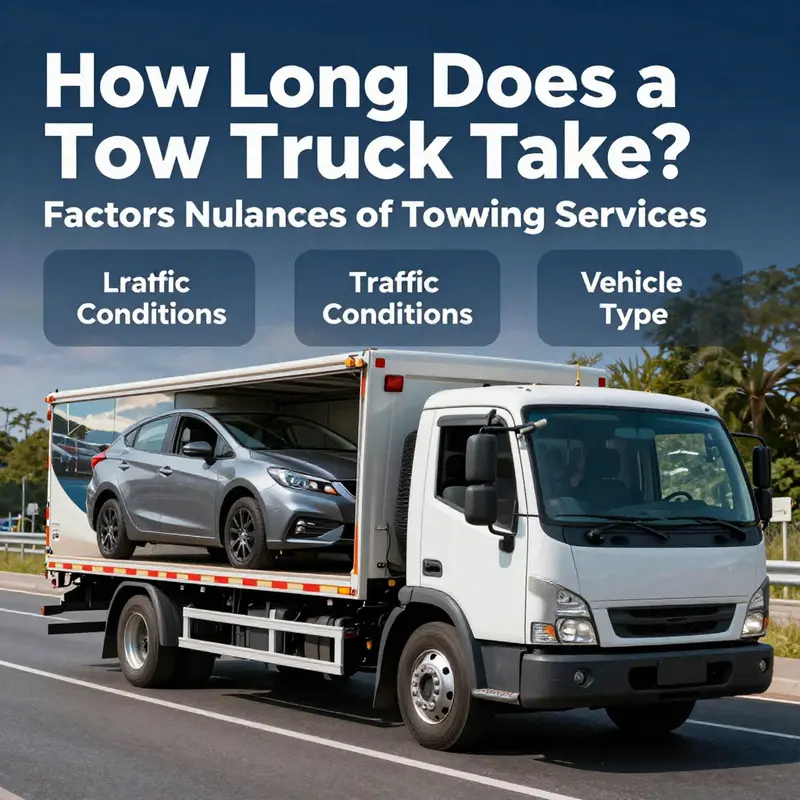
When a car breaks down or is stranded after an accident, time becomes a tangible, pressing worry. The clock starts ticking the moment you reach for your phone and dial the words that summon help. In that moment, you may be facing more than the simple inconvenience of a stalled ride; you are weighing the value of every passing minute against the unknowns of road conditions, weather, and the availability of a tow. The reality is that the duration of a tow is not a single, fixed number. It is a fluid estimate shaped by a constellation of factors that shift with location, circumstance, and even the hour of the day. Understanding these factors helps people prepare for the wait, manage expectations, and navigate the moment with a little more calm and control. It also frames the question in a practical way: what is realistically possible given the conditions at hand, and how can a driver or passenger move through the experience with less stress and more information?
One of the first elements that color the timing is location. The distribution of tow services is uneven, and that unevenness manifests most clearly in the difference between urban and rural environments. In a dense city or town where multiple operators cluster near major corridors and service stations, a nearby unit can typically be dispatched within minutes. In many urban settings, response times can land in the 15- to 30-minute range, especially if the scene is straightforward and the incident is routine. Those minutes matter, especially when the vehicle is off the road or blocking traffic, creating a need to move quickly to a safer position. On the other hand, rural or remote areas present a different set of logistical realities. Fewer service providers, longer travel distances, and sparser road networks can stretch the time to arrival to 60 minutes or more. Weather and seasonal travel patterns can amplify these delays. A tow truck may be miles away and tasked with coordinating with other responders, all of which yields a longer window between the call and the arrival at the scene. The precise geography—whether you are tucked along a rural byway, a suburban street, or a high-traffic urban boulevard—will tilt the clock toward shorter or longer waits in meaningful ways.
The dispatch center is a crucial, though invisible, player in these timing dynamics. Modern towing operations rely on real-time information—GPS tracking, live updates on road conditions, and the status of available units. When you place a request, the dispatcher weighs a handful of variables: how far the nearest available unit is, what kind of vehicle is required for the job, and whether any safety considerations warrant a more specialized unit. If the incident involves a garage door-size vehicle, a heavy-duty wrecker, or a flatbed that can carry a car with fragile handling needs, there may be a delay while a suitable unit is located or staged. Each of these decisions adds a layer to the overall time from call to on-site readiness. The more complex the job, the more room there is for variation in the clock, and the more important it becomes to communicate clearly with the dispatcher about the specifics of the situation. In this sense, the timing of a tow is not just a function of distance but a function of precision in the information shared and the fleet’s ability to match that information with the right resource at the right moment.
The nature of the incident itself has a direct hand in how long everything takes once the tow arrives. A simple roadside assist—say, a driver with a dead battery who can be jump-started or a flat tire that can be swapped and a vehicle then driven away—tends to be a relatively quick operation. In these cases, the tow might be limited to towing the vehicle a short distance to the nearest repair shop or home garage, and the actual mechanical work is minimal or nonexistent. The clock here tends to stop at the moment the vehicle is safely hooked up and the scene is cleared, provided no further hazards are present and the vehicle is drivable after service.
By contrast, an accident scene introduces a much broader range of time variables. When a collision occurs, responders—police, paramedics, and firefighters—must secure the area and manage traffic, debris, and potential hazards. The tow company does not control the initial scene clearance, so the tow may be postponed until the area is deemed safe for recovery operations. If a vehicle is heavily damaged, stuck in a ditch, or embedded in a difficult position, the recovery operation may require specialized equipment, such as a flatbed or a heavy-duty wrecker, and perhaps multiple personnel. The loading process itself can be intricate: anchoring the vehicle securely, avoiding further damage during loading, and maneuvering it onto a platform that may need to accommodate long, wide, or high-center vehicles. All of these steps extend the time from arrival to departure. The presence of fluids spilled on the roadway, damaged structural components, or the need to avoid pollutants adds layers of safety protocols that can extend the duration further. In these circumstances, a tow can easily stretch into two or four hours, or more, depending on the complexity of the extraction and the coordination required with other agencies and traffic management measures. The overarching principle remains simple: more complexity in the incident translates to longer time on the clock.
A key distinction in the timing story is the equipment involved. The tow operator’s fleet is not monolithic; it comprises several specialized tools designed for different tasks. A standard wheel-lift tow, commonly used for drivable vehicles, can be quicker to load and ready for transport, especially when the vehicle can roll onto the bed or be winched onto a dolly. A flatbed tow truck, on the other hand, prioritizes safety and severity of damage; it secures the vehicle on a flat, level platform that protects the destination from road hazards and from the vehicle’s own fluids. The loading sequence for a flatbed is methodical: secure the vehicle, strap it in, check for leaks or shifts, and then slowly transport it to the destination. While a flatbed can prevent further harm or damage, that extra layer of security often comes with a longer wait and a more deliberate loading process. This is not a contradiction but a trade-off: if the goal is to minimize the risk to a damaged vehicle, the elevated time investment may be worth it. The choice of equipment often hinges on the vehicle type and condition; a larger or heavier vehicle may demand a heavy-duty unit, which itself may be in higher demand during peak periods or storms. The timing, then, becomes a conversation about safety, risk management, and the specific needs of the vehicle and its occupants.
Another factor that subtly shapes the duration is the broader flow of traffic and weather. When a tow truck must navigate through congested streets during peak hours, the journey to the scene becomes a test of patience and patience becomes a test of nerves. Traffic jams aren’t just an irritant; they represent real time lost and increased risk on the road for those who are waiting. Inclement weather—snow, sleet, heavy rain, fog—adds an additional layer of caution. Slower driving, reduced visibility, and the potential for slippery surfaces can slow dispatch and service operations, while simultaneously heightening the urgency to get help to a stranded driver. Weather can also affect how quickly a vehicle is loaded and prepared for transport if road conditions demand extra attention to safety considerations. In this sense, the clock can accelerate in one sense (the need to vanish a hazard) while decelerating in another (the caution required to perform a secure loading).
An often overlooked but important dimension is the availability of the right equipment and the human resources to deploy it. If a specialized tow is needed but not readily available—perhaps a large van, a low-clearance vehicle, or a unit with the capacity to secure a vehicle with multiple axles—the wait grows. At times, staffing shortages or high demand during extreme weather events and holidays can stretch response times beyond what would be typical on a calm weekday. These realities are not about inefficiency but about the simple arithmetic of supply and demand. When a fleet is stretched thin, the expectation should be to extend the window slightly, while still receiving the best possible service given the circumstances. The lesson here is pragmatic: if you have control over when you can call for service—such as planning for a roadside issue during a predictable window, or scheduling a tow outside of peak demand times—these choices can influence the speed with which a unit is dispatched.
In practice, the combined effect of all these factors means that a basic towing job can, in favorable conditions, be accomplished within an hour or so after the incident is stabilized. Yet, a tow following a serious accident or a difficult extraction can stretch beyond two or even four hours. The numbers cited by major safety and consumer organizations reflect this variability. They emphasize that times are estimates, subject to the many real-world forces at play. For someone who is stranded, the most valuable thing is not a precise minute-by-minute forecast but a credible, honest range accompanied by practical guidance on how to stay safe while waiting. The dispatcher can often offer a rough window: a best- and worst-case scenario based on current conditions, the nature of the vehicle, and the likely equipment that will be required. A transparent conversation of this kind helps reduce anxiety and helps passengers plan around the arrival, such as coordinating a ride home, arranging for a neighbor to assist, or identifying a nearby cafe where people can wait comfortably if the scene is not immediately cleared.
The process that follows arrival is another piece of the timing equation, though not strictly a part of the “how long does it take to get there” question. Once the unit reaches the scene, the focus shifts to safety and efficiency. The operator assesses hazards, secures the vehicle, ensures that it is stable for loading, and begins the loading procedure. If additional help is required—perhaps to manage a vehicle with a compromised frame or to stabilize a car perched in an awkward position—the crew may call for backup, which naturally adds minutes to the total time from arrival to departure. In cases where the vehicle has to be towed to a distant destination or to a specialized facility, the next leg of the journey begins, and the clock resumes with a new set of variables as the tow proceeds along the most efficient route. This entire sequence—from the moment you call to the moment you see your vehicle loaded and ready for transport—rests on the careful coordination of people, machines, and information. The more predictable and thorough the communication between you and the dispatcher, the smoother that sequence will feel, even if the overall duration remains longer than ideal.
If there is one overarching insight about tow times it is this: accurate expectations come from clear, specific information. When you call for help, providing details about the location, any hazards, whether the vehicle is in a drivable condition, and the presence of other vehicles or pedestrians can help the dispatcher choose the best unit quickly. If you know the vehicle’s exact location—whether you is on a shoulder, in a parking lot, or in a ditch—sharing this information upfront saves seconds that compound into minutes. It also helps the operator anticipate the type of equipment that will be needed and communicate more precise arrival windows. If you have access to the ignition key, spare fuel, or a preferred endpoint for the tow, sharing these details can clarify what comes next and prevent unnecessary detours. The more cooperative and precise the information exchange, the more smoothly the service unfolds. This is not only practical but also a sign of respect for the crew who are balancing safety and speed at the same time.
For readers who want to dive deeper into the practical side of fleet management and emergency response tactics that influence how quickly these services can mobilize, there is value in following broader discussions that touch on dispatch efficiency, fleet utilization, and the kinds of equipment that keep responders prepared for a wide range of scenarios. A useful repository of insights can be found in the discussion around island-specific emergency response strategies, which examines how fleets balance readiness with the realities of limited space and demanding weather. You can explore this topic further at the Island Tow Truck Blog, which delves into how fleet planning, training, and preparedness intersect with real-world timing and service delivery. The Island Tow Truck Blog, which delves into how fleet planning, training, and preparedness intersect with real-world timing and service delivery. External resource: For a broader overview of what to expect in tow scenarios, consult the American Automobile Association’s guidance on what to expect when you call a tow truck: https://www.aaa.com/automotive/towing-services/what-to-expect-when-you-call-a-tow-truck
null
null
null
null
Final thoughts
Understanding how long it takes for a tow truck to respond and complete its job is vital for anyone who relies on vehicles, especially local business operators. This knowledge provides peace of mind and prepares you for roadside emergencies. By being aware of the factors that influence tow times, you can better manage your responses and expectations when faced with vehicle troubles. Equip yourself with insights from each chapter and remain confident in your ability to navigate the complexities of towing scenarios.