When a vehicle needs towing, understanding how long it may take for help to arrive is essential for local auto repair shops, car dealerships, property managers, and other commercial operators. With islands presenting unique logistical challenges, knowing what affects response times can help in managing customer expectations and ensuring smooth operations. Throughout this article, we’ll explore the differences in tow truck arrival times between urban and rural settings, the various factors that influence these times, the advancements in dispatch technologies, and how different service providers stack up in delivering timely assistance. By delving into customer experiences and expectations, we’ll equip your business with the knowledge to better navigate the unexpected nature of roadside assistance.
Timely Towing: How Urban and Rural Roads Shape Tow Truck Arrival Times
When a vehicle succumbs to a breakdown or a tire blows out on a busy shoulder, the clock starts the moment you reach for help. But the time it takes for a tow truck to arrive is not a single fixed number. It shifts with where you are, which service is handling the call, the weather and traffic conditions, and the precise kind of assistance you need. Modern roadside networks increasingly give you an ETA as soon as you confirm a booking, and many services offer real-time tracking so you can watch the truck’s progress. That transparency reflects a broader shift in the industry toward visible, data-driven responses. It also highlights how context—urban density, rural distances, and the mix of resources on hand—shapes the actual wait you experience. The result is not a one-size-fits-all moment but a spectrum that drivers learn to read, interpret, and plan around.
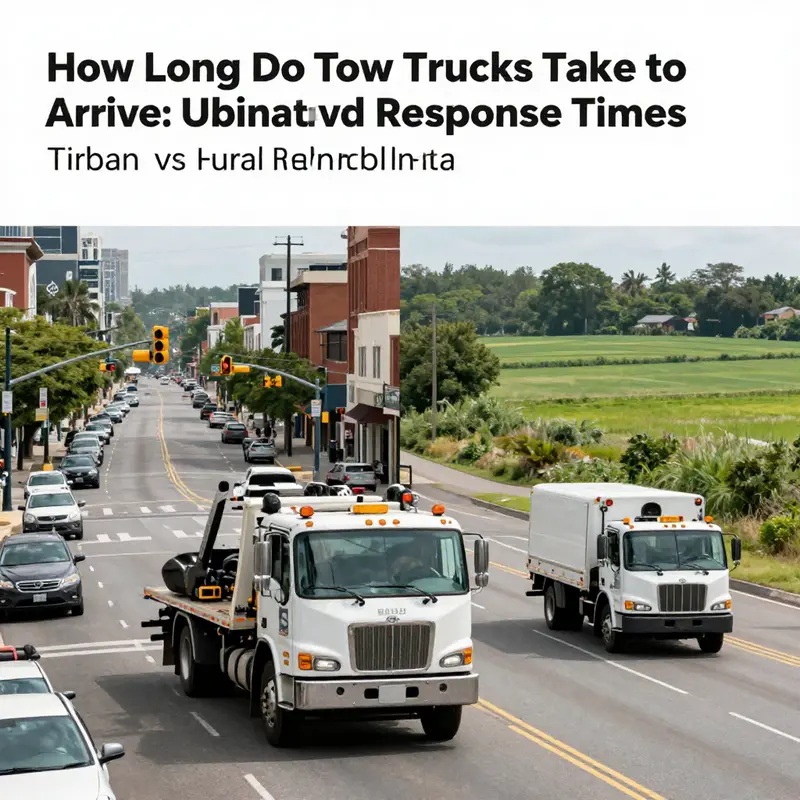
In urban settings, the story tends to tilt toward speed and proximity. The density of towing companies and emergency responders, coupled with better road networks and sophisticated dispatch tools, makes rapid arrivals more common. On average, a tow truck can be at your location within roughly 15 to 30 minutes after the call is dispatched. That window is not guaranteed, of course. It can stretch during peak traffic when major incidents clog interstates or when a chain of calls creates a short backlog for the dispatcher. Yet even with the inevitable fluctuations, cities benefit from a larger pool of nearby units that can be steered toward the most efficient route with real-time traffic data and GPS guidance. In many urban programs, dedicated roadside assistance initiatives and municipal or community-based dispatch networks further shorten the path from call to on-scene help. Those mechanisms not only push arrival times down but also enhance predictability, which matters a lot when safety and convenience are on the line. It’s true that a city-wide crash or a multi-vehicle pileup can suddenly push a truck’s ETA into longer territories, but the overall urban pattern remains one of relatively swift responses, aided by dense coverage and rapid communication loops.
Rural landscapes tell a different, almost counterintuitive, tale. In those corridors where towns are miles apart and services are thinner, the first factor is distance. Rural response times commonly range from about 30 minutes to more than two hours. The miles between a stranded driver and the closest available tow are often the largest single determinant of delay. Beyond distance, the scarcity of nearby providers means a truck may need to travel long, winding routes to reach the scene. Road conditions in some regions—narrow shoulders, uneven pavement, limited lighting, and challenging weather—can slow the actual loading and transport process as well. Communication challenges also play a role. In areas with spotty cell coverage, the exchange of precise location details, updated ETA, and status checks can falter, creating small but persistent delays and uncertainty. And when an incident spans jurisdictional lines or requires coordination among multiple agencies or responders, the complexity can add a layer of time that even the most experienced dispatcher would prefer to avoid.
Yet rural areas are not static. Across the map, moving toward more connected frameworks—the adoption of mobile dispatch tools, cooperative regional pools, and shared asset strategies—has begun to trim those longer waits. The idea is simple but powerful: by pooling limited resources and standardizing procedures across a broad geography, fleets can reallocate assets quickly, communicate more reliably, and reduce idle time spent searching for the nearest unit. It’s a trend that acknowledges the realities of geography while using technology to soften the impact of distance. Even so, the overall takeaway remains clear: urban and rural environments impose different pressures, and those pressures translate into distinct arrival profiles for tow trucks.
Technology is the bridge between those profiles and the moment you actually see a tow arrive. The XTowTruck model referenced in the research overview captures a core shift in how customers experience towing services. When you confirm a booking, you typically receive an estimated arrival time, and you can track the truck on a map as it moves. Notifications alert you when the unit is near and again when it arrives. This transparency matters beyond mere curiosity. It turns a waiting period into a managed experience, letting you plan more effectively. You can coordinate with a friend or family member, decide whether to stay with your vehicle or seek a safer nearby spot, and decide how to structure a ride after the tow, if needed. The real-time view also helps distinguish between delays caused by congestion and those tied to resource allocation, giving you a clearer picture of what is driving the ETA. In busy urban centers, that visibility can be the difference between a driver standing on a crowded curb and moving through a safer, calmer process. In wide-open rural stretches, seeing a truck on the map can quell the anxiety of long waits and the uncertainty of scarce coverage.
For drivers navigating these realities, practical preparation matters as much as the dispatch technologies. A key step is providing precise location details. The dispatcher will want the exact street, but the best information often includes nearby landmarks, lane positions, or turn restrictions that could affect the route. When you can share parking rules, traffic flow patterns, or the best place to stage a tow away from moving traffic, you shave minutes off the overall response. In urban canyons, where blocks can hide important cues, a careful description—“near the red brick building by the southbound exit ramp, in a shoulder where there’s space for a tow truck” —can be worth a lot more than a generic “by the gas station.” In rural areas, sharing GPS coordinates via the phone’s location services, noting where the nearest crossroad is, and reporting any access limitations like narrow driveways or soft ground can save the driver several turns and dead-end loops.
Another practical factor is the reliability of communication networks. A dispatcher’s ability to reach you for updates, or for last-minute clarifications, hinges on the phone staying powered and the signal staying strong. If you know you’ll be in an area with poor reception, plan accordingly: keep your phone charged, pre-load the dispatch number if applicable, and inform the dispatcher of any known dead zones. While you wait, there is value in staying in a safe, well-lit location where the truck can find you quickly once it arrives. If you’re on a highway shoulder, for instance, turning on hazard lights, setting reflective safety triangles or vests within reach, and moving only if it’s safe to do so are small steps with big consequences for both safety and speed.
The difference between urban and rural experiences also frames how you should think about choosing a roadside plan. In cities, plans that emphasize rapid response and access to a large network of pre-vetted providers can shorten your wait because the dispatcher can confidently route to the nearest capable unit. In rural areas, where the nearest unit might be farther away, plans that harness regional cooperatives and wider-area dispatch can substantially improve odds of a quicker arrival. These patterns should influence how you compare options in the moment and how you plan for future trips. A rider on the road today benefits from seeing clear ETAs, understanding the factors that affect those ETAs, and knowing what to do to support the process—without compromising safety. The presence of a well-structured, real-time system makes it less about luck and more about the design of the service network in your region.
Industry guidance and best practices matter, too. Fleets that align with established emergency response strategies emphasize clear communication, redundancy in data channels, and continuous feedback for routing improvements. To readers who want to dive into fleet-centered guidance, a resource detailing essential strategies for emergency response and fleet readiness is worth a look: Essential Fleet Emergency Response Strategies. This reference helps connect the everyday experience of waiting for a tow with the larger operations that govern how quickly a driver actually gets help, reminding us that speed is the product of planning, coordination, and technology working together.
All of this points toward a practical takeaway. The urban-rural divide cannot be erased overnight, but it can be navigated with better preparation, the right support plans, and realistic expectations anchored by transparent ETAs. If you drive in a dense city, you may enjoy shorter waits and tighter turnarounds—provided the system is well staffed and traffic behaves. If you traverse more remote regions, you’ll likely rely more on the reliability of a network and the efficiency of dispatch coordination. In either case, the presence of real-time tracking turns a potentially frustrating delay into a manageable, observable process. The most valuable tool in this landscape is not a single number but a well-designed service ecosystem: pre-vetted providers, clear communication, accurate location data, and a live view of where help stands in real time.
For a broader understanding of the policy and practice around vehicle safety and roadside assistance, consult the National Highway Traffic Safety Administration’s resources on vehicle safety and crash response. https://www.nhtsa.gov
Behind the ETA: Why Tow Trucks Arrive When They Do and What It Means for You
When a vehicle breaks down or is involved in an accident, the clock starts ticking in two ways: the moment you realize you need help, and the moment a dispatcher begins to mobilize a response. The gap between those moments matters because it shapes your expectations, your safety, and the choices you make while you wait. In the real world, the arrival time of a tow truck is rarely a fixed number. It is a moving target that shifts with location, demand, weather, and the kind of service you require. Industry observers and users alike describe a broad spectrum—from brisk, in-the-neighborhood quick wins to more complex, prolonged waits that test patience and endurance. The XTowTruck app, updated with the latest in late-2025, makes this more transparent than ever. At booking, you receive an estimated time of arrival. The feature is designed to set expectations and reduce uncertainty, and you can track the tow truck’s location in real time while you wait. Notifications ping when the vehicle is en route, and again when it reaches your vehicle. Yet the presence of real-time tracking does not erase variability; it simply reframes it, giving you a moving forecast rather than a single static moment on the clock. A realistic takeaway is to think of the ETA as a best-available estimate rather than a promise, and to plan around the factors that can nudge it in one direction or another.
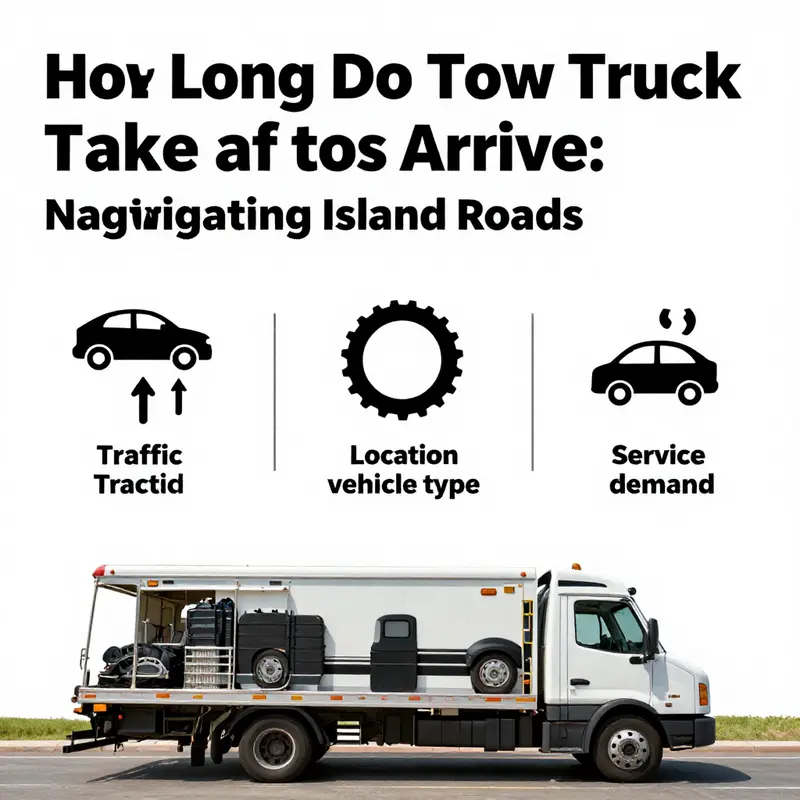
The first and most obvious factor is proximity. In dense urban areas, fleets are visible and plentiful, and trucks are often dispatched from locations close to the scene. That geometry matters. In a city with multiple towing companies operating nearby, a driver can pick the closest available unit, sometimes bringing you within 15 to 30 minutes, especially if the vehicle is already in a position to turn toward you without detours. Rural and remote regions, by contrast, lack the same density of resources. The nearest available tow may be miles away, and the trip to your location can stretch well beyond an hour, particularly during peak demand when drivers are juggling several calls. Even within a single state or province, you might experience a noticeable divide between urban and rural response times that aligns with the layout of roads, intersections, and posted speed limits.
Time of day and day of the week compound that proximity effect. Rush hours—roughly early morning and late afternoon—bring a surge of calls. The same happens on weekends when more people hit the road, run into mechanical issues, or encounter delays during travel. The dispatcher’s workload during those windows matters almost as much as the distance to the next available tow. In practical terms, you may see a shorter ETA during off-peak hours, while a midnight breakdown on a quiet road could still take longer if the fleet has to juggle other urgent calls or if access to your location requires maneuvering around limited lighting and fewer available drivers.
Weather doesn’t merely slow the car. It can reshape the whole dispatch equation. Heavy rain, snow, ice, fog, or high winds can slow the tow truck’s travel time and impede the driver’s ability to reach you safely. Road conditions change the required speed and the route chosen by the dispatcher’s routing software. A storm can also blow up congestion, impeding movement even on typically straight-shot lanes. The cumulative effect of adverse weather is to widen the ETA window, sometimes dramatically, while also elevating the importance of safety for everyone involved.
The type of service you request has a meaningful influence on when a tow truck arrives. A simple jump-start, a quick battery check, or minor roadside assistance may be completed by a technician from a roadside service specializing in quick, lightweight tasks. Those calls generally reach a faster resolution than a full tow, which requires a tow truck, a flatbed or wheel-lift, and more extensive handling of the vehicle. If you’re stranded with a car that won’t run and cannot be moved safely by a helper on the scene, the system must allocate a heavier asset and coordinate a more complex operation. That escalation can add minutes or longer, depending on the availability of the appropriate equipment and the temperature of the queue for heavier towing assignments.
Dispatch efficiency is another key driver, and it rests on both people and technology. A well-run fleet tends to have real-time GPS tracking, dynamic routing, and a hub that can pinpoint the closest faced truck and assign it immediately. In contrast, a fragmented network might rely on staggered dispatches, manual updates, or slow handoffs that ripple through the system and translate into longer waits for you. When companies invest in automation that pairs live vehicle locations with customer ETAs, they not only shorten the distance but also improve the odds of a more precise arrival time. The result is a smoother experience with fewer moments of ambiguity, especially when you can watch a map and see a truck approach from the distance. If you’ve ever noticed how dispatchers seem to know exactly which route a truck will take, you’re glimpsing the power of a well-tuned routing system operating behind the scenes.
Road access and traffic capacity are the final variables that shape the tale your ETA tells. If your vehicle is stranded on a congested highway shoulder, the tow operator must navigate lane closures, traffic delays, and the hazards of other drivers who may rubberneck or slow down. A narrow alley or a parking lot with tight corners can also slow entry, affecting how quickly a driver can position the tow rig for safe loading. In short, even if the driver is just minutes away on a straight line, the actual on-scene time can stretch when access is tricky or when the surrounding traffic is not cooperating.
All of these factors weave together to create a practical, sometimes stubborn reality: 15 minutes to 30 minutes can be achievable in the best urban conditions, but 30 minutes to an hour is more typical in many markets, and longer waits are not unusual in rural areas or during severe weather. The key for drivers and passengers is not to fixate on a single number, but to understand where the ETA sits within a larger framework of situational realities. The more you know about your location, the nature of the service you require, and the current conditions, the better you can plan for the moment help arrives. If you want to explore the broader logic behind dispatch workflows and how operators optimize response times, you can dive into the Island Tow Truck community’s broader logistics discussions found in their blog. the Island Tow Truck blog.
In the meantime, what you can do to smooth the path is straightforward and actionable. When you place the request, provide precise cross-streets, landmarks, and any known safety hazards so the dispatcher can converge on your exact spot quickly. If your location is difficult to reach—highway exit, a narrow street, a parking lot ramp—call or message with those specifics and request the most efficient route. If your situation feels urgent, or if you’re in a high-traffic area where delays are more likely, you might consider requesting priority dispatch if your provider offers it. Priority dispatch prioritizes vehicles with critical needs, such as safety concerns or time-sensitive obligations, and can shave minutes from the standard ETA in those cases. While it’s not a guarantee, it is a legitimate lever to influence the outcome when every minute matters.
Once you’ve scheduled the service, keep your phone handy and stay near a safe location. If you’re on a busy road, move to a nearby safe area, turn on hazard lights, and keep the area clear so the operator can maneuver without obstruction. The real-time tracking feature is not merely a gimmick; it’s a practical tool to manage your expectations. Watching the truck’s progress, you can gauge how quickly the vehicle closes the distance and whether you need to adjust your plan for nearby amenities, a safer waiting spot, or alternative transportation if the ETA extends beyond what you anticipated. The transparency embedded in modern roadside assistance is a strong counterpoint to the old stereotype of vague arrival promises; the change is not just about technology but about reimagining how help shows up and how you experience that moment of waiting.
As you navigate the waiting period, you’ll notice that the legs of the process—call, dispatch, mobilization, travel, arrival—each carry a degree of variability. The three constants are the need for safety, the aspiration for speed, and the availability of the right resources when you require them most. For readers who want to situate these micro-variations within a larger industry picture, external guidance offers a broader lens on response times and the standards that shape them. See the roadside industry guidance here: https://www.roadside.com/faq/tow-truck-response-times.
The practical upshot is simple: plan for a window rather than a fixed moment, use the real-time ETAs to calibrate your expectations, and remember that the fastest possible arrival still hinges on the logistics of location, demand, and the specifics of the service you need. With the right information and a calm, prepared approach, you can turn a stressful situation into a manageable one, and you can do so with confidence that you know the main levers that influence when help will finally reach you.
Arrivals by Algorithm: How Technology Shapes Tow Truck Wait Times
When a vehicle breaks down on the side of a busy road or after a sudden collision, the clock starts ticking the moment help is requested. The wait feels longer when you cannot see the repair or rescue in sight, and the anxieties multiply as the minutes stretch. Yet behind every ETA is a web of data, decisions, and dynamic routing that transforms uncertainty into a forecast you can plan around. The core of this forecast is not a guess but a system—one that blends location, traffic, and supply with the realities of the roadside. In this context, the question of how long a tow truck will take to arrive becomes less about a fixed stopwatch and more about the balance between geography and technology. Dispatch centers harness real-time data, but they also depend on the quality of the information you provide, the time of day, and the current flow of the road network. The result is an ETA that is as much a model as it is a promise, and when the model is robust, the promise feels almost tangible, a window of certainty in a moment that can feel fragile. This is the heart of how technology shapes arrival times, turning a potentially anxious wait into a trackable, manageable experience.
From a distance, the variation in arrival times might seem obvious: urban centers with dense road networks and a larger pool of service providers can usually respond faster than remote stretches of land. But it is not merely about proximity. A modern dispatch system weighs a constellation of factors in real time: the exact street address, the quickest route under current conditions, the load of the nearest available tow or recovery unit, and even the broader pattern of demand at that moment. A single request for assistance triggers a cascade of checks and calculations. The dispatch platform assesses which unit can reach the scene fastest, when it can start moving, and how long the trip will likely take given traffic, weather, and road work. The result is an ETA that updates as the situation evolves, offering transparency that helps people decide what else to do while waiting. Instead of waiting passively, drivers and passengers can anticipate the arrival and align their next steps accordingly.
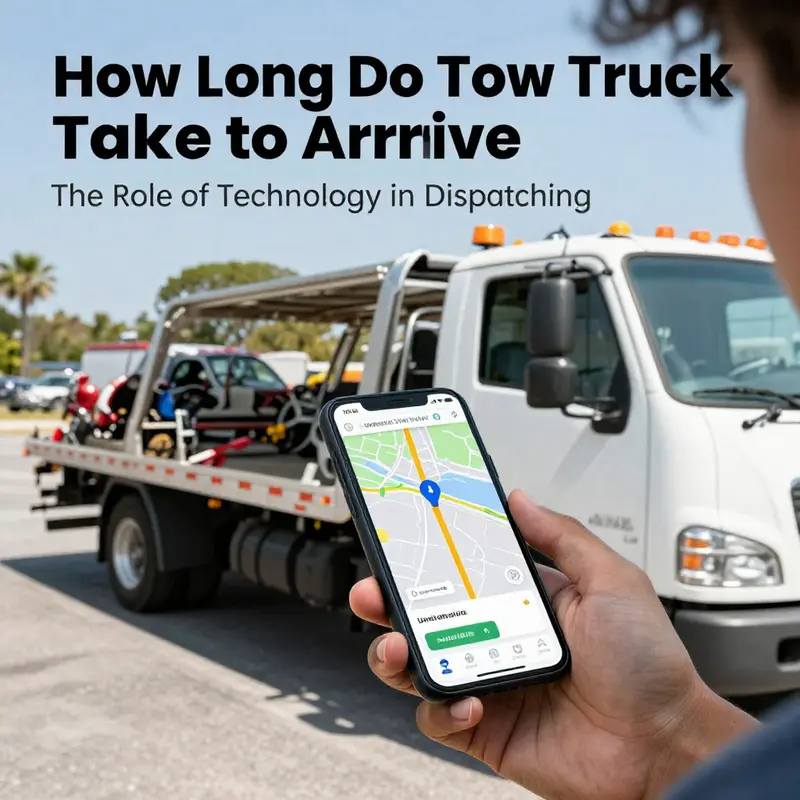
The real power of these systems lies in real-time tracking and continuous communication. When you confirm your booking, you typically receive an ETA that is not static; it changes as the tow progresses toward you. You can watch a digital map show the vehicle’s location and anticipate the moment it will arrive. This transparency reduces uncertainty and lowers stress, which can be especially important when time matters or when you’re in an unfamiliar area. The guarantee of visible progress is more than reassurance; it assists in safety planning—where to stand, how to guide the operator, and how to coordinate with other responders if needed. The experience emphasizes clarity over ambiguity, and that clarity is born of technology that keeps the user informed at every leg of the journey. In industry practice, the focus on transparency is reinforced by pricing clarity, 24/7 availability, and consistent communication about what to expect next.
Advances in artificial intelligence and predictive analytics are beginning to push arrival times even closer to the target you set when you request help. These tools analyze historical patterns and current conditions to anticipate demand and, crucially, pre-position vehicles in places where they are most likely to be needed. On busy roads or in high-incident zones, AI can steer a unit toward a corridor that is likely to see a spike in breakdowns or accidents, reducing the time it takes for a responder to reach you. In effect, the system learns where to station resources before they are required, smoothing out fluctuations in demand and improving reliability. Even within a few blocks of your location, a combination of precise GPS tracking, live traffic feeds, and route optimization can shave minutes off the ETA, which in an emergency situation can be a significant margin. Within the broader ecosystem of roadside assistance, these capabilities form a cohesive approach that prioritizes speed without sacrificing safety. The end result is a service where a typical urban ETA may hover around a thirty-minute window, while the same window in congested conditions can extend toward an hour, and rural or remote regions still face longer waits. Yet even here, technology consistently narrows the gap between expectation and experience by enhancing dispatch efficiency and resource allocation.
The practical implications for the person waiting are tangible. First, more accurate ETAs enable better planning. If you know your tow is likely to arrive in 22 minutes, you can arrange to conserve fuel, select a safe waiting spot, or prepare a space for the tow truck to maneuver. Second, real-time updates offer situational awareness: you receive nudges when the ETA shifts, you can anticipate any detours, and you can coordinate with others who may be involved in the incident response. Third, the booking experience is structured to manage expectations without over-promising. A well-designed dispatch system will include a precise initial ETA and a clear mechanism for updates as conditions evolve. This combination—accuracy, transparency, and ongoing communication—converts a potentially stressful moment into a sequence of predictable events you can navigate with confidence. Industry guides underscore the same principles, highlighting how a disciplined approach to dispatching—rooted in data-driven decision making—can strengthen both response times and user trust. Essential Fleet Emergency Response Strategies is a useful touchstone for understanding how these systems align with broader fleet operations and safety imperatives.
Of course, technology has its limits. The most reliable models assume accurate inputs: a correct location, accessible streets, and a car that is amenable to towing. When a caller provides ambiguous directions, or when the vehicle sits in a parking structure with limited access, the system must adapt. Weather, road closures, and the sheer volume of calls can also alter the equation, forcing the nearest available unit to reroute or reassign to another call. In rural or sparsely served regions, even a well-optimized algorithm cannot conjure up a unit where none exists. The result is longer waits, not because the system is flawed, but because the geography simply demands more time to bridge the distance. And while priority dispatch may be offered for emergencies, it is reserved for scenarios where urgency is well established and the system can reallocate resources without compromising safety for others. The practical takeaway for customers is straightforward: the fastest ETA is a function of both the accuracy of the data you provide and the current realities of the road network. Providing precise locations, landmarks, and gate instructions can meaningfully reduce the time the dispatcher spends reconciling your position with a truck’s route.
In discussing arrival times, it is helpful to consider how the global landscape of roadside assistance is evolving. The most advanced systems share essential characteristics: real-time tracking, continuous updates, predictive positioning, and a user-centric approach to communication. These elements work together to minimize the distance between the moment help is requested and the moment help arrives. The operational backbone—GPS-enabled routing, live traffic analysis, and dynamic resource allocation—translates large-scale data into actionable information at the point of need. The convergence of these technologies makes the experience more reliable and less uncertain for drivers, passengers, and bystanders alike. In particular, it creates a clearer expectation that can be managed and adjusted as new conditions emerge on the ground. This synergy of data and human judgment is what underpins the practical reality that many modern roadside services strive to deliver ETAs within a defined window, with adjustments communicated promptly when circumstances shift.
To illustrate a broader context, regional differences matter. In densely populated networks, dispatchers can leverage a higher density ofUnits and more granular traffic data to maintain tight ETA windows. In contrast, regions with longer travel distances between incidents must often rely on pre-positioned units and more robust routing strategies to keep wait times reasonable. The technology infrastructure that supports these capabilities—cloud-based dispatch platforms, mobile connectivity, and advanced navigation tools—forms the backbone of a resilient service model. While the specifics vary from one carrier to another and from one jurisdiction to the next, the overarching trajectory is consistent: technology-driven dispatching is systematically reducing the time between request and arrival and making those ETAs more trustworthy across diverse geographies. This is not merely a matter of speed; it is about reliability, predictability, and the sense of control that proactive communication affords in moments of vulnerability.
As the landscape evolves, so does the way people perceive and manage the waiting period. The information loop created by real-time updates enables more people to stay with their vehicle when that makes sense, rather than standing idle elsewhere. It also supports decision making for family members, employers, and emergency contacts who may need to coordinate with the tow operator. The shift toward transparent, data-informed dispatch introduces a new standard for accountability. When a driver receives a transparent ETA, they can gauge how well the system is performing in their location, compare experiences across visits, and develop a more informed understanding of what typical waits look like in different circumstances. The reliability of the service increasingly rests on the quality of the data and the intelligence of the routing logic, rather than on guesswork or anecdotal experience. This maturation reflects a broader trend in emergency response, where technology is used to optimize every link in the chain—from the moment a call is placed to the final handover at the scene.
For readers who crave a more in-depth look at how advanced dispatch and responsive infrastructure operate in practice, the Korea case study offers a valuable lens. It highlights how national-scale infrastructure, vehicle telematics, and coordinated emergency protocols combine to create remarkably rapid responses in high-demand environments. While the specifics differ in other contexts, the underlying principles—real-time data fusion, predictive positioning, and transparent communication—resonate across borders and industries. External resource: https://www.towtruckskorea.com/blog/tow-trucks-korea-explained-technical-specifications-features-best-practices/.
Waiting on the Line: The Real Timeline of Tow Truck Arrivals Across Service Providers
When you need help on the road, the clock starts ticking the moment you place a call for a tow. The question of how long it will take to arrive is not a single, simple answer. It depends on where you are, which company is dispatched, how heavy traffic is, and what kind of assistance you actually need. In recent years, many towing services have adopted modern tools that promise more transparency. A widely used towing app, for example, can generate an estimated time of arrival at the moment you confirm your booking and then track the tow truck’s progress in real time. This kind of feature is not just a gimmick; it changes the whole experience from one of anxious waiting to a more predictable and informed process. You can watch the vehicle approach on a map, receive notifications, and adjust your plans if the ETA shifts due to weather, accidents, or congested routes. Yet while the app adds clarity to the moment of booking, it does not erase the basic factors that shape how quickly help arrives on the scene.
In urban settings, where roads are dense and fleets are ostensibly larger, most reputable roadside assistance providers aim for a response that lands somewhere in the thirty-to-forty-five-minute range after the initial call. This window reflects both the proximity of available units and the efficiency of dispatch procedures. In practice, a well-coordinated urban operation can send the nearest qualified tow truck in response to a request and reroute it in real time if traffic conditions worsen or if a faster option becomes available. The reality is that even in cities, peak times—during rush hours or after events—can stretch that window. The sum of a hundred small choices on the road makes up the daily rhythm of arrivals.
Rural and remote locations tell a different story. Fewer tow trucks, longer travel distances, and often harsher road conditions can push wait times beyond an hour. A widely cited 2023 report from a national auto association noted a stark contrast: in metropolitan places like major coastal cities, the median response hovered around the mid‑30s of minutes, while in sparsely populated areas such as certain Western plains and mountain regions, more than an hour could elapse before a tow truck arrived. These gaps are not simply theoretical; they translate to real differences in how people experience roadside emergencies, especially when lives or livelihoods are at stake. The contrast between the two ends of the spectrum underscores the fact that ETA is not a fixed number, but a moving target shaped by where you are and how the service network is deployed at that moment.
When we widen the lens to compare service providers, the size and reach of a network matter a lot. Nationally scaled networks with broad geographic coverage and sophisticated dispatch systems tend to have an edge in reducing wait times. They often employ GPS‑enabled routing and real-time traffic data to pin the closest available unit and to reallocate resources as conditions change. By contrast, smaller local operators can excel in personalized service and responsiveness within a limited area, but their fleets are smaller, and that can translate into longer waits when demand spikes or when a single unit is tied up elsewhere. A 2024 Consumer Reports survey highlighted this divergence, showing that national providers averaged roughly a 28-minute response time, while independent local services averaged closer to 52 minutes. Those numbers are averages, of course, and individual experiences will vary, but they do capture a meaningful pattern: scale and dispatch efficiency generally correlate with speed.
Urgent, emergency towing adds another layer of prioritization. In the most critical situations—accidents, hazards on major roadways, or breakdowns that threaten safety—dispatchers commonly prioritize the incident and may guarantee faster arrival times for those who are in peril. Some providers offer a guaranteed response window for emergency towing, often around 30 minutes, and in certain subscription plans or membership programs, even shorter windows have been advertised. The effect is not just about speed; it’s about allocating resources to the most critical cases and providing a sense of security to those facing immediate danger on the road. Conversely, non-emergency or routine requests—such as moving a vehicle from a driveway or conducting a nonemergency tow—usually do not receive the same prioritization. The result is a natural, predictable difference in ETA based on the nature of the call.
The way a tow is dispatched matters almost as much as the speed of the tow truck itself. A robust dispatch system uses a combination of fleet size, geographic coverage, and routing intelligence to reduce the distance a unit must travel and to shorten waiting times. Real-time tracking and traffic data allow operators to reassign nearby trucks when new requests come in and to re-route in minutes rather than hours. In practice, this means that a larger network can more reliably send a vehicle that is truly nearest to you, rather than the one that happened to be closest when the call came in. But even the best systems have limits. Weather conditions, traffic incidents, road closures, and the sheer number of calls in a given period can work against the goal of a uniform arrival time. That is why transparency about ETA is so important. If you know not only the rough window but also the factors likely to influence it, you can manage expectations more effectively.
For those who want to be proactive, the way you present your location and the information you provide can have a real impact on your ETA. Dispatchers and drivers rely on accurate location data, landmarks, and clear access instructions. If the caller can offer precise directions, a nearby cross street, or a visible landmark, this can accelerate the process. In some cases, a dedicated roadside assistance app will prompt for details such as vehicle type, exact location, and entry points to a gated community. Supplying this information upfront helps the dispatcher match your call to the nearest appropriate unit and reduces the need for back‑and‑forth questions, which can eat into precious minutes. It is also wise to confirm a reachable contact number and a reliable method of communication. If the location is difficult to access, the driver can be alerted in advance to use special entry procedures or to meet you at a safer pull‑off rather than at a busy shoulder.
As you weigh your options, it helps to be mindful of how the service communicates ETA. A growing subset of providers emphasizes real-time transparency, with ongoing location updates and push notifications that reflect shifts in the driver’s route or in traffic. This transparency is not merely a marketing hook; it makes a tangible difference in what you experience on the ground. You can compare the offered ETAs, observe whether they adjust as conditions change, and decide whether a particular provider’s approach to speed aligns with your expectations for reliability and communication. For readers who want practical tips and a deeper dive into what makes for dependable roadside support—beyond speed—there is a wealth of informative material available at The Island Tow Truck Blog, which offers insights and case studies from the field. The Island Tow Truck Blog
In choosing a service, prospective customers should not fall for speed alone. Speed is essential, but so is predictability, price clarity, and the support experience when something goes wrong. A fast arrival that arrives with hidden fees, unclear terms, or poor follow‑up can be a poor trade‑off for most drivers. That is why many road service networks prioritize not just quick dispatch but also clear pricing, straightforward policies, and responsive customer support. Reviews and reputation matter because they reflect how well a provider manages both the logistics of getting a tow truck to you and the ongoing relationship after the tow is completed. A strong network that can offer consistent ETAs, reliable tracking, and fair billing is often the best overall choice, even if its price is slightly higher than a smaller operator. The human element remains central: a courteous driver who communicates clearly, respects traffic laws, and follows safety protocols can make a difficult situation markedly less stressful.
This chapter is not a dry catalog of numbers. It is a guide to understanding what you can reasonably expect and how to use that knowledge to navigate a roadside emergency more effectively. If you live in a region with sprawling geography, you may find that your wait times vary more with the time of day and the day of the week than with the provider you choose. If you live in a dense metro area, you might experience the consistency of faster average ETAs, but you will also learn to anticipate peak times and plan accordingly. Either way, the goal remains the same: to arrive with as little stress as possible and to have a clear line of communication from the moment you call for help to the moment you see the tow truck approaching.
In the end, the best strategy is to balance speed with transparency, plan for contingencies, and rely on providers that combine robust dispatch networks with real‑time tracking and thoughtful customer support. Look for ETA transparency, confirm coverage in your location, and consider whether the service offers emergency prioritization if you truly need urgent help. And remember, the quality of the overall experience matters as much as the speed of the arrival. A dependable network that makes the ETA predictable and the process easy will keep you safer and more comfortable on the road, no matter where you are.
For readers seeking a broader peer review of towing services, a comprehensive external assessment is available through a major independent consumer resource that analyzes providers across the country and weighs factors such as pricing, reliability, and customer support. This external resource offers an important counterpoint to the provider narratives described here and can help travelers make informed decisions when they need a tow. https://www.consumerreports.org/roadside-assistance/best-towing-companies-a-2024-review/
Tow Truck Arrival Times: How ETAs Are Shaped by Location, Weather, and Dispatch
Being stranded triggers questions about when help will arrive. The clock starts when the call is placed, and every mile adds complexity. Tow truck arrival times depend on location, demand, and the fleet’s readiness, plus weather and road conditions on the day. In cities, more nearby options exist but traffic, parking constraints, and detours can counterbalance that advantage. In rural areas, units are farther away but fewer competing requests can speed things up. Dispatch platforms show an upfront ETA and then refine it as conditions change, aiming for a trustworthy forecast rather than a guaranteed minute. The type of assistance matters: light duty can be quicker, heavier recoveries may require specialized equipment and multiple units, which can stretch timelines. Urgent safety incidents are prioritized, so the closest unit with the right gear may arrive sooner than a routine call. Real time data such as GPS, traffic feeds, and two-way customer communication help keep the process transparent and reduce anxiety. Customers benefit from clear explanations of delays when possible. External factors like equipment lead times, supply chain disruptions, and regulatory changes can lengthen ETAs for specialized jobs. The best practice for customers and fleets is to maintain transparent dialogue, enable live updates, and plan for variability rather than a fixed clock. In short, tow truck arrival times are a balance of geography, demand, equipment, and information, aimed at delivering help quickly while maintaining safety.
Final thoughts
Navigating the complexities of tow truck response times is vital for those managing auto repair shops, car dealerships, and other commercial operations on islands. The variances between urban and rural arrival times, influenced by a multitude of factors including technology and service provider differences, shape the experience for customers in need of roadside assistance. By setting realistic expectations and understanding the dynamics of the towing process, businesses can improve service delivery and customer satisfaction when unexpected breakdowns occur. Ultimately, being informed and prepared can make all the difference in responding effectively to vehicular emergencies in island settings.