When your vehicle unexpectedly becomes immobile, time can feel suspended, especially waiting for a tow truck. Understanding how long tow trucks take to arrive and complete the towing process is crucial for local auto repair shops, car dealerships, property managers, resort operators, and commercial fleet operators. In urban areas, response times can be as swift as 15 to 30 minutes, while rural locations may extend this waiting period to an hour or more. Additionally, the towing process itself typically takes another 10 to 20 minutes, depending on the circumstances. This article delves into the key factors influencing these times, helping stakeholders prepare and better manage their roadside challenges.
Seconds on the Clock: Understanding How Long Tow Trucks Take to Arrive and Resolve a Tow Across Different Terrains
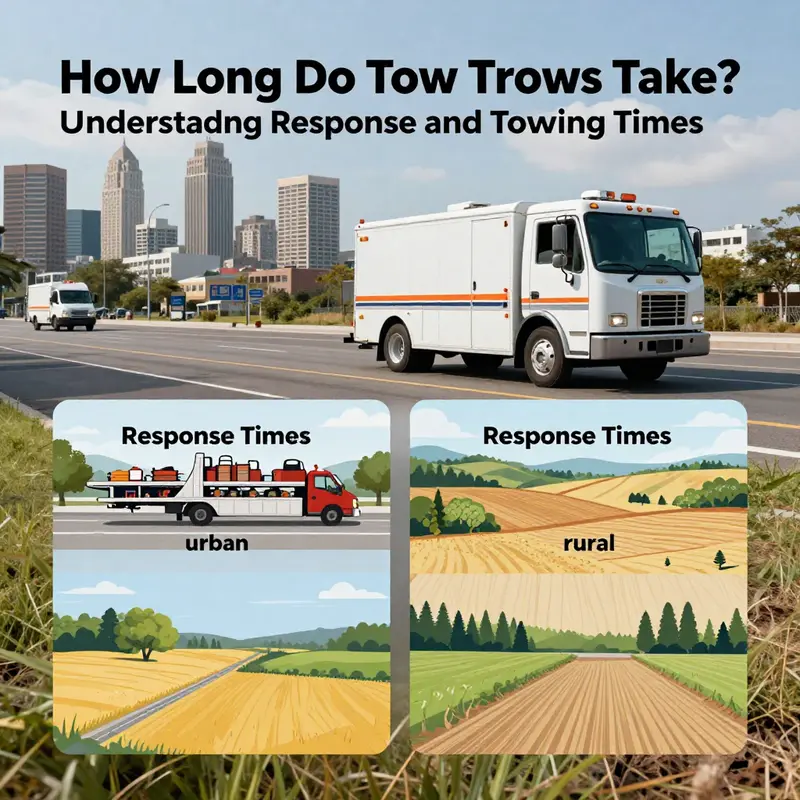
When you’re stranded on a highway shoulder, in a city street, or along a quiet rural road, the clock starts ticking the moment you hang up the phone or tap a request for help. The question “how long do tow trucks take?” is never answered by a single number. It is a careful map drawn from the terrain you’re in, the time of day, the weather, and the specific needs of the vehicle that needs rescue. In practice, two distinct phases shape the total wait: the time it takes for the dispatcher to locate a nearby tow truck and dispatch it, and the time the truck itself needs to reach your location and complete the towing operation. Each phase responds to its own set of variables, and together they determine how long you’ll be waiting, how quickly you’ll be back on the road, and how soon your vehicle will be safely transported to a repair shop or a destination you’ve chosen. To understand the rhythm of these moments, it helps to imagine a continuum rather than a rigid sequence of minutes. The arrival time is not a fixed countdown that holds steady everywhere; it shifts with density of demand, road networks, and the kind of assistance your situation calls for. Consider the journey of a tow request from the moment it is placed to the moment the truck’s bed latches onto your vehicle. On the surface, it seems simple: call, wait, and drive away. But the reality behind those seconds is shaped by the geography of your locale and the practical constraints of the towing ecosystem, a network that must balance speed, safety, and vehicle compatibility under pressure. As you read, you’ll notice how the same basic framework can still yield very different outcomes in urban centers, rural corridors, or emergency scenes on busy highways. The narrative of arrival times is not a single rule but a spectrum, and in that spectrum, there are patterns you can anticipate if you know where you are and what your vehicle needs. The first known fact is straightforward yet powerful: urban areas tend to offer the fastest response windows, while rural or remote regions can stretch the clock longer, sometimes by hours, not minutes. In dense cities, the dispatcher can often identify multiple nearby trucks and assign one with a direct route that minimizes detours, negotiating traffic flows and prioritizing calls that arrive during peak periods. The outcome tends to be a quick arrival, like a steady drumbeat in a busy street. The second fact is equally important: the actual loading and securing of a vehicle is usually the smaller portion of time, once the tow truck arrives. The operator must assess the vehicle’s position, determine if it can be winched onto a bed or needs a flatbed for safety, and then carefully secure it with straps or chains before lifting. This part of the process, while not instantaneous, tends to be consistent across most ordinary tows—typically ten to twenty minutes, sometimes a bit longer if the vehicle is wedged, severely damaged, or requires special handling. Together, these two phases define the practical rhythm of any tow situation: the clock starts at dispatch and ends when the vehicle is safely on its way to its next stop. The specifics of this rhythm, however, are colored by location. In an urban setting with dense traffic and a well-developed network of service providers, a typical call might see a response range from fifteen to thirty minutes after dispatch. This window assumes normal business hours, a regular level of activity, and traffic conditions that don’t create excessive delays at intersections or on freeways. The reason these numbers feel reliable in cities is simple: there are more trucks nearby, more companies competing for the same call, and a cadence of dispatching that aligns with the flow of urban life. The summary of this urban experience is pragmatic: you should plan for a quick arrival once the call is placed, but you should also be prepared for sudden hiccups—an accident that ties up lanes, an unexpected congestion pattern, or a truck that happens to be farther away on a different part of the grid. When you move away from the city limits into rural or remote regions, the story changes. Fewer towing operators are spread across larger distances, and the time to reach an incident site expands accordingly. A rural call may find the nearest available truck traveling longer distances to reach you, and the dispatch system works against a backdrop of longer road miles rather than immediate proximity. In such areas, response times commonly stretch to sixty minutes or more, and in especially challenging conditions—such as heavy snowfall, icy roads, or after a busy weekend of roadside incidents—the waiting period can exceed ninety minutes. Those numbers reflect the persistent tension between demand and supply that governs rural hesitation between a call and a tow. To many stranded drivers, that can feel like an eternity, especially when a vehicle is immobilized on a highway shoulder and the risk of exposure, weather, and traffic remains real. Yet even within rural settings, there are nuance-rich patterns. If the roadside incident involves a vehicle that is difficult to access or requires specialized equipment, such as a large SUV, all-terrain vehicle, or a luxury car that demands a flatbed to avoid damage, the arrival can be delayed further. Not every tow company carries every type of equipment at all times; a flatbed, for instance, might need to be sourced from a different location or scheduled as a specific delivery, particularly when proximity to an urban hub is limited. In a practical sense, the type of vehicle matters. A standard sedan often presents the simplest case: a straightforward lift and load, with a short securing period once on site. More complex vehicles, such as all-wheel-drive cars, four-wheel-drives, or high-end models with low ground clearance, require careful attachment and more deliberate handling. The operator may need to analyze several angles, decide on the right rigging method, and potentially call on additional personnel for safe handling. Each added step extends the clock by a few minutes but remains essential for safety, preventing damage to the vehicle, and ensuring compliance with safety standards. The operational realities add another layer of complexity: the equipment on a tow truck is not a one-size-fits-all toolkit. A standard tow uses a bed or wheel-lift system, with the vehicle secured by straps and chains. A flatbed tow, used for cars that must remain undamaged or occupy a certain loading space, involves a different sequence: winching the car onto the bed, securing it, and then driving away with the platform flat and level. The availability of a flatbed is not universal, and even when a flatbed is necessary, it might not be immediately available. In those moments, dispatchers must weigh options, perhaps selecting a nearby conventional tow first and arranging a later transfer of the car to a facility that can accommodate the specialized equipment needed. The practical takeaway is that the “ten to twenty minutes” figure for securing and loading is a baseline, not a universal truth. It remains remarkably consistent for average situations, but outliers exist. A severely damaged vehicle on a remote road can require careful rigging and more time to ensure it isn’t moved in a way that could cause further harm. The dispatcher’s role is central to translating the situation into a realistic ETA. They monitor real-time traffic conditions, weather, and the exact nature of the incident. Modern dispatch networks often provide customers with updates through mobile devices, letting them watch a moving target of the tow truck’s progress. This transparency helps families and drivers create a better plan for where to meet the vehicle, how to arrange a ride home or to a shop, and how to coordinate a loaner vehicle, if available. The rise of tracking and ETA features has made the process more predictable and less bewildering, even when the underlying miles between you and your destination cannot be changed. The data landscape also supports a broader understanding of typical timelines. Industry sources in the United States and Europe suggest that average nationwide response times fall within a broad band, commonly reported between twenty-eight and forty-five minutes. This range, though, is not a universal constant. It reflects regional variation in demand, the density of service providers, and the particular time of day. Major metropolitan hubs often skew lower than rural counties, where distances are longer and the number of trucks per square mile is smaller. The range is also shaped by the severity of the incident and the need for specialized equipment to handle the vehicle safely. When an incident involves a potentially dangerous scene with high traffic or a hazardous shoulder, authorities may implement stricter safety protocols that impact the spacing of the response. In those moments, speed is important, but safety and control take precedence, which can extend the ETA. Keeping pace with these realities requires more than patience. It invites a practical approach to handling the moment you need help. A key element is understanding that while you cannot instantly conjure a tow truck to your location, you can influence the outcome by providing precise information, staying visible and safe, and communicating any special needs for your vehicle. Dispatchers benefit from exact location details, nearby landmarks, and a clear description of vehicle type and condition. A sedan on a two-lane road at dusk is a different scenario from a luxury SUV on a congested urban freeway at rush hour. The more information you provide, the less time is wasted on back-and-forth clarifications. Real-world practice also includes the adoption of shared oversight between service providers and roadside assistance networks. In many regions, customers can request help through a centralized system that coordinates multiple providers, checks availability, and routes the nearest available truck to the scene. This coordination is especially valuable during peak demand or adverse weather, when a single company might be overwhelmed. The human element remains essential, though. Tow operators make split-second decisions about safety, road position, and the most efficient method to recover a vehicle. The experience of a skilled operator often translates into smoother progress, particularly in tricky conditions where quick moves could risk damage or personal injury. For drivers, there is a balance between relying on these professionals and taking practical steps to ensure personal safety. If you are stranded, you should, of course, move to a safe location away from traffic, switch on hazard lights, and wear reflective clothing if you have it. If you can, gather essential information about your vehicle, such as its location coordinates or a nearby crossroad, to help the dispatcher pinpoint you quickly. You can also consider placing a temporary barrier or warning sign to alert passing drivers, though you should avoid stepping into traffic or leaving the scene if it would put you at risk. These behaviors do not shorten the time to arrival, but they do reduce the stress of the wait and help you stay prepared for the moment the tow arrives. There is also a strategic lesson for motorists about how to think about timing in the wider sense. When you plan a trip, the road condition and the probability of a breakdown are part of the cost of the journey. If you know you will be traveling through areas with known service gaps or during weather systems that historically increase delays, you can arrange for additional contingency time. You can also discover practical ways to reduce the odds of needing a tow in the first place, such as ensuring your vehicle’s essential systems are maintained or carrying basic tools and a spare tire in case of a minor issue that might be resolved on the roadside. It is here that the phrase “anticipating the unknown” gains practical weight. The nuanced answer to how long tow trucks take is not a single number but a reflection of the conditions in which you find yourself, the vehicle you drive, and the infrastructure around you. When a call is handled well, a dispatch will identify a nearby truck that can reach you quickly and with the least disruption to traffic. If the vehicle is a common model and the road is straightforward, the ETA can be tightly clustered around the lower end of the urban range. The wheels turn more slowly when the incident involves a complex vehicle, a difficult access point, or poor weather. In those cases, you may experience a broadening asymmetry: the time to arrival lengthens, but the actual towing operation may take a precise, controlled period that ends with the vehicle secured and ready to move. Across this spectrum, the idea of equality in time remains elusive. Each incident has its own story, and each road has its own constraints. The advice such as it is, becomes a matter of practical management rather than a promise of a universal speed. For those who want to contextualize the experience within a broader framework, there is value in looking at how fleets prepare for emergencies and how dispatch strategies are designed to optimize response times. The chapter on essential fleet emergency response strategies offers insights into how organizations balance readiness with resource constraints, ensuring that when a call comes in, the system can allocate the closest asset and maintain safety as a guiding principle. You can explore that approach here: essential fleet emergency response strategies. This kind of proactive planning helps the user move beyond simply counting minutes to understanding the orchestration that happens behind the scenes to minimize those minutes. In the end, the numbers you see—fifteen to thirty minutes in urban areas, sixty to ninety minutes or more in rural settings, and a typical ten-to-twenty minutes for loading once a tow truck arrives—are useful references, but they are not guarantees. They are estimates informed by patterns, geography, and the operational realities of the towing industry. They should be approached as guidelines that help you prepare, rather than as fixed promises that determine your experience. Real-time tracking and ETA updates can make this experience more humane, less inscrutable, and more predictable. They empower you to plan for arrival time, the best place to wait, and the moment you will need to relocate your plans to the shop, the repair center, or your home. The data landscape continues to evolve, as do the expectations of motorists who rely on roadside assistance. While numbers give us a lane to steer in, it is the combination of professional discipline, road conditions, and the practical realities of vehicle handling that ultimately fills that lane with a reliable, safe, and timely rescue. For a broader context on national patterns and regional variation in towing response times, you may consult external industry data that aggregates regional experiences and highlights how different markets shape the ETA you should expect when you need help on the road: https://www.naac.org/towing-response-times. This external perspective complements the localized experience you might have with any single service provider and reinforces the idea that while you can anticipate a general range, actual times will always be influenced by the particular moment and place you find yourself in.
External resource: https://www.naac.org/towing-response-times
On-Scene Realities: How Long Tow Trucks Take After They Arrive
When people ask how long a tow truck will take once it arrives, they are really asking about a pair of interrelated timelines. The first is the simple, practical measure of time to reach the scene: the dispatcher’s promise that the truck will be there within minutes. The second is the on-scene work—the process of safely securing, loading, and preparing a vehicle for transport. The two are connected, but they don’t move at the same pace. Arrival time depends on location, demand, and distance. The on-scene duration depends on vehicle type, terrain, and the intricacies of the incident. Taken together, they form the total duration most people experience from the moment they call for help to the moment their vehicle is in tow. Understanding both pieces helps set realistic expectations and reduces the anxiety that can accompany a breakdown, a collision, or any situation that makes the next few hours feel uncertain.
Within urban landscapes, the clock often starts ticking a little earlier in the planning phase and a little later in the execution phase. Dispatch centers in cities with dense traffic, high demand, and robust infrastructure have learned to balance requests with available capacity. The result is a typical arrival window of roughly 15 to 30 minutes after a call is placed. This range reflects not just the sheer number of incidents but the efficiency drawn from experience: technicians know how to position the truck to minimize hazards, how to coordinate with freeway authorities, and how to begin critical safety checks the moment they arrive. The on-scene period—what happens once the tow operator is at the location—is the real workhorse of the operation. Securing a vehicle, attaching straps or chains, and loading it onto the tow bed usually requires about 10 to 20 minutes under normal conditions. In most routine cases, the entire on-scene process fits neatly within those half-hour bounds, assuming a straightforward vehicle and accessible positioning.
Yet life on the ground rarely adheres to a tidy timetable. The on-scene phase expands rapidly when the vehicle is in a difficult or hazardous location. A car resting on a highway shoulder with fast-moving traffic nearby introduces a layer of risk management that cannot be rushed. An alleyway tucked between tall buildings might constrain the operator’s maneuvering space, compelling slower, more deliberate actions. A severely damaged vehicle, one that requires special lifting techniques, a roll-back, or a flatbed with extra equipment, immediately adds minutes if not tens of minutes to the process. In such scenarios, the same crew that could complete a standard tow in twenty minutes may stretch toward thirty-five or forty-five minutes, and occasionally even longer. The variability hinges on how smoothly the vehicle can be accessed and how much stabilization is necessary before loading can begin.
Beyond the vehicle itself, the location of the tow adds complexity. A vehicle on a busy highway demands careful traffic management. The operator must consider lane closure implications, the presence of responders from other services, and the potential for secondary incidents. Even in calm streets, the weather or the time of day can alter the pace. Rain reduces traction for ground crew and can complicate the placement of wheel chocks and hooks. Night operations demand additional lighting and heightened safety precautions. Each of these factors can compress or extend the on-scene window, creating a spectrum of possible outcomes rather than a single, predictable duration.
The type of vehicle matters, too. A compact car is generally quicker to secure than a large SUV, a pickup with a bed load, or a cargo van whose silhouette requires careful balancing. A vehicle with a compromised frame, broken glass, or damaged undercarriage may require protective steps to prevent further harm during transport. For some cars, technicians opt for a flatbed to minimize movement within the vehicle, particularly if the vehicle’s mechanical integrity is in question. A roll-back may be sufficient for standard passenger cars, but in tighter spaces or with limited access, more specialized equipment becomes necessary. Each equipment choice has its own time footprint. A routine setup may be completed in as little as 10 minutes, while a more involved configuration can extend the on-scene duration by a quarter of an hour or more.
To add another layer to the picture, consider the impact of coordination with other parties. In the aftermath of a multi-vehicle incident, law enforcement, insurance adjusters, and sometimes hospital or hazard response teams may need to coordinate with the towing operator. While these interactions are often brief, they can introduce delays if access is restricted, if the scene needs to be surveyed, or if documentation must be completed on-site. In some regions, the presence of emergency responders means the tow operator can begin only after certain clearances are obtained, which can stretch the on-scene time further. This is not a sign of inefficiency, but a testament to the safety-first approach that governs responsible towing operations in complex environments.
The baseline numbers—15 to 45 minutes for the core on-scene task, with potential extensions in more challenging conditions—are supported by contemporary industry analysis. A 2026 report by the Towing & Recovery Journal examined real-time data from more than 10,000 towing operations across North America. The study found that the median combined metric of response and towing completion time hovered around 38 minutes, and importantly, nine out of ten jobs were completed within one hour. The authors emphasized that while prompt arrival remains critical to reducing total time, the subsequent on-scene process is highly variable. This variability is not a flaw; it reflects the diverse realities emergency responders encounter, from vehicle type and location to weather and scene security needs.
For readers who want to peer into the original data and methodology, the article points to the official source that aggregates these findings. It provides a rigorous framework for understanding how duration is measured and how different influence factors interact in real-world conditions. See the detailed report at: https://www.towingandrecoveryjournal.com/towing-duration-analysis-2026. The numbers in that study reinforce a practical takeaway: while it’s reassuring to know that many situations resolve quickly, there is a legitimate expectation for longer timelines in more complex scenarios. Keeping this in mind helps manage expectations and reduces the frustration that can arise when a scene remains active longer than anticipated.
This does not mean customers are left without guidance. Dispatchers and tow operators often offer real-time updates as the scene evolves. If a call centers on a busy urban corridor, the operator may explain that the initial window to arrival is being met, but the on-scene tasks may require different pacing as the situation unfolds. In rural or remote environments, where distances are greater and resources fewer, the same operator may set an expectation that the total duration from call to tow could exceed the urban average. Clear communication becomes the practical tool that helps customers navigate these uncertainties. In the end, the overarching pattern is one of reasonable efficiency tempered by the inherent variability of real-world conditions.
The practical upshot for someone awaiting assistance is straightforward but nuanced. If you’re involved in a roadside incident, you can reasonably anticipate the tow crew to arrive within a quarter hour to half an hour in an urban setting, with more extended waits possible in rural areas or under adverse conditions. Once the tow truck is on site, plan for a period that typically falls within a twenty- to forty-five-minute window for standard removals. If the vehicle sits in a hazardous location, if there are mechanical complexities, or if multiple vehicles or authorities are involved, it is prudent to set expectations toward the higher end of the spectrum, and consider a longer total duration. The important thing is this: the on-scene phase is where the skilled, time-tested practice of towing unfolds. It is the period during which technicians assess, secure, and transport, transforming an immobilized moment into a mobile solution.
For fleets, drivers, and safety officers looking to sharpen their understanding of these durations, the best approach is to frame the timeline as a spectrum rather than a fixed target. The key is to minimize unnecessary delays without compromising safety or compliance. Practically, this translates into a few actionable habits. First, accurate location reporting is critical. Detailed landmarks, visible street signs, and clear access points help technicians reach the scene more quickly and set up the operation with fewer hold-ups. Second, customers can assist by ensuring the area around the vehicle is safe for work and that the vehicle remains stable until the crew arrives. Third, providing a rough assessment of any hazards—such as fuel leaks, electrical concerns, or unstable loads—helps the operator bring the appropriate equipment and precautions from the outset, reducing the need to improvise on site. Finally, staying in touch with the dispatcher for updates, especially if traffic or weather changes the plan, keeps expectations aligned and can prevent duplicative detours for the tow crew.
The broader arc is that the time from call to completion is the sum of two largely distinct components: rapid arrival and measured, careful on-scene work. In most routine urban cases, the combination yields a total—from call to tow—approximately within the 30 to 60-minute range. When conditions complicate matters, that total can creep toward the 90-minute mark or longer. The 2026 study’s median of 38 minutes for total time supports a central expectation for many situations, while the 90th percentile—roughly within an hour to an hour and a half—serves as a reminder that outliers are an accepted part of the landscape. Those numbers are not guarantees, but they offer a practical frame for anticipating needs, communicating with dispatch, and planning time around a roadside incident.
If you want to read more about practical, real-world insights into how heavy towing operations are coordinated and sequenced, consider exploring fleet-focused resources and case studies that discuss emergency response readiness and on-scene management. One resource that often informs such discussions in a broader regional context is the Island Tow Truck blog, which offers perspectives on rapid response strategies and field operations that can be useful for operators seeking to refine their on-scene efficiency. You can learn more at the Island Tow Truck blog.
From a consumer perspective, the key takeaway is to remember that the clock you see on your dashboard when you place the call is only part of the story. The whole journey from call to completion includes the time it takes for the tow operator to arrive and the time it takes to perform the actual towing work, both of which are shaped by the realities described above. If you are pressed for time, the most reliable approach is to maintain open, ongoing communication with the dispatcher and the technician. A simple check-in a few minutes after the truck arrives, followed by brief status updates at regular intervals, can reduce anxiety and help you plan your next steps—whether that means arranging a ride, coordinating with insurance, or preparing the vehicle for transport.
In sum, the duration of the towing process after arrival is a nuanced, situational matter rather than a single, fixed interval. With typical on-scene times hovering in the realm of 15 to 45 minutes for standard cases and the broader context of arrival times that can range from 15 minutes in urban areas to well over an hour in rural zones, the combined picture reflects both efficiency and variability. The modern towing ecosystem has established a baseline of reliability, but it also recognizes the importance of safety, coordination, and situational awareness in determining exact durations. By understanding these dynamics, customers can approach the experience with informed patience and a clearer sense of what to expect at each stage of the process.
Tow Timelines Unveiled: Reading Arrival Clocks, Loading Hours, and What Really Shapes How Fast Help Arrives
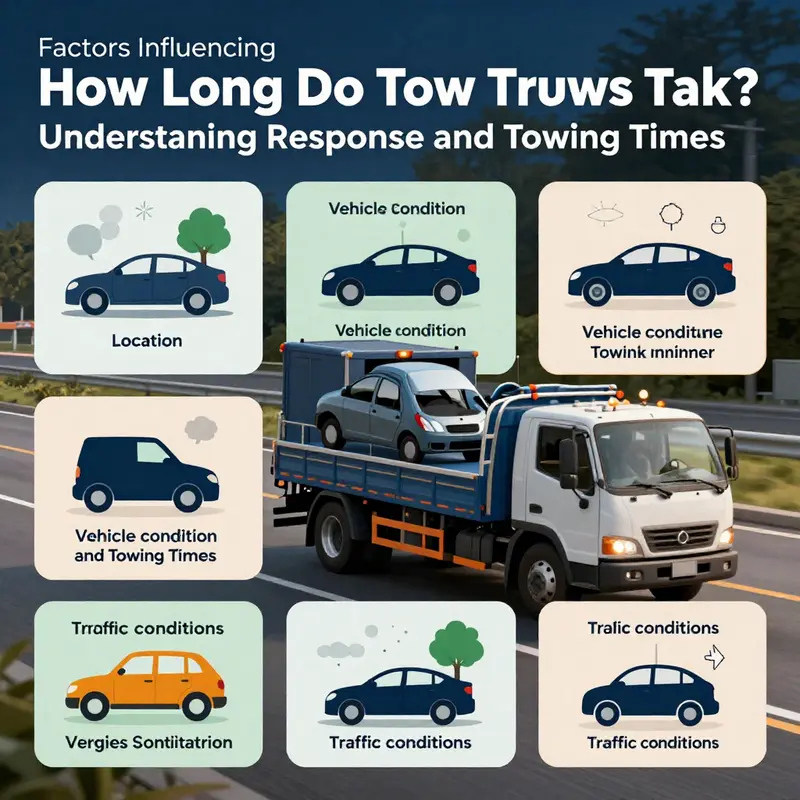
When a vehicle breaks down or is involved in a collision, the clock starts ticking from the moment the call is placed for help. The image of a tow truck arriving in a neat, punctual arc is comforting, but the reality is more nuanced. The timeline between the moment you reach out and the moment your car is secure on a tow bed depends on a mix of geography, the vehicle needing assistance, the equipment available for the job, and the conditions surrounding the incident. Understanding this mix helps set realistic expectations and can actually shorten the overall wait by guiding how you relay information and how you respond once the dispatcher is on the line.
Geography matters more than most people realize. In urban areas, the density of service providers is higher, and the distance between a call location and a nearby tow operation can be surprisingly small. Yet urban corridors are not uniformly easy to traverse. Congested streets, one way systems, and frequent road closures become variables that challenge even the most efficient dispatcher. The typical arrival time in many cities falls into a range of roughly fifteen to thirty minutes when demand is manageable and a nearby truck is available. In practice, this means that if you call during a normal weekday afternoon, there is a good chance a truck can commit to your location within that window, provided your precise location is accessible and there are no unusual delays on the road network.
Rural and remote areas tell a different story. The same call in a sparsely populated landscape may be answered quickly in terms of the intent to help, but the actual arrival can stretch to sixty minutes or more. The combination of greater travel distances, fewer trucks in the region, and the time required to reach the exact roadside location compounds the wait. If the incident occurs away from main arteries, or in terrain where accessibility is limited, the clock can advance even more slowly. When a vehicle must be towed from a rural locale to a distant repair facility or an impound lot, the journey time after arrival often adds a second layer of duration that is as predictable as it is variable.
Emergency situations follow a different logic altogether. Highways and major crash sites command priority, and the dispatch system is designed to compress the arrival window as aggressively as safety allows. In these moments, the goal is to minimize risk and restore flow where possible, so response times can shrink to as little as a dozen to twenty minutes in favorable conditions with a swift mobilization. Even then, the clock runs against factors such as lingering debris, the need for site stabilization, or the necessity to obtain clear access for a recovery operation. It is important to recognize that emergency prioritization does not erase all delays; it shifts the calculus so that the most critical needs are addressed first and the overall process is executed with heightened attention to safety.
Once the tow team reaches the scene, the actual loading process tends to be the shorter, more mechanical portion of the operation. For everyday light vehicles, securing the car with straps or chains and loading it onto the bed typically takes about ten to twenty minutes. This duration presumes a straightforward hookup, stable ground, and the absence of complications such as poor ground clearance, damage that makes securing hazardous, or a vehicle that must be recovered from a tricky angle. In practice, quick work in routine conditions can shrink this time, while challenging recoveries extend it. The kind of vehicle involved matters here as well. A larger or heavier car, or one that requires specialized equipment for safe handling, can require a longer window for securing and lifting. A vehicle that has sustained severe damage or needs careful stabilization before any movement will naturally extend the timeline beyond the typical twenty minutes.
The balance between the arrival time and the loading duration creates the total experience most people notice when they call for a tow. If a truck arrives on the shorter end of the spectrum in an urban area, and the vehicle is easy to secure, the entire process from call to departure may stretch to twenty or twenty-five minutes, even if the road to the next destination is longer. In less forgiving conditions, particularly in rural settings or in complex recoveries, the arrival alone can occupy a full hour or more, and the loading phase can extend to twenty minutes or longer on top of that. The mathematics of the situation are simple in theory but intricate in practice: you are balancing the time the dispatcher can allocate, the travel time of the assigned unit, the condition and type of vehicle needing rescue, and the constraints of the environment around the scene.
A crucial element often overlooked is the role of dispatch efficiency and equipment availability. In a well-run operation, standard passenger cars are the easiest to deploy. They require fewer specialized resources, and the fleet is sized to turn around these common cases quickly. When the problem involves heavier or more unusual vehicles, the dispatcher must determine whether the right equipment is already in the field or if it must be dispatched from a central yard or a regional hub. The difference between a standard tow and a heavy-vehicle recovery is not just a matter of power but a question of logistics. A single truck that is optimized for light towing can respond rapidly to many calls, while heavier jobs depend on specialized equipment that may be stationed at a distant location or tied up with another assignment. In such moments, the chance that a suitable unit is available at the moment of the call diminishes, and the wait lengthens accordingly.
External factors also intrude on the timetable in both predictable and unpredictable ways. Weather, of course, has a direct impact on road conditions and the safety margins that operators must observe. Snow, ice, heavy rain, or flooding can slow movement, reduce visibility, and require additional safety procedures that stretch the time from arrival to securement. Windy conditions may complicate recovery in exposed locations, such as on bridges or curves where securing a vehicle becomes more technically demanding. Time of day contributes its own friction. Dawn and dusk or late-night hours see a different staffing pattern in many towing operations. Fewer crews may be available, traffic is often lighter but visibility is poorer, and dispatchers must balance speed with road safety. Each of these variables—weather, lighting, manpower—feeds into the total duration of a tow from the moment you place the call to the moment the vehicle is on its way.
There is also the matter of road design and site access. In urban cores, narrow streets and limited turning radii can constrain where a tow vehicle can maneuver and where it can set up winches and stabilizers. On a highway, access to the vehicle without creating additional danger for other road users is not always immediate, especially if the incident sits in an active lane or if traffic must be slowed to accommodate a safe pickup. In some cases, a vehicle may need to be stabilized before any movement is attempted, a precaution that adds minutes but prevents far more serious consequences. Conversely, at a location with clear access and level ground, the team can secure and load with relative ease, shaving seconds from the clock but producing a noticeably different overall experience for the customer who is keenly watching the minutes tick by.
All these factors combine in a dynamic synthesis. The total time from the moment you call to the moment your vehicle is secured is rarely a single linear measure. It is a composite of the distance the responding unit must travel, the proximity of the nearest capable unit, the complexity of the vehicle and its condition, and the environmental conditions surrounding the scene. The timeline for the entire operation typically divides into two stages. Stage one is the arrival window, a function of geography, equipment availability, and the immediate condition of the road network. Stage two is the loading and securing window, which hinges on the vehicle’s type and condition, the space around it, and the safety requirements that ensure the operation proceeds without hazard. Many people instinctively think of towing in terms of arrival time alone, but the full experience is about how the two stages interlock and how each is influenced by the same constellation of factors.
It is also worth acknowledging how these timelines interact with expectations and preparedness. If you anticipate a longer wait, you may use the time to gather information that helps the operator perform more efficiently. Keeping the area around the vehicle clear, providing precise directions to the exact location, and signaling any hazards such as low-hanging branches or steep driveways can reduce the need for the operator to pause and reassess. In turn, dispatchers benefit from accurate location data and an assessment of access issues, which can significantly shorten the times required for a safe approach and securement. In practice, this means that clear communication at the outset—while you’re describing the scene and its challenges—has downstream effects on the actual timeline of the job. It is not merely a courtesy; it is a factor that can directly impact how quickly a unit can arrive, maneuver, and complete the tow.
The interplay between location, equipment, and external conditions also means that there is no universal benchmark for every situation. The numbers you hear—fifteen to thirty minutes in urban areas, sixty to ninety minutes in rural zones, and twenty minutes or more for loading—are best understood as typical ranges rather than fixed rules. Real-world outcomes frequently fall outside these ranges, sometimes shorter in smartly coordinated urban deployments and sometimes longer when conditions conspire against rapid response. The variability is not a sign of incompetence or inefficiency but a reflection of the complexity of moving a heavy object through space under the constraints of traffic, terrain, and safety. In this sense, the timing of a tow is less a single timestamp and more a story told in several scenes: the moment the call is answered, the trip to the site, the scene management, the securement, and the departure.
For readers who want a more detailed examination of the mechanics behind dispatch timing and equipment allocation, industry discussions emphasize the importance of preparedness and efficient routing. These conversations highlight that the speed of a tow is not just about the driver or the truck, but about how a company plans its resources and how customers contribute to a smoother operation. A well-prepared fleet tends to exhibit shorter arrival windows and smoother loading sequences because dispatchers can pre-plan routes, assign the most suitable equipment for the job, and avoid unnecessary delays caused by equipment mismatches or miscommunication. This perspective helps illuminate why some calls feel almost instantaneous while others unfold at a more deliberate pace. The difference often traces back to the systems and practices that support dispatching and field operations, rather than to talent or effort alone. To some extent, the differences you observe from one incident to the next reflect the maturity of the service network and the sophistication of its processes rather than the capabilities of a single driver or truck.
In keeping with this broader view, it is useful to consider how the timing of a tow may influence your decisions after you have placed the call. If you are in a densely populated area with quick access and favorable conditions, you might choose to wait on a clear, safe patch of road rather than attempting to move or readdress the situation yourself. If you are in a rural area where the forecast indicates an extended wait, you may prepare by securing personal belongings, documenting the scene, and ensuring you and any passengers remain safe and comfortable while the tow unit makes its way to you. Communicating the exact location, landmarks, or any obstacles to the dispatcher can dramatically improve the speed and safety of the operation. It is this practical understanding of time that helps both the customer and the dispatcher coordinate a smoother, safer, and more predictable towing experience.
The practical takeaway, then, is not a rigid timetable but a framework for understanding how tow timelines are built. A typical urban call is likely to unfold within a brisk, customer-friendly window, especially when the vehicle is easy to access and the road network is reasonably accommodating. In rural areas, the clock can stretch as the distance to be covered grows and the right equipment sits at a distant depot or on another job. When the incident involves complicated recovery needs or severe damage, the operation may require additional maneuvers, stabilization steps, and careful handling to preserve safety and prevent further harm to the vehicle or the scene. The best way to manage expectations is to recognize that the timeline is a negotiated outcome shaped by the moment, not a predetermined script. When this understanding settles in, communication becomes a shared strategy rather than a one-sided request, and the experience of waiting transforms from anxiety into a prepared, patient process.
To ground this discussion in a framework that helps readers think through their own experiences, it is helpful to connect these factors to concrete strategies for speed and safety. First, recognizing the distinction between arrival time and loading duration helps set appropriate expectations. If you hear that an arrival window is fifteen to thirty minutes, you can plan to be ready for the moment the truck reaches your location, but you should also anticipate a further ten to twenty minutes to secure and load the vehicle. In a rural scene, where the arrival window may extend beyond an hour, you can focus on preparing your surroundings, gathering your personal items, and ensuring that the approach to the vehicle will be safe for both the operator and your car. Second, providing precise information during the call and guiding the truck to a clearly accessible spot can shave minutes off both stages. This means describing the exact location, identifying any potential hazards, and confirming that there is room for the operator to maneuver. Third, understanding that weather and time of day can tilt the balance between speed and safety helps temper expectations. If winter conditions or heavy rain are forecast, you can expect a longer arrival and a more deliberate set of steps at the scene, but you can still contribute to a more efficient process by keeping the path clear and visible. Finally, and perhaps most importantly, acknowledging that the best outcomes arise from coordinated, respectful, and patient collaboration between customer and dispatcher creates an environment where the process can flow with fewer interruptions and fewer miscommunications.
In this sense, the story of tow timelines is a narrative about logistics meeting reality. It is a story of how a fleet plans its routes, how a driver moves through traffic and terrain, and how a caller translates a moment of disruption into a sequence of efficient, safe actions. It is also a reminder that the numbers we cite—fifteen to thirty minutes here, sixty to ninety minutes there, ten to twenty minutes for loading—are signposts. They point toward a richer understanding of the theater in which roadside assistance plays out. In that theater, factors such as geographic location, vehicle type, weather, and equipment availability do not merely influence time; they shape the overall experience of getting back on the road. The more we appreciate the full spectrum of these factors, the better we can prepare for the moment when help finally arrives and the vehicle begins its next leg of its journey.
For readers who want a deeper dive into the mechanics behind these timelines and how dispatch systems optimize response times, there is a resource that explores the broad spectrum of factors affecting tow truck response times. It offers a closer look at how operational decisions, training, and real-time information flows interact to shorten or lengthen the clock in meaningful ways. This perspective reinforces the idea that the speed of a tow is not simply a matter of driver skill or vehicle power, but a coordinated ecosystem of people, processes, and infrastructure working together in real time. In that sense, a tow is a small, highly structured project in which every minute counts and every decision can ripple through the chain of events, ultimately reducing the time that a driver and passenger have to spend waiting on the shoulder.
To keep the discussion practical and directly applicable, consider the following synthesis: urban calls tend to move quickly when the location is accessible and the vehicle is a standard passenger car; rural calls tend to take longer due to travel distances and equipment availability; and emergency incidents accelerate the sequence but still require careful scene management. The loading phase, once the vehicle is on the right equipment, is generally a brisk operation but can be lengthened by damage, complexity, or the need for stabilization. All of these considerations underscore a simple, actionable principle: the more precise the information you provide to the dispatcher, the smoother the process can be, and the better prepared you and the responder will be to handle the next steps as soon as the vehicle is loaded.
If you want to explore further how dispatch teams manage these factors in real time, you can read about essential fleet emergency response strategies that emphasize preparedness, routing coordination, and timely communication. essential-fleet-emergency-response-strategies.
As the chain of events continues beyond the tow itself, it is helpful to remember that you are not alone in seeking the fastest possible resolution. The people answering calls, the teams en route, and the technicians who secure the vehicle all operate within a system designed to balance speed, safety, and reliability. The more you understand about this system, the more you can participate in a way that trims unnecessary delays and supports a smooth handoff from roadside to recovery. This chapter has aimed to illuminate the main factors shaping arrival and completion times, while keeping the discussion grounded in everyday experience. The next parts of the article will build on this foundation, offering practical tips for readers who want to anticipate timelines more accurately, prepare effectively at the scene, and make informed decisions about the best course of action when help is on the way.
External resource for broader context on industry timing and response times: https://www.towtruck.com/industry-insights/factors-affecting-tow-truck-response-times/.
Final thoughts
Understanding how long tow trucks take in different scenarios empowers businesses and property managers to manage expectations and enhance their operational efficiency. Whether navigating the busy streets of an urban jurisdiction or the vast expanses of rural territory, knowing the typical response times and factors influencing these services is key. This knowledge not only facilitates better communication with clients but also aids in making informed decisions during roadside emergencies. Ultimately, preparing for any situation will lead to smoother operations and happier customers.