
In the realm of heavy-duty trucks, towing capacity is undeniably a critical factor for businesses and individual owners alike. Whether you are a local auto repair shop, a car dealership, or part of a commercial fleet, understanding which truck holds the highest towing capacity can greatly influence operational decisions. The Ram 3500 stands as a titan in this regard, boasting an impressive towing capacity of 37,100 pounds. In the following chapters, we will explore the prowess of the Ram 3500, analyze its competition, and delve into what towing capacity means for your selection of trucks. Each chapter provides insights that will help you ensure the best choice for your specific needs.
Why the Ram 3500 Tops the Tow Charts: Inside the Truck With the Highest Towing Capacity
Why the Ram 3500 Tops the Tow Charts: Inside the Truck With the Highest Towing Capacity
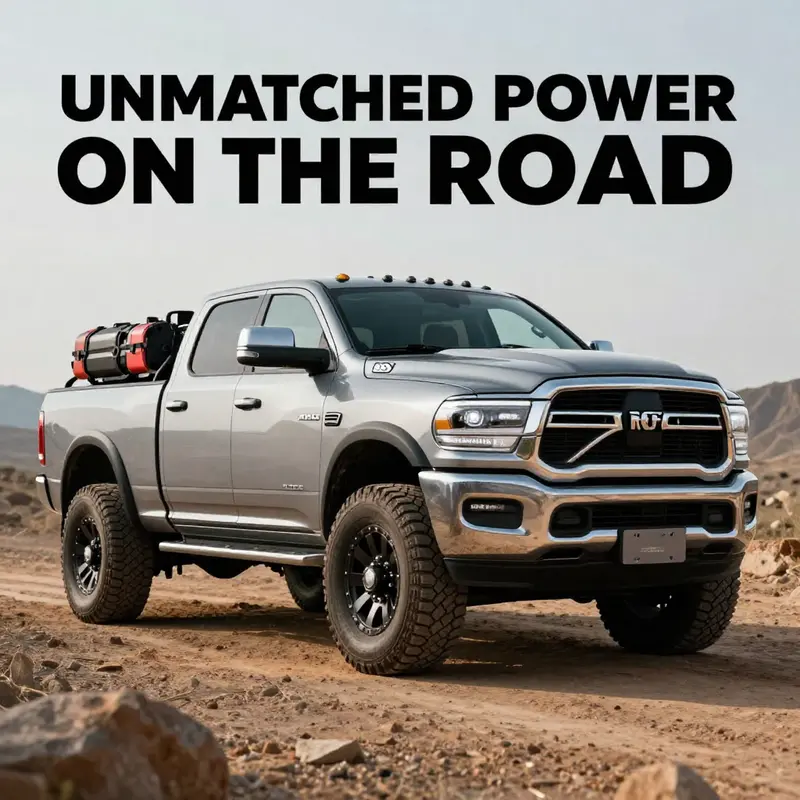
The question of which truck has the highest towing capacity ends where engineering, torque and heavy-duty design converge. The Ram 3500 sits at the summit of consumer-focused pickup capability, offering a towing envelope that moves from commendable to extraordinary. It is a machine conceived and built to haul the kinds of loads that make other pickups pause. That capability is the product of many interacting systems: powerplants that generate immense torque, reinforced chassis and axles that carry the loads, suspension and braking systems that control them, and cooling and driveline components designed to withstand prolonged heavy work. This chapter examines those systems together, so you can understand not just the headline towing figure, but the design choices and operational realities behind it.
At the heart of extreme towing performance is torque. The Ram 3500’s high-output diesel—an inline 6-cylinder turbocharged engine—is tuned to produce massive low-end torque. That torque figure is the key number when pulling heavy trailers up grades and through long hauls. It provides the force that overcomes inertia and gravity. In addition to the diesel option, a V8 gasoline powerplant is offered with competitive output and broad use cases. Both engines are matched to transmissions and driveline components engineered to handle repeated, heavy loads without premature wear. The transmission strategy, torque converter calibration and gear ratios all matter because they determine how much of the engine’s torque reaches the wheels under real-world conditions.
Torque alone does not create a tow champion. The Ram 3500 combines high torque with a chassis and axle package built for load-bearing. Its frame uses high-strength steel sections and reinforced crossmembers to minimize flex. The rear axle choices include heavy-duty ratios and robust housings sized to maintain gear tooth life and bearing durability under sustained loads. Leaf springs and heavy-duty mounting points are tuned to disperse weight across the frame while keeping the trailer’s forces predictable to the driver. For extreme towing, a high-capacity rear suspension, optional auxiliary springs or air suspension help maintain ride height and handling when payload and tongue weight increase.
Brakes and cooling become critical as towing mass grows. The additional kinetic energy generated by a 30,000-pound trailer demands braking systems that resist fade. The best heavy-duty trucks pair large, ventilated disc brakes with improved brake cooling. They use high-capacity master cylinders, transmission oil coolers, and dedicated engine cooling circuits sized to handle long descents and continuous heavy towing. A thermal management strategy that includes an auxiliary oil cooler, a robust radiator, and directed airflow around the intercooler prevents power loss from heat soak. Proper cooling preserves torque delivery and keeps drivetrain components within safe operating temperatures.
Hitching systems and trailer interfaces are equally important. A heavy-duty truck must have a hitch and receiver built for the loads it will encounter. Fifth-wheel and gooseneck hitches transfer weight to the truck’s frame, enhancing stability and increasing permissible tongue weight. Manufacturers calibrate gross combined weight ratings (GCWR) and hitch ratings that account for these interactions. The rig’s payload capacity—how much weight the truck can carry in its bed and cab—affects towing capacity because payload contributes to tongue weight. Matching tongue weight, hitch rating and payload capacity is a practical step toward safe, legal towing.
Stability control systems and trailer-sway mitigation technologies are part of responsible towing design. Modern trucks include trailer sway control that can brake individual wheels or reduce engine torque to help regain directional stability. Electronic stability control integrates yaw sensors and steering inputs to subtlely counteract trailer oscillations. When towing at the upper limits of a truck’s rating, these systems make the difference between controlled braking and a dangerous trailer oscillation that can become catastrophic. Drivers should not rely solely on electronics; proper weight distribution and secure loading remain the primary defenses against sway.
Knowing how towing capacity is measured clarifies the headline number. Maximum towing capacity is a function of the truck’s engine, transmission, axle ratio, chassis, cooling and brake packages, plus selected options such as a heavy-duty axle or a fifth-wheel/gooseneck prep package. Manufacturers publish maximum towing figures for specific configurations. Those numbers are often achieved under controlled conditions and with the correct hitching method. Real-world towing capacity depends on how a truck is fitted, including optional equipment and whether the trailer’s weight distribution is correct.
The tradeoff between towing capacity and payload capacity is a consistent theme. A truck can often tow more when it is equipped to transfer trailer weight into the bed via a fifth-wheel or gooseneck hitch. That same truck will typically carry less payload in the bed because that payload counts toward the truck’s gross vehicle weight rating (GVWR). Owners who only use a gooseneck for heavy towing routinely accept lower bed payloads knowing the hitch transfers trailer weight directly to the frame. Understanding GVWR, curb weight and payload is essential: combine them incorrectly, and you can exceed chassis or brake limits even if the trailer weight is below the published towing capacity.
Real-world application shows why extreme towing capacity matters. Contractors move heavy equipment. RV owners tow large motor coaches and trailers. Commercial operators need the ability to transport materials and machines between job sites. A truck rated at the upper end of the towing spectrum expands operational options. It can pull larger trailers, carry larger auxiliary equipment, and reduce the need for separate heavy-haul vehicles. For fleet managers, that means fewer transfers and more efficient utilization, provided drivers use the trucks within permitted ratings and maintenance schedules.
Operational discipline and maintenance practices matter more as towing loads rise. Regular inspection of suspension components, brake pads, and tires is essential when hauling close to the vehicle’s limits. Wheel bearings, hub seals and axle fluid should be inspected at shorter intervals. Cooling systems need pressure testing and coolant checks before major tows. Transmission fluid and filters require service schedules aligned to towing frequency. Proactive maintenance reduces the chance of on-road failures and extends the life of drivetrain components that otherwise suffer accelerated wear under load.
Driver technique is a final, indispensable piece. Smooth throttle inputs reduce dynamic load spikes on drive components. Anticipating grades and controlling speed on descents reduces brake heat buildup. Proper use of engine braking, downshifts and transmission hold modes prevents overheating and extends brake life. When hooking heavy trailers, checking tire pressure for both tow vehicle and trailer is critical; underinflated tires raise temperatures and risk failure. The best drivers combine technical knowledge with conservative margins, leaving space and slowing early to protect both equipment and occupants.
Beyond individual owners, organizational planning for fleets that tow heavily must integrate capacity into emergency response and logistics. Fleets on islands or remote areas face unique constraints when they must move heavy equipment offsite or respond to emergencies. A heavy-duty truck that can tow near the top of its class increases operational flexibility in those environments. For guidance on preparedness tailored to fleet needs, consult resources on emergency preparation and vehicle readiness, such as the comprehensive guidance available for island operations in the article on emergency preparedness for island fleets.
Regulatory and legal considerations should not be overlooked. Every jurisdiction sets limits on axle loads, trailer configurations, and required braking systems for trailers above certain weights. When towing at the extremes of a truck’s rating, verify local laws for braking requirements, lighting, signage and permits. Insurance implications also change with heavy towing; policy limits and endorsements may be necessary for commercial operations. Compliance reduces risk and protects assets in the event of incidents involving high-mass trailers.
Finally, understand the difference between extreme consumer tow trucks and specialized transport vehicles. Heavy rescue and transport rigs used in industry can move far greater masses than any production pickup. Those vehicles are purpose-built, often with multiple driven axles, specialized transmissions and chassis unlike consumer pickups. For the consumer and most commercial users, the heavy-duty pickup segment represents the practical ceiling for a single-vehicle towing solution. Within that segment, the Ram 3500 is engineered to maximize the capabilities available to owners who need the highest possible towing figures from a pickup.
The engineering behind top towing numbers is as much about system integration as it is about raw numbers. High torque, strong frames, supportive suspension, cooling, braking and electronics must work in balance. The truck that achieves the highest towing capacity does so because engineers matched components, validated them under load, and offered appropriate factory options to deliver safe, repeatable performance. Drivers and fleet managers who use this capability must respect the limits, follow maintenance regimes, and understand the relationship between payload, hitch type and towing configuration.
The practical takeaway is straightforward: a pickup rated at the top of the towing list opens new capability for owners and fleets. That capability brings responsibility. Use the right hitch, follow weight distribution principles, maintain cooling and braking systems, and operate with conservative technique. When those pieces come together, the highest towing capacity becomes an enabler rather than a risk. It allows fewer trips, heavier loads, and broader operational flexibility for professionals and serious recreational users alike.
For the detailed manufacturer specifications and configuration-dependent towing figures referenced in this chapter, consult the official vehicle overview and towing documentation provided by the manufacturer. The manufacturer’s technical pages offer the exact ratings for specific engine, axle and hitch combinations, and should be reviewed before any major towing decision. More detailed specs are available from the manufacturer at: https://www.ramtrucks.com/vehicles/ram-3500.html
Tow Limits Revealed: Which Truck Has the Highest Towing Capacity
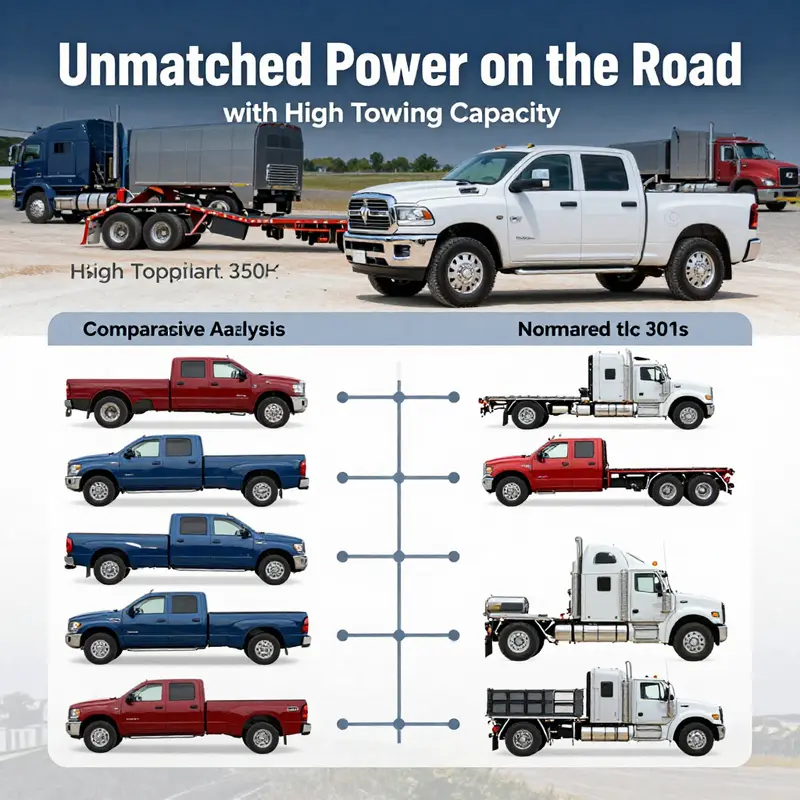
Towing capacity is a measure that reflects the strength of the drivetrain, frame, suspension, and braking system working together to pull a trailer. The top end of the market is often cited at 37,100 pounds in a configuration designed for maximum tow. This figure is important in context; it represents a ceiling in a specific class for a purpose built setup, and not every truck within the segment will reach that number. Many heavy duty options land in the tens of thousands of pounds, with configurations around 19,000 pounds or around 12,700 pounds appearing in various mainstream specs. Those numbers illustrate the trade offs that exist between peak tow, payload, ride quality, and efficiency. Strong towing also depends on how the weight is distributed between the truck and trailer, the gearing and cooling for extended pulls, and the effectiveness of the braking system. Beyond the headline figure, buyers should consider the full towing ecosystem including hitch, tongue weight, trailer brakes, and the operating conditions. In addition to conventional pickup trucks, dedicated integrated tow solutions and electric off road platforms offer different paths to high capacity towing, each with its own advantages and constraints. The choice ultimately depends on the job profile, whether the priority is extreme pulling power for occasional recoveries, sustained hauling with high duty cycles, or a balance of performance, durability, and cost of ownership.
How Towing Capacity Shapes Truck Choice: Safety, Use, and Long-Term Value
Balancing Capacity, Safety, and Utility
Towing capacity is the defining metric when choosing a truck for hauling. It is more than a number on a spec sheet. It determines what you can pull, how you should equip the vehicle, and which safety and regulatory rules apply. Buyers who choose by towing figures alone may miss important trade-offs. A deeper view shows how towing capacity intersects with day-to-day use, long-term costs, and operational safety.
Start with the simple reality: towing capacity sets the outer limit of what a truck can pull safely. That limit depends on engine torque, transmission gearing, cooling systems, brakes, and chassis strength. It also depends on the truck’s suspension, axle ratios, and factory-installed towing packages. A properly equipped heavy-duty 3500-class truck, for example, can pull far more than a standard half-ton pickup. That difference transforms what a truck can do. It also changes how the truck behaves while hauling.
Selecting a truck that meets towing needs requires clear thinking about current tasks and future demands. Many users need a vehicle for weekend recreation and light hauling. Others need a workhorse that tows large trailers or heavy equipment daily. Choosing a model with a comfortable margin above your usual load is sensible. That margin reduces strain on drivetrain components. It also preserves braking performance and cooling capacity when loads are heavier than expected.
Consider payload alongside towing capacity. Towing numbers describe what you can pull behind the truck, not what the truck can carry on its bed or within the cab. Payload, towing, and curb weight combine under the Gross Combined Weight Rating, or GCWR. GCWR tells you the maximum combined mass of truck, occupants, cargo, and trailer. Overlooking payload can lead to an unsafe combination of heavy loads and heavy towing. A truck might tow a heavy trailer but lack the payload capacity for cargo and passengers. Proper calculations prevent overloading and avoid early wear.
Drivetrain choices influence towing capacity and real-world performance. Transmissions with optimized gear steps, advanced torque converters, and robust cooling can extract more usable towing from a given engine. In many cases, automatic transmissions tuned for towing permit higher rated capacities than manual alternatives. Axle ratios matter too. A higher numerical axle ratio increases low-end pulling torque at the wheels, which aids heavy towing but can lower fuel economy when not hauling. Buyers must weigh these trade-offs.
Braking systems must match towing demands. When towing heavy loads, the truck’s brakes work harder. Many heavy-duty trucks add trailer brake controllers and larger brake hardware. Integrated trailer brake systems reduce stopping distances and lessen pedal effort. Failing to equip adequate trailer braking leads to overheating and reduced control on descents. Cooling systems, including transmission oil coolers and engine upgrades, play a parallel role. Heat is the enemy of long-term drivetrain health, and towing pushes components to their thermal limits.
Stability and handling change with heavy trailers. A vehicle rated for three-figure towing may still feel unstable with certain trailer types or improper loading. Trailer tongue weight and axle distribution are crucial. Too little tongue weight allows trailer sway. Too much tongue weight overloads the rear axle and degrades steering control. Properly matched hitch systems and weight distribution hitches help maintain balance. Electronic stability control and trailer sway mitigation systems add a safety layer, but they are not substitutes for correct loading.
Legal and licensing considerations also influence truck choice. In some regions, towing a trailer above a certain weight triggers commercial licensing or special endorsements. These rules vary by jurisdiction. For fleet managers or frequent haulers, licensing costs and compliance overhead should be part of the selection model. Regulations might also require additional safety equipment, such as reflective markings, enhanced lighting, or dedicated tow mirrors.
Fuel and operational costs rise with towing capacity. Larger engines and heavy-duty components consume more fuel under load. Even if you seldom tow at maximum capacity, the heavier truck and beefier components can reduce efficiency during day-to-day driving. Maintenance intervals may shorten when towing frequently. Brake pads, tires, and fluid replacement will all see increased wear. A realistic cost model includes fuel, maintenance, and potential downtime.
Resale value and long-term reliability factor into the decision. Trucks with higher towing capacities attract buyers who need them. That demand can preserve resale value, especially in markets with high recreational or work-related towing needs. But high-capacity trucks also experience heavier use, which can depress value if maintenance lags. Regular servicing, correct cooling upgrades, and conservative loading preserve the truck’s life and marketability.
A critical but sometimes overlooked element is the intended operating environment. Urban drivers who tow occasionally have different needs than rural or construction fleets. In tight city conditions, a compact bed and maneuverability may weigh more than maximum towing numbers. Tow trucks used in confined areas may prefer wheel-lift designs or smaller rigs to reduce footprint. Conversely, agricultural or industrial users often need the highest possible towing capability to move heavy equipment across rough ground.
Safety systems are often tied to towing packages, not to raw capacity numbers. Advanced trailer monitoring, integrated brake controllers, and dedicated camera views become essential when towing large loads. Towing packages may also include auxiliary transmission and engine coolers, which preserve component life during prolonged heavy use. Buyers should look for these features rather than relying solely on a headline towing figure.
Matching your trailer to your truck matters. A trailer that spreads weight over multiple axles creates a different dynamic than a single-axle trailer. Multi-axle trailers reduce load per axle and can improve braking and stability. Heavy trailers might require air-ride suspensions to reduce jolts and protect cargo. The choice of hitch—fifth wheel, gooseneck, or receiver—affects tongue weight, turning radius, and payload distribution. Fifth-wheel setups typically move the pivot point over the truck’s rear axle, improving balance for very heavy loads.
Fleet operators must consider duty cycles and utilization patterns. A truck rated for high towing capacity may not be the most cost-effective if it sits idle most of the week. In fleet planning, matching vehicle capabilities to most common tasks reduces acquisition and operating expenses. For emergency response fleets, towing capability intersects with readiness and resilience. Vehicles that can tow heavy equipment or mobile command units enhance operational flexibility.
Risk management and insurance are also influenced by towing capacity. Insurers consider the gross vehicle weight and typical payload to price policies. High-capacity trucks that frequently tow large trailers can face higher premiums. They may also require additional liability coverage for towed units. Incorporating these costs into total cost of ownership models helps avoid unpleasant surprises.
Training and driver competence are often the final piece of the puzzle. High towing capacity places more responsibility on the operator. Proper hitching, weight distribution, braking techniques, and trailer backing skills reduce damage and accidents. Organizations that invest in driver training, hitch inspections, and towing checklists see better long-term outcomes. Driver habits—such as maintaining lower speeds, checking tire pressures, and allowing longer stopping distances—improve safety regardless of capacity.
Ultimately, choosing the right truck starts with a simple question: what will you tow, and how often? If you need to pull occasional light loads, a standard pickup with a modest towing package may suffice. If you plan to haul heavy trailers frequently, a heavy-duty 3500-class truck with appropriate cooling, braking, and suspension upgrades is often the sensible route. That heavier truck will cost more to buy and operate, but it will provide capability and durability for demanding tasks.
Consider long-term flexibility. Many buyers select a capacity above their current needs to accommodate future changes. That buffer reduces the risk of being underspecified. However, overspecifying can inflate costs unnecessarily. The best approach uses careful forecasting and an honest assessment of likely future loads.
Selecting a truck also depends on support networks. Heavy towing exposes components to greater stress. Access to skilled service centers, parts availability, and knowledgeable technicians ensures downtime stays low. Fleet operators should prioritize trucks that local service networks can support. This consideration becomes vital in remote areas or on islands where parts and services are constrained. For those operators, planning for emergency response and preparedness is part of vehicle selection. Resources like essential fleet emergency response strategies explain the operational steps to keep fleets resilient and responsive.
When comparing models, a systematic checklist helps. Start with the maximum towing capacity. Then verify GCWR, payload, braking features, cooling systems, and standard towing hardware. Confirm the warranty coverage for towing-related components. Check the available hitch types and whether the truck includes integrated trailer controls. Factor in fuel economy estimates under towing conditions. Finally, calculate operating costs over expected service life.
Towing capacity is not merely a headline. It shapes the truck’s engineering, safety features, and real-world usability. A truck rated for extreme towing opens possibilities for heavy work and large recreational trailers. But those capabilities demand proper equipment, careful loading, and trained operators. The right choice balances capacity, cost, safety, and operational context. When buyers consider those dimensions together, they choose a vehicle that meets needs now and adapts to future demands.
For a concise definition and further context about towing capacity, see this external reference: https://dictionary.cambridge.org/dictionary/english/towing-capacity
For fleet managers interested in resilience and preparedness, review this resource on essential fleet emergency response strategies for practical planning guidance: https://theislandtowtruck.com/essential-fleet-emergency-response-strategies/
Final thoughts
Selecting the right truck is an essential decision for local auto repair shops, car dealerships, and commercial fleet operators. The Ram 3500’s record-setting towing capacity not only underlines its superiority but also reflects its capability to tackle the challenges faced by heavy-duty applications. Understanding your operational needs alongside the competitive landscape will empower you to make informed choices. Whether it’s enhancing service capabilities or meeting client demands, the right truck can make all the difference.