In the sprawling world of GTA 5, tow trucks serve not just as vehicles but as critical tools for players seeking to navigate the challenges of Los Santos and Blaine County. For those in the automotive business—be it local repair shops, car dealerships, property managers, or commercial fleet operators—understanding where to find these essential vehicles can greatly enhance gameplay and objectives alike. This guide will take you through various locations where you can spot tow trucks, shed light on missions that feature them, demonstrate how to effectively use the in-game map for navigation, and provide valuable tips on utilizing tow trucks to meet the game’s challenge requirements. Delve into each chapter to uncover insights that resonate with both your gameplay experience and business needs.
Tow Truck Trails: Mapping GTA 5’s Heavy-Duty Helpers Through Los Santos and Blaine County
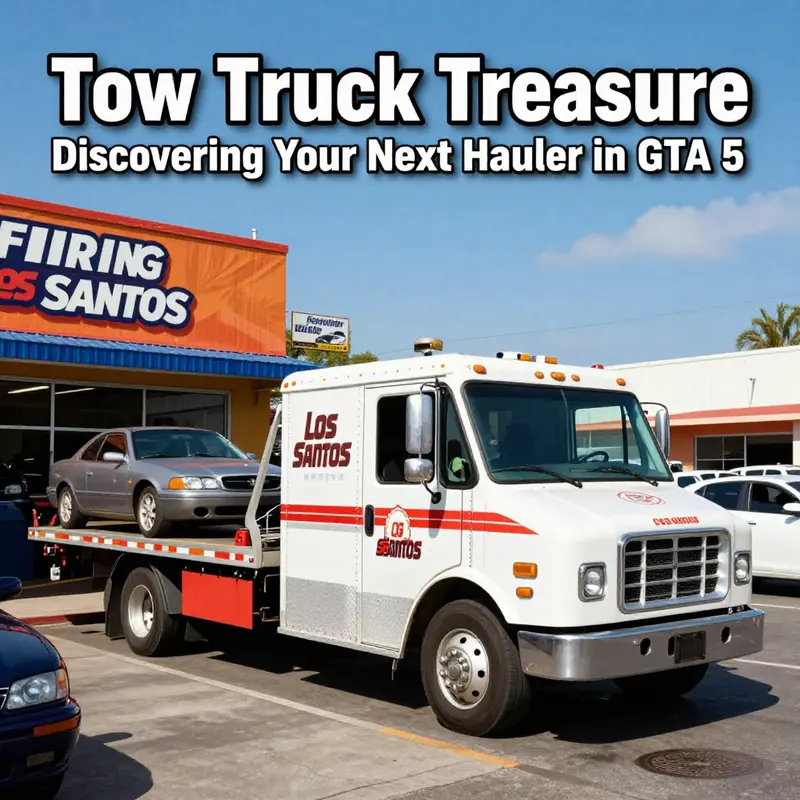
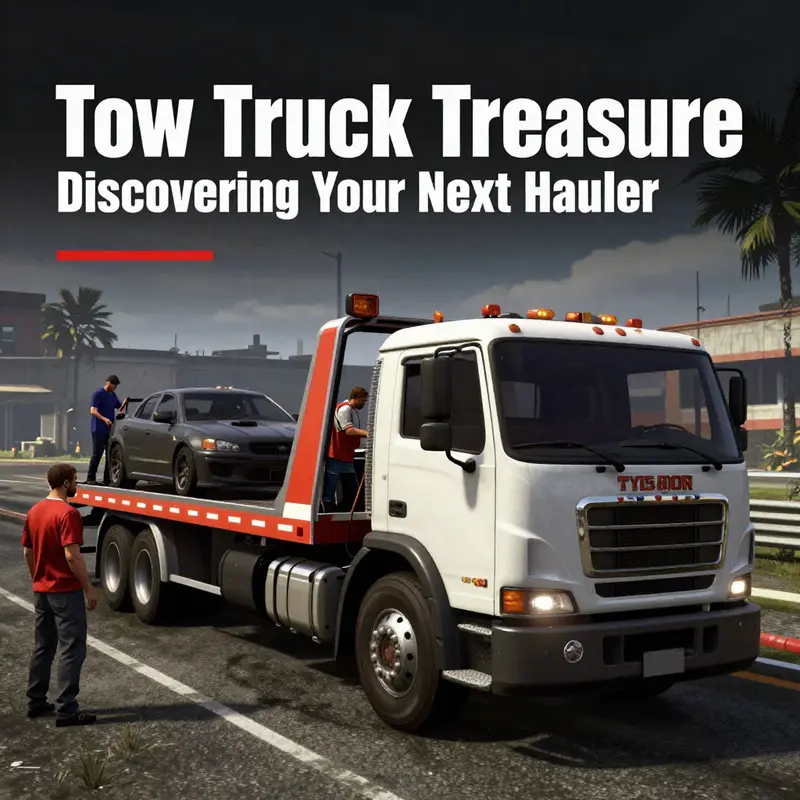
Tow trucks in Grand Theft Auto V are more than just transport machines; they are workhorses that thread through the city’s chaos and the desert’s silence, appearing at once as utility and instrument in a world where plans hinge on moving stubborn metal from one spot to another. If you have ever watched a highway accident unfold in rivals between lanes or seen a stolen vehicle limping toward a repair lot, you will know how often the tow truck slips into the frame with quiet efficiency. The game treats these vehicles as both a means to fix a scene and a tool for a larger mission, a dual role that makes locating them worth more than a casual detour. In this sprawling map of Los Santos and Blaine County, tow trucks are not always waiting in a fixed place. They are as much a product of the world’s traffic as of the stories you want to tell with them. The result is a careful craft of timing, geography, and patience, a little art and a little arithmetic, where the best approach blends texture with pragmatism and invites you to read the city like a map of opportunities rather than a random spread of cars on a grid.\n\nTo navigate this landscape, it helps to think of tow trucks as anchored at particular hubs that the game returns to with predictable regularity, even while they can drift into your path at any moment. There are depot zones where you will reliably find more than one tow truck waiting outside a repair shop, and there are dynamic spawn points that appear as you roam, often tied to the presence of accidents, roadwork, or mission-specific moments. The most dependable pattern emerges from a few clearly defined neighborhoods and facilities, each offering a different flavor of utility and a different route to your objective. This is not a guide printed on a single page, but a narrative map that unfolds as you drive. It invites you to feel the city’s pulse and listen for the telltale clank of a crane arm as a tow truck eases into view at a critical moment.\n\nOne of the most reliable sources of tow trucks lies in depots tucked away in industrial clusters and commercial corridors. In Los Santos, the East Los Santos area near Pillbox Hill stands out as a prime example. Here the roads converge on a quiet pocket where service yards sit beside garages, and the sight of several heavy vehicles parked outside is almost a signal to the player that the world is ready for a quick swap or a strategic move. The proximity to the highway network makes this location especially practical. If you’re planning a heist or simply need a fast way to move a car back to a wanted location, a tow truck resting near Pillbox Hill functions as a dependable anchor, a place you can count on returning to when the script calls for it. The geometry of the city helps too. The nearby ramps and overpasses create a sense of flow, letting you circle back to the depot after a run through the canyons or along the city’s river corridor, keeping the vehicle on your radar as you navigate the day’s tasks.\n\nAnother depot that players frequently rely on sits in Maze Bank country, south of the Grand Senora Desert. This Tow Yard is a different kind of anchor. It’s not just a place to grab a vehicle; it is a signal of the game’s layered geography, where the desert’s quiet contrasts with the city’s hustling streets. The Maze Bank zone offers a compact cluster of tow trucks, which can be particularly handy during a complex heist or a multi-step mission. The desert’s openness also means that a tow truck here can be less conspicuous, allowing you to slip out of a scene with the vehicle in tow or prep for a late arrival at a crucial checkpoint. The juxtaposition of inland urban density and wide, empty space underscores a larger truth about GTA 5’s tow trucks: they are tools that adapt to the terrain, becoming faster or slower, more or less visible, depending on your route and your timing.\n\nFor missions that explicitly involve aircraft or airport logistics, Los Santos International Airport offers another dimension to the tow truck landscape. We often see tow trucks employed around the tarmac and hangar areas, moving ground vehicles or assisting with tasks that require a heavy crane’s reach. The Lyft-like rhythm of airport traffic—ground crew moving between gates, cargo containers shifting, a plane taxiing into position—creates a natural theater in which a tow truck can play a pivotal secondary role. The airport setting thus expands the tow truck’s repertoire beyond street-level towing into the realm of airfield logistics, where you might need to clear a path for an urgent mission, reposition a stalled cargo vehicle, or simply relocate a vehicle with precision to a staging area.\n\nBlaine County offers its own frontier for tow trucks, with Fort Zancudo Military Base presenting a more controlled and guarded environment. Access to Fort Zancudo is restricted, and poll-like references to military maintenance or transport zones can yield tow trucks inside the base in the course of specific story moments or through deliberate workarounds. The atmosphere of Fort Zancudo—tone of steel and chain, a sense of imperative and secrecy—adds a different texture to the idea of towing. The presence of tow trucks inside a military facility carries a weight of utilitarian purpose; these are not casual pickups but equipment in service of maintaining order, safety, or a mission’s logistical backbone. This is a reminder that the game’s tow trucks are not just background color; they are active tools whose availability can be tied to progress in the story or a player’s ability to access certain zones through mission gates or system permissions.\n\nThen there are the more pedestrian, lo-fi sources of tow trucks—used car lots and the occasional random spawn that mirrors real life. In Los Santos and Blaine County, a Dukes Used Cars lot in Ganton can periodically host a tow truck nearby. This is not a guaranteed drip feed, but a hint of a routine that the game’s world follows. You might drive by and find a truck parked along the curb, ready to be called into service for a quick mission or to relocate a car to a safehouse or garage. These depots and lots represent the city’s everyday economy in microcosm; they remind us that a tow truck is not merely a plot device, but a working vehicle within a dynamic system where demand for towing flares up at unpredictable moments.\n\nThe world of GTA 5 also births tow trucks through spontaneous spawns along the roads. Major highways, busy intersections, and roadside service areas can suddenly reveal a tow truck as the scene clears, as if the city itself recognizes the need to move a vehicle out of harm’s way. Roads like I 405 and Rancho Road can become stages for these moments, with the distinctive yellow and black color scheme and the crane or winch lifting a vehicle back into a convoy’s orbit. The randomness of these appearances is not a flaw but a feature. It injects vitality into the open world, implying that the player can’t script every move and must stay alert to the game’s mechanical breadcrumbs. This unpredictability is part of the thrill of making use of a tow truck at the right moment, when the plan is ambitious and time is short.\n\nThe game’s mission structure also intersects with tow trucks in meaningful ways. One of the most famous examples occurs in a major heist scenario where a tow truck is essential to the move of a stolen car. The mission design leads players to specific spawn points and path choices that align with the narrative’s need for drama and timing. In such moments, the tow truck becomes more than a vehicle; it becomes a narrative instrument, a device that helps anchor the player in a sequence of increasingly high stakes tasks. Beyond the big score style moments, a smaller but equally instructive use arises in the Truckin challenge that some players pursue for its own sake. This challenge requires driving a tow truck at high speed for a period of time, testing the player’s ability to handle a heavy vehicle at speed and maintain control while the clock ticks down. In practice, the best way to approach that challenge is to locate a tow truck on a busy intersection or a highway with a service area nearby, where you can drop into a controlled sprint without too much risk of collision or loss of control.\n\nTo navigate this sprawling map efficiently, the in-game map and GPS tool can be your compass. You can search for Tow Truck within the vehicle categories, and the map will guide you to near-term options where a vehicle may spawn or a mission will direct you to a rendezvous point. It is important to remember that not every tow truck on the map is immediately usable. Some may be tied to a mission’s narrative arc or to a specific sequence of events that must unfold before you can access them. Others may be parked in a depot but require you to complete a prior objective or mission to unlock or spawn them in your immediate vicinity. The game’s logic is not an unbroken line from A to B; it is a tapestry of possibilities, where access is sometimes gated and sometimes open, depending on your progress and your timing.\n\nAs you move through these spaces, you begin to see a pattern in how to pace your search. If you are near Pillbox Hill and you want a tow truck quickly, head toward the east depot and loop through the nearby avenues, watching for the telltale crane and the yellow paint that marks these vehicles. If you want a tow truck that can accompany you on a larger route that threads through the desert’s edge and into the city, a quick detour to Maze Bank gives you options, and the desert air around that area can provide a different type of challenge: the wind feels different, and so does the road as you lean into a turn and prepare to haul a car across a long distance. At the airport, the same logic applies but with a focus on logistics and timing around airfield operations. And at Fort Zancudo, you learn that access matters; you may need to complete certain story or mission steps before you can route or retrieve a vehicle from the base’s transport zones. Each site has its own rhythm, its own visual language, and its own set of constraints that shape how you plan, approach, and execute your tow truck moves.\n\nThe openness of the world invites a certain humility. You may not always find a tow truck exactly where you expect, and your plan may need to shift if a mission or a random event claims the vehicle for its own purpose. In those moments, the best response is flexibility. If you find yourself in a lull with no tow trucks visible, you can still map a course through the city, tracing the routes that tend to yield spawns, listening for the distant hum of a truck waking up at a depot, or setting a route that maximizes your likelihood of encountering a spawn as you cross main thoroughfares. The joy lies not in a single win but in the practice of reading the city as it moves, and learning to ride along with its traffic and its narrative tempo rather than forcing an outcome. This philosophy—of letting the world present its opportunities and moving in step with its cadence—aligns well with the game’s broader design, where every trip can become a story if you let it unfold with a careful mixture of anticipation and patience.\n\nFor readers who want a more general sense of how tow trucks operate in this realm, the Island Tow Truck blog offers broader observations about tow trucks in related contexts. You can explore their insights here: the Island Tow Truck blog. The page helps situate the GTA 5 experience within a larger ecosystem of tow truck operations, offering ideas about scheduling, readiness, and the practical realities of vehicle recovery that map surprisingly well onto the game’s own demands. While the real world certainly presents its own complexities, the spirit of resourcefulness and readiness carries over to Los Santos. It is in this continuity that players find a bridge between game play and practical understanding of how heavy vehicles behave under pressure, a reminder that the tow truck is more than a tool in any setting; it is a line that connects action to outcome across environments and genres.\n\nAs you continue to explore, you may find that your favorite spawn points shift with the seasons of your playthrough, the missions in progress, and the time of day. The game does not guarantee a single perfect route, and the best players know to stay adaptable, to keep a mental map of where tow trucks tend to appear in relation to the moment they need to move a car or chase a plan across the city. The interplay between static depots and dynamic spawns creates a living map that rewards memory, observation, and experimentation. In this sense, locating a tow truck becomes less about following a fixed set of coordinates and more about moving with the story the game is telling you, choosing a route that aligns with the mission’s needs, or simply taking advantage of the moment when the tow truck appears where you least expect it. The result is a gameplay arc that feels natural and integrated, a narrative thread that binds the city’s busy streets, the desert’s quiet stretches, and the airport’s controlled rhythm into a coherent experience focused on movement, logistics, and timing.\n\nExternal resource note: For real time spawn details and community-tested spawn maps, many players turn to the GTA Forums thread dedicated to vehicle spawns and locations. This community resource provides a dynamic, player-driven picture of where tow trucks show up in various contexts, often capturing changes that arise with patches or updates. It can be a valuable supplement to the in-game cues and your own observation, helping you plan routes that maximize efficiency without sacrificing immersion. GTAForums thread on GTA V vehicle spawns and locations.
Tow Trucks on the Map: Finding, Towing, and Story-Driven Moments in Grand Theft Auto V
The tow truck in Grand Theft Auto V is more than a vehicle with a hydraulic hook; it is a key that unlocks a specific texture of the game’s world. It invites players to move through Los Santos and Blaine County not just as spectators of chaos, but as technicians, problem solvers, and, on occasion, reluctant accomplices to the city’s criminal underpinnings. The act of locating, hooking, and towing a vehicle mirrors a broader philosophy in the game: even the most ordinary task can ripple through a sprawling narrative, revealing character motivations, connective tissue between missions, and the subtle economy that underwrites the city’s day-to-day functioning. In this sense, the tow truck is a quiet teacher, guiding players toward a deeper fluency with the game’s geography and its storytelling logic. The practical route to mastering this mechanic begins with knowing where tow trucks often show up, how to recognize the best moments to engage with one, and what you stand to gain by treating a recovery as a narrative waypoint, not merely a point-and-click objective.
A reliable starting point for finding a tow truck lies in the city’s built environment itself. Garages and car dealerships cluster around the core districts of Los Santos, and these are the places where a tow truck is most likely to be parked outside a repair shop, waiting for the next request or assignment. In the northern sprawl of Vinewood, near the vicinity of the Vinewood Racetrack, you’ll occasionally glimpse a tow truck idling at the edge of a service bay, its hydraulic arm folded neatly and its siren unused. Move a little further toward Chumash, where the coastline meets the city’s more rugged stretches, and you’ll encounter tow vehicles near repair outlets serving both everyday drivers and the occasional eccentric enthusiast who uses the bays to stage a quick fix before a late-night cruise along the Pacific. These are not guaranteed spawns, of course, but the pattern is consistent: repair-oriented zones, where vehicles arrive in and out of service, offer the most dependable opportunities to encounter a tow truck without pulling it from a mission script.
Alongside these steady hubs, the map’s major arteries also function as opportunistic spawning grounds. Highways and arterial roads carry a different rhythm: tow trucks appear on the side of the road or near accident scenes, especially on routes like I-405 and Rancho Road that cut through the game’s traffic density. The logic here is intuitive: a tow truck is a tool for dealing with the city’s inevitable breakdowns, collisions, and stalled motorists. In the open-world cadence, these vehicles appear where someone, somewhere, needs a quick recovery or a fast removal. The cadence of their appearance creates a sense of realism, a texture that reinforces the game’s claim to be a living, reactive city rather than a distant stage for scripted events. If you are patient and move with the flow of traffic, you can find a tow truck parked on the shoulder or rolling slowly along the breakdown lane, its beacons off but its presence unmistakable to a careful observer.
If your aim is to encounter a tow truck in a more purposeful way, the mission structure of the game offers two reliable avenues. First, there are story missions that involve towing in a direct way, where the narrative requires you to steal a tow truck for a heist or to recover a vehicle as part of a larger objective. The Tow Truck mission functions as a pre‑Heist storytelling beat, a vehicle recovery task that introduces players to the mechanics of towing while weaving you into the criminal undercurrents that drive the protagonists’ actions. In this setup, you are not merely driving a tow vehicle; you are stepping into a role that foreshadows future collaborations and conflicts. The mission’s objective structure is straightforward yet precise: locate a stolen or stranded vehicle, secure it with the tow hook, and transport it to a designated location while maintaining a careful balance between speed and discretion. The sequence teaches you to gauge the environment, chart a path through traffic, and manage risk—particularly the risk of drawing police attention during a recovery operation.
Second, the game’s mission cadence sometimes places tow trucks front and center as you pursue or defend a plan during a heist or a preparatory sequence. In these narrative moments, the tow truck is less a convenience and more a tool that unlocks access to other objectives. The presence of a tow truck in such missions often signals a shift in tone: mechanics give way to the strategic, and the player’s choices about route, speed, and timing begin to matter as much as gunplay or car handling. This alignment—between a vehicle’s function and the storytelling beat—gives towing a weight beyond its practical utility. It becomes a deliberate instrument through which the game’s larger story moves forward, a reminder that even a field tool can carry the weight of plot and character development.
For players who rely on the in-game map to guide their explorations, the Tow Truck category can be searched directly, though the spawn conditions mean you won’t always see a tow truck perched exactly where the map pin suggests. The game rewards a patient approach: sometimes you will find a tow truck parked outside a service center at a moment when you have no immediate mission objective, and other times you will need to pivot toward a nearby accident scene where a tow truck’s presence is implied by the surrounding activity. The map, with its clusters of repair shops and roadside incidents, becomes less of a checklist and more of a contextual guide that helps you anticipate where a tow truck might appear next. In practice, the best strategy is to blend map awareness with a willingness to explore: drive through repair zones at a moderate pace, observe traffic patterns around service centers, and keep an eye on shoulder lanes for sudden activity as other drivers pull away and leave their vehicles behind, perhaps requiring recovery.
The Tow Truck mission’s design emphasizes the core mechanics players need to master to perform a clean recovery. The objective of locating a stranded or stolen vehicle, then towing it safely to a target location, requires precise vehicle handling and a cautious approach to police attention. The towing hook must be engaged at the right moment, the tow line tension managed to prevent losing control of the tethered vehicle, and the target vehicle positioned to avoid collisions that could escalate law enforcement response or complicate placement. Achieving a Gold Medal in this mission hinges on these operational details as much as on speed. The Gold Medal is not simply about finishing quickly; it is about executing a sequence with a level of finesse that demonstrates mastery over the tow apparatus and situational awareness in a bustling urban environment. The mission teaches players to align their driving lines with the city’s choreography: to anticipate where a vehicle will behave as the tow line tightens, to modulate speed as you approach a curb or an alley, and to plan a route that minimizes the risk of an unexpected stop caused by traffic or pedestrian interference.
The broader value of this mechanical fluency extends beyond the Tow Truck mission itself. Tow vehicles teach you to negotiate Los Santos’ complex road network with a focus on precision and timing. You learn to anticipate police responses and to use the city’s geometry to your advantage, for example by using narrow streets to slow down suspects or by exploiting off‑road routes to avoid crowded arteries that attract more attention. The in-game world rewards careful planning: a well-timed tow operation not only completes a mission objective but also preserves your wanted level and keeps you moving toward future opportunities, whether those take the shape of other recovery tasks, additional story beats, or side challenges that test your ability to maintain control under pressure.
As a narrative device, the tow truck also functions as a connector—linking players to key characters and moments that help illuminate the protagonists’ broader arcs. Completing the Tow Truck mission provides more than a simple task completion; it unlocks progression that ties into the story’s momentum and reveals motivations that affect how you interpret subsequent events. This is storytelling through mechanics in action: a tool you could easily overlook becomes a conduit for understanding why certain characters act the way they do, how they value loyalty, how risk is weighed against potential payoff, and how a single recovery can foreshadow a future decision that will ripple across the game’s later, more elaborate schemes.
For players who want to deepen their understanding of how to execute tow-related tasks, a practical note is to study the environment before initiating a tow. Look for a safe angle of approach that minimizes the risk of colliding with other vehicles and pedestrians. When hooking a vehicle, visualize the tow line’s arc and anticipate how tightness will affect steering. In many cases, a slight adjustment to your speed or the tow angle can prevent a near-miss that would otherwise alert law enforcement or create a chain reaction of damage. The goal is a controlled, clean operation that preserves momentum and avoids unnecessary confrontation, enabling you to complete the mission with a clean slate and a sense of confidence in your growing skill set. The experience also underscores an important truth about Los Santos: even tasks that seem mundane at first glance—like pulling a car from a curb—carry potential complications and outcomes that matter to the player’s ongoing goals.
Strategic tips for getting the most from tow truck encounters are simple in theory but require practice in the city’s cluttered environment. First, develop a habit of approaching potential tow truck locations with a calm, observant pace rather than a rush. A steady tempo reduces the likelihood of stalling or misjudging the tow connection. Second, maintain situational awareness: the city’s traffic, pedestrians, and police behavior can shift in moments, so stay ready to adjust your route and your speed. Third, use the tow hook judiciously; a strong pull can destabilize a nearby vehicle or cause an unintended scrape that triggers a police response. By treating towing as a controlled operation rather than a reckless maneuver, you cultivate a discipline that pays dividends not only in the Tow Truck mission but in future encounters that involve any kind of vehicle recovery.
If you are curious to see how this task fits into the broader practice of vehicle recovery in the game’s world, you can explore more about the practicalities and storytelling implications on the island tow truck blog, which offers a focused look at logistics and recovery strategies in related contexts. the island tow truck blog. The page, while not a step‑by‑step GTA V guide, provides a thoughtful perspective on how recovery operations function in real and virtual fleets, and how these operations shape decision making under pressure. For readers who want a rigorous, in‑game reference, the Tow Truck mission walkthrough available from major gaming coverage offers a detailed breakdown of objectives, timing, and maneuver choices that align with the experience described here. For a more formal walkthrough that maps out the mission’s structure and the nuanced steps required to achieve Gold Medal status, consider the IGN walkthrough, which outlines the sequence of locating, hooking, and transporting the vehicle with a focus on precision and efficiency.
External resource for further reading: https://www.ign.com/wikis/grand-theft-auto-v/Tow_Truck
Tow Truck Tactics: Navigating GTA V’s Open World for Reliable Spawns
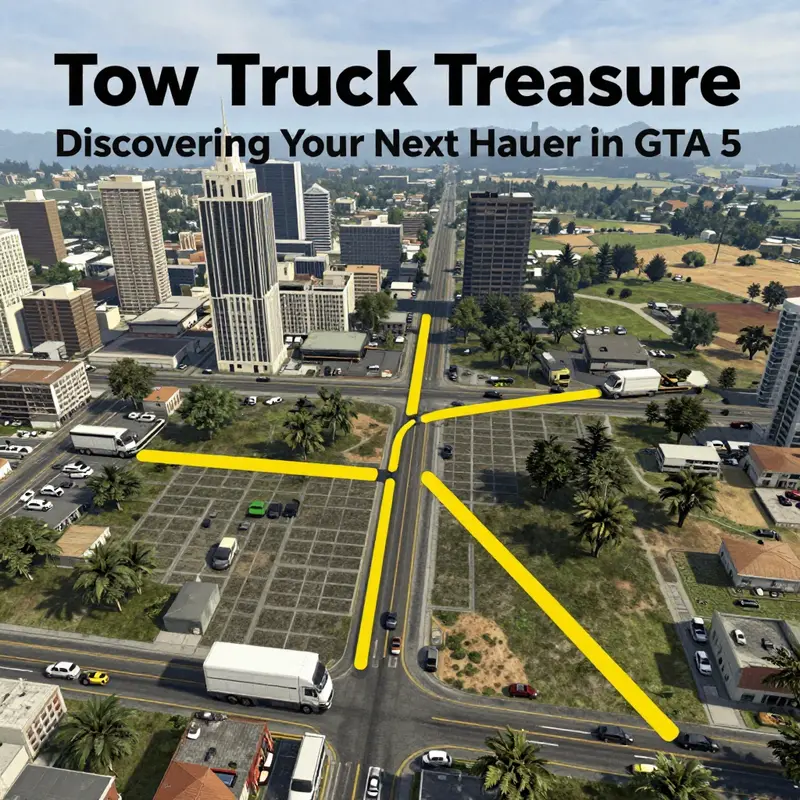
The GTA V open world rewards map awareness. Tow trucks appear as both random spawns and mission-linked assets, so plan routes that minimize backtracking and respect scripted sequences. Paleto Bay and the Chop Shop are reliable starters for a Classic Tow Truck, with opportunities to loop through Vinewood and Chumash garages and repair lots along major corridors. Use real-time maps to identify fixed spawns and mission markers; let markers indicate when a tow truck is part of a mission, and treat other spawns as opportunistic pickups. Be mindful of mission progress; hijacking a tow truck in the middle of a sequence can derail an objective. A route-based mindset helps you balance speed and control, especially during the Truckin’ challenge, which rewards choosing routes with the least traffic within a time window. Before approaching a tow truck spotted near a mission, check the current objective status. If a scripted beat is active, observe; if not, proceed with hijack or relocation. Combine anchor points with backup options so a single spawn failure doesn’t waste time. For players seeking broader context, Island Tow Truck blog entries offer additional patterns and route ideas. The map becomes an extension of your instincts, guiding decisions instead of leaving you chasing random spawns.
Tow Truck Trials and Triumphs: Mastering GTA 5’s Salvage Economy
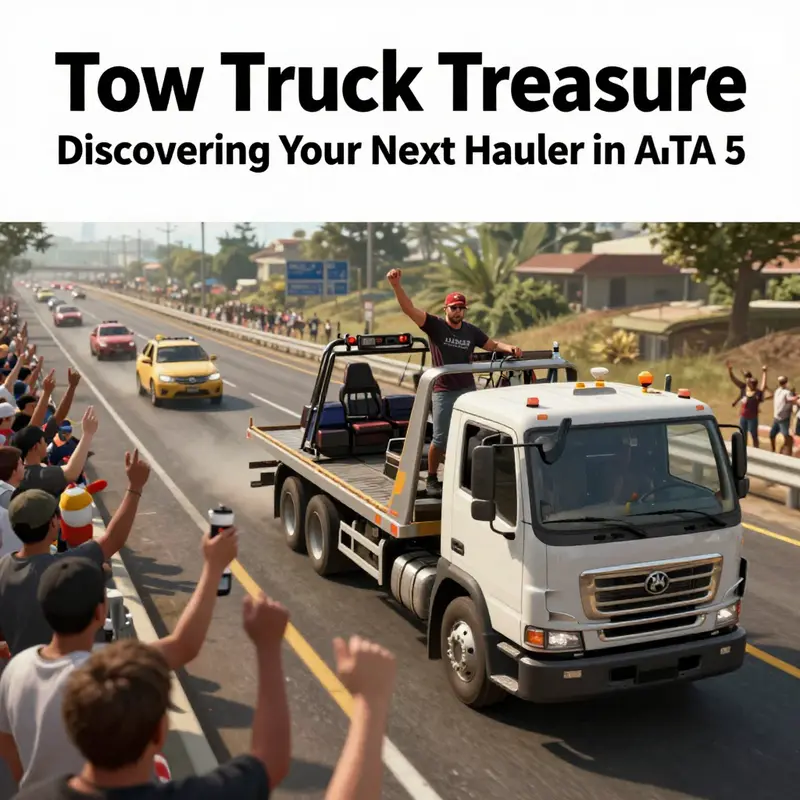
Finding tow trucks in GTA 5 is more than a casual scavenger hunt; it’s an entry into a compact, fast-paced economy that blends risk, timing, and street logistics. In GTA Online, the Tow Truck Service isn’t a mere backdrop; it’s a structured path to cash, reputation, and progressively tougher missions. The objective isn’t simply to grab a tow and move on. It’s to understand a miniature ecosystem where the right vehicle, the right route, and the right timing transform a routine job into a reliable income stream. As players roam Los Santos and Blaine County, the tow truck becomes a moving workshop, a platform for optimization, and a tool that can unlock higher-tier challenges and bigger paydays. The core of this chapter follows that logic: locate a tow truck, engage with the Tow Truck Service, build reputation at the Salvage Yard, and use upgrades and smarter routing to maximize efficiency and earnings, all while staying adaptable to the shifting demands of each mission and event you encounter on the map.
Tow trucks appear across the map in several naturalistic settings that mirror real-world fleet operations. They cluster near garages and car dealerships, where professional fleets service vehicles and prepare them for transport. In Los Santos, you’ll commonly find them parked outside repair shops in busy hub neighborhoods—areas that see a lot of turnover and a steady stream of abandoned or parked vehicles that quick-tow crews can recover after a minor incident or routine check. Vinewood, near the Vinewood Racetrack, and Chumash, near the Chumash Casino, are dependable magnets for these trucks, but the tactic is universal: look for spaces that host service activity, and you’ll find a tow truck eventually. The game also places tow trucks along longer arterial routes. Major roads, like I-405 and other well-traveled corridors, become scenes where a tow truck might be dispatched to assist a stalled vehicle or an accident site. In these moments, the tow rig is not just a vehicle; it’s a mobile asset with the potential to start a revenue cycle.
The broader geography of tow trucks expands into the mission framework. The narrative arcs of GTA 5’s missions sometimes rely on a tow truck as a plot device or as a tool for the operation. A well-known example is the mission that plays out in the heist arc where a tow truck is repurposed for a critical phase of the plan. In Online, you’ll encounter similar flows that require you to operate a tow truck as part of a sequence of tasks—loading vehicles, moving them to a staging area, and coordinating with other players to complete the objective. These mission-based appearances aren’t guaranteed to spawn a tow truck at the moment you want one, but they offer a reliable pathway to access higher-reward tasks once you’ve built enough Reputation by completing other salvage-related jobs. The in-game map helps you navigate toward these opportunities, with the “Tow Truck” category highlighting eligible vehicles when a mission or event is live. If you’re in a hurry to test the pretenses of speed and precision, the Truckin’ challenge—driving a tow truck at high speed for a set window—gives you a direct, repeatable goal that teaches you to balance velocity with control, a skill that translates into more efficient operations on real-world routes you simulate in your GTA Online routine.
Central to this economy is the Salvage Yard, a hub where your towing work translates into reputation and, crucially, into access to higher-tier missions and bounties. Each successful tow improves your Reputation Level with the Salvage Yard, and that growth isn’t cosmetic. Higher reputation unlocks more lucrative and demanding jobs, with bigger payouts and more complex vehicle handling requirements. This isn’t just about speed; it’s about discernment. Each job presents a different set of constraints—how far you must haul, what type of vehicle you’re towing, whether you must deliver to specific zones, and how much time you’re given before a new assignment drops. The yard acts as both a marketplace and a testing ground where your decisions determine your earnings trajectory. The closer you align your activities with the yard’s current demands, the more you’ll be paid for your efficiency and your ability to minimize downtime between pickups and drops.
To maximize the yield from tow truck operations, the selection of the vehicle you tow is critical. High-value vehicles command the best payouts and can dramatically tilt your earnings if you chain several quality picks in a single run. In practical terms, this means scanning the map for locations where luxury or high-performance vehicles are commonly parked or abandoned, then incorporating those choices into your route planning. It also means selecting the right tow truck for the job. Upgrades matter here: better cranes, stronger engines, and improved hydraulics shorten the time spent loading and securing vehicles, reduce damage risk, and enable you to complete more cycles in a single session. The incremental gains from upgrades compound quickly when you’re aiming for long sessions at peak load times, where the most valuable targets cluster.
The art of route planning deserves emphasis. Efficiency is the backbone of sustained success. A well-planned run minimizes backtracking, reduces exposure to crowded streets, and weaves around roadblocks or tight choke points that could stall your pickup. You’ll find that a serial approach—starting from a central hub, then moving to adjacent zones with high-value targets, and finally delivering to the Salvage Yard before looping back to a new batch—translates into more completed contracts per hour. The more you practice, the better you’ll become at predicting where the next target will appear and how to anticipate typical police activity or traffic jams that could slow you down. It’s a mental map, a rhythm, and a discipline rolled into the wheel of a tow truck.
Another layer of sophistication comes from upgrades and equipment. A modern tow truck with upgraded engines, a steadier crane, and more reliable hydraulics translates into fewer delays and more consistent results. These upgrades aren’t just cosmetic; they shift your performance curves in measurable ways. They impact everything from loading times to the stability of vehicle attachments during transit. You’ll also find value in additional equipment that improves your operational resilience, such as extra tie-downs to reduce cargo shift and better lights or sensors that reduce the risk of minor collisions during tight maneuvering. The practical payoff is straightforward: you become a more dependable operator who can handle higher-risk jobs with the same or less effort than before.
Beyond the mechanics of movement and load management, the social and strategic components of GTA Online’s tow truck play a significant role. The salvage missions are not solitary efforts; they hinge on timing, sometimes coordinating with other players to clear routes, manage roadblocks, or share workload across multiple tow trucks. The dynamic environment means you’ll need to stay adaptable. If a route becomes congested or a target is more time-sensitive than expected, you have to be ready to pivot—redirecting to a nearby salvage opportunity, re-prioritizing your load based on value and time, or shifting to a different yard discipline that the Salvage Yard may require at that moment. This adaptability is the essence of sustainable success in the salvage economy: you make fast, intelligent decisions from moment to moment, and those moments accumulate into real, measurable progress in Reputation and payouts.
To deepen your practical understanding, consider this pattern of approach. When you start a shift, map out two to three likely target clusters with the most valuable vehicles (late-model exotics or high-end performance cars). Check the map for any live missions or events that might influence what gets spawned or requested. If you aren’t seeing high-value vehicles, don’t force a low-value haul just to fill a time slot. Instead, time your moves to align with the Salvage Yard’s current demands, and be prepared to switch to a quicker, lower-yield but smoother route that ensures you maintain momentum and do not stall the operation. Momentum matters in GTA Online’s salvage economy; consistent, efficient cycles keep your Reputation growing and widen the door to more lucrative gigs sooner rather than later. In this sense, the Tow Truck Service becomes a platform for continuous improvement rather than a one-off source of income.
For players who want a more nuanced understanding of mission structure, rewards, and how to build out a stable, repeatable workflow, the official GTA Online guide provides a more formalized lens on these mechanics. It offers insights into how mission types scale with reputation and how rewards are calibrated to the difficulty and duration of a job. While the personal, hands-on experience of chaining pickups and drops is where you’ll learn the rhythm, the guide helps you anchor that rhythm in a broader framework so you can forecast earnings and plan your progression with greater confidence. If you’re looking to supplement your in-game experimentation with a structured, informational reference, a trusted resource from the industry can be a valuable companion as you expand your wheelhouse and begin to tackle more complex salvage operations.
If you like to blend real-world fleet-management thinking with the game’s mechanics, there’s also a practical avenue you can explore outside the console: a dedicated blog that discusses fleet operations and emergency response logistics. While the focus is real-world, the concepts map neatly onto the in-game workflow: prioritizing high-value targets, planning efficient routes, upgrading equipment to reduce downtime, and building a reputation through consistent, reliable service. You can read a concise, practical overview at this resource: The Island Tow Truck Blog. The post helps bridge the gap between fictional game economies and tangible, everyday fleet management practices. It’s a reminder that the core principles—efficiency, route optimization, and steady progression—translate across both contexts and can make your GTA Online ventures feel more grounded and purposeful. You don’t need to abandon the game’s fantasy to adopt a more disciplined approach; you simply apply real-world logic to a virtual demand stream, and the results speak for themselves.
In the end, the path to mastery of GTA Online’s tow truck opportunities is not a single trick or a one-time haul. It’s a disciplined, iterative process of locating the right vehicles, executing precise, timely pickups, and delivering to the Salvage Yard in a way that continually boosts your Reputation. Each job builds toward a larger objective: more lucrative assignments, higher-tier missions, and better overall earnings. The challenge—and the reward—lies in steadily refining your routing, upgrading your equipment, and maintaining the speed and precision that makes a tow truck operator in this virtual world both respected and relied upon. As you gain experience, the map becomes less a set of static spawns and more a dynamic workspace where opportunity emerges from the intersection of planning, practice, and pace. For players who want to push the envelope further, ongoing iteration—testing new routes, experimenting with different vehicle combinations, and chasing the most valuable targets—will unlock additional layers of payoff and provide a satisfying sense of progression that aligns with the core premise of the Salvage Yard economy. If you keep your focus on efficiency and strategic targeting, the tow truck becomes less of a prop and more of a precise instrument in your GTA Online toolkit, capable of turning a routine haul into a sustained, rewarding practice.
For readers seeking a quick, practical entry point into the broader logistics logic behind these operations, a short, action-oriented overview is available through the linked resource above. It adds a real-world context to the game’s salvage workflow and highlights the transferable skills that emerge from regular engagement with the Tow Truck Service, such as route optimization, asset management, and disciplined pacing. Keeping these ideas in mind helps you approach GTA Online’s tow trucks not as a single activity but as a flexible, scalable system that you can grow with over time. And with the support of the community and updated guides from the wider gaming ecosystem, you’ll find that the speed, precision, and strategic thinking you bring to each tow can echo into other facets of your GTA Online career, making every haul feel purposeful and every run more productive than the last.
External resources can further illuminate your path. The Rockstar Games GTA Online Guide provides a comprehensive, official framework for understanding mission structures, pacing, and rewards, which can help you align your tow-truck activities with the broader economy of the game. It’s a reliable reference as you experiment with different routes, vehicles, and target selections. For an enduring reference point on in-game mechanics, the guide is a solid companion to your experience on the streets of Los Santos and the dusty backroads of Blaine County. You can access it here: https://www.rockstargames.com/gta-v/online.
Final thoughts
Navigating the vast landscapes of GTA 5 for tow trucks isn’t merely an exercise in exploration—it’s a critical component that can enhance your gameplay, especially for those involved in automotive services. The insights shared throughout this guide highlight the strategic locations and mission opportunities, mapping out a coherent approach to drawing the most from each gaming session. By embracing these tactics, local repair shops, dealers, fleet operators, and resort managers can optimize their experience and ensure they’re well-equipped to tackle any challenges that come their way. As you dive deeper into the world of Los Santos, may your journey be filled with successful tow truck encounters and thrilling gameplay.