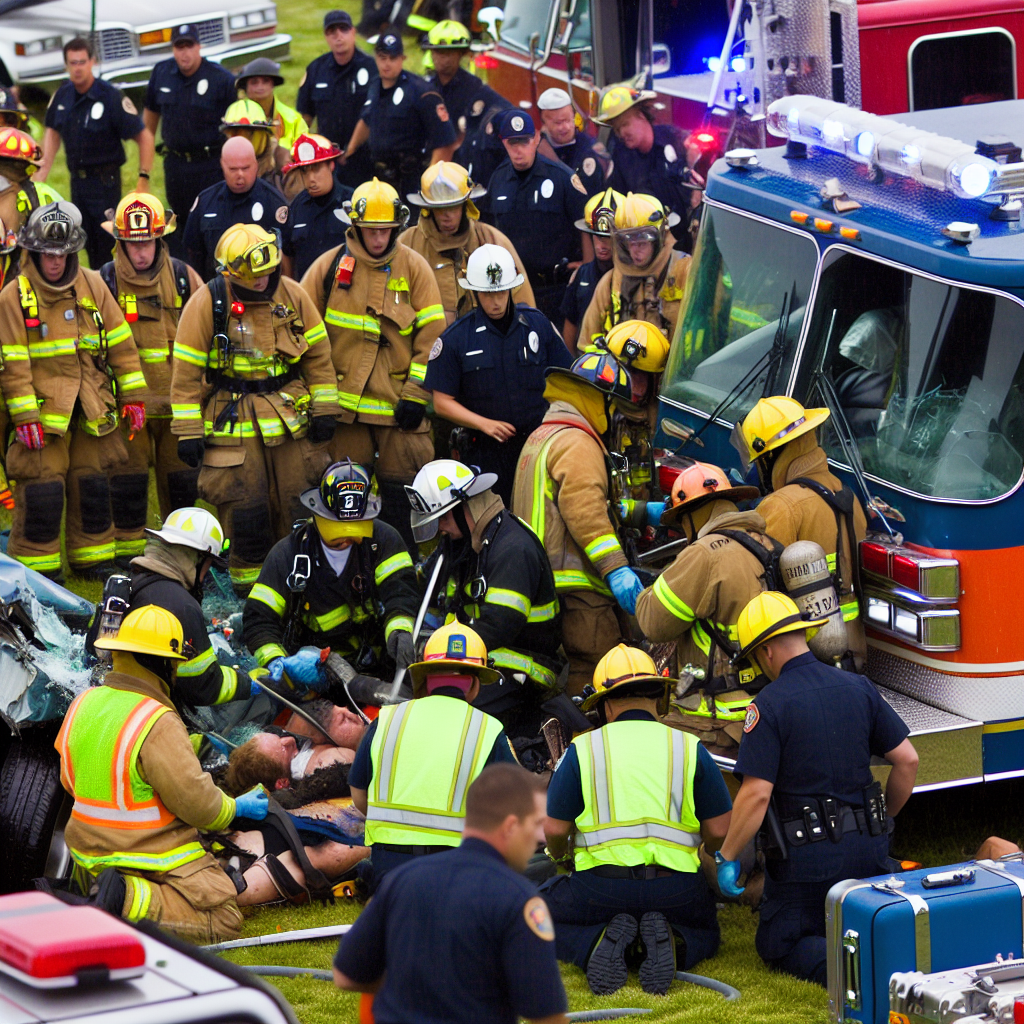
In the heart of Sedalia, Missouri, Don’s Truck Towing & Truck Wash Inc. stands as a beacon of reliability for local auto repair shops, car dealerships, property managers, resort operators, and commercial fleet operators. This dedicated team operates 24/7, ready to assist when emergencies strike, ensuring that help is always close at hand. In this discussion, we’ll explore the extensive emergency services offered by Don’s Truck Towing, the critical importance of roadside assistance in our daily lives, the training programs that hone the skills of drivers in our community, and how the company’s operations contribute to the local economy. Each chapter aims to present a holistic view of Don’s Truck Towing’s impact and relevance within the Sedalia community and beyond.
On Call, On the Move: How Don’s Truck Towing & Truck Wash Keeps Heavy-Duty Fleets Moving Through Round-the-Clock Emergency Services
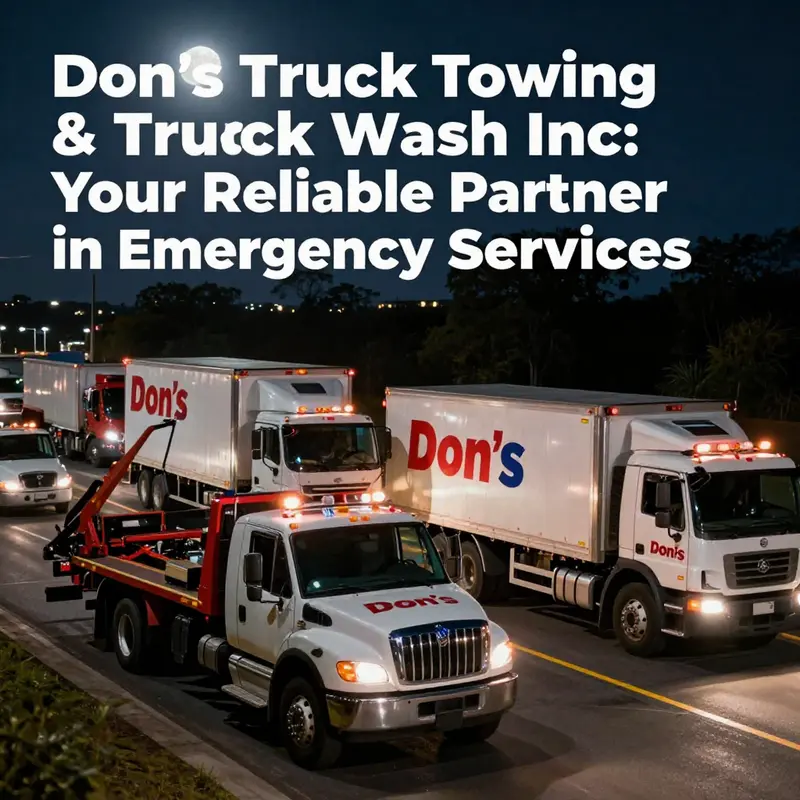
In the vast network of highways, truck routes, and service corridors around Sedalia, Missouri, the reliability of a transportation operation hinges as much on what happens when things go wrong as on the miles logged under ideal conditions. Don’s Truck Towing & Truck Wash Inc. sits at that critical juncture, a cornerstone for any fleet that depends on predictable uptime. The business operates around the clock, a deliberate stance that mirrors the tempo of modern logistics where delays are measured not in hours but in minutes. When a Route A truck stalls on a rain-slicked ramp, or when a trailer misreads a sudden curb in the logistics yard, hours can bleed away before a fix is found. In those moments, the value of a 24/7 emergency service provider becomes not just a convenience but a strategic asset. The location at 4735 S Limit Ave is more than a point on a map; it is a dispatch hub, a workshop, and a guarantee that a fleet can regain momentum with minimal interruption, any time of day or night. The ethos behind this availability is simple and unwavering: fleets cannot afford to wait, drivers cannot afford to linger, and cargo cannot afford to stand still. The response framework must be immediate, reliable, and intelligent, designed not only to move vehicles but to restore confidence in the entire operation.
The emergency services offered by Don’s are framed around four core capabilities, each tailored to the real-world pressures of heavy-duty transportation. First is towing assistance, which extends beyond mere vehicle relocation. It is a careful orchestration of safety, restraint, and compliance, ensuring that a truck is removed from a hazardous situation without compromising the load or the surrounding traffic. Towing is a bridge from breakdown to repair, a swift transition that minimizes exposure to the elements and reduces the risk of secondary incidents on busy corridors. But towing alone cannot sustain a fleet, and so the service suite expands into on-site repair support. This is where the technicians’ hands-on expertise becomes a decisive factor. A stubborn battery, a starter relay, a stubborn fuel line, or a loose electrical connection can be diagnosed and often remedied on the spot. The goal is not to replace a vehicle with a tow in every instance, but to determine when a fix is feasible at the location and when a tow is the smarter option to protect equipment, cargo, and driver safety. The on-site capability acts as a rapid first line of defense—pivoting from diagnostic questions to actionable repairs within the truck’s own environment, sparing drivers from the added downtime of a full haul.
Roadside emergencies are rarely a single-variable problem. A flat tire, a dead battery, or a small mechanical hiccup can cascade into a delay that disrupts a delivery schedule, a yard shift, or a long-haul itinerary. The roadside assistance included in Don’s repertoire is a compact, well-coordinated package of services designed to address such contingencies quickly and effectively. It encompasses tire changes for heavy-duty tires, jump-starts for stubborn batteries, fuel delivery when a vehicle runs dry before the next fuel stop, and minor mechanical adjustments that can unlock the road without necessitating a tow. In many cases, a quick fix on the shoulder translates into a few more hours of productive driving, protecting the chain that delivers goods from origin to destination.
The third leg of the emergency services is rapid response breakdown handling. Here, the emphasis is on speed, safety, and situational awareness. In a world where a single breakdown can ripple through a network of loads, schedules, and customer commitments, the ability to dispatch a capable crew immediately is a competitive differentiator. Rapid response is not a rushed response; it is a disciplined process that leverages real-time information, efficient routing, and a skilled crew trained to operate in diverse conditions. The dispatch system prioritizes proximity, road safety, and vehicle type, ensuring that the right equipment reaches the scene with the minimum possible delay. Crews are positioned to handle everything from a roadside fix to secure vehicle recovery, with a mindset that values the safety of the driver, the integrity of the cargo, and the smooth reentry of the vehicle into service. The practical upshot for fleet operators is straightforward: when a breakdown occurs, the clock starts ticking in earnest, and the team is ready to respond with the right mix of tools, expertise, and timing.
This quartet of capabilities—towing, on-site repair, roadside assistance, and rapid response breakdown handling—works in concert to deliver a broader outcome: safety, efficiency, and continuity for fleets operating in demanding environments. The emphasis on safety cannot be overstated. Roadside incidents can place drivers at risk, particularly on congested corridors or in inclement weather. The trained personnel, the right equipment, and the systematic approach to each call reduce exposure for everyone involved. It is about more than getting a truck back on the road; it is about ensuring that the return journey does not introduce new hazards or compromise the cargo. The equipment and techniques employed are chosen to adapt to the varied needs of heavy-duty vehicles—tractors, trailers, and combinations that require careful handling and precise lifts. The aim is not merely to move a vehicle but to support the vehicle’s return to service with the least possible disruption and the highest possible assurance that the problem has been resolved with sound judgment.
The integration of these services with broader fleet operations is more than logistical coordination; it is a philosophy of reliability. A fleet’s success hinges on planning as much as on performance. In practice, this means building a relationship with a provider that understands the cadence of freight cycles, the importance of predictable maintenance windows, and the critical nature of uptime for customer commitments. Don’s approach fits into this framework by offering a consistent set of responses that can be scaled to fit different fleets—whether a regional carrier with multiple distribution points or a long-haul operator with a dispersed schedule of loads. The on-site repair capacity, for instance, complements the preventive maintenance strategies that fleets rely on to minimize breakdowns. When a vehicle comes in for routine service, the same team that handles emergency repairs can contribute to diagnosing issues before they cause an unplanned outage on the road. This kind of cross-functional capability transforms a tow service into a partner in fleet reliability, one that helps managers optimize maintenance planning, allocate resources more efficiently, and keep drivers focused on the road rather than worrying about the next breakdown.
The broader context for these services is further enriched by the ongoing development of driver training and professional development. CDL training, a component of Don’s broader offering, reinforces the connection between skilled operators and the emergency response network. Drivers who understand how to recognize early warning signs, how to communicate effectively with dispatch, and how to navigate unfamiliar recovery scenarios contribute to safer, faster resolutions. The synergy between training and emergency response creates a resilient ecosystem: a fleet that can anticipate issues, respond decisively, and recover quickly from disruptions. In this sense, emergency services are not simply a reactive measure but a forward-looking strategy that underpins operational stability.
From the perspective of fleet managers and dispatch teams, the practical value of Don’s emergency services is measured in uptime, predictability, and the quality of the interaction with responders on the ground. The reliability of a local provider matters most when conditions are less than ideal—when the weather is uncooperative, when traffic patterns complicate access to a vehicle, or when a load shift creates instability that demands careful handling. A stable, responsive partner who can deliver the right help at the right moment reduces the guesswork in crisis management and lowers the stress of crisis decision-making. It is the quiet confidence of knowing that, in the moment of most need, there is a competent, dedicated team ready to act. The value transmitted to the fleet is not just mechanical repair or vehicle relocation; it is a shared commitment to keeping the network of roads, yards, and supply chains moving forward in the face of uncertainty.
For operators seeking to incorporate industry best practices into their own emergency planning, there is a broader frame to consider. Resources that outline robust emergency response strategies for fleets, such as essential fleet emergency response strategies, can provide guidance on structuring responses, prioritizing safety, and coordinating with service providers in real time. These frameworks emphasize the alignment of dispatch protocols, driver communications, and maintenance scheduling with a single, coherent objective: minimize downtime while maximizing safety and cargo integrity. In practice, this means establishing clear escalation paths, defined service level expectations, and transparent communication channels between the provider, the fleet, and the customer base. When a fleet has already standardized these processes, the moment a breakdown occurs becomes less about improvisation and more about execution—precise, practiced actions that move the operation toward recovery with minimal deviation from the plan. The internal link to this line of thought—essential fleet emergency response strategies—serves as a bridge between the everyday realities of street-level response and the strategic considerations that fleets weigh when selecting partners for long-term reliability.
As the city and surrounding counties continue to grow, the demand for dependable, round-the-clock emergency services will only intensify. Don’s Truck Towing & Truck Wash Inc. exists within this evolving landscape as more than a service provider; it is a component of the operational backbone that keeps freight moving through the region. The combination of towing expertise, on-site repair capabilities, roadside assistance, and rapid breakdown handling creates a comprehensive safety net for drivers and fleets alike. It embodies a practical response to the most pressing needs of the road—getting drivers to safety, safeguarding cargo, and restoring mobility with minimal friction. In the end, the measure of such a program is not only the speed of its response or the breadth of its services but the confidence it gives to operators who must make quick, high-stakes decisions under pressure. And as those decisions unfold on neon-lit highways at odd hours, the assurance that help is near—immediately, professionally, and with a clear commitment to safety—carries its own quiet, enduring value.
For readers seeking a direct reference to the provider’s emergency capabilities, further details and official statements can be found on the company’s emergency services page, which outlines service scope, contact pathways, and response commitments. External resource: https://www.donstrucktow.com/emergency-services
On the Open Road, a Reliable Plan B: How Don’s Truck Towing & Truck Wash Inc. Converts Roadside Emergencies into Seamless Recoveries
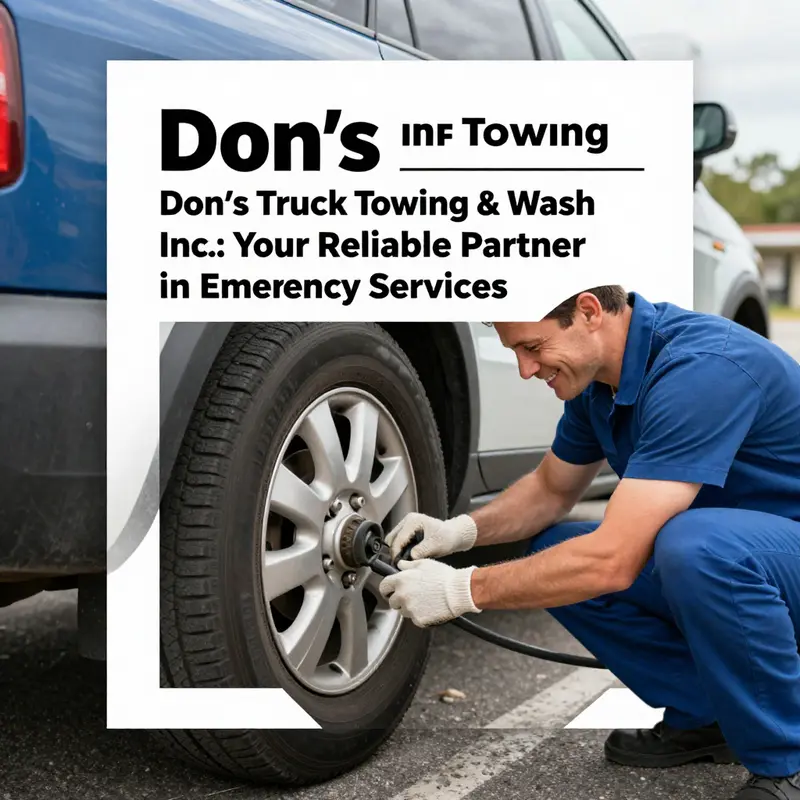
Road travel is rarely a straight line. Even the best-planned routes can be interrupted by a sudden flat tire, a dead battery, a lockout, or a fuel gauge that drops to empty when the next station feels too far. In those moments, a trusted roadside partner becomes a lifeline that keeps people moving, goods flowing, and safety at the forefront. Don’s Truck Towing & Truck Wash Inc., a 24/7 emergency towing and wrecker service rooted in Sedalia, Missouri, stands as a practical example of how a local provider can anchor reliability for both personal motorists and fleets. Located at 4735 S Limit Ave, the company embodies round-the-clock availability and a breadth of services beyond a tow or a wash. When a driver faces a roadside hiccup, a dispatcher who understands the anxiety of being stranded, a crew trained to assess quickly, and a plan that reduces downtime all matter.
An essential part of this equation is the scope of services offered. Roadside assistance is not a single act but a spectrum of interventions designed to address common emergencies with efficiency and care. A flat tire might demand a tire change on the shoulder; a dead battery calls for a jump or a replacement start; a key locked inside the cab requires a quick, careful unlock; fuel depletion may trigger an emergency delivery to bridge the gap. In capable hands, these are not mere inconveniences but situations that can be deescalated with the right tools, the right expertise, and the right timing. Don’s Truck Towing & Truck Wash Inc. emphasizes this approach through its 24/7 availability and rapid dispatch, underscoring a simple truth: when minutes count, a reliable partner can prevent a small delay from becoming a major disruption.
For truck drivers and fleet operators, the stakes of roadside support are even higher. A single breakdown on a long-haul route or in a remote corridor can ripple through a schedule, affecting deliveries, maintenance windows, and payroll. This is where roadside assistance becomes more than a quick fix; it becomes a strategic component of operational continuity. The service mix often extends well beyond traditional towing. Emergency fuel delivery can be a literal lifeline, ensuring a vehicle can complete a run rather than waiting in limbo. Lockout services protect valuable assets and prevent costly delays while keeping the driver calm and focused. Towing isn’t an end in itself; it’s a bridge back to operation, often paired with options such as temporary rental vehicles or lodging during extended delays. Providers may also offer travel assistance and reimbursement options.
The fleet perspective adds another layer of complexity and opportunity. Downtime translates into missed loading windows, idle equipment, and reduced utilization. A robust roadside program becomes a strategic asset by compressing repair time, providing clear expectations, and preserving schedule integrity. The reliability of a 24/7 service is about speed, but also the quality of interaction, transparency of process, and predictability of outcomes. Fleet managers appreciate the ability to track dispatch status, estimate arrival times, and communicate proactively with drivers and customers. In this light, roadside assistance behaves like a public utility for transportation: a standard of reliability that supports movement, commerce, and regional connectivity.
Technology interweaves with this human-centered service to amplify effectiveness. Modern roadside operations leverage dispatch software, real-time GPS tracking, and telematics-informed diagnostics to help technicians arrive with the right parts and approach. When a vehicle’s problem is diagnosed remotely, a technician can guide on-site repairs or tailor a more efficient recovery plan. This integration reduces unnecessary mobility and minimizes disruption while enhancing safety by reducing roadside hazards. Industry examples show how the field has evolved from on-call service to a more intelligent, proactive form of roadside support. In the broader landscape, providers coordinate with telematics-driven fleets and regional partners to deliver seamless, end-to-end care for drivers on every mile.
Trust is the currency of dependable roadside service. Don’s Truck Towing & Truck Wash Inc. works through technical capability and the relationships it builds with customers. Reliability means consistent response time, accuracy in assessment, and straightforward communication about what will happen next. When a driver calls, they want to hear a plan, not excuses. They want to know who is coming, how soon, and what the next steps will be. This clarity reduces anxiety and makes a stressful moment more manageable. For fleet operators, trust translates into predictable performance and a credible commitment to minimizing downtime—critical metrics that influence margins and customer satisfaction. The assurances built through trust extend beyond service delivery; they create a long-term safety net for drivers navigating unfamiliar or remote landscapes with confidence.
A practical dimension of roadside assistance is the realistic recognition that emergencies occur everywhere. In rural stretches, congested city corridors, or along interstates at night, a reliable responder is measured not only by speed but by skillful handling of risk. Technicians must manage traffic hazards, secure a safe work zone, and safeguard everyone involved. This is where training—such as CDL-focused preparation and ongoing professional development—becomes essential. Training ensures responders understand vehicle configurations, comply with safety protocols, and execute complex maneuvers with minimal disruption. It also helps guide drivers through immediate post-incident steps, such as documentation for insurance or maintenance records and navigating alternate travel options when longer-term maintenance is needed. In practice, this combination of rapid response, technical proficiency, and careful safeguarding turns roadside assistance from an isolated act into a comprehensive partnership.
The broader significance of robust roadside support lies in its ability to act as a safety net for modern transportation. It embodies a philosophy that prioritizes human beings—drivers, fleet managers, logistics coordinators, and customers—while recognizing the practical realities of moving goods and people. When a provider like Don’s Truck Towing & Truck Wash Inc. can respond at any hour, diagnose with available tools, coordinate alternative arrangements, and deliver the necessary physical recovery, the roadside experience shifts from disruption to a controlled, manageable event. This is not only about getting a vehicle moving again; it is about sustaining momentum, preserving asset value, and reinforcing daily trust that keeps supply chains intact.
For organizations seeking to strengthen their own emergency response posture, consider a framework of essential components and best practices. Explore Essential Fleet Emergency Response Strategies for a comprehensive perspective on building resilience into fleet operations. Essential Fleet Emergency Response Strategies.
External resources that inform the broader landscape of roadside support illustrate how industry standards shape expectations and performance. For reference, see major automakers’ roadside program outlines, which highlight core principles such as 24/7 availability, clear dispatch processes, and telematics-enabled diagnostics to enhance capability. https://www.bmwusa.com/roadside-assistance.html
From Classroom to Crash Scene: Training and Skill Development at Don’s Truck Towing & Truck Wash Inc.
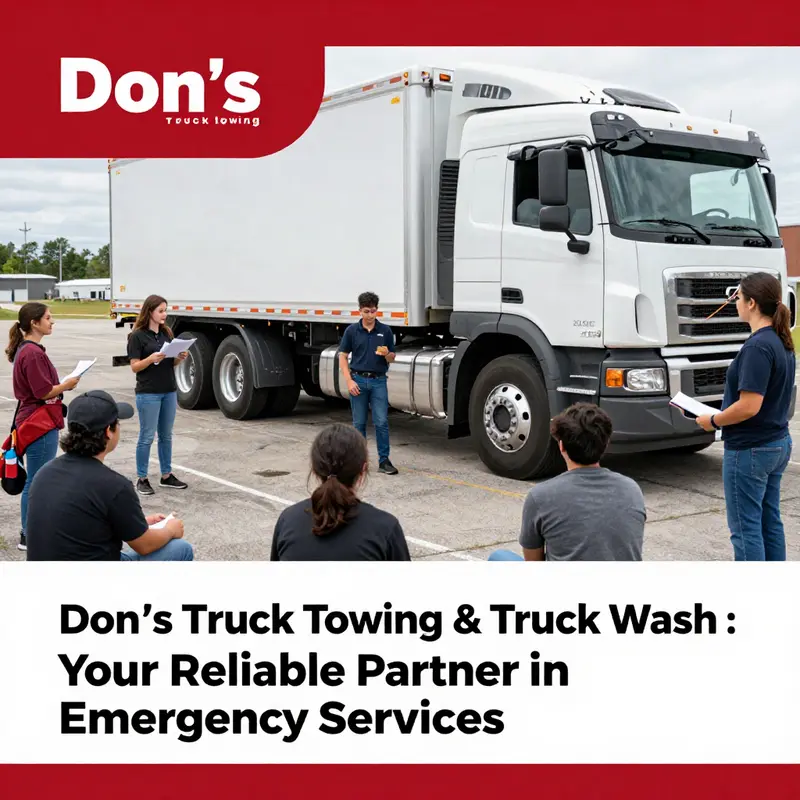
In Sedalia, Missouri, the heartbeat of Don’s Truck Towing & Truck Wash Inc. sits at 4735 S Limit Ave, where the company’s philosophy toward training mirrors its 24/7 promise to respond with speed, precision, and unwavering safety. Training here is not a box to be checked; it is a continuous thread woven through every shift, every dispatch, and every recovery. The one-day Commercial Driver’s License (CDL) training course sits at the center of this philosophy, designed to help aspiring drivers prepare for the CDL exam while grounding them in the realities of a busy towing and truck wash operation. It’s a concise, targeted program that respects the learner’s time but never shortchanges the depth of preparation required for safe highway work and high-stakes roadside support. This emphasis on practical readiness aligns with the company’s broader mission: to deliver reliable road services at any hour, while safeguarding lives, equipment, and communities.
The CDL training offered on-site is more than a snapshot of theory; it is a bridge from instruction to action. In a single day, the curriculum moves through core competencies that have proven essential in the field. Trainees engage with foundational topics that include vehicle inspection, operational fundamentals, and compliance with regulatory standards. The emphasis on pre-trip inspection, for example, is not merely about ticking boxes. It’s about cultivating a disciplined habit of scrutiny—learning how to spot wear, leaks, misalignments, or mounting hardware that could impair a tow or a roadside intervention. The hands-on component brings students into contact with real equipment under supervised conditions, where instructors model methodical checklists, deliberate control inputs, and calm, deliberate decision-making under pressure. The goal is not to overwhelm but to empower: to graduate with enough confidence to handle a live assignment, while recognizing when a situation demands escalation or additional resources.
Yet the day’s value extends beyond the cab and the hook. The trucking world is a tapestry of moving parts: dynamic traffic patterns, weather fluctuations, and the constant need to coordinate with dispatch, law enforcement, and site owners. Training in this environment reframes the CDL exam as a doorway to professional competence rather than as a final destination. Instructors emphasize situational awareness—how to read a scene, assess risk, and communicate clearly with teammates during a recovery, a large-load escort, or a multi-vehicle incident. The emphasis on communication extends beyond the radio. It encompasses written logs, shift handoffs, and the precise documentation required for compliance and accountability. Even the smallest details—how to secure a load, how to chain equipment correctly, or how to position a tow vehicle for stability on uneven ground—become learning anchors that ripple through every subsequent operation.
The one-day format is carefully structured to respect the realities of a 24/7 operation. Trainees arrive with varying levels of experience, some with little more than a driving permit, others with practical on-road exposure in related industries. The program meets them where they stand and scaffolds their growth. Morning sessions typically blend concise classroom instruction with visual aids that demystify the regulatory framework: hours of service, permit restrictions, weight classifications, and the distinct considerations that apply to heavy-duty trucks versus lighter vehicles. In the afternoon, the emphasis shifts to applied practice. Trainees handle wheel-lift and under-ride procedures, learn proper ramp positioning, and practice communicating critical information during a tow. They learn to observe and assess compatibility between the vehicle’s weight distribution and the tow strategy, ensuring stability as equipment engages and as the scene evolves. The process is iterative but controlled: students try, receive feedback, correct, and try again—building muscle memory without compromising safety.
A key dimension of the program is its integration with the company’s broader skill-development ecosystem. Don’s Truck Towing & Truck Wash Inc. positions CDL training as the entry point into a continuum of professional growth. The one-day course is not a standalone event; it is a milestone within a culture that prizes continuous improvement. Graduates leave with a concrete skill set that can serve as a foundation for additional training, cross-training opportunities, and potential career advancement within the organization. The company’s claim to be available around the clock is reinforced by this approach: the more capable the staff, the more fluid and secure the company’s emergency response becomes. When a dispatcher allocates a unit to a call, the on-site crew relies on shared language, practiced procedures, and a well-understood escalation path. This alignment reduces response times and increases the likelihood that every intervention preserves safety margins for both vehicle operators and the public.
The instructor-led cadence of the CDL course also underscores an important truth about work in towing and roadside assistance: the job blends physical skill with critical thinking. A routine roadside call can become complex in moments—blocked lanes, uneven terrain, slick surfaces, or exhaust heat from a disabled engine. The training emphasizes risk assessment as a living practice. Trainees learn to identify potential hazards—unstable loads, traffic flow constraints, unsecured anchors—and to craft contingency plans that accommodate evolving conditions. This mindset—anticipating risk, communicating plans, and adapting in real time—becomes a cornerstone of the organization’s safety culture. It’s not about extracting every possible scenario into a one-day session; it’s about equipping drivers with a principled framework they can adapt as they encounter new environments, whether on a suburban corridor or a rural highway during a winter weather event.
Helping learners translate theory into practice is only part of the equation. The program also places a premium on reliability and customer-centric service. In the towing field, reliability translates into the ability to arrive prepared, assess the scene with clarity, and execute a plan with measured precision. The CDL training fosters these outcomes by teaching drivers to anticipate equipment needs, prepare the necessary PPE, coordinate with on-site personnel, and communicate a clear, concise assessment to the team and the customer. When a driver surfaces from the session, there is a palpable sense of readiness to perform under the stress that emergencies entail, without sacrificing safety or procedures. This readiness is reinforced daily by the rest of the company’s offerings: 24/7 emergency towing, roadside assistance, and mobile truck washing. Each service line benefits from the same disciplined approach, which begins with the driver’s certification and then continues with practical, on-the-ground discipline.
The training pathway also serves as a bridge to broader career opportunities within the transportation ecosystem. Don’s recognizes that CDL training is a starting block rather than a terminus. For individuals who seize the opportunity, there are avenues to expand expertise—learn more about how seasoned teams manage high-stakes incidents and how fleets plan for rapid mobilization in adverse conditions. For readers exploring how to frame their own learning around real-world fleet operations, resources such as essential fleet emergency response strategies offer useful perspectives on how well-constructed response plans translate into on-the-ground practice. The aim is not to produce technicians in isolation but to cultivate professionals who can integrate technical skill with strategic thinking, situational judgment, and effective teamwork. In a company that operates continuously, the impact of this integrated training reverberates through every shift, every call, and every recovery.
The Sedalia location itself functions as more than a training venue; it is a living laboratory where theory meets terrain. Students become familiar with the rhythms of a real shop floor: pre-job briefings, post-operational debriefs, and the continuous maintenance cycles that keep tow trucks and wrenches ready for action. The daily routines—-inspections, refuels, tire checks, fluid levels, and light maintenance—are not chores; they are opportunities to apply the safety principles learned in class. The one-day CDL course thus synergizes with the shop floor’s cadence, ensuring that new drivers feel both connected to the equipment and responsible for its care. This connection between learning and doing reinforces a safety-first mindset that benefits everyone—from the newest recruit to a veteran operator who may encounter an especially challenging incident during a late-night shift.
Beyond the classroom and the bay, the program emphasizes mentorship. Experienced operators who have navigated the unpredictable demands of Sedalia’s roads traditionally mentor newcomers, modeling how to pace a scene, how to communicate with dispatch and law enforcement, and how to maintain composure when the pressure rises. This mentorship extends the learning curve and helps new drivers assimilate the company’s values into their daily practice. When the training day ends, the real education begins: the ongoing, experiential learning that happens when a driver is dispatched to a cold dawn on a rural stretch, or when they must secure a heavy load through a crowded job site while a city street hums with traffic. In this sense, the CDL course is not a one-off certification but a launchpad for a career that values safety, efficiency, and steady, reliable service.
For readers who are curious about the broader ecosystem in which this training sits, it is easy to see how the company’s offerings—24/7 emergency towing, roadside assistance, and mobile truck washing—create a holistic environment for professional growth. The skill set developed in the CDL course dovetails with the practical demands of emergency response and vehicle care. A driver who can assess a scene, communicate effectively, and execute a secure recovery is better equipped to manage the tempo of a 24-hour operation. The one-day CDL experience thus serves as an entry point into a culture of precision and accountability, where knowledge is continually refined through hands-on practice, real-world calls, and the shared experiences of a team that answers calls around the clock.
The impact of this approach reaches beyond the gates of the Sedalia facility. It shapes the way the company serves its clients and supports the local economy. By investing in training, Don’s contributes to a workforce that is capable of delivering dependable emergency services when local businesses and families need it most. It also positions the company as a learning hub in which talent can grow within a relatively tight community, offering a clear pathway from entry-level driving to more advanced roles and responsibilities. In an industry that depends on trust and speed, the ability to cultivate skilled, safety-minded operators from the outset is a competitive advantage—and a moral commitment to those who depend on timely, competent assistance.
The journey from a one-day CDL class to an ongoing career in towing and truck care is a story of disciplined practice, steady mentorship, and the constant choreography of people, machines, and roads. Don’s understands that the road to reliability begins with a well-structured training day and continues through the daily rituals of safe operation, effective communication, and thoughtful risk management. In this light, training is not a passive event but an active, evolving practice that strengthens the company’s capacity to respond to the unexpected with calm, coordinated action. It is a promise to drivers that their growth will be supported; a pledge to customers that the service they rely on will be delivered by people who are skilled, prepared, and vigilant; and a testament to the crews who keep Sedalia moving, one call at a time. For those who want to explore related perspectives on how fleets prepare for emergencies and resilience, the internal resource linked above offers a broader lens on the strategies that complement hands-on training. As Don’s continues to expand its services and adapt to an ever-changing road landscape, the core principle remains unchanged: skilled people, ready at a moment’s notice, are the foundation of trustworthy roadside service.
External reference: For more information about the CDL training program and related services, visit the company’s official site at https://www.donstrucktowing.com.
Fuel for the Local Engine: Don’s Truck Towing & Truck Wash Inc. as a Catalyst for Sedalia’s Economy and Community
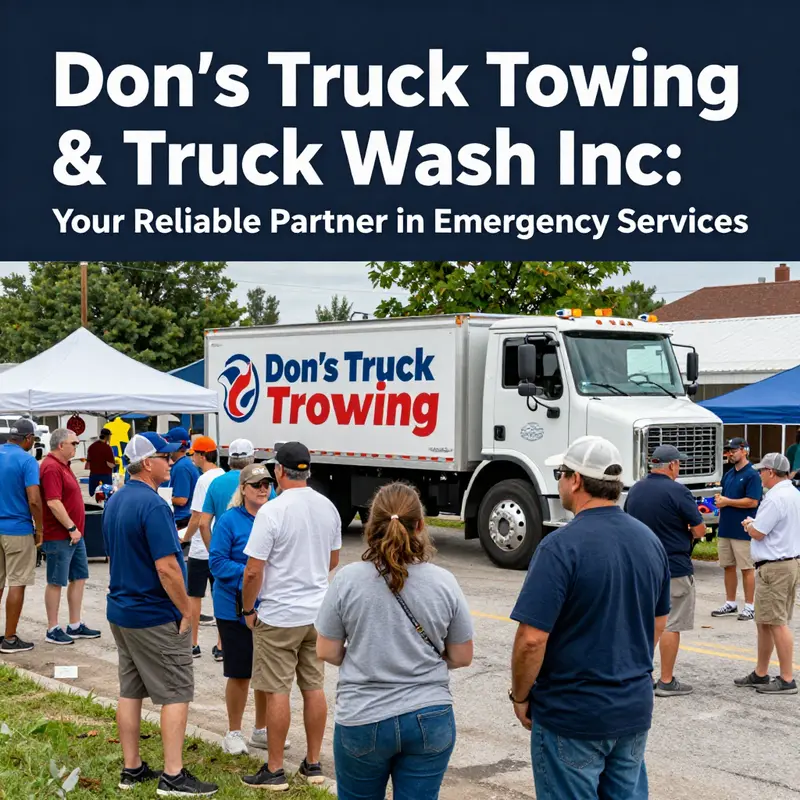
In the heart of Sedalia, Missouri, the presence of a 24/7 emergency towing and wrecker service provider at 4735 S Limit Ave represents more than a roadside rescue operation. It is a steadying force in the local economy, a hub where logistics needs meet practical feasibility, and a living example of how a single business can ripple outward to influence jobs, partnerships, and community trust. Don’s Truck Towing & Truck Wash Inc. stands as a critical node in an economy built on movement—trucks rolling through corridors that connect farms, factories, and storefronts with the rhythms of daily life. When fleets face unexpected breakdowns or highway incidents, having a dependable partner nearby means not only a rapid recovery but a reduction in downtime that could otherwise constrain local commerce and regional supply chains. The strategic location on a major corridor improves access, ensuring that responders and operators can navigate to the scene quickly, a factor that matters as much in a rural-urban interface as in any metropolitan logistics hub. In this context, the business becomes more than a service provider; it is a facilitator of operational continuity for the region’s commercial fabric.
Economic influence emerges most clearly in two intertwined dimensions: reliability and efficiency. For many commercial operators, the ability to count on timely towing and comprehensive vehicle care translates into smoother operations and predictable maintenance schedules. A fleet that can count on a rapid response reduces the risk of extended downtimes that cascade into missed deliveries and delayed sales. This reliability, in turn, underpins the confidence of shippers and manufacturers who rely on Sedalia as a strategic waypoint in their routing plans. The facility’s capacity to offer a high-volume wash environment further enhances this dynamic. With ample space for maneuvering and easy highway access, a truck can be washed, inspected, and prepped with minimal disruption to its schedule. Clean, well-maintained equipment leads to lower fuel consumption, fewer mechanical surprises, and longer vehicle life. When fleets interpret their maintenance windows as opportunities rather than losses, the local economy benefits through steadier cash flow, steadier payrolls, and the adjacency of service providers that can line up capabilities as needs arise.
This set of practical advantages dovetails with the broader notion of Sedalia as a transportation-conscious community. The daily movement of freight creates a multiplier effect that ripples through the city’s supply chain. Local suppliers, fueling stations, and maintenance shops experience heightened demand as more trucks pass through the area and require routine services beyond towing or cleaning. The presence of a reliable partner nearby encourages regional freight operators to schedule regular maintenance visits in Sedalia rather than clustering all service needs in larger out-of-town hubs. In effect, Don’s Truck Towing & Truck Wash Inc. helps turn Sedalia into a dependable waypoint—a place where hot lanes of commerce meet the steadying cadence of repair, rescue, and renewal. The impact is not merely transactional; it reshapes how nearby businesses plan for the day and the week, knowing that essential support is within arm’s reach.
Job creation and partnerships form a second axis of economic influence. A business of this scope offers employment opportunities across several layers of the local economy. Technicians, drivers, dispatchers, and administrative staff find roles that contribute to the city’s employment base. Beyond direct hires, the operation fosters second- and third-order employment by drawing in related businesses. When a dependable towing and wash facility serves multiple fleets, nearby cafés, gas stations, and convenience stores see increased foot traffic. The flow of commercial travelers through Sedalia becomes more predictable, supporting a more dynamic mix of storefronts and services that rely on recurring customers rather than one-off visitors. The result is a broader, more resilient local market that can better weather economic fluctuations because it is anchored by steady, service-oriented activity.
The company’s role in workforce development further strengthens this picture. By engaging with CDL training and related skills development, the business helps prepare a pipeline of qualified workers who can fill critical roles in the regional transportation ecosystem. This emphasis on workforce readiness benefits the community at large by increasing the number of residents who can pursue steady, skilled employment in a sector that is often a major source of middle-income jobs. Such training opportunities not only improve individual prospects but also improve the competitiveness of Sedalia’s labor pool. In this sense, the business contributes to more than just immediate employment; it supports long-term human capital that can attract new investments and more sophisticated logistics operations to the region.
Partnerships with other local businesses intensify the community benefits. The company acts as a conduit for commercial traffic, bringing in trucks that require services and, in the process, boosting foot traffic to nearby establishments, from fuel stations to quick-service providers. This clustering effect helps to overall raise the city’s economic profile, signaling to investors and entrepreneurs that Sedalia is a viable and reliable stop along regional routes. The dynamic also extends to collaborative opportunities with smaller enterprises, where joint promotions or bundled services create value for the community and for fleets alike. When a city is known for reliable support networks—where drivers know they will be met with competent, efficient service—the reputation of the locale itself improves. Businesses want to be associated with a place that backs its transportation networks, and that reputation translates into more discussions about investment, expansion, and retention.
The community development impact flows from how Don’s Truck Towing & Truck Wash Inc. shapes Sedalia’s identity. The city stands to gain from being seen as a dependable logistics hub in central Missouri. The combination of round-the-clock access, a robust wash facility, and a readiness to support diverse vehicle needs creates an aura of reliability that travels with the trucks that pass through. In practical terms, a city that earns trust from fleets becomes more attractive to logistics planners who seek stable, predictable environments for their operations. This, in turn, can attract ancillary investments in warehousing, distribution centers, and service providers that feed off a steady stream of vehicle moves. The upward spiral—improved reputation, increased investment, more jobs, and a strengthened local tax base—illustrates how a single service business can become a catalyst for broader community welfare without losing sight of its core mission: keeping wheels turning, doors open, and economic momentum alive.
The chain of benefits also includes a subtle but meaningful enhancement to the local quality of life. When communities support the kinds of services that keep freight moving, residents experience steadier local commerce and better job opportunities. The presence of a dependable, nearby partner reduces stress for fleet operators who are responsible for moving goods that directly affect prices and availability in local markets. This sense of reliability trickles into civic life as well: municipal revenues become more predictable, public services can be sustained, and community programs gain the financial breathing room that comes with a stable economic base. In this way, Don’s Truck Towing & Truck Wash Inc. contributes to social welfare by reinforcing the infrastructure that supports everyday needs—from groceries to healthcare supplies to school resources—indirectly linking the company’s operational excellence to the broader well-being of Sedalia’s residents.
As readers consider the ripple effects, it becomes clear that the chapter’s focus is not merely on a single enterprise but on the essential function a service business performs within a regional economy. The ability to respond at all hours, to both recover stranded vehicles and restore them to service quickly, creates a more predictable operating environment for countless stakeholders. In a sector where timing is a critical variable, even small improvements in response speed or work flow can translate into tangible gains across the supply chain. The high-capacity wash facility, the strategic location, and the willingness to cultivate workforce development underpin a narrative of sustainable growth. Don’s Truck Towing & Truck Wash Inc. embodies this narrative by aligning its operational strengths with the needs of Sedalia’s businesses, workers, and neighbors. In doing so, the company helps the city move toward a future in which transportation and commerce reinforce one another, creating stability, opportunity, and a shared sense of progress.
For readers seeking to understand the broader implications for fleet management and community resilience, the chapter also points toward practical guidance that aligns with these themes. As fleets contemplate how to strengthen their own emergency readiness and operational continuity, resources on fleet resilience and response planning provide a useful complement to the on-the-ground lessons learned from Sedalia’s example. If you’d like to explore a structured approach to emergency readiness in fleet operations, consider the guidance offered in essential fleet emergency response strategies. This resource speaks to the kinds of considerations that enable a city and its service providers to coordinate effectively under pressure, translating a local story of reliability into transferable best practices that other communities can adapt to their own transportation networks. essential fleet emergency response strategies
The narrative would be incomplete without acknowledging the source of the core relationship—the service provider that makes all this possible. The company’s official presence reflects a commitment to service beyond the immediate incident, extending to the maintenance of equipment, the care of vehicles, and the cultivation of trust within the local business ecosystem. Through round-the-clock availability, the organization demonstrates an understanding of how critical downtime can be for regional commerce. It is a reminder that in the world of transportation and logistics, reliability is not a luxury but a necessity, and that local communities benefit when a business accepts responsibility for keeping the wheels turning for everyone else.
In sum, Don’s Truck Towing & Truck Wash Inc. contributes to Sedalia’s economy and community in ways that extend far beyond the immediate services it provides. By supporting operational continuity for fleets, creating jobs, fostering partnerships, and enhancing the city’s reputation as a dependable logistics stop, the company helps shape a resilient regional economy. The impact is felt in job opportunities, in the daily rhythm of local commerce, and in the confidence with which residents and businesses alike approach the future. This chapter recognizes that a single, well-run service operation can serve as a catalyst for growth, a stabilizer in uncertain times, and a cornerstone of community well-being, all while keeping Sedalia’s wheels turning and its economy moving forward.
For more information about the business and its services, you can visit the official site: https://www.donstrucktow.com
Final thoughts
Don’s Truck Towing & Truck Wash Inc. stands as a pillar of support for Sedalia’s residents and local businesses alike. By providing immediate emergency services, invaluable roadside assistance, and essential training programs, they not only help keep our roads safe but also foster development within the community and local economy. Their relentless commitment to service and skill development allows them to make a meaningful difference in the lives of many. As we recognize the importance of partners such as Don’s, we are reminded of the significance of reliability in times of need, showcasing that sometimes it’s about more than just towing—it’s about supporting each other as a community.