
Towing a truck can become a significant expense, especially for local auto repair shops, car dealerships, property managers, resort operators, and commercial fleet operators. Understanding the factors influencing towing costs not only helps in budgeting but also enables businesses to make informed choices when engaging towing services. This comprehensive guide breaks down key aspects of towing fees, including base rates, per-mile charges, and additional costs, empowering stakeholders to navigate the towing landscape effectively in an island-centric context. Each chapter dives deep into the essential elements that contribute to overall towing expenses, ensuring you are equipped with the knowledge needed for seamless operations.
Opening Price, Hidden Details: Decoding Base Fees in Truck Towing
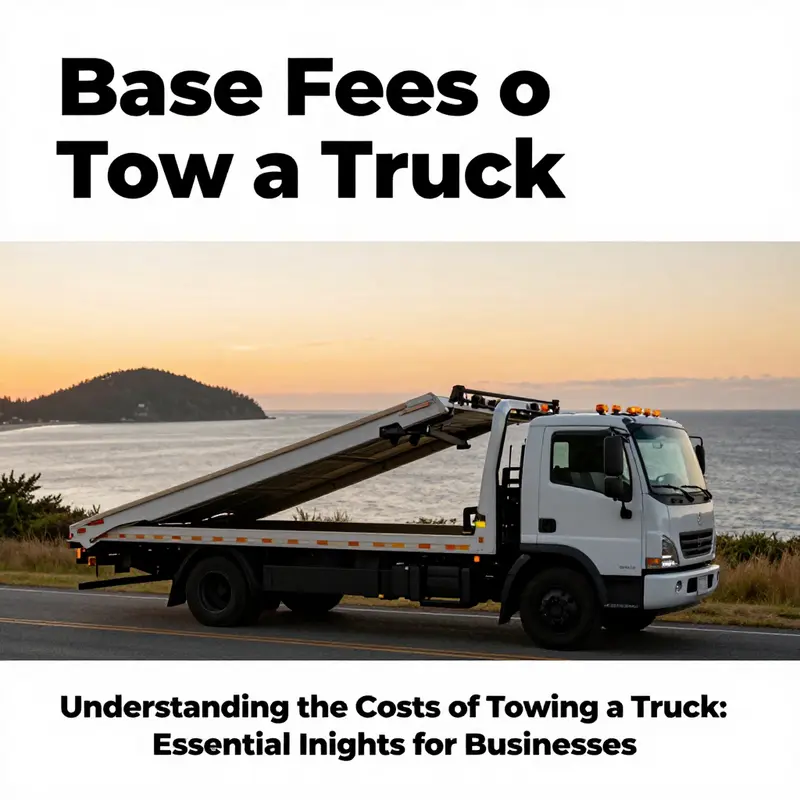
When a truck breaks down on a shoulder, in a ditch, or far from the nearest service lane, the first number you encounter isn’t necessarily the final tally. The base fee—the initial charge levied simply for dispatching a tow truck to your location—sets the stage for everything that follows. It is the price that covers the cost of sending a technician, the crew, and the equipment to you, regardless of how far the vehicle ends up traveling or how complex the job proves to be. In practice, that base is the anchor point around which all other charges wind. Understanding what sits inside the base fee helps you separate the predictable, necessary costs from the variables that can surge when conditions get tougher or the tow becomes more specialized.
The base fee is not a single, universal number. It shifts with geography, time, and the particular capabilities a tow company must bring to the scene. In many places, you’ll see a broad spectrum: lower fees in regions with high competition and fewer urban chokepoints, higher fees in dense city cores where demand meets congestion and risk is higher for drivers and equipment alike. The base fee can also reflect the type of truck used to perform the service. A light-duty tow, such as one that moves a small pickup or a compact delivery van, typically carries a leaner base than a heavy-duty operation designed to haul a full-size freight truck. This is the integration point where the price of the dispatch begins to reveal itself: the more you require in terms of capacity and expertise, the more the opening price tends to reflect that reality.
From the standpoint of a customer planning a rough budget, the base fee often sits in the practical middle ground of the overall tow cost. Industry benchmarks position the typical base fee for a standard tow in a range that has more to do with region and demand than with the truck’s exact weight. Sources reporting on industry practice note that average base fees hover in a relatively modest band, with common expectations around the $75 to $100 mark in many parts of the country. Yet this is not a universal truth. In urban centers, the base fee can climb toward the higher end—or even beyond—when dispatching a specialist crew is necessary. A flatbed tow, for example, carries its own premium as part of the base, since the equipment itself is more specialized and requires trained operators who can maneuver a heavy vehicle without risking drivetrain damage or tire contact with the ground. In short, the base fee is a starting line, not a ceiling, and its size is a direct signal about what the service will entail beyond the moment the tow truck first lights up and begins to move.
If you mirror the practical experience of many drivers and fleet operators, you’ll recognize a recurring pattern: the base fee acknowledges the essential act of mobilization. It pays for the time and logistics of getting a crew to your location, the fuel to reach you, the administrative handling of the call, and the safety planning that follows the moment you sign onto service. This is not simply about miles; it is about readiness, responsibility, and the ability to manage a potentially risky situation with trained personnel and the right gear. When you think about the base fee this way, you begin to see why it matters, especially in cases where every minute on the clock may escalate demand for labor or for specialized equipment.
The variability of base fees is also a direct reflection of how towing services are regulated and insured. Reputable providers typically operate with strict licensing and insurance requirements to protect both the operators and the customers in moments of vulnerability. The base fee, then, also covers the compliance overhead of delivering a secure, legally compliant service in sometimes hazardous roadside environments. When you count the base fee among the costs you’ll see on your invoice, you’re counting the upfront price of a service that is, in many ways, a guarantee: a commitment to arrive ready to work, with a crew and a plan that can adapt to a variety of on-site challenges.
Speaking in practical terms, how does this play out for a truck that weighs more than the average light-duty vehicle? The distinction becomes most apparent when the job moves beyond simple roadside towing. A standard light-duty tow often falls into the lower end of base-fee expectations, while medium- and heavy-duty operations carry higher starting prices related to the need for heavier winching systems, heavier rollers, and sometimes multiple tow trucks to stabilize and load the vehicle. In a way, the base fee encodes the scale of the operation before any distance is traveled or miles accrued. The operator’s experience in handling a heavy vehicle, the need to bring a flatbed or other specialized equipment to the scene, and the potential for longer on-site work are all folded into that opening price.
From the perspective of a consumer weighing options, it helps to separate the base fee from the subsequent charges that accumulate as distance and complexity grow. The base fee covers dispatch and arrival, but once the tow begins, per-mile charges commence and additional costs may be layered on if conditions demand more resources or time. The per-mile rate is a separate, recurring element, and it can range widely—roughly between $1.50 and $5.00 per mile depending on vehicle class, distance, and whether long-haul transport or highway work is involved. A two-step approach to budgeting is prudent: anticipate the base fee, then anticipate the miles and any extra services that might be required. If you plan for the base fee as a non-negotiable starter and the per-mile and add-on costs as variable, you’ll have a more realistic expectation of the final bill.
There is also the likelihood of surcharges tied to timing. After-hours service, which occurs during the night, weekends, or holidays, commonly carries a premium. The typical range for such surcharges is broad but meaningful, often adding anywhere from 20% to 50% to the base and ensuing charges. If a call comes in at 2 a.m., the operator may be contending with limited staffing and more complex safety considerations, which translates into higher costs for the customer. In essence, the base fee acts as a foundation, but it is the surrounding factors—the hour, the terrain, the vehicle’s condition, and whether hazardous materials are involved—that ripen a simple base into a final, sometimes surprising, total.
To give a concrete sense of the overall calculus, imagine a medium-duty tow around town. The base fee might land in the $200–$350 range, particularly if the service requires a flatbed or a specialized carrier. Add 20 miles of towing at a modest rate of about $2 per mile, and you’re looking at roughly $40 more on the mileage line. If the incident happened at night, you could reasonably expect a surcharge that pushes the total a little higher. If you are dealing with a heavy-duty scenario—think a large freight truck—that base could stretch to $350–$600 or more, and the per-mile costs can climb alongside the distance and the complexity of the load. In such cases, the base fee and the per-mile rate together begin to tell a story about the scale of the operation: more equipment, more operators, more risk management, and a higher price tag as a result.
The discussion of base fees is incomplete without acknowledging the role of specialized equipment. A flatbed tow, often essential for preventing drivetrain damage on certain vehicles, typically carries a base-fee premium that can range into the higher hundreds in some markets. The rationale is straightforward: a flatbed is not just a bigger truck; it is a carefully engineered platform that requires precise operation, skilled crew, and additional safety measures to secure the vehicle properly. When a flatbed or crane is necessary, the base fee reflects the investment in equipment, the training of the operators, and the operational overhead that ensures a safe and effective loading process. In many such cases, you might see base-fee adjustments of $100–$500 or more, depending on the vehicle type, the complexity of the loading, and regional price norms.
For readers who want to place this information in a broader context, industry sources emphasize that the base fee is a widely recognized component of towing charges. A common takeaway across credible reporting is that the base fee, while variable, provides a predictable point of reference from which customers can compare quotes and assess the value of the service. When you are collecting estimates, asking for a written, itemized quote is a best practice. A written estimate helps you see how the base fee aligns with the anticipated miles, the equipment involved, and any on-site labor or hazard-related charges. It also gives you something concrete to compare against if and when a provider presents a price that seems unexpectedly high or low.
The practical takeaway for motorists and fleet managers is to treat the base fee as the starting line in a broader equation. Your final bill will be a blend of the base, the number of miles to travel, the time of service, and any specialized services that prove necessary. To bring this to life, consider a few guiding questions you can carry into conversations with tow providers. How much is the base fee, and what does it include exactly? Is the quote dependent on vehicle class, and how do they categorize weight and size? Will a flatbed or other specialized equipment be required, and if so, what is the incremental cost at the base level? Is there a nighttime or holiday surcharge, and how is it calculated—percentage of the base, per-mile, or a flat add-on? Are hazardous materials involved, and what is the additional fee structure in that scenario? In practical terms, having these questions answered in writing gives you leverage and clarity when selecting a service provider, while also reducing the risk of sticker shock when the final invoice arrives.
To weave in practical industry voices without drifting into repetition, consider how service articles often frame the base fee alongside consumer guidance. Some readers find it helpful to consult a broad range of perspectives, including regional price norms and consumer-facing resources that explain typical tow charges. For those who want a broader digest of regional practice, a well-regarded resource on roadside pricing can provide a snapshot of typical ranges and the caveats that come with them. You might also find it useful to explore a specialized coverage profile that explains how insurance and roadside assistance can influence your out-of-pocket costs. In fact, some insurers include complimentary towing within certain mileage limits, which can dramatically alter the financial picture if you are lucky enough to be covered. Before you call for service, a quick check with your insurer can save you from paying out-of-pocket when a policy already underwrites a portion of the cost. The practical implication is simple: base fees are meaningful, but they’re more meaningful when you understand the full ecosystem of charges, coverage, and regional norms that surround them.
A note on accessibility and ongoing learning: the towing industry continues to evolve with new equipment, safety protocols, and pricing models. For readers who want a concise digest of industry tendencies and practitioner insights, a quick scan of practitioner blogs can be illuminating. For instance, the Island Tow Truck blog offers a broad spectrum of practical insights about timing, equipment, and service expectations that can help you interpret the base fee within a real-world frame of reference. You can explore that resource here: the island tow truck blog. This kind of reading can help you calibrate your expectations when you receive quotes and reminds you that the base fee sits at the core of a larger, dynamic pricing structure.
In sum, the base fee is more than a candid starting point. It signals the service level you should anticipate and the logistical heft behind the tow. It reflects where you are—urban or rural, at night or during the day—and what the job will require in terms of equipment, labor, and risk management. It is the first line in a fair pricing conversation between you and your tow provider, and it is worth interrogating with care before you commit. While the exact numbers will vary by region, vehicle class, and circumstance, what remains consistent is the essential logic: the base fee is the price of mobilization, and every mile afterward, every piece of equipment added, and every hour of labor is layered on top of that mobilization cost. This logic helps you plan with greater confidence and enter the service call with a clear expectation of what constitutes the core charge.
External reference for established guidelines and broader consumer perspectives is available through widely used roadside assistance resources, which offer transparency about pricing bands, typical service options, and insured access to towing within certain mileage limits. For a broader framework on standard practices and coverage, you can consult this external resource: https://www.aaa.com/roadside-assistance.
In closing, while it is tempting to search for a single definitive price, the most useful approach is to view base fees as a foundational piece of a layered pricing structure. Recognize that a base quote is not the final answer; it is a doorway into a larger conversation about distance, equipment, timing, and risk. By asking precise questions, seeking written estimates, and cross-checking with your insurer’s roadside benefits, you position yourself to navigate the market with confidence and avoid unwelcome surprises. The base fee is, in many ways, the most honest reflection of what it takes to get a truck back on the move: a crew, a truck, a plan, and the readiness to act under pressure—an opening price that acknowledges the complexity of moving a vehicle in real-world conditions.
Navigating the Mile Markers: How Per-Mile Towing Charges Add Up for Trucks
When most people ask, “how much does it cost to tow a truck?” the response should begin with a framework rather than a single figure. Tow costs are a layered calculation, and the exact price hinges on where you are, what you’re towing, how far you need to go, and what kind of service the situation dictates. The heart of the pricing model is a combination of a base fee tied to the vehicle’s class and a per-mile charge that accrues as the distance increases. This structure exists for practical reasons: it compensates for the operator’s time, equipment rental, wear and tear on a heavy vehicle, fuel, insurance considerations, and the risks involved in moving heavy loads. It also explains why a tow on a quiet weekday in a rural area can feel drastically different from a tow elsewhere at night or during a holiday. The math behind the numbers is not a single line item but a conversation among several moving parts that a customer can, with some foresight, anticipate and navigate more effectively.
To start with the basics, towing companies typically classify trucks by size and weight. Light-duty trucks, such as pickups under roughly 7,500 pounds, carry a base fee that commonly ranges from about $100 to $200. This base is designed to cover the initial effort—the dispatch, the arrival, the hookup, and the setup—along with a modest distance included in the starting price. As the vehicle class increases, so does the base charge. Medium-duty trucks, which include cargo vans and box trucks in the roughly 7,500–16,000-pound range, tend to carry a base fee in the neighborhood of $200 to $350, possibly with a modest included mileage window. Heavy-duty trucks, the larger freight tractors and containers that exceed 16,000 pounds, sit at a base fee of roughly $350 to $600 or higher, reflecting the need for specialized equipment like heavy flatbeds, multi-axle tow rigs, and, often, longer dispatch times. It’s useful to recognize that different companies may formalize their tiering in slightly different ways, but the overarching principle remains consistent: larger, more capable trucks require more expensive initial fees because they demand more substantial resources and more complex operations.
Once the base is set, the distance component—commonly priced per mile—comes into play. The standard per-mile rate across the industry tends to fall within a broad lane: roughly $1.50 to $3.50 per mile. This range captures variations in regional labor costs, fuel, and the type of tow—whether it’s a straight tow on a highway, a controlled descent from a difficult location, or a long, steady pull across rural roads. The distance factor is not merely a multiplier; it’s a reflection of the logistics involved in getting a heavy vehicle from point A to point B. It covers the miles the driver must cover to arrive at the scene, the drive to the destination, and the time spent during the tow itself. A practical illustration helps reveal how these numbers come together. Consider towing a medium-duty truck for 30 miles: you might start with a base fee of around $250, then add mileage at a rate near $2.50 per mile, yielding about $75 in mileage costs. The assembled total would be around $325, though real-world quotes will hinge on the exact base figure and any supplemental charges that apply.
Yet the conversation about cost rarely ends with base fee plus mileage. Several other factors can push the total higher, and every item on the bill deserves your attention before you sign off on the work. First, there are time-of-service surcharges. Nighttime, weekend, and holiday calls tend to see a labor and availability premium, often in the 20 to 50 percent range above the standard rate. If a tow is needed at 2 a.m. or during a long holiday, be prepared for a notable increase that reflects the fewer hours of operation, the greater travel demands on the driver, and the heightened risk profile of nighttime work. Then there are the conditions surrounding the vehicle. If the truck is mired in mud, buried in a ditch, perched on a steep embankment, or otherwise in a hazardous or awkward location, winching, additional equipment, or even a second tow vehicle may be necessary. Each of these scenarios introduces extra costs that are not captured by the generic base and mileage figures. Similarly, if hazardous materials are involved—gasoline, diesel, solvents, or chemicals—the operation invites additional safety measures, regulations, and potential surcharge, which can add another percentage point to the bill in many cases.
Long-distance or cross-state towing adds another layer. When a tow crosses state lines, the operation becomes a broader logistical project: fuel, tolls, driver wages for longer hours, potential overnight lodging, and sometimes additional equipment or specialized trailers. It is not unusual for long hauls to reach into the higher end of the price spectrum, sometimes exceeding a thousand dollars depending on the distance and the specifics of the transport. In this context, the role of the towing company is partly to manage risk and partly to absorb the fixed costs that scale with distance. If your truck’s destination is a shop, a dealership, or a maintenance facility some miles away, you should expect the price to reflect those logistical realities.
Special equipment can also shift the equation. Most light-duty tows can be accomplished with a standard tow truck and basic dollies or hooks, but more complex scenarios demand flatbeds, cranes, or lift systems. The use of such equipment typically adds anywhere from $100 to $500 or more to the total, depending on the equipment’s complexity and the duration of the operation. For some trucks, especially those with unique configurations or very high weight near the limits of standard equipment, this extra expense is not just possible—it’s essential for a safe, compliant move. The takeaway is simple: don’t assume the first quote you receive is the ceiling. A written estimate that itemizes base, mileage, equipment, and any anticipated surcharges gives you the opportunity to discuss alternatives with the provider before any work begins.
Beyond the mechanics of the charge, there are practical steps you can take to manage or even reduce the final cost. First, ask for a written estimate before any work commences. This estimate should clearly lay out the base fee, the per-mile charge, the distance to be covered, and any potential surcharges or additional fees. A written document leaves less room for unfounded surprises and allows you to compare offers from different providers with a clear baseline. Second, be mindful of insurance coverage. Do not overlook the possibility that your vehicle, your employer’s fleet policy, or your personal auto policy includes roadside assistance or towing benefits. Some policies provide free or reduced-cost towing within a certain distance, often up to 50 or 100 miles one-way. If you’re a driver who can access roadside assistance through a policy, you may be able to avoid or offset a significant portion of the tow bill by confirming coverage before the driver arrives. This is especially relevant for fleets or island-based operations where emergency response patterns have already been shaped by insurance relationships and warranty terms. A quick call to your insurer or the fleet manager can reveal whether a tow is reimbursable under your plan and how much you’ll actually owe out of pocket.
In addition to policy-based options, you can explore practical cost-management tactics on the ground. If the truck is in a location where you can safely access a nearby facility or service station, discuss whether a staged tow is possible. In some cases, a short, initial pull to a staging area can reduce the complexity and time of the longer transport, thereby lowering the total charge. If a repair facility is near, you may be able to coordinate with the shop for a later, consolidated tow rather than a long single trip. These strategies require clear communication with the tow operator and the facility, but they can yield meaningful savings when safety and timing permit.
From a consumer’s standpoint, ensuring that you are dealing with a licensed and insured provider is crucial. The roadside-neighborhood economy often includes unmarked or uninsured operators who may quote low initial prices but deliver inflated final bills through hidden fees or unsafe practices. A reliable tow provider will present a written estimate, confirm the driver’s credentials, and provide a transparent breakdown of charges. The value of this transparency cannot be overstated; it protects you from price gouging, ensures the service can be audited later, and fosters trust in a critical moment when your commercial operations—and potentially your own safety—depend on getting the right vehicle moved correctly.
To connect these ideas to everyday practice, imagine you are facing a tow of a midweight truck a short distance from your current location. The base fee on the service call is likely to land somewhere in the $200–$350 range, depending on the company’s tier and the truck’s exact class. The miles you need to cover will add another layer of cost according to the per-mile rate you’ve negotiated. If the tow is straightforward on a daytime weekday, you’ll probably end up with a total in the mid-hundreds. If, however, you’re on a rural road at night, or if the truck is stuck in mud or on a slope, you’ll encounter the surcharges, the extra equipment, and possibly a second unit. If the destination is across the state line, you’ll add fuel, tolls, and the driver’s lodging, which can push the price well past the initial estimate. The exact figure will depend on the specifics of the job, but the framework remains the same: base plus distance plus situational add-ons.
For operators in busy commercial environments, there is also a case to be made for proactive planning. Fleets often have preferred providers or contracts that include predetermined pricing for common towing scenarios. This approach reduces the length of negotiations on scene and accelerates the time-to-service, which in turn lowers the overall risk and cost for the fleet. When a fleet has a standing agreement, the company can leverage volume to negotiate more favorable base fees or mileage rates and can coordinate with the provider to ensure a rapid, safe, and compliant move of a heavy vehicle. In such environments, the balance between speed, safety, and cost becomes part of ongoing fleet optimization, rather than a one-off price negotiation.
As you read through quotes, keep in mind that pricing is not simply a function of distance. It is a calculus of risk, resources, and responsibility. The mileage component is crucial, but it is the ancillary charges that often determine whether a tow is affordable in the short term and sustainable for a fleet in the long term. The industry standard range for first-mile movement—approximately $35 to $125 for the initial five miles—illustrates how much ground the base fee attempts to cover by itself. The subsequent miles build on that foundation, with higher-per-mile costs reflecting the ongoing commitment of the tow operator to bring your heavy truck to safety or to a repair facility. In total, the numbers tell a story about the locale, the timing, the vehicle, and the objectives of the move. A careful buyer looks not only at the number in the moment but also at the structure behind it, and asks for clarification on what would change if the distance extended from 20 miles to 40 miles, or if the job required a heavy-duty crane and two tow trucks.
To deepen your understanding, you can explore practical guidance and industry perspectives from a variety of sources. A well-regarded resource on general towing costs provides a detailed breakdown of per-mile charges, including regional variations and typical scenarios for different truck classes. For a broader discussion on how these costs accumulate over longer distances and more complex jobs, you can consult the comprehensive guide on towing costs referenced in industry literature. It offers a thoughtful, data-informed view of how mileage, distance, and service level interact in the real world. For readers looking for practical on-the-ground insights, a deeper dive into fleet emergency-response strategies can be found in fleet-focused blogs that discuss planning for road incidents, rapid response, and cost containment strategies in island and coastal contexts. In addition to these resources, a user-friendly explainer from a general roadside assistance provider offers a clear mapping of common pricing structures and what customers should expect when calling for help.
For a concise, narrative-oriented overview of the practical mechanics and financial logic behind per-mile towing charges, you might also find it helpful to consult a community-focused blog that captures the nuances of dealing with trucks on regional roads and remote facilities. This kind of resource often emphasizes the importance of transparent estimates, professional credentials, and honest communication between driver and customer. The aim is to equip you with a realistic expectation of what a tow costs and to empower you to make informed decisions when the moment of crisis arrives. When you are preparing for a tow, remember that a single, well-posed question can save you hundreds: “Can you provide a written estimate that itemizes base fee, mileage, equipment, and any surcharges?” The answer you receive should be a clear, line-by-line quote that you can compare against other providers before any work begins.
In the end, the question of how much it costs to tow a truck is best answered with a clear picture of the pricing ecosystem rather than a single price tag. The base fee reflects the initial mobilization and the weight class of the vehicle. The per-mile rate captures the ongoing cost of moving the vehicle and the resources required to complete the move. The surcharges and special circumstances account for time of day, roadside hazards, long-distance transport, and the necessity for specialized equipment. The availability of insurance coverage for tow services can further reduce out-of-pocket expenses, turning a potentially steep bill into a more manageable one. By approaching tow pricing with these layers in mind, you gain a practical framework for decision-making that respects safety, accountability, and value.
Internal link note: For a concise, experience-based discussion of emergency-response logistics and practical tips that align with the realities of island or remote fleet operations, see The Island Tow Truck blog, which collates field notes and planning insights in a readable, real-world format. The Island Tow Truck blog
External resource: For a broader, data-driven breakdown of towing costs per mile with historical context and regional variance, refer to an external guide on towing costs that captures both typical ranges and the rationale behind them. https://www.allstate.com/insurance/auto/towing-costs
Unpacking the Hidden Bills: Navigating the Extra Costs When You Need a Truck Towed
When a truck breaks down or ends up in a tough spot, calling a tow service can feel like a straightforward fix. Yet the price you hear at the outset rarely tells the full story. The base towing fee is only the starting point. In practice, the final bill is shaped by a cluster of add-on charges tied to the specific vehicle, the environment, and the steps required to move it safely. To understand what you are about to pay, you have to see the extras clearly, because the difference between a reasonable tow and a surprising expense is often these costs that arrive after the initial quote. The best approach is to recognize which charges are likely to appear, what triggers them, and how to plan for them without being blindsided when the tow arrives or the paperwork lands on the desk.
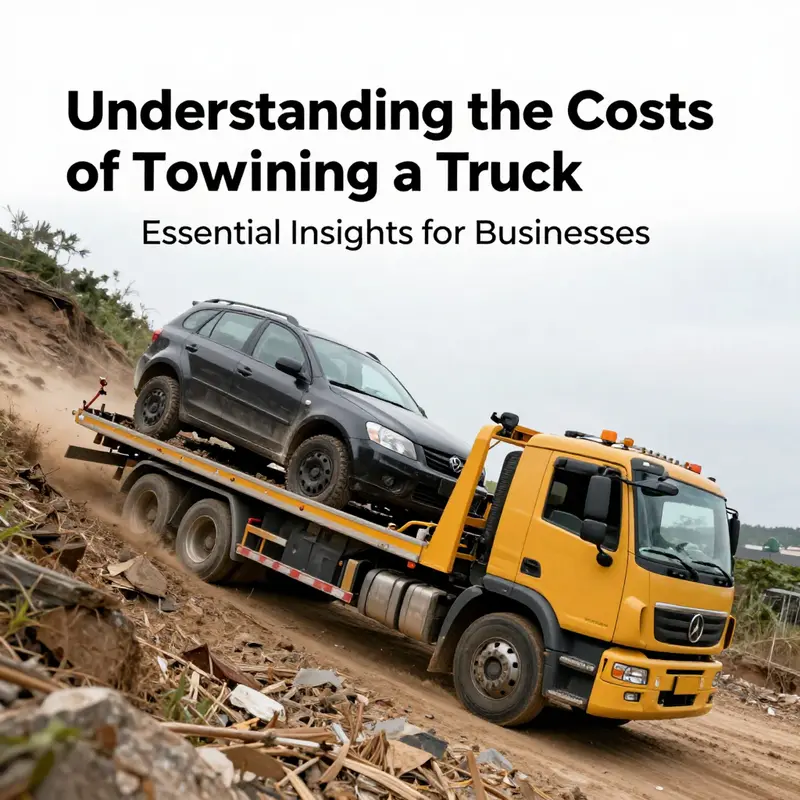
Special equipment fees are among the most common overages. Not every tow is a simple pull onto a flatbed; many trucks, especially when they are heavily damaged, stuck in mud, or resting in a precarious position, require cranes or specialized wreckers to lift and maneuver safely. The presence of a crane or extra heavy-duty equipment is a clear signal that the job has moved beyond the ordinary, and this shift is reflected in the price. The cost range for such equipment typically spans from a few hundred dollars to well over a thousand, depending on how difficult the lift is, how much maneuvering is needed, and the size and weight of the vehicle. This is not a discretionary expense; it is a safety-related requirement that makes the rest of the operation possible.
Long-distance or high-mileage towing dramatically widens the cost cone. Many base fees assume a modest distance, but when the vehicle must be moved across town or across state lines, per-mile charges come into play with greater heft. The per-mile rate for longer hauls is commonly higher than the short-distance rate, and this, combined with fuel and driver time, can push the final sum into several hundred dollars or more beyond the base fee. In some scenarios, a long tow can accumulate a total well into the thousands, particularly if the route includes urban congestion, remote stretches, or multiple crossings where stop-and-go conditions eat into time and efficiency. This is where the geography of the route matters as much as the vehicle’s weight and condition.
Hazardous materials or special cargo add another layer of complexity and cost. If the truck carries flammable liquids, chemicals, or other hazardous materials, the tow operation may require additional safety protocols, permits, and trained personnel. The result is not merely a higher rate for the move but a structured safety surcharge that reflects the extra risk and compliance burden. In practical terms, a typical hazmat surcharge might hover around 10 percent on top of the base rate, yet some jurisdictions or particular cargo profiles can push costs higher. If the driver must implement special containment measures or use protective equipment, the incremental price can rise further. Such charges are not optional; they exist to ensure everyone remains compliant with safety standards and legal requirements.
Emergency timing is a frequent driver of cost escalation. When you need a tow at night, on weekends, during holidays, or after regular business hours, the operator often applies an emergency or rush fee. The logic is straightforward: labor and logistics are harder to coordinate outside standard hours, and the crew may incur higher wage costs or risk premiums. These surcharges can range from roughly 30 percent to 50 percent above the standard rate, depending on the market, the time of day, and the level of urgency. If you can postpone the tow to normal hours, you may shave a significant portion of the premium, but that option is not always practical in an emergency.
Storage and holding fees introduce another predictable twist once the tow has occurred. If the vehicle arrives at a yard or storage facility while awaiting release, evaluation, or repair scheduling, it may incur daily storage charges. Typical daily rates run from about $30 to $100, with the potential for higher fees if the vehicle remains for an extended period or if the facility imposes a separate processing or accident handling fee upon arrival. The longer the vehicle stays, the more these daily charges accumulate, turning an initially modest tow into a multi-day expense.
Secondary tow charges are a frequent but often overlooked factor. If the vehicle must be moved again—for example, from a storage lot to a repair shop or to a different facility for assessment—a second tow is required and billed as a separate service. This effectively means you pay the first base and mileage again, creating a potential doubling of the cost unless your insurance coverage or a contract provisions covers the multiple moves. It is easy to underestimate how often a tow chain can end up with a second leg, particularly when logistics are disrupted by weather, traffic, or site access.
Fuel costs and tolls are the silent contributors in long hauls. While some quotes include a general distance and a base rate, fuel surcharges and highway tolls are frequently billed separately. Route choices, toll-heavy corridors, and extreme distances can push these extras into hundreds of dollars beyond the initial estimate. The final bill may itemize a fuel charge, a toll tally, or a combination of both, with the route and time dictating the magnitude of the impact. It is not unusual for a lengthy or multi-state tow to accumulate an additional hundred to several hundred dollars for fuel and tolls alone.
Administrative and documentation fees may also appear in the final invoice. When accidents, police reports, or lien processing come into play, some companies apply an administrative or processing fee to cover the paperwork and coordination involved. While not universal, these fees do exist in certain contexts and can surprise customers who anticipated a straightforward one-page receipt. The safest remedy is to request a written estimate that clearly enumerates every potential cost—base rate, mileage, surcharges, storage, and any admin charges—before the work begins.
In this landscape, the question of insurance often acts as a counterbalance to the mounting costs. Many drivers carry roadside assistance as part of their auto insurance, extended warranties, or private protection plans. In several cases, towing within a set distance may be included, or the policy may cover a portion of the fees. Knowing what your policy actually covers can dramatically change the math, turning what looks like a steep bill into a more manageable one. If you have coverage, contact your insurer before the tow arrives to confirm benefits and to determine what documentation you should present to the driver on arrival. The peace of mind from knowing a portion of the bill may be reimbursed can alter the decision-making process in an urgent moment.
Beyond the numbers, practical steps can prevent or reduce the sting of these add-ons. The first line of defense is a written, itemized quote obtained before any work proceeds. An itemized quote should reveal the base rate, the per-mile charges, all surcharges, storage fees, and any potential secondary charges. If any item appears unclear, ask for a cap or a worst-case scenario so you know the ceiling of the cost you might owe. It is equally important to confirm licensing and insurance status of the company and to request a receipt that clearly separates each charge. This transparency makes it far easier to compare options and challenge any line items that seem questionable.
Customer awareness also extends to the choice of transport timing. If your situation allows, delaying a tow to normal business hours can avoid emergency surcharges. Conversely, if the truck is in an unsafe location or presents a risk to other road users, the operator may need to act immediately, and you will have to accept the associated premium. The planning calculus should include a realistic assessment of the vehicle’s condition, access constraints, and the likelihood that the site requires special equipment. For example, if the truck is lodged in mud or a ditch, the need for a crane or multiple tow teams becomes almost inevitable, and the price rises accordingly.
Readers who want a broader look at pricing trends across the industry can consult the Island Tow Truck blog for additional context on roadside pricing dynamics and what to expect in different regions. The link to that resource is theislandtowtruck.com/blog/. This external perspective can complement the practical steps outlined here, offering a sense of regional variation and typical scenarios that drivers encounter when they need a vehicle moved.
In summary, the total cost of towing a truck is rarely determined by a single line item. It unfolds through a sequence of decisions about equipment, distance, safety requirements, timing, and post-tow logistics. Each factor has a rational basis rooted in safety, regulatory compliance, and the realities of moving a heavy vehicle from one place to another. The path to a predictable bill lies in asking for a clear, written estimate, understanding which charges could apply in your case, and acknowledging how your circumstances—such as location, the vehicle’s condition, and the time of service—shape the final number. As you navigate the process, keep in mind that insurance and roadside plans can materially alter the outcome, so a quick check with your insurer before the tow can save both money and stress.
For those seeking a concise framework to guide conversations with tow operators, this chapter reinforces the central idea: base fees are only the starting point. The final price is the sum of the base, the miles, the added layers of equipment and safety, the timing, and the administrative steps that bring the move to a close. When you enter the situation with this awareness, you are better equipped to compare quotes, anticipate potential bumps, and respond calmly and pragmatically if charges begin to accumulate. The objective is not to deter you from seeking help when you need it, but to empower you to understand the financial contours of that help so you are prepared to make informed choices rather than reactive ones.
External reference: The Drive provides a broader, national perspective on truck towing costs and the spectrum of factors that influence pricing across the United States. See https://www.thedrive.com/vehicles/44122-complete-guide-to-truck-towing-costs-in-the-u-s for additional context.
Final thoughts
Being aware of the varying factors that influence towing costs is crucial for businesses relying on reliable towing services. From understanding base fees associated with truck types to recognizing additional charges that may arise from specific circumstances, you can more effectively manage your automotive logistics. Whether you’re a local auto repair shop, car dealership, property manager, resort operator, or fleet manager, having a grasp of these elements allows for smoother operations and better cost management in your towing decisions. With this guide, you are now empowered to approach towing scenarios with confidence and clarity.