Entender cómo se dice ‘tow truck’ en español es vital para una comunicación efectiva en el ámbito automotriz. En este artículo, exploraremos la traducción más común: grúa, y varios términos alternativos como camión de remolque y vehículo de remolque. Cada capítulo desglosará el uso práctico de estos términos, iluminando sus aplicaciones y relevancia cultural, ayudando así a talleres mecánicos, concesionarios de autos, administradores de propiedades y operadores de flotas comerciales a relacionarse mejor con sus clientes hispanohablantes.
Beyond Grúa: Mastering the Spanish Tow Truck Lexicon for Real-World Conversation
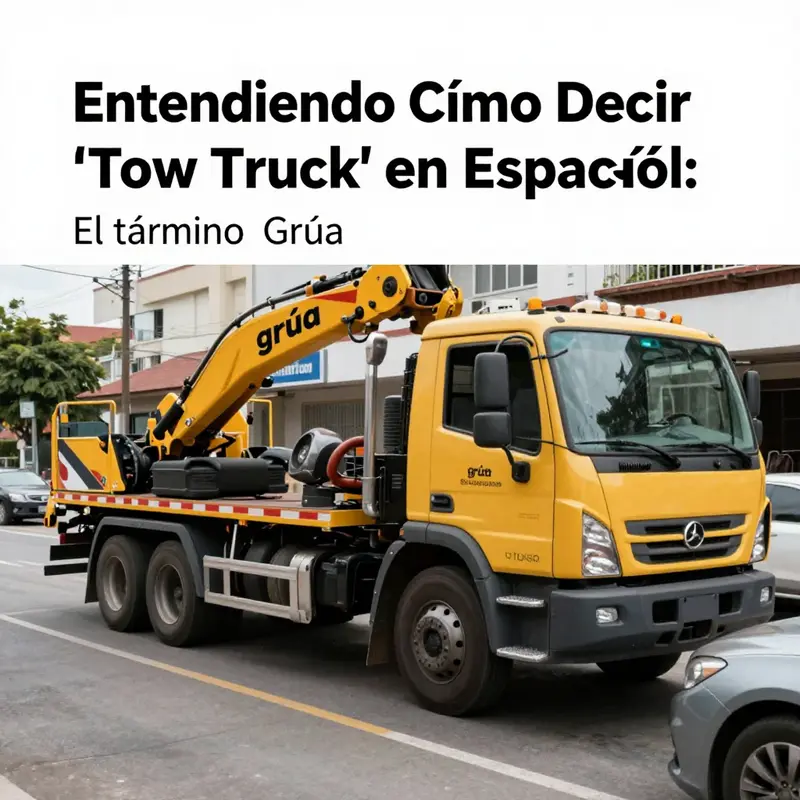
When a roadside moment arrives in a Spanish-speaking landscape, the term you reach for can shape the clarity of the exchange just as much as the urgency of the situation. In the world of vehicle recovery, the word most people reach for is grúa. This is not merely a vocabulary note; it is a doorway into how native speakers frame assistance, safety, and service on the road. The simplicity and precision of grúa make it the cornerstone term across many Spanish-speaking countries, from bustling city streets to quiet rural stretches where the sound of a tow truck can become a defining part of a travel story. Yet like many specialized terms, grúa sits beside a few related phrases that can be useful in particular contexts. Understanding when to use grúa, when to use camión de remolque, and how to structure a sentence around the concept of towing can save time, reduce confusion, and make communications smoother in stressful moments.
The term grúa is succinct, widely understood, and deeply embedded in everyday speech. It carries with it the sense of a vehicle designed to recover, relocate, or transport a disabled or immobilized car. When you call for help, or when you describe an incident to a dispatcher or a friend, grúa is the word many people will use instinctively. Its dominance in casual speech is matched by its prevalence in formal contexts as well. Police reports, insurance statements, and roadside assistance forms often feature grúa precisely because it is familiar to a broad audience. The word has a natural cadence in Spanish, with the accent on the first syllable that signals its role as the primary designation for tow services in most regions. The pronunciation, /ˈɡɾwa/ in broad transcription, blends a rolled r with a quick, rounded onset, producing a word that feels both firm and friendly in the same breath.
To understand why grúa feels so inevitable in conversation, it helps to look at the linguistic landscape around towing in Spanish. In many Spanish-speaking countries, the fleet of vehicles dedicated to recovery and removal is described with a family of terms that revolve around the concept of pulling or relocating. The expressions camión de remolque and vehículo de remolque translate directly to a trailer truck or a towing vehicle. They are accurate and clear, but they carry a slightly different weight than grúa. Camión de remolque emphasizes the mechanics of towing—the truck that performs the act—whereas grúa emphasizes the service and the resource that comes to your aid on the road. In day-to-day chatter, this distinction matters less than the ease with which a listener can identify the vehicle you mean. For most conversations, grúa is the reference point, the form that guarantees quick understanding without a cascade of qualifiers.
The practical advantage of grúa becomes especially clear in the context of emergencies or time-sensitive calls. If a driver is stranded by the shoulder in a city, the phrase Necesito una grúa is instantly intelligible to a dispatcher, a passerby offering help, or a tow-truck operator. If the situation involves a car parked in a way that threatens safety or blocks traffic, the police or municipal authorities may use the same term when coordinating the response. The universality of grúa across regions is not merely linguistic happenstance; it reflects a shared experiential reality: a vehicle dedicated to recovery, a service that brings the road back into usable order for everyone. This universality explains why, even when other terms would be understood, most people naturally default to grúa in everyday speech.
For learners or travelers, the distinction between grúa and camión de remolque is best understood through practice and context. If you are describing a tow in a casual setting, grúa is the natural choice. If you are writing a formal report or documenting the mechanics of a recovery operation, camión de remolque can be the more precise label that leaves less room for ambiguity about the type of vehicle involved. The same reasoning applies to phrases like vehículo de remolque, which functions well when you want to keep the reference broadly about the towing vehicle rather than the service. Yet even here, the risk is that your listener may pause to consider whether you are referring to a general vehicle category rather than a specific service. In most everyday encounters, the economy and clarity of grúa win out.
The pronunciation of grúa is a small but telling detail that can reduce miscommunication in a tense moment. The accent on the ú signals the stress, and the word’s phonetic structure—gr-ú-a—favors a brisk, almost clipped delivery. The first syllable lands firmly, while the final a lands softly, mirroring the way many tow operations begin with quick action and end with a smoother, controlled outcome as the vehicle is secured. The accent is not optional; it guides the listener toward the intended emphasis, ensuring that a dispatcher or a roadside assistant recognizes the term instantly. For those who want to hear the word spoken by native speakers, authoritative pronunciation resources are widely available. An established reference point is the Cambridge Dictionary, which offers a native pronunciation that you can mimic to sharpen your own spoken confidence. You can listen to the pronunciation at Cambridge’s site: https://dictionary.cambridge.org/pronunciation/spanish/grua.
Beyond pronunciation and basic usage, there is value in understanding how grúa appears in connected language on the ground. Roadside scenes—involving a stranded driver, a weather-checked highway, a dispatcher, and a reacting crew—tend to flow through a simple sequence of requests and confirmations. A driver might say, Estoy esperando una grúa cerca del kilómetro 15, after which the dispatcher confirms, La grúa ya está en camino. These exchanges showcase how the noun takes center stage in practical sentences, and how the surrounding verbs and prepositions frame the action. In many contexts, you will also encounter variations such as La grúa municipal or La grúa de carretera, terms that specify a particular operator or jurisdiction without changing the core meaning. For travelers navigating multiple countries, recognizing these tags can be helpful, but they rarely replace grúa as the core reference in casual dialogue.
Memorizing the core term is only part of the journey. The broader skill is to integrate it fluidly into the kinds of sentences you would actually use in a roadside episode. Consider the scenario of a car that has stalled and cannot be moved. The natural Spanish question would be ¿Dónde está la grúa? or ¿Puede llamar a una grúa para que nos remolque al taller más cercano? The first asks for the location of the tow truck, a practical need if you are in a stretch of road and want to coordinate dispatch. The second invites action, requesting assistance to tow the vehicle to a repair shop. Both forms keep the language succinct, using grúa as the hinge around which the entire exchange rotates. As you construct such sentences, you gradually incorporate related vocabulary—reparación, taller, carretera, estacionamiento, emergencia—without losing the focal point: the tow truck that will restore mobility.
A deeper understanding of the tow-truck vocabulary also reveals how language mirrors local practice. In some regions, you may hear phrases that emphasize the operational aspect of the service—terminology tied to the act of lifting, securing, and transporting. In others, the emphasis may be on the service delivery—the moment at which a vehicle is reassigned from the owner’s predicament to the care of a professional. These nuances are not merely linguistic curiosities; they reveal how roadside assistance integrates with transportation policy, vehicle regulations, and public safety norms. As a result, becoming fluent in the term grúa is not just about speaking correctly; it is about navigating real-world systems with clarity and confidence.
To connect this linguistic knowledge to practical planning, consider how fleets of emergency responders, roadside services, and municipal vehicles coordinate their efforts. In professional contexts, a common thread is the ability to standardize language so that every participant can act quickly and agree on the next steps. The term grúa serves as a shared anchor point within that coordination. For fleet operators, drivers, and dispatchers, using consistent terms reduces confusion when many parties must respond under pressure. In emergency or fleet-management settings, the same word helps align human and mechanical resources toward a swift, orderly recovery. The concept becomes not just about what to call a vehicle, but about how information flows when time matters most.
If your aim is to deepen practical readiness for island or coastal fleets, you may want to consider broader context and resources that address how to coordinate tow services across diverse terrain and maritime-linked routes. In related material that examines emergency response strategies for island fleets, you’ll find discussions about how dispatch centers prioritize calls, how crews manage traffic restrictions, and how contingency plans integrate towing with broader recovery operations. These considerations, while beyond the surface vocabulary, reinforce why mastering grúa within a larger system matters. They remind us that language is a tool for building reliability in places where mobility is essential and where delays can ripple through an entire supply chain or community network. For readers exploring this broader context, the discussion on emergency preparedness for island fleets offers a cohesive lens through which to view the linguistic choices we make when the road calls for help. emergency preparedness for island fleets.
The conversation around tow-truck terminology is not merely academic. It influences how travelers, expats, and visitors interpret road signage, roadside brochures, and service disclaimers. Clear references to grúa on signs or in service announcements help ensure that people understand available options at a glance. It also fosters better interactions with professionals, who appreciate concise requests and straightforward confirmations when they are working under time pressure. As with any specialized vocabulary, the more you see and hear grúa used in authentic contexts, the more natural it becomes to integrate it into your own speech. This is especially true when you combine the word with practical phrases that reflect common needs—calling for assistance, describing a problem, or confirming the arrival and actions of the service provider.
In teaching or self-learning settings, a simple, repeatable practice can reinforce mastery: listen for or recite a handful of sample exchanges that revolve around grúa. For example, you might practice the cadence of a typical request: ¿Puede enviar una grúa al kilómetro 28? A moment later comes the action step: La grúa ya está en camino. If your goal is to simulate real-world dialogue, you can layer in additional dimensions—location, vehicle type, and the reason for tow—without losing the spine of the sentence: grúa. Watching how different speakers incorporate the term into their sentences—sometimes with a touch of regional flavor—helps you adapt your own speech to the context you are in, whether you’re in a bustling urban center, a rural highway, or a coastal route where services are coordinated with maritime travel schedules.
In sum, grúa stands as the keystone term for tow trucks in Spanish. It is the most concise, universally understood word, and it communicates both the service and the resource that arrives to resolve a roadside incident. While alternatives like camión de remolque or vehículo de remolque exist and can be appropriate in certain formal or technical contexts, the everyday choice remains grúa. Its pronunciation is straightforward for those who study the accentual cues of Spanish, and its usage is supported by a broader system of emergency response and roadside assistance that makes it a reliable connector across continents and communities in the Spanish-speaking world. The word’s prevalence in both colloquial speech and official communications ensures that learners who master grúa gain a practical advantage—one that helps them navigate real-life situations with confidence and ease.
External resource for pronunciation: Cambridge Dictionary pronunciation of grúa: https://dictionary.cambridge.org/pronunciation/spanish/grua
Why “Grúa” Wins: When to Use Camión de Remolque or Vehículo de Remolque
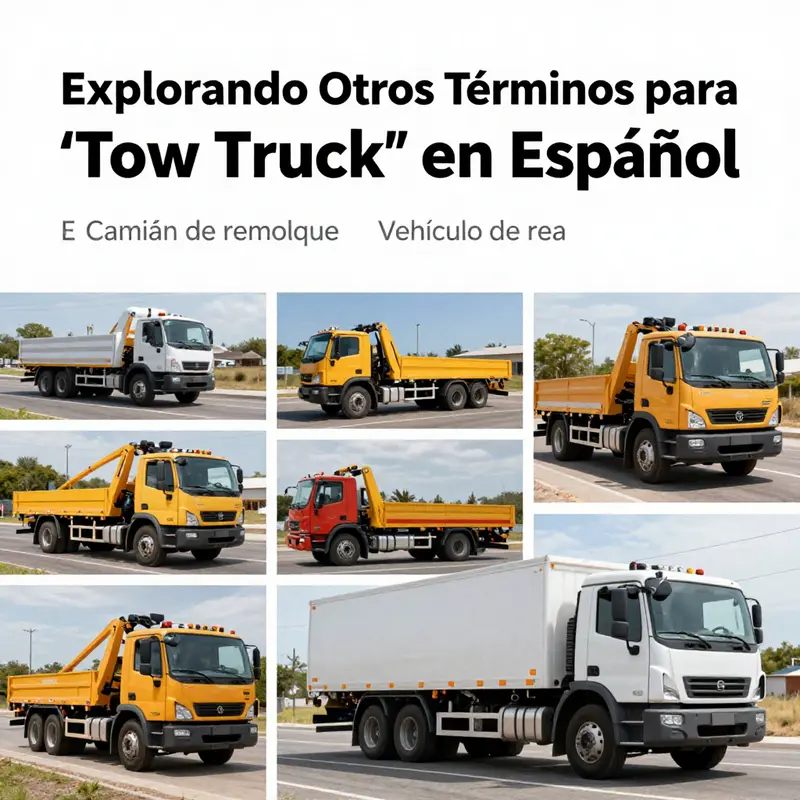
When translating or talking about a “tow truck” in Spanish, the single most reliable word is grúa. It is concise, widely understood, and specifically tied to the act of towing or recovering disabled vehicles. Still, translators and speakers sometimes encounter alternatives like camión de remolque and vehículo de remolque. These alternatives can be accurate in certain technical contexts, but they also risk ambiguity. This chapter explains the practical differences, regional shades of meaning, and the best choices depending on audience and purpose.
Start with the familiar: grúa. In everyday speech across Spain and Latin America, people say llamar a la grúa, la grúa se llevó el coche or necesito una grúa. The word evokes the specialized service vehicle equipped with a winch, crane arm, or flatbed used to recover stalled or damaged cars. It is feminine: la grúa. Using grúa will make you understood quickly in roadside interactions, help you find signage that warns of towing, and match colloquial usage on radio, in apps, and in service centers.
Why then do alternatives exist? Because language divides into registers and technical domains. Camión de remolque and vehículo de remolque are literal and descriptive, but they emphasize the towing function in a broader sense. A camión de remolque literally reads as a truck that tows or hauls, and it can conjure images of a heavy freight tractor pulling trailers. Likewise, vehículo de remolque simply means any vehicle that tows. Both are useful when you need generic or legal wording that covers a wide range of towing vehicles, from light roadside recovery units to heavy semi-trucks that pull entire trailers.
For translators working on technical documents or legislation, those broader phrases have value. An insurance policy or municipal ordinance might need to name every type of towing-capable vehicle. In such texts, vehículo de remolque or vehículo de recuperación avoids the colloquial specificity of grúa. But for consumer-facing language, customer service, or spoken requests, these terms are too general and may confuse a listener who expects a small recovery truck rather than a freight tractor.
Practical examples show the difference. If you say Necesito una grúa para retirar mi coche, the dispatcher knows to send a recovery vehicle. If you say Necesito un camión de remolque para retirar mi coche, you risk implying you want a large truck suitable for moving heavy loads or multiple cars. Similarly, vehículo de remolque could be taken as a category label in a technical manual rather than an immediate request for help.
There are useful intermediate forms that combine clarity and precision. Grúa de remolque and grúa de plataforma clarify the towing role while keeping the familiar grúa. A grúa de remolque signals that the crane-type unit is intended to tow. A grúa de plataforma (flatbed tow truck) indicates the specific design that carries the vehicle on a level bed. When you want to be precise about the towing method, use these compounded terms.
Beyond vocabulary, regional variation matters. In Spain, grúa appears in traffic signs and municipal notices. You will read prohibido estacionar. Zona de carga y descarga. Grúa en funcionamiento or see tickets that mention retirada por grúa. In many Latin American countries the same word applies, but additional local phrases may appear in phone directories or business names, such as servicio de remolque or auxilio en carretera. These are service labels rather than formal names for the vehicle.
Specialized terms also matter when translating industry texts. A car carrier that transports multiple vehicles for delivery or sale is called a transportador de vehículos or camión portacoches, not a tow truck. A heavy-duty recovery rig used after highway accidents is often called a equipo de rescate de vehículos pesados or simply a grúa hidráulica de gran tonelaje. Maritime towing uses remolcador, which is a tugboat and should never be used to mean a roadside tow truck.
For anyone writing practical phrases or instructing a driver, choose words that match the situation. If a stranded motorist needs help, provide sample lines that are clear and short. Say: ¿Puede enviar una grúa? Estoy en la autopista, kilómetro 23, coche averiado. Or: Necesito asistencia en carretera; tengo un pinchazo y no puedo mover el coche. Both are clear, use familiar vocabulary, and will prompt a quick, appropriate response. In customer-facing apps or signage, prefer grúa or servicio de remolque in combination with contact details.
Legal and formal documents should use broader labels. If drafting municipal regulations, use vehículo de remolque or vehículo de asistencia en carretera to encompass all possible towing vehicles. When insurance policies list covered services, consider phrases like servicios de remolque y recuperación to capture both the act of towing and larger salvage operations.
Translators face another decision: whether to preserve register or to adapt for readers. If translating an emergency steps booklet, render the colloquial English “tow truck” as grúa. If translating a vehicle fleet manual, choose camión de remolque or vehículo de remolque if the text discusses heavy tow trucks or a range of towing apparatus. Keep glossary entries consistent and add clarifying parentheticals when necessary: for instance, “grúa (vehículo de remolque para automóviles).”
A short practical glossary helps avoid mishaps:
- grúa: everyday term for a tow/recovery truck; best for general communication.
- grúa de remolque: explicit phrase; useful when you wish to stress the towing role.
- grúa de plataforma / grúa con placa: flatbed tow truck; used when describing the equipment.
- camión de remolque: general truck that tows trailers; use in heavy-haul contexts.
- vehículo de remolque: broad, legal or technical term for any towing-capable vehicle.
- servicio de remolque / asistencia en carretera: service-level phrases appropriate for businesses and public information.
Also consider occupational vocabulary. The driver of a tow truck may be called operador de grúa or gruísta (sometimes spelled gruista). Both are acceptable; usage varies regionally. In formal lists or licenses, operador de equipos de remolque may appear. For vehicle labels and fleet management, consistent terms such as unidad de remolque ligera help keep categories clear.
Signage and practical communications often combine terms for maximum clarity. A roadside sign might read: Prohibido estacionar. Zona reservada. Retirada por grúa. A company card could state: Asistencia 24h – Servicio de remolque y grúa de plataforma. These combinations ensure both laypeople and professionals understand the offer.
Finally, consider the audience and the level of precision required. If you speak to a driver, use grúa. If you write regulations or technical specs, use vehículo de remolque or camión de remolque and define the scope. If you manage a fleet, you may prefer precise labels like grúa ligera, grúa pesada, and plataforma portacoches to differentiate services. For travelers and everyday communication, stick with grúa and short, clear phrases.
For practical preparation and operational planning—especially for island operations or remote fleets that rely on quick recovery services—familiarize your team with both the colloquial and formal terms to avoid misunderstandings. Readers who manage such operations may find guidance on coordinated response and vehicle categorization helpful; a useful resource on that topic is available in the article about Emergency preparedness for island fleets: https://theislandtowtruck.com/emergency-preparedness-for-island-fleets/.
If you want a quick authoritative confirmation of common translations, consult language resources such as WordReference. They list tow truck as grúa and show related usages and forum examples: https://www.wordreference.com/definition/tow%20truck
From Accidents to Parking Tickets: How to Say “Tow Truck” in Spanish Naturally
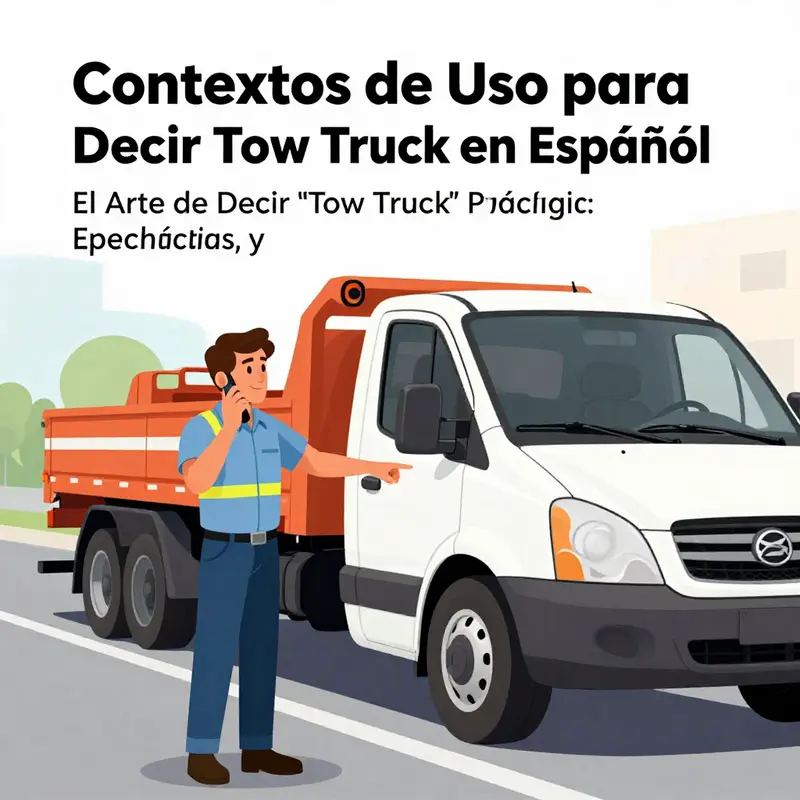
Usage in everyday speech and official contexts
When you need the phrase for a tow truck in Spanish, the word you will hear most is grúa. Short, direct, and widely understood, grúa covers the full range of situations where a vehicle must be moved by another. People say grúa when a car breaks down, when a vehicle blocks traffic, and when authorities enforce parking rules. The slightly more formal or precise expression, grúa de remolque, points specifically to the towing function. In technical reports and logistical documents, you may also see camión de remolque or vehículo de remolque, but these expressions sound less natural in quick conversation.
Consider how natural speech flows around the simple core term. A driver calling for help will typically say: “Necesito una grúa, se me ha parado el coche.” Short and urgent, this sentence uses grúa without any qualifying words. Similarly, a traffic officer warning a driver about an illegal park might say: “No puede aparcar aquí; la grúa se llevará su coche.” The verb choices around grúa are important. Common verbs include llamar (to call), venir (to come), retirar (to remove), and remolcar (to tow). Each verb frames the action differently: llamar a una grúa focuses on requesting assistance; la grúa retiró el coche emphasizes removal; remolcar un vehículo is the technical description of the towing action.
Everyday situations make ample use of brief, direct constructions. After a breakdown, a passerby might report: “Una grúa llegó en diez minutos y se llevó el coche al taller.” In many Spanish-speaking cities, such quick, conversational uses are the norm. For signs, automated messages, or formal notices, you might encounter zona de remolque, indicating a place where towed vehicles are kept. Authorities will often combine the noun with legal language. A typical announcement on a municipal website or a street sign reads: “Prohibido aparcar. Vehículos serán retirados por la grúa.” This phrasing signals the administrative function of towing.
Parking enforcement is a frequent context where the vocabulary tightens up. In those situations, the emphasis switches from immediate help to public order and process. Drivers who ignore signs hear phrases like “La grúa ha retirado su vehículo a la zona de depósito” or “Acuda a la zona de remolque para reclamar su auto.” The word depósito or zona de depósito is often paired with grúa in administrative contexts. When learning vocabulary for travel or residence, it helps to remember this pairing. Knowing dónde recoger el coche and qué documentos llevar will make the recovery process smoother.
In technical and industrial settings, the language grows more specific. On highways, in construction zones, or at crash sites, professionals prefer remolcar for precision. Traffic management teams might report: “Se cerró la carretera para remolcar los vehículos implicados.” That sentence highlights operational concerns: safety, clearance, and traffic flow. Tow operators and emergency coordinators use terms like grúa pesada for heavy-duty tow trucks, and grúa ligera for lighter vehicles. These modifiers help planners assign the correct equipment. If you need to request a particular capacity, saying “necesito una grúa pesada” communicates urgency and technical need.
Regional variations shape small differences in usage. In Spain, grúa is universal. In many Latin American countries, usage is the same, but additional local terms or slang may appear. For instance, in some places you may hear remolcador used more in industrial contexts, or colloquial expressions that vary by country. Nonetheless, grúa remains the go-to word almost everywhere. When in doubt, use it; locals will understand instantly.
Practical phrases for different moments are useful to memorize. For a breakdown: “Mi coche no arranca. ¿Me puede mandar una grúa?” For an accident: “Necesitamos una grúa para retirar los vehículos.” To report illegal parking: “Hay un coche mal estacionado; podrían pasar la grúa, por favor?” If your car has already been taken: “¿Dónde ha llevado la grúa mi coche?” Short, direct questions like these are clear at a roadside or over the phone.
Language for formal reports or news coverage usually adds context. A traffic bulletin might say: “Varios vehículos fueron remolcados tras el accidente; la grúa trabajó hasta restablecer la circulación.” This style emphasizes the sequence of events and the action taken. For legal or insurance documents, you will read remolque frequently, as in servicio de remolque or operación de remolque. That usage aligns with technical definitions used by transport authorities and insurers.
Understanding verbs associated with towing also matters. Remolcar is the act. Remolcado is the past participle, used to describe a vehicle that has been towed. Llevarse en grúa is an idiomatic phrase meaning ‘‘to be towed away.’’ Example: “Si estacionas allí, te lo llevan en grúa.” The passive construction is common in official statements: “El vehículo fue remolcado por mal estacionamiento.” Learning these verb forms helps you read notices and follow instructions.
When speaking to a tow operator or dispatcher, clarity is essential. Provide your location, vehicle description, and any hazards. Useful short sentences include: “Estoy en la carretera N-123, kilómetro 45.” and “Es un coche gris, matrícula AB-123-CD.” Use necesito plus una grúa to make your request clear. If the situation involves a heavy vehicle, add pesada. If the vehicle blocks traffic, add está obstruyendo la vía. These small additions guide the operator toward the right equipment.
Tow trucks also appear in planning and fleet management language. Municipal fleets, highway services, and private towing companies coordinate responses. For organizations, phrases like plan de despliegue de grúas and prioridad de remolque describe strategy. If you manage a vehicle fleet, you will encounter documents about emergency response and readiness. For practical reading on fleet emergency procedures, the resources at the link below offer tailored guidance for island and coastal operations:
Emergency preparedness for island fleets
Finally, official traffic management agencies document towing procedures and rules. For example, Spanish road authorities provide guidelines on incident handling and towing operations. Those documents use the terms remolque, grúa, and zona de remolque consistently. They are useful references when you must understand legal obligations or recover a towed vehicle. For more formal regulatory language, consult national traffic authorities such as the Dirección General de Tráfico (DGT): https://www.dgt.es/
Throughout all these contexts, the core advice is simple. Use grúa for routine, conversational needs. Add modifiers or switch to remolcar when you need technical or legal precision. Memorize a handful of short phrases to handle roadside conversations. Pay attention to local signs that indicate zona de remolque or depósito municipal, and know how to ask where to retrieve your vehicle. With these small language tools, asking for help and understanding notices becomes straightforward.
By focusing on practical phrasing and the most common word, you avoid confusion. Most speakers will prefer grúa in casual speech. Officials and technicians will use remolcar and grúa de remolque when detail matters. Learning both registers prepares you for any real-world situation, whether you are traveling, reporting an incident, or reading a municipal notice.
Beyond “Grúa”: What Tow Truck Words Reveal About Spanish-Speaking Cultures
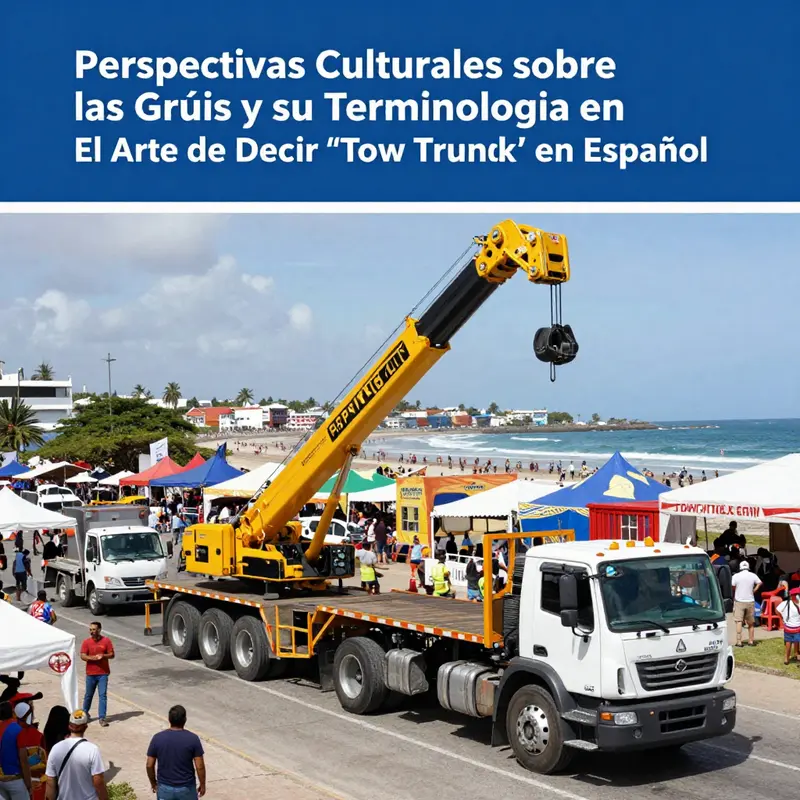
Language often carries more than a direct translation. The way people name devices reflects history, geography, and daily life. When you ask “how do you say tow truck in Spanish,” the simple answer is grúa. Yet that single word opens a wider cultural window. It connects technical meaning, regional flavor, and practical distinctions. This chapter explores that window, showing how vocabulary for tow trucks varies, why those variations matter, and what they tell us about Spanish-speaking communities.
The core, everywhere-understood term is grúa. This word literally means “crane,” and it points to the machine’s common action: lifting and hauling. Whether in Spain or Latin America, grúa appears in formal writing, road signs, and legal notices. It is the word you will hear on the radio and read in news reports after a breakdown or an accident. Drivers who call roadside assistance will usually ask for “una grúa” without further explanation.
Even with that shared baseline, regional differences shape everyday speech. In many border regions, especially northern Mexico and South Texas, the span of meanings for vehicle-related words widens. There, the term troca appears in casual conversation. Traditionally, troca refers to a pickup truck. Locals sometimes extend the term informally to any large truck, including vehicles that tow. This stretching of meaning reflects real social contact. English and Spanish blend where communities mix, producing hybrid usage that outsiders may find surprising.
Function influences vocabulary as well. Towing covers several operations. A vehicle that tows small trailers might be called coche de remolque. A towing device attached between vehicles often appears as barra de remolque. For sea contexts, the language shifts to maritime terms. A towing rope or hawser at sea appears as maroma de remolque. In canal operations, where boats are hauled along confined waterways, the older term sirga remains in use. Each term fits a particular environment and task. Together, they show that Spanish for towing is not a single fixed label. It is a set of words tuned to context.
The split between formal and colloquial language matters. In formal contexts—insurance documents, police reports, municipal bylaws—the choice tends toward grúa or the explicit camión de remolque and vehículo de remolque. These phrases avoid ambiguity. They emphasize the machine’s role. Officials prefer them for clarity. In casual speech, people rely on shorter, everyday words. That is where regional slang and borrowing take hold. Speakers in one town may use a local nickname. Another town will never hear it. This diversity mirrors other areas of language where official and popular registers diverge.
Cultural practices around towing also shape language. In many cities, municipal tow trucks remove cars from restricted zones. Drivers learn the local procedure and the vocabulary together. Roadside assistance companies advertise with the word grúa. Tow operators and mechanics may use more technical terms among themselves. Language thus tracks the social network: drivers, operators, officials, and mechanics each bring their own vocabulary to the scene.
Humor and everyday metaphors appear too. Because grúa also means crane, people sometimes use the word in playful or exaggerated ways. A very large vehicle may be jokingly called “una grúa” even when it is not a tow truck. This playful usage shows how imagery shapes naming. Likewise, in regions where pickups pull or recover vehicles, the casual extension of troca communicates local practice. People see a pickup hauling a disabled car, and the community adapts its label accordingly.
Language contact deserves special attention. Along the U.S.–Mexico border and in bilingual communities, English terms and structures influence Spanish. Speakers borrow, calque, or adapt English expressions. The word tow sometimes appears directly in Spanglish contexts. But in most Spanish-speaking countries, the native terms remain primary. Borrowing happens selectively and often stays confined to specific settings. Where cross-border trade and migration are heavy, bilingual speech becomes part of daily life. There, a single conversation may mix grúa, troca, and an English phrase.
Professional vocabulary adds another layer. Tow truck drivers and fleet managers use precise terms for equipment types. Light-duty carriers, rollback flatbeds, and heavy-duty wreckers each have professional names. While lay speakers often say grúa, professionals might specify camión plataforma or grúa de arrastre. Those distinctions are useful when describing capabilities. They matter for contracts, safety procedures, and insurance. In that way, towing vocabulary mirrors other technical lexicons: a common word for the public, a specific one for professionals.
Geography also leaves its mark. Coastal regions borrow maritime terms because they operate in both water and land contexts. Inland agricultural zones may have different jargon, shaped by farm vehicles and local mechanics. Urban centers develop expressions tied to parking regulations and municipal enforcement. Thus, the words people choose reflect their immediate needs and surroundings.
Understanding these nuances is practical for learners and visitors. If you need a tow in Madrid or Mexico City, asking for “una grúa” will get you service quickly. In a border town, however, listening for troca can help you follow informal conversations. If you work with island fleets or emergency response teams, knowing whether professionals say camión de remolque or grúa ligera can improve coordination. Managers of vehicle fleets will find value in the precise language used by operators and dispatchers. For more on fleet coordination and emergency response, see this guide on essential fleet emergency response strategies: essential fleet emergency response strategies.
Beyond practicalities, the vocabulary reveals social attitudes toward vehicles and services. In some places, towing is seen as a routine public utility. In others, it carries negative associations, especially when vehicles are impounded or towed from private property. The words people use then reflect emotion. A terse phrase may convey frustration. A formal term might appear in a polite request. Language captures those shades of feeling.
There is also historical depth. The adoption of grúa underscores the industrial image of lifting and moving heavy objects. Maritime terms like sirga recall earlier eras of canal transport. The persistence of such words shows continuity between past and present practices. Even informal labels like troca hint at recent patterns of vehicle use. As pickup trucks grew common, new speech habits followed.
Learning these distinctions enriches communication. Simple translations rarely capture cultural sense. A good approach is to prioritize grúa for general use. Learn related terms for specific contexts. Pay attention to local speech when you travel. Listen to radio reports and read local signage. That will give you a feel for regional variations. Immersion in community language rarely disappoints.
Finally, knowing how people name tow trucks connects to broader language skills. It teaches sensitivity to register, to technical versus colloquial speech, and to how societies adapt language to need. When you can move fluidly between grúa, camión de remolque, barra de remolque, and troca, you also show cultural awareness. That fluency matters in everyday interactions and in professional environments.
The single-word answer, grúa, remains the most reliable translation. Yet the richer story belongs to the many terms that circle around it. Regional slang, technical vocabulary, maritime language, and bilingual borrowing all expand the lexicon. Each term tells a small story about where it is used. Pay attention to those stories. They reveal more than a translation alone.
For those curious about related pickup truck slang and how communities adapt vehicle vocabulary, an extended guide offers additional perspectives and examples. See the pickup truck slang guide here: https://www.alibaba.com/cars/2026/02/10/pickup-truck-in-spanish-slang-guide/.
Final thoughts
Reconocer la traducción de ‘tow truck’ como grúa ofrece un punto de partida para un diálogo exitoso en el mundo automotriz. Comprender otros términos como camión de remolque y vehículo de remolque enriquece la comunicación y permite interacciones más efectivas. Además, explorar las perspectivas culturales sobre estos términos refuerza la importancia de adaptarse al contexto local, facilitando la relación con una clientela diversa y asegurando un servicio de calidad en la industria automotriz.