Understanding whether you can ride with a tow truck driver can be perplexing, especially when you’re faced with unexpected vehicle issues. This article delves into the critical circumstances under which riders can accompany tow truck drivers, ultimately empowering auto repair shops, car dealerships, property managers, resort operators, and commercial fleet operators to better assist their clients and make informed decisions. Each chapter will guide you through the nuances of riding with tow truck drivers, enhancing your knowledge and ensuring a safer towing experience.
Riding Along: Safety, Rules, and Realities When Your Vehicle Is Towed
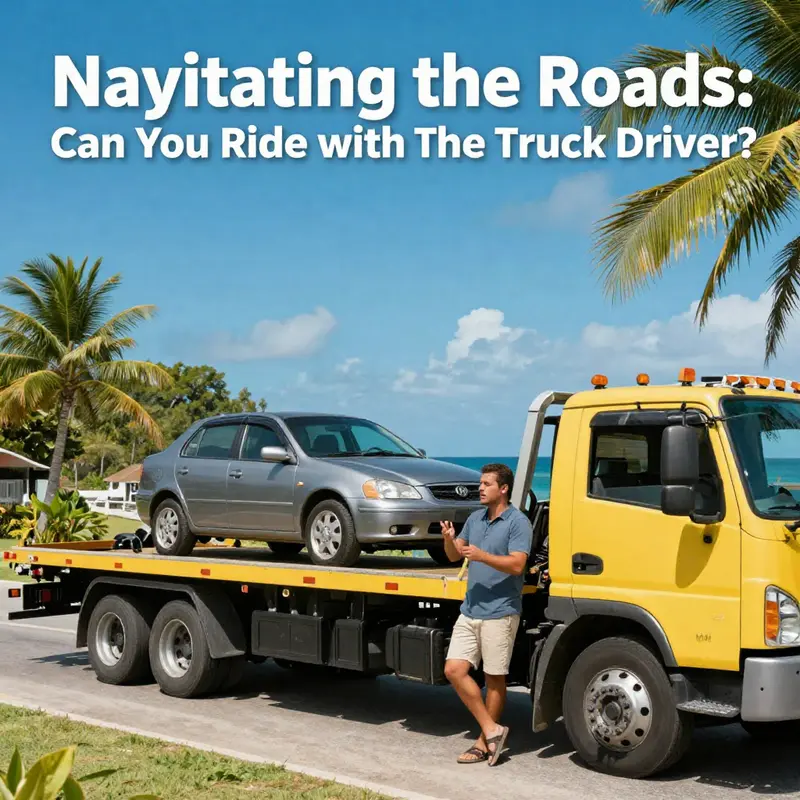
When a car breaks down and is being towed, you may wonder if you can ride in the tow truck. In most standard operations the answer is no: the cab is designed for the operator, and safety regulations treat the recovery as a controlled process with limited access to passengers. Depending on the situation you may instead ride in your own car behind the tow, or wait at a safe location and meet the tow at the destination. If riding in your car is possible, you should follow the operator’s instructions, keep a steady following distance, and avoid interfering with securing straps or driving tasks. If you must wait, choose a well lit, safe area and arrange to be contacted with updates. Clear communication with the tow operator beforehand helps set expectations about route, timing, and any detours. Throughout the process safety and responsibility come first: the goal is to protect people, vehicles, and the work crew while bringing the disabled vehicle to a repair facility. For more on towing safety, you can consult standard industry guidelines and your insurer’s advice.
Riding Shotgun with the Tow Truck Driver: Navigating Policies, Safety, and Realities When You Are a Passenger
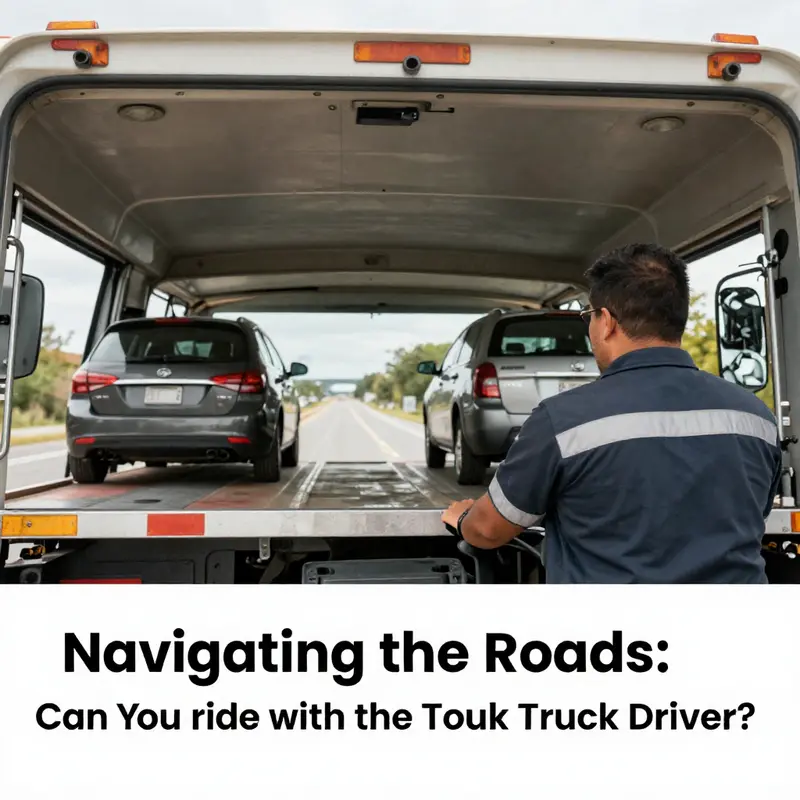
Riding shotgun with the tow truck driver is a question that travels with you like a roadside shadow. The answer is not a universal yes or no; it depends on rules, safety considerations, and the specifics of the tow. In the heat of a breakdown or after an accident, people instinctively want to stay close, to ask questions, and to offer reassurance. The driver faces a different set of priorities: keeping the operation steady, secure, and on track while tending to a moving load. This chapter explores when you may ride as a passenger, what safety expectations apply, how regulations shape practice, and what you can do to protect yourself and others while the tow process unfolds. It is not a sterile policy manual, but a practical guide that acknowledges real world pressures on drivers, dispatchers, and customers alike.
When you are the customer whose vehicle is being towed, the standard logic typically presents two paths. The first is to ride in your own car and follow the tow truck to the destination whenever that is feasible. This arrangement keeps you in a familiar space, lets you maintain your own seat belt, and avoids introducing a second moving unit into a situation that already demands careful coordination. If the distance is short and the route straightforward, following in your own car is often the simplest and safest choice. It also preserves your control over belongings and reduces the cognitive load on the driver, who must focus on securing the load and maneuvering through traffic. In this scenario you communicate with the driver or dispatcher to confirm that you will stay in your own vehicle, maintain a safe following distance, and follow any signals the driver uses to indicate that you may rejoin at the destination.
The second path centers on the taxiing question that everyone wonders about during a tow: is it ever permissible for you to ride in the tow truck itself? In practice, this is rarely a routine option. Cab space is designed for the operator with clear access to controls and equipment, not for the comfort and movement of passengers. If a true emergency arises—such as a medical issue within the vehicle, or a road condition that makes continuing with a separate passenger vehicle unsafe—the driver may authorize you to ride in the cab. Even then, the safety rules are strict. You must wear a seat belt at all times, keep limbs contained, and comply with the driver’s directions about movement, weight distribution, and staying out of the way of moving equipment. The window of opportunity for this arrangement is narrow and should be treated as a last resort rather than a standard practice. Before any decision is made, it is prudent to confirm the policy with the towing company or the dispatcher, because company policies vary and insurance or liability concerns can tilt the decision one way or the other.
For customers whose vehicle is not easily drivable or whose situation presents a hazard, the preferred option remains to remain in the customer’s own car and follow behind, or to wait somewhere safe until the operator completes the loading and securing process and directs the next step. Waiting in a safe, visible location reduces exposure to traffic hazards and keeps the operation smooth and predictable. The driver’s instructions are the compass in these moments, and your willingness to listen and adapt helps preserve everyone’s safety while the tow is underway. This approach is aligned with the broader safety ethos that governs roadside recovery: prioritize the integrity of the tow, the health of the passengers, and the flow of traffic around the scene. It is a practical balance between urgency and caution, the two forces that drive every tow operation.
If you are not the vehicle owner but a passenger—say a friend or family member—the situation becomes more variable. The instinct to accompany the vehicle or to comfort a concerned driver is natural, but the reality on the ground is not universal. Some towing companies explicitly allow passengers inside the vehicle being towed, particularly when the towed vehicle is not in a hazardous condition. Others restrict passengers because of liability and safety concerns. The decision often hinges on the vehicle’s condition, the presence of heavy equipment or specialty gear, and the company’s liability framework. In practice, a passenger may be permitted to ride in the cab only if the operator deems it safe and if the company policy permits it. If the vehicle under tow is unstable or the recovery involves a heavy or potentially dangerous setup, the operator will almost certainly require passengers to ride in the other vehicle or to wait at a safe location. The driver’s primary duty is to ensure the load is secure and the route is safe, and that responsibility can be complicated by the presence of extra people inside the work area.
The regulatory environment interlocks with company policy in meaningful ways. In many states and localities, there are rules governing seating, restraints, and occupant safety in tow operations. These rules commonly require anyone inside the moving apparatus to be properly restrained and seated in a designated area. The cab is typically reserved for the driver’s use, with limited exceptions for a single passenger under controlled conditions. Some jurisdictions may permit passengers in the tow truck cab only when the vehicle being towed is in good condition and the operator can manage the trip without compromising the rig or the road crew. Others may require that passengers ride in the vehicle being towed rather than in the cab. Because regulations vary, the safest course for customers is to verify policy with the service provider before the move begins. Insurance considerations also shape this decision, and many companies err on the side of caution to minimize risk and ensure consistent service quality.
If you want more clarity, seek it in official guidance and best practices published by credible safety organizations. These resources outline the rationale behind passenger policies, the emphasis on restraint, and the necessity of clear communication throughout the tow operation. They also explain how evolving service models in roadside assistance influence expectations. In practical terms, you may encounter a landscape in which the tow operator emphasizes safety and efficiency first, with passenger allowances granted only when the risk assessment permits. This dynamic helps explain why policies differ among providers and why planning ahead is essential. The more you know about the rules the better you can plan and the less likely you are to find yourself in a tense last minute disagreement on the roadside.
During these moments, the idea of an app driven service model offers another angle on the question of riding with a tow truck driver. In modern service ecosystems, some platforms connect users with licensed tow truck professionals who provide roadside assistance, towing, and recovery. In this framework, the user does not ride in the tow truck; instead, the user requests a service, and the driver arrives to perform the job. The app often provides real time tracking and status updates, which helps customers monitor the driver’s progress and stay informed about when the service will be completed. If you encounter such a service model, your expectations shift away from the passenger dynamic and toward a service delivery experience that prioritizes transparency and safety. It is a reminder that the question of riding in the tow truck does not exist in a vacuum but is part of a broader shift toward safer, more accountable roadside assistance.
To make sense of a real world scenario, consider a typical sequence after a breakdown or crash. You pull over, assess the situation, and call for help. The dispatcher gathers location details, the nature of the problem, and the best way to reach you. The tow operator arrives, evaluates the vehicle’s condition, and lays out the options. If the car is not a hazard and the distance is manageable, you may ride in your own car, following the tow truck to the destination. If the car is in poor condition or if a complex recovery is required, the operator may suggest that you ride in the cab only if allowed or that you wait at a safe location while the work proceeds. The driver’s instructions become the roadmap, and your role is to listen closely, obey orders, and keep communications concise. Even families that want to ride together must accept the same safety calculus and organizational discipline that governs the operation.
Company policy is not a mere formality. It is a policy rooted in liability, insurance coverage, and the practical realities of towing heavy loads under varying road conditions. If uncertainty arises, the safe and prudent move is to ask for clarification before the service begins. If the answer is uncertain or unfocused, the move should be to ride in your own car or wait safely rather than risk friction or a misstep during the tow. The operator is trained to manage risk and to keep the operation efficient. Your responsibility is to communicate your needs clearly, to follow directions, and to respect the safety boundaries that protect both you and the crew.
The broader implications of this topic extend into how roadside assistance is evolving. The core principles remain safety, reliability, and clear communication. Tow operators are trained to stabilize a scene, secure the load, and move safely through traffic. Passengers add a layer of complexity that can be managed, but only when all parties share a mutual understanding of policy and risk. For readers seeking guidance beyond this chapter, credible sources on towing practices and vehicle emergency services provide the formal framework that explains why policies often resemble a careful balance between flexibility and risk management. As you prepare for a potential tow, remember that a calm, informed approach reduces the chance of friction and helps the operation proceed smoothly.
In the spirit of practical learning, you can explore a resource that compiles real world experiences and practical tips from island roadside operations. The Island Tow Truck Blog offers insights drawn from the field, including how crews handle passenger questions, safety constraints, and the realities of emergency response on island roads. You can engage with that resource here: the Island Tow Truck Blog. This single link is included to give readers direct access to a perspective grounded in everyday recovery work, while keeping the discussion anchored in the realities of towing operations and passenger considerations.
For those who want to ground this discussion in formal safety guidance, consult the broader field’s standards and best practices. These guidelines help explain why certain passenger allowances exist and why other times they are restricted. They also illuminate the reasons behind strict seat belt requirements and the emphasis on keeping the operator’s attention undiverted during the tow. This is not merely an abstract discourse; it is about safety in real time, when every second counts and the decisions you and the operator make can influence outcomes for the whole scene. The core takeaway is simple: riding with a tow truck driver is possible under careful, safety-driven conditions, but it hinges on policy, the vehicle’s condition, and the operator’s judgment.
If you are a reader who wants to tie this topic to broader themes of emergency response and preparedness, you can pursue additional reading from credible safety organizations. Their guidance helps clarify how passengers should behave in towing operations and what to expect from providers trained to manage risk. And if you want to see how these practices fit into the daily reality of island fleets and readiness planning, you can explore resources that examine emergency preparedness for island fleets or essential fleet emergency response strategies. These discussions illuminate why tow operations operate with disciplined procedures and why passenger policies can be strict while still accommodating legitimate needs. The overarching message remains the same: riding with a tow truck driver is a conditional possibility, but safety, policy, and clear communication must govern every move. For readers seeking ongoing engagement with practical insights on island roadside operations, the Island Tow Truck Blog provides a steady stream of perspectives from real calls and recoveries, reinforcing the practical side of the topic.
In closing, the question Can You Ride with the Tow Truck Driver as a Passenger sits at the intersection of policy, safety, and practical necessity. When it is safe and permitted, riding in the cab may occur in rare, well-justified circumstances. More often, the recommended path is to ride in your own car behind the tow or to wait in a safe location, letting the operator manage the tow with the utmost attention to safety and efficiency. The responsible operator will communicate options clearly, verify policies in advance, and keep the process steady so that the outcome is safe for all involved. And readers who want to explore these ideas further can engage with the Island Tow Truck Blog to see how these principles play out in everyday operations, learn from field experiences, and understand how island context shapes policy and practice. The path to safe, reliable roadside assistance is paved with careful planning, respectful dialogue, and a shared commitment to safety above all else. If you want to broaden your understanding of safety guidelines across the industry, broader resources on towing and vehicle emergency services provide additional context and official standards to consider as you prepare for future roadside needs.
Riding Along with Tow Trucks via Ride-Sharing Apps: What’s Allowed, What Isn’t, and Why
When a breakdown pulls you into the roadside narrative, you learn quickly that the simple question can carry a lot of weight. Can you ride with the tow truck driver using a ride-sharing app? The short answer is nuanced. The longer answer depends on who you are in the moment, what service you’re using, and the precise safety and liability rules that govern tow operations. In the world of roadside help, every choice carries a ripple effect for safety, insurance, and the ability of a driver to stay focused on moving a vehicle from the shoulder to a place of safety. In the end, what governs the scene is less romance and more practical physics, policy, and a commitment to keeping everyone on the road as safe as possible.
To understand why this question is so layered, it helps to map out three realistic scenarios that people encounter when they find themselves stranded and summons a tow or roadside service through a ride-sharing framework. The first scenario involves you, the customer whose car is immobilized. The second involves you, a friend or family member who has come to help or to supervise the process. The third involves you as a user of a ride-sharing style service that is designed to connect licensed tow operators with people seeking assistance, rather than to provide passenger transport. Each path has its own set of expectations and safety standards, and each path speaks to a different kind of relationship between the person who needs help and the person who provides it.
In the first scenario—the one most people picture when they think of a tow—the customer is the person with the vehicle that cannot move. The car is off the road, perhaps due to a breakdown, an accident, or a flat tire. The tow operator arrives with the goal of removing the vehicle from harm’s way. Here the conventional wisdom is practical and clear: you can usually ride in your own vehicle if you can do so safely. The driver’s priority, however, is to secure the scene, hook the disabled vehicle, and maintain full control of the tow operation. For many drivers, that means keeping the tow truck as the core workspace and requiring anyone riding along to be properly belted and prepared for the same safety standards that apply to any commercial vehicle operation. If there is a choice between riding in the tow truck or following in another vehicle, the safer and more common choice is often to ride in your own car and let the driver lead the way. This setup minimizes distractions, reduces the complexity of moving parts in a high-stakes maneuver, and preserves the focus needed to operate equipment on a busy roadway.
But there are moments when riding in the tow truck is necessary or preferred—emergency situations, extreme weather, or a lack of other transportation options. In such moments, a driver might consider including the customer in the cab if there is an ethical, legal, and safety justification to do so. Yet even then the door is not as open as it might seem. Tow operators carry liability insurance tailored to the unique risks of commercial towing, and those policies typically place curbs on passenger seating for a reason: the interior of a tow truck is designed for equipment, not for passenger comfort, and the operator’s primary duty is to the safe operation of the vehicle and the recovery procedure, not to acting as a passenger shuttle. In practice, most operators do not invite passengers into the cab unless a true emergency leaves no other options. The practical upshot is that while riding in your own car behind the tow truck is commonly acceptable, riding inside the tow truck is rarely offered except in constrained circumstances.
In the second scenario, you arrive not as the vehicle’s owner but as a friend or family member who has come to support or to supervise the situation. This is where the practical boundaries become more pronounced. Tow trucks are commercial vehicles that are optimized for towing and recovery, not for passenger transport. The operator’s attention needs to stay on securing the vehicle, managing the hitch and chains, and navigating traffic safely. Allowing a passenger to ride in the cab can complicate the job by introducing additional distractions and potential safety hazards. It can also raise questions about liability if something goes wrong. For this reason, many tow operators, even when a passenger is present in the fleet, will politely but firmly decline riding companions in the cab. The best path in this case is to wait in a safe location—on the sidewalk or parked away from moving traffic—or to follow in your own vehicle from a safe distance. If you must accompany the tow, it is generally safer to ride in your own car behind the tow vehicle rather than to attempt to ride in the cab itself. The driver can relay insights or a plan of action while you observe from the passenger seat in a static, controlled environment.
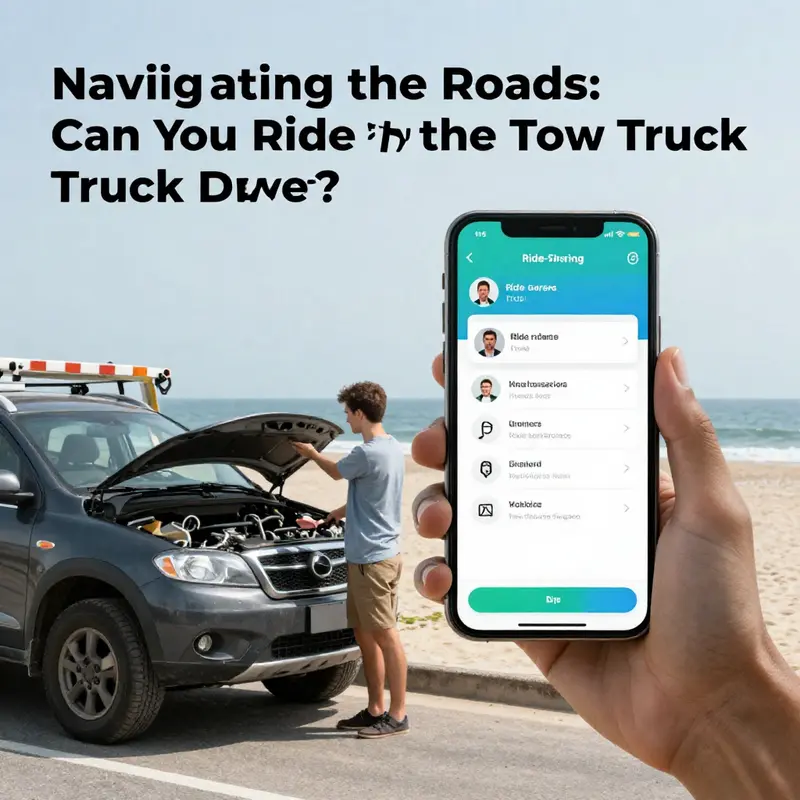
The third scenario involves you as a user of a ride-sharing app that connects you with licensed tow operators for roadside assistance or vehicle recovery. This is where the topic moves from a private, in-person dynamic to a digital service model. The app-based approach reframes the relationship: the platform is the intermediary that schedules, routes, and posts real-time updates about a provider who performs the task. In the domain of towing, these apps are designed to help people obtain help quickly and track the arriving technician or tow truck. Crucially, the intention is not to transport you as a passenger but to deliver a service—towing or recovery. In this context, you do not ride in the tow truck to commute somewhere. Instead, you request assistance, the driver arrives to perform the service, and the interaction centers on the completion of that service with you safely at the scene or at a preferred location after the service is carried out. The model emphasizes efficiency, accountability, and safety protocols, often including real-time tracking so you know when the driver will arrive and how the job is progressing. This is a different energy from a taxi or ride-hailing trip; it’s a service workflow built around vehicle safety, not passenger transport.
That distinction matters because it aligns with the core safety imperatives that govern all roadside support. In scenarios where you are the recipient of tow or recovery assistance, the vehicle’s transfer is a high-consequence operation. It involves anchoring, lifting, securing, and maneuvering heavy equipment around the road shoulder or into a tow yard. The operator’s calibration of risk—timely yet careful—differs markedly from the considerations of a passenger shuttle service. The safety case for not allowing passengers in the cab of a tow truck is straightforward: the cab is not designed as a passenger cabin. The totes, winches, and hooks require a driver’s unbroken concentration. A passenger can be unsteady during sudden braking, jostling, or the shifting weight of a loaded tow. And while safety regulations vary by jurisdiction, the general ethos in professional towing is to minimize any non-essential occupancy in the work area, reducing exposure to injury for both the operator and the person needing help.
For the person who uses a ride-sharing app to access tow services, the experience remains anchored in the same safety-first principle. The app’s value lies in connecting you with a licensed professional quickly and providing transparency about the arrival window, the vehicle, and the service you’ll receive. It helps coordinate when you should be at the scene, how you should position yourself, and what you should have ready for the operator. It does not, however, convert the tow into a ride. This distinction protects everyone involved—from the customer who expects to be transported to the operator who must maintain a controlled environment to perform the operation safely. In practice, this means there is no guaranteed passenger transport feature in the core design of these tow-focused apps. If you are seeking a ride for daily commuting or travel, you should use a dedicated ride-hailing platform designed for passenger transport, not a service app that is optimized around vehicle recovery and on-scene assistance. The use of a tow-focused app remains a targeted tool for immediate roadside contingencies, not a vehicle-for-hire marketplace in the traditional sense.
In considering how to approach a tow situation that involves an app, you can cultivate a practical playbook. Start by clarifying the policy with your service provider before the job commences. Ask, politely, what options exist regarding where you will be during the tow process. If you are the vehicle owner and you prefer to ride in your own car, confirm that it is safe to do so and acknowledge the driver’s assessment. If the driver indicates that following in your own vehicle is the safer option, plan a route that keeps you in sight and away from hazards. If you have a companion with you, discuss roles—who will stay in what vehicle, who will manage phones or paperwork, and how you will communicate updates during the operation. When the job is complete, you may need a practical path to the next leg of your journey. Some people arrange a ride to the final destination after the tow, while others prefer to drive away once their car is secure and the area is clear. Either way, the goal remains the same: minimize risk, maximize clarity, and honor the professional boundary between a service that recovers a vehicle and a service that moves people from point A to point B.
From a policy perspective, the consistent thread across these scenarios is the central role of safety rules and liability considerations. Tow operators adopt procedures to reduce risk, and their insurance coverage reflects the real and present dangers of roadside recovery. Passengers in the cab add layers of complexity to both risk and liability, which is why the standard operating practice tends toward keeping the cab a space for the driver and the tools, with passengers in temporary, safer zones outside the vehicle or in their own transport behind the tow truck. The digital layer—the ride-sharing app—adds speed and visibility to the process, but it does not change the fundamental safety calculus. A driver’s ability to focus on secure hooking, stable towing, and traffic management is not improved by accommodating additional occupants inside the cab. The app’s function remains to connect you with help, not to offer a commuter solution.
For readers who want to deepen their understanding of how fleet operations and emergency responses are navigated on the ground, there is a broader conversation about safety culture and preparedness. The island context, for instance, presents unique challenges and opportunities for emergency response strategies. If you are curious about the broader landscape of fleet safety and emergency planning, you can explore The Island Tow Truck blog. This resource offers perspectives on how operators prepare for sudden incidents, maintain readiness, and approach high-stakes situations with a calm, safety-first mindset. These insights complement the practical guidance about whether you can ride with a tow driver when using ride-sharing style services. They remind us that the human factors—training, communication, and disciplined procedures—are as important as the mechanical and logistical aspects of a roadside recovery.
At the end of the day, the question isn’t simply about legality or a rulebook. It’s about a shared understanding of risk and responsibility. If you are the customer, you can often ride in your own vehicle behind the tow truck when it is safe. If you are a passenger, most operators will not permit you in the cab. If you are using a ride-sharing app that connects you with tow professionals, you are not riding to your destination in the tow truck; you are obtaining a service to recover or tow your vehicle, and the interaction is guided by safety considerations and service design rather than passenger transport. Knowing what to expect can reduce anxiety at a stressful moment and help you make the best short-term decisions for everyone involved. The aim is to get you back on the road with the least risk and the greatest clarity about what comes next.
External resources can help you understand how these practices fit into the larger ecosystem of roadside assistance and fleet safety. For a practical look at how emergency preparedness shapes island fleets and how operators coordinate safety-critical responses, consider exploring the broader fleet safety literature and industry discussions. External resources such as the official platform for tow-focused services provide additional context about how real-time dispatch, safety checks, and ride options are managed on the ground. You can visit the external resource at https://www.foxtow.com to learn more about how a dedicated tow and roadside assistance platform describes its service model, safety features, and the way it integrates with drivers and customers during urgent moments on the road.
In sum, the answer to whether you can ride with the tow truck driver using ride-sharing apps is nuanced and context-dependent. The structured reality is clear: riding in your own vehicle behind the tow truck is often possible and safer when the driver agrees and the circumstances permit. Riding inside the cab of a tow truck is generally not allowed except in emergencies or when no other options exist. Using a ride-sharing app that connects you with tow professionals aligns with a service-centric model: you receive assistance, you do not ride to another location as a passenger, and you benefit from real-time updates and professional expertise. The next steps, and the decisions you make at the roadside, hinge on clear communication with the operator, a realistic assessment of the situation, and a shared commitment to safety above all else. This approach helps ensure that you are cared for, that your vehicle is handled properly, and that the road remains as safe as possible for everyone nearby.
Riding Along the Line: Tow Safety and the Reality of Traveling with a Tow Operator
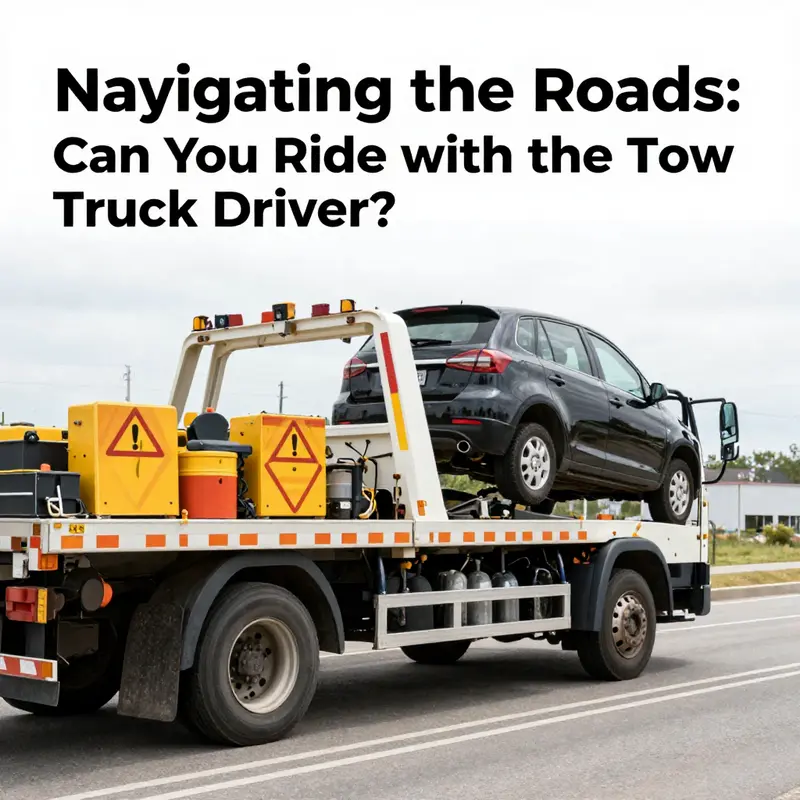
People often ask whether they can ride in the tow truck cab when their car breaks down. The safe, practical answer is usually no. Tow trucks are engineered to move a disabled vehicle and to secure loads, not to transport passengers comfortably for long distances. The cab is compact, the controls may be unfamiliar to a non-driver, and the driver’s attention must stay on traffic, loading, and safety procedures.
Passengers can follow in their own vehicle or wait in a safe location away from traffic. Following behind in your own car requires keeping a safe distance, obeying traffic laws, and not distracting the operator. If safety concerns arise, the dispatcher may recommend alternatives. In rare emergencies, a professional may authorize a very brief exception, but such cases are extraordinary.
Today, many tow services use digital dispatch, real-time tracking, and clear service plans that emphasize safety and accountability. The policy against riding in the cab exists to protect everyone on the road, including bystanders and other drivers. Understanding the rationale helps customers cooperate and reduces misunderstandings during stressful roadside moments.
Final thoughts
In summary, whether you can ride with a tow truck driver highly depends on specific circumstances, such as being the customer being towed or the regulations governing passenger safety. Understanding these conditions is vital for all stakeholders in the auto repair and towing industry, including property managers, fleet operators, and dealerships. By rising to the occasion and adhering to safety guidelines, everyone involved can ensure a smoother and more secure towing experience.