In island communities, where local connections matter, understanding the nuances of tipping can create a thoughtful dialogue among vehicle owners, businesses, and service providers. While tow truck drivers perform vital emergency services, the tradition of tipping doesn’t apply in the same way as it does in restaurants or personal services. This article will explore the practices surrounding tipping for tow truck drivers—this will include insights into industry standards, the factors that might influence your decision, and how public perception shapes our expectations of service. By illuminating these aspects, we aim to foster informed discussions that respect the labor of these essential service providers while contemplating the role of gratuity in a professional context.
Tow, Tip, and Timing: When Gratitude Is Optional for Tow Truck Drivers
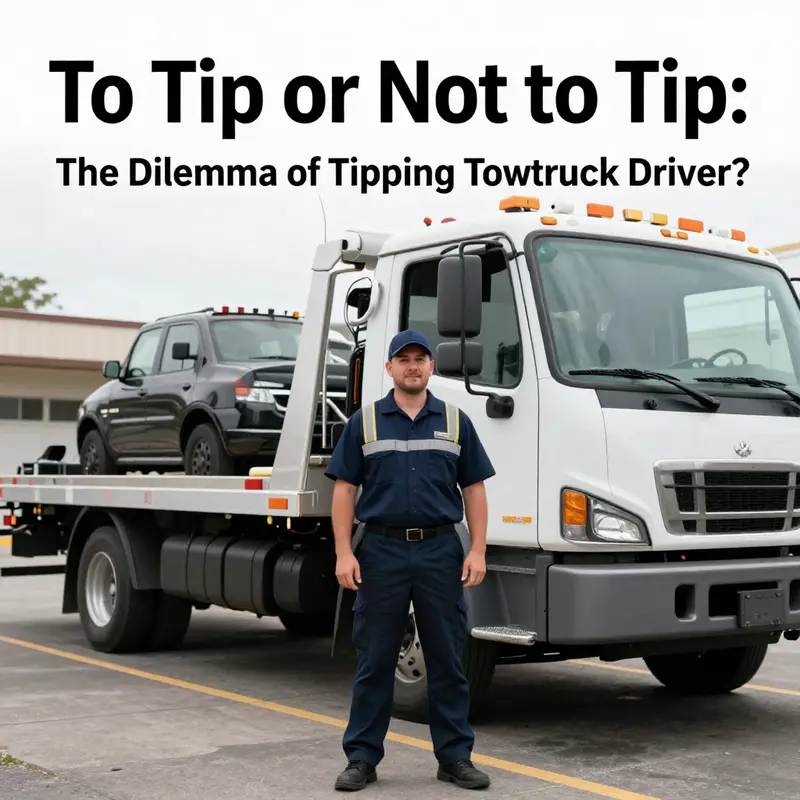
When you are stranded on the shoulder, a tow truck driver arriving with calm, clear explanations can be a welcome relief. You may wonder: should I tip? In practice, tipping tow truck drivers is not routinely expected. The service fee typically covers the company’s costs, the driver’s wage, fuel, and equipment. Many drivers are salaried or paid via the company, not directly by the customer. That makes tips discretionary rather than required.
However, exceptional service, such as arriving promptly, offering patient explanations, or extra safety steps, can prompt a gesture of appreciation. If given, a modest tip in the ballpark of a few dollars is often discussed, but it is not the norm and should not be felt as a payment for the service already contracted.
Practical guidance: ask about company tipping policies if possible; if not, observe cues from the driver or the vehicle. If tipping is discouraged, consider alternatives like a positive online review or a recommendation to others. When tipping is appropriate, keep it discreet and brief so it does not influence the professional boundary.
Ultimately, safety and transparency matter most. Gratuity, if offered, should reflect genuine gratitude without pressuring the driver or creating confusion during an emergency. If you do choose to show appreciation, a quick thank you and a review can have lasting value for the driver and the company.
Tow-Tip Dilemmas: How Service, Norms, and Policy Shape Your Gift to a Tow Truck Driver
The moment fatigue, frustration, and a sense of relief collide on a roadside is when a tow truck appears—someone who helps you regain movement after a car breakdown, an accident, or a stalling moment that leaves you stranded. Out there, the fee you pay is typically a function of distance, vehicle size, time, urgency, and the policies of the company that dispatched the driver. In many jurisdictions, those rates are set in advance or calculated by standard company formulas, and they are not framed as discretionary gratuities. Against that backdrop, the question often raised in the moment is whether tipping is appropriate, expected, or even allowed. The honest answer, grounded in both industry practice and practical ethics, is nuanced: tipping a tow truck driver is discretionary and not universally expected. The decision hinges on the quality of service delivered, the norms in your region, and the policies of the company involved. A calm, reflective approach can turn one tough ride into a moment of meaningful appreciation without pressuring anyone or compromising safety.
To understand the answer fully, you can first examine the factors that influence a tipping decision. The core consideration is the service itself. Was this a routine tow that followed a prearranged plan, a simple vehicle pull, or did the driver navigate a more complex recovery? In emergencies, roads may be slick, parking or staging could be hazardous, and timing can be critical. When a driver improvises a solution that keeps you and others safe, that extra effort is often the kind of behavior that warrants a gesture of gratitude. Conversely, if the service follows a predictable protocol with no deviations, tipping may feel unnecessary and out of place. The practical result is that tipping tends to be seen as a reward for going beyond the call of duty rather than a required supplement to the stated charge.
Professionalism and communication are the other two pillars of the decision. A tow truck driver who arrives promptly, introduces themselves clearly, explains what they will do, answers questions in plain language, and keeps you informed throughout the process creates a markedly less stressful experience. This is not just courtesy; it is a form of safety leadership. When a driver remains calm under pressure, takes steps to minimize risk, and coordinates with dispatchers or other responders to ensure everyone understands the plan, these are the moments when a tip can feel like the appropriate acknowledgment for a job well done. In this light, the act of tipping becomes less about the money and more about signaling appreciation for service that reduces risk and uncertainty when every decision could influence your safety.
Local customs and policy environments shape how likely a tip will be accepted or discouraged. In some areas, cash gratuities for roadside assistance are common and expected informally, while in others they are polite but not standard, and some companies explicitly discourage tipping to preserve uniform compensation structures. The policies of the company can be particularly influential. A dispatcher or employee handbook may note that tips are not part of the compensation or may caution against tips due to potential conflicts of interest or liability concerns. It is not unusual for drivers who work as independent contractors to rely more on tips to supplement a fixed delivery rate, whereas employees paid a wage by the company often do not. The dynamic between contractor and company matters because it affects the financial reality behind the act of tipping. If a driver’s income depends heavily on tips, a small gratuity may be both a practical support and a moral reflection of appreciation. If the driver is salaried or paid a set rate, a tip can still be meaningful, but it is less about supplementing income and more about recognizing exceptional service.
The social context of tipping also matters. Regions differ in their expectations around gratuities in non-restaurant service sectors like towing. In some communities, a tip is a natural part of the ritual when someone goes out of their way to help under pressure. In others, tipping toward roadside assistance would seem out of place or even uncomfortable for both parties. If you are unsure, observe cues: does the driver ask about accepted payment methods, is there a tip jar or sign in the vehicle, or does the company signage emphasize professional service without mention of tips? These cues are not rules, but they help orient you to what is customary in your locale. If a receipt or acknowledgement form mentions tips, that signals a policy that tips are welcome and appropriate. If no such language appears, a discreet gratuity should be considered only if you feel moved by the service’s impact on your safety and time.
Understanding the practicalities of payment is also essential. Tow services price their work through a set of known variables, rather than through tips. The base fee may cover distance, labor, required equipment, and any immediate towing or winching, with surcharges for night work or hazardous conditions. A tip can feel incompatible with a transparent price structure if the bill has already itemized a comprehensive charge. It can feel more natural when the bill is less predictable, such as after an unexpected rescue in a remote area where extra time and risk were involved. When deciding on gratuity, consider whether the driver’s actions reduced the total stress or the risk to you. If the experience involved clear value—like the driver staying on the scene to guide you through a tense moment, helping you secure the vehicle in a tricky environment, or communicating with a hospital, chain of custody, or long-armed rescue services—then a tip becomes a tangible signal of appreciation for that added assurance.
If you decide to tip, a practical consideration is the amount. The conventional range discussed in research and industry commentary sits around 10 to 15 percent of the total bill in a typical service scenario. The logic here mirrors tipping practices in other service industries: you reward the degree of effort and risk, but you do not overwhelm someone with a gratuity for routine service. For a straightforward tow with standard conditions, a smaller gesture—perhaps 5 percent or a flat amount such as five to ten dollars—may be appropriate, especially if the bill itself is modest. If the service goes beyond what you expected, a higher percentage or a larger tip could be justified, but it should stay proportional to the value you perceived. The best practice is to read the room and balance a fair amount with your own budget, without creating pressure or awkwardness. A tip that is too large for the context can feel either excessive or uncomfortable, and a tip that is too small may fail to convey genuine gratitude for extraordinary effort.
Effective tipping is also about the moment you choose to express it. In an ideal scenario, you hand the tip directly to the driver in a discreet and respectful manner—preferably after the service is complete, once you can assess the full quality of the experience. Handing cash to the driver at the scene while they are still performing a potentially dangerous task is not wise; waiting until the vehicle is secured or you are in a safe location is prudent. If you prefer digital tips, many companies and drivers are equipped with mobile payment options. A quick, polite offer to add a tip digitally shows consideration without interrupting the workflow. If the policy of the company explicitly restricts or discourages tipping, you should comply out of respect for the policy. In such instances, a sincere, written note of thanks, or a public positive review, can still convey your appreciation without contravening policy.
One practical question that often arises is whether tipping is appropriate in the form of a single, large tip in response to an extraordinarily challenging situation. There is a point in which tipping becomes an ethical checkpoint rather than a financial one. If the driver saved you from a dangerous situation, navigated an intractable parking problem, or educated you about safety steps you could take in the future, a larger tip may be warranted. Yet even then, it is not a demand you should squeeze out of the situation or a debt that must be repaid. The sign of a mature tipping culture is restraint as well as generosity. It is the awareness that the service rendered in a roadside crisis deserves distinct recognition when it goes far beyond routine expectations, while still honoring the professional boundaries that govern the relationship between the client and the service provider.
For those who want to explore broader etiquette outside the towing context, resources exist to illuminate common patterns in service gratuities. A broad, evidence-based reference point is the U.S. Bureau of Labor Statistics tip guidelines, which explore how tipping operates across various service industries and the general expectations that accompany it. This resource can help you situate a tow service within a wider ecosystem of gratuities, rather than treating it as an isolated ritual. Access to such guidance supports a more informed approach, ensuring your generosity aligns with both personal intent and industry norms. If you are curious about how tipping practices are framed in labor statistics and broader service etiquette, you can consult the external resource linked at the end of this chapter.
The broader point remains clear: tipping a tow truck driver is discretionary. It is not a universal expectation, and it should not be treated as a mandatory add-on to a bill. When you do decide to tip, ensure it reflects genuine appreciation for service that improves safety, reduces stress, or demonstrates notable professionalism. If the service was perfectly adequate and professional, a small gesture or a verbal thank-you may be sufficient and appropriate. If the experience was exceptional, a more generous gratuity can be a meaningful way to acknowledge the driver’s extra mile. If the experience was unsatisfactory, tipping would be inappropriate, and it would be better to communicate constructive feedback to the company rather than to the driver in a way that might escalate tension.
To connect this discussion to a wider reading on industry practice, you can explore the ongoing conversations in the broader towing and roadside assistance community through the blog. The blog contains reflections on how fleets, emergency response teams, and individual drivers handle incidents, including the subtle norms that shape gratuity expectations. You can visit it here to see how others frame the question of gratitude in the context of roadside support: the blog.
In practice, the decision to tip should be guided by a blend of fairness, respect for policy, regional norms, and personal judgment. The goal is to acknowledge outstanding service without creating pressure or confusion. If you keep these principles in mind, you will feel confident in the moment whether to leave a tip, offer thanks in another form, or simply share a positive note with the company. The relationship between a driver and a client in these high-stress moments is a conditional bond of trust. A well-placed gesture of appreciation, when appropriate, can reinforce a positive cycle of professional service and customer recognition, while always staying aligned with safety and policy considerations.
For readers who want a concise takeaway: tipping is not universally required for tow services. It becomes a meaningful gesture when the driver goes beyond the basic expectation. The amount should be proportional to the level of service and the specific circumstances. Company policies matter, local norms matter, and the safety of everyone on the scene comes first. When in doubt, a clear expression of thanks and a thoughtful review can carry as much goodwill as a monetary tip, and often without any policy friction. In all cases, approach the moment with calm, courtesy, and regard for safety above all else.
External resource: https://www.bls.gov/cps/cpstip.htm
On the Line: Public Perception, Real Experience, and the Tow Truck Tip Question
When a vehicle breaks down or slides onto a shoulder in a rainstorm, the arrival of a tow truck can feel like a lifeline. In those moments, the question of tipping often flickers through a passenger’s mind—if not as a conscious decision then as a reflex born of habits formed in other service industries. Yet the landscape around tipping tow truck drivers is markedly different from the restaurants and hotels where gratuities are normalized and expected. The public discourse around tipping in this context tends to converge on a simple, practical truth: tipping is not expected, not customary, and not a determinant of the level of service you receive. The driver’s compensation comes from a service fee paid to the company, and the work is categorized as a professional, on-demand mechanical service rather than a hospitality interaction. The realities behind that distinction matter. They shape how customers perceive what is fair, how drivers are supported, and how communities navigate the sometimes tense moments when a vehicle breaks down or an accident occurs.
Public sentiment about tipping tow truck drivers is informed by several layers of experience, policy, and etiquette. At the heart of the matter is the recognition that tow operators are paid to perform a specialized task that requires skill under pressure. Unlike a tip-based culture where discretionary gratuities supplement a base wage, towing services typically operate with fixed rates that reflect the time, distance, and expertise involved in a haul, winching a stuck vehicle, or clearing a roadway. This structure is partly about pricing transparency and partly about the realities of dispatch economics. When a driver arrives, assesses a situation, and communicates a plan, the value is embedded in the service agreement rather than in a handout. In many jurisdictions, local regulations and company policies reinforce this model, ensuring that the transaction remains straightforward for insurance claims, roadside assistance coverage, and emergency responses. This is not to deny that individuals sometimes feel compelled to show appreciation with a tip. Rather, it is to acknowledge that such an gesture, while not forbidden in all cases, is not the norm and, in fact, is discouraged by some firms because it can complicate billing and insurance processes.
The practical experience of drivers themselves helps illuminate the broader picture. For most tow operators, the day begins with a dispatch that could place them anywhere within a region, from a nearby highway shoulder to a remote access road. They must gauge safety risks, assess vehicle compatibility, and determine the equipment needed to complete the tow efficiently and without causing further damage. Their training includes not only mechanical prowess but also situational awareness, customer communication, and adherence to safety protocols that protect the driver, the vehicle, and bystanders. When a driver arrives, a blend of professionalism and responsiveness is expected: they should identify themselves clearly, explain the service plan, request necessary information (such as the destination or whether the vehicle needs to be towed with a specific carrier), and proceed with due care. In this moment, the value delivered is the reliability of the service, the speed of response, and the ability to minimize the stress of a volatile situation. If the driver performs well—arriving promptly, communicating clearly, and executing the tow with safety and efficiency—the consumer’s sense of satisfaction tends to be high, independent of any tip decision.
Public conversations around tipping often circle back to questions of fairness and the broader ecosystem of roadside assistance. Some critics argue that tipping can create uneven expectations, encouraging customers to withhold payment or to offer gratuities to drivers who might otherwise be compensated fairly through company fees. Others point to the generosity of individuals who want to acknowledge exceptional service in the moment, especially during difficult circumstances such as after-hours calls or during severe weather when every minute counts. The tension here is not about moral intention but about how incentives align with professional standards. If tipping becomes a routine, it could undermine the consistency of service; drivers could feel pressured to perform beyond the agreed scope or to prioritize certain customers who tipped over others. In addition, many towing firms actively discourage tipping to preserve uniform billing practices, ensure compliance with insurance procedures, and maintain a transparent customer experience. These policies are not about denying appreciation but about keeping the focus on professional service quality rather than personal generosity.
The dialogue surrounding tipping also underscores a broader educational opportunity for both customers and operators. For customers, a clear understanding of how towing charges are structured helps prevent confusion when a bill arrives and clarifies why a cash tip is not a standard expectation. It also highlights constructive ways to show appreciation that align with industry norms, such as leaving a positive review, providing a kind word to the dispatcher, or referring the company to others. When a driver goes above and beyond—arriving quickly, offering extra assistance with safe practice, moving items out of the vehicle’s path, or clearly explaining the process—there is a natural impulse to recognize that effort. The challenge lies in translating that impulse into modes of gratitude that are consistent with professional guidelines. A small, discretionary tip, if offered, should be framed as an optional acknowledgment of exceptional service rather than a required component of payment. Even then, customers should be mindful that such gratuities may complicate the tax and accounting records of the driver or the company, sometimes inadvertently triggering policy constraints at the corporate level.
From a customer experience standpoint, the social script around tipping in the tow space has increasingly reflected a preference for regulated, policy-driven behavior. In many consumer-facing industries, reviews and referrals have emerged as the primary currency of appreciation. A satisfied customer who leaves a thoughtful review on a platform or who recommends a service to a friend or colleague can have a tangible impact on a company’s reputation and future opportunities. This dynamic aligns with the idea that the service’s value comes from the reliability and quality of the response rather than from a discretionary cash gift. When people discuss a positive encounter with a tow operator, they often highlight the driver’s punctuality, courtesy, and technical competence. Those qualitative signals—timeliness, communication, and safety—are the elements that shape trust and influence future decisions by others who may rely on similar services in a pinch. In that sense, a review or a recommendation can be more meaningful than a tip in terms of supporting a service provider’s ongoing ability to operate and grow.
To add texture to this conversation, consider the role of policy context. The advent of smartphone-based dispatch, digital invoicing, and insurance-driven workflows has made the towing process more transparent for customers and more auditable for companies. In this environment, the service fee is the anchor of the transaction. The driver’s benefits sketch are typically defined by the company’s compensation structure, which includes base pay, overtime, hazard pay in some circumstances, and the equipment costs that make a tow feasible. In other words, the customer’s payment covers the essential elements of the encounter, and a tip is not a substitute for those costs. For many, this clarity reduces anxiety during a stressful moment and clarifies expectations about what constitutes fair compensation. It also supports the principle that a fair exchange is grounded in the value provided and the professionalism demonstrated rather than in informal gratuities that may vary by circumstance or personal preference.
This understanding does not erase the softer, human dimension of a roadside crisis. A tow operator often operates under unpredictable conditions: slick roads, limited visibility, high volumes of traffic, and the urgent need to manage safety risks for themselves and others. The human response to this pressure—empathy, patience, and the ability to communicate clearly under duress—becomes part of the service narrative. When a driver remains calm, explains what is happening, and offers practical safety tips for the next steps, the customer gains confidence in the process, even if money is not changing hands beyond the agreed fee. In these moments, public perception can tilt toward a generous, almost instinctual gesture of appreciation for personal competence and care. Yet even in such instances, the gesture remains distinct from an obligation or expectation rooted in the pricing structure. The difference matters because it preserves a stable framework for both customers and providers, where fair compensation is secured through the contract and the service quality remains the focal point of the transaction.
An important dimension of this discussion is the way industry guidelines shape behavior. Reputable organizations and professional associations tend to discourage tipping in the context of towing. The rationale is pragmatic: tips can complicate insurance processing, raise questions about billing accuracy, and create potential conflicts of interest if drivers feel pressured to bow to gratuities in exchange for faster service or preferential treatment. The public-facing guidance often emphasizes that the customer’s responsibility is to pay the service fee and then, if they wish, to recognize excellent service through a review. This approach aligns with broader expectations in mechanical and emergency services, where the integrity of the billing and the consistency of the service are paramount. When people treat the tipping question as a non-issue, the interaction remains straightforward and focused on safety, efficiency, and support.
Still, there are moments when tipping arises, not as a universal norm but as a personal choice. In rare cases, a driver may receive a small cash tip—typically in the range of a few dollars to a modest amount—after a particularly challenging or time-consuming tow. These instances are unusual and should be understood as the exception rather than the rule. They reflect the unique and human need to express gratitude when a crisis is defused and a driver has gone beyond the bare minimum to ensure the customer’s wellbeing. Even then, customers should communicate that their gratuity is a personal gesture and not a requirement tied to the service. In many cases, the driver may decline the tip politely if there is a company policy against accepting gratuities, and that response, while disappointing to some, demonstrates a respect for the established guidelines. The overall takeaway remains consistent: tipping is not expected, and even when offered, it should be framed thoughtfully and within the boundaries of policy.
For readers seeking practical cues on how to navigate a tipping discussion, consider the following guidance in everyday roadside encounters. First, if you are unsure of the company’s policy, default to paying the posted service fee and asking the dispatcher or driver about any policy specifics, such as whether a cash tip is appropriate. Second, communicate openly about your situation. If you believe you have found the driver to be exceptionally helpful, you can say so and request guidance on how to express appreciation in a way that aligns with policy. Third, remember that your primary obligation is to ensure your own safety and that of others. Any extra gesture should never be negotiated as part of the service outcome. Fourth, if you’re inclined to share your positive experience, do so through a public review or a personal referral to friends and family, which often has a more lasting and broader impact on the provider’s ability to serve the community.
From a community perspective, this topic intersects with broader cultural norms around debt, reciprocity, and the ethics of service work. Tow truck drivers operate in a space that is both essential and precarious. They are called upon in moments of vulnerability, when people may be stressed, disoriented, or frightened. The public perception that they are clean, fair, and reliable shapes not only customer satisfaction but also the way the industry recruits and retains skilled workers. When a driver is seen as dependable, courteous, and resourceful, the trust placed in them by the community grows, which in turn influences how often people will choose roadside assistance and how easily someone else will accept the service in the future. In that sense, the tipping conversation is not purely about gratuity; it is about the moral economy of roadside help—the balance between fair wages, professional respect, and the desire to acknowledge a job well done without destabilizing the pricing or policy framework that keeps the service accessible to all.
For readers who want to explore perspectives from practitioners and peers, there are practical resources that discuss common standards and expectations. A carefully curated blog in the industry often reflects a blend of policy, experience, and customer education. You can glean insights about how drivers view gratuities, how companies regulate payments, and how customers can navigate the encounter with clarity and respect. The Island Tow Truck blog, for example, aggregates experiences and guidance from the field. This resource can offer a grounded, real-world lens on what people expect during emergencies and how best to express appreciation without complicating the billing process. You can visit their hub for a broader discussion of roadside response strategies and practical tips that keep people safe while they await assistance. For readers who want to dive deeper into field perspectives, the blog provides a useful point of reference and a sense of how the profession communicates with the public. https://theislandtowtruck.com/blog/.
As you reflect on your own experiences and the stories you’ve heard, you may also encounter the broader message embedded in professional guidance: tipping is not a standard practice in tow services, and many operators and firms prefer to avoid it for practical reasons. The guidance mirrors the emphasis on reliability, transparency, and safety that defines the core mission of roadside assistance. In the end, the aim is to ensure that a tow service is accessible to everyone who needs it, without creating a payment dynamic that could undermine trust or complicate insurance processes. The public perception—shaped by personal experiences, company policies, and industry norms—tends to converge on a shared understanding: you pay the service fee, you appreciate quality service, and you share your experience with others through reviews and recommendations rather than through cash tips.
For those who want to anchor their decisions in recognized standards, referring to industry guidelines can be helpful. The American Automobile Association (AAA) provides guidance on roadside assistance and towing services, addressing common questions about tipping and expectations. While individual firms may have their own policies, AAA’s broad stance frames tipping as nonessential and often discouraged within the professional service context. This stance supports a consistent customer experience and reduces ambiguity in how motorists interact with roadside providers. When you consult official guidance from AAA, you reinforce a shared, nationwide understanding of why a tip is not necessary and how to navigate the encounter with confidence. For more information on industry standards and consumer expectations, you can refer to AAA’s official guidance on roadside assistance services: https://www.aaa.com/.
In this evolving landscape, the question remains less about whether tipping is allowed and more about how customers perceive value and how professionals manage the totality of service. The general consensus among drivers and association guidelines is that, while gratuities may occasionally appear as spontaneous acts of appreciation, they are not a cornerstone of the service model. The emphasis remains on promptness, safety, clear communication, and reliability. When a driver excels in these areas, customers have meaningful avenues to express their gratitude that align with professional norms: share a positive review, recommend the company to others, or provide feedback that helps the dispatcher optimize future responses. These actions help sustain high standards across the roadside assistance ecosystem without interfering with billing integrity or insurance processes. They also contribute to a culture where exceptional conduct is recognized and rewarded in a way that benefits both workers and the communities they serve. In that sense, public perception about tipping becomes a mirror of how well the system supports both service quality and the economic realities of the workers who deliver it.
Ultimately, your experience with a tow service, and the way you choose to respond to it, reflects a balance between practical policy and human gratitude. The service fee acknowledges the core value you receive—the ability to move a vehicle safely, the expertise to minimize damage, and the coordination to restore you to mobility. The optional, small gesture of thanks, when offered, should not be seen as mandatory or as a substitute for fair compensation. It should be considered a personal connection, a moment of recognition that respects the professional boundaries that keep the service accessible and trustworthy for everyone. As the road ahead unfolds and more drivers and dispatchers join the community of roadside responders, the shared understanding about tipping will continue to evolve in tandem with policy changes, customer education, and the shifting expectations of drivers who seek both fair pay and the dignity that comes with delivering essential services under pressure.
In closing, the question—Are you supposed to tip a tow truck driver?—is less about a universal rule and more about a nuanced ecosystem of payment, policy, and perception. The prevailing practice is clear: tipping is not expected or customary, and the customer’s best contribution to a positive experience is to pay the service fee, communicate clearly, and, if moved to do so, share feedback that helps improve the service. If you do decide to tip, keep it small and optional, and be mindful of company policy and local regulations. Above all, treat the interaction with the same respect you would offer to any professional who steps in to resolve a stressful situation, and let your appreciation be expressed in ways that reinforce the integrity and reliability of roadside assistance for everyone involved.
External resources can further illuminate industry norms and customer expectations. For a broader perspective on roadside assistance standards and consumer guidance, refer to AAA’s official resources on towing and roadside services: https://www.aaa.com/.
Final thoughts
As you navigate the ins and outs of island life, it’s important to remember the crucial role that tow truck drivers play in keeping our roads safe and operational. Tipping in this industry is not the standard practice, as their remuneration is generally included in service charges, reflecting a professional competency rather than expectation of gratuity. However, engaging with local auto repair shops or fleets about their experiences can foster understanding and respect for these essential services. Instead of a tip, consider leaving a favorable review to acknowledge their work, or share your positive experiences within your network. These local heroes deserve recognition in whatever form it takes.