
For local auto repair shops, car dealerships, property managers, resort operators, and commercial fleet operators, acquiring a used tow truck can be a vital investment to enhance service offerings and operational efficiency. Yet, the question of cost looms large. This article delves into the intricate pricing landscape of used tow trucks, providing insight into the costs associated with various models. We’ll explore the factors influencing these prices, current market trends, and guidance on where to purchase the best deals. By the end, you’ll have a clearer understanding of what to expect when budgeting for your next towing vehicle.
Reading the Price Spectrum: How Used Tow Trucks Fall on the Cost Scale
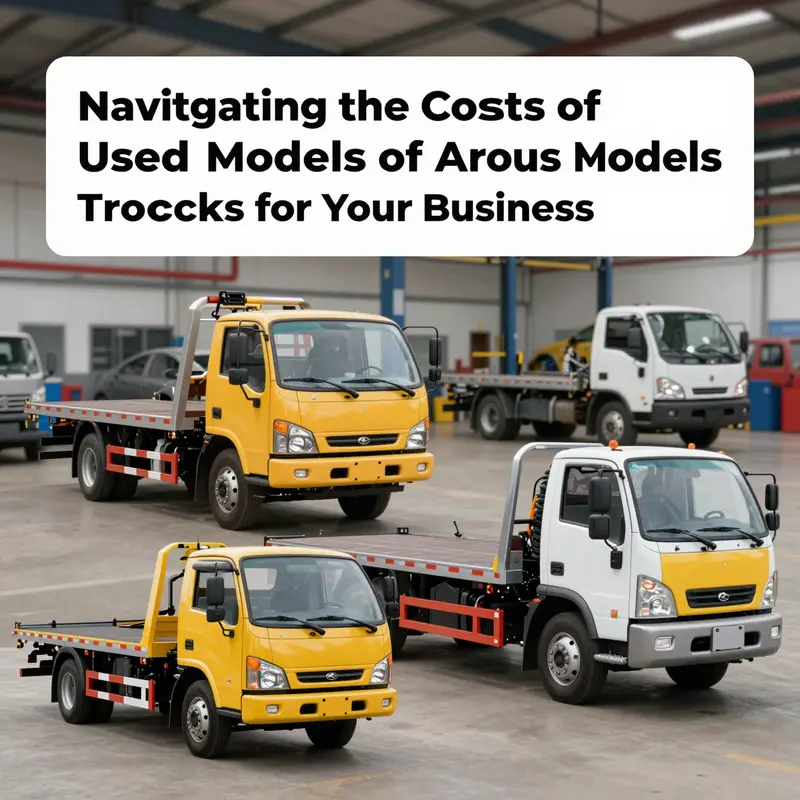
When a new tow business starts to take shape, the single most tangible question is often simply this: what will it cost to acquire a tow truck, and what range should we expect as we shop across the market? The answer is far from singular. The price you’ll encounter for a used tow truck spans a broad spectrum, shaped by why the truck exists in the first place, how much wear it has endured, and how it has been configured to perform specific tasks. The market treats a blue-plate recoverer that has logged a modest number of hours quite differently from a heavier, more capable unit that has spent years hoisting heavy loads on demanding jobs. Price is not a value judgment only; it is a reflection of the truck’s purpose, its condition, and the revenue it is expected to enable. Understanding this spectrum helps buyers translate sticker price into a practical, revenue-supporting asset rather than a sunk cost or a fragile liability. It also clarifies why a used tow truck can be a bargain in one scenario and a serious investment in another, depending on the buyer’s needs, geography, and risk tolerance.
To begin, the most useful way to think about price is in terms of functional bands that roughly correspond to what the vehicles are built to do. Light-duty tow trucks, which are typically deployed for small road incidents, downtown incidents, or simple wheel-lift recoveries, sit at the lower end of the spectrum. Market observations show these units commonly trading in a broad band, roughly from five thousand dollars up to about fifteen thousand dollars. In this category, pricing is sensitive to age, overall condition, and remaining service life. A well-kept unit with lower miles and a documented maintenance history can command closer to the upper end of that range, while a more worn machine with patchy service records will settle toward the lower end. There are occasional outliers that stretch the boundaries in surprising ways. Listings that reflect specialized configurations, exceptionally low hours, or unique equipment packages can surface at markedly higher prices—sometimes approaching or exceeding sixty or seventy thousand dollars—but these are the exceptions rather than the rule for standard light-duty work. For buyers, this band underscores a simple reality: if the plan is to run a lean operation with limited high-stress recoveries, a well-vetted light-duty unit can be a cost-efficient entry point, but it demands careful inspection to avoid chasing a hoard of deferred maintenance.
As the workload and the technical expectations rise, so too does the price. Medium-duty and heavy-duty tow trucks, which carry greater payloads and are designed to tackle heavier recoveries, typically fall into a different economic zone. In many markets, these machines are found in a range roughly from thirty thousand to forty thousand dollars. The swing factors here are not only the engine and gearbox longevity but also the integrity of the hydraulic system, winch performance, and the structural health of the towing bed. A unit with a robust frame, a well-maintained hydraulic system, and a longer service life in demanding assignment profiles can land closer to the upper end of that band, while a model that has seen more brutal duty cycles or has been repurposed from another service line may drift down toward the lower end. The appeal of this class is clear: more capability translates to more opportunities, and buyers who need reliable performance day in and day out will often view this price tier as a prudent investment rather than a discretionary expense. In practical terms, a near-miss on reliability in this segment can carry a price delta that pays for itself with a few months of saved downtime and reduced rotor wear on the back end.
Beyond the day-to-day recoveries, there is a category that blends utility with specialized capability: rescue and heavy-duty support tow trucks. These are the vehicles commonly used on highways and in areas where the ability to stabilize, block, or manage large-scale incidents is essential. The price range here is more varied and dramatic, reflecting the broad spectrum of equipment and configurations that can be installed on a heavy-wrecker platform. You might encounter units priced as low as ten thousand dollars in some markets, particularly when the vehicle has high mileage or requires significant refurbishment. Yet for high-end, well-equipped rescue trucks that include advanced stabilization gear, heavy-duty winches, and sophisticated control systems, prices can climb well into the six-figure territory. Across the board, buyers should anticipate greater ongoing maintenance costs, higher insurance premiums, and longer downtime during procurement or repair work. The logic is straightforward: the more specialized the capability, the higher the potential impact on uptime and revenue—and therefore the price that buyers are willing to pay to ensure consistency of service.
There is also a meaningful subgroup that crosses borders and industries: platform transport and lighter utility units. These trucks are not primarily designed as heavy recovery tools but rather as efficient means to move loads or to perform quick on-site processing, such as vehicle recovery with limited lifting requirements or assistive towing. In many markets, these vehicles can be found around twenty thousand to thirty thousand dollars, with growth in value depending on the year, the condition of the chassis, and the reliability of the auxiliary systems such as hydraulics and electricals. In some instances, a relatively younger platform truck with low hours and a clean maintenance history may reach into the mid-twenties or low-thirties, delivering a practical balance of cost and capability. Buyers who require nimble maneuverability, faster turnaround on service calls, and lower operating costs may find this band particularly attractive, especially when the anticipated daily volume does not demand the most extreme lifting or stabilization features.
That said, the price landscape is not just about the sticker price in a photo. A careful buyer looks at the total cost of ownership and the practical readiness of the unit for commercial deployments. The purchase price is only the first layer. Maintenance costs accumulate as the vehicle ages, and the rate of deterioration in high-stress components—hydraulic pumps, winches, and the frame in the case of heavy-duty chassis—drives longer-term expenses. Access to spare parts, the availability of skilled technicians, and the ease of sourcing replacement components will influence both the initial bargain and the ongoing economic equation. The difference between a seemingly affordable unit and one that becomes a reliable, revenue-generating asset can hinge on the quality of a few critical decisions: whether the truck comes with complete service records, whether the hydraulic system shows evidence of ongoing care, and whether the tires, brakes, and suspension have been maintained to the standards that heavy-duty work demands. When buyers approach these decisions with a disciplined checklist, the price spectrum becomes a map rather than a minefield.
To support buyers in anchoring these expectations, it helps to consider the examples that commonly appear in the market, while recognizing that each example is embedded in a larger context. For light-duty units, the market often shows a wide range that captures both old, well-kept workhorses and newer, lightly used, lower-mileage units. The mid-range often centers on medium- to heavy-duty configurations that reflect good service histories and solid structural integrity. The high end tends to be reserved for specialized rescue capabilities or units with particularly favorable maintenance records and lower-than-average hours on the job. The more you know about how the equipment is configured and what it has actually earned in life, the more you can translate price into expected ROI and risk. And that translation matters because every dollar saved at purchase is not simply a discount; it is a potential lever for profitability by reducing downtime, lowering maintenance surprises, or enabling faster response times to incidents that produce revenue or protect your brand reputation in a tight-service-window market.
The market also rewards diligence in evaluating the supporting ecosystem around the purchase. Many buyers who want a reliable used tow truck will examine not just the machine itself but the broader ecosystem in which it lives. This includes the availability of trained technicians, the ease of obtaining parts, and the presence of a robust supply chain for preventative maintenance. A unit that might appear more expensive on paper can, in practice, become cheaper over time if it reduces downtime and requires fewer emergency repairs. Conversely, a seemingly cheap unit that hides a troublesome hydraulic system or a frame issue can quickly become an expensive liability, as recurring repairs erode any initial savings. The lesson here is to anchor pricing decisions in reliability and total cost of ownership rather than sticker price alone. If you are a buyer looking to establish a sustainable fleet footprint, you should place not only the immediate cost but also the long-term cost trajectory at the center of your analysis.
Treat the search as a balance between cost and capability. The price spectrum reflects the different ways a tow operation is priced for risk and performance. When you approach a potential purchase with a clear sense of the required job profile—expected call volumes, typical load weights, regional roadconditions, and the planned utilization pattern—you can map these needs onto the price bands that align with your operational goals. This mapping becomes a practical framework for negotiation, since it clarifies which features are worth the premium in your specific market and which aspects you can compromise on without compromising service reliability. It also means you can use the same framework when evaluating multiple listings, rather than reacting to each new price outburst with confusion or alarm. In the end, the price you pay for a used tow truck is a proxy for the certainty and capacity it brings to your service. It is a signal of the truck’s readiness to deliver on promised response times, to handle the rough edges of daily recoveries, and to support a fleet that earns its keep by keeping roads clear and customers satisfied.
For readers who want a broader sense of real-time availability and pricing across global inventories, marketplaces that host a diverse range of used trucks can be a useful companion. These platforms provide a sense of typical price bands and can help you calibrate your expectations before you commit to a particular seller. If you’d like to explore deeper fleet perspectives alongside the price data, you can visit the Island Tow Truck blog for related insights and practical commentary on managing incident response and fleet readiness. the Island Tow Truck blog.
As you begin to assemble a short list of candidates, keep in mind that the best value often comes from a well-documented history and a careful pre-purchase inspection rather than the lowest advertised price. The goal is not to trim every dollar from the initial purchase but to optimize the lifetime economics of the asset. The right unit might cost more upfront, but its reliability and lower maintenance demand can translate into higher uptime, better service levels, and greater profitability over the first two to three years of operation. When you attach a practical, experience-based lens to price information, the market stops feeling like a jumble of numbers and becomes a reliable map toward a financially sound decision that supports growth rather than a stopgap that siphons resources.
For further context on how the market structures price and how buyers have navigated similar decisions, many readers turn to global listings and price aggregators to observe pricing dynamics across regions and vehicle configurations. This is not a promise of a universal price, but it is a reliable way to calibrate expectations and to identify pricing signals that indicate whether a listing is near-market value or out of step with the broader trend. Real-time listings can be found on international marketplaces that curate a wide array of used heavy-duty and light-duty recovery vehicles, providing a practical sense of what drives value across different classes of equipment.
External resource: https://www.mascus.com
Counting the Cost: Navigating Prices, Purpose, and Practical Realities When Buying a Used Tow Truck
When a fleet begins the search for a used tow truck, the process quickly shifts from a simple price hunt to a careful balancing act between capability, condition, and long-term operating costs. The price tag on a used tow truck is rarely a single number. It is a reflection of a vehicle’s design, its intended tasks, how it has been cared for, and the market conditions that shape supply and demand in a given region. In practice, buyers soon discover that a wide spectrum exists: vehicles that are older or smaller can carry surprisingly affordable price points, while larger, more powerful, or well-maintained units often command premium prices. The range itself is meaningful, not merely as a headline figure, because it signals how market forces, engineering choices, and maintenance realities intersect for any prospective purchaser. The discussion that follows acts as a map through this landscape, offering a cohesive view of what drives cost, how to read the signals in a listing, and how to plan for total ownership rather than simply the upfront price. For fleet managers thinking ahead to emergency response and island operations, this decision has implications that extend beyond the sticker price and into readiness, reliability, and response time. In researching the current market, several broad patterns emerge that help decode the price puzzle without getting lost in a catalog of numbers.
First, the type of tow truck matters almost as much as its age. A flatbed, with its hydraulically tilting bed, is often favored for its ability to load a wider variety of vehicles safely, especially those with low ground clearance or all-wheel drive. A wheel-lift, sometimes called a conventional tow, emphasizes speed and efficiency in routine recoveries and roadside assistance. A rotator, which can maneuver a boom with 360-degree reach, represents a different class entirely: it combines high versatility with heavy-duty capability and usually carries a price premium that holds even in the used market. The type does not only determine the job it can perform; it also influences maintenance requirements, parts availability, and, ultimately, resale value. In economic terms, the more specialized the equipment and the more demanding the task profile, the higher the price anchor tends to sit in the used market.
Beyond the basic category, age and condition interact with equipment quality to shape the price trajectory. A newer chassis with robust maintenance records will naturally command more than an older one with patchy service history, even if the two trucks share the same towing configuration. Engine power and torque figures—tied to a truck’s ability to lift, winch, or drag heavy loads—also matter. Buyers frequently discover that higher horsepower and more capable drivetrains translate into better resale standing, particularly in operations where pulling capacity directly translates into faster, safer recoveries. Yet higher specifications come with higher ongoing costs. Fuel consumption, insurance for higher-valued equipment, and potential downtime for maintenance all factor into the economic calculus. In other words, the financial story of a used tow truck is not solely about the purchase price; it’s about how the machine behaves under load, how reliably it performs when emergencies arise, and how well it holds up over time.
Equipment features influence value in an equally practical way. Modern hydraulic lifts, robust winches, and wheel-lift mechanisms each contribute to a truck’s utility on the road and in the workshop. These features, when integrated with a proven transmission and a sound engine, tend to preserve value because they reduce the likelihood of incidental damage during recoveries and minimize on-street turnaround times. On the flip side, specialized options that are rarely used can become a liability if repairs or parts are hard to source. For buyers, this means asking pointed questions about the vehicle’s configured capabilities, the condition of the hydraulic system, the integrity of the boom assembly, and the availability of spare parts. In markets where fleets must respond to incidents quickly—think urban centers or chokepointed corridors—the value of a ready-to-work machine rises because downtime costs, in both lost opportunity and risk exposure, can be substantial.
Maintenance history is another essential lens through which to assess value. A well-documented service record acts as a proxy for reliability and future performance. Vehicles with prompt, documented maintenance—regular oil changes, transmission service, hydraulic system checks, tire condition, and brake inspections—tend to attract higher price tags because buyers interpret it as lower risk. Mileage also matters, but it is not the sole determinant. A high-mileage unit that has been meticulously maintained may outpace a low-mileage unit with spotty records. This nuance matters because the cost of ownership after purchase includes ongoing maintenance and potential replacements. Buyers should consider not just what the vehicle can do next week, but what it will be asked to do in the months ahead. The goal is a balance between upfront expenditure and predictable operating costs.
Market demand, which can be highly regional, ultimately reminds us that no price exists in a vacuum. In dense urban areas, the appetite for smaller, more maneuverable models with tight turning radii often pushes prices up for those configurations. In rural or highway-heavy environments, buyers may prize sturdier, heavy-duty frames capable of lifting larger loads, even if it means paying a premium for a unit that can keep pace with long hours of use. Price signals thus reflect not just the intrinsic value of the machine but also what buyers in a given market value at a given moment. Fuel efficiency and emissions profiles add another layer. Fleet operators seeking to optimize long-term operating costs may favor newer or better-maintained designs that deliver lower fuel consumption, even if the upfront price is higher. These energy considerations are increasingly prominent as organizations tighten budgets and seek predictable cost baselines for ongoing operations.
For anyone evaluating used tow trucks, the procurement decision also encompasses strategic considerations about total cost of ownership. In practice, this means looking beyond the sticker price to estimate ongoing expenses: insurance premiums tied to vehicle value and risk profile, routine maintenance costs, consumables like tires and brake components, and the potential cost of downtime during unexpected failures. A truck that appears cheaper upfront can become more expensive over time if parts are scarce or if the vehicle’s maintenance history suggests a higher likelihood of unscheduled repairs. Conversely, a well-kept unit with a longer remaining life can deliver favorable economics even if its initial price is higher. This closer look at ownership costs is essential for fleet operators who must align procurement with budget cycles and long-range planning.
The evaluation process benefits from a practical sense of the market landscape. Buyers may encounter listings that reflect a range of price bands tied to different configurations, regions, and seller expectations. Some regions show a heavier presence of certain chassis configurations, while others exhibit greater availability of specialized equipment. The price signals across these listings should be interpreted in light of the vehicle’s demonstrated reliability and the cost of potential downtime during emergency responses. If a unit appears priced well below market for its configuration and age, it is prudent to scrutinize the maintenance history, inspect the hydraulic system, test the winch and outriggers, and assess the condition of the powertrain. If a unit sits at the higher end of the spectrum, buyers should still probe for documentation that justifies the premium—such as recent major service work, a complete parts inventory, or a history of careful usage under favorable conditions.
For buyers seeking a concrete sense of current market dynamics without getting lost in scattered listings, there is value in consulting established industry resources that benchmark prices and summarize typical configurations. Platforms that aggregate commercial vehicle listings, and trade publications that track depreciation curves and maintenance costs, can provide a grounded frame of reference. While those sources may differ in emphasis, they share a common purpose: to help buyers separate value from hype, recognize when a price premium is warranted, and avoid paying for features that do not align with a given fleet’s needs. In this sense, the act of pricing a used tow truck becomes a disciplined exercise in balancing capability, reliability, and the anticipated cost curve over the vehicle’s remaining service life.
As fleets contemplate emergency response preparedness and the realities of island operations, the budgeting lens may widen further. Island fleets face unique geographic and logistical challenges: longer transport distances for parts, water-logged or salt-spray corrosion considerations, and the need for rapid mobilization when storms or incidents strike. In such contexts, the value of a tow truck is measured not only by how quickly it can respond but by how resilient it is to an environment that can accelerate wear and tear. This is where the internal alignment between procurement decisions and readiness planning comes to the fore. A unit that can be kept in near-constant readiness, with a straightforward maintenance routine and a predictable supply chain for parts, can prove to be the smartest investment when response times are critical and downtime is costly. For readers navigating this intersection of cost and readiness, a broader view of fleet strategy—one that integrates procurement, maintenance planning, and emergency response protocols—can yield clearer, more defendable financial plans.
To anchor these considerations in a broader decision framework, it is useful to connect the day-to-day pricing conversations with the more strategic concerns of fleet emergency preparedness. The choice of which used tow truck to buy should align with a fleet’s anticipated workloads, response expectations, and the geographic realities it serves. For island fleets or operations that depend on rapid clearance of roadways after incidents, the calculus includes not only the vehicle’s cab and chassis, but the robustness of the recovery equipment, the ease of service in remote locations, and the ability to maintain readiness during adverse conditions. In this sense, the cost narrative becomes a narrative of resilience—the way a purchase price translates into reliability on the road, the speed of response in emergencies, and the long arc of maintenance and operating costs that follows.
For readers who want a practical starting point in this complex landscape, it helps to view the market through a few core questions. What tasks will the truck perform most often, and what is the maximum weight it must handle? Does the operation require frequent body work aboard or primarily highway recoveries? How important is fuel efficiency over the vehicle’s service life, given the expected mileage and the cost of fuel? How readily can you source parts and qualified technicians, especially if you are located away from major distribution hubs? The answers to these questions guide a purchaser toward a configuration that is capable enough to handle the workload without becoming a financial albatross due to underutilization or excessive maintenance demands. In practice, a careful buyer will seek a balance where upfront price, expected maintenance costs, and the probability of reliable performance converge toward a sustainable total-cost-of-ownership scenario. Seeking guidance from industry resources and peers who have navigated similar procurement choices can also sharpen this balance, ensuring that the chosen unit supports both the current needs and the contingencies that drive emergency response readiness.
As a practical reminder of the broader context, fleet planners and operators should not view the decision in isolation. The price of a used tow truck interacts with the organization’s broader risk management and emergency preparedness strategies. In a climate where demand for rapid, professional road service is persistent, and where budget constraints pressure every capital purchase, the ability to justify a specific price in terms of reliability, uptime, and return on investment becomes a crucial skill. A well-argued procurement case might reference expected annual maintenance costs, projected downtime, and the impact on service levels for customers and the community. In short, the cost is a lens through which the value of readiness is quantified. This is why a staged evaluation, combining a careful inspection with a review of maintenance history and a grounded sense of regional demand, yields the clearest path to a purchase decision that serves both immediate needs and long-term stability.
For readers who want to delve deeper into how to balance readiness with cost, consider exploring broader resources on emergency response planning for fleets. These discussions illuminate how the economic choices around a tow truck purchase integrate with the larger picture of readiness, resilience, and rapid recovery after incidents. Such perspectives help ensure that the vehicle you buy today remains a dependable asset for tomorrow’s emergencies, and that your investment continues to pay dividends long after the initial price is paid. As you evaluate potential trucks, keep in mind not only the price tag, but the vehicle’s fit with your operation’s emergency response cadence, its maintenance footprint, and the likelihood that it will be a trusted partner in keeping roads clear and communities moving.
For readers seeking a broader sense of current market benchmarks and model configurations in a global context, a practical approach is to compare listings on reputable platforms and to track how price bands shift with age, mileage, and equipment. While the specifics will vary by region and seller, the underlying dynamics remain consistent: capability and reliability command value; well-documented maintenance reduces risk; and strategic alignment with readiness goals can transform a good purchase into a strong overall investment. To connect these ideas to actionable steps, consider how your next procurement decision could weave together the price range you observe with a clear plan for maintenance, downtime management, and contingency operations that elevate your fleet’s emergency response capabilities. For readers focused on island fleets, the link between readiness planning and cost efficiency becomes especially tangible, reinforcing the idea that the right used tow truck is as much about reliability and preparedness as it is about the invoice total.
In sum, understanding the cost of a used tow truck requires looking at more than the number on the tag. It demands a holistic view that ties together the car’s type, its age and condition, the sophistication of its recovery equipment, and the practical realities of maintenance and downtime. It also requires an awareness of market dynamics—how region, demand, and the specific job profile shape what buyers are willing to pay. When these threads are woven together, the final decision represents not a single purchase but a calculated contribution to a fleet’s ongoing capability to respond, recover, and keep traffic moving in the face of disruption. The result is a price that makes sense not only on the day of purchase but in the broader calculus of cost, readiness, and resilience over the vehicle’s service life.
To support ongoing exploration, readers may wish to consult established industry resources for current pricing benchmarks and model configurations, as these sources help anchor expectations and inform negotiation strategies. External market data can provide a broader frame for interpreting a listed price and for projecting maintenance costs across the vehicle’s life cycle. For further reading, see trusted aggregators and trade resources that track depreciation patterns, typical repair costs, and the range of configurations frequently encountered in the used market. This contextual perspective helps ensure that the decision to buy a used tow truck is grounded in both practical needs and financial realism, with a clear view of how the vehicle will perform in everyday operations and emergency response.
If you are considering how readiness planning intersects with the purchase, you might also explore resources on fleet emergency preparedness tailored to the realities of island operations. These discussions illuminate how procurement choices align with contingency planning and rapid deployment needs, reinforcing that today’s price is part of tomorrow’s reliability. For a focused discussion on that topic, see the internal resource linked here: emergency-preparedness-for-island-fleets. This link is intended to help readers connect the dots between cost, readiness, and the practical realities of operating a tow truck fleet under demanding conditions.
For readers seeking an external benchmark on current market activity, reference points from large, industry-wide marketplaces offer context for price trends, depreciation, and the relative merits of different configurations. These resources provide a steady frame of reference as you weigh offers, compare maintenance histories, and project total ownership costs: https://www.heavyequipmenttrader.com/
What a Used Tow Truck Costs Today: Reading the 2026 Market for Value, Risk, and Return
Prices for used tow trucks sit at a crossroads of global demand, aging fleets, and evolving standards. For a fleet operator weighing a purchase, the sticker price is only the first line of a longer ledger. A used tow truck’s true cost includes maintenance, fuel efficiency, reliability, and potential downtime saved by newer, cleaner engines. In 2026, the market shows steady growth, but the shape of a good deal depends on balancing upfront price against long-term operating costs. A thoughtful buyer begins by mapping the spectrum of possibilities, from compact, older units to larger, more capable machines that can handle heavy loads and complex recoveries. Across this spectrum, the picture that emerges is not a single price tag but a range that reflects condition, age, and the vehicle’s alignment with current emission standards, as well as the seller’s willingness to offer added value such as inspections, financing options, or a return window.
Condition, age, and brand reputation are the primary levers that move price. In practice, buyers often target a sweet spot where vehicles are three to six years old. These units typically deliver a favorable balance of reliability and fuel efficiency, while still offering a reasonable purchase price compared with brand-new machines. At this age, a well-maintained unit is more likely to have had its major wear items refreshed, and its technology is modern enough to support more efficient routing and quicker scene responses. In markets with strict emission regimes, meeting at least the mid-tier national standards becomes a crucial factor. Vehicles that comply with these standards tend to command a pricing premium, because they promise lower running costs and broader compatibility with a changing regulatory environment. In effect, the three-to-six-year window with appropriate emission compliance represents a convergence of reliability, cost efficiency, and regulatory readiness that buyers learn to recognize quickly when they review listings or attend auctions.
That said, the market is not uniform. For the smallest and oldest end of the spectrum, used tow trucks can be priced significantly lower, sometimes well under six thousand dollars, especially for units that have limited payload capacity, questionable structural integrity, or high mileage. These bargains attract operators whose primary concern is minimizing upfront cash outlay, with plans to invest in targeted refurbishments. They are appealing for light-duty tasks, urban towing, or backup roles where downtime costs are manageable. On the other extreme, larger, well-maintained heavy-duty units aimed at challenging recoveries or commercial towing corridors can exceed thirty thousand dollars, particularly when the seller has documented maintenance histories, recent overhauls, and comprehensive inspection reports. Between these two ends lies a broad middle tier where mid-size, mid-mileage trucks typically sit, often offering a pragmatic blend of capacity, reliability, and price. In this band, a buyer might encounter a broad spread, with prices varying by garage keeps, maintenance frequency, and even the presence of value-added services that reduce post-purchase risk.
Market signals in 2026 reinforce the view that price alone does not determine value. The industry’s broader trajectory points to a steady, modestly rising market. Analysts project a compound annual growth rate of about 3.95 percent from 2026 to 2034, a pace that reflects ongoing demand for reliable, cost-effective commercial vehicles. The global market’s anticipated expansion to several hundred billion dollars underscores how operators view used tow trucks as essential, long-lived assets rather than short-term purchases. Within this context, pricing becomes a function of not only the vehicle itself but the ecosystem that surrounds it—availability, transparency, and the willingness of vendors to back their stock with data and guarantees.
Transparency has become a defining feature of modern used-vehicle markets. Large digital platforms and price indexes now anchor negotiations, reducing the friction that once accompanied distant bargaining. A standout example is a price index published by a major used-vehicle trading market, which aggregates millions of historical transactions to guide buyers and sellers toward fair values. These indices matter because they translate a diverse set of local conditions into a more universal signal. They also empower buyers to verify whether a price is reasonable for a given age, mileage, and emission profile. In practice, a buyer reviewing a listing can compare the vehicle’s listed price with the market trend for similar units, adjusting expectations for any added certifications or inspections the seller includes.
Export demand adds another layer of complexity. International buyers, particularly in Belt and Road corridor regions, have created upward pressure on prices for well-prepared, export-ready used tow trucks. The appeal is straightforward: overseas buyers seek reliable, cost-effective assets that can be deployed quickly with minimal downtime. Regions with efficient customs processing and robust export networks tend to price well-maintained units at a premium, since the convenience and lower risk can translate into faster turnover for sellers. A streamlined export process, including fast customs clearance, can tilt the price equation in favor of sellers who operate in those networks, while buyers recognize the value of reduced lead times and smoother transactions.
Beyond the core vehicle, price increasingly reflects a bundle of after-sale assurances. Leading platforms are differentiating themselves through value-added services, with third-party inspections, streamlined financing, and even seven-day no-questions-asked return windows becoming more common. Buyers are showing a willingness to pay a modest premium for these guarantees, interpreting them as protection against hidden issues and as a signal of seller confidence in the quality of the stock. The effect is a subtle but meaningful shift in market dynamics: buyers gain more certainty, while sellers can justify slightly higher prices when they can demonstrate risk-reduction through credible inspection reports and flexible purchase terms.
The practical takeaway for someone weighing a purchase is to treat price as a function of both what the unit is and what it can do for the business over the long term. A three-to-six-year-old unit that meets a respectable emission standard and has a clean maintenance history is often the most cost-effective choice for fleets aiming to balance upfront cost with lower operating expenses. In such cases, total cost of ownership may wind up being more favorable than the sticker price would suggest, particularly when the buyer can leverage reliable parts availability, widely supported service networks, and favorable financing terms. Conversely, a very old unit with high mileage may cost less at purchase but could demand more downtime, more frequent repairs, and higher fuel consumption, eroding the initial savings over time. The decision framework, then, hinges on combining a clear assessment of mechanical condition with an appraisal of regulatory compliance, expected service costs, and the value of added protections offered by the seller.
To deepen this assessment, buyers should examine the specific categories of use and the operational profile of their fleet. A compact, two-ton-equivalent unit with moderate daily dispatches will have different financial dynamics than a heavy-duty wreckers equipped to handle complex recoveries in demanding environments. The latter may justify a higher investment if it meaningfully expands service capability and reduces the need for subcontracted help during peak demand periods. In both cases, a disciplined approach to due diligence is essential. This means requesting documented maintenance histories, inspecting wear items such as brakes and hydraulics, verifying the integrity of the bed or wheel-lift system, and confirming that any electronic control systems are up to date with the current software. A seller who can provide third-party inspection reports, maintenance logs, and a transparent history of any major repairs is offering more than just a vehicle; they are offering a reduced risk path to acquisition, which has measurable value in the eyes of a prudent buyer.
From the standpoint of a fleet manager planning procurement, the price landscape also suggests a practical process for narrowing options. Start with a clear target profile that aligns with anticipated routes, payload requirements, and downtime tolerance. Then screen listings for three consistent data points: age and mileage, reliability indicators from service records, and evidence of emission compliance. With those in hand, use price indices and comparable sale data to identify a realistic range for each category. If a unit’s price falls above this range, demand strong justification in the form of recent overhauls, a pristine maintenance history, or demonstrably lower future maintenance costs. If the price sits below the range, be cautious about the risk of hidden issues unless the seller offers compelling warranties or a robust inspection dossier. Across all cases, factor in the convenience and risk reductions that come with inspections, financing options, and flexible return terms, because those elements contribute to the true value of the deal.
One practical note emerges from the market’s current texture. Operators who operate across multiple markets or who export assets can leverage the breadth of options to capture price advantages. Access to a broad supplier network, backed by credible inspection records and transparent pricing data, reduces the risk that a seemingly good deal hides a deeper maintenance burden. In parallel, buyers who focus on the local market or a narrow set of suppliers should be mindful of price volatility caused by shifting demand during peak seasons or regulatory changes. The overarching message is clear: in 2026, price is a symptom of a larger ecosystem, and the most actionable insights come from a combination of data-driven benchmarking, careful inspection, and a readiness to negotiate terms that extend beyond the initial purchase.
For readers seeking practical guidance beyond theory, a quick path to deeper understanding is to consult fleet procurement resources that compile market data and present it in user-friendly formats. For example, a reputable industry blog offers timely analyses and case studies that illuminate how other operators balance price, value, and risk in real-world scenarios. This kind of resource can help translate the numbers into concrete decisions about when to buy, what to pay, and how to structure a deal that preserves cash flow while preserving reliability. Readers can explore more on the topic at the Island Tow Truck blog, which offers practical fleet insights and procurement considerations: theislandtowtruck.com/blog/.
As you weigh a potential purchase, remember that the numbers you see in listings are not the final answer. The true cost of ownership includes maintenance cycles, replacement part availability, and productivity gains or losses from downtime. Emissions compliance adds another layer of ongoing cost considerations, since newer standards may reduce fuel costs and maintenance expenses over the life of the vehicle. If you plan to export assets or buy into a market with an established export pipeline, you may also encounter a premium for vehicles that are export-ready and supported by efficient logistics networks. In the end, the most financially sound choice aligns market price with your operating realities and risk tolerance, with the added confidence that the vehicle will perform reliably when you need it most.
For those who want a broader sense of how to source and compare options, consider the global supply context in which these numbers sit. The market has seen a wide range of listings, with per-unit prices reflecting a spectrum of age, condition, and capability. While one listing may quote a price of just a few thousand dollars, that figure often accompanies uncertainties about structural integrity or critical systems. Another listing may price a newer, better-maintained unit in the mid-range, offering a clearer path to predictable service and lower unexpected maintenance costs. The lesson is practical: price alone isn’t a verdict. It’s a starting point for a structured due diligence process that culminates in a purchase that fits your fleet’s service levels, risk tolerance, and cash-flow priorities.
External context can further inform decision making. For buyers seeking supplier options and verification, international platforms often provide a broad catalog and standardized documentation that help compare units across regions. These platforms may also feature export-focused services that streamline paperwork and reduce the risk of customs delays. While such services add value, buyers should still insist on independent inspections and verifiable maintenance histories to ensure that the price reflects true asset quality. To situate these ideas in a practical framework, readers can consult external industry resources such as global supplier directories, which provide cross-border listings and verification processes that support transparent decision making: https://www.made-in-china.com.
Pricing on the Move: Understanding the Cost of a Used Tow Truck and Where It Comes From
When you set out to buy a used tow truck, you enter a market where price depends on size, capability, condition, and the work you expect the truck to perform. The simple, useful answer is that prices span a broad spectrum. You can find compact, older units that run for a few thousand dollars, while heavily equipped, well-maintained wreckers can push well beyond thirty thousand. Understanding why this range exists helps a buyer determine not just what price they should pay, but what they should expect in return for that investment.
The most influential factor is the intended load and configuration. A two- or three-ton wrecker, for light to mid-range recovery, tends to sit in the lower to mid-range of the market. These units are common in fleets serving light to medium incidents and roadside assistance. Their price bands typically sit in the mid-teens to mid-twenties thousands, depending on age, mileage, and how much work the unit has absorbed. By contrast, a larger heavy-duty setup—multi-axle chassis, higher horsepower, broader recovery capabilities—commands a higher ceiling. Buyers can expect four-figure price points on the lower end and tens of thousands on the upper end, with well-maintained examples closer to the higher side of the spectrum.
Market data from recent summaries reinforce this gradient. Lighter movers surface around the low tens of thousands in some cases, mid-size models in the upper teens to mid-twenties, and heavier configurations near or above $30,000 when in solid condition. It’s important to recognize that those figures are generalities. The exact price you see in a listing is a mosaic built from age, miles or hours, maintenance records, prior use, and the quality of recovery gear installed. A unit with a meticulous service history and upgraded equipment will justify a premium relative to a similar unit with incomplete paperwork.
Provenance also matters. Some buyers look for established manufacturers known for ruggedness and parts availability. Others search broader regional or international markets to capture a price advantage, accepting longer lead times, shipping, and potential hidden defects that show up after testing in the field. Local transactions may offer easier inspection and faster service if repairs are needed soon after purchase. Overseas listings may present attractive sticker prices, but total cost of ownership includes shipping, clearing, and possible import duties.
To illustrate real-world numbers, consider common categories. A compact, older tow unit with limited miles and basic recovery gear can be below $6,000, especially if it needs light refurbishing. More capable, road-ready units with robust winches and hydraulics tend to fall in the mid-teens to low-thirties thousands, appealing to operators who require dependable uptime and predictable maintenance costs.
Finally, be mindful of pricing anomalies. Listings can appear unusually low or high. When a listing seems out of step, perform due diligence—check maintenance logs, inspect the truck, and arrange a test run. A well-calibrated evaluation weighs both extremes against your budget and uptime needs while considering total cost of ownership. For ongoing pricing and current listings, consult reputable marketplaces that aggregate used commercial vehicles and related equipment to calibrate expectations and negotiate confidently.
Final thoughts
Understanding the costs associated with used tow trucks is crucial for making informed purchasing decisions. By familiarizing yourself with the price ranges for different models, awareness of the factors that influence these costs, and staying updated on market trends, you can strategically invest in a vehicle that meets your business needs. Equipped with this knowledge, your operation can efficiently tackle towing tasks while ensuring customer satisfaction. Keep these insights in mind as you navigate your options in the towing market.