
For local auto repair shops, car dealerships, property managers, resort operators, and commercial fleet operators, understanding the towing capacity of 1 ton trucks is vital to optimizing fleet performance and meeting heavy-duty demands. These powerful vehicles are designed for tough tasks, and their towing capabilities can significantly impact various operational aspects. Throughout this article, we will explore how much a 1 ton truck can tow, the factors influencing this capacity, and how it compares with other truck classes—all tailored to the unique needs of island communities. Let’s dive into the details!
Real-World Limits: What a One-Ton Truck Can Tow and How to Know for Yours
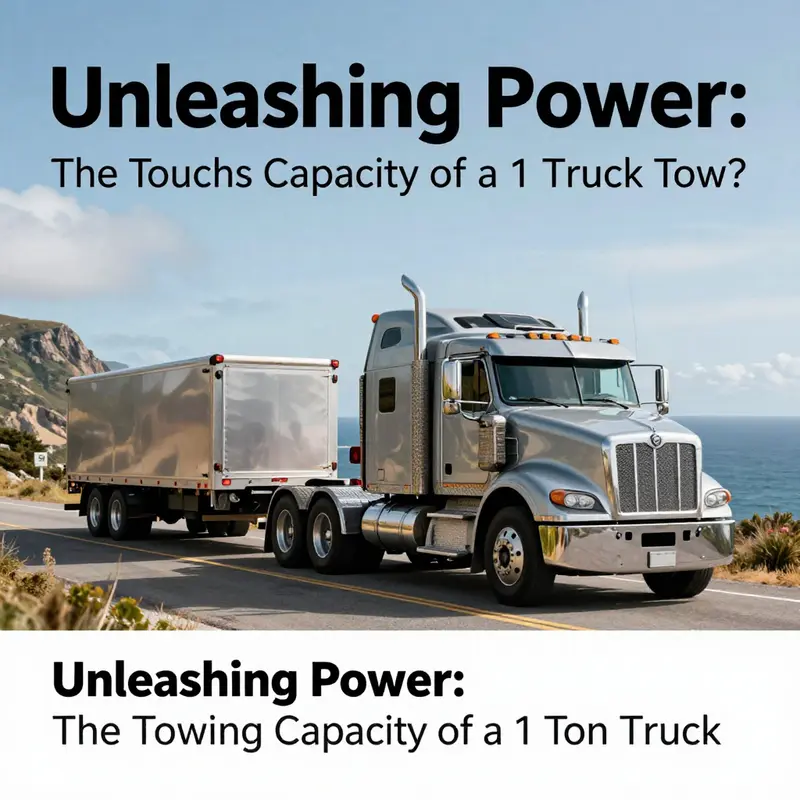
Understanding what a one-ton truck can tow means more than reading a single number. Manufacturers publish maximum towing figures, but those numbers are part of a system. They depend on how the vehicle is built, how it is configured, and how you plan to use it. This chapter explains the calculations behind towing capacity, the components that set limits, and the practical steps to match your truck to the load you intend to haul.
At the heart of towing capacity is a measure called Gross Combined Weight Rating, or GCWR. GCWR is the total allowable weight of the truck plus the trailer and everything on both. To get towing capacity, subtract the truck’s curb weight from its GCWR. Curb weight is the vehicle with all factory equipment and a full tank of fuel, but without passengers, cargo, or trailer tongue load. In practice the usable figure you care about is not only this checkbox number. It is also the truck’s payload, axle ratings, hitch rating, and cooling capability. All of these influence whether the truck can safely and reliably move the weight listed on paper.
Engine and torque are the most visible contributors to towing capability. A powerplant that produces abundant low-end torque lets a truck start and accelerate from low speeds while pulling heavy mass. Diesel engines often provide strong low-rpm torque, and some gasoline engines can be tuned similarly. But torque alone does not tell the whole story. Transmission gear ratios and the rear differential’s final drive ratio multiply and manage that torque at the wheels. Numerically higher gear ratios increase low-speed pulling power, at the expense of highway fuel economy and top speed efficiency. A heavy trailer requires a drivetrain with gears and cooling designed to handle sustained loads.
The frame, suspension, axles, wheels, and tires are the structural backbone for towing. A chassis built for commercial duty resists the bending and twisting loads that occur during heavy towing. Axle ratings determine how much weight the rear can carry; choose a truck with an axle rating that matches your trailer weight and tongue weight. Tires and wheels must have the appropriate load ratings as well. Using tires under-rated for the expected load risks heat build-up and failure. Suspension design, including spring rates and mounting points, governs how the truck handles while loaded. Some trucks include heavy-duty suspension packages and offer factory-installed helper springs or air suspension to maintain ride height and control when towing.
Payload capacity matters because trailer tongue weight counts against it. Payload is the total weight the truck can carry in the cab and bed, including passengers, cargo, and the downward force exerted by the trailer on the hitch. Typical tongue weight is about 10–15% of the trailer’s gross weight for conventional trailers. Fifth-wheel and gooseneck setups shift much more load over the truck’s rear axle, changing how payload and towing interact. If you ignore payload limits and overload the truck with tongue weight or cargo, you can exceed axle ratings and undermine steering and braking performance.
Hitches and towing connection types change the way weight is carried and distributed. A conventional bumper or receiver hitch places the trailer behind the truck and creates a tongue weight on the rear. A fifth-wheel or gooseneck hitch mounts in the bed, placing the trailer’s pivot point well forward. That forward position moves a significant portion of trailer weight onto the truck’s frame and rear axle. When comparing maximum tow figures, be aware whether they apply to conventional or fifth-wheel/gooseneck towing. Each method has its own hitch ratings and installation requirements.
Braking capacity defines safe stopping distance and control. Heavy trailers require dedicated trailer brake systems. If the trailer has electric or hydraulic brakes, a properly adjusted brake controller in the towing vehicle ensures balanced braking between truck and trailer. Without trailer brakes, a heavy load can overwhelm the truck’s braking system and create dangerously long stopping distances. Anti-lock brake systems and integrated trailer brake controllers can improve stability, but they do not replace the need to match towing weight to rated capabilities.
Cooling systems deserve special attention. Sustained climbs, slow travel in hot weather, and heavy towing push engine, transmission, and differential fluids to higher temperatures. Manufacturers often fit heavy-tow packages with larger radiators, oil coolers, and transmission coolers. Without adequate cooling, a truck can suffer transmission slippage, reduced power, or component failure. If your towing use includes steep grades or long intervals of heavy load, choose a truck configured with upgraded cooling and check fluids often.
Drive layout also affects towing performance. Two-wheel-drive versions often have slightly higher towing ratings. They are lighter and free of front-drive components that add weight. Four-wheel-drive models are invaluable in low-traction situations and rough terrain, but their added weight and drivetrain complexity can reduce maximum towing as published. The difference is not always large, but it is real. If you plan to tow mostly on paved roads, a two-wheel-drive heavy-duty truck may yield a higher published towing capacity.
Tire choice and wheel condition influence safety and permissible weight. All tires carry a load rating. Use tires with a load index that supports the fully loaded axle weight plus trailer tongue weight. Proper inflation is critical. Underinflated tires heat up and wear faster. Overinflation reduces traction and ride quality. Consider the entire package: wheel width and strength, tire ply rating, and speed rating when selecting tires for towing.
Dual rear wheel (DRW) configurations change the dynamics of towing. Two rear wheels on each side increase the contact patch and distribute load across more rubber and rim area. That increases stability and can raise the truck’s rear axle capacity. DRW setups are often chosen for very heavy trailers, as they reduce the tendency for the rear end to squat and improve lateral stability. There are trade-offs, however: wider overall vehicle track, different handling at low speed, and higher rolling resistance.
Electronic aids and modern towing technology are important but not a substitute for matching weight to rating. Trailer sway control, integrated sway mitigation, electronic brake distribution, and camera systems make towing safer. They reduce driver workload and can help stabilize heavy loads in crosswinds or during maneuvering. Still, these technologies assist; they do not raise the structural limits of the frame, axles, or hitch.
Manufacturer towing packages often combine stronger components into a tested, certified setup. These packages can include heavy-duty cooling, stronger alternators, reinforced frames, higher-capacity differentials, and upgraded hitches. In many cases, you achieve the published maximum tow rating only when the truck includes a specific option package and the correct axle ratio. If a truck is not equipped with the necessary factory package, aftermarket upgrades may increase capability, but such changes can have legal and warranty implications, and they may not replicate factory durability.
Permits, legal limits, and road restrictions are practical constraints equal to mechanical limits. Local and state laws govern maximum axle weights, gross vehicle weight, and trailer length. In many jurisdictions, heavy loads require special permits or route restrictions. Overweight citations are possible if your combination exceeds posted limits at weigh stations or automated scales. Plan loads knowing both the truck’s published limits and the legal limits of the roads you will travel.
Calculating a safe towing setup is a multi-step process. First, know the truck’s GCWR and curb weight. Subtract curb weight from GCWR to get the theoretical maximum tow weight. Next, check the truck’s payload rating. Subtract expected cargo, passengers, and estimated tongue weight from payload to ensure the truck will not be overloaded. Examine axle ratings and tire load capacities. Confirm the hitch class and its rating. Verify that the truck’s cooling and braking systems are adequate for sustained use at that load. Finally, consult the owner’s manual to confirm any model-specific restrictions or required equipment for high-capacity towing.
Real-world examples help clarify numbers. Many one-ton class trucks, when properly equipped, can tow well in the range of nine to eighteen thousand pounds, depending on configuration. Vehicles with stronger chassis, higher-capacity axles, diesel engines, and dual rear wheels can exceed the lower end of that range by a wide margin. But a one-ton truck with a lighter cab, a gasoline engine, and a tall highway gear ratio will sit closer to the lower end. The difference comes from the combination of GCWR, axle capacity, and installed equipment.
Maintenance and preparation are essential for reliable towing. Regularly inspect brakes, suspension bushings, wheel bearings, and tire condition. Keep engine and transmission fluids within specification, and maintain cooling system health. When towing, confirm that trailer lights and brake systems function properly. Check hitch fasteners and safety chains. Pre-trip inspections should become routine before every heavy haul. Neglected components under heavy load fail quickly.
Driving technique makes a measurable difference in safety and comfort. Accelerate smoothly to transfer weight without abrupt yaw. Allow for greater stopping distances, and use engine braking on descents to save brake wear. Sway is often induced by sudden lane changes and abrupt steering inputs; avoid quick corrections. When possible, distribute trailer cargo so that tongue weight stays within recommended percentages. Center the load over axles to reduce side-to-side loading.
Upgrades can increase capability but require careful selection. Reinforced hitches, upgraded suspension, stronger axles, and enhanced cooling can all help. However, changing gear ratios or axles affects vehicle dynamics, speedometer accuracy, and may impact emissions and warranty. Use OEM-approved parts when possible and consult a qualified installer or engineering guide. Aftermarket changes should be documented and understood in terms of their effect on GCWR and axle loads.
When in doubt, consult the truck’s official documentation. The owner’s manual and certification plates provide the definitive limits for that vehicle. If you operate a fleet or have heavy, frequent towing needs, consider professional guidance for configuration. Fleet operators should plan for maintenance cycles, training, and contingency strategies to keep trucks available and safe. For further reading on fleet response and readiness planning, see essential fleet emergency response strategies.
Matching a one-ton truck to a trailer is a balancing act between published capacity and real-world conditions. Manufacturers provide generous safety margins, but those margins assume correct configuration, proper maintenance, and responsible operation. Understand GCWR, curb weight, payload, axle and hitch ratings, and the type of trailer coupling you will use. Confirm that cooling, braking, and tire systems are rated for the job. With the right setup, a one-ton truck can tow large trailers, heavy equipment, and sizable recreational rigs. Without careful matching, you risk damage, legal trouble, and compromised safety.
For model-specific towing data and to compare configurations, consult trustworthy automotive specification resources such as Edmunds (https://www.edmunds.com/trucks/).
What Determines How Much a 1‑Ton Truck Can Tow: Key Engineering and Practical Factors
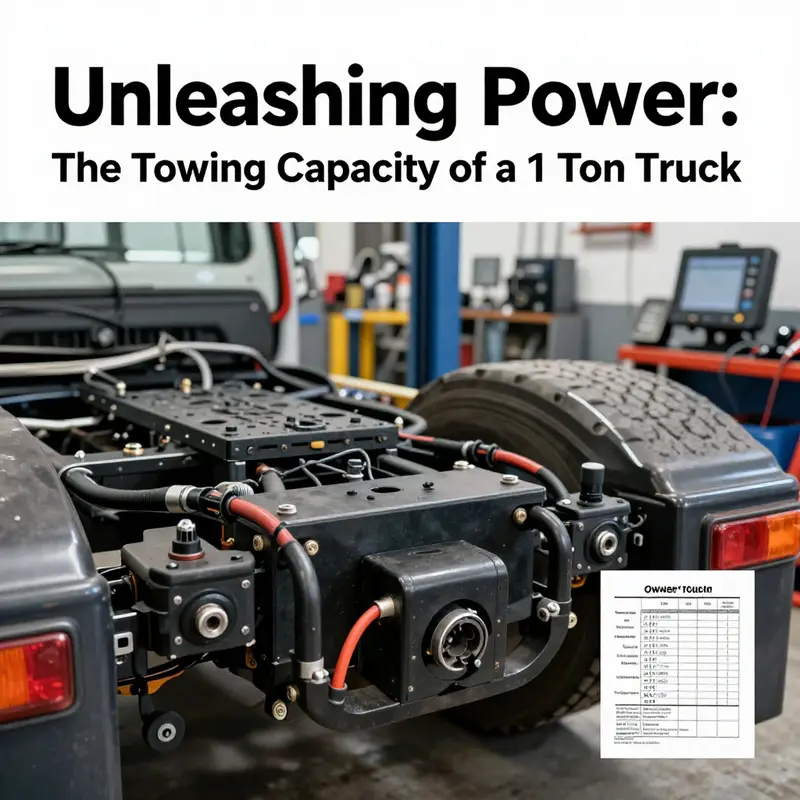
How much a 1‑ton truck can tow is not a single number you can apply to every vehicle in that class. The rated capacity depends on an interconnected set of engineering limits, component choices, and configuration decisions. Understanding those influences helps you match a truck to the job, avoid hidden limits, and tow safely under changing conditions.
At the core of towing capability is a simple calculation: the truck’s towing capacity equals the difference between the vehicle’s Gross Combined Weight Rating (GCWR) and its curb weight. GCWR is the maximum permissible combined weight of the truck, passengers, cargo, and trailer. Curb weight is the truck’s own weight with fluids, but without passengers or cargo. Subtracting curb weight from GCWR gives the manufacturer‑certified maximum trailer weight the truck can tow. That formula explains why two trucks with similar external sizes can have very different tow numbers—because their GCWRs and curb weights vary with engines, axles, and options.
Engine choice matters because towing is a torque problem more than a horsepower problem. Heavy loads need strong low‑end torque to overcome inertia, start on grades, and maintain speed without overworking the transmission. Diesel powerplants often produce higher torque at lower RPMs, improving the truck’s ability to move heavy trailers smoothly. But a high‑torque engine must be matched to a transmission and axle ratio that harness that torque effectively. Transmission gearing, especially the ratios in lower gears and the presence of an overdrive, shapes how much torque reaches the wheels. Lower final drive ratios multiply engine torque at the wheels. That multiplication is why axle ratio is listed among the key towing options on spec sheets.
The drivetrain layout and final drive ratio work together with the transmission. A longer gear set yields lower engine RPM at highway speeds, reducing wear and fuel consumption when towing, but it can reduce low‑speed pulling power unless paired with the right axle ratio. Conversely, a numerically higher axle ratio increases pulling torque at the wheels, helping with acceleration and steep climbs, but it raises engine RPM at cruising speed. Manufacturers balance these tradeoffs by offering towing packages that include transmission coolers, upgraded axles, and specific axle ratios optimized for towing.
Structural components determine how well a truck endures the repeated stress of towing. The chassis and frame must resist bending and twisting under longitudinal loads. Strong frame rails, reinforced crossmembers, and properly rated hitch mounting points are essential. The axles and suspension carry the combined weight of truck and trailer. Heavier axles with larger bearings and robust housings can tolerate higher loads and last longer under heavy duty. Suspension stiffness and spring rates influence handling and ride quality when towing. Leaf springs, multi‑leaf packs, or air suspension setups each change how load shifts between cab and trailer during acceleration, braking, and cornering. For heavy trailer duty, some trucks offer factory or aftermarket options like helper springs or air bags to maintain ride height and control.
Tires and wheels must be rated for the loads they will carry. Tires have load indexes and speed ratings; exceeding either reduces safety. Towing increases heat buildup in tires and brakes, so correct inflation and load‑rated tires are critical. Brakes are another limiting factor. Stopping the combined mass of truck and trailer requires cooling capacity, pad surface area, and in many cases a robust trailer braking system. On heavy trailers, a proportional or time‑delayed electric brake controller and a properly sized trailer brake assembly are legally required and practically essential. Some trucks include integrated trailer brake controllers and heavy‑duty brake packages to manage the extra heat and stopping demands.
The hitch and tongue weight are often overlooked but can make or break towing stability. A hitch must be mounted to the frame or a manufacturer‑rated hitch receiver to withstand vertical and longitudinal forces. Tongue weight—usually 10–15% of the trailer weight for conventional trailers—must remain within the hitch and axle limits. Too little tongue weight causes trailer sway and instability. Too much reduces steering traction and overloads the rear axle of the truck. Weight distribution hitches and sway control devices can redistribute forces between axles and dampen oscillations, improving control and tire life.
Payload capacity is tightly linked to towing. Payload is the weight the truck can carry in persons, cargo, and tongue load. A truck with a high towing rating but a low payload can still be limited in practical towing scenarios. Loading the cab or bed with passengers, fuel, and equipment increases curb weight and reduces the remaining margin under GCWR. Smart load planning keeps you under both GVWR (gross vehicle weight rating) and GCWR. Exceeding either is unsafe and often illegal.
Drivetrain configuration affects traction and load distribution. Two‑wheel drive trucks commonly have lower curb weights and slightly higher gross trailer capacities in some configurations. Four‑wheel drive improves traction on slippery surfaces and can be a major advantage on uneven terrain. However, four‑wheel drive systems typically add weight and mechanical complexity. The added weight can reduce the calculated towing allowance since curb weight rises. Dual rear wheel (DRW) setups increase rear footprint and load capacity for heavy towing tasks. They improve stability for wide or heavy trailers but change the vehicle’s handling and require wider lanes for turns.
Cooling and electrical systems are silent but vital limits. Towing increases engine and transmission heat. A transmission cooler and an upgraded radiator help maintain safe operating temperatures under sustained loads. Heavy towing also draws more electrical power for trailer lights, brakes, and power accessories. Alternator capacity and battery state need attention. Without sufficient cooling and charging output, components can overheat or fail, creating cascading safety issues.
Safety features and electronic aids expand the practical towing envelope. Trailer sway control algorithms, integrated brake controllers, hill start assist, and tow/haul modes modify throttle response and shift patterns to reduce wear and improve control. Stability control systems linked to trailer detection can apply brakes selectively to counteract instability. These systems do not change the legal towing limit, but they enhance safe operation by reducing the risk of accidents when operating near those limits.
Environmental and operational factors modify real‑world towing ability. Altitude reduces engine power due to thinner air, which affects both naturally aspirated and turbocharged engines differently. High ambient temperatures reduce cooling efficiency and increase the chance of thermal derating. Steep grades and long climbs place sustained stress on drivetrains, so a truck that can tow on flat highways may struggle on mountainous routes. Aerodynamics play a role too; a tall, boxy trailer creates more drag, increasing the engine’s workload and fuel consumption.
Real‑world capacity also depends on trailer design and loading. A trailer with concentrated loads near the rear axle behaves differently than one with balanced cargo. Properly distributed cargo maintains ideal tongue weight and reduces the tendency to sway. The trailer’s braking capability is equally important. A fully rated truck paired with a lightly braked or unbraked trailer can be far less safe than a marginal truck paired with a well‑equipped trailer. Matching trailer brakes and controllers to the trailer weight is part of the overall system rating.
Legal and regulatory limits can be stricter than engineering limits. GVWR, GCWR, and payload ratings appear on manufacturer placards and in owner documentation. Local laws often set licensing, speed, and lane restrictions for heavy towing. Commercial operations may require specific endorsements, maintenance schedules, and insurance minimums. For fleet managers, aligning equipment choices with jurisdictional rules is essential to avoid fines and liability.
Maintenance and verification are practical ways to ensure towing capacity matches reality. Regular inspections of frame mounts, hitch hardware, suspension components, brakes, tires, and fluid systems prevent gradual degradation that reduces safe towing limits. Measuring actual weights with scales for truck, trailer, and tongue load gives certainty. Weighing a loaded truck and trailer at a certified scale is the only reliable way to confirm you are under GVWR and GCWR.
When choosing a hitch and configuration, consider the application, not just the rated maximum. Occasional towing of a heavy trailer differs from frequent hauling of similar loads. For repeated heavy towing, choose packages and components that reduce strain; heavier axles, auxiliary cooling, DRW options, and reinforced hitch mounts extend longevity. If the truck will be part of a fleet, establish standardized checks and training to preserve safe margins. For guidance on fleet readiness and emergency operations, review essential fleet emergency response strategies to ensure towing capacity aligns with operational needs.
Driver technique also affects towing performance. Smooth inputs, maintaining momentum on grades, downshifting before steep descents, and anticipating stops reduce heat buildup and stress. Avoid rapid acceleration or sudden braking when towing near rated limits. Keep speed in check, as aerodynamic forces and heat increase nonlinearly with speed.
Finally, remember that published towing limits are conservative guidelines based on controlled testing and legal requirements. They reflect the manufacturer’s assessment of the safe envelope for the vehicle as sold. Modifications, aftermarket parts, or mismatched components can void warranties and reduce safety. Always consult the owner manual and manufacturer specifications before making changes, and verify any aftermarket upgrades with qualified engineers or installers.
The complex interplay of GCWR, curb weight, engine torque, transmission gearing, axle ratio, structural strength, suspension, brakes, tires, hitch configuration, payload, cooling, and environmental factors determines what a 1‑ton truck can tow. Understanding each element helps you choose the right truck, hitch, and trailer combination for the task. It also guides sensible loading, maintenance, and driving practices that protect both vehicle and cargo.
For a practical example of these concepts applied in an operational setting, specialized certification and capacity tables used for heavy recovery vehicles show how curb weight and rated tow ranges translate to safe working limits. For further technical reference on how those parameters are applied in certification documents, see the wrecker truck certification description for towing capacity guidance: https://www.example.com/wrecker-truck-certification-2026
How a 1‑Ton Truck Stacks Up: Real-World Towing Capacity Compared to Other Trucks
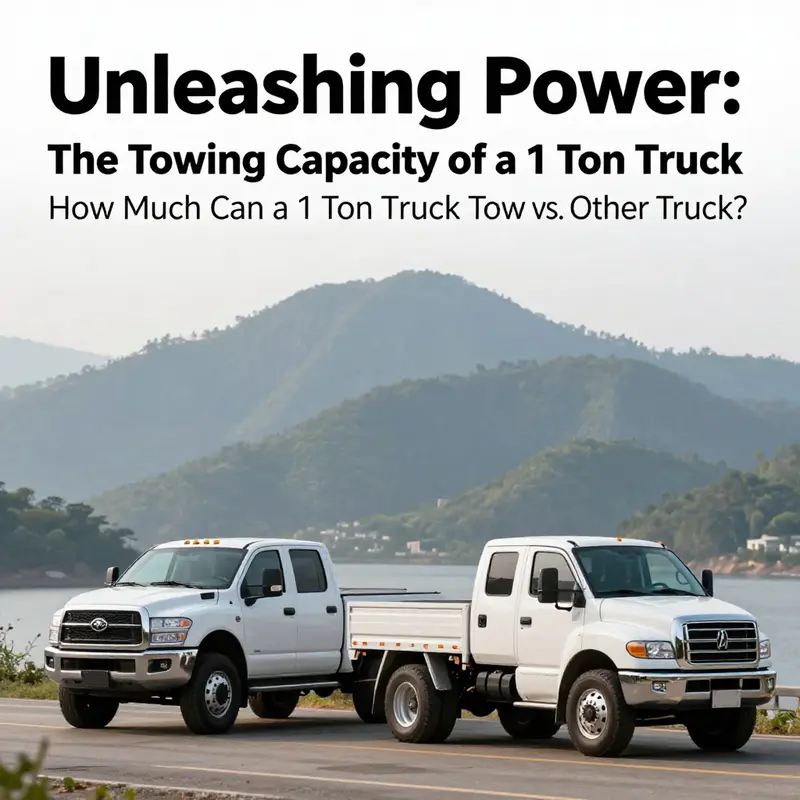
How a 1‑Ton Truck Stacks Up: Real-World Towing Capacity Compared to Other Trucks
When choosing a truck for towing, the numerical badge—half-ton, three-quarter-ton, or one-ton—only tells part of the story. A 1‑ton truck is built to work hard. Its frame, suspension, and driveline are aimed at sustained heavy loads. Yet actual towing capacity depends on many variables. This chapter looks at how a 1‑ton truck typically performs, why its numbers vary, and how it compares with lighter and heavier truck classes in real use.
A practical way to think about towing capacity is as a system rating rather than a single number. The manufacturer sets limits based on the entire vehicle: engine torque and cooling, transmission and gearing, axle ratio, brakes, frame strength, and tire load ratings. For a 1‑ton truck, those components are generally beefier than on lighter pickups. Typical, properly equipped rigs commonly tow between roughly 8,000 and 17,000 pounds, with many work-oriented builds landing in the 9,000–12,000 pound range. The lower part of the range reflects lighter engine and axle combinations, cab and chassis layouts, or trucks without heavy towing packages. The higher figures arise when the vehicle includes higher-output engines, optimized axle ratios, reinforced suspensions, and towing-specific factory options.
Comparing across classes requires context. Half‑ton trucks have improved dramatically. High-output engines, modern transmissions, and factory towing packages have pushed some half‑ton towing figures into ranges once reserved for heavier trucks. That said, those half‑tons often reach their limits sooner. A heavy trailer that pushes a half‑ton to its maximum weight may strain its frame, suspension, and cooling systems in continuous or steep‑grade use. A 1‑ton truck is designed from the ground up to manage those stresses for longer durations without the same trade-offs.
Three‑quarter‑ton trucks occupy the middle ground. They serve as a balance between everyday drivability and greater towing capacity than most half‑tons. When specifically configured with stronger engines and towing features, a three‑quarter‑ton can approach the towing numbers of light 1‑ton setups. But for sustained heavy loads, especially in commercial or industrial applications, a true 1‑ton configuration often provides better durability and service life.
A few engineering choices make the difference in real life. Dual rear wheels, commonly called dually setups, improve stability and increase gross axle weight rating. A higher axle ratio multiplies available torque at the wheels and boosts maximum tow ratings. A heavy‑duty transmission with adequate cooling prevents overheating during prolonged towing. The combination of a high‑capacity cooling system and transmission cooler can be the difference between maintaining tow ratings and facing thermal protection modes that reduce performance.
Drivetrain selection matters in specific numbers. In many models, an automatic transmission with the right torque converter and gearing can support roughly 1,000 pounds more towing capacity than a manual option in the same chassis. This is because automated drivetrains often pair with stronger cooling, electronically controlled shift strategies, and gearing optimized for towing. Similarly, diesel engines commonly deliver higher low‑end torque and better fuel economy under load, which often translates into higher tow ratings when paired with the right rear axle and cooling package.
Payload and towing capacity interact, and operators must respect both. Payload affects how much tongue weight or payload can be loaded into the truck without exceeding the vehicle’s gross vehicle weight rating. The tongue weight for a heavy trailer shifts load onto the truck’s rear axle. Exceeding payload reduces a vehicle’s margin for safe towing and can push the truck beyond gross combined vehicle weight rating, even if its hitch rating appears sufficient. Proper load distribution, trailer weight distribution hitches, and regular weight checks are simple ways to stay within engineered limits.
Hitch type influences usable towing capacity. A receiver hitch with a bumper or frame mount has different stress paths than a fifth‑wheel or gooseneck hitch. Fifth‑wheel and gooseneck systems transfer trailer weight differently, placing the pivot point over the truck bed and centralizing mass. For heavy commercial trailers, these hitches can permit safer towing at higher weights by better distributing load through the truck frame. Many heavy‑duty 1‑ton trucks are offered with factory fifth‑wheel or gooseneck prep packages that increase the rig’s practical towing performance.
Regulations and licensing are practical limits beyond engineering numbers. Local rules may require additional licenses for towing above certain weights. Commercial operations must also consider gross combined vehicle weight (GCW) and local axle limits. Fleet managers, especially those operating in regulated zones, must match truck capacity not just to trailer weight, but to legal requirements for operation.
Comparing to lighter utility vehicles makes the 1‑ton’s advantages clear. Cargo vans, small SUVs, and mid‑size pickups usually top out under 3,500 pounds of tow rating, or at best around 7,000–8,000 pounds for the larger examples. Those platforms simply lack the heavy frames, cooling capacity, and brake systems needed for heavier trailers. Attempting to push such vehicles beyond their limits invites accelerated wear, increased maintenance, and serious safety risks.
Real‑world performance also depends on application. In construction or equipment hauling, the 1‑ton’s suspension and frame help when launching from a loaded lot, climbing grades, or towing while frequently stopping and starting. The margin provided by a 1‑ton rig reduces heat soak in the transmission and engine, limits brake fade, and extends component life. For marine operations that involve large boats, the ability to tow heavy loads while maintaining braking and cooling is essential. Conversely, dedicated marine tugs operate on different principles and scales; their bollard pulls measure static towing force, often in tons, and are not comparable to road tow ratings.
Maintenance and equipment matter as much as factory ratings. Proper tire inflation, brake service, and trailer brake controllers affect safety and effective towing capacity. Upgrading to stronger spring packs, adding auxiliary airbags for load leveling, or installing an engine and transmission cooler can improve sustained towing performance. But those modifications must be compatible with manufacturer guidance to avoid voiding warranties or exceeding legal weight ratings.
Operational strategy is often overlooked when comparing truck classes. A lighter truck operating at its maximum tow rating may be fine on a short, flat run. The same truck on prolonged highway grades will suffer. A 1‑ton truck provides a buffer. In fleet settings, that buffer translates to fewer breakdowns, less maintenance downtime, and more predictable scheduling. For fleets, integrating towing capacity into emergency response planning and route design enhances reliability. Those managing fleets on islands or in remote areas face unique constraints, such as limited service options and steep terrain. Planning for these constraints often favors trucks with stronger towing margins and built‑in redundancies. For practical guidance on fleet preparedness and response, operators can consult essential fleet emergency response strategies.
Weight distribution and trailer type affect usable capacity. An ordinary bumper‑pull utility trailer places leverage on the hitch differently than a fifth‑wheel. Trailers with built‑in brakes and electric brake controllers alter stopping capability. For heavier loads, trailers with surge or electric brakes are essential to avoid overwhelming truck braking systems. Matching the trailer’s braking system to the truck’s capability is part of safe towing.
Environmental and route factors change effective capacity. High altitude, extreme heat, or long uphill stretches reduce an engine’s effective power. In such conditions, an otherwise adequate tow rating may not translate to safe or comfortable operation. One‑ton trucks typically perform better under these stresses thanks to larger radiators, stronger transmissions, and more robust cooling circuits.
Insurance, resale value, and total cost of ownership also factor into the class choice. A truck that sits comfortably below its maximum ratings tends to have lower wear and better resale. Conversely, running a lighter truck at or near its limits can increase maintenance costs and shorten useful life. Fleet buyers often prefer a slightly overbuilt rig to maintain reliability and minimize lifecycle costs.
Choosing the right truck means balancing single‑trip capacity with long‑term durability. If a use case demands occasional heavy tows, a well‑configured one‑ton can be ideal. If the work involves daily heavy hauling in hilly terrain, the extra margin of a dedicated heavy‑duty configuration—stronger axles, fifth‑wheel hitch, dual rear wheels, and diesel or high‑torque gasoline engines—becomes crucial.
Finally, accurate information matters. Manufacturer ratings and owner manuals remain the authoritative source for safe towing. They provide GCWR, GVWR, axle limits, and recommended configurations. Operators must also consider state and local laws governing towing and vehicle class licensing.
For a concise overview of towing capacity as a concept, reference materials are helpful. A technical summary of towing capacity and its determining factors can be found at: https://en.wikipedia.org/wiki/Towing_capacity
Final thoughts
Understanding how much a 1 ton truck can tow is essential for businesses reliant on heavy-duty performance, particularly in island settings where logistics can be challenging. The towing capacities of these trucks make them well-suited for various tasks, from moving equipment to towing trailers. By comprehending the factors that influence towing capacity and how 1 ton trucks stack up against their competitors, local businesses can make informed decisions to enhance operational efficiency. As always, referring to manufacturer specifications and seeking advice from trusted auto professionals remain critical in maximizing towing performance.