Owning a tow truck can be a lucrative addition to your auto repair shop, dealership, or property management business. Understanding the licensing process ensures you remain compliant with local regulations while providing critical services to customers. In this guide, we will thoroughly explore the necessary steps to acquire a tow truck license in China, focusing on vehicle registration, road transport business licensing, driver qualifications, and additional commercial requirements. The subsequent chapters will break down each facet of the licensing process, enabling local businesses to navigate this crucial endeavor seamlessly.
Tow Truck Licensing Demystified: Navigating Vehicle Registration, Inspections, and Driver Credentials Across Jurisdictions
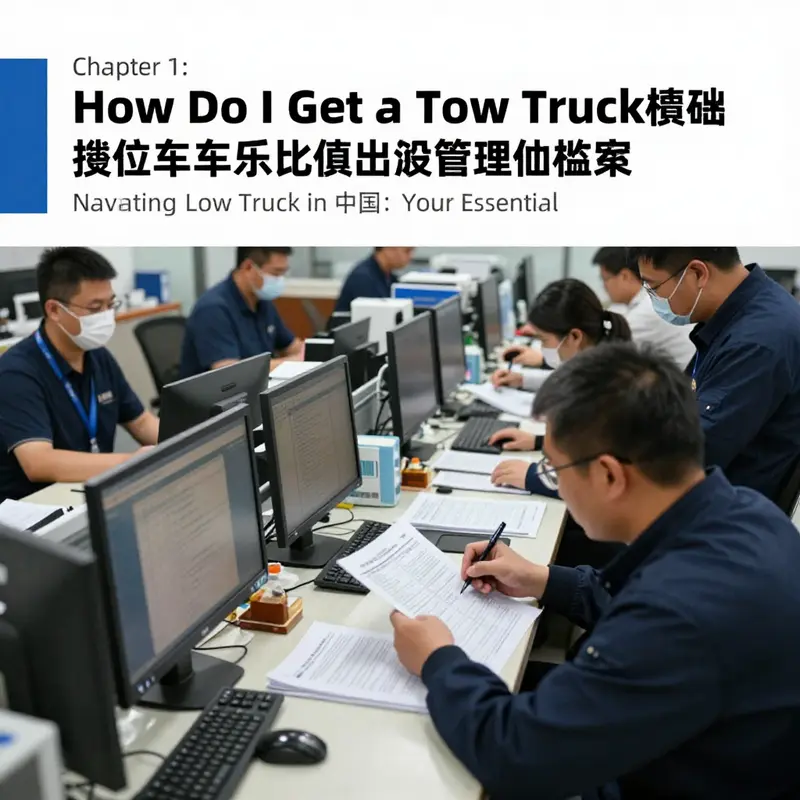
Getting a tow truck onto the road is more than a single form or exam. It begins with registration, but the road ahead branches quickly depending on where you operate. This chapter builds a practical map from the first act of registering a vehicle to the broader permissions that let you drive a tow truck as a business. Think of vehicle registration as the gatekeeper: without a properly registered vehicle, most of the subsequent licensing steps never really get started. Yet the journey is not identical from one place to another. In some regions, the emphasis falls on a rigorous vehicle inspection and a straightforward registration process; in others, authorities layer in specialized licenses, zoning approvals, and ongoing insurance requirements before a single tow can be towed legally. The thread that runs through all of this is simple in concept and complex in execution: you must prove your vehicle is roadworthy, that you have legitimate ownership and identity, and that you are prepared to operate within a framework of safety and accountability. Across Western Australia and New York City, this dual insistence—on vehicle readiness and on proper credentials—frames the path you must follow, even as the exact steps and documents shift with local rules and administrative cultures. By looking at these concrete examples, you’ll see both the universality of the core requirements and the concrete ways in which a practical licensing plan must adapt to regional demands.
In Western Australia, the process for new tow trucks places a clear premium on the vehicle’s readiness to hit the road. Before a single line of the registration form is completed for legal operation, the vehicle itself must pass a mandatory inspection. This inspection is not a mere formality; it is the public-facing guarantee that the truck meets technical and safety standards set by the licensing authorities. The inspection typically takes place at designated facilities such as the Kelmscott Vehicle Inspection Centre, and exemptions may exist for certain regional operators, reflecting the balancing act between uniform standards and practical realities of remote service areas. Once the vehicle clears the inspection, the owner or business must submit an Application to License a Vehicle, commonly referred to by its form identifier, and this accompanies the valid Certificate of Inspection. The registration process then moves forward with the submission of identity documents—two forms of identification, one primary and one secondary—to establish who owns and will operate the vehicle. If the tow truck is registered under a company name, corporate documentation may also be required. It is here that the ordinary act of buying a vehicle transitions into a formal claim to use it on public roads in a regulated industry, with each document a piece of the safety and compliance puzzle.
The New York City pathway presents a different rhythm, shaped by the city’s distinctive regulatory landscape. In NYC, the licensing authority for tow truck operators is the Department of Consumer and Worker Protection (DCWP). The emphasis remains on ensuring that each vehicle in service is captured by the right registration framework and that the person who will operate the vehicle is properly qualified. Applicants must submit a copy of the current New York State Commercial Truck Registration for every vehicle listed on their roster. This requirement anchors the operation to a verified fleet identity and keeps local authorities aligned with the fleet’s scope of work and potential risk exposure. Beyond the vehicle documents, the licensing process in NYC requires a formality tied to zoning and site suitability. Section B of the Vehicle Transport/Disposal Certification and Approval must be completed and signed by the local zoning authority, reflecting the city’s careful attention to where tow operations can legally occur, particularly in dense urban environments where space, traffic patterns, and commercial activity interact in complex ways. A scheduled inspection completes the sequence, providing a final on-site checkpoint before the license is granted. The NYC approach emphasizes that registration and licensing are not merely about paperwork; they are about aligning fleet identity, social responsibility, and operational realities with the city’s standards for traffic safety and consumer protection.
Between these two examples lies a broader truth that resonates in any jurisdiction: registration is the foundation, but the downstream licensing requirements—whether they march through a government licensing portal, a professional regulatory body, or a local zoning board—validate your readiness to operate. In both WA and NYC, you can observe the same core pillars: clarity of fleet identity, proof of ownership and identity, a demonstrated commitment to safety through inspections, and a formal process that makes every vehicle and driver accountable to public standards. For a person starting out in the tow truck business, this means compiling a coherent set of documents early on. It means understanding what each document proves—ownership, identity, vehicle condition, and compliance—and coordinating them within the timelines that different agencies impose. It also means recognizing that some jurisdictions may require additional steps if you intend to operate as a business entity rather than as an individual operator. A business registration, tax registration, and insurance coverages will often accompany the vehicle registration and driver qualification steps, forming a network of regulatory checkpoints that must be navigated as a cohesive whole rather than as isolated forms.
Practical steps begin with gathering the essentials. In WA, you would start by ensuring you have the vehicle’s identity and technical information ready for the inspection phase. The Certificate of Inspection, once issued, becomes a central credential that accompanies the registration application. You should anticipate presenting a robust bundle of documents, including one primary and one secondary form of identification. If the tow truck is registered in a company name, you’ll likely need to provide corporate documents that establish the entity’s legal standing and ownership. The registration certificate or its driving license equivalent then serves as the gateway to the next layers of compliance, including any safety and maintenance records that may be required by the licensing authority. In NYC, the process is equally document-intensive but operates under a different bureaucratic cadence. You must secure and submit the current NYS Commercial Truck Registration copies for every vehicle listed on your roster, ensuring that each plate and VIN line up with your fleet allocation. The Section B endorsement from the local zoning authority confirms that your planned operations fit the city’s land-use and traffic-regulation framework. Scheduling an inspection follows, and this is often a gatekeeper step: until the inspection is completed and approved, your license cannot flow forward. In both places, you can see how preparation, coordination, and timing are as important as the documents themselves. The goal is not to collect forms, but to present a unified, credible picture of a compliant and capable operator who can safeguard the public, drivers, and clients.
Beyond the vehicle documents, the broader licensing journey almost always touches on the business’s ongoing legal and financial responsibilities. If you are running a tow truck operation as a business, you may need a business license from the local market regulation body, tax registration with the relevant tax authority, and appropriate insurance coverage. In practice, this usually means securing compulsory traffic insurance to cover liability arising from road incidents, third-party liability insurance to address the risk that your service imposes on other road users, and possibly cargo insurance if you are handling valuables or if your contracts involve heavy or hazardous items. Depending on the service scope, you may also need special permits when transporting oversized loads or hazardous materials. The regulatory framework may include centralized platforms or portals for license applications and permit fulfillment, especially in larger jurisdictions or regions prioritizing streamlined administrative processes. The underlying logic remains unchanged: you must exist as a registered operator in good standing, with a properly insured and inspected vehicle fleet, before you can extend your service to customers.
For anyone planning to import a tow truck from overseas or from another region, additional layers appear. Import regulations may demand a Certificate of Origin, import clearance documents, a vehicle import certificate, and a tax payment certificate for purchase-related taxes. These documents ensure that the vehicle meets international trade and safety standards, and that duties have been settled before the vehicle enters the local market. Handling these steps alongside domestic registration and licensing adds complexity, but it is a well-trodden path for fleets that aim to grow through cross-border procurement. The practical takeaway is clear: anticipate cross-border processes early in the planning, and align them with local registration timelines so that inspections and license approvals do not lag behind fleet readiness.
With these regional references in mind, the day-to-day workflow of getting a tow truck licensed through vehicle registration unfolds as a choreography of documents, inspections, and approvals. The core rhythm is consistent: prove you own the vehicle, prove you and your operation meet safety and regulatory standards, and then obtain the right permissions to operate on public roads. The details—inspection centres, form numbers, and zoning endorsements—are the practical choreography that turns intent into a legally operating fleet. As you map your own licensing journey, you’ll want to tailor the sequence to your jurisdiction while preserving the underlying logic: a valid vehicle, a compliant operator, and alignment with public safety expectations. In the chapters that follow, we’ll explore how drivers demonstrate their professional readiness through qualification certificates, what standards govern driver conduct and maintenance, and how business licensing weaves together with insurance and taxation to form a complete regulatory tapestry.
To keep you moving efficiently through this process, consider how a well‑designed licensing plan can reduce delays and prevent costly missteps. A useful way to think about it is to build a cross-reference checklist that mirrors the sequence in your area: vehicle inspection status, registration documents, proof of identity, ownership papers, and, if applicable, corporate documentation. When you have these components ready, you’re not just ticking boxes; you’re presenting a coherent case to the authorities that you are prepared to operate responsibly. It also helps to engage with local authorities early, asking about regional nuances and any exemptions that may apply to your operation, such as regional operator allowances or small‑fleet provisions that could simplify the path to compliance.
As you reflect on the cross-jurisdictional landscape, you may find value in practical resources that address fleet planning and safety readiness. For operators looking to integrate emergency-response thinking into their fleet development, there is a helpful complement to licensing that you can explore in trusted industry materials: essential fleet emergency response strategies. This resource, linked here for convenience, offers guidance on how to prepare your fleet for incidents and how to coordinate response procedures with regulatory compliance. Integrating those practices early can reduce risk when you scale up, particularly as you add vehicles to your roster and navigate the ongoing requirements of insurance, inspections, and license renewals. You can read more at: https://theislandtowtruck.com/essential-fleet-emergency-response-strategies/.
Finally, while the steps above outline a pathway that applies in multiple jurisdictions, you should not rely on generalities alone. Regulations shift with local priorities, and even within a country there can be notable differences between urban centers and regional areas. Always verify local requirements with the city or state transportation bureau, the licensing authority, or the administrative approval service center that governs vehicle operations in your jurisdiction. Real-time updates and authoritative guidance are typically available through the official government service platforms for your area, which can expedite online submissions, document uploads, and status tracking. The essential aim is to align your preparation with the precise expectations of the authorities who issue your vehicle registration and subsequent licenses, so your tow truck operation can begin safely, legally, and with a solid foundation for growth.
External resource: Requirements for Tow Trucks in WA
Tow Truck Licensing in China: Navigating Driver Qualifications and the Road Transport Business Permit
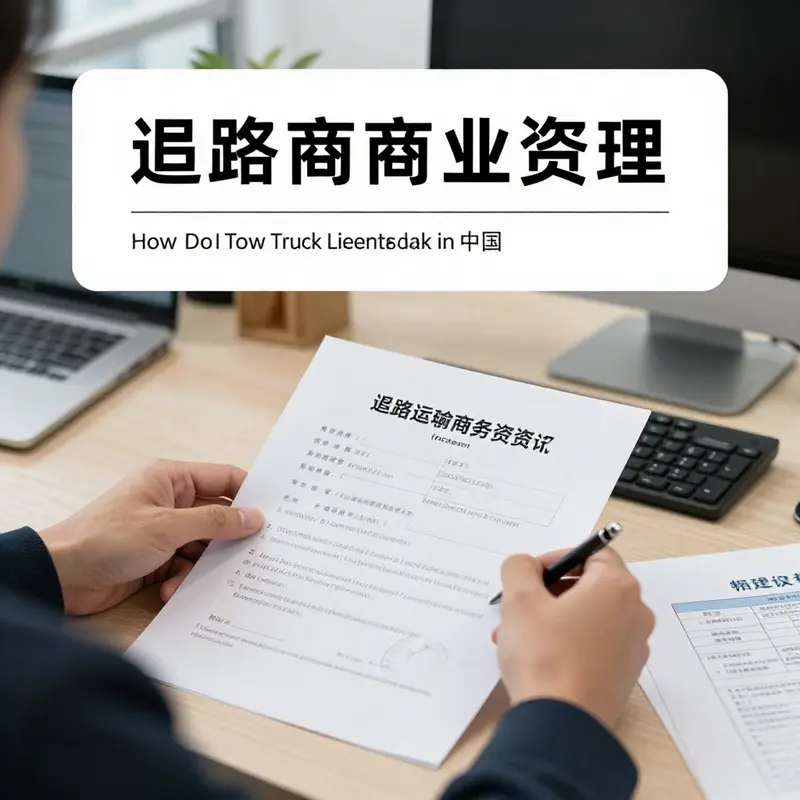
Securing a tow truck license is rarely a single moment of triumph; it is a carefully choreographed path that aligns personal credentials with corporate legitimacy. In practice, the licensing process unfolds along two parallel tracks that converge to authorize you to operate a tow truck for hire. One track centers on the driver—the person behind the wheel who must be competent, compliant, and capable of handling the varied demands of roadside recovery. The other track concerns the business—whether you plan to run a solitary operator service or a full-fledged road transport company with a fleet. Together, these routes form a robust framework intended to ensure safety, reliability, and accountability when a tow truck is called into action in crowded highways or quiet town streets alike. To understand how to obtain a tow truck license, you must appreciate the dual nature of the process: the professional qualification certificate for the driver and the road transport business license for the company, with optional layers such as insurance, permits for special cargo, and cross-provincial considerations that may apply depending on your operating scope.
On the driver side, the journey starts with clear eligibility criteria that set the baseline for who may serve as a tow truck operator in a commercial capacity. The state expects a candidate to be under a practical age threshold, typically under sixty, and to hold a valid motor vehicle driver’s license of the appropriate class. The most relevant classes encompass those that authorize heavy vehicle operation, reflecting the reality that tow trucks can be bulky and powerful machines that demand careful handling. Beyond age and license class, there is a prerequisite for driving experience—usually at least one year of relevant driving history. The rationale is straightforward: prior exposure to road rules, vehicle dynamics, and real-world hazards translates into safer performance when complex towing tasks are at stake. The practical upshot is that candidates should approach this path with a foundation of experience and a readiness to learn more advanced regulatory and safety intricacies.
No matter your current standing, a comprehensive preparation phase follows, where you gather essential documents. The standard package includes original and copy versions of your ID card, your motor vehicle driver’s license, recent passport‑style photographs, and proof of a clean driving record over a defined recent period—usually three years—with documentation indicating no major traffic accidents. Depending on local rules, a health examination may also be required, ensuring that the operator’s physical condition aligns with the responsibilities of high-visibility roadside work. The purpose of these documents is not mere bureaucracy; they form a verifiable baseline that the licensing authorities can rely on as they assess your suitability to operate in high-pressure environments where public safety is at stake.
With documents in hand, the next step is to enroll in a training program that is certified by the local transportation authority. This training is not a perfunctory add-on; it covers a spectrum of critical topics designed to translate theoretical knowledge into practical competence. Trainees study road transport laws, safety regulations, and the internal procedures of the industry. They also receive instruction on emergency handling, accident response, and the basics of vehicle maintenance—areas that are essential for a tow truck operator who must protect not only the vehicle and cargo but also the people on and around the scene. The typical training duration is structured to build competence through a substantial block of instructional time—roughly thirty standard hours in many jurisdictions—and the goal is to equip drivers with a solid foundation before they sit for any formal assessment.
When training is complete, the path leads to examination. The licensing framework generally requires both a theory component and a practical component. The theory exam tests comprehension of road freight transport regulations, safety knowledge, and industry standards. The practical exam, tailored to the realities of towing, probes core skills such as coupling and uncoupling trailers, reversing with a towed vehicle, and executing safe parking under load. Because tow trucks are frequently used in emergencies, the practical component is typically given heightened emphasis; mastery here is what distinguishes a capable operator from a merely licensed one. If a candidate passes both parts of the assessment, they are issued a Road Transport Driver’s Professional Qualification Certificate. This credential is the formal acknowledgment that the individual has met the national standard for towing operations and can be trusted to contribute to safe and orderly roadside assistance.
An important update to be aware of concerns license class nuance for lighter or lighter-towed configurations. Recent adjustments, including updates since late 2025, indicate that operators may need to hold a C6 license if the vehicle falls into the category of light trailer towing. This reflects evolving classifications within driver licensing frameworks that respond to the changing vehicle mix on the road and the particular demands of towing lighter configurations. For prospective applicants, that means confirming the specific license class required for the exact tow truck model you plan to operate and staying current with any formal changes announced by the licensing authorities. The process is standardized, but the details can shift with regulatory updates, so ongoing vigilance is prudent.
The driver credential, once earned, is valid for a period that reflects the need for periodic renewal and ongoing competence. In this environment, six years is a common validity period, after which reevaluation or renewal is required. Renewal procedures typically involve demonstrating continued eligibility, sometimes including a refresher course on new safety standards or updated regulations. The renewal cadence is purposeful: it ensures that drivers stay aligned with evolving road transport practices, safety technologies, and enforcement expectations. The result is a license that signals current proficiency and ongoing commitment to safe operating practices on the road and at the scene of a recovery operation.
On the business side, the Road Transport Operation Permit represents the corporate license to operate tow trucks as a commercial enterprise. This track is distinct from the driver qualification but intimately connected to it. If you intend to establish a towing service or a company with multiple vehicles, you will need to move through business registration with the Market Supervision Administration, a process that formalizes your corporate identity and provides a framework for lawful operation. Once the business is registered, the next milestone is the Road Transport Operation Permit itself. This permit confirms that your business model aligns with national standards for road transport, including the safety management framework, vehicle standards, and the appropriate number of vehicles you intend to operate. It is here that the practical realities of managing a fleet come into play: you must demonstrate that each tow truck complies with the relevant vehicle technical standards, that every driver employed by the business holds the necessary professional qualifications, and that your operation has systems in place to manage safety, compliance, and accountability.
The documents necessary to secure the Road Transport Operation Permit are comprehensive. You will typically submit a copy of your business license from the Market Supervision Administration, proof of vehicle involvement (vehicle information and registration documents for each tow truck), proof of insurance (including compulsory third-party liability insurance and other relevant policies), the driver qualification certificates for each operator you intend to employ, vehicle registration certificates for every tow truck, and lease or ownership documents showing the legal basis for your fleet. In some jurisdictions, you may also need to provide evidence of a safety management system, such as formal operation procedures and a safety responsibility framework. The application channels are designed to accommodate both online and offline routes. The National Government Service Platform is a central hub for online submission, but local transportation bureaus may also provide portals or in-person service centers where you can complete the process with personal assistance.
The inspection and approval phase is where the licensing body verifies that the documented plans translate into practical, compliant operations. A site inspection is common and assesses the readiness of your facilities to support tow truck operations: whether your premises can accommodate dispatch, storage, and maintenance activities; whether your workshops comply with safety standards; and whether your personnel, vehicles, and procedures align with the stated commitments. Inspectors may review your safety management systems, the availability of safety equipment, and the tracking of compliance with regulatory requirements. The emphasis here is not punitive but constructive: the goal is to ensure that once you are licensed, you can sustain safe and professional operations that protect your workers, clients, and the public.
Beyond the standard road transport license, there are other regulatory layers that operators may encounter depending on their business model and the nature of their cargo. Insurance is a non-negotiable component of commercial operation. A comprehensive package typically includes compulsory traffic insurance, third-party liability insurance, and potentially cargo insurance if you transport valuable or sensitive loads. Special permits come into play when you handle oversized loads, hazardous materials, or cross-provincial transportation of large items. In such situations, you must obtain permits through the Cross-Provincial Large Item Transport Parallel Permit System or its local equivalents. These permits are crucial to ensuring that legal and safety requirements are met when operating across multiple jurisdictions, where road restrictions and load limits may vary. The regulatory environment emphasizes risk management and procedural rigor, and the absence of any of these elements can impede operations or invite penalties.
If your tow truck plans involve importing a vehicle, additional import-related documentation enters the process. An origin certificate, import goods customs clearance document, vehicle import certificate, and purchase tax payment certificate may be required. Import procedures are jurisdictionally specific and typically involve customs authorities, so it is wise to coordinate with a trusted importer or consultant who can navigate the nuances of cross-border vehicle compliance. This is a reminder that licensing is not a single hurdle; it is a sequence of steps that scales with the scale of your ambitions, from a single operator to a multi-vehicle fleet with cross-provincial operations.
The practical path through these requirements is best understood as a continuous engagement with official channels. The National Government Service Platform, often accessible via the government service app ecosystem, is the primary conduit for most applications, updates, and scheduling of inspections. In parallel, local transportation bureaus maintain service desks that can provide guidance, clarify regional variations, and help align your business plan with local enforcement expectations. The recurring admonition from regulators is clear: verify local regulations with your city’s Transportation Bureau or Administrative Approval Service Center, as the rules may be slightly different in different districts or municipalities. This regional sensitivity is particularly salient for operators who plan to scale or who operate in multiple cities.
From a practical standpoint, the two-track model—driver qualification and business license—means you can progress on both fronts concurrently in many cases. A prospective operator might enroll in driver training while simultaneously assembling corporate documents, provided there is organizational discipline to avoid bottlenecks later. The most reliable approach is to align the development of your driver workforce with the maturation of your business operations, ensuring that when licenses are granted, you can deploy a compliant, insured, and well-managed fleet. A note on timelines: while the regulatory framework is structured and predictable, the pace of approval can vary depending on regional backlogs and the completeness of your submissions. Preparing a meticulous package, pre-emptively addressing common deficiency notes, and scheduling inspections well in advance can smooth the journey toward operational readiness.
As you navigate this process, consider the broader implications for your reputation and operational effectiveness. Tow truck services sit at the intersection of urgent need and public trust. Beyond the legal requirements, investing in driver soft skills—communication, customer service, and conflict de‑escalation—helps differentiate a reliable operation. This alignment of technical competence, regulatory compliance, and customer empathy is what ultimately leads to repeat business and favorable word-of-mouth in a field where reliability is valued as highly as speed.
For a broader perspective on how to integrate these licensing steps into a coherent business plan and ongoing operations, you can explore industry-focused resources through the Island Tow Truck community. Their hub offers practical insights and case studies that illustrate how licensed operators translate regulatory knowledge into everyday service excellence. Read more at the Island Tow Truck blog: https://theislandtowtruck.com/blog/.
In sum, the journey to tow truck licensing in China is a structured yet dynamic process built on two pillars: the driver’s professional qualification and the road transport business license. The road to both pillars runs through a system of documents, examinations, inspections, and ongoing compliance obligations that reward those who invest in thorough preparation, up-to-date knowledge, and robust safety practices. By embracing these requirements and leveraging official portals and local guidance, aspiring operators can establish a legal, safe, and sustainable foundation for their towing ventures. As regulations evolve, staying engaged with official resources and maintaining a proactive compliance posture will help ensure that your tow truck service remains capable of meeting roadside needs with professionalism and care. The practical upshot is straightforward: prepare diligently, submit complete and accurate information, and build operations that prioritize safety, accountability, and customer trust. And if you ever question whether you’re on the right track, revisit the core principle that underpins licensing in this field—public safety coupled with dependable service—so that your venture not only exists legally but also earns the confidence of drivers, motorists, and communities when every minute counts on the road.
External resource for reference: National Government Service Platform (for official guidance and one-stop procedures) https://gjzwfw.gov.cn/
Tow Truck License Unlocked: Navigating Driver Qualification and Certification Across Jurisdictions
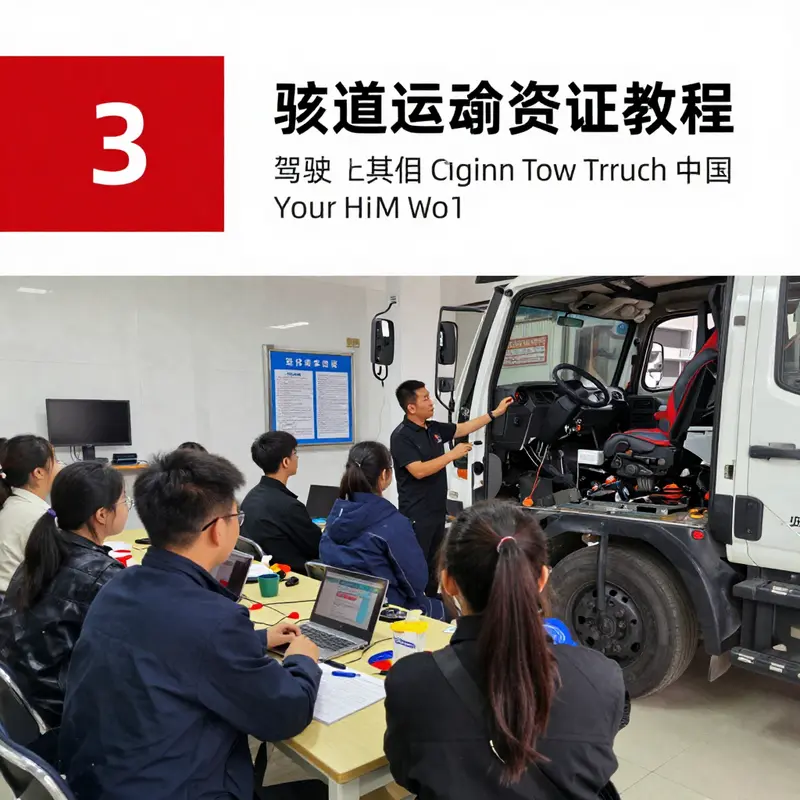
Becoming a tow truck operator is a journey that begins with the person behind the wheel and ends with a credential that proves you can perform difficult, high-stakes work safely and reliably on public roads. The path combines individual qualifications and regulatory approvals, and while the specifics differ by country or region, the underlying logic remains consistent: demonstrate capability, prove your commitment to safety, and align your operation with a framework that protects the public, your clients, and your own business. In China, for example, this journey unfolds through a sequence that ties vehicle registration to driver qualification and then to the broader licenses and protections that govern commercial roadside services. The core idea is simple: you must be authorized to drive the vehicle, you must be qualified to handle the work that a tow truck demands, and you must establish the administrative and safety practices that keep the service trustworthy. Read together, these elements form a coherent map that helps an aspiring operator see not just the end license, but the entire ecosystem that supports professional tow work.
The first hinge of the qualification framework is age and licensing. In many jurisdictions, the minimum age for undertaking commercial vehicle work is 18, which presumes a baseline of driving experience and maturity. In more demanding contexts or for heavier vehicles, the threshold may rise to 21, recognizing the extra responsibility that comes with larger equipment and higher risk profiles. Alongside age, the driver must hold a valid driving license with the appropriate endorsement for commercial operations. This endorsement is not a mere stamp of permission; it is a statement about the driver’s competence to operate a vehicle that weighs more, handles differently, and requires more precise control than a standard passenger car. The specific class—often described as B or C in various systems—maps directly to the vehicle’s weight, configuration, and towing capabilities. The pursuit of the correct license is not an afterthought; it is the foundational credential that enables all further steps.
But a license alone does not make a tow truck operator. Regulators seek evidence that drivers meet standards of safety, integrity, and reliability. A clean driving record is more than decoration; it signals that a person has demonstrated consistent safety behavior over time. In many systems, a background check accompanies the licensing process, assessing for factors that could undermine public trust or safety. A drug screening is another common element, reflecting the reality that the heavy, high-pressure work of towing requires steady judgment and reliable reaction times. The combination of these checks creates a baseline expectation: a driver who can be trusted on the road and who can be relied upon in potentially stressful roadside situations.
With the gatekeeping elements in place, training becomes the bridge from theoretical eligibility to practical qualification. Tow truck work blends driving skill with specialized knowledge about towing operations, vehicle maintenance, and safety protocols for secure loading and safe recovery. Training programs may be delivered through a state or national framework and culminate in an examination that tests road transport regulations, maintenance fundamentals, cargo securing techniques, and the safety practices that govern roadside work. In jurisdictions that embrace a centralized qualification system, applicants register and access training modules and tests through a national platform dedicated to vocational recognition for transport workers. The aim is to ensure the credential reflects a standard that is portable across employers and regions, so someone who earns the qualification in one area can bring that credential into another without having to restart the entire process.
Even when the driver is fully qualified, the work remains a team effort that involves the business and regulatory ecosystems around tow services. If you intend to operate a towing company, you will likely need a Road Transport Business License issued by the local transportation department. This license signals that the business has the organizational capacity to meet safety standards, implement clear operating procedures, and maintain vehicles in a way that supports reliable service. In practice, the licensing package for a tow-truck operator often includes a business license from the market regulation authority, tax registration, and appropriate insurance coverage. Insurance is not merely a checkbox; it is a tool that underwrites risk for the company, the drivers, and the customers who depend on timely and safe assistance. Public liability insurance and mandatory traffic insurance are common; in some cases, cargo insurance may also be relevant, especially when a service involves the movement of goods in conjunction with recovery operations.
Beyond the day-to-day driving and company permissions lies a broader compliance landscape that ensures the operation is fit for public roads. Vehicle technical standards must be met, reflecting a duty to deploy vehicles that are structurally sound, mechanically reliable, and equipped to handle towing tasks without creating additional hazards. Safety management systems and clearly documented operation procedures are not cosmetic extras; they are the operating backbone of day-to-day practice. The safety protocols must cover everything from routine maintenance schedules and vehicle inspections to on-road procedures for securing loads, managing traffic scenes, and coordinating with other responders at the roadside. This framework of standards helps reduce the inherent risks of towing work and gives customers confidence that the service meets a consistent, documented level of quality.
For operators who plan to move through multiple regions or who expect to handle complex or oversized loads, permits become an essential layer of compliance. In some places, cross-provincial or cross-border movements trigger additional requirements such as special permits or operating approvals that validate the ability to move large items safely and legally. The practical effect is straightforward: if your business model includes transporting unusual loads, you should anticipate a permit process that checks alignment with vehicle specifications, route restrictions, and appropriate safety measures. The national government service platforms and local government service centers are the channels through which applicants track progress, schedule inspections, and confirm that they have met every regulatory obligation before a tow operation begins.
The route to licensing grows more intricate still when you consider the case of import vehicles. Importing a tow truck brings a stack of documents that cross multiple administrative boundaries: a certificate of origin, import customs clearance documentation, a vehicle import certificate, and a purchase tax payment certificate, among others. Each document is a gatekeeper in its own right, guaranteeing that the vehicle complies with import requirements and can be registered, insured, and used legally on home roads. The result is a practical imperative: if you are contemplating an import, you must chart the journey from ship to street, securing the necessary paper trail at each stop to prevent delays, penalties, or loss of registration rights.
A jurisdictional example that illuminates the practical rhythm of these requirements can be found in Western Australia. There, the roadworthiness of the tow vehicle must be demonstrated before licensing, with inspections conducted at approved centers such as the Kelmscott Vehicle Inspection Centre. After the vehicle passes inspection, applicants file an Application to License a Vehicle, known as Form VL17, along with identity proof and the inspection certificate. If the vehicle is registered to a company, additional corporate documentation is required. This WA sequence underscores a universal pattern across many systems: verify the vehicle’s readiness, then prove the driver’s capability to operate it in a way that aligns with safety norms and public accountability. Although the specifics differ, the logic holds—an inspection-based gatekeeping step followed by a formal licensing application ensures that the road user, vehicle, and operator are all prepared to participate in a regulated industry.
In framing a cohesive plan to pursue a tow truck license, the essential insight is that the driver qualification phase is not a one-off hurdle but a living credential that may require renewal or ongoing education to stay current. Some regions mandate regular recertification or periodic training to keep pace with evolving regulations, new vehicle technologies, and updated best practices in loading and recovery operations. Staying informed means watching official portals and government service channels, which provide the alerts, forms, and guidelines needed to adjust to policy shifts without disruption. This is the disciplined core of professional readiness: a commitment to continuous improvement and to maintaining compliance as business needs evolve.
For readers who approach this field with commercial intent, the map becomes clearer when you see how the various pieces align. The driver qualification, the vehicle registration, the business license, and the insurance ecosystem all interlock to form a durable foundation for service delivery. If you intend to operate a fleet, you will plan for a multi-agency process that touches vehicle registration offices, transport departments, market regulation authorities, and insurers. You will assemble a dossier that demonstrates compliance across the board, and you will maintain a schedule that keeps operations auditable and transparent. The objective is not to cross a single finish line and stop; it is to establish a sustainable practice that can scale with fleet growth and adapt when new safety requirements emerge. The licensing journey is a continuous cycle of validation, learning, and improvement, not a one-time accomplishment.
To contextualize the discussion beyond a single jurisdiction, it is helpful to view licensing through a comparative lens. The China-focused flow emphasizes a structured sequence of registration, licensing, and qualification, all anchored by national and local government platforms. For readers who operate or plan to operate in Australia or elsewhere, the WA example offers a concrete, procedural model: pass the roadworthiness test, then submit Form VL17 with the required documents to obtain a license for the vehicle. In the broader picture, a useful companion piece to this regulatory map is the emphasis on readiness and emergency preparedness in fleet operations. For readers seeking a deeper perspective on how licensing integrates with safety planning and operational resilience, consider consulting resources such as the essential fleet emergency response strategies page, which helps connect licensing steps to a broader safety and readiness program. essential fleet emergency response strategies.
External resource: License a tow truck | Transport WA: https://www.transport.wa.gov.au/vehicles-and-drivers/licensing-vehicles/license-a-tow-truck
Chapter 4: Clearing the Road Ahead—Commercial Permits, Inspections, and the Paperwork That Unlocks Tow Truck Licensing
This chapter outlines the typical licensing pathway for tow truck operators, focusing on commercial permits, vehicle inspections, and the paperwork that binds operations to safety and accountability. It explains that licensing is a staged process that begins with a thorough vehicle inspection and proceeds through formal applications, in-person submissions where required, a clean driving record, and, in some regions, a driver competency assessment. It also notes the importance of insurance, business licensing, and regulatory compliance as ongoing prerequisites for lawful operation.
The inspection checks critical safety features such as braking, steering, lighting, and the towing apparatus, while the application packet collects proof of identity, ownership, business structure, insurance, and compliance with local safety standards. In some jurisdictions, applicants must attend in person to verify documents and establish identity, which can help prevent errors later in the process. A clean driving history and, if needed, a vehicle or driver assessment, further demonstrate readiness for professional towing work. The chapter emphasizes planning, accuracy, and alignment with local rules to reduce delays and avoid permit rejections, and it suggests consulting official resources for the most current requirements.
Final thoughts
Acquiring a tow truck license is more than just a regulatory formality; it represents a commitment to professionalism and safety in your automotive business. By taking the time to understand and fulfill these requirements, you position your services favorably in a competitive market, paving the way for successful operations in towing and related services. Whether it’s vehicle registration, obtaining business licenses, or ensuring driver qualifications, each step is integral to your success. By adhering to the outlined processes, your business will not only comply with the law but also build a strong foundation for excellence.