When it comes to towing capacity, the choice of truck can mean the difference between success and struggle in fulfilling demanding tasks. For local auto repair shops, car dealerships, property managers, resort operators, and commercial fleet operators, understanding which truck stands out in the towing arena is imperative. The right vehicle ensures you can move heavy loads, whether it’s delivering vital equipment or transporting watercraft through steep terrains. In this exploration, we delve into the Ford F-150 Raptor, a truck often crowned the strongest in its class, analyze the comparative capacities of other thought leaders in the industry, and unveil the technological innovations behind modern towing solutions. Each chapter contributes vital knowledge towards making informed decisions when investing in vehicles designed for power and durability.
Tow-Ready Power: Redefining the Ceiling of Tow Capacity
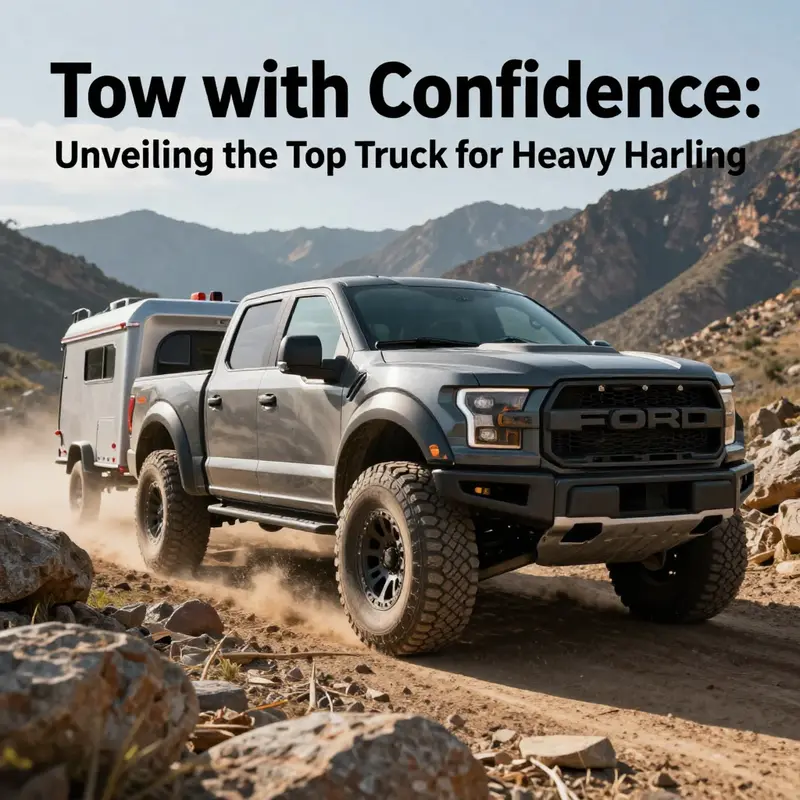
To determine which truck can tow the most, we must look beyond raw horsepower and consider how torque, gearing, suspension, and trailer technology work together. Modern high-torque pickups balance engine output with transmission strategy, chassis reinforcement, and advanced trailer assist to deliver controlled, reliable towing under real-world conditions. The most capable configurations pair a strong engine with a broad torque curve, a multi-speed transmission, available four-wheel drive, and a weight-distribution-aware hitch setup to keep heavy trailers tracking straight and steady on grades, gravel, and washboard roads.
A common benchmark is the Max Tow package, which integrates reinforced suspension components, a higher-capacity hitch, and optimized weight transfer to push limits while maintaining stability. With such a configuration, towing capacities can reach well into the teens of thousands of pounds when properly loaded and within the manufacturer guidelines. However, the exact rating depends on the vehicle, drivetrain, and trailer geometry; the door jamb rating, tongue weight, and gross combination weight all set the safe boundary. Responsible towing means verifying those numbers for your build, ensuring the trailer is loaded within limits, and using proper braking, lights, and tires.
Beyond the peak rating, the engineering that enables heavy towing also underpins off-road competence. Stiffer chassis, tuned suspension, and robust tires help keep the combination stable over rough terrain, while electronic stability control, trailer sway mitigation, and integrated brake controllers coordinate with the trailer to maintain control. The result is a single platform capable of pulling substantial loads and traversing uneven terrain with confidence, rather than requiring a dedicated work truck for every task.
Finally, buyers should weigh real-world needs against cost, fuel efficiency penalties, and maintenance demands. A vehicle that can haul heavy trailers and still venture off the pavement offers clear advantages for fleets and thrill-seekers alike, as long as the configuration is chosen with a plan for safety and correct operation. For those seeking concrete data, the official manufacturer towing pages and the trailer-safety guidelines provide the definitive source for your specific model and configuration.
Tow Max: Demystifying How Much Power Real Trucks Can Pull and Why Real-World Limits Matter
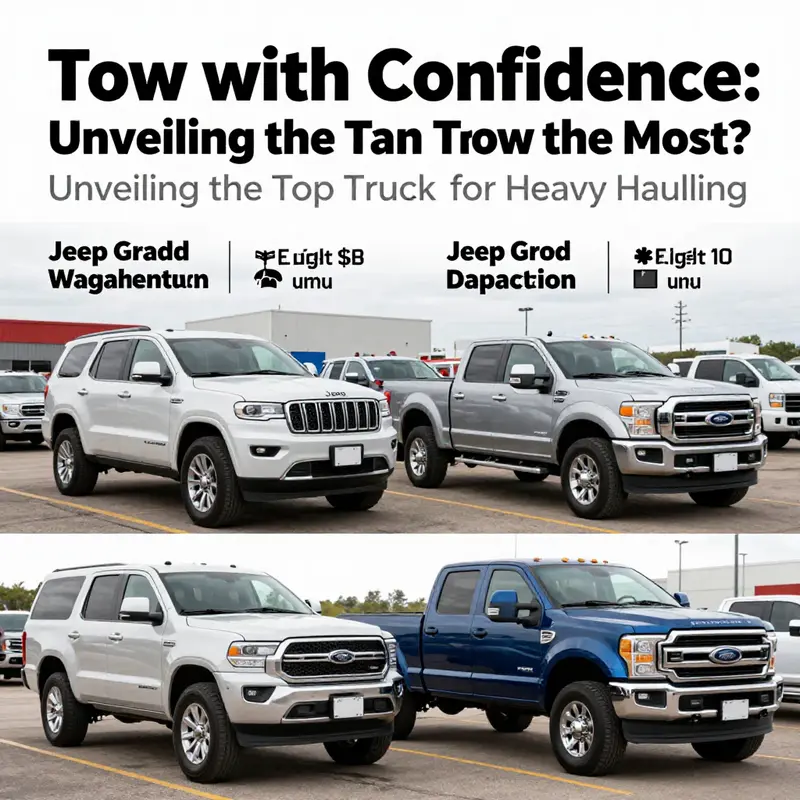
When people ask which truck can tow the most, the immediate impulse is to scan the spec sheet and point to the highest number on the page. But a towing label is only part of the story. The number reflects a rating that assumes perfect conditions, a specific hitch arrangement, and a controlled environment. Real world towing is dynamic, messy, and highly dependent on how the vehicle is configured, how the load is distributed, and the terrain it must conquer. If you want to understand which truck truly leads the pack, you must move past the headline figure and examine the choreography that makes heavy towing possible: the engine’s torque curve, the strength of the frame a driver sits in, the quality of the cooling system, the sophistication of the transmission, and the ways a vehicle manages weight transfer as it accelerates, climbs, or negotiates a curve. It is in that choreography that the answer emerges, not from a single statistic but from a careful balance of power, stability, and purpose built into the machine.
To begin with, consider the broad landscape of towing in the world of trucks and towing equipment. On the consumer side, the trucks that many people consider “tow heavy” are the full size pickups or their off road variants. These machines blend a combustion heartbeat with a chassis that is tuned for both road manners and rough terrain. The engine might be efficient at low rpm, yet it must ramp to a brutal torque output when the trailer starts to move. The transmission must shuttle gears not just for acceleration, but for maintaining momentum when the load is heavy and the road is unkind. The driveline has to deliver that power to the wheels without overheating, and the suspension must keep the weight of the trailer from turning the vehicle into a pogo stick, preserving steering control and braking effectiveness even under duress. In the best configurations, the result is a pickup that can pull a sizable mass on a highway, then switch gears and tackle a muddy backroad with the same breath of capability.
But there is a stark distinction between what a pickup can tow on a paved surface and what a vehicle can tow in a field or off a highway where the surface is uneven, the ground is soft, and the footing can shift without warning. Heavy-duty wreckers and the fleet of specialty tow trucks that support recovery operations occupy the other end of the spectrum. These machines are purpose built for lifting, stabilizing, and moving loads that would overwhelm a typical road-going pickup. Some of them rely on massive booms and hydraulic cylinders, others on robust frames that can anchor and spread weight across a wide footprint. The towing capacity of these machines is not just about pulling a weight from A to B; it is about lifting a weight safely, then orchestrating a controlled movement that preserves the integrity of the vehicle being recovered and that of the recovery crew. When you examine the range of capabilities here, you encounter a spectrum that stretches from practical daily towing to industrial-scale recovery work that can handle tens of tons with a level of precision that would be unimaginable in a standard pickup.
Within this spectrum, two common ideas demand careful attention: the notion of gross combined weight rating and the variety of hitch configurations that enable different towing tasks. The gross combined weight rating, or GCWR, expresses the total allowable weight of the truck plus its trailer when they are connected and moving. It is a headline metric, but it sits within a matrix that includes the vehicle’s curb weight, payload capacity, and the trailer’s tongue weight. A high GCWR is not automatically sufficient for a heavy, awkward trailer if the trailer’s weight distribution is poor or if the braking system is undersized for the combined mass. The hitch matters too. A ball hitch can be plenty for light to moderate loads, but when the objective shifts toward maximum towing power, a gooseneck or fifth-wheel setup often becomes essential because these configurations place the load over the drive axle, improving stability and steering control. This is where power, dynamics, and layout converge to create a vehicle that can truly tow heavy loads while maintaining predictable handling.
The narrative becomes clearer when you separate consumer tow prowess from professional towing power. In the consumer field, the most capable platforms tend to accumulate power through a combination of torque, gearing, and chassis rigidity. A modern, well-equipped heavy-duty pickup— diesel powered, with a robust cooling system and a transmission tuned for towing—can pull a substantial mass behind it. The key, however, is not merely the maximum weight figure but how that weight is managed across a typical driving scenario: the distribution of weight between the hitch and the front axle, the efficiency of the braking system once you enter descent, and the way the suspension keeps the trailer from swaying through gusts of wind or a mid-corner gust on a mountain road. In practice, this means that the difference between a vehicle that can tow a large number under ideal conditions and one that remains controllable and predictable in the rain or at altitude is often a function of engineering finesse as much as raw horsepower.
On the other end of the spectrum, the commercial world of heavy-duty wreckers offers a different kind of pinnacle. Here the objective is not to tow an ordinary trailer but to lift and reposition loads, sometimes in the aftermath of an accident or in a remote worksite where space and access are limited. Heavy-duty hydraulic cranes, sometimes rated in tens of tons, represent the apex of lifting capacity. These machines can pick up and stack masses that would overthrow a standard tow setup and then place them with exacting alignment for safe transport. In practice, these systems achieve capabilities that far exceed any consumer pickup’s towing rating, because their primary design purpose is to enable controlled recovery rather than simply dragging weight along a road. A heavy-duty wrecker can be configured in multiple ways—some with a generous crane reach, others with multiple stabilizers and a reinforced frame—so the operator has a suite of tools matched to a given recovery scenario. The result is a class of vehicles built not just to pull, but to perform the careful, methodical work of moving, lifting, and stabilizing vehicles under less-than-ideal conditions.
This distinction matters because claiming the most towing power is not the same as claiming the most versatile towing solution. A machine might pull a heavier load on a straight line, but if the load is a stubborn, misaligned vehicle on a slope, or if the roadbed is slippery, the same machine may be unable to complete the job safely. Versatility, reliability, and the ability to adapt to terrain and weather often trump raw numbers in the real world. This is why the entire conversation about what truck can tow the most must integrate not just the label on the brochure, but a broader assessment of how the vehicle performs across the range of real conditions: from a quiet highway shoulder to a muddy rural lane, from a parking lot repossession to the side of a flooded culvert.
If we step back and ask what constitutes the pinnacle of towing capability, a few principles emerge with clarity. First, power is a necessary condition but not sufficient on its own. A high torque output is valuable, but without a frame that can harness that torque, and without a driveline that can sustain it without overheating, the power fades into a risk of component stress. Second, the chassis and suspension play a pivotal role in keeping the vehicle stable under load. The best towing platforms distribute weight efficiently, minimize sway, and maintain steering control at the moment you most need it. Third, cooling and braking are not optional luxuries; they are prerequisites for preserving performance during extended towing tasks. A truck that can wag its tail in a straight line for a few miles will not remain capable if its brakes fade after a long descent or if the engine overheats during a long uphill pull.
That is why the conversation about maximum towing capacity often shifts toward how the vehicle is configured for the task. For consumer users, the configuration that allows the heaviest practical towing is typically a diesel engine paired with a heavy-duty transmission and an upgraded cooling system, topped with a hitch arrangement that optimizes weight distribution. For professional operators, the focus expands to include a robust frame, heavy-duty axles, multiple stabilization points, and the ability to integrate lift equipment or cranes for recovery work. In both cases, the rating you see in marketing materials is a snapshot: a moment in time under specific, controlled conditions. The real test is how the machine behaves when the road is slick, the load is dynamic, and the clock is ticking on a rapid recovery or a long highway tow.
For readers who want practical guidance alongside the theoretical portrait, it helps to keep a few questions in mind. What is the intended use case: routine highway towing, heavy flatbed transport, or field recovery in remote locations? What hitch configuration best suits the load profile—ball hitch, gooseneck, or fifth wheel—and how will weight be distributed between the truck and the trailer? What is the driver’s experience and the equipment’s support network for maintenance and repair? How will the vehicle perform under hot weather, cold weather, or long-duration workloads? And crucially, what are the safety margins required by local regulations and company policies when transporting heavy masses or performing sophisticated recoveries? Answering these questions places the user in a position to select a vehicle that does not merely claim the most towing power, but delivers the most predictable, reliable, and controllable performance across the tasks that truly matter.
In practice, many fleets and enthusiasts confront a similar framework when exploring the best options for towing power. On the consumer side, the emphasis remains on a balance of engine output, transmission behavior, and chassis stiffness that yields confidence when pulling toward a distant campsite, a heavy trailer, or a boat on a sunlit lake. On the professional side, the emphasis extends to a broader toolkit: hydraulic cranes, stabilizers, and the capacity to reposition or recover loads under pressure, often in compromised environments. The common thread is not the number on the label but the stability of the system under load, the predictability of its response, and the degree to which the vehicle can maintain control while performing its mission. It is this blend of strength, balance, and control that ultimately defines the reality of maximum towing capability.
For readers seeking a practical path through this landscape, a useful entry point is to examine how a given platform behaves under three fundamental scenarios. First, a straightforward tow on level ground where the trailer is properly matched to the vehicle, the hitch is correctly configured, and the weight distribution is optimized. In that scenario, the powertrain and cooling system come into play, the drivetrain remains calm, and the vehicle progresses with a sense of composure that feels almost routine. Second, a hilly or mountainous route where the load must climb grades while staying within safe braking distances. Here the combination of torque, gearing, and venting capacity determines whether the tow remains composed or becomes a test of every system in the chain. Third, a recovery or field operation where the load is not simply attached to a chassis but must be lifted, stabilized, or repositioned with a crane or winch. In that more complex condition, the chassis’s structural integrity and the operator’s skill with the equipment define the margin between success and failure. Across these scenarios, the strongest takeaway is the same: the most capable towing platform is not a single feature but a total system designed for the task, with engineering that anticipates extremes and safeguards the mission.
Readers who want to dive deeper into fleet planning and field readiness can explore practical perspectives from fleet and emergency-response contexts. The Island Tow Truck blog offers practical discussions on essential fleet strategies, emergency readiness, and field tips that translate the theory of towing power into actionable steps for everyday operations. the Island Tow Truck blog is a resource that complements the technical lens of this chapter by connecting the horsepower and torque with real world scenarios and the decisions that keep fleets moving when every second counts. As you consider the numbers, remember that the most meaningful assessment of towing capability comes from testing, experience, and the confidence a driver gains when the vehicle behaves in a controlled, predictable way under demanding conditions. In that sense, the quest for the most capable tow machine is less about pushing a single maximum and more about selecting a platform that delivers reliable performance across the inevitable variations of real life driving and recovery work.
Beyond the consumer and professional dichotomy, it is worth acknowledging that the landscape of towing equipment is not static. The evolution of heavy-duty tow systems continues to push the envelope in terms of lifting capacity, control systems, and modular configurations that allow fleets to tailor a wrecking squad to a specific mission profile. An upcoming generation of equipment is likely to combine ever larger lifting capacities with smarter hydraulics, more precise stabilizing controls, and improved safety interlocks that protect both the operator and the vehicle under load. This development trajectory reinforces a central idea: maximum towing power alone does not tell the full story. The value resides in how well a system integrates power with stability, precision, and safe operation across a wide range of conditions. That integration, more than any single rating, determines which machine ultimately proves most effective in the real world.
To bring these threads together, consider the following practical stance for anyone weighing the question of what truck can tow the most. Treat towing power as a composite capability that includes engine torque, transmission resilience, cooling efficiency, frame rigidity, suspension geometry, braking performance, hitch configuration, and the ability to distribute weight in a way that preserves steering and stability. In the consumer class, you will encounter a pipeline of options that maximize this balance, offering substantial towing ability while preserving daily drivability. In the professional class, you encounter platforms engineered to perform complex recoveries and to lift loads with a level of control that makes the mission possible in challenging environments. Neither view negates the other; they simply answer different questions about which vehicle is best suited to the user’s needs. If the aim is to tow the heaviest possible load under ideal conditions on a straight road, a high end-tier truck with a robust drivetrain and a well engineered hitch is your best bet. If the aim is to recover a stranded vehicle, lift a mass, and move it safely in a difficult setting, the question shifts toward the right combination of lifting capacity, stabilizing hardware, and operator proficiency.
As this discussion unfolds, it becomes clear that the true measure of towing greatness is not a single maximum figure but a spectrum that rewards synergy. The best tow machines are those that can adapt to a broad range of tasks while preserving safety margins, maintaining control, and delivering predictable behavior in the hands of a skilled operator. When you approach the topic with that mindset, you gain a more useful frame for evaluating the capabilities you actually need, rather than chasing the loudest number on a brochure. The outcome is not a single champion but a carefully chosen toolset that matches the mission at hand, whether that mission is pulling a large trailer along a quiet expressway, hauling a heavy load up a grade, or performing a technical recovery on uneven ground.
For readers who want to extend their understanding beyond the conceptual, remember that the most authoritative data for current towing capacities on commercial wreckers and specialized recovery equipment is typically published by manufacturers and industry catalogs. These sources provide specifications for maximum lifting and towing capacities across various configurations, including boom height, stabilizer load, winch capacity, and the range of attachments available for a given chassis. Exploring such sources helps connect the theoretical discussion above with concrete figures that reflect how these machines are used by professionals in the field. And when it comes to practical fleet management and emergency response, the best approach remains to align equipment choices with mission profiles, regulatory constraints, and the realities of the terrain where the work takes place. For broader context on industry options and to explore official specifications, you can consult reputable industry resources that compile the capabilities of heavy-duty wreckers and their many configurations.
In summary, the pursuit of the most capable tow machine is a study in balance. The strongest unit in a straight-line pull may falter in a rugged recovery. A heavy lifting wrecking unit may dominate in a yard, yet be impractical on a long highway tow if it cannot deliver controllable braking and safe weight distribution. The practical answer to what truck can tow the most, then, is that the top performer is not simply the one with the highest maximum rating. It is the platform that embodies a holistic engineering approach: power delivered in a controlled fashion, a chassis and suspension built to withstand long tasks, a cooling system that keeps the operation safe under sustained stress, and an operator who understands how to manage weight, traction, and leverage under a range of conditions. In the end, this is the real measure of towing capability, and it is the measure that matters most to fleets and individuals facing the unpredictable demands of the road and the recovery scene.
External resources and further reading can provide additional context for the professional side of the equation. For authoritative data on current towing capacities of commercial wreckers, see the industry catalog sites and manufacturer specifications that detail lifting capacities, maximum winch loads, and stabilization limits across various models and configurations. These resources round out the picture of what is possible when power meets purpose on the front lines of towing and recovery.
Further reading: https://www.nationaltruck.com/.
Tow Limits Unleashed: Engineering at the Edge of What Trucks Can Haul
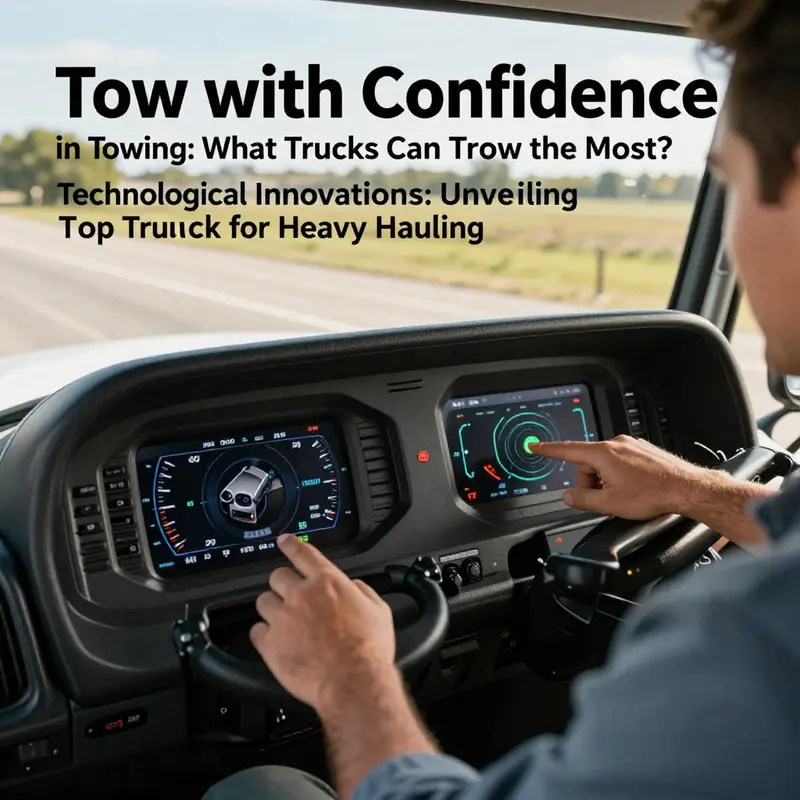
Tow limits are not a single number stamped on a door sticker; they are the visible tip of a submerged iceberg built from decades of engineering discipline. When people ask which truck can tow the most, they are really asking about how modern vehicles blend power, frame integrity, suspension finesse, braking capability, and electronic intelligence to move heavy loads with confidence. The answer depends on the class of vehicle, the duty cycle, and the conditions under which towing happens. If you pull a trailer across a smooth highway with light winds, a different set of engineering priorities applies than if you must drag a heavy load across rough terrain, through mud, or up a steep grade in cold, wet weather. Across the spectrum, though, the most capable machines share a common thread: a holistically designed system where materials science, powertrain technology, and stability control work in concert to translate raw force into controlled motion.
At the heart of this capability lies materials science. Engineers increasingly rely on high-strength steel and carefully chosen aluminum alloys to build frames that resist flex, twist, and fatigue without becoming prohibitively heavy. The advantage is twofold. First, a stiffer chassis holds its geometry under tension, which keeps the hitch aligned with the trailer, the braking system balanced, and the tires in contact with the road where they do the most work. Second, weight savings from advanced alloys freely translate into improved payload and towing capacity without sacrificing structural integrity. The tradeoff is not a simple matter of adding more material; it is a precise balancing act that requires accurate modeling of stress concentrations, torsional stiffness, and crash-performance criteria. In practical terms, the use of lighter yet stronger materials can improve overall towing efficiency by reducing unsprung mass, enabling better wheel control over uneven pavement, and creating more predictable handling as the trailer loads the rear axle.
Powertrain architecture is the next crucial pillar. Modern towing tech has moved beyond simple horsepower metrics toward an emphasis on torque delivery, driveline efficiency, and intelligent energy management. Diesel engines and high-torque gasoline mills were once the mainstay for heavy-duty towing, but the door is widening to include advanced hybrid and electric drivetrains in appropriate duty cycles. A torque-rich engine at low RPM can maintain momentum when a trailer weighs more than the nominal curb weight of the vehicle, which matters most when starting from a stop on an incline or negotiating long grades. Transmission design complements this by offering a broad gear spread and smart shift logic that keeps engine speed in an efficient envelope while not sacrificing the ability to deliver peak torque when it matters most. Modern drivelines also incorporate torque vectoring and trailer-specific control logic that tune how power is distributed between the front and rear axles and how braking energy is managed through the trailer’s connection. The result is a chassis that accelerates with authority, maintains highway stability when a heavy trailer is behind it, and reduces fuel burn compared with older, less technologically integrated setups.
An equally essential but sometimes overlooked component is stability control. The moment a heavy trailer is attached, safety systems must be recalibrated to cope with new dynamics. Electronic stability control has evolved from a passive assist to a proactive partner, continually assessing wheel speed, steering angle, yaw rate, and lateral acceleration. Trailer sway control, integrated braking, and advanced ABS strategies work together to damp oscillations and prevent the trailer from overpowering the tow vehicle’s steering and braking. Modern systems do more than brake individual wheels; they coordinate engine torque, braking force, and even wheel-lift dynamics to keep the whole combination moving in a controlled arc. This is especially important on variable surfaces—wet roads, gravel, or slick ramp starts—where even a small misalignment between trailer and tow vehicle can become a dangerous sway. The result is a towing experience that feels more like a well-orchestrated ballet than a brute-force pull, with the trailer responding predictably to driver input and road conditions.
From a practical standpoint, the spectrum of what counts as “the most” when towing is broad. On one end, specialized military and tactical platforms, designed for extreme duty cycles and harsh environments, push the upper envelope of gross vehicle weight and trailer-handling capability. The 5-ton class, for instance, represents a category of medium heavy-duty vehicles that are engineered to haul substantial payloads while traversing challenging terrains. These trucks are built with robust suspensions, heavy-duty axles, and drivetrains tuned for sustained torque under load. Their job includes moving not only the vehicle and its crew but also towing equipment, trailers, and other heavy assets across muddy fields, over rocky grades, and through mud or sand. While the detailed specifications vary with configuration and mission requirements, the underlying principle is the same: maximize stability and control across a wide envelope of operating conditions. In the field, these vehicles demonstrate how material choice, structural design, and drive system resilience translate into reliable towing performance when consequences of failure are measured in mission readiness rather than fuel economy.
On the other end of the spectrum are the heavy-duty consumer and commercial offerings designed for everyday reliability with real-world towing demands. Large, well-proportioned SUVs and full-size pickups are engineered to tow substantial loads on well-paved highways and through moderate off-road scenarios. These vehicles often cite towing capacities in the multiple thousands of pounds, with some configurations approaching or surpassing 8,000 to 10,000 pounds in best-case setups. The practical reality, however, is nuanced. The published rating typically reflects specific trailer configurations, hitch setups, payload allocations, and optimal environmental conditions. Real-world towing frequently presents higher loads on uphill stretches, varying wind conditions, varying road surfaces, and a trailer that changes the vehicle’s aerodynamic profile. Smart engineering recognizes this by offering a clear safety margin embedded in the rating, along with practical guidance on how to maximize efficiency and protect long-term driveline health. In daily use, drivers who routinely tow heavy trailers learn to stay mindful of tongue weight, hitch geometry, tire condition, and braking performance. They also learn to factor in road grade and ambient temperature, which influences engine and transmission performance as well as cooling requirements during prolonged climbs or hot, sunny days.
The middle ground—where most enthusiasts and fleet operators operate most of the time—seen in large, capable vehicles that blend performance with ruggedness. These machines are designed with a robust chassis, a suspension tuned to carry heavy loads without compromising ride quality, and a powertrain that offers both ample torque and energy efficiency. They can execute long highway pulls with the confidence of a much smaller vehicle while remaining capable in off-road scenarios that call for extra grip, approach angles, and ground clearance. This combination matters for those who tow boats, toy haulers, or work trailers to remote sites. The vehicle must convince the driver not through a single sensational number but through a steady, reliable performance across a spectrum of conditions. The most persuasive argument for these machines is not the peak rating, but the consistency of results over hundreds of miles of operation, in varied weather, with different trailers, and under repeated cycles of acceleration, deceleration, and turning.
A practical framework for assessing towing capability is to separate the theoretical rating from the practical, day-to-day performance. The theoretical rating represents the maximum load the system might manage under controlled, ideal conditions. The practical limit—what drivers encounter in real world—reflects the vehicle’s ability to sustain towing for extended periods, maintain stability during lane changes, and stop safely with a trailer in tow. For consumer-grade heavy-duty configurations, a common and reasonable benchmark is the ability to tow on the order of eight thousand pounds with a stable, well-balanced combination that leaves ample room for tongue weight and braking margin. When a vehicle truly approaches the ten-thousand-pound threshold, it often belongs to a subset of models that have been engineered specifically for high-tow operations, including enhanced cooling, reinforced frames, and transmissions tested for long, consistent duty cycles. In the most extreme consumer-facing scenarios, a few SUVs can approach or reach that 10,000-pound figure, but generally only with factory-approved configurations and carefully selected trailers designed to maintain a favorable tongue weight. Even then, the driver must respect the limits of the vehicle, the hitch system, and the road. The best way to understand the practical capacity of any given setup is to consult the manufacturer’s guidelines and to perform a measured, cautious evaluation under safe conditions.
Beyond the obvious, the future holds intriguing possibilities. The emergence of electric and hybrid powertrains promises new advantages for towing efficiency and control. Electric drivetrains deliver immediate torque, which can improve the feeling of acceleration when starting with a heavy trailer. The challenge lies in heat management and energy budgeting—towing for long distances can demand sustained energy draw, which in turn tests battery technology, thermal management, and charging strategy. Hybrid systems could bridge the gap by using electric assists to maintain torque delivery and by recovering braking energy to improve overall efficiency. For fleets that move frequently and cover long routes, the integration of telematics, predictive maintenance, and smart route optimization will become even more important. In this sense, the debate about “what can tow the most” expands to include not only peak ratings but how smart design choices, material selections, and powertrain configurations reduce operating costs, improve reliability, and preserve driveline health over the life of the vehicle.
Another essential piece of the towing puzzle involves the specialized tools and configurations that accompany heavy hauling. Military and tactical platforms that demand high GVWs rely on suspension tuning that accommodates substantial payloads while maintaining workable ride quality, even in rough terrain. These vehicles often employ heavy-duty springs, multi-leaf configurations, reinforced axles, and advanced dampers that work in concert with traction control devices to deliver composure even when the surface is loose or uneven. The goal is not simply to pull a large weight, but to do so with control, steering feel, and the ability to stop safely when needed. Commercial towing equipment, too, plays a critical role. Self-loader tow trucks, equipped with hydraulic systems and stabilizing outriggers, excel at recovering disabled vehicles on highways and in lots. Wheel-lift configurations, which use leverage to lift the front or rear of a vehicle, offer balance and maneuverability when space is tight, but they are constrained by the interface of the vehicle’s payload and the trailer geometry. These specialized tools enable towing with reliability when the mission is recovery or relocation, and they illustrate how the engineering of towing is not just about engine power but about the entire system set that supports safe, efficient operation.
If readers want to explore the practical implications for fleet operation, it is helpful to connect these ideas to everyday decision-making. For a fleet manager, the choice between pursuing maximum potential payload and seeking predictable, repeatable performance across a broad range of tasks is a strategic one. The most capable machines in this space are not just those with the highest rating on the window sticker; they are the ones whose operators experience consistent ride quality, reduced fatigue during long tows, and predictable behavior in difficult conditions. The engineering behind these outcomes includes careful selection of materials to withstand stress, a powertrain that can sustain heavy loads without overheating, and electronic systems that anticipate and dampen instability before it becomes a problem. All of this matters because towing is as much about safety and reliability as it is about outright power. To put it simply, the vehicle that can tow the most in controlled conditions might not be the same machine that offers the best real-world towing experience when weather, terrain, and trailer type shift daily demands. The informed choice, then, is to balance peak capacity with long-term durability, cost of ownership, and the driver’s confidence behind the wheel.
For readers who want to go deeper into practical insights and field-tested strategies, there is rich terrain to explore in related communities and resources. The Island Tow Truck Blog offers perspectives from practitioners who navigate the realities of towing in varied environments and climates. Their experiences underscore that successful towing hinges on more than maximum numbers; it depends on knowing how to pair the rig with the job, how to optimize tongue weight and hitch geometry, and how to plan maintenance to prevent performance dips over time. The blog highlights case studies and checklists that help operators think through real-world scenarios, from regular fleet operations to emergency responses, ensuring that the equipment remains reliable when it matters most. For readers who want to see practical, experience-based discussions that complement the theoretical perspective offered here, the link below provides a useful bridge between theory and field practice. The Island Tow Truck Blog.
In sum, the question of which truck can tow the most invites a layered answer. The most extreme towing capabilities live in specialized military-grade platforms and other heavy-duty working vehicles that are designed to haul and move large masses across difficult terrain. The modern consumer and commercial landscape, however, is no longer limited to horsepower alone. It is defined by an integrated approach—one that uses advanced materials to strengthen the frame, sophisticated powertrains that deliver torque efficiently, and electronic systems that keep the entire rig stable as weight and load are dynamical partners in motion. The most capable machines are the ones that can sustain high loads without sacrificing control or safety, no matter the environment. And while the top-end figures for the most extreme applications will always belong to specialized platforms, the practical reality for most drivers is that a well-configured, carefully engineered setup can deliver substantial towing capability with reliability, efficiency, and confidence for the miles ahead. For those navigating the decisions around fleets, personal use, or occasional heavy-hauling projects, the path to maximizing towing performance lies in understanding how all the pieces fit together and in choosing configurations that reflect both the intended tasks and the realities of road and weather conditions. External resources on the broader engineering landscape of heavy towing, including military applications and vehicle system integration, can offer further context for readers seeking a deeper technical grounding. https://www.defense.gov/Explore/Spotlight/Army-Vehicles/
Final thoughts
Choosing the right truck for towing is multifaceted, influenced greatly by the intended use and specific performance needs. The Ford F-150 Raptor emerges as a powerful option, recognized for its ability to seamlessly blend off-road prowess with exceptional towing capabilities. By understanding comparative towing capacities among various models, along with the leading-edge technologies enhancing towing performance, commercial operators can make informed decisions that suit their unique operational needs. Investing in a truck isn’t just about the immediate capacity—it’s about understanding how the right vehicle can evolve with fulfilling diverse tasks over time.