Navigating the world of vehicle recovery within Grand Theft Auto V is crucial for a range of service operators, from auto repair shops to commercial fleet managers. With a bustling island economy, understanding how to efficiently utilize a tow truck can enhance your operations and enhance customer satisfaction. In this comprehensive guide, we will delve into the practical steps of finding and using a tow truck, the intricate hooking process, strategic driving while towing, and effective tips tailored for GTA Online. Each chapter aims to equip you with the knowledge to utilize towing efficiently, ensuring a seamless recovery experience that supports your business setup or personal gameplay.
Tow Truck Horizons: Finding, Entering, and Mastering the Tow in GTA 5
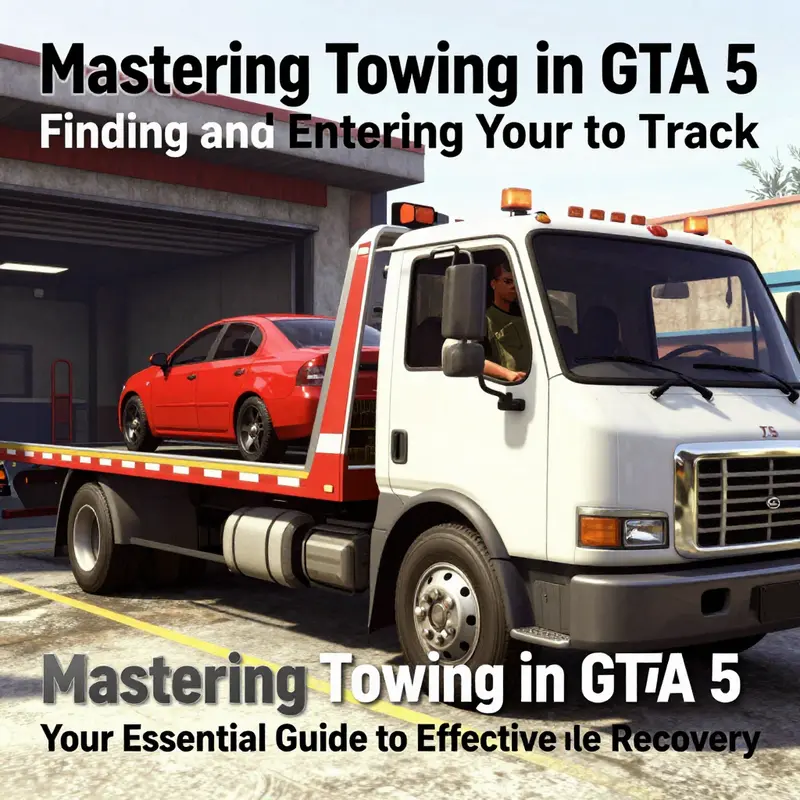
In the sprawling, neon-lit avenues of Los Santos, a tow truck is more than a vehicle with a crane; it’s a tool that reshapes the way you interact with the city. The moment you learn to locate, enter, and wield its hook with confidence, you gain a new velocity of play. This chapter follows that path from a chance sighting of a crane arm on the street to the precise, almost ceremonial sequence of hooking, lifting, and towing a car without a stumble. It’s a journey that begins with a simple question: where do you find your tow truck, and how do you make it yours in both Story Mode and GTA Online? The answer threads through the urban maze, across different game modes, and into your overall approach to dynamic, responsive driving where weight and balance matter as much as speed. The crane’s reach is a lever for strategy, not just tools. When you respect its rhythm, towing becomes a reliable extension of your mission objectives, whether you’re corralling a stray ride for a mission, transporting hashmarked cargo, or simply staging a late-night recovery run after a caper goes sideways.
To begin, you must first locate the tow truck. In the city’s daily tempo, they pop up in expected places—near garages and salvage yards—and in more choreographed moments during specific missions that feature stowaway cars and roadside recoveries. In the Online world, you have a different rhythm: the Interaction Menu becomes your first tool for swift deployment. If you’re playing as a CEO or an MC President, you can navigate to Vehicle > Service Vehicle > Tow Truck, and with a couple of taps, a tow truck materializes near you. That instant spawn is a reminder of how multiplayer mechanics can shift the tempo of your workday in Los Santos, turning the search from a scavenger hunt into a rapid deployment. The moment of ignition—your first press of the button that brings the crane to life—feels like reclaiming a portion of the map for your own purposes.
Once you’ve tracked down a tow truck, the real deliberate craft begins: entering the vehicle and preparing the crane for action. On PC, you approach the cab and press the enter key—commonly labeled as “E” in the control lexicon of the game—so you can take your seat and survey the controls from the driver’s vantage. The interior is not merely a cabin; it is a cockpit for a specialized operation. From this vantage, you learn the language of the tow system—the way the crane, or hook, responds to your input, and how the geometry of your vehicle interacts with the front bumper of the target car. It’s a choreography of proximity and alignment, where the hook’s reach is your measure, and your patience is the engine’s rhythm.
The first manual step is to lower the tow hook. On PC, this is the moment you become aware of the hook’s presence at the back of the truck, a metal arm that wants to bite into the city’s surface as you close in on your quarry. Pressing Ctrl lowers the hook with a soft, satisfying click, and the crane arm begins its descent toward the road. The hook is not a reckless instrument; it’s a calculated tool that seeks the vehicle’s neutral front end and sits in the best axis for engagement. You proceed with measured speed, moving forward slowly and keeping the hook centered in front of the car you aim to tow. The hook’s auto-engagement is a practical safeguard; when it lines up with the vehicle’s front end and is within a certain proximity, it latches on, almost as if the city itself has acknowledged your approach and granted you access.
A key element of the process—one that becomes second nature with practice—is the positioning of the tow truck relative to the target vehicle. You want the rear of your tow truck to be in a comfortable alignment with the front bumper of the vehicle you intend to haul, and you keep your speed intentionally slow. This is not a race; it’s a careful capture that minimizes momentum transfer to the towed car. It’s easy to underestimate how much a towed vehicle can swing or shift during turns, especially when the load is heavy or unevenly distributed. The trick is to approach with patient micro-adjustments, steering with small inputs, and using the truck’s length as an additional cue for alignment. The moment the hook is in place and secured—autolatching in a short range—your next step is to lift the front end of the target vehicle off the ground.
Raising the hook is the second disciplined act of the procedure. Pressing the designated key—Shift in many setups—elevates the hook and lifts the upturned front end of the vehicle. The towed car becomes suspended and ready to be moved. The weight distribution shifts, and your awareness shifts with it. Now you’re navigating Los Santos with a load that changes the physics of your handling. The car’s mass behind you adds a new cadence to every turn, every brake, and every sudden maneuver. You’ll feel a subtle swing if you push too hard on a corner; it’s not a sign of failure but a reminder that you’re operating with a living, shifting cargo, and the city has its own plan for how you’ll deliver it.
Driving with a towed vehicle demands a calm tempo. The chain of control changes with the added mass behind you. Acceleration takes a little longer, braking requires anticipation, and cornering must be executed with gentleness. The recommendations aren’t about fear; they’re about respect for the physics of the tow. Your rearward extend can cause instability, especially under abrupt lane changes or sharp curves. You learn to anticipate the hook’s momentum as a partner in your drive, not as a force threatening your control. The result is dependable towing that can be integrated into missions or spontaneous recovery jobs alike. In this sense, the tow truck becomes a trusted ally rather than a one-off tool—an extension of your planning and execution when the city presents you with a vehicle that needs a steady hand.
Releasing the hooked vehicle completes the cycle. When the moment comes to drop the car, you simply press Ctrl again to lower the hook. The released vehicle will descend with the typical caution of any dropped load, and depending on terrain or slope, it may settle into a resting position that requires only a gentle nudge to straighten it. The precision of release matters as much as the engagement; a clean, controlled drop preserves the towed vehicle’s condition and ensures it remains drivable once you set it down. The cycle—from hook to lift to tow to drop—becomes a reliable loop that you can repeat in a few confident passes.
Beyond the basics, there are several practical nuances worth holding close. The first is the importance of position after engagement. A tow truck can attempt to latch onto the front of a vehicle only when the hook is nearly aligned with the target’s front end. A slight misalignment can thwart engagement or lead to an awkward catch that complicates the lift. A common tip is to keep the tow truck slightly behind the target and use incremental, fine-adjustments to close the gap. This avoids the jarring misalignment that can occur if you race toward the vehicle and misread the geometry of the bumper and hook. A calm approach pays off in a smoother experience, reducing the risk of the hook slipping or the pulled car becoming unstable mid-tow.
Within the broader GTA experience, you also gain an appreciation for how the tow truck plays into different modes and scenarios. In Story Mode, your experience will center on narrative opportunities—recovery tasks that may arise during pursuit sequences or during a chaotic scramble to move a car away from a risk zone. In GTA Online, the mechanics are amplified by the ability to spawn a tow truck around your location, ensuring you’re never far from a heavy crane when a client needs a quick recovery. The online mechanic effectively cuts down the search time and places the tool in your hands where your crew can benefit from its capabilities. As you move between sessions and missions, your approach to towing evolves. You learn to map the city’s road network according to tow routes, anticipate potential traffic hotspots, and plan for safe drop-off points so that the recovered vehicle returns to service without drawing unwanted attention or causing a scene on a busy street.
There’s more to the tow truck than simply lifting a car. As you gain experience, you’ll notice it can be a versatile platform for broader tasks. The hook system is capable of moving other heavy, lightweight cargos that appear in particular mission contexts—cargo containers, oil tanks, or even parts of larger transport crafts, depending on the game’s missions and events. This is not a recommendation to perform dangerous stunts in real life, but a gameplay note about the scale of utility the tow truck affords you within the GTA sandbox. The hook acts as a universal grabber in many situations, and the more you learn to stage your approach—where you position, when you lift, and how you drive with a load—the more you’ll see how the vehicle supports your longer-term objectives, whether that means clearing a path for a mission, repairing a roadside snag, or providing a reliable recovery option for your crew.
As you refine your technique, it’s helpful to consider how tow operations fit into a broader strategy for approaching missions and spontaneous tasks. In addition to the operational mechanics, there is a tactical discipline: plan your approach, control your speed, and maintain situational awareness. How you drive with a towed vehicle, how you navigate turns, and how you release at a designated drop-off point all contribute to the efficiency and success rate of your tow operations. A measured pace allows you to avoid accidents, preserve the towed vehicle’s integrity, and deliver on your commitments with minimal interference from bystanders or traffic. In many ways, mastering the tow truck mirrors mastering the city itself—the more you internalize its rhythm, the more you can bend your actions to align with the city’s tempo rather than fight against it.
For players seeking a quick reference, there’s a practical shorthand that captures the essential steps without sacrificing precision. Locate the tow truck in the world or spawn one through the Interaction Menu if you’re Online and have the right in-game role. Enter the cab and take control. Lower the hook with Ctrl, then slowly move toward the target vehicle and align the hook with its front. When the hook latches, lift with Shift to elevate the car, then drive carefully to your destination. Release by pressing Ctrl again. The polish comes from practice—the confidence you gain as you repeat the sequence until the steps are almost reflexive. The more you practice, the more you’ll notice how you can execute clean captures, smooth lifts, and seamless releases even in the unpredictable flow of traffic and mission-driven pursuits.
To weave this knowledge into a coherent workflow, consider the following integration into your play sessions. First, map out the common tow scenarios you expect to face in your game: mission recoveries, roadside restarts, or fleet-style recoveries for a roleplay or crew scenario. Then, choose a tow truck location you can reliably return to and treat as a base of operations. In GTA Online, use the convenient spawning option to shorten the route from your current position to the vehicle’s point of deployment. In Story Mode, rely on the world’s natural layout—garage districts, salvage yards, and service areas—as your network for triaging a recovery. The key is consistency of approach: always verify hook alignment before advancing, always maintain a conservative speed when hauling, and always plan the release point to ensure the towed vehicle lands exactly where you intend. With this approach, the tow truck becomes not just a tool but a trusted partner in your broader GTA 5 strategy, capable of smoothing over the city’s rough patches and turning the chaos of the moment into a controlled, purposeful outcome.
For readers who want to explore broader fleet and emergency readiness concepts that complement this chapter, there is a broader conversation to engage with. The linked resource below, drawn from a resource hub dedicated to island fleets, offers deeper thinking about how emergency response strategies can scale with a moving fleet and how rapid deployment aligns with fleet management principles. While the focus here is on a virtual toolkit, the underlying discipline—timely access to the right asset, careful maneuvering under load, and disciplined decommission or redeployment after use—translates well into any planning process that requires a flexible, capable response capable of meeting unpredictable demands. You can explore that perspective here: https://theislandtowtruck.com/essential-fleet-emergency-response-strategies/. In the broader game ecosystem, this mindset helps you view towing not as a solitary activity but as a link in a chain of operations that keeps your crew efficient and your recovery times predictable.
To sum up, the path from discovery to deployment of a tow truck in GTA 5 is a layered mastery of space, timing, and control. It begins with locating the right vehicle, proceeds through the precise ritual of entering and engaging the hook, and culminates in the smooth, deliberate operation of lifting and towing. Respect the hook’s geometry, stay mindful of weight, and maintain a steady tempo even as the city around you roars with traffic and pursuit. If you’re playing online, don’t forget to leverage the in-game tools to summon your tow truck when you need it, ensuring that you remain a reliable partner to your crew as you move through the complex tapestry of missions and opportunities the online world provides. The tow truck is not merely a means to an end; it is a doorway to a broader, more controlled command of the map, a way to bend Los Santos to your will with the patient power of a well-executed hook.
External guidance can also illuminate nuances that emerge from real-world mechanics translated into the game’s physics. Official resources provide a baseline for the mechanics, while community guides often reveal practical tips drawn from extensive play. If you’re curious to see the official support material that details how to use a tow truck in GTA 5, you can consult Rockstar’s guidance here: https://support.rockstargames.com/hc/en-us/articles/360052998792-gta-5-how-to-use-a-tow-truck. This external reference serves as a companion to the experiential learning you gain from hands-on play and reinforces that the core idea remains constant: approach, engage, lift, move, and release with precision and care.
In closing, the act of finding and entering a tow truck in GTA 5 is the first step in a broader arc of competence that transforms how you interact with the city. As you grow more confident in hooking, lifting, and towing, you’ll notice a natural increase in your efficiency on the road and a greater sense of control when circumstances demand quick recovery or careful repositioning of vehicles. The crane’s arc is your instrument, but the command you bring to it—your timing, your patience, your situational awareness—defines the outcome. The city rewards steady hands and disciplined planning, and the tow truck rewards you with reliability, a new lane of mobility, and a fresh set of strategic possibilities that extend far beyond the next mission. In that way, learning to find and enter your tow truck is not a one-off skill but a doorway to a more deliberate, capable, and satisfying GTA 5 experience.
External Resource Note: For official guidance on towing mechanics, refer to Rockstar’s support article linked above. For related fleet and emergency-response perspectives that complement this topic, consider the island fleet resource mentioned earlier.
Hook, Align, Lift: Mastering Tow Truck Tactics in GTA 5
When you first slide behind the wheel of a GTA 5 tow truck, you might treat it like a simple fetch-and-tiddle mission vehicle. But the tow truck is more than a tool for pulling cars from the curb. It’s a device of rhythm and precision, a mechanical chess move that rewards patience, planning, and a steady hand. In the open world of Los Santos, every vehicle has a story, and the tow truck’s story is told through the chain of a hook that latches, the quiet lift that follows, and the careful navigation that keeps a tailed car from swinging into danger. The thrill isn’t just in moving a car from one point to another; it’s in understanding how the truck’s geometry interacts with weight, momentum, and road texture. The operator’s intuition grows from repeated practice, from learning to read distance, front bumper angles, and the subtle pull of gravity that can turn a gentle tow into a dramatic misstep if you rush it. This chapter takes you through that hooking process with a focus on how to approach it, how to align the tow truck with the target vehicle, and how to move with confidence once the hook takes hold. It’s a craft that rewards restraint as much as skill, and in the world of GTA 5, restraint is often the difference between a smooth haul and a chaotic tumble that leaves you chasing the towed car across a cul-de-sac. The steps aren’t a rigid checklist, but a shared sense of timing—an understanding that the hook’s release or capture hinges on a tiny alignment, a careful throttle, and a calm decision at the wheel. As you read, keep in mind that the mechanics you practice in the game reflect a broader principle: the best tows happen when you anticipate the vehicle’s response under load and you adjust your course before its weight pulls you off line. The goal is not merely to lift and drag but to integrate the tow into your driving style, so it becomes a seamless extension of your control rather than a disruptive errand. You’ll discover how to locate a tow truck, how to enter and position yourself, how the hook latches, and how to maintain control through the journey. You’ll also encounter the practical nuance that real-world tow operators know well: a front-end pull is most stable when the vehicle is centered and the line of force remains near the truck’s axis. In GTA 5, that same principle guides your eye and your fingers in a world where a few centimeters can translate into a successful capture or a misaligned drag. For those who want to push experimentation further, the game rewards you with creative stunts that aren’t necessarily practical in the real world, yet they illuminate the same physics at work. If you’re curious about where a tow truck lives in the city map, or how it can appear during a mission or a random street sighting, you’ll notice that Los Santos rarely gives you a straight path. It asks you to time your approach, to measure your distance, and to let the hook do its work with minimal interference. It’s a small performance, and like any performance, it improves with rehearsed, deliberate practice. The more you tow, the better you become at reading those cues—the slight drag as the hook nears the target, the moment the clunk confirms a latch, the gentle rise of the front end as weight transfers. It becomes a choreography, a predictable sequence that, once learned, frees you to focus on your surroundings—on traffic, pedestrians, and the occasional obstacle that can turn a clean lift into a collision. In the end, mastering the tow truck is less about brute force and more about becoming attuned to the flow of weight and leverage in a digital cosmos that mimics the physics of the real world. This awareness translates into smoother missions, cleaner hauls, and a more satisfying impression of control when you’re guiding a car through tight streets or towing it across a bridge with a wary breeze that could toss the cargo if you overstep. Across all modes of play, the essential skill remains the same: approach with intention, align with care, hook with patience, and move with the calm assurance that comes from practice. When you adopt that mindset, the act of hooking stops feeling like a labor and starts feeling like a quiet, practiced art. If you want to see how a tow truck fits into broader gameplay—whether you’re navigating a heist or simply solving a transportation puzzle in the open world—keep the knowledge here in mind and let it color every subsequent tow you perform. For enthusiasts who want a broader window into the industry behind these kinds of vehicles, there is value in following related discussions and guides that bring real-world accuracy to this virtual mechanic. The Island Tow Truck blog offers a doorway into those conversations and can provide additional context on the rhythm and safety considerations that tow operators emphasize in the real world. You can explore more at The Island Tow Truck blog.
The hooking process in GTA 5 unfolds as a sequence that rewards steady hands and a patient approach. Locate the tow truck, which you might encounter near garages, salvage yards, or during specific missions that introduce towing as part of the narrative. In the story mode, you’ll often discover these vehicles parked in accessible spots, waiting for a driver who understands that the first move is not a reckless rush but a measured, deliberate approach. In GTA Online, the landscape expands with additional options for spawning a tow truck through the Interaction Menu when you’re operating as a CEO or MC President. This means you can tailor your towing operations to a business plan or a creative objective, from collecting abandoned vehicles to staging stunts that require a line of sight and a well-timed drag. Once you’re inside the cab, the world of towing becomes a set of tactile cues rather than a series of loud, generic moves. The control scheme on PC anchors the process in a concrete way: you lower the hook with Ctrl, you back the truck toward the target at a careful pace, you rely on the automatic latch when you’re properly aligned, and you raise the hook with Shift to begin the haul. The simplicity of this control set belies the finesse required to execute it without upsetting the balance of the tow and the vehicle behind it. The hook’s automatic latch is a crucial moment, a moment of quiet certainty when you hear the characteristic clunk and feel the system engage. That sound is your cue to begin lifting, to start the transfer of weight, and to monitor the line as the target vehicle rises from the ground. The trick here is to avoid over-arming the hook or pulling too hard too soon; to do so can topple the alignment, causing the vehicle to slip or swing. The more you practice, the better you become at judging the distance to the car’s bumper and the angle needed for the hook to catch without bumping the target or clipping another object. As you gain confidence, you’ll notice how minor adjustments—slightly easing left or right, nudging the truck forward by a few centimeters, or easing off the throttle to keep the load stable—become the difference between an effortless tow and a collision that sends dust and sparks into the air. When it’s time to release, you simply press Ctrl again to lower the hook. If you’re on a slope, be aware that the towed vehicle may roll after release, so you’ll want to plan for a brief pause after you disconnect and before moving away. The release is quick, but the decision to release in a safe area is what preserves the tow’s success. In situations where the target vehicle isn’t catching, you adjust by small lateral movements, fiddling with the tow head’s line to coax the latch into position. The auto-latch is designed to respond to proximity and alignment, so you’ll often hear that reassuring click after the hook finds its path. Some players prefer to approach from a slightly behind-and-right angle, arguing that this offset gives a gentler line of pull and makes it easier to keep the target aligned as the weight comes on. Others swear by a more direct, head-on approach that gives a faster engagement but demands steadier hands to keep the bumper from striking the truck’s chassis. In practice, either method works if you stay slow, stay observant, and keep your focus on the front bumper’s relationship with the hook’s arc. The turning radius of the tow truck becomes an important factor as you travel with a load. Sharp turns can cause the car to swing outward, which can lead to a crash, especially if you’re navigating through an intersection or a narrow alley. The safest route is a measured pace through corners, avoiding abrupt inputs, and choosing longer, smoother arcs rather than sudden pivoting. If you find yourself towing through a crowded area, you’ll want to keep additional space in mind, using the environment—toestablish a corridor of safety around your line of pull. In the grand scheme of GTA 5, towing isn’t simply about capturing a vehicle and dragging it from point A to point B. It’s a test of spatial awareness, of anticipation, and of how well you read the dynamic response of weight on a floating platform in a city that’s always moving. With time, you’ll learn to anticipate how a car’s shape and mass will interact with the truck’s geometry, and you’ll begin to plan your path ahead of time. The end result is a smooth, controlled tow that feels less like a stunt and more like a practiced routine. And when your pride comes from a clean lift rather than from a loud, improvised crash, you’ll know you’ve earned the reputation of someone who treats the tow truck as a serious instrument in the GTA 5 toolbox. For players who want to place their practice into a broader industry framework, it can help to look at real-world resources that discuss the mechanics and safety protocols of towing. A deeper dive into tow truck operations and their industrial applications can broaden your understanding of why these maneuvers feel so natural when you perform them in a digital world. External resources can complement the game’s sandbox by providing grounding in the fundamentals of weight transfer and secure attachment. If you’re curious to explore these real-world parallels, consider reviewing the Tow Truck Boom Overview: Composition, Standards, and How It Benefits Industrial Projects, which offers a concise, technical perspective on how boom-based towing operates in practice. You can access this external reference at https://www.towtruckbooms.com/overview.
In addition to the mechanics, there are practical notes that can help you translate your in-game prowess into more reliable outcomes. Practicing in open or empty areas, away from traffic and pedestrians, allows you to calibrate the exact distance at which the hook engages without the pressure of a crowded street scene. If you’re playing GTA Online, you can leverage the Interaction Menu to spawn a tow truck near your base, saving you time and letting you test hoisting and release cycles in a controlled loop. That convenience is a useful complement to the on-street lessons you’ll receive by trial and error, where every failed latch becomes a chance to refine your approach. The more you tow, the more you begin to notice the subtler cues—the gentle drag as the hook lowers toward the target vehicle, the moment of contact when the latch snaps, and the shift in momentum as the car rises behind you. It’s easy to underestimate the value of those cues, but in a world where a split-second decision can alter your trajectory, paying attention to the small signals becomes a habit that pays off in smoother, safer tows. This is also why many players develop a routine around hooking: they position with the bumper at a precise distance, then pause to center their line, then proceed with the lowering and hooking sequence. A well-tuned rhythm reduces the likelihood of misalignment, prevents accidental collisions, and ensures that the towed vehicle remains secure throughout the journey. The technique is simple at its core—a series of controlled, measured actions—but its mastery lies in the habits you form and the attention you give to the line of pull as you move through Los Santos. As you continue to practice, you’ll find that towing becomes less about forcing the front of a car into your hook and more about guiding the weight exactly where you want it to go. The result is a reliable, repeatable process that you can apply across many missions, whether you’re rescuing a stranded vehicle, recovering a car from a curb, or staging a stunt that requires a car to travel along a route with you in control. The journey from novice to adept tow operator in GTA 5 is not just about the mechanical steps. It’s about cultivating a sense of spatial awareness, about reading the city’s geometry, and about choosing the right moment to lift, hold, and release. That blend—technical skill married to situational judgment—is what makes the hook feel like a natural extension of your driving instincts rather than a separate task added to your gameplay. If you’re ready to take your towing to the next level, remember that the core is to stay patient, stay precise, and stay mindful of the load you’re carrying. The hook is your instrument, the target vehicle your canvas, and the road your stage. By embracing the hooking process as a deliberate, considered practice, you’ll transform ordinary tows into a streamlined operation that fits seamlessly into any GTA 5 scenario. For ongoing exploration and community insights, readers can follow related content on The Island Tow Truck blog.
External reference: https://www.towtruckbooms.com/overview
Tow Truck Mastery in GTA 5: Hook, Haul, and the Fine Art of Safe Towing in a Virtual City
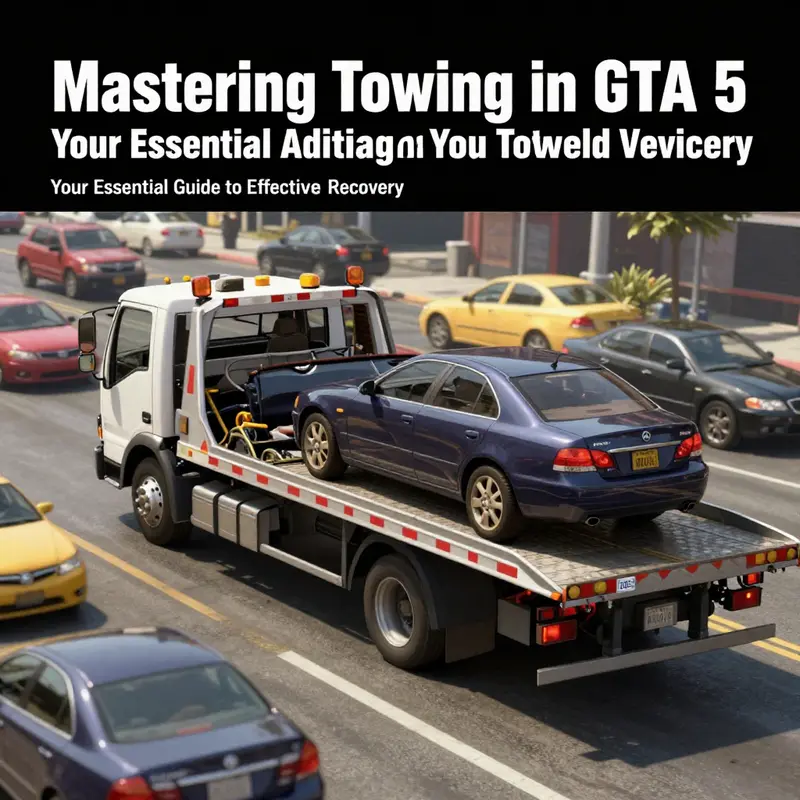
The city in GTA 5 is a living set, and its alleys, garages, and salvage yards can become stages for an unspoken craft: towing. A tow truck isn’t just a vehicle for transportation; it is a tool that reshapes missions, rescues, and even the tempo of a heist or a routine pickup. Mastery here means understanding the rhythm of hooking, lifting, and steering with a load that feels composed rather than impulsive. Whether you’re moving a stranded coupe along a sunlit highway or repositioning a stubborn courier for a pickup mission, the art of towing in this digital metropolis rests on precision, patience, and a touch of foresight. In GTA Online, tow operations can also align with CEO or MC leadership, letting you deploy a tow truck as part of fleet logistics or emergency response within a dynamic player-driven ecosystem. The practical benefits are clear: fewer roadblocks, more control over recovered vehicles, and the ability to stage operations with a measured hand rather than a rush of adrenaline. The core steps—sourcing the tow truck, lining up your target, deploying the hook, lifting, and guiding the vehicle to a safe stop—are simple in theory and deceptively tricky in practice. As with any specialized tool in a sprawling sandbox, the value comes from knowing how to adapt the technique to different cars, terrain, and circumstances, from a quiet backstreet recovery to a high-speed relay across a congested freeway.
To begin, the first choice is where to obtain the tow vehicle. In the game world, tow trucks are parked near garages, salvage yards, and certain mission nodes, the same places where players learn the lay of the land and the pulse of the city’s supply chains. In some missions and updates, the tow truck becomes a mission-critical asset, and its availability shifts with the flow of activities in Los Santos. In GTA Online, there is a dedicated mechanic for a quick spawn: the Interaction Menu, under Vehicle, then Service Vehicle, and Tow Truck. This option spawns a tow truck near your location, smoothing out the process for players who want to jump straight into operations without wandering the map in search of a vehicle. The practical difference between playing solo and playing with others is often a matter of tempo and risk management. In a crowded session, spawning near your crew can prevent wasteful detours and protect your assets during a tense moment of pursuit or a salvage run. Regardless of the mode you choose, the essential workflow remains the same, anchored by a straightforward sequence and a disciplined approach to control and balance.
Once you’re in control of the tow truck, the arrangement of space matters almost as much as the placement of the hook. The vehicle you want to tow should be approached slowly and deliberately, with your rear bumper aligned to the target’s front end. The goal is to position the tow truck so that the hook sits directly in front of the other car, with the truck a touch behind and slightly to the side. This margin—just enough for fine adjustments—prevents awkward contact and helps the hook engage smoothly. The moment you feel the geometry line up, you’ll deploy the hook. On PC, that means pressing and holding the Ctrl key to lower the hook, sometimes described in community notes as the act of deploying the boom or crane arm from the back of the truck. The hook doesn’t require a flashy animation to confirm its engagement; it latches automatically when it is within a short range and in direct alignment with the car’s front. If, for any reason, it doesn’t latch on the first pass, ease off the forward motion a fraction and nudge the vehicle again. Gentle, incremental movements—tiny course corrections rather than large, sweeping turns—are the difference between a clean engagement and a frustrating tease.
The moment the hook catches, the next stage unfolds with equal attentiveness: lifting. Press Shift to raise the hook and hoist the front of the target vehicle off the ground. The towed car will now ride on the truck as if it were a delicate payload. This is where tension becomes a factor; the weight of another vehicle shifts the dynamics of your tow, affecting acceleration, braking, and cornering. The load tends to swing, especially when exiting a lane into a sharper curve or navigating a dip in the road. Pace and control are your allies here. The instinct to push through a turn will only compromise the stability of the vehicle you’re towing. Instead, adopt a measured sequence: reduce speed before a bend, execute the corner smoothly, then gradually reintroduce throttle as you straighten out. If you need to reposition for a better angle or to avoid an obstacle, Tiny adjustments with the wheel and a slight pull back on the accelerator can keep the towed car aligned without creating dangerous strain on the hook or the carrier.
With the hook engaged and the load secure, you’re ready to move. Driving while towing in GTA 5 shares the same core physics as real-world towing—weight distribution, momentum, and the friction of tires on pavement must be managed with care. You’ll find that the tow truck handles differently when towing than when it’s empty: turns feel slower to respond, braking demands a lighter touch, and the vehicle’s center of gravity shifts. The reward for patience is stability: a smooth exit from a gas station, a steady climb over a small hill, or a careful glide through a dense block of traffic where precision matters more than raw speed. In practice, think of your towing route as a choreography rather than a sprint. Plan the path, anticipate where the towed vehicle might push against the truck’s frame, and time your accelerations to keep the load aligned with the road. If you encounter a slope that might cause the towed vehicle to roll back or shift, a conservative approach—maintaining behind-the-target positioning and small, methodical adjustments—will preserve both your tow and the target vehicle.
Releasing the towed vehicle is as important as hooking it. When you’re ready to drop the car, lower the hook by pressing Ctrl again. A clean release is a matter of timing and the same gentle precision that guided the hook’s engagement. If you’re on a slope, the cargo may roll away, so a moment of attention to the terrain just before the release is wise. In many tested scenarios, you’ll find that the most reliable release occurs when the hook is lowered and the truck is in a stable, straight trajectory. If the vehicle doesn’t disengage as expected, a small backward movement followed by another release can solve the issue without jostling or abrupt maneuvers that could destabilize the load.
In the practical rhythm of GTA Online, towing becomes a fixture of fleet and business operations. For a CEO or an MC President, the tow truck can be an instrument for managing a mobile hitching service, relocating damaged or stolen vehicles to safe storage, or supporting an on-demand logistics chain during a heist or mission. The technique remains the same, but the context adds new layers of decision-making: you must consider your spawn time, the proximity to your target vehicle, the likelihood of interference from other players, and the speed at which you can safely complete the task. The intent behind towing in this setting is not simply to move a car from point A to point B; it is to do so with a blend of speed and care that preserves the integrity of both vehicles, minimizes risk to you and the tow truck, and integrates smoothly with the broader goals of your online organization. The methodical, almost surgical approach to hooking, lifting, and towing is what makes this skill transferable from casual play to a more strategic, mission-driven mode of operation. The more you practice, the more you’ll notice subtle cues: the exact height at which you need to raise the hook to avoid scraping the bumper, the minimal adjustments required to keep the target aligned with the truck while negotiating a bend, and the split-second timing that ensures the hook latches cleanly when the target car is tucked into position.
A practical tip that often translates to tangible gains is to work with a slight offset—keeping the tow truck a touch behind the target vehicle rather than directly in line. This small bias helps maintain visual contact with the bumper and frame, making it easier to gauge whether the hook is properly aligned before you lower it. It also reduces the chance of accidental contact with the target car during initial positioning. And when in doubt, slow and steady wins the race: slow speed will protect both vehicles, prevent detachment, and give you more time to adjust if something looks off. For those who want to explore fleet and emergency-response strategies in greater depth, the community offers a trove of insights and extended guidance that can be found in resources dedicated to towing and vehicle recovery in island environments, such as detailed blogs and guides. See The Island Tow Truck blog for practical, experience-driven tips and scenarios that expand on the concepts covered here.
It’s worth noting that the real-world frame of reference for tow-truck operations can broaden your understanding of the in-game mechanics. While GTA 5 provides a stylized physics model, the fundamentals of hooking, lifting, and balancing a load echo standard industry practices. A comprehensive resource that dives into the technical specifications and industrial applications of tow trucks—beyond the gaming context—offers a useful bridge between virtual operations and real-world standards. For readers seeking a more technical perspective, such authoritative material can deepen appreciation for the fidelity and constraints you encounter in-game. External resources provide a broader lens through which to evaluate the mechanics described here, offering a grounded contrast to the streamlined, game-friendly approach of GTA tow operations.
As you continue to practice, you’ll begin to notice how this skill intersects with other facets of GTA 5’s world. For instance, in story mode, towing can unblock a sequence that would otherwise stall a mission, or it can be used to reposition a stuck vehicle during an improvised plan. In GTA Online, the tow truck becomes part of a larger toolkit for fleet logistics, where reliability and timing can influence your organization’s success in missions, client contracts, or even casual roles within a shared sandbox. The technique’s elegance lies in its simplicity: a hook, a lift, a careful pull, a controlled release, and a patrol back to nearby lanes with the towed vehicle riding low and stable behind you. The repetition of these steps—refined through patience and practice—transforms a basic mechanic into a dependable capability that expands your playstyle rather than constraining it.
For players who want to explore richer contexts, consider how towing intersects with mission design, roleplay scenarios, or community-driven challenges. The practice can evolve into a routine where you routinely pick up damaged vehicles after a chase, deliver salvaged cars to specific garages to earn bonuses, or coordinate with teammates to optimize a multi-vehicle recovery operation. The more you lean into the subtleties—the precise alignment of the hook, the pace of your lift, the stance of the truck as you navigate turns—the more your towing will feel like a natural extension of your driving and strategic instincts within Los Santos. And while the in-game controls are straightforward, the artistry comes from knowing when to push and when to pause, when to accelerate and when to ease off, and when to trust your senses to sense the moment the hook binds and the vehicle will ride safely behind you.
To summarize the practical thread of this chapter: locate or spawn a tow truck, align the hook with the target car, lower the hook to engage, lift with care, tow with controlled momentum, and release gently when you’re ready to set the vehicle down. In all these steps, the emphasis is on smooth, incremental movements and a respect for the balance of forces at play. The result is not just a successful tow, but a demonstration of technique that can elevate your gameplay experience—from a routine extraction to a well-executed, fleet-minded operation in the heart of Los Santos. For those who want to carry this knowledge forward into broader fleet management and emergency-response planning, there are practical resources that extend beyond the game, inviting you to examine how tow trucks function in the real world and how those principles translate into a virtual practice adapted for a fictional city that feels almost real with every careful maneuver. The chapter on towing in GTA 5 thus becomes a bridge between playful exploration and disciplined technique, a reminder that even in a sandbox, mastery comes from practicing the basics with intention and precision.
External reference: For a more technical, real-world perspective on tow-truck standards and industrial use beyond gaming contexts, see Tow Truck RC Car Standards, Composition, and Industrial Use at https://www.automotiveengineering.com/tow-truck-rc-car-standards-industrial-use/.
Internal resource note: For readers seeking fleet-focused, community-driven insights and practical guidance on tow operations in a shared online environment, a broad collection of perspectives can be found at The Island Tow Truck blog, which offers articles and scenarios grounded in hands-on experience: The Island Tow Truck blog.
Mastering GTA 5 Towing: How to Hook, Haul, and Control a Tow Truck in GTA Online
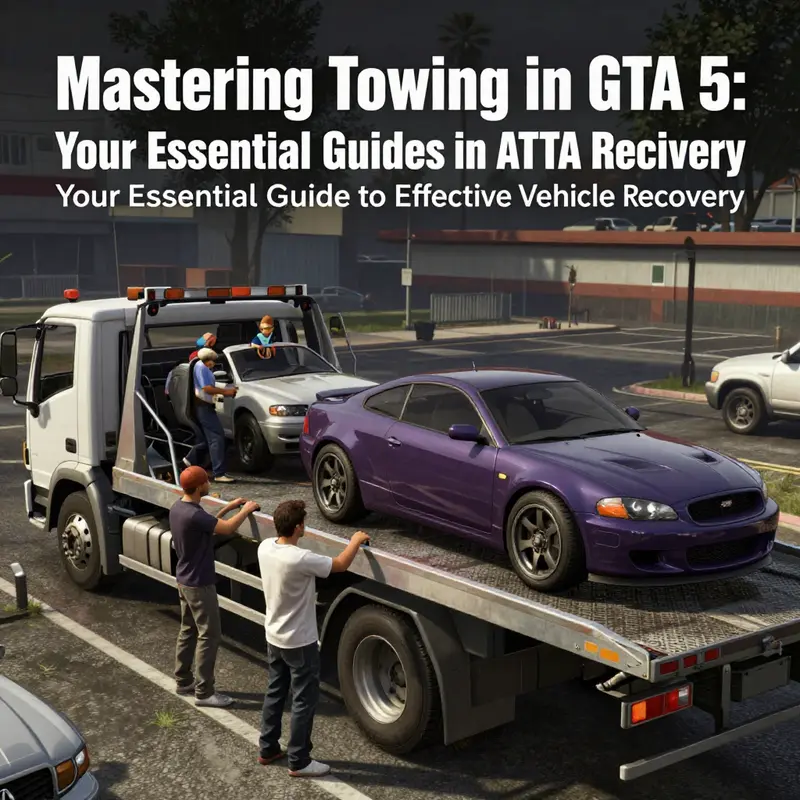
Getting the Job Done: Smooth Hookups and Smart Driving with the Tow Truck
Using a tow truck in GTA 5 and GTA Online is simple at its core, but the difference between fumbling and flowing lies in technique. The tow truck is heavy, slow to respond, and forgiving when handled correctly. This chapter walks you through the full process of finding, hooking, and moving a vehicle. It also covers the small adjustments and habits that prevent dropped loads, collisions, and sloppy results. Read this as a practical playbook you can follow when you need to tow a stalled car, complete a mission objective, or simply move a vehicle across Los Santos.
Start by summoning or locating your tow truck. In GTA Online, CEOs and MC Presidents can use the Interaction Menu to spawn a service tow truck instantly. If you aren’t able to spawn one, search garages, repair shops, salvage yards, or look for them in industrial areas. Once inside the cab, sit and take a breath. You are driving a long vehicle. Slow planning beats fast corrections.
Approach the target vehicle with intention. Align the tow truck directly in front of the car you want to tow. The rear of your truck must be close to the target’s front bumper. If the truck is too far off-center, the hook will miss or latch on awkwardly. Move in small increments. Use short bursts of acceleration to inch forward and minor steering adjustments to center the hook.
Deploy the hook when you are lined up. On PC, lower the boom using the Ctrl key, or H in some settings. The hook extends from the back of the truck and, when within range and properly aligned, it will latch to the vehicle’s front. You usually don’t need to perfectly contact the bumper. Instead, aim to have the hook sit directly in front of the car’s center. If the hook fails to attach, reposition and try again. Patience here saves time later.
After the hook engages, lift the vehicle slightly by pressing Shift or the designated raise control. Raising the hook will suspend the car’s front wheels off the ground. Pause for a moment and check the car’s angle. If the vehicle hangs crooked, lower the hook again and adjust. Uneven lifts lead to twisted towing and can cause the car to scrape or detach when you turn.
Begin moving with steady throttle. Accelerate gently until you are rolling, then maintain a slow, consistent speed. The tow truck handles like an armored bus carrying a swinging load. Sharp turns or sudden braking will make the attached vehicle swing. That swing creates added momentum and can pivot the trailer car into traffic, light poles, or the curb. Avoid quick lane changes and sudden stops.
Corners require some planning. When approaching a turn, slow earlier than usual. Start the turn wide to provide clearance for the towed vehicle. If you misjudge, reverse slowly and reposition the truck. Avoid clipping sidewalks, walls, and other obstacles that can snag the towed car. If the load begins to swing, steady your steering and ease off the throttle until the swing settles.
When you need to release the vehicle, lower the hook smoothly. Drop the car on a level surface whenever possible. On slopes, a dropped car may roll or tumble, especially if it was raised high. If you must release on an incline, engage the truck’s brake to hold both vehicles steady, then lower the hook gradually. If the target car looks unstable, reposition the truck to a flatter spot before dropping it.
Practice in open areas before you attempt complicated tows. Large, empty parking lots or industrial spaces give you room to learn how the truck reacts with a load. Practice accelerations, gentle turns, and reversing while towing. Get used to the lag between steering input and the towed vehicle’s movement. The more you practice, the more intuitive timing becomes.
Use the tow truck for more than simple transports. In GTA Online, it helps with mission objectives and certain challenges. For example, towing a vehicle for a set distance can earn progress toward specific achievements or community events. A steady, careful approach is often faster than rushing. You are less likely to need repairs or to re-run tasks caused by dropped vehicles.
Multiplayer sessions require awareness of other players. The tow truck is large and visible. If you are in a hostile session, expect potential interference. Drive near cover or stay in less populated areas to avoid griefers. If someone attacks, find a narrow alley or parking structure where attackers cannot easily flank. Use the truck’s mass as protection when necessary, but avoid trying to ram through heavy traffic while towing.
When transporting valuable vehicles, securing them matters. Place the towed car in a quiet area before releasing it into a personal garage or mission stash. Avoid busy roads that may cause collisions right after drop. If you plan to deliver to an NPC or mission location, map the safest route ahead of time. Avoid highways during rush hour or areas dense with traffic.
Technical tips matter. Keep the tow truck slightly behind the vehicle you are towing during straight lines. This positioning reduces strain on the attachment and prevents sudden forward jerks. Make only small steering adjustments when the car is hooked. If you need to make a major correction, stop, lower the hook, realign, and re-hook. This process is slower, but it reduces the chance of damaging the towed vehicle.
If the hook detaches, don’t panic. Stop and check the car’s position. In many cases, the hook will simply drop to the ground and you can reattach quickly. If the car has rolled or been pushed, walk around and reposition it before attempting to re-hook. Avoid dragging across curbs; repeated scraping can damage the towed vehicle in ways that impact mission success.
Reverse towing is a skill you should practice. Backing up while towing is sluggish and counterintuitive. Use low speeds and short, controlled taps on the throttle. If the towed vehicle begins to jackknife or swing wildly, stop immediately and re-evaluate. If possible, move forward to a new approach rather than trying to correct a severe angle in reverse.
Be mindful of the environment. Bridges, tunnels, low overhangs, and tight alleys can all hinder towing. Parked cars and pedestrians complicate maneuvers. Always check the path ahead and consider making a longer but safer route. Time saved by cutting through a narrow strip is rarely worth the risk of losing the vehicle.
In GTA Online, alternate controls may exist depending on settings or updates. The H key sometimes toggles the hook deployment. Familiarize yourself with your personal control layout before high-stakes missions. Customizing controls or using a controller with ergonomic triggers can make modest improvements in your response time.
Small habits lead to big improvements. Check the hook visually before leaving any scene. Glance backward periodically to ensure the towed car remains centered. When stopping at traffic lights or during mission pauses, keep one foot near the brake. That readiness reduces the risk of sudden collisions from behind.
Use the truck strategically. Its weight makes it a practical tool for moving disabled or illegally parked vehicles. It can clear a path in traffic or act as a rolling barricade in certain situations. When used thoughtfully, the tow truck offers utility beyond simply transporting a car.
For players focused on mission efficiency, practice a consistent routine: spawn or find the truck, align with the vehicle, deploy the hook, lift and check alignment, drive slowly, and drop safely. Repeat this routine until muscle memory takes over. Repetition reduces time and increases reliability.
If you want a quick refresher while playing, community guides and walkthroughs offer visual examples. A reputable external resource that summarizes in-game tow truck mechanics is available for reference. For more detailed step-by-step images and confirmation of controls, check this guide: https://www.ign.com/wikis/gtav/Tow_Truck
Beyond in-game tutorials, real-world towing habits translate well. Slow approach speeds, clear alignment, and measured turns make towing straightforward. If you want practical perspective on towing behavior in non-game contexts, the tow truck blog offers broader operational insights that can inform your in-game approach. Visit the tow truck blog for general towing principles.
Mastering the tow truck in GTA 5 takes time, but it rewards patience with fewer mistakes and smoother deliveries. Focus on alignment, gentle controls, environmental awareness, and steady practice. Once you internalize the basic routine, handling complex missions and busy sessions becomes far easier. The next time you need to move a vehicle across Los Santos, you will do it with confidence and control.
Final thoughts
Understanding how to use a tow truck in GTA 5 is not just beneficial for game progression but essential for auto services reliant on effective vehicle recovery. By mastering the steps from locating the tow truck to safely managing towed vehicles, players can enhance their gameplay while service providers can optimize operations for better customer experiences. Whether you are a casual gamer or a business owner, the insights shed light on a critical aspect of vehicle management that aligns with both virtual and real-world needs.