Towing a truck is not just about hooking up a vehicle and driving away; it requires a deep understanding of preparation, equipment selection, and safety protocols, especially in island settings. For auto repair shops, car dealerships, property managers, resort operators, and commercial fleet operators, knowing how to tow a truck correctly is crucial for enhancing operational efficiency and ensuring safety on the roads. This guide navigates through all aspects of truck towing, from pre-towing preparations to special considerations for different vehicle types, ensuring that local operators are well-equipped to handle any towing situation with confidence and competence.
The Quiet Start: Thorough Pre-Towing Preparation That Safeguards Vehicle and Crew
A tow begins long before the tow truck slides into position and the line tightens. It begins with a calm, methodical set of checks and actions that establish a safe, predictable rhythm for everyone involved. When you approach towing with that mindset, you reduce the chance of surprising moves, unanticipated gear damage, or dangerous shifts of weight and momentum. The pre-tow phase is not a ritual of bureaucracy; it is the practical boundary between risk and responsibility, a sequence that prepares both vehicles, the driver, and the environment for what comes next. In this moment, attention to detail pays dividends in control, clarity, and confidence.
First, the interior of the towed vessel needs careful tidying. Personal belongings should be removed to prevent anything from shifting during transit, banging against the interior panels, or jostling loose enough to become a hazard in the event of a jolt or sudden stop. A clean cabin also makes it easier to verify that the steering column, pedals, and the parking brake are in the expected state. It may seem mundane, but a small item wedged under a pedal or a loose tool rolling toward the driver’s knee can become disruptive once the vehicle begins to roll in tow. Close attention to the interior reduces the likelihood of incidental interference with the towed vehicle’s hardware, such as the release mechanism for the parking brake or the glove box field where critical documents might otherwise drift free.
Next comes securing the vehicle against theft and unintended movement. Doors should be locked and windows fully closed. This minimizes the chance that the towed vehicle’s doors swing open during a gentle tug or a cornering maneuver that requires extra space. While security is a given practice in most roadside operations, the act of locking up before moving also prevents the possibility that a loud alarm or an immobilizer event will escalate into a distraction at the moment you need steady hands and a calm head. And if your vehicle has an alarm system, switch it off for the duration of the setup phase to avoid endless chirps or battery drain that could surprise bystanders or the crew once the tow begins.
A critical but often overlooked step is consulting the owner’s manual for the vehicle you’re towing and the vehicle doing the pulling. Manuals share the manufacturer’s guidance on drivetrain compatibility, towing limitations, and any special precautions tied to transmission type or the steering system. Some manufacturers discourage certain towing configurations for long distances or advocate particular procedures—such as tow mode activation, neutral positioning, or the need for auxiliary devices like a transmission cooler. A quick review prevents an avoidable decision that could compromise the drivetrain or the braking system. It also anchors you in the language of what’s permissible, making the entire operation more predictable.
Clearance is the quiet sentinel of pre-tow checks. You want to ensure there is ample space around the tow setup—between the towed vehicle, the towing gear, and the ground. A misjudged clearance can lead to a stray hitch, a snag on uneven pavement, or a collision with a curb or a stray rock that could nick a bumper or damage a fender. Verifying clearance is not merely about avoiding contact; it’s about confirming that the path you intend to take remains free from obstacles and that the equipment you’ve chosen will function as expected under the weight, angle, and speed you’ll be operating at. If the route involves uneven surfaces, sloped driveways, or garage thresholds, re-evaluate the approach and adjust the staging to prevent a binding moment when the vehicle is in motion.
Sourcing the right equipment for the situation is the backbone of a controlled tow. The pre-tow phase should briefly review the choice between a rigid tow bar, a tow rope, or a flatbed transport, guided by the towed vehicle’s drivetrain and the anticipated distance and speed. A rigid tow bar provides stability and is well-suited for longer, steady moves on a light to moderate load, provided it’s correctly installed with torque-approved fasteners and no play after securing. A tow rope, while versatile for short distances and slower speeds, must be matched to a high-tensile rating and used with proper safety practices to prevent dangerous snap-backs or ground contact. A flatbed tow truck remains the safest option for AWD, 4WD, or automatic-transmission vehicles when drivetrain stress must be avoided entirely. The moment you confirm the equipment is compatible with both vehicles, you quiet the uncertainty that can otherwise build as you begin the tow.
Beyond the gear, the actual connection between vehicles deserves careful attention. For a tow bar, you align the arms with the designated tow points and ensure pins lock securely with safety clips. There should be no lateral or vertical movement once the system is loaded, and you should test the connection with a gentle tug before any forward movement. If you’re using a tow rope, threading the rope through proper hooks, both front and rear, is essential, and avoiding contact with the ground or chassis prevents abrasion or sudden slippage. A double knot, or a locking clip, should be employed to keep the rope secure. The overarching aim in this phase is to move from a theoretical plan to a tangible, tested setup where you can trust that the anchor points will hold under load. It’s this transition—from plan to practice—that separates cautious preparation from risky improvisation.
Communication, often treated as the ancillary aspect of towing, deserves front-row placement in your pre-tow routine. Agreements about signals and methods of coordination reduce surprises once the vehicles are in motion. Simple, pre-briefed signals—one horn blast to slow, two blasts to stop, a particular hand signal for lane change—allow the drivers to maintain a shared tempo even if the lines of sight are partially obstructed. If the operation includes a second crew, radios can keep coordination crisp; if not, verbal cues and consistent hand signals are still effective. The point is to enter the roadway with a shared mental model: what you will do when the towed car lags, when the line tightens, or when you encounter a curve that requires extra space. The more intentional the communication, the more predictable the tow becomes, and predictability is the safety net that prevents sudden, reactive decisions.
Legal and environmental awareness forms the quiet border where caution meets responsibility. Towing is subject to local regulations that govern licensing, vehicle marking, and the permissible conditions for towing. Weather can turn a routine relocation into a hazardous undertaking; rain, ice, fog, or strong crosswinds complicate the learning curve for both drivers and the mechanicals. The pre-tow phase is the right time to confirm that you are operating within the law and that your plan accounts for the current weather and road conditions. If at any point there is uncertainty, the prudent choice is to call a professional service with the right equipment and the trained personnel to execute the move safely. In the broader practice of vehicle recovery, preparation is the polite refusal of risk—an explicit decision to delay until the conditions are clarified and the proper resources are available.
This chapter does not merely catalog steps; it stitches them into a rhythm that allows the rest of the operation to unfold with steadiness. The pre-tow routine creates a baseline of safety that supports everything that follows—firm attachment, controlled speed, clear communication, and the confidence to respond calmly if something unexpected appears on the road. For readers looking to see these ideas put into practice in a broader context, a deeper discussion of how fleets manage emergency response and routine towing scenarios can be found on the Island Tow Truck blog, which offers practical perspectives drawn from real-world experience. the Island Tow Truck blog.
As you move from preparation into execution, the memory of these checks should remain with you in small, steady flashes: a door securely closed, a manual consulted, a clear path ahead, a connection that feels solid to the touch, a plan for signals, and a respect for conditions that governs speed and distance. The pre-tow phase is the quiet, disciplined prologue to a controlled, safe, and efficient tow. It is the time to shift from intention to action with confidence, knowing that you have laid the groundwork for every decision that follows.
External resources for official guidance and safety considerations reinforce this approach. The National Highway Traffic Safety Administration provides up-to-date, authoritative information on towing safety that complements hands-on preparation and on-site judgment. To explore these guidelines, you can consult their towing safety resource: https://www.nhtsa.gov/vehicle-towing-safety
Tow Equipment for Safe Truck Recovery: Balancing Weight, Method, and Terrain
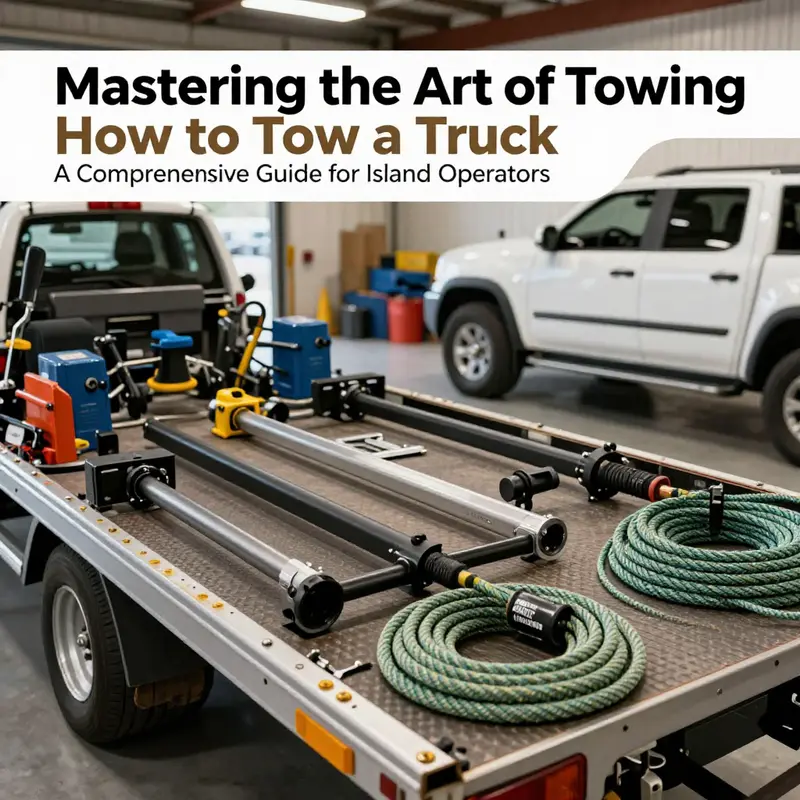
Choosing the right towing equipment is the quiet fulcrum of a safe, effective recovery. It isn’t about owning the most expensive gear or the newest rig; it’s about matching the truck’s weight, the method of tow, and the terrain to equipment that can deliver controlled, predictable performance without danger. Weight is a set of forces that change with load, tilt, and speed. A heavy‑duty truck imposes higher peak loads on attachment points, guiding the selection toward sturdier, purpose-built solutions. The chosen tow method—flatbed, wheel-lift, or traditional recovery using a tow bar or rope—defines the risk profile and the path of least resistance. Terrain and site conditions further constrain which tool can deliver the safest outcome. In practice, evaluate weight class, control needs, and drivetrain stress before handling any hardware. When weight, method, and terrain align, the equipment becomes a partner in the operation rather than an obstacle.
Within this framework, equipment forms a spectrum tied to the job’s demands. For heavier recoveries, a high‑capacity tow truck with robust hydraulics and a strong frame is essential, engineered to lift, pull, and stabilize with precision while keeping personnel and components safe as loads shift. For vehicles with tighter tolerances, a flatbed offers a conservative, drivetrain‑friendly option by keeping all wheels on the ground. On lighter vehicles or short, slow moves, a strong tow strap or tow bar may suffice if connections are sound, the equipment is rated appropriately, and speed remains controlled. The evolution from steel chains to synthetic fibers reflects a shift toward safety and control. Modern high‑tensile straps offer strength with manageability, translating into more predictable pulls and less vibration transmitted to the towed vehicle. They balance weight, strength, and handling, and they’re designed for controlled, stable performance when the driver and spotter are aligned.
The selection process should flow from simple, verifiable criteria. First, assess weight class and the tow method that minimize drivetrain exposure and steerage stress. A rigid tow bar connected to designated points can provide stability and control for long moves or higher speeds, but it must match the vehicle’s hitch system and be installed with proper hardware and torque. A rope or strap is attractive for simplicity and cost but limits speed and distance and requires careful handling to prevent ground contact or tangling. Any rope-based approach should include strict procedures for securing attachments, using high‑visibility gear, and ensuring the rope never contacts sharp edges or hot components. A flatbed remains the gold standard when zero drivetrain load transfer and maximum control are required across varied terrain and weather. While more resource-intensive, a flatbed reduces the risk of damage during transport.
Beyond basic choices, the recovery environment shapes the equipment you select. Heavy‑duty work benefits from systems designed to work in concert with engineered load ratings. For lighter vehicles, reliability and predictability trump speed. Terrain matters too: paved, level surfaces favor speed control and smooth weight transfer, while uneven or loose surfaces emphasize traction and stabilization. In rugged environments, hydraulic assistance can compensate for irregularities, allowing the operator to meter tension gradually rather than slam components into place. It is the quiet adjustments, measured pulls, and anticipation of what the vehicle can tolerate that distinguishes skilled practice from a reckless rush.
Vehicle type influences choice as well. Automatic transmissions require protection for drivetrain components; AWD and 4WD vehicles often need a flatbed to avoid drivetrain damage when wheels must not rotate. Electric and hybrid vehicles add complexity; isolating power sources and maintaining conservative speeds are essential to avoid cascading failures. In all cases, align equipment and procedure with manufacturer guidance to preserve vehicle integrity, protect operators, and achieve predictable results.
The human element is inseparable from the mechanical. Clear communication, deliberate pacing, and disciplined adherence to procedures matter as much as the gear. Secure equipment, verify locking pins, and evaluate connection points as part of a safety loop. Establish signals before moving; a horn pattern or a prearranged cue keeps the team aligned. Maintain appropriate following distance and monitor weight distribution in real time.
Ultimately, choosing equipment is a risk‑management decision, not a shopping trip. Ask how to deliver sufficient pulling power without imposing dangerous torsion, how to keep the towed vehicle aligned with the tow path, and how to minimize line slack or sudden tension. The right tool for the scenario, combined with manufacturer guidance and methodical operation, yields a safe, repeatable outcome.
Securing the Connection: Establishing a Safe Link Between Tow Vehicle and Truck
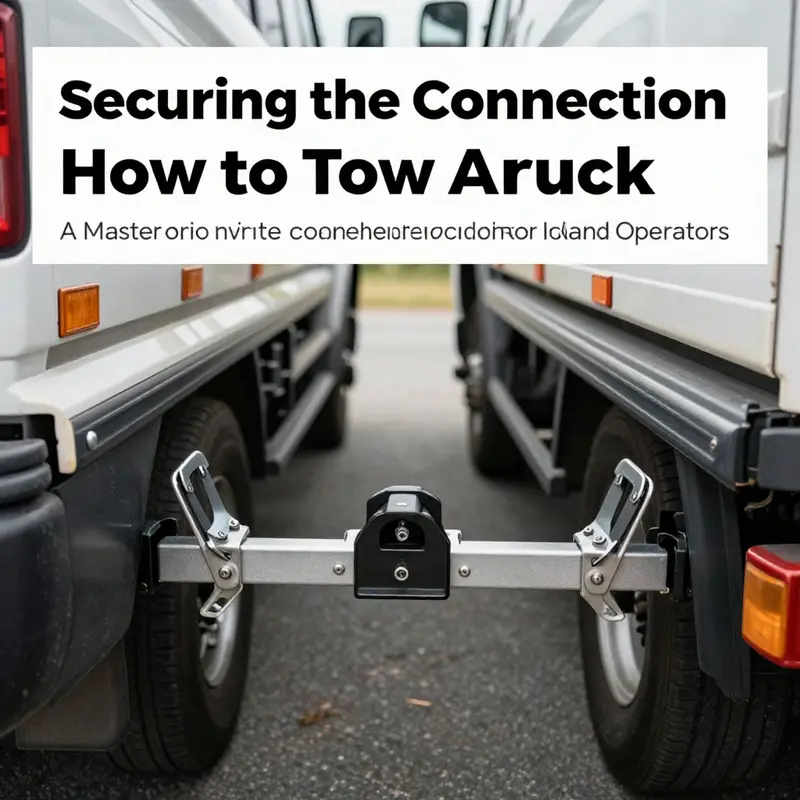
The securing of a towing connection is more than a mechanical fasten and a visual check; it is the quiet agreement that keeps two machines behaving as one for a period of time. When this link is strong, predictable, and properly maintained, it reduces the risk of drift, sway, and unexpected detachment. When it is weak, it invites vibration, misalignment, and a cascade of safety concerns. That is why every tow begins with a measured, disciplined approach to the connection itself, not with how fast you can get moving. The choice between a rigid tow bar and a tow rope sets the tone for the whole operation. A rigid tow bar, when compatible with your hitch receiver, offers stability and a direct pull that behaves consistently through the whole distance. It resists the lash that can accumulate with a flexible line and minimizes the chance of the towed vehicle yawing or bouncing out of line. This makes it the preferred option for longer moves or when the load is heavy. A tow rope, by contrast, can be adequate for short, low-speed moves where weight and distance are limited, but it demands careful handling: shorter sightlines, less margin for error, and a heightened need for constant communication between drivers. Either method hinges on a meticulous setup, a comprehensive pre-tow inspection, and a disciplined routine that treats the connection as the living heart of the tow. The body of the towed truck must always be treated as a partner in this exercise, not a passive load.
The rope itself carries a set of specifications that must be respected without compromise. A high-strength material with a minimum breaking strength of about five tons provides a margin that accommodates unexpected loads and the excitement of an imperfect surface. The length of four to six meters gives enough slack to absorb minor jolts without overt tension, yet keeps the tow line within a manageable arc. When attaching a rope, the ends should be secured using a dependable knot such as a double figure-eight or a locking connector designed for towing. The rope must never touch the ground or any protruding parts that could abrade or chafe it during movement. A visual and tactile inspection is essential: look for fraying, cuts, or softened fibers, and replace any rope that shows signs of wear. The ends should be attached to front and rear tow hooks or designated anchor points, never to body panels or delicate trim, because those surfaces are not designed to bear the load.
If a rigid tow bar is in use, installation becomes the critical prelude to safety. Tow bars must be installed following the manufacturer’s instructions to the letter, with all bolts and pins fully tightened and locked in place. The connection points on both vehicles must be rated to carry the weight of the towed vehicle, and any looseness in the system is an invitation for misalignment under load. The locking pins should be secured with safety clips or a similar locking mechanism to prevent accidental disengagement. After the bar is mounted, a trial movement—gentle, no load yet—can reveal any hidden looseness or unusual play before the actual tow begins. These checks may seem routine, but they are the net that catches small mistakes before they become large ones.
Pre-towing preparations are the quiet groundwork that makes the difference between a controlled tow and a frantic scramble. The towed vehicle should be in neutral, with the parking brake released, and the ignition turned to a position that allows the vehicle to roll freely without engine power. Electrical systems in the towed vehicle should be neutralized or fully shut down if possible; this reduces the risk of electrical interference or drain that could complicate the maneuver. With the two vehicles connected, the final check becomes a moment of shared responsibility. A gentle tug on the tow line or bar confirms it is snug, aligned, and free from unwanted slack or misalignment. If anything feels off at this stage—an unusual rattle, a creeping wheel, or a mismatch in the lines between the two vehicles—it is better to pause, reassess, and re-secure than to press onward.
Alongside physical security, communication between drivers anchors the process in safety. Establish a simple, prearranged signaling system, whether through hand signals, a mobile device, or two-way radios. Clear signals for slowing, stopping, and turning reduce the chance of surprise actions that could overload the connection. A towing operation demands a longer turning radius than usual, typically expanding by about half; the towed vehicle will lag slightly and may swing outward, so the driving space should be increased accordingly. This spatial awareness is not a luxury; it is a safety necessity, especially on curved roads or sections with poor sightlines. The towing vehicle should maintain a steady, smooth pace, avoiding abrupt accelerations or decelerations. The moment the tow line becomes taut, modest and measured throttle input guides both vehicles toward a controlled motion rather than a sudden sprint. In the same spirit, the braking sequence should be cooperative and predictable. The towing vehicle signals early and decelerates gently, confirming that the towed vehicle has stopped before the driver applies the brakes. This rhythm—sightlines, signals, smooth propulsion, and gradual deceleration—forms the backbone of a secure connection.
Beyond the act of connecting and moving, the chapter of tow connections must honor the idiosyncrasies of vehicle type. Automatic transmission vehicles, for instance, require special attention to drivetrain safety. If towing is necessary, do not exceed fifty kilometers, and make a point to stop every twenty kilometers for a cooling break of about ten minutes. The gear selector should be in neutral, and where available, tow mode can reduce wear by guiding the drivetrain through the tow more efficiently. AWD and 4WD vehicles demand caution: many manufacturers disallow towing with wheels on the ground unless explicit approval is given. In such cases a flatbed tow truck becomes the safest choice because it isolates the drivetrain from the road load entirely. Electric and hybrid vehicles add another layer: power systems and high voltage must be dealt with according to the manufacturer’s instructions. In most cases a temporary disconnection of the high-voltage battery is recommended, and the towing speed should be constrained to around twenty kilometers per hour, with a visible warning sign indicating a hybrid or electric fault. These cautions are not mere footnotes; they protect the sensitive components of modern propulsion systems and preserve safety for the operator and the vehicle alike.
Legal and environmental awareness rounds out the practical considerations of a secure connection. Local towing regulations govern licensing, vehicle marking, and permitted procedures. Weather and road conditions amplify risk and can transform routine moves into hazardous undertakings; in rain, fog, or snow, the tolerance for error drops, and the margin for mistake narrows. When uncertainty arises, professional towing services are called to intervene, a decision that should be framed not as a sign of weakness but as prudent risk management. In this context, the connection itself becomes a bridge between practical mechanics and responsible stewardship—an acknowledgment that towing a heavy vehicle is a cooperative effort that demands discipline, preparation, and a respect for the limits imposed by equipment and environment.
For readers seeking a broader perspective on field readiness and fleet operations during challenging recoveries, a deeper dive into emergency readiness and response strategies is available at the Island Tow Truck blog. The articles there provide context on how teams coordinate under pressure and maintain safety as a core value in difficult conditions. theislandtowtruck.com/blog/
In sum, a secure connection is not simply about making a physical link; it is a holistic practice that spans equipment choice, careful installation, pre-tow checks, and disciplined driving. It requires attention to the specific demands of the vehicle being towed and the environment in which the tow occurs. When the connection is sound, the rest of the towing sequence—speed control, turning, communication, and braking—flows with greater assurance. The safest path forward is to treat this connection with the care it deserves, to verify every parameter before moving, and to acknowledge when a task exceeds safe limits and professional assistance is the wiser course. External safety guidelines reinforce this approach and provide a standardized framework that keeps operators and bystanders protected.
External resource for further safety guidelines: https://www.nhtsa.gov
Tow It Right: A Safety-First, Regulation-Aware Guide to Towing a Truck
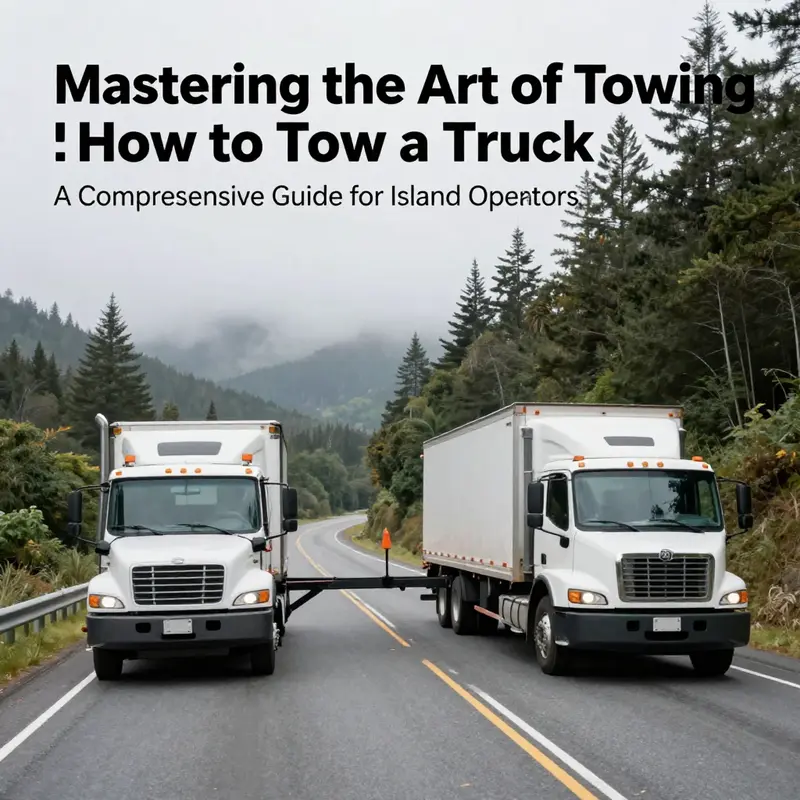
Begin with a practical calm, the way a responder approaches a stranded vehicle: assess the scene, gather the relevant tools, and move with deliberate intention. Towing a truck is not simply about dragging a load from point A to point B. It is about respecting the physics of weight, the limits of the equipment, and the rights and safety of everyone on the road. This chapter weaves together the preparation, the equipment choices, the connection process, the driving discipline, and the legal framework into a cohesive narrative that keeps the operation within the bounds of safety and responsibility. It is a craft built on forethought, precise execution, and a mindset that prioritizes people over proximity to a deadline. The goal is not just to move a vehicle, but to move it safely, legally, and with minimal risk to the tow vehicle, the towed vehicle, and other road users.
Preparation begins long before the two vehicles ever meet in alignment. A thorough check of the towing vehicle’s braking performance, tire condition, lights, and the hitch or tow bar is essential. Similarly, the towed vehicle must be prepared so its steering remains functional, its transmission is in neutral, and the parking brake is released. These checks are not mere formalities; they are safeguards against a chain of unintended consequences that can arise the moment the weight begins to shift. Manufacturer guidelines should guide every decision. Some layouts prohibit certain transmissions or drive configurations from being towed without specific procedures, while others warn against long-distance towing due to drivetrain or lubrication concerns. The owner’s manual is not optional reading in this moment; it is the first line of defense against damaging the vehicle you are moving and the one you are moving it with.
Choosing the right equipment flows naturally from that diagnostic mindset. A rigid tow bar offers stability and control for longer tows or higher speeds and must be compatible with the hitch receiver, installed with correct bolts and torque, with no play once secured. A tow rope, when used, is appropriate only for short distances and low speeds, kept away from ground contact, and rated for substantial loads with good visibility features such as reflective elements. A flatbed tow truck, by contrast, entirely eliminates drivetrain stress and is the safest option for vehicles with sensitive transmissions, AWD, or automatic configurations that cannot operate with wheels on the ground. The decision, anchored in the pre-tow assessment, balances the risk of drivetrain damage against the demands of the situation, and it preserves the integrity of both vehicles while ensuring the safety of the operator.
Connection is where theory meets reality. A proper tow bar requires connection arms attached to designated tow points on both vehicles, with locking pins fully inserted and secured with safety clips. A rigorous check is needed for any lateral or vertical play before you begin to move. If you choose a tow rope, keep the rope threaded through the correct hooks, not through body panels, and use a secure method to prevent slippage; never permit the rope to touch the ground or other parts of the vehicle, and confirm the knot or clip is secure. The final tug test—gentle and controlled—verifies the integrity of the attachment. This moment is not about speed; it is about confidence that the connection will hold under the normal stresses of towing. The quiet confidence you gain at this moment translates into safer driving once you hit the road. For readers seeking broader fleet protection and preparedness strategies, the Island Tow Truck blog offers practical reflections on emergency readiness and response strategies via its dedicated hub: the Island Tow Truck blog is available at islandtowtruck.example.
With the mechanical links established, the actual towing procedure begins. Speed must be managed with care and discipline. The regulatory framework sets a baseline that aligns with risk mitigation: follow posted speed limits, maintain smooth throttle and brake inputs, and adjust for weather and visibility. The idea is to keep momentum deliberately restrained, avoiding abrupt acceleration, braking, or steering inputs. When you need to steer, give yourself a wider turning radius—about a 50 percent increase is prudent—because the towed vehicle may lag or swing outward. The towed unit’s brakes respond differently from the towing vehicle’s, and that lag becomes a factor in how you plan your lane changes and cornering. Communication between drivers is vital. Establish simple signals ahead of time—hand signals, a dedicated radio, or a mobile device in a hands-free mode. This coordination reduces the chance of misread cues and minimizes the risk of sudden maneuvers that could jeopardize the convoy’s stability.
Maintaining a safe following distance takes on a new meaning when a long rig sits behind you. On roads outside built-up areas with a single lane in your direction, if the overall length of the vehicle combination reaches 7.5 meters or more, observe a minimum following distance of 200 meters from the vehicle ahead, unless you are overtaking. This rule is not an abstract number; it reflects the need for ample space so the towed unit can respond to the towing vehicle’s cues and the road’s geometry without forcing abrupt deceleration or evasive actions. It also underscores the importance of smoother, gradual braking. The tow vehicle should announce and execute any braking far enough in advance for the towed unit to respond in kind. A calm tempo—no sudden slows or accelerations—protects the transfer of momentum from the towing system to the trailer and prevents the dreaded jackknife or excessive sway. When visibility is poor, the role of warning devices becomes even more critical: brake lights, turn signals, hazard lights, and reflective markings must remain clearly visible to other road users. These are not mere formalities but essential indicators that inform others of your altered braking behavior and extended following distance.
The chapter’s practical core also emphasizes the limitations that may apply to different vehicle configurations. Automatic transmission vehicles require special attention: towing should not extend beyond certain distances without periodic breaks to cool the transmission, and the transmission should be placed in Neutral with the vehicle’s tow mode activated when available. For AWD or 4WD systems, towing with wheels on the ground is generally discouraged or prohibited unless the manufacturer provides explicit approval. In many cases, a flatbed is the recommended solution to prevent any drivetrain stress. Electric and hybrid vehicles add another layer of complexity: the high-voltage system needs to be isolated to ensure safety, the speed is typically limited to lower thresholds, and conspicuous signage indicating electric faults helps other drivers anticipate any abnormal behavior around the vehicle. These considerations remind us that towing a truck is not a single procedure but a spectrum of procedurally enforced steps designed to minimize risk to all involved.
Alongside the mechanical and procedural realities, the legal and environmental framework shapes how towing is conducted. Legislation governs the use and visibility of number plates and registration labels for trailers, requiring these identifiers to be fixed to the left side of the trailer so they face outward and remain legible from behind. The towbar and coupling must never obstruct the trailer’s lights or the towing vehicle’s rear lights or number plate, because visibility and signaling to other road users are foundational to safety. And there are clear prohibitions: you cannot tow more than one trailer at a time, and no person may ride inside a registered trailer or caravan while it is being towed. These rules are designed to preserve space on the road for all and to prevent hazardous configurations that could exacerbate an accident or hinder an emergency response.
In real-world practice, these guidelines require a mindset that values preparation, precision, and pace. When in doubt, the safest course is to call a professional towing service. The aim is to protect not only the two vehicles but every traveler sharing the road. The legal framework is not a collection of dry restrictions; it is a practical map for navigating the unpredictable realities of a highway or a rural lane, where weather, road grade, and traffic can shift in moments. A responsible operator approaches towing with humility and discipline, recognizing that safety is a function of process as much as it is a function of power.
For those who wish to explore official guidelines in more depth, the regulator’s stance provides a concrete reference point: Safe Towing Regulations – Department of Transport. The depth and nuance of these standards reinforce the point that towing a truck is a task that benefits from clear procedures, thoughtful equipment choices, and a willingness to adjust to the road’s demands rather than pressing ahead with a fixed plan. As the landscape of vehicle design evolves, so too will the recommended practices for towing, and staying aligned with the latest guidance remains essential. In the end, the most reliable measure of success is a safe, steady journey where both vehicles arrive as they started—undamaged, intact, and ready for whatever comes next on the road ahead.
Towing by Type: What Every Driver Must Know Before Towing a Truck
Towing by Type: What Every Driver Must Know Before Towing a Truck
Towing a truck is not a one-size-fits-all task. The decisions you make before you move—how you attach, how far you go, and how you drive—depend heavily on the towed vehicle’s transmission and drivetrain. Get these choices wrong and you risk expensive drivetrain damage, sudden instability on the road, or dangerous handling for both vehicles. This chapter synthesizes the practical steps and strict limits you must observe when towing different types of trucks, with clear, actionable guidance you can use whether you are rescuing a single vehicle or managing a fleet.
Start by identifying the truck’s drivetrain and transmission. Confirm whether the transmission is automatic or manual. Determine if the truck is rear-wheel-drive, front-wheel-drive, full-time four-wheel-drive, part-time four-wheel-drive, or all-wheel-drive. If the vehicle is hybrid or fully electric, treat it as a special case. These basic facts dictate the safe methods and distance limits for towing.
Automatic-transmission trucks present a common and costly hazard. Internal transmission lubrication depends on the gearbox turning. When the drive wheels turn while the engine is off, lubrication can be inadequate. To avoid severe damage, place the gear selector in Neutral or engage any factory-supplied “tow mode” before moving. Even with the transmission in Neutral, limit towing distance. Best practice is to keep on-ground towing under 50 kilometers (about 31 miles). For longer journeys, plan engineered stops every 20 kilometers to allow cooling and reduce heat buildup. If you cannot stop periodically, use a flatbed or transport the truck on a trailer. These precautions prevent overheating and internal wear that often show up as costly repairs later.
Four-wheel-drive and all-wheel-drive trucks are particularly sensitive. Their transfer cases and differentials rely on designed wheel rotation patterns. When rear or front wheels turn without the engine driving them as designed, internal components can spin at incompatible speeds. This generates friction and heat, which can quickly damage the transfer case or differentials. For most 4WD and AWD trucks, the safest option is to use a flatbed tow truck so no drivetrain components spin under load. If towing on wheels is ever considered, confirm explicit permission in the vehicle owner’s manual and follow any manufacturer procedures to lock hubs or disengage the transfer case. Never assume that releasing the parking brake or switching to neutral alone is enough.
Electric and hybrid trucks require a different mindset. High-voltage systems create unique safety hazards for anyone who is not trained. Before any towing movement, disconnect or isolate the high-voltage battery according to the manufacturer’s instructions. This step prevents accidental power surges and reduces the risk of electrical faults. Limit towing speed and distance for electric/hybrid trucks when wheels are on the ground; a conservative maximum of 20 km/h is recommended, and the towed vehicle should be marked with a clear indicator that it contains a hybrid or electric drive system. If flatbed transport is available, prefer it: it eliminates drivetrain and electrical risks and protects battery and control modules from vibration damage.
Weight distribution affects behavior regardless of drivetrain. When towing a truck on a trailer or with a tow bar, manage tongue weight—the downward force at the hitch. Target 10–15% of the total towed mass. Too little tongue weight invites trailer sway and reduces directional stability. Too much tongue weight compresses the towing vehicle’s rear suspension and impairs steering control. Distribute cargo in the towed vehicle to keep the center of mass low and forward of the trailer axle. Secure loose items to prevent shifting, which can change the center of gravity mid-route.
Attachment and connection choices must reflect vehicle type. A rigid tow bar offers the most direct control when the towed truck is designed to have its wheels on the road during towing. It transmits steering inputs and prevents excessive yaw. However, it also transmits every bump and torque spike. Verify the tow bar is rated properly and installed with the correct bolts and torque. For short, low-speed moves, a high-quality tow rope may be acceptable. Use a rope or strap rated well above the vehicle’s mass and attach only to certified tow points—not bumper surrounds or body panels. Reflective markers and a rope that never contacts the ground improve safety when visibility is limited.
Braking coordination is essential. A towed truck adds kinetic energy to the towing combination. The towing vehicle must anticipate longer stopping distances and avoid sharp braking. Agree on communication signals before you move; simple horn patterns and prearranged hand signals work well when radios are unavailable. The towing driver should brake gently and early. If the towed vehicle has its own braking system or a breakaway brake actuator, ensure it is properly connected and functional. Never rely on the towed vehicle to apply brakes unexpectedly; assume the towing vehicle will control deceleration.
Turning and lane changes require wider radii. The towed truck may lag and swing outward during a turn. Reduce speed and increase the turning radius by at least half. Avoid sudden lane changes, quick accelerations, and hard steering inputs. When reversing, use a spotter to guide alignment and prevent jackknifing or contact.
Legal and environmental constraints also matter. Check local regulations: some jurisdictions forbid towing certain drivetrains on the road with all wheels down. Others mandate special markings, amber lighting, or speed limits during towing. Fleet managers should codify manufacturer limits in emergency plans and training documents. For island or remote fleets, prep procedures are critical; a robust towing policy reduces downtime and prevents damage. For guidance tailored to island operations, consult resources on emergency preparedness for island fleets: https://theislandtowtruck.com/emergency-preparedness-for-island-fleets/.
When in doubt, choose the option that avoids drivetrain rotation and electrical exposure. Flatbed transport is the safest, most damage-free method for automatic, AWD, 4WD, hybrid, and electric trucks. It removes ambiguities, eliminates transmission and transfer case concerns, and secures the vehicle against road hazards.
Finally, document every tow. Record the truck’s drivetrain and transmission state, odometer reading at start and finish, chosen attachment method, maximum speeds, and any stops required for cooling. If you follow manufacturer instructions, keep a copy of those pages in the vehicle or fleet manual. Regularly review towing incidents in fleet meetings to refine procedures and avoid repeating preventable mistakes.
Towing a truck safely requires matching the method to the machine. Recognize the limits of automatic gearboxes, respect the complexities of 4WD and AWD systems, isolate high-voltage components in hybrid and electric trucks, and manage weight distribution carefully. With conservative speed control, proper attachment, and firm communication, you protect both vehicles and everyone on the road. For official safety recommendations and further technical detail, see the National Highway Traffic Safety Administration: https://www.nhtsa.gov/safety/towing-safety.
Final thoughts
Understanding the intricacies of towing a truck is essential for those involved in local business operations on islands. From preparation and equipment selection to safety procedures and vehicle-specific considerations, every step plays a significant role in ensuring safe and efficient towing. By combining these practices with a commitment to safety and adherence to manufacturer guidelines, businesses can protect their investments while providing crucial services to their communities. Towing doesn’t just connect vehicles; it builds trust in your services, making it paramount for every operator to master this skill.