
Understanding the costs associated with towing semi-trucks is crucial for local auto repair shops, car dealerships, property managers, resort operators, and commercial fleet operators. The towing process can be daunting, with expenses varying due to several key factors. By delving into the specifics of what influences these costs, understanding the pricing structure, recognizing regional variations, and being aware of additional fees, stakeholders can make informed decisions. This article aims to demystify the towing landscape surrounding semi-trucks and what it means for your operations and budgets.
Carrying the Heavy Burden: What Really Determines the Price of Towing a Semi Truck
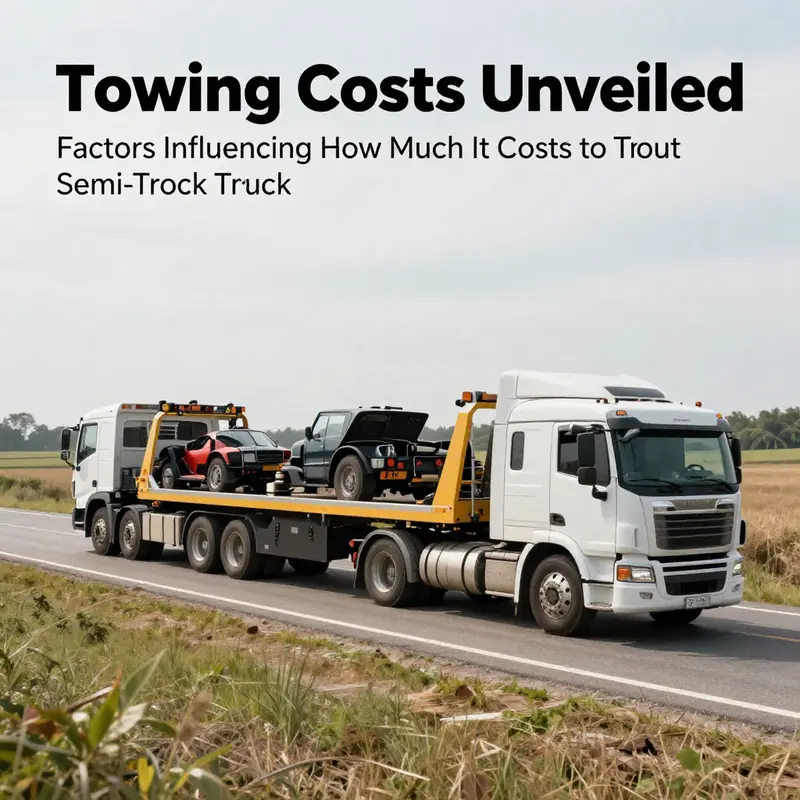
When a semi truck breaks down or becomes immobilized, the question that immediately follows is rarely just how far the vehicle must travel to a repair shop. The real question is far more nuanced: what will the tow require, and how do the various moving parts of the job—the weight of the load, the distance to be covered, the time of day, the region, and the condition of the truck itself—shape the final cost? A towing job for a semi is not simply a longer version of a car tow; it is a complex operation that demands specialized equipment, skilled operators, and a carefully planned route. The result is that the price can swing widely depending on the combination of factors at play. In practice, the cost starts with the most tangible and indisputable element—the weight and size of the vehicle—and then spirals outward to cover distance, timing, location, and the specific circumstances of the tow. A typical trucking scenario makes this dynamic clear: a short move within a metropolitan area might hover around a modest base but quickly expands as soon as the distance grows, or as the truck’s condition requires bespoke handling. The math behind towing fees is built to reflect real-world constraints: heavier vehicles demand stronger equipment and more fuel; longer trips demand more time and crew availability; and urgent needs command a premium that reflects the cost drivers of a 24/7 service industry. All of this matters because the price you receive is rarely a single number, but a sum of interlocking factors that must be reconciled in a way that keeps the operator solvent and the truck safely on the road as quickly as possible.
First, weight and vehicle type are at the heart of the equation. Semi trucks are large, and when fully loaded they can tip the scales well above routine passenger vehicles. Typical semi configurations can range from roughly 10,000 pounds to well over 30,000 pounds, and even heavier when the payload is substantial. That heft translates directly into the kind of equipment a tow service must deploy. Heavy-duty tow trucks, robust winches, and high-capacity towing straps are not optional luxuries here; they are essential tools for moving the vehicle without exacerbating damage or creating safety risks for people nearby. The heavier the truck, the more fuel is consumed by the tow unit, the more torque and pulling power the operator must apply, and the greater the wear on line, cables, and gear. These realities feed into the price in clear, disciplined ways: weight increases the baseline equipment load and the operational risk, and that is priced into the service.
Distance, the second major determinant, is equally consequential but often underestimated in its impact. Tow companies commonly structure their fees with a base charge plus a per-mile rate, a model that scales predictably with how far the truck must go. Short tows—think within a city or to a nearby repair facility—tend to be far less costly than long-haul movements that can stretch across state lines. As a rough guide, a short tow might start around a modest sum, while a longer haul can push the total past several hundred dollars. In rural areas, distances to repair shops or valid drop-off points can be longer than in urban cores, and the costs can climb quickly as a result. Distance also interacts with the truck’s condition; a highly damaged vehicle may require a longer, more controlled maneuver, increasing both time and fuel consumption for the tow crew.
The place and the clock also matter, giving rise to what many operators call the time-of-day or location premium. Towing services operate in a marketplace with uneven supply and demand. Late nights, weekends, and holidays can see reduced availability, which in turn elevates the price to secure a crew and the right equipment. In dense urban areas, the baseline hourly rate might be higher due to traffic, congestion, and higher operating costs, all else being equal. This premium is not arbitrary; it is a practical acknowledgement that a job done after hours or in a crowded environment typically entails additional risks and logistical complexities. The regional variation compounds the effect. Urban centers with expensive real estate, higher labor costs, and more stringent permitting requirements naturally push the price higher than more rural locales where overhead is lighter and the pool of available tow operators may be larger.
The condition of the truck at the moment of tow introduces a further layer of complexity. A disabled or damaged semi may require specialized handling that goes beyond a routine hookup. For example, vehicles with multiple axles, or those that need to be moved onto a lowboy or flatbed, demand particular expertise and equipment. If the vehicle is resting awkwardly or leaking fluids, if it needs cradle support, or if it must be transported on a different trailer than a standard winch-and-tow rig, those choices carry cost implications. Even the choice between a conventional wrecker and a flatbed tow can be economically meaningful. While a flatbed provides certain advantages—reducing the risk of further damage during transport—it is also generally more expensive than a standard roll-back or wheel-lift approach. The decision in the field is a careful balance between safety, vehicle integrity, and price, with the complexity of the scenario often dictating the most appropriate and safest transport method.
Beyond the core factors of weight, distance, and deployment conditions, a handful of ancillary charges commonly appear on the invoice and can transform an initially modest estimate into a more substantial total. Hook-and-roll fees, for instance, cover the cost of simply attaching the tow vehicle to the truck and initiating the move. Toll fees may apply if a selected route crosses highway tolls, and those costs can accumulate quickly over longer routes or through regions where tolls are frequent. When a truck needs to be moved to several different locations, a multiple-stop arrangement can generate additional charges that aren’t always obvious at the outset. Storage fees, too, are a real consideration when a vehicle is impounded or needs to be kept at a secure lot for a period of time before a repair plan can be arranged. Each of these charges reflects a concrete operational cost in the towing ecosystem, and together they can add up to a meaningful portion of the total bill if not anticipated in advance.
Insurance and liability concerns, while less visible to the casual observer, shape pricing in a fundamental way. Some towing services require proof of the truck’s insurance coverage before proceeding, given the potential liability associated with moving a heavy vehicle. In situations where proof is missing or insufficient, a provider might implement additional safeguards, or in some cases, deny service until proper documentation is furnished. The presence or absence of adequate insurance can affect both the speed of service and the overall price, as risks are managed differently under each scenario. This is not merely a bureaucratic footnote; it is a practical reality of the business model in which safety, legal compliance, and cost containment converge.
Given this constellation of factors, an accurate estimate is rarely guesswork. The most reliable path to understanding the potential expense is to engage with local towing providers and share a detailed portrait of the situation. What is the truck’s weight and configuration? What is the distance to the repair facility or destination? Are there any special handling requirements, such as a lift gate, a lowboy trailer, or multiple axles? Are there anticipated stops or storage needs? Providing this information upfront helps the tow operator generate a comprehensive written estimate that includes all foreseeable fees. A written quote is essential; it creates a clear baseline for negotiation and helps prevent surprise costs when the job is complete. The written estimate should plainly itemize base fees, per-mile charges, hourly rates if applicable, and every potential add-on—hook fees, tolls, storage, multiple stops, and any emergency or after-hours surcharges.
This is where practical knowledge meets preparedness. For fleet managers and operators who must navigate the vagaries of roadside setbacks, understanding how these factors interlock can substantially affect budgeting and risk management. It isn’t merely about calculating a number; it is about building a realistic expectation that accounts for the variability of real-world conditions. A proactive approach includes not only knowing the likely factors but also anticipating the sometimes invisible costs that accompany a breakdown on a high-traffic corridor, in a remote location, or during a season when demand for towing services spikes. A good rule of thumb is to budget for a base scenario with a reasonable buffer for the unlikely, given that some elements—like after-hours service or a move involving a flatbed—may push the price by a noticeable margin.
For organizations that operate fleets, this means integrating towing costs into broader contingency planning and emergency response protocols. When a semi is sidelined, every mile matters, and the urgency of returning the vehicle to service can magnify the financial impact. The cost considerations outlined here should inform not only post-incident budgeting but also preventative measures: routine maintenance that reduces the likelihood of sudden breakdowns, pre-arranged service agreements with dependable towing partners, and clear documentation of insurance status and vehicle readiness. In practice, the most cost-effective approach blends realism with preparedness. It accepts that some variability is inevitable while foregrounding strategies to minimize unnecessary charges—choosing routes with fewer tolls, scheduling maintenance to prevent urgent after-hours calls, and maintaining a spare plan with a trusted local provider who can respond rapidly when every minute counts.
As a final note on the price dynamics, remember that the numbers you see are not arbitrary. They are a product of a system designed to keep heavy trucks moving safely and legally, while balancing the realities of labor, equipment costs, and regional economies. A well-informed driver or fleet manager walks away with a clearer picture of what to expect and a better framework for requesting and negotiating a transparent estimate. For practitioners seeking practical, field-tested guidance on fleet emergency readiness and response strategies, you can consult resources that distill the essentials of maintaining uptime even when the weather or road conditions are less forgiving. The Island Tow Truck Blog offers practical perspectives on emergency preparation and response for island fleets, which often contend with unique logistical challenges. By integrating such insights with the core cost factors discussed here, operators can develop a more robust understanding of how to anticipate and manage the financial impact of towing a semi truck in diverse circumstances.
For readers who want a broader frame of reference on towing costs and their drivers, a respected industry resource highlights the key determinants—vehicle weight, distance, location, and timing—alongside potential ancillary charges like storage, multiple stops, and tolls. This overview helps place the practical numbers into a wider context that is relevant across different regions and service providers. External research that analyzes these factors can be found here: https://www.aaa.com/autorepair/articles/towing-costs-factors/
The True Cost of Moving a Semi: Unpacking Distance, Weight, and Timing in Heavy-Duty Towing
When a semi truck becomes immobilized on a highway shoulder, in a remote yard, or after an incident on a crowded urban street, the question that drives every fleet manager’s mind is not only how soon the truck can be moved, but how much it will cost to move it. The answer rests on a handful of interlocking factors that together determine the final invoice. Central to the pricing equation is distance. In tow operations, distance often translates into a base fee plus a per-mile charge, a model that mirrors standard towing practice across many sectors. Yet distance is only the most visible part of the iceberg. A five-mile tow might be casually dismissed as a modest expense—perhaps around seventy-five dollars in some regions—while a longer, more complex haul of fifty miles can push the bill well beyond a few hundred dollars. Rural routes, where repair facilities are scattered far from the point of need, compound the cost by increasing travel time, fuel burn, and the wearing of specialized equipment. The distance multiplier, therefore, interacts with other cost drivers to shape the overall price tag, and the combined effect can be surprising to those who expect a straightforward per-mile calculation.
The sheer size and weight of a semi truck add another layer of complexity to the pricing structure. Heavy-duty operations require dedicated machinery: 50-ton wreckers, or their close equivalents, are commonly employed to manage the weight and balance of large tractors, trailers, and cargo units. These machines come equipped with multi-speed winches, stabilization struts, and lifting systems built specifically to handle heavy vehicles in varied terrains. The engineering behind these assets is not a luxury but a necessity; without such capabilities, recovery attempts could jeopardize the vehicle, the operator, and nearby bystanders. The heft of the load translates into higher fuel consumption, greater tire wear on the towing equipment, and increased wear on wear parts—factors that, while perhaps invisible to the customer at the outset, become tangible at the point of service and in the final bill.
Beyond distance and weight, the timing of a tow exerts a measurable influence on price. Off-peak hours—late at night, early dawn, weekends—are typically associated with higher rates in many markets. Demand for immediate assistance intersects with the scarcity of available crews and equipment, and dispatch centers price this scarcity into the service charge. In urban settings, the premium may also reflect traffic patterns, the need to navigate crowded streets without interrupting key corridors, and the higher operating costs that come with city logistics. The location itself matters as well. Towing in a dense metropolitan core can be faster in human terms, but it may entail greater overhead due to parking restrictions, permit requirements, and tighter maneuvering spaces. Each of these variables nudges the price upward, even before the truck begins its journey from point A to point B.
Another essential element of cost is the specific type of tow and the related service scope. The simplest category is a basic tow, which covers moving the vehicle from the current location to a nearby repair facility or storage site. Yet “basic” can mask a handful of ancillary charges that frequently appear on the final invoice. A hook and roll fee, for example, is a fixed charge that covers the initial hookup of the vehicle and the basic roll onto a trailer or recovery device. Tolls along the route, if the path to the destination includes toll roads, can accumulate into a meaningful line item. If the truck must be moved to several locations—perhaps first to a storage lot, then to a repair shop, then to a staging area for salvage—each stop adds a layer of labor and time, with corresponding charges. Storage fees, necessary when a vehicle cannot be released immediately or must wait for a slot in a repair queue, are another common line item that can extend the cost well beyond the initial tow. Even seemingly minor decisions, such as whether the truck should be pulled onto a flatbed or lifted with a high-capacity winch, can alter both the safety profile and the price.
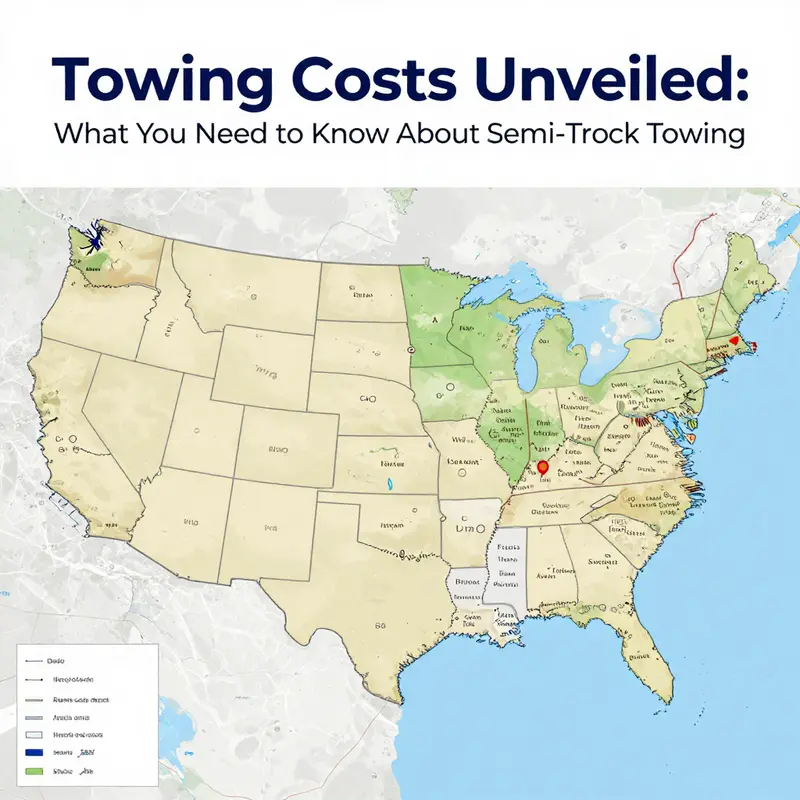
The practical implications of these factors become clearer when considering regional variability. Market norms shift not only from country to country but also across states, provinces, or counties, governed by local labor rates, insurance requirements, and the operating costs borne by towing providers. A short tow in one locale may be priced similarly to a longer haul in another, depending on the mix of fixed fees, per-mile rates, and the availability of heavy-duty equipment. In the global context, some regions have institutionalized practices that affect price perception. For instance, when a fleet operates across multiple geographies, the contract often stipulates a blended rate that accounts for anticipated distance bands, the standard fleet profile, and the typical service window. Yet the reality on the ground seldom aligns perfectly with any single tariff. Drivers and dispatchers frequently encounter scenarios that defy the neat categories in a price list: a delicate extraction from a ditch, a multi-vehicle recovery, or a recovery that requires specialized stabilization work to prevent further damage.
Even the choice of equipment matters. Heavy-duty towing requires more than raw power; it demands the right balance of traction, balance, and control. A 50-ton wrecker is not simply a larger version of a typical tow truck. It is a purpose-built recovery platform designed to manage the center of gravity of a large tractor-trailer, the horizontal and vertical forces generated during recovery, and the potential need to lift or load the vehicle onto a trailer for secure transport. The safety features—stabilizers, multi-speed winches, and robust lifting systems—are integral to the job, and these features come with a corresponding price. The lifecycle cost of such equipment includes maintenance, parts, and the specialized skills required to operate them safely, all of which become embedded in the price of a service call. Operators must remain compliant with safety regulations that can vary by jurisdiction, and those regulations often shape both the permissible recovery methods and the pricing framework. In some regions, the standards purchase a premium price because they demand additional training, more frequent inspections, or stricter equipment certification. The important takeaway for fleets is that the ultimate cost is rarely a simple function of distance and weight, but a composite of equipment capability, regulatory compliance, and the operator’s expertise.
To this mix, the nature of the incident can inject further variability. If a truck is involved in an accident, the complexity of the recovery increases. Extraction from a ditch or off-road recovery requires additional winching power, stabilization work, and potentially more manual labor. If the vehicle needs to be loaded onto a trailer, rather than simply winched onto a roll-back, the time and labor expenditures rise, and so does the price. The more intricate the job, the more likely a provider will rely on a full-service approach, which can range widely in cost depending on the specifics of the scene, the distance to the destination, and the ease or difficulty with which the vehicle can be maneuvered. As a result, industry observers often note that full-service recoveries can fall into a broad range—from a few thousand dollars for routine, straightforward moves to well over five thousand dollars for long-distance or highly complex recoveries. Such figures reflect not only the physical act of towing but the full spectrum of dynamics around a heavy vehicle incident: safety, timing, equipment readiness, driver’s skill, route planning, and the broader context of the incident scene.
The pricing framework is further clarified when separating the cycle into two main categories: basic towing fees and additional service charges. Basic towing fees function as the core charge—often determined by distance or a flat-rate structure, with regional variations that reflect local market conditions. In some markets, the basic charge is the entire bill; in others, it is merely the anchor that gets added to with mileage fees, incident-specific surcharges, and time-based rates. The distinction between basic fees and additional charges is crucial for anyone seeking transparency. On a basic level, you might see a base fee that covers call-out time and a short distance, followed by per-mile charges that escalate with distance. But the story does not end there. The “additional service charges” bucket captures the complexity of the job: tow to a different site, extraction from difficult terrain, multiple stops, or activation of specialized equipment to ensure safe handling of the semi load. These charges accumulate quickly when the operation deviates from the simplest scenario.
The practical implication for fleet managers and operators is not to chase a single price point, but to demand clarity and a detailed, written estimate before agreeing to service. With heavy-duty towing, the best practice is to request a line-by-line quote that isolates the basic towing fee, per-mile charges, and every potential add-on. A robust estimate should enumerate: the base call-out fee, the estimated mileage, the expected duration of the on-site work, the cost of any winching or stabilization operations, possible tolls, storage fees, and the anticipated disposition of the vehicle (repair facility, impound yard, or other). If the job will require an overnight hold or a secure storage space, the estimate should itemize the daily rate for storage and the anticipated number of days. A written estimate helps prevent surprise charges and equips fleet managers to compare bids across providers with a consistent yardstick.
Even with a precise estimate, the final bill can still diverge due to unforeseen conditions. A driver may encounter soft ground, poor lighting, or additional damage that necessitates a change in the recovery plan. In such cases, reputable providers will communicate the evolving plan and obtain authorization to proceed with the adjusted scope before continuing. This practice is not just a courtesy; it protects against post-incident disputes and ensures that the customer fully understands how the price is accruing as the operation unfolds. It also reinforces the importance of choosing a provider with a clearly defined escalation process, so that when circumstances demand quick decisions, there is a shared understanding of the cost implications and the rationale for any deviations from the original plan.
For readers seeking a practical touchstone in this domain, it helps to explore industry guidance that distills the realities of heavy-duty towing and recovery. The British Towing resource offers a comprehensive set of data about equipment capabilities, operating standards, and the pricing structures that govern heavy-duty recoveries. This external reference helps place local pricing in a broader context and serves as a benchmark for what a well-informed estimate should include. End users should treat such guidance as a reference point for conversations with local providers rather than a blunt price target—because no two incidents are alike, and regional realities will always shape the final number.
From a practical standpoint, a fleet manager can take several proactive steps to manage costs without sacrificing safety or service quality. First, gather as much information as possible before calling a tow provider. Details such as the vehicle’s location, whether it is operable, the surface condition of the tow path, the location of the nearest repair facility, and any time constraints will help the dispatcher tailor the plan. Second, be explicit about your expectations for the recovery method. If on-site stabilization and extraction are required, make sure the estimate reflects the anticipated complexity of those operations. Third, request a written, itemized estimate that includes all potential add-ons, and ask for a clear explanation of any items that appear unclear or ambiguous. Finally, consider establishing relationships with a small set of trusted providers who can offer priority service in emergencies and a transparent, repeatable pricing framework that aligns with your fleet’s routine needs. Such relationships reduce the guesswork during a stressful incident and help maintain predictable budgeting across the fleet.
The bottom line remains that the cost of towing a semi truck is not a single number but a carefully weighted blend of distance, weight, time, location, and service scope. The best approach for any fleet operator is to treat the price as a function of these interdependent variables, demand clarity from the provider, and safeguard against hidden charges with a written, detailed estimate. For those who want to explore the topic further from a fleet-management and practical operations perspective, there is value in a broader conversation about emergency response planning and the integration of heavy-duty towing into fleet resilience strategies. For practical guidance, see the the Island Tow Truck blog.
As a final note that helps frame expectations, consider the scale of potential recoveries. When the job falls into long-distance or highly complex categories, the price can reach substantial heights. Industry references indicate that full-service wrecker operations using 50-ton capacity trucks can charge anywhere from $1,500 to $5,000 or more for long-distance or complex recoveries, depending on location and circumstances. This broad range reflects the realities discussed above: the interplay of distance and time, the weight and stability requirements, the specific recovery scenario, and the regulatory environment. The numbers are not a single verdict but a reflection of the multifaceted nature of heavy-duty towing, where a simple move can quickly become a carefully orchestrated operation that blends logistics, safety, and engineering precision. In the end, transparent pricing, clear communication, and a well-planned recovery strategy are the best safeguards against price surprises when a semi truck needs to be moved.
External reference for further context: https://www.british-towing.com/
null
null
The Hidden Toll: Decoding the Extra Fees that Shape the Cost of Towing a Semi Truck
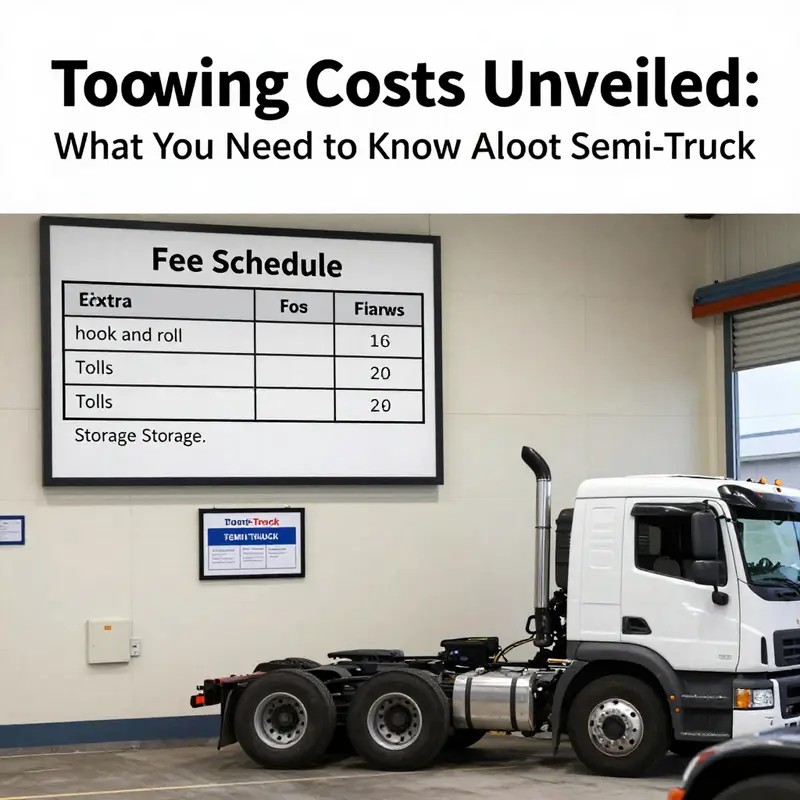
When a semi truck breaks down on a quiet rural highway or a bustling urban corridor, the most immediate concern is safety, then getting the wheels turning again as quickly as possible. Yet the invoice that arrives after the tow often reads like a puzzle with missing pieces. The base towing charge is only the beginning. To understand the true cost of towing a semi, one must follow a thread through an intricate network of fees that reflect the work’s complexity, the equipment demanded, and the realities of emergency logistics. The most obvious driver is distance, but distance in the world of heavy-duty towing is less about miles and more about the terrain, access, and the time required to maneuver a vehicle of such size. A short, five-mile tow might hover around a modest figure, perhaps in the neighborhood of a few dozen dollars plus a base connect fee. But slide into longer hauls—fifty miles or more—and the tallies can climb quickly, frequently surpassing the three-hundred-dollar mark with a trail of charges that are easy to overlook if one focuses only on the per-mile rate. Rural routes, where repair shops or depots are spread far apart, often compound these costs. There may be fewer nearby facilities with the right heavy-duty equipment, which extends travel time and increases fuel burn, labor, and the risk premium charged by the towing provider. The distance is inextricably linked to other cost drivers, and understanding that relationship is essential for fleet managers and drivers alike. The first thread in this tapestry is the physical demands of moving a semi truck. Unlike a standard car or light truck, semi tractors and trailers require specialized equipment to preserve safety and minimize further damage during recovery. A flatbed tow truck, sometimes known as a rollback, is not enough for a tractor-trailer. The operation typically relies on heavy-duty wreckers and a crew trained to attach, secure, and stabilize a vehicle of such scale. The weight, the suspension configuration, and the risk of shifting during transport necessitate equipment that draws on more fuel, more maintenance hours, and more precise rigging. Equipment costs are not trivial—and they ripple through the pricing structure regardless of whether the truck is a routine long-haul unit or a regional tractor that served out its service life. In practice, a single tow of a large semi demands more than simply strapping to a cable and pulling. It requires a coordinated set of actions: selecting the appropriate recovery vehicle, calculating the safest load path, ensuring the weight is distributed to protect axles and the drive line, and sometimes employing cranes or winches to right a truck that has settled in an awkward position. The effort mirrors that of any heavy industrial operation, where specialized capability comes at a premium. This premium is not only about the physical device but also about the service crew’s training, certifications, and readiness to respond under pressure. When a truck needs to be hauled across state lines or over long distances on congested routes, the cost structure expands further. A long-distance towing surcharge may be applied in addition to the base rate and per-mile charges. The rationale rests on several factors: longer travel time, increased fuel usage for both the tow vehicle and any support units, and the need to mobilize resources that may be out of immediate local reach. In urban settings, the congestion itself becomes a cost multiplier. Traffic and the hazards of navigating city streets with oversized equipment can slow down the operation, driving up hourly rates and the attached line items. In rural settings, the flip side occurs: fewer nearby facilities can mean extended travel time and higher absolute fuel costs, even if the hourly rate in a given region is modest. The result is a cost landscape where distance and location interact with the time of day and the availability of skilled responders. Time can diverge from the clock. After-hours and emergency service fees are a familiar feature across the towing industry, and semi-truck recovery is no exception. When a breakdown happens in the late night hours, on weekends, or during holidays, fleets can expect a premium that reflects the immediacy of the need. The operator must preserve safety and secure the scene, often with less favorable conditions and limited on-call staff. The surge rate compensates the crew for working outside the ordinary business cycle, but it also commonly extends the job’s duration because nighttime lighting, traffic control, and additional safety measures may be required. The upcharge for off-hours work is a straightforward concept, yet its impact compounds when paired with long-distance movement, complicating the pricing structure further. Fuel is another recurring variable in the cost equation. For long-haul operations, several firms implement a fuel surcharge that fluctuates with diesel prices. When fuel prices spike, the cost of moving a heavy tractor and trailer rises accordingly, even if the required miles remain constant. A fuel surcharge, while transparent in some quotes, can be easy to overlook if it sits embedded in a total or appears only as a small percentage. The real effect becomes visible once the diesel market tightens or price volatility increases. It is worth noting that a surcharge based on fuel cost aligns the customer’s bill with current operating realities, but it also requires vigilance from the customer to ensure that the metric and calculation method are clear. Storage or impound fees are the final waypoint in the journey through the most common extra charges. If the tow ends at a repair facility, a yard, or an impound lot, the vehicle may remain there for hours, days, or even longer. Every day, the inventory grows with storage fees that can accumulate quickly, especially when a vehicle cannot be immediately re-commissioned or loaded onto a carrier for return to service. The mechanics of a semi’s recovery can also generate additional lifting or rigging fees. In some situations, the unit may be damaged, upside down, or mired in a difficult position. Here, specialized labor and additional equipment—winches, cranes, or extra anchors—become necessary. The more complex the extraction, the higher the cost, because more crew hours, more precise handling, and risk mitigation measures must be deployed. It is not an exaggeration to say that every unusual position a truck occupies in a recovery adds a few more line items to the bill. Taken together, these fees—specialized equipment, long-distance surcharges, after-hours rates, fuel surcharges, storage, and lifting or rigging—constitute the spectrum of potential extras that can turn a straightforward tow into a substantial financial decision. The precise combination depends on the truck’s condition, the scene, the distance to the destination, and the operator’s policies and pricing framework. For instance, a tow to a nearby repair shop might still include a hook-and-roll fee, a small per-mile rate, and a modest base charge, but a long-distance transport to a distant depot could layer on a lengthy travel time charge, a fuel surcharge, possible tolls, and even a storage hold if the truck cannot be discharged immediately. Meanwhile, a scene that demands righting or lifting with specialized rigs can multiply the figures quickly because every incremental hour on site translates into more labor, more equipment usage, and more precise execution risk management. The practical effect for fleet managers is simple in principle but demanding in execution: get a clear, written estimate before work begins and insist on a detailed price breakdown that names every potential fee, not just every possible mile. A robust estimate should itemize the base towing charge, the per-mile rate, and a comprehensive list of anticipated surcharges and ancillary fees. It should also spell out whether the price includes hooking and securing the vehicle, whether tolls are billable separately, and whether any storage charges will accrue if the vehicle remains at a facility or impound lot. In the heat of a breakdown, this information can feel secondary to getting the problem resolved, but the long-term cost implications are real. The best practice is to request the full breakdown up front, ideally in writing, and to confirm that the quote covers all stages of the operation—from initial scene response and securing the vehicle to final delivery and any post-recovery administrative tasks. It is also prudent to ask about the possibility of multiple stops and how those stops will affect the price. If the truck must be moved to two different facilities or if the route requires a staging point, every stop, plus any associated loading or unloading fees, can contribute to the total. For fleets, a mechanism to capture and compare these charges across providers can help in vendor selection and budgeting. The goal is not to avoid charges but to illuminate them so that decisions are guided by transparency and a shared understanding of what constitutes fair compensation for the work performed. To that end, many operators provide a standard checklist to help customers anticipate costs. A typical checklist might include questions about whether the quote accounts for hook and roll fees, whether there are any hidden charges for securing or winching a vehicle in a compromised position, and how much weight the chosen recovery device can handle. The customer, in turn, should be ready with information that can influence the numbers: the truck’s weight class, the position of the vehicle at the time of call, whether the truck is loaded or empty, whether the trailer is attached, and any constraints at the destination such as access limitations or the need for conspicuity measures at night. In practice, it helps to keep a running dialogue with the service provider. When a crew arrives on site, they can confirm the initial assessment and adjust the plan if the scene changes. If the truck’s position requires a different rigging approach or if a toll route becomes necessary, the updated estimate should reflect those adjustments. A proactive approach to pricing also dovetails with the broader issue of preparedness. Fleet operators should continually educate their drivers and maintenance teams about the economic realities of roadside recovery. Understanding that a tow may involve more than distance can encourage better planning, such as keeping the truck in a state that minimizes the likelihood of a complex extraction, or at least ensuring contact information is readily available for the dispatcher to obtain accurate weight, axle configuration, and load details. For readers who want a broader view of related topics, the The Island Tow Truck blog offers ongoing insights into fleet emergency response strategies and practical readiness considerations, which can be a helpful companion to the more technical breakdown of fees in this chapter. You can explore more at the internal resource theislandtowtruck.com/blog.
Finally, while the specifics of fees will vary by jurisdiction and provider, the principle remains universal: always seek a complete, itemized estimate before agreeing to service. As a safeguard, request a clear written agreement that outlines all potential charges, including the unlikely scenarios that might require extra lifting or a longer route than originally anticipated. The costs of towing a semi truck are not merely a reflection of distance. They are a reflection of risk, complexity, and the careful orchestration of a recovery that must protect people, equipment, and the road network. When a fleet understands this framework and demands transparency, it is better positioned to manage the financial implications of an inevitable roadside incident without compromising safety or service quality. External references can provide additional context on the broader mechanics of towing and recovery, such as standard practices and terminology used to describe these operations: https://en.wikipedia.org/wiki/Towing. This external resource offers a general orientation to the terminology and concepts that underlie the specialized charges discussed here, helping readers connect the dots between the on-site realities and the pricing structures that govern them.
Final thoughts
Navigating the costs associated with towing semi-trucks requires understanding the complexities of what drives those expenses. By considering factors like distance, vehicle type, and regional variances, as well as the potential for additional fees, local businesses can better prepare for unforeseen towing scenarios. Awareness of these elements not only fosters more informed decisions but also enables smoother operations, benefitting auto repair shops, dealerships, property management, resort operators, and fleet services alike. Staying knowledgeable ensures you can respond effectively when the need for towing arises.