
For local auto repair shops, car dealerships, and commercial fleet operators, understanding the towing capacity of 3 to 4 ton trucks is vital. These trucks serve a range of industries—from property management and resort operations to heavy-hauling edge cases. Each chapter will navigate the towing capabilities of medium-duty and heavy-duty trucks, and delve into influencing factors like configurations and payload, equipping you with knowledge to make informed decisions.
Tow Thresholds for a Medium-Duty 3/4-Ton Truck: Reading Real-World Limits for Everyday Hauling
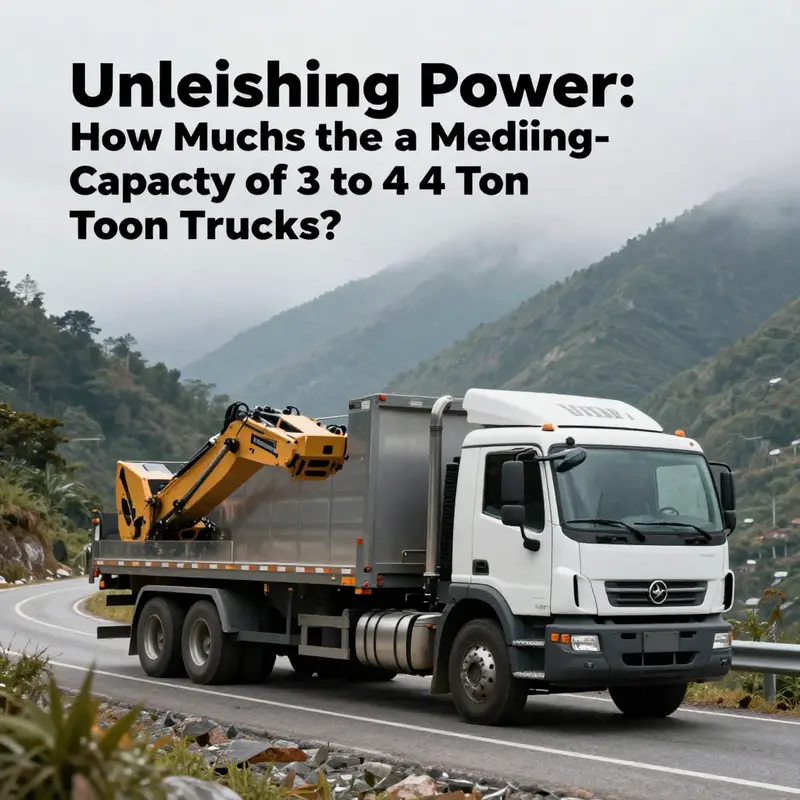
The question of how much a medium-duty 3/4-ton truck can tow sits at the intersection of engineering limits and practical, on-the-ground usage. In the real world, these trucks are designed to bridge the gap between traditional light-duty pickups and the heavy-duty workhorses that dominate fleets. Their value comes from a balance of power, durability, and a predictably manageable size for both urban work sites and outdoor escapes. When you look at a typical 3/4-ton profile—one that sits squarely in the middle of the spectrum—you find a vehicle that can haul meaningful loads, yet remains approachable for personal use, contractor tasks, and recreational towing. The commonly accepted range for these rigs, in many configurations, is roughly 7,500 to 10,000 pounds of trailer weight. That range reflects a practical ceiling under ordinary maintenance and with standard equipment. It’s a range tethered to the physics of weight, momentum, and braking, rather than a marketing promise. Yet the same chassis, axles, and suspensions that make them versatile can be tuned and configured to push higher or lower limits, depending on the job at hand. The core idea is that towing capacity is not a single number you carry in your head; it’s a relationship among the vehicle’s weight, its engine and drivetrain, and the trailer’s own weight and braking requirements.
To make sense of that relationship, it helps to frame towing capacity with a few terms that show up repeatedly in owner manuals and on data plates. First, the Gross Vehicle Weight Rating (GVWR) defines how much the truck can safely weigh, including the vehicle itself, passengers, cargo, and any installed aftermarket equipment. Then there is the Gross Combined Weight Rating (GCWR), which marks the maximum allowable weight of the truck plus the trailer it’s pulling, fully loaded. When you ask how much you can tow, you’re really asking how heavy a trailer you can pull without surpassing the GCWR, given the truck’s GVWR and the actual curb and payload weights it’s carrying on a given day. In practice, the maximum trailer weight you can tow equals GCWR minus the vehicle’s gross weight at that moment. If you’re evaluating a day’s load, you consider the payload you’re carrying inside the cab, plus the tongue weight pressing on the hitch, and compare that sum to the limits set by GCWR and GVWR. In practice, the numbers tell a story, but the daily realities of weight distribution, wind resistance, and terrain determine how that story unfolds on the road.
An often overlooked yet critical factor is the balance between payload and towing capacity. A 3/4-ton truck’s payload—its space to carry people, tools, and cargo—directly competes with its ability to tow. When the payload rises, the curb weight of the truck increases, which can reduce the available headroom for trailer weight before the GCWR is reached. The consequence is not solely a lower maximum trailer weight; it can also influence braking performance, steering response, and the tendency of a load to sway under wind gusts or rapid lane changes. In practical terms, a contractor who loads up the cab with gear and a heavy tool rack may find the truck’s towing ceiling challenged sooner than a weekend warrior who carries only passengers. As with many real-world capabilities, the numbers tell a story, but the daily realities of weight distribution, wind resistance, and terrain determine how that story unfolds on the road.
For a mid-range, 3/4-ton configuration, 7,500 to 10,000 pounds serves as a reliable benchmark across a wide swath of models and setups. This range aligns with what many owners consider “adequate” for common project trailers, mid-sized campers, and moderately heavy equipment haulers. It’s also a signal that higher towing figures—think the 12,000 to 20,000-pound territory—are typically the preserve of heavier, dual-rear-wheel designs or 1-ton platforms. Those heavier capabilities tend to come from trucks with stronger frame construction, revised suspensions, more robust axles, and engines tuned to sustain the added resistance of sustained, high-load towing. In other words, there is a spectrum in play, and the 3/4-ton class holds a precise position on it: robust enough for demanding tasks, yet attentive to fuel economy, maneuverability, and daily usability.
To translate the numbers into practical guidance, consider a few everyday towing scenarios. A medium-duty 3/4-ton truck is often seen moving large campers, utility trailers loaded with heavy equipment, or boats on substantial trailers. In these contexts, the trailer’s weight, distribution, and braking needs dictate what can be safely hauled. A well-balanced tandem-axle trailer with its own brakes, backed by a truck with a good set of brakes, stable tires, and a reliable hitch system, can keep the towing experience predictable and safe within that 7,500–10,000-pound window. The behavior of a trailer under braking—especially in downhill runs or high-speed highway merges—depends as much on tongue weight as on gross trailer weight. Tongue weight in the range of 10% to 15% of trailer weight is a typical target for stability. If the tongue is too light, the trailer can sway; if it’s too heavy, steering response can suffer and the truck’s rear suspension can compress, altering weight transfer and braking effectiveness. The numbers here matter, but the way they interact in wind, terrain, and road conditions matters even more.
Engine power and gearing are essential threads in this tapestry. A 3/4-ton model typically relies on a V6 or V8 powerplant paired with a robust automatic transmission, sometimes with gearing optimized for towing. The engine’s torque is what gets you moving, particularly from a stop when the trailer is heavy. Higher torque translates to more confident acceleration and more stable feel when pulling away from lights, especially on grades or with a loaded trailer attached. Transmission tuning, torque converter behavior, and the presence of Tow/Haul modes also influence how effectively the truck can maintain speed on inclines, hold steady in windy conditions, and manage the energy demands of braking through the trailer’s own braking system. The interplay between engine and drivetrain is another reason the same model can feel very different when it’s lightly loaded versus when it’s at the upper end of its towing range.
Another layer to consider is the configuration itself. A 3/4-ton truck configured with four-wheel drive (4×4) is often perceived as more capable off-road or in poor weather, because extra traction helps prevent wheel slip and assists in maintaining stability when pulling heavy loads over uneven terrain. The same 4×4 system, however, can add weight and reduce payload capacity slightly, which paradoxically can shrink the theoretical trailer weight you can pull if you’re also carrying a lot of gear in the cab. In practice, the tow rating remains a function of the vehicle’s structural limits and its braking capacity. A 4×4 system improves traction, which matters on hills or slick surfaces, but the overall towing ceiling is bound by the GCWR and GVWR just the same as a 4×2 setup. Some owners may opt for heavy-duty suspensions, upgraded springs, or even dual rear wheels, and those upgrades can push the practical towing window toward the higher end of the spectrum—closer to 12,000 pounds in certain rare cases—yet they come with trade-offs in fuel economy, spare space, and cost.
From a safety and maintenance perspective, the condition of the truck matters just as much as the configuration. Tires that match the load, brakes that are evenly wearing, and a suspension that hasn’t sagged under the weight of prior tows all contribute to predictable handling. A worn or under-inflated tire can alter cornering behavior and braking distance, especially when the trailer adds drag and weight to the system. The braking system of a heavy trailer demands attention as well: trailer brakes, proportional braking, and the electrical integration between truck and trailer brakes all influence stopping power and stability. Tires and brakes are the quiet partners in tow, and neglecting either can transform a manageable load into an unsafe pull, particularly in emergency braking or downhill descent scenarios. Beyond mechanical readiness, the weight of the load should be distributed with forethought: keep heavy cargo low and close to the axle, use a properly sized hitch, and ensure the hitch ball and ball mount are rated well above the intended tow weight. These details, though small on a page, have outsized effects on control, sway risk, and overall driving confidence when towing near the upper limits.
In practical terms, the 3/4-ton category thrives when used with purpose-built trailers and appropriately matched loads. A trailer that is too heavy for the truck—without a corresponding reduction in payload or an avoidance of harsh driving conditions—will soon reveal the limits of the vehicle. This is not a warning against capability but a reminder that the numbers on a spec sheet translate into real-world behavior only when the vehicle is properly equipped and operated within its design envelope. For many users, this means selecting a trailer with brakes rated to manage the load, ensuring the hitch, ball, and coupler are rated for the trailer’s weight, and confirming that the entire towing package—harness, electrical, and brake controllers—is set up and tested before heading out on the road. With the right trailer in tow, a 3/4-ton truck can move substantial weight with a degree of dignity rare in smaller pickups, providing a reliable platform for work and recreation alike.
A useful way to ground these considerations is to anchor the numbers to typical use cases. For instance, a mid-size camper trailer, when loaded and balanced, often sits well inside the 7,500–10,000-pound band. A utility trailer loaded with heavy equipment, if not overpacked, is another scenario where a 3/4-ton truck delivers dependable performance. A larger boat trailer, especially when the boat is sizeable and the trailer is not designed with top-tier braking capacity, can push toward the upper edge of the range. In each instance, the key is to account for the trailer’s weight with its own braking, plus the tongue weight pressing on the hitch, and then to compare that sum to the truck’s GCWR and GVWR. This approach keeps the operation honest and reduces the risk of overloading the drivetrain, brakes, or suspension.
The bottom line, distilled from the numbers and the field experience, is that a medium-duty 3/4-ton truck is a capable towing platform for a broad set of needs, offering enough capacity to haul mid-sized trailers and the gear that accompanies them. It is not a universal solution for every heavy trailer load, and pushing toward the 15,000-pound mark or beyond is generally the domain of heavier-duty configurations with greater gross vehicle weight ratings and more robust axles. Those higher limits come with incremental costs in fuel consumption, ride harshness, and maneuverability, particularly in tight spaces or urban environments. For most day-to-day applications—contracting jobs, weekend camping with a mid-sized trailer, or transporting larger boat trailers—a well-chosen 3/4-ton configuration provides a satisfying blend of strength and practicality. The reality is that towing capacity should be treated as a ceiling that informs planning, not a target to chase without regard to the rest of the vehicle’s health, the trailer’s braking and distribution, and the road you intend to travel.
If you’re aiming to understand and optimize your truck’s towing capabilities, the first practical steps are to review the data plate and the owner’s manual, which outline the exact GVWR and GCWR for your particular configuration. Then consider a careful inventory of your typical loads: how much will you haul, how often, and under what conditions. A scale at a weigh station or a public scale can help you confirm the truck’s actual curb weight, which, when combined with the payload and the trailer’s weight, shows you where you stand against the legal limits. A good plan also includes checking the trailer’s braking system, confirming that the hitch is rated for the anticipated load, and ensuring that the trailer’s own weight distribution is aligned with the towing vehicle’s capabilities. A conservative approach—erring on the side of a lighter load, better-balanced tongue weight, and a trailer with reliable brakes—will usually deliver the most consistent performance and safest results over time.
For readers seeking more practical insights and operating tips, the Island industry blog remains a valued resource for hands-on guidance and updated considerations about towing in diverse contexts. You can explore more practical perspectives and field-tested advice at The Island Tow Truck Blog.
As the landscape of towing evolves, with new engine options, updated transmissions, and smarter trailer-braking systems on the market, the core principles endure: know your GVWR and GCWR, manage payload and tongue weight, ensure the trailer is properly braked and balanced, and drive to the conditions in front of you. The numbers are a guide, not a destiny. They invite judgment and preparation, and when used well, they translate into predictable, safe, and capable towing experiences that keep projects on track and adventures within reach. If you’re mapping out a plan for your next heavy-haul task, start with the fundamentals, verify the ratings for your exact truck, and then build your load plan around those clear lines.
External resource: https://www.consumerreports.org/cars-tuv/how-much-can-a-truck-tow/.
Untangling Tow Limits: How a 3-4 Ton Truck Really Pulls and What That Means on Real Jobs
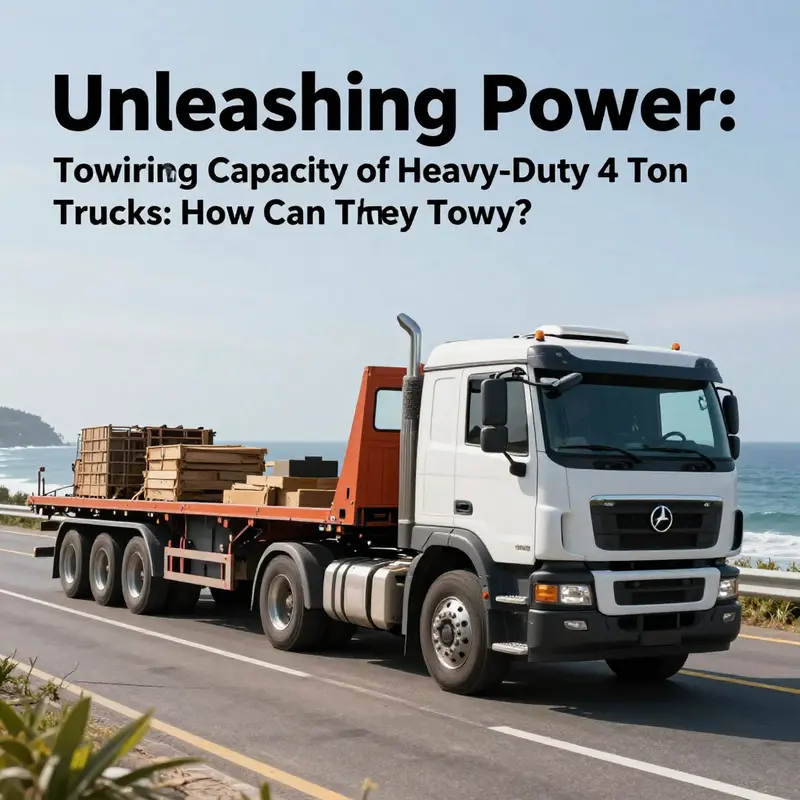
Understanding how much a 3-4 ton truck can tow requires looking beyond a single label. Towing capacity is a system property, not a fixed sticker on the door. It emerges from the interaction of GVWR, GCWR, hitch rating, braking capability, suspension, tires, and how the load behaves in motion.
In practice, many 4-ton trucks can tow roughly 3,500 kg to 4,500 kg (about 7,700 to 9,900 pounds). This baseline works for mid-weight trailers used by construction crews, land-care teams, and service fleets. The exact number depends on tongue weight, trailer braking, aerodynamics, and how weight shifts during accelerating, braking, and cornering.
Payload is not the same as towing. Payload is what the truck carries inside the cabin and bed; towing is how much weight is behind the vehicle while staying within safe control and braking limits. A vehicle may haul a certain payload but tow less (or more) depending on hitch, frame, drivetrain, and brakes.
Upgrades such as a stronger hitch, reinforced suspension, larger brakes, and better cooling can push the practical towing limit upward, but only within the GCWR and with adequate safety margins. When planning a job, verify tongue weight, trailer brakes, wiring, and lighting, and assess grade, altitude, and weather conditions.
For most day-to-day tasks, 3,500–4,500 kg is a solid baseline. For heavier or more demanding trailers and recovery work, higher configurations may apply, provided the entire system is designed for it and the operator maintains a margin above the limit. The key message: know the full system, not just the label on the door.
Tow Capacity Unlocked: The Subtle Forces That Determine How Much a 3–4 Ton Truck Can Tug
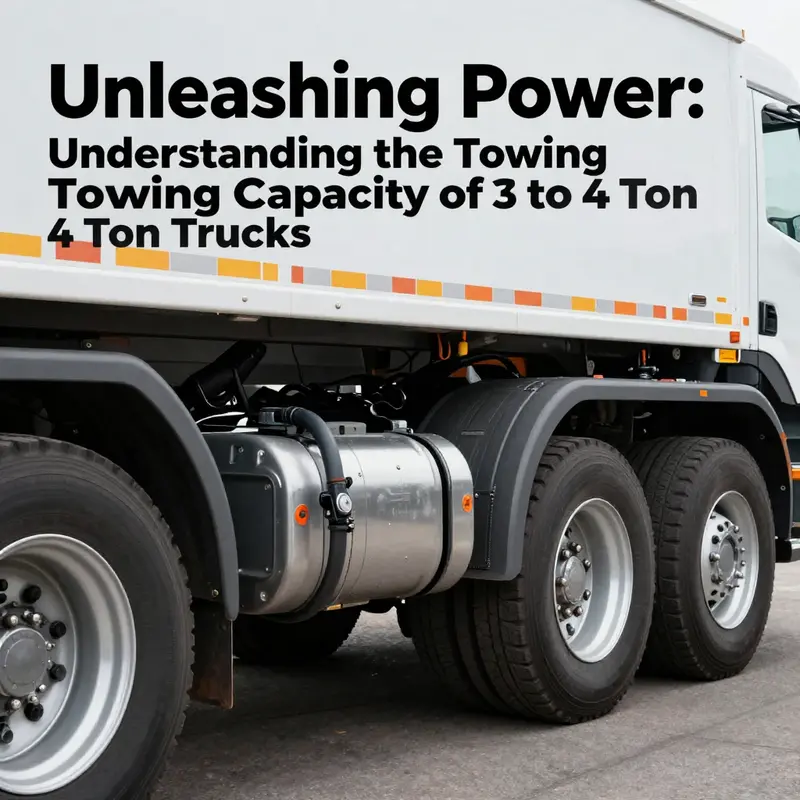
What a three- to four-ton truck can actually tow hinges on more than a single sticker on the door or a single advertised number. It sits at the intersection of how the vehicle is built, how it is equipped, and how carefully a user respects the limits that are built into the machine from the factory. In practical terms, the towing capacity of a medium- to heavy-duty truck is set by a combination of the vehicle’s gross weight limits, its powertrain might, and the precise way its chassis and systems are configured for load handling. This is not just a question of raw horsepower or a single max rating; it is a complex conversation among weight, strength, traction, braking, and cooling, all calibrated to work in harmony to keep you safe and your payload moving. When we weave these elements together, a clearer picture emerges: a 3- to 4-ton truck can tow a surprisingly wide range of trailers—yet the upper end of that range is earned, not assumed, and depends on careful matching of the truck’s config with the trailer and the task at hand.
First, a fundamental concept must sit at the center of any towing decision: the GVWR, or gross vehicle weight rating. This is the maximum weight the vehicle is certified to carry, including its own curb weight, passengers, cargo, and anything attached to the hitch. It is a ceiling the manufacturer sets after a battery of tests that examine stability, braking, steering feel, and overall dynamic behavior when the vehicle is loaded. When you consider towing, you must look not only at the GVWR but also at the vehicle’s gross combined weight rating, or GCWR, which couples the weight of the tow vehicle with the weight of the trailer and its payload. The practical implication is straightforward: even if the engine and transmission could deliver torque to pull a heavier load, the combination of the vehicle’s weight and the trailer weight cannot safely exceed the GCWR. This is the fundamental guardrail that protects brakes, drivetrain components, and traffic safety.
Within that framework, the role of the chassis and suspension becomes immediately clear. A robust chassis is more than just a backbone; it is the platform that transfers force from the engine through the transmission to the drive axles while supporting the added moment and inertia of a trailer behind. The suspension, in turn, must manage the added load without allowing the vehicle to pitch, yaw, or squat in a way that compromises steering or excessive tire scrub. In a 3- to 4-ton truck, the chassis must resist the thermal and mechanical stress that accompanies sustained towing, particularly when the trailer is not just a simple flatbed but a larger enclosed trailer or a heavy equipment carrier. A stiffer, well-damped suspension helps maintain control during acceleration, braking, and turning, and it reduces the risk of trailer sway when wind gusts or uneven pavement try to unsettle the combination. The Wisconsin winters may bring slick roads, but the real challenge is when a trailer’s mass resists steady steering and causes the tow vehicle to feel unbalanced. The right chassis design supports safer deceleration as well, a critical factor when towing heavy loads that require longer stopping distances.
Engine power and the corresponding torque curve play a decisive role, but not in isolation. A powerful engine is a tool that can generate high torque across a useful range, which helps when you are starting from a standstill with a heavy trailer, negotiating steep grades, or traveling on rough surfaces where acceleration is not linear. Yet torque alone does not guarantee a larger towing capacity. The transmission, drivetrain, and cooling system all translate that power to usable tow force without overheating or triggering protective shutoffs. Automatic transmissions with robust torque converters or dual-clutch arrangements, and manual options that keep engine speed within an efficient band, can maintain steady pull without slipping or heat buildup. Drivetrain selection—rear-wheel drive, four-wheel drive, or all-wheel drive—also affects towing, because traction is a real ingredient of performance. A 4×4 system can offer better control in adverse conditions, but it can also add weight and friction that reduce payload efficiency if not properly tuned for towing. The net effect is that a 3- to 4-ton truck with a capable engine and a well-matched transmission will tow more confidently in the hands of a trained operator, but the real limit is the point at which the drivetrain starts to overheat or the tires lose grip rather than the engine running dry.
The axle ratio is one of those “invisible levers” that can swing a tow rating in noticeable ways. A lower numerical ratio like 3.21 is friendlier for highway fuel economy and light-to-medium loads, whereas a higher numerical ratio such as 4.10 delivers more pull at lower speeds, which is valuable when you are moving heavy mass starting from rest or crawling up grades. However, that same higher ratio exacts a price in fuel economy and engine noise, making it a choice that must be weighed against daily operating needs. The road condition and the nature of the tow experience matter, too. If you routinely haul heavy loads in urban environments with frequent stops, the extra torque at lower speeds can be welcome, but if most travel is on long stretches of highway with little grade, a lower ratio may be the smarter choice. The axle ratio interacts with the engine’s torque curve and the transmission’s gear ratios to determine how efficiently you can use the available engine power, how long you can sustain a heavy tow, and how quickly you can reach highway speeds after a stop.
Tire and brake condition cannot be overstated. Tires do not merely carry the weight; they shape how that weight translates into traction and braking performance. A worn or undersized tire may fail to provide the required grip during acceleration, cornering, or braking, especially when a trailer is involved. The tire’s load rating must be sufficient for the combined weight of the vehicle and its trailer, and the pressure must be maintained at or above recommended levels. Brakes, equally critical, must be capable of bringing the heavier system to a safe stop. When a heavy trailer is attached, the braking load increases not only on the tow vehicle’s main braking system but can also place additional demands on the trailer brakes if the system is integrated. If the trailer has its own braking, synchronization with the tow vehicle’s brakes is essential to maintain stability and prevent surge. Without robust brakes and well-sorted tires, towing a heavy payload can produce long stopping distances, reduced steering control, and an increased risk of wheel lock or tire blowouts under stress. The maintenance of these components—tires, brakes, bearings, and electrical connections—becomes part of a practical towing plan, not an afterthought.
Another layer of complexity stems from how the tow setup is configured. The hitch is not a single unit but a system with ratings that must align with the trailer being pulled. A robust hitch rated for high pounds must be matched with a compatible ball size, coupler, and safety chains. The braking controller, electrical harness, and weight distribution system all contribute to how the load is managed. In fact, weight distribution hitches can alter the effective tongue weight on the tow vehicle and improve stability by redistributing some of the trailer’s mass toward the front axle of the tow vehicle. This redistribution reduces the likelihood of rear-end squat that can affect steering, and it helps keep the front wheels in contact with the road, maintaining steering feel and braking performance. It is not simply about attaching a heavier hitch and hoping for the best; it is about choosing an integrated approach where components such as weight distribution, trailer brakes, and hitch ratings are coordinated to behave as a cohesive unit under real-world conditions.
An equally important factor is the intended use case. A trailer designed for long-haul transport of equipment differs in weight distribution and braking demands from a smaller utility trailer used for local deliveries or a mobile workshop. The total weight a truck can tow in practice varies with how the load is distributed, how evenly the trailer’s weight sits over its axles, and how well the operator adheres to recommended speeds and driving practices. For instance, towing up a heavy trailer with a lot of tongue weight placed far behind the hitch can cause the rear tires to lose traction and the front tires to lift slightly, reducing steering response. Conversely, a trailer with proper tongue weight and balanced load will keep the tow vehicle more stable, enabling smoother, safer operation even when negotiating hills or uneven pavement. In this sense, the operator’s technique and load management become part of the equation. The best number on a spec sheet does not replace the need for prudent handling and attention to the combination’s behavior in real world conditions.
The role of manufacturer guidelines should never be understated. The most authoritative towing limits come from the vehicle manufacturer, who tests each configuration and publishes the maximum trailer weight for different setups. It is crucial to consult these specifications for any given vehicle, because the same model can have multiple towing capacities depending on drivetrain, cab style, bed length, axle configuration, and additional equipment. The difference between a light-duty, urban-oriented version and a heavier, highway-focused or construction-oriented variant can be substantial. In the absence of exact numbers from a trusted source, the safe course is to treat every towing scenario as an estimation supported by the broader engineering principles described here, and then verify against official figures before committing to a heavy trailer. The risk of overestimating capacity can manifest not only in failed components but also in unsafe handling characteristics that threaten the operator, passengers, and surrounding traffic.
Within this landscape, the decision about how much to tow is not a single number but a set of decisions that reflect a balance between performance and safety. For a 3- to 4-ton class vehicle, it is common to see ranges rather than fixed values. In many cases, properly equipped medium-duty trucks may tow somewhere in the vicinity of 15,000 to 20,000 pounds for substantial loads such as large trailers used in construction or industrial settings. Yet more robust configurations that emphasize heavy-duty capability may exceed 20,000 pounds, particularly when paired with a dual-rear-wheel arrangement and a drivetrain tuned for high tow performance. It is precisely this spectrum that makes generalizations insufficient. An urban delivery truck or a light-duty utility truck with a strong engine and a solid chassis may be well-suited for towing at the lower end of the range, while a heavier-duty variant engineered specifically for towing or hauling may capture the higher end. In every case, the governing principle remains consistent: ensure the entire system—the vehicle, the trailer, and the operator—operates within the documented safe envelope.
To bring this idea into a practical frame, consider how a fleet might approach towing planning without becoming paralyzed by numbers. A cautious approach begins with an audit of the fleet’s typical loads. If the work primarily involves transporting scaffolding, small machinery, or large tools, the combined weight might fall toward the middle of the range. If the job calls for moving bigger equipment or heavy materials for extended periods, the planning might require a configuration that pushes toward the higher end of the range, but only after confirming that the vehicle and trailer can handle the strain. The planning process should also account for road grade, climate conditions, and the frequency of towing. If a route involves steep grades or high ambient temperatures, the cooling system and transmission deserve extra attention, not a just-in-time fix. In other words, towing is as much about the environment and the procedure as it is about the vehicle in the abstract.
That is where a practical mind for towing integrates a few core habits. First, always verify the towing capacity for the exact configuration you intend to use. Do not rely on a vague memory of a model’s general capability. Second, ensure that the hitch, weight distribution system (where used), and trailer brakes are compatible with the vehicle’s specs. Third, perform routine maintenance checks focused on the components most stressed by towing: tires (including spare), brakes, transmission cooler or radiator, engine cooling system, and electrical connections to the trailer. Fourth, distribute the load properly on the trailer itself, paying careful attention to tongue weight. A trailer that carries too much weight toward its rear can lighten the tow vehicle’s front axle, changing steering dynamics and braking response. Fifth, remember that speed and driving style matter. Towing at a conservative pace on tricky sections of road reduces the likelihood of overheating and preserves the ability to stop in a reasonable distance.
Within this framework, it is helpful to keep an eye on a few signals that can warn of trouble before it becomes dangerous. If you notice the tow vehicle already showing signs of strain at modest speeds, or if the steering becomes inconsistent at highway speeds, or if the brakes seem to reach their limit sooner than expected, it is a signal to reduce the load or adjust how the load is distributed. If the engine seems to be working excessively hard, or if the transmission is downshifting frequently to stay in a power band, that is another indicator that the configuration may be at or beyond its practical limit. These signals are not failproof alarms, but they provide real-world feedback about whether the current towing setup is appropriate for the task. A sensible approach is to treat the tow as a process that evolves with the job: what works for one trailer on one route may not fit another trailer on a different route, even if the gross weight appears similar at first glance.
An important but often overlooked dimension is the educational value of thinking about towing not as a fixed equation but as a dynamic capability. The better a driver understands how the truck, trailer, and environment interact, the more effectively they can push the practical limits without crossing into unsafe territory. This means developing a mental model that recognizes the signs of stress in the system, knowing when to pull over and reassess, and having contingency plans for unexpected road conditions, equipment failures, or inclement weather. The best operators treat towing as a disciplined craft: they study the vehicle’s capabilities, they understand how adjustments to load distribution and hitch configuration alter performance, and they continuously refine their technique to match the demands of the job. In this sense, the actual limit becomes a function of knowledge, preparation, and respect for the vehicle’s designed operating envelope.
If you’re exploring this topic for a fleet or a personal project, a practical next step involves a two-part due diligence. First, check the manufacturer’s official guidelines for your exact model and configuration, including drivetrain, cab and bed combination, axle setup, and any added equipment. Second, supplement that data with a test-tow plan, where you simulate the heaviest loads you plan to carry and observe how the system behaves under controlled conditions. Document the results, including curves of engine speed, transmission behavior, braking response, tire performance, and the trailer’s sway tendencies under varying wind and road conditions. This approach turns the abstract question of “how much can a 3- to 4-ton truck tow?” into a rigorous, repeatable procedure that can guide daily operations and long-term planning alike.
For readers who want to explore the broader operational context of towing within fleets and emergency response scenarios, there are resources that address the practical realities of maintaining readiness and safety in demanding environments. For example, you can review a comprehensive guide on emergency preparedness and fleet strategies that cover how to align towing capabilities with response requirements and safety standards. essential fleet emergency response strategies provides a practical lens on how fleets prepare for unexpected events while ensuring that towing operations remain reliable and within safe limits. This kind of resource can be especially valuable for operators who must balance daily logistics with the need to respond rapidly to emergencies, where the reliability and predictability of towing performance become critical pieces of operational resilience.
In sum, the towing capacity of a 3- to 4-ton truck is not a single figure but a blend of engineered limits, mechanical design, and prudent operating practices. The exact value depends on a calculus of GVWR, GCWR, chassis strength, axle ratios, engine torque, transmission capability, drivetrain configuration, braking and cooling capacity, and the quality of the towing setup. When all these factors align with careful load management and disciplined driving, a 3- to 4-ton class vehicle can handle a surprisingly broad spectrum of heavy-tow tasks. But when any piece of the system—the hitch, the tires, the brakes, or the load distribution—fails to meet the demands, the risk rises quickly. The chapter’s starting premise—that these are the critical drivers—stays relevant regardless of the specific model in question. And while the numbers can vary from one configuration to another, the underlying truth remains: towing is a holistic practice that rewards thorough preparation, respect for limits, and a methodical approach to matching vehicle capabilities to the job at hand. For more detailed manufacturer guidelines and to verify your exact setup, consult the official documentation for your vehicle. On a broader scale, manufacturers’ guidelines and independent analyses emphasize the same point: safe, effective towing emerges from understanding and respecting the whole system rather than chasing a single maximum figure far beyond what the setup can reliably support. As you plan next season’s hauling schedule or fleet assignment, keep this integrated view in mind, and you will be better prepared to deploy your 3- to 4-ton tow capability where it truly makes sense, balancing efficiency, safety, and reliability.
External reference: For more manufacturer-specific guidelines, see https://www.ford.com/trucks/.
Final thoughts
Ultimately, knowing the towing capacity of 3 to 4 ton trucks allows business owners and fleet operators to make informed choices and optimize their operations. Whether handling heavy loads for construction or transporting goods for local businesses, understanding these vehicles can lead to enhanced efficiency and better service delivery on our beautiful islands. Trust the right equipment for your specific needs!