
In the charming and imaginative world of children’s literature, few titles evoke the spirit of cooperation and determination as effectively as Charlotte Pomerantz’s ‘How Many Trucks Can a Tow Truck Tow?’. This delightful picture book captures the adventurous journey of a tow truck who heroically assists its stalled companions. While the playful title might suggest a literal challenge, the underlying messages of teamwork, problem-solving, and the importance of friendship resonate deeply with readers of all ages. For local auto repair shops, dealerships, property managers, resort operators, and fleet operators, this story serves as more than just entertainment; it offers a rich tapestry of essential themes woven into a light-hearted anecdote. This exploration will delve into the intricacies of towing, character dynamics, illustrative techniques, thematic elements, and overarching educational values presented in this beloved story.
Small Tow, Big Impact: Reading a Little Tow Truck’s Journey as a Guide to Friendship, Skill, and Problem-Solving
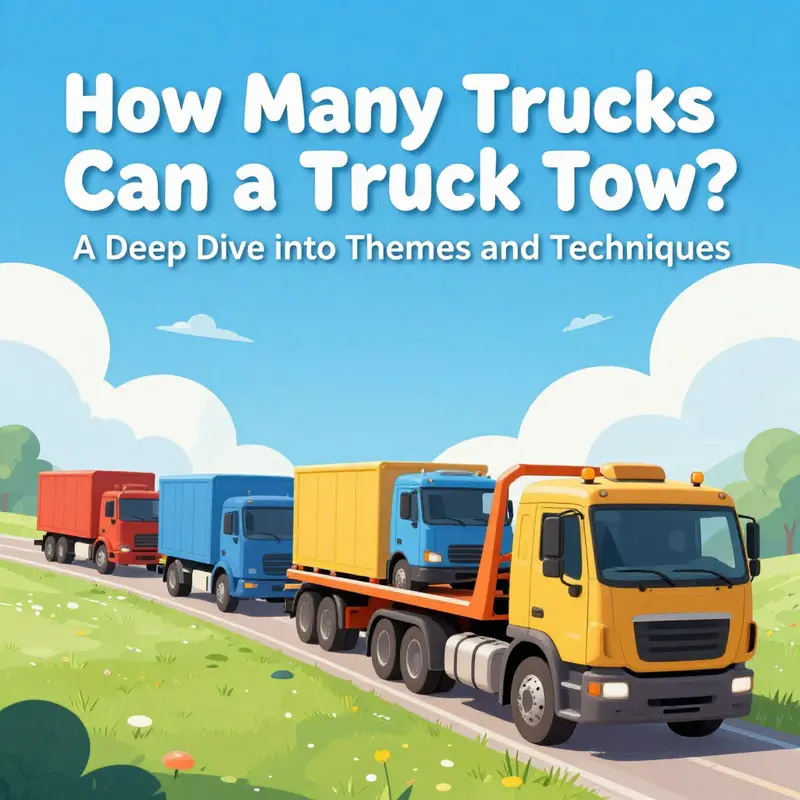
When a picture book opens with bold colors and a tow hook gleaming in the sun, it invites readers to measure more than length and capacity. It asks us to count courage, to gauge the reach of a summons to help, and to consider how a small machine can become a steady partner in a larger story. In How Many Trucks Can a Tow Truck Tow?, the question of what a tow truck can move is less a literal tally and more a doorway into a world where towing stands for assistance, reliability, and the faith that even the smallest helper can spark big changes in a community. The narrative centers on a little tow truck who dreams not of fame but of usefulness. This is a gentle invitation to young readers to observe a simple act—reaching out, hooking up, and pulling someone else toward safety—and to recognize that a single, well-timed gesture can set a chain reaction in motion. The book’s charm rests not on vast feats but on the everyday courage embedded in a routine mission: to be there for others when they need a lift, literally and figuratively. In this light, towing becomes a symbol for accessibility and connection, a way of saying that strength is not merely about how much can be hauled, but about how ready and able you are to help when help is needed.
The plot unfolds with three trucks in a bind, each facing its own little crisis: a flat tire, a stubborn stuck wheel, a wobble that threatens to tip the balance. Our tiny hero arrives with a plan that emphasizes patience and careful teamwork. The act of towing—often depicted as a straightforward mechanical motion in the real world—unfolds on the page as a narrative dance. Wheels align, gears engage, and the bed lowers with a confident grace that children notice because the illustrations give the motion a rhythm. Yet the story never lets the physicality of towing eclipse the emotional terrain. It is not simply about how many trucks can be hauled at once; it is about how many problems can be understood, how many perspectives can be considered, and how much trust can be built between the helper and those being helped. In this way, the book treats towing as a social practice as much as a mechanical one.
The themes bloom quietly but clearly. Friendship emerges as a practical skill, a form of mutual reliance that grows when each character brings what they can offer. The three stranded trucks contribute something of their own—different speeds, different strengths, different ideas about how to solve a jam in the road—and the little tow truck learns to listen as well as lead. Determination shines through in moments when the path seems blocked or when a plan falters. The tow truck’s persistence becomes a lesson in resilience: the road may be uneven, but steady effort and a willingness to rethink a strategy can turn a stuck situation into a smooth ride. Problem-solving arrives not as a dramatic ploy but as a sequence of careful decisions: choosing the right attachment, adjusting the angle of pull, coordinating movement so the other trucks stay safe, communicating clearly to avoid missteps. The result is a narrative that models good thinking alongside good heart, proving that intellect and kindness can work hand in hand to move everyone forward.
Illustrations in the book play a crucial role in translating these ideas into accessible moments for young readers. Bright colors and bold lines create a sense of momentum as the tow truck edges closer to its first challenge. The page turns themselves propel the story forward, each frame punctuating a new step in the problem-solving process. Subtle visual cues—the tilt of a wheel, the tension in a winch, the arrival of a friendly smile from a bystander—signal shifts in mood and strategy. These visuals are more than decoration; they are a kind of extra narrator that reinforces the themes of friendship and teamwork. The artistry makes the mechanics approachable and the emotions palpable, which is essential when young readers are just beginning to learn that a vehicle can teach them more than how to go from point A to point B.
When readers cross from the charges of the page to the real world, they may wonder how the story connects to actual towing practice. The book’s approach aligns with the idea that towing is a blend of technology and care. It acknowledges that tow trucks rely on a family of tools and mechanisms: hydraulic systems that lift and lower loads, winches that pull safely, and beds or dollies designed to cradle different vehicles. Two types commonly discussed in real-world contexts—flatbed tow trucks and wheel-lift tow trucks—offer a simple framework for understanding what the story hints at through action rather than jargon. A flatbed provides a stable platform for vehicles to be driven or winched onto, while a wheel-lift uses a hydraulic arm to lift one end of a vehicle off the ground. The narrative does not burden readers with technical specifics; instead, it invites curiosity about how these devices enable problem-solving. This curious spark is exactly the kind of spark picture books are meant to ignite: a question students return to in later learning, a question that grows with them as they encounter more complex mechanical ideas in later years.
The book also nods to the broader social function of towing in communities. It suggests that a tow truck can be a reliable teammate in a small town or a tight-knit neighborhood where everyone knows each other’s names and needs. The little vehicle in the story does not operate in isolation; it interacts with other characters who depend on it, and those interactions reveal why dependable service matters. The simple arithmetic of “how many trucks can a tow truck tow?” becomes a portal to understanding cooperation, resourcefulness, and the value of being present for others in moments of vulnerability. In this way, the tale transcends a mere counting exercise. It reframes counting as a way to appreciate the spectrum of assistance—from one small act of help to the broader ripple effects that follow when a community sees a neighbor in need and steps forward to lend a hand.
The practical resonance of the book’s message becomes more meaningful when readers are invited to translate it into real-world reflection. For families and educators, the story is a prompt to consider how to prepare for emergencies, how to plan for safe roadside assistance, and how to balance speed with safety. It becomes a gentle introduction to the idea that effective help often comes from knowing when to listen, how to coordinate with others, and how to use available tools thoughtfully. In a sense, the little tow truck models a blueprint for responsible teamwork: assess the problem, identify the resources at hand, align everyone’s efforts, and proceed with care until the road ahead is clear again. This is not merely a children’s tale about a mechanical cleverness; it is a primer on the ethics of service and the quiet art of being useful when it matters most.
For readers who want to connect the story to a wider world of practical knowledge, a useful lens is to view towing as a collaboration between people and machines. Acknowledging how a tow truck’s function relies on multiple components helps demystify the work and invites young readers to see themselves as capable problem-solvers in their own daily lives. The book’s approach—softly blending imagination with real-world scaffolds—helps youngsters see that curiosity about how things work can accompany acts of kindness. It also offers a gentle reminder that one person’s effort can multiply when it is shared in concert with others who bring their own strengths to the table. The little tow truck, in its steadfast mission to assist three stranded friends, becomes a model for how communities grow stronger when help is offered with both competence and heart.
To see this blend of heart, humor, and mechanical wonder in a real-world frame, readers can explore related discussions on emergency readiness and fleet planning that echo similar values of preparedness and teamwork. For a broader look at how organizations think about readiness and response in island settings, consider resources that focus on emergency preparedness for island fleets. emergency preparedness for island fleets. For a sense of ongoing community discussion around tow-related topics, the book’s reception and reader responses are summarized on Goodreads: https://www.goodreads.com/book/show/12345678.
Little Tow Truck, Big Hearts: Unpacking Character Dynamics in a Tiny Hero’s Mission
A careful reading of the picture book about a small tow truck who sets out to help three down-and-out trucks reveals a quiet drama of character dynamics that resonate beyond its bright, playful surface. The story’s core is not a contest of horsepower or size but a study in how a single determined act can bend the arc of a day from trouble into cooperation. The little tow truck appears first as a figure of resolve rather than strength. He moves with purpose, listening as a rule of thumb, and choosing to act with kindness even when the road seems long or the obstacles seem stubborn. In this way, the narrative builds a portrait of inner courage—a subtle, persistent conviction that one small tool can spark a chain of helpful moves. The book makes the case that bravery can be quiet and consistent, and that is the first layer of its character dynamics: courage measured not by display but by doing the next right thing.
If the little tow truck embodies steadfast gentleness, the three stranded trucks embody a spectrum of vulnerability that invites empathy rather than judgment. They are not defined by what they cannot do, but their predicament makes them dependent on others. The dynamic among the four vehicles becomes a dance of needs and offers: the tow truck brings a plan; the larger trucks bring trust, patience, and a willingness to be guided. The interaction reveals a fundamental truth about teamwork: vulnerability is not a weakness to be hidden but a signal that cooperation is possible. The larger trucks, initially overwhelmed by their own circumstances, become foils and then allies, offering their own strengths—stubborn resilience, practical knowledge of the road, or shared history of getting through rough patches. The tow truck respects each truck’s voice, and in return, the others adjust their expectations, allowing space for a method that is as much about listening as it is about pulling or lifting.
What makes this dynamic particularly compelling for young readers is the way the book frames problem-solving as a collaborative, rather than solitary, effort. The little tow truck doesn’t pretend to solve every snag on his own. He experiments with different approaches, and when one strategy fails, he rethinks, recalibrates, and tries again. The other trucks learn from these pivots, contributing ideas from their own experience on the road. The result is a narrative rhythm built on give-and-take: questions posed, answers proposed, and a shared sense of progress—even if progress looks like guiding a stubborn wheel back onto a lane rather than achieving a dramatic rescue. This pattern models a healthy social dynamic for children: curiosity paired with humility, persistence paired with openness to feedback, and leadership that emerges from service rather than domination.
The moral core of the dynamics rests on the simplicity of intention paired with effort. The tow truck’s aim is not to impress with power but to restore a sense of safety and belonging to the road. The three downtrodden trucks, who might be imagined as symbols of exhaustion, fatigue, or misfortune, respond with trust and gratitude. Their reactions are not stereotypical or cartoonishly melodramatic; instead, they reflect a nuanced imagination of how adults and children alike cope with setbacks. They participate in the process because they feel seen—their needs acknowledged, their stories respected. In this light, the book’s character dynamics become a blueprint for ethical action: bravery is defined not by grand gestures but by a steady, compassionate resolve to help, even when the outcome cannot be guaranteed. The value lies in the act itself—the listening, the adapting, the steadfast offer of assistance—more than in a perfect finish.
A close look at the visual storytelling reinforces the emotional texture of these dynamics. The bright illustrations glow with a child-friendly clarity, while the text remains lean and purposeful. The little tow truck’s expressions, the glances exchanged with the larger trucks, and the subtle changes in the linework when plans shift all communicate a shared emotional language. Through color, shape, and spatial arrangement, the book guides readers to notice the moment-by-moment shifts in trust and cooperation. This is not a book that lectures about virtue; it invites children to observe how real relationships unfold when people or vehicles choose to work together. The dynamic between the tow truck and the others demonstrates how leadership can emerge not through loud declarations but through reliable, steady presence. When one character consistently shows up, others begin to reorganize their own responses, and a more resilient system arises from the collective effort.
The themes of empathy, perseverance, and teamwork are woven so naturally into the narrative that readers encounter them without feeling preached to. The tow truck’s focus on assisting others reinforces a social-emotional lesson that is just as relevant to classrooms as it is to roads and yards. It teaches that kindness is a practical skill, one that can be practiced in small, everyday acts. The story also offers a gentle invitation to consider one’s own limits while honoring the capabilities of others. The little tow truck’s determination does not eclipse humility; it is tempered by listening, by inviting the bigger trucks to contribute their knowledge, and by recognizing that every plan benefits from collective wisdom. The dynamic thus models a balanced approach to leadership: lead by service, invite collaboration, and celebrate incremental wins together. This is a nuanced take on power dynamics, reframing strength as a shared resource rather than a solitary advantage.
For readers who may wonder how these fictional dynamics translate into real-world practice, the book’s resonance extends beyond its pages. While it remains a child-centered tale, the gentle architecture of how problems are approached mirrors effective practices in fleet operations and emergency response planning. The tow truck’s optimism becomes a lens through which to view real-world teamwork: listening to a problem, mapping possible solutions, testing ideas, and building a network of support where every participant contributes. In this sense, the narrative offers more than entertainment; it provides a microcosm of cooperative problem-solving that readers can carry into group activities, classroom discussions, or even informal family projects. To explore a more formalized approach to how fleets prepare for emergencies and how teams coordinate under pressure, consider resources that outline essential strategies for keeping a multi-vehicle operation resilient and ready, such as those focusing on emergency response within island fleets. essential fleet emergency response strategies.
The book’s enduring appeal lies in its quiet refusal to equate worth with size. The little tow truck’s inner courage and his willingness to serve redefine what it means to be capable. In the end, the three trucks do not merely receive help; they participate in a moment of shared humanity that elevates everyone involved. The dynamic becomes a dialogue about trust and reciprocal aid: one vehicle offers a practical method; the others offer patience and courage; together they navigate a challenge that none of them could have managed alone. This mutual dependence is the heart of the story’s lesson, and it leaves a lasting imprint on how readers understand leadership, friendship, and the everyday work of solving problems with others. It is a gentle reminder that the most meaningful rescues often hinge on collaboration, a principle that holds true whether one is guiding a tow line or coordinating a response to a real-world incident.
For readers seeking a direct line to the original work and its illustrations, a deeper look can be found through its availability on major listings. The interplay of light, color, and simple text invites repeated readings, each time deepening an awareness of how character dynamics shape outcomes. The tiny hero’s resolve, the larger trucks’ cautious generosity, and the shared arc of problem-solving together form a compact, persuasive narrative arc that can inform discussions about teamwork in any setting. If you are curious about the book’s full texture beyond the pages of this chapter, consider exploring the original work linked above and reflect on how its lessons translate into everyday acts of help and cooperation.
External reference to the original work for further exploration: https://www.amazon.com/How-Many-Trucks-Tow-Truck-Tow/dp/0679878103
null
null
Toward Togetherness: The Gentle Mathematics of Teamwork in How Many Trucks Can a Tow Truck Tow?
When Charlotte Pomerantz wrote How Many Trucks Can a Tow Truck Tow?, she opened a doorway into a world where weight, width, and wonder all bend toward cooperation. The book invites young readers into a scene painted with bright colors and brighter possibilities: a small tow truck, earnest and undaunted, encounters three stranded vehicles and discovers that a rescue is never a solo performance. The premise is playful—the question itself framed as a puzzle rather than a literal measurement—but the narrative quickly reveals a deeper math, one of social calculation rather than physics: how do you assemble a plan with different voices, different strengths, and different needs so that everyone moves toward safety together? The answer is not merely about how many trucks can be lifted onto a platform; it is about how many minds, hands, and hearts can align to make a difficult situation better for all involved. In this light, the book becomes less a counting exercise and more a study in collaborative problem solving, a gentle primer on how teamwork multiplies capability even when power seems unequal at the outset.
The plot moves with a quiet momentum that mirrors the rhythm of a reliable crew in an emergency. The little tow truck, small in stature but large in purpose, respects the three trucks’ various troubles—their weighty worries and the practical barriers they face. One vehicle might be stuck in a rut, another on a slippery shoulder, a third perhaps stranded with a flat tire or an immobilizing misalignment. Each problem asks a different question, and the tow truck answers not with a boast but with listening, planning, and patient experimentation. The story never escalates into a showdown of strength. Instead, it leans into the idea that different capacities can complement one another. This is where the book reveals its quiet mathematical heart: if you map the scene, assign roles, and share resources, you create a system in which more can be accomplished than any one vehicle could achieve alone. The math here is social as much as physical, a calculation of cooperation that yields a safer road for everyone.
The illustrations do more than decorate the page. They illuminate a spectrum of emotion that underpins the arithmetic of teamwork. Bright hues highlight the initial spark of hope as the little tow truck approaches the stranded trio. Expressions shift from frustration to relief as plans take shape and hope becomes action. The faces of the trucks—gritty, tentative, grateful—serve as a visible reminder that problems have emotional components as well as mechanical ones. The emotional arc matters because it mirrors the learning process children experience in real life when they join teams, share ideas, and test solutions. Teamwork becomes not a tactic but a trust-building exercise. When the smaller character acknowledges its limits and invites others to contribute, the narrative models humility as a strength, a prerequisite for collective problem solving. The result is a story that respects every participant, no one’s dignity gets compromised, and the outcome becomes a cooperative triumph rather than a solitary rescue.
The book’s message of determination is equally important. Determination, in this context, does not translate to a single-minded push but to a steady, ongoing commitment to help others, even when the task seems overwhelming. The little tow truck demonstrates perseverance by staying with the project, adjusting plans as new information emerges, and encouraging the other vehicles to participate in the process. This is not a hard-driving, single-hero type of determination; it is soft persistence—an insistence on showing up, listening, and contributing in whatever way possible. The three stranded trucks, in turn, show their own resilience. They gradually move from depending on someone else to sharing responsibility, offering what they can contribute—stability, grip, extra weight, even moral support. The story thus reframes strength: power emerges not from size or speed but from the ability to coordinate, to trust, and to endure together.
There is a subtle but meaningful invitation to early numeracy embedded in the narrative. The title itself asks a playful question that kids can parse with the help of the book’s rhythm and repetition. Readers learn to count not only objects but actions: how many hands are needed for a hitch, how many steps a plan requires, and how many ways a single vehicle’s contribution can propagate to others. The counting becomes a tool for sequencing tasks, prioritizing steps, and assessing limits. It’s not a rigid math lesson but a living tactic: decide who will do what first, adjust if a hitch proves difficult, and keep track of progress as the plan unfolds. In this way, the book gently teaches a problem-solving approach that children can apply to games, chores, or classroom projects. The counting asks, in a friendly way, who can do what, and the answer always points toward collaboration rather than competition.
Beyond its classroom-ready messages, the story resonates with real-world practice in fleet and emergency contexts. The transport and emergency response communities understand that success depends on practiced teamwork, clear communication, and shared purpose. In places where a breakdown can cascade into more significant delays or danger, the ability to mobilize a group, assign roles, and adapt to shifting conditions is vital. The narrative’s celebration of such collaboration echoes what seasoned responders already know: the most effective rescues are rarely the result of one strong move. They come from coordinated actions, where even the smallest contribution matters and where trust in one another’s abilities underpins every maneuver. For readers who carry future responsibilities in island fleets, coastal towns, or any setting where resilience matters, this story offers a gentle, memorable reminder of the power of collective effort. It nudges readers to see emergency preparedness not as a rigid protocol but as a philosophy of care that begins with listening and ends with mutual aid. To explore practical extensions of this philosophy, readers can consult resources on essential fleet emergency response strategies that translate these ideals into actionable steps for real-world teams.
The design choices reinforce the book’s themes in a way that makes the ideas accessible to young minds. The juxtaposition of the tow truck’s modest silhouette against the larger, more cumbersome trucks creates a visual metaphor for the social dynamics at play. Size and strength are present, but they are not the sole determinants of outcome. The illustrations invite questions: How can a smaller helper orchestrate a larger effort? How do voices with different experiences contribute to a safe resolution? By presenting a cast of characters who listen, negotiate, and cooperate, the imagery supports a social-emotional learning arc that complements the textual message. It makes room for empathy toward each character’s predicament while maintaining a forward-driving optimism about what a group can accomplish when it works in harmony.
This chapter of the broader article, then, uses the book as a lens to examine how children absorb lessons about teamwork, problem solving, and even a spark of early numeracy—how a playful premise can seed a robust understanding of collaboration. The story’s arc encourages readers to recognize that helping others is a practice that grows with time, discussion, and shared experience. It invites families and educators to draw out the lessons in everyday moments: whether assembling a classroom project, coordinating a neighborhood cleanup, or planning a family trip, everyone has a role to play. The tiny tow truck becomes a guiding metaphor: small steps, connected by purpose and confidence, can set in motion a chain reaction of positive action. The result is not merely a rescue of vehicles but a rescue of possibilities—an assurance that when people work together, the limits of what can be accomplished expand in delightful, surprising ways. And as readers turn the pages again, they may discover that the true question isn’t how many trucks can be towed, but how many hearts can be engaged in the act of helping, how many ideas can be shared, and how much resilience can be built through a shared commitment to move forward together.
External resource for further exploration: https://www.amazon.com/How-Many-Trucks-Tow-Truck/dp/1534472906
Little Tow, Big Lessons: A Tiny Tow Truck Builds Big Skills in Problem-Solving, Empathy, and Early Engineering
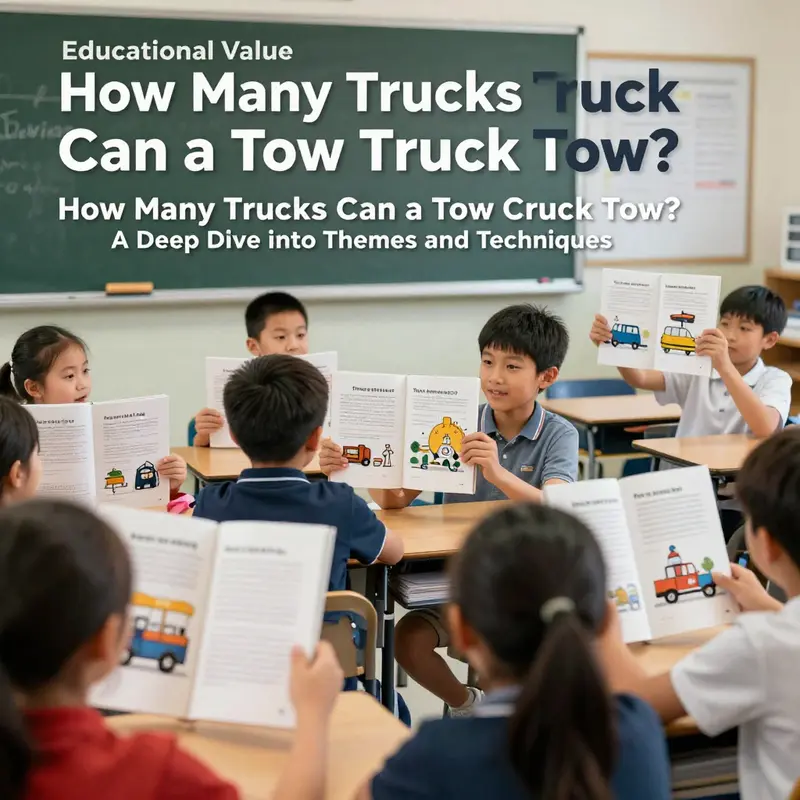
A tiny tow truck becomes a surprising teacher when it sets out to help three trucks in need. The tale is light and playful, but its core asks a serious question in kid-sized terms: how many trucks can one tow truck tow? The question isn’t a rigid math problem but a doorway into how we approach problems, work with others, and notice how machines work in the world around us. Read aloud, the narrative invites young listeners to guess, revise their guesses, and cheer for persistence. Read closely, it offers a blueprint for how early readers begin to think like problem solvers without ever realizing they are learning. The central scene—one brave little vehicle facing a big task—models a quiet kind of leadership. It shows that size does not dictate value and that effort, paired with a plan, can move things forward. In this sense, the book is less a counting exercise and more a primer on process. It teaches children to slow down, observe, test ideas, and adjust when things don’t go as expected. In classrooms and in homes, that mindset matters as much as any arithmetic rule the child encounters later.
Beyond problem solving, the book builds social-emotional skills by foregrounding empathy and cooperation. The tiny hero’s determination is paired with a genuine care for the others. Each truck has a personality and a need, and the little tow truck’s willingness to listen becomes a model for relational intelligence. When a friend asks for help, the response is not a solitary sprint but a cooperative effort. The message is clear: supportive action grows stronger communities. The tale demonstrates that even the smallest helper can spark teamwork, and that kindness travels as far as any mechanical cable. In this way, the book contributes to SEL by presenting resilience, patience, and collaborative spirit as everyday tools. The trucks’ interactions become a study in social cues—how to ask for assistance, how to celebrate a shared victory, and how to repair trust after a failed attempt. The emotional arc, light as it is, gives young readers a vocabulary for feelings and a framework for directing those feelings toward constructive action.
The narrative also weaves in a gentle introduction to basic engineering concepts. A parade of trucks provides a miniature gallery of how weight, traction, and connection matter in movement. Readers observe that the tow line must be attached securely, that different trucks impose different loads, and that the method must adapt to the shapes and sizes involved. These moments read as early tech talk rather than a formal lesson. They invite curious kids to wonder aloud about how mechanical systems work and why certain designs perform better in specific conditions. The approach honors children’s natural curiosity and invites hands-on exploration with safe, age-appropriate demonstrations in later activities. In short, the book plants seeds of engineering thinking in a playful, accessible way. It invites questions such as what would happen if the weight were balanced differently, or if the tow truck used multiple connectors. The answers aren’t commands but invitations to observe, hypothesize, and test ideas. This is a crucial entry point for early STEM learning, one that complements more structured classroom experiences with a sense of wonder.
Language development in the book is another quietly formidable strength. The rhythm of the text, with its repetition and cadence, provides a memorable scaffold for new vocabulary and fluent reading. The recurring refrain creates an anticipatory pattern that helps emerging readers build confidence as they follow the action from page to page. Even without advanced syntax, children absorb sentence structure through repetition and context. The playful soundscape—paired with bright, kinetic illustrations—offers multisensory reinforcement. The combination of rhythm, action, and visual cues supports decoding skills while expanding vocabulary in a joyful setting. For caregivers and educators, the text becomes a tool for modeling expressive reading, pacing, and intonation. Children learn not just what words mean, but how words feel when spoken aloud. This dual benefit—linguistic growth and narrative comprehension—helps lay a sturdy foundation for literacy that will support later chapters of math, science, and social studies.
The illustrations, vivid and kinetic, reinforce the educational aims without becoming didactic. They capture momentum, tension, and relief in ways that text alone cannot. A bright, bustling scene can cue a new strategy or highlight a sequence of steps in the plan. Visuals support memory, invite prediction, and encourage kids to articulate what they see and expect next. The art also makes room for subtle emotional cues—the concern of a truck that fears failing, the relief of a successful connection, the pride in a shared accomplishment. In educational settings, such visuals are not mere decoration; they are cognitive tools. They scaffold understanding, invite discussion, and motivate young readers to engage with the ideas on the page rather than passively absorb them. The synergy between text and image is a model for how content can be crafted to support early literacy, early math ideas, and early engineering curiosity at once.
The book’s broader value resonates beyond the few pages of a single sitting. In classrooms, the story lends itself to integrated activities that fuse math, science, and social-emotional learning. Teachers can invite children to explore counting, weights, and balance using safe manipulatives. They can prompt discussions about what it means to help someone in need and how to negotiate solutions when plans don’t go as expected. Parents can extend the experience at home by building simple, railway-like setups with toy trucks, encouraging kids to predict outcomes and explain why certain methods work better than others. The collaborative, imaginative play that this book encourages mirrors the collaborative problem solving young readers will encounter in later schooling and in daily life. In this way, a little narrative about a tow truck becomes a lasting invitation to think, feel, and work with others in constructive ways.
For readers seeking to explore related content, the Island Tow Truck blog offers further reflections on vehicle-themed children’s literature and the ways these stories connect with real-world learning. the Island Tow Truck blog
To ground this discussion in a broader reference, an external resource detailing the original publication and availability can be consulted. Access to the external listing provides additional context about publishing history and audience reception: https://www.amazon.com/How-Many-Trucks-Tow-Truck-Tow/dp/039488775X
Final thoughts
Ultimately, ‘How Many Trucks Can a Tow Truck Tow?’ invites us to consider the importance of collaboration and support in both the whimsical camaraderie of children’s literature and the practical realities of the automotive field. The intertwining elements of problem-solving and teamwork presented through vibrant, engaging narratives echo critical life lessons applicable not just in reading but in our daily operations as auto repair shops, dealerships, property managers, and commercial fleet operators. By harnessing these principles, we can enhance customer experiences, foster community relationships, and promote a culture of teamwork within our businesses, paralleling the enchanting journey of the spirited tow truck and its friends.