
Whether you’re managing a property, running a commercial fleet, or providing services as a dealership or repair shop, understanding how to rent a truck for towing is essential. The right truck can be a game-changer when moving equipment, transporting goods, or even assisting guests at resorts. This article serves as your guide, revealing key insights in three pivotal chapters: the fundamentals of truck rentals suitable for towing, the crucial safety considerations to keep in mind, and the necessary rental policies and requirements that ensure a hassle-free experience. Let’s enhance your towing experience and help you navigate the unique challenges faced in our island communities.
Renting a Truck to Tow a Trailer: What You Must Know Before You Hook Up
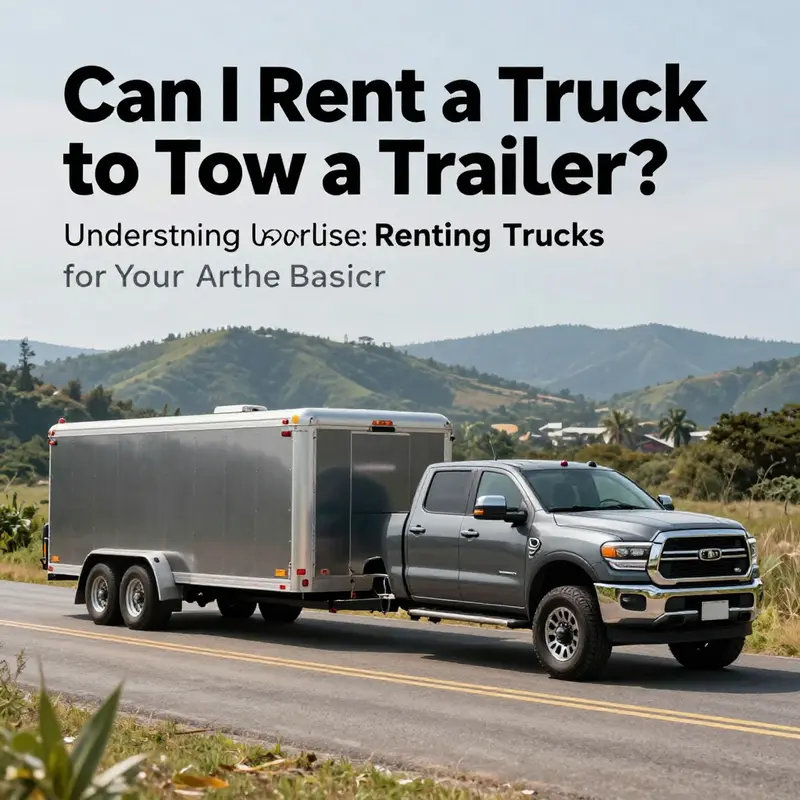
Renting a Truck to Tow a Trailer: What You Must Know Before You Hook Up
Renting a truck to tow a trailer is a practical solution for many hauling needs, from moving household goods to transporting equipment for a job site. The idea seems straightforward: find a truck, hitch the trailer, and go. In practice, a few critical checks and decisions determine whether that plan will be safe, legal, and cost-effective. This chapter walks through the essential considerations in a single, integrated narrative so you can make confident choices and avoid last-minute surprises.
Start by treating the rental as a towing job, not just a vehicle rental. That mental shift focuses attention on weight, connections, documentation, and protection. The first question to answer is simple: does the truck have the towing capacity you need? Every vehicle has a rated towing capacity, the maximum weight it can safely pull when properly equipped. That number reflects the strength of the frame, the power of the engine, the capability of the transmission, the design of the suspension, and the capability of the cooling and braking systems. When you rent, don’t guess—verify. Compare the combined weight of the unloaded trailer, the cargo you plan to carry, and any passengers or additional gear in the truck against the vehicle’s published towing capacity. If your total weight approaches the rated limit, step up to a higher-capacity truck.
Towing capacity is only part of the picture. You also need the right hitch and a safe, compatible connection. Trucks come with different hitch classes and receiver sizes. The hitch must match the trailer’s coupler type and be rated for at least the weight you intend to tow. Electrical connections are equally important: trailer lights and brake systems must integrate with the truck’s wiring. Modern trailers may use electric brakes that require a controller in the tow vehicle. Some trucks include a factory-installed wiring harness and brake controller, while others do not. Before signing the rental agreement, confirm the specific hitch equipment and electrical connections the truck provides. If the vehicle lacks the correct setup, you may be able to rent or purchase the necessary adapter or brake controller from the rental provider—but expect extra fees.
Rental company policies shape what you can and cannot do. Not every rental outlet allows towing, and policies vary by location and fleet type. Some providers restrict towing to certain models or to customers with commercial accounts. Others limit the kinds of trailers they allow or the locations where you can tow. Read the rental agreement thoroughly and ask staff to clarify any towing-related clauses. Key items to verify in the contract include whether towing is permitted, what types of trailers are covered, any additional charges for towing, and whether there are mileage or geographic restrictions. Also check whether the agreement requires special permits or endorsements for certain trailer and truck weight combinations.
Driver qualification and licensing rules differ by jurisdiction and by the combined weight of the truck and trailer. In many places, everyday drivers can tow small to moderate loads on a standard license. But if the combined gross vehicle weight rating (GVWR) exceeds a specified threshold, you may need a commercial license endorsement or a special permit. When you book the truck, tell the rental agent the gross weights you expect so they can advise whether your license is adequate. If you are unsure how to calculate GVWR or combined weight, ask the rental provider for assistance—accurate weight estimates protect you from fines, permit issues, or voided insurance coverage.
Insurance and liability deserve particular attention. Standard rental policies may not cover damage resulting from towing or may exclude trailers entirely. Ask about optional towing insurance or roadside assistance packages and what they cover—especially liability for damage to the rental truck, the trailer, and third-party property. If you rely on personal auto insurance or a credit card’s rental coverage, confirm that those policies extend to towing rental trucks and to the specific trailer type. Some insurers impose restrictions on vehicle class, driver age, or use cases. Keep copies of any additional coverage documentation in the vehicle during the trip.
Inspection and pre-trip preparation should become routine. Walk around the truck and the trailer together and document any existing damage to both. Check fluid levels, tires, and lights. Test the hitch and safety chains. Confirm that electric brake controllers and breakaway systems function. Make sure the trailer jack and landing gear operate smoothly and can be stowed safely. If the truck uses auxiliary mirrors or a camera system for towing, learn how to use them before you leave the lot. Taking photos and noting mileage at pickup helps if disputes arise later.
Loading the trailer correctly is a practice that directly affects handling and safety. Too much weight at the rear produces trailer sway; too much forward weight can overload the truck’s rear axle and impair steering. Aim for proper tongue weight—typically about 10–15% of the total trailer weight for conventional trailers. Distribute cargo so heavy items sit low and centered over the trailer axles. Secure cargo to prevent shifting during transit; even small shifts can unbalance the trailer at highway speeds. If you expect to carry unusually heavy single items, consider using load-assist features like winches and dedicated tie-down points. If you’re uncertain how to balance a load, ask the rental staff for guidance or for charts specific to the trailer type.
Braking systems are another area where compatibility matters. Trailers above a certain weight often require their own brakes. These brakes may be electric, hydraulic surge, or air-actuated, and they need a compatible control system in the tow vehicle. The rental company should confirm whether the truck has the necessary controller and will explain how to adjust gain settings for stable stopping. When braking, anticipate longer stopping distances and avoid hard stops. A simple habit—testing brakes gently after the first mile—lets you feel how the truck and trailer respond together.
Driving behavior changes when towing and deserves attention before you head onto busy roads. Increase your following distance to allow more time for braking. Take wider turns to account for trailer pathing. Use lower gears on hills to avoid overworking the transmission and to maximize engine braking. Be conservative with speed; many rental agreements set a maximum towing speed, often lower than highway limits. Monitor the truck and trailer closely and check mirrors frequently for signs of trailer sway, flat tires, or loose loads. If you experience sway, slow down gradually without sudden steering inputs and, if necessary, carefully apply brakes to bring the rig under control.
Emergency preparedness while towing is part practical planning, part equipment checklist. Carry a properly rated fire extinguisher, wheel chocks, tire repair or replacement tools, and a heavy-duty jack capable of lifting the combined weight at the wheel being changed. Keep extra fluids and a small toolkit on hand. A basic spare for the trailer and one for the truck should be accessible. If you’ll be traveling through remote areas or over water-exposed routes, consider additional measures such as satellite communication or extra fuel reserves. For operators who manage fleet movement in island or remote settings, established emergency procedures and response plans make towing operations safer; resources on emergency preparedness for island fleets can be helpful when refining those plans.
Cost considerations extend beyond the quoted daily rate. Expect added charges for towing-capable hitches, special wiring harnesses, or brake controller installation. Fuel consumption typically increases when towing; plan your budget accordingly. Some rentals add per-mile surcharges for towed loads. Damage deposits or higher security holds are common for towing transactions. If you are moving and plan to use the truck for loading, ask about ramp availability, tailgate assistance, and loading-hour policies that could affect total cost.
Booking and timing affect availability and convenience. Tow-capable trucks and high-capacity models are in demand during peak moving seasons. Reserve early and specify that you will be towing so the provider can allocate appropriate equipment. If your trip requires towing a larger trailer or moving a heavy load, consider scheduling a walkthrough at pickup so staff can verify the hitch, the electrical hookups, and any special equipment you may need. During pickup, ask for a brief demonstration of the brake controller and the tow vehicle’s handling characteristics. Confirm the roadside assistance process before you leave.
Legal and regulatory compliance remains essential throughout. Different regions have rules about trailer width, length, lighting configurations, brake requirements, and weight limits on specific roads, bridges, and tunnels. Some jurisdictions require placards or special permits for oversized loads. Fines and delays can be expensive and hazardous. If your route traverses multiple states or crosses borders, verify regulations for each jurisdiction. If cargo includes hazardous materials, additional permitting and specialized equipment will be required.
When you return the vehicle, follow the rental company’s return policies for towed vehicles. Clean and inspect the truck and trailer together. Reattach or stow any rental-provided equipment as required. If damage occurred, report it immediately and provide the documentation you collected at pickup. Prompt communication helps resolve disputes and may reduce penalties.
Renting a truck to tow a trailer is entirely feasible and often convenient when you plan carefully and treat the arrangement as a towing operation rather than a simple vehicle rental. Confirm towing permissions and equipment with the rental provider, verify towing capacity and hitch compatibility, understand licensing and insurance implications, prepare the truck and trailer with proper inspection and loading techniques, and adopt conservative driving habits. These practices reduce risk and help you complete the job safely and efficiently.
For operators and planners who manage vehicles in challenging environments, developing specific emergency response and preparedness strategies enhances safety during towing operations. See this resource on emergency preparedness for island fleets for measures that strengthen readiness and response in constrained settings: https://theislandtowtruck.com/emergency-preparedness-for-island-fleets/
For a direct source on rental policies and towing equipment, review the rental provider’s official information at this link: https://www.enterprise.com/en/truck-rental
Renting the Right Truck to Tow a Trailer: A Practical, Safety-First Roadmap
When you need to move a trailer, a rental truck can be a practical and economical solution. A truck that is specifically rated for towing provides the power, stability, and control required to haul a loaded trailer from point A to point B. Yet borrowing a vehicle for towing is not as simple as renting a car. It requires careful planning, clear understanding of limits, and a disciplined approach to safety. The path from deciding you need a truck to arriving safely at your destination goes through several essential steps. It begins with choosing the right truck and ends with being confident that you can handle the trailer in real traffic, in wind and rain, and on the highway. The core idea is straightforward: rent a truck that is legitimately rated for towing, confirm the rental terms allow towing, and then prepare the load, the vehicle, and your own driving approach for the journey ahead. In practice, that means a quiet, methodical process rather than a fast, last-minute rush. Before you even walk into a rental office, perform a simple but critical calculation. Total up the trailer’s gross vehicle weight rating, the weight of the cargo you plan to carry, and the tongue weight that the hitch system will bear. Add the truck’s own curb weight and payload capacity to ensure you do not exceed its maximum safe gross combined weight rating. Exceeding these numbers isn’t just a technical misstep; it can produce dangerous handling, unpredictable braking, and markedly reduced control in emergencies. The math is worth doing twice, once on paper and again in the moment when you attach the trailer and set the hitch. In many cases, the safest approach is to choose a category of rental trucks designed with towing in mind—vehicles whose frames, suspension, and drivetrain are built to handle the extra stress of towing a trailer. If you are unsure, ask the rental provider explicitly whether the truck you’re considering is approved for towing and whether the specific rental agreement permits trailer use. Do not assume. A few providers will extend towing authorization when the vehicle is appropriate and when you meet certain requirements; others will not allow towing at all under the rental terms. The difference is critical, because a misfit between vehicle and trailer can produce a host of problems, from inadequate braking to electrical miscommunication that leaves your trailer lights dead when you need them most. The practical result is that you must treat towing as a dedicated use case with its own set of checks at the outset. Once you have confirmed that the rental truck is towing-eligible, you still face a number of concrete, verifiable steps. The first is to verify that the hitch and electrical connections meet the trailer’s needs. A mismatched hitch ball or a wrong receiver size can foster misalignment, lead to dangerous sway, and complicate even basic maneuvering. The electrical connection—the lights for braking, turning, and running illumination—must be fully functional. A trailer with two brake circuits or a separate auxiliary brake system requires particular attention to the adapter and the control signal. If your trailer has electric brakes, you should verify the brake controller on the truck is calibrated and that the trailer’s brakes respond smoothly to inputs from the cab. The aim is a seamless handshake between truck and trailer, a communication channel that you can rely on through every mile of the journey. In addition to mechanical compatibility, review the rental agreement itself. Some contracts restrict towing to certain trailer types, require additional insurance, or mandate a separate liability rider for the voyage. If the agreement lacks clarity, request an addendum that specifically addresses towing. It is unwise to assume coverage applies by default. The right approach is to secure explicit authorization and insurance terms that cover both truck and trailer. In the absence of this, the risk is not merely financial; it is a safety risk carried into every lane of traffic you enter. As you consider the logistics, you should also prepare yourself for the practical realities of tractable, safe towing. A well-planned approach to loading and securing the cargo is as important as selecting the appropriate truck. Inside the trailer, distribute the weight evenly and secure every item with ratchet straps or tiedowns. The goal is to avoid shifting loads that could alter the trailer’s center of gravity during acceleration, braking, or cornering. If your trailer is a utility or equipment trailer, you may need to consider the distribution of heavy items near the tongue to maintain a reasonable tongue weight. Too little tongue weight can cause the trailer to ride light in the rear of the tow vehicle, reducing steering control; too much tongue weight can overload the hitch and rear axle of the tow vehicle. Both extremes compromise stability and increase the risk of jack-knifing, particularly during abrupt maneuvers or sudden braking on rain-slick roads. After you establish the cargo strategy, you should confirm that the truck’s hitch and electrical kit match the trailer’s needs. If your trailer uses a standard ball-and-socket hitch, confirm the correct ball size and shank diameter. If the trailer employs a different hitch style, such as a pintle or a specialized locking mechanism, ensure that the truck is compatible, and that you have the appropriate safety chains and disconnects. It is not unusual for a rental truck to come with a hitch that is not immediately compatible with every trailer. Do not improvise. Compatibility tasks should be completed before you drive away from the lot. You will discover that the simplest, most reliable way to avoid surprises on the road is to conduct a thorough pre-trip inspection. The inspection should begin with the basics: tires, lights, and brakes. Check the truck tires for proper inflation, uniform tread wear, and any signs of damage or nails. Then move to the trailer. Look for tire wear, proper inflation, and the condition of the wheel bearings. Confirm that the trailer’s brake lights and turn signals operate in sync with the tow vehicle. If your trailer has electric brakes, be sure the brake lights communicate correctly with the truck’s electrical system. As you verify the lighting, test the running lights on the tow vehicle and the trailer to confirm that you are clearly visible at dusk or dawn. A simple, often overlooked step is to check the safety chains, ensuring they are crossed under the tongue and connected to the frame in a secure fashion. The chains are not just a backup support; they provide a critical link in the event of a hitch failure, helping to retain at least some control of the rig. If your trailer has a surge brake or brake-by-wire system, you may need to verify that the trailer’s controls respond smoothly to the truck’s signals. A malfunctioning brake system can be catastrophic, especially when you are hauling uphill or through congested traffic. The broader safety framework includes the use of towing mirrors, an essential addition for larger trailers. The standard mirrors may not provide sufficient visibility around a wide trailer or a long load. Towing mirrors significantly expand your field of view, reducing blind spots and improving safe lane positioning. In addition to mirrors, plan your route with extra margin for braking distances. The rule of thumb is to keep at least twice the normal following distance when towing. This is not merely a suggestion; it is a buffer against the physics of momentum. A trailer increases the vehicle’s overall stopping distance, and if you must brake suddenly, the risk of trailer sway or even fishtailing increases dramatically. You should also consider the wind factor. Gusts can push a trailer offline or hamper steering. In exposed stretches, you may need to slow down further, hold a steadier course, and avoid drying a wide yaw that could lead to loss of control. The handling dynamics of a tow vehicle and trailer differ from those of a passenger car. Turns require more space, especially when maneuvering into tight work sites, loading docks, or narrow streets. A wider turning radius helps protect the trailer from curbs and unforeseen obstacles. If you are driving through a hilly region, anticipate changes in grade by adjusting speed before climbs and using a steady throttle rather than abrupt acceleration or braking. Each hill climb changes the load distribution and the energy demands on the engine, the transmission, and the brakes. If you are not comfortable with a particular stretch of road, seek an alternate route. Route planning is an often-underappreciated part of safe towing. It is not just about avoiding weight-restricted roads; it is about choosing routes with ample shoulder space, gentle grades, and predictable traffic patterns. Where possible, select highways designed to handle heavy loads, and identify rest areas for breaks if you are on a long trip. A cautious plan reduces stress on both the truck and the trailer and gives you time to check systems again before resuming travel. If you are towing for the first time with a rental vehicle, a dry run in a safe, empty lot can pay dividends. Practice simple maneuvers: hitching, backing straight with a trailer, turning, and parking. The goal of that practice is not to master perfection but to build confidence through repetition. Confidence reduces hesitation at critical moments, which, in turn, improves control and safety. You may also wish to review the towing guidelines provided by the rental provider. These guidelines typically cover the steps relevant to your specific vehicle and trailer combination, from the pre-trip inspection to the legal obligations of towing. If you need a practical pointer or a community-based perspective on towing practices, consider visiting the Island Tow Truck blog for guidance grounded in real-world experiences, including how to manage emergencies and keep a fleet on the move safely. The Island Tow Truck blog provides a repository of practical, experience-backed tips that can complement the provider guidelines and help you translate theory into reliable practice. For continued learning and community-sourced insights, explore the following resource: https://theislandtowtruck.com/blog/. Beyond the individual steps, consider the broader context: towing is a commitment that blends preparation, technique, and situational awareness. It is not about pushing the envelope or attempting a record pace; it is about maintaining control and preserving safety for yourself and everyone around you on the road. Safety starts with choosing the right vehicle and ends with disciplined operation on every mile. The trailer becomes an extension of the tow vehicle, not a separate, unpredictable load. The trailer’s behavior should prompt you to adapt, not insist that the road adapt to you. If you do encounter heavy wind or rain, the prudent response is to reduce speed, increase following distance, and be especially mindful of crosswinds that can push the trailer sideways. On the open road, where traffic flows at varying speeds and emergency situations rarely come with warning, your ability to anticipate, assess, and adapt will determine not only the success of the haul but also the safety of every traveler nearby. It is in this spirit of measured, responsible practice that you approach the possibility of renting a truck to tow a trailer. You acknowledge the need for power and stability, but you also recognize your responsibility to prove up the safety case through checks, planning, and careful execution. In short, you borrow not just a vehicle, but a system: a towing-enabled truck, a properly matched trailer, properly loaded cargo, the right safety equipment, and a user who is prepared to drive with care, precision, and patience. That combination, applied consistently, makes trucking to tow a trailer a viable and safe option rather than a risky concession. It is worth repeating that the rental agreement itself may include or exclude towing, and the scope of coverage can vary. Make sure you document consent and coverage, and keep your confirmations accessible during the trip. If you do all of this, you transform what could be a stressful undertaking into a straightforward, well-managed process, with room for contingencies and a clear plan should anything deviate from the plan. The payoff is not merely getting from one place to another with a load in tow; it is the assurance that you did everything possible to protect yourself, your cargo, your vehicle, and other road users. If you want ongoing insights about towing practices in practice and in fleets, you can consult more resources and real-world experiences through the Island Tow Truck blog, which is a valuable companion in this journey. The practical knowledge shared there complements the formal towing guidelines and helps bridge the gap between policy and performance. External resources can provide additional perspectives on safer towing practices and standard industry expectations. For a detailed look at official towing guidelines from a major rental provider, see the following resource: https://www.enterprise.com/en/truck-rental/towing-guidelines.html
null
null
Final thoughts
In the quest for renting a truck to tow a trailer, understanding the basics, prioritizing safety, and navigating rental policies are vital components that can lead to not only successful hauling but also peace of mind. As local auto repair shops, car dealerships, property managers, resort operators, and commercial fleet operators, your ability to choose the right vehicle for towing purposes can impact operations significantly. Keep these insights in mind to ensure a smooth and effective towing experience tailored to the unique attributes of our island environments.