In island communities, navigating the complex world of vehicle repossession can be daunting, especially when it affects your private property. Whether you’re a vehicle owner concerned about potential repossession, a local auto shop, or a property manager, understanding the legal landscape surrounding tow truck repossessions is crucial. It’s essential to comprehend the circumstances that allow a tow truck to reclaim vehicles parked on private property, the methods repossession agents use, and the legal protections that come into play. As we break down this topic into five informative chapters, you’ll gain insights that not only inform you about your rights but also help you manage and communicate effectively with your clients, landlords, or service providers.
Private Ground, Public Boundaries: Navigating the Legal Path of Repossession on Private Property
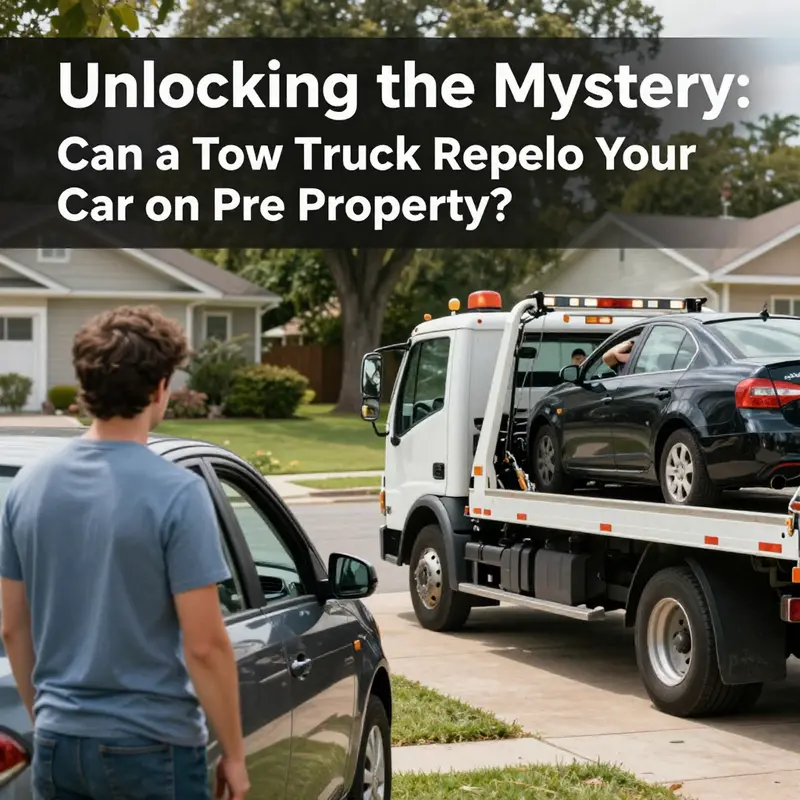
When a tow truck arrives on a private driveway, the sight can feel like a breach of personal space and a reminder of debts that are becoming real. The question that sits behind that sight is not simply whether a car can be removed from private land, but how such a removal can be done lawfully. The legality hinges on a careful balance of rights: the creditor’s interest in recovering collateral, the property owner’s control over their space, and the borrower’s protections against missteps that could escalate into a breach of the peace. Across jurisdictions, the broad frame remains consistent. A vehicle can be repossessed from private property, but only under conditions that preserve safety, privacy, and fairness. A creditor or their authorized agent must operate within a defined legal boundary, and the tow must be executed in a way that avoids unnecessary confrontation and intrusion. This is not a matter of automatic entitlement; it is a regulated action that depends on authorization, context, and precise adherence to rules about access and method. To understand what this means in practice, it helps to walk through the typical logic that governs such recoveries: why private-property repossessions occur, what keeps them lawful, and how the process shapes the outcome for everyone involved.
The essential bearing on lawfulness is the concept of authorization. If a car is parked on private property and the owner or manager has not given permission for parking, a tow may be permissible under the property’s terms and applicable law. Conversely, if the space is reserved for tenants or customers under posted terms, a failure to comply can trigger removal. But authorization is not a one-time stamp. It rests on an ongoing ability to verify that the space is designated for permitted parking and that the vehicle in question is in violation of those terms or tied to a delinquent obligation. The borrower’s absence or the business’s closing hours do not automatically convert a private space into a target for removal. Responsibility, in the eyes of the law, lies with the driver to verify that the space is indeed authorized for parking and whether the vehicle’s presence breaches the stated rules. That may require consulting posted signs, lease provisions, or management directives. These factors often determine whether a tow is lawful at that moment.
A critical boundary in this realm is the idea of the peaceable collection. The “breach of the peace” principle is not merely a quaint relic; it is a practical constraint that governs how a repossession occurs. Operators cannot force entry into locked structures, nor can they threaten or intimidate occupants. They cannot pry loose a vehicle from a locked garage or a secured building unless they possess a court order or explicit clearance. In most cases, if a car sits behind a gate or inside a locked space, the operator must either secure consent or pursue avenues that do not involve breaking and entering. When the vehicle is visible and accessible from public or commonly used areas—think a driveway or a front yard—the likelihood of a lawful, smooth recovery increases. In tight spaces with uneven ground or cramped access, on-hook towing offers a controlled, less invasive option. The goal is to minimize property damage while ensuring the vehicle can be moved safely, with the least possible disruption to neighbors and residents.
The practical reality of private-property repossession is that it sits at the intersection of debt, property management, and consumer protection. Lenders have a legitimate right to recover collateral when a borrower defaults. That right, however, is not absolute; it travels with constraints designed to curb coercive or intrusive behavior. Most property owners implement clear parking policies to govern how spaces can be used and what happens when those terms are not followed. These policies typically require signs that are easy to see, reasonable warnings, and documented steps before a tow can occur. The lender’s authorization to reclaim the vehicle is frequently exercised through a repossession agent who must operate within those signals and within the law. In situations where a car is abandoned or improperly parked, the rules may be more explicit about when a tow can proceed. The consistency of these rules and the way they are communicated matters a great deal, because ambiguity invites disputes and potential liability for both the lender and the property owner.
For someone caught in the middle—someone who discovers their car missing from a private lot—the experience can feel bewildering. The immediate concern is practical: where is the vehicle, what are the fees, and how can it be recovered? The typical path begins with documentation. The impounded vehicle will be held at a lot for a period defined by local regulations, with notices posted to inform the owner about how to reclaim it and what charges apply. Reclaiming the vehicle generally requires payment of the outstanding loan balance or the lease amount, plus the towing and storage fees that have accrued. If a debtor seeks to contest the tow, the dispute will usually move to a civil or small-claims forum where the evidence must be presented—signage, notices, the status of the authorization, and whether the vehicle’s presence violated the property rules as posted. The outcome hinges on this documentary trail: not on a subjective impression of the debt collection process but on a precise record of notices, dates, and the lawful basis for the tow.
The property manager’s perspective adds another layer. Clear, consistent policies protect the property’s use and safety while reducing the risk of wrongful removals. Adequate signage, well-documented parking rules, and a transparent process for dealing with violators help both tenants and visitors understand what to expect. When a tow is carried out, it is more than the removal of a vehicle; it is the enforcement of a contractual promise—often the promise that parking spaces are reserved for those with permission, and that the property will be managed in a way that keeps passageways accessible and the environment orderly. In places where the space is shared by residents, customers, and service providers, the balance is delicate. A well-run system respects the rights of all parties: those who owe a debt, those who own the property, and those who rely on the vehicle for daily life.
In discussing the legal landscape, it helps to keep in mind the practical guidance offered by authorities and industry resources. They emphasize that a tow must be grounded in lawful authorization and reason. They also remind us that access points—driveways, front lanes, and other public-facing areas—are the natural channels for a lawful tow. The idea is not to allow a private space to become a silent invitation for surprise removal but to ensure that the process is predictable, fair, and anchored in the due process that governs debt collection and property management alike. This approach protects the borrower from sudden loss of transportation, the lender from baseless disputes, and the property owner from the risk of errant enforcement. It is a balance achieved not by a single rule but by a combination of careful policy design, clear notices, and strict adherence to legal boundaries during the actual tow.
For readers who want to explore practical nuances beyond the general description, there are resources that translate legal language into actionable steps. Official parking and towing guidelines, often published by municipalities or counties, spell out who can authorize a tow on private land, when entry into a locked area is permissible, and what constitutes proper notice before removal. They also stress the importance of ensuring the vehicle remains accessible from public view during the process. In everyday terms, the difference between a lawful repossession and an unlawful removal comes down to timing, visibility, and the precise terms of the contractual relationship among borrower, lender, and property owner. Having a clear, shared understanding of these elements makes the process more predictable and reduces the likelihood of confrontations.
For readers who want a consolidated legal overview, one resource summarizes the general landscape and helps translate it into practice. It notes that a repossession must be conducted with authorized rights and with careful attention to public access points, and it cautions against forced entry and breach of the peace. While the situation is often guided by the lender’s authorization, the property owner’s policies and posted rules also play a central role. These elements, taken together, establish the framework for a private-property tow that can proceed with due process—should the factors align—and prevent conflicts that can escalate into disputes over legality and safety. The bottom line remains that a tow cannot simply be pulled from behind closed doors; it must rest on legitimate authorization and careful execution at a location where the vehicle is accessible and visible, and where the process remains safe and lawful for everyone involved.
If you want a practical primer that stays close to towing realities on private property, consider exploring resources that discuss parking policies and towing practices in real-world settings. For broader context and ongoing discussions about private-property towing, the Island Tow Truck blog provides accessible, grounded discussions about how parking policies shape enforcement and the day-to-day realities of towing operations. the Island Tow Truck blog: https://theislandtowtruck.com/blog/ . For a deeper legal dive, see the external resource: https://www.carinterior.com/tow-truck-repossess-car-private-property/
Private Property, Public Law: Navigating When a Tow Truck Can Repossess Your Car from a Private Space
Private property repossession by tow from a private space is possible but tightly regulated. The laws differ by state but share a goal: allow creditors to recover owed amounts while protecting property owners safety and peace. Repossession on private ground only occurs when the creditor has a lawful right of access and the action does not breach the peace. If the vehicle is behind locked doors or inside a sealed garage, consent or a court order is usually required. In accessible spaces like driveways or open parking areas, a standard on hook tow may be used without force, but never by intimidation or entry. Courts and statutes often require that the process remain peaceful and not disrupt others. Many states distinguish between simply accessible private space and enclosed spaces like a locked garage. When access is blocked by a gate or barrier, the path to recovery typically moves to formal process through a court or negotiated solution. The key practical advice is to check the loan terms for access rights, be mindful of privacy and safety, and seek legal guidance if the space is closed or guarded. For more region specific rules you can consult state repossession resources.
Tow Trucks on Private Property: Navigating Law, Logistics, and Limits
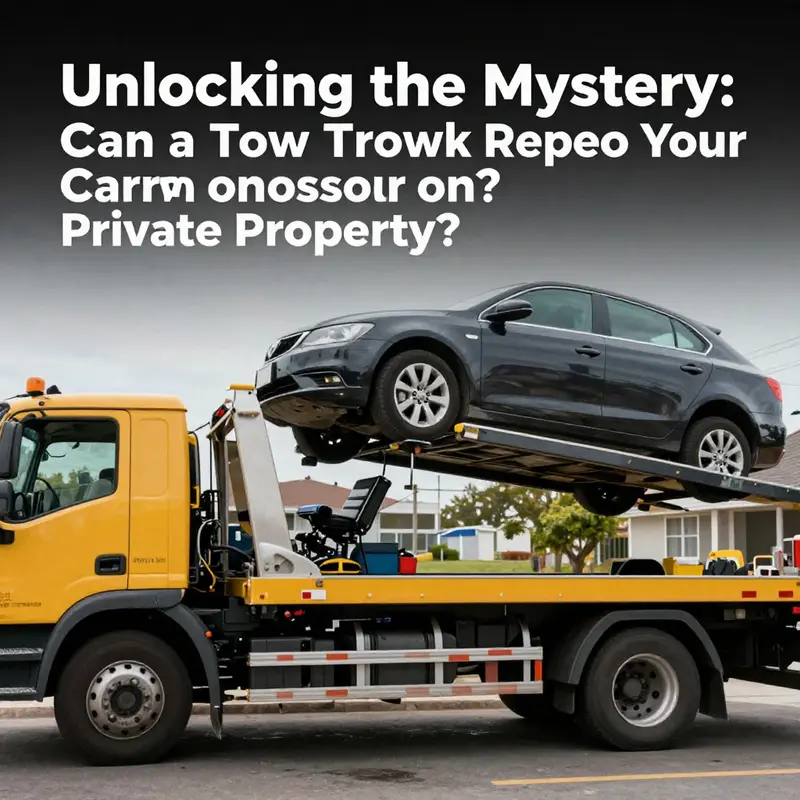
Tow operations on private property occupy a careful space between contract remedies and property rights. A lender’s right to reclaim a vehicle is not unlimited; it must be exercised under lawful authorization and with respect for the owner’s premises. Repossession cannot occur through force, threats, or unlawful entry, and it typically requires visibility from a public view and adherence to applicable notice requirements.
Equipment matters: The two common tow setups are self-loading wreckers (quick-loader) and integral (Hudani) units. Self-loading wreckers use a hydraulic boom and winch to latch onto the disabled vehicle from a distance, minimizing contact with buildings or obstacles. Integral units embed the towing mechanism into the chassis for greater pulling power and control in tight spaces or awkward positions.
Legal framework: A valid contract authorizes the repossession; often lenders provide written authorization that states why, when, and how the vehicle may be recovered. Notices to the borrower may be required; some places require a cure period or court order for access to locked areas. The breach-of-peace standard means no forced entry, no damage, no intimidation.
On-site procedure: The operator should approach from a position that minimizes risk and avoid moving other vehicles unnecessarily. If access is blocked by a locked gate or secure garage, the operator typically cannot breach that barrier without proper authorization.
Documentation: The process must be documented: the contract, the location, the attachment method, the sequence of steps, and any communications. This protects the lender, the operator, and the property owner in case of disputes.
Property owner perspective: Owners should understand loan terms, notices, and options to avoid repossession, such as payment plans. If a dispute arises, legal routes (court processes) may be necessary to authorize access or determine remedies.
Conclusion: Repossession on private property is a regulated activity designed to balance debt remedies with safety and property rights. For more detailed guidance, consult state statutes and professional resources that discuss private-property repossessions and their limits.
Driveway Repossession: Understanding the Law, Limits, and Protections for Cars on Private Property
Driveways, garages, and the rights of homeowners can feel like a stage for a tense confrontation when a loan goes unpaid. Yet repossession on private property operates under a carefully drawn boundary line between a creditor’s remedies and a homeowner’s privacy and safety. The law does not permit a lender to simply walk onto a driveway and haul away a car the moment payments stop; instead, it requires authorization, method, and restraint. The result is a process designed to minimize conflict while restoring the lender’s security interest.
At the heart of the matter is the general right to repossess a vehicle when the borrower defaults. A creditor or lienholder can reclaim the vehicle, but they must do so without breaching the peace. Breach of peace means no threats, no violence, and no unlawful entry or intimidation. This principle protects the home as a sanctuary, ensuring that even a creditor cannot force entry or forcibly remove a car from a closed garage or from behind a locked gate without appropriate legal steps. If the car sits in a driveway or in an open yard accessible from public space, the repossession agent can act within the law’s frame, provided other conditions are met.
Specific rules vary by state, and federal rules add another layer. The Fair Debt Collection Practices Act, or FDCPA, governs how third-party debt collectors can operate, particularly in how they communicate and pursue debt. But repossession itself is typically driven by state statutes and the terms of the loan or lease, which determine when and how a vehicle may be recovered. In practice, this means that a lender who has a valid security interest may arrange for a repossession if payments are behind and the contract allows it. Yet even then, they must respect the boundaries around private property: no breaking into a locked residence, no trespass into a locked garage, and no force that would constitute a breach of peace.
Where the car is parked can matter a lot. In many situations, a car sitting in a driveway or in a carport that is visible from the street or from common areas may be towed after proper notice and a lawful process, assuming the agent can reach the vehicle without bypassing locked doors or entering a dwelling. When access is blocked or the property is difficult to reach—think narrow driveways, locked gates, or vehicles tucked under a structure—towing companies often rely on methods designed to minimize damage while preserving access. On-hook towing, where the tow truck attaches to the vehicle at the frame or hitch, is a common choice in challenging private-property recoveries. It allows the operator to recover a vehicle without forcing entry into tight spaces or relying on tire or undercarriage manipulation, reducing the risk of collateral damage and legal trouble.
Some states add special requirements beyond the general rule. California and New York, for example, have rules about how and when repossessions can happen, and require clear notice to the debtor, with limits on where and when a repossession can interfere with daily life and work. A repossession cannot disrupt the debtor’s work life nor invade spaces beyond what is necessary to recover the vehicle. If the debtor is away on a business trip, a bank or lender still faces the obligation to proceed with care and to coordinate with appropriate authorities rather than to threaten or harass. The idea behind these restrictions is straightforward: the private home is not a toll-free access point for debt collection, and the repossession process must proceed with dignity, with safety, and within law.
Even with the right to reclaim, many borrowers have options that can slow or alter the repossession. Some loan agreements include cure periods or reinstatement provisions that allow a borrower to catch up on payments and regain control of the vehicle. Others may negotiate settlements, modification of terms, or voluntary surrender arrangements that reduce the penalties and fees that come with a formal repossession. Repossession does not always mean the end of ownership; it is often a financial remedy that can be resolved by addressing the debt rather than by escalating a confrontation. A debtor who anticipates a potential repossession can gather documentation, confirm the amount due, and communicate with the lender in good faith to explore alternatives before the vehicle is attached or removed.
Homeowners facing a potential repossession should verify that the agent acting on behalf of the lender holds proper authorization and a valid assignment. Asking for written proof of authority and the terms of the lien can prevent missteps and miscommunication. It is prudent to document any interaction, noting the time, location, and method of recovery, and to avoid any direct confrontation that could be construed as a breach of peace. If a private residence or a locked garage appears to prevent lawful access, a homeowner might consult a lawyer to review the applicable statutes and to determine whether a court order would be required to compel access. A court order can override ordinary safety features and grant lawful entry, but securing one is a legal step that typically requires court action and the involvement of both parties.
Practical guidance for readers who want to understand the landscape beyond the private property question is to consult reliable resources that summarize state law and federal protections in clear terms. The U.S. Consumer Financial Protection Bureau offers broad guidance about consumer rights during repossession, clarifying what is permissible and what is not in the pursuit of loan remedies. For readers who manage fleets or own multiple properties, it can be useful to connect the theory to practice and consider how recovery operations intersect with property boundaries and workplace rules. This is where related guidance on fleet management and emergency-response planning becomes relevant. See the internal resource on essential-fleet-emergency-response-strategies for a practical lens on how organizations structure responses to vehicle recoveries and other incidents on private property. essential-fleet-emergency-response-strategies.
Ultimately, the path through a private-property repossession is paved by clear authorization, a careful approach that respects the home’s privacy, and an understanding that the law places limits on what a creditor can do. Debtors can protect themselves by knowing their rights, seeking timely legal advice, and maintaining evidence of communications with the creditor and the repossession agent. Lenders, for their part, rely on careful adherence to state rules, documentation, and the concept of peaceable recovery, ensuring that the remedy remains proportional to the breach that triggered it. The balance between private property protections and debt collection needs is not a static line; it evolves with case law, statutes, and the realities of modern lending. For anyone navigating this terrain, staying informed—through official guidance and credible summaries—is essential to avoid missteps and to understand when a repossession on private property is lawful and when it is not. External resources can offer authoritative confirmation beyond this overview: https://www.consumerfinance.gov/credit-cards/understanding-your-rights-during-a-car-repossession/.
Private Ground, Public Consequences: The Deep Toll of Tow-Repossession on Private Property
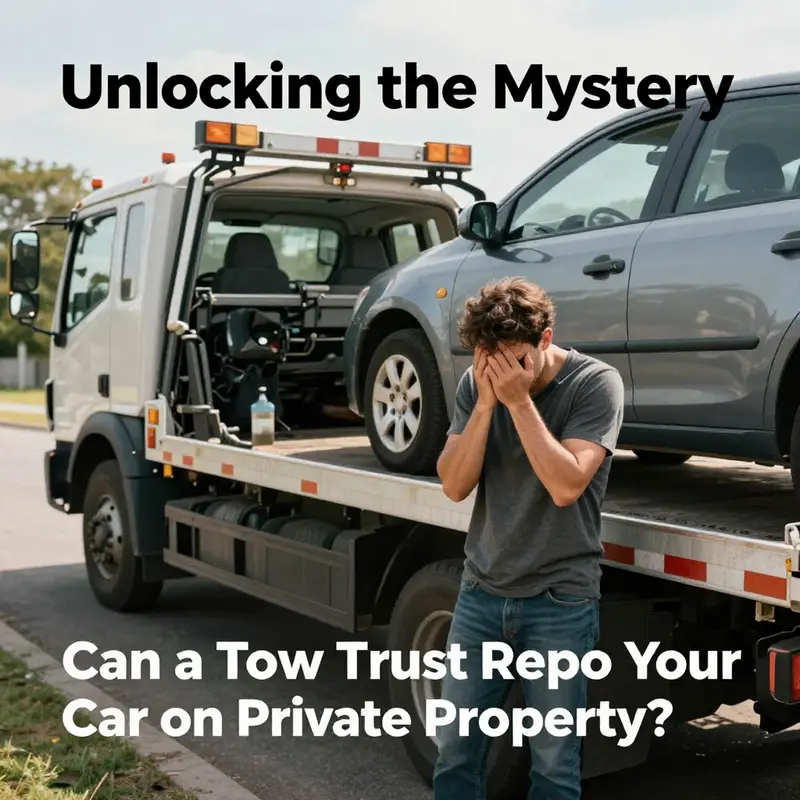
The moment a tow truck appears on a private driveway to reclaim a vehicle, the ordinary rhythms of daily life can fracture. A gate that once kept the world at bay feels suddenly breached, and the space that many people equate with safety and privacy becomes, for a stretch of hours, a staging ground for confrontation and consequence. The scene unfolds quickly: the vehicle sits in the light of the morning or the glow of dusk, and the tow operator—carrying the tools and equipment designed to remove a car with precision—must navigate a property that was not designed for orchestration between stranger and vehicle. The legal framework that governs such a rescue mission is designed to balance competing interests—creditor rights, borrower protections, and the sanctity of private property—and the tension between those aims often translates into a disruption that lingers far beyond the moment the tires lift from the ground. In this nuanced space, the impact on owners is not merely financial; it extends into questions of legality, emotional well-being, and practical day-to-day life, all shaped by jurisdictional nuance and the specifics of how the repossession is conducted.
From a legal standpoint, the core issue centers on whether the repossession is authorized and conducted within the boundaries of the law. A lender’s right to reclaim a vehicle arises from a secured loan agreement, but that right is not absolute and is not unlimited by geography. Repossession on private property typically requires adherence to rules designed to prevent breaches of the peace and to respect property rights. The principle at stake is simple in articulation, yet complex in application: to recover a vehicle without forcing entry into dwellings or protected spaces and without escalating into a confrontation that could endanger people or property. In many places, the repossession agent is permitted to tow the vehicle from a driveway, a front yard, or another publicly accessible point on private property, provided the car is visible and accessible from those public or commonly accessible areas. If the vehicle is tucked away behind a locked garage, inside a fenced yard, or within a secured building, the repo agent may be legally constrained notwithstanding the creditor’s interest. A court order may become essential to compel the entry of restricted spaces, and a breach of those boundaries can expose the agency to civil liability, including trespass claims or damages for unlawful seizure. This legal scaffolding—meant to prevent harm while preserving the creditor’s ability to recover a secured asset—creates a critical, if fragile, line that must be navigated by licensed professionals who are trained to work without provoking a breach of the peace.
The procedural texture of private-property repossession is not just about authorization; it is about the manner of execution. The approach to removing a vehicle will depend on the geometry of the property, the position of the car, and the presence of any physical barriers. When access is straightforward and the vehicle is clearly visible, a tow may proceed with standard on-hook hooking or wheel-lift techniques that minimize damage to tires and chassis. When space is constrained—narrow driveways, uneven ground, or a car tucked behind landscaping—the operator may employ methods that preserve the integrity of the vehicle and the landscape. Yet even well-executed procedures carry risk. The interaction between heavy equipment and private property introduces the possibility of collateral damage to driveways, fences, or landscaping. The risk is not purely physical; it is also financial. Storage fees accumulate at the rate set by the lender or tow company, and the vehicle’s eventual sale at auction may leave a deficiency, a shortfall that the owner is still obligated to satisfy. The emotional weight of those fiscal pressures can be substantial, complicating a situation that was already distressing for the vehicle owner. It is worth noting that owners who suspect that a repossession violated legal boundaries—entered a dwelling, used force, or acted beyond what the law permits—often pursue legal remedies that can include damages, potential restoration of the vehicle, or reinstatement of the loan agreement in some cases. The possibility of legal recourse underscores the importance of understanding one’s rights and documenting any procedural missteps as soon as they occur. In practice, that means keeping records of the date, time, and manner of the tow, noting the presence of any witnesses, and obtaining the names or license information of the agents involved. These details can be instrumental if disputes arise and can inform discussions with legal counsel about potential remedies.
Financial consequences in the wake of a private-property repossession extend far beyond the sale price of the recovered vehicle. The most immediate costs—towing charges and storage fees—are often added to the outstanding balance on the loan. Depending on the jurisdiction and the terms of the loan, the owner may become liable for the total of these charges, regardless of whether the market value of the vehicle covers the amount owed. If the vehicle is sold at auction and fetches less than the amount outstanding, a deficiency balance can remain. That deficiency can accumulate interest and additional fees, compounding once the sale price fails to close the gap between the debt and the value of the vehicle. This is a scenario many owners underestimate as they try to regain transportation or to stabilize their finances after a disruption. The ripple effect of a repo, however, is not limited to the vehicle’s absence from the driveway; it touches credit, indemnity, and future borrowing capacity. A repossession on private property can echo through a person’s credit report, affecting the ability to obtain new credit, secure favorable loan terms, or even rent an apartment where a lender reviews past financial behavior. The complexity of these financial consequences is amplified when owners already face financial strain from missed payments or job disruption, creating a feedback loop where the repossession itself worsens the economic situation that precipitated it.
The emotional and practical consequences are perhaps the most intimate and immediate. Losing a vehicle represents more than the loss of a depreciating asset; it disrupts daily routines that families and individuals depend on for commuting, childcare, and earning a living. When the repossession occurs on private property, the sense of intrusion can intensify. A space that was once a personal sanctuary—the driveway, the garage, the home’s perimeter—suddenly becomes an arena for a process that is often public in the sense that a tow truck is visible to neighbors, passersby, and potentially curious family members. Emotions can range from fear and anger to shame and humiliation, particularly if the event is perceived as an attack on one’s privacy or autonomy in a space that should feel secure. The practical fallout can be immediate: the need to arrange alternate transportation, reorganize schedules to accommodate the temporary loss of a vehicle, and navigate the costs associated with rental cars or public transit. For families with school runs or irregular work hours, the disruption can cascade through the week, complicating already tight routines and amplifying stress. The private nature of the property does not insulate owners from the social and emotional dimensions of the event; instead, it concentrates them in the moment of the tow, making the experience more jarring and memorable than an ordinary vehicle removal that occurs on a street or public lot.
Property damage and liability risks form another axis of impact that underscores the seriousness of repossession on private property. The equipment used by tow operators—heavy winches, chains, hooks, and the inertia of a loaded vehicle—carries inherent risk. Improper handling or misjudgment can result in scratches, dents, or more significant structural impacts to the vehicle itself. Equally plausible are incidental damages to the private property: a cracked driveway surface, chipped paint on a fence, torn landscaping fabric, or displaced gravel. When damage occurs, the owner must evaluate whether the liability rests with the repossession company, the lender, or the property owner who hosted the operation. The question of responsibility can hinge on the operator’s adherence to established protocols, the property’s layout, and the extent to which the property was cleared for a towing operation. In circumstances where negligence is alleged or where procedures were not followed, owners often pursue compensation through legal channels, a process that can prolong financial and emotional strain and require documentation that details the preexisting condition of the property and the events that followed the tow.
To navigate this precarious terrain, owners must balance vigilance with practicality and seek clarity about what the law permits in their jurisdiction. Awareness of rights and the steps to document the event can help transform a potentially overwhelming encounter into a process that, while challenging, remains within the bounds of lawful recourse. The value of this approach is not only in securing compensation for damages or addressing a deficiency but also in maintaining a degree of control over circumstances that can otherwise leave a person feeling powerless. In practice, the interplay of legality, finance, emotion, and physical risk suggests a broader lesson: the private property landscape is no longer a passive backdrop for repossession, but a critical frame within which the rights, responsibilities, and remedies of all parties must be actively interpreted and asserted. For readers seeking further context on how these dynamics play out in real-world towing situations, consumer-advocacy resources and legal guides can offer practical explanations that connect policy with everyday experience.
Final thoughts
Understanding the nuances of vehicle repossession on private property is crucial for both vehicle owners and industry professionals. This knowledge can empower you to navigate legal challenges, communicate effectively, and protect your rights and investments. By being informed, you not only safeguard your own interests but also create a supportive environment for those you serve, whether in auto repair shops, as property managers, or within local communities. Knowledge is not just power; it’s the key to maintaining peace and order in car ownership and repossession matters.