Becoming a tow truck driver is an important role in our island communities, ensuring that stranded vehicles are safely and efficiently assisted. As local auto repair shops, car dealerships, property managers, resort operators, and commercial fleet operators seek reliable towing services, understanding the qualifications and requirements to become a tow truck driver is paramount. This guide will delve into the necessary licenses and age requirements, maintaining a clean driving record, medical and physical fitness standards, as well as professional qualifications and certifications vital for this profession. By addressing these key areas, we aim to empower our local businesses to make informed decisions when selecting towing professionals who aid in maintaining safe and efficient transportation on our islands.
Tow-Ready: Navigating Licenses, Ages, and the Road to a Tow Truck Career
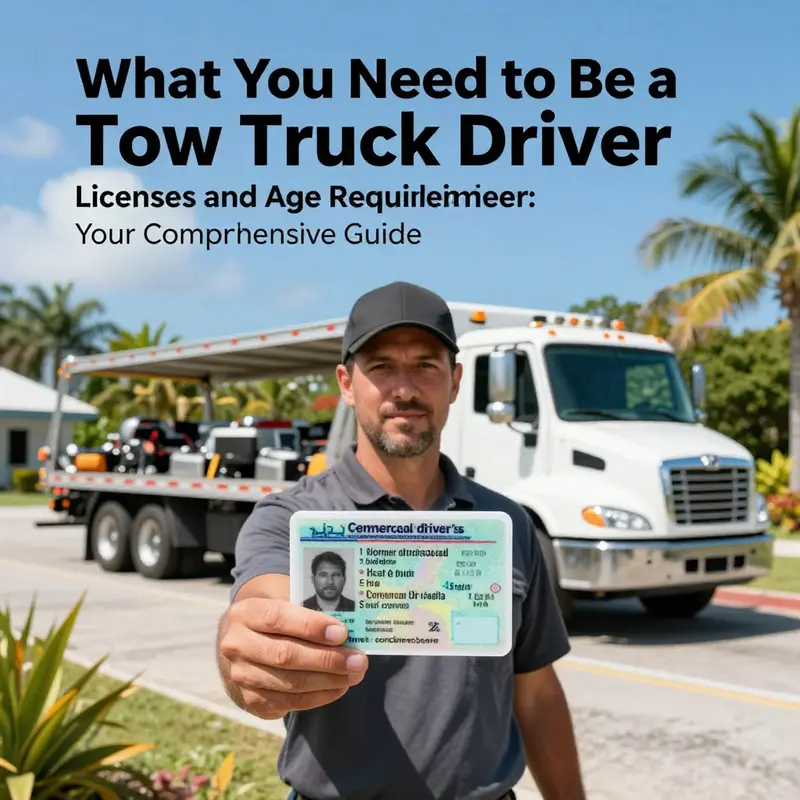
Tow work sits at a busy crossroads of service, skill, and stamina. It is more than driving from one roadside to the next; it is a discipline that combines technical know how, quick decision making, and a steady temperament under pressure. A tow truck driver moves people and businesses through moments that feel like emergencies and often shapes the course of a day that could otherwise spin out of control. In this chapter we trace the gatekeeping steps that begin a tow truck career: licensing, age, and the professional qualifications that separate a hopeful applicant from a dependable operator who can be trusted to handle heavy loads, respond to danger, and remain calm when time is tight. Regulations vary by state, and even the basic milestones can shift depending on where you plan to work. Yet there is a coherent through line: you must demonstrate legal eligibility to operate heavy vehicles, you must meet age requirements that align with licensing and insurance realities, and you must prove you can handle the duties of a tow truck with safety and competence.
The first question is whether a commercial driver license is needed. The answer is generally yes, because towing heavy vehicles or large trailers falls under commercial vehicle operation. The license you pursue is not a single test; it is a credential that opens the door to the complexity of heavy towing. In many places the class needed to operate a tow truck for heavy loads aligns with what is described as a tractor trailer or heavy vehicle designation. That label signals more than size; it signals the capability to handle large payloads, long wheelbases, and the need for precise braking and control in roadside recovery.
Beyond the license, age acts as a practical threshold. Legal age requirements for obtaining a truck appropriate CDL can be as low as 18 or 21 in some states, with the ability to drive commercially under certain conditions. Many jurisdictions tie the most straightforward path to a higher minimum age, often around 24. The landscape is nuanced: some tasks involve interstate transport and require deeper licensing and broader medical and safety clearances that favor older applicants with more driving history. For others the base entry point begins at 18 and then expands through supervised experience, endorsements, and later transition to heavier classifications. The key is to check your state department of motor vehicles for precise age bars, because modest differences can affect when you can take the final licensing tests and when you can legally operate a heavy tow truck for business.
The driving record is another critical gate. A clean record signals reliability, judgment, and the ability to safely manage a vehicle near stalled traffic or distressed drivers. Tow work often involves roadside hazards: moving traffic, flashing lights, and the unpredictable behavior of drivers in trouble. Major violations in the recent past can raise concerns about risk, insurance, and liability. Carriers and regulators look for a history that demonstrates stable and safe driving practices over time. If you have a blemish, you can often rehabilitate by maintaining a clean period, gathering supportive references, and pursuing safety oriented certifications that attest to safer driving and professional readiness.
Medical and physical fitness is the other side of the gate. A commercial credential is a public safety credential. The medical standards cover vision, hearing, and general physical capability. Vision standards are specific; even corrected vision should be within a range that lets you read gauges, assess hazards, and monitor warning lights. Color vision and hearing are relevant to recognizing signals and alarms. The overall standard is that you can perform essential duties without risking yourself or others. It is not only about passing a test but about maintaining capacity to manage fatigue, stay alert, and respond rapidly on the roadside.
Professional qualifications underscore the specialized nature of tow work. A basic driver license does not automatically confer the right to operate recovery equipment or perform the rigging required to secure a vehicle for towing. You will likely need to complete specific training or certifications that test understanding of road transport rules, towing safety, emergency response, and safe equipment handling. Qualifications vary by jurisdiction but share a core mission: to ensure you can manage the tow process from setup to securement to transport while minimizing risk.
As you plan, remember the specifics differ by region. Start by identifying target jurisdictions and the CDL class you will need for heavy towing, map the minimum age, and add a realistic timeline for medical examinations and any required safety courses. Gather documents early and secure medical clearance in parallel with the licensing process. Build a training plan that includes both theoretical knowledge and hands on practice with wheel lifts, winches, and tie downs. Practice not just the mechanics but the judgment to determine when a tow is safe, when to call for help, and how to coordinate with dispatch to manage a scene.
The reality is that licensing and age are thresholds, but the on the ground capability is what sustains a tow truck career. When you arrive at a breakdown, the ability to assess hazards, communicate with the driver, choose the correct rig, and execute a secure recovery without causing further damage or injury is what makes a driver reliable. It is these competencies—built through licensing, medical fitness, and practical training—that determine who becomes the kind of tow operator that companies want to hire again and again. The licensing steps open the door to tools, but ongoing performance earns a reputation for safety, efficiency, and care.
Steady Wheels, Steady Trust: Why a Clean Driving Record Is Your Fastest Lane to Becoming a Tow Truck Driver
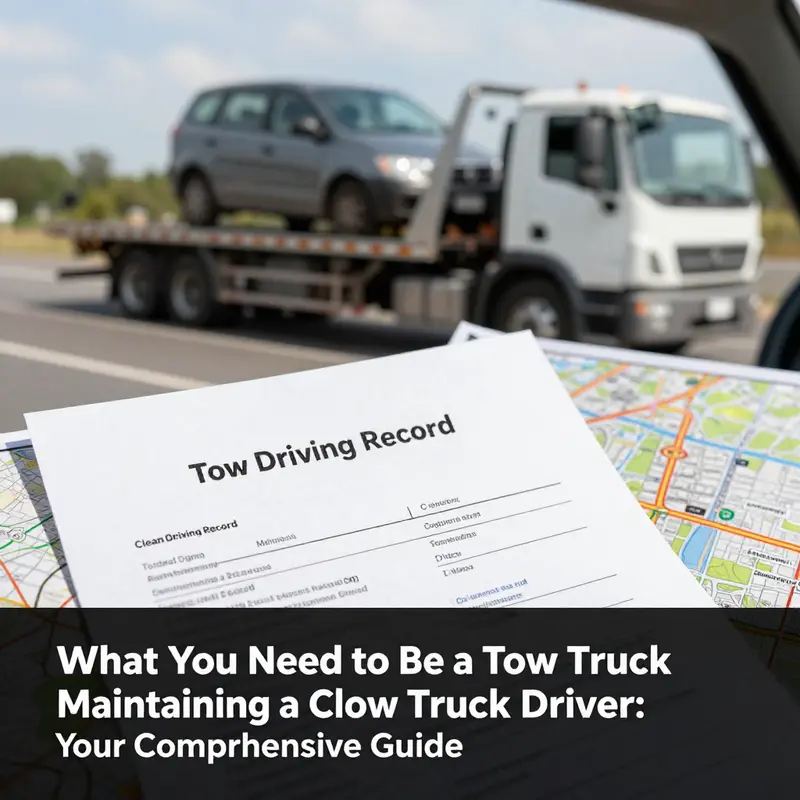
Becoming a tow truck driver is a study in balance. On one side you have the practical demands of lifting, winching, and securing vehicles that may be damaged or unsteady. On the other, you have the unpredictability of the road: sudden stops, aggressive drivers, and changing weather. In this environment, a driver’s track record isn’t just a credential; it’s a living signal about how you translate training into action when the stakes are highest. A clean driving record is not a cosmetic feature. It is the baseline that tells an employer you consistently choose safety over convenience, that you can keep your head when others are panicking, and that you will treat every tow with the same care you would give your own family’s vehicle. In this line of work, safety isn’t optional. It’s the currency that keeps you employed, insured, and trusted by customers who depend on you when they are most vulnerable on the side of a highway or a back road after a breakdown.
To understand why the record matters so much, you have to picture the daily realities of a tow operator. You operate heavy vehicles and, at times, oversized loads. You connect, secure, and move cars, trucks, and sometimes trailers that may be in very precarious positions. You must make quick, precise decisions about speed, braking, lane positioning, and the use of equipment like wheel lifts or chains. Any misstep can lead to property damage, injuries, or worse. When a company screens candidates, the record becomes an honest, historical lens through which to view how consistently you follow traffic laws, how you handle minor incidents, and how you recover after misjudgments. That is why the maintenance of a clean record is highlighted repeatedly in industry guidance and in the hiring processes of reputable operators.
A spotless driving history is especially valued because it signals several core qualities that heavy-duty towing demands. It signals responsibility: you recognize that every mile you drive in tight traffic or on slick pavement carries risk not only to you but to passengers and other road users. It signals safety awareness: you habitually scan for hazards, predict others’ mistakes before they occur, and act preemptively rather than reactively. It signals reliability: if you have a clean record, you are more likely to arrive on time, secure a scene without escalating tension, and complete complex tasks with minimal supervision. It signals stability: employers want teams that won’t require constant supervision or create avoidable liability. These are not abstract ideals; they translate directly into insurance premiums, background checks, and the overall trust a customer places in a tow operator during a tense moment.
The standards around “clean” are specific enough to be meaningful. In many regions, maintaining a clean record means no major traffic violations or accidents in the past several years. In the material you’re examining, the emphasis is clear: any history of reckless driving or significant safety incidents can disqualify a candidate or at least complicate hiring and insurance. The consequences extend beyond job eligibility. Insurance premiums for tow fleets are highly sensitive to the driving histories of their operators, and even a single incident can push rates upward for everyone on the policy or affect the company’s willingness to assign you high-risk or high-visibility dispatches. This is how the record becomes a business variable as well as a personal one. It affects not just whether you land a job, but the kinds of assignments you’ll be trusted with, the time you’ll have to spend on training or monitoring, and the level of autonomy you’ll enjoy in the field.
That is why the path to becoming a tow truck driver, as described by industry guides and job-focused resources, begins with more than the skills to drive a big vehicle. It begins with the discipline to keep yourself out of trouble on the road. The requirement landscape includes a valid commercial license, typically an A2 designation that authorizes the operation of heavy vehicles and trailers. It includes the age and fitness parameters that ensure you can perform physically demanding tasks and respond to emergencies without compromising safety. It also includes a professional qualification layer—passing certification tests that validate your knowledge of road transport regulations, safety procedures, and the proper handling of equipment and emergencies. Yet among these prerequisites, the bare minimum you must demonstrate consistently is a driving history free of the kind of incidents that trigger alarms in insurance audits and hiring reviews. A clean record isn’t merely a background detail; it is the initial gate through which you prove your readiness for the combined demands of driving and tow operations.
Maintaining this record, however, is not about perfection in a vacuum. It is about ongoing habits that integrate safety into daily practice. It starts with defensive driving: keeping a wide following distance, anticipating the actions of others, and choosing routes that minimize exposure to high-risk conditions. It continues with precise vehicle handling. Tow trucks operate with heavy, sometimes unstable loads. The margin for error is slim. You learn to pre-inspect both the tow vehicle and the load, to secure equipment properly, and to verify that lights, brakes, and signaling devices are functioning before every dispatch. These are small, repeatable practices, but they accumulate into a robust safety profile that supports a clean record.
The discipline extends to the moments you are not actively towing. A clean record is built in part by how you drive when you think no one is watching. It means obeying hours-of-service rules, avoiding fatigue-related risks, and resisting the temptation to cut corners because a deadline is tight. It means never rushing a hook-up or a road-side resupply in a way that could endanger yourself or others. It means making the extra effort to secure proper documentation after a tow—incident reports, chain-of-custody notes, and care taken when documenting any damage to vehicles involved. Each of these actions contributes to a record that, to an employer and to regulators, speaks of reliability and judgment under pressure. When a driver’s record is clean, it reflects a pattern of decisions that consistently favor safety and accountability, even in the face of pressure to expedite a job.
Beyond the road, the value of a clean driving record is also measurable in the professional ecosystem around towing. As the industry increasingly relies on background checks and, in many cases, drug screening as part of the hiring process, a clean record intersects with these procedures as a sign of overall reliability. Employers know that a driver with a spotless history is less likely to bring liability into the workplace. This reduces the time spent on administrative hurdles and increases the probability that you will be matched with consistent shifts and a clear path to advancement. A clean history is thus a practical predictor of smooth onboarding, lower insurance friction, and steadier employment prospects. It is one of those traits that compounds in value over time as you build experience and your reputation in the field.
If you are early in your career and serious about joining a towing team, the focus on your driving record should start now. It should shape your decisions behind the wheel, your approach to training, and your willingness to seek additional qualifications that strengthen your safety portfolio. Even when the broader licensing tracks, such as obtaining an A2 license, are still in progress, you can begin ingraining the habits that will keep your record clean long after you pass the tests. In fact, many employers explicitly highlight the benefit of a maintained clean record during the interview process, using it as a proxy for a driver’s overall approach to risk and responsibility. The conversation you have with a potential employer—about your commitment to safe driving, your prior performance on the road, and your plans to maintain discipline—can be as influential as your formal credentials. That is why the narrative you craft about your driving history, and the stories you can tell about how you avoided escalation in tricky situations, matter just as much as the certifications you list on your resume.
For those who want to explore practical, field-tested perspectives, there are resources that translate these principles into everyday practice. The Island Tow Truck blog curates real-world insights from operators who have earned trust through consistent, safety-first behavior on the road. Reading such firsthand accounts can bridge the gap between policy language and on-the-ground decisions. You can find these perspectives and more at The Island Tow Truck blog.
In addition to the personal discipline required, there is a structural integrity to your path. The industry expects that your record will be transparent to prospective employers and that you will approach the job with an open understanding of the safeguards that keep your record clean. That means staying informed about the specific standards in your region, seeking out defensive driving programs, and maintaining current certifications that reflect best practices in safety and vehicle handling. It also means accepting that even occasional lapses—if they occur—must be addressed promptly and honestly. Acknowledging and learning from a past mistake can be part of a responsible approach to your career, provided you take the steps necessary to prevent recurrence.
As you navigate the broader requirements—the license category, age and fitness criteria, and the professional qualifications—keep in mind that the driving record is the thread that weaves them together into a coherent, credible identity as a tow truck operator. A strong record does not guarantee success, but it does remove a substantial portion of the hurdle. It signals to employers that you are not only willing to comply with regulations but also prepared to uphold the standards they rely on to protect customers, teammates, and the public at large. The combination of a valid CDL, the requisite medical fitness, a disciplined approach to safety, and a spotless personal history creates a compelling profile for anyone aiming to build a reliable career in towing. When those elements come together, the path from aspiring driver to trusted operator becomes less a leap of faith and more a progression built on consistent, safety-forward decisions.
External resource: For a broader, more detailed overview of the complete set of requirements including age, licensing, background checks, and drug screening, see the guide from Indeed at https://www.indeed.com/career-advice/finding-a-job/become-tow-truck-driver.
Strength Under Pressure: Medical and Physical Fitness Standards for Tow Truck Drivers
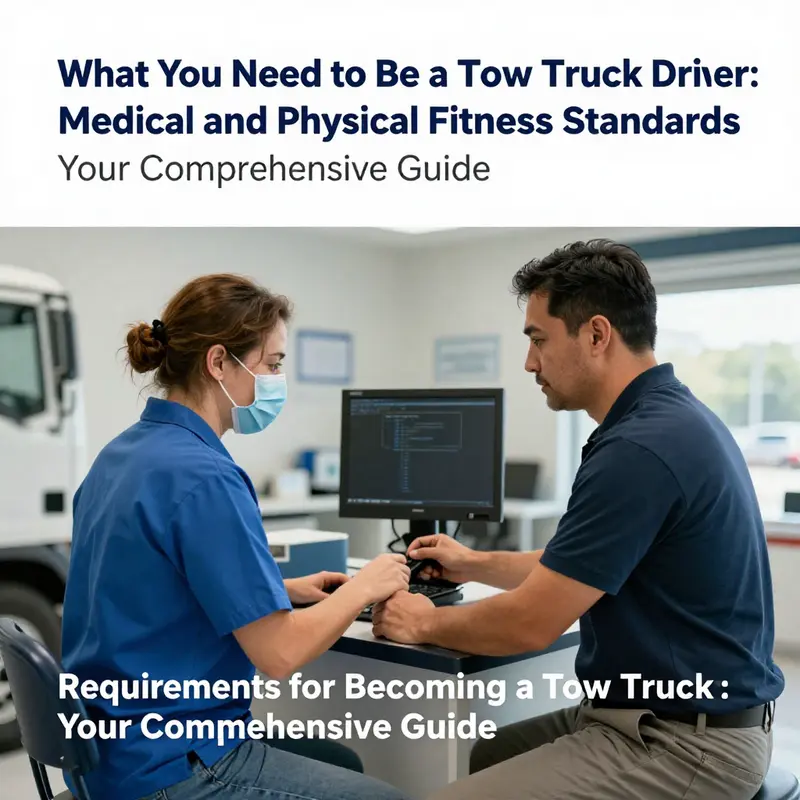
Choosing a path as a tow truck driver means more than knowing how to hook and tow a vehicle. It requires a body and a focus of health that can withstand the relentless demands of the job. The work is unpredictable, often performed outdoors, sometimes in cramped spaces, under pressure from time constraints, traffic, and weather. In those moments, physical readiness isn’t just a bonus; it’s a professional lifeline. Medical and physical fitness standards govern entry into the field; they are a frontline assurance that the person behind the wheel can safely carry out complex tasks while managing risk for themselves and others. The standards begin before you sit for a test or a certification exam. They shape who qualifies to operate a heavy vehicle, who can bear the weight of lifting and securing a vehicle, and who can respond to emergencies with clarity and energy.
The core idea behind medical screening is simple: towing is a physically demanding occupation. A physical ability test quantifies strength, endurance, coordination, and overall health in a way that mirrors real job tasks. It is not a bar to be cleared on a whim but a practical assessment of whether you can perform essential duties without compromising safety. The tests look beyond gym fitness; they probe how your body handles repetitive lifting, pivoting, twisting, and stabilizing heavy loads in hazardous environments on the roadside, at night, or in bad weather. The physical ability test ensures you can meet those standards when time is ticking and lives may depend on timing and accuracy.
Lifting heavy equipment is a recurring motif in the tow truck world. The job often demands awkward positions and careful technique. The need to lift, carry, and maneuver heavy towing gear, vehicle components, and immobilized vehicles requires not only raw strength but also endurance and posture. Regular training or conditioning helps maintain fitness to reduce strains and injuries during peak moments. Trainers and seasoned drivers emphasize balance, core strength, and mobility to stay stable when the vehicle on the tow line shifts or when negotiating a lean, slippery surface in bad weather. Fitness is a job tool, not a vanity goal.
Operating winches and other heavy equipment is another pillar of the medical standard. A tow operator must understand safe winch deployment, load anchoring, and safe handling of cables, hooks, and chains. The skills blend mechanical knowledge and physical capability. You need coordination to make each move precise and strength to control rapid actions when a vehicle is seized and shifted into safe alignment. Training should couple theory with hands-on practice so the body learns instinctively while the mind stays focused on safety procedures and communication with the team and vehicle owner. The standards acknowledge the mind and body intersection, yielding fewer accidents, injuries, and quicker outcomes on the roadside.
The realities of weather and outdoor work reinforce why fitness matters so deeply. Tow trucks operate in sun, rain, wind, snow, and fog, often where footing is uncertain and surfaces are slick. Endurance matters because some operations extend beyond a single hook and tow, requiring you to stay alert for long periods. Endurance underwrites the mental stamina needed to stay calm under pressure, communicate with dispatchers and bystanders, and follow safety procedures even as fatigue grows. Regular health assessments help ensure this balance remains intact over the course of a career, not just at entry.
In some programs, there is room for supplementary certifications that enhance safety and readiness. First aid and CPR certification is one example. While not always mandatory in every jurisdiction, these credentials can transform a routine tow into a controlled, safety-focused operation. A driver who can render aid or manage bleeding, stabilize a victim, and coordinate with emergency services increases overall safety and reduces secondary risk. Even when not required, they are valued by employers and can tilt hiring decisions. They deepen a driver’s knowledge of hazard recognition and response, which complements the physical skills tested by the body and equipment handling standards.
It is helpful to place these standards within the broader framework of professional qualifications. A tow truck driver is part technician, part rescuer, and part incident commander at every scene. The basic license that enables driving the commercial license with its class opens road access. But medical and physical standards are gatekeepers that determine whether you can safely perform the specialized tasks that accompany towing heavy vehicles and trailers. This linkage license plus fitness ensures the person behind the wheel can handle unpredictable, demanding work with competence and minimal risk to others.
To stay in rhythm with these requirements, many aspiring tow truck drivers adopt a proactive stance. They build conditioning programs that target lifting, pulling, tightening, guiding, and gripping under load, often while maintaining balance on uneven or moving surfaces. They practice safe body mechanics bending at the knees, not the back, and keeping the load close to the torso to reduce strain. They read terrain, anticipate resistance, and adjust their approach with the same care as calculating a lift angle or securing a chain. This preparation is not merely a pre-employment ritual; it becomes a core habit that keeps a driver safe and effective across shifts, weather conditions, and roadside scenarios.
The conversation about medical and physical standards also intersects with how drivers build their careers. The path to becoming a tow operator typically involves obtaining the relevant commercial license, passing a medical exam, proving physical capability, and completing a certification exam that tests knowledge of regulations, safety, and emergency response. The goal is not only to pass a test but to earn a credential that stands up to real-world demands. In practice, this means balancing endurance with precision, maintaining a calm, decisive presence when a vehicle teeters on a shoulder, and using a well-trained, fit body to protect everyone at the scene. The body becomes a key instrument of safety, efficiency, and reliability week after week.
For those curious about how these elements come together in real-world fleets, many fleets emphasize safety culture, routine health screenings, and ongoing fitness maintenance as part of their procedures. They recognize that fitness programs reduce accidents and injuries, lowering downtime and risk to bystanders or occupants. The medical and physical standards are investments in performance and professional longevity. This perspective reframes the pathway from a checklist into a corridor of development, where prerequisites build capability rather than mere compliance. It invites drivers to view training as a continuous cycle of readiness: regular health checks, progressive conditioning, skill refreshers for winches and securing loads, and deliberate practice under simulated conditions.
As you prepare to pursue this career, remember that the standards are designed to ensure you can handle demanding moments with safety and authority. They are not meant to disqualify but to verify readiness and create a shared baseline of professionalism across the industry. This alignment between physical capability and duty is what makes tow truck work challenging and rewarding. When you understand that fitness is an integral part of job duties, you approach every tow with responsibility toward yourself, the vehicle owner, and the public you serve. If you aim to build a resilient, dependable career, you can start by adopting a routine that supports strength, endurance, safe lifting, precise winch operation, and ongoing health vigilance. The result is not only compliance but demonstrable readiness to meet the road’s unpredictable demands.
For readers seeking practical guidance, there is a wealth of information that ties these standards to broader emergency and safety practices. Resources on emergency preparedness and fleet safety strategies offer perspectives on how a driver’s fitness interacts with incident response and recovery workflows. A focused exploration of emergency readiness for island fleets can complement the medical and physical training described here. This broader view reinforces that being a tow truck driver is about integrating physical readiness, technical proficiency, and safety-awareness into a cohesive professional identity that can adapt to a wide range of situations. A useful lens for consideration is emergency preparedness for island fleets, which helps frame how the body, mind, and procedures come together when every second counts on the roadside.
Ultimately, the journey to meet medical and physical fitness standards is a preparation for responsibility. It asks you to respect your limits while strengthening your capacity, to engage in ongoing health assessments, and to pursue practical certifications that deepen competence. It asks for a habit of safety-focused thinking that becomes second nature in high-stakes settings. And it asks you to recognize that your body is a tool for safeguarding lives and property, not merely a vessel for moving from one call to the next. In embracing this perspective, you’re not just preparing to pass a test; you are preparing to join a profession that hinges on readiness, resilience, and rapid, careful action in service of others. For further guidance on licensing pathways, safety standards, and the certification landscape, refer to reputable career resources and official guides that provide current specifics for your region. And for broader context on how emergency readiness intersects with towing operations, the linked resource above offers a complementary view. Finally, the practical steps you take today, conditioning your body, practicing proper lifting and winch operation, and pursuing relevant certifications, will compound into a career defined by reliability, safety, and the quiet confidence that comes from being ready when the next call arrives.
Tow Truck Driver Essentials: Licensing, Records, and Training for Safe Road Service
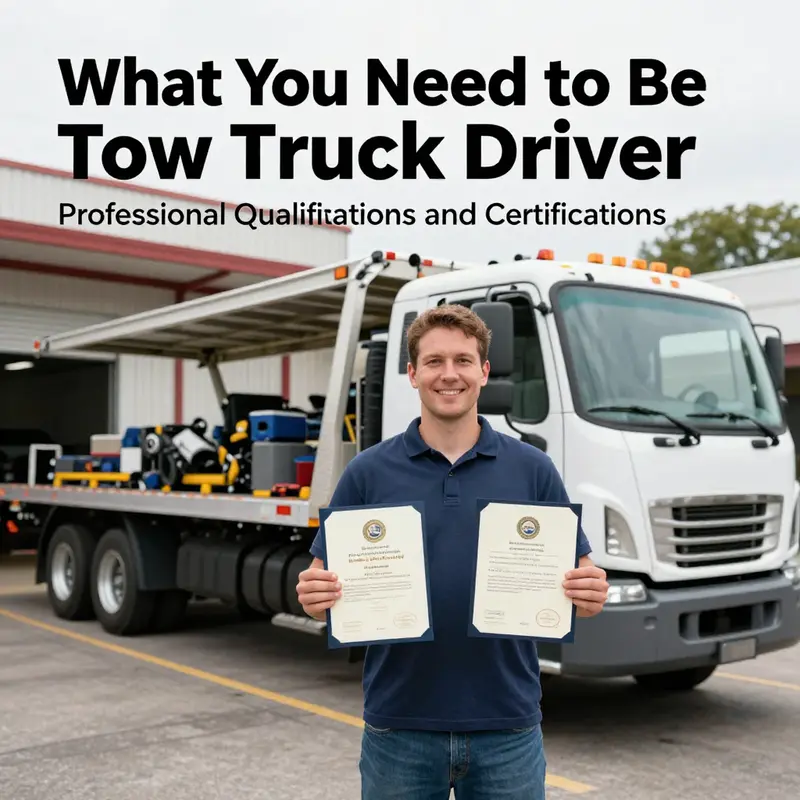
Tow truck operation sits at the intersection of practical skill, regulatory compliance, and public safety. The path to becoming a professional operator combines the right licensing, a clean driving history, medical fitness, and certified training. Across jurisdictions, this framework ensures drivers can perform safely under pressure, secure vehicles, control scenes, and communicate clearly with dispatch and clients. In Canada, for example, aspiring tow operators typically begin with the minimum age that allows enrollment in commercial driving programs, followed by the appropriate commercial license class based on gross vehicle weight rating (GVWR) and equipment type. The CDL classes (A, B, and C) map to the weight and configuration of the tow truck and trailer, with Class A covering heavy combinations and Class B/C addressing other heavy vehicles. A clean driving record complements licensing by signaling responsible driving behavior, risk awareness, and reliability to employers and insurers. Medical exams assess vision, hearing, cardiovascular health, balance, and overall fitness to ensure you can perform the physical demands of roadside work. With licensed credentials and medical clearance, specialized training in vehicle recovery, load restraints, safety procedures, and equipment operation completes the professional foundation. Ongoing learning—endorsements, recertifications, and staying current with new technologies—keeps operators competent as tow fleets modernize with advanced wheel-lift, winch, and dispatch systems. A typical career path blends progressively increased responsibility with a commitment to safety, professional conduct, and service quality, enabling you to assist stranded motorists, manage scenes safely, and protect everyone on the road.
Final thoughts
The journey to becoming a tow truck driver is paved with necessary qualifications and standards crucial to maintaining safe and efficient operations in our island communities. From meeting age and license requirements to upholding a clean driving record, passing medical evaluations, and attaining professional certifications, each aspect plays a vital role in ensuring the reliability and integrity of tow services. For local businesses, understanding these requirements empowers you to make informed decisions when seeking professional towing services, contributing to safety and efficiency across our islands.