For local auto repair shops, car dealerships, property managers, resort operators, and commercial fleet operators, mastering the operation of a tow truck in GTA 5 can significantly enhance efficiency in vehicle management and recovery. Vehicles in the game can often be damaged or in need of relocation, making the tow truck an essential tool for both gameplay and business strategies. This comprehensive guide will provide a detailed overview from the basics of engaging with the tow truck, to the intricate workings of its crane and winch functionalities, culminating in best practices for towing mechanics and navigation. Each chapter focuses on a unique aspect of the towing process, ensuring you have the knowledge needed to handle all vehicle recovery situations in the game.
Mastering the Tow: How to Operate GTA 5’s Tow Truck and Ace the ‘Truckin” Challenge
Mastering the Tow: How to Operate GTA 5’s Tow Truck and Ace the ‘Truckin” Challenge
Using a tow truck in GTA 5 is one of those activities that feels simple at first glance and unexpectedly deep once you get hands-on. Beyond the basic thrill of hooking a busted car and hauling it away, the game exposes a set of mechanics, physics quirks, and control subtleties that reward attention and practice. This chapter walks through everything you need to know to find, operate, and get the most from a tow truck—especially if your goal is to complete the “Truckin'” challenge. The narrative covers locating tow trucks, mastering the crane and winch, managing vehicle weight and handling, and hitting the high-speed objective that the challenge demands, while also offering practical troubleshooting and advanced tips that will make each tow feel intentional and efficient.
Finding a tow truck is usually straightforward if you know where to look. Tow trucks commonly appear near garages, repair shops, and areas with frequent vehicle problems within Los Santos and Blaine County. Check around mechanic bays, scrapyards, and stretches of road where stalled vehicles congregate. If you prefer a more systematic approach, drive routes near industrial zones or along the coast; those areas often host service vehicles. Once you see the signature shape of a tow rig—the flatbed or the dedicated tow truck—approach and enter using the standard vehicle entry key for your platform. On PC that often defaults to the same key you use to enter any vehicle; on console it will be the usual ‘enter vehicle’ button. This initial step is simple, but the right spawn location shortens your time between attempts when you’re repeating the “Truckin'” challenge.
With the truck started, the first thing to get comfortable with is the crane or winch system. Activating the crane uses a single input to toggle the tool mode. On PC that is mapped to a specific key; on controller it will be the button that triggers vehicle interaction. Once the crane is active, its controls split between aiming and operating the hook. Use the movement controls—left stick or mouse— to swing the arm into place. The hook raises and lowers with the same interaction key you used to enable the crane. Aim for the center of the target vehicle’s roof or hood when lowering the hook; that position yields the most stable lift and reduces the chance of the towed vehicle swinging wildly as you raise it.
There is a natural rhythm to using the winch well. Move the crane toward the car slowly, drop the hook, and pause to let the connection register. Press the interaction key again to secure the hook and then lift deliberately. A fast, jerky lift can cause the towed vehicle to bounce or clip through the environment. When the hook catches, the game performs a brief physics calculation to marry the two vehicle bodies. If the targeted car is positioned awkwardly—angled on a curb or half-on a sidewalk—take a moment to reposition the tow truck so the crane approaches from a more favorable angle. Small adjustments to the truck’s position before the hook is dropped will save time and headaches during the lift.
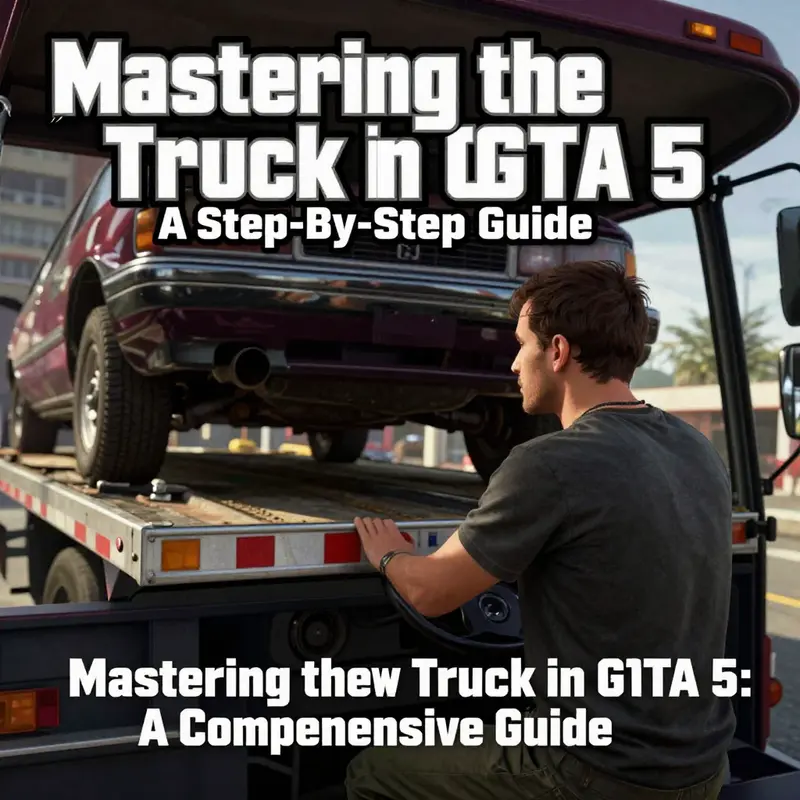
Loading the vehicle onto a flatbed or hauling it directly depends on the tow rig you found. Flatbeds allow you to pull the vehicle fully onto the bed rather than suspending it. Use the crane to pull the car so its front wheels roll onto the bed, then secure it by slowly raising the crate and moving forward. In contrast, a dedicated tow truck will leave the vehicle suspended behind, which affects handling more dramatically. Suspended cars create drag and a swaying effect, especially during turns or when braking hard. Anticipate this by braking earlier and driving smoother lines through corners. If the “Truckin'” objective requires sustained high speed, a flatbed is usually easier to control at velocity, whereas a suspended tow can be made to work with careful throttle management.
The “Truckin'” challenge itself has a clear requirement: maintain a high speed for about 10-15 seconds. That sounds simple, but a tow truck is heavy and awkward. Choose a stretch of open road or a highway. Clear traffic where you can, either by selecting a less congested route or by creating a buffer—overtake and move out to the left or right lane to buy yourself space. Plan the run: accelerate from a safe rolling speed, shift as needed, and commit to a full-throttle dash across a straight stretch. Avoid sharp turns and sudden braking. If you have a suspended vehicle, watch the sway; it can grow enough to force you into corrective steering that kills speed. For best results, use roads with long, uninterrupted segments. Highways between towns, desert highways, and some coastal roads all work well.
Speed management is the key differentiator between finishing and failing the challenge. Tow trucks have lower top speeds and slower acceleration than many standard vehicles, but they do hit a reliable cruising velocity once you commit. Keep the steering smooth and stabilizing corrections minimal. Use the environment to your advantage: draft behind larger vehicles for a moment if traffic is present, and then pull out once you’re ready to hit the open lane. If the towed vehicle starts to sway, gradually reduce throttle just enough to let it settle, then re-accelerate—abrupt changes in speed are what break the 10-15 second window. Remember that maintaining speed is not only about pushing the pedal; it’s about managing momentum through clean inputs.
Handling differences can be subtle but matter. Tow trucks often have a higher center of gravity. When a vehicle is attached, the combined mass drives understeer and longer braking distances. Braking should be anticipatory: tap brakes lightly and early to avoid locking wheels and letting the towed car become a pendulum. While turning, widen your arc. Take corners slowly and open them up; cutting apexes at normal speed will create unwanted lateral forces on the towed load. If you need to correct a wide sway mid-turn, slow down in a controlled fashion instead of abrupt counter-steering. The physics system in the game responds to momentum realistically enough that smooth inputs produce predictable results.
Troubleshooting common issues helps prevent wasted attempts. If the hook won’t attach consistently, check your approach angle. The hook must be aimed at the correct portion of the target vehicle—its centerline—so a slightly rotated car may need repositioning. If the towed car clips into the truck or the environment, reverse a few meters and try again; sometimes small position changes reset collision states. When a vehicle refuses to mount the flatbed, it may be due to terrain or object collision. Adjust your truck’s angle or reposition the car using the winch before attempting to lift it fully. If the game seems laggy or the physics go awry, reduce distance from other players or high-activity zones in online play; latency can exaggerate towing instability.
There are also strategic variations worth keeping in mind. If you’re towing for mission purposes or in free roam, choose whether you want the towed car on the bed or hanging behind. Beds are more secure and easier for transport across congested areas. Hanging tows are faster to execute but harder to control. For the “Truckin'” challenge specifically, an unloaded flatbed with the target vehicle secured on the bed lets you reach and sustain a higher speed more easily. If you can, practice loading and securing cars on the bed away from traffic first. Once the routine becomes second nature—hook, lift, settle, and secure—you can focus entirely on the high-speed segment required by the challenge.
Multiplayer and roleplay scenarios introduce further considerations. When towing in an online session, be mindful of other players. Unexpected collisions can wreck your run, so choose a lane away from heavy traffic or recruit an ally to ride with you as a spotter. If griefing is a concern, pick quieter servers or move to invite-only sessions to complete time-sensitive objectives. In roleplay environments, towing protocols—approaching slowly, signaling intention, and communicating—not only look authentic but also reduce mistakes that interfere with speed runs.
Fine-tuning performance might mean customizing your truck, where possible. Some variants of tow rigs have slight differences in handling and power. If you’re repeating the challenge, experiment with similar vehicle types to find one with a marginally better acceleration curve. Small differences can be the edge you need to maintain that 10-15 second high-speed window. In addition, environmental awareness matters: avoid hills that force you to bleed speed and favor downhill stretches that let you reach the required velocity more easily. Watch out for sudden slope changes that upset the towed load.
A few discipline-specific tips will yield immediate gains. First, practice the pick-up routine until you can load most vehicles within two or three attempts. That lowers the stress and preserves time when chasing the challenge. Second, rehearse the run path: know where you will accelerate, where you will steady the run, and where you might need to adjust. Third, use the camera to check the towed vehicle occasionally; a quick glance behind helps you spot building sway early. Finally, learn to read the speedometer and hear engine notes—those sensory cues let you make micro-adjustments without staring at instruments.
For those who like to master every edge case, consider how different vehicles tow. Sports cars are lighter and swing more, while SUVs and trucks attach more stably but add drag. Motorcycles present a unique problem: they can flip and clip, so approach them differently or avoid them for the challenge. Vehicles with custom body kits or low clearance may snag when being pulled onto a bed; lift carefully and reposition as needed. Each vehicle type creates a slightly different towing profile, and familiarity with common vehicle classes will save you time.
If you encounter persistent bugs or need control clarification, use the in-game help system to confirm bindings and mechanics. Pause the game, navigate to the Brief tab, and open Help to see exact key mappings and control descriptions for your platform. That resource is useful if you’ve remapped keys or if you’re playing on different control devices.
For practical inspiration beyond the game, there are resources that discuss real-world towing practices and fleet preparedness that can inform better in-game habits. For broader reading on fleet operations and emergency response strategies that resonate with towing workflows, visit this blog with practical fleet guidance. Proper preparation, situational awareness, and methodical execution translate well between simulated and real towing scenarios.
Finally, if you want authoritative, technical information about towing and vehicle mechanics as implemented by the game designers, consult the official support documentation. It outlines the towing mechanics and provides additional troubleshooting notes that can help when the game’s physics behave unexpectedly: https://support.rockstargames.com/hc/en-us/articles/360047829211-GTA-5-Towing-and-Vehicle-Mechanics
Mastering the tow truck in GTA 5 combines practical technique, route planning, and a calm approach to physics-driven behavior. Once you refine crane operation, loading sequences, and high-speed control, the “Truckin'” challenge becomes a repeatable test of skill rather than a fluke or frustration. Practice with intention, pick your roads, and treat the hooked vehicle as part of your driving profile. With that mindset, every tow will feel precise, and goals like the 10-15 second high-speed run will fall into place more often than not.
null
null
Crane, Tow, and Terrain: Mastering GTA 5 Tow Trucks for Safe Towing and Smooth Navigation
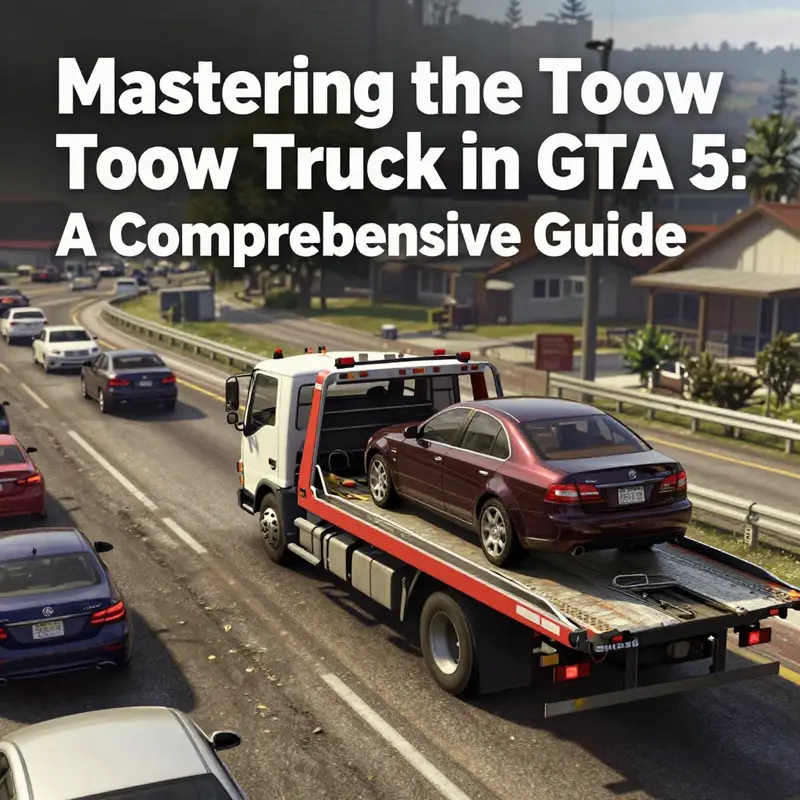
Inside the sprawling, neon-lit streets of Los Santos, the tow truck is more than a tool of convenience. It is a mobile habitat for precision, a lane-change instrument, and in the right hands, a quiet spectator of traffic’s rhythm. To move a vehicle from one curb to another, you learn to read the geometry of the city, the weight distribution of the car you’re lifting, and the way a hydraulic arm behaves under streetlight glare. This is the practical poetry of towing in GTA 5: a blend of mechanical clarity, spatial awareness, and patient timing that rewards the careful operator with a clean pickup, a tidy transport, and the sense that every move has a purpose beyond immediate expediency. The journey begins with the basics—how to access a tow truck, how to fire up the crane, how to latch, lift, and drive—yet it quickly becomes a larger meditation on how to maneuver through the city’s veins with a vehicle built to shoulder heavy loads and delicate balances alike.
To start, the entry into a tow truck is deceptively simple, but the moment you twist the key or press the ignition, the game invites you to shift into a more deliberate mode of operation. In the story mode, players often stumble upon a tow truck as a random find: you spot the boxy silhouette of a flatbed or a dedicated dolly-equipped ride along a side street, and the world slows just enough to notice the hydraulic creak as the bed tilts, the winch hums to life, and the claw of the crane begins its tentative arc toward a target. In GTA Online, the access point is more efficient, a formalized doorway to service vehicles that spawns the tow truck near your position with reliable predictability. You open the Interaction Menu, scroll to Vehicle, choose Service Vehicle, and then Tow Truck. In minutes, a tow rig appears where you stand, ready to be put to work. The difference between these contexts is not merely a matter of convenience. It reshapes the rhythm of your operation, guiding your approach to each job with a different tempo and set of expectations.
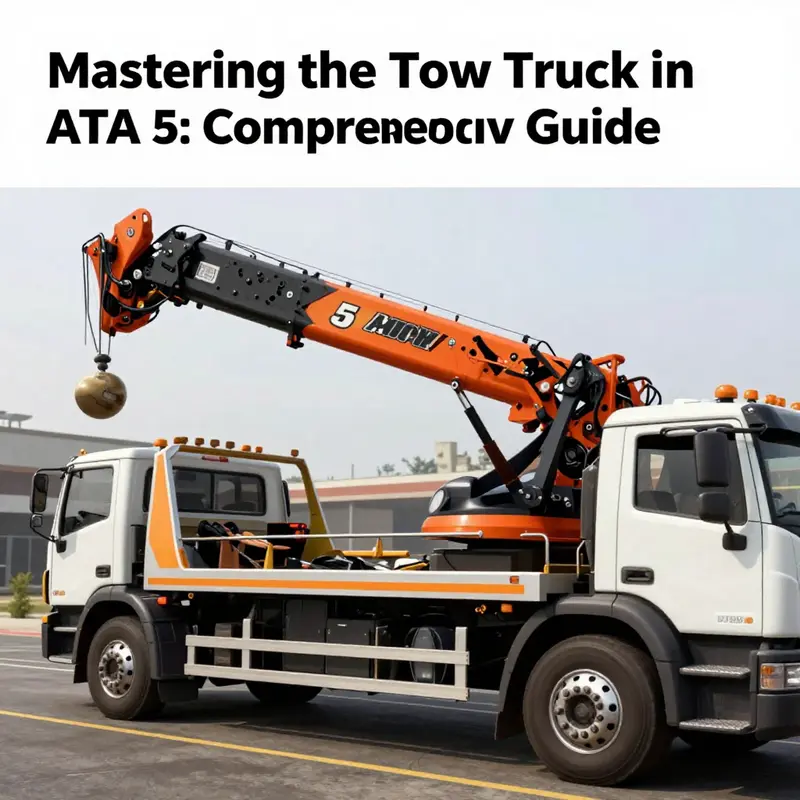
The crane is the core instrument of the tow truck’s identity, and learning its control is the first essential step toward mastery. On PC, you activate the crane with the E key, a signal that you’re ready to move the arm through space with a precision that only comes with practice. On consoles, that same action is bound to a corresponding button, and the feedback loop—move the analog stick, watch the crane arc across the target—stitches a bridge between intention and result. Once the crane is live, the left stick becomes your dial, your compass, your instrument panel: push left or right to steer the crane toward the vehicle’s chassis, tilt the arm toward the undercarriage, and adjust its height to clear the ground or to cradle the target without collision. It sounds simple in theory, but the city’s geometry tests your restraint. Cars bounce in place as you glide past them; pedestrians drift along the sidewalk with that casual disregard for a crane’s reach that only a player could master. The key is to be deliberate, to avoid hurried, large movements that might snap the line or cause the hook to miss its mark. A calm touch is more valuable than brute speed.
Attachment follows the arc of the crane’s motion. When you’ve positioned the hook above the target, you press E again to lower the hook and engage the attachment. The sound of metal meeting metal becomes the cue that the vehicle is secured, but the job isn’t done yet. You must then lift the vehicle onto the flatbed or dolly it onto a bed, depending on the tow truck type you’re using. The wheel-lift dolly-tow configuration is efficient for quick hops and is ideal for smaller or standard-issue cars that don’t require full-bed transport. It’s the lean, nimble choice when you’re moving light loads across short distances, especially in tight alleys where a full bed might collide with fire hydrants or parked cars. But for proper safety, for high-value or low ground clearance targets, the flatbed is the more conservative option. The flatbed bed tilts and then levels, letting the entire car roll or winch onto the bed with a gradual, controlled lowering. This method minimizes wear on the towed vehicle and is particularly suitable for damage-prone or AWD/4WD vehicles, where wheel alignment and power are sensitive to abrupt lifting dynamics.
Low-bed tow trucks extend that philosophy further, offering a stability that professional roadside technicians rely on. When you’re tasked with recovering heavier or more awkward loads—think sports cars with low ground clearance or vehicles that refuse to be dragged—low-bed configurations provide a broader, more predictable platform. They feel heavier in the cockpit and require a steadier hand, but their stability pays off with reduced risk of scrapes, underbody damage, or wheel misalignment during transit. In the grand arc of GTA 5 towing, the choice of system becomes a decision about risk and results. The dolly is quick, the flatbed is safe, and the low-bed is sturdy. Each one has a place in your evolving toolkit, and mastering when to switch between them is a mark of growing competence.
Driving a tow truck introduces its own set of challenges and opportunities. After you’ve strapped a vehicle to the bed or secured it on a dolly, you must re-enter the world of traffic with a payload that affects your vehicle’s center of gravity and braking distance. The weight of a car resting on a dolly or bed will alter acceleration, turn radius, and the responsiveness of the steering. Sharp turns at high speed become dangerous. The city’s network of tight corners and one-way streets turns into a real test of spatial judgment; you learn to anticipate the pull of your load, to adjust your speed well before a bend, and to map routes with enough clearance that your towed vehicle remains stable throughout the journey. This is where the navigation skills of GTA 5 collide with logistics in the real world. A tow truck is not just a machine for moving cars; it is a moving platform that demands respect for weight distribution, trajectory, and tempo. The more you understand your own vehicle’s limits—the maximum safe speed for a given load, the minimum safe following distance, the sweet spot for gear changes—the more graceful and efficient your tows become.
In the Online ecosystem, towing also intersects with achievements and time-limited objectives. One widely cited incentive is the opportunity to drive at a steady, controlled pace for a short window, which often helps in meeting criteria tied to particular challenges or missions. For instance, maintaining a consistent pace for a set interval contributes to the spirit of careful handling that underpins successful operations. This is not about reckless speed; it’s about the discipline to let weight and momentum find their natural rhythm. The challenge and the satisfaction lie in balancing speed with control, ensuring the towed vehicle remains secure, and delivering it intact to its destination. These seemingly small decisions accumulate into tangible benefits—faster mission completions, fewer failed captures caused by a loose tow, and generally smoother rescue or recovery operations that earn you respect among your crew.
A type of knowledge that often isn’t celebrated in quick tutorials is the art of anticipation. You anticipate how a car on your bed will catch the airflow of passing vehicles, how your own truck’s rear end will swing if you take a corner too quickly, how a tight alley will require you to execute a three-point maneuver rather than a sweeping arc. This level of anticipation comes with experience, but you can accelerate it by paying close attention to the city’s geometry and to your own vehicle’s behavior after every tow. The city doesn’t bend to your will; you bend to the city’s rhythm, learning to time your lifts for when intersections are clear, and choosing routes that reduce the likelihood of contact between the towed vehicle and a street-side obstacle. You also learn to manage the crane’s energy. In some situations, the crane’s reach is limited by the height of the vehicle, by nearby power lines, or by other parked machines. A moment’s pause to reassess the line’s length can save a tow from a scratch or a snag.
If you’re new to this, a practical approach helps. Start by selecting a familiar target—a vehicle parked on a straight street, a car left stranded in a parking lot. Practice engaging the crane, lowering the hook, and lifting with a shallow arc to ensure you’re using minimal movement to achieve maximum control. Move to a safer surface, and then slowly back onto the bed. Observe how the car settles on the bed or dolly, adjust if necessary, and then drive away with a light touch on the accelerator. Each tow is a small experiment in physics: gravity, friction, tension, and momentum all align or resist based on the exact geometry of your lift. The more you practice, the more the mechanics feel natural, and the more you’ll discover that a tow can be a precise instrument rather than a last-resort solution.
For players who want to deepen their understanding beyond hands-on practice, the community resources offer a valuable window into nuances that might otherwise be overlooked. Some operators publish detailed narratives about the equipment, the best configurations for particular vehicle types, and route planning heuristics that reduce the risk of damage to both the towed vehicle and the tow truck. One online resource that helps frame these principles in a digestible way is the Island Tow Truck blog, which collects anecdotes, diagrams, and recommended procedures in a format accessible to newcomers and veterans alike. Reading such accounts can illuminate the subtle decisions that separate an ordinary tow from a professionally executed operation. See the Island Tow Truck blog for a broader sense of how real-world practice translates into in-game technique, and to appreciate the practical lens through which the game’s towing dynamics can be understood. Even as you read, remember that the game offers you a sandbox you can fill with your own evolving technique, habits, and preferred workflows.
Beyond the mechanical act of lifting and hauling, there is the matter of what you tow and why you tow it. In GTA 5, some tows serve a narrative or mission purpose. Others are simply exercises in control and timing, a sandbox to test patience and precision. The choice of tow type—whether a dolly, a flatbed, or a low-bed—refines not only your technique but your strategic approach to scenarios that demand different handling. A wheel-lift dolly, for instance, can be deployed quickly when time is of the essence and the towed vehicle does not require full-bed treatment. It’s a tool meant for agile, short-range operations where speed matters more than the utmost safeguarding of the vehicle’s underside. The flatbed, however, provides the breadth of safety for damaged cars or those with odd wheel configurations. It is the method that preserves the towed car’s integrity while offering full support across the entire chassis. And the low-bed represents the robust, professional approach to heavy or high-risk recoveries where stability and balance are your assurances against mishandling.
In the city’s maze of lanes and alleys, the tow truck becomes a translator between your intention and the world’s constraints. The crane translates your mental map into a physical line, a tether that reaches toward the vehicle you’ve selected as the target. The hook translates your plan into a secure latch. The bed translates your transport plan into a safe, level platform that can hold the car steady as you maneuver, brake, accelerate, and steer. When you combine these steps with the right vehicle type, you gain control of a sequence of actions that allows you to deliver your cargo with minimum disruption to traffic, bystanders, and your own crew. The result is not simply a successful tow; it’s a choreography of weight management, spatial reasoning, and a disciplined approach to risk. This is where the tow truck reveals its deeper value: it is a modular, adaptable tool that can adapt to any job the city throws at you, provided you’ve learned to read the space, to calibrate the crane, and to hold the line when the city pushes back.
As you climb toward proficiency, you may begin to notice subtler cues—the way a vehicle’s undercarriage sounds when it’s barely supported by the dolly, the way the bed’s hydraulics hum as they lift a stubborn load, the slight lag between your crane’s motion and the bed’s tilt, or the moment when turning too quickly would cause the towed car to shift its weight and threaten detachment. These are the micro-moments that separate a routine tow from a reliable procedure. When you respect these micro-dynamics, you’ll experience fewer failed pickups, fewer scratches on the towed car, and a smoother removal of the target from its original location. You’ll also develop a better sense for when to switch from one towing method to another, which is essential when you’re juggling multiple tasks in the same window of time. In the end, towing in GTA 5 is not just about moving vehicles; it’s about moving through the city with a measured, patient cadence that honors the physics of weight and the geometry of space. With practice, the crane becomes a familiar instrument, the hook a trustworthy partner, and the flatbed a stage upon which you enact careful, competent retrievals that feel almost ceremonial in their precision.
To tie these threads together, think of the tow truck as a craft tool, the city as its workshop, and the operator as the craftsman. The more you refine your touch, the more you realize how much control you actually possess. Each tow teaches you more about the vehicle you’re driving, the terrain you’re crossing, and the balance you must maintain between ambition and prudence. The goal isn’t to rush through as many tows as possible; it’s to move with a pace that respects the vehicle, the environment, and your own limits as an operator. When you internalize this mindset, you’ll find that towing in GTA 5 becomes less a checklist of actions and more a steady, confident practice that makes every retrieval feel like part of a larger, purposeful performance.
For players who crave a sense of structure without breaking the chapter’s flow, remember that you can always consult the in-game help menu if you want a quick refresher on bindings and control descriptions. Pause the game, navigate to the Brief tab, and select Help to view all control bindings and explanations. While this is a system-level resource, the humanizable takeaway remains: a clear mental map of controls speeds up your on-screen execution and reduces the cognitive load during critical pulls. It’s not a philosophical detour; it’s a practical extension of the discipline that makes your towing more effective across a wide range of scenarios. As you continue to practice and experiment, you’ll discover that the art of towing is less about brute force and more about disciplined technique, patient alignment, and the quiet confidence of a driver who understands that every tow is a carefully choreographed interaction with the city’s geography.
External resource for further exploration: https://support.rockstargames.com/hc/en-us/articles/360049827951-GTA-5-Vehicle-Controls-and-Mechanics
Final thoughts
Understanding how to effectively use a tow truck in GTA 5 is instrumental for local auto-related businesses, enhancing both gameplay and operational efficiency. Each element—from the first step of entering the truck to mastering the equipment and executing successful towing—can lead to a more productive experience. By mastering these mechanics, you can ensure that your in-game businesses thrive and adapt to the unique challenges presented by vehicle recovery. Remember, whether you’re navigating traffic or securing a vehicle on the flatbed, skillful use of the tow truck will keep your operations running smooth.