
Tow trucks play a vital role in roadside assistance and vehicle recovery, but their weight varies significantly depending on their type and purpose. Knowing how much a tow truck weighs is essential for local auto repair shops, car dealerships, property managers, resort operators, and commercial fleet operators. Various factors influence the weight of tow trucks, from light-duty models designed for passenger vehicles to massive heavy-duty wreckers capable of lifting trucks and buses. In the following chapters, we will unpack the weights of light-duty, medium-duty, and heavy-duty tow trucks, delve into the factors affecting these weights, and discuss their implications for operations within your business. By the end of this guide, you’ll have a better understanding of what to look for when considering tow truck options for your specific needs, paving the way for informed operational decisions.
Weight on Call: Unpacking Light-Duty Tow Trucks and the Real Mass Behind Everyday Rescue
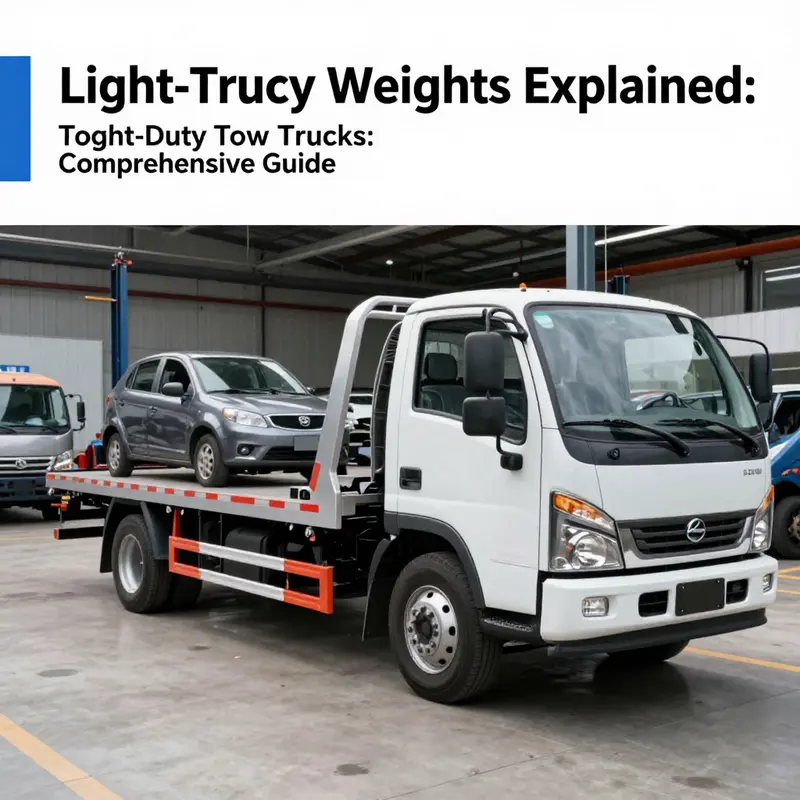
Across towing fleets, the question of weight often centers on heavy-duty beasts, but light-duty tow trucks carry a quiet kind of weight that shapes every recovery job. These machines are designed for vehicles that fit into a practical category: they tow up to about 10,000 pounds, and they sit on a frame that blends compact maneuverability with enough heft to withstand daily abuse. The weight topic, when limited to light-duty models, becomes clearer: curb weight, or the empty weight of the truck, typically falls in a broad band, roughly between 3,000 and 8,000 kilograms (about 6,600 to 17,600 pounds). This range reflects variations in chassis design, bed geometry, drivetrain, hydraulic systems, and the safety equipment mounted to the frame.
Within that band a typical empty weight might hover around 4,000 to 5,500 kilograms (about 8,800 to 12,000 pounds) for many light-duty configurations that prioritize a balance of payload and height clearance. The exact number, however, depends on how the bed is built. A rollback or slide-bed system adds a hydraulic platform and a tilting surface for loading, while a wheel-lift configuration concentrates weight on support arms and a winch. Each choice shifts empty weight by a few hundred kilograms. The key point remains that the towing capacity—the maximum weight the truck can pull—is separate from its own mass. For many light-duty setups, the tow rating tops out near 10,000 pounds (roughly 4,500 kilograms), which aligns with common regulatory definitions of light-duty vehicles.
To understand the physical heft and the mechanical brain behind that heft, it helps to picture how these trucks are used in the field. Rollback or slide-bed systems rely on a hydraulically operated platform that can tilt toward the ground, slide under a damaged car, and then lift it onto the bed. Wheel-lift designs, by contrast, anchor the primary lifting points to the wheels themselves. Rollback models typically guide operators through a slower, more controlled process that minimizes contact with a vehicle’s sensitive undercarriage and drivetrain. In contrast, wheel-lift rigs can be faster to deploy in straightforward recoveries but require precise wheel contact and positioning to avoid scrapes or improper weight distribution. The weight of the truck, the bed, and the equipment all play into stability, braking, and the ability to handle slopes or uneven surfaces when the operator pulls a vehicle onto the bed.
Manufacturers publish a bouquet of specifications that describe what the machine can do beyond just its mass. Lift capacity, winch strength, hydraulic reach, and chassis stiffness all contribute to how a light-duty tow truck performs on a real call. If you pore over data sheets, you will see how the numbers relate: a winch rated for tens of thousands of pounds can haul a damaged car onto a bed, while the bed’s length and tilt angle determine how much ground clearance the system has to bridge a gap between the vehicle and the truck. Importantly, the payload capacity of some flatbed configurations—the amount of additional weight the bed itself can carry in a given operating state—can be listed as around 4,000 kilograms (8,800 pounds). That figure, however, is payload, not curb weight, and it does not alter the truck’s own empty mass. Understanding that distinction helps fleet managers and operators plan safe, compliant operations.
Looking at the evolving landscape, the shift toward electric vehicles affects tow trucks in tangible ways. As more light-duty vehicles arrive with heavy battery packs and advanced powertrains, tow trucks must adapt to heavier, steadier loads that may affect traction and braking. Battery handling protocols must be integrated into recovery procedures, especially when towing a plug-in hybrid or a battery-electric car with sensitive components. Charging infrastructure becomes part of the toolset for maintenance and on-call readiness, since some crews will need to recharge equipment between jobs or use battery-powered features. In this context, engineers increasingly consider how to balance energy use with performance. The electrification trend isn’t merely about replacing diesel with electric; it’s about preserving the reliability and safety that a light-duty tow truck must deliver when called to recover a stranded vehicle, a stranded EV, or a kid’s bike with a flat on a busy street.
For those who want a formal anchor for numbers and safety, the standards ecosystem matters. Reference sources and industry guidelines help ensure consistency across regions and fleets. In practice, operators will consult the data sheets produced by equipment manufacturers and cross-check with liaisons from safety organizations or standards bodies. The International Organization for Standardization (ISO) publishes guidelines that influence how towing performance and safety are measured, tested, and reported. While the specific product you pick will bring its own exact numbers, the underlying framework—reliability, repeatability, and injury prevention—remains consistent. In other words, the weight category you see in a model’s specs is nested in a broader system designed to keep both operators and bystanders safe on the road. Readers seeking more context about standardization and how it shapes gear design can explore official resources, such as the ISO website, which offers a wide range of standards that touch on towing equipment and recovery operations.
Practically, how should a reader approach the question of weight when evaluating light-duty tow trucks—whether for a fleet, a shop, or a single on-call vehicle? Start with curb weight, then compare to the payload and the rated towing capacity. The curious buyer should request the manufacturer data sheet that lists the truck’s empty mass and every major subsystem’s mass, from the bed to the winch and the hydraulics. When possible, verify with independent reviews or operator feedback to understand real-world weight distribution on uneven roads or slopes. Real-world testing matters: a truck that feels stable with a light load may handle an identical curb weight differently when it carries a fully loaded bed or a rollback platform at full extension. Fleet operators can benefit from analyzing weight across the service cycle, including maintenance intervals, fuel or energy use, and the impact of routine loading and unloading operations on tires and suspension.
Beyond the numbers, the human side of weight matters too. A well-balanced light-duty tow truck offers a blend of nimble handling and robust capacity that keeps responders safe as they perform delicate recoveries, load damaged cars without scraping fenders or undercarriages, and return to service quickly. The choice between a rollback versus wheel-lift setup is more than a preference; it is a decision that affects the time spent on a scene, the risk exposure for the operator, and the ability to secure the vehicle in a way that minimizes secondary damage. In practice, a fleet might lean toward a mixed approach, deploying wheel-lift for routine, surface-level recoveries and reserving rollback-equipped trucks for complex or low-clearance scenarios. The structural mass of the truck, its bed system, and the added safety gear all contribute to the rough calculation of readiness: a ready vehicle weighs enough to perform its duties without compromising stability, yet light enough to remain agile when rapid response is required. For readers seeking practical case discussions and field-tested strategies, the Island Tow Truck blog offers real-world insights and tested methods that connect theory to practice the Island Tow Truck blog.
This analysis of light-duty weights ties back to the broader question of how much a tow truck weighs overall and why it matters. When fleets compare models, the empty mass informs not only capital cost but maintenance planning, spare parts provisioning, and fuel or energy strategy. Heavier trucks demand more robust braking systems, higher-grade tires, and tires that can handle additional loads without overheating under frequent starts and stops. Lighter units gain agility but must still carry the safety equipment and winching gear that keep them capable in everyday emergencies. The conversation about weight also intersects with regulatory domains around roadworthiness, vehicle inspection, and load stability. Each operator must weigh the trade-off between mass and capability in light of the kinds of incidents they most often encounter. In the end, it is not simply a matter of raw weight but of how that weight translates into reliability, safety, and operational readiness on every call.
External resource: ISO Official Website
Weight on the Line: Decoding the Mass of Medium-Duty Tow Trucks in Recovery Operations
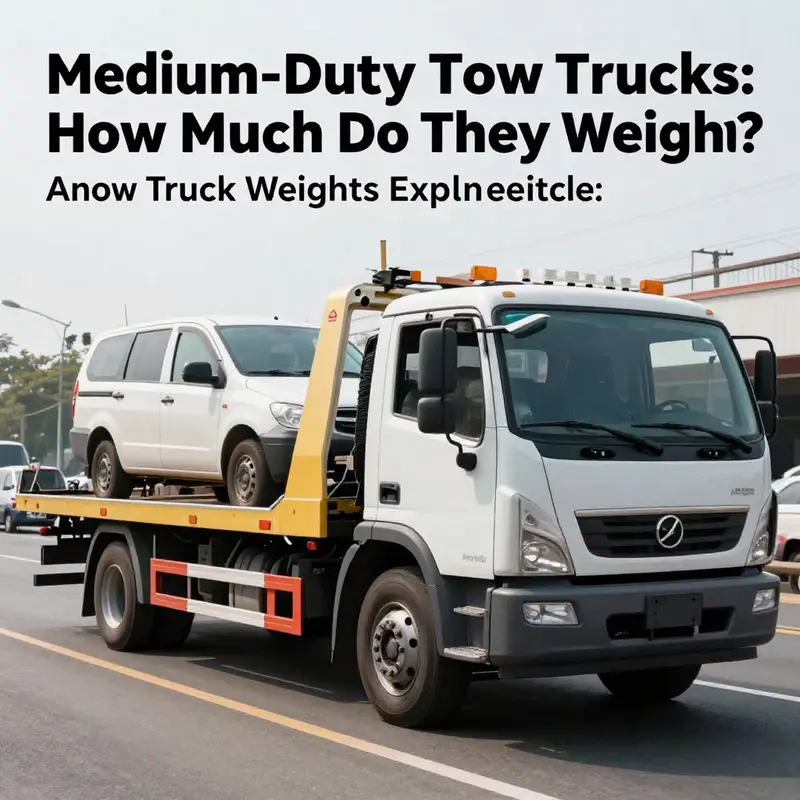
Across the spectrum of tow and recovery vehicles, medium‑duty tow trucks sit at a pivotal intersection between agility and brute capability. They are the workhorses that help garages, fleets, and municipal crews recover vehicles after fender benders, roadside mishaps, or field breakdowns. Their weight is not a single number but a range that reflects the balance these machines strike: enough mass to stabilize and haul meaningful payloads, yet nimble enough to navigate city streets, ramps, and busy highways. To understand what these machines weigh, it helps to separate the concepts of curb weight and gross vehicle weight, and to recognize that configurations, drive layouts, and equipment suites push numbers in different directions depending on who buys them and where they operate. In this sense, the question “how much does a tow truck weigh?” becomes less about a single figure and more about class, purpose, and the engineering choices that support it.\n\nFor most medium‑duty configurations, the gross vehicle weight (GVW)—the combined weight of the truck itself plus its fuel, fluids, tools, and any attached equipment—tends to fall in a broad band. Commonly cited ranges put GVW roughly from 15,000 to 26,000 pounds, which translates to about 6,800 to 11,800 kilograms. Those figures cast the category as heavier than the light‑duty end of the market but still far from the heavy‑duty, long‑haul conventions that dominate highway recovery work. The numbers matter because GVW influences how a truck is licensed, where it can operate, and how much payload it can actually carry when standing ready to perform a tow or a recovery operation. It also shapes the vehicle’s braking requirements, suspension stiffness, and the size of its fuel supply, all of which feed back into performance and reliability under load.\n\nThe discussion of weight becomes even more nuanced when you look at a real‑world example in this class. A representative medium‑duty breakdown and wrecker configuration might show a curb weight—what the truck weighs empty—around 7,800 kilograms, or roughly 17,000 pounds. That empty mass gives a sense of the chassis’s heft before any tools, winches, or payload are added. Yet the same model often lists a GVW around 15,000 kilograms, which is about 33,000 pounds. That juxtaposition—curb weight near 7.8 metric tons versus GVW in the 15‑ton range—illustrates how a medium‑duty truck’s weight can scale dramatically with the equipment package and the capacity it is intended to serve. It’s a reminder that the classification labels, like “medium‑duty,” often mask a broader spread of configurations than the name alone implies. Some operators opt for heavier setups to maximize recovery power, winching capability, and the ability to carry a larger assortment of wheel lift arms or pallet dollies, while others prioritize maneuverability and fuel efficiency for urban callouts.\n\nThe weight story doesn’t end at just the empty mass or a single GVW figure. A foundational distinction is the separation between curb weight and payload potential. Curb weight tells you how much the truck weighs by itself, with fuel and fluids, before you add any tools or recoveries. Payload, the maximum load the vehicle can carry on a given mission, sits on top of that curb weight up to the GVW limit. In the medium‑duty class, payload capacities can vary widely depending on the available deck space, winch power, and the configuration of wheel lifts or underlift systems. In some flatbed configurations, the stated payload might be around 4,000 kilograms—or approximately 8,800 pounds—though again, this is highly contingent on the specific build and whether the deck is optimized more for casualty recovery or for transporting disabled vehicles.\n\nThese weight characteristics—curb weight, GVW, and payload—have tangible consequences in the field. A heavier GVW often means a sturdier frame and reinforced suspension, which reduces flex during towing and enhances stability when the truck is operating with a load on the bed or while handling equipment like heavy‑duty wheel lifts, retractable ramps, or hydraulic reels. Yet that additional mass also raises stopping distances, road wear, and the demands placed on the vehicle’s braking system and tires. For fleets that must operate in urban centers or tight corridors, the weight envelope becomes a governing factor in dispatch decisions, route planning, and even parking or storage needs at the depot.\n\nFrom the operator’s standpoint, the drive configuration is another piece of the weight puzzle. Medium‑duty tow trucks most commonly employ configurations designed to provide a blend of traction and payload handling. A six‑wheel drive setup with four steered axles is typical in some regions, while others use a four‑axle, eight‑wheel arrangement to absorb road imperfections and maintain control when pulling heavy loads through uneven surfaces. In practice, a mid‑sized breakdown truck can be balanced to deliver service across commercial fleets and municipal fleets alike. The same basic class can be configured either for more compact urban service or for higher‑risk highway recovery, with weight and power tuned to reflect the mission profile. In any case, the weight is not simply a matter of heft; it is a carefully engineered response to the demands of recovery work and traffic safety on real roads.\n\nCrucially, the weight conversation also touches on the scope of equipment carried on board. A medium‑duty tow truck is rarely a bare chassis with a winch; it is a compact workshop on wheels. The combination of winches, hoists, wheel lifts, and deck storage frames adds mass that should be considered in conjunction with the truck’s basic weight. When a fleet discusses response times, staging, and deployment, the mass of the vehicle and its attachments becomes part of the calculus for where to position units, how to load them, and which units are best suited to different calls. Operators must balance the desire to maximize recovery capacity with the practical realities of road conditions, fuel efficiency, and the ability to navigate areas with height or weight restrictions. This balancing act is reflected in the design process and in the way fleets specify their medium‑duty units for daily use.\n\nTo connect these technical details with practical decisions, many operators turn to industry resources that outline classifications and specifications in a consistent way. The landscape of data sources helps fleets compare what is typical in their region and what is feasible within their budget. For readers who want to see how these figures fit into broader industry standards and to access up‑to‑date classifications, there are credible references available, including dedicated trade associations and manufacturer resources. A central takeaway from this body of information is that weight in the medium‑duty class is a proxy for capability: heavier trucks can carry more and recover more, but they demand more space, more careful planning, and more robust maintenance. In day‑to‑day operations, those tradeoffs shape when a medium‑duty unit is dispatched, how quickly it can reach a scene, and how safely it can perform complex recoveries under variable conditions.\n\nFor fleet managers and responders who want to stay aligned with industry practices while tailoring equipment to local needs, engaging with community knowledge can be invaluable. Industry blogs and forums offer case studies and anecdotal guidance on how different configurations perform in the field, and they can be a practical resource for calibrating expectations about weight, payload, and maneuverability. If you’re curious about how peers weigh the tradeoffs when equipping a medium‑duty tow truck, you can explore ongoing discussions and insights at the The Island Tow Truck blog. There, discussions frequently center on the realities of fleet operations, emergency response strategies, and the day‑to‑day challenges of getting heavy equipment to the scene and back safely. You can read more in that resource at the following internal link: The Island Tow Truck blog.\n\nAs one surveys the medium‑duty segment, a key lesson emerges: the weight of the tow truck is not a fixed attribute but a spectrum informed by purpose, configuration, and operating environment. The empty mass provides a foundation, but the real story unfolds when the deck, winch system, and ancillary gear are added, and when the vehicle is loaded for a job. A unit designed for urban recovery might stay closer to the lower end of the GVW spectrum and emphasize maneuverability, while a highway rescue unit might push toward the higher end to support heavier recoveries and more extensive on‑scene equipment. In every case, the weight class helps determine what the truck can do, how it should be used, and what support it requires from the broader fleet to perform efficiently and safely on the road.\n\nExternal resources offer a broader lens on how the industry standardizes these classifications and how manufacturers present specifications to buyers. For readers seeking a more formal overview of equipment classifications and the weight envelopes typical for recovery trucks, the Truck Equipment Association provides a current reference point. Their materials synthesize industry practice and regulatory considerations, helping fleets align their procurement and maintenance practices with established norms. External resource: https://www.truckequipment.org/
Weight as a Tool of Recovery: Understanding Tow Truck Mass, Tare, and Heavy-Duty Capacity
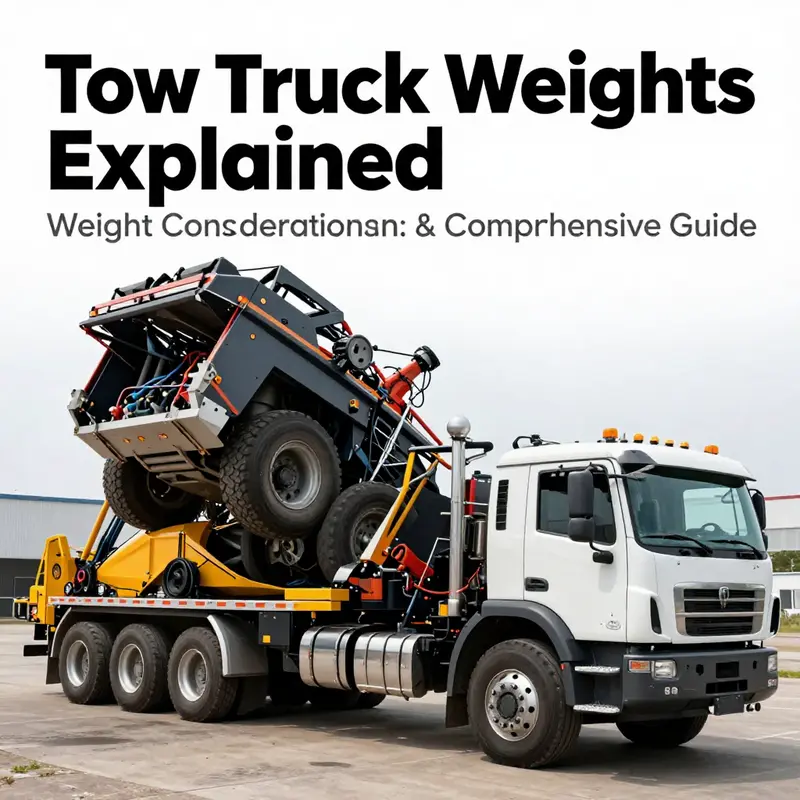
Tow trucks cover a spectrum as wide as the tasks they perform. The weight of the machine itself matters as much as its lifting power, because mass influences stability, maneuverability, fuel use, and even how fleets plan space in a yard or on a highway shoulder. In practice, there is no single weight for a tow truck any more than there is a single weight for the jobs it will take on. Vehicles designed for light, everyday recoveries will sit on a far lighter frame than the heavy-duty specialists that dominate large wrecks and long-distance recovery.
Light-duty units, built to move smaller cars and light vans, arrive on the scale with an empty mass typically between 3,000 and 8,000 kilograms. These figures translate into towing capabilities in the range of about 5 to 20 tons. The heavier the empty frame, the more it can carry in terms of recovered vehicle mass, but the cost is increased weight that reduces the margin left for the actual tow. In this class, the weight of the recovery module, winches, and wheel-lift systems adds to the tare and consumes part of the payload budget before a single vehicle is attached. Operators must balance the desire for more pulling power with the practical limits of street space, curb clearance, and the regulatory ceiling on gross weight—the limit determined by the vehicle’s design and the roads it is allowed to traverse.
Moving up, medium-duty configurations push the scale higher. Empty weights for these trucks typically fall in the 10,000 to 15,000 kilogram window. They are designed to haul heavier vehicles and to work in more demanding environments than their light-duty kin. Towing capacities in this range can reach up to about 25 tons, while still keeping the footprint manageable in urban staging areas or on regional roadways. The extra mass usually comes from stronger frames, reinforced subframes, heavier winches, and additional stabilization equipment. All of these enhancements improve recovery certainty, but they also further reduce useful payload when the vehicle is fully equipped and ready for service.
The heaviest tier, the heavy-duty class, is where the weight conversation becomes a practical mission-critical study. Empty mass for these giants often starts around 12,000 kilograms and can climb well beyond 25,000 kilograms depending on configuration and equipment. Lifting and winching capacities in this tier span from about 20 tons up to 80 tons, with many setups around the mid-range offering robust, reliable performance for the toughest recoveries. Some heavy-duty models also feature advanced capabilities such as near-360-degree rotation of the boom, and others maximize reach through extended lifting arms and multipoint stabilizers. All those features are built around a heavier chassis, multiple axles, and high-strength components that ensure stability when lifting or towing substantial loads. The tare weight—the truck’s own weight when empty—thus becomes a decisive factor in how much recovery work the machine can perform before its legal or structural limits come into play. When the rest of the equipment weighs heavily on the frame, the actual payload left for towed cargo or additional gear shrinks, even if the lifting power remains vast.
To manage the numbers, fleet managers and operators use a straightforward arithmetic that sits at the heart of their planning: payload equals the gross vehicle weight rating, or GVWR, minus the tare. In plain terms, if a heavy-duty wrecker carries a high GVWR and a very heavy empty weight, the margin for the actual heavy-lift job can constrict quickly. On paper, this can seem abstract, but in the field it translates to decisions about which vehicle to send to a given scene, how much recovery gear to load, and whether that 60-ton capacity is necessary or if a more compact, agile unit would reduce risk and increase productivity. In practice, many heavy-duty configurations also carry a significant amount of recovery equipment—winches, chain systems, ramps, and stabilization gear—that increases the tare and can encroach on payload. The balance between lift capacity and payload is not a theoretical exercise; it shapes what a fleet can accomplish in a day and, ultimately, the safety of crews and the efficiency of response.
Alongside these core weight dynamics sits the practical reality of road operation. Heavier tow trucks demand more space to maneuver, longer setups, and, in many jurisdictions, more careful attention to axle weights, bridge limits, and permit requirements. A unit that can lift and stabilize with ease may still face logistical hurdles if its footprint hinders access to a congested urban scene or a narrow highway shoulder. For operators, these trade-offs are not mere curiosities. They dictate how quickly a scene is secured, how safely responders can work, and how many simultaneous tasks can be handled without compromising control of the recovery. In addition, heavier platforms inevitably incur higher fuel consumption, which layers into the total lifecycle cost and influences decisions about fleet composition, replacement cycles, and maintenance budgets. The cost of keeping a fleet ready for extreme events—rapid readiness, spare parts, and skilled technicians—must be weighed against the benefit of having the most powerful machine on hand when the stakes are highest.
Because the market offers a wide spectrum of configurations, choosing the right machine requires a careful assessment of both rated capacities and real-world constraints. It is not enough to chase the maximum lifting number if the truck cannot reach the site quickly, cannot operate safely within the space available, or will exhaust its fuel supply before a job is concluded. The durability and build quality of the chassis, the reliability of hydraulic systems, and the effectiveness of stabilization features all feed into the long-term value of an investment in a heavy-duty recovery asset. In the commercial sense, this means more than a purchase price. It includes ongoing maintenance, parts availability, and the ability to service advanced controls and rotation mechanisms that make heavy-duty wreckers versatile on the road. The most robust designs tend to deliver lower long-term costs through reduced downtime and fatigue on components, even if their upfront price is higher. Conversely, models that emphasize sheer mass over practical reliability may deliver high lifts at a premium but can require more frequent refurbishment or component replacement.
For readers who want to explore how these mass considerations play into a real dispatch scenario, resources that connect recovery strategy to equipment selection can be valuable. For instance, the industry context of emergency-response planning and fleet readiness can be found in resources that discuss essential fleet emergency response strategies. These materials help operators think through how weight, capacity, and access influence the speed and safety of response, and how to align equipment choices with the broader demands of service areas. Essential Fleet Emergency Response Strategies
In shaping a fleet for the road and the incident scene, end-to-end thinking about weight is essential. The chassis is not a bare frame. It is a platform that must support heavy lifting, long reach, stabilizers, and the heavy trusses that anchor a tow operation. It must carry crew, tools, and the hooked safety devices that keep vehicles secure during extraction. The more robust the frame, the more confidence a crew gains that a complex recovery will stay balanced, controlled, and safe under a broad range of loads. But the stronger the frame, the more the truck weighs, and the more careful planners must be about how much a given scene will tax the vehicle’s payload, how quickly the unit can be deployed, and how the geometrics of the environment—slopes, curb cuts, and asphalt conditions—interact with weight and traction.
The weight story does not exist in isolation. It intersects with maintenance schedules, with the availability of trained operators, and with the capacity of a fleet to respond to multiple simultaneous incidents. Heavy-duty wreckers may be uniquely capable of handling large, stubborn loads or complex recovery operations in challenging conditions, but they demand space, time, and strategic thinking to deploy effectively. This is where the long arc of weight considerations comes into focus: not merely the number on a scale, but a spectrum of engineering choices that translate into safer, faster, more reliable responses when the pressure is on.
For readers seeking technical grounding beyond the day-to-day decisions of dispatch and maintenance, external technical references provide further detail about heavier configurations and their capabilities. For example, official pages describing heavy-duty wrecker designs highlight the breadth of lifting capacities across the spectrum and illustrate how arrangements of axles, booms, and stabilizers address the need for stability and reach at scale: https://www.sinotruk.com/en/products/heavy-duty-wrecker-truck. This reference complements the practical, fleet-level considerations discussed here and underlines how heavy equipment developers translate mass into capability on the road.
Weight by Design: What Sets Tow Truck Curb Weight
Tow trucks weigh a great deal more than their everyday appearance suggests. Curb weight is the truck’s mass in its ready-to-operate state with a full fuel tank and standard equipment, and it varies widely by model and configuration. The main drivers are chassis design, lifting gear, materials, and drivetrain. Light-duty tow trucks sit lighter than heavy-duty wreckers, while cranes, winches, outriggers, tool storage, and specialty equipment add mass as a normal part of operation. Aluminum or mixed-material constructions can reduce weight in some areas, but reinforced frames and heavy lifting gear push mass upward.
Axle configuration and drivetrain also steer curb weight: a simple two-wheel-drive setup generally weighs less than tandem rear axles or four-wheel-drive layouts, which add both axle mass and drivetrain hardware. Regional measurement conventions can further create apparent weight differences between visually similar trucks. In practice, fleets balance capability with payload, fuel economy, and regulatory constraints when selecting a configuration. The key takeaway is to know the job mix and choose a setup that aligns with payload needs and operating environments.
Weight on the Line: How Tow Truck Mass Shapes Power, Safety, and Serviceability
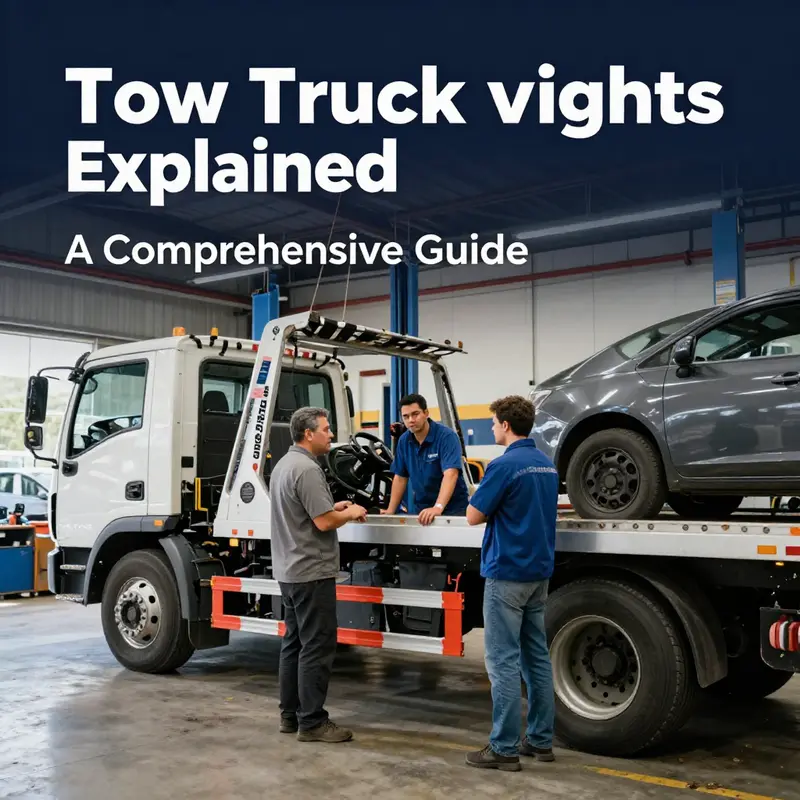
The question “how much does a tow truck weigh?” invites a simple answer, but the reality is a spectrum that stretches from compact light-duty machines to hulking heavy-duty wreckers built for major recovery work. In practice, the empty or curb weight of these vehicles varies with size, configuration, and intended use, and that variance matters as soon as the engine starts and the hydraulics hum to life. Light-duty units tend to come in around 3,000 to 8,000 kilograms when they are empty, and they carry towing capacities in the range of roughly 5 to 20 tons. Medium-duty tow trucks, by contrast, sit higher on the scale, typically empty between 10,000 and 15,000 kilograms, with payload and recovery capabilities that can reach the 25-ton mark in some configurations. The heavy end of the market pushes past 15,000 kilograms when empty, and it is not unusual to see machines in the 25,000 kilogram territory or more with specialized gear and chassis layouts designed to wrestle overturned or immobile vehicles from hazardous sites. Taken together, these figures reveal a core truth: the curb weight of a tow truck forms the baseline from which every operation begins, even as the mission of the vehicle may demand more or less load capacity depending on the job at hand. A key nuance is that capacity is not simply the difference between gross vehicle weight rating and the truck’s own mass; it is a function of the vehicle’s design, the configuration of the towing system, and the weight the platform can safely manage while respecting dynamic limits at speed and during controlled loading maneuvers. The max payload of a flatbed, for instance, is frequently stated as a separate specification, such as a 4,000 kilogram carrying limit in some units, which is a reminder that payload capacity and the tow truck’s own weight are two different but interlocked metrics guiding every choice a fleet makes about equipment and deployment. In a field where precision matters as much as power, knowing the baseline weight helps crews anticipate performance during lift, winch operation, and the careful choreography required to secure a vehicle for transport without inviting excessive stress on the chassis or the hydraulic system. The spectrum from light to heavy also reflects a broader equation: weight directly informs how much ballast a truck can safely handle in a given scenario, which in turn shapes decisions about when to deploy a lighter unit versus a heavier one. In some circumstances, a lighter machine with nimble handling and lower fuel burn is the right tool for a single-car tow in dense urban streets, whereas a heavier unit may be indispensable for multi-vehicle recoveries, high-load highway incidents, or operations that demand greater lifting leverage and stabilizing force. The practical implications extend beyond raw numbers; they echo through fuel economy, maintenance planning, and regulatory interactions that govern how, where, and when these machines can operate. Heavier trucks burn more fuel, especially in rolling or towing modes that demand sustained engine torque and hydraulic output. They also grow more sensitive to road grade, wind, and payload fluctuations, which can translate into longer stopping distances and a more deliberate driving approach. Owners and operators thus weigh the benefits of added lifting capacity against the tangible costs of operating a heavier asset, including maintenance cycles for heavier drivetrains and more robust braking systems, as well as the potential impact on total cost of ownership over the vehicle’s service life. The weight profile of a tow truck also changes the physics of transfer in ways that matter to safety. With flatbeds, for example, the distribution of mass across the platform and chassis becomes a focal point for stability during loading and transport. An inclined bed must move a full vehicle mass onto the deck without tipping the truck or causing a dangerous shift in the vehicle’s center of gravity. This leads to crucial design considerations: the hydraulic system must deliver controlled tilt and bed extension, the wheelbase and axle arrangement must support balanced load transfer, and the securing points must accommodate the maximal weight that could be hauled in a given configuration. If loading procedures ignore weight distribution, even a well-designed machine can become unstable, particularly in turns, on uneven road surfaces, or when a second vehicle is strapped to the bed in a multi-vehicle recovery. The operating discipline that accompanies heavier machines is thus not merely about power; it is about control, precision, and the discipline to respect limits. From a logistical viewpoint, weight also intersects with compliance in ways that shape day-to-day service delivery. In many regions, weight classes influence route planning, permitted corridors, and the cadence of response. Operators must align their fleet mix with local restrictions, balancing the availability of heavier units for large-scale incidents with the efficiency and accessibility of lighter models for routine calls. The consequences of misalignment can be costly: fines, vehicle impounds, or delays that ripple through the dispatch system, degrade service levels, and complicate supply chain resilience. Countries that enforce strict weight limits often tie performance indicators to the operator’s ability to stay within these bounds, reinforcing the need for careful crew training and effective communication between field personnel and fleet management. Beyond regulatory calculations, driver skill requirements tighten as weight increases. Flatbed operations demand greater attention to load balance and securement, because the risk of shifting mass during maneuvering grows with vehicle size and the potential height of the load. Training programs that emphasize ballast management, engagement with winches, bed operation, and the sequencing of loading steps tend to correlate with fewer incidents and smoother outcomes. This is not simply a matter of technique; it is a practical acknowledgment that heavier trucks impose larger consequences when mistakes occur. The operational implications of tow truck weights thus integrate several dimensions: the physics of lifting and hauling, the economics of fuel and maintenance, and the governance of safety and compliance that keeps responders effective in the field. For practitioners, the path to efficiency lies in understanding weight as a strategic variable rather than a static attribute. Fleet planning should reflect the realities of the local environment, traffic patterns, and common incident types. Operators can optimize response times and reliability by matching vehicle class to typical jobs, while retaining heavier machines for the most demanding recoveries when the risk of delay or incomplete extraction outweighs the extra cost of operation. Practical guidance and industry perspectives, such as those found in the broader trade literature, offer useful benchmarks for standards, properties, and industrial applications related to tow truck weights and their operational impact. For a detailed overview that contextualizes these considerations within broader regional standards and applications, see the external resource linked at the end of this chapter. Internal references to ongoing industry discussion, including practitioner insights and case studies, can also be found in the back catalog of industry blogs and fleet-management resources, such as the island tow truck blog [theislandtowtruck.com/blog/]. This channel provides real-world perspectives on how weight considerations translate into daily practice, from rig selection to on-site maneuvering and post-incident analysis. In short, the weight of a tow truck is not just a number on a spec sheet; it is a design constraint, a performance lever, and a compliance parameter that together determine how quickly and safely a team can restore mobility after a breakdown or a serious incident. Because the optimal balance between power, payload, and controllability depends on context, fleets that actively map weight profiles to the kinds of recoveries they most often face tend to perform best. They build resilience not by chasing the heaviest possible machine, but by choosing the right tool for the job and maintaining disciplined operation across all shifts and conditions. For further technical context and standards that elaborate on these principles, readers may consult industry references such as the guide provided by Tow Truck Malaysia, which outlines standards, properties, and industrial applications relevant to weight, stability, and performance in professional tow truck operations. This external resource offers a structured view of how mass interacts with the mechanics of towing and recovery in real-world environments. Further reading: https://www.towtruckmalaysia.com/comprehensive-guide-to-tow-truck-malaysia-standards-properties-and-industrial-applications
Final thoughts
Understanding the weight of tow trucks, from the compact light-duty models to the powerhouse heavy-duty wreckers, is paramount for businesses reliant on vehicle recovery services. Each truck category brings unique specifications that affect operational decisions, efficiency, and overall cost-effectiveness. By recognizing these distinctions, auto repair shops, car dealerships, property managers, resort operators, and commercial fleet operators can make informed choices that enhance their service delivery. Ultimately, being equipped with the knowledge of tow truck weights translates to more effective strategies when it comes to recovery operations and vehicle management.