
Tipping a tow truck driver can be a nuanced topic, balancing the appreciation of hard work and understanding local customs. For auto repair shops, car dealerships, property managers, resort operators, and commercial fleet operators, knowing when and how much to tip is vital for maintaining good relations and ensuring high service quality. This article will guide you through clear guidelines on tipping, explore the factors that influence how much to tip, highlight regional variations, and underscore the importance of tipping in enhancing service quality. Together, these insights will equip you with the knowledge to navigate this often-overlooked aspect of roadside assistance elegantly.
Tipping Tow Truck Drivers: Practical Guidelines for Fair Appreciation on the Road
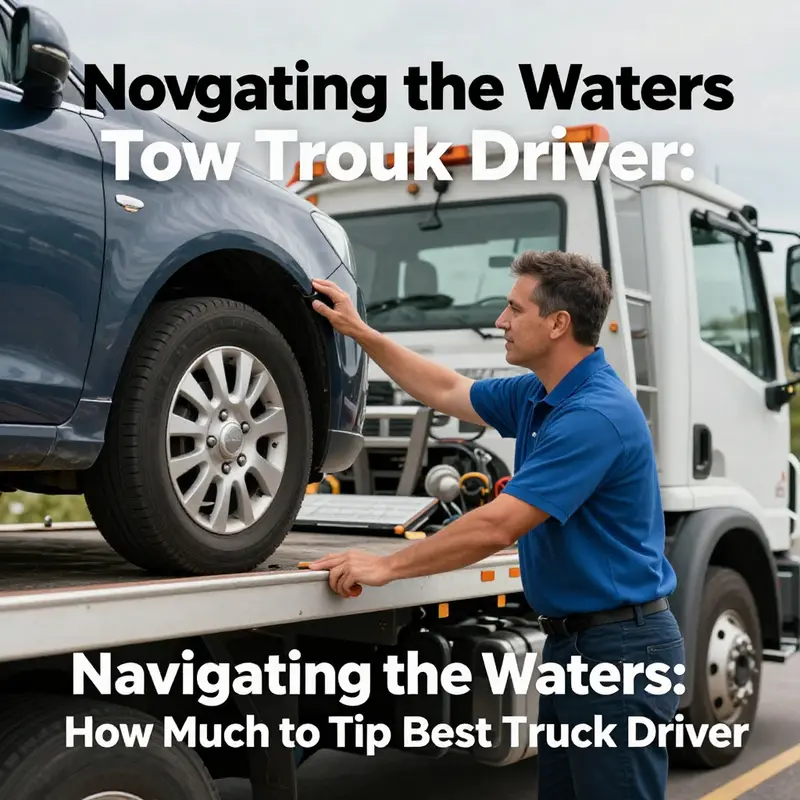
Tipping a tow truck driver sits in a gray area between courtesy and routine payment. The service is usually billed as a fixed fee, arranged through a dispatcher or insurer, and the driver’s job is framed as a professional transfer from a roadside crisis to a safe, solvable scene. Yet the moment the tow truck pulls up—lights flashing, tires humming on wet pavement, the engine quieting the storm around you—the impression of value becomes personal. The question emerges not merely about numbers, but about recognition of skill, risk, and the often underappreciated labor that keeps traffic moving and people safe when everything feels uncertain. In such moments, tipping is not a standard expectation in every company or circumstance, but it remains a meaningful gesture of thanks when the driver has gone beyond the basics: arriving promptly under pressure, handling a difficult recovery with care, or staying professional in bad weather or harsh conditions. The conversation about tipping, then, is less about a rigid rule and more about a thoughtful response to service that reflects both practical fairness and human courtesy.\n\nThe practical logic behind tipping a tow truck driver starts with understanding what the service costs and what, exactly, the driver delivers. A tow is not merely a vehicle transport; it is a complex task that may involve assessing vehicle stability, navigating dangerous or obstructed roadways, securing loads, and coordinating with dispatch, insurance adjusters, police if needed, and a shop that will perform the repair. When the fee covers the basic mechanical labor of transporting, the driver’s additional effort—an extra maneuver to avert a collision, a long wait in a deserted stretch, or a careful winching in a storm—adds value that isn’t always easy to quantify in dollars alone. In those moments, a tip can be a straightforward way to express appreciation without implying that the base service was somehow lacking. It signals respect for the craft and acknowledges the human element of roadside assistance, where every decision can affect safety and outcomes.\n\nGuidance on tipping varies, and this is where situational awareness matters most. If you choose to tip, a commonly accepted range sits around 10% to 15% of the total towing charge. This proportion aligns with the general ethos of roadside courtesy: you recognize the extra effort without creating a mandatory expectation that could complicate future interactions. For example, if the tow costs 150 dollars, a tip of 15 to 22.50 dollars is a generous nod to solid performance. Some drivers or companies may appreciate the flexibility of a tip in the 10% to 20% band, especially when the service extends beyond the usual pickup and drop-off. A longer haul, a particularly technical recovery, or support in hazardous conditions—such as a blizzard, ice, or a remote setting—may justify leaning toward the upper end of that spectrum. Conversely, if the service is routine, timely, and uneventful, tipping is less expected and can be omitted without judgment.\n\nAnother layer to consider is the broader context in which the tow occurs. If the service is part of an insurance claim processed through a carrier, tipping is often not expected. Some drivers may have company policies that discourage tips in certain circumstances, or they may be independent operators who are working within a tight margin where gratuities could complicate record-keeping. In those cases, a succinct word of thanks or a small token of appreciation that doesn’t imply an obligation can still convey gratitude. In areas where service culture values generosity more strongly—whether in tourist zones, remote regions, or communities with a tradition of roadside goodwill—the tipping norm may drift upward. In others, cash remains king, but mobile payment apps are increasingly common, and drivers sometimes request a digital tip to accommodate their payment preferences. The point is to tune your response to the specific driver and situation, rather than to default to a fixed amount.\n\nThe guidelines also invite attention to the quality of interaction—how the driver communicates, how they manage the scene, and how they handle the practical tasks at hand. Prompt arrival, a calm and professional demeanor, clear explanations of what they will do, and careful handling of the vehicle all contribute to a sense of value that can justify a tip. The role of the tow operator often blends customer service with technical acumen: reading the terrain to choose the safest method of loading, communicating potential risks to passengers, and coordinating with a shop to ensure a seamless transition from roadside to repair. When these elements converge—when a driver remains composed in rain-soaked wind, when they take extra care to protect your belongings, or when they communicate a realistic plan in a stressful moment—the chance that a tip feels earned rises.\n\nThere is also a practical dimension to tipping that shouldn’t be overlooked. Tow operators, especially independent operators or small fleets, frequently work long hours with limited benefits. A tip can be a small but meaningful acknowledgment of the economic realities that drivers face, much as support in any service-oriented trade. If you’re unsure about tipping, observe local etiquette and the company’s signage or policy. Some outfits display guidance or even offer gratuity options; if none of these cues are present, your best bet is to rely on your own assessment of service quality and the level of extra effort observed.\n\nIn considering how to approach the act itself, the method of giving matters as much as the amount. Handing the tip directly with a brief and sincere acknowledgment is a straightforward, respectful gesture. Examples include thanking the driver for getting you back on the road safely or acknowledging their help in rough weather. If cash feels awkward in the presence of onlookers or if the driver accepts digital tips, a brief note or a quiet offer through a phone or app can be appropriate, too. The key is to maintain dignity and discretion, so the recipient feels valued rather than obligated or pressured. For those who want to extend gratitude beyond money, small gestures can also be meaningful: a cold bottle of water, hot coffee, or a snack left by the vehicle while the driver completes paperwork communicates appreciation in a tangible way without creating a sense of indebtedness. These acts are especially welcome when the driver has spent extra time managing a difficult recovery or when the weather is extreme, and resources are stretched thin.\n\nFrom a practical planning standpoint, it helps to have a mental framework before you ever reach a tow scenario. Consider keeping a small reserve of cash or a reliable mobile payment method specifically for roadside services. This preparation prevents uncomfortable haggling or awkwardness in the moment and ensures that you can express appreciation without delay if the service meets or exceeds expectations. It also reduces the risk of misinterpretation—what might be intended as a token of gratitude could be perceived differently if presented in a rushed, high-stress moment. A quiet, respectful tip leaves the interaction on a positive note and helps preserve goodwill for future needs, whether you’re a regular driver in a high-traffic area or a traveler in unfamiliar territory.\n\nAs you reflect on your tipping choices, it’s worth visiting resources that distill these ideas into practical prompts. The topic has been explored by reputable organizations that emphasize road safety and customer care. For readers who want to see a broader framework, a well-regarded reference point is the American Automobile Association, which discusses tipping etiquette for tow truck services in the context of emergency roadside assistance. Their guidance and examples offer a grounded approach to tipping that aligns with common-sense expectations across many regions. And if you’re seeking local nuance or community-specific norms, a good starting point is to explore the online voices of regional service providers and consumer advice hubs, which often reflect the attitudes and practices of the communities they serve. For readers who want to dive deeper into practical tips and scenarios, you can consult the AAA tipping-tow-truck-drivers article.\n\nIf you want more detail about how to think about these moments before they occur, there is value in reading a steady stream of practical anecdotes and guidance from sources that speak directly to the context of island fleets, emergency response planning, and roadside safety culture. The Island Tow Truck blog serves as a useful repository of community-specific experiences and best practices when you’re on the road in environments with limited access to resources. Readers can find thoughtful observations and tips by visiting the blog, which aggregates stories and practical advice from drivers and users alike. The Island Tow Truck blog provides thoughtful perspectives for road experiences and the shared understanding of what it means to help a neighbor in need.\n\nThe conversation about tipping, of course, is not merely about money. It’s about recognizing the human effort that keeps people moving and economies functioning. A tip, when given thoughtfully, reflects a simple truth: the world runs on small acts of mutual respect. In the context of towing, where a driver’s work often unfolds under pressure and against logistical constraints, this small act becomes part of a larger system of goodwill that sustains service providers who operate on tight margins and demanding schedules. It signals that the crew you relied upon values your acknowledgment and that they are seen not just as a line item on a bill but as people who helped you regain control of a fragile moment. And because every tow situation is different—varying in weather, location, vehicle, and the specifics of the recovery—the willingness to adjust the tipping amount in proportion to the service quality and complexity remains the most prudent approach. The goal isn’t to enforce a universal standard but to cultivate a culture where courteous, fair recognition is the norm and where drivers feel valued for the crucial, sometimes hazardous work they perform.\n\nAs you move through life with a car that may fail you at any hour, it’s worth carrying this mindset with you. The decision to tip can become a proxy for how you assess service beyond the price tag. It’s not the tip itself that guarantees better service next time, but the internal standard you set for yourself as a consumer of roadside assistance. If you encounter a driver who balances safety, efficiency, transparency, and kindness, a thoughtful tip reinforces that standard and reinforces a market that values those traits. If, by contrast, the encounter is routine, unhelpful, or careless, the absence of a tip communicates a different message while still respecting the professional boundary. In either case, you’ve contributed to a practical, human-centered approach to a service that, for many motorists, is a necessary, sometimes intimate, interaction with the road, with strangers, and with the unpredictable tempo of travel.\n\nFor those who want to explore more nuanced discussions on the role of tipping in roadside services, there is additional guidance available from established road-service resources. The external resource from AAA offers concrete context for tipping decisions in emergency roadside scenarios, helping align expectations with standard practices and local variations. This kind of guidance can provide a stable reference point when you’re confronted with the stress of a roadside incident and the question of how much to tip arises. If you’re curious about broader best practices and want to understand how tipping intersects with customer service, safety, and professional conduct, turning to these sources can be a wise step. \n\nExternal resource: https://www.aaa.com/autocare/articles/tipping-tow-truck-drivers\n\nWhether you’re a frequent traveler, a parent driving late at night, or a business that relies on fleets and dependable emergency response, tipping remains a personal decision that should feel right for you and fair for the driver. It is a gesture that, when done thoughtfully, reinforces a culture of respect and reciprocity on the road. You don’t need a rigid rulebook to guide you; you need a sensibility that weighs service quality, effort, and context. By keeping a small reserve for gratuities, by reading the situation, and by choosing a method that matches the driver’s preference, you can ensure that your gratitude is communicated clearly and compassionately. The road is unpredictable, but your response to those who help you along it can be grounded in clarity, fairness, and humanity. To learn more about practical approaches and situational examples, consider visiting the Island Tow Truck blog for community-driven perspectives that resonate with everyday road experiences and the shared understanding of what it means to help a neighbor in need.
Reading the Roadside Gratuity: Gauging a Fair Tip for Tow Truck Drivers
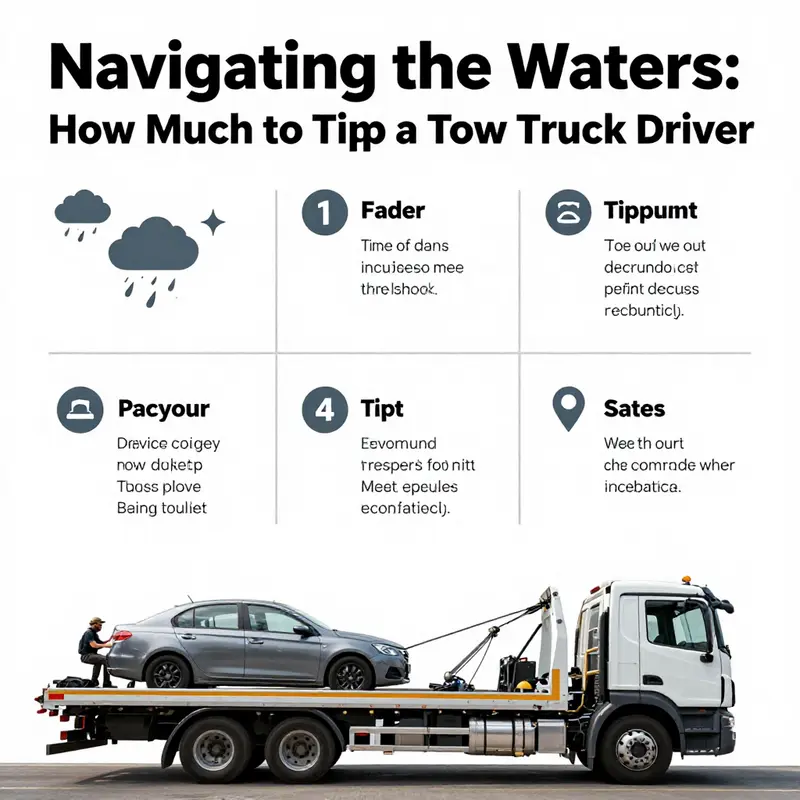
Tip culture on the roadside isn’t a fixed rulebook but a tactile measure of service, effort, and risk. When your vehicle sits on a shoulder, headlights cutting through the night, the last thing you want is a math lesson more than a rescue. Yet the question of how much to tip a tow truck driver isn’t one-size-fits-all. It hinges on the service you received, the conditions under which the driver worked, and the norms of the place you’re in. The simplest way to approach it is to let the job’s demands guide your generosity. Tipping, in this context, acts as a form of immediate feedback, signaling that the driver’s work—often unseen and physically demanding—was valued. A fair tip, given with courtesy and in a timely manner, can acknowledge the extra effort and expertise that a roadside incident frequently demands. The approach to tipping in tow scenarios is less about percentages and more about measured appreciation for concrete outcomes: the vehicle safely delivered, the scene managed with professionalism, and the rider’s calm communication during a stressful moment. While some drivers may politely refuse tips or indicate a no-tipping policy, many welcome gratuities as a direct sign of thanks. Knowing when to tip, and how much, requires weighing several factors in real time, rather than following a rigid rule you would apply to a restaurant bill. The guiding principle remains simple: the tip should reflect the value you felt from the service, not a mandatory line item you’re compelled to pay. In this sense, the act of tipping becomes part of an earned rapport between motorist and rescuer, a small ritual that reinforces trust and respect on a road that can transform in an instant into a danger zone or a fragile recovery site. The framework for deciding how much to tip starts with the job’s complexity. A straightforward tow—your car has a flat tire or a broken alternator, and the tow is a short drive to a nearby shop—typically warrants a modest gesture. A tip in the range of ten to twenty dollars is often fair and appreciated when the distance and effort are minimal. The driver factors in safety, careful handling, and punctuality, and your tip should acknowledge those elements. But once the operation escalates beyond the ordinary, the calculation shifts. Imagine a vehicle that is trapped in snow, stuck in a ditch, or involved in a precarious hillside recovery. In such cases, specialized equipment, additional personnel, and longer hours come into play. The tip then grows to reflect the extra time, skill, and potential risk. In practical terms, twenty to fifty dollars, or more, can be appropriate in a difficult or hazardous recovery. The exact figure hinges on the difficulty, the area, the weather, and the quality of service. If the tow involves a winch operation on uneven terrain or a recovery in low-visibility conditions, the extra effort and vigilance deserve recognition with a more substantial gratuity. This is not a hard-and-fast rule carved in stone, but a reasonable guideline that aligns with the principle of fair acknowledgment. The driver’s professionalism also stands as a major determinant. A courteous, patient, and clear communicator who explains the process, outlines risks, and handles the vehicle with care earns more than a curt, rushed performance. When a driver takes time to discuss the steps, offers options for the route, or ensures that the vehicle is secured and protected during loading, that thoughtful behavior typically warrants a correspondingly thoughtful tip. The way the driver interacts with you can sometimes be as valuable as the technical skill they display. In this light, tipping becomes a tangible reward for human factors—the calm under pressure, the steady hands, and the respect shown to your property and your safety. The company policy aspect cannot be ignored. Some towing outfits publish a no-tipping stance, while others welcome gratuities as a standard practice. It is prudent to ask or check the company’s policy before making a decision. A quick inquiry is fair and can spare awkward moments after a tense scene. If tipping is encouraged, you’ll have a clear cue for the appropriate amount; if not, you’ll still have the opportunity to express gratitude in other ways, such as a handwritten note of thanks or a positive review that reinforces good service. Local norms also shape expectations. Tipping customs vary by region, and what is customary in one city may feel unusual in another. A driver who travels long distances through rural or remote areas, where assistance is less frequent, may appreciate a larger tip as a reflection of the broader context in which they work. In dense urban centers with a high volume of service calls, smaller tips might be more common, but exceptional effort can still command extra recognition. Geography often intersects with risk; anywhere there is hazardous weather, icy roads, or natural hazards that increase the chance of property damage or personal injury, a larger tip is a reasonable acknowledgment of the enhanced risk. Low ground clearance or tricky lifting require precision and extra caution. When a tow involves delicate maneuvers or the possibility of collateral damage to your vehicle, the driver’s attention to minimize harm deserves reward. The bottom line is that tip amounts should be guided by the value you perceive in the service. A widely cited framework—though not universally rigid—recommends ten to twenty dollars for standard services and twenty to fifty dollars or more for difficult recoveries. If your tow is part of an insurance claim, you may find that tipping expectations are diminished, or the policy itself addresses gratuities in a different way. In such cases, your best practice is to focus on respectful interactions and timely communication with the driver and the dispatch. The goal is not to squeeze a tip from a routine event but to recognize exceptional effort where it occurs. For those who want to broaden the context, practical perspectives on service norms and readiness can be found in industry discussions such as those hosted by roadside assistance communities. The aim is not to prescribe a single figure but to provide a mental model that helps you assess value quickly and fairly. If you’re seeking more resources on how to approach emergency roadside situations with a calm and informed mindset, the Island Tow Truck blog offers insights on planning and preparedness that can inform later decisions about gratuities as well. the Island Tow Truck blog. In addition, it is useful to remember that tipping is only one piece of the overall experience. A transparent, professional approach from the driver can reduce stress, shorten the time to resolution, and improve your sense of safety and trust in the process. When the situation allows, you might consider small but meaningful gestures that don’t rely solely on cash—such as offering water, a blanket, or a moment of sincere thanks for the driver’s efforts. These non-monetary tokens can complement any tip you provide and reinforce the positive interaction even after the vehicle is back on the road. The practical decision about how much to tip ultimately rests on a combination of factors: the job’s complexity, the driver’s demeanor and professionalism, the company’s stance on gratuities, local norms, and the perceived risk to the vehicle and the operator. A cautious, reflective approach will help you adjust the tipping amount in real time without feeling trapped by a numerical standard. If you carry a wallet, a few small bills in the event of a simple tow, and a larger reserve for challenging recoveries, can cover most scenarios. If you do not have cash on hand, many drivers now accept card tips or app-based gratuities, which adds flexibility when a crisis moment passes and a payment option is needed. The core message remains clear: tipping is a signal of appreciation for competent, compassionate, and safe service. It respects the driver’s expertise and acknowledges the risks inherent in roadside work. It also supports the culture of professionalism in an industry where the margin for error can be high and the consequences of a misstep are tangible. The more one travels roads where such services are common, the more consistent these cues become. You begin to recognize that a fair tip is less about the amount and more about the alignment between the service you received and the value you assign to that service at that moment. In other words, tip according to the effort, the risk, and the outcome. For further context on best practices in the broader emergency response and fleet preparedness space, you may find additional guidance and examples on trusted resource pages. For more practical perspectives on service norms and readiness, you can read more on the Island Tow Truck blog. https://theislandtowtruck.com/blog/ For comprehensive guidance on emergency preparedness and response strategies for fleets, consider resources such as essential fleet emergency response strategies and emergency preparedness for island fleets, which provide broader context for how professional responders organize their work in challenging environments. External reference: https://www.aaa.com
Tipping by Region: Navigating Local Etiquettes for Tow Truck Drivers
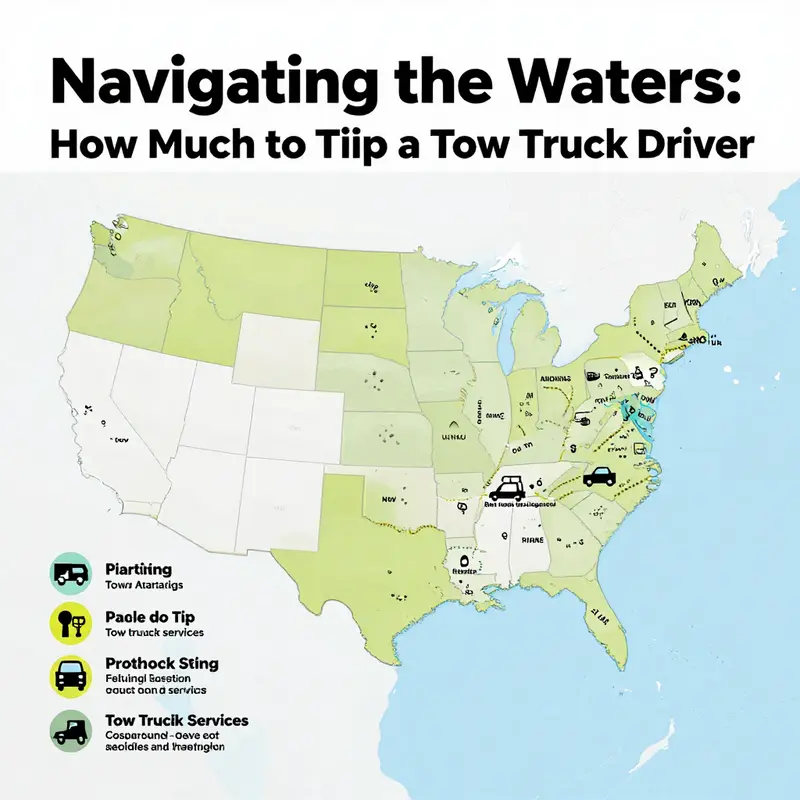
Tipping a tow truck driver sits at the intersection of gratitude, practicality, and local etiquette. It isn’t a universal requirement, yet the way people respond to good service varies widely from one place to another. In this chapter, we explore how regional norms shape what you might tip, why those norms exist, and how you can navigate them with confidence when you’re stranded on a shoulder, in a remote stretch, or in the middle of a busy city street. The aim is not to prescribe a rigid rule but to illuminate a spectrum of expectations so you can recognize a fair, considerate gesture without overthinking the situation. In many parts of the United States, tipping is seen as a courtesy rather than a formal obligation. The driver’s performance—timeliness, professionalism, careful handling of your vehicle, and a calm, reassuring presence under pressure—often nudges the decision toward a tip. The standard range commonly cited is 10% to 20% of the total tow fee when the service is above and beyond the basic call of duty. Still, this is a guide, not a mandate. If the service is routine, or if the tow is billed through an insurance claim, tipping may not be expected at all, and that distinction matters in how you respond.
The regional texture of tipping begins with the urban-rural divide in the United States. In larger cities like New York or Los Angeles, where there is stiff competition among service providers and where drivers may juggle multiple calls in a single shift, a tip in the 15% to 20% range is not unusual when the driver is exceptionally helpful. They might have navigated a congested area, managed a tricky recovery, or gone the extra mile to reassure a stressed driver or passenger in distress. Yet in smaller towns and rural corridors, tipping tends to be less common, and a well-executed, professional service with clear communication can be judged sufficient without a separate gratuity. The social expectation here is shaped not only by money but by time, effort, and the visible care a driver takes with your vehicle and your safety.
Canada mirrors the United States in many ways but adds its own regional shades. Across the country, a tip in the 10–15% range is a common benchmark when service is exemplary. In practice, the guidance you’ll see on receipts or in conversations with local operators sometimes reflects regional etiquette more than a blanket rule. For instance, in Quebec, the cultural norms around tipping can take on a slightly different cadence than in Ontario or British Columbia, where a straightforward tip for good service remains the norm. The etiquette here also intersects with how a tow company presents pricing. Some Canadian firms explicitly state on invoices whether tipping is welcome or appreciated, which can help customers decide. The clarity about tipping is itself a signal of thoughtful service, not a mandate, and it helps ensure that gratitude is expressed in a way that respects local customs.
Across the Atlantic in parts of Europe, the practice shifts again. In countries such as Germany, Sweden, or the Netherlands, tipping for a service like towing is not generally expected because the service charge is often included in the invoice. Cars, tow operations, and roadside assist services in these regions are priced with a bundled expectation that tips are not customary. Where tipping does occur, it tends to be small and discreet, or it may be expressed through a polite word of thanks and a short note rather than cash. In Japan, by contrast, tipping is discouraged. The cultural norm places value on service as an inherent part of the duty, and gratuities can be misinterpreted as insulting or indicating that the service was inadequate. This global snapshot shows a spectrum—from included charges to cautious or absent tipping—to remind travelers and locals alike that generosity should align with local expectations rather than personal impulse.
Within this tapestry of regional practice, a practical approach helps a great deal. First, assess the quality of service. Was the driver punctual, respectful, and careful with your vehicle? Did they handle a difficult situation—such as bad weather, a problematic recovery, or a remote location—with professionalism and composure? If the answer is yes, it is reasonable to consider a tip that reflects that extra effort. Second, weigh the local norms. If you are in a city where tipping is common, the more indulgent the service, the more likely a 15% or 20% tip is appreciated. If you’re in a place where tipping isn’t customary, a sincere thank-you and a small amount—perhaps $5–$10, depending on the total cost and your means—can acknowledge good service without conflicting with local custom. The nuance here lies not in enforcing a universal percentage, but in matching your gesture to the context and the service you received.
The mathematics of a tip, while seemingly simple, often reveals deeper values. For a tow that costs around $200, a tip in the range of $20–$40 is a generous expression of gratitude when the driver has gone beyond the call of duty. This range, however, is not a rigid lock. In high-cost urban settings with high stress and demanding recoveries, you might opt for the higher end if the service was exceptional and the driver’s demeanor was both calming and professional. Conversely, for straightforward tows under clear conditions, a moderate tip or even a verbal thank-you might be entirely appropriate. If the tow is part of an insurance claim, you might choose to forgo tipping unless the service clearly exceeded expectations. The goal is to acknowledge the human effort without creating a perception of obligation that could complicate the payer’s relationship with the service provider.
Payment methods also play a role in regional tipping practices. Cash remains the most universally usable form of gratuity, especially in roadside contexts where a card reader may not be readily available. If you prefer card payments or if the driver has offered to process the tip via a digital method, a small note of appreciation accompanying the payment can be nearly as meaningful as the amount itself. In some regions, a tip left with the dispatcher or at the company level can still convey gratitude, but it may dilute the driver’s direct recognition. When possible, tipping directly to the person who performed the service carries the strongest signal of personal appreciation. If you are traveling and unsure, you can ask a courteous question such as, “Would you prefer cash, card, or do you accept tips today?” This approach respects the driver’s preferences while still communicating your gratitude.
The guidance offered by general tipping resources can serve as a starting point, but the most practical compass is the interaction you share with the driver. If you want a deeper dive into the local flavors of tipping that apply to your region, consider looking at practical, region-specific guidance from experienced voices in the field. For instance, readers who want more granular tips tailored to particular locales can consult The Island Tow Truck blog, which often engages with the realities of roadside service and regional etiquette in a grounded, practical way. See The Island Tow Truck blog for narratives and scenarios drawn from real-world experiences on the road. The value of such resources lies not in replacing common-sense judgment but in offering a touchstone you can reference in times of stress, when deciding whether a tip is appropriate and, if so, how much it should be.
In contemplating the broader ethics of tipping, it’s worth noting that the act of tipping is as much about acknowledgment as it is about money. A well-timed word of thanks can be a powerful modifier of a difficult moment, especially when weather, traffic, or terrain pose challenges. A driver who navigates black ice, a broken-down vehicle, or a hazardous shoulder with a steady, reassuring cadence contributes not only technical skill but a sense of safety. That emotional and psychological benefit—the relief of having a trained professional take charge in a stressful moment—often justifies a tip that aligns with regional norms. The spirit should be to reward professionalism, efficiency, and kindness rather than to lock the gesture into a fixed percentage.
Finally, a practical framework helps when the situation is ambiguous or you are uncertain about the local custom. If the service was solid, but you are unsure whether tipping is expected, a small tip accompanied by a sincere note can strike the right balance. If you choose to leave a tip, consider the total cost of the tow, the effort required by the driver, and your own financial constraints. In some scenarios, a short, gracious affirmation of the driver’s effort—something like, “Thank you for handling that difficult recovery with such composure”—can be a meaningful substitute when cash is scarce. This balanced approach respects regional variations while honoring the universal value of courteous service.
To bring the thread of regional variation into a practical frame, imagine a few concrete moments. If you’re in a dense urban corridor where the driver excels in maneuvering through narrow streets, avoids delays, and communicates clearly about what to expect, a tip toward the upper end of the 10–20% range can be appropriate. If you’re miles from the nearest town in a winter storm, and the driver calmly secures the scene, helps with a temporary fix, and keeps you informed as you wait for a tow, a larger tip may reflect the additional effort and risk involved. In a European context where the invoice already includes service charges, a verbal thank-you and a brief note of appreciation may be all that’s necessary to convey your gratitude. If you happen to be in Japan, where tipping is generally not customary, a respectful expression of thanks is the most fitting response, and any gratuity could be misread rather than valued.
The chapter on tipping regional variations concludes with a simple, actionable ethos. Treat your gratuity as a reflection of service quality, cultural norms, and your own capacity to express appreciation with tact. Do not let a rigid percentage overshadow the human element that tips convey—the recognition that a difficult moment has been met with competence and care. When in doubt, start with a modest tip and a direct thank-you, then adjust if the driver’s performance clearly warrants more. The takeaway is that regional variation is not a boundary to be crossed but a map to be read. It invites you to be both mindful and generous, to honor the work of those who keep you safe and mobile, and to recognize that generosity is more about intention than it is about a fixed rule.
External resource for broader tipping norms can offer additional context, especially for travelers navigating multiple regions. See The Balance: How Much Should You Tip? https://www.thebalance.com/how-much-should-you-tip-4173893 for a general guide that complements the specific regional insights discussed here. This chapter’s aim is not to replace local customs but to equip you with a flexible, respectful approach so you can respond thoughtfully in the moment, no matter where you are on the map.
Tow It Right: Understanding How Much to Tip a Tow Truck Driver for Superior Service
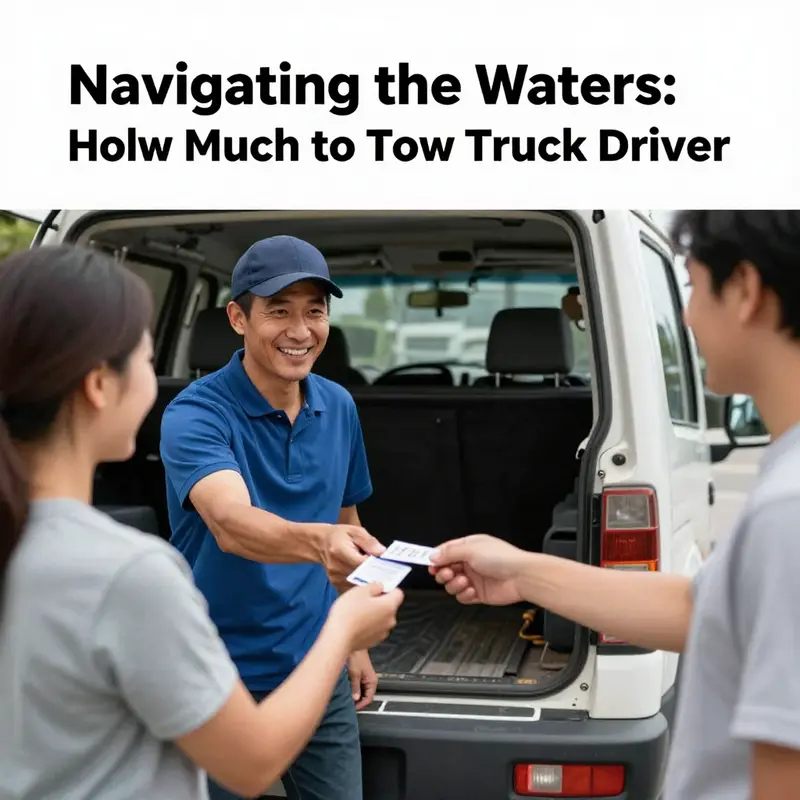
When a roadside crisis lands in your lap, the scene can feel like a scramble of blinking hazard lights, frayed nerves, and a clock that won’t stop ticking. In that moment, the tow truck driver arrives as a practical guardian of order, someone who translates fear and frustration into a steady sequence of steps: assess, secure, lift, transport, and hand you back a pathway to normalcy. Their role is not only to move metal from one point to another but to manage risk in real time, communicate with precision, and negotiate the ambiguities that come with a vehicle that won’t cooperate. That combination of physical labor and on-the-spot decision making sits at the heart of why tipping is a meaningful act for some and a thoughtful choice for others. Tipping, as a cultural norm in the United States, functions as a nonbinding social contract in which gratitude shows up through a tangible gesture. The broader tipping culture, which this chapter draws on, treats tips as a recognition of service quality across many settings—from airport porters to wheelchair assistants—where hands meet needs in moments of vulnerability and stress. The research underlying these reflections does not prescribe a one-size-fits-all rule for tow drivers, but it does illuminate a pattern: service quality and the human touch matter, and people respond to it with generosity when the experience meets or exceeds expectations. In practice, the decision to tip a tow truck driver rests on more than a base price or a standard procedure. It rests on the service you receive, the conditions under which it is delivered, and the personal judgment you bring to the moment. If a driver arrives in rain or snow, if they work through a crowded corridor of cars that seems designed to trap a vehicle, or if they take extra care to protect your car from dents or scratches during loading, those are the kinds of details that tilt the balance toward tipping, even if the price tag on the tow is straightforward. A useful starting point in thinking about tipping is the guideline often cited in service conversations: consider tipping 10 to 20 percent of the total tow fee if the driver goes above and beyond. If your tow costs $200, a tip in the range of $20 to $40 is a generous acknowledgement of exceptional effort. Yet it is essential to ground this in the realities of the moment: tipping is not universally expected, and in many scenarios, especially where the service is routine or the arrangement is tied to an insurance claim, tipping may feel less appropriate. The choice should reflect not only the arithmetic of the bill but also the qualitative aspects of the service you received. The driver’s demeanor matters. A driver who communicates clearly, explains why a route is chosen, and offers practical safety guidance can soften the shock of the breakdown more effectively than someone who moves quickly but leaves questions lingering. When service feels predictable, and the driver completes the requested task without additional effort or personal touch, the case for tipping becomes more individual and situational. In contrast, when a driver provides a level of service that surpasses the basics—like assisting with loading a vehicle onto a flatbed with meticulous care, staying calm and reassuring during a tense moment, coordinating with the dispatch in a way that reduces your downtime, or taking extra precautions to protect the vehicle’s finish—tip-sized decisions should reflect that added value. It is also wise to consider the broader context: how long you waited, whether the driver offered to contact your insurer or help document preexisting damage, and how effectively they communicated what would happen next. These dimensions—care, communication, and competence under pressure—are often what people remember when they evaluate the experience later on. From a practical standpoint, many people choose to offer cash at the scene or opt to include a tip on the payment if the service is processed electronically. Some drivers may appreciate a note of thanks or a brief handshake and, when possible, a positive comment to the dispatcher or company as a form of feedback. If the situation allows, asking the driver whether they prefer cash or card tips can also reflect respect for their preferred method of recognition. It is worth noting that tipping a tow truck driver is not a legal obligation, nor is it a universal expectation in every locale or every company policy. The absence of a tip does not imply a fault in service; it can simply be a reflection of the broader norms in your area, the specifics of the incident, or your own budget at a stressful moment. This discretion aligns with the idea that tipping functions as a personal decision grounded in value judgment rather than a mandatory transaction. Still, the act of tipping remains a way to acknowledge the unique labor involved in roadside assistance. It recognizes that the driver is not merely performing a mechanical service but also bearing responsibility for safety, timing, and the emotional well-being of someone who has just faced a stressful disruption. When the service goes beyond expectation, the tip becomes a compact form of gratitude that helps sustain the social fabric of customer service. It sends a signal that skilled labor in physically demanding roles is valued and that those who go the extra mile should be encouraged to maintain their high standards. The broader social research into tipping underscores that the ritual has an important function: it reinforces positive behavior, supports workers who shoulder higher burdens, and provides a human-centered way to express appreciation when words feel inadequate. The challenge for readers is to translate these insights into a practical, humane approach to roadside aid. If you live in a region where tipping is common in service industries, you may find yourself more inclined to tip after a successful rescue and careful handling of your vehicle. If you are in an area with different customs, you might still recognize good service in a way that feels appropriate to the moment, whether through a small cash gesture, a late-night thank-you call to the dispatcher, or a written endorsement that helps the company and driver build a track record of trusted service. In this sense, tipping is not merely about money—it is about reinforcing a culture of care in moments when people are most in need of reassurance. The decision becomes easier when you consider the practical impact of the driver’s actions. A driver who helps with the delicate business of loading and securing a vehicle to the flatbed reduces the risk of damage and the anxiety you may feel about transport. The more the driver demonstrates thoughtful handling—checking strap tension, ensuring protection for the vehicle’s body, and communicating about timelines—the more it makes sense to acknowledge that extra effort with a tip that matches the total cost and the complexity of the task. It is equally acceptable to withhold a tip if the service is simply routine, the driver is courteous but not extraordinary, or the situation involves a straightforward transport to a nearby lot. In such cases, the tip might be replaced with a brief, positive review or a note to the company praising the driver’s reliability and professionalism. This approach reflects the nuanced reality of tipping culture: it is a flexible tool for recognizing quality, not a rigid rule either for every encounter or for every budget. For readers who want to situate their tipping decisions within a broader framework of service excellence and emergency readiness, there are avenues to explore how these practices intersect with fleet management and quick-response protocols. The Island Tow Truck blog can be a helpful touchpoint for thinking about the rhythms of service in challenging environments and how tips can fit into a sustainable approach to roadside assistance. See the internal link here: The Island Tow Truck blog. As you reflect on your own experiences and needs, remember that tipping is a personal choice rooted in respect for the labor and care shown by the driver in the moment of crisis. It is about recognizing the effort that goes into retrieving a vehicle, ensuring safety, and restoring a sense of control in a situation that can feel destabilizing. If you want to widen the lens beyond tips and toward best practices in emergency readiness, you can review related discussions about fleet emergency response strategies and island-specific preparedness. For broader guidance on towing practices, see AAA’s towing guidelines: https://www.aaa.com
Final thoughts
Understanding how much to tip a tow truck driver and the nuances surrounding this practice is essential for those involved in industries that frequently require towing services. By adhering to guidelines and considering factors specific to each situation, stakeholders can enhance their relationships with towing professionals. Supporting excellent service through appropriate tipping not only fosters goodwill but also encourages a higher standard of service across the board, ultimately benefiting everyone involved in the towing and roadside assistance ecosystem.